Autonomous Navigation in Interaction-Based
Environments—A Case of Non-Signalized
Roundabouts
Maradona Rodrigues
, Andrew McGordon, Graham Gest, and James Marco
Abstract—To reduce the number of collision fatalities at cross-roads intersections, many countries have started replacing inter-sections with non-signalized roundabouts, forcing the drivers to be more situationally aware and to adapt their behaviors ac-cording to the scenario. A non-signalized roundabout adds to the autonomous vehicle planning challenge, as navigating such interaction-dependent scenarios safely, efficiently, and comfort-ably has been a challenge even for human drivers. Unlike traffic signal-controlled roundabouts, where the merging order is cen-trally controlled, driving a non-signalized roundabout requires the individual actor to make the decision to merge based on the move-ment of other interacting actors. Most traditional autonomous planning approaches use rule-based speed assignment for gener-ating admissible motion trajectories, which work successfully in non-interaction-based driving scenarios. They, however, are less effective in interaction-based scenarios as they lack the necessary ability to adapt the vehicle’s motion according to the evolving driv-ing scenario. In this paper, we demonstrate an adaptive tactical behavior planner (ATBP) for an autonomous vehicle that is capa-ble of planning human-like motion behaviors for navigating a non-signalized roundabout, combining naturalistic behavior planning and tactical decision-making algorithm. The human driving sim-ulator experiment used to learn the behavior planning approach and the ATBP design is described in this paper.
Index Terms—Adaptive tactical behaviour planner, adaptive control, human factors, naturalistic driving, trajectory planning.
I. INTRODUCTION
C
URRENTLY autonomous or self-driving vehicles are at the heart of academia and industry research because of their multi-faceted advantages that include improved safety, reduced congestion, lower emissions, greater mobility etc. Sig-nificant advancement in digital technology (sensing, processing etc.) has pushed the autonomous technology in ground vehicleManuscript received January 8, 2018; revised May 7, 2018; accepted July 8, 2018. Date of publication October 4, 2018; date of current version November 21, 2018. This work was supported in part by the Engineering and Physical Science Research Council under Award 1494751 and in part by the TATA Motors European Technical Centre, U.K. (Corresponding author: Maradona Rodrigues.)
M. Rodrigues, A. McGordon, and J. Marco are with the Warwick Manu-facturing Group, University of Warwick, Coventry CV4 7AL, U.K. (e-mail:, [email protected]; [email protected]; James.Marco@ warwick.ac.uk).
G. Gest is with the Tata Motors European Technical Centre PLC, Coventry CV4 7AL, U.K. (e-mail:,[email protected]).
Color versions of one or more of the figures in this paper are available online at http://ieeexplore.ieee.org.
Digital Object Identifier 10.1109/TIV.2018.2873916
applications from idealistic conceptual projects such as Navlab [1], VaMP [2], the PROMETHEUS Programme [3], ARGO Project [4] to the demonstration of realistic fully autonomous vehicle technology in the DARPA completion events [5], [6]. Since the DARPA challenges, the autonomous ground vehicle technology has been demonstrated in numerous public roads. Some of the most publicised of these include the VisLab In-tercontinental Autonomous Challenge (VIAC) in 2010 [7], the Hyundai Autonomous Challenge in 2010 [8], the autonomous drive with Mercedes Bertha-Benz in 2013 [9], the Public Road Urban Driverless (PROUD) car testing in 2013 [10] and the Google self-driving car testing since 2009 [11]. The above-mentioned trials have since been followed by many other players joining the efforts to move the autonomous vehicle technology closer to reality [12]. Nonetheless, the number of autonomous disengagements and incidences reported every month [13], [14], highlights that autonomous vehicle technology has still not fully matured. The analysis of these autonomous disengagement and collision reports show that most of them were in situations of high traffic activity which include intersections such as at T-junctions, crossroads, roundabouts etc., highlighting the lim-itations of the current state-of-art autonomous motion planning systems in successfully dealing with such real-world scenarios. With potential benefits of reducing collisions, waiting time at intersections, improving fuel efficiency and reducing emissions of air pollutants, and improving traffic flow [15], [16], countries around the world have started to replace traffic signal controlled intersections with non-signalised roundabouts [17], [18]. The non-signalised roundabouts are high-interaction based driving environments, and the capability of the autonomous vehicle to navigate such scenarios depends greatly on their ability to gen-erate adaptive motion behaviours in the continuously evolving driving environments. Successful autonomous navigation plan-ning in such merging scenarios should also ensure that their motion behaviour does not create confusion among other road users, which will be the critical determinant of their co-existence with other semi-autonomous and manually driven vehicles. This paper describes a novel approach to autonomous behaviour plan-ning called Adaptive Tactical Behaviour Planner (ATBP). The ATBP is part of the research work in developing human-like be-haviour planning method for autonomously navigating highly dynamic interaction based scenarios safely, efficiently and with good driving comfort.
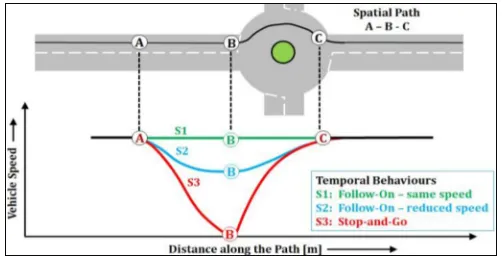
Fig. 1. Vehicle spatial behaviours on a global path.
Fig. 2. Vehicle temporal behaviours at intersection.
A. The Behaviour Planning Concept
Naturalistic behaviour planning for an autonomous vehicle as defined in this work is an effort to imitate human-like motion behaviours while staying within the bounds of safe driving. The vehicle behaviours in this work are represented as consisting of two parts, the “spatial” which describes how the vehicle manoeuvres in space, and the “temporal” which describes the speed of the vehicle in the manoeuvres. The spatial part of the behaviour planning for a non-holonomic ground vehicle allows it to execute manoeuvres in space of the type “turning-left”, “turning-right”, “following” a straight/curved road etc. A planned path for an autonomous vehicle is therefore made up of a series of successive spatial behaviours that connect the vehicle start point to its desired destination, as shown in Fig. 1.
The temporal part of the behaviours involves a combina-tion of the operacombina-tional mocombina-tions such as “acceleracombina-tion”, “cruis-ing”, “deceleration” and “stopp“cruis-ing”, enabling the vehicle to travel along a planned spatial path. For example, a temporal be-haviour at an intersection can be a combination of deceleration-cruising-acceleration, or deceleration-stopping-acceleration etc. The choice of the temporal behaviour is highly influenced by the dynamics of the real-world environment. Fig. 2 shows three il-lustrative temporal behaviours for vehicle motion, i.e., “Follow-On” at the same speed, “Follow-“Follow-On” at reduced speeds and “Stop-n-Go” motion.
The behaviour chosen by the vehicle to execute in a scenario determines whether its motion will be safe, efficient, comfort-able etc. The temporal behaviours that take the vehicle on the path of other road users increase the risk of collision and are con-sidered unsafe. The choice of temporal behaviours that involve frequent stopping even when opportunities exist to continue
the motion can lead to increased travel times and can result in traffic congestion. Temporal behaviours involving rapid accel-eration/deceleration, or travelling at high speed on curved roads can affect driving comfort. For successful autonomous naviga-tion planning, vehicle safety is the primary requirement, and within the safety envelope, the behaviours that give optimal re-sults on the chosen set of objectives such as driving efficiency, driving comfort etc., should be planned for autonomous vehicle motion.
B. Related Work
In the last couple of decades, autonomous vehicle trajectory planning efforts as discussed in Paden et al. [19] and Rodrigues
et al. [20] have generally focused their efforts on firstly finding
[image:2.594.42.293.201.331.2]approach for crossroad intersection scenario using the behaviour patterns learned from human drivers in a simulator experiment. The speed profiles from a crossroads intersection scenario were extracted to develop temporal behaviour plans using k-means clustering technique. As the clustered profiles were directly used in planning without real-time adaptations capability, this made them effective only for the specific type of intersection scenario in which the data was recorded. In addition, their approach also did not account for driving comfort, and the behaviour choices were limited to the number of speed clusters generated from data. Wei et al. [24], proposed a cooperative merging method for highway ramp merging using learned behaviour patterns of human driving. While this method simplifies the merging decision-making problem that is crucial for highly dynamic scenarios, the approach in the present form suits well for less ambiguous scenarios such as highway, where other actor’s mo-tion are generally predictable, which is not the case with inter-sections. Gindele et al. [25] proposed a tactical decision-making approach using continuous Partially Observable Markov Deci-sion Process (POMDP), that based its autonomous vehicle be-haviour selection on the predicted motion of other actors. Sefati
et al. [26] proposed another tactical decision-making approach
for autonomous vehicle behaviour selection using POMDP, that incorporated the uncertainty estimation. While both the above-mentioned approaches described a good decision-making ap-proach for autonomous vehicle behaviour selection, they were not complemented by adaptive temporal behaviour plans that are critical for achieving motion efficiency and driving com-fort. Successful autonomous vehicle navigation in dynamic, un-predictable and ambiguous real-world scenarios such as non-signalised roundabouts requires firstly the ability to predict the scenario evolution using contextual information and secondly the ability to plan adaptive temporal motion behaviour that leads to the autonomous vehicle achieving safe motion, driving effi-ciency and acceptable driving comfort. To achieve the above-mentioned objectives, a novel behaviour planning approach was developed called Adaptive Tactical Behaviour Planner (ATBP), which combines an adaptive, context-based dynamic temporal behaviour candidate generation with tactical decision-making ability to create adaptable behaviour plans. The ATBP algorithm development also involved the design and running of a human driving experiment on a simulator to collect naturalistic driving behaviour patterns to aid the design of adaptive temporal be-haviour generation algorithm. The work presented in this paper is the second phase of a two-phase research project dedicated to the development of human-like behaviour planning approaches. In the first phase of the ATBP algorithm development presented in Rodrigues et al. [27], the naturalistic driving behaviours were learned from human drivers navigating different dynamic vari-ations of the non-signalised roundabout scenarios on a desktop simulator. The learned patterns were later used to design the temporal candidate behaviours for both the “Follow-On” and “Stop-n-Go” as a three-part temporal behaviour profile using the Bezier curve method. A risk-aware multi-objective tactical decision-making algorithm was then used to select the optimal candidate temporal behaviour for the vehicle to execute during the autonomous navigation of the non-signalised roundabout. In
this work it was demonstrated that the behaviour planner per-formed better than the human drivers on the desired objectives of safety (no collisions), drive efficiency (reduced travel times) and drive comfort (slower average speed in curves). The experiment, however, had a limited sample size of 10 human driving partic-ipants. Other limitations of the first phase include a low-fidelity vehicle model and limited vehicle motion feedback to the driver (only a visual), resulting in some driver behaviours that were not representative, limiting the useful behaviour dataset. In the phase-II of the ATBP development, greater emphasis was laid on improving both the driving environment (improved vehicle model and motion feedback) and also the participant number to enable collection of a wide and more realistic representation of naturalistic human driving behaviours. The ATBP algorithm developed in the phase-I was improved to incorporate the “Situ-ational Awareness” and “Behaviour Prediction” functions which were integrated according to the behaviour planning framework designed in previous work [20]. The structure for the rest of this paper is as follows: Section II describes the ATBP algorithm design. In Section III the details of the human driving simu-lator experiment design and its running procedure are given. Section IV gives the analysis of human driving behaviours ex-tracted from the experiment. Section V gives the description of the ATBP algorithm implementation. Section VI contains the performance analysis of the ATBP algorithm and discussion of the results. Finally, in Section VII the research work presented in the paper is summarised with appropriate conclusions.
II. ADAPTIVETACTICALBEHAVIOURPLANNER
iteration of the planner, as the changes in the environment can alter the importance of the design objectives (drive comfort, mo-tion efficiency etc.). The ATBP combines an affordance-based naturalistic behaviour candidates generation with a risk-aware adaptive tactical decision-making to enable an autonomous ve-hicle to navigate highly dynamic, interaction-based scenarios safely, efficiently and with acceptable driving comfort. The con-cepts used in the design and implementation of the ATBP were first discussed in our publication [20], and the phase-I imple-mentation of the novel Adaptive Tactical Behaviour Planner was illustrated in our publication [28]. The focus of phase-II devel-opment was only on the temporal behaviour planning, and the spatial behaviours are assumed to be fixed and known. The three functions of the ATBP algorithm, i.e., Situational Awareness, Behaviour Prediction and Behaviour Selection are, therefore, discussed in the context of temporal behaviour planning.
A. Situation Awareness
Situational Awareness (SA) is a term first defined by Endsley [29] as a combination of environment perception in time/space, understanding their meaning, and their subsequent projection in time. In our work, we attempt to develop an autonomous planning system that can mimic expert human driver’s ability of decision-making and manoeuvre planning. In this regards the Situation Awareness represents the process by which the ATBP algorithm abstracts only the relevant information from the dy-namic scenario to gain the necessary understanding needed to make informed behaviour choices. It is important to note that SA implementation does not replace the world representation map, which is an essential perception system activity of collating the sensed world data into a usable map of the vehicle surround-ings. The SA algorithm implemented in this work firstly entails estimating the motion state (position, heading, speed etc.) for the actors of interest within the roundabout and those approach-ing from other directions. The actors of interest are those that are identified to be in potential conflict with the future motion plan of the subject vehicle. The second part of the SA involves identifying the priority for actors approaching the roundabout according to the driving guidelines (which for the UK are de-fined by regulation 184-190 of the Highway Code [30]). These guidelines are defined to solve the conflict in the decision mak-ing when actors arrive from different entry points at roundabout entry at the same time. However, in real-world situations, the actors can arrive at different times and at different speeds and it is therefore left to the interpretation of the individual driver to determine its priority to merge. In ATBP algorithm the SA function calculates a decision variable called “Interpreted Prior-ity”(IP rty), which is estimated for all actors approaching the intersection and also for the subject vehicle based on their time of arrival at the Give way line
IP rty=sortascen d(alli(T T AG W L ,i))
i= 1,2. . . n
where, “T T AG W L ,i” is the predicted time to arrival of the ac-tors at the Give way line and “n” is the number of acac-tors. The “IP rty” estimate uses a sort function to arrange the drivers in
the ascending order of priority. TheIP rty variable evaluated in this work is different from the priority rules defined by the Highway Code [30], only when the actor vehicle is approaching their respective Give way line. If the actor vehicle reaches the Give way line either before or at the same time as the subject ve-hicle, or has already entered the roundabout, the regulatory rules defined by the Highway Code are strictly followed, implying the actor vehicle on the right has priority.
B. The Behaviour Prediction
The Behaviour Prediction (BhvPrd) function predicts the in-tention of the identified critical actors that are potentially in conflict with the subject vehicle’s future motion. The prediction is based on the actor vehicle’s past and present motion state, its position in the scene and the existing scenario dynamics. Thus, an actor moving away from the roundabout or past the potential conflict zones is considered non-critical. In the present imple-mentation of the BhvPrd module, the actor vehicle intention is deduced into one of the three possibilities: “Advancing” (where the actor vehicle was predicted to continue its motion without stopping at the roundabout), “Stopping” (where the actor vehi-cle was predicted to come to a stop at the Give way line) or “No Estimate”. The prediction is performed by comparing the actor’s current behaviour to the average temporal behaviour profiles for “Follow-On” and “Stopping” obtained from the human driving experiment. The driving intention is then determined using the following rules
1) If the actor has priority and its motion matches closely with the average “Advancing” temporal behaviour then the actor’s future intention is predicted as “Follow-On” 2) If the actor does not have priority and its motion matches
closely with the average “Stopping” temporal behaviour, then the actor’s future intention is predicted as “Stopping”. 3) If the actor behaviour is mixed and does not conclusively match closely with either “Advancing” or “Stopping” be-haviour, irrespective of priority the expected motion in-tention is interpreted as “No Estimate”.
C. The Behaviour Selection
The Behaviour Selection (BhvSel) function involves two sub-functions, the generation of the temporal behaviour candidates and the decision to select a tactically optimal behaviour to exe-cute. These two BhvSel functions are discussed below.
1) Temporal Candidate Generation: The temporal
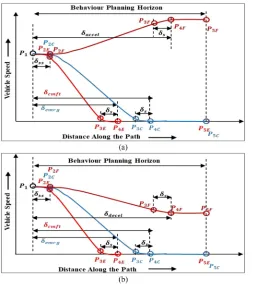
Fig. 3. Temporal behaviour extrema. (a) Acceleration. (b) Deceleration.
[image:5.594.41.301.65.349.2]phase-I was found to be limited only to scenarios that had the possibility to stop. Due to the specific nature of the Stop-n-Go profile construction, it was also not directly applicable to other interaction-based scenarios such as overtaking, lane change etc. In this phase-II ATBP algorithm development, we decided to use a 2-part temporal behaviour construction in the generation of candidate’s behaviours, to go from the current vehicle state to just another state in the future. As interaction scenarios can sometimes present emergency situations, where the other actors deviate significantly from the predicted behaviours, an addi-tional behaviour profile for “emergency stop” was also added to give the vehicle the possibility to safely stop. Therefore, in total three behaviour profiles were constructed using the Bezier curve method, the two behaviour affordance extrema (“Follow-On” and “Comfort Stop”) and the third for Emergency Stop. Bezier curve method was chosen for speed profile construction as it provides the flexibility of defining the individual control points to create a smooth, piece-wise continuous temporal pro-file, whose shape and gradients can be governed through the definition of the control points. The method avoids the prob-lem of high-order polynomials and achieves continuously dif-ferentiable connections between the control points resulting in smooth trajectory profiles, which are easily tractable with the motion controller. The constructions of the speed profile for the situations of ‘acceleration’ and ‘deceleration’ are shown in Fig. 3(a) and Fig. 3(b) respectively. The control points suf-fixed by “F” are for “Follow-On” and “C” and “E” are for comfort and emergency stop temporal profiles respectively. The parameter “δS S” is the steady state parameter used for creating a smoother transition between successive temporal behaviour
Fig. 4. Generated temporal behaviour candidates. (a) Acceleration. (b) De-celeration.
plans. Parameters “δcm f t” and “δem r g” are the stopping dis-tances for comfort-stop and emergency-stop respectively and are a function of the vehicle motion capability.
For the “Follow-On” temporal behaviour, the upper bound is influenced by the regulatory maximum speed. Therefore if the vehicle is currently at a lower speed than the regulatory speed, the control points that govern the shape of the upper extrema and the distance “δaccel” of the control pointP4F are calculated ac-counting for the maximum acceleration the vehicle can achieve and similarly “δdecel” for deceleration. The parameter “δs” is the calibrated profile shape parameter, which is estimated from human driving data for intersection scenarios. To generate natu-ralistic behaviour profiles, the patterns from the human driving experiment are used to influence the control points selection. A vehicle cannot always maintain the regulatory speeds due to the presence of other actors and other environmental factors such as sharp/tight road curvature etc. The behaviour planner, therefore, takes the current speed of the vehicle as the starting point of the temporal behaviour profile and creates affordance-based motion candidate profiles within the “Follow-On” and Comfort “Stop” profile envelope. The intermediate candidate profiles within this affordance envelope are generated using an interpolation method, as depicted in Fig. 4(a) and Fig. 4(b) re-spectively.
Fig. 5. Risk aware tactical decision-making algorithm.
first established from the affordance behaviour candidate set by calculating the Time-To-Give-way-line (T T Gwl) parameters for each candidate and comparing it against the actor vehicles in potential conflict with the subject vehicle motion on those candidates. The behaviour selection decision-making algorithm then establishes an objective risk index for each candidate pro-file based on the time gap method. The risk index is re-calculated iteratively every fixed sampling time and involves estimating the T T Gwlusing the constant speed projection method.
T T Y lact =dpath ,act∗vact
where,dpath ,actis the distance of the actor along its path to the “Give way line”, and vact is the estimated velocity of the ac-tor. The same parameter is then calculated for every behaviour candidates of the subject vehicle (i.e.,T T Gwlsu b,i) to establish the set of candidate profile that result in non-conflicting motion. The overall behaviour selection function to choose the optimal behaviour from the safe candidate behaviour set was then for-mulated as an objective function,‘Q’, which was minimized to find the optimal candidate with the lowest penalty.
min
all,can didatesQcan d =a∗CIlat+b∗CIlon g +c∗W T I
where, ‘CI’ and ‘W T I’, are comfort index and the waiting time index (efficiency index) respectively. Coefficients ‘a’, ‘b’ and ‘c’ are tuning parameters to weight the objectives of “Lateral comfort”, “Longitudinal comfort” and “Waiting Time” at Give way line based on a design preference. With the defined indexes and the objective function, the flow of the ATBP algorithm for selecting the optimal behaviours for a roundabout navigation is depicted in Fig. 5.
[image:6.594.305.553.67.205.2]In this work, the algorithm was designed to recalculate the optimal behaviour plan every 200 ms, and therefore it itera-tively selected the best tactical temporal behaviour, giving the autonomous vehicle the ability to take all merging opportunities.
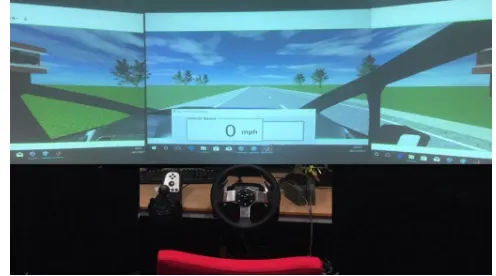
Fig. 6. The simulator driving environment set-up.
III. THEHUMANDRIVINGEXPERIMENT
The objective of the simulator experiment was to gain insight into naturalistic human driver’s temporal behaviours during the navigation of a non-signalised roundabout. Learning from the limitations of the phase-I of this research work, this experi-ment was designed with the aim of extracting more representa-tive human driving behaviour profiles. Three specific improve-ments were made in this driving simulator experiment, which included (a) An improved driving environment (high-fidelity ve-hicle model, real-world calibrated driver controls and improved motion feedback cues), (b) Increased navigation scenario sets (with variation in both the static and dynamic environment), and (c) A larger and more representative human driving participant sample. These improvements and the analysis are described in this section.
A. The Driving Environment
The driving simulator was built using PreScan [31], an envi-ronment modelling toolkit for creating representative real-world driving scenarios. The background models were developed in Matlab Simulink and a multicore PC was used for high compu-tation capability. Powered by a high-capacity graphics card, the visualisation output from PreScan was projected on a white background through a multi-projector set-up, as depicted in Fig. 6. The driving run consisted of 3 single-lane 4-exit non-signalised roundabouts of different sizes. The “subject vehicle” driven by the human driver and the “actor vehicle” controlled by the autonomous settings approached the intersection from two different entry points.
Fig. 7 depicts the bird’s eye view of the three roundabouts of radius 20 meters, 25 meters and 15 meters respectively. The roundabouts were connected with a long straight approach road, allowing the drivers enough driving length to get to the desired speeds before a roundabout was in sight. Within each round-about, a maximum travel speed was suggested to the drivers as an indicative speed for driving stability and comfort. The speed that the drivers actually maintain at the roundabout, however, was according to their natural driving.
B. The Scenario Dynamics
Fig. 7. The scenarios for the human driving experiment.
TABLE I
SCENARIOSETTINGS FORHUMANDRIVINGEXPERIMENT
nine dynamically different driving scenarios at each of the three non-signalised roundabouts. This resulted in 27 different sce-narios for each human driver participant to navigate. The actor vehicle motion was controlled by automated with a pure-pursuit based lateral control and a PID based longitudinal control and had a dynamic vehicle model. The speed settings for the nine scenarios are shown in Table I. The target plan for the human driver in each scenario was to achieve the regulatory speed when on the straight road and then navigate the roundabout according to the existing dynamic scenario and to their natural driving style.
[image:7.594.40.287.363.459.2]The priority rule defined in the Highway code [30] is designed to solve the conflict situation only, and it was shown in phase-I that human drivers tend to make the decision on various other factors including the actor vehicles approach behaviour, the size and shape of the roundabout etc. The human driver’s decision to merge into the roundabout before the actor vehicle or to stop at the Give way line to allow the actor vehicle to pass before it was a result of the individual’s ability to assess the situation and make a decision on its behaviour. The order of the scenarios presented to drivers was randomized, thus the driver had no prior knowledge of the actor vehicle behaviour. This randomization
Fig. 8. Tata HEXA vehicle model designed in Matlab Simulink[32].
TABLE II
TATAHEXAVEHICLESPECIFICATIONS
of the scenarios eliminated the possibility of the human drivers pre-meditating their decision and therefore only adapting their behaviours based on the existing scenario.
C. Vehicle Model
A vehicle plant model was necessary to provide the human driver with a realistic feedback of the vehicle motion to their control inputs. The schematic of the vehicle model built in Mat-lab Simulink and integrated into PreScan is shown in Fig. 8. More details on the vehicle model are in our previous publica-tion [32].
A dynamic bicycle modelling approach [23] was used to rep-resent the TATA HEXA vehicle whose behaviour was co-related with real-world driving data. A brief list of specifications of the TATA Hexa vehicle is shown in Table II.
D. Vehicle Control
The vehicle control is an important aspect of realistic data acquisition of naturalistic human driver motion behaviours. In the simulator, the drive controls were set up using a gaming unit. The drive pedal feel was calibrated with the tuning of the stiffness, damping and spring coefficients to achieve realistic force feedback.
of variation in the longitudinal behaviour. As in this study, the objective was to understand the variation in the lon-gitudinal behaviour; the lateral control was automated, resulting in all drivers travelling exactly the same path. The human drivers were then only required to control the vehicle’s longitudinal motion.
2) The Longitudinal Control: The driver’s accelerator pedal demand was processed through the vehicle’s powertrain model into traction force. The accelerator pedal and brake pedal latency were estimated from real-world data of HEXA vehicle and incorporated into the drive-by-wire model. Familiarity with the vehicle also plays a cru-cial role in drivers exhibiting naturalistic behaviours, and therefore before any behaviours were recorded, the drivers were given multiple runs to familiarise themselves with the driving controls and the motion feedback cues in the experiment.
E. Participant Selection
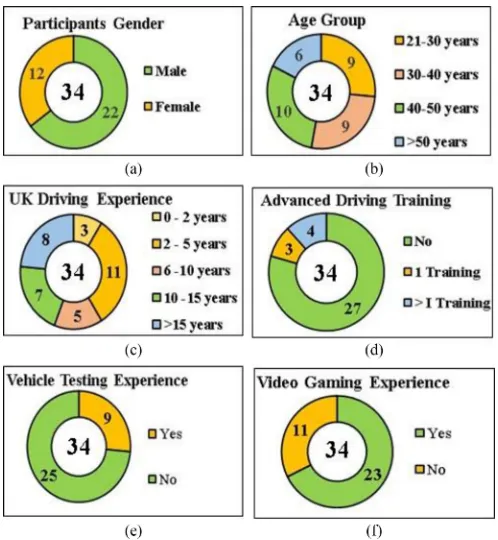
As a mandatory requirement, only drivers having the full UK driving licence and only drivers with a minimum of at least 1-year driving experience in the UK were considered. The plan for the phase-II experiment was to get a wider representation of the participants in the categories of age groups, gender etc., than the one of the phase-I experiment. As this study’s inter-est lies in understanding human drivers behaviour planning and decision-making, it was desirable to have some representation of participants who have undergone advanced driver training. Another desirable attribute used during the search for potential participants was their familiarity to the video gaming controls, and/or vehicle testing experience, as that would mean lesser time to get used to the driver controls. Another improvement over the phase-I study was to have a greater spread of the participants driving experiences in the UK. The participant’s distribution in the categories of gender, age, driving experience, advanced driving skill, vehicle testing experience and video gaming ex-perience are shown in Fig. 9.
IV. ANALYSIS OFHUMANTEMPORALBEHAVIOURS
A. Key Findings From the Temporal Behaviour Profiles
In the rest of the paper, the three roundabouts are termed R15, R20 and R25 for roundabouts of radius 15m, 20 m and 25 m respectively. The temporal behaviour profiles for all the human driver participants at each roundabout for the three regulatory speeds are shown in Fig. 10, Fig. 11 and Fig. 12 respectively.
The key observations in the human driver’s motion behaviours are broadly summarised as follows:
1) Yielding without stopping: Fig. 10, Fig. 11 and Fig. 12 show that some drivers slowed down considerably at a distance of up to 25 meters before the Give way line to yield for the actor vehicle. This behaviour of slow-ing down enables the drivers to continue the navigation without stopping after the actor vehicle has passed. 2) Stopping away from the Give way line: Some drivers
[image:8.594.306.555.63.333.2]stopped up to 10 meters away from the Give way line.
Fig. 9. The participant distribution as per (a) gender, (b) age group, (c) UK driving experience, (d) advanced driving training, (e) vehicle testing experience, (f) video gaming experience.
This shows that they did not utilize the full length of the available approach path; this difference in behaviour can potentially create confusion about the vehicle motion intention.
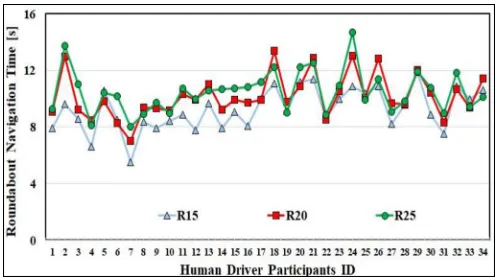
3) High speed within the curves: Some human drivers carried the higher approach speed into the roundabouts, especially when trying to merge ahead of an oncoming actor vehicle. This can be established from the closeness of the average navigation time at the three roundabouts. Fig. 13 shows that the average navigation time of some drivers at all the roundabouts was very close, even though the travelling distances are larger in the bigger roundabouts. The higher speeds within the roundabout suggest that the drivers ac-cepted the “local” discomfort in order to reduce the time spent at the roundabout.
4) Manoeuvres Choice: The human driver’s temporal be-haviour profile’s variations along the path distance in Fig. 10, Fig. 11 and Fig. 12 indicate that they make the decision to either Follow-On or Stop, at a considerable distance before reaching the Give way line. This implies that human drivers use some prediction of the other ac-tor’s motion to make the manoeuvre choice and therefore do not always come to a stop at the Give way line.
B. Descriptive Statistical Analysis
Fig. 10. Temporal behaviour profiles for R15. (a) Regulatory speed of 25 mph. (b) Regulatory speed of 30 mph. (c) Regulatory speed of 40 mph.
Fig. 11. Temporal behaviour profiles for R20. (a) Regulatory speed of 25 mph. (b) Regulatory speed of 30 mph. (c) Regulatory speed of 40 mph.
1) Situation Awareness and Risk Assessment Performance:
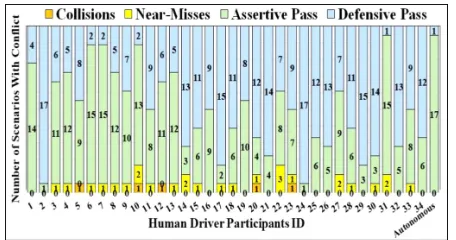
[image:9.594.52.443.66.324.2]To establish the human driver’s situational awareness capabil-ity and their risk assessment performance, two indicative pa-rameters were extracted from data: “Number of Collisions” and “Number of Near Misses”. In this work, we considered
[image:9.594.40.287.369.633.2]Fig. 12. Temporal behaviour profiles for R25. (a) Regulatory speed of 25 mph. (b) Regulatory speed of 30 mph. (c) Regulatory speed of 40 mph.
Fig. 13. Average time for roundabout navigation.
collision as an event when the subject vehicle had a direct con-tact with the actor vehicle (i.e., either a front-on collision or on the side of the vehicle). Fig. 14(a) shows the number of colli-sions by the human drivers. A Near-Miss as described in this work is an event where the subject vehicle was driven by the human driver aggressively merged in front of the actor vehicle, leading to the actor vehicle either hitting the subject vehicle in a rear-end collision or coming within less than one car length of colliding with the subject vehicle. This is a type of event where the actor vehicle would have to slow down significantly from its normal course to accommodate the subject vehicle. The number of near-misses for the human-driven participants is shown in Fig. 14(b).
2) Behaviour Decision Efficiency Indicators: Two type of
[image:9.594.302.551.372.511.2]Fig. 14. Number of (a) collisions (b) near miss for individual human drivers.
the human driving efficiency in different dynamic roundabout scenarios. The first of these indicators is the set of human driver’s navigation time parameters at the roundabout, as shown in Fig. 15.
The variation in the difference between the maximum and minimum navigation time among human drivers suggests that some drivers are more consistent with their performance than others. Higher navigation times also suggests a lack of tacti-cal decision-making ability and directly affects the efficiency of the driving. The scenarios with the actor vehicle approaching the roundabout from the right of the subject vehicle represented the scenarios with conflict (due to the possibility of collision with the actor vehicle) and the ones without actor vehicle repre-sented no-conflict scenarios. As the drivers were not informed beforehand about the presence or absence of the actor vehi-cle and had to make their behaviour decisions based on what they saw in the scenario, a smaller difference in average time between conflict and non-conflict scenario suggests advanced driving behaviours.
The second type of efficiency indicator is the number of “as-sertive passes” by the human drivers. As“as-sertive passes refer to the successful merges before the actor vehicle, which are shown in Fig. 16. Non-assertive passes/defensive passes are motion behaviour where the vehicle navigated the roundabout after the actor vehicle has passed.
Fig. 16 shows that at the larger roundabout (R25), drivers show more tendency to be assertive, as the larger roundabout allows higher speeds due to its reduced curvature.
3) Manoeuvre Planning Quality Indicators: The third type
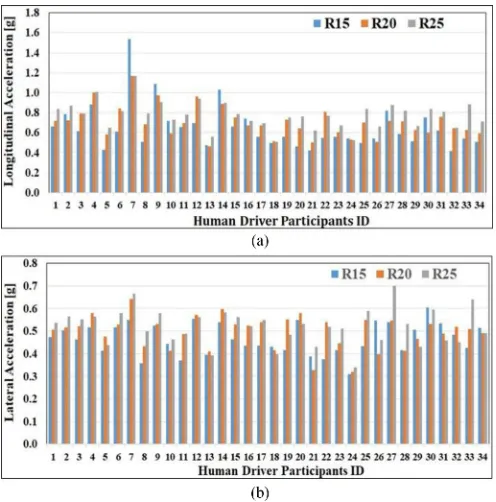
[image:10.594.42.306.62.282.2]of statistics obtained from the human driving data was the Manoeuvre Quality Indicators. The maximum longitudinal acceleration and maximum lateral acceleration were chosen as indicators of vehicle longitudinal and lateral drive comfort re-spectively, with higher acceleration /deceleration mean greater discomfort. Fig. 17(a) shows the vehicle maximum longitudinal
Fig. 15. Calculated navigation time for the human driver participants. (a) R15 roundabout. (b) R20 roundabout. (c) R25 roundabout.
Fig. 16. Number of assertive passes for human drivers out of six scenarios.
[image:10.594.257.548.62.392.2] [image:10.594.308.555.428.552.2]Fig. 17. Human driving participant’s maximum. (a) Longitudinal acceleration. (b) Lateral acceleration.
roundabouts for short periods would be considered unacceptable for longer periods and on straight roads.
V. THEBEHAVIOURPLANNERIMPLEMENTATION
The parameters for the candidate generation algorithm were obtained by analysing the human driving data. The distance parameters for comfort-stop and emergency-stop were obtained using the relation,
δ= 1.2∗v+ v
2 2∗a
Here “v” is the current vehicle speed, the parameter “a” is the acceleration of the vehicle respectively. All the profiles from the human drivers were evaluated based on the three objectives for each scenario. Firstly, based on safety all the temporal profiles that had near-misses and collisions were removed, then based on the comfort thresholds all the behaviours that exceeded the com-fort threshold were removed, and finally, from the remaining set, the behaviours that had the shortest travel times were selected as representative of expert driving behaviours. The parameters values for the ATBP deceleration and accelaeration distances as well as the shape parameter were established from the analysis of the expert behaviours. The planning horizon had to be greater thenδcm f tto ensure that the vehicle behaviour-planning horizon always contained a behaviour that could bring the vehicle to a comfortable stop. Therefore, a planning time horizon of 4 s was chosen for the candidate generation. The steady state parameter ofδS S =0.25 m was used for smoothing the behaviour profiles at the start. All the temporal speed profiles from the human drivers were evaluated based on the three objectives for each scenario. Having established the parameters of the behaviour
Algorithm: Adaptive Tactical Behaviour Planner.
When approaching a roundabout
1. In the Situational Awareness function, establish the critical actor’s whose predicted future motion is in potential conflict with that of the subject vehicle and establishes their Interpreted Priority.
2. In the Behaviour Prediction function establish the actor vehicle intention.
3. Using the state estimate of the critical actors in the scene estimate the ‘T T Gwl’.
4. Estimate the candidate time gap as For all candidates ‘i’ and for all actors ‘j’ T imeGapY l= T T Gwlcan d,i− T T Gwact,j Where i=1, 2, 3 . . . ., n (n - number of candidates). 5. Find admissible candidates for the multi-objective
tactical selection as
a) If the actor vehicle predicted intention is “Advancing”, establish if any of the candidate profiles for the subject vehicle give it priority over the actor vehicle. This is established by computing the Interpreted Priority for each candidate behaviours generated for the subject vehicle. Use all profiles that give the subject vehicle a safe time gap as admissible candidates for selection. b) If the actor vehicle predicted intention is “Advancing”
and the Interpreted Priority of the subject vehicle is below the conflicting vehicle, find if there exist any feasible candidates with “post-time” gap greater than the safe gap.
c) If the actor vehicle predicted intention is “Stop”, use all “Advancing temporal behaviour candidates as admissible for selection.”
r
The safe time gap chosen for this work is “1.5 sec”.r
“Pre-Time “and “Post-time” gaps are safe gaps for merging into the roundabout before and after the actor vehicle respectively.6. Select the behaviour candidate among the admissible candidates with the minimum penalty index according to the defined objective function.
7. If none of the “Follow-On” candidates has time-gap greater than the safe gap, choose the “Stop candidate profile to come to a comfortable stop.
In case of an emergency, select the emergency stop temporal profile to enable the vehicle comes to a stop as soon as possible.
candidate generation, the pseudo-code for the ATBP algorithm is given below.
VI. RESULTSANDDISCUSSION
Fig. 18. ATBP vehicle “navigation time” comparison with human drivers at the roundabout (a) R15, (b) R20, and (c) R25.
with ID-4 also showed smaller average time than the au-tonomous vehicle in R15 and R25.
2) Driving Comfort-longitudinal: Fig. 19 shows that the au-tonomous vehicle had better control of the longitudinal acceleration and therefore better drive comfort. As the scenario consists of actors merging at roundabouts with the possibility of motion conflict, local longitudinal ac-celeration below 0.4 g was considered acceptable. Driver with ID-7 and ID-4, who performed well in reducing nav-igation time had acceleration levels (>1 g) which are considered unacceptable for passenger cars.
3) Driving Comfort-Lateral: Fig. 20 shows that most driver’s maximum lateral acceleration for R15 was around 0.5 g while that for R20 and R25 were slightly on the higher side (by 0.2 g-0.4 g). These levels of lateral acceleration although local for a scenario like roundabouts, are still considered as above the acceptable thresholds for comfort-able driving. The autonomous vehicle was comfort-able to maintain its acceleration within acceptable thresholds of 0.4 g at all the three roundabouts.
4) Decision-making: Fig. 21 shows that the autonomous vehicle completed the most successful assertive ma-noeuvres than all human drivers. It also did not have any collisions or near misses. This highlights the su-perior tactical decision-making ability of the ATBP algorithm.
[image:12.594.48.321.60.396.2]Fig. 19. ATBP vehicle “driving comfort index” comparison with human drivers – Longitudinal acceleration (a) R15, (b) R20, and (c) R25.
[image:12.594.311.549.411.725.2]Fig. 21. ATBP vehicle “safety” performance indicators comparison with hu-man drivers.
VII. CONCLUSION
This paper presented the phase-II development of a novel Adaptive Tactical Behaviour Planner for autonomous ground vehicle application, which can be summarised as follows
1) The designed ATBP algorithm combines the capabili-ties of naturalistic temporal behaviour generation with a tactical decision-making to generate human-like motion behaviour plans. This gives the autonomous vehicle the capability to navigate dynamic, interaction-based sce-narios. The design, implementation and working of the ATBP algorithm were described in this paper with the application case of a non-signalised roundabout. 2) PreScan, an environment-modelling tool, was used to
design the driving simulator experiment, generating a re-alistic driving scenario. Significant improvements were made in the motion feedback available to the human driver missing in phase-I development [28], by adding audio feedback cues (vehicle and road sound emula-tion) and visual feedback cues (life-sized vehicles pro-jections).
3) Geometrically different sized roundabouts were used in this study to understand the variation in the behaviour planning and decision making of human drivers. These differently sized roundabouts, coupled with the varia-tion in the actor behaviours enabled the creavaria-tion of 27 dynamically different merging situation to analyse hu-man driver motion behaviours.
4) A much-changed Adaptive Tactical Behaviour Planner implementation was described in this work using the learning from the phase-I implementation. In addition to the improving “Situational Awareness” and “Behaviour Prediction” functions, the temporal candidate profiles generation algorithm was also modified to make the al-gorithm applicable to other scenario types.
5) The behaviour selection decision-making function was improved from phase-I to include the “Interpreted Prior-ity” and “Predicted Intention” estimates in the behaviour selection decision.
6) Comparing the overall performance against the three ob-jectives of motion efficiency, motion comfort and motion safety, the autonomous vehicle with the ATBP algorithm outperformed all of the human driving participants from the experiment.
7) The absence of the haptic feedback plays an important part in human drivers accepting higher acceleration in simulation studies as compared to real-world driving. We plan to mitigate this limitation in future studies by either providing a haptic feedback or artificially limiting the vehicles accelerations.
8) Generally, pure naturalistic behaviours are difficult to be observed in simulation environments; however, it was chosen as the platform for acquiring human driving be-haviour data for two main reasons. Firstly, it presented a cost-effective, risk-free solution, as there was no cost associated with a potential collision or a near miss. Sec-ondly, in a simulation environment, the interaction sce-narios were repeatable, allowing the possibility to ob-serve and compare the driving behaviours of multiple drivers in exactly the same scenarios.
9) In the current study, the behaviour of the actor vehicle was automated, which made it easy for the prediction al-gorithm of the ATBP to provide crisp results on whether the vehicle was advancing/stopping. Therefore, in the current study, the capability of the behaviour prediction algorithm was not fully tested with scenarios where the actor vehicle changes its intention more than once during the approach. The behaviour prediction algorithm will be tested in the future to consider such cases.
10) A conflict of motion paths between merging actors in the absence of inter-vehicle communication is a criti-cal challenge for autonomous vehicle planning systems. This work is, therefore, a step forward towards achieving autonomous navigation in interaction-based scenarios in the absence of direct inter-vehicle communication. It was shown that the ATBP algorithm performance was found to be better at all the objectives against human driver participants. The autonomous vehicle with the ATBP al-gorithm was found to be safer (i.e., “0” collisions, “0” near-misses) compared to 68% of the human driver par-ticipants who had one or more near misses or collision. It was more efficient, i.e., It had the most assertive passes than all human driver participants and the least average time spent at the roundabout compared to all but one par-ticipant. It was also found to have better driving comfort (combination of lateral and longitudinal) than all human driver participants. The next stage of the ATBP algorithm development is to test it in real-world environments.
ACKNOWLEDGMENT
The research presented within this paper was undertaken in collaboration with Tata Motors European Technical Centre and WMG. The authors would also like to thank Dr. J. Groenewald from WMG for providing the Simulator Lab facilities and the hardware necessary to develop and run the human driving experiment.
REFERENCES
[2] M. Maurer and E. D. Dickmanns, “A system architecture for autonomous visual road vehicle guidance,” in Proc. Conf. Intell. Transp. Syst., 1997, pp. 578–583.
[3] M. Williams, “The PROMETHEUS programme,” in Proc. IEE Colloq. Towards Safer Road Transport Eng. Solutions, 1992, pp. 4/1–4/3. [4] A. Broggi, M. Bertozzi, and A. Fascioli, “ARGO and the MilleMiglia in
automatico tour,” IEEE Intell. Syst. Appl., vol. 14, no. 1, pp. 55–64, Jan. 1999.
[5] M. Buehler, K. Iagnemma, and S. Singh, “The 2005 DARPA grand chal-lenge: The great robot race,” Springer Tracts Adv. Robot., vol. 3, pp. 1–522, 2007.
[6] B. Martin, I. Karl, and S. Sanjiv, “The DARPA urban challenge: Au-tonomous vehicles in city traffic,” Springer Tracts Adv. Robot., vol. 56, pp. 1–622, 2009.
[7] M. Bertozzi et al., “VIAC: An out of ordinary experiment,” in Proc. IEEE Intell. Veh. Symp., 2011, pp. 175–180.
[8] P. Cerri et al., “Computer vision at the hyundai autonomous challenge,” in Proc. 14th Int. IEEE Conf. Intell. Trans. Syst., 2011, pp. 777–783. [9] J. Ziegler et al., “Making Bertha drive—An autonomous journey on a
historic route,” vol. 6, no. 2, pp. 8–20, Summer 2014.
[10] A. Broggi et al., “PROUD-public road urban driverless test: Architecture and results,” in Proc. IEEE Intell. Vehicles Symp., 2014, pp. 648–654. [11] L. Gomes, “When will Google’s self-driving car really be ready? It
de-pends on where you live and what you mean by ‘ready’[News],” IEEE Spectr., vol. 53, no. 5, pp. 13–14, May 2016.
[12] Autotech, “44 corporations working on autonomous vehicles,” CB In-sights, 2017.[Online]. Available: https://www.cbinsights.com/research/ autonomous-driverless-vehicles-corporations-list/
[13] Dept Motor Vehicle - State of California US, “Autonomous vehicle dis-engagement reports 2016,” 2016.[Online]. Available: www.dmv.ca.gov [14] Dept. Motor Vehicle - State of California US, “Autonomous vehicle
dis-engagement reports 2017,” 2017.[Online]. Available: www.dmv.ca.gov [15] A. M. Azhar and B. Svante, “Signal control of roundabouts,” Procedia
Social Behav. Sci., vol. 16, pp. 729–738, 2011.
[16] “SWOV fact sheet—Roundabouts,” SWOV - Inst. Road Safety Res., The Netherlands, 2012.
[17] “Roundabouts replace dangerous intersections,” Wisconsin Transp. Inf. Center, Madison, WI, USA, 2013.
[18] W. Brilon, “Studies on roundabouts in Germany: Lessons learned,” in Proc. 3rd Int. Conf. Roundabouts, 2011, pp. 1–15.
[19] B. Paden, M. Cap, S. Z. Yong, D. Yershov, and E. Frazzoli, “A survey of motion planning and control techniques for self-driving urban vehicles,” vol. 1, no. 1, pp. 33–55, Mar. 2016.
[20] M. Rodrigues, A. McGordon, G. Gest, and J. Marco, “Adaptive tactical behaviour planner for autonomous vehicle path planning.,” in Proc. United Kingdom Autom. Control Conf., 2016, pp. 1–7.
[21] T. Gu and J. M. Dolan, “Toward human-like motion planning in urban environments,” in Proc. IEEE Intell. Vehicles Symp., 2014, pp. 350–355.
[22] C. Dong, J. M. Dolan, and B. Litkouhi, “Interactive ramp merging planning in autonomous driving: Multi-merging leading PGM (MML-PGM),” in Proc. IEEE 20th Int. Conf. Intell. Trans. Syst., 2017, pp. 1–6.
[23] P. De Beaucorps, T. Streubel, A. Verroust-Blondet, F. Nashashibi, B. Bradai, and P. Resende, “Decision-making for automated vehicles at in-tersections adapting human-like behaviour,” in Proc. IEEE Intell. Vehicles Symp., 2017, pp. 212–227.
[24] J. Wei, J. M. Dolan, and B. Litkouhi, “Autonomous vehicle social behavior for highway entrance ramp management,” in Proc. IEEE Intell. Vehicles Symp., 2013, pp. 201–207.
[25] T. Gindele, S. Brechtel, and R. Dillmann, “Learning driver behavior mod-els from traffic observations for decision making and planning,” IEEE Intell. Transp. Syst. Mag., vol. 7, no. 1, pp. 69–79, Spring 2015. [26] M. Sefati, J. Chandiramani, K. Kreiskoether, A. Kampker, and S. Baldi,
“Towards tactical behavior planning under uncertainties for automated vehicles in urban scenarios,” in Proc. IEEE 20th Int. Conf. Intell. Transp. Syst., 2017, pp. 1–7.
[27] M. Rodrigues, G. Gest, A. McGordon, and J. Marco, “Adaptive behaviour selection for autonomous vehicle through naturalistic speed planning,” in Proc. IEEE 20th Int. Conf. Intell. Transp. Syst., 2017, pp. 1–7.
[28] M. Rodrigues, A. McGordon, G. Gest, and J. Marco, “Adaptive behaviour selection for autonomous vehicle through naturalistic speed planning,” in Proc. IEEE 20th Int. Conf. Intell. Transp. Syst., Workshop Adaptive, 2017, pp. 38–44.
[29] M. R. Endsley, “Toward a theory of situation awareness in dynamic-systems,” Hum. Factors, vol. 37, no. 1, pp. 32–64, 1995.
[30] “The highway code,” Dept. Transp., 2016.[Online]. Available: http:// www.highwaycodeuk.co.uk/
[31] PreScan, TASS Int., 2016.[Online]. Available: www.tassinternational. com/prescan
[32] M. Rodrigues, A. McGordon, G. Gest, and J. Marco, “Developing and testing of control software framework for autonomous ground vehicle,” in Proc. IEEE Int. Conf. Auton. Robot Syst. Competitions, 2017, pp. 4–10.
Maradona Rodrigues received the bachelor’s de-gree in mechanical engineering from Goa Engineer-ing College, Goa University, Ponda, India, in 2008, and the M.Sc. (RES) degree in advanced mechan-ical engineering from the University of Sheffield, Sheffield, U.K., in 2011. He is currently working to-ward the Engineering Doctorate with the University of Warwick, Coventry, U.K., in the area of path plan-ning of autonomous ground vehicles.
He has worked primarily in the area of vehi-cle supervisory control development for companies including Tata Technologies (2008–2010) and McLaren Automotive (U.K.) (2011). Since December 2011, he has been with the Advanced Control Systems at TMETC, Coventry, U.K., developing control software solutions for hybrid and electric vehicle technology projects. Since 2016, he has been developing path planning and motion control solutions for TMETC’s autonomous vehicle projects.
Mr. Rodrigues was the recipient of the “Best International Paper” Award for his SAE paper on energy management for range extended electric vehicle at SIAT 2015.
Andrew McGordon received the B.Sc. degree in physics and the Ph.D. degree in current–voltage and noise properties of high-temperature superconductor SNS and grain boundary junctions from the Univer-sity of Birmingham, Birmingham, U.K.
He has worked in industry within many domains, which includes working for British Steel and Corus. In 2005, he joined WMG and has been working on the premium automotive research and hybrid vehicle projects. He is currently a Principal Engineer in the Energy Storage and Management group at WMG, working on energy storage and vehicle modeling, real-world fuel economy, and battery ageing. He also teaches hybrid vehicle technologies at Warwick University.
Graham Gest received the B.Eng. degree in man-ufacturing engineering from Kingston Polytechnic, Kingston, U.K., in 1990, and the Ph.D. degree in me-chanical and manufacturing from the University of Bath, Bath, U.K., in 1995.
He is currently the Chief Engineer–Innovation with TMETC, Coventry, U.K. He has more than 20 years of industrial experience including Rover group, CarnaudMetalbox, Bosch, Visteon, and Tata Motors European Technical Centre. He has worked on a num-ber of research projects ranging from the head-up dis-play to electric vehicle development. He is a Chartered Engineer and a member of the Institution of Engineering and Technology.
James Marco received the Graduate degree in engi-neering from the University of Warwick, Coventry, U.K., in 2000.
![Fig. 8.Tata HEXA vehicle model designed in Matlab Simulink [32].](https://thumb-us.123doks.com/thumbv2/123dok_us/9431753.449037/7.594.40.287.363.459/fig-tata-hexa-vehicle-model-designed-matlab-simulink.webp)