ISSN Online: 2165-3410 ISSN Print: 2165-3402
DOI: 10.4236/aim.2019.91006 Jan. 16, 2019 74 Advances in Microbiology
Effect of Acid Species on
Cryptococcus
sp. T1
and Construction of Its Bioreactor System for
Continuous Neutralization of Acidic Media
Shintaro Nagaoka
1,2, Yuko Kajiwara
1, Sayaka Toyama
1, Masahiko Okai
1, Masami Ishida
1,
Naoto Urano
1*1 Department of Ocean Science, Laboratory of Marine Biochemistry, Tokyo University of Marine Science and Technology,
Tokyo, Japan
2Department of Life Science and Technology, Tokyo Institute of Technology, Yokohama, Japan
Abstract
Generally, the tolerance of yeasts to acid is stronger than that of bacteria. In addition, some of the yeasts are able to neutralize acidic media, which is called acid-neutralizing yeast. An acid-neutralizing yeast, Cryptococcus sp. strain T1, was previously isolated from Lake Tazawa in Japan. Here we inves-tigated the effect of several types of acid on the neutralizing ability of strain T1, and we improved an existing bioreactor model to effectively neutralize acidic water. First we carried out a neutralizing test with strain T1 using ca-samino acid solution adjusted to pH 3.0 - 5.0 with each inorganic or organic acid. The solutions adjusted to pH 3.0 with nitric acid, phosphoric acid, sul-furic acid, and citric acid were neutralized by strain T1. The pH 3.0 solutions with lactic acid, formic acid, and acetic acid were not neutralized. These re-sults demonstrated that some types of organic acid avoid neutralization by strain T1, and we hypothesized that this might be due to the sterilizing func-tion of non-dissociative organic acid. We then constructed a bioreactor sys-tem with a column filled with T1-immobilized alginate beads. The previous research identified a problem in this bioreactor system: the high level of am-monium ions (NH4
+) in the neutralized water might pollute water
environ-ments, and aluminum ions (Al3+) included in acidic water prevent the neutra-lization. Here, we used zeolite to get rid of the NH4
+ and Al3+, and the
addi-tion of a zeolite reactor enabled the bioreactor system to neutralize the acidic water with a decrease of NH4
+ in the water.
Keywords
Acid-Tolerant Yeast, Acid-Neutralizing Yeast, Bioreactor, Organic Acid,
How to cite this paper: Nagaoka, S., Kaji-wara, Y., Toyama, S., Okai, M., Ishida, M. and Urano, N. (2019) Effect of Acid Species on Cryptococcus sp. T1 and Construction of Its Bioreactor System for Continuous Neutralization of Acidic Media. Advances in Microbiology, 9, 74-86.
https://doi.org/10.4236/aim.2019.91006
Received: December 19, 2018 Accepted: January 13, 2019 Published: January 16, 2019
Copyright © 2019 by author(s) and Scientific Research Publishing Inc. This work is licensed under the Creative Commons Attribution International License (CC BY 4.0).
http://creativecommons.org/licenses/by/4.0/
DOI: 10.4236/aim.2019.91006 75 Advances in Microbiology Zeolite
1. Introduction
Lake Tazawa in Japan’s Akita Prefecture is a caldera lake polluted with acidic water from upstream hot springs. Hydroelectricity project introduced acidic Tamagawa River water into Lake Tazawa in 1940, resulting in the lake’s acidifi-cation. The acidification damaged the lake’s surroundings and made the lake unsuitable for aquatic life. Although a plant was constructed at the Tamagawa River to neutralize acidic water and restore the pH value of Lake Tazawa, this did not succeed in complete neutralization.
In our recent study (Okai et al. 2017 [1]), we isolated the acid-tolerant yeast Cryptococcus sp. strain T1 from Lake Tazawa. Strain T1 was able to thrive in an extremely acidic medium (lower limit pH 2.0), and it even exhibited the ability to neutralize the medium (lower limit pH 2.6). We also discovered the mechan-ism of neutralization by strain T1: the decomposing amino acids in the medium release ammonium ions (NH4
+), and the pH value is thereby elevated.
Several research groups have reported that these types of yeast can thrive in acidic environments and that some of them show neutralizing ability. Pichia ku-driavzevii strain NG7 is a yeast strain isolated from grape skins, and it is able to grow at pH 2.0 [2]. Rhodotorula glutinis strain R-1, isolated from Agatsuma River (the pH of which is 2.0 - 3.0) in Gunma prefecture, Japan, was reported to be capable of the neutralization of an acidic medium at pH 3.0 within 15 days
[3]. Our group also studied Candida fluviatilis strain CeA16, which demon-strated the ability to neutralize the acidic medium at pH 3.0 after 1-day incuba-tion [4]. Moreover, in an earlier study we isolated 12 species and 26 strains of acid-neutralizing yeasts from natural neutral water environments, thus estab-lishing that acid-neutralizing yeasts live in not only acidic environments but also neutral environments [5]. Although there are some reports of the isolation and identification of acid-neutralizing yeasts, the detailed mechanisms of acid toler-ance and neutralization have been unknown.
The addition of the chemical neutralizing agent calcium carbonate (CaCO3) used at the Tamagawa River plant mentioned above is considered unsafe in terms of the environmental burden due to the surplus CaCO3. One of the prom-ising solutions to this safety issue is the neutralizing bioremediation afforded by Cryptococcus sp. strain T1. In our Okai et al. (2017) study [1], we constructed a bioreactor with strain T1-immobilized alginate beads, and it succeeded in neu-tralizing the artificial acidic water. Drainage from Tamagawa River (approx. pH 3.6, added casamino acid as nutrition) was also neutralized. We observed that the aluminum ions (Al3+) present in the drainage would obstruct the neutraliza-tion by strain T1. In addineutraliza-tion, the neutralized water from the bioreactor con-tained a high concentration of NH4
aq-DOI: 10.4236/aim.2019.91006 76 Advances in Microbiology uatic life.
We conducted the present study to investigate two matters. We first deter-mined the effects of several types of acid on the ability of Cryptococcus sp. strain T1 to neutralize acid solutions. In the test of acid-neutralizing yeasts’ neutraliza-tion ability performed in previous studies, only sulfuric acid soluneutraliza-tion was used
[1][2][3][4][5]; the yeasts’ response to other inorganic acids and organic solu-tions was not addressed. Our second research challenge was to improve the bio-reactor we created in our earlier study. Here we used zeolite, which is a hydrate aluminosilicate mineral made from interlinked tetrahedra of alumina (AlO4) and silica (SiO4), in an attempt to improve the bioreactor.
2. Materials and Methods
2.1. Medium Culture
R2A liquid medium for the cultivation consisted of 0.1% yeast extract, 0.1% proteose peptone (Becton Dickinson, Franklin Lakes, NJ, USA), 0.1% casamino acid (Nihon Pharmaceutical, Tokyo), 0.03% K2HPO4 (Kokusan Chemicals, Tokyo), 0.1% D-(+)-glucose, 0.1% soluble starch, 0.06% sodium pyruvate, and 0.005% MgSO4·7H2O (Wako Chemicals, Osaka, Japan). Solid medium was made by adding 1.2% gellan gum (Kanto Chemical, Tokyo) to the liquid medium. The pH value was adjusted with sulfuric acid in ordinal studies, but with various types of acid in 2.2.
2.2. Neutralization Test
The strain T1 was cultured at 25˚C for 48 h with shaking in 30 mL of R2A liquid medium at pH 3.0. The cell pellet was obtained by centrifugation at 3000 rpm and washed two times with 0.9% (w/v) saline adjusted to pH 3.0 with sulfuric acid. The washed pellet was added to 10 mL of 0.05% (w/v) casamino acid solu-tion and incubated at 25˚C for 72 h with shaking. We prepared casamino acid solutions ranging from pH 3.0 to pH 5.0, which were adjusted with each acid: nitric acid, phosphoric acid, sulfuric acid, acetic acid, citric acid, formic acid, lactic acid, or propionic acid. The pH value of each cultivate was measured every 24 h.
2.3. The Construction of the Bioreactor with Strain T1
Immobilized Beads
The construction of a bioreactor was performed according to Okai et al. [1]. First, Cryptococcus sp. strain T1 was cultured in 1 L of R2A liquid medium (pH 3.6) at 25˚C for 48 h. The cultured cells were collected by centrifugation at 3000 rpm, and the cell pellet thus obtained was suspended in a 0.9% saline (pH 3.6) and washed in it three times. After washing, we made a cell mixed suspension consisting of washed wet cells, 0.9% saline, and sodium alginate (80 - 120 cP, Wako) at a ratio of 1:2:5 (w/v/v).
DOI: 10.4236/aim.2019.91006 77 Advances in Microbiology chloride (Wako) solution to obtain T1-immobilized beads with a dia. of approx. 5 mm. The obtained alginate beads were put into a jacketed column (50 cm length × 1.5 cm dia., Bio-Rad, Hercules, CA). A peristaltic pump (MP-1000), fraction collector (CHF121SA, Advantec, Tokyo), and a thermostatic bath were connected via plastic tubes to the bioreactor column. The temperature of the column was maintained at 25˚C by the thermostatic bath. Artificial acidic water (consisting of 0.05% (w/v) casamino acid, acidified pH 3.6 with sulfuric acid) was run through the column at 22 mL/h. Each 10 mL of eluate from the column was collected into a small tube of the fraction collector (CHF121SA, Advantec), and then both the pH value and the NH4
+ concentration of these collected
samples were measured. The pH values were measured by using LAQUA pH meter (F-72, Horiba, Kyoto, Japan), and the concentration of NH4
+ was
meas-ured by the enzymatic method with F-kit ammonium (JK International, Tokyo).
2.4. Neutralization Test by the Bioreactor with Zeolite Reactor
Three columns were prepared: 1) a 15 cm long × 1.5 cm dia. column (Bio-Rad) filled with 15 g zeolite, 2) a 10 cm long × 1.5 cm dia. column (Bio-Rad) filled with 16 g zeolite, and 3) a 10 cm long × 2.5 cm dia. column (Bio-Rad) filled with 45 g zeolite. The zeolite stones (Tosoh Co., Tokyo) were well washed with distilled water before being placed in the columns. A single zeolite reactor was connected between the bioreactor column and the fraction collector via plastic tubing. The column with 15 g of zeolite was connected downstream of the bio-reactor for the elimination of excessive amounts of NH4+. In contrast, the
col-umn with 16 g or 45 g of zeolite was set upstream of the bioreactor for an Al3+-decrease test. In addition to this test, we used acidic water consisting of 0.05% casamino acid (w/v) and 100 ppm of aluminum sulfates (Wako), adjusted to pH 3.6 by sulfuric acid. The scheme of the bioreactor system is shown in Fig-ure 1.
The temperature and flow rate were set to the same as those without the zeo-lite reactors. The pH value of the eluates collected in fractions was measured. In the NH4
+ elimination test, the concentration of the ammonium ions was also
measured.
3. Results
3.1. Neutralization of Artificial Acidic Media by Acid-Neutralizing
Yeast
DOI: 10.4236/aim.2019.91006 78 Advances in Microbiology
Figure 1. Scheme of the bioreactor with Cryptococcus sp. strain T1 immobilized alginate
beads and the zeolite reactor. (a) A system for the ammonium elimination test. Acidic water was led into the bioreactor column by aperistaltic pump, and after passing through the column, the water was run through the zeolite reactor and finally collected into frac-tion tubes. (b) For the aluminum eliminafrac-tion test, a zeolite reactor was upstream of the bioreactor and acidic water was run first through the zeolite reactor. In the test without azeolite reactor, the eluate passed through only the bioreactor and was then collected di-rectly into the tubes.
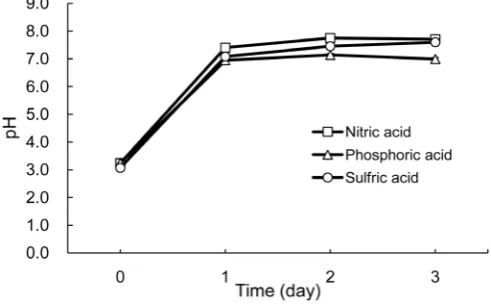
Figure 2. The neutralization of artificial acidic water by
Crypto-coccus sp. strain T1. The initial pH of the water was adjusted to pH 3.0 with each inorganic acid: sulfuric acid, nitric acid, and phos-phoric acid. Strain T1 was cultivated in the water for 3 days at 25˚C, and the supernatant obtained by centrifugation at 3000 rpm was collected to measure the pH value every day. Data are from triple independent measurements.
[image:5.595.251.497.334.486.2]DOI: 10.4236/aim.2019.91006 79 Advances in Microbiology
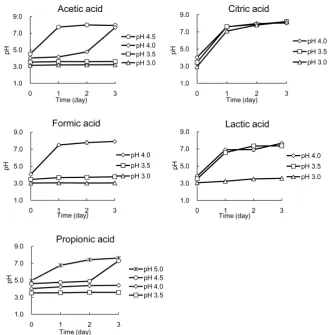
Figure 3. The pH changes of the artificial acidic water in which Cryptococcus sp. strain
T1 was cultivated. The water adjusted to pH 3.5 - 5.0 with each organic acid, and the cul-tivation was carried out for 3 days at 25˚C. The pH value of the supernatant was meas-ured every day after centrifugation at 3000 rpm. The results are the average of three in-dependent experiments with the SDs.
3.2. The Artificial Acidic Water Neutralization by Strain T1
Immobilized the Bioreactor against Prevention with
Aluminum Ions
The results of the neutralization test by the bioreactor with or without the zeolite reactor are illustrated in Figure 4. In the test without zeolite reactor, the pH value of the eluate first collected in fraction tubes was 6.74, and that of the last tube was 6.62. The average value of all fractions was 6.58. In the test with the zeolite, the first tube showed the pH value of 6.74, and the last one was 7.04; the average was 6.97.
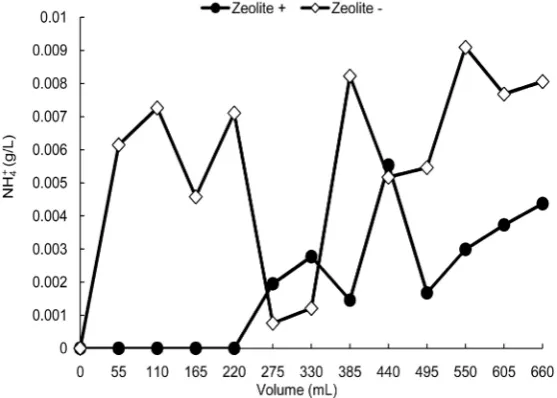
We used an enzymatic method to measure the amount of NH4
+. Figure 5
shows the changes in the concentration of NH4
+ in the collected eluate. In the
test without zeolite, the concentration of NH4
+ increased sharply, and the
maximum value was 9.09 × 10⁻³ g/L. In the test with zeolite,
4
NH+ was not de-tected until the flow volume of 220 mL, and after that its level increased gently to 5.53 × 10⁻³ g/L as the maximum value. The average
4
DOI: 10.4236/aim.2019.91006 80 Advances in Microbiology
Figure 4. Neutralization of artificial acidic water using the bioreactor and zeolite reactor.
The water passed through the bioreactor was collected into fraction tubes, and then the pH value was measured directly. Black dots (●) represent the pH change of the eluate in the test with a zeolite reactor, and the white rhombuses (◇) represent the changes with-out a zeolite reactor.
Figure 5. The changes in the ammonium ion concentration of the eluate
from the bioreactor with strain T1 immobilized alginate beads. After ap-prox. 5.5 mL of the eluate was collected into a fraction tube, a portion of the eluate was used for the subsequent ammonium ion assay. The dots (●) represent the ammonium ion concentration of the eluate obtained in the test with a zeolite reactor, and the rhombuses (◇) are the result of the test without a zeolite reactor.
[image:7.595.234.513.342.541.2]DOI: 10.4236/aim.2019.91006 81 Advances in Microbiology
Figure 6. Neutralization test by the bioreactor with a zeolite reactor against
alu-minum ions. Using artificial acidic water (pH 3.6) containing 100 ppm alualu-minum sulfate, the neutralization by the bioreactor with a zeolite reactor was tested. Here, 45 g and 16 g of zeolite had been packed into a column and set upstream of the bioreactor column.
used, the acidic water was neutralized (the first tube’s pH was 6.53) until the flow volume of 340 mL, but the pH decreased to pH 3.31 at the last tube. With the 45 g of zeolite, the first tube showed pH 6.92, and the value remained stable at around 7.0. Although the pH decreased after the flow volume of 440 mL, the final pH stayed over pH 6.0. The average pH values were as follows. Without zeolite: 4.07; with 16 g of zeolite: 5.01; with 45 g of zeolite: 6.77.
4. Discussion
Our results demonstrated that Cryptococcus sp. strain T1 could neutralize media at pH 3.0 acidified with inorganic acids, i.e. sulfuric acid, nitric acid, and phos-phoric acid. The trends of neutralization were almost the same among these three acids; it appeared that these three acids do not prevent the neutralizing ability of strain T1. Our test using organic acids showed results that differed from those of the tests using inorganic acids. Strain T1 neutralized media acidi-fied with acetic acid to pH 4.0 and 4.5, but the strain could not neutralize pH 3.0 or 3.5 media. Except for the citric acid (all media were neutralized within 1 day), the cases of the other organic acids were similar to this result: the lower the ini-tial pH value was, the weaker the neutralizing ability of strain T1 became. We speculate that this tendency depends on a sterilization effect which organic acids possess. As some researchers have indicated [6]-[11], some organic acids show the ability to decrease the activities of microorganisms.
Organic acid exists as two different forms in a solvent; one is a dissociated molecule which has released its protons, and the other is a non-dissociated mo-lecule. These two forms coexist and maintain a state of equilibrium, and the ratio of the two forms of the molecule depends on the pKa value of each acid. Some of the non-dissociated molecules are able to permeate through the cell membrane
intercellu-DOI: 10.4236/aim.2019.91006 82 Advances in Microbiology lar region, decreasing the activities of the microorganisms. Low pH values in-crease the ratio of non-dissociated organic acid.
Strain T1 might be affected by the sterilization effect. Its neutralizing ability was inactivated in the water with pH value ≤ 3.5. However, pH 3.0 and 3.5 citric acid solution was neutralized within 1 day. The pKa value may be associated with the results; the pKa value of citric acid is 2.79 [12], the lowest value among all of the organic acids used in this test. Most citric acid molecules exist as the dissociated form in water of ≥pH 3.0, and thus citric acid's sterilization effect might have been weaker than the others.
Okai et al. [1] showed that Cryptococcus sp. strain T1 neutralizes acidic water by decomposing amino acids into NH4
+. Therefore, the eluate through the
bio-reactor could contain a considerable concentration of NH4
+, which is thought to
be harmful [13][14][15][16][17] to some animals. In addition, a high concen-tration of Al3+ in an acidic environment is thought to prevent the neutralizing ability of strain T1. Several studies showed that zeolite stones are able to elimi-nate some cations in water [18][19][20][21] such as calcium ions, magnesium ions, and even ammonium ions [22][23][24]. We thus conducted tests using a zeolite reactor in the present study in order to eliminate NH4
+ and Al3+ as part
of our efforts to improve our bioreactor.
Figure 4 shows that the artificial acidic water was neutralized after passing through the bioreactor column. The pH values of the eluates stayed at around 7.0 for the last fraction tube, indicating that strain T1 immobilized-alginate beads neutralized the water. Figure 5 presents the concentration of NH4
+ in the
eluate. In the test without a zeolite reactor, the concentration increased rapidly and the average values were high (5.90 × 10⁻³ g/L, as noted). On the other hand, with the use of a zeolite reactor the concentration did not increase quickly but rose gently after the flow volume of 220 mL, and the average values was low (2.04 × 10⁻³ g/L); it was thus revealed that the zeolite reactor eliminated 65.4% of the
4
NH+.
However, in light of our observation that the NH4+concentration increased late in the tests with zeolite, we speculated that the possibility of the elimination of NH4
+ might be limited. We suspect that from the start of the bioreactor
reactions to the flow volume of 220 mL, the amount of NH4
+ ions eliminated
might be within the capacity, but after 220 mL the amount of NH4
+ exceeded
the capacity, and the zeolite was therefore not able to decrease the NH4
+, and its
concentration increased.
Some prior research has described the mechanism of NH4
+ elimination by
zeolite stones. Briefly, zeolite is a porous material, and the NH4
+ is absorbed in
zeolite via an ion exchange with cations in the molecules composing the zeolite. It thus might be possible to restore the absorbing ability of zeolite by washing away the absorbed NH4
+, via another ion exchange. More simply, when using a
larger column and much more zeolite stones, the amount of NH4
+ removed
DOI: 10.4236/aim.2019.91006 83 Advances in Microbiology As shown in Figure 6, the bioreactor system with an upstream zeolite reactor successfully neutralized the acidic water with a high concentration of Al3+. The larger amount of zeolite used, the higher pH values the eluates showed. In con-trast, in the test without a zeolite reactor, the eluate initially showed high pH values, but the pH then decreased. These results indicate that zeolite might make a contribution to the neutralization by strain T1, and that this contribution could be caused by the cation exchange by the zeolite.
As noted above in the discussion of the NH4
+ elimination test, zeolite stones
are able to exchange cations. Several groups [18] [19] [20] [21] have reported that this cation exchange could also apply to the metal ions, in this case Al3+. In the present study’s neutralization test without azeolite reactor, the Al3+ present in the artificial acidic water might have influenced the neutralizing ability of strain T1, and thus the pH soon decreased. This theory is consistent with the re-sults of our tests with zeolite. We observed that with 16 g of zeolite, the neutral pH value was maintained upto the flow volume of 340 mL, which is a decreasing point, and 45 g of zeolite postponed the decreasing point to the flow volume 440 mL. We thus speculate that the greater the amount of zeolite used, the later the decreasing point will appear.
This study is a first investigation of the neutralizing ability of Cryptococcus sp. T1 applied to organic acid solutions. Not only strain T1 but also other ac-id-neutralizing yeasts have been isolated from acidic environments with inor-ganic acids, and it was reported that these yeasts neutralize an inorinor-ganic acid solution [1][2][3][4][5]. The effect of organic acids on these yeasts had been unknown. Herein we succeeded in our efforts to improve the existing bioreactor; the NH4+in the eluates was eliminated or decreased by the zeolite reactor at-tached downstream, and an upstream zeolite reactor enabled the neutralization of acidic water (including Al3+) by the reactor.
The most widespread method used to neutralize water polluted by acids is the addition of a chemical-neutralizing agent, but this is considered unsafe for nat-ural environments. Methods that use microorganisms are a good approach, and thus a greater understanding of acid-neutralizing yeasts and further improve-ments of bioreactors are necessary.
5. Conclusions
The acid-neutralizing yeast Cryptococcus sp. strain T1 neutralized artificial wa-ter that had been acidified with an inorganic or organic acid: sulfuric acid, nitric acid, and phosphoric acid, and acetic acid, citric acid, formic acid, lactic acid, or propionic acid. Some of the organic acid solutions (pH value ≤ 3.5) prevented strain T1 from neutralizing due to the sterilization effect of organic acids.
The existing bioreactor with strain T1-immobilized alginate beads was im-proved. With the attachment of a column filled with zeolite stones (which are known as a cation-removing agent) downstream of the bioreactor, approx. 65.4% of the NH4
DOI: 10.4236/aim.2019.91006 84 Advances in Microbiology zeolite. In addition, with a zeolite reactor attached with upstream of the bio-reactor, the bioreactor was able to neutralize acidic water that had a high con-centration of Al3+.
Acknowledgements
This work was supported in part by a Japan Society for the Promotion of Science KAKENHI Grant-in-Aid for Scientific Research (grant No. 16K07868).
Conflicts of Interest
The authors declare no conflicts of interest regarding the publication of this pa-per.
References
[1] Okai, M., Suwa, C., Nagaoka, S., Obara, N., Mitsuya, D., Kurihara, A., Ishida, M. and Urano, N. (2017) Neutralization of Acidic Drainage by Cryptococcus sp. T1 Immobilized in Alginate Beads. Bioscience Biotechnology and Biochemistry, 81, 2216-2224. https://doi.org/10.1080/09168451.2017.1373586
[2] Park, H.J., Bae, J.H., Ko, H.J., Lee, S.H., Sung, B.H., Han, J.I. and Sohn, J.H. (2018) Low-pH Production of D-Lactic Acid Using Newly Isolated Acid Tolerant Yeast
Pichia kudriavzevii NG7. Biotechnology and Bioengineering, 115, 2232-2242.
https://doi.org/10.1002/bit.26745
[3] Nguyen, V.A.T., Senoo, K., Mishima, T. and Hisamatsu, M. (2001) Multiple Toler-ance of Rhodotorula glutinis R-1 to Acid, Aluminum Ion and Manganese Ion, and Its Unusual Ability of Neutralizing Acidic Medium. Journal of Bioscience and Bio-engineering, 92, 366–371.https://doi.org/10.1016/S1389-1723(01)80241-3
[4] Mitsuya, D., Hayashi, T., Wang, Y., Tanaka, M., Okai, M., Ishida, M. and Urano, N. (2017) Isolation of Aquatic Yeasts with the Ability to Neutralize Acidic Media, from an Extremely Acidic River near Japan’s Kusatsu-Shirane Volcano. Journal of Bios-cience and Bioengineering, 124, 43-46.https://doi.org/10.1016/j.jbiosc.2017.02.005
[5] Nagaoka S., Kobayashi T., Kajiwara Y., Okai M., Ishida M. and Urano N. (2017) Characterization of Yeasts Capable of Neutralizing Acidic Media from Natural Neutral Environments. Advances in Microbiology, 7, 887-897.
https://doi.org/10.4236/aim.2017.712068
[6] Walter A. and Gutknecht J. (1984) Monocarboxylic Acid Permeation through Lipid Bilayer Membranes. The Journal of Membrane Biology, 77, 255-264.
https://doi.org/10.1007/BF01870573
[7] Poole, R.C. and Halestrap, A.P. (1993) Transport of Lactate and Other Monocar-boxylates across Mammalian Plasma Membranes. American Journal of Physiolo-gy-Cell Physiology, 264, C761-C782.
https://doi.org/10.1152/ajpcell.1993.264.4.C761
[8] Narendranath, N.V., Thomas, K.C. and Ingledew, W.M. (2001) Effects of Acetic Acid and Lactic Acid on the Growth of Saccharomyces cerevisiae in a Minimal Me-dium. Journal of Industrial Microbiology and Biotechnology, 26, 171-177.
https://doi.org/10.1038/sj.jim.7000090
DOI: 10.4236/aim.2019.91006 85 Advances in Microbiology https://doi.org/10.1099/00221287-147-9-2409
[10] Warnecke, T. and Gill, R.T. (2005) Organic Acid Toxicity, Tolerance, and Produc-tion in Escherichia coli Biorefining Applications. Microbial Cell Factories, 4, 25. https://doi.org/10.1186/1475-2859-4-25
[11] Mollapour, M. and Piper, P.W. (2007) Hog1 Mitogen-Activated Protein Kinase Phosphorylation Targets the yeast Fps1 Aquaglyceroporin for Endocytosis, Thereby Rendering Cells Resistant to Acetic Acid. Molecular and Cellular Biology, 27, 6446-6456.https://doi.org/10.1128/MCB.02205-06
[12] Serjeant, E.P. and Dempsey, B. (1979) Ionisation Constants of Organic Acids in Aqueous Solution. Pergamon Press, New York.
[13] Erickson, R.J. (1985) An Evaluation of Mathematical Models for the Effects of pH and Temperature on Ammonia Toxicity to Aquatic Organisms. Water Research, 19, 1047-1058.https://doi.org/10.1016/0043-1354(85)90375-6
[14] Schubaur-Berigan, M.K., Monson, P.D., West, C.W. and Ankley, G.T. (1995) Influ-ence of pH on the Toxicity of Ammonia to Chironomus tentans and Lumbriculus variegatus. Environmental Toxicology and Chemistry, 14, 713-717.
https://doi.org/10.1002/etc.5620140419
[15] Randall, D.J. and Tsui, T.K. (2002) Ammonia Toxicity in Fish. Marine Pollution Bulletin, 45, 17-23.https://doi.org/10.1016/S0025-326X(02)00227-8
[16] Sinha, A.K., Liew, H.J., Diricx, M., Blust, R. and De Boeck, G. (2012) The Interactive Effects of Ammonia Exposure, Nutritional Status and Exercise on Metabolic and Physiological Responses in Gold Fish (Carassius auratus L.). Aquatic Toxicology, 109, 33-46.https://doi.org/10.1016/j.aquatox.2011.11.002
[17] Lu, Q., Chen, P., Addy, M., Zhang, R., Deng, X., Ma, Y., Cheng, Y., Hussain, F., Chen, C., Liu, Y. and Ruan, R. (2018) Carbon-Dependent Alleviation of Ammonia Toxicity for Algae Cultivation and Associated Mechanisms Exploration. Biore-source Technology, 249, 99-107.https://doi.org/10.1016/j.biortech.2017.09.175
[18] Ming, D.W. and Dixon, J.B. (1987) Quantitative Determination of Clinoptilolite in Soils by a Cation-Exchange Capacity Method. Clays and Clay Minerals, 35, 463-468.
https://doi.org/10.1346/CCMN.1987.0350607
[19] Roberto, T.P. and Bertetti, F.P. (2001) Cation-Exchange Properties of Natural Zeo-lites. Reviews in Mineralogy and Geochemistry, 45, 453-518.
https://doi.org/10.2138/rmg.2001.45.14
[20] Erdem, E., Karapinar, N. and Donat, R. (2004) The Removal of Heavy Metal Ca-tions by Natural Zeolites. Journal of Colloid and Interface Science, 280, 309-314.
https://doi.org/10.1016/j.jcis.2004.08.028
[21] Shaheen, S.M., Derbalah, A.S. and Moghanm, F.S. (2012) Removal of Heavy Metals from Aqueous Solution by Zeolite in Competitive Sorption System. International Journal of Environmental Science and Development, 3, 362-367.
https://doi.org/10.7763/IJESD.2012.V3.248
[22] Ngeyen, M.L. and Tanner, C.C. (1998) Ammonium Removal from Wastewaters Using Natural New Zealand Zeolites. New Zealand Journal of Agricultural Re-search, 41, 427-446.https://doi.org/10.1080/00288233.1998.9513328
[23] Cooney, E.L., Booker, N.A., Shallcross, D.C. and Stevens, G.W. (1999) Ammonia Removal from Wastewaters Using Natural Australian Zeolite. II. Pilot-Scale Study Using Continuous Packed Column Process. Separation Science and Technology, 34, 2741-2760.https://doi.org/10.1081/SS-100100802
Nov-DOI: 10.4236/aim.2019.91006 86 Advances in Microbiology
el Process of Bio-Chemical Ammonia Removal from Air Streams Using a Water Reflux System and Zeolite as Filter Media. Chemosphere, 144, 257-263.