INTRODUCTION
Respiratory chemoreceptors are specialized cells that detect changes in the partial pressure of environmental or arterial O2and CO2(PO2
and PCO2) and initiate compensatory physiological changes, such
as hyperventilation (Milsom and Burleson, 2007; López-Barneo et al., 2008; Perry et al., 2009). This ability to sense low levels of O2,
or hypoxia, is important for the development and survival of many organisms, so as to maintain internal O2 levels within a normal
physiological range to protect cells and tissues. In teleost fish, O2/CO2-sensitive serotonergic neuroepithelial cells (NECs) of the
gills are homologues of the peripheral respiratory chemoreceptors of mammals (Milsom and Burleson, 2007; López-Barneo et al., 2008; Jonz and Nurse, 2009). In zebrafish, isolated NECs respond to acute hypoxia and hypercapnia (high PCO2) with ion channel
inhibition and membrane depolarization (Jonz et al., 2004; Qin et al., 2010). Gill NECs are characterized by having cytoplasmic synaptic vesicles containing neurotransmitters and are believed to release their contents across a chemical synapse onto afferent nerve terminals (Dunel-Erb et al., 1982; Jonz and Nurse, 2003; Perry et al., 2009). Chemoreceptor responses are then carried from the gills to the central nervous system by afferent fibres of the glossopharyngeal and vagus nerves (Milsom and Brill, 1986; Burleson and Milsom, 1993; Sundin and Nilsson, 2002).
Serotonin (5-hydroxytryptamine, 5-HT) is the predominant neurotransmitter stored in NECs of the gills (Perry et al., 2009) and is an important mediator of hypoxic responses in O2-sensitive
pulmonary neuroepithelial bodies (NEBs) and carotid body type I cells in mammals (Fu et al., 2002; Nurse, 2010). However, in the carotid body, acetylcholine (ACh) is a primary excitatory neurotransmitter, while 5-HT acts as a neuromodulator (Milsom and Burleson, 2007; Shirahata et al., 2007; Nurse, 2010). In isolated gills of trout, both ACh and 5-HT induced chemosensory discharge recorded from afferent fibres of the glossopharyngeal nerve, and perfusion of these chemicals in intact animals increased ventilatory rate (Burleson and Milsom, 1995a; Burleson and Milsom, 1995b). Furthermore, serotonergic NECs and cells containing the vesicular acetylcholine transporter (VAChT) were found in the gill filaments and skin in the amphibious fish Kryptolebias marmoratus, and the behavioural response to hypoxia was mediated by a serotonergic and cholinergic system (Regan et al., 2011). Additional VAChT-positive neurons were described in the gill filaments of trout and goldfish (Porteus et al., 2013). Thus, it appears that the hypoxic response initiated by O2 chemoreceptors may include both
serotonergic and cholinergic mechanisms. What is lacking in the literature, however, is information about which neurotransmitter(s) is actually released by NECs during hypoxic stimulation, the receptor types at pre- and post-synaptic membranes at the NEC–nerve synapse, and a detailed understanding of the chemosensory mechanisms that mediate the cellular response to hypoxia.
The zebrafish (Danio rerio) presents an advantageous model with which to study O2 chemosensory mechanisms and their SUMMARY
The chemosensory roles of gill neuroepithelial cells (NECs) in mediating the hyperventilatory response to hypoxia are not clearly defined in fish. While serotonin (5-HT) is the predominant neurotransmitter in O2-sensitive gill NECs, acetylcholine (ACh) plays a more prominent role in O2sensing in terrestrial vertebrates. The present study characterized the developmental chronology of potential serotonergic and cholinergic chemosensory pathways of the gill in the model vertebrate, the zebrafish (Danio rerio). In immunolabelled whole gills from larvae, serotonergic NECs were observed in epithelia of the gill filaments and gill arches, while non-serotonergic NECs were found primarily in the gill arches. Acclimation of developing zebrafish to hypoxia (PO2=75mmHg) reduced the number of serotonergic NECs observed at 7days post-fertilization (d.p.f.), and this effect was absent at 10d.p.f. In vivoadministration of 5-HT mimicked hypoxia by increasing ventilation frequency (fV) in early stage (7–10d.p.f.) and late stage larvae (14–21d.p.f.), while ACh increased fV only in late stage larvae. In time course experiments, application of ketanserin inhibited the hyperventilatory response to acute hypoxia (PO2=25mmHg) at 10d.p.f., while hexamethonium did not have this effect until 12d.p.f. Cells immunoreactive for the vesicular acetylcholine transporter (VAChT) began to appear in the gill filaments by 14d.p.f. Characterization in adult gills revealed that VAChT-positive cells were a separate population of neurosecretory cells of the gill filaments. These studies suggest that serotonergic and cholinergic pathways in the zebrafish gill develop at different times and contribute to the hyperventilatory response to hypoxia.
Supplementary material available online at http://jeb.biologists.org/cgi/content/full/216/5/869/DC1
Key words: 5-HT, ACh, hypoxia, zebrafish, chemoreceptor, NEC.
Received 30 August 2012; Accepted 6 November 2012
The Journal of Experimental Biology 216, 869-880 © 2013. Published by The Company of Biologists Ltd doi:10.1242/jeb.079657
RESEARCH ARTICLE
Serotonergic and cholinergic elements of the hypoxic ventilatory response in
developing zebrafish
Kamila Shakarchi, Peter C. Zachar and Michael G. Jonz*
Department of Biology, University of Ottawa, Ottawa, ON, Canada K1N 6N5development in vertebrates. Zebrafish embryos are initially anoxia tolerant but become hypoxia-sensitive larvae within the first 2–3days of life (Padilla and Roth, 2001; Mendelsohn et al., 2008). Embryos and early larvae are completely reliant on cutaneous gas exchange and are not dependent on branchial (gill) respiration until after 10days post-fertilization (d.p.f.) (Rombough, 2007). Nevertheless, the hyperventilatory response to hypoxia is first observed at 3d.p.f. and increases dramatically by 7d.p.f. (Jonz and Nurse, 2005). Coincident with these changes is the development of gill primordia at 3d.p.f. (Kimmel et al., 1995), a transition in O2chemosensitivity from an extrabranchial site to
the gills (Jonz and Nurse, 2006; Coccimiglio and Jonz, 2012), and innervation of serotonergic NECs of the gill filaments at 7d.p.f. (Jonz and Nurse, 2005). Given this dramatic series of developmental events, examination of respiratory and chemosensory development in embryonic and post-embryonic zebrafish may reveal important clues about neurochemical pathways in the gill and the response to hypoxia.
The objectives of the present study were to characterize NEC types in the gills of developing zebrafish, and to describe the chronology of potential chemosensory pathways that may contribute to the hypoxic ventilatory response. We demonstrate that serotonergic, non-serotonergic and putative cholinergic cells initially occupy different regions of the developing gills. Furthermore, in vivo drug application and assessment of ventilatory responses indicate that serotonergic control of the hypoxic ventilatory response develops in the gills before a cholinergic mechanism. This study suggests that 5-HT and ACh are important neurotransmitters for O2
sensing in zebrafish, but ACh is not required during early development.
MATERIALS AND METHODS Animals
Wild-type adult zebrafish, Danio rerio(F. Hamilton 1822), were obtained from a local commercial supplier and held in a closed re-circulated facility at the University of Ottawa. The animals were maintained at 28.5°C on a 14h:10h light:dark cycle. All handling and care was conducted in accordance with the guidelines set out by the Canadian Council on Animal Care (CCAC). Embryos were bred as previously described (Westerfield, 2000) and transferred to Petri dishes containing embryo medium (5mmoll–1 NaCl,
0.17mmoll–1KCl, 0.33mmoll–1CaCl
2, 0.33mmoll–1MgSO4at
pH7.8) and placed in an incubator at 28.5°C. After hatching, larvae were placed in 1l aquaria filled with dechlorinated water and maintained at 28.5°C.
Acclimation to chronic hypoxia
Zebrafish embryos were placed immediately after collection in an incubator (Forma 3110, ThermoFisher Scientific, Ottawa, ON, Canada) at 28.5°C, in which atmospheric PO2 was reduced to
75mmHg by injection of 95% N2 and measured with a thermal
conductivity O2sensor and feedback system. This level of hypoxia
was selected for acclimation as it resulted in a low level of mortality. Critical PO2 for zebrafish under 10d.p.f. is about 70–75mmHg
(Barrionuevo et al., 2010). At 5d.p.f., larvae were transferred to aquaria in which dechlorinated water was maintained at 28.5°C and bubbled with a mixture of compressed air and N2to achieve a PO2
of 75mmHg using a Pegas 4000 gas mixer (Columbus Instruments, Columbus, OH, USA). Water PO2was measured daily with an O2
meter (Model 55, YSI Inc., Yellow Springs, OH, USA). Control larvae were maintained under similar conditions but in a normoxic (150mmHg) atmosphere and in water bubbled with compressed air. Once larvae had reached 7 or 10d.p.f., they were removed and processed for immunohistochemical labelling and image analysis.
Immunohistochemistry
NECs and other cell types of the gills in zebrafish were identified and studied using previously established procedures (Jonz and Nurse, 2003; Jonz and Nurse, 2005). Zebrafish used for imaging were killed with 1mgml−1 MS-222 (tricaine methanesulphonate; Syndel
Laboratories, Vancouver, BC, Canada) or rapidly stunned and decapitated. Whole larvae and gill complexes (i.e. containing four bilateral gill pairs) from adults were then fixed by immersion in a phosphate-buffered solution (PBS: 137mmoll–1NaCl, 15.2mmoll–1
Na2HPO4, 2.7mmoll–1 KCl, 1.5mmoll–1 KH2PO4 at pH7.8)
(Bradford et al., 1994; Jonz and Nurse, 2003) containing 4% paraformaldehyde at 4°C overnight. After rinsing, whole larvae or gill complexes from adults were permeabilized for 24–48h using 2% Triton X-100 in PBS at 4°C.
The use of primary and secondary antibodies for immunohistochemistry is detailed in Table1. Larvae were placed in primary antibodies diluted in 0.5% Triton X-100 solution at 4°C for 24–72h. Tissue was then rinsed in PBS and treated with secondary antibodies at room temperature for 1–2h in the dark. Larvae were rinsed and individual gill arches were isolated on the stage of a stereomicroscope (MZ6, Leica, Wetzlar, Germany). For adult tissue, gill complexes were first placed in anti-VAChT for 24h, followed by a rinse in PBS and incubation in anti-5-HT and anti-SV2 (synaptic vesicle protein, SV2) for 24h. The tissue was then rinsed, treated with secondary antibodies (as described above) and the gill arches were isolated.
Table1. Details of primary and secondary antibodies used for immunohistochemistry
Antibody Dilution Antigen Host Source Cat. no. Secondary
Primary
5-HT 1:250 Serotonin Rabbit Sigma (polyclonal) S5545 FITC(a) or
Alexa 405
SV2 1:200 SV2 mouse DSHB (monoclonal) SV2 Alexa 594
VAChT 1:200 Vesicular transporter Guinea pig Millipore (polyclonal) AB1588 FITC(b)
zn-12 1:100 Neuron surface Mouse DSHB (monoclonal) zn-12 Alexa 594
Secondary
Alexa 405 1:100 Rabbit Goat Invitrogen A31556
-Alexa 594 1:100 Mouse Goat Invitrogen A11005
-FITC(a) 1:50 Rabbit Goat Cedar Lane 111-095-003
-FITC(b) 1:50 Guinea pig Goat Millipore AQ108F
2
Identification of serotonergic NECs was performed by immunolabelling with anti-5-HT. This antibody has been used to characterize the serotonergic system of gill NECs in several teleost species, including zebrafish (Jonz and Nurse, 2003; Saltys et al., 2006). Polyclonal antibodies were raised in rabbit against a 5-HT creatinine sulphate complex conjugated with BSA (manufacturer specifications). In addition, antibodies against SV2 were used to identify NECs. Anti-SV2 has previously been shown to label sensory or neurosecretory cells of the gill epithelium (Jonz and Nurse, 2003; Saltys et al., 2006). SV2 antibodies were raised against synaptic vesicles from the elasmobranch electric organ and bind to a transmembrane glycoprotein of ~95kDa on the cytoplasmic side of synaptic vesicles in endocrine and neurosecretory cells (Buckley and Kelly, 1985) (manufacturer specifications).
Neural innervation of the gills was identified using an antibody against a zebrafish-derived neuron-specific antigen, zn-12. zn-12 is a general neuronal marker in zebrafish, and its labelling of neural structures in adults and larvae in this species has been previously characterized (Trevarrow et al., 1990; Jonz and Nurse, 2003; Jonz and Nurse, 2005). In the present study, we used zn-12 to identify the branchial nerve in isolated gill arches. This aided in discrimination between NECs of the gill arch versusNECs of the filaments. zn-12 was raised in mouse against membrane fractions from adult zebrafish central nervous system and recognizes a human natural killer-1-like (HNK-1-like) epitope (manufacturer specifications). Western blot analysis has indicated that zn-12 and HNK-1 antibodies label similar bands ranging in molecular mass from 60 to 248kDa (see Metcalfe et al., 1990).
Antibodies against VAChT were used to identify cells in the gill with putative cholinergic activity. This same antibody was used to label nerve terminals of motor neurons in zebrafish (Houser et al., 2011). Anti-VAChT recognizes a synthetic peptide corresponding to the C-terminus of the predicted rat VAChT protein (Roghani et al., 1994) (manufacturer specifications). VAChT is expressed in the membranes of cytoplasmic synaptic vesicles and mediates vesicular loading of ACh (Prado et al., 2002). For controls, zebrafish gill tissue was pre-incubated with the VAChT control peptide (cat. no. AG223, EMD Millipore Corp., Billerica, MA, USA) before treatment with VAChT antibodies. This procedure effectively blocked immunolabelling by anti-VAChT. In addition, as a positive control for the VAChT antibody, we removed whole nodose ganglia from adult zebrafish and labelled VAChT-immunoreactive neurons (supplementary material Fig.S1). The nodose ganglion in both mammals and fish contains cholinergic neurons (Gauda et al., 2004; Jonz and Zaccone, 2009).
Microscopy and image analysis
Isolated whole gills prepared for immunolabelling were laid flat on microscope slides and immersed in Vectashield (Vector Laboratories, Burlingame, CA, USA) to reduce photobleaching. Tissue was observed using a confocal microscope (Fluoview 200, Olympus, Center Valley, PA, USA; or Zeiss LSM META510, Thornwood, NY, USA). Images were collected using Fluoview 2.1 (Olympus) or Zeiss Zen software. Analysis and manipulation of images was performed using Image J (v. 1.42q, National Institutes of Health) and CorelDraw 10 (Corel Corp., Ottawa, ON, Canada). Each image is a composite projection of serial optical sections. Optical sections were imaged in tissue up to 30μm deep and separated by 0.5–2μm.
To quantify changes in the number of NECs produced by acclimation to hypoxia, one gill (i.e. the first or second gill arch) from each of several larva at 7 and 10d.p.f. in both control and
hypoxic groups was examined. The total number of serotonergic NECs per gill arch (i.e. the lateral aspect of the arch excluding the filaments) was recorded. In addition, the total number of NECs of the gill filaments was recorded and divided by the total number of filaments, giving the number of NECs per filament. Statistical analysis was conducted using a two-way ANOVA (i.e. control versus hypoxia and 7 versus10d.p.f.) and Bonferroni post hoctest with GraphPad Prism v.5.03 software (GraphPad Software Inc., San Diego, CA, USA).
Ventilation frequency measurements
Ventilation frequency (fV) experiments were performed as
described previously (Jonz and Nurse, 2005). Larval zebrafish between 7 and 21d.p.f. were lightly anaesthetized with 0.05mgml−1 MS-222 dissolved in dechlorinated water. Larvae
were transferred to a superfusion chamber constructed from a 35mm polystyrene dish fitted with a Sylgard (Dow Corning Corporation, Midland, MI, USA) mould that created a well ~8mm in diameter. A fine nylon mesh was then placed over the well to prevent the larvae from being washed away during superfusion. The chamber was placed under a stereomicroscope (MZ6, Leica) and continuously superfused (4mlmin−1) by a gravity-fed system.
Solutions were delivered to the chamber using gas-impermeable tubing (Tygon, Saint-Gobain Performance Plastics Corp., Pittsburgh, PA, USA) and removed with a low-noise vacuum pump (Fisher Scientific, Ottawa, ON, Canada). All specimens were given several minutes to recover from transfer before experiments began.
Responses of larvae at 7, 10, 12, 14 and 21d.p.f. to 25mmHg hypoxia and exogenously applied 5-HT (50μmoll−1), ACh (50μmol
l−1) and dopamine (DA, 50mmoll–1) were quantified by recording
fV, as observed by the number of buccal and opercular movements
per minute. Exogenous application of these neurotransmitters at similar concentrations was previously used to study hypoxic responses in trout and the amphibious fish K. marmoratus(Wood and Shelton, 1980; Burleson and Milsom, 1995b; Regan et al., 2011). In the present study, the hypoxic solution was generated by bubbling a reservoir of dechlorinated water with N2(95%) and measured as
described above.
In these experiments, larvae were transferred to the superfusion chambered and left for 2min to recover from handling. Larvae were then exposed to a normoxic solution (150mmHg) for 3min and fV
was recorded to establish a reliable baseline measurment. Hypoxia, 5-HT, ACh or DA was then administered for an additional 3min and fVwas recorded again to obtain a maximal response. To reduce
variability, a control group was tested for each treatment at each developmental stage. The results of these experiments are detailed in Table2 as means ± s.e.m. for each stage and were analysed by two-way ANOVA and Bonferroni post hoc test (P<0.05). The data were also pooled and presented as means ± s.e.m. of early stage larvae (7–10d.p.f.) and late stage larvae (14–21d.p.f.) to summarize developmental trends. These data were also analysed by two-way ANOVA.
In a second set of time course experiments, larvae were exposed to hypoxia for a total of 8min to allow time for a response to ketanserin (a 5-HT2 receptor antagonist, 100μmoll−1) or
hexamethonium (a nicotinic ACh receptor antagonist, 100μmoll−1)
concentration (Regan et al., 2011). Data are presented as means ± s.e.m. and were analysed by repeated measures ANOVA (P<0.05). All drugs used in fV experiments were purchased from
Sigma-Aldrich (Oakville, ON, Canada) and were dissolved in system water containing 0.05mgml−1 MS-222 adjusted to pH7.8 at room
temperature. Ketanserin is poorly soluble in water and was first dissolved in DMSO (0.1% final concentration). This concentration of DMSO alone did not affect fVin our experiments or in a previous
study (Jonz and Nurse, 2005).
RESULTS
Serotonergic and non-serotonergic NECs of the developing gills have different distributions
In isolated whole gills of developing zebrafish, we identified three groups of 5-HT-immunoreactive NECs that have been previously characterized in both larvae and adults (Jonz and Nurse, 2003; Jonz and Nurse, 2005; Zachar and Jonz, 2012): the gill arch NECs, which are organized along the axis of the gill arch adjacent to the branchial nerve, the O2 chemoreceptive NECs that occupy the
developing filament primordia, and Merkel-like basal cells of the taste buds, which are located along the oral aspect of the gill arch epithelium and the gill rakers (Fig.1, Fig.2A–D). In Fig.2, the branchial nerve is indicated by zn-12 immunoreactivity and outlines the approximate position of gill arch NECs. Double labelling with antibodies against 5-HT and SV2 demonstrated that at 7, 12 and 21d.p.f. all NECs were immunoreactive for SV2, but not all NECs were serotonergic (Fig.1). SV2-immunoreactive non-serotonergic NECs were almost exclusively found in the gill arches and occasionally observed in the gill filaments. By contrast, serotonergic NECs were more prominent in the gill filaments than in the gill arches (Figs1, 2).
Acclimating developing zebrafish to hypoxia reduces the number of serotonergic gill NECs at 7d.p.f.
Serotonergic NECs of the gill filaments are O2 sensitive and
receive neural innervation by 7d.p.f. (Jonz et al., 2004; Jonz and Nurse, 2005). We therefore assessed the number of serotonergic NECs of the gill filaments and gill arches in larvae raised in hypoxia (75mmHg), compared with those in controls raised in normoxia (150mmHg), at 7 and 10d.p.f. In gills isolated from 7d.p.f. larvae acclimated to hypoxia, there were fewer NECs observed in the gill arches and gill filaments compared with controls (Fig.2A,B). The number of NECs decreased significantly from 2.9±0.3 to 1.0±0.2 per gill arch, and from 1.0±0.1 to 0.6±0.1 per gill filament, i.e. approximately one NEC per two gill filaments
(Fig.2E). By contrast, when zebrafish were raised from embryos in hypoxia and examined at 10d.p.f., there were no significant changes in the number of NECs in the gill arch (2.9±0.4 to 3.6±0.4) or gill filament (0.9±0.1 to 1.0±0.1) compared with controls (Fig.2C,D,F). We quantified the ratio of the mean number of NECs following hypoxic acclimation to the mean number in controls (NECHyp/NECCont; Fig.2G). It was evident that the ratio for both
the filaments and gill arches had increased between 7 and 10d.p.f., indicating that hypoxia had induced a relative increase in NEC number.
Cholinergic control of the hyperventilatory response develops after the serotonergic pathway
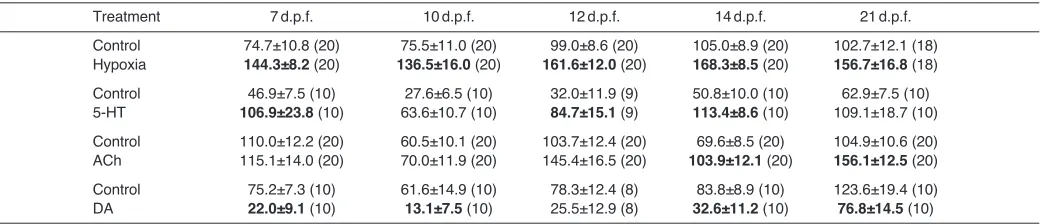
Table2 summarizes experiments in which zebrafish larvae (7–21d.p.f.) were exposed in vivoto acute hypoxia (25mmHg), 5-HT, ACh or DA in behavioural assays, and changes in fVwere
recorded. DA is an inhibitory neurotransmitter in the carotid body (Nurse, 2010) and fish gill (Burleson and Milsom, 1995a; Burleson and Milsom, 1995b), and was used in the present study to demonstrate inhibition of fVin our assays. These data were pooled
and grouped into early stage larvae (7–10d.p.f.) and late stage larvae (14–21d.p.f.) and are presented in Fig.3. As has been shown previously in early stage larvae up to 10d.p.f. (Jonz and Nurse, 2005; Turesson et al., 2006), acute hypoxia induced a significant increase in fV, and late stage larvae were equally affected (Fig.3A). We next
screened for the effects of exogenous application of 50μmoll−1
5-HT, ACh or DA upon fV. Early larvae produced hyperventilatory
responses when exposed to 5-HT (Fig.3B), but reduced fVwhen
confronted with DA (Fig.3D). Application of ACh had no effect on younger larvae (Fig.3C). Late stage larvae, within the range of 14–21d.p.f., responded to 5-HT and DA in the same manner as younger larvae (i.e. with increased and decreased fV, respectively;
Fig.3B,D), with the additional effect of a significant rise in fVin
response to exogenous application of ACh (Fig.3C). Thus, at the concentration tested, the stimulatory effects of 5-HT and ACh on fV mimicked those of hypoxia, with ACh having effects only on
late stage larvae, while DA inhibited fVin both early and late stage
larvae.
To further demonstrate that a cholinergic mechanism for controlling the hyperventilatory response to hypoxia develops in the gills later than a serotonergic pathway, we performed time course experiments at three developmental stages (10, 12 and 21d.p.f.) in which acute hypoxia (25mmHg) was first used to stimulate NECs in the gill in vivo. At all stages of development, fVwas significantly
[image:4.612.47.568.79.191.2]increased by hypoxia within 3min (Fig.4). Subsequent addition of
Table 2. Effects of in vivoapplication of acute hypoxia (PO2=25mmHg) and neurochemicals on ventilation frequency in zebrafish larvae
Treatment 7d.p.f. 10d.p.f. 12d.p.f. 14d.p.f. 21d.p.f.
Control 74.7±10.8 (20) 75.5±11.0 (20) 99.0±8.6 (20) 105.0±8.9 (20) 102.7±12.1 (18) Hypoxia 144.3±8.2 (20) 136.5±16.0(20) 161.6±12.0(20) 168.3±8.5(20) 156.7±16.8(18) Control 46.9±7.5 (10) 27.6±6.5 (10) 32.0±11.9 (9) 50.8±10.0 (10) 62.9±7.5 (10) 5-HT 106.9±23.8(10) 63.6±10.7 (10) 84.7±15.1(9) 113.4±8.6(10) 109.1±18.7 (10) Control 110.0±12.2 (20) 60.5±10.1 (20) 103.7±12.4 (20) 69.6±8.5 (20) 104.9±10.6 (20) ACh 115.1±14.0 (20) 70.0±11.9 (20) 145.4±16.5 (20) 103.9±12.1 (20) 156.1±12.5(20) Control 75.2±7.3 (10) 61.6±14.9 (10) 78.3±12.4 (8) 83.8±8.9 (10) 123.6±19.4 (10) DA 22.0±9.1 (10) 13.1±7.5 (10) 25.5±12.9 (8) 32.6±11.2(10) 76.8±14.5(10) 5-HT, serotonin; ACh, acetylcholine; DA, dopamine.
2
the 5-HT2 receptor antagonist ketanserin (100μmoll−1) to the
superfusate reversibly reduced fVat all stages tested (Fig.4A–C).
Note that at 21d.p.f. a significant effect due to ketanserin was observed only after washout of the drug and return to hypoxia (Fig.4C). The source of this effect is unknown, but we speculate that because larvae at 21d.p.f. (Fig.4C) are considerably larger than those at 10d.p.f. (Fig.4A), the permeability of ketanserin is relatively reduced and a longer period of time is required to reach a maximal ventilatory response. Consistent with the ACh experiments described in Fig.3, addition of the nicotinic ACh receptor antagonist hexamethonium (100μmoll−1) in similar time course experiments
had no effect upon fV at 10d.p.f. (Fig.4D). At 12 and 21d.p.f.,
however, hexamethonium significantly reduced the hypoxia-stimulated rise in fV(Fig.4E,F).
Immunolocalization of VAChT in the developing gill corresponds with development of a cholinergic pathway Immunohistochemical labelling was performed in isolated gills in order to establish a putative morphological basis for the onset of the effects of ACh and hexamethonium on fV in late stage
larvae. Double labelling with anti-VAChT and a neuronal marker (zn-12) in larvae at 10, 12, 14 and 21d.p.f. indicated that VAChT was not present in the gill filaments or gill arches up to 12d.p.f., although the branchial nerve was immunoreactive for both markers during these stages (Fig.4A,B). At 14d.p.f., weak immunolabelling of VAChT and zn-12 was present in the gill filaments (Fig.4C), indicating putative cells. At 21d.p.f., distinct VAChT/zn-12-immunoreactive cells were observed in the filaments and gill arch.
Characterization of VAChT-positive cells in the gill We used gills from adult zebrafish to map the distribution of VAChT cells in the filaments and to indicate any potential overlap with markers of serotonergic and non-serotonergic NECs that have been described in the adult (Jonz and Nurse, 2003). In isolated gills triple labelled with antibodies against VAChT, 5-HT and SV2, VAChT-positive cells were immunonegative for 5-HT and SV2 (Fig.6). This indicates that VAChT cells comprise a population of cells separate from serotonergic and non-serotonergic NECs. VAChT-positive cells were less than 10μm in diameter and did not appear to extend any processes or membrane extensions (Fig.5D, Fig.6B). VAChT cells often appeared eccentric in shape, perhaps owing to the pattern of vesicular labelling within the cytoplasm. In addition, in adults it was evident that these cells were found in the efferent filament epithelium (i.e. facing the incident flow of water during ventilation), organized along the midline near serotonergic NECs (Fig.6A). Although not quantified in this study, the distribution of VAChT cells suggests they were potentially as numerous as serotonergic NECs.
DISCUSSION
The present study has described temporally defined populations of neurosecretory cells in the gills of developing zebrafish. These
include serotonergic NECs that are present in the gills during early larval stages, and a population of cells expressing VAChT, a marker of cholinergic cells (Prado et al., 2002), that develops in later stage larvae. Development of these cell types corresponded with the onset of two potential chemosensory mechanisms that affect the hypoxic ventilatory response. Our results indicate that, despite early development of the hyperventilatory response to hypoxia in embryos, new chemosensory pathways involved in O2 sensing are still
forming between 14 and 21d.p.f. The results of our study are summarized chronologically in Fig.7 and show the developmental stage at which these observations occurred.
Development of serotonergic and SV2-positive NECs NECs immunoreactive for the transmembrane glycoprotein SV2, some of which were also serotonergic, were present in the gills at the earliest stages tested (7d.p.f.). It was evident that non-serotonergic SV2-positive NECs were predominantly confined to the gill arches, while serotonergic NECs were found primarily in the gill filaments. Both of these cell types are found in the gills of adult zebrafish, but establish a different distribution pattern from that observed in larvae: both serotonergic and non-serotonergic NECs occupy the gill filaments in adults (and respiratory lamellae), while only serotonergic NECs have been observed in the gill arches
Hypoxia
7 d.p.f.
10 d.p.f.
A1
A2
B1
B2
C1
C2
D1
D2
5-HT zn-12
5-HT zn-12
bn
5-HT zn-12
5-HT 5-HT
5-HT 5-HT 5-HT zn-12
ga
gr gf
mlc
bn
bn
bn ga
ga
ga gf
gf gf
gr mlc
Control
Control Hypoxia Control Hypoxia
5 1.5
1.0
0.5
0 4
3
2
1
0
*
*
NECs per gill arch
NECs per gill filament
Control Hypoxia Control Hypoxia
5 1.5
1.0
0.5
0
1.5
1.0
0.5
0 4
3
2
1
0
NECs per gill arch
NECs per gill filament
NEC
Hyp
/NEC
Cont
E
F
G
7 d.p.f.
7 d.p.f. 10 d.p.f.
10 d.p.f. Gill arch
Gill filament
2
(Jonz and Nurse, 2003; Jonz and Nurse, 2005). Presumably, this change in distribution of non-serotonergic NECs from the gill arches to the filaments reflects a developmental programme. It has been proposed that NECs of the gill filaments that do not express 5-HT may be part of a proliferative population of cells that differentiate into serotonergic NECs (Bailly et al., 1992; Jonz and Nurse, 2003). Similar SV2-positive NECs lacking 5-HT have also been found in the gills of goldfish (Carassius auratus), trout (Oncorhynchus mykiss), trairão (Hoplias lacerdae), traira (Hoplias malabaricus) and larvae of Xenopus laevis(Saltys et al., 2006; Coolidge et al., 2008). In addition, when adult zebrafish were acclimated to chronic hypoxia for 60days, only the SV2-positive non-serotonergic NECs proliferated (i.e. increased in number) (Jonz et al., 2004). Thus, SV2-positive cells of the gill arches in developing zebrafish may reflect a population of progenitor cells that migrate into gill filament primordia and differentiate into serotonergic NECs. We did, however, observe occasional SV2-positive non-serotonergic NECs in the filaments and a lower total number of serotonergic NECs of the gill arches in larvae in the present study. This perhaps indicates a transitional state of migration of these cells. In adult zebrafish, where the gill filaments are mature and serotonergic NECs are confined to the distal regions, putative SV2-positive progenitors reside adjacent to serotonergic NECs (Jonz and Nurse, 2003) and may contribute to maintaining this cell population. A similar arrangement is found in the adult carotid body, where new type I cells can derive from adjacent progenitor type II cells (Pardal et al., 2007). While the carotid body is formed by migration of sympathoadrenal progenitors from the superior cervical ganglion (Kameda, 2005), the origin of gill NECs is not yet understood.
We examined the effects of acclimation to hypoxia (75mmHg) on the number of serotonergic NECs of the gill filaments at 7 and 10d.p.f. for three reasons: (1) only these cells have been shown to possess chemoreceptor properties in the gill (Jonz et al., 2004; Qin et al., 2010); (2) NECs appear to be functional as chemoreceptors in vivobeginning at 7d.p.f. (Jonz and Nurse, 2005); and (3) this time frame represents an important developmental period when the systems of gas exchange (Rombough, 2002) and O2sensing appear
to be transferred to the gills from the skin (Jonz and Nurse, 2006;
Coccimiglio and Jonz, 2012). Our results indicate that the addition of new NECs in the gill filaments during development is inhibited by hypoxia up to 7d.p.f. In a recent study (Coccimiglio and Jonz, 2012), it was shown that zebrafish larvae acclimated to hypoxia displayed an increased number of serotonergic NECs of the skin, as well as delayed development of peak resting fVand an altered
ventilatory response to hypoxia. The results of this and the present study suggest that hypoxic acclimation during development may postpone the transition of O2sensing from an extrabranchial site to
the gills and perhaps gill development. We further show that this developmental plasticity, in which the number of gill NECs is susceptible to change by hypoxia, may occur for only a brief period of time, as by 10d.p.f. the number of NECs in the gill is not reduced (or has increased) following acclimation to hypoxia.
Serotonergic and dopaminergic pathways are present in early stage larvae
Previously, it was demonstrated in zebrafish that innervation of serotonergic NECs of the gill filaments between 5 and 7d.p.f. corresponds with a dramatic rise in the hyperventilatory response to hypoxia (Jonz and Nurse, 2005). We confirm, in the present study, that application of 5-HT has a stimulatory effect on fVin early stage
larvae (7–10d.p.f.). Moreover, by using hypoxia to first increase fV
in time course experiments, we also demonstrated that ketanserin (a 5-HT2 receptor antagonist) abolishes the hyperventilatory
response to hypoxia as early as 10d.p.f. This suggests that hypoxia stimulated the endogenous release of 5-HT, and that 5-HT is an important mediator of the hypoxic ventilatory response during early stages. The findings are in accordance with those of previous studies. 5-HT stimulated receptors within the gills of trout and increased glossopharyngeal nerve discharge and fV(Burleson and Milsom,
1995a; Burleson and Milsom, 1995b). In addition, in the amphibious fish K. marmoratus, pre-exposure to 5-HT increased the sensitivity of emersion behaviour (performed to promote a transition from gill to cutaneous respiration) when confronted with hypoxia, while ketanserin had the opposite effect (Regan et al., 2011). At 7, 12 and 21d.p.f., 5-HT-immunoreactive NECs were found primarily in the gill filaments, the site of O2-chemosensitive NECs in adult zebrafish
200
150
100
50
0
A
Early stage
Control
Hypoxia
Late stage
Early stage Late stage
200
150
100
50
0
B
Early stage
Control
5-HT
Late stage
Early stage Late stage
fv
(min
–1
)
200
150
100
50
0
C
ControlACh 200
150
100
50
0
D
Control DA*
*
*
*
*
*
*
(Jonz et al., 2004). This suggests that NECs of the gill filaments were the likely source of 5-HT release in the gill.
Thus, a serotonergic mechanism, in which 5-HT is released in the gill and acts through G-protein-coupled (metabotropic) 5-HT2
receptors to increase fV, may be present early in larval development
in zebrafish. In the developing carotid body, 5-HT is also present during embryonic development in type I cells (Kameda, 2005). In addition, there is evidence that 5-HT is released by the carotid body upon chemostimulation, and that ketanserin inhibits both pre-synaptic (type I cell) and post-pre-synaptic (petrosal neuron) 5-HT2A
receptors, which participate in neuromodulation of the chemosensory response (Nurse, 2010). However, ionotropic 5-HT3receptors are
also present on post-synaptic nerve terminals innervating type I cells, and may mediate fast neurotransmission in the carotid body (Zhong et al., 1999; Nurse, 2010).
We also demonstrated that during these early larval stages zebrafish were sensitive to exogenous application of DA. Though only a minor addition to this study, an inhibitory dopaminergic mechanism in the gill may be present at the earliest stages of development. In the carotid body, tyrosine hydroxylase (TH), an enzyme involved in DA production, is present during embryonic development (Kameda, 2005), and in newborns DA is already the main amine of the carotid body (Bairam and Carroll, 2005). A common view is that DA is an inhibitory neuromodulator in the carotid body and acts through pre- and post-synaptic metabotropic
receptors (Nurse, 2010). TH was co-localized in vitrowith 5-HT in O2-sensitive NECs of the catfish (Ictalurus punctatus) (Burleson
et al., 2006), suggesting that serotonergic NECs of the gill filaments may also release DA. By contrast, immunohistochemical labelling indicated the absence of TH in the gills of goldfish and trout (Porteus et al., 2013).
VAChT-positive cells are a separate population of neurosecretory cells in the gill
The cells of the gill filaments labelled by the VAChT antibody were not serotonergic, nor were they immunoreactive for anti-SV2. These characteristics suggest that VAChT-positive cells in zebrafish are of a separate population from serotonergic and non-serotonergic NECs, which are both SV2 positive. While SV2 appears to be widely conserved in vertebrates (Buckley and Kelly, 1985), it may not necessarily label all neurosecretory cells (e.g. Pumplin and Getschman, 2000). Indeed, the expression of the VAChT membrane protein in these cells indicates that they probably retain synaptic vesicles that actively store ACh.
Cells immunoreactive for the VAChT protein have also been described in the gill filaments of K. marmoratus(Regan et al., 2011) and in gill filament neurons of trout and goldfish (Porteus et al., 2013). In the latter study, VAChT-positive neurons contained 5-HT and were similar in morphology to the serotonergic filament neurons of zebrafish (Jonz and Nurse, 2003). In the present study, however,
**
A
250
200
150
100
50
0
3 6 9 12 15
*
**
*
*
*
*
D
250
200
150
100
50
0
3 6 9 12 15
Ket
B
250
200
150
100
50
0
3 6 9 12 15
*
**
*
Ket
C
250
200
150
100
50
0
3 6 9 12 15
*
**
*
Ket
Hex
*
*
E
250
200
150
100
50
0
3 6 9 12 15
Hex
*
**
*
F
250
200
150
100
50
0
3 6 9 12 15
Ket fV
(min
–1)
Time (min)
2
VAChT-positive cells were not serotonergic and did not resemble filament neurons of zebrafish in their morphology or distribution. In zebrafish, neurons of the gill filaments are located beneath the basal lamina and filament arteries, and course along the midline of the filament (Jonz and Nurse, 2003). It is difficult to predict where VAChT cells might fit in with a putative scheme of chemosensing in the gill without a detailed knowledge of the distribution and orientation of these cells. Future studies may reveal whether VAChT cells are innervated, as are NECs, and whether they have a neural or paracrine role in the gill. Closer examination of these cells may also determine whether they should be considered ‘paraneurons’, which share structural and functional properties of neurons (Fujita, 1989; Zaccone et al., 1997), as do O2-sensitive NECs.
In larvae, VAChT-positive cells were also immunoreactive for the neuronal marker zn-12. This antibody labels neurons and nerve
fibres in the zebrafish gill (Jonz and Nurse, 2003; Vulesevic et al., 2006). The significance of this observation is not yet fully understood, but in larvae of X. laevis, zn-12-immunoreactive cells that did not contain 5-HT or SV2 were localized to the terminal branches of the gills, where neighbouring NECs were found (Saltys et al., 2006). In addition, as labelling of neurons and processes by zn-12 in zebrafish is dependent on developmental stage (Trevarrow et al., 1990), it is possible that zn-12 labelling of VAChT-positive cells may be restricted to early development. Embryonic zn-12 immunoreactivity of VAChT-positive cells may, therefore, provide some information as to the embryonic origin of these cells.
A cholinergic pathway in the gill develops later in larvae A putative cholinergic component of the O2chemosensory system
HT, ACh did not affect fV during early larval stages. In
correspondence with these observations, time course experiments demonstrated that hexamethonium (a nicotinic ACh receptor antagonist) failed to inhibit hypoxia-induced hyperventilation at 10d.p.f. In later stage larvae, ACh had a stimulatory effect on fV
and, at 12 and 21d.p.f., hexamethonium inhibited the hyperventilatory response to hypoxia. This suggests that hypoxia stimulated endogenous release of ACh only in later stage larvae, and that ACh may be an important mediator of the hypoxic response vianicotinic receptors. The findings are consistent with those of previous studies in trout, in which ACh stimulated receptors within the gill and increased glossopharyngeal nerve discharge and fV(Burleson and
Milsom, 1995a; Burleson and Milsom, 1995b). Accordingly, nicotine had similar effects in these studies (Burleson and Milsom, 1995a; Burleson and Milsom, 1995b), and ACh and hexamethonium increased or reduced, respectively, sensitivity of the emersion response to hypoxia in K. marmoratus(Regan et al., 2011).
We further showed by immunohistochemistry that weak detection of the VAChT protein in the gill filaments can be observed as early as 14d.p.f., and distinct cells immunoreactive for VAChT were present at 21d.p.f. VAChT is a marker of cholinergic activity and has been localized to rat carotid body type I cells in situ (Zhang and Nurse, 2004). These results indicate the later development (between 14 and 21d.p.f.) of a population of cells that presumably stores ACh.
ACh is the favoured candidate for mediating fast excitatory neurotransmission (along with ATP) in the carotid body, and nicotonic ACh receptors have been localized to post-synaptic nerve terminals of petrosal neurons as well as to pre-synaptic type I cells (Shirahata et al., 2007; Nurse, 2010). The cholinergic mechanism in the carotid body is tightly linked to postnatal development of chemoreceptor function, with increases in ACh synthesis and nicotinic receptor expression increasing with age (Bairam et al., 2007; Shirahata et al., 2007). Our results suggest that, as in the carotid body, a cholinergic component of O2sensing in the gills
develops relatively late.
Conclusions and significance
The present study used in vivo drug application and
immunohistochemistry to explore potential neurochemical mechanisms of O2sensing, and their development, in the gills of
zebrafish. We examined the sensitivity of ventilatory changes in zebrafish larvae to exogenous application of neurochemicals, and identified serotonergic and cholinergic pathways in the gill that potentially contribute to the control of the hypoxic ventilatory response at different developmental stages. These studies may help guide future pharmacological investigations in zebrafish that link endogenous neurotransmitters to mechanisms of synaptic transmission or modulation of the O2chemosensory response in the
gills.
2
Similar preparations, in which drugs were applied exogenously to the water, have been used to study ventilatory responses in zebrafish and other species (Jonz and Nurse, 2005; Turesson et al., 2006; Regan et al., 2011). A caveat of this approach is the potentially non-specific actions of these drugs on the central nervous system. However, given that the blood–brain barrier begins to develop in zebrafish at 3d.p.f. (Rihel and Schier, 2012), that the effects of the drugs on fVin zebrafish in our study are consistent with those of
previous isolated gill and in vivoperfusion studies in other species (Burleson and Milsom, 1995a; Burleson and Milsom, 1995b; Regan et al., 2011), and that our data from ventilation experiments correspond well with our immunohistochemical results, changes in fVreported in the present study would seem to have arisen from the
direct effects of these drugs on chemosensory mechanisms in the gills. In our experiments, however, we could not differentiate the specific sites of action in the gills of the drugs tested, and so cannot yet deduce specific functional roles for 5-HT, ACh and DA. Our study also demonstrates that this preparation may be useful for screening the effects of a variety of drugs, or classes of drugs, on hypoxic ventilatory control and their potential biomedical importance. Similar large-scale screens using zebrafish have already been employed (Rihel and Schier, 2012).
The results from this study suggest that a cholinergic mechanism is not required for production of the hyperventilatory response to hypoxia in developing zebrafish. A serotonergic system therefore appears to sufficiently regulate hypoxia-induced changes in fVduring
early developmental stages. An interesting question then arises: what are the relative roles of serotonergic and cholinergic control of fV,
and of NECs versusVAChT-positive cells? Perhaps serotonergic NECs in zebrafish mediate initial responses to hypoxia during early development, such as increased frequency of body movement and buccal pumping (Jonz and Nurse, 2005; Coccimiglio and Jonz, 2012), and direct the transition of O2sensing from an extrabranchial
site to the developing gills. Accordingly, serotonergic and cholinergic systems may both be important during later larval stages and adulthood when the gills and the circulatory system are fully
developed and required for gas exchange (Rombough, 2007; Schwerte, 2009). It is also tempting to speculate on the evolutionary significance of this pattern of development, in which a serotonergic system in the gill precedes cholinergic control of fV. Both the carotid
body and O2-sensitive pulmonary NEBs of mammals are found in
tissues that are derivatives of embryonic arches III and IV, respectively, and correspond to the same sites as gill NECs in fish (Burleson and Milsom, 2007; Jonz and Nurse, 2009). In this manner, gill NECs are evolutionary precursors of mammalian O2
chemoreceptors. Perhaps the chronological sequence of the development of a serotonergic system followed by a cholinergic system in the fish gill reflects a primitive condition that was antecedent to the differentiated roles of these respective systems in mammals, in which early development of serotonergic NEBs of the pulmonary epithelium became important in facilitating the transition to extrauterine life during the perinatal period (much like serotonergic NECs may have a similar role in the developing gills), and later maturation of the cholinergic phenotype of carotid body type I cells led to their dominance as O2chemoreceptors in adults.
Although this may explain how ACh and 5-HT each became dominant neurotransmitters in type I cells and NEBs, respectively, it would not explain how both ACh and 5-HT came to be expressed in type I cells while they occupy different cell types in the fish gill.
LIST OF ABBREVIATIONS
5-HT 5-hydroxytryptamine (serotonin)
ACh acetylcholine
DA dopamine
d.p.f. days post-fertilization
fV ventilation frequency
NEB neuroepithelial body NEC neuroepithelial cell
PCO2 partial pressure of carbon dioxide
PO2 partial pressure of oxygen SV2 synaptic vesicle protein TH tyrosine hydroxylase
VAChT vesicular acetylcholine transporter zn-12 zebrafish neuron-specific antigen
ACKNOWLEDGEMENTS
zn-12 and SV2 antibodies were obtained from the Developmental Studies Hybridoma Bank developed under the auspices of the NICHD and maintained by the University of Iowa, Department of Biological Sciences, Iowa City, IA 52242, USA.
FUNDING
This research was supported by the Natural Sciences and Engineering Research Council of Canada [grant no. 342303-2007], the Canadian Foundation for Innovation and the Ontario Research Fund [grant no. 16589].
REFERENCES
Bailly, Y., Dunel-Erb, S. and Laurent, P.(1992). The neuroepithelial cells of the fish gill filament: indolamine-immunocytochemistry and innervation. Anat. Rec.233, 143-161.
Bairam, A. and Carroll, J. L.(2005). Neurotransmitters in carotid body development.
Respir. Physiol. Neurobiol.149, 217-232.
Bairam, A., Joseph, V., Lajeunesse, Y. and Kinkead, R.(2007). Developmental
profile of cholinergic and purinergic traits and receptors in peripheral chemoreflex pathway in cats. Neuroscience146, 1841-1853.
Barrionuevo, W. R., Fernandes, M. N. and Rocha, O.(2010). Aerobic and anaerobic
metabolism for the zebrafish, Danio rerio, reared under normoxic and hypoxic conditions and exposed to acute hypoxia during development. Braz. J. Biol.70, 425-434.
Bradford, C. S., Sun, L., Collodi, P. and Barnes, D. W.(1994). Cell cultures from zebrafish embryos and adult tissues. J. Tissue Cult. Meth.16, 99-107. Buckley, K. and Kelly, R. B.(1985). Identification of a transmembrane glycoprotein
specific for secretory vesicles of neural and endocrine cells. J. Cell Biol.100, 1284-1294.
Burleson, M. L. and Milsom, W. K.(1993). Sensory receptors in the first gill arch of rainbow trout. Respir. Physiol.93, 97-110.
d.p.f. 7 10 12 Adult
5-HT+ NECs present in gill filaments 5-HT–/SV2+ NECs present in gill arches Hypoxia number of 5-HT+ NECs
Ket hypoxic HV Mature hypoxic
HV response 5-HT fV DA fV
Hypoxia does not change 5- HT+ NEC number
Hex hypoxic HV
VAChT+ cells of gill filaments first appear
5-HT–/SV2+ NECs present in gill filaments*
ACh fV
21 14
Burleson, M. L. and Milsom, W. K.(1995a). Cardio-ventilatory control in rainbow trout: I. Pharmacology of branchial, oxygen-sensitive chemoreceptors. Respir.
Physiol.100, 231-238.
Burleson, M. L. and Milsom, W. K.(1995b). Cardio-ventilatory control in rainbow trout: II. Reflex effects of exogenous neurochemicals. Respir. Physiol.101, 289-299. Burleson, M. L., Mercer, S. E. and Wilk-Blaszczak, M. A.(2006). Isolation and
characterization of putative O2chemoreceptor cells from the gills of channel catfish
(Ictalurus punctatus). Brain Res.1092, 100-107.
Coccimiglio, M. L. and Jonz, M. G.(2012). Serotonergic neuroepithelial cells of the skin in developing zebrafish: morphology, innervation and oxygen-sensitive properties. J. Exp. Biol. 215, 3881-3894.
Coolidge, E. H., Ciuhandu, C. S. and Milsom, W. K.(2008). A comparative analysis of putative oxygen-sensing cells in the fish gill. J. Exp. Biol.211, 1231-1242. Dunel-Erb, S., Bailly, Y. and Laurent, P.(1982). Neuroepithelial cells in fish gill
primary lamellae. J. Appl. Physiol.53, 1342-1353.
Fu, X. W., Nurse, C. A., Wong, V. and Cutz, E.(2002). Hypoxia-induced secretion of serotonin from intact pulmonary neuroepithelial bodies in neonatal rabbit. J. Physiol. 539, 503-510.
Fujita, T.(1989). Present status of paraneuron concept. Arch. Histol. Cytol.52 Suppl., 1-8.
Gauda, E. B., Cooper, R., Johnson, S. M., McLemore, G. L. and Marshall, C. (2004). Autonomic microganglion cells: a source of acetylcholine in the rat carotid body. J. Appl. Physiol.96, 384-391.
Houser, A., McNair, C., Piccinini, R., Luxhoj, A., Bell, W. E. and Turner, J. E. (2011). Effects of estrogen on the neuromuscular system in the embryonic zebrafish
(Danio rerio). Brain Res.1381, 106-116.
Jonz, M. G. and Nurse, C. A.(2003). Neuroepithelial cells and associated innervation of the zebrafish gill: a confocal immunofluorescence study. J. Comp. Neurol.461, 1-17.
Jonz, M. G. and Nurse, C. A.(2005). Development of oxygen sensing in the gills of zebrafish. J. Exp. Biol.208, 1537-1549.
Jonz, M. G. and Nurse, C. A.(2006). Ontogenesis of oxygen chemoreception in aquatic vertebrates. Respir. Physiol. Neurobiol.154, 139-152.
Jonz, M. G. and Nurse, C. A.(2009). Oxygen-sensitive neuroepithelial cells in the gills of aquatic vertebrates. In Airway Chemoreceptors in the Vertebrates: Structure,
Evolution and Function(ed. G. Zaccone, E. Cutz, D. Adriaensen, C. A. Nurse and A.
Mauceri), pp 1-30. Enfield, NH: Science Publishers.
Jonz, M. G. and Zaccone, G.(2009). Nervous control of the gills. Acta Histochem. 111, 207-216.
Jonz, M. G., Fearon, I. M. and Nurse, C. A.(2004). Neuroepithelial oxygen chemoreceptors of the zebrafish gill. J. Physiol.560, 737-752.
Kameda, Y.(2005). Mash1 is required for glomus cell formation in the mouse carotid body. Dev. Biol.283, 128-139.
Kimmel, C. B., Ballard, W. W., Kimmel, S. R., Ullmann, B. and Schilling, T. F. (1995). Stages of embryonic development of the zebrafish. Dev. Dyn.203, 253-310. López-Barneo, J., Ortega-Sáenz, P., Pardal, R., Pascual, A. and Piruat, J. I.(2008).
Carotid body oxygen sensing. Eur. Respir. J.32, 1386-1398.
Mendelsohn, B. A., Kassebaum, B. L. and Gitlin, J. D.(2008). The zebrafish embryo as a dynamic model of anoxia tolerance. Dev. Dyn.237, 1780-1788. Metcalfe, W. K., Myers, P. Z., Trevarrow, B., Bass, M. B. and Kimmel, C. B.(1990).
Primary neurons that express the L2/HNK-1 carbohydrate during early development in the zebrafish. Development110, 491-504.
Milsom, W. K. and Brill, R. W.(1986). Oxygen sensitive afferent information arising from the first gill arch of yellowfin tuna. Respir. Physiol.66, 193-203.
Milsom, W. K. and Burleson, M. L.(2007). Peripheral arterial chemoreceptors and the evolution of the carotid body. Respir. Physiol. Neurobiol.157, 4-11.
Nurse, C. A.(2010). Neurotransmitter and neuromodulatory mechanisms at peripheral arterial chemoreceptors. Exp. Physiol.95, 657-667.
Padilla, P. A. and Roth, M. B.(2001). Oxygen deprivation causes suspended animation in the zebrafish embryo. Proc. Natl. Acad. Sci. USA98, 7331-7335.
Pardal, R., Ortega-Sáenz, P., Durán, R. and López-Barneo, J.(2007). Glia-like stem cells sustain physiologic neurogenesis in the adult mammalian carotid body. Cell 131, 364-377.
Perry, S., Jonz, M. G. and Gilmour, K. M.(2009). Oxygen sensing and the hypoxic ventilatory response. In Fish Physiology, Vol. 27 (ed. J. G. Richards, A. P Farrell and C. J. Brauner), pp 193-253. New York: Academic Press.
Porteus, C. S., Brink, D. L., Coolidge, E. H., Fong, A. Y. and Milsom, W. K.(2013). Distribution of acetylcholine and catecholamines in fish gills and their potential roles in the hypoxic ventilatory response. Acta Histochem.115, 158-169.
Prado, M. A., Reis, R. A., Prado, V. F., de Mello, M. C., Gomez, M. V. and de Mello, F. G.(2002). Regulation of acetylcholine synthesis and storage. Neurochem. Int.41, 291-299.
Pumplin, D. W. and Getschman, E.(2000). Synaptic proteins in rat taste bud cells: appearance in the Golgi apparatus and relationship to α-gustducin and the Lewis(b)
and A antigens. J. Comp. Neurol.427, 171-184.
Qin, Z., Lewis, J. E. and Perry, S. F.(2010). Zebrafish (Danio rerio) gill
neuroepithelial cells are sensitive chemoreceptors for environmental CO2. J. Physiol. 588, 861-872.
Regan, K. S., Jonz, M. G. and Wright, P. A.(2011). Neuroepithelial cells and the hypoxia emersion response in the amphibious fish Kryptolebias marmoratus. J. Exp.
Biol.214, 2560-2568.
Rihel, J. and Schier, A. F.(2012). Behavioral screening for neuroactive drugs in zebrafish. Dev. Neurobiol.72, 373-385.
Roghani, A., Feldman, J., Kohan, S. A., Shirzadi, A., Gundersen, C. B., Brecha, N. and Edwards, R. H.(1994). Molecular cloning of a putative vesicular transporter for acetylcholine. Proc. Natl. Acad. Sci. USA91, 10620-10624.
Rombough, P.(2002). Gills are needed for ionoregulation before they are needed for O2uptake in developing zebrafish, Danio rerio. J. Exp. Biol.205, 1787-1794. Rombough, P.(2007). The functional ontogeny of the teleost gill: which comes first,
gas or ion exchange? Comp. Biochem. Physiol.148A, 732-742.
Saltys, H. A., Jonz, M. G. and Nurse, C. A.(2006). Comparative study of gill neuroepithelial cells and their innervation in teleosts and Xenopustadpoles. Cell
Tissue Res.323, 1-10.
Schwerte, T.(2009). Cardio-respiratory control during early development in the model animal zebrafish. Acta Histochem.111, 230-243.
Shirahata, M., Balbir, A., Otsubo, T. and Fitzgerald, R. S.(2007). Role of acetylcholine in neurotransmission of the carotid body. Respir. Physiol. Neurobiol. 157, 93-105.
Sundin, L. and Nilsson, S.(2002). Branchial innervation. J. Exp. Zool.293, 232-248. Trevarrow, B., Marks, D. L. and Kimmel, C. B.(1990). Organization of hindbrain
segments in the zebrafish embryo. Neuron4, 669-679.
Turesson, J., Schwerte, T. and Sundin, L.(2006). Late onset of NMDA receptor-mediated ventilatory control during early development in zebrafish (Danio rerio).
Comp. Biochem. Physiol. 143A, 332-339.
Vulesevic, B., McNeill, B. and Perry, S. F.(2006). Chemoreceptor plasticity and respiratory acclimation in the zebrafish Danio rerio. J. Exp. Biol.209, 1261-1273. Westerfield, M.(2000). The Zebrafish Book: A Guide for the Laboratory Use of
Zebrafish (Danio rerio), 4th edn. Eugene, OR: University of Oregon Press.
Wood, C. M. and Shelton, G.(1980). Cardiovascular dynamics and adrenergic
responses of the rainbow trout in vivo. J. Exp. Biol.87, 247-270.
Zaccone, G., Fasulo, S., Ainis, L. and Licata, A.(1997). Paraneurons in the gills and airways of fishes. Microsc. Res. Tech.37, 4-12.
Zachar, P. C. and Jonz, M. G.(2012). Confocal imaging of Merkel-like basal cells in the taste buds of zebrafish. Acta Histochem.114, 101-115.
Zhang, M. and Nurse, C. A.(2004). CO2/pH chemosensory signaling in co-cultures of
rat carotid body receptors and petrosal neurons: role of ATP and ACh. J.
Neurophysiol.92, 3433-3445.