Stroke patients' utilisation of extrinsic feedback from
computer-based technology in the home.
PARKER, Jack.
Available from Sheffield Hallam University Research Archive (SHURA) at:
http://shura.shu.ac.uk/20775/
This document is the author deposited version. You are advised to consult the publisher's version if you wish to cite from it.
Published version
PARKER, Jack. (2012). Stroke patients' utilisation of extrinsic feedback from computer-based technology in the home. Doctoral, Sheffield Hallam University (United Kingdom)..
Copyright and re-use policy
Learning
cnci 11 services |
Coiiegiato Learning Centro Collegiate Greece n £ 0 J Li O
Shs'iilald S10 2BP
1 02 07 8 5 2 8 4
ProQuest Number: 10702878
All rights reserved
INFORMATION TO ALL USERS
The quality of this reproduction is dependent upon the quality of the copy submitted.
In the unlikely event that the author did not send a com plete manuscript and there are missing pages, these will be noted. Also, if material had to be removed,
a note will indicate the deletion.
uest
ProQuest 10702878
Published by ProQuest LLC(2017). Copyright of the Dissertation is held by the Author.
All rights reserved.
This work is protected against unauthorized copying under Title 17, United States C ode Microform Edition © ProQuest LLC.
ProQuest LLC.
789 East Eisenhower Parkway P.O. Box 1346
Stroke Patients’ Utilisation of Extrinsic Feedback from
Computer-Based Technology in the Home
Jack Parker
A thesis submitted in partial fulfilment of the requirements of
Sheffield Hallam University for the degree of Doctor of Philosophy
Candidate’s Statement
I hereby declare that this thesis, submitted in partial fulfilment of the requirements for the degree of Doctor of Philosophy and entitled Stroke Patients’ Utilisation of Extrinsic Feedback from Computer-Based Technology in the Home' represents my own work and has not been previously submitted to this or any other institution for any degree, diploma or other qualification.
The work within this thesis is my own unless otherwise stated.
Acknowledgements
I would like to thank all of the participants and their carers who took part in this study. The participants, their carers, and the health professionals who took part not only provided a valuable insight into their experiences, but also provided fantastic advice along the way.
I would also like to express my sincere thanks and gratitude to Dr Jackie Hammerton, Professor Gail Mountain and Dr Ben Heller for providing support and advice.
I would like to especially thank Professor Sue Mawson who offered her time and support through to the end.
I would also like to thank my colleagues in the SMART consortium and Sheffield Hallam University for their support and advice, and the EPSRC for sponsoring this work.
Finally and most importantly, I dedicate this thesis to Mel, Leo and Darcie for
Abstract
Background: Evidence indicates that post-stroke rehabilitation improves function,
independence and quality of life. A key aspect of rehabilitation is the provision of appropriate information and feedback to the learner.
Advances in information technology (IT) have allowed for the development of various systems to complement stroke rehabilitation that could be used in the home setting. In the near future these systems may increase the provision of rehabilitation a stroke survivor receives and carries out, as well as providing a learning platform that facilitates long-term self-management.
Aim: To explore the utilisation of extrinsic feedback from computer-based technology
to facilitate post-stroke upper-limb rehabilitation in the home.
Method: Using the principles of realistic evaluation, this study explored the context of
utilising computer feedback for upper limb stroke rehabilitation in the home setting; the underpinning theory-driven mechanisms of the intervention and how these impacted on theoretical outcomes. Focus groups with Community Stroke Teams were followed by initial testing and multi-method case studies before, during and after the use of computer-based equipment. Data were analysed in relation to the hypotheses case by case. This was followed by a synthesis of the findings to answer the question, 'what works for whom and in what circumstances and respects? ’
Findings: Data analysis reveals that in order to achieve desired outcomes through the
use of computer technology, key elements of computer-feedback such as; accurate, measurable, rewarding, adaptable, and knowledge of results feedback are required to trigger the mechanisms underpinning the intervention. In addition, the pre-existing context and the personal and environmental contexts such as; previous experiences of service delivery, personal goals, trust in technology, social circumstances and practicalities may also enable or constrain the underpinning theory-driven mechanisms.
Discussion: This research has explored the implications of the paradigm shift from
therapist led rehabilitation where feedback is provided face-to-face to a more patient led model of rehabilitation where feedback is provided by a computer in the absence of a therapist. Findings suggest that the delivery of feedback in clinical practice is led by their empirical knowledge and understanding of the therapists. However, this model of delivery may not be conducive to motor learning and self-management and may also influence the personal context of users.
Table of Contents
CANDIDATE'S STATEMENT 2
ACKNOWLEDGEMENTS 3
ABSTRACT 4
TABLE OF CONTENTS 5
LIST OF TABLES 11
LIST OF FIGURES 12
APPENDICES 14
INTRODUCTION AND THE REALISTIC EVALUATION FRAMEWORK USED
THROUGHOUT THE THESIS 15
Introduction 15
The Methodological Framework 16
Realistic Evaluation 16
Research Question 20
Aim and Objectives: 20
The Structure of this Thesis 21
SECTION 1: THEORY 22
1. CHAPTER 1: CONTEXT 22
1.1 Introduction 22
1.2 Pathology: 'what is a stroke?' 22
1.3 Epidemiology: Strokes are an Increasing Problem 23
1.4 The Sequelae of Stroke: The Impact on Survivors and Caregivers 24
1.5 Stroke Services: Current Service Delivery 25
1.7 A Shift in Service Delivery is Required 33
1.8 Summary 34
2. CHAPTER 2: MECHANISMS, THEORETICAL OUTCOMES AND CMOC
GENERATION 35
2.1 Introduction 35
2.2 Using Technology for Post-Stroke Rehabilitation 35
2.3 The SMART 1 Project 43
2.4 The SMART Rehabilitation Technology System Prototype used in this Research 48
2.5 How this PhD Programme Builds on the SMART 1 Project 52
2.6 Theoretical Framework: Evidence Review to Propositions 53
2.7 Rehabilitation and Recovery 53
2.8 The Theoretical Approach to Post-Stroke Rehabilitation Incorporated within the
SMART System 55
2.9 Feedback in Post-Stroke Rehabilitation 58
2.10 Theoretical Outcomes: Behaviour Change and Self-Management 71
2.11 The Generation of CMOC's 78
2.12 Propositions 81
2.13 Context-Mechanism-Outcome Configurations (CMOC's) 81
2.14 Summary 84
SECTION TWO: OBSERVATIONS 85
3. CHAPTER 3: THE METHODS ADOPTED TO DEVELOP AND OBSERVE THE
CMOC'S 85
3.1 Introduction 85
3.2 Choosing an Appropriate Methodology 86
3.3 Paradigmatic Approaches 88
3.4 Research Setting 89
3.7 Ethical and Research Governance Approval 101
3.8 Establishing Trustworthiness 101
3.9 Applying a Systematic and Transparent Approach 102
3.10 Credibility 103
3.11 Transferability 104
3.12 Dependability and Confirmability 105
3.13 Summary 106
4. CHAPTER 4: PROFESSIONAL PERSPECTIVES OF THE DELIVERY OF FEEDBACK IN CLINICAL PRACTICE: VALIDATING AND EXPLORING EXISTING
AND NEW CMOC’S 1 0 7
4.1 Introduction 107
4.2 Aim 107
4.3 Focus Group Method 108
4.4 Exploring Propositions, Theory Refinement and Generating New Theory 114
4.5 Validation and Exploration of Existing and New CMOC’s 128
4.6 CMOC Refinement 133
4.7 Conclusion 134
4.8 Summary 135
5. CHAPTER 5: VALIDATING EXISTING CMOC'S AND EXPLORING NEW
CMOC'S THROUGH THE SMART REHABILITATION TECHNOLOGY SYSTEM 1 3 6
5.1 Introduction 136
5.2 Previous Research with the SMART Rehabilitation Technology System 136
5.3 Aim 137
5.4 Methodology 137
5.5 Context 140
5.6 M ethods 140
5.7 Recording 141
5.9 Exploring the Embryonic CMOC's 141
5.10 Results of Testing 146
5.11 Validation and Exploration of Existing and New CMOC's 148
5.12 Implications for Further Testing 150
5.13 Summary 152
6. CHAPTER 6: SYSTEMATIC TESTING OF THE CMOC’S 153
6.1 Introduction 153
6.2 Aim 153
6.3 M ethodology 153
6.4 Research Setting 159
6.5 Procedures 159
6.6 Data collection 160
6.7 Recording 164
6.8 Data Analysis 165
6.9 Socio-Demographic Profile of the Participants 167
6.10 Testing the CMOC's 167
6.11 User Testing with the Participants 168
6.12 Case Study 1: Mr. Brown 168
6.13 Case Study 2: Mrs. Green 177
6.14 Case Study 3: Mr. Gray 188
6.15 Case Study 4: Mr. Blackwell 201
6.16 Case Study 5: Mr. Redmond 213
6.17 Quantitative Outcomes: The Nottingham Extended Activities of Daily Living
(NEADL) Scores 226
6.17 Summary 229
7. CHAPTER 7: SYNTHESIS: ‘WHAT WORK WORKS FOR WHOM AND IN
WHAT CIRCUMSTANCES AND RESPECTS' 2 3 0
7.1 Introduction 230
7.2 Discussion: Factors influencing the utilisation of feedback 231
7.3 Context 234
7.4 Mechanisms 245
7.5 CMO Interaction 250
7.6 CMOC Refinement 253
7.7 Summary 257
CHAPTER 8: FINAL DISCUSSION, RECOMMENDATIONS AND CONCLUSION 2 5 8
8.1 Introduction 258
8.2 Final Discussion 258
8.3 Implications and Recommendations 264
8.4 Further Research 273
8.5 Study Limitations 275
8.6 Conclusion 276
BROADCASTING 2 7 8
SECTION 4: REFERENCES AND APPENDICES 2 8 0
REFERENCES 2 8 0
APPENDICES 3 0 6
Appendix 1: A Summary of Papers Reporting Comparable Technology Systems to the
SMART System 306
Appendix 2: A Summary of a Review of the Evidence Underpinning the Use of
Feedback for Computer Technology in Post-Stroke Upper-Limb Rehabilitation 307
Appendix 3: Focus Group Moderator Guide 308
Appendix 4: The Nottingham Extended Activities of Daily Living Scale (NEADL) 309
Appendix 6: Research Governance Approval 314
Appendix 7: NRES Amendment Approval 316
Appendix 8: Research Governance Amendment Approval 318
Appendix 9: Audit 319
Appendix 10: Letter of Invite (Health Professionals) 320
Appendix 11: Information Sheet (Health Professionals) 321
Appendix 12: Therapists' Details 325
Appendix 13: Focus Group Topics with Health Professionals 326
Appendix 14: Institutional Ethical Approval 327
Appendix 15: Letter of invite (participant) 329
Appendix 16: Information Sheet (Participant) 330
Appendix 17: Letter of invite (carer) 334
Appendix 18: Information Sheet (carer) 335
Appendix 19: Therapist's Participant Profile 339
Appendix 20: Letter to G.P. 341
Appendix 21: The MMSE 342
Appendix 22: The Frenchay Aphasia Screening Test 343
Appendix 23: Researcher's Participant Profile 344
Appendix 24: Interview 1 with Participants and Carers 345 Appendix 25: Interview 2 with Participants and Carers 347
Appendix 26: Development of the Garments 349
List of Tables
Table 2-1 Forms of feedback classifications p.61
Table 2-2 The incorporation of theory-driven ingredients within the SMART p.80 system
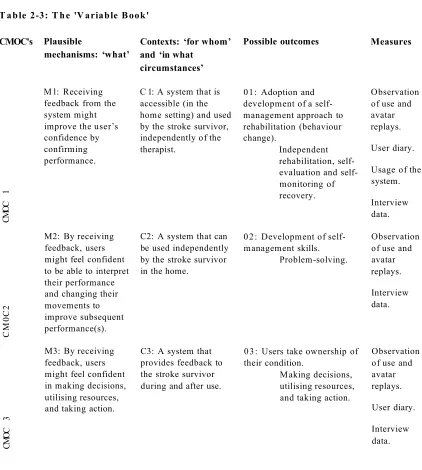
Table 2-3 The Variable Book p.82
Table 3-1 The Method of Data Analysis p. 100
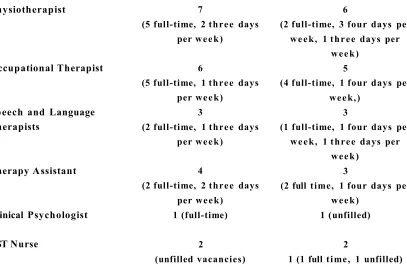
Table 4-1 Composition of the Community Stroke Teams (North and South) p. 112
Table 4-2 Community Stroke Team South Demographics p. 114
Table 4-3 Community Stroke Team North Demographics p. 114
Table 4-4 CMOC Refinement p. 133
Table 5-1 Further CMOC Refinement p. 150
Table 5-2 A New CMOC p.151
Table 6-1 Demographics of the case studies p. 167
Table 6-2 User Testing with Participants p. 168
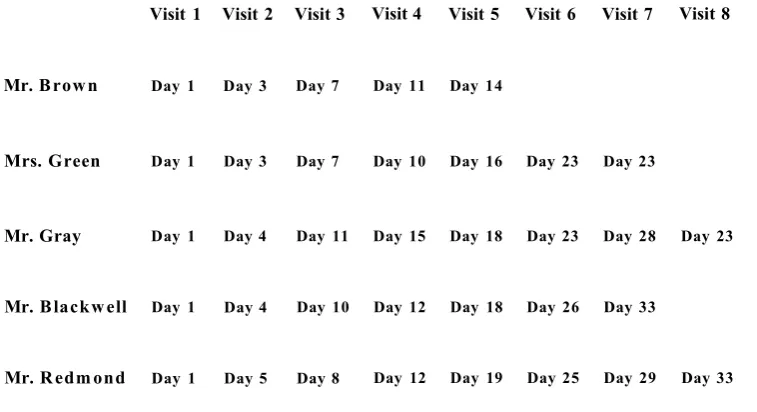
Table 6-3 Participant usage of the SMART Rehabilitation Technology System p.227
Table 6-4 NEADL Score changes specific to the upper-limb for each p.228
participant
List of Figures
Fig. 0-1 The realistic evaluation framework used in this research p.18
Fig. 1-1 The first stage of the realistic evaluation cycle p.22
Fig. 1-2 Stroke Care Pathway p.27
Fig. 2-1 Prototype 1 p.44
Fig. 2-2 The upper-arm garment p.44
Fig. 2-3 The wrist garment p.44
Fig. 2-4 Screen display of the performed movement and the reference figure p.45
Fig. 2-5 Progress chart displaying cycle time and length of reach p.45
Fig. 2-6 The vest garment p.47
Fig. 2-7 User wearing the vest, upper arm and wrist garments and sensors p.47
Fig. 2-8 On-screen display during exercise p.49
Fig. 2-9 On-screen display following exercise (video playback) p.50
Fig. 2-10 Alternative on-screen display (video playback) p.50
Fig. 2-11 Qualitative chart feedback p.51
Fig. 2-12 Summary feedback p.51
Fig. 2-13 An illustration of different types of feedback family that are related to
learning and performing motor skills p.59
Fig. 2-14 An expanded illustration of different types of extrinsic feedback that
is related to learning and performing motor skills p.60
Fig. 2-15 The second stage of the realistic evaluation cycle p.78
Fig. 2-16 The generation of CMOC’s p.79
Fig. 3-1 The third stage of the realistic evaluation cycle p.86
Fig. 3-2 The sequential framework of increasing evidence p.87
Fig. 3-3 The key elements of the development and evaluation process p.87
Fig. 3-4 The position of this research within the sequential framework of
increasing evidence p.88
Fig. 3-5 The ‘case’ p.91
Fig. 3-6 Quality framework for qualitative research p.102
Fig. 5-1 The recruitment of participants and their carers for initial testing p. 139 Fig. 6-1 The recruitment procedure provided by the researcher to the CST
therapists. p.157
Fig. 6-2 User participation with The SMART Rehabilitation Technology
System in the home-setting p.159
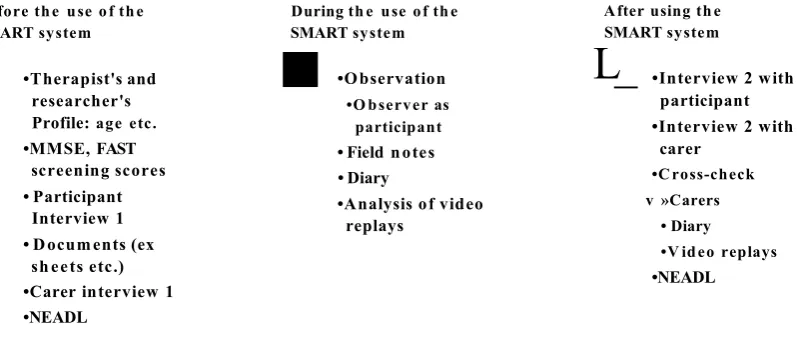
Fig. 6-3 Data collection methods before, during and after using the SMART
System p.161
Fig. 6-4 Two screen shots taken of the sensor distortion during video replays
with Mrs. Green p. 183
Fig. 6-5 The inaccurate on-screen display with Mr Gray p.198
Fig. 6-6 Screen shot of Mr Redmond line graph feedback p.219
Fig. 6-7 Screen shot taken by Mrs Gold of the inaccurate on-screen display
during exercise p.220
Fig. 7-1 The fourth stage of the realistic evaluation cycle p.231
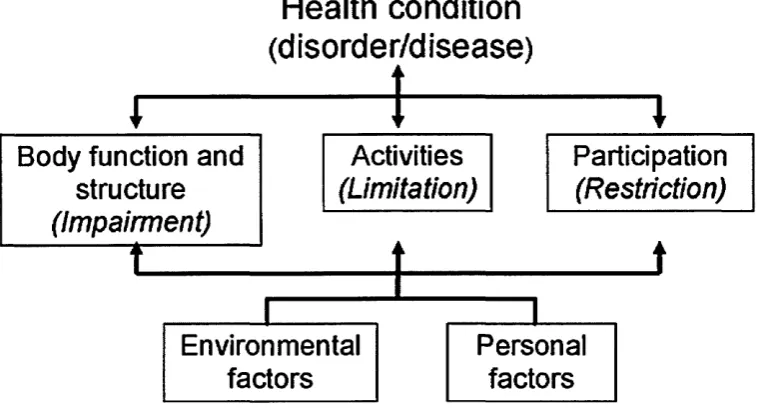
Fig. 7-2 The ICF model of health p.232
Fig. 7-3 Factors influencing the utilisation of feedback p.233
Fig. 7-4 The interaction between ingredients, mechanisms and outcomes p.251
Fig. 7-5 The activation of mechanisms p.252
Fig. 8-1 The final stage of the realistic evaluation cycle p.264
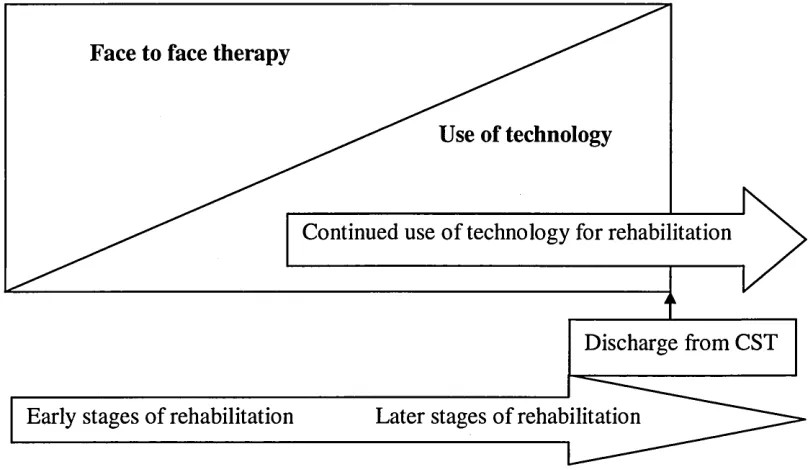
Fig. 8-2 Postulated integration of computer technology for post-stroke
Appendices
Appendix 1: A summary of papers reporting comparable technology systems to p.306 the SMART Rehabilitation Technology System
Appendix 2: A Summary of a Review of the Evidence Underpinning the Use of p.307 Feedback for Computer Technology in Post-Stroke Upper-Limb Rehabilitation
Appendix 3: Focus Group Moderator Guide p.308
Appendix 4: The Nottingham Extended Activities of Daily Living Scale p.309 (NEADL)
Appendix 5: Ethical Approval p.310
Appendix 6: Research Governance Approval p.314
Appendix 7: NRES Amendment Approval p.316
Appendix 8: Research Governance Amendment Approval p.318
Appendix 9: Audit p.319
Appendix 10: Letter of Invite (Health Professionals) p.320
Appendix 11: Information Sheet (Health Professionals) p.321
Appendix 12: Therapists’ Details p.325
Appendix 13: Focus Group Topics with Health Professionals p.326
Appendix 14: Institutional Ethical Approval p.327
Appendix 15: Letter of Invite (Participants) p.329
Appendix 16: Information Sheet (Participants) p.330
Appendix 17: Letter of Invite (Carer) p.334
Appendix 18: Information Sheet (Carer) p.335
Appendix 19: Therapist’s Participant Profile p.339
Appendix 20: Letter to G.P p.341
Appendix 21: TheMMSE p.342
Appendix 22: The Frenchay Aphasia Screening Test p.343
Appendix 23: Researcher’s Participant Profile p.344
Appendix 24: Interview 1 with Participants and Carers p.345
Appendix 25: Interview 2 with Participants and Carers p.347
Appendix 26: Development of the Garments p.349
Introduction and the Realistic Evaluation Framework used
Throughout the Thesis
Introduction
Strokes are a global problem and as a result of rising risk factors such as, an aging population, obesity and hypertension, the global incidence of stroke is set to escalate from 15.3 million to 23 million by 2030 (Strong et al, 2007). In the UK, strokes are the largest single cause of disability (Department of Health (DoH), 2007) resulting in a cost to the economy of £8.9 billion a year (Saka et al, 2009). The decrease in mortality and rise in morbidity means that there are more stroke survivors living with the profound and unique sequelae of stroke, placing an increasing demand on stroke services (NAO
2010).
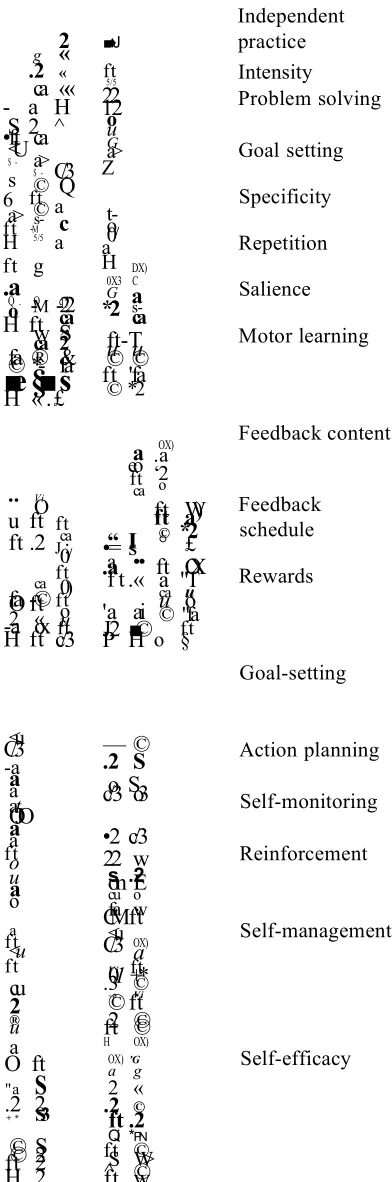
Evidence indicates that post-stroke rehabilitation improves function, independence and quality of life (Kwakkel et al, 2004; Pollock et al, 2007) providing that it is long-term, intense, task-specific, goal-orientated, variable, environmentally enriched and includes feedback on performance (Kalra and Ratan 2007; Krakauer 2006; Barker and Brauer 2005; Langhorne et al, 2009). Initiatives such as the Quality, Innovation, Productivity and Prevention (QIPP) programme provide a continued focus on delivering stroke services that: are cost-efficient; provide the best quality of care; involves patient choice; allows for care to continue beyond the acute period; maximises recovery; and is delivered closer to home (DoH 2007; 2008; 2010). Indeed, over recent years there has been a contextual shift in service delivery from hospital-based rehabilitation to the community. However, due to the increasing demand on services and financial constraints, service needs cannot be met, therefore, there needs to be further consideration for the delivery of new, innovative service models to increase the amount of time patients spend in therapy within the context of home-based rehabilitation (DoH 2010).
inertial tracking systems that have the potential to provide consistent, detailed, individually adapted rehabilitation in the absence of the therapist (Intercollegiate Stroke Working Party 2008). Furthermore, these systems may also have the potential to promote a model of rehabilitation that encourages self-managed rehabilitation over the longer term.
Much of the evidence supporting conventional post-stroke rehabilitation suggests that feedback is provided verbally face-to-face by a therapist and typically involves hands- on therapy (Ballinger et al, 1999; DeJong et al, 2004; Hartvelt and Hegarty 1996; Wohlin Wottrich et al, 2004). However, the drive towards the use of new technologies and the promotion of self-care exposes unanswered questions regarding the reliance that a stroke survivor can have upon a therapist for both, motor learning skills (Magill 2007) and the self-management of the resultant long-term disability (Jones 2006). Therefore, further exploration is required to investigate the use of feedback provided by technology in the absence of a therapist.
This research explores the shift from receiving face-to-face feedback to receiving feedback provided by computer technology within the context of the user’s home in the absence of a therapist. Using a novel methodological approach, this thesis therefore contributes original knowledge by evaluating how the context of using computer-based feedback for upper-limb post-stroke rehabilitation impacts on the theory-driven mechanisms underpinning the intervention resulting in context-mechanism-outcome configuration theory refinement.
The Methodological Framework
The methodological framework used in this thesis was based on the principles of realistic evaluation (Pawson and Tilley 1997). This gave an important innovative dimension to the research study since this methodology has not been used in the development and evaluation of technology for rehabilitation. This methodological approach was essential as the current knowledge base for using technology for post stroke rehabilitation within the context of the home is limited.
Realistic Evaluation
for upper-limb post-stroke rehabilitation in the home,’ impacts on the underpinning theory-driven mechanisms, leading to variable outcome(s).
With its roots in social science, realistic evaluation (RE) draws on a generative model to explain that an outcome is the result of the interaction between a mechanism and a context. In particular, how a mechanism may lead to differences in outcome if it is added to a different context. For example, the action of lighting gunpowder involves a mechanism (flame) and an outcome (explosion). However, this depends on the context; if the gunpowder is kept in wet conditions, it will not light; if the gunpowder is of poor quality, a smaller explosion will occur. Therefore, if no two contexts are the same, there is a possibility that no two outcomes will be the same. Thus,
Mechanism + Context = Outcome
The four elements of Pawson and Tilley’s research cycle are Theory, Hypotheses, Observation, and Programme Specification (fig 0-1). The framework begins the evaluation by describing the context (C) in which the intervention is set. This is followed by the initial exploration of the theory underpinning the mechanism(s) and the possible outcomes (O). This is followed by the question, ‘what might work for whom in what circumstances’ where the researcher hypothesises what mechanisms of the intervention might work and whom the mechanism is targeted towards. These hypotheses are set out in context-mechanism-outcome configurations (CMOC’s).
The next stage involves the ‘observation’ phase where multiple methods of gathering data are chosen and fieldwork is carried out which then enables the researcher to subject the package of CMOC’s to systematic testing1, evaluate the findings, and answer the final question, ‘what works for whom and in what circumstances and respects. ’ The final stage of the cycle involves relating the findings and building on existing theory. This RE cycle forms the framework for this thesis.
Theory
•Context • Mechanisms •Outcomes
J
Programme Specification
• 'What works for whom in what circumstances and respects?
J
Hypotheses
• 'What might work for whom in what circumstances?'
J
Observation
• Multiple methods
Fig 0-1: The realistic evaluation framework used in this research (Pawson and Tilley 1997 p.58).
Programmes2
Programmes (interventions) are a set of theories incarnate that are active and embedded in an open system. In other words, they are pieced together through underlying theoretical assumptions based on evidence. They are also active in that they are open to human volition and decision making in a given context (Pawson and Tilley 2004). The ‘intervention’ in this study is the provision o f feedback through computer technology for upper-limb post-stroke rehabilitation in the home.
Mechanisms
Mechanisms are the workings of an intervention that bring about change. M echanisms are theory-driven in that they form the often hidden components of the intervention that enables subjects to make choices and decisions of their behaviour (Pawson and Tilley 1997). Astbury and Leeuw (2010) suggest that there are three key elements in that mechanisms are; usually hidden, sensitive to variations in context, and able to generate outcomes. The mechanisms in this study describe the process of how participants act
upon the intervention stratagem to enable the underpinning theories to work. For example, how receiving feedback from computer-based technology might encourage independent, self-evaluation and self-monitoring of recovery.
Context
The ‘context’ refers to the features of the conditions in which interventions are embedded that are relevant to the intervention mechanisms. Essentially, they address the ‘for whom’ and ‘in what circumstances’ (Pawson and Tilley 2004). Pawson and Tilley (1997) suggest that,
“The operating condition o f mechanisms is always contingent on context; subjects will only act upon the resources and choices offered by an intervention if they are in conducive settings” (p. 216).
The ‘context’ in this study includes the personal and environmental context of the stroke survivor and their carer, current service delivery, and the impact of rehabilitating in the home.
Outcome Pattern
The outcome pattern is the result of the context enabling or constraining mechanisms in a given context. They therefore, vary according to the variations in contexts. In other words, outcome patterns are the intended or unintended consequences of mechanisms working in contexts. Therefore, because contexts may vary, the outcome of mechanisms working within them may also vary. For example, in this study, a possible outcome may involve a participant adopting and developing a self-management approach to rehabilitation as a result of receiving feedback from computer technology. However, if the context is not conducive, a variation of this outcome may occur.
Context Mechanism Outcome Pattern Configurations (CMOCs)
The interaction between the context, mechanism and possible outcomes are central to the evaluation. This enables the researcher to establish how an intervention embedded in a variable context has enabled or constrained the underpinning theory-driven mechanisms to work or not work - ‘what works for whom and in what circumstances and respects?’ (Pawson and Tilley 2004).
Research Question
How does the context of utilising computer feedback for upper limb stroke rehabilitation in the home setting and the underpinning theory-driven mechanisms of the intervention impact on theoretical outcomes?
Aim and Objectives:
To explore the utilisation of extrinsic feedback from computer-based technology to facilitate post-stroke upper-limb rehabilitation in the home.
I. To establish the pre-existing context by exploring the nature of current rehabilitative practice post-stroke.
II. To establish the underpinning theories of the intervention; ‘the provision of extrinsic feedback from computer-based technology for upper-limb post-stroke rehabilitation in the home. ’
III. To establish working hypotheses as to ‘what might work for whom in what circumstances’ and develop a CMOC variable book.
IV. To validate the proposed CMOC’s by establishing what current practice and
provision of information and extrinsic feedback therapists employ to assist patients to continue with their rehabilitation post hospital discharge.
V. To initiate the observation phase and subject the CMOC’s to a systematic test by obtaining the views of stroke survivors and their carers of one form of computer- based technology for upper limb rehabilitation in the home.
VI. To continue the observation phase and investigate how a number of stroke
survivors respond to using this computer-based technology over an extended period of time unsupervised in their home.
VII. To establish how the underpinning theory-driven mechanisms and the contextual factors help or hinder the underpinning mechanisms of the intervention and in what respects.
VIII. To establish ‘what works for whom and in what circumstances and respects’ following the delivery of the intervention.
The Structure of this Thesis
This thesis follows the RE cycle illustrated in fig 0-1. The first section of this thesis sets out the theoretical framework to firstly; describe the context of service delivery and how this is changing; secondly, describe the mechanisms underpinning the use of the SMART Rehabilitation Technology System; thirdly, detail the underpinning theories of the intervention and set out the theoretical outcomes of utilising the feedback from the SMART system; and finally, the hypotheses - ‘what might work for whom and why ’ are set out in context-mechanism-outcome configurations (CMOCs).
The second section provides an overview of the methods used in this research and a validation of the embryonic hypotheses by exploring the professional perspectives of the delivery of feedback in clinical practice. Initial testing of home-based upper-limb post-stroke rehabilitation using the SMART Rehabilitation Technology System is then described. A number of case studies detail the exploration of the use of one form of computer technology to facilitate upper-limb post-stroke rehabilitation over an extended period of time unsupervised in the user’s home. This involves the use of multiple methods of data collection including, observations, interviews, and an extended activity of daily living scale.
The third section begins with a synthesis of the findings to answer the question, ‘what works for whom and in what circumstances and respects? ’ An overall discussion of the findings of this research is then provided as well as the limitations of the study and recommendations for future research. Final conclusions are then presented.
Section 1: Theory
1. Chanter 1: Context
1.1 Introduction
The initial stage of the evaluation cycle involves eliciting and formalising the context- mechanisms-outcome configurations (CM OC’s) to be tested (fig 1-1). This process includes; describing the context such as; the personal and environmental context of the stroke survivor and their carer, current service delivery, the impact of rehabilitating in the context of the home, and the limitations of this model of service delivery.
1. Theory
•Context • Mechanisms •Outcomes
4. Programme Specification
•'What works for whom in what circumstancesand respects?
Fig 1-1: The first stage of the realistic evaluation cycle (Pawson and Tilley (1997).
2. Hypotheses
•'What might work for whom in what circumstances?'
J
3. Observation
• Multiple methods
Therefore, this chapter will firstly; describe the pre-existing context of stroke including the pathology and epidemiology; secondly, consider the impact of stroke on the survivor and their carer’s context; thirdly, discuss the context of current and future models of service delivery which embrace moving care into the community; and finally discuss the limitations of this model of delivery.
1.2 Pathology: ‘what is a stroke?’
“Rapidly developed signs offocal (or global) disturbance o f cerebral function lasting longer than 24 hours (unless interrupted by death) with no apparent nonvascular cause” (Hatano 1976).
Strokes are caused by a disturbance of blood supply to the brain as a result of ischemia or haemorrhage (Baer and Durward 2004). The damage that occurs from this disrupted blood supply leads to a non-selective loss of cells and importantly, the unique size and location of this cellular death determines the subsequent long-term functional deficits that follow (Sims and Muyderman 2009).
Although the natural clinical course of stroke recovery still remains uncertain (Kreisel et al, 2006); observed improvements involve the ability of the neuronal network to plastically adapt to injury (Hallett 2001; Rossini et al, 2003). The mechanisms underpinning plasticity and post-stroke recovery are discussed in chapter two.
1.3 Epidemiology: Strokes are an Increasing Problem
Strokes are a worldwide problem and as a result of rising risk factors such as, an aging population, obesity and hypertension, the global incidence of stroke is set to escalate from 15.3 million to 23 million by 2030 (Strong et al, 2007) making it the second leading cause of death globally behind ischemic heart disease (WHO 2008). In Europe the incidence is estimated to increase by 30% between 2000 and 2025 (Truelson et al,
2006).
The world population in 1990 aged 60 and over was 488 million; this is projected to reach 1,363 million in 2030; a 180% increase (World Population Prospects 2004). Age is one of the most substantiated risk factors for stroke (DoH 2001); therefore, as the population ages, and the mortality rate of stroke decreases (Carroll 2001) more patients are likely to need rehabilitation to improve function, participation and HRQoL which will place an ever-increasing strain on healthcare.
costs account for £4.4 billion, which represents 5.5% of the total UK national health expenditure (Saka et al, 2009).
However, of greater cost to the stroke survivor and those who care for them, the resultant sequelae of stroke is a sudden and often traumatic life changing event where the unique complex of physical, psychological and social problems can be devastating (Burton 2000).
1.4 The Sequelae of Stroke: The Impact on Survivors and
Caregivers
The impact of stroke upon both survivors and caregivers have been described as a ‘loss ’
in terms of having reduced; functional ability, independence (O’Connell et al, 2001), personal characteristics, personal identity (Ellis-Hill et al, 2000) and emotional and social loss (Pound et al, 1998). Survivors also face the challenge of accepting that their relationship with themselves and others may change. Socially, their roles and identity may differ as a result of the perceived and/or actual loss of functional independence as well as cognitive deficits (Trigg and Wood 1999).
It is estimated that following a stroke, 70-85% of first strokes are accompanied by hemiplegia (Nakayama et al, 1994; Somerfield et al, 2004). Of these, 65% will demonstrate some degree of lower extremity motor recovery and only 15% will gain complete recovery both for the upper and lower extremities (Hendricks et al, 2002). In addition, longitudinal studies suggest that only 50% of stroke survivors with upper limb paresis are likely to regain some useful function (Broeks 1999) and only 12% of stroke survivors regain full use of their arm and hand (Kwakkel et al, 2003).
Stroke survivors are invariably left with physical changes that can profoundly affect their functional ability (Ones et al, 2005); independence (O’Connell et al, 2001) and social participation (Cott et al, 2007; Desrosiers et al, 2006; Mayo et al, 2002; Rochette
1.4.1 The Impact of Caring
Caring for a stroke survivor can lead to lifestyle changes for both the survivor and their carer (Periard and Ames 1993) due to physical and emotional changes, a feeling of inadequacy (Kerr and Smith 2001; Brereton and Nolan 2000; Field et al, 1983) and financial constraints (Periard and Ames 1993). It is estimated that up to three quarters of stroke survivors are discharged home under the care of family members (Dewey et al,
2002; Dorsey and Vaca 1998) and evidence suggests that caregivers are at risk of depression, psychological impairments, and even mortality as a result of providing care (Baert et al, 2008; Bakas 2009). In addition, carers often feel they do not have the skills and knowledge to care for a stroke survivor at home. They also reported that they find it wearying to motivate survivors to participate in activities rather than letting them ‘just sit there all day’ (Smith et al, 2004).
A stroke has a profound yet unique effect on an individual and their family. Indeed, the holistic context not only includes the stroke survivor’s personal and physical environment but also others that maybe involved and may therefore have some influence on the stroke survivor and/or the environment they live in. Therefore, the recovery process following stroke necessitates a model of rehabilitation that considers the individual stroke survivor’s personal and environmental contextual factors as well as their needs.
1.5 Stroke Services: Current Service Delivery
Over recent years service provision has shifted from the context of hospital-based rehabilitation to rehabilitation in the community. Therefore, in order to establish the pre-existing context of post-stroke rehabilitation for this evaluation, the following section will describe current service provision and how this is changing.
published the hard-hitting report4Reducing brain damage: faster access to better stroke care. ’ This criticised current service delivery and highlighted the need for the management of stroke to become a government priority (NAO 2005).
The government responded to this through the consultation paper, A New Ambition for Stroke: A consultation on national strategy’ (DoH 2007) which identified recommendations for the latest National Stroke Strategy (DoH 2007). In addition, the National Sentinel Audit of Stroke involves a closer inspection of the quality of services using the evidenced-based standards set out in the National Clinical Guidelines (Royal College of Physicians 2010).
This highlights continued government ambition for better, more organised stroke care. In addition, further consideration for the delivery of new service models to deliver personalised rehabilitation programs that not only reflect the varying pathological condition of the service user but also the context in which they live (DoH 2006; 2006a; 2006b).
1.5.1 Stroke Pathways: Taking Care into the Community
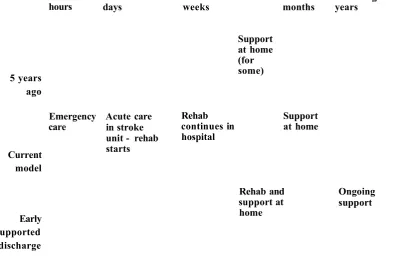
Stroke pathways aim to deliver the necessary and appropriate treatment and care required to stroke survivors and their families in the most efficient, effective, equitable, and humane manner possible from emergency care to community rehabilitation (Langhorne and Rudd 2009).
First few
hours First fewdays weeksFirst few First few Followingmonths years
Emergency
care Acute carein stroke unit - rehab starts
Rehab continues in hospital
Support at home (for some)
Support at home
Rehab and support at home
Ongoing support 5 years
ago
Current model
Early supported discharge
Fig 1-2: Stroke Care Pathway (CQC 2011 p.9).
There is high level evidence to suggest that stroke specialist discharge and community neuro-rehabilitation teams reduce length of stay, admission to full-time care settings and longer levels of dependency, particularly for those with mild to moderate disability if appropriately resourced (Early Supported Discharge Trialists 2005; Intercollegiate Stroke Working Party 2004; DoH 2001; Langhorne et al, 2005).
It has also been reported that early supported discharge services are more economical when comparing the number of bed days saved to the costs of the early supported discharge service (NAO 2010; Larsen et al, 2006; Teng et al, 2003; Von Koch et al,
2001). The increasing evidence for early supported discharge schemes and the drive for cost-effective healthcare and providing care closer to home has led the number of districts in England with an early supported discharge team to rise from 22% in 2002 to 36% in 2009 (Royal College of Physicians 2010; NAO 2010). The NAO (2010) suggest that increasing the availability of Early Supported Discharge from its current level - equating to around 20% - to a more optimal level of 43% of patients, with all stroke units providing Early Supported Discharge, would be cost-effective over a ten-year time-frame.
[image:30.613.92.498.40.298.2]following stroke (Anderson et al, 2000; Grant et al, 2004; Carers UK 2004). However, many of these studies have involved patients with on-going medical needs or those with a progressive deterioration in health.
A randomised controlled trial by Teng et al, (2003) found that the caregivers of the early supported discharge service group scored consistently lower on the Burden Index (Zarit et al, 1980) compared to caregivers of those receiving conventional care which, it has been suggested, may have been due to the effects of empowering the family and patient to take charge of their rehabilitation (Teng et al, 2003). In addition, once the stroke survivor has returned home, they and their family members are able to evaluate the impact stroke has had (Pringle et al, 2008).
However, the stroke survivors were well supported by a multidisciplinary team of health professionals. This may suggest providing the caregiver is able to call upon adequate support, they may feel that meeting the needs of the person they care is less demanding. Therefore, if stroke survivors are to be discharged early, it is essential that they do not place more strain on carers by enabling rehabilitation to be carried out with perceived adequate support. Furthermore, any redesign of service provision should also account for the carers’ needs and perspectives.
1.6 Rehabilitation in the Home: A Change in Context
Home-based community rehabilitation following a stroke is now regarded as a viable alternative to hospital-based rehabilitation (Geddes and Chamberlain 2001). Evidence indicates that home-based rehabilitation is effective as it allows patients to practice skills in a familiar environment and encourages independence by allowing ownership of their rehabilitation, as well as being cost-effective (Anderson et al, 2000; Disler and Wade 2003).
The SMART Rehabilitation Technology System used in this research was specifically designed to be used in the context of the home-setting. Therefore, the next section will discuss the context of home-based rehabilitation; how this impacts on rehabilitation; and the limitations of this model of delivery.
1.6.1 The Context of Home-Based Rehabilitation
qualitative case study, they explored the differences in therapy sessions in the home environment versus the hospital. Their analysis describes how there were distinct differences in the roles of the patient/therapist in that the hospital provided more of a disempowering environment for the recipient with less involvement in the planning and goal-setting process. One participant described how;
“The hospital is like a sheltered workshop” (Von Koch et al, 1998p370).
Conversely, in the home environment, they observed how patients took the initiative and expressed particular needs and goals in their treatment.
These findings are supported by Wohlin Wottrich et al, (2004) and Ada et al, (2006) who found that the physical environment of a hospital made it difficult for patients to regain function and reconvene societal roles and the therapy area did not to provide a physical challenge and failed to facilitate unsupervised practice of rehabilitation exercises (Ada et al, 2006).
However, Wade (2000) suggests that in the hospital environment patients may expect to be cared for. Additionally, the anxiety and emotional reactions following stroke may also influence the rehabilitative process whereby patients may become more reliant on others to make decisions, particularly if therapists are perceived as being ‘experts’ to the recovery process (Fure et al, 2006).
1.6.2 Perspectives of Home-Based Rehabilitation
Wohlin Wottrich et al, (2007) explored the perspectives of home-based post-stroke rehabilitation by a multidisciplinary team consisting of five Physical Therapists, five Occupational Therapists, two Speech and Language Therapists, and one Social Worker. The team described how:
• Supporting continuity from the hospital to home reduced feelings of anxiety and insecurity for both the patient and therapist.
• Therapists were able to see how patients would function in their home environment. • Therapists were able to promote functional activities more naturally by using known
utensils, climbing well known stairs, and walking familiar routes.
Similar findings have been reported in other studies that have examined the content and context of multidisciplinary home-based rehabilitation (Lincoln et al, 2004; Hale and Piggot 2005; Ljungberg et al, 2001). An evaluation by Hale and Piggot (2005) described how therapists aimed to gain optimal independent function by building patients’ confidence, self-responsibility, and problem-solving skills while ensuring safety.
These findings are supported by the randomised controlled trial by Lincoln et al, (2004), where they found; the patients in the specialist community stroke team group were significantly more satisfied with the emotional support they had received; carers were under significantly less strain, were more satisfied with their knowledge of stroke and were more satisfied overall when compared to the control group who received conventional community rehabilitation. However, this model of service delivery is resource intensive and may be unsustainable as the demand for post-stroke rehabilitation increases (Truelson et al, 2006).
Robinson-Smith et al, (2000) examined self-care and self-efficacy at one month and six months post-stroke. They discovered a direct correlation between self-care, self- efficacy, quality of life and depression.
This suggests that by aiming to improve a patient’s self-confidence, expectations of self-care and through this, self-efficacy behaviours; better quality of life and improved mental health may result. Cott et al, (2007) suggest that more efforts need to be taken to move away from acute care models of delivery that focus on curative aspects of rehabilitation to longer term care models that make best use of service users’ autonomy and decision making throughout the rehabilitation process.
So far this chapter has described the importance of the context of service delivery and how this impacts on rehabilitation following stroke. However, this has highlighted a number of limitations.
1.6.3
Home-Based Service Limitations1.6.3.1 The Demand for Services Outweighs Supply
resources and cost-containment continue to limit the amount of face-to-face contact with therapists and there is a need to improve the clinical and cost effectiveness of therapy in the management of older people following a stroke (Forster and Young 2002; Teng et al, 2003).
In 2009 The Stroke Association in collaboration with the Chartered Society of Physiotherapy surveyed 663 stroke survivors in England (< two years post-stroke) about their experiences of community-based Physiotherapy. They also surveyed 497 Physiotherapists (to gain their opinion of the patient experience from their professional perspective) (The Stroke Association 2010). The survey found that:
• 21% of stroke survivors who felt they needed Physiotherapy did not receive any. • 25% of stroke survivors had to wait longer than one month for their first session. • 83% of Physiotherapists believe that the process of transfer of care into the
community could be improved.
• Over half (52%) of Physiotherapy staff indicated that treatment outcomes could be improved if there was greater personalisation of services. In addition, 74% of Physiotherapists indicated that personalisation of services could not be achieved within current resources.
The subsequent report, ‘Moving on * has suggested four key areas for improvement: 1) community therapy should be available for all stroke survivors that need it; 2) there must be an end to fragmented transitions into community care; 3) stroke survivors should receive services that are tailored to their needs; and 4) the vital role of carers should be recognised and valued throughout the rehabilitation journey (The Stroke Association 2010).
1.6.3.2 Stroke Survivors May Not Make Best Use of Non-Therapy Time
Current service models involve community rehabilitation that lasts on average 12 weeks following discharge from hospital (NAO 2010). UK community services are 12 weeks and there is significant variation of face-to-face contact hours (NAO 2010). A study evaluating an Early Supported Discharge, found that on average a 14 week programme consisted of 12 home visits (mean), a median time consumption of 23 hours 20 minutes of which only 54 per cent was actual face-to-face contact with the therapist (Von Koch
et al, 2000). These findings suggest that although more intense interventions improve functional outcomes (Kwakkel et al, 2004; Kwakkel 2006), very little time is spent undertaking therapeutic activities for both in-patients and those in community. Significantly, stroke survivors may not therefore make best use of their non-therapy time. Therefore the introduction of technology that can be used in the absence of a therapist may increase the amount of time spent rehabilitating without increasing the demand on services.
1.6.3.3 The Current Provision of Instructions and Feedback May Not be Conducive to Autonomous Home-Based Rehabilitation
In order to facilitate home-based rehabilitation when not in face-to-face contact with the therapist; patients may be provided with exercise sheets to help them and/or their carer remember what exercises to do, how to perform them and how often to do them; which may, in some cases, limit home exercise interventions (Smith et al, 2005). For example, a third of stroke survivors experience aphasia (Pederson et al, 1995). Therefore, the understanding of written exercise sheets may be limited.
key aspect of rehabilitation and motor learning (Subramanian et al, 2010; Parker et al,
2011); currently, stroke survivors may not receive any feedback during non-contact time and may indeed rely on other family members to comment on their performance.
1.7 A Shift in Service Delivery is Required
Health services in the next decade are faced with: reduced finances; ever higher patient expectations; an ageing population; advances in technology and the growing information technology age; the reduction in mortality and a subsequent rise in morbidity due to advances in treatments, and a changing workforce. Therefore, the predicted need to release £15 - £20 billion through efficiency savings from 2011 to 2014 whilst keeping quality as the organising principle presents a challenge to service providers (NAO 2010; DoH 2010).
Community stroke rehabilitation is fast becoming the preferred choice of rehabilitation settings (Langhorne and Rudd 2009) and the mean length of hospital stay has fallen by 10.6 days (Royal College of Physicians 2010). However, although the number of early supported discharge services has risen; in contrast, there have been significant improvements in acute care but the provision of high quality; integrated services for stroke survivors after they leave acute care have not progressed at the same rate. It has long been recognised that effective management of long term conditions moves beyond the acute onset of disability. As the NAO (2010) succinctly state,
“Stroke patients may spend several days or weeks in hospital, hut it is in the months and years after discharge that they, their families and carers ’ experience the full impact o f stroke ” (NAO 2010 p. 31).
In addition, The WHO (2002) pointed out that whilst there is a clear need to continue improving acute care, this will ultimately lead to a rise in costs without necessarily benefiting the long term health.
“As long as the acute care model dominates healthcare systems, healthcare expenditures will continue to escalate, but improvements in populations ’ health status will not” (WHO 2002 p6).
2007; 2008; 2010). However, service needs cannot be met, therefore, there needs to be further consideration for the delivery of new, innovative service models to increase the amount of time patients spend in therapy within the context of home-based rehabilitation (DoH 2010).
1.8 Summary
This chapter has described the global context of stroke and highlighted how strokes are an increasing worldwide problem and there are more stroke survivors living with the sequelae of stroke, placing an increasing financially unsustainable demand on stroke services (NAO 2010).
Following a stroke the stroke survivor and their close family’s personal, environmental and social context may change. Stroke survivors are invariably left with physical and psychological changes that can profoundly affect their physical and functional ability (Pound et al, 1998; Ones et al, 2005) personal identity (Clarke & Black 2005), their relationship with others (Dowswell et al, 2000), and their participation in society (Cott
et al, 2007; Desrosiers et al, 2006; Mayo et al, 2002; Rochette et al, 2007). As a result of upper-limb impairment, patients describe problems with personal activities of daily living (PADL’s), such as, washing, dressing and feeding, and more extended activities of daily living (ADL’s), such as, making meals and household chores (Pound et al,
1998). As a result, 50% of stroke survivors need a full time carer at home (Mayo et al,
2002).
Over recent years there has been a contextual shift in service delivery from hospital- based rehabilitation to the community where stroke survivors are given labour intensive, therapist led rehabilitation. However, service needs cannot be met, therefore, there needs to be further consideration for the delivery of new, innovative service models to increase the amount of time patients spend in therapy within the context of home-based rehabilitation (DoH 2010).
2. Chapter 2: Mechanisms. Theoretical Outcomes and
CMOC Generation
2.1 Introduction
The previous chapter described the pre-existing context of post-stroke rehabilitation (the ‘C’ within the CMO configurations). This described the context for this study. Chapter one highlighted how although rehabilitation is essential for stroke recovery, there is a lack of resources to provide this and therefore, new innovative models of delivery and paradigms need to be explored such as the use of technology.
The next stage of the evaluation involves unpicking the key components of the intervention that bring about change (the mechanisms; the ‘M’ within the CMO configurations) using the principles of realist synthesis. This involves identifying concepts and intervention theories (Rycroft-Malone et al, 2010).
The mechanisms to consider include; firstly, the use of technology for upper-limb rehabilitation; secondly, the SMART system itself, how this was developed and finally, the theoretical components underpinning the SMART system. This is followed by setting out the proposed theoretical outcomes of the utilisation of feedback that is delivered through computer technology for upper-limb post-stroke rehabilitation.
This chapter will therefore describe the drive towards the use of technology; current technology systems being developed; the work carried out by the SMART consortium and how the study which is the topic of this thesis builds on the research carried out by Mountain et al, (2006; 2010). Theoretical outcomes are then described and set out in CMOC form.
2.2 Using Technology for Post-Stroke Rehabilitation
The shift in service delivery described previously, highlighted how service provision involves rehabilitation that is led by the therapist and therefore continues to be labour intensive and costly, against the backdrop of an ever demanding and increasing need for stroke services (NAO 2010).
that technology (both simple and complex) might play in reducing morbidity and improving the quality of life for large numbers of patients such as those who have had a stroke (The Royal Society 2006). The ‘Innovation Nation’ White paper (Department for Innovation, Universities and Skills 2008) set out a continued drive towards improving the nation’s technological capabilities. This includes the cooperation of independent organisations such as, the National Endowment for Science, Technology and the Arts (NESTA) who provide investment in early-stage companies, inform and shape policy, and deliver practical interventions to enhance the integration and development of technology (NESTA 2009).
More recently, in a report published by the Department of Health entitled, ‘Innovation, Health and Wealth: accelerating adoption and diffusion in the NHS’ (DoH 2011) sets out an integrated set of measures and a delivery agenda that will support the adoption and diffusion of innovation across the NHS by developing partnerships between academia and industry through the establishment of Academic Health Science Networks (AHSNs).
Therefore, the establishment of the Invention for Innovation (2006), the Quality, Innovation, Productivity and Prevention (QIPP) programme (2009) and the AHSNs (2012/13), provide a continued focus on delivering stroke services that: are innovative; cost-efficient; provide the best quality of care; involve patient choice; allow for care to continue beyond the acute period; maximise recovery; and is delivered closer to home (DoH 2007; 2008; 2010; 2011).
Advances in information technology (IT) have allowed for the development of tools to complement direct efforts by therapists and may in the future even act as surrogates (Liebermann et al, 2006). Significantly, these developments may play a vital role in improving the NHS, health economy and patients’ care (DoH 2008). Therefore, advances in technology, the growing information technology age; the reduction in mortality and subsequent rise in morbidity due to advances in acute medical care; the use of technology is regarded as a viable (although under investigated) concept in post stroke rehabilitation (DoH 2010).
• An economic case: Technology may have the capacity to reduce the amount of labour intensive face-to-face contact between the therapist and patient whilst maintaining therapeutic input.
• Maintaining intensive therapy: Technology systems may enable patients to carry out repetitive exercise and movement patterns necessary for neuroplasticity whilst reducing therapist fatigue.
• Safety: Some forms of technology such as virtual reality, may allow patients to carry out activities that if carried out unsupervised, could be considered otherwise dangerous. For example, crossing roads or climbing stairs.
• Facilitating motor learning: Some systems may facilitate a learning environment by allowing the user to engage in rehabilitative exercise that involves repetition and progression in the absence of a therapist.
• Objective measures: The use of technology may allow users and therapists to quantify measures of improvement. For example, a system may take range of movement and speed of movement measures or display the trajectory of movement.
• Fun and engaging: From the user’s perspective, using technology to rehabilitate may make intense repetitive exercise more fun and engaging as well as allowing for personalisation. For example, an avatar may be made to look like the user similar to the Wii Me (www.nintendo.com).
• Facilitating autonomy and self-management principles: Enabling the user to engage in independent rehabilitation (in the absence of a therapist) may allow for problem-solving, decision-making, resource utilisation and taking action throughout the rehabilitation process.
(Jones 2006; Siekierka et al, 2007; Stein et al, 2009).
Whilst there are a number of possible advantages for using technology, many technological systems are still under development and/or testing therefore, the full extent of possible advantages and limitations are yet to be explored.
2.2.1 Technology Systems for Upper-Limb Post-Stroke Rehabilitation
Inertial Tracking Devices (Mountain et al, 2006; 2010; Parker et al, 2010). Crucially, systematic reviews by Subramanian et al, (2010) and Parker et al, (2011) suggest that stroke survivors can utilise feedback from various sources such as, videotape (Gilmore and Spaulding 2007), virtual environments (Piron et al, 2007), robotics (Coote et al,
2008), and computer technology (Mountain et al, 2010; Parker et al, 2010).
In addition, there is growing evidence from controlled trials of efficacy in post-stroke upper-limb rehabilitation (Kwakkel et al, 2008; Stein et al, 2009; Timmermans et al,
2009). The following section will describe these systems and their limitations.
Robot systems have the potential to offer therapy that augments a therapist by enabling the user to carry out repetitive manually intensive therapy. In addition, these systems are able to provide precise repeatable force feedback in a virtual environment and may even be able to deliver complex therapies that are difficult for therapists to sustain over longer periods (Loureiro etal, 2010).
Virtual reality in rehabilitation involves the use of computer-generated, interactive, multisensory real-time simulation of a real world activity in an immersive or non- immersive environment (Adamovich et al, 2009).
To date trials using robot therapy and virtual reality have involved testing in a clinical or laboratory setting only. This highlights potential limitations for the use of technology for upper-limb stroke rehabilitation, for example, systems are currently cumbersome, expensive and require the therapist to be present at the time of use, which may limit their future use in home-based rehabilitation (Liebermann et al, 2006; Crosbie et al,
2007; Henderson et al, 2007). To add, if current systems comprise of large frames that involve intricate technology requiring specialist operators, consequently stroke survivors may have limited access for use. However, it has been suggested that these systems may be used in a suite in a hospital or community setting where one therapist may be able to operate a number of systems at once (Loureiro 2010 pers comm.). Nevertheless, because this proposal has yet to be explored, a number of usability and clinical utility questions remain unanswered.
et al, 2010). By taking a bottom-up approach, this allows the development and subsequent use of technology systems to meet the needs of the end-users.
2.2.2 User Opinions of the Use of Comparable Technology to the SMART
Rehabilitation Technology System
Central to this research is gaining user opinions (usability issues) for the use of technology within the context of use. The author of this thesis systematically identified and evaluated comparable technology systems to The SMART System used in this research (see appendix 1 for a summary of the papers p.306). Part of this evaluation included exploring the opinions of participants using the comparable technology. The following section will describe these.
Only two of the five technology systems identified in the review included the opinions of stroke survivors during the trial. The study by Broeren et al, (2008) involved carrying out semi-structured interviews to gain the participants’ opinions of their perception of the system being trialled. The interviews asked the participants if they thought the games were fun and challenging; which games they preferred to play, and how and if they would like to use the virtual reality system in the future if it was available in regular clinical care.
The findings of the interviews found that all of the participants were positive for the use of the system although they felt hesitant to use the system initially. However, they suggested that by the end of the study they would like to continue playing the games. The participants described the games involving more cognitive processing difficult such as playing Simple Simon memory games. Seven of the participants (out of eleven) agreed on having the system to complement their current rehabilitation program and four suggested they would have the system in their home.
Although these interviews go in some way to evaluate user opinions, there are many usability issues omitted. For example, the authors do not describe the physical practicalities of using the equipment such as, the users’ ability to physically manipulate the joystick and the time spent on task. In addition, they do not describe whether or not the users were able use the feedback provided to gain some understanding of their performance.
opinions of their enjoyment, meaning, motor difficulty, and general use of the equipment. Their interview responses revealed that all of the users believed the VMall had helped them improve their affected upper-limb and that they subsequently used it more for everyday activities than before the intervention. A 53 year old male participant suggested,
“In traditional therapy, one is dependent on a therapist, here [in the VMall], you work on your own... you do the movements independently ” (ppll8-l 19).
The same participant also remarked that following the VMall training he could help his son tie shoe laces and use his zipper.
Another 73 year old male participant remarked,
“It all seemed more challenging than to sit in therapy or to exercise alone... the virtual environments took my mind off the effort and work. The VMall made me use my hand and I did things I wanted to do and in reality I cannot do. It did the job... it is better than other therapeutic aids that I know” (pi 19).
Other studies identified in the review reported user opinions in previous papers. The study by Edmans et al, (2009) carried out initial feasibility testing with both therapists and patients and found that only one patient (out of 10 participants) had difficulties interacting with the touch screen computer and often became frustrated with the technology. Others suggested that they enjoyed using it and that the task was easier than in the real-world (Edmans 2004). During the initial development of the equipment, six out of ten Occupational Therapists had expressed a positive interest in using virtual reality as part of their treatment with four others expressing the need for clear usability evaluation and evidence for its effectiveness (Hilton et al, 2000; 2002).
A RCT carried out by Yavuzer et al, (2008) built upon initial testing by Rand et al,