Available from Sheffield Hallam University Research Archive (SHURA) at:
http://shura.shu.ac.uk/553/
This document is the author deposited version. You are advised to consult the
publisher's version if you wish to cite from it.
Published version
POPOVIC, Vesna and KRAAL, Ben (2009). Focus-Shift: Interaction and Expertise
Level. In: Undisciplined! Design Research Society Conference 2008, Sheffield
Hallam University, Sheffield, UK, 16-19 July 2008.
Copyright and re-use policy
Focus-Shift:
Interaction and Expertise Level
Vesna Popovic, School of Design, Faculty of Built Environment and Engineering, Queensland University of Technology, Australia
Ben Kraal, School of Design, Faculty of Built Environment and Engineering, Queensland University of Technology, Australia
Abstract
The goal of this research is to investigate what happens when artefacts mediate interaction. To do this we investigated nurse’s interaction during the bandaging process in order to understand better how an artefact enhances user’s experiences.
To maintain research rigour we applied a triangulation approach that links observations of current procedures, talk-aloud protocol during interaction and retrospective interviews. Using software to aid our analysis of the videos we produced diagrammatic maps of their interaction. The maps allowed us to see that some nurses bandage more intuitively than others. Nurses who bandage intuitively assemble long sequences of bandaging actions while nurses who bandage less intuitively “focus-shift” in between bandaging actions. We argue that nurses who bandage intuitively demonstrate greater expertise than nurses who do not. We discuss these differences and explore how different levels of expertise can influence how mediated interaction takes place. Finally, we introduced how knowledge generated from this research can be transferred to the design domain, interaction and interface design in particular, and contribute to the design process as a whole.
Keywords
Expertise; Focus-Shift; Tacit Knowledge; Interaction Design; Interface Design; Nursing
The purpose of this paper is to describe the innovative process we have used to investigate how interaction is mediated by artefacts. All human interaction with the world is mediated by artefacts, whether those artefacts are tools or are the object of our interaction. In this research we try to understand users’ engagement needs where interaction with an artefact is seen to be an activity in which an artefact enhances user’s experiences.
Venous leg ulcers are a chronic health condition that cause severe pain and cost for a significant segment of the older population (Graham, Harrison, Nelson, Lorimer, & Fisher, 2003). Chronic venous leg ulcers are sores that occur when a person with poor circulation receives an injury to his/her lower leg that does not heal, resulting in an ulcer. Considerable research has been done to determine the best treatment regime that will aid in the management and healing of these ulcers (Cullum, Nelson, Fletcher, & Sheldon, 2005; Nelson & Cullum, 2004).
The most common treatment for venous leg ulcers is compression therapy. Compression therapy takes the form of sets of bandages that are applied to the legs of people who have venous ulcers. The level of compression
achieved by the bandages augments the body's natural circulatory system to promote recirculation of deoxygenated blood to the heart and lungs,
allowing it to become re-oxygenated. Fully oxygenated blood can then circulate to the legs, allowing healing to begin.
The techniques used to correctly apply compression bandages to patients with venous leg ulcers are well established (Finnie, 2002). However, the physical skills involved and the exact knowledge required to correctly apply compression bandages are less well known. Experts in the field (EWMA, 2003) agree that the most important aspect of applying compression therapy is achieving the desired correct bandage pressure. The correct sub-bandage pressure is achieved by applying the sub-bandages with a consistent tension from ankle to knee. Too much tension, and too much pressure, is damaging to the leg while too little tension, and too little pressure, is therapeutically ineffective. Achieving the correct pressure is "difficult to demonstrate practically" (Clark, 2003, p.6).
The expertise and experience of the nurse who applies compression
bandages seems to be critical in achieving the correct level of therapeutic compression. In one study (Coull, Tolson, & McIntosh, 2006) 38% of nurses had "inconsistent bandaging technique". Another study found that, when
measured with a sub-bandage pressure monitor, a surprisingly low number of nurses had effective technique (Feben, 2003) or could achieve the correct sub-bandage pressure. Neither study described the similarities or differences in techniques used by nurses who did achieve correct pressure. Clearly a gap exists for an exploration of the interaction between nurse and bandage that could begin to explain the differences in how bandages are applied.
The starting point for our research is the premise that all human interaction with the world is mediated by artefacts. These mediating artefacts may be tools, found objects, designed objects or even concepts. That artefacts mediate interaction is not in question here; our goal is to investigate what happens when artefacts mediate interaction.
Methodology
This research was conducted using a qualitative study of nurses applying compression bandaging to patients with venous leg ulcers. We studied 18 patient pairs who were selected opportunistically. We videoed 18 nurse-patient pairs during the application of compression bandages. As this
research is qualitative, this number of interactions is sufficient to provide the expected results. Where space permitted we videoed nurse-patient
interaction from two sides using cameras on tripods; when space was tight we videoed using single hand-held cameras. Pairs were selected as patients entered the treatment settings, called "Leg Clubs". Leg Clubs have been shown to lead to better healing outcomes than in-home patient care
(Edwards, Courtney, Finlayson, Lewis, et al., 2005; Edwards, Courtney, Finlayson, Lindsay, et al., 2005; Gordon et al., 2006) so we are confident that the nurses we observed are skilled practitioners of compression therapy. Figure 1
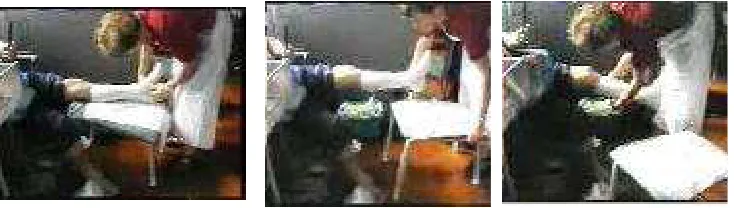
[image:4.595.128.495.322.426.2]demonstrates the context of the activity.
Figure 1: Context of the activity
To maintain research rigour we apply a triangulation approach that links (i) observations of current procedures, (ii) talk-aloud protocols where a nurse and patient are asked to talk aloud during the procedure and (iii) retrospective interviews done after the procedure where a nurse is asked to explain the decisions made..
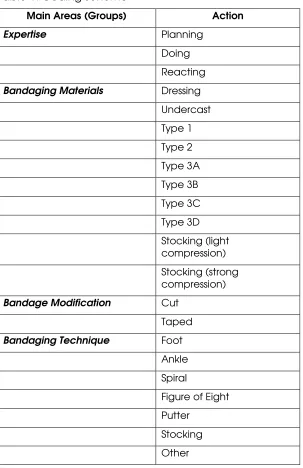
After completing the field-work we coded the video segments using The Observer (The Observer, 2007) software and a coding scheme developed for this research. We applied the same coding scheme to all three sets of data collected. The coding scheme (Table 1) included detailed codes to capture actions in four main areas.
The first group, “Expertise”, deals with basic actions that are used in
combination with actions from the other groups to derive times when a nurse has performed using tacit knowledge and times when she has performed using explicit knowledge.
Management Associations position paper on Compression Therapy (EWMA, 2003).
The third group “Bandage Modification” is used when a nurse cuts a bandage to shorten it or tapes a bandage down to fix its end.
The final group, “Bandaging Technique” contains the methods that may be used to apply compression therapy be that in the form of bandages or compression stockings or hosiery. Depending on the bandage type and how it is used in conjunction with other bandages, different techniques are
specified by the manufacturer of the bandages as achieving a particular level of overall compression. (The Bandaging Technique codes are not discussed in this paper).
Table 1: Coding scheme
Main Areas (Groups) Action
Expertise Planning Doing Reacting Bandaging Materials Dressing
Undercast Type 1 Type 2 Type 3A Type 3B Type 3C Type 3D Stocking (light compression) Stocking (strong compression) Bandage Modification Cut
Taped Bandaging Technique Foot
Ankle Spiral
Figure of Eight Putter
Stocking Other
Results
Some nurses would focus-shift frequently while bandaging while other nurses would only rarely focus-shift. In the examples below we present descriptions of bandaging interactions that illustrate the occurrence, or lack, of focus-shifts while bandaging.
Nurse 1: Highly Experienced
In this example, we describe a bandaging episode with few examples of focus-shifts. Figure 2 shows the full map of the interaction. In this case the patient requires bandages on both legs. The interaction begins with the nurse washing the patient's legs and preparing them for bandaging by cleaning and moisturising the skin. During this time the map shows that the nurse is alternating between planning and doing actions. From 0 minutes to 0:10:20 minutes the nurse is washing and drying the patient's legs. She then prepares the left leg for bandaging and performs the bandaging. Then she prepares the right leg for bandaging and performs the actions.
Figure 2: Map of interaction for an experienced nurse. Box shows location of detail view (Figure 3)
Figure 3: Detail of figure 2
Figure 3 is a detail view of Figure 2 from time 0:10:20 to 0:17:35 minutes. During this time the nurse prepared bandaging materials and then bandaged the patients left leg. Prior to this (Figure 2) there were several iterations of planning and doing when the nurse was preparing materials for washing the patient’s legs and then performing the actions. Figure 2 shows how the nurse did all her preparation before bandaging and then performed all the bandaging
without breaking away from bandaging actions to return to preparation of materials. In order to prepare all the materials necessary for bandaging, the nurse planned all of her actions before beginning the bandaging process. To do so requires the perception of the entire bandaging process – from
beginning to end. This demonstrated a high level of expertise and experience in bandaging.
Figure 3 shows that from 0:10:20 to 0:12:25 minutes the nurse was preparing bandaging materials. This preparation involved locating materials from the various locations in which they are stored and preparing them for use. Bandages must be prepared for use by removing them from packaging. Stockings must be prepared for use by mounting the stocking on an
Beginning at time 0:12:30 minutes and continuing to 0:17:35 minutes the nurse was “doing bandaging”. From 0:12:30 to 0:14:00 minutes she was massaging moisturising solution into the patient’s leg. From 0:14:00 to 0:14:35 she applied a light compression stocking using an applicator that she had prepared earlier. She then retrieved the roll of undercast bandage from the trolley and
bandaged the patient’s leg until 0:15:40 minutes. The next bandage applied was a “type 2” compression bandage which occurred from 0:15:40 to 0:16:50 minutes. Finally, from 0:16:50 to 0:17:35 minutes the nurse mounted a second light compression stocking to the applicator and applied it to the patient’s leg. This example demonstrates the fluency of this nurse’s use of the bandages.
The nurse in this example only demonstrates one focus shift at 0:18:10 minutes and then only during a preparing stage. Because we did not capture data on the nurses relative experience we cannot say definitively that more
experience led to fewer focus shifts. However, it would be consistent with research on expertise in other areas to say that the more experienced the nurse, the fewer focus shifts and breakdowns.
Nurses who experienced few focus-shifts seemed to be relying on tacit knowledge as they bandaged. Rather than considering each action, they performed sequences of actions fluently, linking many different bandaging actions into a larger process. As shown in figure 1, this nurse was able to bandage both legs on a patient with only one focus-shift event, linking together the use of many different bandaging materials and techniques, a demonstration of a great deal of tacit knowledge.
Nurse 2: Inexperienced
In this example, we describe an interaction where the nurse experienced frequent focus shifts during bandaging. In this case the nurse is bandaging only one of the patient’s legs. Figure 4 shows the full map of the interaction. This map begins after the washing and preparing of materials has taken place. The nurse applies a dressing to the patient’s leg and then begins bandaging. She experiences a brief focus shift while applying the undercast and then bandages fluently for almost two minutes using a type 3a bandage. The next part of the interaction is depicted more fully in figure 5.
Figure 4: Map of interaction for an inexperienced nurse. Box shows location of detail view (Figure 5)
Figure 5: Detail of figure 4
minutes the nurse is asking another nurse how to apply the next bandage she will use, a type 3c. This time is coded as reacting because she had already obtained the materials. The nurse begins doing bandaging at 0:05:30 minutes, first by briefly explaining what she will do to the patient before actually
beginning the use of the type 3c bandage at time 0:05:50 minutes. She bandages continuously, without verbalisation until 0:07:05 minutes. It seems that she was using tacit knowledge until this point. At 0:07:05 minutes she begins using explicit knowledge during the bandaging procedure (indicated by the reacting code in conjunction with the doing code). The video for this portion of the interaction shows the nurse applying bandage incorrectly. This nurse then asks for assistance and advice from a more experienced nurse for the remainder of the time.
This nurse experienced focus shifts while applying a bandage, showing that she was inexperienced. She relied frequently on explicit knowledge. The next example shows a nurse applying a three-layer bandaging system who
experiences several focus shifts between bandages, showing that she is more experienced than Nurse 2 but uses less tacit knowledge than Nurse 1.
Nurse 3: Some experience
In contrast to Nurse 2, Nurse 3 uses individual bandages fluently but experiences focus shifts between bandages while she applies the entire bandaging system. Nurse 3 demonstrates more experience and uses more tacit knowledge than Nurse 2, but is not as fluent as Nurse 1.
Figure 6: Map of interaction for a somewhat experienced nurse. Box shows location of detail view (Figure 7)
Figure 7: Detail of figure 6
At the beginning of the interaction depicted in figure 6 the nurse is washing and preparing the patient’s leg for bandaging. It shows a similar pattern to that at the beginning of figure 2. Following the washing, drying, and
Figure 7 shows a detail view of figure 6 from 0:07:35 to 0:09:50 minutes. From 0:07:35 to 0:07:50 minutes the nurse is completing the type 2 bandaging process. From 0:07:55 to 0:08:35 minutes she is preparing the light compression stocking she will apply from 0:08:35 to 0:08:50 minutes. The time for preparing the stocking is coded as reacting as well as preparing because the nurse had to move from the bandaging area to a materials storage area to locate a roll of compression stocking and cut a piece to length before returning to apply the stocking at 0:08:35 minutes. At 0:08:50 minutes, having applied the
stocking it is apparent that it is too short so the nurse again leaves the bandaging area and retrieves another length of stocking, this time of the correct length. She returns at 0:09:10 and at 0:09:15 minutes begins applying the stocking. The remainder of the time depicted, from 0:09:30 to 0:09:50 minutes, is spent assisting the patient with her sock and helping her to stand up.
The nurses who experienced a high number of focus-shifts did so while performing bandaging activities. That is, they frequently broke away from a bandaging activity before it was completed due to a focus shift. When a focus shift occurred before a bandage had been applied completely, it was to focus on the bandage itself, as Nurse 2 did. When a focus shift occurred between the application of bandages, as the example with Nurse 3 shows it was to locate other materials required to complete the larger bandaging action. In both cases, those nurses demonstrate less expertise than Nurse 1.
Discussion
The findings presented above have the potential to be valuable not only to the nursing field because they could be used to identify different degrees of expertise and are transferable to other domain. Identifying expertise is important because of its effects on interaction and solution outcome. A bandage that is too loose is therapeutically ineffective and too tight is uncomfortable and has the potential to cause more injury.
The typical way that expertise in bandaging is assessed is to have nurses
bandage people who are wearing sub-bandage pressure sensors on their legs. People with leg ulcers cannot wear the sensors. Consequently, sub-bandage pressure sensors can only be used on people with healthy legs who do not actually require compression therapy. Finally, as this testing occurs in non-natural settings with healthy volunteers it is not reflective of the nurses normal work practice.
The results of this study demonstrate an additional way of assessing expertise. (Kraal, 2006). Importantly, this new way of assessing expertise is non-invasive and can be used in the field as well as in laboratory settings. Therefore, we suggest that observation of practice complements existing methods of assessing expertise. If the expertise is assessed within the context, then it has better potentials to be applied into the design of future activities and artefact interfaces that will support the required interaction better.
Tacit and Explicit Knowledge
bandage the patient’s second leg. Nurse 2 had, among others, a long focus shift while bandaging that was related to her inexperience with the bandage at hand. Nurse 3 had a number of focus shifts that were associated with her finishing one bandage and preparing the subsequent bandage for use.
These different experiences of focus shifts demonstrate different levels of fluency in bandaging. Nurse 1 is clearly the most expert as she bandages fluently without focus shifting to acquire additional materials, while Nurse 3 uses individual bandages fluently but does not demonstrate the same mastery of the entire process as Nurse 1. Nurse 2 shows even less expertise than Nurse 3 because she experienced a focus shift while using a bandage rather than between bandages.
It seems that the nurses who experience frequent focus shifts are relying on explicit knowledge when they bandage. Nurse 2 uses explicit knowledge about the application technique of the bandage in order to complete the process. Nurse 3 uses explicit knowledge about the sequencing of the bandages she uses to move through the bandaging process and tacit knowledge about the application technique of the bandage she is using.
In contrast, it can be seen that Nurse 1 bandages only using tacit knowledge. She has prepared all the bandaging materials before beginning bandaging, making it possible for her to use her tacit knowledge while bandaging and maintain a "flow state" (Csikszentmihalyi, 1992). It is apparent that Nurse 2 has also prepared the materials beforehand, as she does not break away during bandaging to prepare subsequent materials, as Nurse 3 does, however Nurse 2 is hampered by her apparent lack of experience in performing bandaging. This demonstrates the differences between highly experienced, less
experienced and inexperienced nurses. The main difference is that the expert nurse demonstrated the high level utilisation of tacit knowledge which is represented through planning (Popovic, 2003), continuous interaction and engagement.
Nurse 2's better preparation is somewhat unexpected, given her apparent inexperience. However, the different context of Nurse 2 and Nurse 3's interaction can be said to contribute to their different levels of preparation. Because Nurse 2 was dealing with a new patient, she was explaining in detail the bandaging process from end to end, demonstrating the materials before she began bandaging. Conversely, Nurse 3 was interacting with a long-term patient and was much more casual in her interaction with her. She did not explain her actions to the patient and on several occasions asked the patient for confirmation that as to the next bandaging material – e.g. "You normally have this [bandage] next, right?"
Context-mediated Interaction (CMI)
Having seen that the more expert nurse’s interaction with the bandages is more fluent, we can suggest that when nurses bandage fluently,
Conversely, it is usual to suggest that when the nurses experience focus-shifts they cease their pursuit of the higher goal of "treating a leg ulcer" and instead focus on "using a bandage". This can be seen in the map of Nurse 2's long focus shift (Figures 3 and 4) while bandaging which suggests that the bandage became the object of her interaction rather than the patient.
However, in contrast, it is not apparent from the maps that the more fluent nurses were unaware of the bandages. Indeed, having observed many nurses bandaging, and spoken with many about the process of learning to bandage, it seems that nurses who bandage fluently are simultaneously aware of the bandage and their higher goal. As Verbeek notes “someone who plays the piano is directed toward the music and at the same time is substantially involved with the piano itself. [I]ts machinery is not completely in the
background but not entirely in the foreground either” (2005, p.194). Verbeek calls this “focal engagement” (2005, p.195) and contrasts it with “effort” (2005, p.195). This distinction can be seen in our results where Nurse 2 puts a lot of effort into her engagement with the bandages (Figure 4) while Nurse 1 is focally engaged, that is aware of both the artefact and the thing that the artefact makes possible.
This duality of awareness possessed by experts is not described in standard models of expertise. Instead, experts are thought of as having operationalised lower-level actions to the degree that they are no longer aware of the
functioning of the artefact (Dreyfus, Dreyfus, & Athanasiou, 1986, cited in Bodker, 1991, p.83). This simultaneous awareness of material and goal may be more tacit than explicit. This duality of awareness can be attributed to her expertise level as she was able to accesses the knowledge in more efficient way. This is demonstrated by an ‘intuitive’ performance (Blackler, Popovic and Mahar, 2003). It is also supported by an earlier model of novices and experts in which their differences were outlined. Based on this earlier research, the
expert nurse demonstrated stable internal representation and large pattern perception. Her experience played an important role during the interaction where already known principles are reinforced and improper ones modified and she was able to engage within the activity without concentration on the physical artefact (Popovic, 2003). In this case context-mediated interaction (CMI) is demonstrated by the level of expertise and experience, tacit and explicit knowledge. CMI allows a consideration of the wider context in which an artefact is used, both in the physical and the emergent sense.
Knowledge Transfer to Design Domain
[image:12.595.119.537.693.771.2]Despite the fact that we researched an expertise that informs the nursing practice we believe that our findings are transferable to other domains including design. Within the design domain their applicability is within the interface and interaction design mainly (Table 2).
Table 2 Transfer of findings to design domain
Expertise level Focus-shift Performance Knowledge utilisation
Transfer to the design domain
High Rarely Planning High
perception of Tacit
activity and its process Simultaneous awareness of higher goal and an Intuitive performance Engagement in the activity without
concentrating on an
artefact Some Several Less intuitive
performance
Explicit Tacit Inexperience
d
High Assistance required Break away from the activity Low perception of activity and its process
[image:13.595.121.537.83.449.2]Rare use of tacit knowledge High use of explicit knowledge interfaces Training procedures Activity focused scenario design User experiences Design process
Table 2 illustrates summary of findings and their potential transfer to the design of interfaces, designing for user experiences and an activity focused scenario. For example: an interface can be designed to support an intuitive
performance and minimize focus-shift by researching and identifying users’ experiences (Blackler, Popovic and Mahar, 2007). By transferring the
knowledge about their experiences and familiarity into an interface design the transition between expertise levels will be achieved faster. Another example of application refers to context aware interfaces. In this case, an interface should have the potentials to adapt and support users’ awareness of higher goals and an artefact simultaneously. These are just few examples of potential knowledge transfer and its applications. Further research is needed to test this.
This research has opened another opportunity, that is to apply the same research approach and study focus-shift of expert and novice designers and its implication to the design process and outcome.
Conclusion
Our research methodology and analysis techniques are novel, particularly with regard to the area of investigation. Building on Bodker’s maps of
interaction (1991, 1996) we have created visualisations of long sequences of interaction using our coding scheme as a basis. These maps have allowed us to see hidden relationships between actions and tacit and explicit knowledge and expertise differences based on focus-shift.
Through observing nurses working with these bandages we have been able to show when and how mediated interaction takes place. We have also
demonstrated the complex interplay and interrelation of interaction, tacit and explicit knowledge, expertise and experience. We have called this context-mediated interaction (CMI).
The significance of this research is in its potential application to artefact design. We believe that our research has advanced knowledge about user experiences, expertise, performance and engagement. We have been able to show when and how tacit and explicit knowledge were used. The most significant findings are about user’s focus-shifts and how these relates to expertise level and performance. Our investigation of bandaging will undoubtedly contribute to domain knowledge. However, this knowledge is also transferable to other domains. Its relevance to design is outlined and supported by examples. Our future research will test the findings
demonstrated in this paper within the design domain and expand this
research toward the investigation of designer’s focus-shifts during the design process. This can contribute to the significant expansion of the design process as a whole.
References
Blackler, A., Popovic, V. and Mahar, D. (2003). The Nature of Intuitive Use of Products: an Experimental Approach, Design Studies, Special Issue, 2003, 491-506.
Blackler, A., Popovic, V. and Mahar, D. (2007). Empirical Investigation into Intuitive Interaction, MMI-Interactive 13, 4-12.
Bodker, S. (1991). Through the Interface: A Human Activity Approach to User Interface Design. . Lawrence Erlbaum Associates, Inc. Mahwah, NJ, USA. Bodker, S. (1996). Applying activity theory to video analysis: How to make sense of video data in humancomputer interaction. Context and
consciousness: Activity theory and human-computer interaction, 147-174. Clark, M. (2003). Compression bandages: principles and definitions.
Coull, A., Tolson, D., & McIntosh, J. (2006). Class-3c compression bandaging for venous ulcers: comparison of spiral and figure-of-eight techniques. Journal of Advanced Nursing, 54(3), 274-283.
Csikszentmihalyi, M. (1992). Flow: The Psychology of Happiness. , 303. London: Rider.
Cullum, N., Nelson, E. A., Fletcher, A. W., & Sheldon, T. A. (2005). Compression for venous leg ulcers (Cochrane Review). The Cochrane Database of
Dreyfus, H. L., Dreyfus, S. E., & Athanasiou, T. (1986). Mind over machine : the power of human intuition and expertise in the era of the computer. . New York: Free Press.
Edwards, H. E., Courtney, M. D., Finlayson, K. J., Lewis, C., Lindsay, E., & Dumble, J. (2005). Improved healing rates for chronic venous leg ulcers: Pilot study results from a randomized controlled trial of a community nursing intervention.
International Journal of Nursing Practice, 11(4), 169-176.
Edwards, H. E., Courtney, M. D., Finlayson, K. J., Lindsay, E., et al. (2005). Chronic Venous Leg Ulcers: Effect of a Community Nursing Intervention on Pain and Healing. Nursing Standard, 19(52), 47-54.
EWMA. (2003). Understanding Compression Therapy. . London: Medical Education Partnership.
Feben, K. (2003). How effective is training in compression bandaging technique? British Journal of Community Nursing, 8(2), 80-84.
Finnie, A. (2002). Bandages and bandaging techniques for compression therapy. British Journal of Community Nursing, 7(3), 134-142.
Gordon, L., Edwards, H. E., Courtney, M. D., Finlayson, K. J., Shuter, P., & Lindsay, E. (2006). A cost-effective analysis of two community models of care for
patients with venous leg ulcers. Journal of Wound Care, 15(8), 348-353.
Graham, I. D., Harrison, M. B., Nelson, E. A., Lorimer, K., & Fisher, A. (2003). Prevalence of lower-limb ulceration: a systematic review of prevalence studies. Advanced Skin Wound Care, 16(6), 305-316.
Kraal, B. (2006). Investigating Design for Automatic Speech Recognition in Use, PhD Thesis, School of IT, University of Canberra, Australia. Available from
https://benkraal.wordpress.com/files/2006/11/ben-kraal-thesis-final.pdf
Nelson, E., & Cullum, N. (2004). Venous Leg Ulcers. Clinical Evidence, 12, 2774-2792.
Popovic V. (2003). Expert and Novice Users Models and their Application to the Design Process, Journal of 6th Asian Design Conference, 1(1), Tsukuba,
Japan
The Observer (2007). Noldus, www.noldus.com
Verbeek, P. (2005). What Things Do: Philosophical Reflections on
Technology,agency, and Design. , 249. University Park, Pa: Pennsylvania State University Press.
Winograd, T., & Flores, F. (1987). Understanding Computers and Cognition: A New Foundation for Design. (Reissue), 224. Addison-Wesley Professional.
Vesna Popovic
([email protected])
Vesna Popovic, PhD is a Professor in Industrial design at the Queensland University of Technology and she is founder of the Industrial Design
UNDRO (United Nation Disaster Relief Organisation) and The League of Red Cross Societies. She was UNIDO Expert for Developing Countries. She has a number of realised designs and some of them received significant awards (19 Awards).
Vesna Popovic’s research interests are in the areas of: design (product design), interactivity and useability, research in design thinking and knowledge; human –centred design research. She has been the founder of the Human–Centred Research and Usability Laboratory at the Faculty of the Built Environment and Engineering, QUT. Most of the research conducted has been published in refereed publications and conference proceedings.
She is a Fellow of the Design Institute of Australia and Fellow of the Design Research Society (UK), Member of Human Factors Society (USA) and Ergonomic Society of Australia. She was the Executive Member of the
International Council of Societies of Industrial Design (ICSID), Education Chair 1997 – 2001 and South Pacific –South East Asia ICSID Region Portfolio Leader (1997-2001). Since 2001 she has been an ICSID adviser. She has been an International Council Member of the Design Research Society since 2002.