1
2 Impact of SNR, masker type and noise reduction processing on sentence recognition performance
3 and listening effort as indicated by the pupil dilation response
4
5 Barbara Ohlenforst1,4, Dorothea Wendt4,5, Sophia E. Kramer1, Graham Naylor6, Adriana A. Zekveld1,2,3,
6 Thomas Lunner2,3,4,5
7
8 1Section Ear & Hearing, Dept. of Otolaryngology-Head and Neck Surgery, VU University Medical 9 Center and Amsterdam Public Health Research Institute, Amsterdam, The Netherlands;
10 2Department of Behavioral Sciences and Learning, Linköping University, Sweden; 11 3Linnaeus Centre HEAD, The Swedish Institute for Disability Research, Linköping and Örebro
12 Universities, Sweden;
13 4Eriksholm Research Center, Oticon A/S, Denmark;
14 5Department of Electrical Engineering, Technical University of Denmark, Denmark; 15 6MRC/CSO Institute of Hearing Research, Scottish Section, Glasgow, United Kingdom. Part of the
16 University of Nottingham.
17
18 Received, 2017
19 This work was supported by grants from the European Commission (FP7-LISTEN607373) and the Oticon
20 Foundation.
21 Corresponding author: Barbara Ohlenforst,
22 Section Ear & Hearing, Dept. of Otolaryngology-Head and Neck Surgery, VU University Medical Center and 23 Amsterdam Public Health Research Institute, Amsterdam, The Netherlands; P.O. Box 7057, 1007 MB, Phone: 24 +31 20 4440952; Fax: +3120 444 2033
25 Eriksholm Research Centre, Rørtangvej 20, 3070 Snekkersten, Denmark;
26 E-mail: [email protected]; Phone: 0045-48298900 Fax: 0045-49223629
p. 2
27 Abstract
28 Recent studies have shown that activating the noise reduction scheme in hearing aids results in a
29 smaller peak pupil dilation (PPD), indicating reduced listening effort, and 50% and 95% correct
30 sentence recognition with a 4-talker masker. The objective of this study was to measure the effect of
31 the noise reduction scheme (on or off) on PPD and sentence recognition across a wide range of
32 signal-to-noise ratios (SNRs) from +16 dB to -12 dB and two masker types (4-talker and stationary
33 noise). Relatively low PPDs were observed at very low (-12 dB) and very high (+16 dB to +8 dB) SNRs
34 presumably due to ‘giving up’ and ‘easy listening’, respectively. The maximum PPD was observed
35 with SNRs at approximately 50% correct sentence recognition. Sentence recognition with both
36 masker types was significantly improved by the noise reduction scheme, which corresponds to the
37 shift in performance from SNR function at approximately 5 dB toward a lower SNR. This intelligibility
38 effect was accompanied by a corresponding effect on the PPD, shifting the peak by approximately 4
39 dB toward a lower SNR. In addition, with the 4-talker masker, when the noise reduction scheme was
40 active, the PPD was smaller overall than that when the scheme was inactive. We conclude that with
41 the 4-talker masker, noise reduction scheme processing provides a listening effort benefit in addition
42 to any effect associated with improved intelligibility. Thus, the effect of the noise reduction scheme
43 on listening effort incorporates more than can be explained by intelligibility alone, emphasizing the
44 potential importance of measuring listening effort in addition to traditional speech reception
45 measures.
46
47
48 Keywords: Hearing impairment, speech recognition, noise reduction scheme, hearing aids, pupil
49 dilation, listening effort, signal-to-noise ratio
50 1. Introduction
51 Audiological evaluations and research studies investigating hearing aid signal processing have
52 typically focused on changes or benefits in intelligibility but often failed to provide a complete
53 picture of the processes involved in speech recognition (Dillon et al., 1993; Ricketts et al., 2001;
54 Sarampalis et al., 2009). Traditional speech reception measures have been shown to be insensitive to
55 the possible benefits of hearing aid algorithms due to ceiling effects or great variability (Gatehouse et
56 al., 1990). Baer and colleagues (Baer et al., 1993) suggested that the greatest benefit of noise
57 reduction processing in hearing aids may be reduced listening effort rather than enhanced speech
58 intelligibility.
59 According to the Framework for Understanding Effortful Listening (FUEL) (Pichora-Fuller et al., 2016),
60 listening effort depends on a range of factors, including not only individual factors, such as hearing
61 ability and motivation to continue listening, but also external factors, such as the task demands
62 imposed by the listening situation (Brehm, 1999). Participants may invest less effort in their task
63 performance when the task demands are too high or allocate less cognitive resources under very
64 easy listening conditions (Ohlenforst et al., 2017a). Recently, an increasing number of studies have
65 sought additional methods to gain information about effortful listening as a supplement to
66 traditional audiological measures to assess individual hearing ability (McGarrigle et al., 2014;
67 Ohlenforst et al., 2017b; Pals et al., 2013; Wu et al., 2016). These methods include subjective
68 assessments, such as self-reports and questionnaires (McAuliffe et al., 2012; Panico et al., 2009;
69 Picou et al., 2011); behavioral measures, such as dual-task paradigms or reaction time measures
70 (Fraser et al., 2010; Houben et al., 2013; Tun et al., 2009); and physiological measures, such as the
71 pupil response and functional magnetic resonance imaging (fMRI) or EEG measures (Kuchinsky et al.,
72 2013; Obleser et al., 2012; Petersen et al., 2015). Importantly, the listening conditions may affect
73 listening effort even when speech intelligibility is not affected, such as when speech intelligibility is at
74 a ceiling and hence constitutes an insensitive outcome measure (Koelewijn et al., 2014; Wendt et al.,
p. 4
75 2017). For example, Wendt et al., (2017) showed that activating the noise reduction scheme at
76 ceiling performance reduced listening effort, but speech in noise performance was unaffected.
77 Therefore, simultaneously assessing listening effort and speech performance may uncover challenges
78 or changes in processing speech that may not be evident with traditional measures.
79 Numerous studies across different research areas have shown that pupil dilation increases as the
80 processing load imposed by the task demands increases (Beatty, 1982; Engelhardt et al., 2010;
81 Granholm et al., 1996; Kahneman, 1973; Van Der Meer et al., 2010). Pupillometry has repeatedly
82 been verified as a valid measure for quantifying the effort required for speech recognition with
83 background noise (Koelewijn et al., 2012; Koelewijn et al., 2014; Kramer et al., 1997; Ohlenforst et
84 al., 2017a; Ohlenforst et al., 2017b; Wendt et al., 2017; Zekveld et al., 2011). For instance, the SNR
85 (ranging from -20 dB to +16 dB) and masker type (stationary and 1-talker masker) have been shown
86 to affect pupil dilation during listening (Ohlenforst et al., 2017a). Recent studies indicate that effort is
87 not necessarily monotonically related to the task demands. The changes in effort follow an inverse
U-88 shaped function, indicating that listeners may exert less effort due to ‘giving up’ under very difficult
89 conditions and ‘taking it easy’ when listening at high SNRs (Ohlenforst et al., 2017a; Wu et al., 2016;
90 Zekveld et al., 2014). Ohlenforst et al. (Ohlenforst et al., 2017a) investigated the peak pupil dilation
91 (PPD) across a range of SNRs in hearing-impaired and normal-hearing listeners. These authors
92 showed that the PPD, which is an indication of the cognitive processing load, was affected by an
93 interaction between the masker type and hearing status of the individual. In the presence of a
94 stationary noise masker, the hearing-impaired listeners showed relatively large PPDs across a wide
95 range of SNRs, while the normal-hearing listeners showed a maximum PPD across a relatively narrow
96 range of low (challenging) SNRs (Ohlenforst et al., 2017a). With a single-talker masker, the maximum
97 PPD was in the mid-range of SNRs, while relatively smaller PPDs were observed at low and high SNRs
98 in both groups of listeners. Interestingly, recent findings across a variety of studies in the field of
99 listening effort suggest that the allocation of mental resources needed during listening to reach
100 speech understanding in daily life listening situations may differ between normal-hearing and
101 hearing-impaired listeners (Ohlenforst et al., 2017a; Ohlenforst et al., 2017b; Zekveld et al., 2011).
102 Hearing aids are designed to improve the audibility of sounds and facilitate the intelligibility of
103 speech in both quiet and noisy environments. These improvements may be accompanied by reduced
104 listening effort. The advanced signal processing in hearing aids includes a digital noise reduction
105 scheme, which aims to reduce the level of interfering background noise by improving the SNR.
106 Recent studies indicate that the noise reduction scheme improves the recall of words presented in a
107 competing multi-talker background (Lunner et al., 2016; Ng et al., 2015; Ng et al., 2013). The
108 researchers concluded that the noise reduction scheme may reduce the adverse effect of noise on
109 memory and thereby facilitate the segregation of the target from the multi-talker masker signal. This
110 enhanced memory of the target words was interpreted to represent reduced listening effort (Lunner
111 et al., 2016; Ng et al., 2015; Ng et al., 2013). Moreover, Wendt et al. (2017) presented speech in a
4-112 talker babble masker at two SNRs (SNR50 and SNR95) corresponding to the individual 50% or 95%
113 sentence recognition level. These authors assessed the effect of the noise reduction scheme by
114 applying a combination of a digital noise reduction scheme and directional microphones. When the
115 scheme was activated in the hearing aid, the speech recognition performance at SNR50 was
116 significantly improved and accompanied by significantly smaller PPDs. Interestingly, activating the
117 noise reduction scheme did not affect the near-ceiling speech recognition performance at SNR95.
118 Nevertheless, significantly smaller PPDs were observed, indicating that the noise reduction scheme
119 had a beneficial effect on listening effort. Thus, measuring listening effort by assessing PPD could
120 provide a sensitive outcome measure of hearing aid benefit even at high performance level
121 traditional methods of audiological assessment are not sufficiently sensitive.
122 The studies described above (Ng et al., 2015; Ng et al., 2013; Wendt et al., 2017) indicate that effort
123 can be reduced with modern hearing aid signal processing. However, knowledge regarding the
124 benefit of noise reduction processing on listening effort remains very limited as only a few listening
p. 6
125 conditions were tested in these studies. In contrast, the effect of noise reduction processing on
126 intelligibility has been studied by several groups of researchers. In these studies, the inconsistency in
127 the diverse noise reduction processing schemes studied renders generalization problematic,
128 especially as processing schemes become increasingly sophisticatedion over time. Some research
129 studies have indicated that the application of noise reduction processing may not always be
130 beneficial for speech intelligibility (Bentler et al., 2008; Nordrum et al., 2006). Such negative effects
131 suggest that while the background noise may be removed, the target speech might also be degraded.
132 Stronger or more aggressive signal processing may cause more signal enhancement but could
133 simultaneously introduce more degradation (Loizou et al., 2011). For example, in a recent study, the
134 effect of noise reduction processing on sentence recognition was tested in the presence of a
135 cafeteria background masker (Neher et al., 2013). Simulated hearing aid processing including
136 coherence-based noise reduction was presented via headphones to hearing-impaired listeners. The
137 algorithm was designed to suppress the reverberant signal components and diffuse the background
138 noise at mid to high frequencies but did not include directionality. The results showed that sentence
139 recognition was unaffected by the moderate noise reduction processing, but the strong noise
140 reduction processing reduced speech recognition by approximately 5%. The effect was replicated in a
141 follow up study in which the same acoustic test conditions were used in a group of habitual hearing
142 aid users (Neher, 2014). Compared to the moderate or no noise reduction processing, the strong
143 noise reduction processing reduced speech recognition at -4 dB and 0 dB SNR.
144 How hearing-impaired listeners invest listening effort across a broader range of listening situations
145 and how effortful listening relates to performance measures remain unclear. The current study
146 aimed to examine how a noise reduction scheme influences sentence recognition and listening
147 effort. The applied noise reduction scheme preserves speech and reduces noise in complex
148 environments by a fast-acting combination of a beam-former (Kjems et al., 2012) and a
single-149 channel Wiener post-filter (Jensen et al., 2015) to attenuate interfering sounds. Any effect of the
150 noise reduction processing on intelligibility likely affects the PPD in a corresponding direction as the
151 intelligibility of speech has a strong and reliable effect on the PPD (Koelewijn et al., 2014; Ohlenforst
152 et al., 2017a; Zekveld et al., 2014). However, in addition to this intelligibility effect, the noise
153 reduction processing may have additional effects on the PPD, as suggested by recent studies
154 investigating listening effort that demonstrated that hearing aid processing has a beneficial effect on
155 listening effort due to reduced background noise and reduced cognitive effort during speech
156 processing (Picou et al., 2013; Sarampalis et al., 2009; Wendt et al., 2017). Demonstrating the effect
157 of noise reduction processing on listening effort combined with simultaneous knowledge regarding
158 speech in noise performance could further substantiate the value of measuring effort as an extra
159 dimension in addition to traditional speech reception measures.
160 Recent research found better SRTs in speech recognition in the presence of a single-talker masker
161 than those in the presence of a stationary noise masker (Koelewijn et al., 2012). The envelope
162 modulations of the multi-talker masker might allow the participants to listen in the energy dips in the
163 spectral-temporal domain and glimpse parts of the target sentence (Festen et al., 1990; Francart et
164 al., 2011; Koelewijn et al., 2012; Koelewijn et al., 2014; Rosen et al., 2013). Based on the
165 characteristics of the masker types and recent findings, we hypothesize that speech recognition
166 performance is better with the 4-talker masker than that with the stationary noise masker (Koelewijn
167 et al., 2012; Koelewijn et al., 2014). However, recent studies suggest that the intelligibility of speech
168 masked by additional interfering speech information may require more mental effort than that with
169 an energetic mask (Larsby et al., 2008). Informational masking, including lexical interference or the
170 competition for neural resources, may cause higher listening effort (Beatty, 1982; Koelewijn et al.,
171 2012; Koelewijn et al., 2014; Scott et al., 2004; Scott et al., 2009). We hypothesized that the better
172 speech recognition with the 4-taker masker compared to that with the stationary noise masker could
173 be accompanied by larger PPDs. We hypothesized that sentence recognition is improved and
174 listening effort is reduced with SNRs corresponding to approximately 50% correct or better
p. 8
175 performance with the active noise reduction compared to the inactive noise reduction scheme. This
176 hypothesis is motivated by two arguments. First, in a previous study conducted by Wendt and
177 colleagues (2017), SRT targeting 50% correct performance was significantly improved by the active
178 noise reduction scheme compared to that with the inactive noise reduction scheme setting. Second,
179 the segregation between the target and masker signal at very low SNRs might be more difficult for
180 the algorithm, which might have an impact on the SNR improvement provided by the algorithm.
181
182 2. Materials and methods
183 2.1 Participants
184 Twenty-five experienced hearing aid users were recruited from the Eriksholm Research Centre in
185 Denmark. On average, the participants had used hearing aids for 7.7 years (SD=3.1 years). The
186 participants were aged between 46 and 77 years (mean age 64.3 years, SD=9.4) and native Danish
187 speakers.The audiometric inclusion criterion for the participants was symmetrical, with mild to
188 moderate sensorineural hearing thresholds. The average pure tone hearing thresholds ranged
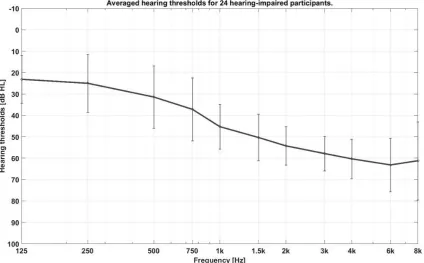
189 between 35 dB and 60 dB HL (see Figure 1), and air-bone gaps less than 10 dB between 500 Hz and
190 4000 Hz were required in both ears. All the participants had normal or corrected-to-normal vision
191 and no history of neurological diseases, dyslexia or diabetes mellitus. All the participants provided
192 written informed consent, and the study was approved by the local regional ethics committee (De
193 Videnskabsetiske Komiteer for Region Hovedstaden).
194
195
196 2.2 Auditory stimuli
197 Everyday Danish sentences from the Hearing in Noise Sentence Test (HINT) (Nielsen et al., 2009)
198 were presented in a spatial setup with five loudspeakers in a sound proof measurement booth as
199 shown in Figure 2. The target sentences were spoken by a male and presented from a loudspeaker
200 located at 0 degree azimuth. All the sentences contained five words, 8-9 syllables were included in
201 each sentence, and the single words did not contain more than four syllables (Nielsen et al., 2009).
202 The following is an example of a presented sentence: “Filmen er rigtig godt lavet” (translation: “the
203 movie was well made”). The sentence duration was on average 1.4 seconds. The listeners were
204 presented with a training list of 20 sentences for each masker type, followed by eight lists of 25
205 sentences for every SNR. To cover the large number of testing conditions, the sentence material was
206 re-used across four experimental visits. Recent research assessed the possible learning effects due to
207 repeated exposure to HINT sentences across three experimental visits with an interval of three
208 weeks between visits. The results showed that the memory effects of the sentence material are not
209 significant with limited exposure when the sentences were only presented once during each visit
210 (Simonsen et al., 2016). The experimental visits in the current study were separated by at least three
211 weeks, and identical sentence material was not repeated within each visit to prevent learning effects
212 of the speech material. The speech recognition performance was measured in the presence of a
213 stationary noise or a 4-talker masker background. The 4-talker masker was made from four
single-214 talker maskers, including two different male voices and two different female voices. Each separate
215 talker read a text passage from a newspaper, and one single talker was presented from one
216 loudspeaker, each positioned at -/+ 90 and -/+ 150 degree azimuth (Wendt et al., 2017). We
217 balanced the distribution of the talkers across loudspeakers for each SNR by switching the order of
218 the talkers. There were never two talkers of the same gender next to each other or on the opposite
219 position of each loudspeaker. In each trial, the masker started 3 seconds prior to the presentation of
220 the sentence and ended 3 seconds after the sentence offset.The participants repeated the sentence
221 aloud once the masker stopped. The same presentation procedure was applied for both masker
p. 10
222 types. The long-term average frequency spectrum of both masker types was identical to the
223 spectrum of the target speech signal, and the masker was always presented at 70 dB SPL.The masker
224 levels were kept constant to ensure that the noise would not become too loud at low SNRs. Changing
225 the noise levels might also allow the listeners to estimate the upcoming task difficulty. The same SNR
226 range was chosen for both masker types. We included a large range of positive SNRs as previous
227 findings suggested that typical, ecologically sound environments for hearing-impaired listeners occur
228 at SNRs of approximately +5 dB or better (Festen et al., 1990; Ohlenforst et al., 2017a; Smeds et al.,
229 2015; Wu et al., 2014; Zekveld et al., 2014). Speech masked with a stationary masker and 4-talker
230 masker was presented at eight SNRs between -12 dB and +16 dB and distributed in steps of 4 dB. Per
231 the masker type, 25 sentences were presented for each SNR.
232
233
234 2.3 Noise reduction scheme
235 All the participants wore identical hearing aid models during the sentence recognition test and
236 examined in the same two different settings. In one setting, the noise reduction scheme was turned
237 off, but the hearing aid provided audibility based on each individual’s hearing threshold via the Voice
238 Aligned Compression (VAC) rationale (Le Goff, 2015). The VAC amplification rationale is based on a
239 wide dynamic range compression scheme with compression knee points between 20 and 50 dB SPL
240 depending on the frequency range and the individuals’ hearing thresholds. The hearing aid was set to
241 mimic the natural acoustic effect of the pinna; thus, the microphone setting was close to
242 omnidirectional, and no actual noise reduction processing was applied. The other setting involved
243 activating the noise reduction scheme. In this setting, a fast-acting combination of a minimum
244 variance distortion-less response (MVDR) beam-former (Kjems et al., 2012) and a single-channel
245 Wiener post-filter (Jensen et al., 2015) was applied before the VAC. In the algorithm, spatial filtering
246 and Wiener filtering were applied to attenuate interfering sounds originating behind the listener.
247 The output SNR method suggested by Naylor and Johannesen (2009) was used to directly measure
248 the SNR effect of the complete noise reduction scheme. The hearing aid was placed in a sound field
249 and exposed to running speech plus noise mixtures in SNRs ranging from -10 dB SNR to +20 dB in
250 steps of 5 dB for the two different noise types (speech-weighted unmodulated noise and multi-talker
251 babble noise). The output SNR method was applied to NR on and off. In the range of -10 dB SNR to
252 +10 dB SNR, the listeners experience an articulation-index (AI) weighted SNR improvement ranging
253 from 4.5 dB to 5.2 dB for NR on compared to that for NR off for the speech-weighted noise and an AI
254 weighted SNR improvement ranging from 4.2 dB to 4.8 dB for the multi-talker babble noise. For SNRs
255 above +10 dB, the SNR improvement gradually declined to a few dB because the noise estimates in
256 the noise reduction algorithm decline at high SNRs, and thus, the noise reduction algorithm becomes
257 less effective.
258
259
260 2.4 Pupillometry
261 During the experiment, the pupil location and pupil size were recorded using an eye tracking system
262 by SensoMotoric Instruments (SMI, Berlin, Germany, 2D Video-Oculography, version 4), which
263 applies infrared video tracking to measure the pupil diameter. The eye tracking system had a
264 sampling frequency of 120 Hz and a spatial resolution of 0.03 mm. The pupil location and pupil size
265 were recorded by the eye tracker and stored on a connected computer with time stamps
266 corresponding to the start of each trial, including the masker onset, the sentence onset and the
267 offset for the post-masker. The experimenter monitored the pupil recordings and applied corrective
268 actions. In the case that a participant moved his/her head or upper body or the real-time pupil
p. 12
269 recordings were missing data regarding the pupil diameter, corrective actions, such as adjusting the
270 participants’ position, the distance to the eye tracker, or light, were applied.
271
272 2.5 Procedures
273 In total, 17 adults from the Eriksholm pool of participants with recent pure tone audiogram data and
274 recently made ear impressions (less than 6-month-old) were required to participate in four
275 experimental visits. We recruited 8 additional participants who required an additional recruitment
276 visit (total of five visits) to measure the pure tone audiogram and take ear impressions. In total, four
277 experimental visits, including two visits per masker type, were required for each participant. The
278 visits were distributed across approximately four months during the fall of 2016 with intervals of at
279 least three weeks between each visit to avoid learning effects of the sentence material as the
280 material was repeatedly used (Simonsen et al., 2016). During the four experimental sessions, each
281 participant sat on a fixed chair in front of the eye tracking system in a sound proof booth. The
282 experimenter observed the real-time recording of the pupil response from the eye tracking system to
283 evaluate the pupil recording quality. The height of the chair and the distance to the eye tracker (55
284 cm +/- 5 cm approximately) were adjusted individually until a stable, continuous pupil response was
285 measured. The illumination in the measurement booth was fixed during the experiment to an
286 average of 84.3 lux (SD=3.56 lux). The stationary noise and 4-talker masker were presented at eight
287 identical SNRs between -12 dB and +16 dB distributed in steps of 4 dB. During each visit, only 1 of the
288 2 masker types was presented in two blocks of four randomized SNRs. In one block, the noise
289 reduction scheme was turned on, and in the other block, the noise reduction scheme was turned off.
290 During each visit, each noise reduction scheme setting (on or off) was tested at four SNR levels. We
291 balanced the SNR levels for each visit, including two difficult and two easier SNRs (e.g., -12, -4, +4 and
292 +12 dB SNR or -8, 0, +8 and +16 dB SNR). We balanced the setting of the noise reduction scheme and
293 the presented masker types across visits and blocks. Each participant’s visit started with a practice
294 session in which the noise reduction scheme setting was the same as that in the starting block, and
295 20 sentences at an SNR of +4 dB were tested. The practice session ensured that the participants were
296 confident with the experimental procedures as it may not be intuitive to inhibit movements and
297 blinking during the sentence presentation. A sentence was scored as correct if all the words were
298 correctly repeated.
299
300
301 2.6 Pupil data selection and cleaning
302 Pupil diameter values more than 2 standard deviations from the mean pupil diameter in a given trial
303 were defined as blinks. Pupil traces with more than 25% of blinks between the start of baseline (final
304 second pre-noise before the sentence onset) and the end of the post-masker were excluded from
305 data analysis. For pupil traces with less than 25% of blinks, the blinks were interpolated linearly
306 starting with 5 samples before and 7 samples after each blink (Siegle et al., 2008). The pupil response
307 within each selected and de-blinked trace was smoothed by a 9-point moving average filter. The
308 reference of the task evoked pupil dilation was the baseline, which corresponded to the average
309 pupil diameter recorded during the final second of the three second presentation of the masker
310 before the target speech onset. The PPD was calculated as the maximum pupil dilation between the
311 onset of the sentence and the offset of the noise relative to the baseline pupil diameter for every
312 trace (one pupil trace was recorded per sentence). For each participant and each condition, all the
313 included de-blinked and smoothed traces (≤25) were time-aligned and averaged. For each SNR
314 condition, at least 18 valid pupil traces (n=25 traces in total) with less than 25% of blinks were
315 required per participant to consider the pupil data for the statistical analysis. Eighteen participants
316 had the required number of valid pupil traces for each of the 32 testing conditions. Six participants
p. 14
317 had less than 18 valid pupil traces in at least one of the testing conditions, and two participants had
318 missing data (<18 valid pupil traces) in at 3 test conditions. We calculated the average pupil trace
319 across all the valid pupil traces per SNR condition and subject. The mean PPD was calculated based
320 on the averaged pupil trace and thus provided the data for the statistical analysis per SNR and
321 participant.
322
323
324 2.7 Statistical analyses
325 Pupil data selection and cleaning were applied to the pupil data from 24 participants (50% female).
326 One participant was excluded due to unexpected attention problems. We measured 800 pupil traces
327 during the experimental sessions (excluding the practice traces) per participant, and on average, 38
328 (SD=12.92) pupil traces were excluded per person. The corresponding sentence recognition scores
329 for all 800 measured traces were included in the statistical analysis.
330 We applied linear mixed models (LMM) to analyze the data as LMMs tolerate missing values, while
331 repeated measures ANOVA tests only use complete cases contrary to multilevel analyses. Moreover,
332 mixed-effects models are more flexible in processing the multilevel structure of the data (i.e., the 8
333 different SNRs and 2 different hearing aid settings). We averaged over 25 sentences to obtain one
334 ‘observation’ under each hearing aid setting and listening condition (SNR and masker type), which is
335 commonly performed in pupillometry research (Koelewijn et al., 2012; Koelewijn et al., 2014;
336 Ohlenforst et al., 2017a; Zekveld et al., 2011). A linear mixed-effects model was built in R-studio
337 using the packages lme4 (Bates et al., 2014) and lmerTest (Kuznetsova et al., 2016). The function
338 lmer was applied to fit the LMM to the data. First, we applied a 3-way LMM ANOVA to statistically
339 compare the fixed effects of the masker types, SNR and noise reduction setting on the PPD and the
340 sentence recognition performance separately to verify the hypothesis that the masker type and SNR
341 range have an impact on speech recognition performance and the corresponding listening effort. The
342 probability level of each LMM ANOVA was p< 0.05. We did not observe a significant 3-way
343 interaction effect on the PPD, but we did observe a significant interaction between the SNR and
344 noise reduction scheme setting. The model was collapsed across masker type, and an additional
2-345 way LMM ANOVA was applied to assess the effect of the SNR and noise reduction scheme setting
346 and the corresponding interaction effect on the PPD.
347 The three-way interaction among the masker type, SNR and noise reduction scheme setting on
348 sentence recognition performance was significant. We created two additional separate LMM
349 ANOVAs to test the effect of the SNR of each masker type independently (stationary noise and
4-350 talker masker) on the percent-correct sentence recognition. In these models, the averaged
351 percentage of correct sentence recognition scores for each SNR was treated as a dependent
352 measure, and the participants were treated as a repeated measure, i.e., random effects. The fixed
353 effects in each separate LMM ANOVA included the categorical variable SNR, the categorical variable
354 noise reduction scheme setting and the interaction between the SNR and noise reduction scheme
355 setting. We included the random effect of the SNR and noise reduction scheme as a random slope of
356 SNR to allow each participant to have their own mean PPD size and effect of SNR or noise reduction
357 scheme on PPD with both factors nested within participants. The phia package, including the
358 testInteractions functions, was used to apply a post hoc interaction analysis. Pairwise comparisons of
359 the noise reduction scheme setting (on or off) at each SNR level were conducted. The pairwise
post-360 hocpost hoc analysis was separately applied to both outcome measures (PPD and sentence
361 recognition performance), and a p-value correction using the Holm method was applied to correct
362 for the multiple comparisons.
363
p. 16
364 3. Results
365 3.1 Sentence recognition data
366 The results are displayed in Figures 3 and 4. Figure 3 shows the sentence recognition scores across
367 the range of stationary noise masker SNRs with the noise reduction scheme on (solid, gray curve) or
368 off (dashed, gray curve). The sentence recognition scores with the 4-talker masker are shown in
369 Figure 4 with the noise reduction scheme on (solid, gray curve) or off (dashed, gray curve). The error
370 bars represent the standard error of the mean.
371 The 3-way LMM ANOVA revealed significant main effects of SNR (F[7,713]=1382.5, p<0.001), noise
372 reduction scheme (F[1,713]=524.4, p<0.001), and masker type (F[1,713]=72.9, p<0.001), indicating that
373 sentence recognition is affected by differences in the listening conditions (SNR and masker type) and
374 the noise reduction processing algorithm. Furthermore, we found significant interactions between
375 the SNR and noise reduction scheme (F[7,713]=93.7, p<0.001), between the SNR and masker type
376 (F[7,713]=5.73, p<0.001) and among the SNR, noise reduction scheme and masker type (F[7,713]=2.82,
377 p<0.01). The interaction between the masker type and noise reduction scheme was not significant.
378 The interaction effects of among the masker type, noise reduction scheme and SNR are larger in the
379 mid-range of SNRs, while at relatively low and high SNRs, floor or ceiling effects of sentence
380 recognition were observed.
381
382 Regarding the stationary noise masker, at relatively high SNRs between +16 dB and +8 dB, the
383 participants achieved 100% sentence recognition independent of the setting of the noise reduction
384 scheme. As the SNR decreased (+8 dB to -8 dB), sentence recognition rapidly decreased until the
385 participants were unable to perform correct sentence recall at -12 dB SNR when the noise reduction
386 scheme was turned off. At -12 dB SNR, the participants could correctly recognize approximately 12%
387 when the noise reduction scheme was turned on. Overall, the sentence recognition curve at the level
388 of 50% correct speech recognition was shifted by approximately 5.5 dB (see Figure 3) toward lower
389 SNRs when the noise reduction scheme was turned on compared to that when it was turned off.The
390 LMM ANOVA revealed significant main effects of SNR (F[7,345]=846.2, p<0.001) and noise reduction
391 scheme (F[1,345]=332.5, p<0.001) and a significant interaction between the SNR and noise reduction
392 scheme (F[7,345]=68.8, p<0.001). We performed pairwise post hoc comparisons between the two noise
393 reduction scheme settings (on or off) at each SNR level. Post hoc analysis revealed significant
394 differences between the noise reduction scheme settings at -12 dB, -8 dB, -4 dB and 0 dB SNR
395 (p<0.01, as indicated by gray diamonds in Figure 3).
396
397 Regarding the 4-talker masker, at SNRs between +16 dB and +8 dB, nearly 100% sentence recognition
398 was achieved regardless of the noise reduction setting. The overall performance curve was shifted by
399 approximately 5.1 dB toward the lower SNRs when the noise reduction scheme was turned on
400 compared to that when it was turned off. By applying an LMM ANOVA, we found significant main
401 effects of SNR (F[7,345]=617.3, p<0.001) and noise reduction scheme (F[1,345]=223.8, p<0.001) and a
402 significant interaction between the SNR and noise reduction scheme (F[7,345]=36.2, p<0.001). We
403 performed pairwise post hoc comparisons between the two noise reduction scheme settings (on or
404 off) at each SNR level. Significant differences were observed in the sentence recognition performance
405 between the noise reduction scheme settings at -8 dB, -4 dB, 0 dB and +4 dB SNR (p<0.01, as
406 indicated by gray diamonds in Figure 4).
407
408 Arcsine transformation prior to analyzing proportion data, such as the percent of correct responses,
409 is known to stabilize the variance and normalize proportional data (Studebaker, 1985). We applied
410 the arcsine transformation to the speech scores and performed the statistical analysis described in
411 section 2.7 by using LMM ANOVAs of the speech data. The results revealed small differences in the F-
p. 18
412 and p-values compared to those obtained by analyzing the percentage scores. We chose to apply the
413 statistical analysis of the speech data because the prior arcsine transformation did not change the
414 results, and arcsine units are difficult to interpret as they fall into a numeric range that has little
415 intuitive relationship to the proportionate performances.
416
417 3.2 Pupil data
418 Figure 3 shows the PPD data under the stationary noise masker conditions, and Figure 4 shows the
419 PPD data under the 4-talker masker conditions across SNRs. The 3-way LMM ANOVA revealed the
420 significant main effects of the SNR (F[7,699.1]=26.82, p<0.001), noise reduction scheme (F[1,699.1]=25.34,
421 p<0.001), and masker type (F[1,699.1]=21.37, p<0.01), and a significant interaction was observed
422 between the SNR and noise reduction scheme (F[7,699.1]=9.97, p<0.01). No significant interaction was
423 observed between the masker type and SNR or masker type and noise reduction scheme. The
424 interaction effect between the SNR and noise reduction scheme suggests that the SNR-dependency
425 of the PPD differs when the noise reduction scheme is on from that when the scheme is off. We did
426 not test two separate models for each masker type per sentence recognition performance. In an
427 additional 2-way LMM ANOVA that collapsed across the level of masker type, the noise reduction
428 scheme setting and masker type were not significant, which is similar to the interaction with the SNR.
429 The 2-way LMM ANOVA revealed a significant main effect of noise reduction scheme setting
430 (F[1,715.05]=25.08, p<0.001), a significant main effect of SNR (F[7,715.07]=25.94, p<0.001) and a significant
431 interaction effect between the noise reduction scheme setting and SNR (F[7,715.05]=9.72, p<0.001) on
432 the PPD. Pairwise post hoc comparisons of the two noise reduction scheme settings (on or off) were
433 applied at each SNR level. Significant differences were observed between the noise reduction
434 scheme settings in the PPD measured at -8 dB, -4 dB, 0 dB and +4 dB SNR.
435
436 Figure 3 shows the averaged PPD data across SNRs for the stationary noise masker when the noise
437 reduction scheme was active (black, solid line) and when the noise reduction scheme was inactive
438 (black, dashed line). The PPD plateaued with relatively high SNRs between +16 and +8 dB where high
439 performance was reached independently of the noise reduction scheme setting. When the noise
440 reduction scheme was turned off, as the SNR further decreased, a steady increase in PPD was
441 observed until a maximum PPD was reached at -4 dB SNR. The corresponding sentence recognition
442 was approximately 38% correct. The maximum PPD was shifted by 4 dB toward lower SNRs when the
443 noise reduction scheme was turned on, and this maximum corresponded to an approximately 52%
444 correct sentence recognition. At the lowest SNR of -12 dB, relatively lower PPDs were observed
445 under both noise reduction scheme settings.
446 Figure 4 shows the PPD data across SNRs with the noise reduction scheme on (black, solid curve) or
447 off (black, dashed curve) under the 4-talker masker condition. The PPD measured with high SNRs
448 between +16 dB and +8 dB was overall consistent but larger when the noise reduction scheme was
449 off compared than that when it was on. Further decreases in the SNRs resulted in continuous
450 increases in the PPD until the maximum PPD was reached between -4 dB and 0 dB SNR when the
451 noise reduction scheme was off and between -8 and -4 dB SNR when the noise reduction scheme
452 was on. The range of the maximum PPD was shifted by approximately 4 dB toward the lower SNRs
453 when the noise reduction scheme was turned on compared to that when it was turned off.
454
455 3.3 Summary of the results
456 The preceding statistical analyses support the following summary of the results: The effect of the
457 noise reduction scheme applied in this study on sentence recognition was to shift the performance
458 function across SNRs by approximately 5.5 dB for the stationary masker and approximately 5.1 dB for
459 the 4-talker masker toward the lower SNRs. For both masker types, the effect of the noise reduction
p. 20
460 scheme on listening effort (as measured by the PPD) was to shift the peak of the PPD function across
461 SNRs by approximately 4 dB toward the lower SNR. In addition, in the case of the 4-talker masker,
462 the noise reduction scheme lowered the average PPD by approximately 35% compared to the
463 inactive noise reduction scheme.
464
465
466 4. Discussion
467 In the present study, the effect of a noise reduction scheme on sentence recognition and PPD was
468 examined across a range of SNRs with two masker types. For both masker types, the noise reduction
469 scheme had a large beneficial effect on sentence recognition, which was accompanied by a
470 corresponding effect on listening effort, as indicated by the PPD.
471
472 4.1 Relationship among noise reduction scheme, SNR and speech recognition
473 For the stationary and 4-talker maskers, the sentence recognition performance was significantly
474 improved when the noise reduction scheme was active compared to that when it was inactive. The
475 results showed improved sentence recognition not only at performance levels of approximately 50%
476 and higher but also at lower sentence recognition performances. Notably, sentence recognition was
477 mainly improved across a large range of negative SNRs between 0 dB and -12 dB. The findings of the
478 present study confirm and extend the previously shown benefits of a noise reduction scheme on
479 sentence recognition with an approximately 50% successful performance rate (Wendt et al., 2017) at
480 higher and lower performance levels. Additionally, the present study confirmed that the currently
481 tested noise reduction scheme can significantly improve speech intelligibility in very challenging
482 sound environments. Hence, this finding might allow hearing-impaired listeners to participate in
483 communication situations that might otherwise be impossibly challenging.
484
485 4.2 Relationship among noise reduction scheme, SNR and PPD
486 In line with recent research (Ohlenforst et al., 2017a; Zekveld et al., 2014), the present results
487 confirm that the changes in speech recognition are accompanied by changes in PPD. We found the
488 maximum PPD with SNRs producing approximately 50% correct sentence recognition and relatively
489 smaller PPDs at very low and very high SNRs. The indication that listening effort follows an inverted
490 U-shape across a range of SNRs also supports the findings reported in a recent study (Wu et al., 2016)
491 in which dual-task paradigms were applied to assess listening effort across a wide range of SNRs. Wu
492 et al. (2016) found that second-task performance (reaction time) was the worst (i.e., longest) at SNRs
493 for 30-50% speech recognition and better at both lower and higher SNRs. The change in the PPD
494 function at positive SNRs when the percent-correct sentence recognition is saturated might be
495 affected by the type of speech material used in the sentence recognition test. The transfer function
496 of the speech intelligibility index is modifiable depending on the tested sentence material, and more
497 difficult speech material can change the transfer function. Thus, the transfer function at positive
498 SNRs might already be saturated for speech intelligibility index values that are not at the level of
499 saturation. However, we designed this experiment to intentionally reach a ceiling in performance,
500 although with very positive SNRs, a ceiling effect is achieved regardless of the presented speech
501 material.
502 The statistical analysis revealed that the level of the SNR and the noise reduction scheme setting
503 significantly affected the PPD. The impact of the masker type on the PPD was rather small, which
504 might contrast with previous studies reporting that listening effort required for speech recognition is
505 altered by the type of background masker (e.g., Koelewijn et al., 2012; Koelewijn et al., 2014).
p. 22
506 Koelewijn and colleagues reported significantly larger pupil dilation responses for masker types
507 containing speech information, and the increase in effort was mainly explained by the semantic
508 inference with the target. However, Koelewijn and colleagues examined the impact of masker types
509 on the PPD at similar intelligibility levels corresponding to 50% correct speech recognition. Therefore,
510 comparisons between the PPDs of the different masker types were drawn at varying SNRs. Our data
511 indicate that the PPDs are strongly affected by the SNRs, which is in line with the results of previous
512 studies (Zekveld and Kramer, 2014; Ohlenforst et al., 2017). Hence, the differentiation between the
513 effect of the SNR and masker type is not possible based on these aforementioned studies by
514 Koelewijn and colleagues. Our results suggest that when examining the PPD across a range of
515 intelligibility varying between 0 to 100%, a non-linear change in the PPD, with maximum PPDs
516 occurring at approximately 50% recognition, could be observed independently of the masker type.
517 Furthermore, the impact of the masker type might be less pronounced when testing fixed SNRs,
518 which is in line with the results of previous work (see Wendt et al., 2018 in press).
519
520 One strength of the present study is the replication of previous findings, demonstrating the beneficial
521 effect of a noise reduction scheme in hearing aids on sentence recognition and the PPD (Wendt et
522 al., 2017). There were several factors that were kept constant between the setup of the recent study
523 by Wendt and colleagues (2017) and the current study. In both studies, the same noise reduction
524 scheme was tested during a sentence recognition task with identical stimulus material (HINT
525 sentences in a 4-talker masker). Additionally, the large number of listeners (n=17) that participated in
526 the study by Wendt et al., (2017) were used in the present study. Both studies contribute to the field
527 of hearing research and listening effort by providing new valuable knowledge showing the possible
528 benefits of a noise reduction scheme for hearing-impaired listeners wearing hearing aids.
529
530 5. Conclusion
531 The present study demonstrates that a noise reduction scheme in commercial hearing aids can
532 reduce the effort required during speech recognition in stationary noise and a 4-talker masker. With
533 both maskers, the noise reduction processing resulted in a shift in the performance (sentence
534 recognition) function toward lower (more challenging) SNRs, and a corresponding shift in the PPD
535 function was observed. For the 4-talker masker, in addition to the speech recognition-related
536 reduction in the PPD, a main effect of noise reduction processing on the PPD was observed,
537 indicating that the cognitive processing load and some aspects of listening effort may be reduced
538 independent of the SNR. These results also confirm previous findings by showing that for
hearing-539 impaired listeners using hearing aids during speech recognition, listening effort changes in a
non-540 monotonic way as a function of the SNR. This knowledge is essential for future research in the field of
541 listening effort and the hearing aid industry for improving the development of better hearing aid
542 algorithms.
543
544
545 6. Acknowledgments
546 The authors would like to thank Per Bruun Brockhoff from the Institute for Mathematics and
547 Computer Science at the Technical University of Denmark (DTU Compute) and Birgit Lissenberg-Witte
548 from the department of Epidemiology and Biostatistics at the VU in Amsterdam for their support and
549 advice with the statistical analyses. We would also like to thank Renskje Hietkamp for her support
550 with the participant recruitment and data collection and Nicolas Le Goff and Jesper Jensen for the
551 fruitful discussions about the tested hearing aid technology. We would like to thank Jacob Aderhold
552 for technical support and advice with the hearing aids used in this study and Yang Wang for fruitful
553 teamwork and discussions throughout the study. Finally, we wish to thank all the participants, the
p. 24
554 European Commission (grant FP7-LISTEN607373) and the Oticon Foundation for supporting this
555 study. Co-author GN was supported by the UK Medical Research Council (grant U135097131) and a
556 grant from the Chief Scientist Office.
557
558 Appendix
[image:25.595.43.555.201.387.2]559
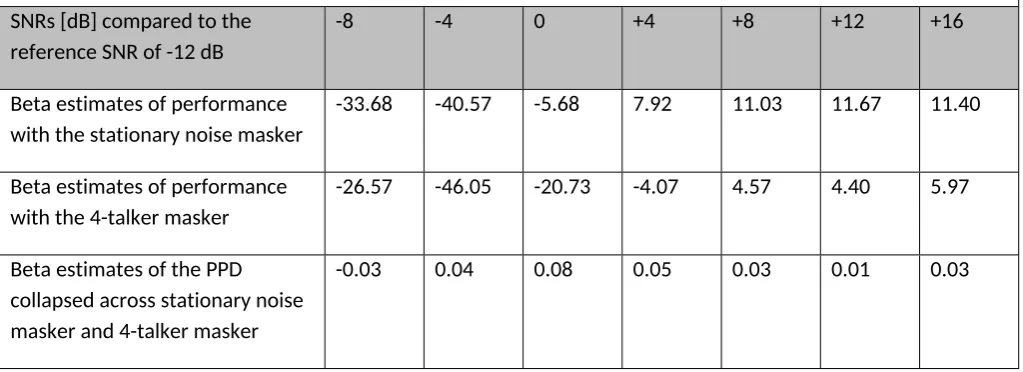
Table 1: Beta estimates of the sentence recognition performance scores and PPD at each SNR level show the mean differences between the inactive and active noise reduction scheme setting. The SNR levels are compared to the lowest SNR at -12 dB.
SNRs [dB] compared to the reference SNR of -12 dB
-8 -4 0 +4 +8 +12 +16
Beta estimates of performance with the stationary noise masker
-33.68 -40.57 -5.68 7.92 11.03 11.67 11.40
Beta estimates of performance with the 4-talker masker
-26.57 -46.05 -20.73 -4.07 4.57 4.40 5.97
Beta estimates of the PPD collapsed across stationary noise masker and 4-talker masker
-0.03 0.04 0.08 0.05 0.03 0.01 0.03
560
561
p. 26
562 References
563 Baer, T., Moore, B.C.J., Gatehouse, S. 1993. Spectral contrast enhancement of speech in noise for 564 listeners with sensorineural hearing impairment: Effects on intelligibility, quality, and 565 response times. . Journal of Rehabilitation Research and Development 30, 49-72.
566 Bates, D., Mächler, M., Bolker, B., Walker, S. 2014. Fitting linear mixed-effects models using lme4. 567 arXiv preprint arXiv:1406.5823.
568 Beatty, J. 1982. Task-evoked pupillary responses, processing load, and the structure of processing 569 resources. Psychological bulletin 91, 276.
570 Bentler, R., Wu, Y.-H., Kettel, J., Hurtig, R. 2008. Digital noise reduction: Outcomes from laboratory 571 and field studies. . International journal of audiology 47, 447-460.
572 Borch Petersen, E., Wöstmann, M., Obleser, J., Lunner, T. 2017. Neural tracking of attended versus 573 ignored speech is differentially affected by hearing loss. . Journal of Neuralphysiology 117,
574 18-27.
575 Brehm, J.W. 1999. The intensity of emotion. Personality and Social Psychology Review 3, 2-22. 576 Dillon, H., Lovegrove, R. 1993. Single microphone noise reduction systems for hearing aids: A review 577 and an evaluation. Boston: Allyn and Bacon.
578 Engelhardt, P.E., Ferreira, F., Patsenko, E.G. 2010. Pupillometry reveals processing load during spoken 579 language comprehension. The Quarterly Journal of Experimental Psychology 63, 639-645. 580 Festen, J.M., Plomp, R. 1990. Effects of fluctuating noise and interfering speech on the
581 speech‐reception threshold for impaired and normal hearing. The Journal of the Acoustical
582 Society of America 88, 1725-1736.
583 Francart, T., Van Wieringen, A., Wouters, J. 2011. Comparison of fluctuating maskers for speech 584 recognition tests. International journal of audiology 50, 2-13.
585 Fraser, S., Gagné, J.-P., Alepins, M., Dubois, P. 2010. Evaluating the effort expended to understand 586 speech in noise using a dual-task paradigm: The effects of providing visual speech cues. 587 journal of Speech, Language, and Hearing Research 53, 18-33.
588 Gatehouse, S., Gordon, J. 1990. Response times to speech stimuli as measures of benefit from 589 amplification. . British Journal of Audiology. 24, 63-68.
590 Granholm, E., Asarnow, R.F., Sarkin, A.J., Dykes, K.L. 1996. Pupillary responses index cognitive 591 resource limitations. Psychophysiology 33, 457-461.
592 Houben, R., v. Doorn-Bierman, M., Dreschler, W.A. 2013. Using response time to speech as a 593 measure for listening effort. . International journal of audiology 52, 735-761.
594 Jensen, J., Pedersen, M.S. 2015. Analysis of beamformer directed single-channel noise reduction 595 system for hearing aid applications, Acoustics, Speech and Signal Processing (ICASSP), 2015 596 IEEE International Conference on. IEEE. pp. 5728-5732.
597 Kahneman, D. 1973. Attention and effort Prentice-Hall Englewood Cliffs, NJ.
598 Kjems, U., Jensen, J. 2012. Maximum likelihood based noise covariance matrix estimation for multi-599 microphone speech enhancement, Signal Processing Conference (EUSIPCO), 2012
600 Proceedings of the 20th European. IEEE. pp. 295-299.
601 Koelewijn, T., Zekveld, A.A., Festen, J.M., Kramer, S.E. 2012. Pupil dilation uncovers extra listening 602 effort in the presence of a single-talker masker. Ear and Hearing 33, 291-300.
603 Koelewijn, T., Shinn-Cunningham, B.G., Zekveld, A.A., Kramer, S.E. 2014. The pupil response is 604 sensitive to divided attention during speech processing. Hearing research 312, 114-120.
605 Kramer, S.E., Kapteyn, T.S., Festen, J.M., Kuik, D.J. 1997. Assessing aspects of auditory handicap by 606 means of pupil dilatation. Audiology 36, 155-164.
607 Kuchinsky, S.E., Ahlstrom, J.B., Vaden Jr., K.I., Cute, S.L., Humes, L.E., Dubno, J.R., Eckert, M.A. 2013. 608 Pupil size varies with word listening and response selection difficulty in older adults with 609 hearing loss. . Psychophysiology 50, 23-34.
610 Kuznetsova, A., Bruun Brockhoff, P., H., B.C.R. 2016. lmerTest: Tests in Linear Mixed Effects Models. R
611 package version 2.0-33., https://CRAN.R-project.org/package=lmerTest.
612 Larsby, B., Hällgren, M., Lyxell, B. 2008. The interference of different background noises on speech 613 processing in elderly hearing impaired subjects. . International journal of audiology 47(sup2),
614 S83-S90.
615 Le Goff, N. 2015. Amplifiying Soft Sounds - A Personal Matter. Oticon Whitepaper. Whitepaper, 616 Oticon A/S.
617 Loizou, P.C., Kim, G. 2011. Reasons why current speech-enhancement algorithms do not improve 618 speech intelligibility and suggested solutions. . IEEE Transactions on Audio, Speech, and 619 Language Processing 19, 47-56.
620 Lunner, T., Rudner, M., Rosenbom, T., Ågren, J., Ng, E.H.N. 2016. Using Speech Recall in Hearing Aid 621 Fitting and Outcome Evaluation Under Ecological Test Conditions. . Ear and Hearing 37,
145S-622 154S.
623 McAuliffe, M.J., Wilding, P.J., Rickard, N.A., O'Beirne, G.A. 2012. Effect of Speaker Age and Speech 624 Recognition and Perceived Listening Effort in Older Adults With Hearing Loss. . Journal of 625 Speech, Language, and Hearing Research 55, 838-847.
626 McGarrigle, R., Munro, K.J., Stewart, A.J., Dawes, P. 2014. Listening effort and fatigue: are we talking 627 about the same thing? International journal of audiology.
628 Naylor G & Johannesson RB (2009) Long-Term Signal-to-Noise Ratio at the Input and Output of 629 Amplitude-Compression SystemsJ Am Acad Audiol 20:161–171 (2009) DOI:
630 10.3766/jaaa.20.3.2
631 Neher, T. 2014. Relating hearing loss and executive functions to hearing aid users'preference for, and 632 speech recognition with, different combinations of binaural noise reduction and microphone 633 directionality. . Frontiers in Neuroscience 8.
634 Neher, T., Grimm, G., Hohmann, V., Kollmeier, B. 2013. Do Hearing Loss and Cognitive Function 635 Modulate Benefit From Different Binaural Noise-Reduction Settings? . Ear and Hearing 35,
636 52-62.
637 Ng, E.H.N., Rudner, M., Lunner, T., Rönnberg, J. 2015. Noise reduction improves memory for target 638 language speech in competing native but not foreign language speech. Ear and hearing 36,
639 82-91.
640 Ng, E.H.N., Rudner, M., Lunner, T., Pedersen, M.S., Rönnberg, J. 2013. Effects of noise and working 641 memory capacity on memory processing of speech for hearing-aid users. International 642 Journal of Audiology 52, 433-441.
643 Nielsen, J.B., Dau, T. 2009. Development of a Danish speech intelligibility test. International journal of 644 audiology 48, 729-741.
645 Nordrum, S., Erler, S., Garstecki, D., D., S. 2006. Comparison of performance on the hearing in noise 646 test using directional microphones and digital noise reduction algorithms. . American Journal 647 of Audiology 15, 81-91.
p. 28
648 Obleser, J., Wöstmann, M., Hellbernd, N., Wilsch, A., Maess, B. 2012. Adverse Listening Conditions 649 and Memory Load Drive a Common Alpha Oscillatory Network. . The Journal of Neuroscience 650 32, 12376-12383.
651 Ohlenforst, B., Zekveld, A.A., Lunner, T., Wendt, D., Naylor, G., Wang, Y., Versfeld, N.J., Kramer, S.E. 652 2017a. Impact of stimulus-related factors and hearing impairment on listening effort as 653 indicated by pupil dilation. Hearing Research.
654 Ohlenforst, B., Zekveld, A.A., Jansma, E.P., Wang, Y., Naylor, G., Lorens, A., Lunner, T., Kramer, S.E. 655 2017b. Effects of Hearing Impairment and Hearing Aid Amplification on Listening Effort: A 656 Systematic Review. Ear and hearing 38, 267.
657 Pals, C., Sarampalis, A., Başkent, D. 2013. Listening effort with cochlear implant simulations. Journal 658 of Speech, Language, and Hearing Research 56, 1075-1084.
659 Panico, J., C., H.E. 2009. Influence of Text Type, Topic Familiarity, and Stuttering Frequency on 660 Listener Recall, Comprehension, Pand Mental Effort. Journal of Speech, Language, and 661 Hearing Research 52, 534-546.
662 Petersen, E.B., Wöstmann, M., Obleser, J., Stenfelt, S., Lunner, T. 2015. Hearing loss impacts neural 663 alpha oscillations under adverse listening conditions. . Frontiers in Psychology 6.
664 Pichora-Fuller, M.K., Kramer, S.E., Eckert, M.A., Edwards, B., Hornsby, B.W., Humes, L.E., Lemke, U., 665 Lunner, T., Matthen, M., Mackersie, C.L. 2016. Hearing impairment and cognitive energy: The 666 framework for understanding effortful listening (FUEL). Ear and hearing 37, 5S-27S.
667 Picou, E.M., Ricketts, T.A., Hornsby, B.W.Y. 2011. Visual Cues and Listening Effort: Individual 668 Variability. Journal of Speech, Language, and Hearing Research 54, 1416-1430.
669 Picou, E.M., Ricketts, T.A., Hornsby, B.W. 2013. How hearing aids, background noise, and visual cues 670 influence objective listening effort. . Ear and Hearing 34, e52-e64.
671 Ricketts, T., Lindley, G., Henry, P. 2001. Impact of compression and hearing aid style on directional 672 hearing aid benefit and performance. . Ear and Hearing 22, 348-361.
673 Rosen, S., Souza, P., Ekelund, C., Majeed, A.A. 2013. Listening to speech in a background of other 674 talkers: Effects of talker number and noise vocoding. The Journal of the Acoustical Society of 675 America 133, 2431-2443.
676 Sarampalis, A., Kalluri, S., Edwards, B., Hafter, E. 2009. Objective Measures of Listening Effort: Effects 677 of Background Noise and Noise Reduction. Journal of Speech, Language, and Hearing
678 Research 52, 1230-1240.
679 Scott, S.K., Rosen, S., Wickham, L., Wise, R.J. 2004. A positron emission tomography study of the 680 neural basis of informational and energetic masking effects in speech perception. The Journal 681 of the Acoustical Society of America 115, 813-821.
682 Scott, S.K., Rosen, S., Beaman, C.P., Davis, J.P., Wise, R.J. 2009. The neural processing of masked 683 speech: evidence for different mechanisms in the left and right temporal lobes. The Journal 684 of the Acoustical Society of America 125, 1737-1743.
685 Shinn-Cunningham, B.G., Best, V. 2008. Selective attention in normal and impaired hearing. . Trends 686 in amplification 12, 283:299.
687 Siegle, G.J., Ichikawa, N., Steinhauer, S. 2008. Blink before and after you think: blinks occur prior to 688 and following cognitive load indexed by pupillary responses. Psychophysiology 45, 679-687. 689 Simonsen, L.B., Hietkamp, R.K., Bramsløw, L. 2016. Learning effects of repeated exposure to Hearing 690 In Noise Test, Annual Conference of the British Society of Audiology, Coventry, UK.
691 Smeds, K., Wolters, F., Rung, M. 2015. Estimation of signal-to-noise ratios in realistic sound scenarios. 692 Journal of the American Academy of Audiology 26, 183-196.
693 Studebaker, G. A. (1985). A rationalized arcsine transform. Journal of Speech, Language, and Hearing
694 Research, 28(3), 455-462.
695 Tun, P.A., McCoy, S., Wingfield, A. 2009. Aging, Hearing Acuity, and the Attentional Costs of Effortful 696 Listening. . Psychology and Aging 24, 761-766.
697 Van Der Meer, E., Beyer, R., Horn, J., Foth, M., Bornemann, B., Ries, J., Kramer, J., Warmuth, E., 698 Heekeren, H.R., Wartenburger, I. 2010. Resource allocation and fluid intelligence: Insights 699 from pupillometry. Psychophysiology 47, 158-169.
700 Wendt, D., Hietkamp, R.K., Lunner, T. 2017. Impact of noise and noise reduction on processing effort: 701 A pupillometry study. The Journal of the Acoustical Society of America 141, 4040-4040. 702 Wendt, D., Koelewijn, T., Książek, P., Kramer, S.E, Lunner, T. 2017. Toward a more comprehensive 703 understanding of the impact of masker type and signal-to-noise ratio on the pupillary 704 response while performing a speech-in-noise test. Accpeted for Hearing Research 705 Wu, Y.-H., Stangl, E., Zhang, X., Perkins, J., Eilers, E. 2016. Psychometric functions of dual-task 706 paradigms for measuring listening effort. Ear and hearing 37, 660-670.
707 Wu, Y.-H., Aksan, N., Rizzo, M., Stangl, E., Zhang, X., Bentler, R. 2014. Measuring listening effort: 708 Driving simulator vs. simple dual-task paradigm. Ear and hearing 35, 623.
709 Zekveld, A.A., Kramer, S.E. 2014. Cognitive processing load across a wide range of listening 710 conditions: Insights from pupillometry. Psychophysiology 51, 277-284.
711 Zekveld, A.A., Kramer, S.E., Festen, J.M. 2011. Cognitive load during speech perception in noise: the 712 influence of age, hearing loss, and cognition on the pupil response. Ear and hearing 32,
498-713 510.
714
715
p. 30
716
717 Figure legends
718 Fig. 1: Averaged pure tone hearing thresholds of the left and right ears across frequencies
719 (125 Hz to 8 kHz) among the twenty-four hearing-impaired participants. Error bars show the standard
720 deviations of the mean.
721 Fig. 2: Spatial loudspeaker setup as used in Wendt et al., 2017. Target speech was presented
722 from the front. Masker signals were presented at 90, 150, 210 and 270 degree azimuth. The
723 stationary noise masker was presented as four individual point sources. For the four-talker masker,
724 one single talker was presented from one loudspeaker each.
725 Fig. 3: Peak pupil dilation (PPD) (black color) and percentage-correct sentence recognition
726 scores (gray color) are shown on the right y-axis across the signal-to-noise ratios (SNRs) with the
727 stationary masker and the noise reduction scheme turned on or off. Error bars represent the
728 standard error of the mean. Dark gray diamonds at -12, -8, -4, 0 and +4 dB SNR represent significant
729 differences in sentence recognition performance between the active and inactive noise reduction in
730 the pairwise comparison at each SNR level (p<0.01).
731 Fig. 4: Peak pupil dilation (PPD) (black color) and the percentage of correct sentence
732 recognition scores (gray color) are shown on the right y-axis across the signal-to-noise ratios (SNRs)
733 with the 4-talker masker and noise reduction scheme on or off. Error bars represent the standard
734 error of the mean. Dark gray diamonds at -8, -4, 0 and +4 dB SNR represent significant differences in
735 sentence recognition performance between the active and inactive noise reduction in the pairwise
736 comparison at each SNR level (p<0.01).
the twenty-four hearing-impaired participants. Error bars show the standard deviations of the mean.
[image:31.595.183.427.400.583.2]are shown on the right y-axis across the signal-to-noise ratios (SNRs) with the 4-talker masker and noise reduction scheme on or off. Error bars represent the standard error of the mean. Dark gray diamonds at -8, -4, 0 and +4 dB SNR represent significant differences in sentence recognition performance between the active and inactive noise
[image:33.595.65.454.48.329.2]