VOLUME 6 ISSUE 6 JUNE 2018 ISSN 2050-4381
Text message intervention to reduce frequency
of binge drinking among disadvantaged men:
the TRAM RCT
Iain K Crombie, Linda Irvine, Brian Williams, Falko F Sniehotta,
Dennis J Petrie, Claire Jones, John Norrie, Josie MM Evans,
Carol Emslie, Peter M Rice, Peter W Slane, Gerry Humphris,
Ian W Ricketts, Ambrose J Melson, Peter T Donnan,
frequency of binge drinking among
disadvantaged men: the TRAM RCT
Iain K Crombie,
1
* Linda Irvine,
1
Brian Williams,
2
Falko F Sniehotta,
3
Dennis J Petrie,
4
Claire Jones,
5
John Norrie,
6
Josie MM Evans,
7
Carol Emslie,
8
Peter M Rice,
9
Peter W Slane,
10
Gerry Humphris,
11
Ian W Ricketts,
12
Ambrose J Melson,
13
Peter T Donnan,
1
Andrew McKenzie,
1
Li Huang
14
and Marcus Achison
1
1
Division of Population Health Sciences, School of Medicine, University of Dundee,
Dundee, UK
2
School of Health and Social Care, Edinburgh Napier University, Edinburgh, UK
3Institute of Health and Society, Faculty of Medical Sciences, Newcastle
University, Newcastle upon Tyne, UK
4
Centre for Health Economics, Monash Business School, Monash University,
Melbourne, VIC, Australia
5
Health Informatics Centre, University of Dundee, Dundee, UK
6
Edinburgh Clinical Trials Unit, University of Edinburgh, Edinburgh, UK
7Faculty of Health Sciences and Sport, University of Stirling, Stirling, UK
8
School of Health and Life Sciences, Glasgow Caledonian University, Glasgow, UK
9Division of Neuroscience, School of Medicine, University of Dundee, Dundee, UK
10Erskine Practice, Arthurstone Medical Centre, Dundee, UK
11
School of Medicine, Medical and Biological Sciences, University of St Andrews,
St Andrews, UK
12
School of Computing, University of Dundee, Dundee, UK
–
General Board (2016–present). Carol Emslie reports grants and non-financial support from the Scottish Health Action on Alcohol Problems, grants from the NIHR HTA programme and non-financial support from the British Sociological Association Alcohol Study Group outside the submitted work. She is also a member of the Alcohol Research UK Grants Advisory Panel (unpaid position). Peter T Donnan reports grants from Novo Nordisk Ltd, GlaxoSmithKline plc and AstraZeneca plc outside the submitted work. He is also is a member of the New Drugs Committee of the Scottish Medicines Consortium.
Published June 2018
DOI: 10.3310/phr06060ISSN 2050-4381 (Print)
ISSN 2050-439X (Online)
This journal is a member of and subscribes to the principles of the Committee on Publication Ethics (COPE) (www.publicationethics.org/).
Editorial contact: [email protected]
The full PHR archive is freely available to view online at www.journalslibrary.nihr.ac.uk/phr. Print-on-demand copies can be purchased from the report pages of the NIHR Journals Library website: www.journalslibrary.nihr.ac.uk
Criteria for inclusion in thePublic Health Researchjournal
Reports are published inPublic Health Research(PHR) if (1) they have resulted from work for the PHR programme, and (2) they are of a sufficiently high scientific quality as assessed by the reviewers and editors.
Reviews inPublic Health Researchare termed‘systematic’when the account of the search appraisal and synthesis methods (to minimise biases and random errors) would, in theory, permit the replication of the review by others.
PHR programme
The Public Health Research (PHR) programme, part of the National Institute for Health Research (NIHR), evaluates public health interventions, providing new knowledge on the benefits, costs, acceptability and wider impacts of non-NHS interventions intended to improve the health of the public and reduce inequalities in health. The scope of the programme is multi-disciplinary and broad, covering a range of interventions that improve public health. The Public Health Research programme also complements the NIHR Health Technology Assessment programme which has a growing portfolio evaluating NHS public health interventions.
For more information about the PHR programme please visit the website: http://www.nets.nihr.ac.uk/programmes/phr
This report
The research reported in this issue of the journal was funded by the PHR programme as project number 11/3050/30. The contractual start date was in September 2016. The final report began editorial review in October 2016 and was accepted for publication in July 2017. The authors have been wholly responsible for all data collection, analysis and interpretation, and for writing up their work. The PHR editors and production house have tried to ensure the accuracy of the authors’report and would like to thank the reviewers for their constructive comments on the final report document. However, they do not accept liability for damages or losses arising from material published in this report.
This report presents independent research funded by the National Institute for Health Research (NIHR). The views and opinions expressed by authors in this publication are those of the authors and do not necessarily reflect those of the NHS, the NIHR, NETSCC, the PHR programme or the Department of Health and Social Care. If there are verbatim quotations included in this publication the views and opinions expressed by the interviewees are those of the interviewees and do not necessarily reflect those of the authors, those of the NHS, the NIHR, NETSCC, the PHR programme or the Department of Health and Social Care.
NIHR Journals Library Editor-in-Chief
Professor Tom Walley Director, NIHR Evaluation, Trials and Studies and Director of the EME Programme, UK
NIHR Journals Library Editors
Professor Ken Stein Chair of HTA and EME Editorial Board and Professor of Public Health, University of Exeter Medical School, UK
Professor Andrée Le May Chair of NIHR Journals Library Editorial Group (HS&DR, PGfAR, PHR journals)
Dr Martin Ashton-Key Consultant in Public Health Medicine/Consultant Advisor, NETSCC, UK
Professor Matthias Beck Professor of Management, Cork University Business School, Department of Management and Marketing, University College Cork, Ireland
Dr Tessa Crilly Director, Crystal Blue Consulting Ltd, UK
Dr Eugenia Cronin Senior Scientific Advisor, Wessex Institute, UK
Dr Peter Davidson Director of the NIHR Dissemination Centre, University of Southampton, UK
Ms Tara Lamont Scientific Advisor, NETSCC, UK
Dr Catriona McDaid Senior Research Fellow, York Trials Unit, Department of Health Sciences, University of York, UK
Professor William McGuire Professor of Child Health, Hull York Medical School, University of York, UK
Professor Geoffrey Meads Professor of Wellbeing Research, University of Winchester, UK
Professor John Norrie Chair in Medical Statistics, University of Edinburgh, UK
Professor John Powell Consultant Clinical Adviser, National Institute for Health and Care Excellence (NICE), UK
Professor James Raftery Professor of Health Technology Assessment, Wessex Institute, Faculty of Medicine, University of Southampton, UK
Dr Rob Riemsma Reviews Manager, Kleijnen Systematic Reviews Ltd, UK
Professor Helen Roberts Professor of Child Health Research, UCL Great Ormond Street Institute of Child Health, UK
Professor Jonathan Ross Professor of Sexual Health and HIV, University Hospital Birmingham, UK
Professor Helen Snooks Professor of Health Services Research, Institute of Life Science, College of Medicine, Swansea University, UK
Professor Jim Thornton Professor of Obstetrics and Gynaecology, Faculty of Medicine and Health Sciences, University of Nottingham, UK
Professor Martin Underwood Director, Warwick Clinical Trials Unit, Warwick Medical School, University of Warwick, UK
Please visit the website for a list of editors: www.journalslibrary.nihr.ac.uk/about/editors
Editorial contact: [email protected]
Abstract
Text message intervention to reduce frequency of binge
drinking among disadvantaged men: the TRAM RCT
Iain K Crombie,
1* Linda Irvine,
1Brian Williams,
2Falko F Sniehotta,
3Dennis J Petrie,
4Claire Jones,
5John Norrie,
6Josie MM Evans,
7Carol Emslie,
8Peter M Rice,
9Peter W Slane,
10Gerry Humphris,
11Ian W Ricketts,
12Ambrose J Melson,
13Peter T Donnan,
1Andrew McKenzie,
1Li Huang
14and Marcus Achison
11Division of Population Health Sciences, School of Medicine, University of Dundee, Dundee, UK 2School of Health and Social Care, Edinburgh Napier University, Edinburgh, UK
3Institute of Health and Society, Faculty of Medical Sciences, Newcastle University, Newcastle
upon Tyne, UK
4Centre for Health Economics, Monash Business School, Monash University, Melbourne,
VIC, Australia
5Health Informatics Centre, University of Dundee, Dundee, UK
6Edinburgh Clinical Trials Unit, University of Edinburgh, Edinburgh, UK 7Faculty of Health Sciences and Sport, University of Stirling, Stirling, UK
8School of Health and Life Sciences, Glasgow Caledonian University, Glasgow, UK 9Division of Neuroscience, School of Medicine, University of Dundee, Dundee, UK 10Erskine Practice, Arthurstone Medical Centre, Dundee, UK
11School of Medicine, Medical and Biological Sciences, University of St Andrews,
St Andrews, UK
12School of Computing, University of Dundee, Dundee, UK
13Institute of Health and Wellbeing, University of Glasgow, Glasgow, UK
14Centre for Health Policy, School of Population and Global Health, University of Melbourne,
Melbourne, VIC, Australia
*Corresponding author [email protected]
Background:Socially disadvantaged men are more likely to binge drink frequently and to experience high levels of alcohol-related harm.
Objectives:To test the effectiveness and cost-effectiveness of a text message intervention in reducing the frequency of binge drinking among disadvantaged men.
Study design:A four-centre, parallel-group, pragmatic, individually randomised controlled trial was conducted. Randomisation was carried out using a secure remote web-based system. It was stratified by participating centre and recruitment method and restricted using block sizes of randomly varying lengths.
Setting:The study was conducted in the community. Members of the public helped to develop the study methods.
Interventions:An empirically and theoretically based text message intervention was delivered by 112 interactive text messages over a 12-week period. The control group received an attentional control comprising 89 text messages on general health.
Primary outcome measure:The primary outcome measure was the proportion of men consuming
>8 units of alcohol on≥3 occasions (in the previous 28 days) at 12 months post intervention.
Results:The recruitment target of 798 was exceeded and 825 men were randomised. Retention was high and similar in the intervention (84.9%) and control (86.5%) groups. Most men in the intervention group engaged enthusiastically with the text messages: almost all (92%) replied to text messages and over two-thirds (67%) replied more than 10 times. The intervention was estimated to have had a modest, statistically non-significant effect on the primary outcome at the 12-month follow-up [odds ratio 0.79, 95% confidence interval (CI) 0.57 to 1.08]. This corresponds to a net reduction of 5.7% in regular binge drinking. Five secondary outcomes showed small non-significant and inconsistent effects on alcohol consumption, with one suggesting a positive effect and four suggesting an adverse effect. Both the short-and the long-term cost per quality-adjusted life-year (QALY) analysis suggested that the brief intervention was dominated by a‘do-nothing’option. The intervention’s impacts on patterns of alcohol consumption, QALYs and downstream costs were inconsistent and uncertain.
Limitations:The study used an active control that, combined with the recruitment procedures and baseline assessments, could have biased the treatment effect towards the null. The measurement of alcohol consumption relied on self-reported drinking.
Conclusions:The trial has demonstrated that it is possible to recruit and retain large numbers of socially disadvantaged men in a research study. The text messages delivered a complex theoretically and
empirically based intervention that fostered enthusiastic engagement with the key components of the behaviour change sequence. The intervention produced a modest, statistically non-significant effect on the primary outcome, with wide CIs. Further research is needed to reduce uncertainty about the treatment effect. The methods developed for this study provide a platform for the design and testing of interventions to reduce inequalities in health.
Future work:A future trial could reduce the uncertainty around the treatment effect of the intervention.
Trial registration:Current Controlled Trials ISRCTN07695192.
Funding:This study was funded by the National Institute for Health Research (NIHR) Public Health Research programme and will be published in full inPublic Health Research; Vol. 6, No. 6. See NIHR Journals Library website for further information.
ABSTRACT
NIHR Journals Library www.journalslibrary.nihr.ac.uk
Contents
List of tables xiii
List of figures xvii
List of boxes xix
List of abbreviations xxi
Plain English summary xxiii
Scientific summary xxv
Chapter 1Introduction 1
Alcohol and disadvantaged groups 1
Interventions to reduce inequalities 1
Recruitment and retention 1
Text message interventions 2
Background to the study 2
Overview of full trial 2
Research questions 3
Chapter 2Development of the text message intervention 5
Introduction 5
Overview 5
Key findings from the feasibility study 5
Psychological theory underpinning the intervention 6
Alcohol brief interventions 6
Narratives in interventions 6
Logic model 7
Stages in the development of the intervention 7
Stage 1: establishing the provisional structure 7
Stage 2: drafting text messages 12
Stage 3: revision of the text messages 14
Stage 4: piloting and final revisions 14
The control package 15
Summary 15
Chapter 3Study methods 17
Recruitment 17
Study group 17
Inclusion/exclusion criteria 17
Techniques to promote recruitment 17
Strategy 1: recruitment through general practice registers 17
Strategy 2: time–space sampling 18
Fieldwork 18
Initial screening 18
Informed consent 18
Allocation concealment 19
Training 19
Measuring binge drinking 19
Data collection methods 19
Baseline data collection 20
Follow-up methods 20
Data collection at the first follow-up 21
Data collection at final follow-up 21
Sample size calculation 21
Statistical methods 22
Methods for descriptive statistics 22
Analysis of primary outcome 22
Analysis of secondary outcomes 22
Sensitivity analysis for missing data 23
Economic evaluation 23
Patient and public involvement 23
Changes to the protocol 23
Chapter 4Recruitment and baseline assessment 25
Introduction 25
Results 25
Discussion 28
Interpretation of baseline drinking 28
Assessment of the recruitment process 30
Comparisons of the groups identified by the two recruitment strategies 30
Chapter 5Evaluation of the text message intervention 33
Introduction 33
Methods 33
Fidelity of delivery of the text messages 33
Responses to the text messages 33
Characteristics of the participants who responded to the text messages 34
Results 34
Fidelity of delivery of the text messages 34
Responses to the text messages 35
Engagement with the text messages 38
Intervention group responses to text messages that sought a response 38
Characteristics of the participants who responded to the text messages 47
Responses requiring attention 48
Discussion 49
Conclusions 50
Chapter 6First follow-up 51
Introduction 51
Results 51
Loss to follow-up 52
Discussion 52
Chapter 7Final follow-up 55
Introduction 55
Results 55
Descriptive analysis of the primary and secondary outcomes measured at 12 months
post intervention 55
CONTENTS
NIHR Journals Library www.journalslibrary.nihr.ac.uk
Model fitting and treatment effects 58
Summary of the treatment effects 60
Other measures of the impact of the intervention 60
Adverse events 63
Discussion 63
Retention 63
Acceptability of study methods 63
Recall of the text messages 64
Impact of participating in the study 64
Chapter 8Explanations for the major findings at follow-up 65
Introduction 65
Possible explanations for the fall in alcohol consumption 65
The sustained nature of the fall 65
Regression to the mean 65
Social desirability bias 66
Research participation effects 66
Demand characteristics 67
Contemporaneous changes in alcohol consumption 67
Self-selection bias 67
Why the intervention had a modest, statistically non-significant effect on the
primary outcome 67
Recent studies on alcohol brief interventions 68
Text message studies to reduce alcohol consumption 68
Potential limitations of the study 68
The nature of the target group 71
Summary and implications 72
Chapter 9Economic evaluation 75
Introduction 75
Methods 76
Costs 76
Effectiveness 78
Incremental cost-effectiveness ratios 81
Modelling long-term costs and outcomes post 12-month follow-up 82
Results 83
Sensitivity analysis 87
Modelling the long-term cost-effectiveness using the Sheffield model 89
Discussion 95
Chapter 10Conclusions 97
Limitations of the study 98
Recommendations for further research 99
Acknowledgements 101
References 103
Appendix 1General practitioner letter of invitation 119
Appendix 2Participant information sheet 121
Appendix 4Screening questionnaire 127
Appendix 5Baseline questionnaire 129
Appendix 6First follow-up questionnaire 133
Appendix 7Final follow-up questionnaire 137
Appendix 8Economic evaluation: supplementary tables 147
CONTENTS
NIHR Journals Library www.journalslibrary.nihr.ac.uk
List of tables
TABLE 1 Logic model 8
TABLE 2 Recruitment yield by recruitment method and by centre 26
TABLE 3 Recent drinking history: general practice registers compared with TSS 26
TABLE 4 Demographic characteristics by recruitment method 27
TABLE 5 Mean alcohol consumption in the previous 28 days by demographic
characteristics and recruitment method 28
TABLE 6 Demographic characteristics by treatment group 29
TABLE 7 Recent drinking history: comparison of groups 29
TABLE 8 Demographic characteristics of men who missed messages 35
TABLE 9 Frequency of responses using key words that indicate engagement with
the study 40
TABLE 10 Frequency of responses that use key words indicating reflection on alcohol 40
TABLE 11 Text messages that sought a response and the psychological
construct addressed 41
TABLE 12 Intervention group: responses to multiple-choice questions 43
TABLE 13 Intervention group: demographic characteristics by frequency of
response to text messages 47
TABLE 14 Control group: demographic characteristics by frequency of response
to text messages 48
TABLE 15 Comparison of baseline and first follow-up drinking habits by
treatment arm 51
TABLE 16 Comparison of consumption (over 28 days) at baseline and first follow-up 52
TABLE 17 Baseline drinking patterns of men who were not followed up, by
treatment group 53
TABLE 18 Baseline alcohol consumption of men who were and were not
followed up at 3 months post intervention 53
TABLE 19 Demographic characteristics of men who were and were not followed
up at 3 months post intervention 54
TABLE 21 Comparison of baseline and 12-month follow-up drinking habits by
treatment arm 56
TABLE 22 Comparison of alcohol consumption at baseline and final follow-up 56
TABLE 23 The AUDIT scores at 12 month follow-up by treatment group 57
TABLE 24 Baseline drinking by treatment group in the men who were not
followed up at 12 months 57
TABLE 25 Baseline alcohol consumption of men who were and were not
followed up at 12 months 58
TABLE 26 Demographic characteristics of men who were and were not followed
up at 12 months 59
TABLE 27 Treatment effects for the primary and secondary outcomes 60
TABLE 28 Perceived ability to resist alcohol in different social settings 61
TABLE 29 Change in alcohol consumption by self-reported attempts to
reduce drinking 61
TABLE 30 Participant recall of the content of the text messages by treatment arm 61
TABLE 31 Types of comments by the characters that participants found helpful 62
TABLE 32 Reported benefits of participating in the study 62
TABLE 33 Measures of acceptability of study methods 62
TABLE 34 Exploring the effects of entry criteria on the size of fall at follow-up 66
TABLE 35 Unit cost inputs for short-term cost to government (2016 £) 79
TABLE 36 Data sources for model parameters and key modelling assumptions 84
TABLE 37 Incremental costs for the equivalent trial population and for
nationwide rollout 85
TABLE 38 Incremental cost, incremental effectiveness and incremental
cost-effectiveness ratios for nationwide rollout 87
TABLE 39 Sensitivity analysis: short-term government cost per one fewer person
with≥3 occasions of binge drinking 89
TABLE 40 Long-term cost-effectiveness estimates of the brief intervention
(short-term follow-up and modelling results combined) 94
TABLE 41 Long-term cost-effectiveness of the brief intervention by recruitment
method (short-term follow-up and modelling results combined) 94
LIST OF TABLES
NIHR Journals Library www.journalslibrary.nihr.ac.uk
TABLE 42 Costs (£) of the programme using TSS method only for the
trial population 147
TABLE 43 Costs (£) of the programme using general practice method only for
the trial population 149
TABLE 44 Costs (£) per participant of the trial population by centre and
recruitment method 151
TABLE 45 Services use during the 12-month post-period intervention 152
TABLE 46 Research cost (£) by recruitment method 152
TABLE 47 Population projection using TSS method only 153
TABLE 48 Population projection using general practice method only 154
TABLE 49 Population projection using both TSS and general practice methods 154
TABLE 50 Model results of morbidity and mortality rates for health and social
harms over 29 years 154
TABLE 51 Median costs per alcohol screening and brief intervention from a
review of the literature 156
TABLE 52 Estimated services use costs (£) from the trial over 12 months
List of figures
FIGURE 1 Stages in writing the text messages 9
FIGURE 2 The CONSORT flow diagram 25
FIGURE 3 Intervention group: frequency of responses to text messages 36
FIGURE 4 Control group: frequency of responses to text messages 36
FIGURE 5 Intervention group: frequency of responses by type of text message 37
FIGURE 6 Control group: frequency of responses by type of text message 39
FIGURE 7 Cost-effectiveness planes for nationwide rollout 88
FIGURE 8 Acceptability curves for the primary outcome for combined strategy at nationwide rollout, base case and AS 1, 2, 3 and 4: short-term cost to government 90
FIGURE 9 Acceptability curves for QALYs for AS 1, 2 and 3: short-term cost
to government 90
FIGURE 10 Estimated distribution of consumption at the 12-month follow-up for control and intervention groups (by combined recruitment strategy and by each
recruitment method individually) 91
FIGURE 11 Linear decline of the intervention effect on average projected (a) mean weekly consumption and (b) peak weekly consumption in the
List of boxes
BOX 1 Components of HAPA addressed in the intervention 9
BOX 2 Characters in the narrative 10
List of abbreviations
AUDIT Alcohol Use Disorders Identification Test
CI confidence interval
CONSORT Consolidated Standards of
Reporting Trials
EQ-5D-5L EuroQol-5 Dimensions,
five-level version
FAST Fast Alcohol Screening Test
GP general practitioner
HAPA Health Action Process Approach
IT information technology
NICE National Institute for Health and
Care Excellence
NIHR National Institute for Health
Research
OR odds ratio
QALY quality-adjusted life-year
RCT randomised controlled trial
SD standard deviation
SIMD Scottish Index of Multiple
Deprivation
SMS Short Message Service
SPCRN Scottish Primary Care Research
Network
Plain English summary
Introduction
Binge drinking by men who are socially disadvantaged greatly increases their risk of liver disease. We tested a novel intervention that was delivered by text message to see if it would be an effective and cost-effective way to reduce their frequency of binge drinking.
Design of the intervention
The intervention was delivered by text messages. These prompted men to review the harms drinking caused, not just to themselves but also to their family and friends. The messages also illustrated the benefits of reduced drinking and encouraged the men to take action to reduce their drinking. The control group received texts on general health topics.
Methods
The men recruited were aged 25–44 years, lived in socially disadvantaged areas and had drunk>8 units of alcohol on≥2 occasions in the previous 28 days. (Note that four pints of 4% beer contain nine UK units of alcohol.) Potential participants were identified from general practice registers and by community outreach. They were randomised to the intervention or control group, and were followed up for 12 months after the intervention was delivered.
Results
Over 800 men living in socially disadvantaged areas took part. The intervention group engaged enthusiastically with the text messages. The study succeeded in following up a large proportion (86%) of the participants at 1 year. At follow-up, the intervention group had reduced their binge drinking only slightly more than the control group, so that the results are inconclusive.
Conclusions
Scientific summary
Background
Alcohol-related morbidity and mortality is a major public health challenge. Socially disadvantaged men are more likely to binge drink frequently and to experience high levels of alcohol-related harm. Recruiting disadvantaged groups to research studies is known to be challenging and interventions are often much less effective in these individuals. This study tested the effectiveness and cost-effectiveness of a tailored, theoretically and empirically based intervention, delivered by text message, to reduce binge drinking in disadvantaged men.
Methods
Study design
The study was a four-centre, parallel-group, pragmatic, individually randomised controlled trial. The randomisation was carried out using the secure remote web-based system provided by Tayside Clinical Trials Unit. Randomisation was stratified by participating centre and the recruitment method, and restricted using block sizes of randomly varying lengths. The concealment of treatment groups was preserved until the analyses of the primary and secondary outcomes had been completed.
Participants
Men aged 25–44 years were recruited from areas of high deprivation. Recruitment was conducted in four centres that cover major regions of Scotland: Tayside, Glasgow, Forth Valley and Fife. Deprivation was measured using the Scottish Index of Multiple Deprivation. Men were recruited from areas classified as being in the most disadvantaged quintile. To ensure good coverage of disadvantaged men, two recruitment strategies were employed, each to recruit half of the target sample size. One used primary care registers and the other used a community outreach method, time–space sampling (TSS).
Inclusion/exclusion criteria
Men were included in the study if they had≥2 episodes of binge drinking (>8 units of alcohol in a single session) in the preceding 28 days. Exclusion criteria were men who were currently attending care at an alcohol problem service and men who would not be contactable by mobile phone for any part of the intervention period.
Sample size
The study was powered to detect a net reduction of 11%, from 57% to 46%, in the proportion of men who had consumed>8 units of alcohol on≥3 occasions in the previous 28 days, with a power of 80% at a significance level of 5%. This revealed that a total sample of 638 men would be required. The estimate was increased to allow for losses to follow-up, making the final recruitment target 798 men.
Intervention
change processes involved in reducing alcohol consumption. The control group received an attentional control comprising 89 text messages on general health.
Outcome measures
Outcomes were assessed blind to treatment status. The primary outcome was assessed at 12 months post intervention. It was the proportion of men binge drinking (consuming>8 units of alcohol) on≥3 occasions in the previous 28 days. Five secondary outcomes were measured. They were (1) the proportion of men binge drinking (>8 units of alcohol) on≥3 occasions at 3 months post intervention; (2) the proportion of men with ≥3 occasions of heavy binge drinking (>16 units of alcohol) at 3 months; (3) the proportion of men with ≥3 occasions of heavy binge drinking (>16 units of alcohol) at 12 months post intervention; (4) the total consumption of alcohol in the previous 28 days at 12 months; and (5) the proportion of hazardous or harmful drinkers at 12 months post intervention, as measured by the Alcohol Use Disorders Identification Test (AUDIT). The analysis also explored whether or not the recruitment method (through primary care or TSS) influenced treatment effect.
Statistical analysis
The main analyses were carried out by an independent statistician who followed the prespecified statistical analysis plan. Logistic regression was used to investigate the effect of the intervention on the primary outcome, the proportion of men consuming>8 units of alcohol on≥3 occasions in the previous 28 days at 12 months post intervention. Odds ratios (ORs) were adjusted for baseline drinking and baseline covariates, including method of recruitment, centre and demographic factors. Equivalent models were fitted for the secondary outcomes.
Economic evaluation
The economic evaluation considered the short-term cost-effectiveness, adopting the perspective of the government [the costs of running the programme plus the 12-month follow-up cost of health-care, social and justice services compared with two measures of outcome: the reduction in binge drinking at the 12-month follow-up; and short-term quality-adjusted life-years (QALYs)]. The longer-term perspective modelled the impact on government costs (health care and social care) as well as wider societal impacts on crime and workplace harms. It also considered the predicted impact on QALYs up to 30 years post intervention. Both costs and outcomes were discounted at 3.5%. Data were collected on the resources required for recruitment and the intervention implementation. The incremental cost, incremental effectiveness and incremental cost-effectiveness ratios were estimated for an England and Scotland rollout when compared with a‘do-nothing’or standard practice scenario. The heterogeneity of the cost effectiveness by recruitment methods was also estimated.
Results
Study population
The target sample size of 798 participants was exceeded, with a total of 825 men recruited. The two recruitment methods achieved their targets and recruitment was successful across the four centres. The men recruited were spread across the age range; just over half lived with a partner and over one-third were unemployed. At baseline, most participants (84%) had≥3 binge-drinking episodes (>8 units of alcohol in a session), and many (47.5%) had≥3 heavy binge-drinking episodes (>16 units of alcohol in a session), in the previous 28 days. Almost all of the alcohol the men drank (93%) was consumed in binge-drinking sessions. The two treatment groups were similar on all demographic characteristics and measures of alcohol consumption.
There were marked differences in drinking patterns and demographic characteristics between men recruited by general practice registers and men recruited by TSS. For example, mean consumption was 56% higher in the men recruited by TSS than in those recruited from general practice registers; and significantly more of the men recruited by TSS were single and unemployed.
SCIENTIFIC SUMMARY
NIHR Journals Library www.journalslibrary.nihr.ac.uk
Engagement with the intervention
A total of 46,032 text messages were sent to the intervention group. Of these, 95.5% were successfully delivered. Most men engaged enthusiastically with the intervention, with 92% sending a response to at least one text message and 67% sending more than 10 responses. The nature of these responses
indicated that many men reacted as intended to key steps in the behaviour change sequence. For example, 56% of the men specified the benefits that they would gain from reducing their alcohol consumption and 24% identified the benefits that they were enjoying from having cut down.
Retention
Two follow-up assessments were carried out: at 3 months and at 12 months post intervention. Retention at the 3-month follow-up was high (89.3%) and was almost identical in the intervention (89.1%) and control (89.6%) groups. At the 12-month follow-up, the retention rate had reduced slightly but remained high at 85.6%, and it was similar in the intervention (84.9%) and control (86.5%) groups. Baseline alcohol consumption was similar in those lost to follow-up from the intervention and control groups: for those men not followed up at 12 months post intervention, the proportion consuming>8 units of alcohol on ≥3 occasions at baseline was 88.7% in the intervention group and 87.5% in the control group.
Outcome assessment
Primary outcome
The intervention had an estimated modest, statistically non-significant effect on the primary outcome at the 12-month follow-up [OR 0.79, 95% confidence interval (CI) 0.57 to 1.08]. This corresponds to a net reduction of 5.7% in the proportion of men who binge drink on≥3 occasions (95% CI–13.3% to 1.9%). Multiple imputation, to take account of missing data, produced similar estimates of treatment effect (OR 0.77, 95% CI 0.55 to 1.09). There was a marked but statistically non-significant difference in the estimated effect by recruitment method. The proportion of men who binge drink on≥3 occasions was reduced by 8.6% for those recruited from general practice registers but by only 2.1% for those recruited by TSS.
Secondary outcomes
The five secondary outcomes showed small, non-significant and inconsistent differences between the intervention and control groups. Two secondary outcome measures were assessed at 3 months. The proportion of men consuming>8 units of alcohol on≥3 occasions showed a small adverse effect (OR 1.05, 95% CI 0.77 to 1.44), as did the proportion of men with≥3 occasions of heavy binge drinking (>16 units of alcohol) (OR 1.22, 95% CI 0.83 to 1.81).
A further three secondary outcome measures were assessed at 12 months. The OR for the proportion of men with≥3 occasions of heavy binge drinking (>16 units of alcohol), was very close to unity (0.97, 95% CI 0.64 to 1.46). The proportion of men who were AUDIT positive (hazardous or harmful drinking) had a raised OR (1.34, 95% CI 0.95 to 1.89) and the total alcohol consumption over 28 days was higher in the intervention group (mean units 4.46, 95% CI–11.1 to 20.03 units).
Change in alcohol consumption over time in the control group
Economic analysis
The estimated cost per man to recruit and implement the intervention was modest, at £97 per participant (95% CI £83 to £110). Over 80% of this was incurred during the recruitment stage; the intervention itself was estimated to cost<£20 per participant. However, both the short- and the long-term cost per QALY analysis suggested that the brief intervention was dominated by a‘do-nothing’option, with the intervention’s impacts on patterns of alcohol consumption, QALYs and downstream costs inconsistent and uncertain. It was estimated that the intervention would increase the short-term costs per person to government for the 12-month follow-up by £262 (95% CI–£237 to £761). The average cost per one fewer person regularly binge drinking at 12 months post intervention was estimated to be £4576. The brief intervention was estimated to result in a short-term QALY reduction of–0.0063 (95% CI–0.0373 to 0.0248) per participant, outweighing the small predicted longer-term discounted QALY gains of 0.0029 per participant. Subgroup analysis showed that recruitment from general practice registers was less expensive than recruitment by TSS. This, combined with the apparent greater effectiveness in reducing the frequency of binge drinking, makes the general practice register approach appear more attractive. However, there is large uncertainty about these estimates. For the general practice-only recruitment method, the average cost per one fewer person regularly binge drinking at 12 months post intervention was estimated to be £3311, but the estimated longer-term cost-effectiveness of the intervention in terms of cost per QALY was still dominated.
Limitations of the study
The study used an active control that, combined with the recruitment procedures and baseline assessments, could have biased the treatment effect towards the null. The measurement of alcohol consumption relied on self-reported drinking.
Discussion
Binge drinking was the dominant pattern of alcohol consumption, with almost all alcohol being taken in heavy drinking sessions. Interventions focused on reducing total consumption would have been inappropriate for the men recruited to this study.
The intervention was estimated to have a modest, statistically non-significant effect on the primary outcome at the 12-month follow-up, which corresponded to a net reduction of 5.7% in the proportion of men who binge drink on≥3 occasions. The treatment effect was much larger in men recruited from general practice registers than in those recruited by the TSS method. The men recruited by TSS had higher alcohol consumption and were more likely to be single and unemployed. The intervention had small, inconsistent non-significant effects on the secondary outcomes at the 3- and 12-month follow-up points. Biases such as loss to follow-up and observer bias are unlikely to have affected the observed results. The lack of a statistically significant effect may reflect the difficulty of changing adverse health behaviours in disadvantaged individuals.
Large and consistent falls were found in all measures of alcohol consumption in the control group. The falls were similar to those in the intervention group. Regression to the mean can explain part of this fall, although other mechanisms may also be involved.
The cost per QALY analysis suggested that the brief intervention was dominated by a‘do-nothing’option. Although the cost per man to recruit and implement the intervention was modest, the intervention’s impacts on patterns of alcohol consumption, QALYs and downstream costs were inconsistent and uncertain.
SCIENTIFIC SUMMARY
NIHR Journals Library www.journalslibrary.nihr.ac.uk
Conclusions
The trial has demonstrated that it is possible to recruit and retain large numbers of disadvantaged men in a research study. The text messages delivered a complex theoretically and empirically based intervention, which fostered enthusiastic engagement with the key components of the behaviour change sequence. The intervention produced a modest, statistically non-significant effect on the primary outcome. A future trial could reduce the uncertainty around the treatment effect of the intervention. The methods developed for this study provide a platform for the design and testing of interventions to reduce inequalities in health. A key feature of the method used is the ability to monitor engagement with key steps in the behaviour change strategy.
Recommendations for further research
A future trial could:
l reduce the uncertainty around the treatment effect size of the intervention
l test whether or not the intervention is less effective in men recruited by the TSS method, and explore possible explanations for this
l test whether or not a more direct and frank approach, stressing the harm of their frequent binge drinking, would be acceptable to disadvantaged men
l identify the mechanism(s) responsible for the fall in alcohol consumption in the control group l assess the impact of the use of an attentional control (general health text messages) by including a
second, minimal contact control (no text messages)
l explore whether or not the use of biomarkers is feasible in a large study of disadvantaged men l investigate the impact of an extended intervention (i.e. at least 12 months) for reducing alcohol
consumption in disadvantaged men
l use the methods of recruitment, retention and text message delivery to test the effectiveness of interventions designed to tackle other adverse health behaviours in disadvantaged groups.
Trial registration
This trial is registered as ISRCTN07695192.
Funding
Chapter 1
Introduction
Alcohol and disadvantaged groups
Alcohol-related morbidity and mortality represent a major public health challenge. The cost of alcohol to society has been estimated at>£55B per year in England1and>£3.5B per year in Scotland.2These costs occur through lost productivity, increased health-care and other public sector costs, and social disruption.
Brief interventions, based on psychological theories of behaviour change, have been developed to tackle alcohol-related problems. There is extensive evidence that they are effective,3–6although some recent large studies have found them to be ineffective7–9or possibly harmful.10To date, most studies have been conducted in health-care settings, often with individuals who are seeking help.
The risk of alcohol-related harm is substantially higher in disadvantaged groups.11,12Alcohol is a major cause of inequalities in health.11,13,14Part of the explanation for this may lie in the patterns of drinking; although socioeconomically disadvantaged individuals may not drink more on average, they are more likely to binge drink.15–17Binge drinking used to refer to an extended period of several days’drinking, but is now defined as drinking more than a specified amount, such as eight UK units of alcohol, in a single session.18
The group who binge drink most frequently in the UK is young to middle-aged disadvantaged men.16 They may not be reached by current initiatives to tackle excessive drinking as the uptake of public health interventions among socially disadvantaged men is low.19There is a need for an intervention that accesses and effectively reduces binge drinking in this hard-to-reach population.
Interventions to reduce inequalities
Behaviour change interventions are less effective, and often ineffective, with disadvantaged/low income groups.20–23Indeed, there is concern that interventions may widen inequalities in health.24–27A systematic review of smoking cessation found that there were more barriers to change for disadvantaged groups, particularly pro-smoking norms, additional cues to smoking and increased stress.23Evaluations of smoking cessation interventions suggest that the lower effectiveness is due not to lower initial uptake, but to lower sustained compliance with the intervention.28,29This could be because disadvantaged individuals are less likely to translate intentions to change into action to modify behaviour.30Qualitative research suggests that disadvantaged individuals who live in poorly resourced and stressful environments are isolated from wider social norms and have limited opportunities for respite and recreation.31Fear of being judged and fear of failure have also been identified as barriers to change.32These findings suggest that interventions should be tailored to disadvantaged groups.33,34There is a paucity of evidence on interventions to reduce alcohol consumption or binge drinking in disadvantaged individuals.
Recruitment and retention
Recruitment to randomised controlled trials (RCTs) is a major problem.35Only a minority of trials reach their intended sample size on time and many require extensions and additional resources to boost recruitment.35–37 As a consequence, poor recruitment is the major cause of discontinued trials.38,39Several systematic
The recruitment of individuals of lower socioeconomic status to trials is particularly difficult because they are less willing to participate in research studies.45–49Barriers to research participation include distrust of research, concern about confidentiality, fear of authority, lack of knowledge, lack of time and perceived lack of benefit from participation.50–54Strategies to address the reluctance of disadvantaged groups include those mentioned for trials in the general population, but also stress personal contact, the use of sensitive and culturally relevant communication, and attention to the benefits of participation.
The retention of disadvantaged groups is also challenging.23,55,56Several systematic reviews55,57,58and a survey of clinical trials units in the UK59have identified strategies to improve retention in general population studies. In addition, strategies for retention of disadvantaged groups have been identified.52,55,56,60–62These include maintaining contact during follow-up, several contact strategies, the use of a financial incentive, multiple attempts at contact, sending reminders and making the interview convenient for participants.52,55,57,58,60,61,63–65
Text message interventions
Text messaging provides a method for delivering brief alcohol interventions that has the potential to reach large numbers of individuals at low cost. Recent systematic reviews have shown that there is good evidence that text messages can promote smoking cessation66–68and increase adherence to antiretroviral therapy.69,70The quality of the primary studies in many other areas is a cause for concern.66,68No studies have tackled binge drinking among disadvantaged men, although text messaging interventions are particularly well suited to young to middle-aged men because their ownership of mobile phones is high.
Background to the study
We recently completed a National Institute for Health Research (NIHR)-funded feasibility study that
demonstrated that all stages of a trial of a brief intervention delivered by mobile phone could be completed successfully.71It identified a high frequency of hazardous drinking among disadvantaged men, creating a pressing need for effective interventions to tackle their binge drinking. The success of the feasibility study led to the recommendation that a full trial to assess the effectiveness and cost-effectiveness of the text message intervention should be conducted.
Overview of full trial
This study tested the effectiveness of a novel text message intervention designed to reduce binge drinking among disadvantaged men. It was a four-centre, parallel group, pragmatic, individually randomised controlled trial. The four centres covered major regions of Scotland: Tayside, Glasgow, Forth Valley and Fife. Men aged 25–44 years from areas of high deprivation were recruited. Deprivation was measured using the Scottish Index of Multiple Deprivation (SIMD),72which is similar to the English Index of Multiple Deprivation. Men were recruited from areas classified as being in the most disadvantaged quintile. The required sample size was 798 men.
The text message intervention was a series of 112 interactive text messages delivered by mobile phone over a 12-week period. The intervention drew on literature from alcohol brief interventions, communication theory, and behaviour change theories and techniques. The control group received an attentional control comprising 89 text messages on general health topics.
The primary outcome was the proportion of men binge drinking (consuming>8 units of alcohol) on ≥3 occasions in the previous 28 days. It was assessed at 12 months post intervention. Secondary outcomes covered heavy binge drinking (>16 units of alcohol), total mean consumption and frequency of hazardous
INTRODUCTION
NIHR Journals Library www.journalslibrary.nihr.ac.uk
or harmful drinking [Alcohol Use Disorders Identification Test (AUDIT)] at 12 months post intervention, and binge drinking and heavy binge drinking at 3 months post intervention.
The economic evaluation took a societal perspective and modelled the potential cost-effectiveness of the intervention assuming a nationwide implementation. Data were collected on the resources required for recruitment and the implementation of the intervention. These were used to predict the costs relating to national rollout where resources will be costed according to their opportunity cost.
Research questions
Three research questions were specified in the protocol.
1. Can a brief intervention delivered by mobile phone reduce the frequency of binge drinking among disadvantaged men?
2. Is the intervention cost-effective?
Chapter 2
Development of the text message
intervention
Introduction
The behaviour change intervention was designed to promote a sustained reduction in the frequency of binge drinking. The challenge was to develop an empirically and theoretically based complex intervention to engage socially disadvantaged men long enough to guide them through the steps to behaviour change. The tailoring of interventions to the needs and circumstances of disadvantaged groups is strongly recommended.33,34,73The intervention was developed from the one used in the feasibility study, which was designed in collaboration with the user group.71The method of delivery, text messages with no face-to-face contact, proved to be highly acceptable to the target group, so it was used again.
Systematic reviews have shown that text message interventions can successfully modify adverse health behaviours.66,74Several recent studies have reported that mobile phone interventions have the potential to modify drinking in people attending emergency departments,75–77students,78,79young people,80adults81 and dependent drinkers.82Mobile phone ownership in the target age group in the UK is>95%,83and phone users frequently check their phones,84so study participants would be likely to open and read the messages. Previous studies report that text messages are usually read soon after delivery.85Text messaging is particularly suited to the target group because little effort is required to receive the intervention and texts can be accessed at times that suit the participants. In addition, each text message can be read quickly and reread if desired. Men who may not want to commit time to reading leaflets or large sections of text may prefer to receive concise text messages.
Overview
Evidence from several areas was used to create the intervention. Initially, the psychological theory that would underpin the intervention was decided. Evidence from alcohol brief interventions was reviewed and effective behavioural change techniques were included. A narrative was used to structure the text messages and to ensure that the participants’interest could be maintained over the intervention period. The storyline was designed to increase engagement, provide coherence to the text messages and illustrate the process of behaviour change. Communication theory was reviewed to ensure that the overall ethos of the intervention was engaging for and acceptable to the recipients. Finally, successful techniques used in the design of the text messages for the feasibility study were also incorporated. In particular, focus groups with disadvantaged men, which were conducted in the feasibility study, identified levers for behaviour change, as well as approaches to be avoided.
Key findings from the feasibility study
The feasibility study also found that the text message brief intervention could engage participants86and had the potential to reduce binge drinking.71Participants enjoyed the interactive nature of the intervention and gave carefully considered personal responses to the questions asked in the text messages. They engaged with the cognitive antecedents to reducing drinking as they were discussed in the text messages. Although the intervention addressed intention to change, it did not provide sufficient assistance on methods to achieve behaviour change and maintain the new behaviour. The intervention would need to be modified to incorporate a psychological theory that addresses volition as well as motivation to change behaviour. In addition, a period of 1 month would not be sufficient to address all of the steps required to change behaviour, so it should be extended to 3 months.
Psychological theory underpinning the intervention
The behaviour change strategy was based on the Health Action Process Approach (HAPA).87The HAPA model suggests that behaviour change occurs through two distinct phases: a pre-intentional or motivational phase and a volitional phase. The volitional phase is made up of separate components: a planning and action phase, and a maintenance phase. HAPA was chosen as it addresses the intention–behaviour gap,88 identified as a weakness in some behavioural change theories. Although HAPA was used as the overarching structure around which the intervention was developed, it drew on other social cognition models, such as subjective norms from the theory of planned behaviour,89self-monitoring from social cognitive theory90and control theory.91It also used empirical data from the feasibility study. Finally, behaviour change techniques suitable for use in alcohol interventions were incorporated.92
Alcohol brief interventions
The first trial of a brief intervention for heavy alcohol use was conducted in 1962.93Since then, over 50 trials have been conducted in primary care and their results have been synthesised in 26 systematic reviews.94The consistent finding is that the interventions were effective for hazardous and harmful drinking in middle-aged men. However, there is insufficient evidence of effectiveness in women and in older and younger drinkers. Evidence from other settings is less persuasive. For example, in patients from emergency departments, trauma care centres, hospitals and community pharmacies, the evidence is mixed.95,96
Despite the evidence on effectiveness, the mechanism of action of brief interventions is not known,97–99in part because alcohol brief interventions are very heterogeneous. The time for the delivery of the interventions varies between 5 and 60 minutes, with a median of 25 minutes.5The content of the interventions also varies substantially.5,94They can contain motivational interviewing, feedback and advice, self-monitoring of alcohol consumption, self-help manuals, counselling and cognitive–behavioural therapy.5,94,100It is unclear whether or not interventions based on the principles of motivational interviewing may be more effective than other approaches.97,99One review of reviews has suggested that effective interventions contain at least two of three elements: feedback on drinking, advice and goal-setting.101A more recent review found that promoting self-monitoring was the only technique that appeared effective.92Bienet al.,100in their very widely cited paper, summarised the common components of effective brief interventions with the acronym FRAMES: Feedback on current consumption; Responsibility of the individual for his drinking; Advice to change; Menu of change strategies; Empathy in the delivery; and Self-efficacy for action.
Narratives in interventions
A narrative was used to engage the participants and to illustrate the key steps in the behaviour change process. Braddock and Price Dillard102describe a narrative as‘a cohesive, causally linked sequence of events that takes place in a dynamic world subject to conflict, transformation, and resolution through non-habitual, purposeful actions performed by character’. Narrative is increasingly being used as a tool for behaviour change.103Instead of presenting facts and arguments for changing behaviour, a narrative intervention translates these into actions and experiences of characters within a chronological series of events.104Narratives have been used in a range of health behaviour change studies (e.g. risks associated with sunbeds, vaccination for human papillomavirus, smoking cessation and alcohol use104), although none delivered through text messaging has been reported. In the present study, the narrative follows a central character, Dave, as he gradually realises that he drinks too
DEVELOPMENT OF THE TEXT MESSAGE INTERVENTION
NIHR Journals Library www.journalslibrary.nihr.ac.uk
much and decides to reduce his consumption. It charts his efforts, successes and relapses, and concludes with Dave enjoying the financial and social benefits of moderated drinking.
There are several advantages of using narrative. Information presented in a narrative has a stronger effect on knowledge, attitudes and intentions than the same information in a non-narrative format.105Narrative is particularly useful for changing perceived social norms and behavioural intentions.106It can‘strengthen existing prosocial beliefs and behaviours as well as counteract unhealthy ones’.107Resistance to behaviour change is overcome because individuals are engaged in the narrative.103
To be effective for behaviour change, the narrative and the characters in it have to engage the reader, a process aided if the protagonists are culturally similar to the target audience.108,109The narrative also has to be plausible and internally consistent.110The depiction of a character who succeeds against the odds can boost motivation for personal goals.111
Logic model
A logic model was used to aid the development of the intervention (Table 1). Logic models help to clarify how the intervention will lead to behaviour change and, in the longer term, to improved health and social well-being.112A review of a problem (behaviour to be changed and the target group) clarifies what is to be achieved. It can also identify challenges, such as resistance of disadvantaged groups to conventional health-promotion interventions. The intervention strategy, the intervention goals and the outputs specify how the aim will be achieved. In this study, the initial requirements for behaviour change were an increased awareness and personal relevance of the harms of alcohol and the benefits of moderated drinking. Altering risk perception and alcohol expectancies are prerequisites for increased motivation to change. Setting goals and making action plans would lead to reduced drinking, but only if self-efficacy for action was also increased. Furthermore, to prevent relapse, reduced drinking would have to be maintained. This could be achieved by increasing the salience of the benefits of reduced drinking. Thus, the short-term benefits of moderated drinking can be used to encourage longer-term reductions. This will lead to improved health and social well-being for the individual and a reduction in the costs of alcohol-related harms for society.
Stages in the development of the intervention
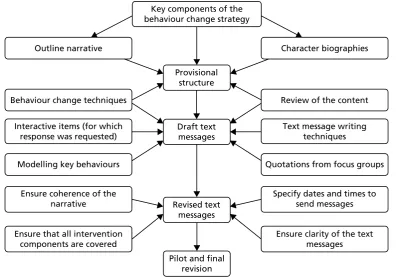
The intervention was developed in four stages (Figure 1): (1) establishing the provisional structure of the intervention, (2) drafting the text messages, (3) revising the content of the text messages and (4) piloting and final revisions. In practice, there was much iteration in the writing process, with modifications made to the narrative and to the text messages as the structure and content of individual text messages were developed. An extended piloting process was required to ensure that the narrative was coherent when rendered into text messages and that all components of the behaviour change strategy were adequately addressed.
Stage 1: establishing the provisional structure
Building on the logic model, key elements of the intervention were reviewed to create a provisional structure. These were the behaviour change model (HAPA)87and relevant behaviour change techniques.92 This provided a framework to establish how the narrative would depict the process of behaviour change, who the characters in the narrative would be and how the intervention could be delivered within the time frame of 3 months.
Key components of the behaviour change strategy
To establish a framework and timetable for the delivery of the intervention, the components of HAPA to be incorporated at each stage were addressed in three parts (Box 1). In the motivational phase, the pre-intentional motivational processes that lead to behavioural intentions include changing alcohol expectancies and
TABLE 1 Logic model
Problem
➡
Intervention/
strategy
➡
Intervention
goals
➡
Output➡
Outcomes
➡
Impact Short term Long termBinge drinking is common among young to middle-aged disadvantaged men
Design a cost-effective alcohol intervention that will appeal to the target group
Recruit socially disadvantaged men who regularly binge drink
Increased personal relevance of alcohol-related harms
Decrease the number of episodes of binge drinking
Maintenance of healthy drinking patterns
Reduction in inequalities through improved health and fewer social problems and family disruption
Disadvantaged men may be reluctant to engage with health-promoting interventions
Incorporate a narrative to engage the men in the steps involved in changing behaviour
Increase awareness of alcohol-related harms
Intentions to drink at safe levels
Reduce/prevent: l hangovers l accidents/injury l antisocial behaviour Prevention of physical, mental and social problems:
l liver disease
l cancers
l infertility
l depression
l family breakdown
Reduced costs to:
l the NHS
l social services
l the criminal justice system
Conventional alcohol brief interventions may not reach this group
The intervention is based on the HAPA and uses behaviour change techniques
The causal model:
l increase alcohol awareness
l alter alcohol expectancies
l establish intention to change
l develop goals, action plans and coping plans
l increase alcohol refusal skills
l implement relapse prevention/maintenance strategies
Deliver the intervention by text message to make it acceptable to the target group Change alcohol expectancies by encouraging men to consider the benefits of reduced drinking Change drinking behaviour through goal-setting and action-planning Maintain moderate/ safe drinking levels
Goals/action plans to drink at safe levels Strategies to maintain safe drinking levels Moderated drinking by individuals
Increase salience of benefits of reduced drinking
Increase self-efficacy to change
Key components of the behaviour change strategy
Outline narrative Character biographies
Provisional structure
Behaviour change techniques Review of the content
Interactive items (for which response was requested)
Draft text messages
Text message writing techniques
Modelling key behaviours Quotations from focus groups
Ensure coherence of the narrative
Specify dates and times to send messages Revised text
messages
Ensure that all intervention components are covered
Ensure clarity of the text messages
[image:41.595.91.504.71.348.2]Pilot and final revision
FIGURE 1 Stages in writing the text messages.
BOX 1 Components of HAPA addressed in the intervention
Components of HAPA
Motivational phase
Intention to change
l Alcohol expectancies.
l Perception of risk.
l Action self-efficacy.
l Social support.
Volitional phase
Action-planning/coping-planning
l Action self-efficacy.
l Coping self-efficacy.
l Action control (how to cope in a high-risk situation).
l Goal-setting.
l Action-planning.
l Social support.
Maintenance
l Recovery self-efficacy.
l Coping self-efficacy.
l Action control (how to cope in a high-risk situation).
The volitional phase of HAPA was divided into two parts. Initially, action-planning and coping-planning were tackled. This included the setting of goals and drawing up of action plans and coping plans. Subsequently, maintenance of the new behaviour, including lapse and relapse, was addressed (seeBox 1). A recent review of behavioural theory113has identified four factors that are important in maintenance. These were incorporated into the intervention: (1) satisfaction with behavioural outcome (e.g. financial gain or weight loss from reduced drinking); (2) self-regulatory processes (e.g. self-monitoring and planning); (3) identity (i.e. ensuring that processes and outcomes of behaviour change are consistent with the attitudes and values of the participants); and (4) social and environmental factors (e.g. making plans for how to deal with high-risk drinking situations).
Character biographies
To enable the detailed storyline to be developed, the number and the nature of the characters were decided. The number of characters was limited to ensure that the study participants could follow their individual stories. Constraints imposed by embedding the narrative in text messages meant that background information on each character was limited.
The feasibility study71identified distinct drinking behaviours within the target group: men who regularly drank over the binge-drinking threshold (>8 units of alcohol in a session) and those who engaged in very heavy binge drinking (>16 units of alcohol in a session). A common pattern of drinking was periods of abstinence interspersed with infrequent heavy-drinking days. Another common feature was that many men believed that their drinking behaviours, motives and desire to change were significantly different from when they were younger. They perceived this as a shift towards the role of a‘mature drinker’, which came with social roles and responsibilities (employee, husband/partner, parent). This‘mature drinker’identity was desirable and important for being able to fulfil responsibilities and commitments to family or work.
The first task was to ensure that the characters in the narrative embodied these characteristics. Participants would be more likely to feel a personal connection if the characters were similar to them. The narrative was portrayed through a lead character, Dave, his wife (Christine) and several minor characters who were friends (Box 2). Dave was presented as someone who believed he was a mature drinker (a family man
BOX 2 Characters in the narrative
Main character
Dave is a family man who is married to Christine. He initially believes that he is a mature drinker. He subsequently realises that he is a regular binge drinker and becomes aware of the potential risks from his drinking. He models behaviour change techniques that are likely to work, but also experiences lapses along the way. In the end he achieves his goal to cut down on his drinking and is satisfied with the outcome of the changes he has made.
Peripheral characters (Dave’s friends)
Stevie is the unmarried‘antagonist’character. He has few responsibilities, is unemployed and lives with his mother. Stevie often encourages everyone around him to drink.
Dougie has had serious alcohol-related problems in the past. He lives with a long-suffering partner (Sadie) but has a troubled relationship. He also tries to change his drinking, but gets it wrong more often than Dave.
Alec is a reformed, now mature, sensible drinker. He is respected by the others and is a role model for Dave.
DEVELOPMENT OF THE TEXT MESSAGE INTERVENTION
NIHR Journals Library www.journalslibrary.nihr.ac.uk