Original Article
A novel genotype screening and phylogenetic
analysis of Blastocystis hominis based on EF-1α
Tingzheng Zhan*, Shanshan He*, Teng Liu, Lili Tang, Dengyu Liu, Zuochao Lu, Xiaoquan Liu, Yanwen Li, Jiqing Shen, Xiaoyin Fu, Huanhuan Shi
Department of Parasitology, Guangxi Medical University, Nanning, Guangxi, China. *Equal contributors and co-first
authors.
Received February 28, 2017; Accepted March 24, 2017; Epub August 1, 2017; Published August 15, 2017
Abstract: Blastocystis hominis (B. h) is a kind of intestinal parasitic protozoa with the characteristic of worldwide distribution, morphology diversity, and diarrhea induced, etc. The traditional morphological classify was difficult to distinguish the genetic difference of B. h in different population and different geological strains. Recently, based on the small subunit ribosomal DNA sequence of B. h, the sequenced-tagged site (STS) primers was design, and successfully and widely applied to the distinguish the genotype of B. h, and however several B. h strains did not dis-tinguish. To address it, the elongation factor-1 alpha (EF-1α) gene of B. h was screened due to its conservation here, and its specific primers were designed to distinguish the genotype of B. h. After epidemiological survey, the infection rate of B. h in boys was 14.74%, and that of girls was 15.05%, and the total infection rate of B. h was 14.93%. In total of 53 infection students, with the using of 7 pairs STS primers, 31 strains was validated by polymerase chain reaction (PCR), including 4 strains of Type 1, 17 strains of Type 3, 4 strains of Type 4, 1 strains of Type 6, and 5 strains of Type 7, and did not found the Type 2, Type 5 and mixture genotype. In the 23 unknown genotype strains of B. h, 15 strains were identified by PCR using EF-1α primers, and had a higher homology in the DNA sequence (70%), and was evolutionarily closer to the EF-1α sequence of S and H strains of B. h. This study indicated that STS primers could identify the genotype of B. h, and EF-1α primers as a novel diagnosis primers could auxiliary identify the unknown genotype strain of B. h, and exhibited a wide application on the identification of the genotype strain of B. h, and provided a significant reference on the study of B. h in clinic.
Keywords: Blastocystis hominis, distinguish, sequenced-tagged site, elongation factor-1 alpha, primer
Introduction
Blastocystis hominis (B. h) is a single-celled intestinal parasite, and is very common in both
humans and animals [1-3], and firstly named as
B. h in 1912 by Brumpt, et al. Based on the morphological study of it, it was divided into the intestinal parasite class in 1967 by Zerdt, et al,
and was finally divided into the Blastocysta in
1993 by Jinbo Jiang, et al [4, 5]. It is one of the most common human parasites in the world and has a global distribution, especially in the developing country of the Southeast Asia and the South America [6-8]. In developing country, the infection rate was 30%-50%, and was much higher than that of the developed country (1.5%-10%) [9-11]. It is estimated that 25% of people are infected with this parasite [12-14].
For a long time, it was believed that B. h was harmless, and however of the 10 subspecies, 2 or 3 subspecies are known to cause complaints as recent study documented, including chronic intestinal symptoms and/or irritable bowel syn-drome [15-17]. On the taxonomy, the traditional method based on the morphological structure of B. h does not clearly distinguish the genotype of B. h due to the diversity of it [18], and with the rapid developing of molecular technique, to determine the genetic difference and features
of DNA in B. h exhibits a significant application
(RFLP) in different regions [19]. Yoshikawa, et al has design the sequenced-tagged site (STS) as a primer of polymerase chain reaction (PCR)
based on the SSU rDNA specific fragment, and
correctly distinguished the different genotype of B. h in different countries and regions, and still widely used to distinguish the genotype of B. h [20]. However, due to the diversity of B. h in different countries and regions, several geno-type of B. h did not entirely identify just using the STS primers, and another primers based on a conserved gene fragment need to develop.
The elongation factor-1 alpha (EF-1α) is a highly
conserved ubiquitous protein that is involved in translation and is desirable for use in phyloge-netic studies on Blastocystis, an enigmatic intestinal parasite with a contentious taxonom-ic position [21]. Nakamura, et al has well docu-mented that B. h did not belong to Eumycota
based on the analysis of the EF-1α amino acid
sequence of it [21]. Ho, et al has also
docu-mented that EF-1α gene also had genetic poly -morphism, and constructed the phylogenetic relationship based on the DNA sequence and amino acid of 13 B. h strains [22]. All of the
studies indicated that EF-1α as a conserved gene exhibited the importance on the classifi
-cation of B. h. In this study, the EF-1α gene was chosen, and its PCR amplification primers was
designed, and hoped to provide an auxiliary detection method of B. h genotype.
Materials and methods
Epidemiological survey and microscopic ex-amination
A total of 1433 students who studied in the Guangxi Medical University were chosen as the object of this study, including 563 boys and 870 girls. All students were distributed the questionnaire to collect the general conditions, personal hygiene and environmental health, etc. After epidemiological survey, a total of 3-5 g faeces was collected, and treated with hydro-chloric acid and diethyl ether according to acid
ether centrifugal sedimentation method, and the nightsoil was smeared and analyzed by optical microscope.
B. h separation and culture in vitro
The above-validated positive faeces (2-3 g) was picked by bamboo stick, and placed in a 15 ml centrifuge tube, and added 10 ml of Locke’s to stir evenly, and removed the coarse particle. The turbid liquid was transferred to a new 15 ml centrifuge tube, and added 10 ml of Locke’s to naturally sediment 1-2 hrs, and then removed the supernatant. Repeated one time, and suck up 1 ml liquid nearby the nightsoil, and
inocu-lated to Iscove’s Modified Dulbecco’s Media
(IMDM) medium, and anaerobic cultured at 37°C for 48 hrs, and repeated one time. Then, centrifuged at 4,000 g for 2 min, and removed the supernatant, and added 10 ml of Locke’s to resuspended polypide, and centrifuged at 4,000 g for 2 min, repeated 3-4 times. Removed the supernatant, and added 4 ml of Locke’s to resuspended polypide, and centrifuged at 5,600 g for 3 min, repeated 3 times. Removed the supernatant, and added 1 ml of Locke’s to resuspended polypide, and counted using cell counting chamber.
Genomic DNA extraction of B. h
The above-separated B. h genomic DNA was extracted according to the manufacturers’ instructions of the blood/cell/tissue genomic DNA extraction kit (TIANGEN BIOTECH (BEIJING) CO. LTD). The B. h polypide was washed with
double distilled water, and added 200 μl of GA buffer (pre-added 8 μl of Rnase A) to shaking at
room temperature, and stewing for 5 min. Then,
added 20 μl of proteinase K and 200 μl of GB
buffer to reverse blending, and incubated at
70°C water bath. Added 220 μl of absolute
ethyl alcohol to reverse blending, and then transferred to the CB3 column, and centrifuged at 12,000 rpm for 30 s, removed the elution.
Added 500 μl of GD buffer, and centrifuged at
12,000 rpm for 30 s, removed the elution.
Added 700 μl of PW buffer, and stewing at room
temperature for 30 s, and removed the elution,
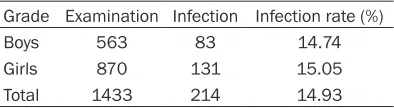
[image:2.612.91.288.84.138.2]repeated one time, and added 50 μl of TE buf -fer, and stewing for 2-5 min, and centrifuged at 12,000 rpm for 2 min. The elution was collect-ed, and the concentration and the purity were detected by ultraviolet spectrophotometer. Table 1. B. h infection rate
Grade Examination Infection Infection rate (%)
Boys 563 83 14.74
Girls 870 131 15.05
Identification of B. h different strains using
STS primers by polymerase chain reaction (PCR)
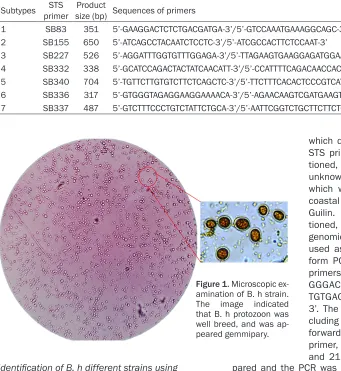
The above-extracted B. h genomic DNA (100 ng) was used as a template to perform PCR assay using STS primers as shown in Table 2. The reaction mixture, including 25 µL Taq Mix, 1 µL forward primer, 1 µL reverse primer, 2 µL genomic DNA, and 21 µL ddH2O, was prepared and the PCR was performed according to the following program: one cycle of 94°C for 5 min; 30 cycles of 94°C for 30 s, 54°C for 30 s, and 72°C for 30 s. After PCR, products were
identi-fied by 1% agarose gel electrophoresis, and
images were gathered by Gel Imaging (Bio-Rad, USA).
Identification of B. h different strains using EF-α primer by PCR
A total of 23 strains of unknown genotype B. h was chosen, including 11 strains of B. h of
pared and the PCR was performed according to the following program: one cycle of 94°C for 5 min; 30 cycles of 94°C for 30 s, 54°C for 30 s, and 72°C for 30 s. After PCR, products
were identified by 1% agarose gel electrophore -sis, and images were gathered by Gel Imaging (Bio-rad, USA). Subsequently, the DNA bands
were cut, and extracted by Gel Extraction Kit
(OMEGA, Japan), and then performed direct sequencing.
Multiple sequences alignment using Cluster W/X and phylogenetic analysis
The above-validated EF-α DNA sequences of B.
h were performed multiple sequences align-ment to the DNA sequence of B. h different
strains using Cluster W/X software, including C
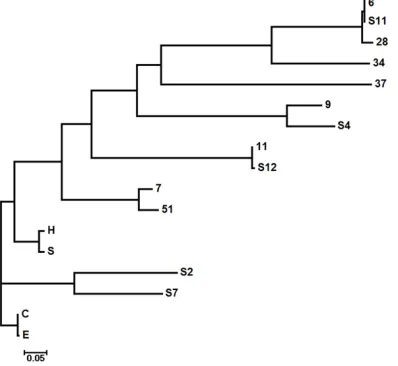
stain, E (G) strain, S stain and H strain. After then, the phylogenetic tree was imaged using the function of “Phylogeny” in the MEGA 7.0.21 software (http://www.megasoftware.net/dow- nload_form).
Table 2. STS primers used in this study
[image:3.612.92.433.87.458.2]Subtypes primerSTS size (bp) Sequences of primersProduct GenBank 1 SB83 351 5’-GAAGGACTCTCTGACGATGA-3’/5’-GTCCAAATGAAAGGCAGC-3’ AF166086 2 SB155 650 5’-ATCAGCCTACAATCTCCTC-3’/5’-ATCGCCACTTCTCCAAT-3’ AF166087 3 SB227 526 5’-AGGATTTGGTGTTTGGAGA-3’/5’-TTAGAAGTGAAGGAGATGGAAG-3’ AF166088 4 SB332 338 5’-GCATCCAGACTACTATCAACATT-3’/5’-CCATTTTCAGACAACCACTTA-3’ AF166091 5 SB340 704 5’-TGTTCTTGTGTCTTCTCAGCTC-3’/5’-TTCTTTCACACTCCCGTCAT-3’ AY048752 6 SB336 317 5’-GTGGGTAGAGGAAGGAAAACA-3’/5’-AGAACAAGTCGATGAAGTGAGAT-3’ AY048751 7 SB337 487 5’-GTCTTTCCCTGTCTATTCTGCA-3’/5’-AATTCGGTCTGCTTCTTCTG-3’ AY048750
Figure 1. Microscopic ex-amination of B. h strain. The image indicated that B. h protozoon was well breed, and was ap-peared gemmipary.
which did not identify using STS primers as above-men-tioned, and 12 strains of unknown genotype B. h of which were come from the coastal region of the south of Guilin. As the above-men-tioned, a total of 100 ng genomic DNA of B. h was used as a template to
per-form PCR assay using EF-α
pre-Statistical analysis
All data expressed as the mean ± standard deviation (SD). Statistical analysis was per-formed with one-way ANOVA using SPSS soft-ware (version 21.0, http://spss.en.softonic. com/; Chicago, IL, USA), and Student’s t-tests were performed in a group of two sample, and P < 0.05 and P < 0.01 were considered to
indi-cate significant differences and highly signifi -cant differences, respectively.
Results
Epidemiological survey and microscopic ex-amination
As exhibiting of Table 1, the B. h infection rate of boys was 14.74%, and the B. h infection rate
[image:4.612.92.523.67.642.2]Figure 3. Identification of the PCR products of EF-1α in 23 samples by agarose gel electrophoresis. The image indicated that the feature EF-1α DNA bands were amplified by PCR.
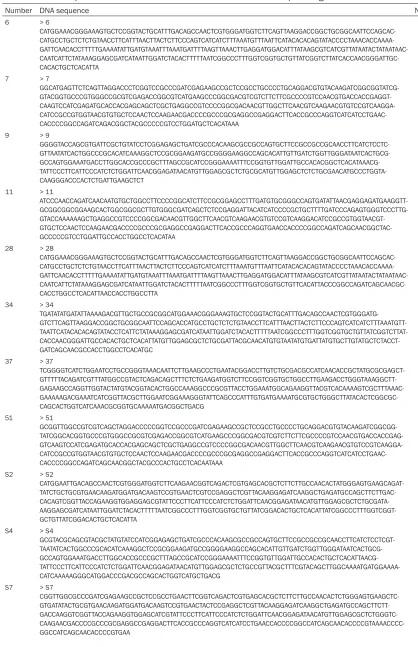
Table 3. DNA sequence of EF-1α in different strains of B. h after sequencing
Number DNA sequence Note
6 > 6
CATGGAAACGGGAAAGTGCTCCGGTACTGCATTTGACAGCCAACTCGTGGGATGGTCTTCAGTTAAGGACCGGCTGCGGCAATTCCAGCAC- CATGCCTGCTCTCTGTAACCTTCATTTAACTTACTCTTCCCAGTCATCATCTTTAAATGTTTAATTCATACACACAGTATACCCCTAAACACCAAAA- GATTCAACACCTTTTTGAAAATATTGATGTAAATTTAAATGATTTTAAGTTAAACTTGAGGATGGACATTTATAAGCGTCATCGTTATAATACTATAATAAC- CAATCATTCTATAAAGGAGCGATCATAATTGGATCTACACTTTTTAATCGGCCCTTTGGTCGGTGCTGTTATCGGTCTTATCACCAACGGGATTGC-CACACTGCTCACATTA
7 > 7
GGCATGAGTTCTCAGTTAGGACCCTCGGTCCGCCCGATCGAGAAGCCGCTCCGCCTGCCCCTGCAGGACGTGTACAAGATCGGCGGTATCG- GTACGGTGCCCGTGGGCCGCGTCGAGACCGGCGTCATGAAGCCCGGCGACGTCGTCTTCTTCGCCCCGTCCAACGTGACCACCGAGGT- CAAGTCCATCGAGATGCACCACGAGCAGCTCGCTGAGGCCGTCCCCGGCGACAACGTTGGCTTCAACGTCAAGAACGTGTCCGTCAAGGA- CATCCGCCGTGGTAACGTGTGCTCCAACTCCAAGAACGACCCCGCCCGCGAGGCCGAGGACTTCACCGCCCAGGTCATCATCCTGAAC-CACCCCGGCCAGATCAGACGGCTACGCCCCCGTCCTGGATGCTCACATAAA
9 > 9
GGGGTACCAGCGTGATTCGCTGTATCCTCGGAGAGCTGATCGCCCACAAGCGCCGCCAGTGCTTCCGCCGCCGCAACCTTCATCTCCTC- GTTAATATCACTGGCCCGCACATCAAAGGCTCCGCGGAAGATGCCGGGGAAGGCCAGCACATTGTTGATCTGGTTGGGATAATCACTGCG- GCCAGTGGAAATGACCTTGGCACCGCCCGCTTTAGCCGCATCCGGGAAAATTTCCGGTGTTGGATTGCCACACGGCTCACATAAACG- TATTCCCTTCATTCCCATCTCTGGATTCAACGGAGATAACATGTTGGAGCGCTCTGCGCATGTTGGAGCTCTCTGCGAACATGCCCTGGTA-CAAGGGACCCACTCTGATTGAAGCTCT
11 > 11
ATCCCAACCAGATCAACAATGTGCTGGCCTTCCCCGGCATCTTCCGCGGAGCCTTTGATGTGCGGGCCAGTGATATTAACGAGGAGATGAAGGTT- GCGGCGGCGGAAGCACTGGCGGCGCTTGTGGGCGATCAGCTCTCCGAGGATTACATCATCCCCGCTGCTTTTGATCCCAGAGTGGGTCCCTTG- GTACCAAAAAAGCTGAGGCCGTCCCCGGCGACAACGTTGGCTTCAACGTCAAGAACGTGTCCGTCAAGGACATCCGCCGTGGTAACGT- GTGCTCCAACTCCAAGAACGACCCCGCCCGCGAGGCCGAGGACTTCACCGCCCAGGTGAACCACCCCGGCCAGATCAGCAACGGCTAC-GCCCCCGTCCTGGATTGCCACCTGGCCTCACATAA
28 > 28
CATGGAAACGGGAAAGTGCTCCGGTACTGCATTTGACAGCCAACTCGTGGGATGGTCTTCAGTTAAGGACCGGCTGCGGCAATTCCAGCAC- CATGCCTGCTCTCTGTAACCTTCATTTAACTTACTCTTCCCAGTCATCATCTTTAAATGTTTAATTCATACACACAGTATACCCCTAAACACCAAAA- GATTCAACACCTTTTTGAAAATATTGATGTAAATTTAAATGATTTTAAGTTAAACTTGAGGATGGACATTTATAAGCGTCATCGTTATAATACTATAATAAC- CAATCATTCTATAAAGGAGCGATCATAATTGGATCTACACTTTTTAATCGGCCCTTTGGTCGGTGCTGTTCACATTACCCGGCCAGATCAGCAACGC-CACCTGGCCTCACATTAACCACCTGGCCTTA
34 > 34
TGATATATGATATTAAAAGACGTTGCTGCCGCGGCATGGAAACGGGAAAGTGCTCCGGTACTGCATTTGACAGCCAACTCGTGGGATG- GTCTTCAGTTAAGGACCGGCTGCGGCAATTCCAGCACCATGCCTGCTCTCTGTAACCTTCATTTAACTTACTCTTCCCAGTCATCATCTTTAAATGTT- TAATTCATACACACAGTATACCTCATTCTATAAAGGAGCGATCATAATTGGATCTACACTTTTTAATCGGCCCTTTGGTCGGTGCTGTTATCGGTCTTAT- CACCAACGGGATTGCCACACTGCTCACATTATGTTGGAGCGCTCTGCGATTACGCAACATGTGTAATATGTGATTATGTGCTTGTATGCTCTACCT-GATCAGCAACGCCACCTGGCCTCACATGC
37 > 37
TCGGGGTCATCTGGAATCCTGCCGGGTAAACAATTCTTGAAGCCCTGAATACGGACCTTGTCTGCGACGCCATCAACACCGCTATGCGCGAGCT- GTTTTTACAGATCGTTTATGGCCGTACTCAGACAGCTTTCTCTGAAGATGGTCTTCCGGTCGGTGCTGGCCTTGAAGACCTGGGTAAAGGCTT- GAGAAGCCAGGTTGGTACTATGTACGGTACACTGGCCAAAGGCCCGCGTTACCTGGAAATGGCAGAAGGTTACGTCACAAAAGTCGCTTTAAAC- GAAAAAGACGAAATCATCGGTTACGCTTGGAATCGGAAAGGGTATTCAGCCCATTTGTGATGAAAATGCGTGCTGGGCTTATACACTCGGCGC-CAGCACTGGTCATCAAACGCGGTGCAAAAATGACGGCTGACG
51 > 51
GCGGTTGGCCGTCGTCAGCTAGGACCCCCGGTCCGCCCGATCGAGAAGCCGCTCCGCCTGCCCCTGCAGGACGTGTACAAGATCGGCGG- TATCGGCACGGTGCCCGTGGGCCGCGTCGAGACCGGCGTCATGAAGCCCGGCGACGTCGTCTTCTTCGCCCCGTCCAACGTGACCACCGAG- GTCAAGTCCATCGAGATGCACCACGAGCAGCTCGCTGAGGCCGTCCCCGGCGACAACGTTGGCTTCAACGTCAAGAACGTGTCCGTCAAGGA- CATCCGCCGTGGTAACGTGTGCTCCAACTCCAAGAACGACCCCGCCCGCGAGGCCGAGGACTTCACCGCCCAGGTCATCATCCTGAAC-CACCCCGGCCAGATCAGCAACGGCTACGCCCACTGCCTCACAATAAA
S2 > S2
CATGGAATTGACAGCCAACTCGTGGGATGGTCTTCAAGAACGGTCAGACTCGTGAGCACGCTCTTCTTGCCAACACTATGGGAGTGAAGCAGAT- TATCTGCTGCGTGAACAAGATGGATGACAAGTCCGTGAACTCGTCCGAGGCTCGTTACAAGGAGATCAAGGCTGAGATGCCAGCTTCTTGAC- CACAGTCGGTTACCAGAAGGTGGAGGAGCGTATTCCCTTCATTCCCATCTCTGGATTCAACGGAGATAACATGTTGGAGCGCTCTGCGATA- AAGGAGCGATCATAATTGGATCTACACTTTTTAATCGGCCCTTTGGTCGGTGCTGTTATCGGACACTGCTCACATTATCGGCCCTTTGGTCGGT-GCTGTTATCGGACACTGCTCACATTA
S4 > S4
GCGTACGCAGCGTACGCTATGTATCCATCGGAGAGCTGATCGCCCACAAGCGCCGCCAGTGCTTCCGCCGCCGCAACCTTCATCTCCTCGT- TAATATCACTGGCCCGCACATCAAAGGCTCCGCGGAAGATGCCGGGGAAGGCCAGCACATTGTTGATCTGGTTGGGATAATCACTGCG- GCCAGTGGAAATGACCTTGGCACCGCCCGCTTTAGCCGCATCCGGGAAAATTTCCGGTGTTGGATTGCCACACTGCTCACATTAACG- TATTCCCTTCATTCCCATCTCTGGATTCAACGGAGATAACATGTTGGAGCGCTCTGCCGTTACGCTTTCGTACAGCTTGGCAAAATGATGGAAAA-CATCAAAAAGGGCATGGACCCGACGCCAGCACTGGTCATGCTGACG
S7 > S7
of girls was 15.05%, and the total infection rate of B. h was 14.93%. After separation of B. h in faeces with the 3 generation anaerobic culture in vitro, the medium was orange red and
trans-lucent and floccule sediment was observed in
the bottom of tube. After microscopic examina-tion, B. h protozoon was well breed, and was appeared gemmipary (Figure 1).
Five genotypes of B. h were identified using
STS primers
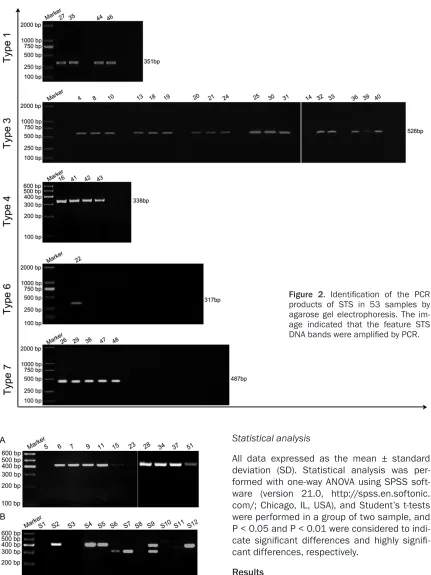
As PCR results exhibiting of Figure 2, in 53
samples, five genotypes of B. h were identified
using 7 pairs STS primers (Table 2), including 4 strains of Type 1, 17 strains of Type 3, 4 strains of Type 4, 1 strains of Type 6, and 5 strains of Type 7, and did not found the Type 2, Type 5 and mixture genotypes, and appeared several obvi-ous DNA bands, such as the 351 bp band of Type 1 in sample 27, 35, 44 and 46, the 526 bp band of Type 3 in sample 4, 8, 10, 13, 18, 19, 20, 21, 24, 25, 30, 31, 14, 32, 33, 36, 39 and 40, the 338 bp band of Type 4 in sample 16, 41, 42 and 43, the 317 bp band of Type 6 in sample 22, and the 487 bp band of Type 7 in sample 26, 29, 38, 47 and 48. In addition, a total of 22 strains of B. h had no any DNA bands, and belonged to the unknown geno-types B. h.
A total of 15 strains of B. h appeared
charac-teristic DNA bands using EF-α primer
As PCR results exhibiting of Figure 3, in 23
sam-ples of which was identified as unknown geno -type, 15 strains appeared distinctive DNA
bands using EF-α primers, such as sample 6, 7,
9, 11, 15, 28, 34, 37, 51, S2, S4, S5, S9, S11 and S12, and 8 strains did not appeared any DNA bands, and the DNA sequence was exhib-ited in Table 3 after sequencing.
EF-α had a higher homology in 13 strains of B.
h, and highly conserved
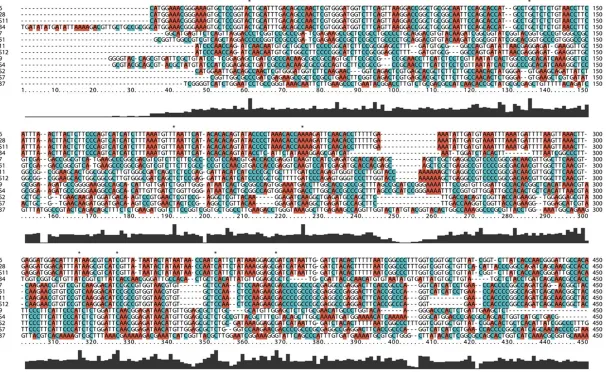
After multiple sequence alignment (Figure 4), the 13 DNA sequences of B. h strains had a
higher homology (70%). Evolutionarily, the EF-α
DNA sequence of 13 samples was closer to that of the S and H strains of B. h (Table 4) as phylogenetic analysis (Figure 5).
Discussion
This study demonstrated that B. h had a higher infection rate in the students of Guangxi
Medical University, and firstly identified 5 geno -type of B. h using STS primers, including Type 1, 3, 4, 6, 7, and did not found Type 2, 5, and any mixture genotypes. Based on it, in 23 strains unknown genotype B. h, 13 strains was
identi-fied by PCR using EF-1α primers, and exhibited a closed evolutionary relationship to the EF-1α
sequence of the S and H strains of B. h, and
exhibited a significant application value on the
phylogenetic analysis of B. h.
B. h is a single-celled intestinal parasite and widely distributed all over the world [23-26], and existed multiple stages in its life cycle with the morphological diversity [17, 27, 28], and therefore did not clearly distinguish its genetic difference in different population and different regions just based on the morphological struc-ture of B. h, and a novel approach need to design. Based on the rapid developing of
molecular technology, the genotype classifica -tion according to the genetic difference of gene or protein has been raised much more
atten-tion. With the STS primers used in the PCR in
1997 by Clark, et al, several genotypes of B. h were found [19]. In this study, seven features primers of STS were designed to distinguish the genotype of B. h in 53 samples, and 31 strains
of B. h were amplified the features DNA bands,
S11 >S11
CATGGAAACGGGAAAGTGCTCCGGTACTGCATTTGACAGCCAACTCGTGGGATGGTCTTCAGTTAAGGACCGGCTGCGGCAATTCCAGCAC- CATGCCTGCTCTCTGTAACCTTCATTTAACTTACTCTTCCCAGTCATCATCTTTAAATGTTTAATTCATACACACAGTATACCCCTAAACACCAAAA- GATTCAACACCTTTTTGAAAATATTGATGTAAATTTAAATGATTTTAAGTTAAACTTGAGGATGGACATTTATAAGCGTCATCGTTATAATACTATAATAAC- CAATCATTCTATAAAGGAGCGATCATAATTGGATCTACACTTTTTAATCGGCCCTTTGGTCGGTGCTGTTATCGGTCTTATCACCAACGGGATTGC-CACACTGCTCACATTA
S12 >S12
and belonged to 5 genotypes, including Type 1, 3, 4, 6, 7, and did not found Type 2, 5, and any mixture genotypes, and wherein the Type 3 was the most and included 17 strains of B. h. However, it was still 22 strains genotype did not distinguish, and we hypothesized that another genetic population may be existed in it if used a
novel amplified primers.
The elongation factor-1 alpha (EF-1α) is a highly
conserved ubiquitous protein that is involved in translation and is desirable for use in phyloge-netic studies on Blastocystis, an enigmatic
intestinal parasite with a contentious
taxonom-ic position [21]. Therefore, the EF-1α full length
fragment was chosen, and designed a pair of
EF-1α primers to amplify the 421 bp length fea
-tures bands. After PCR amplification using EF-1α primers in 23 strains unknown genotype
of B. h, the 421 bp features bands was
ampli-fied in 13 strains, and these sequences had a
higher homology (70%). In addition, after phylo-genetic analysis, these DNA sequences of
EF-1α was closer to that of the S and H strains of B. h, and indicated that the EF-1α primers
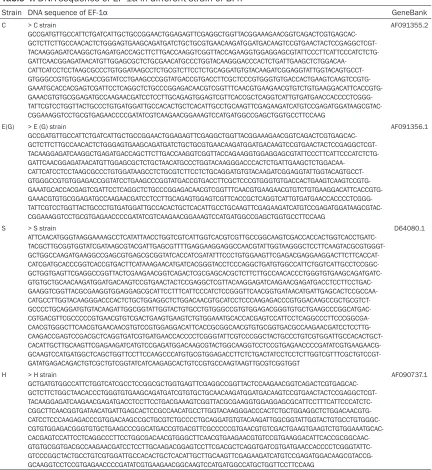
[image:8.612.91.523.74.544.2]could be used another phylogeny biomarker. Table 4. DNA sequence of EF-1α in different strain of B. h
Strain DNA sequence of EF-1α GeneBank
C > C strain
GCCGATGTTGCCATTCTGATCATTGCTGCCGGAACTGGAGAGTTCGAGGCTGGTTACGGAAAGAACGGTCAGACTCGTGAGCAC- GCTCTTCTTGCCAACACTCTGGGAGTGAAGCAGATGATCTGCTGCGTGAACAAGATGGATGACAAGTCCGTGAACTACTCCGAGGCTCGT- TACAAGGAGATCAAGGCTGAGATGACCAGCTTCTTGACCAAGGTCGGTTACCAGAAGGTGGAGGAGCGTATTCCCTTCATTCCCATCTCTG- GATTCAACGGAGATAACATGTTGGAGCGCTCTGCGAACATGCCCTGGTACAAGGGACCCACTCTGATTGAAGCTCTGGACAA- CATTCATCCTCCTAAGCGCCCTGTGGATAAGCCTCTGCGTCTTCCTCTGCAGGATGTGTACAAGATCGGAGGTATTGGTACAGTGCCT- GTGGGCCGTGTGGAGACCGGTATCCTGAAGCCCGGTATGACCGTGACCTTCGCTCCCGTGGGTGTGACCACTGAAGTCAAGTCCGTG- GAAATGCACCACGAGTCGATTCCTCAGGCTCTGCCCGGAGACAACGTCGGTTTCAACGTGAAGAACGTGTCTGTGAAGGACATTCACCGTG- GAAACGTGTGCGGAGATGCCAAGAACGATCCTCCTTGCAGAGTGGAGTCGTTCACCGCTCAGGTCATTGTGATGAACCACCCCTCGGG- TATTCGTCCTGGTTACTGCCCTGTGATGGATTGCCACACTGCTCACATTGCCTGCAAGTTCGAGAAGATCATGTCCGAGATGGATAAGCGTAC-CGGAAAGGTCCTGCGTGAGAACCCCGATATCGTCAAGAACGGAAAGTCCATGATGGCCGAGCTGGTGCCTTCCAAG
AF091355.2
E(G) > E (G) strain
GCCGATGTTGCCATTCTGATCATTGCTGCCGGAACTGGAGAGTTCGAGGCTGGTTACGGAAAGAACGGTCAGACTCGTGAGCAC- GCTCTTCTTGCCAACACTCTGGGAGTGAAGCAGATGATCTGCTGCGTGAACAAGATGGATGACAAGTCCGTGAACTACTCCGAGGCTCGT- TACAAGGAGATCAAGGCTGAGATGACCAGCTTCTTGACCAAGGTCGGTTACCAGAAGGTGGAGGAGCGTATTCCCTTCATTCCCATCTCTG-
GATTCAACGGAGATAACATGTTGGAGCGCTCTGCTAACATGCCCTGGTACAAGGGACCCACTCTGATTGAAGCTCTGGACAA- CATTCATCCTCCTAAGCGCCCTGTGGATAAGCCTCTGCGTCTTCCTCTGCAGGATGTGTACAAGATCGGAGGTATTGGTACAGTGCCT- GTGGGCCGTGTGGAGACCGGTATCCTGAAGCCCGGTATGACCGTGACCTTCGCTCCCGTGGGTGTGACCACTGAAGTCAAGTCCGTG- GAAATGCACCACGAGTCGATTCCTCAGGCTCTGCCCGGAGACAACGTCGGTTTCAACGTGAAGAACGTGTCTGTGAAGGACATTCACCGTG- GAAACGTGTGCGGAGATGCCAAGAACGATCCTCCTTGCAGAGTGGAGTCGTTCACCGCTCAGGTCATTGTGATGAACCACCCCTCGGG- TATTCGTCCTGGTTACTGCCCTGTGATGGATTGCCACACTGCTCACATTGCCTGCAAGTTCGAGAAGATCATGTCCGAGATGGATAAGCGTAC-CGGAAAGGTCCTGCGTGAGAACCCCGATATCGTCAAGAACGGAAAGTCCATGATGGCCGAGCTGGTGCCTTCCAAG
AF091356.1
S > S strain
ATTCAACATGGGTAAGGAAAAGCCTCATATTAACCTGGTCGTCATTGGTCACGTCGTTGCCGGCAAGTCGACCACCACTGGTCACCTGATC- TACGCTTGCGGTGGTATCGATAAGCGTACGATTGAGCGTTTTGAGGAAGGAGGCCAACGTATTGGTAAGGGCTCCTTCAAGTACGCGTGGGT- GCTGGCCAAGATGAAGGCCGAGCGTGAGCGCGGTATCACCATCGATATTTCCCTGTGGAAGTTCGAGACGAGGAAGGACTTCTTCACCAT- CATCGATGCACCCGGTCACCGTGACTTCATAAAGAACATGATCACGGGTACCTCCCAGGCTGATGTGGCCATTCTGGTCATTGCCTCCGGC- GCTGGTGAGTTCGAGGCCGGTTACTCGAAGAACGGTCAGACTCGCGAGCACGCTCTTCTTGCCAACACCCTGGGTGTGAAGCAGATGATC- GTGTGCTGCAACAAGATGGATGACAAGTCCGTGAACTACTCCGAGGCTCGTTACAAGGAGATCAAGAACGAGATGACCTCCTTCCTGAC- GAAGGTCGGTTACGCGAAGGTGGAGGAGCGCATTCCTTTCATTCCCATCTCCGGGTTCAACGGTGATAACATGATTGAGCACTCCGCCAA- CATGCCTTGGTACAAGGGACCCACTCTGCTGGAGGCTCTGGACAACGTGCATCCTCCCAAGAGACCCGTGGACAAGCCGCTGCGTCT- GCCCCTGCAGGATGTGTACAAGATTGGCGGTATTGGTACTGTGCCTGTGGGCCGTGTGGAGACGGGTGTGCTGAAGCCCGGCATGAC- CGTGACGTTCGCCCCCGTGAACGTGTCGACTGAAGTGAAGTCTGTGGAAATGCACCACGAGTCCATTCCTCAGGCCCTTCCCGGCGA- CAACGTGGGCTTCAACGTGAACAACGTGTCCGTGGAGGACATTCACCGCGGCAACGTGTGCGGTGACGCCAAGAACGATCCTCCTTG- CAAGACCGAGTCCGACGCTCAGGTGATCGTGATGAACCACCCCTCGGGTATTCGTCCCGGCTACTGCCCTGTCGTGGATTGCCACACTGCT- CACATTGCTTGCAAGTTCGAGAAGATCATGTCCGAGATGGACAAGCGTACTGGCAAGGTCCTCCGTGAGAACCCCGATATCGTGAAGAACG- GCAAGTCCATGATGGCTCAGCTGGTTCCTTCCAAGCCCATGTGCGTGGAGACCTTCTCTGACTATCCTCCTCTTGGTCGTTTCGCTGTCCGT-GATATGAGACAGACTGTCGCTGTCGGTATCATCAAGAGCACTGTCCGTGCCAAGTAAGTTGCGTCGGTGGT
D64080.1
H > H strain
GCTGATGTGGCCATTCTGGTCATCGCCTCCGGCGCTGGTGAGTTCGAGGCCGGTTACTCCAAGAACGGTCAGACTCGTGAGCAC- GCTCTTCTGGCTAACACCCTGGGTGTGAAGCAGATGATCGTGTGCTGCAACAAGATGGATGACAAGTCCGTGAACTACTCCGAGGCTCGT- TACAAGGAGATCAAGAACGAGATGACCTCCTTCCTGACGAAAGTCGGTTACGCGAAGGTGGAGGAGCGCATTCCTTTCATTCCCATCTC- CGGCTTCAACGGTGATAACATGATTGAGCACTCCGCCAACATGCCTTGGTACAAGGGACCCACTCTGCTGGAGGCTCTGGACAACGTG- CATCCTCCCAAGAGACCCGTGGACAAGCCGCTGCGTCTGCCCCTGCAGGATGTGTACAAGATTGGCGGTATTGGTACTGTGCCTGTGGGC- CGTGTGGAGACGGGTGTGCTGAAGCCCGGCATGACCGTGACGTTCGCCCCCGTGAACGTGTCGACTGAAGTGAAGTCTGTGGAAATGCAC- CACGAGTCCATTCCTCAGGCCCTTCCTGGCGACAACGTGGGCTTCAACGTGAAGAACGTGTCCGTGAAGGACATTCACCGCGGCAAC- GTGTGCGGTGACGCCAAGAACGATCCTCCTTGCAAGACGGAGTCCTTCGACGCTCAGGTGATCGTGATGAACCACCCCTCGGGTATTC- GTCCCGGCTACTGCCTGTCGTGGATTGCCACACTGCTCACATTGCTTGCAAGTTCGAGAAGATCATGTCCGAGATGGACAAGCGTACCG-GCAAGGTCCTCCGTGAGAACCCCGATATCGTGAAGAACGGCAAGTCCATGATGGCCATGCTGGTTCCTTCCAAG
Acknowledgements
This research project was sponsored by sup-ported by the National Natural Science Fou- ndation of China (Grant No. 81360256) and the Guangxi Youth Science Foundation of China (Grant No. 2015GXNSFBA139137).
Disclosure of conflict of interest
None.
Address correspondence to: Dr. Huanhuan Shi, De- partment of Parasitology, Guangxi Medical Uni- versity, Nanning 530021, Guangxi, China. Tel: +86-771-5358240; Fax: +86-+86-771-5358240; E-mail: hh. [email protected]
References
[1] Won EJ, Kim SH, Kee SJ, Shin JH, Suh SP, Chai JY, Ryang DW and Shin MG. Multiplex real-time PCR assay targeting eight parasites custom-ized to the Korean population: potential use for detection in diarrheal stool samples from gas-troenteritis patients. PLoS One 2016; 11: e0166957.
[2] Speich B, Croll D, Furst T, Utzinger J and Keiser J. Effect of sanitation and water treatment on intestinal protozoa infection: a systematic re-view and meta-analysis. Lancet Infect Dis 2016; 16: 87-99.
[3] Macin S, Kaya F, Cagdas D, Hizarcioglu-Gulsen H, Saltik-Temizel IN, Tezcan I, Demir H, Erguven
S and Akyon Y. Detection of parasites in chil-dren with chronic diarrhea. Pediatr Int 2016; 58: 531-533.
[4] Zierdt CH. Taxonomic status of Blastocystis hominis: reply. Parasitol Today 1993; 9: 18. [5] Jiang JB and He JG. Taxonomic status of
Blas-tocystis hominis. Parasitol Today 1993; 9: 2-3. [6] Potaturkina-Nesterova NI, Il’ina NA, Bugero NV
and Nesterov AS. Characteristics of factors of protozoa blastocystis hominis persistence. Bull Exp Biol Med 2016; 161: 804-805.
[7] Duda A, Kosik-Bogacka D, Lanocha N and Szy -manski S. [Blastocystis hominis- parasites or commensals?]. Ann Acad Med Stetin 2014; 60: 23-28.
[8] Verma R and Delfanian K. Blastocystis hominis associated acute urticaria. Am J Med Sci 2013; 346: 80-81.
[9] Jimenez OM, Carbonell AE, Garcia OM, Rodri-guez LW, Triana FP and Fabian LG. [Blastocys -tis hominis in symptomatic celiac patients]. Acta Gastroenterol Latinoam 2012; 42: 175-181.
[10] Zuel-Fakkar NM, Abdel Hameed DM and Has-sanin OM. Study of Blastocystis hominis iso-lates in urticaria: a case-control study. Clin Exp Dermatol 2011; 36: 908-910.
[11] Yakoob J, Abbas Z, Beg MA, Naz S, Awan S, Ha-mid S and Jafri W. In vitro sensitivity of Blasto -cystis hominis to garlic, ginger, white cumin, and black pepper used in diet. Parasitol Res 2011; 109: 379-385.
[12] Trabelsi S, Ali IB and Khaled S. [Clinical and epidemiological characteristics of blastocystis hominis]. Tunis Med 2010; 88: 190-192. [13] Elwakil HS and Talaat RM. Genetic analysis of
Blastocystis hominis isolated from symptom-atic and asymptomsymptom-atic human hosts in Egypt. J Egypt Soc Parasitol 2009; 39: 99-109. [14] Suresh K, Venilla GD, Tan TC and Rohela M. In
vivo encystation of Blastocystis hominis. Para-sitol Res 2009; 104: 1373-1380.
[15] Ustun S and Turgay N. [Blastocystis hominis and bowel diseases]. Turkiye Parazitol Derg 2006; 30: 72-76.
[16] Sio SW, Puthia MK, Lee AS, Lu J and Tan KS. Protease activity of Blastocystis hominis. Para-sitol Res 2006; 99: 126-130.
[17] Nascimento SA and Moitinho Mda L. Blasto-cystis hominis and other intestinal parasites in a community of Pitanga city, Parana state, Bra-zil. Rev Inst Med Trop Sao Paulo 2005; 47: 213-217.
[image:9.612.92.291.75.258.2][18] Zhan TZ, Liu T, Shi HH, He SS, Yan H and Liu DY. [PCR-based genotype classification of Blas -tocystis hominis isolates from college students of Guangxi]. Zhongguo Ji Sheng Chong Xue Yu Ji Sheng Chong Bing Za Zhi 2014; 32: 209-211.
[19] Clark CG. Extensive genetic diversity in Blasto-cystis hominis. Mol Biochem Parasitol 1997; 87: 79-83.
[20] Yoshikawa H, Nagano I, Wu Z, Yap EH, Singh M and Takahashi Y. Genomic polymorphism among Blastocystis hominis strains and devel-opment of subtype-specific diagnostic primers. Mol Cell Probes 1998; 12: 153-159.
[21] Nakamura Y, Hashimoto T, Yoshikawa H, Ka -maishi T, Nakamura F, Okamoto K and Hasega -wa M. Phylogenetic position of Blastocystis hominis that contains cytochrome-free mito-chondria, inferred from the protein phylogeny of elongation factor 1 alpha. Mol Biochem Parasitol 1996; 77: 241-245.
[22] Ho LC, Singh M, Suresh K, Ng GC and Yap EH. A study of the karyotypic patterns of Blastocys-tis hominis by pulsed-field gradient electropho -resis. Parasitol Res 1994; 80: 620-622. [23] Zhang HW, Li W, Yan QY, He LJ and Su YP. [Im
-pact of blastocystis hominis infection on ultra-structure of intestinal mucosa in mice]. Zhong-guo Ji Sheng Chong Xue Yu Ji Sheng Chong Bing Za Zhi 2006; 24: 187-191.
[24] Gupta R and Parsi K. Chronic urticaria due to Blastocystis hominis. Australas J Dermatol 2006; 47: 117-119.
[25] Windsor JJ, Bamber AI and Macfarlane L. De -tection of Dientamoeba fragilis and Blastocys-tis hominis using a simple staining method. Br J Biomed Sci 2006; 63: 27-28.
[26] Yaicharoen R, Sripochang S, Sermsart B and Pidetcha P. Prevalence of Blastocystis hominis infection in asymptomatic individuals from Bangkok, Thailand. Southeast Asian J Trop Med Public Health 2005; 36 Suppl 4: 17-20. [27] Andiran N, Acikgoz ZC, Turkay S and Andiran F.
Blastocystis hominis--an emerging and imitat-ing cause of acute abdomen in children. J Pedi-atr Surg 2006; 41: 1489-1491.