• No results found

THE APPLICATION OF NONLINEAR MIXED-EFFECTS MODELING TO THE

N/A
N/A
Protected

Academic year: 2020

Share " THE APPLICATION OF NONLINEAR MIXED-EFFECTS MODELING TO THE "

Copied!
201
0
0

Loading.... (view fulltext now)

Full text

(1)

THE APPLICATION OF NONLINEAR MIXED-EFFECTS MODELING TO THE

OPTIMIZATION OF HIV TREATMENT IN SPECIAL POPULATIONS

Jingxian Chen

A dissertation submitted to the faculty of the University of North Carolina at Chapel Hill in partial fulfillment of the requirements for the degree of Doctor of Philosophy in Pharmaceutical Sciences in the Eshelman School of Pharmacy (Pharmacotherapy and Experimental Therapeutics)

Chapel Hill 2018

Approved by:

Julie B. Dumond Angela D.M. Kashuba Alan Forrest

Amanda H. Corbett

Kristina De Paris

(2)

ii

©2018

Jingxian Chen

ALL RIGHTS RESERVED

(3)

iii ABSTRACT

Jingxian Chen: The Application of Nonlinear Mixed-Effects Modeling to the Optimization of HIV Treatment in Special Populations

(Under the direction of Julie B. Dumond)

The HIV-infected population is heterogeneous in terms of drug disposition and drug response to HIV treatment. Identifying subgroups of patients at risk of suboptimal therapeutic effects or toxicity is critical to maintain drug efficacy and safety. The objectives of this dissertation were to apply nonlinear mixed-effects modeling (NLME) methods to investigate the potential discrepancies in the pharmacokinetic (PK) and pharmacodynamic (PD) profiles of two special populations, pregnant women and older patients, compared to the general HIV-infected population, and inform appropriate HIV treatment for these patients.

In the investigation of lopinavir/ritonavir (LPV/RTV) unbound drug PK in twelve HIV- infected pregnant women, clearances of LPV and RTV during pregnancy demonstrated an exponential increase between 20-32 weeks of gestation. The unbound fractions of LPV/RTV were not significantly different between pregnancy and postpartum. Despite the increased LPV/RTV elimination in pregnancy, >90% effective LPV inhibitory quotient (IQ) values were predicted under the standard dosing (400/100 mg B.I.D.) with ≤4-fold increase in viral half inhibitory concentration (IC

50

), supporting the use of standard dosing in pregnant women with low-resistance virus. As viral susceptibility decreases (>10-fold increase in viral IC

50

), higher doses or alternative regimens should be considered.

The effects of aging on ART PK were studied in the context of different aging surrogates

and pharmacogenetics in ninety-one HIV-infected patients aged 18-72 years receiving either

efavirenz (EFV)- or atazanavir/ritonavir (ATV/RTV)- containing regimens. A cellular aging

(4)

iv

biomarker, the expression of p16

INK4a

, was shown to be negatively associated with the unbound drug clearance of EFV, implying that cellular aging might predict slower EFV metabolism. No alterations in drug clearance or unbound fraction with aging were observed for ATV or RTV.

Regarding the recovery of CD4+ T-cells, analyses of long-term data (up to 15 years on treatment) of 102 patients and short-term data (within 2 years) of 20 patients indicated that advanced age was significantly associated with a greater apparent elimination rate constant of CD4+ naïve T-cells. Simulation showed that the differences of median total CD4+ T-cell counts between younger (18-35 years) and older (≥50 years) age groups were 93, 137 and 145 cells/μL at year 1, 4 years and steady state after treatment, respectively, suggesting that advanced age may have a greater negative effect on the long-term CD4+ T-cell recovery.

In summary, this dissertation demonstrates the power of NLME approaches in studying

antiretroviral PK and PD, and provides insights for the optimization of HIV intervention in pregnant

women and older patients.

(5)

v

ACKNOWLEDGEMENTS

This doctoral dissertation would not have been completed without the meaningful contributions of many individuals over the years.

First, I would like to express my sincere thanks to my advisor, Dr. Julie Dumond, who provided me with the essential training to help me develop as an independent translational scientist. She has been a fantastic mentor who is always generous with her time for anything I needed. Her kindness enabled me to enjoy my Ph.D. training these past few years. I would like to thank Dr. Angela Kashuba, my committee chair, for her guidance on my dissertation research.

Her expertise in HIV investigations and insightful advice on my projects has brought my research to a new level beyond my perspective. I would like to express my thanks to Dr. Alan Forrest for helping with my research. His expertise in modeling and simulation has brought a solid scientific foundation to my modeling projects. He is an excellent educator who always refines my pharmacometric knowledge. I would like to thank Dr. Amanda Corbett for her constructive advice on the clinical aspect of my projects. She has been supportive all the time in helping to strengthen my clinical knowledge in the field of antiretroviral therapy. Lastly, I would like to thank Dr. Kristina De Pairs for her invaluable perspectives in the immunological aspect of my research. Her expertise has improved my confidence in advancing my investigations.

I would like to thank all the members in the Dumond lab and the Kashuba lab for their

support in my daily research experience, especially Brian Maas, Jon Collins, Stephen Greene

and Kaitlyn Maffuid, who worked closely with me in the same lab area. I was fortunate to share

workspace with them because they made my time in lab more enjoyable.

(6)

vi

I want to acknowledge my collaborators for their contributions to my dissertation projects.

Their efforts made this dissertation a reality. Members of the UNC Center for AIDS Research (CFAR) generated the clinical data for my Aim I and II. Members of the UNC Center of Pharmacogenomics and Individualized Therapy (CPIT) and the Motsinger-Reif lab from North Carolina State University assisted with my pharmacogenetic analysis. Researchers in the AIDS Clinical Trials Group (ACTG) and the Sheth lab from Emory University provided the data for Aim III. In addition, I want to acknowledge the study subjects who participated in these clinical studies.

I would like to thank the DPET faculty for their efforts in my development as a PhD student.

In particular, I want to thank Dr. Kim Brouwer and Dr. Daniel Gonzales for organizing the informative PK journal club. I also want to thank Dr. Tim Wiltshire for providing his expertise in pharmacogenetics and for his mentoring when he served as the previous Divisional Director of Graduate Studies. I want to thank the DPET administrative staff in DPET for ensuring that my Ph.D. training proceeded smoothly. I would also like to acknowledge the BBSP program, especially Dr. Rihe Liu, Dr. Leaf Huang, Dr. Ben Major and the administrative staff, Cindy Reilly and Anna O’Connell, for accommodating me in my first year of being a Ph.D. student, which was also my first year of studying abroad. I would like to thank the previous DPET students, Hao Cai, Corbin Thompson and Nancy Gillis for their kind and generous help. I would also like to thank my classmates and friends, Izna Ali, Nithya Srinivas, and Olivia Dong for the help they offered to me, and for the wonderful time we spent together over the past few years.

I would like to acknowledge several external mentors. Dr. Sven van Dijkman was my mentor of our project team during my training in Uppsala, and he generously provided assistance when I was developing my Aim III, which I really appreciate. I also want to thank my GSK summer internship mentors, Dr. Rajendra Singh and Dr. Bela Patel, for providing me with invaluable professional training.

I would like to thank my friends I met at UNC, especially Yingqiu Zhou, Theresa Lee,

Qianqian Zhang, and Yi Ren for supporting me over the years and making my Ph.D. life lively. I

(7)

vii

would like to express my gratitude to my parents and cousins for their constant support and love.

Without them, I would not have gone this far. Lastly, I want to thank my boyfriend, Gang Wang,

who has been a source of comfort and courage, for going through this adventure with me.

(8)

viii

TABLE OF CONTENTS

ABSTRACT ... iii

ACKNOWLEDGEMENTS ... v

TABLE OF CONTENTS ... viii

LIST OF FIGURES ... xii

LIST OF TABLES ... xiv

LIST OF ABBREVIATIONS ... xvi

Chapter I: Research Background and Dissertation Overview ... 1

Introduction ... 1

Alteration of Antiretroviral Pharmacokinetics in Pregnancy ... 3

Clinical Pharmacokinetic and Pharmacodynamic Considerations in Older HIV-Infected Patients ...14

The Effect of Aging in Antiretroviral Pharmacokinetics ...16

The Effects of Aging on Immunological System and Its Relevance to Immune Recovery on HIV Treatment ...20

Nonlinear Mixed-Effects Modeling ...26

Specific Aims ...29

Chapter II: Analysis of Unbound Lopinavir/Ritonavir (LPV/RTV) Concentrations in HIV-Infected Pregnant Women: Implication for Dosing Modification in Pregnancy ...30

Summary ...30

Introduction ...31

Methods ...35

Clinical Study Conduct ...35

(9)

ix

Drug Concentrations ...35

Population Pharmacokinetic Modeling and Simulation ...37

Covariate Evaluation ...38

Virologic Parameters and Simulations...42

Results ...43

LPV Individual Model ...45

RTV Individual Model ...49

LPV-RTV Interaction Modeling ...51

Model Validation ...54

Simulated Unbound LPV Inhibitory Quotients (IQs) ...57

Discussion ...59

Chapter III: Evaluation of the Effect of Aging on Unbound Drug Disposition of Atazanavir/Ritonavir and Efavirenz: Highlighting Different Aging Surrogates and Pharmacogenetics ...64

Summary ...64

Introduction ...65

Methods ...69

Clinical Trial ...69

Measurement of Aging Surrogates ...70

Drug Concentrations ...71

Genotyping ...72

Population Pharmacokinetic Analysis ...72

Pharmacogenetic Analyses and Aging-PGx Interaction ...75

Results ...78

Patient Characteristics ...78

Pharmacokinetic Modeling ...80

Pharmacogenetic Analyses and Aging-PGx Interaction ...90

(10)

x

Discussion ... 101

Chapter IV: Exploratory Analyses of Aging Effects on CD4+ T-Cell Recovery in HIV-Suppressed Patients Using a Semi-Mechanistic Model ... 107

Summary ... 107

Introduction ... 109

Methods ... 113

Studied Population and Data ... 113

Nonlinear Mixed-Effects Modeling ... 114

Immune Biomarker Handling ... 115

Structural Model Establishment ... 115

Covariate Analysis ... 117

Simulations of the Effect of Age on Immune Recovery ... 117

Standard Statistical Analysis ... 118

Results ... 118

Studied Participant Characteristics and Available Data ... 118

Basic CD4+ T-Cell Recovery Model ... 121

Covariate Analysis in NLME Model ... 126

Final Model Evaluation ... 128

Simulations of the Effect of Age on Total CD4+ T-Cell Counts ... 133

Preliminary Analysis of the Effects of Thymus Output and Immune Exhaustion ... 134

Discussion ... 136

Chapter V: Perspectives and Future Directions ... 141

Quantify the Variability in Antiretroviral PK/PD at a Population Level and Inform Beyond: the Power of NLME Modeling Approaches... 141

Future Directions ... 143

Conclusion ... 146

APPENDIX ... 147

(11)

xi

NONMEM Model Code ... 147

R Code ... 155

Berkeley Madonna Code ... 158

Retrospective Studies on CD4+ T-Cell Recovery ... 160

REFERENCES ... 166

(12)

xii

LIST OF FIGURES

Figure 1. Physiological and Potential Pharmacokinetic Alterations during Pregnancy. ... 4

Figure 2. Hypothetical Alterations of Total and Unbound Drug Pharmacokinetics in Non-pregnancy and Pregnancy, Given Standard and Increased Dose. ... 5

Figure 3. Aging in HIV Infection. ...15

Figure 4. Simulation of Total and Unbound Efavirenz Concentrations in Young and Older Adults. ...17

Figure 5. Average CD4+ T-Cell Recovery on Antiretroviral Therapy in HIV-Infected Patients. ...22

Figure 6. The Hypothetical Effects of Aging on CD4+ T-Cell Turnover. ...23

Figure 7. Components of A Nonlinear Mixed-Effects Model. ...28

Figure 8. Clinical Study Design. ...35

Figure 9. Spaghetti Plot of the Observed Concentration versus Time Profiles. ...44

Figure 10. Schematic Illustrations of the Pharmacokinetic Model Structure. ...45

Figure 11. Boxplots of Unbound Fraction Across Visits. ...50

Figure 12. Diagnostic Plots. ...55

Figure 13. Visual Predictive Checks. ...56

Figure 14. Pharmacokinetic Sampling Scheme. ...69

Figure 15. Different Measurements of Aging. ...70

Figure 16. Workflow of Random Forest Ensemble Method. ...77

Figure 17. Model Structure. ...81

Figure 18. Atazanavir (ATV) Diagnostic Plots...86

Figure 19. Ritonavir (RTV) Diagnostic Plots. ...87

Figure 20. Efavirenz (EFV) Diagnostic Plots. ...88

Figure 21. Prediction-Corrected Visual Predictive Checks. ...89

Figure 22. Different Modeling of T-cell Dynamics. ... 112

Figure 23. Cartoon Illustration of the Establishment of the CD4+ T-Cell Pool. ... 116

(13)

xiii

Figure 24. CD4+ T-Cell Trajectory in Participants from ACTG and BLIR Study. ... 120

Figure 25. Immune Biomarker Levels versus Time Profiles in Participants from ACTG and BLIR Study. ... 121

Figure 26. Structural Model Schematic... 122

Figure 27. Diagnostics of Structural Model. ... 125

Figure 28. Diagnostics of the Final Model. ... 130

Figure 29. Prediction-Corrected Visual Predictive Checks (pcVPC) for CD4+ Total and Naïve T-Cells. ... 131

Figure 30. Prediction-Corrected Visual Predictive Checks Stratified by Age Group. ... 132

Figure 31. Simulated CD4+ T-Cell Recovery after Antiretroviral Therapy by Age Group ... 133

Figure 32. Post Hoc Analysis of CD4+ T-Cell Dynamic Parameters. ... 134

(14)

xiv

LIST OF TABLES

Table 1. Protein Binding Properties for Approved Antiretrovirals. ... 7

Table 2. Pharmacokinetic Profiles and Dosing Recommendations for Nucleoside Reverse Transcriptase Inhibitors in Pregnancy. ...10

Table 3. Pharmacokinetic Profiles and Dosing Recommendations for Non-Nucleoside Reverse Transcriptase Inhibitors in Pregnancy. ...11

Table 4. Pharmacokinetic Profiles and Dosing Recommendations for Protease Inhibitors in Pregnancy. ...12

Table 5. Pharmacokinetic Profiles and Dosing Recommendations for Integrase Inhibitors and Entry Inhibitors in Pregnancy. ...13

Table 6. Potential Influences of Age-related Alterations in Antiretroviral Pharmacokinetics. ...18

Table 7. Prospective Studies Comparing CD4+ T-Cell Recovery in Younger and Older HIV-infected Patients on Antiretroviral Treatment. ...25

Table 8. Literature review of pharmacokinetics alteration of LPV/RTV in pregnancy (2006-2011) ...33

Table 9. Literature review of pharmacokinetics alteration of LPV/RTV in pregnancy (2012-present) ...34

Table 10. Characteristics of the Studied Patient at Baseline, Pregnancy and Postpartum. ...36

Table 11. Parameter Estimates of Final Lopinavir and Ritonavir Models. ...47

Table 12. Post Hoc Clearance Estimates Across Visits. ...48

Table 13. Covariate Evaluation. ...52

Table 14. LPV-RTV Interaction Model Selection. ...53

Table 15. Simulated Inhibitory Quotients (IQs) at Different dosing Strategies at 32 Weeks of Gestation and Postpartum, at Five States of Viral Resistance. ...58

Table 16. Pharmacokinetic Characteristics of the Studied Drugs. ...66

Table 17. Patient Characteristics...79

Table 18. Atazanavir (ATV) Population Pharmacokinetic Parameter Estimates. ...82

Table 19. Ritonavir (RTV) Population Pharmacokinetic Parameter Estimates. ...83

Table 20. Efavirenz (EFV) Population Pharmacokinetic Parameter Estimates. ...84

(15)

xv

Table 21. Overview of Demographics of Studied Population and

the Pharmacokinetics and Pharmacogenetics of the Studied Drugs. ...91

Table 22. P Values in the Univariate Analysis. ...93

Table 23. Stepwise Linear Regression Analysis. ...94

Table 24. Summary of Significant SNPs in Univariate Analysis of Atazanavir (ATV) and Ritonavir (RTV). ...95

Table 25. Summary of Significant SNPs in Univariate Analysis of Efavirenz (EFV). ...96

Table 26. Re-evaluation of the Effect of Aging in the Efavirenz (EFV) Population PK Model with Pharmacogenetic Factors. ...97

Table 27. Aging-PGx Interaction-Focused Linear Regression Analysis. ...99

Table 28. Top Three Predictors for Drug Pharmacokinetics in the Random Forest Analysis. .. 100

Table 29. Controversial Findings on Aging Influence on CD4+ T-cell Recovery ... 109

Table 30. Demographics of Studied Populations. ... 119

Table 31. Parameter Estimates of the Structural Model using ACTG and Combined Data. ... 124

Table 32. Pre-Selected Parameter-Covariate Relationships. ... 126

Table 33. Stepwise Covariate Analysis. ... 127

Table 34. Final Parameter Estimates. ... 129

Table 35. Linear Regression Analysis of Post Hoc Parameters in the BLIR Study. ... 135

(16)

xvi

LIST OF ABBREVIATIONS

3TC Lamivudine

AAG Alpha-1-acid glycoprotein

ABC Abacavir

ACTG AIDS Clinical Trails Group AIC Akaike Information Criteria

AIDS Acquired Immunodeficiency Syndrome ANOVA Analysis of variance

ART Antiretroviral therapy ARV(s) Antiretroviral(s) ATV Atazanavir

AUC Area under the (concentration versus time) curve B.I.D. Twice daily

BLQ Below limit of quantification

BLIR Bone Loss and Immune Reconstitution

BMI Body Mass Index

C Concentration

CD Cluster of differentiation

CDC Centers for Disease Control and Prevention CDK Cyclin-dependent kinase

CI Confidence interval

CL Clearance

CNT Concentrative nucleoside transporter COBI Cobicistat

CrCL Creatinine clearance

(17)

xvii CRP C-reactive protein

CV Coefficient of variance

CWRES Conditional weighted residues CYP450 Cytochrome P450 (enzymes) dATP deoxyadenosine triphosphate dCTP deoxycytidine triphosphate DNA Deoxyribonucleic acid DRV Darunavir

DTG Dolutegravir

DV Dependent variable, usually refers to observations

EFV Efavirenz

ENT Equilibrative nucleoside transporter

ETR Etravirine

EVG Elvitegravir F Bioavailability

FDA Food and Drug Administration FOCE First-order conditional estimation

FPV Fosamprenavir

FTC Emtricitabine

FTC-tp Emtricitabine triphosphate f

u

Unbound drug fraction GAM General additive modeling GI Gastrointestinal

HBV Hepatitis B virus HCV Hepatitis C virus

HIV Human Immunodeficiency Virus

(18)

xviii

HLA-DR Human leukocyte antigen – antigen D related HPLC High performance liquid chromatography IC

50

Half inhibitory concentration

IIV Inter-individual variability IL Interleukin

INSTI Integrase strand transfer inhibitor IOV Inter-occasion variability

IPRED Individual prediction IQ Inhibitory quotient IQR Inter-quartile range

K

a

First-order absorption rate constant LAG-3 Lymphocyte-activation gene 3

LBM Lean body mass

LC Liquid chromatography

LPV Lopinavir

MDR1 Multidrug resistant protein1

MRP Multidrug resistance-associated protein

MS Mass spectrometry

MSE Mean squared error

MTCT Mother-to-child transmission MVG Maraviroc

NCA Non-compartmental analysis NLME Nonlinear mixed-effects modeling

NNRTI Non-Nucleoside reverse transcriptase inhibitor NPDE Normalized prediction distribution error

NRTI Nucleoside reverse transcriptase inhibitor

(19)

xix

NVP Nevirapine

OAT Organic anion transporter

OATP Organic anion transporting polypeptide OFV Objective function value

OOB Out of Bag

PBMC Peripheral blood mononuclear cell PCR Polymerase chain reaction

P-gp P-glycoprotein

PD Pharmacodynamics

PD-1 Programmed cell death protein 1 PGx Pharmacogenomics/Pharmacogenetics PI Protease inhibitor

PK Pharmacokinetics

PRED Population prediction PXR Pregnane X receptor

Q Inter-compartmental clearance

qPCR Quantitative polymerase chain reaction RAL Raltegravir

RNA Ribonucleic acid RPV Rilpivirine

RSE Relative standard error

RTV Ritonavir

SAEM Stochastic approximation expectation maximization SCM Stepwise covariate modeling

SLCO Solute carrier organic anion transporter family

SNP Single nucleotide polymorphism

(20)

xx TAF Tenofovir alafenamide

TDF Tenofovir disoproxil fumarate

TFV Tenofovir

TFV-dp Tenofovir diphosphate

TIM-3 T-cell immunoglobulin and mucin-domain containing 3 T

lag

Absorption lag time

TNF Tumor necrosis factor

TREC T-cell receptor excision circle

UGT Uridine 5'-diphospho-glucuronosyltransferase UNAIDS Joint United Nations Programme on HIV/AIDS

UV Ultraviolet

V Volume of distribution

V

p

Peripheral volume of distribution VPC Visual predictive check

ZDV zidovudine

(21)

1

Chapter I: Research Background and Dissertation Overview

Introduction

Antiretroviral therapy (ART) has achieved tremendous success in turning HIV infection into a controllable chronic condition, though HIV infection remains a significant concern in public health. According to 2017 UNAIDS statistics, approximately 36.7 million people globally were living with HIV, with 1.8 million new infections and 1 million deaths. 20.9 million people had access to antiretroviral therapy up to June 2017

1

.

HIV treatment is life-long. The currently available ARTs include 25 drugs from six classes acting on different stages of HIV replication, including entry inhibitor, fusion inhibitor, nucleotide reverse transcriptase inhibitor (NRTI), non-Nucleoside reverse transcriptase inhibitor (NNRTI), integrase strand transfer inhibitor (INSTI) and protease inhibitor (PI)

2

. To ensure sufficient treatment efficacy, ARTs are generally used in combination regimens consisting of drugs from more than one class

2

.

The US HIV/AIDS treatment guidelines for adults and adolescents has been changed over

time

3

. By 2014, the guidelines recommended a PI (boosted), NRTI or INSTI with two NRTI

backbones as preferred initial therapy. In the following two years, NRTI- and most PI-based

regimens were removed from the preferred regimens as more INSTIs with better efficacy and

safety profiles became available. Current US guidelines recommend INSTI with two NRTIs

(22)

2

combinations as initial therapy for most HIV-infected patients. NNRTI- and PI-based regimens are recommended in certain clinical conditions

3

.

ARTs have various disposition routes. NNRTIs are generally eliminated by the kidney, while other drugs are metabolized by liver enzymes, mainly CYP3A, 2B6, 2C9, 2C19 and UGT enzymes. The latter ones can exhibit high protein binding

4

. These processes may vary in different populations, leading to different PK profiles. Some ARTs have well-characterized pharmacokinetic-pharmacogenetic (PK-PGx) relationships. For example, patients with a CYP2B6*6 phenotype demonstrate a slower metabolism of EFV

5

. In different populations, this relationship may be altered, but it is less studied. For example, for drugs with impaired metabolism in older population, the decrease in the clearance of a poor metabolizer may be attenuated compared to younger patients

6

.

Taken together, the variation in physiology of different populations may lead to different PK, which is typically linked to the efficacy and toxicity of ART. Finding the right ART dose for different populations is critical to ensure viral suppression and safety. Quantifying PK variability of antiretroviral regimens in different populations and identifying relevant influential factors is essential to guide appropriate dosing. This dissertation is focused on two HIV-infected populations, pregnant women and older patients. In addition to PK, whether there is a sub-optimal immune recovery under successful ART treatment in older patients is also investigated, since aging is considered a risk factor for blunted immune responses

7

. Identifying the influence of aging on immune recovery is of importance to inform the proper intervention for the older HIV-infected population.

NLME modeling is a rigorous statistical tool to understand the factors leading to variability

as well as the underlying system in drug PK and PD

8

. This dissertation applies NLME methods to

investigate 1) the changes in PK of lopinavir/ritonavir (LPV/RTV) in HIV-infected pregnant women,

2) the effect of aging on unbound drug disposition of atazanavir/ritonavir (ATV/RTV) and efavirenz

(23)

3

(EFV) and 3) the impact of aging on longitudinal CD4+ T-cell recovery. The chapter will review the background and rationales of the above three projects.

Alteration of Antiretroviral Pharmacokinetics in Pregnancy

The use of antiretroviral treatment has reduced the rate of mother-to-child transmission (MTCT) from 15%-45% to less than 5%

9

. Worldwide, it is estimated that 1.5 million HIV-infected women give birth annually, and 77% of pregnant women received ART

1

. The perinatal ART treatments goals are not only to provide sufficient viral suppression and prevent MTCT, but also to minimize the side effects of ARTs for mothers and fetus or newborns

9

. This section will review the concerns in the use of approved antiretroviral drugs during pregnancy from a pharmacokinetic standpoint.

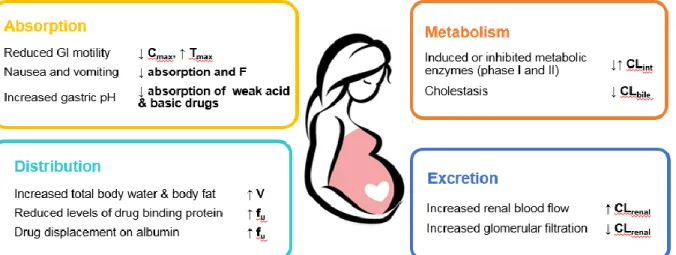
Pregnancy causes a series of physiological and biochemical changes that could alter drug

PK in terms of absorption, distribution, metabolism and excretion

10,11

. The elevated sex steroids,

mainly progesterone and estrogen, could reduce gastric emptying and intestine motility, leading

to delayed absorption

10

. They also alter (induce or inhibit) cytochrome P450 enzymes which

impact drug elimination

12

. Substrates of CYP3A (such as many NNRTIs and PIs) and UGT1A

(such as raltegravir (RAL) and dolutegravir (DTG)) are shown to have increased metabolism in

pregnancy

11,13,14

. On the other hand, etravirine (ETR), a substrate of CYP2C19, is shown to have

decreased clearance

15

. In addition, the biliary clearance of drugs may reduce owing to estrogen-

induced cholestasis

10

. During pregnancy, total body water expands by up to 8 liters and body fat

by approximately 4 kilograms

16

, which could lead to the increase in volume of distribution of both

hydrophilic and lipophilic drugs. The decreased levels of drug binding proteins, mainly acid-1-aicd

glycoprotein (AAG) and albumin, and drug replacement on albumin by steroid and placental

hormones could potentially increase unbound drug fraction

10,16

. In pregnancy, renal blood flow

(24)

4

can elevate by 60-80% and glomerular filtration rate can increase by 50%

16

, leading to raised clearance of renally-eliminated drugs, such as tenofovir (TFV) and emtricitabine (FTC). Figure 1 summarizes the key alterations and their associations with PK changes

10,11

.

Combined, these effects can result in different extents of alteration in total drug exposure of ARTs in pregnant women, which has led some to recommend increased dosing in pregnancy

17

. In this context, the unbound concentrations are pharmacologically relevant. As the levels of the main drug-binding proteins significantly decrease during pregnancy, thereby potentially leading to increased unbound drug fraction, the decrease in the unbound drug concentrations could not be simply projected by the decrease in total drug concentrations, and cannot inform the strategies for dose adjustment. To illustrate this, we simulated the unbound and total concentration versus time profiles, as conceptualized by Schoen et al

4

, for two hypothetical scenarios, non-pregnancy and pregnancy, where the intrinsic clearance and the unbound fraction were assumed to increase by ~20% during pregnancy, respectively (Figure 2). Simulation showed that the total trough concentration at steady state (C

trough,ss

) decreased by 34% in pregnancy, while unbound C

trough,ss

Figure 1. Physiological and Potential Pharmacokinetic Alterations during Pregnancy.

GI: gastrointestinal, C

max

: maximal concentration, T

max

: time to maximal concentration, F:

bioavailability, V: volume of distribution, f

u

: unbound fraction, CL

int

: intrinsic clearance,

CL

blie

: biliary clearance, CL

renal

: renal clearance

(25)

5

only by 20%. When the dose was raised by 50%, total C

trough,ss

in pregnancy could match those in non-pregnancy, however, the unbound C

trough,ss

was increased by 20%, which potentially lead to toxicity.

Figure 2. Hypothetical Alterations of Total and Unbound Drug Pharmacokinetics in Non- pregnancy and Pregnancy, Given Standard and Increased Dose.

The intrinsic clearance (CL

int

) and unbound fraction (f

u

) are assumed to increase by 20% during

pregnancy. Modified dose is 50% increased from standard dose. Black and colored lines

represent drug concentration profiles in non-pregnancy and pregnancy, respectively. Solid and

dotdash lines represent drug concentration profiles given standard and increased dose

respectively. The percent changes in steady state trough concentrations in pregnancy from non-

pregnancy are indicated.

(26)

6

Therefore, appropriate dose adjustment in pregnancy should be based on the measurement of unbound drug concentrations, especially those with high protein binding fraction.

Table 1 is a summary of the protein binding properties of the approved ARTs according to the

FDA drug labels

18

. Drugs undergoing extensive hepatic clearance and exhibiting high protein

binding, such as rilpivirine (RPV), darunavir (DRV), lopinavir (LPV), Dolutegravir (DTG) and

elvitegravir (EVG), might be especially relevant to be addressed. Unfortunately, unbound

concentrations are not routinely measured in the clinic or PK studies, therefore, dose adjustment

based on unbound drugs is uncommon. Beyond that, the small sample size of studies involving

pregnant women has limited the ability to explore dosing for patients with viral resistance, which

is always absent in the dosing recommendations. Maintaining sufficient drug efficacy for pregnant

women with different levels of viral resistance remains a challenge.

(27)

7

Table 1. Protein Binding Properties for Approved Antiretrovirals.

Drug Protein Binding Fraction

Primary Drug

Binding Protein(s) Elimination Pathway Non- Nucleoside/Nucleotide Reverse Transcriptase Inhibitor

Efavirenz >99.9% Albumin CYP2B6 and CYP3A4

Etravirine 99.9% Albumin, AAG CYP3A4, CYP2C9 and

CYP2C19

Nevirapine 60% Albumin CYP3A4 and CYP2B6

Rilpivirine >99% Albumin CYP3A4

Protease Inhibitor

Atazanavir 86% AAG, albumin CYP3A4

Darunavir 95% AAG CYP3A4

Fosamprenavir 90% AAG

Prodrug is hydrolyzed to active form, then

metabolized by CYP3A4 Lopinavir(/Ritonavir) 98-99% AAG, albumin CYP3A4 and CYP3A5 Integrase Inhibitor

Dolutegravir 98% Albumin, AAG CYP3A4 and UGT1A1

Elvitegravir(/Cobicistat) 97-99% Albumin, AAG CYP3A4 and UGTs

Raltegravir 83% Albumin UGT1A1

Nucleoside/Nucleotide Reverse Transcriptase Inhibitor

Abacavir 50% -

Alcohol dehydrogenase and glucuronyl

transferase

Emtricitabine <4% - Renal

Lamivudine <36% - Renal

Tenofovir <0.7% - Renal

Zidovudine <38% - UGT2B7 (primary)

Entry Inhibitor

Maraviroc >75% Albumin, AAG CYP3A4

(28)

8

Below is a review of the current U.S. Perinatal HIV Guidelines providing suggestions for dosing adjustment of ARTs in pregnancy

17

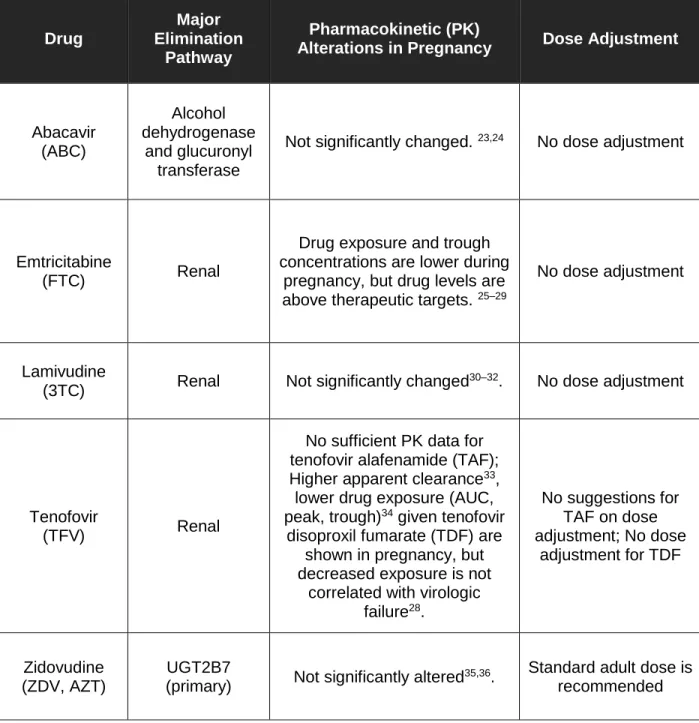
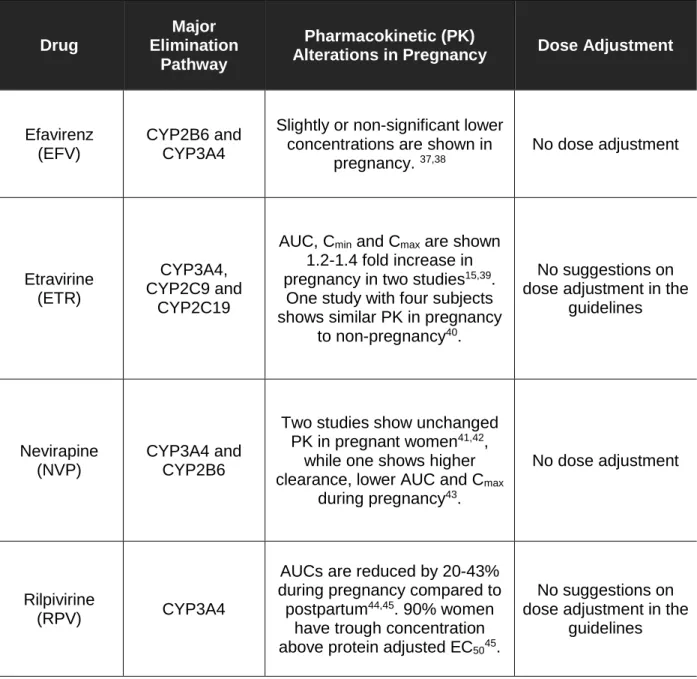
. To note, most of the suggestions are based on total drug PK, but not unbound concentrations. The guidelines suggest the standard dose for drugs demonstrating minimal changes in drug exposure, including abacavir (ABC), lamivudine (3TC), zidovudine (ZDV), efavirenz (EFV) and nevirapine (NPV), or pharmacological irrelevant changes in drug exposure, including tenofovir disoproxil fumarate (TDF), emtricitabine (FTC), raltegravir (RAL) and maraviroc (MVC). The guidelines do not have suggestions on dose adjustment for drugs with insufficient PK data, including tenofovir alafenamide (TAF), etravirine (ETR), rilpivirine (RPV), fosamprenavir (FPV), dolutegravir (DTG) and elvitergravir(/cobicistat) (EVG/COBI).

Adequate antiviral efficacy is demonstrated in the available studies of these drugs, regardless of decreased drug exposure during pregnancy (ETR has increased drug exposure), though more studied subjects are needed to validate these findings.

In the guidelines, dose increase in pregnancy has been suggested for two protease

inhibitors, ATV and LPV(/RTV). For ATV, the drug exposure could decrease by 25-34% and

trough concentration by 14-42% during pregnancy given standard dose of 300/100 mg of

ATV/RTV once daily

19

. Regardless, viral suppression was reported in most studies when the

standard dose was administered in pregnancy. Therefore, FDA-approved ATV package label

recommends the standard dose in pregnancy for both treatment-naive and treatment-experienced

women, and the increased dose (400/100 mg once daily) in patients receiving TFV or a

histamine

2

-receptor antagonist (known to reduce ATV exposure). Some experts, however,

recommended the increased dose in 2

nd

and 3

rd

trimester for all women

17

. The use LPV in

pregnancy is faced with a similar situation, where a 50% dose increase during the 2

nd

and 3

rd

trimesters was suggested by some experts, particularly for pregnant women with undocumented

or known viral resistance mutations. A systemic PK studies for LPV/RTV, the regimen which will

serve as a model regimen to study the necessity of dose increase in pregnancy, will be reviewed

in Chapter II with more detail. For RTV boosted darunavir (DRV/RTV), only 17-26% reduction in

(29)

9

DRV AUC and 8-16% decrease in DRV C

trough

were observed with standard twice daily dosing

(600/100 mg) in pregnancy

20–22

, supporting the use of standard dosing in pregnancy; however,

the increased twice daily dosing (800/100 mg) is not recommended since it does not lead to

increased DRV exposure

21

. Table 2-5 summarizes the pharmacokinetic studies of the approved

ARTs and US guidelines recommendations on dose adjustment in pregnancy.

(30)

10

Table 2. Pharmacokinetic Profiles and Dosing Recommendations for Nucleoside Reverse Transcriptase Inhibitors in Pregnancy.

Drug

Major Elimination

Pathway

Pharmacokinetic (PK)

Alterations in Pregnancy Dose Adjustment

Abacavir (ABC)

Alcohol dehydrogenase

and glucuronyl transferase

Not significantly changed.

23,24

No dose adjustment

Emtricitabine

(FTC) Renal

Drug exposure and trough concentrations are lower during

pregnancy, but drug levels are above therapeutic targets.

25–29

No dose adjustment

Lamivudine

(3TC) Renal Not significantly changed

30–32

. No dose adjustment

Tenofovir

(TFV) Renal

No sufficient PK data for tenofovir alafenamide (TAF);

Higher apparent clearance

33

, lower drug exposure (AUC, peak, trough)

34

given tenofovir

disoproxil fumarate (TDF) are shown in pregnancy, but decreased exposure is not

correlated with virologic failure

28

.

No suggestions for TAF on dose adjustment; No dose

adjustment for TDF

Zidovudine (ZDV, AZT)

UGT2B7

(primary) Not significantly altered

35,36

. Standard adult dose is

recommended

(31)

11

Table 3. Pharmacokinetic Profiles and Dosing Recommendations for Non-Nucleoside Reverse Transcriptase Inhibitors in Pregnancy.

Drug

Major Elimination

Pathway

Pharmacokinetic (PK)

Alterations in Pregnancy Dose Adjustment

Efavirenz (EFV)

CYP2B6 and CYP3A4

Slightly or non-significant lower concentrations are shown in

pregnancy.

37,38

No dose adjustment

Etravirine (ETR)

CYP3A4, CYP2C9 and

CYP2C19

AUC, C

min

and C

max

are shown 1.2-1.4 fold increase in pregnancy in two studies

15,39

.

One study with four subjects shows similar PK in pregnancy

to non-pregnancy

40

.

No suggestions on dose adjustment in the

guidelines

Nevirapine (NVP)

CYP3A4 and CYP2B6

Two studies show unchanged PK in pregnant women

41,42

,

while one shows higher clearance, lower AUC and C

max

during pregnancy

43

.

No dose adjustment

Rilpivirine

(RPV) CYP3A4

AUCs are reduced by 20-43%

during pregnancy compared to postpartum

44,45

. 90% women

have trough concentration above protein adjusted EC

5045

.

No suggestions on dose adjustment in the

guidelines

(32)

12

Table 4. Pharmacokinetic Profiles and Dosing Recommendations for Protease Inhibitors in Pregnancy.

Drug

Major Elimination

Pathway

Pharmacokinetic (PK)

Alterations in Pregnancy Dose Adjustment

Atazanavir

(ATV) CYP3A4

AUCs reduce during pregnancy compared to postpartum, but >97% women have sufficient

trough concentration with 300/100 mg ATV/RTV

19

.

Some experts recommend increased

dosing in 2

nd

and 3

rd

trimesters of all pregnant women.

Package insert recommends increased ATV only for ART-experienced

pregnant women in certain conditions

Darunavir

(DRV) CYP3A4

17%-33% decrease in plasma concentrations is shown in the 3

rd

trimester than postpartum receiving 600/100 mg twice daily

or 800/100mg once daily

20–22

. Protein binding results are inconclusive

20,21

. 800/100 mg twice daily does not increase

drug exposure

46

.

600/100 mg DRV/RTV is recommended, but increased twice-daily

dose is not recommended.

Fosamprenavir (FPV)

Prodrug is hydrolyzed to

active form, then metabolized by

CYP3A4

Limited data. One study shows slight decrease in AUC and trough concentration during pregnancy than postpartum given 700/100 mg FPV/RTV, but

the exposures are adequate for patients with susceptible virus

47

.

No suggestions on dose adjustment in the

guidelines

Lopinavir/

ritonavir (LPV/RTV)

CYP3A4 and CYP3A5

Substantial decreased total drug exposure is observed given 400/100 LPV/RTV

48

. Increased

dose 600/150mg can provide similar drug exposure compared

to non-pregnancy

49

. However, unbound concentrations are not

changed given a higher dose during pregnancy

50,51

.

Increased dose of 600/150 mg twice daily in 2

nd

and 3

rd

trimesters are suggested by some experts, particularly among pregnant women with viral resistance mutations.

500/125 mg is an alternative approach

for dose increase.

(33)

13

Table 5. Pharmacokinetic Profiles and Dosing Recommendations for Integrase Inhibitors and Entry Inhibitors in Pregnancy.

Drug

Major Elimination

Pathway

Pharmacokinetic (PK)

Alterations in Pregnancy Dose Adjustment

Integrase inhibitors

Dolutegravir (DTG)

CYP3A4 and UGT1A1

Limited data. Drug exposures are lower in pregnancy, but

effective

14,52,53

.

No suggestions on dose adjustment in

the guidelines

Elvitegravir/

cobicistat (EVG/c)

CYP3A4 and UGTs

Limited data. AUCs are similar in pregnancy to postpartum, but

C

min

is significantly lower and below the therapeutic target.

Cobicistat AUCs are reduced in pregnancy. Viral load is undetectable regardless of the

decreased PK

54

.

No suggestions on dose adjustment in

the guidelines

Raltegravir

(RAL) UGT1A1

Drug exposures are similar or lower in pregnancy than postpartum, but concentrations

provide adequate viral suppression

13,55,56

.

No dose adjustment

Entry inhibitors

Maraviroc

(MVC) CYP3A4

30% decrease in drug exposure and 15% in trough concentration are shown during

pregnancy; however, trough concentrations are above the

therapeutic target

57

.

No suggestions on dose adjustment in

the guidelines

(34)

14

Clinical Pharmacokinetic and Pharmacodynamic Considerations in Older HIV- Infected Patients

Aging is a trend in HIV infection as a result of increased life span of HIV-infected patients

receiving highly effective and well-tolerated ARTs. In the field of HIV treatment, the age of 50

years is a documented cutoff for the older population based on various immunologic and

physiologic considerations

58

. Worldwide, an estimated 3.6 million people aged 50 years and older

were living with HIV in 2013

59

. In 2014, people over 50 years older accounted for 45% of HIV-

infected patients in the US, with the age distribution concentrated between 50 and 65 years of

age (Figure 3a)

60

. This trend is predicted to continue (Figure 3b), with the portion of people aged

50 years and older will increase and reach over 70% in 2035

61

.

(35)

15 Figure 3. Aging in HIV Infection.

a) Statistics of people living with diagnosed HIV by age in the United

States from HIV Surveillance Report, 2015. Red bars represent data from

patients aged 50 years or over. b) Predicted age distribution of HIV-

infected patients. The prediction is performed based on the model for the

Netherlands using data from the ATHENA cohort. Red arrows highlight

the proportion of people aged 50 years or over, with the corresponding

percentages indicated.

(36)

16

The Effect of Aging in Antiretroviral Pharmacokinetics

Aging could alter ART drug disposition in multiple ways

4,62

. In terms of absorption, older patients may have delayed gastrointestinal motility and reduced splanchnic blood flow, which may delay absorption

4

. Potential downregulation of intestinal enzymes (e.g. CYP3A4) and efflux transporters (e.g. P-glycoprotein) could increase the bioavailability of their substrates, such as PIs, some NNRTIs and maraviroc

63

. Increased gastric pH may be relevant to the reduction in absorption of drugs that require acidic environment to dissolve, such as ATV

64

. As body water decreases with age, and body fat increases, lipophilic drugs may display increased volumes of distribution, while polar drugs (such as NRTIs) may show the opposite

4

. Also, drugs bound to albumin could exhibit an increased volume of distribution of total drug in the elderly as albumin level typically decreases with age, whereas drugs bound to AAG may display unchanged or decreased volume of distribution

62

.

Aging may decrease drug metabolism due to reduced liver mass and decreased hepatic blood flow in elderly. With aging, cytochrome P450 enzyme metabolism may decrease up to 25%

65,66

. The hepatic clearance of unbound drugs is determined by liver function, while the total drug apparent clearance is associated with both intrinsic clearance and protein binding, as denoted by CL/F ~ CL

int

x f

u

. For these drugs bound to albumin, the aging effects on their total drug exposure could be concealed by the opposing effects of decreased liver function and increased drug protein binding

4

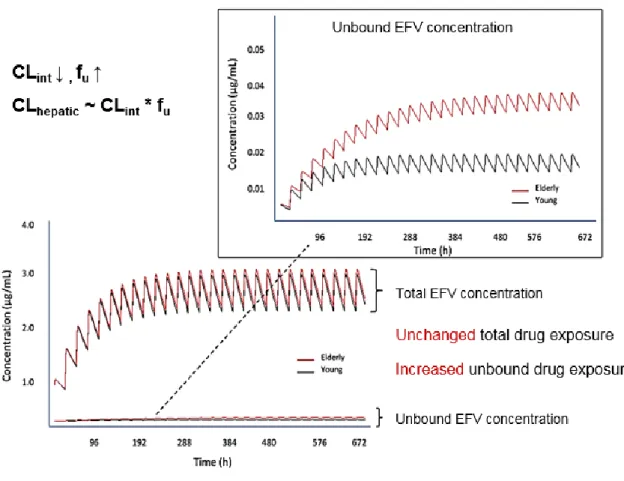
. Figure 4 shows the work done by Schoen et al

4

where total and unbound EFV concentrations were simulated in younger adults and older adults, assuming 50%

lower intrinsic clearance and 50% higher unbound fraction in the older group. The simulations

show that even though the total EFV exposures overlap in the two groups, the unbound drug

(37)

17

concentration is two-fold higher in the older group compared to the younger group. This could be one reason why the effect of age on clearance of total drug was not found in some studies.

In most patients, renal function declines predictably with age, with a reduction in glomerular filtration rate of about 1% per year

67

, which is particularly relevant to NRITs. Up to 20%

of patients receiving TFV may show subclinical decline in proximal tubule function

68

, and

CL int , f u

CL hepatic ~ CL int * f u

Increased unbound drug exposure Unchanged total drug exposure

Total EFV concentration

Unbound EFV concentration Unbound EFV concentration

The inset presents the unbound drug exposure in the scale accommodating the range of simulated unbound concentrations. Black and red lines represent concentrations in younger an older individuals, respectively. Intrinsic clearance in older individuals is assumed 50% of that in younger adults, but unbound fraction is also assumed to 50% higher in older adults. This figure is adapted from Schoen et al’s work (cited in the text).

Figure 4. Simulation of Total and Unbound Efavirenz Concentrations in Young and Older

Adults.

(38)

18

increased risk of TFV renal toxicity in older patients and therefore require dose adjustment. Table 6 summarizes the potential impacts of age-related changes on ART PK.

Table 6. Potential Influences of Age-related Alterations in Antiretroviral Pharmacokinetics.

Adapted from Schoen et al

4

. AAG: α-1-acid-glycoprotein, CL/F: apparent oral clearance, CL

int

: intrinsic clearance, CYP: cytochrome P450 enzymes, F: bioavailability, INSTI: integrase strand transfer inhibitor, K

a

: absorption constant, NNRTI: non-nucleoside reverse transcriptase inhibitor, NRTI: nucleoside reverse transcriptase inhibitor, P-gp: permeability glycoprotein, PI: protease inhibitor, PK: pharmacokinetic, Vd: volume of distribution

Age-related Alterations Impact on PK Potential Affected Drugs

Absorption

↑ Gastric pH

↓ Gastric emptying

↓ Splanchnic blood flow

↓ Intestinal CYP3A

↓ Intestinal P-gp

↓ K

a

↑ ↔ ↓F

Atazanavir Rilpivirine Other PIs Maraviroc

Distribution

↓ Albumin

↑ ↔ AAG

↑ Body fat composition

↓ Lean muscle

↓ Total body water

↑ Vd (lipophilic)

↓ Vd (hydrophilic)

↓ ↔ f

u

(AAG bound)

↑ f

u

(albumin bound)

NNRTI PIs Maraviroc

Metabolism

↓ Albumin

↑ ↔ AAG

↓ Liver mass

↓ Hepatic blood flow

↓ CL

int

↔ ↓ CL/F

PIs NNRTIs Maraviroc INSTI

Excretion ↓ Renal function

↓Transport processes ↓ CL/F NRTI

(39)

19

The absence of dosing recommendations for this population requires PK studies to guide appropriate treatment. There have been a few prospective studies investigating ART PK in older HIV-infected patients. Crawford et al compared the LPV total trough concentrations in treatment- naïve HIV-infected patients aged 45-79 years (n=40) versus 18-30 years (n=37). Higher LPV concentrations were seen in the older patients at week 24, and age was shown to negatively associate with LPV clearance in a population PK model

69

. Dumond et al conducted a pilot study involving twelve HIV-infected patients aged 55 years or older (mean age 59.7 ± 3.9 years) receiving ATV/RTV (n=6) or efavirenz (n=6) with TFV/FTC backbone

70

. Compared to historical data, modest changes (<30%) in AUC

0-24h

and C

max

in these drugs were observed in these elderly subjects, although these alterations were not statistically significant probably due to the small sample size. Avihingsanon et al investigated the effect of age and gender on ATV exposure in twenty-two HIV-infected subjects receiving ATV/RTV/TFV/FTC. The older group (≥42 years, n=11) had 34-55% higher ATV AUC

0-24

, C

max

and C

min

, compared to the younger group, and 27%

slower apparent clearance

71

. Although these relationships were not statistically significant, older age was found to be a significant predictor for higher ATV concentrations after adjusting for other covariates. Vera et al evaluated the PK profiles of RAL in nineteen HIV-infected patients over 60 years, but no significant difference in RAL apparent oral clearance in the studied population was observed compared to the younger HIV-infected populations

72

. Recently, Calze et al found higher mean plasma C

trough

of DRV and RTV in older patients (≥60 years) than in younger patients (≤40 years) with HIV infection, while RAL exposures were similar in the two groups

73

. In this study, DRV C

trough

was significantly higher by 18% in the 21 older patients than in the 25 younger patients.

In the above studies, the unbound concentrations were not measured, although most of

the studied drugs are moderately to highly protein bound. Also, the relevant PGx factors were not

investigated. In addition to chronological age, other factors reflecting the functional declines in

older patients were not assessed. HIV-infected patients can exhibit accelerated aging process

(40)

20

compared to the general population and may develop age-related symptoms discordant from chronological age

74

. Therefore, including additional functional and cellular surrogates may allow a more accurate assessment of the association between aging and ART PK. Frailty is a symptom of aging leading to increased morbidity and mortality, and is associated with elevated cytokine levels such as IL-6, CRP and TNF-α

75

. A phenotype characterizing frailty has been described in the HIV population, and often manifests itself 10 years earlier than in the uninfected population.

Previous studies have demonstrated the association between frailty and decreased drug clearance

76–78

. At the cellular level, tumor suppressor gene p16

INK4a

expression, which induces cell replicative senescence, can serve as a biomarker of cellular aging

79

. Its expression in peripheral blood mononuclear cells (PBMCs) is indicated to correlate with both chronologic age and inflammation in healthy subjects and HIV-suppressed patients

80,81

. Due to the discordant aging process in HIV-infected patients from their chronological age, additional studies are needed to systematically evaluate the effect of aging on unbound ART PK with considerations of these surrogates.

The Effects of Aging on Immunological System and Its Relevance to Immune Recovery on HIV Treatment

Although older HIV-infected adults typically demonstrate excellent virologic response, immunologic responses can be poorer compared to younger patients due to a decline in immune functoin

82

. An aging immune system can lead to more vulnerability to environmental insults and less efficiency in responding to vaccination in elderly. Below is an outline summarizing how aging impairs immune function

7,83–85

.

1) Innate immunity. Neutrophils and macrophages display impaired phagocytosis with

aging

86,87

. Decreased cytotoxicity and capacity to produce immunoregulatory cytokines are

observed in natural killer cells in older subjects

88,89

. These changes could damage the innate

(41)

21

immune function and render the elderly at higher risk of infection. Impaired antigen presentation function of dendritic cells with aging could hamper their efficiency to activate the adaptive immune response

90

.

2) T cells. Decreased naïve T-cells numbers resulting from thymus involution and T-cell oligoclonal expansions with aging could lead to reduced T-cell repertoire diversity

91

. Weakened T-cell receptor (TCR)-mediated signaling and impaired T-cell proliferative capacity can result in reduced capacity to generate effector T-cells

92,93

. Both alterations consequent to blunted T-cell responses to antigens. Expression of inhibitory receptors, e.g. PD-1, LAG-3 and TIM-3, is indicative of T-cell exhaustion and an insufficient response to infectious agents and vaccination

94,95

.

3) B cells. Older subjects have impaired B-cell activation, proliferation and reduced antibody production, which can cause insufficient humoral immunity

96,97

. The quality of antibodies in elderly is lower, as characterized by reduced diversity and efficacy

98,99

.

4) Cytokines. Aging is associated with chronic inflammation which results in the increase of pro-inflammatory cytokines, such as IL-6, TNF-α and C-reactive protein. The imbalance in cytokine profiles in elderly could lead to increase adverse health events

100

.

The CD4+ T-cell, or T helper cell, plays an important role in coordinating the activity in the

immune system, especially the adaptive immune system. By releasing T-cell cytokines, these

cells help activate cytotoxic T cells to kill infected target cells, B cells to produce antibodies and

macrophages to attack ingested microbes

101

. In HIV infection, the number of CD4+ T-cells

declines, leading to progressive deficiency of immune function and increased risk of opportunistic

infections

102

. Therefore, the recovery of CD4+ T-cells under HIV suppression with ART is one

essential clinical endpoint in HIV treatment

103

. Clinicians use CD4+ T-cell counts to monitor

disease progression and diagnose AIDS, defined as CD4+ T-cells under 200 cells/µL

102

. From

the therapeutic standpoint, clinicians use CD4+ T-cell counts to monitor therapeutic response and

guide HIV treatment. Although nowadays it’s recommended that ART should be initiated

(42)

22

regardless of CD4+ T-cell counts, clinicians use this measurement to guide initiating and discontinuing opportunistic infection prophylaxis

103

.

The CD4+ T-cell recovery can be described as a three-phase process, as shown in Figure 5

104

. In the first six months after ART initiation, the cell count increase is about 20-30 cells/µL per month, followed by the second phase up to 2 years with the rate of 5-10 cells/µL per month, resulting 200-250 cells/µL increase from the baseline. In the third phase, the rate may slow down to 2-10 cells/µL per month. By the end of the fourth year of treatment, the increase of cell count from the baseline is about 300-350 cells/µL.

Several mechanisms are proposed to account for the CD4+ T-cell recovery

104,105

. The first mechanism is de novo production of T cells from the thymus. Even though the thymus is thought to be most active in childhood and involute as one ages, in HIV infection condition, the thymus in Bright blue line represents the trajectory of CD4+ T-cell recovery over time on ART. Yellow arrows represent the increase of CD4+ T-cell count from baseline. CD4+ T-cell counts are presented on the Y axis. Years after ART initiation are presented on the X axis. The rate and extent of CD4+ T-cell increase are indicated in the corresponding positions. This figure is adapted from Corbeau et al’s review paper.

Figure 5. Average CD4+ T-Cell Recovery on Antiretroviral Therapy in HIV-Infected Patients.

(43)

23

adults could be re-activated and release new T cells in the blood stream

106

. The second mechanism is the homeostatic proliferation of the residual T-cells under the regulation of a series of cytokines, such as IL-7

107

. The third mechanism is the extension of CD4+ T-cell half-life which allows the cells to stay longer in the blood stream

108

.

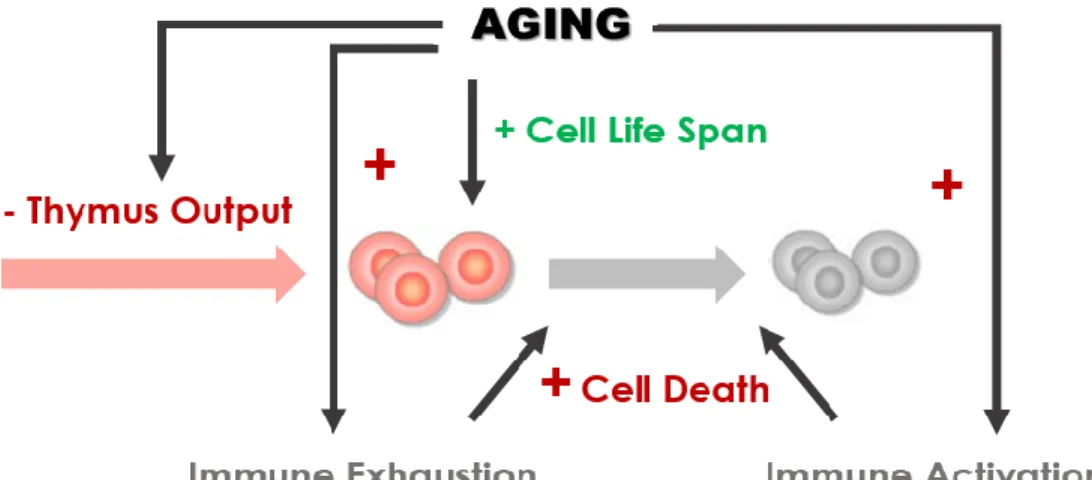
Aging could impact the above dynamic processes in a complex manner, as summarized in Figure 6. Aging is known to decrease thymus output; The biomarker of thymus output, the T- cell receptor excision circles (TRECs), is known to decrease with age

109

. As a potential off-setting effect, aging could extend the half-life of naïve T-cells, at least in a mouse model

108.

In addition, age can be associated with pathways known to interfere with T-cell recovery, such as immune activation and immune exhaustion. Immune activation increase with antigen exposure and age

110

. In HIV-infected patients, 5% increase in the level of its biomarkers, CD38+/HLA-DR+, has been related to 30 cells/μL decrease in the CD4+ T-cell gain

111,112

. Immune exhaustion is a state of T- cell dysfunction in many chronic infections

113

, and its occurrence with aging is believed to cause increased comorbidity in elderly

114

. Elevated expression of PD-1, one of the biomarkers of immune exhaustion, has been observed in HIV-infected patients with poor immune recovery

115

.

Red and green colors represent destructive and beneficial effects, respectively. Plus and minus signs indicate positive and negative associations between the pathway and aging, respectively.

Figure 6. The Hypothetical Effects of Aging on CD4+ T-Cell Turnover.

(44)

24

Although it seems intuitive that age is a risk factor of suboptimal CD4+ T-cell recovery, the findings in the literature are not consistent. Several prospective studies compared the CD4+ T- cell reconstitution in younger and older HIV-infected patients, but yield conflicting results. Viard et al studied a prospective cohort of 1956 HIV-infected patients initiating PI- or NNRTI-based treatment between 1996 and 2000

116

. Patients were divided into four groups based on age at ART initiation: <32.7 years, 32.7–37.1 years, 37.2–44.4 years, and >44.5 years. Within the ~31-month study period, younger patients had significantly greater median CD4+ T-cell increase (251, 246, 212, and 213 cells/µL, respectively) and maximum CD4+ T-cell counts (500, 448, 430, and 419 cells/µL, respectively) than the older patients. Grabar et al’s prospective cohort study based on 3015 HIV-infected patients from a French Hospital Database on HIV compared immunologic and clinical responses up to 30 months of ART in patients aged <50 years and ≥50 years

117

. Using a longitudinal model, age was found to be a significant predictor of the mean increase in CD4+ T- cell count during the first 6 months when adjusted for baseline HIV levels. In contrast, other studies did not identify age as an important factor to CD4+ T-cell recovery. A prospective case- control study conducted by Tumbarello et al compared CD4+ increase in 120 patients aged ≥50 years and 476 patients aged 20-35 years

118

. In the 6-year follow-up period, there was no statistically significant difference between younger and older patient groups in CD4+ T-cell count enhancement, regardless of the significantly lower mean CD4+ T-cell baseline in the older group.

Another prospective cohort study conducted by Cuzin et al followed up 639 HIV-infected patients aged ≥50 years and 540 aged <50 years for 51 months. No significant association between age and the immunologic response, defined as CD4+ T-cell count ≥350 cell/µL, after 6 months of treatment was found in this study

119

. A summary of these studied is shown in Table 7.

Controversy also exists in retrospective studies, as summarized in the appendix.

(45)

25

Table 7. Prospective Studies Comparing CD4+ T-Cell Recovery in Younger and Older HIV- infected Patients on Antiretroviral Treatment.

Patients from these studies received ARTs which were defined as a combination of two NRTIs plus either an NNRTI or PI. ART in Cuzin et al’s study also contained 3 NRTIs. NNRTI: non- nucleoside reverse transcriptase inhibitor, NRTI: nucleoside reverse transcriptase inhibitor, PI:

protease inhibitor, IQR: Inter-quantile range. Age distribution is presented as either median (IQR) or mean ± standard deviation.

Author Follow up Sample Size Findings Age Distribution

JP Viard et al, Journal of Infect Dis, 2001

116

31 months 1956 (1996 – Feb 2000)

Older age leads to smaller maximum CD4+

T-cell count and longer time to max

37.2 in median (IQR 32.7 – 44.5)

Grabar et al,

AIDS, 2004

117

30 months

2614 <50 years; 401

>=50 years

When adjusted for HIV baseline, age is

significant predictor of mean increase in CD4+

T-cell count during the first 6 months

<50 years:

35.7 (IQR 31.1-40.6);

>=50 years: 57.2 (IQR 52.6-60.3)

Tumbarello et al, BMC Infectious Disease

118

6 years

120 >=50 years; 476

<50 years

Nonsignificant difference in CD4+ T- cell increase between

>50 years vs. 20-35 years

>=50 years: 58 ± 5.1

<50 years:

31 ± 13.2 (20-35 years)

Cuzin et al, Clinical Infectious Disease

119

51 months in median

639 >=50 years;

540 <50 years (1996-2006)

Age is not associate with CD4+ T-cell count

>350 cells/µL after 6 months of treatment

<50 years:

35.9 (IQR 29.9-41.7)

>=50 years:

57.1 (IQR 53.2-60.9)

Figure

Figure 1. Physiological and Potential Pharmacokinetic Alterations during Pregnancy.
Figure 2. Hypothetical Alterations of Total and Unbound Drug Pharmacokinetics in Non- Non-pregnancy and Pregnancy, Given Standard and Increased Dose
Table 2. Pharmacokinetic Profiles and Dosing Recommendations for Nucleoside Reverse  Transcriptase Inhibitors in Pregnancy
Table  3.  Pharmacokinetic  Profiles  and  Dosing  Recommendations  for  Non-Nucleoside  Reverse Transcriptase Inhibitors in Pregnancy
+7

References

Related documents