R e s t r i c t i o n s on Tree A d j o i n i n g L a n g u a g e s
Giorgio Satta
Dip. di E l e t t r o n i c a e I n f o r m a t i c a Universit£ di P a d o v a
35131 P a d o v a , Italy satta@dei, unipd, it
William Schuler
C o m p u t e r a n d I n f o r m a t i o n Science D e p t . University of P e n n s y l v a n i a
P h i l a d e l p h i a , P A 19103 schuler@linc, cis. upenn, edu
A b s t r a c t
Several m e t h o d s are known for parsing lan- guages generated by Tree Adjoining Grammars (TAGs) in O ( n 6) worst case running time. In this paper we investigate which restrictions on TAGs and TAG derivations are needed in order to lower this O ( n 6) time complexity, without in- troducing large runtime constants, and without losing any of the generative power needed to capture the syntactic constructions in natural language that can be handled by unrestricted TAGs. In particular, we describe an algorithm for parsing a strict subclass of TAG in O(nS), and a t t e m p t to show that this subclass retains enough generative power to make it useful in the general case.
1 I n t r o d u c t i o n
Several m e t h o d s are known that can parse lan- guages generated by Tree Adjoining Grammars (TAGs) in worst case time O(n6), where n is the length of the input string (see (Schabes and Joshi, 1991) and references therein). Al- though asymptotically faster methods can be constructed, as discussed in (Rajasekaran and Yooseph, 1995), these methods are not of prac- tical interest, due to large hidden constants. More generally, in (Satta, 1994) it has been ar- gued that m e t h o d s for TAG parsing running in time asymptotically faster than O(n 6) are un- likely to have small hidden constants.
A careful inspection of the proof provided in (Satta, 1994) reveals that the source of the claimed computational complexity of TAG pars- ing resides in the fact that auxiliary trees can get adjunctions at (at least) two distinct nodes in their spine (the p a t h connecting the root and the foot nodes). T h e question then arises of whether the b o u n d of two is tight. More gen- erally, in this paper we investigate which re-
strictions on TAGs are needed in order to lower the O ( n 6) time complexity, still retaining the generative power that is needed to capture the syntactic constructions of natural language that unrestricted TAGs can handle. T h e contribu- tion of this paper is twofold:
• We define a strict subclass of TAG where adjunction of so-called wrapping trees at the spine is restricted to take place at no more than one distinct node. We show that in this case the parsing problem for TAG can be solved in worst case time O(n5). • We provide evidence that the proposed
subclass still captures the vast majority of TAG analyses that have been currently proposed for the syntax of English and of several other languages.
Several restrictions on the adjunction opera- tion for TAG have been proposed in the liter- ature (Schabes and Waters, 1993; Schabes and Waters, 1995) (Rogers, 1994). Differently from here, in all those works the main goal was one of characterizing, through the adjunction oper- ation, the set of trees that can be generated by a context-free g r a m m a r (CFG). For the sake of critical comparison, we discuss some c o m m o n syntactic constructions found in current natural language TAG analyses, that can be captured by our proposal but fall outside of the restric- tions mentioned above.
2 O v e r v i e w
We introduce here the subclass of TAG that we investigate in this paper, and briefly compare it with other proposals in the literature.
sets of initial and auxiliary trees, respectively, and S E N is the initial symbol. Trees in 112 A are also called elementary trees. T h e reader is referred to (Joshi, 1985) for the definitions of tree adjunction, tree substitution, and language derived by a TAG.
T h e s p i n e of an auxiliary tree is the (unique) p a t h t h a t connects the root and the foot node. An auxiliary tree fl is called a r i g h t (left) tree if (i) the leftmost (rightmost, resp.) leaf in ~ is the foot node; and (ii) the spine of fl contains only the root and the foot nodes. An auxiliary tree which is neither left nor right is called a w r a p p i n g tree. 1
T h e T A G r e s t r i c t i o n we propose is stated as followed:
.
.
At the spine of each wrapping tree, there is at most one node t h a t can host adjunction of a wrapping tree. This node is called a w r a p p i n g node.
At the spine of each left (right) tree, no wrapping tree can be adjoined and no ad- j u n c t i o n constraints on right (left, resp.)
auxiliary trees are found.
The above restriction does not in any way con- strain adjunction at nodes t h a t are not in the spine of an auxiliary tree. Similarly, there is no restriction on the adjunction of left or right trees at the spines of wrapping trees.
Our restriction is f u n d a m e n t a l l y different from those in (Schabes and Waters, 1993; Sch- abes and Waters, 1995) and (Rogers, 1994), in t h a t we allow wrapping auxiliary trees to nest inside each other an u n b o u n d e d n u m b e r of times, so long as t h e y only adjoin at one place in each others' spines. Rogers, in contrast, restricts the nesting of wrapping auxiliaries to a n u m b e r of times b o u n d e d by the size of the g r a m m a r , and Schabes and Waters forbid wrap- ping auxiliaries altogether, at any node in the g r a m m a r .
We now focus on the recognition problem, and informally discuss the computational ad- vantages t h a t arise in this task when a TAG obeys the above restriction. These ideas are formally developed in the next section. Most of
1The above names are also used in (Schabes and Wa- ters, 1995) for slightly different kinds of trees.
the tabular m e t h o d s for TAG recognition rep- resent subtrees of derived trees, rooted at some node N and having the same span within the input string, by means of items of the form
(N,i,p,q,j I.
In this notation i, j are positionsin the input spanned by N , and p, q are posi- tions spanned by the foot node, in case N be- longs to the spine, as we assume in the discus- sion below.
i' i p q j j '
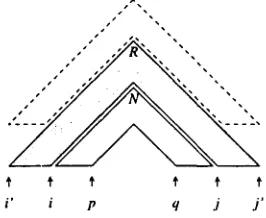
Figure 1: O ( n 6) wrapping adjunction step.
The most time expensive step in TAG recog- nition is the one t h a t deals with adjunction. W h e n we adjoin at N a derived auxiliary tree rooted at some node R, we have to combine to- gether two items (R, i', i, j, j'> and (N, i, p, q, j>. This is shown in Figure 1. This step involves six different indices t h a t could range over any position in the input, and thus has a time cost of
O(n~).
Let us now consider adjunction of wrapping trees, and leave aside left and right trees for the moment. Assume t h a t no adjunction has been performed in the portion of the spine below N. T h e n none of the trees adjoined below N will simultaneously affect the por- tions of the tree yield to the left and to the right of the foot node. In this case we can safely split the tree yield and represent item
(N,i,p,q, jl
by means of two items of a newkind,
(Nle~,i,P>
and(Wright,q,j>.
The adjunc- tion step can now be performed by means of two successive steps. The first step combines (R, i', i, j, j ' ) and(Ntelt, i, p>,
producing a new intermediate item I. T h e second step combines I and(Nright, q, Jl,
producing the desired result. In this way the time cost is reduced to O(n5). [image:2.612.353.486.202.311.2](b):
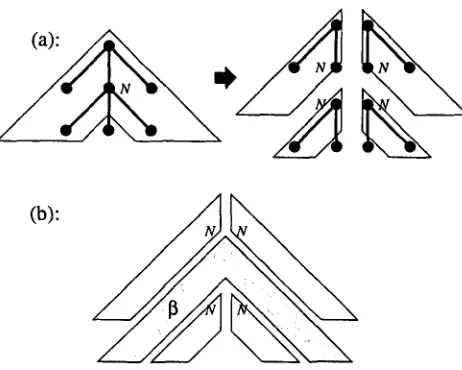
Figure 2: (.9(n 5) wrapping adjunction step.
cessing a TAG that obeys the restriction intro- duced above, we can always 'split' each wrap- ping tree into four parts at the wrapping node N, since N is the only site in the spine that can host adjunction (see Figure 2(a)). Adjunc- tion of a wrapping tree /3 at N can then be simulated by four steps, executed one after the other. Each step composes the item resulting from the application of the previous step with an item representing one of the four parts of the wrapping tree (see Figure 2(b)).
We now consider adjunction involving left and right trees, and show that a similar split- ting along the spine can be performed. Assume that 7 is a derived auxiliary tree, obtained by adjoining several left and right trees one at the spine of the other. Let x and y be the part of the yield of 7 to the left and right, respectively, of the foot node. From the definition of left and right trees, we have that the nodes in the spine of V have all the same nonterminal label. Also, from condition 2 in the above restriction we have that the left trees adjoined in 7 do not constrain in any way the right trees adjoined in 7. T h e n the following derivation can always be performed. We adjoin all the left trees, each one at the spine of the other, in such a way that the resulting tree 7te/t has yield x. Similarly, we ad- joining all the right trees, one at the spine of the other, in such a way that the yield of the result- ing tree
"Yright
is y. Finally, we adjoin"[right
at the root of 71e/t, obtaining a derived tree having the same yield as 7.From the above observations it directly fol-
lows that we can always recognize the yield of 7 by independently recognizing 71~/t and 7right. Most important, 71e/t and 7ri~ht can be represented by means of items
(Rte/t,i,p)
and(Rright,q,j).
As before, the adjunction of tree V at some subtree represented by an item I can be recognized by means of two successive steps, one combining I with(Rle~, i,p)
at its left, re- sulting in an intermediate item I t, and the sec- ond combining I ~ with(Rright, q, j)
at its right, obtaining the desired result.3 R e c o g n i t i o n
This section presents the main result of the pa- per. We provide an algorithm for the recogni- tion of languages generated by the subclass of TAGs introduced in the previous section, and show that the worst case running time is (.9(n5), where n is the length of the input string. To simplify the presentation, we assume the fol- lowing conditions t h r o u g h o u t this section: first, that elementary trees are binary (no more t h a n two children at each node) and no leaf node is labeled by e; and second, that there is always a wrapping node in each wrapping tree, and it differs from the foot and the root node. This is without any loss of generality.
3.1 G r a m m a r transformation
Let
G = (N,
E, I, A) be a TAG obeying the re- strictions of Section 2. We first transform A into a new set of auxiliary trees A ~ that will be pro- cessed by our method. The root and foot nodes of a tree/3 are denoted R E and FE, respectively. The wrapping node (as defined in Section 2) of ~3 is denoted W E. [image:3.612.74.305.80.265.2]Each tree in A' inherits at its nodes t h e ad- junction constraints specified in G. In addition, we impose the following constraints:
• only trees j3L can be adjoined at the spine of trees
~LD, I~LU;
• only trees fir can be adjoined at the spine of trees
~RD, ~RU;
• no adjunction can be performed at nodes
F~Lu,FZRu.
3.2 T h e a l g o r i t h m
The algorithm below is a tabular method that works bottom up on derivation trees. Follow- ing (Shieber et al., 1995), we specify the algo- rithm using inference rules. (The specification has been optimized for presentation simplicity, not for computational efficiency.)
Symbols N, P, Q denote nodes of trees in A' (including foot and root), c~ denotes initial trees and j3 denotes auxiliary trees. Symbol
label(N)
is the label of N and
children(N)
is a string denoting all children of N from left to right(children(N)
is undefined if N is a leaf). We write c~ ESbst(N)
if c~ can be substituted at N. We write f~ EAdj(N)
if ~ can be adjoined at N, and nil EAdj(N)
if adjunction at N is optional.We use two kind of items:
• Item
<NX,i,j), X E { B , M , T } ,
denotes a subtree rooted at N and spanning the por- tion of the input from i to j. Note that two input positions are sufficient, since trees in A ~ always have their foot node at the posi- tion of the leftmost or rightmost leaf. We have X -- B if N has not yet been pro- cessed for adjunction, X = M if N has been processed only for adjunction of trees f~L, and X = T if N has already been pro- cessed for adjunction.• Item
( ~ , i , p , q , j )
denotes a wrapping tree (in A) with RZ spanning the portion of the input from i to j and with F~ spanning the portion of the input from p to q. In place of ~ we might use symbols [f~,LD],[~, RD]
and [f~,RU]
to denote the tempo- rary results of recognizing the adjunction of some wrapping tree at W~.A l g o r i t h m . Let G be a TAG with the re- strictions of Section 2, and let A' be the asso-
ciated set of auxiliary trees defined as in sec- tion 3.1. Let
aza2...an, n >
1, be an input string. The algorithm accepts the input iff some item (R T, 0, n) can be inferred for some c~ E I. S t e p 1 This step recognizes subtrees with root N from subtrees with roots inchildren(N).
(g'l ,i - 1, i) ' label(N) = ai;
(F~,i,i) ' • e A',
0 < i < n ;(RT,i,jl
(N~.,i,j) , ~ E Sbst(g);
(pT,i, k) {QT, k,j)
(N~,i,j)
, children(N) = PQ;
(pT, i, j)
children(N) = P.
(N ~, i, j) '
S t e p 2 This step recognizes the adjunction of wrapping trees at wrapping nodes. We rec- ognize the tree hosting adjunction by compos- ing its four 'chunks', represented by auxiliary trees
~LD, ~RD, ~RU
and~LU
in X , around the wrapped tree.{ R ~ , k , p ) (~,i,k,q,j)
([~,iD],i,p,q,j)
,~' E Adj(Wz),p < q;
<R~sD,q,k ) ([~,LD],i,p,k,j)
<[~,Rn],i,p,q,j)
' p < q;
R T
(O~r~,k,j) <[~,RD],i,p,q,k)
([~,RU],i,p,q,j)
(R~L,,i,k) ([~,RU],k,p,q,j).
(~,i,p,q,j)
( R ~ , , i , p ) ( R ~ , , q , j )
nil EAdj(W~),p < q.
([~,RD],i,p,q,j}
'
S t e p 3 This step recognizes all remaining cases of adjunction.
(R~a,i,k) < N B , k , j ) , ~ E A d j ( N ) , X E { M , T } ;
(N~,i,j)
(N x, i, k) (R~,, k, j)
(NT,i,j)
, ~ E A d j ( N ) , X E { B , M } ;
(NB'i'J)
nil EAdj(N);
(N~ , i , j ) ,
(NB,p,q) (~,i,p,q,j)
(N.~,i,j)
, ~ E Adj(N).
inference rule which is proportional to n d , and
each evaluation can be carried out in an a m o u n t of time i n d e p e n d e n t of n. It is easy to establish t h a t Step 1 can be executed in time O ( n 3) a n d t h a t Step 3 can be executed in time O(n4). Ad- j u n c t i o n at wrapping nodes performed at Step 2 is the most expensive operation, requiring an a m o u n t of time O(n5). This is also the time complexity of our algorithm.
4 L i n g u i s t i c R e l e v a n c e
In this section we will a t t e m p t to show t h a t the restricted formalism presented in Section 2 re- tains enough generative power to make it useful in the general case.
4.1 A t h e m a t i c a n d C o m p l e m e n t T r e e s
We begin by introducing the distinction be- tween a t h e m a t i c auxiliary trees and comple- ment auxiliary trees (Kroch, 1989), which are meant to exhaustively characterize the auxil- iary trees used in any n a t u r a l language TAG g r a m m a r . 2 An a t h e m a t i c auxiliary tree does not subcategorize for or assign a t h e m a t i c role to its foot node, so the head of the foot node be- comes the head of the phrase at the root. T h e s t r u c t u r e of an a t h e m a t i c auxiliary tree may thus be described as:
X n _ + X n . . . (ymax) . . . , (1)
where X n is any projection of category X, y,nax is the m a x i m a l projection of Y, a n d the order of the constituents is variable. 3 A c o m p l e m e n t auxiliary tree, on the other hand, introduces a lexical head t h a t subcategorizes for the tree's foot node a n d assigns it a t h e m a t i c role. T h e s t r u c t u r e of a complement auxiliary tree may be • described as:
X r n a x _ + . . . y O . . . X r n a ~ . . . , (2)
where X r n a ~ is the m a x i m a l projection Of some
category X , a n d y 0 is the lexical projection
2The same linguistic distinction is used in the con- ception of 'modifier' and 'predicative' trees (Schabes and Shieber, 1994), but Schabes and Shieber give the trees special properties in the calculation of derivation struc- tures, which we do not.
3The CFG-like notation is taken directly from (Kroch, 1989), where it is used to specify labels at the root and frontier nodes of a tree without placing constraints on the internal structure.
of some category Y, whose m a x i m a l projection dominates X m a x .
From this we make the following observations:
1. Because it does not assign a t h e t a role to its foot node, an a t h e m a t i c auxiliary tree may adjoin at any projection of a category, which we take to designate any a d j u n c t i o n site in a host elementary tree.
2. Because it does assign a t h e t a role to its foot node, a complement auxiliary tree m a y only adjoin at a certain 'complement' ad- j u n c t i o n site in a host e l e m e n t a r y tree, which m u s t at least be a m a x i m a l projec- tion of a lexical category.
3. T h e foot n o d e of an athematic auxiliary tree is d o m i n a t e d only by the root, with no intervening nodes, so it falls outside of the m a x i m a l projection of the head.
4. T h e foot n o d e of a c o m p l e m e n t auxiliary tree is d o m i n a t e d by the m a x i m a l projec- tion of the head, which m a y also d o m i n a t e other a r g u m e n t s o n either side of the foot.
T o this w e n o w a d d the assumption that each auxiliary tree can have only one c o m p l e m e n t ad- junction site projecting f r o m y0, w h e r e y 0 is the lexical category that projects yrnax. This is justified in order to prevent projections of y 0 from receiving m o r e than one theta role f r o m c o m p l e m e n t adjuncts, w h i c h w o u l d violate the underlying theta criterion in G o v e r n m e n t a n d Binding T h e o r y ( C h o m s k y , 1981).We also as- s u m e that an auxiliary tree can not have c o m - plement adjunction sites on its spine project- ing from lexical heads other than y 0 in or- der to preserve the minimality of elementary trees (Kroch, 1989; Frank, 1992). T h u s there can be no m o r e than one c o m p l e m e n t adjunc- tion site on the spine of any c o m p l e m e n t auxil- iary tree, a n d no c o m p l e m e n t adjunction site o n the spine of any athematic auxiliary tree, since the foot n o d e of an athematic tree lies outside of the m a x i m a l projection of the head. 4
Based on observations 3 and 4, we can fur- ther specify that only complement trees may wrap, because the foot node of an athematic tree lies outside of the maximal projection of the head, below which all of its subcategories must attach. 5 In this manner, we can insure t h a t only one wrapping tree (the complement auxiliary) can adjoin into t h e spine of a wrapping (com- plement) auxiliary, and only athematic auxil- iaries (which must be left/right trees) can ad- join elsewhere, fulfilling our TAG restriction in
Section 2.
4.2 P o s s i b l e E x t e n s i o n s
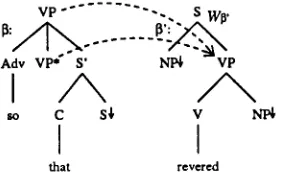
We may want to weaken our definition to in- clude wrapping athematic auxiliaries, in order to account for modifiers with raised heads or complements as in Figure 3: "They so revered him t h a t they built a statue in his honor." This can be done within the above algorithm as long as the athematic trees do not wrap produc- tively (that is as long as they cannot be ad- joined one at the spine of the other) by splitting the athematic auxiliary tree down the spine and treating the two fragments as tree-local multi- components, which can be simulated with non- recursive features (Hockey and Srinivas, 1993).
V P "" . . . "-. S WB'
Adv V P * S' NI~ V P
so C S~ v NI~
I
I
that revered
Figure 3: Wrapping athematic tree. Since the added features are non-recursive, this extension would not alter the (9(n 5) result re- ported in Section 3.
4.3 C o m p a r i s o n o f C o v e r a g e
In contrast to the formalisms of Schabes and Waters (Schabes and Waters, 1993; Schabes and Waters, 1995), our restriction allows wrapping complement auxiliaries as in Figure 4 (Schabes and Waters, 1995). Although it is difficult to find examples in English which are excluded by
c a u s e it p r o v i d e s a r e s t r i c t i o n on e l e m e n t a r y trees, r a t h e r t h a n on d e r i v a t i o n s .
5 E x c e p t in t h e case o f raising, d i s c u s s e d below.
Rogers' regular form restriction (Rogers, 1994), we can cite verb-raised complement auxiliary trees in Dutch as in Figure 5 (Kroch and San- torini, 1991). Trees with this structure may adjoin into each others' internal spine nodes an unbounded number of times, in violation of Rogers' definition of regular form adjunction, b u t within our criteria of wrapping adjunction at only one node on the spine.
tcr~ vP
V S* P P
discern P NI~
I
fromFigure 4: Wrapping complement tree.
13: S
NI~ VP laten
S* V
I
EFigure 5: Verb-raising tree in Dutch.
5 C o n c l u d i n g r e m a r k s
[image:6.612.371.470.198.321.2] [image:6.612.383.457.370.490.2] [image:6.612.110.252.421.511.2]It is not difficult to see t h a t the running time of our m e t h o d is proportional to I GI.
Our m e t h o d works as a recognizer. As for m a n y o t h e r t a b u l a r m e t h o d s for TAG recogni- tion, we can devise simple procedures in order to obtain a derived tree associated with an ac- cepted string. To this end, we must be able to 'interleave' adjunctions of left and right trees, t h a t are always kept separate by our recognizer. T h e average case time complexity of our m e t h o d should surpass its worst case time per- formance, as is the case for m a n y other tabular algorithms for TAG recognition. In a more ap- plicative perspective, then, the question arises of w h e t h e r there is any gain in using an algo- r i t h m t h a t is unable to recognize more t h a n one wrapping adjunction at each spine, as opposed to using an unrestricted TAG algorithm. As we have tried to argue in Section 4, it seems t h a t s t a n d a r d syntactic constructions do not ex- ploit multiple wrapping adjunctions at a single spine. Nevertheless, the local ambiguity of nat- ural language, as well as cases of ill-formed in- put, could always p r o d u c e cases in which such expensive analyses are a t t e m p t e d by an unre- stricted algorithm. In this perspective, then, we conjecture t h a t having the single-wrapping- adjunction restriction e m b e d d e d into the rec- ognizer would improve processing efficiency in the average case. Of course, more experimental work would be needed in order to evaluate such a conjecture, which we leave for future work.
A c k n o w l e d g m e n t s
P a r t of this research was done while the first a u t h o r was visiting the Institute for Research in Cognitive Science, University of Pennsylva- nia. T h e first a u t h o r was supported by NSF grant SBR8920230. T h e second a u t h o r was sup- p o r t e d by U.S. A r m y Research Office Contract No. DAAH04-94G-0426. T h e authors would like to t h a n k Christy Doran, Aravind Joshi, A n t h o n y Kroch, M a r k - J a n Nederhof, M a r t a Palmer, J a m e s Rogers and Anoop Sarkar for their help in this research.
R e f e r e n c e s
Noam Chomsky. 1981. Lectures on government and binding. Foris, Dordercht.
Robert Frank. 1992. Syntactic locality and tree ad- joining grammar: grammatical acquisition and
processing perspectives. Ph.D. thesis, Computer Science Department, University of Pennsylvania. Beth Ann Hockey and Srinivas Bangalore. 1993.
Feature-based TAG in place of multi-component adjunction: computational implications. In Pro- ceedings of the Natural Language Processing Pa- cific Rim Symposium (NLPRS), Fukuoka, Japan. Aravind K. Joshi. 1985. How much context sensitiv- ity is necessary for characterizing structural de- scriptions: Tree adjoining grammars. In L. Kart- tunen D. Dowty and A. Zwicky, editors, Natural language parsing: Psychological, computational and theoretical perspectives, pages 206-250. Cam- bridge University Press, Cambridge, U.K.
Anthony S. Kroch and Beatrice Santorini. 1991. The derived constituent structure of west ger- manic verb-raising construction. In Robert Frei- din, editor, Principles and Parameters in Com- parative Grammar, pages 269-338. MIT Press. Anthony S. Kroch. 1989. Asymmetries in long dis-
tance extraction in a TAG grammar. In M. Baltin and A. Kroch, editors, Alternative Conceptions of Phrase Structure, pages 66-98. University of Chicago Press.
Sanguthevar Rajasekaran and Shibu Yooseph. 1995. TAL recognition in O(M(n2)) time. In Proceed- ings of the 33rd Annual Meeting of the Associa- tion [or Computational Linguistics (ACL '95).
James Rogers. 1994. Capturing CFLs with tree adjoining grammars. In Proceedings of the 32nd Annual Meeting of the Association for Computa- tional Linguistics (ACL '94).
Giorgio Satta. 1994. Tree adjoining grammar pars- ing and boolean matrix multiplication. Computa-
tional Linguistics, 20(2):173-192.
Yves Schabes and Aravind K. Joshi. 1991. Pars- ing with lexicalized tree adjoining grammar. In M. Tomita, editor, Current Issues in Parsing
Technologies. Kluwer Academic Publishers. Yves Schabes and Stuart M. Shieber. 1994. An al-
ternative conception of tree-adjoining derivation.
Computational Linguistics, 20(1):91-124.
Yves Schabes and Richard C. Waters. 1993. Lexi- calized context-free grammars. In Proceedings of the 31st Annual Meeting of the Association for Computational Linguistics (A CL '93).
Yves Schabes and Richard C. Waters. 1995. Tree insertion grammar: A cubic-time parsable formal- ism that lexicalizes context-free grammar without changing the trees produced. Computational Lin- guistics, 21(4):479-515.