35
©IJRASET: All Rights are Reserved
A Study on Management of Solid Waste using
Plasma Arc Technology
Saurabh Sinha1, Dr. Subrat Roy2
1
Department of Civil Engineering, National Institute of Technical Teachers’ Training and Research. 2
Department of Civil Engineering, Professor, National Institute of Technical Teachers’ Training and Research.
Abstract: The management of solid waste is becoming one of the major issues for any developing country like India. Large quantity of solid waste is generated every day and there is no proper system exists to manage these wastes. Most of the generated wastes find their way into land & water bodies without any proper treatment, causing severe air and water pollution. The unscientific disposal of much of the solid wastes has serious implication on public health & environment. At present, waste management is done by various thermal processes like incineration, pyrolysis, biochemical conversion etc. but these processes are not environment friendly, causing health hazards and efficiency of waste reduction is also low. The treatment of solid waste using plasma arc technology is one of the innovative methods to overcome the deficiency in the present treatment methodology. Many developed countries such as France, japan etc. are already using this technology for treatment of solid waste. Research program for the investigation of fundamental study of plasma arc for its different application are being carried out all around the globe (U.S., Japan, Canada, Russia, France, Switzerland.). In view of the Potential benefits of plasma arc technology in solid waste management, a detailed study has been carried out on its theoretical as well as application aspects in the present thesis work. From the study, it is concluded that Plasma arc technology is useful in many ways and some of the benefits includes less pollution means environment friendly process, energy can be generated from waste, vitrified material as a byproduct of this technology can be used in road construction projects. This technique is also used in soil remediation process. Due to lack of awareness of the technology and also high initial cost, this technology is yet to be used in India for treatment of Solid Wastes. However, due to globalization & also due to various technology transfer program among the countries there are every possibilities of using this technology in India also in the near future.
Keywords: Plasma, Plasma Arc, Plasma Torch, Solid Waste, Vitrified Materials, Solid Waste Management.
I. INTRODUCTION
A. General
According to Central Pollution Control Board and Human Resource (HR) reports (2012),in India, about 30 million tons of municipal solid wastes and about 4400 million cubic meters of liquid waste are generated annually. The municipal solid waste generation ranges from 0.25 to 0.75 kg/day per capita with an average of 0.45 kg/day per capita. In addition, large quantities of solid and liquid wastes are generated by the industry. Most of the generated wastes find their way into land and water bodies without proper treatment, causing severe water pollution. These wastes also emit greenhouse gases like methane and carbon dioxide, causing air pollution. One of the major environmental hazards confronting Indian cities is Municipal Solid Waste Management (MSW). The unscientific disposal of much of the Municipal Solid Waste has serious implications on public health and the environment. As per reports, waste generation will exceed 260 million tons per year by 2047. This waste is a potential health hazard to the public, flora and fauna in India. To maintain environmental safety and also to sustain public health, safe disposal of MSW should be our top priority. At present waste management is done by various thermal processes like incineration, pyrolysis, biochemical conversion etc. but these processes are not environment friendly ,causing health hazards & also efficiency of waste reduction is also low. To overcome these problems, Plasma Arc Technology is one of the innovative technologies for waste management. It is environment friendly process causing less pollution & process is 90 % effective. Keeping in mind, the various advantages in treatment of Solid Waste using Plasma Arc Technology, the objective of the present thesis work is framed out on detailed below:
B. Objective
36
©IJRASET: All Rights are Reserved
II. LITERATURE REVIEW
A. Introduction
The present thesis work deals with the detailed study on the management of solid waste using plasma arc technology. In Plasma arc technology plasma arc operates on principles similar to arc welding machine, where an electrical arc is struck between two electrodes. The high energy arc creates high temperatures ranging from 3000 degrees to 7000 degrees Celsius which is used in the treatment of solid wastes. Literature related to the management of solid wastes using plasma arc technology has been reviewed in detail and some of the reviewed literatures are presented in this .
B. Literature Review
Many researchers are contributed in development of plasma arc technology for the treatment of solid waste. Various literatures related to this topic have been reviewed & some of the literatures are presented in the proceeding paragraph.
Abubakar M. Ali1 et al (2016) Illustrated, that Warm plasma treatment strategy is generally utilized as a part of the treatment of local and mechanical waste. The strategy has the capability of changing over natural bit of waste into manufactured gas that has vitality esteem, while the inorganic part is solidified into a vitreous slag which is steady to filtering of unsafe overwhelming metals. They discuss about use of the treatment strategy to mechanical and wastewater muck. warm plasma innovation arrangement, attributes and correlation of various sorts of plasma, is exhibited into warm plasma treatment forms, hardware particulars and process factors for various sorts of oozes (electroplating slop, storm water lime, and tannery sewage ooze, a blend of fly fiery debris and wastewater lime, paper slop and ship oil muck). In the light of this writing view, warm plasma innovation is considered as exceptionally appealing methods for treating modern and wastewater ooze. Manufactured gas acquired from the treatment forms meet the stringent ecological controls and furthermore can fills in as wellspring of vitality for steam turbine and electric vitality ages. Substantial metals in slop are caught in a strong network of slag with none or unimportant draining capacities. The slag can be utilized for building and street development purposes.
Ankita A etal (2016) discussed the basic concept of plasma gasification. They illustrated that Plasma can be made by passing gas between objects with substantial contrasts in electric potential. For ex, in lightning, warming gases to high temperatures, on account of curve welding or graphite cathode lights. High force vitality created by the light ids capable to break the metropolitan strong waste into part components .The response produces syngas furthermore, by items comprising glass substances which can be utilized as crude materials for development purposes and reusable metals. Syngas is fundamentally made out of hydrogen and carbon-monoxide They laid emphasis on producing environment free waste.
Khaleel Abushgair etal (2016) discussed significance of overseeing expanding measures of strong waste produced in the north of Jordan by leading a waste to vitality methodology in Al-Ekaider landfill, specifying the most creative technique for executing it, its favorable circumstances, drawbacks and necessities. It was discovered that Plasma Arc Gasification is the best and the most naturally predominant technique for doing as such, though an engineered gas prevalently involving hydrogen and monoxide could be created for different utilizations, for example, making vitality, fluid fuel combination or running energy units (later on) with the generation of financially important side-effects like sulfur and development totals. Different utilizations will be shown inside this paper. An expected appraised energy of 75 MW could be extricated by such a technique on the off chance that the vitality decision would be chosen downstream.
Ankita parmar et al (2014) have illustrated how the usage of plasma gasification in waste is one of the novel applications addressing today’s require for squander transfer. In this application, plasma curve, gasifies the carbon based piece of waste materials, for example, metropolitan strong waste, muck, rural waste, and so on and creating a manufactured gas which can be utilized to deliver vitality through motor generators, gas turbines and boilers. They have also showed the use of non-carbon based piece of the waste materials which can be vitrified into glass and reusable metal. The examination shows that gasification is an actually practical alternative for the strong waste transformation, including remaining waste from discrete gathering of city strong waste. It can meet existing emanation constrains and can remarkably affect decrease of landfill transfer alternative. Gasification could now be proposed as a practical elective answer for squander treatment with vitality recuperation. The achievement of a propelled warm innovation is controlled by its specialized unwavering quality, natural manageability and financial convenience.
37
©IJRASET: All Rights are Reserved
plasma process ensures gasification of the carbon-containing materials in the misfortune to convey blend gas (syngas) made fundamentally out of carbon monoxide and hydrogen, which is used to make essentialness through reacting engine generators - gas turbines and steam boilers in facilitated plasma gasification join circle (IPGCC). Inorganic parts get changed over to cleaned slag alright for use as an improvement adds up to. The twofold points of interest of waste treatment and essentialness age are recognized from this plasma method. The outcome is that procedure is environment amicable because of low generation of dioxins, furnaces and so further age to address the issues of creating economies and certification safe condition.
III. PLASMA ARC TECHNOLOGY-AN OVERVIEW
A. Introduction
The literature reviewed on the applications of plasma arc technology has been presented in the previous chapter in chapter 2. In this chapter, a detailed discussion on the topic plasma arc technology is presented with the suitable examples. The benefits of plasma arc technology inducing its present status & barriers for adaptation of this technology are also presented in this chapter.
B. What is Plasma- A Definition
Plasma is the fourth condition of matter (the other three states being strong, fluid and gas). It is an ionized gas that exists in nature, for instance, amid lightning. A significant part of the universe exits in plasma state. The sun, stars and interstellar issue are plasma appearances. The gas in the upper parts of the ionosphere (say, over 400km height) is totally ionized. On cosmological scales, plasma is totally commanding the universe, with safe evaluations giving that no less than 99% of all issue is in the plasma state. Plasmas are electrically conductive. These comprise of uninhibitedly moving charged particles, i.e., electrons and particles alongside neutrals – all at various temperatures. Plasma densities change broadly from 103 to 1033 charged particles/m3 while the comparing temperatures fluctuate from 102 Kelvin to 108 Kelvin. Plasma (generally combinations of oxygen and nitrogen) is produced when a high voltage direct current is applied across separated electrodes and the voltage raised until the gas becomes conducting (‘ionizes’) and arcs between the electrodes. In the case of lightning, this converts the applied electrical energy to high temperature heat (>10,000 oC) local to the electrodes and the path between them.
C. Plasma Torch
Plasma for the system is produced by using a device called plasma torch or plasmatrons. The plasma torch can produce extremely high temperatures that cannot be otherwise created except through nuclear fusion/fission. By passing a DC current between the cathode and the anode of the plasma arc torch and simultaneously passing of air in the annular space of the torch, an extremely high-temperature environment is created ranging in high-temperature from 5,000 oC to 10,000 oC .A plasma torch (otherwise called a plasma bend, plasma firearm, or plasma shaper, plasmatron) is a gadget for producing stream of plasma.
The plasma arc can be utilized for applications including plasma cutting, plasma circular segment welding, plasma showering, and plasma gasification for squander transfer. Out of the above resources, plasma arc produced using DC light are most commonly used. It has less flicker & noise compared to the plasma arc producing using AC. A brief discussion on the plasma arc producing using DC , may also be called as plasma DC torches is given in the preceding paragraph.
38
©IJRASET: All Rights are Reserved
[image:4.612.106.545.182.335.2]hot water would itself be able to be used. Besides, exchanged DC torch can be utilized as a part of a twin-torch setup, where one is cathodic and the other anodic, which has the prior advantage of a standard exchanged single torch , however permits their utilization with non-conductive materials, as there is no requirement for it to form the other terminal. In any case, these sorts of setups are uncommon as most normal non-conductive materials don't require the exact cutting capacity of a plasma torch. Moreover, the release created by this specific plasma source design is characterized by an intricate shape and fluid dynamics that requires a description keeping in mind the end goal to be anticipated, making performance unsteady. The cathodes of non-exchanged torches are bigger, in light of the fact that they endure more wear by the plasma arc. A DC Torch is shown in Figure 3.1
Figure 3.1: Plasma DC Torch
D. Plasma Arc Torch Technology
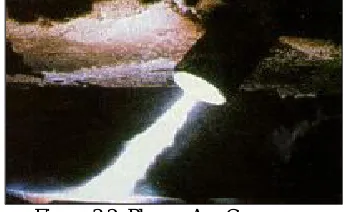
Plasma is a gas that has been ionized by the electric circular segment of a plasma burn and can thusly react to electrical and magnetic fields. Plasma technology can make plasma utilizing any sort of gas (oxygen, nitrogen, carbon monoxide, air, and so forth.) and in an extensive variety of pressure (vacuum to 20 atm). The fire of the plasma burn is really a stimulated curve, like lightning as shown in Figure 3.2.
Figure 3.2: Plasma Arc Curve
[image:4.612.229.402.436.542.2]39
[image:5.612.213.396.85.233.2]©IJRASET: All Rights are Reserved
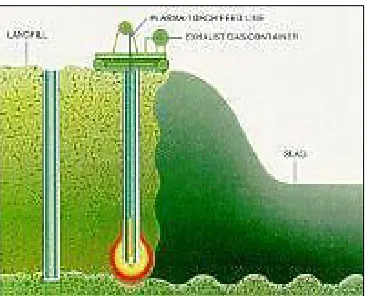
Figure 3.3: Plasma Torch May Be a Solution to Leaky and Overflowing Landfills
1) Application of Plasma Arc Technology: Plasma arc technology has its application in various fields and the major application is in the treatment of Solid Waste Management. The procedure of plasma remediation of in-situ materials could give a quick, exceedingly productive, financially effective, dependable and basic controllable system to specifically soften, vitrify and remediate basically any covered volume of soils, materials or articles at any depth underground. It seems to conquer the majority of the constraints give thermal vitrification methods utilizing non-renewable energy sources and electric warmth sources The considerably higher temperatures, more prominent adaptability, straight forwardness of utilization and the high proficiency of the plasma torch makes it a suitable methods for in-situ warm vitrification for contaminated soils and pits (blended waste and contaminants, for example, perilous/poisonous waste, heavy metals and low level radioactive wastes, organics, concentrated waste silt ) by applying the strategy over an orderly matrix pattern. The solidification and remediation process could broaden the life (to a normal of 100 years) of landfills and increment by a factor of five the limit by liquefying waste down (Plasma arc technology decreases landfill volume to one fifth of the original size or by 80%, the staying 20% is the glassy products). Another imperative advantage is that it is a promising apparatus for softening asbestos filaments changing over them into safe material. The plasma torch offers a few times the heating value of petroleum derivatives with less air or oxygen. The procedure is around 90 percent proficient in vitality use. Plasma heating frameworks can be put on flatbed trucks for a mobile setup.
a) Advantages of treatment of SWM using Plasma arc Technology are given below:
i) Waste generation after treatment gets reduced by almost 60 to 90 % thereby, requirement of landfill gets reduced. ii) The cost of transportation of waste to far-away landfill locales gets decreased.
iii) There is net reduction in natural contamination due to solid waste management. iv) Vitrified material can be used in construction industry.
b) However there are certain limitations on the application of plasma arc technology due to following factors: i) There is new idea of energy generation through waste materials.
ii) Lack of budgetary assets with Municipal Corporations/Urban Local Bodies.
iii) Lack of helpful Policy Guidelines from State Govts. In regard of distribution of land, supply of rubbish and power buy/clearing offices.
IV. TREATMENT OF SOLID WASTE – CURRENT PRACTICES
40
©IJRASET: All Rights are Reserved
A. Biochemical Conversion
This process uses enzymes of bacteria and other microorganisms to breakdown organic matter. Biochemical conversion includes processes like anaerobic digestion, anaerobic composting and Biomethanation. A Biomethanation plant is shown in Figure 4.1.
[image:6.612.214.469.594.717.2]
Figure 4.1: Biomethanation Plant in Chennai, India
Biochemical procedures are a portion of the procedures which give condition agreeable methods to treat natural division of waste and change over it into biogas and compost as fluid lingering. Biogas can be utilized to create control or can likewise be utilized as fuel. The fluid remaining is utilized as manure. Biochemical procedures expect feedstock to be source isolated or the isolation of natural waste is required before it can be brought into the procedure chambers, as specific contaminants in the nourish can irritate the procedure. Absence of source division in India makes it troublesome for substantial scale biochemical procedures to be achievable. Also, the inorganic substance in the waste must be dealt with by burning or gasification at all.
B. Incineration
Incineration is the procedure in which the natural waste is thermally treated by ignition to change over it into fiery remains, vent gas and warmth. The working temperature of the burning reactor is between 750 – 1000 ◦C. burning procedure is equipped for lessening the mass of the loss by more than 70% and its volume by around 90%. The sterile cinder is fundamentally because of the nearness of inorganics in the waste, which can't be combusted yet can be utilized as a part of the development business. The warmth picked up in the process can be used to create power and furthermore for area warming applications. As said before the methane gas discharged by the breaking down natural waste is a noteworthy supporter of the a dangerous atmospheric deviation and burning is extraordinary compared to other approaches to dispense with the methane gas outflow. Squander burning is one of the strategies which can be considered as the substitute for non-renewable energy source ignition. Squander burning is appropriate, where landfilling isn't an alternative or extremely far from the waste creating place which builds the transportation cost in squander administration. Burning plant needs extremely costly hardware and talented individuals to work it, influencing the waste administration to process by cremation calm costly. For the cremation procedure to be attainable and productive, the nature of the waste is a vital standard. The dampness content in the waste ought to be little and the calorific estimation of the waste ought to be high. A view of incineration plant is shown in Figure 4.2.
41
©IJRASET: All Rights are Reserved
The main burning plant in India was at Timarpur, New Delhi in 1987 by Ministry Of New And Renewable Energy (MNES) yet it fizzled and was closed down following a half year of task in light of the fact that the MSW in India has high dampness content in it with a low vitality estimation of around 3.35 - 4.2 MJ kg-1,where the required for cremation is around 7 MJ kg-1 and the vitality estimation of the MSW might never fall beneath 6 MJ kg-1 if the cremation is considered , so the venture was not any more attainable. What's more, there were likewise worries with the radiated poisons from cremation plants so there was a considerable measure of restriction from the nearby populace. Be that as it may, at introduce WTE plants in various Indian urban communities, for example, are being tried on their possibility, yet their execution is fairly poor.
C. Refuse Derived Fuel (RDF)
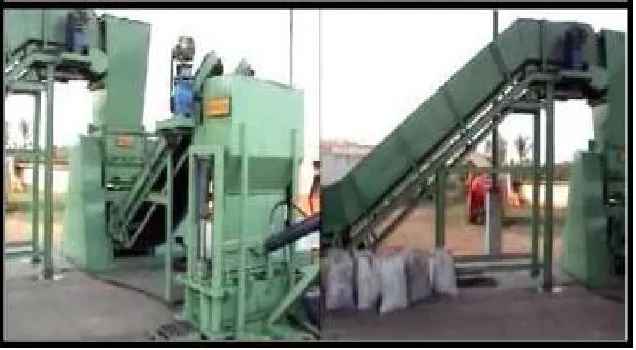
[image:7.612.151.469.278.453.2]The reason for the loss to RDF offices is to create enhanced strong fuel or pellets from squander which can be utilized for vitality generation by warm ignition of RDF or as a shabby and productive fuel in Industries and it can likewise be let go alongside the traditional energizes, for example, coal. RDF offices can assuage the weight on the landfills. Be that as it may, activity of such warm treatment frameworks includes higher cost and skill. High metal fixation in the RDF is a noteworthy issue which is experienced, which makes it basic to pretreat the waste. The RDF age includes drying out, destroying and palletization, which require a different site, expanding the operational cost of the RDF office. RDF machinery is shown in Figure 4.3
Figure 4.3: RDF machinery
India has involvement with the RDF offices, similar to the RDF office introduced in Hyderabad, Jaipur, Rajkot, Vijayawada and Chandigarh. All these five offices experienced serious issues and open resistance which brought about the conclusion of these offices. In any case, all things considered, endeavors to setup RDF plants in India are as yet going on. Furthermore, there are as of now some other RDF plants which are in activity.
D. Pyrolysis
Pyrolysis is an imaginative innovation which thermally debases the MSW without oxygen and the yield of this technique comes as charcoal, fluid and vaporous items, which can be additionally used. This procedure for the most part requires pretreatment of MSW. There are numerous favorable circumstances from pyrolysis process, for example, noteworthy decrease in volume of the waste (50-90%). Once the procedure is begun it is self-managing. As indicated by (Potdar, A. et al., 2015), quick pyrolysis of MSW diminishes the necessity of landfills as well as abatements the danger of natural contamination. Be that as it may, a few several mixes are delivered amid MSW pyrolysis and a large number of them are not yet distinguished. It is essential to distinguish and think about nearly of those mixes previously naming MSW pyrolysis as manageable.
E. Solid Waste Management Using Plasma Arc Technology
42
©IJRASET: All Rights are Reserved
1) Plasma arc Technology: In a Plasma arc technology gasification process takes place which is most important & defined as Gasification is a thermochemical process which involves the reaction of carbon-containing feedstock material with a reagent containing oxygen. The reagent is usually oxygen, air, steam or carbon dioxide. This reaction usually takes place in temperatures in excess of 800 ◦C to 5000 ◦C. The temperature build-up depends on the technology used. . The gasification procedure includes incomplete oxidation of the feedstock which infers that the oxygen is added to the procedure as said before, yet the measure of oxygen added isn't sufficient to permit the entire oxidation or full burning of the feedstock in the gasifier chamber. The gasification procedure is an exothermic procedure, yet some warmth is as yet required to start and support the gasification procedure. The feedstock is warmed to high temperatures, creating gases which experience concoction responses to frame a combination gas. The combination gas or syngas is a blend of hydrogen, carbon monoxide and methane with a calorific estimation of around 4-10 MJ/Nm3. This syngas can be used to create control, to deliver a scope of chemicals or to make fluid or vaporous transport liquid. The side-effect of the gasification procedure is strong scorch and fiery remains. Strong scorch can additionally respond, when the gasifier's temperature is sufficiently high and further breakdown into littler particles bringing about much lesser leftovers. Cinder is non-burnable material with low carbon esteem. It can be used to make Eco bricks or can be disposed of onto the landfills. Gasification process consists of the following thermochemical steps:
2) Drying: It usually occurs at about 100◦C, at this stage the feedstock is generally drained out ofmoisture content in it.
3) Pyrolysis: Subjecting the feedstock to warm without air, to separate it to charcoal, fluid and different tar gases is known as pyrolysis. It is really the way toward scorching. At the point when the temperature in the gasifier heater comes to over 240 ◦C the feedstock starts to disintegrate rapidly and breakdown into a blend of strong, fluid and gases. The strong which remained is charcoal and the fluid and gases which remained are called tars. When the pyrolysis procedure is at starting stage at bring down temperatures a few gases and fluids are created. These fluids and gases are pieces of the feedstock that severs with warm. These parts of the feedstock are atoms of hydrogen (H), carbon (C) and oxygen (O) which are aggregately known as volatiles. These volatiles are exceedingly responsive in nature. Or on the other hand to put in another words less firmly reinforced with the feedstock than the settled carbon. These volatiles in the feedstock are vanished into tar gases and the settled carbon to carbon particles remain. These carbon to carbon particles are known as charcoal.
4) Controlled combustion and Cracking: Cracking is the procedure in which the bigger tar atoms are separated into the littler ones (lighter gases), by presenting them to warm. Breaking is a critical procedure to deliver clean gas. This spotless gas is perfect with an inner ignition motor, instead of the tar gases which, when they begin consolidating, gather into a sticky tar which will quickly foul the valves of the engine. Cracking is an imperative procedure, which is an appropriate burning, finish burning just happens when the flammable gases get completely blended with oxygen. When the ignition procedure is experiencing, the high temperatures in the gasifier heater ensures the bigger tar particles which go through the ignition zone gets deteriorated.
43
[image:9.612.75.540.491.705.2]©IJRASET: All Rights are Reserved
Table 4.1 Main chemical reactions of Gasification
F. Process of SWM BY Plasma Arc Technology
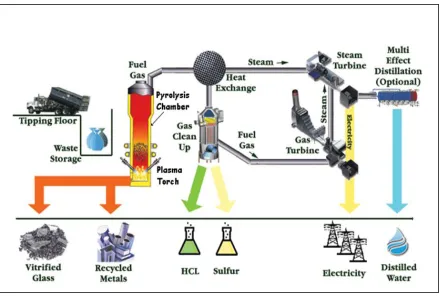
First of all, the waste is passed through crusher and grinder, so that the size can be reduced to a manageable size. The crushed waste is fed in to the pyrolysis chamber from the top. One or more plasma torches are installed in the chamber. A plasma reactor operates in an oxygen starved environment and hence combustion process does not take place. With core temperature running up to 10,000 o
44
[image:10.612.87.527.73.369.2]©IJRASET: All Rights are Reserved
Figure 4.5.2: Plasma Arc Technology Plant
G. By Products
The three major byproducts of the plasma gasification process are syngas, vitrified glass and electricity. The by products are explained below:
1) Syngas: Syngas (from synthesis gas) is the name given to a gas mixture. It consists primarily of hydrogen, carbon monoxide, and very often some carbon dioxide, and has less than half the energy density of natural gas. Syngas is burnable and regularly utilized as a fuel source for the generation of different chemicals..
2) Vitrified Glass: From the inorganic fraction in the waste, an inert vitrified glass is formed that has excellent applications in the construction industry, including concrete aggregate, road bed/fill and sandblasting.
3) Electricity: High-pressure steam from the heat exchanger goes to a steam turbine where it is converted to electricity. The electricity generated with this steam source provides most of the power needed for internal power requirements. The system is capable of generating all its own internal requirements. Other minor by products are metals, sodium bisulphate, hydrochloric acid, ethanol and distilled water.
V. CONCLUSIONS & FUTURE SCOPE OF WORK
A. Conclusions
From the present study following conclusions can be drawn
1) Management of solid waste using plasma arc technology is more suitable methodology than the existing SWM system followed in India.
2) The cost of transportation of waste to far-away landfill locales gets decreased.
3) There is net reduction in natural contamination of soil and air due to solid waste management using this process. 4) Vitrified material obtained as by-product can be used in the construction industry.
5) Synthesis-gas, a by-product can be used for generation of different chemicals.
6) High pressure steam from heat exchangers can be used in a steam turbine for production of electricity.
B. Future Scope
45
©IJRASET: All Rights are Reserved
REFERENCES
[1] A. Anadolu and T. Engineering, “Applications of plasma technology in energy sector,” vol. 3, pp. 18–44, 2017.
[2] A. M. Ali, M. A. A. Hassan, and B. I. Abdulkarim, “Thermal Plasma : A Technology for Efficient Treatment of Industrial and Wastewater Sludge,” vol. 10, no.
11, pp. 63–75, 2016.
[3] A. Ankit, “Applied Physics Application of Plasma Gasification Technology in Waste to Energy Conversion,” vol. 4, no. 3, pp. 3–5, 2016.
[4] K. Abushgair, H. Ahmad, and F. Karkar, “Waste to Energy Technologies -Further Look into Plasma Gasification Implementation in Al-Ekaider Landfill,
Jordan,” Int. J. Appl. Environ. Sci. ISSN, vol. 11, no. 6, pp. 973–6077, 2016.
[5] K. Gonawala, A. Parmar, M. Mehta, and M. E. E. Engineering, “Plasma Gasification of Municipal Solid Waste: A Review,” Int. J. Eng. Sci. Res. Technol., vol.
3, no. 1, 2014.
[6] F. N. C. A. P. D, “Thermal Plasma Solution for Environmental Waste Management and Power Generation,” vol. 6, no. 5, pp. 8–16, 2014.
[7] P. M. Lal and C. J. Singh, “Plasma Gasification : A Sustainable Solution for the Municipal Solid Waste Management in the State of Madhya Pradesh , India,”
Int. J. Enviromental Sci., vol. 3, no. 1, pp. 305–319, 2012.
[8] P. Technology et al., “Defense Technical Information Center Compilation Part Notice,” 1996.
[9] I. Environmental and T. S. Group, “Plasma Arc Gasification For Waste Management,” pp. 0–5, 2009.
[10] E. Leal-quir, “Plasma Processing of Municipal Solid Waste,” vol. 34, no. 4, pp. 1587–1593, 2004.
[11] N. Venkatramani, “Industrial plasma torches and applications,” Curr. Sci., vol. 83, no. 3, pp. 254–262, 2002.
[12] P. W. Mayne and A. F. Eihakim, “In-situ plasma vitrification of geomaterials Vitrification in-situ par plasma des matériaux,” pp. 1807–1810, 1807.
[13] www.thesisscientist.com/docs/Thesis/5a79cbaa-f235-4114-abc9098643e5.
[14] www.researchgate.net/profile/Felix_Anyaegbunam.