Efficient and Secure Mechanism for Privacy
Preserving and Data Sharing in Online Social
Networks
Aravind Kalyan1, Tarun Reddy2, Jothi Kumar3
1, 2
B.Tech Student, CSE, SRM University, Kanchipuram, Chennai
3
Asst. Prof, CSE, SVS SRM University, Kanchipuram, Chennai
Abstract: The main aim of our research topic is privacy protection in online social network in particular when a user’s confidential data is exposed in contents posted by another’s, such as pics, with individuals being tagged. Day to day life people are mostly linked with the online social networking. By using this platform every user can share their data to other user. Online social networking plays an important role for individual. Along with their is a huge risk of sharing their own data with end users. Because there is a link between one users. Multiple users every user has their own opinion on the data share. There is a huge risk in online networking platform. so keeping in view about the upper problem they brought on mechanism it; In this research paper we implement an novel secure mechanism called trust based collaborative privacy management in this mechanism if the user wont to share any data to other user that can be kept only to the said user according to the privacy of the individual with this mechanism securely can be maintained and that would result to the encouragement of an individual for using online networking platform and can make Indian as a digital Indian Be free and live safe.
Keywords: privacy management, social networks, privacy policy
I. INTRODCUCTION
II. RELATED WORKS
L. Xu, C. Jiang, J. Wang, J. Yuan, and Y. Ren describe the information about the growing popularity and development of online networking brings a serious threat to the privacy of individual’s information. Important emerging topic in data mining is called as privacy preserving data mining (PPDM) has studied extensively in recent year. Basic idea of CPDM Is to protect the sensitive information of an individual. Current PPDM deals with how to reduce privacy loss due to data mining operation , infect unwanted disclosure may also happened due to data collection data publication etc. In this paper we come across the privacy issue related to data mining and investigate approaches that make the individual information reveals.M. Qiu, K. Gai, and Z. Xiong of describes the information regarding Wireless data transmission have enable the dramatically such as social networks and big data applications. Multichannel wireless communication is one of the approaches for transforming information when the user is connected to wireless networking environment. Fixed communication scan hardly meets the requirement of higher privacy protections because of conflict cost by for performance and security demand. J. M. Such and N. Criado of describes the information about Data shared to social media may effect more than one user privacy example photos, that depict multi user, in comments many users may mention, events that are invited etc. Lack of privacy management in current privacy system users are enable to control to whom those items are actually shared or not computation mechanism can make to control the multiple policy into single policy for an item , then that problem may be solved. In this paper we propose the first computation mechanism to solve conflict for multiple party privacy management in social media. With these users can reach the solution of conflict.
III. OVERVIEW OF THE SYSTEM
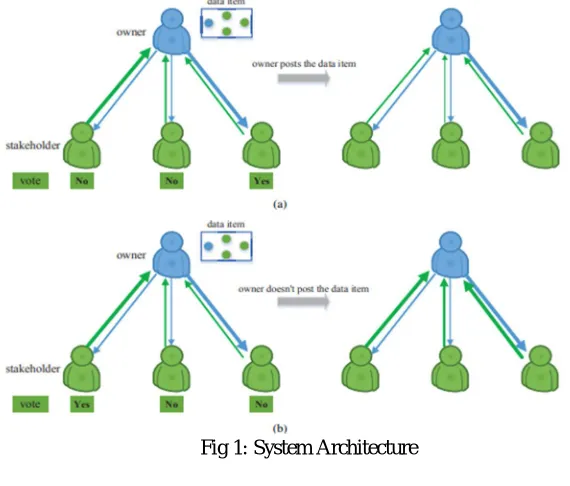
[image:2.612.152.437.379.622.2]In the proposed trust based privacy management mechanism, we introduce a setting based in how to protect the user’s data as their final decisions with this setting a user can link the privacy to only one user as he wished other users can also see .he can share his data on the basis of privacy. The setting to be done I.e. upper confidence bound (UIB) policy to solve the problem with the UIB an individual can be safe. The trust values between users all. Associated with the user’s privacy loss. The proposed policy can protect the data of an individual from recessing their data to billions of users.
Fig 1: System Architecture
IV. TRUST RELATION SHIP
V. MULTIPARTY ACCESS CONTROL
The main feature of online social network is this acts as a interface between users its build a platform for users to share their information in online social network. This multiparty access control model consists of a multi policy specification mechanism and evolution of the policy. Suppose the owner of data item is let d in space m of one user U1 in online social network. So here U1 is owner of the item d.So U1 is called as provider of d.We mainly analyze some scenarios like user profile sharing, content data sharing also relationships. Here the owner and communicator will specify access policies to control the sharing of user profile attributes. In this provider let d be a data item posted by user U1 to somebody space in online social networks. That posted content may also have multiple tagged users. The work of stakeholder in social network is here T be the set of various tagged users associated with data item d.In this authorization concept from both data owner and stakeholder be reflected. In proposed scheme MPAC applied for who want to access the shred data.
VI. SECURITY MECHANISM
The trust-based mechanism implemented within the on top of section, we can draw the following easy conclusion: if the user never posts knowledge which will disclose alternative users’ privacy, then the user will maintain a high name. and therefore the user’s privacy is well preserved by alternative users, since his/heropinions ar extremely valued by others. However, considering that the core performs of OSNs is data sharing, it's unreasonable to suppress the sharing of co-owned information. a way to accomplish a balance between information sharing and privacy conserving is a vital issue within the study of information privacy during this section, we discuss a way to utilize the edge bth introduced within the trust-based mechanism to create a trade-off between privacy conserving and data sharing..
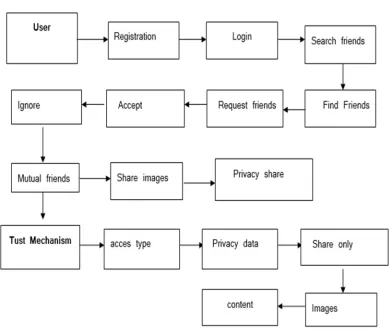
[image:3.612.116.507.355.689.2]VII. DATA FLOW DIAGRAM FOR SYSTEM
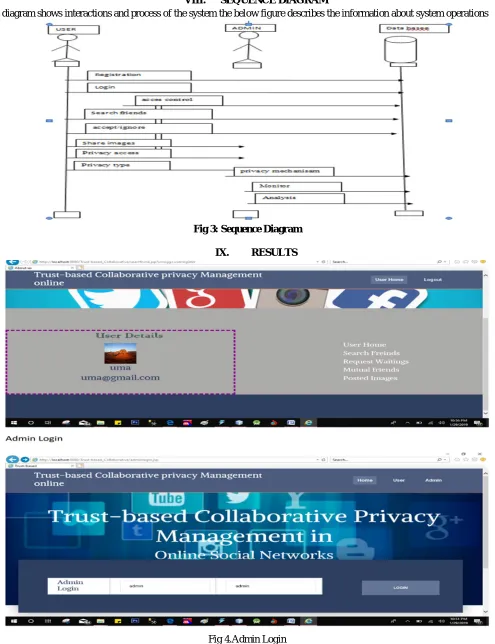
VIII. SEQUENCE DIAGRAM
This diagram shows interactions and process of the system the below figure describes the information about system operations
Fig 3: Sequence Diagram
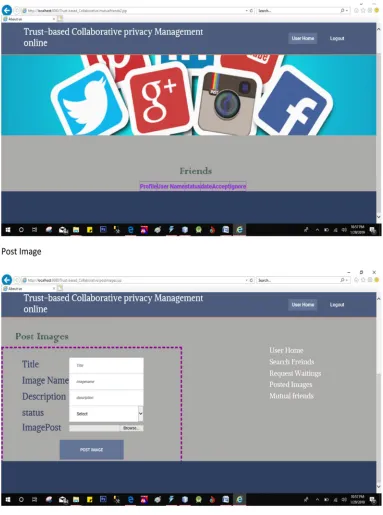
[image:4.612.59.554.83.727.2]IX. RESULTS
Fig 5: Post Image
X. CONCLUSION
REFERENCES
[1] C. Zhang, J. Sun, X. Zhu, and Y. Fang, “Privacy and security for online social networks: challenges and opportunities,” IEEE Network, vol. 24, no. 4, pp. 13– 18, July 2010.
[2] L. Xu, C. Jiang, J. Wang, J. Yuan, and Y. Ren, “Information security in big data: Privacy and data mining,” IEEE Access, vol. 2, pp. 1149–1176, 2014. [3] L. Xu, C. Jiang, Y. Chen, J. Wang, and Y. Ren, “A framework for categorizing and applying privacy-preservation techniques in big data mining,” Computer,
vol. 49, no. 2, pp. 54–62, Feb 2016.
[4] M. Qiu, K. Gai, and Z. Xiong, “Privacy-preserving wireless communications using bipartite matching in social big data,” Future Generation Computer Systems, 2017.[Online].Available: http://www.sciencedirect.com/science/article/pii/S0167739X17301449
[5] C. Fiesler, M. Dye, J. L. Feuston, C. Hiruncharoenvate, C. Hutto, S. Morrison, P. Khanipour Roshan, U. Pavalanathan, A. S. Bruckman, M. De Choudhury, and E. Gilbert, “What (or who) is public?: Privacy settings and social media content sharing,” in Proceedings of the 2017 ACM Conference on Computer Supported Cooperative Work and Social Computing, March 2017, pp. 567–580.
[6] A. C. Squicciarini, M. Shehab, and F. Paci, “Collective privacy management in social networks,” in Proceedings of the 18th ACM International Conference on World Wide Web, April 2009, pp. 521–530.
[7] H. Hu, G.-J. Ahn, and J. Jorgensen, “Detecting and resolving privacy conflicts for collaborative data sharing in online social networks,” in Proceedings of the 27th ACM Annual Computer Security Applications Conference, December 2011, pp. 103–112.
[8] J. M. Such and N. Criado, “Resolving multi-party privacy conflicts in social media,” IEEE Transactions on Knowledge and Data Engineering, vol. 28, no. 7, pp. 1851–1863, July 2016.
[9] P. Auer, N. Cesa-Bianchi, and P. Fischer, “Finite-time analysis of the multiarmed bandit problem,” Machine learning, vol. 47, no. 2-3, pp. 235–256, 2002. [10] H. Hu, G.-J. Ahn, Z. Zhao, and D. Yang, “Game theoretic analysis of multiparty access control in online social networks,” in Proceedings of the 19th ACM
Symposium on Access Control Models and Technologies, New York, NY, June 2014, pp. 93–102.
[11] H. Hu, G. J. Ahn, and J. Jorgensen, “Multiparty access control for online social networks: Model and mechanisms,” IEEE Transactions on Knowledge and Data Engineering, vol. 25, no. 7, pp. 1614–1627, July 2013.
[12] N. Vishwamitra, Y. Li, K. Wang, H. Hu, K. Caine, and G.-J. Ahn, “Towards pii-based multiparty access control for photo sharing in online social networks,” in Proceedings of the 22Nd ACM on Symposium on Access Control Models and Technologies, June 2017, pp. 155–166.
[13] P. Mehregan and P. W. Fong, “Policy negotiation for co-owned resources in relationship-based access control,” in Proceedings of the 21st ACM on Symposium on Access Control Models and Technologies, June 2016, pp. 125–136.
[14] J. Golbeck, “Trust on the world wide web: A survey,” Foundations and Trends in Web Science, vol. 1, no. 2, pp. 131–197, 2008.