Exploring the HR management of crowdworkers: who
does what?
Business Administration MSc
Specialization Human Resource management
Stefan Becking University of Twente P.O. Box 217, 7500AE Enschede
The Netherlands 07-08-2018
1
Abstract
The rise of the internet allows organizations to make use of new ways of working, such as crowdsourcing. When using crowdsourcing, a task is outsourced by a requestor to an undefined group of people, called the crowd via an online platform. The fact that
crowdworkers are not formally seen as employees of these platform, but are likely to still be
managed led to the following research question: ‘What HR practices are used for managing crowdworkers and who is responsible for executing these practices?’
In order to be able to answer this question, data was gathered by conducting an exploratory case study at a crowdsourcing platform active in the food delivery industry, called
Food@home. Data was gathered by conducting interviews with platform representatives, such as the country manager, supply associates, rider support associates and crowdworkers. Next to these interviews, data was collected by conducting participant observations. These participant observations were done by becoming active as crowdworker for the platform and start
delivering meals.
It became clear that a wide variety of HR practices is present within the Food@home
ecosystem and the ecosystem all actors bear responsibility for the execution of these practices. Some interesting findings include; the selection process was found to be really short, to get to get crowdworkers on the road as soon as possible; training was delivered to restaurants but due to institutional pressures, crowdworkers did not receive real training; both restaurants and requestors have and influence on the job design of the task performed by the crowdworker; incentives were in used to get the crowdworkers on the road, and to keep them on the road. When coming back to the answer of the research question, it can be said that the actors
together are responsible for the execution of those HR practices that are being used to manage the entire ecosystem.
2
Table of contents
Abstract 1
Introduction 3
Theoretical framework 4
Crowdsourcing 4
The crowdsourcing ecosystem 7
HR practices 9
The HR management of crowdworkers 12
Overview 15
Methodology 18
Research design 18
Data collection 18
Research context 21
Operationalization 22
Data analysis 25
Results 26
Case description 26
Ability enhancing HR practices 28
Recruitment 28
Selection 29
Training and development 31
Motivation enhancing HR practices 33
Performance evaluation 33
Feedback 34
Compensation 35
Incentives 36
Opportunity enhancing HR practices 38
Job design 38
Job involvement 43
Overview 44
Discussion 46
Theoretical implications 46
Crowdsourcing 46
The crowdsourcing ecosystem 47
HR practices and HR management of crowdworkers 49
Implications for practice 53
Limitations and future research 56
Conclusion 58
Acknowledgements 60
References 61
Appendix A 63
Appendix A1 63
Appendix A2 68
3
Introduction
In a world where the use of internet keeps on growing (McCarthy, 2014), new possibilities arise almost every single day. Not only consumers want to be able to gain advantages of the internet, but also organizations want to make use of the possibilities that come along with this rise in internet usage. A good example of this enhanced use of the internet as seen from the point of view of organizations is the use of online labor platforms to enable crowdsourcing. Here, crowdsourcing refers to the outsourcing of activities to an undefined group of crowdworkers (Boons, Stam, & Barkema, 2015; Nakatsu, Grossman, & Lacovou, 2014). One of the most important differences compared to a traditional company lies in the fact that crowdworkers are not seen as employees of the platform, but the platform enables them to do a task or offer a service to those that request their service. As such, online labor platforms form an intermediate between demand and supply of labor, or put more practically, between a client that wants a job to be done by a so-called crowd-worker that offers his/her services via the online platform. Some examples of online labor platforms used for crowdsourcing purposes are Uber, Lyft, Snappcar Innocentive, and LEGO®Ideas.
Within traditional organizations, HRM is often seen as a vital part to organizational success (Astrachan & Kolenko, 1994). Previous research found that the use of HR practices depends on the employment relationship that employees have with their employer (Lepak & Snell, 1999). Although crowdworkers are formally not seen as employees of the crowdsourcing organization, the HR practices that are being used in traditional companies should also be used to manage crowdworkers. Similar to the HR practices that are used to
4 (Boons et al., 2015). Due to this fact, it is likely that HR practices also are applicable to crowdsourcing platforms.
Since the crowdworkers are not officially seen as employees of the crowdsourcing platforms, it is rather hard to put them under the scope of an HR manager or department. This leads us to the question, if the crowdworkers are not formally seen as employees, who should then be responsible for making sure the right practices are being used. During this research, the aim is to find an answer to the following research question: ‘What HR practices are used for managing crowdworkers and who is responsible for executing these practices?’ At this moment, a limited amount of research has been done on the HR practices used to manage crowdworkers as well as which actors are involved in implementing these HR practices. The outcome of this study is a model that describes the actors involved in the HR management of crowdworkers and in particular, which HRM activity is performed by which actor. For practitioners this research can help to get a better understanding of what should be done in terms of HR practices within a crowdsourcing ecosystem and who is responsible for executing the relevant HR practices. In other words, what can they expect other actors of the crowdsourcing ecosystem to do in terms of HR practices and what can other actors of the ecosystem expect from them in terms of HR practices.
Theoretical framework
Crowdsourcing
5 (2006) – who first coined the concept – states that crowdsourcing is a new way to find the labor that is needed for a certain task can be acquainted from a broader pool, and most likely it is cheaper than traditional employees. One sources the task out to an undefined crowd,
where in ‘regular’ outsourcing, the party that is responsible for conducting a task is known.
Kuhn and Maleki (2017) describe crowdsourcing as being a microtask that is sourced to the crowd with the help of crowdsourcing platforms, which are also named online labor platforms, whereas Doan, Ramakrishnan and Halevy (2011) talk about crowdsourcing platforms which are online platforms that make use of the crowd in order to tackle a wide variety of problems, or to offer a service to their clients.
In order to be able to study this phenomenon, it is important to understand the crowdsourcing concept. Therefore, I look into the commonalities across the definitions of crowdsourcing that are provided so far. A first commonality across definitions is that crowdsourcing is a process where a requestor is in need of a certain service or solution to a problem and broadcasts it on a platform. In order to be able to broadcast a request, he or she made an online account and the crowd (registered members) can either provide a solution or offer the service that was requested. By doing this, the crowdsourcing platform becomes some sort of intermediary between the demand for a service or solution to a problem and the supply of this same service or solution. In short, a request is put on an online platform by a requestor, this request is seen by ‘the crowd’, crowdworkers, and they can decide to either accept or reject the task that was given by the requestor, once the task is completed, or the service provided, the money that is paid by the requestor is send to the crowdworker that did the job, but this transfer of money goes via the platform.
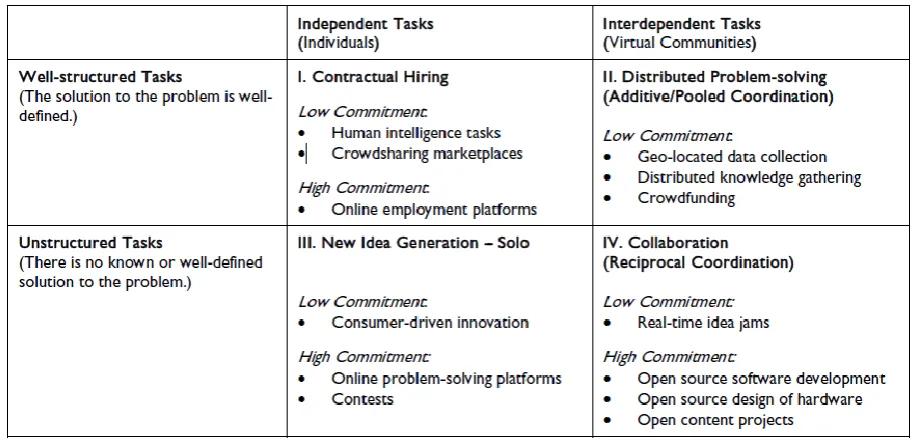
A second communality across definitions is that crowdsourcing involves the outsourcing of selected tasks. As noted by Nakatsu et al (2014), different types of tasks can be
7 Table 1: crowdsourcing taxonomy (Nakatsu et al 2014, pp829)
The crowdsourcing ecosystem
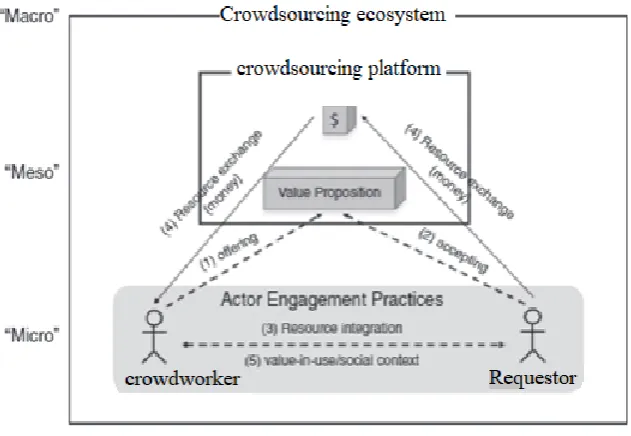
8 Figure 1: the theoretical framework of the crowdsourcing ecosystem, adapted from Breidbach &
Brodie (2017).
On the left, one can find the crowdworker, which is in fact the one that delivers the service or completes the task given, this can be one person or a group of persons. The crowdworker is an individual who is active on crowdsourcing platforms in order to complete tasks. On the other side, there is the requestor. The requestor is the person, or group of persons that want a task to be completed. The requestor put the request to complete a given task on the platform. Lastly there is the crowdsourcing platform, which forms an intermediary between the crowdworker and the requestor. It is the matchmaker between the demand by the requestors for the fulfillment of tasks and the supply by the crowdworkers to supply the requestor with the service they requested.
[image:9.595.81.397.81.299.2]9 are employees of the platform, they are not formally seen as employees of the platform. According to the International Labour Organization, one can talk about a legal link between the employer and the employee if one performs a task and is compensated for doing this task (International Labour Organization, 2011). The ILO states that due to the changing working environment, it can become vague whether an employment relationship is still present in the case of crowdsourcing or not. This makes it clear that it is becoming vague when one can speak of an employment relationship and when one cannot speak of an employment relationship anymore. Others, however, suggest that crowdworkers are described as independent contractors and they are considered to be freelancers, although some of these firms (crowdsourcing firms) exercise significant control over their work conditions and compensation (Kuhn, 2016).
HR practices
Although, crowdworkers are not formally seen as being employees of the crowdsourcing platform, as was noted by Kuhn, (2016), they are of vital importance for the existence of the crowdsourcing platform. If the crowdworkers would all leave the platform, the platform will cease to exist as there is no one that can fulfill the requests set by the requestors. Because of the usage of HRM within traditional organizations for managing employees, it is assumed that HR practices are also used to manage crowdworkers. Where in ‘traditional’ organizations the
10 Within ‘traditional’ organizations, HR practices are used to manage employees. HR practices are likely to be focused on the abilities, motivation and opportunities of employees (Jiang, et al., 2012). In their study Jiang et al. (2012) identified eight practices: Recruitment, Selection, Training, Performance management, Compensation, Incentives, Involvement and Job design. In the study of Delaney and Huselid (1996) it was found that there was a positive relationship between the use of the right practices and organizational performance. In their study, Jiang et al. (2012) came with three HR domains that categorize the eight HR practices into three sets of HR activities, namely those that enhance the opportunities, abilities or motivation of employees to perform. Together the domains form an HRM system that helps to keep the employees committed to the firm. In order to make things visible, Table 2 gives an overview of the domains and their respective HR practices.
Opportunities Abilities Motivation
[image:11.595.68.520.383.429.2]Job Involvement Recruitment & Selection Performance Management Job Design Training & Development Compensation, Incentives Table 2: overview of the HR domains and the HR practices belonging to those domains (adapted from
Jiang et al, 2012).
In the work of Jiang et al (2012) the domains were described the following way. Opportunity enhancing HR is about the possibility for employees to use the skills they possess and the knowledge they gained in doing the job. The opportunity enhancing HR domain consists of the HR practices Job Involvement and Job Design. Jiang et al. (2012) described
job involvement in the following way: ‘Job involvement is about being able to share information, and the amount of influence one has, this can include employee empowerment and whether or not employees have a voice.’ The job design was described by Jiang et al
11 According to Jiang et al. (2012), ability managing HR is about the development of knowledge and learning new skills or get them present within an organization by selecting the right person for the job. The ability enhancing HR domain consists of the HR practices Recruitment & Selection and Training & Development. Recruitment and selection is about recruiting and selecting the right applicants for a job. Where recruitment is about communicating information about the job and organization to potential job-seekers that might have the skills needed within the organization (Jiang et al, 2012). In the work of Barber, 1998, recruitment was described as: “Recruitment includes those practices and activities carried on by the organization with the primary purpose of identifying and attracting potential employees (Barber, 1998, p. 5).” Selection is described by Jiang et al (2012) as picking those people that can be of the best value for the organization, given their ‘potential’ new task and/or skills and abilities. a second definition of selection was found in the work of Lepak and Gowan (2008), who described selection as: “The systematic process of deciding which applicants to hire (Lepak & Gowan, 2008, p. 184).” When looking at the HR practice of Training & Development, which is described by Jiang et al (2012) as: ‘the skills of the people that are already present within the organization, they get to train their existing skills or the opportunity to develop new skills in order to get them to foster their job-performance.’ In the work of Lepak and Gowan (2008) training is defined as: “The systematic process of providing employees with the competencies-knowledge, skills, and abilities-required to do their current jobs.” (Lepak and Gowan (2008, p. 224).
12 relates to the evaluation and appraisal of employee performance in such a way that in enhances their contribution to the overall organizational performance’ (Jiang et al., 2012). In the work of Lepak and Gowan (2008), performance management was described as: “The process of: evaluating employee performance against the standards set for them and helping them develop action plans to improve their performance.” (Lepak & Gowan, 2008, p 260) it became clear that giving feedback is part of performance management. Thus, making performance management not only about the performance evaluation, but also to share these insights with the involved employees. Compensation is a way to influence the motivation of employees, this can be done in the way of monetary as well as non-monetary rewards. As described by Lepak and Gowan (2008) who state: “Compensation, the monetary and
nonmonetary rewards employees receive in exchange for the work they do for an organization (Lepak and Gowan, 2008, p.295).” According to Jiang et al. (2012), incentives are rewards on top of the ordinary compensation in order to give additional stimulation to the motivation of employees, they (incentives) can be based on short-term or long-term employee performance or based on certain achievements, they can be individual or team-based.
HR management of crowdworkers
In earlier research there has been some attention for HRM practices in a crowdsourcing environment. Some examples of previous studies and their findings will be outlined in the following section.
13 Hoffmann (2017) it was said that the way in which a crowdsourcing platform is designed, can potentially limit the extent to which crowdworkers have a voice. When looking at the job design, or the autonomy for crowdworkers on how to design the task they are executing. Part of this autonomy comes from the possibilities for crowdworkers to be able to choose to accept or reject certain jobs. As described by Kuhn and Maleki (2017), if you as crowdworker would have the possibility to choose whether you want to accept or reject a certain job, you do have relatively high level of autonomy.
When talking about abilities, one can be referring to Recruitment & Selection as well as Training & Development. The abilities domain mainly focuses on individuals having the right skills needed to do the job. In the work of Dissanayake, Zhang and Gu (2015) it was nicely stated that making crowdworkers (partly) responsible for recruitment might be a good idea, as they might know people who are suited to become a crowdworker and have acquainted the right skills. With regard to abilities, it became clear that in order to be able to work for certain crowd-sourcing platforms, a person willing to become a crowdworker needs to have a certain level of skills in order to be allowed to apply to a platform (Kuhn & Maleki, 2017). In the case of Uber, for example, Dutch people that want to transport people for money need to have
14 their drivers to greet their passengers in a certain way and to ask them to sit in the front seat next to them. Furthermore, Uber gives their drivers tips on how to give the requestors the best experience by means of sending them messages. These, however, are all tips rather than fixed recommendations or requirements.
When one talks about the motivation, one is talking about compensation, incentives and performance evaluation. Crowdworkers mainly receive money for the tasks they have completed as a way of compensation. In the work of Breidbach and Brodie (2017) (see figure 1) the flow of money was visualized in a nice way, if a task is completed, the requestor transfers money to the crowdsourcing platform and the platform transfers the money to the crowdworker. If a crowdworker does not like the compensation he or she will receive for a job, he or she can reject a task, but for some platforms bonuses offered, if a certain percentage of requests is accepted. This might result in crowdworkers accepting offers they would normally not accept (Kuhn & Maleki, 2017). A nice example of a platform firm to offer an incentive to their crowdworkers, was given in the work of Nagesh (2016), who described a new service of Lyft, where drivers of the platform could rent a car. In the case that the driver would do more than 40 rides per week, he would not have to pay the usual 20 cent mileage charge that would normally come on top of the normal weekly rental fees of 99 dollars per week. In the case that a driver would do more than 65 rides per week, the rider wouldn’t have
to pay any money for renting the car, in that case, both the 20cent per mile charge as well as the weekly rent of 99 dollars would be waived by the platform.
15 other actors, also Kuhn and Maleki (2017) describe some nice examples of performance evaluation methods. For example, Deliveroo, where crowdworkers receive monthly performance reports. In the case of Uber, a driver is assessed by the acceptance rate as well as their cancelation rates, but also the requestor is able rate a driver once a ride is completed. Crowdworkers might be expelled from Uber’s platform if their performance is below a certain threshold. In the case of Wonolo, well performing crowdworkers receive new tasks earlier than the average performing people, which gives them the opportunity to accept those tasks that they like and have a better chance in getting those nice tasks. In the case of Mturk, performance is based upon the percentage of tasks for which the client did pay them. Low performance can result in a lack of future job possibilities because of the way the platform is designed. It can be seen that it is no longer the firm(/employer) who is fully responsible for the HR management of crowdworkers, but others, like the crowdworkers are partly responsible for the execution of HR management.
Overview
As was explained in the previous section, the different actors involved in the crowdsourcing ecosystem are together responsible for the execution of the HR practices. In order to give an overview, in the next section the different actors will be explained in combination with their responsibility for the execution of HR practices as theorized.
16 way they can best please their requestors. Fourth, the platform is responsible for giving the crowdworkers the proper compensation, which is often done by getting the money paid by the requestors to the crowdworkers. The compensation process has been described by Breidbach and Brodie (2017). Fifth, the platform can hand out incentives to the crowdworkers if they match certain (performance) criteria which was nicely described by Nagesh (2016). Sixth, the platform can assess the performance, in general or crowdworker specific by different means which was described in the work of Boons et al (2015). Lastly, the platform can make or break the involvement. It depends on how much they want to involve their crowdworker and how they design the platform and the crowdworkers’ tasks, as was found by Fieseler et al. (2017).
When looking at the crowdworker, there are some similarities in terms of HR responsibilities. Firstly, crowdworkers can be responsible for recruitment of new crowdworkers, as was stated in the work of Dissanayake et al (2015). Secondly, a crowdworker can either accept or reject a task given by a requestor, as was found by Kuhn and Maleki (2017). Thirdly, the crowdworkers can evaluate the ‘performance’ of their
requestors. Also, with certain platforms, the crowdworkers themselves can influence their performance by accepting a lot of requests which was found by Boons et al (2015). Fourth, crowdworkers are likely to give (via the platform) and receive the information needed for the execution of a task, which was nicely described in the work of Breidbach and Brodie (2017). Fifth, crowdworkers are sometimes able to accept or reject a request as part of their job design; they have the autonomy to make these decisions, as was discussed by Boons et al (2015).
17 multiple similar platforms, a requestor can select the specific platform (Uber vs Lyft) to his/her own pleasing, which is similar to the selection of a specific crowdworker, as described by Kuhn (2016). Secondly, a requestor can evaluate the performance of both the platform and the crowdworker, as was found by Boons et al. (2015). Thirdly, a requestor can give information which is relevant for the task to the crowdworker, in this way, they can influence the job design of the crowdworker, which was found in the work of Breidbach and Brodie (2017).
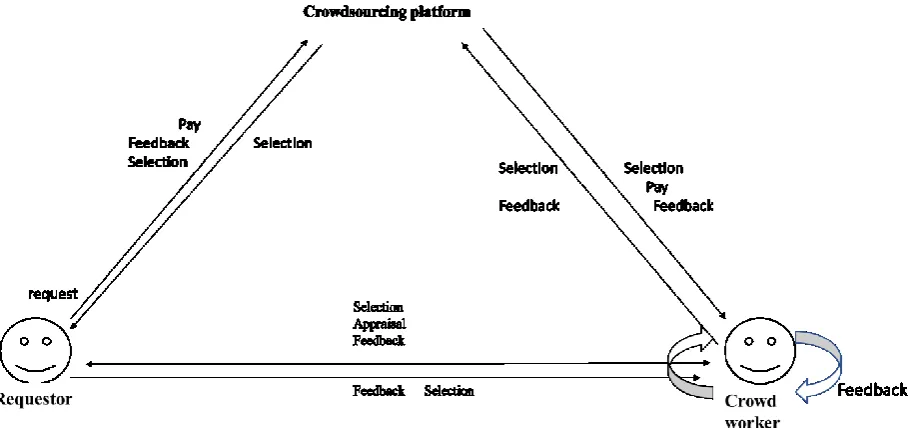
[image:18.595.80.536.503.717.2]In order to get a better understanding of what the crowdsourcing ecosystem looks like, a theoretical model that was based on the one developed by Breidbach and Brodie (2017) is developed in order to be able to explain the different actions that take place. This model can be found in figure 2. Based on the existing literature it looks like the different actors involved in the crowdsourcing ecosystem are all together responsible for the implementation and usage of the different HR practices. The differentiation of this study with regard to already existing studies lays in the fact that with this study the entire ecosystems and all HR practices will be researched in order to get the bigger overarching picture
Figure 2: conceptual model of exchange processes involved in a crowdsourcing activity, adapted from
18
Methodology
Research design
Based on the fact that limited information is known about the HR practices present within a crowdsourcing platform, the choice was made to conduct an exploratory study. Exploratory research is the best fit according to Kothari (2014) when searching for new insights. The limited amount of data with regard to HR practices in a crowdsourcing environment made clear that collecting new data was needed to find the practices that are present within a crowdsourcing ecosystem, but also to be able to find those actors of the ecosystem that are responsible for the execution of these HR practices. A good way to conduct exploratory research is a case study, because of the possibilities to conduct research on the case in its natural setting. One is able to compare findings from practice and existing literature and it also allows for collecting data from different sources (Yin, 1994). In this research the case that has been studied is crowdsourcing via the platform Food@home. By looking at the natural setting of the phenomena of HR practices in a crowdsourcing environment, in this case the HR practices used at Food@home, it is possible to see how the HR practices come to action in real live and what they look like in a real-life situation.
Data collection
19 platform is operating. The participant observations have been done by becoming a crowdworker for Food@home and get the real experience.
The reason for conducting semi-structured interviews came from the fact that the different interviewees have been interviewed only once, and thus conducting semi-structured interviews have been found to be the best way by Bernard (1988). This comes from the fact that with semi-structured interviews there is room to deviate from the guidelines. This possibility for deviation can be beneficial in the case that the interviewee comes up with issues/themes which can be valuable for the research, but the researcher did not think about in advance. The focus of the interview questions was on finding the HR practices that were present within the ecosystem as well as finding those actors that were responsible for the execution of these HR practices.
In order to select the right interviewees, some broad requirements needed to be passed. The requirements have been kept this broad in order to be able to select the broadest possible range of people with varying lengths of their (self-)employment at the platform Interviewees needed to have some experience in their work as crowdworker for the platform. The platform representatives needed to have knowledge about the use of HR practices within their organization in relation to the crowdsourcing part. The interviews mainly took place on an individual basis, for multiple reasons: Interviewees couldn’t influence the answers given by
others, and it would make the most sense logistically to conduct individual interviews as the task that is executed, is executed on an individual basis. All interviews were conducted in Dutch.
20 allowed for getting the biggest possible picture of the way how HR is organized at Food@home. With data triangulation the goal is to see if two independent parties have a shared perception; In this case if the parties experience the same HR practices and responsible actors.
21 # Name for
reference
Actor within the ecosystem
Function Interview duration
1 Emp1 Platform employee operation associate 82 minutes
2 Emp2 Platform employee supply 82 minutes
3 Emp3 Platform employee Rider support 59 minutes
4 Emp4 Platform employee Engagement associate 58 minutes
5 Emp5 Platform employee Engagement associate 37 minutes
6 Crow1 Crowdworker Rider 66 minutes
7 Crow2 Crowdworker Rider 69 minutes
8 Emp6 Platform employee Country manager 62 minutes
9 Emp7 Platform employee Performance 54 minutes
Emp8 Platform employee performance
10 Crow3 Crowdworker Rider 29 minutes
11 Crow4 Crowdworker Rider 30 minutes
[image:22.595.67.530.69.272.2]12 Crow5 Crowdworker Rider 42 minutes
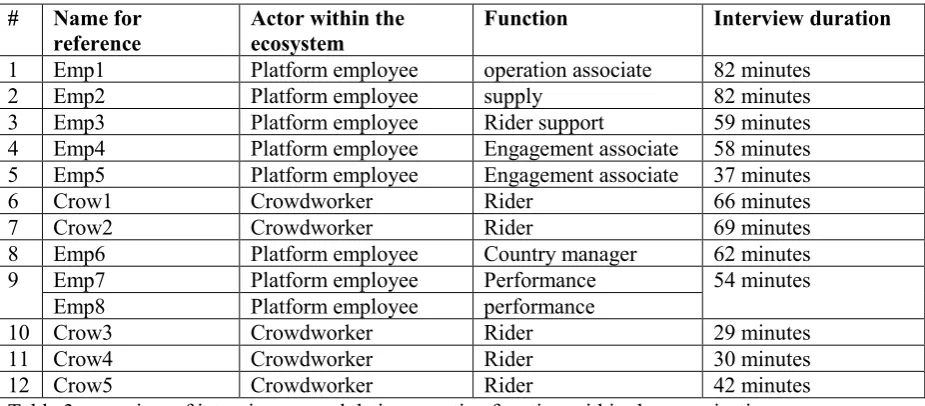
Table 3: overview of interviewees and their respective function within the organization
The reason to do participant observations next to the interviews was made to be able to also see the HR practices come to work in real-life and thus not only hear about them, but also to be able to experience them in person. In order to be able to conduct participant observations, the decision was made to become active as crowdworker and by this being able to see how the process did work. During the observation, becoming a crowdworker enabled the real experience of the HR practices and how they are present in the entire process of becoming and being a crowdworker for Food@home. Notes were made during the process of becoming a crowdworker and after being active as a crowdworker.
Research context
22 even deliver meals from a selection of restaurants at Schiphol Airport at this moment they offer meals from 1411 restaurants in those 14 cities (Food@home, 2018). The choice for Food@home was made because they are nowadays mainly working with crowd-workers, but in the past they used to have delivery employees, which can also make clear what they do different nowadays compared to the employee era. Understanding the way how the platform operates has changed can potentially lead to a better understanding of the responsibility of the different actors present in the Food@home ecosystem with regard to HRM.
Note: Food@home is a fictional name that replaces an existing organization, as the original organization wished to stay anonymous.
Operationalization
In this research the main variables are the HR practices and the role of the different actors of the crowdsourcing ecosystem in the execution of these HR practices. Therefore, it was important to make the HR practices measurable. In the first sections, the HR practices are operationalized and in the second part, the actors involved in the crowdsourcing ecosystem are operationalized.
As discussed in the theory section, three HR domains, consisting of eight HR practices in total are distinguished, including: ability-enhancing HRM (recruitment, selection, training and development), motivation-enhancing HRM (performance evaluation, compensation, incentives) and Opportunity-enhancing HRM (job design and job involvement).
Recruitment is about getting those people who are (potentially) willing to work for a platform as crowdworker to now about the possibilities of working with them. In order to obtain data on the recruitment of crowdworkers, questions were asked such as ‘How can
23 Selection is about getting those people who are willing and able to work for the platform and make sure that they meet the requirements. People can talk about selection criteria and requirement. In order to obtain data on the selection of crowdworkers, questions were asked such as: ‘Do crowdworkers need to fulfill certain conditions before they can enroll on the platform?’, ‘Do crowdworkers need to share specific information in order to be able to
use the platform?’ and ‘Are there certain processes which are being used for the selection of
people?’
With training and development, people can talk about workshops, courses or onboarding, to reach a higher level of skills or to keep knowledge up-to-date. When talking about onboarding, it is mainly getting familiar with procedures and rules that are company-specific. In order to obtain data on the training, development, and onboarding of crowdworkers, questions were asked such as: ‘Do crowdworkers receive training, information
and instructions when they start working for the platform?’ and ‘Who is responsible for the
development of the crowdworkers?’
Performance evaluation can be based on real performance scores or the way how certain things work, for example an app, if it keeps bugging. Therefore, performance evaluation can involve the evaluation of the way how a job is done, or how good or bad, and potential areas where performance can be increased. In order to obtain data on the
performance evaluation of crowdworkers, questions were asked such as ‘Is the performance
of crowdworkers being evaluated based on certain criteria?’ with the follow-up questions being related to what the criteria look like and how this is done.
Feedback can be direct (from a to b) or indirect from a to b via c), one can give a comment on all sorts of fields, like performance, clothing, hygiene, waiting times, etc. In order to obtain data on feedback with regard to the different actors, questions were asked such
24 task?’, Do requestors and the platform receive any feedback?’ and ‘By which means are
crowdworkers being stimulated to give feedback?’
Compensation is about the reward one receives for the completion of a task, this can involve money. Compensation can be measured by the amount, per unit (piece, hour, week, month, year) or one can talk about salaries, in relation to compensation. In order to obtain data
on the compensation of crowdworkers, questions were asked such as ‘which ways of
compensation is given to the crowdworkers for the task they take care of for the platform and
its customers?’ and ‘Via which ways does the money go from the customer to the
crowdworker?’
Incentives are bonuses one receives on top of the ordinary compensation. It can be bonuses, it can be tips, extras for working at the company. In order to obtain data on incentives the crowdworkers receive, questions were asked such as ‘Do well-performing
crowdworkers receive additional rewards?’, Does the platform offer rewards in any kind to its
crowdworkers?’ and ‘Are there other benefits the crowdworkers receive for working for the
platform?’
Job design is about the way how a job is organized, whether employees have a lot of freedom when executing their job, whether there are certain guidelines that need to be followed in order to successfully complete a job. Is there room for deviation, and can they decide when they want time off. These are job design related issues. In order to obtain data on the job design of the crowdsourcing tasks, questions were asked such as ’What tasks are involved in the job of a crowdworker?’ and ‘To what extent do crowdworkers have the
possibility to decide how and when they want to do their job?’
25 data on the job involvement of crowdworkers, questions were asked such as ‘Do you have the
idea that crowdworkers feel involved with their task?’ and ‘Does the platform organize
activities to increase the involvement of the crowdworkers with their task?’ A complete overview of the questions can be found in appendix A1 and A2. All interviews were conducted by two or sometimes three interviewers.
For the observations, the focus was put on the selection/onboarding process, as this was a step that was necessary to complete in order to be able to start working as crowdworker for the Food@home platform. During the actual observation, the focus was mainly on Selection, performance evaluation, feedback, compensation, incentives, and job design.
Data analysis
Interviews have been recorded if permission for recording was granted by the interviewees. When possible, notes were taken. The recordings were put in writing by transcribing the interviews. The analysis of the transcripts was done by designing a coding-scheme. The initial coding scheme was a result of the theoretical framework; this is called deductive coding. the eight HR practices were coded along with the ecosystem actors. The deductive coding scheme can be found in Appendix B. Later other important items related to the research topic have been added based on the input given in the interviews, which is called inductive coding. To make sure that the coding was done in a proper way, one interview was coded separately by two coders, after which the intercoder reliability was calculated by means of Cohen’s Kappa
for the longest interview and some revisions were made to the coding’s foundation. Analysis
26 After the observations, notes have been made, and they have been ordered in a similar way as by which the interviews have been coded. This means that the things that struck attention with regard to, for example, job design were all put together, but the same applies for the other focus points. With the observations it was possible to really see and feel what it was like to be active as a crowdworker for Food@home, and what HR practices were used on a day-to-day basis to manage the crowdworkers.
Results
The result section is divided into four sections. The first part will be a case description, the second first part will be about ability enhancing HR practices, the third part will be about the motivation enhancing HR practices, the fourth part will be about the opportunities enhancing HR practices. It became clear that a lot of practices were present within the crowdsourcing ecosystem that has been researched; these will be discussed in the oncoming sections together with the actor responsible for the execution of the HR practices.
Case description
27 being an employer with delivery employees towards a platform using independent contractors for the deliveries, Food@home has been in the news a lot lately. This was mainly because the question was raised whether the construction with these contractors is legal or not. The issue did even stroke the attention of Dutch politicians who are also unsure of the legality of this way of working. The transition lead to a couple of lawsuits by (former) delivery employees, which formed a large part of the recent news.
In the Food@home ecosystem, four actors are involved in the process, rather than the theorized three actors. These are the requestors, crowdworkers, the platform, and restaurants. The requestors, or the customers, want to order food, and they look for the type of food and/or the restaurant they want to have food from. There are the crowdworkers, who are mainly students, as was noted by one of the engagement associates, who collect the food ordered by the requestors at the restaurants and bring it to the customer. The crowdworkers can use either a scooter or a bike for their deliveries, depending on their own preferences and the ability to legally drive a scooter. The crowdworkers have the ability to ‘buy’ the basic gear which is
28 In short, a requestor puts an order out for food from a specific restaurant via the Food@home platform, the restaurants get to see the order, allowing them to prepare the meal for when the crowdworker comes to collect the food and delivers the food to the requestor. Food@home is the facilitator of this entire process; they connect the demand for food delivery at home by requestors from a specific restaurant and the supply of independent delivery contractors who collect and deliver the food from the restaurant to this very same requestor. In order to maintain both the supply and the demand in balance, HR practices such as compensation and incentives tend to change by the week, as was said by an operations associate of Food@home. Because of the way how the job is designed, crowdworkers are free to decide when or if they want to work with the platform, therefore one of the main goals of Food@home is to get new crowdworkers on the road as soon as possible after they subscribed to the platform to become a crowdworker. In the following sections the HR practices present at Food@home and the responsible actors will be outlined.
Ability enhancing HR practices
Recruitment
When talking about recruitment at Food@home, it became clear that multiple types of recruitment instruments are used. Food@home, the platform, is responsible for most of the recruitment activities. They make use of posts on different social media like Facebook and Instagram, which makes sense when taking into account the main group of crowdworkers that work with Food@home, which are students:
‘The main target group, at which we mostly aim, are students.’ (Supply
employee Food@home)
29 interesting option for them to earn money. This is because Food@home is a well-known brand in the cities where they are active.
Another way of recruiting is that Food@home teams up with marketing agencies to come up with special campaigns like flyer actions in particular cities or the placement of seat covers on bike seats at a university. At the same time, the crowdworkers themselves are seen as ‘’living ads’’. As noted byone of the crowdworkers, if people see them cycling through the city wearing a Food@home jacket and bag, they might be encouraged to start as a crowdworker themselves, which was also how he got in touch with Food@home. Also, Food@home makes use of a referral incentive, which means if a crowdworker refers a new crowdworkers for Food@home both the existing crowdworker as well as the new crowdworker will receive an incentive if the new crowdworker has done a certain amount of deliveries.
‘I am going to refer my girlfriend, so she can also start working for
Food@home […] I will then receive a bonus and she will receive a bonus too.’ (crowdworker Food@home)
In short, the platform is the main responsible actor for recruitment, but they also make the riders responsible for recruitment by actively offering them the referral incentive and by having potential new crowdworkers see them cycling along the city wearing the company themed clothes and bags and they are teaming up with partners for special recruitment activities.
Selection
30 of selection by the platform. In the case of crowdworker selection, the selection process is designed in such a way that the crowdworkers can start working as soon as possible.
Food@home is responsible for the selection, but due to institutional pressures Food@home is not allowed to select everyone they please. For example, people from outside of the European Union need to be in the possession of the right documents in order to be allowed to work here, as was nicely described by one of the interviewees.
‘We need to check whether or not someone is allowed to work.’ (Supply
employee Food@home)
Next to these document requirements, crowdworkers need to be able to speak either Dutch or English. Basically, these are the only two requirements that decide whether or not a person can be selected. When looking at the selection of restaurants that operate on the platform, it is rather important to select the right ones. Therefore, also selection of restaurants is taking place, as noted by one of the performance employees. Food@home wants to prevent that there is too much of the same sort of restaurants available on the platform.
‘One needs to zoom into the details […] One can have 100 restaurants, but if
out of these 100, 99 are pizzeria’s and one Vietnamese restaurant, you have a
lot of quantity, but almost no diversity,’ (Performance employee Food@home)
31 crowdworker would like to work), one is guided towards a web-shop where it is possible to purchase the needed gear. Some essentials like the thermal bag and a jacket can be bought at a 100% discount, but other gear can also be bought. In order to make the process as smooth as possible, Food@home uses an online onboarding tool which is called ‘Fountain’. Fountain offers the possibility for support staff to find the exact spot where crowd workers are stuck and be able to help in the process of individual crowdworkers in order to guide them through the process and help when help is needed.
It can be said that selection is the main responsibility of the platform with regards to the go/no-go decision of crowdworkers and it is important to be aware of the fact that Food@home also selects the restaurants they allow on their platform. However, in most of the Dutch cities the crowdworkers might not be aware of this, as they go through the entire process by themselves.
Training and development
When talking about training and development at Food@home, one should understand that the possibilities to offer training and development to the crowdworkers who work with Food@home are limited because of limitations in the law. In the case that Food@home would offer too much of training and development possibilities to their crowdworkers, the government might see the fact that Food@home is offering training to their crowdworkers as an act that would imply an employer-employee relationship rather than a crowdsourcing platform-crowdworker relationship. Which is a pity as the goal of Food@home is to offer crowdworkers as much flexibility as possible, but for a lot of things this is rather restricted
‘We would love to give explanation about the way how people need to do their
32 and say, what you are doing is wrong, what you do is implying an
employer-employee relationship.’ (Employee supply Food@home)
All the ‘training’ currently being offered by Food@home is actually part of the selection process. It is limited to the basics, all to make sure that others (labor union and government) are unable to imply an employer-employee relationship. The training that is currently offered to crowdworkers is a range of videos with regard to safety, cycling, minimal bicycle requirements and of course how the app that is needed to become a crowdworker for Food@home works.
All other things with regard to training have to be done with the help of an external party in order not to get this situation where the employment relationship is being questioned.
‘All we offer is embedded in the subscription process, where we give safety
videos, that is on the edge, but we cannot give real instructions. Other things
regarding learning and development need to be offered via external parties, we
cannot give trainings ourselves.’ (Employee supply Food@home)
In the past, when Food@home still had employees as riders, new employees had to take a test ride in as on-the-job-training to see if they were suited to do the job, but due to the fact that Food@home changed the employment relationship due to the fact where they were shifting to working with crowdworkers, this was no longer possible.
‘You had a test-ride, where you went with an experienced employee to see how
the process works and after seeing one order, you could do the next order.’
(Delivery employee Food@home)
Another important finding is related to the fact that, apart from the initial video’s that are part
33 and development taking place, mainly because it would change the way how the employment relationship is seen by others, like the government and labor unions.
Motivation enhancing HR practices
Performance evaluation
Performance evaluation at Food@home is done in a lot of ways. The crowdworker has the possibility to evaluate the performance of Food@home, the requestor and the restaurant. Food@home can evaluate the performance of the crowdworkers and the restaurants. The requestor has the ability to evaluate the performance of Food@home (as platform), the crowdworker and the restaurant. Lastly the restaurants can evaluate the performance of Food@home and crowdworkers.
The crowdworker can evaluate the performance of the process of Food@home, as well as the app which the crowdworkers are using. The requestors are (indirectly) evaluated by the crowdworkers together with the restaurant, since the crowdworkers have the possibility to evaluate every delivery they do.
‘Rate this Delivery, but it is not so clear, a ride consists of multiple elements,
you have both the ride to the restaurant and the customer.’ (crowdworker
Food@home)
34 ‘Usually the new sessions are available at 5PM on Mondays, if you
(crowdworker) have good statistics, you can book sessions at 3PM or even
11AM […] this means, if you are present when you booked a session, if you
work during peak times and if you do not make cancelations less than 24 hours
before your session.’ (Supply employee Food@home)
Food@home also evaluates the performance of the restaurants. This mainly is about having the meals ready when the meals are supposed to be ready and Food@home also evaluates online ratings of the restaurants. At the same time, both restaurants and requestors have the possibility to evaluate the performance of Food@home (the app and process) and the crowdworker. The requestor can also evaluate the meal/restaurant. The requestor can do this by giving stars and after that it is possible to specify the evaluation. In the case of the restaurant, on a day to day basis they get the possibility to evaluate the riders of every meal they send out via Food@home and for process related issues (e.g. the app) they can contact their account managers.
So overall all actors can evaluate the other actors in the Food@home ecosystem, but they all do it in slightly a different way, but all with the same goal: to make the process, customer experience and service levels as good as possible.
Feedback
35 the performance of crowdworkers does not influence the allocation of tasks, but as said in the previous section, having a better performance score can help the crowdworkers to be able to book those sessions that they would like to have, because they can make reservations for sessions at an earlier point. Clients can give feedback on their delivery, this can be crowdworker related or meal related.
‘As customer, one can give an order rating, also about the restaurant, and if
we receive a lot of complaints about a restaurant, we often send the restaurant
an email.’(Rider support employee Food@home)
As said in the previous section, all of the actors can give feedback, but a lot of people tend to forget to do this unless something really bad or strange happens.
‘In the app one can give thumbs up or thumbs down depending on how the
delivery was, but to be honest, I don’t use it that often.’ (Delivery employee
Food@home)
The restaurants also have the possibility to give feedback about the riders. Therefore, all actors have the possibility to give feedback about the others, although this does not always happen.
Compensation
36 commission to be on the platform. The money for the delivery goes then depending on the way how a crowdworker is registered. In the case that one has become an independent contractor, one will receive the money of the delivery including taxes and the independent crowdworker needs to pay the taxes to the tax office. In other case one can make use of a payroll company, which makes them a sort of employees of the respecting company. In that case the money which would normally be paid to the crowdworker is turned into a salary, where the payroll company takes responsibility for the tax payments, and they keep a certain percentage of the earnings as compensation for their services.
‘The rider tells us that he/she makes use of an external party, and to transfer
the money to the account of that company, which is Verloning.nl. They transfer
the earnings of the rider into a salary, they deduct taxes and of the earnings
they keep a certain percentage and the rider receives the compensation in the
form of a salary.’(employee rider support Food@home)
One of the crowdworkers said the percentage that Verloning asks for their services is 4% for crowdworkers of Food@home that want to make use of their services. So in short, the requestor does pay the platform, which in turn pays the restaurant and the crowdworker in which the crowdworker can either receive a direct compensation or the compensation of the crowdworker is turned into a salary by a payroll company, after which he/she receives the compensation.
Incentives
37 delivers a certain amount of meals, within the two-week timeframe, he or she will receive a bonus on top of their normal compensation. By doing this, Food@home hopes to stimulate the crowdworkers in keep on doing the deliveries.
‘We make use of a bonus structure […] The bonuses are not on a day-to-day
basis, but on a biweekly basis. This is the ‘Do X, get Y’. these are mainly there
to compensate the less busy times. By doing this they (the riders) can earn a
proper hourly income.’ (Performance employee Food@home)
Next to this ‘Do X, get Y’ bonus, employees receive an activation bonus, which means that they get a certain amount of money after they have delivered their first meal. Also, as said in the recruitment part, crowdworkers can receive a bonus if they refer a new crowdworker, and this crowdworker does a certain amount of deliveries, which is a nice way to stimulate crowdworkers to get others interested in doing the job.
‘Referring a friend, so if I give someone my referral code, I will receive 200
euro and he will receive 100 euro after he completed thirty orders. These are
nice things, some kind of motivation, apart from the orders, it is a good way to
get people to talk to others to get them to work for the platform too, and I think
it is a rather successful way.’ (Delivery employee Food@home)
Food@home sometimes decides to give crowdworkers additional compensation on top of the normal compensation in order to stimulate them or to be able to offer them a fair reward, or if the weather is bad they want to convince crowdworkers to start working. This additional compensation is really appreciated by the crowdworkers.
‘I think you get 2 euro on top of the normal fee when it is bad weather. This is
how it should be, as the weather can be really bad.’ (Crowdworker
38 Also, requestors can give the crowdworker a tip, if they appreciate the speed of the delivery, or if they just like the crowdworker. Tips can be given upfront, included in the order, which allows riders to be grateful to the requestor and to thank them for the tip, or tips can be given in cash to the crowdworker. Giving a tip upfront can be done when the requestor makes his order; one is able to choose to give a tip in the costs in the order specification.
‘Giving a cash tip is also possible, but it is also possible to give a tip via the
app’ (Operations associate Food@home)
Food@home also offers partnerships, which give the crowdworkers access to nice perks, like discount at partner-restaurants, on bike-repairs, e-bike-rental. At this moment Food@home offers four types of partnerships, which are all nice perks for the crowdworkers, on a variety of themes and activities or products.
‘We offer four types of partnerships, the first is to make the job as easy as
possible, the second is related to self-development […] the third category is fun
based, like sport memberships and the fourth category is still under
development but will be safety related.’(Engagement associate Food@home)
So in terms of incentives, there are a lot of different incentives used to keep the crowdworkers motivated, most of the incentives are given by the platform, but the partners are responsible for the partnerships incentive and the tips are given by the requestors.
Opportunity enhancing HR practices
Job design
39 the current session and are online, and the location of a crowdworker in relation to the restaurant to minimize the total time a crowdworker needs for the completion of an order. Another important issue relating job design, comes from the fact that the restaurant can give specific instructions with regard to the order picking, transportation and the requestor can give specific instructions regarding the delivery.
40 ‘We sometimes hear, hey, why can’t I book a session, but this is all to prevent
them from going online and make no money, or there should be an increase in
number of orders.’ (Rider support Food@home)
The algorithm plays a big role in the job design of crowdworkers that work for Food@home, as the goal of the algorithm is to minimize the total time a crowdworker needs to complete a task. This is done by taking into account a wide variety of factors, like the time needed by the restaurant to prepare the meal, the time needed to get from point A to point B in a city. The algorithm needs to take into account the location of the crowdworkers that are logged into the system, whether or not they are busy delivering an order, and of course the time when the order needs to be collected at the restaurant. Based on these inputs, the algorithm decides who will receive the delivery order. This selection is based on the kitchen-to-the-customer time, the total time it would take a crowdworker from acceptance till the point of delivery and the possibility of a crowdworker to arrive at the restaurant exactly at the right moment.
‘You want the meal to be from the kitchen to the customer in the shortest
possible time, that is clear. We need to find those riders who can be there
exactly at the moment when the meal is finished.’ (Rider support Food@home)
Given the fact that the algorithm allocates orders also based on the location of the crowdworker, it can be helpful for crowdworkers to know what area covers the zone, to make sure that they are within the boundaries of the zone, and preferably in or just around the center of the zone. The fact that this is important became clear from an interview with a supply employee of Food@home.
‘If you have completed an order, it is the best to cycle back to the center of the
zone, since the algorithm looks at who is where, and who is able to do an order
41 likely be the one the furthest away, making it necessary to keep cycling long
distances.’ (Supply employee Food@home)
After accepting a job, the influence of the restaurant comes into action. They can give instructions to the crowdworker about a variety of topics, such as that the crowdworker should wait outside of the restaurant, or that the meal needs to be handled and transported in a certain way. It is pretty special that a restaurant can give instructions to the crowdworkers, especially given the fact that Food@home cannot give real instructions as a result of the crowdworker-platform relationship between Food@home and the crowdworkers.
‘sometimes it is an instruction about how to handle the food […] but it can also
be that the restaurant prefers you (the crowdworker) to stay and wait outside
of the restaurant […] it can be anything.’ (Supply employee Food@home)
Also clients have influence on the job design of the crowdworker, they can have the same style of requests, about what to do when arriving at the spot where they want the food, they are able to give instructions to the crowdworker and by that have an influence on how the crowdworker has to do his job.
‘When cycling to het customer, instructions given by the client can be like, you
need to call me, or go to the sixth floor, that is stated pretty clear.’
(Crowdworker Food@home)
42 think the restaurant will need more time for the preparation of the meal; if they keep not being ready when the crowdworkers are there, the ticket time will explode as the algorithm will keep on adding these waiting times to the preparation times, thus resulting in a situation which is the preparation time will increase enormously, while the actual preparation time will more or less stay the same.
‘The system is looking at the time needed to complete an order depending on
the time of the day. It doesn’t matter if they start right away or if the restaurant
waits. Based on historical data the system will estimate a time needed to make
the meal. If the restaurant decides to wait, for ten minutes, and the
crowdworker has to wait for ten minutes at the restaurant, the system will add
ten minutes to this preparation time. […] there it goes wrong completely,
because the system learns it as being the truth, but it is ridiculous. If people
don’t stick to the way the algorithm works, it goes wrong.’ (Country manager
Food@home)
In terms of flexibility, a crowdworker can cancel booked sessions, and when he is online, he can decide to refuse offers without any problem. Also, a crowdworker can easily change the zone in which he/she would like to work without problems, which gives them the freedom to move the job with them. In the case that they would move or for example study in Amsterdam and go to the parents in Eindhoven during the weekend, the crowdworker has the possibility to work in both places.
‘In the case that someone is a rider in Amsterdam, but he studies in Eindhoven
for two days a week, he can always decide himself to work wherever he wants
to work, he can easily change the zone in the app.’ (Supply employee
43 Thus, the platform has an influence on the Job design of the crowdworker and the restaurant, the restaurant has an influence on the job design of the crowdworker and the requestor has influence on the job design of the crowdworker and the crowdworker has influence on his own job design.
Job involvement
When looking at the job involvement, one talks about the amount of influence one has on the job and the ability to have a voice. In a traditional organization, job involvement is often done by having a representative advisory board within the organization. They can advise the management about certain issues relevant for the organization. When looking at Food@home, it is important that the platform is aware of the fact that they work with self-employed people,
who can just leave when they don’t agree with certain decisions.
‘Exactly, now they are independent self-employed contractors, we need to keep
in mind to keep one additional party satisfied.’ (performance employee Food@home)
The crowdworkers (former employees) feel that some important decisions are made without their involvement, especially with the transition from the traditional employment to the crowdsource way of working.
‘Big decisions are taken without the Riders knowing it. Were we involved in the
decision to change to crowdworkers? Not exactly. Was it possible to have
influence, not exactly, major decisions are made without consent.’ (Delivery
employee Food@home)
44 ‘job’. In the case of Food@home, a lot of activities are organized to give the crowdworkers the feeling that their input is being valued, these so-called Rootalks are informal events in which crowdworkers can address issues they experience.
‘They (Food@home) organize for example the Roo talks, these are meetings in
a very informal setting, people can take a beer and some snacks. People can
talk to support staff and give feedback.’ (Operations associate Food@home)
It became quite clear that Food@home is trying to give their crowdworkers a voice, but in the end when big decisions are made, the influence of the crowdworkers is limited and the power still lays with the platform.
Overview
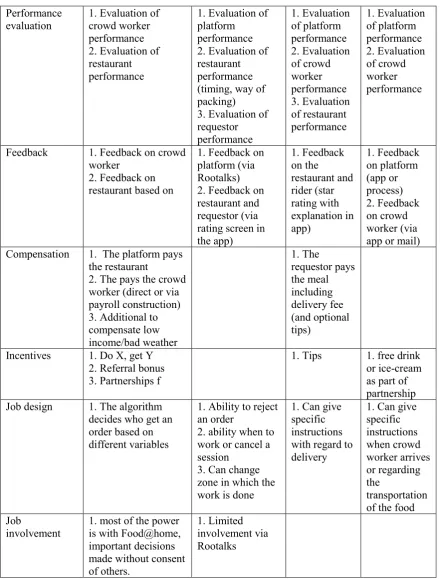
Overall, a lot of HR practices are taking place within a crowdsourcing ecosystem and these practices are executed by all of the actors in a lot of instances. They are all exchanging the practices and it is a really intertwined network of HR practices and actors. A short overview of the HR practices that are present at Food@home and the involved actors is shown in Table 4.
Actor The platform (Food@home)
Crowd worker Requestor restaurant
HR practice
Recruitment 1. Makes use of (job) adds on social media 2. Special recruitment events
1. Can refer new crowd workers 2. ‘Living ads’ as they cycle through the city
Selection 1. Selection of new crowd workers 2. Selection of restaurants
1. Selection of specific orders from restaurants 2. Selection of platform (before start)
1. Selection of platform 2. Selection of restaurant while ordering
Training &
Development 1. Onboarding as training 2. Training of restaurant
45 Performance
evaluation
1. Evaluation of crowd worker performance 2. Evaluation of restaurant performance
1. Evaluation of platform performance 2. Evaluation of restaurant performance (timing, way of packing) 3. Evaluation of requestor performance 1. Evaluation of platform performance 2. Evaluation of crowd worker performance 3. Evaluation of restaurant performance 1. Evaluation of platform performance 2. Evaluation of crowd worker performance
Feedback 1. Feedback on crowd worker
2. Feedback on restaurant based on
1. Feedback on platform (via Rootalks) 2. Feedback on restaurant and requestor (via rating screen in the app) 1. Feedback on the restaurant and rider (star rating with explanation in app) 1. Feedback on platform (app or process) 2. Feedback on crowd worker (via app or mail) Compensation 1. The platform pays
the restaurant
2. The pays the crowd worker (direct or via payroll construction) 3. Additional to compensate low income/bad weather 1. The requestor pays the meal including delivery fee (and optional tips)
Incentives 1. Do X, get Y 2. Referral bonus 3. Partnerships f
1. Tips 1. free drink or ice-cream as part of partnership Job design 1. The algorithm
decides who get an order based on different variables
1. Ability to reject an order
2. ability when to work or cancel a session
3. Can change zone in which the work is done
1. Can give specific instructions with regard to delivery
1. Can give specific instructions when crowd worker arrives or regarding the transportation of the food Job
involvement
1. most of the power is with Food@home, important decisions made without consent of others.
[image:46.595.65.506.65.645.2]1. Limited involvement via Rootalks
46
Discussion
During this research a lot of insights were gained and, in this section, it will be discussed what these findings might potentially mean for the way in which researchers look at HR research. Next to this, some future implications for both researchers and practitioners will be given.
Theoretical implications
While conducting this research, a lot of things have become clear. Some findings were in line with what was found by earlier research and in other cases new or different things have been found. In the next sections some similarities as well as differences will be discussed with regard to crowdsourcing, the crowdsourcing ecosystem, HR practices, and HR management of crowdworkers.
Crowdsourcing
47 will send two or more crowdworkers to complete the task together. Also the commitment can vary. If one already possesses the needed resources, the step that need to be taken to start doing work with help of a crowdsourcing platform is lower than when these resources are not yet present. Based on this finding, it became clear that one particular crowdsourced task does not necessarily needs to fit to one type of crowdsourcing as defined by Nakatsu et al (2014) and that within one type of job, there can be difference with regard to in(ter)dependence, and task commitment.
The crowdsourcing ecosystem