University of Warwick institutional repository: http://go.warwick.ac.uk/wrap
A Thesis Submitted for the Degree of PhD at the University of Warwick
http://go.warwick.ac.uk/wrap/3172
This thesis is made available online and is protected by original copyright.
Please scroll down to view the document itself.
An evaluation of the transferability of the
interpretive approach to teachers’ continuing
professional development.
Joyce Miller
This thesis forms part of the submission for the degree of
Doctor of Education (Ed D)
University of Warwick, Institute of Education
Table of Contents
Ch.1
Introduction
1
Ch.2
Methodology 29
Ch.3
The teachers’ experiences of and responses
to the CPD programme (part 1)
56
Ch.4
The teachers’ experiences of and responses
to the CPD programme (part 2)
83
Ch.5
The teachers’ understanding of their religious
and
cultural
communities
109
Ch.6
The impact of the CPD programme on the
teachers’
personal
edification and professional
practice.
134
Ch.7
Transferability and impact: conclusions
164
References
184
Glossary
197
List of illustrations
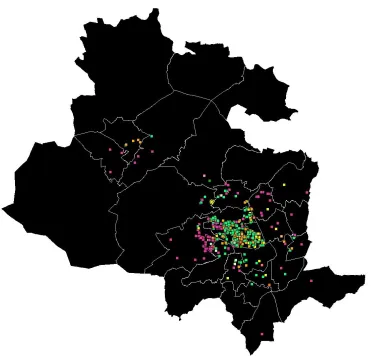
Fig. 1:
The school in relation to pupils’ addresses by
ethnicity
16
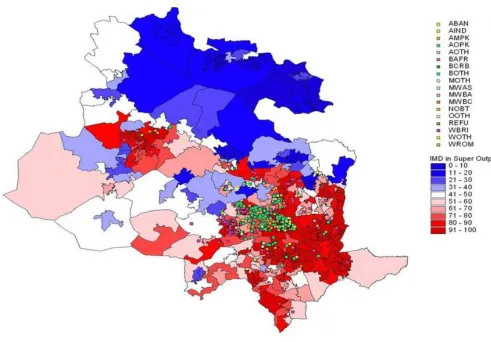
Fig. 2:
Pupil addresses in relation to areas of multiple
deprivation,
by
ethnicity 21
Acknowledgements
With my grateful thanks to my supervisor, Professor Robert
Jackson, for his unfailing support, guidance and friendship over
many years.
I am also grateful to the members of the Warwick Community of
Practice for their questions, insights and challenges, and for the
fun we had. Among them, it is appropriate to single out Dr Kevin
O’Grady for his guidance on methodology.
Abstract:
This is a practitioner research project set in the humanities faculty
of a school in a northern town where riots took place in 2001. The
aim was to evaluate the transferability of the interpretive approach
to teachers’ continuing professional development and to see how
far it increased their understanding of and relationship with their
local communities.
Qualitative data were gathered using a range of methods including
participant observation, semi-structured interviews and
questionnaires. The teachers engaged in ethnographic-type
activities in their participant observation of groups and interviews
with representatives and their students. The principles of the
interpretive approach – representation, interpretation and
reflexivity – underpinned the
design of theprogramme and the data
analysis.
The research found that teachers’ understanding of the diversity of
communities
was increased. There was little evidence of increased
understanding of ‘the group’ in relation to individuals and the
tradition. There was little formal evidence o
f a deeper understanding of concepts, of ‘oscillation’ or of personal edification. There were
significant professional benefits in increased confidence, dealing
with controversial issues and in developing community education.
The teachers demonstrated open-mindedness and a positive attitude to pluralism.
Further questions about
the inter-connectedness ofreligion and
culture and the interpretation of religious texts were raised
and there was critical engagement with aspects of community life, including the place of women. The research identifies the need for a moreinformed critique of and engagement with the presuppositions that underpin discourse on minority communities. The teachers recognised
the need
for the whole school staffto undergo the same process
and understood that this would be a long-term enterprise.The conclusion is drawn that the interpretive approach can be applied to teachers’ CPD and that it increases their understanding of and
Chapter 1
Introduction
This is a practitioner research study conducted by a local authority
inspector/adviser with responsibility for community cohesion, race
equality and religious education in schools. It is set in one of the
northern towns (it will be anonymised as ‘Northtown’ throughout this
thesis) where riots took place in 2001 and where the minority ethnic
population, mainly of Pakistani heritage, was just over 21% at the 2001
census. The school where the research was conducted, called ‘School C’,1 serves a mainly Pakistani-heritage population. The research is focused
on a continuing professional development programme (CPD), based on
the interpretive approach (IA) to religious education (RE) developed at
the University of Warwick, and was conducted in the humanities faculty
of a mixed community secondary school during 2007, with final plenary
sessions at the beginning of 2008. Its aim was to evaluate the
transferability of the IA to teachers’ CPD and to see how far it impacted
on them and their understanding of and relationship with the
communities from which their pupils came. It is hoped that the findings
of this research will be of interest, not only to fellow researchers but also
to those engaged in similar work in a variety of contexts, including those
who support teachers’ CPD.
This introductory chapter sets out the background to the research study
Education: A contribution to dialogue or a factor of conflict in
transforming societies of European countries’ - for which the IA forms
the theoretical basis (Weisse, 2007, 17). There is therefore included here
a summary of the IA which also sets out its relevance to this study. The
CPD programme came under the auspices of Northtown’s education
service for which I worked and its part in the promotion of community
cohesion locally is here contextualised. The final section in this
introductory chapter describes the school, its situation and its identified
needs providing sufficient detail to establish the context in which the
research was conducted.
The second chapter gives an account of and justification for the research
methodology that was deployed to evaluate whether or not the IA is
transferable to teachers’ CPD. Chapters 3 and 4 provide an account of
the CPD programme which was conducted and presents the data that
emerged from it, drawing on the wide range of ‘voices’ that emerged
from the deployment of the IA and the teachers’ engagement with it. A
number of key themes are identified to which they returned frequently in
their conversations with each other and with their informants. The data
are then analysed in relation to the research questions: chapter 5
focuses on the first part of the research question on the teachers’
understanding of their communities; chapter 6 on the two remaining
research questions on reflexivity. In the final chapter, conclusions are
The context of the research study
Part of the context of this study that needs to be established is its
timing, not least in relation to community cohesion as a dominant
political theme throughout the decade. The origins of ‘community
cohesion’ as a part of British public discourse can be traced to a range of
events and publications that coincided in 2001: the Ouseley report on
Bradford’s ‘parallel lives’; the riots that took place in several northern
towns which resulted in two major reports on community cohesion: one
by an independent review team chaired by Ted Cantle (2001) and
another by a ministerial group chaired by John Denholm (Home Office,
2001); and the terrorist attacks in America in September of that year. In
the northern towns where the riots had occurred these events had
particular resonance and it is in one of those towns that this research
was conducted.
There followed a wide range of other publications and initiatives (e.g.
Home Office 2003; Community Cohesion Panel, 2004; DCLG 2006;
Commission on Integration and Cohesion, 2007a and b). Further terrorist
attacks in London in 2005 added greater urgency to the perceived need
to promote community cohesion and there was an increasing tendency to
conflate community cohesion with preventing violent extremism,
particularly by government (e.g. CLG 2007b). In relation to schools, it
had been decided that Ofsted would inspect schools from 2008 on their
promotion of community cohesion and guidance on this was published in
There was thus, nationally, political concern about community cohesion
and this was paralleled in the life and work of Northtown. The local
authority (LA) had a firm commitment to community cohesion and the
education service was one of the leading agencies for this. In 2005 it had
developed its community cohesion strategy, setting out both the vision
and the means by which it could be strengthened in educational
contexts. School C, where the staff had considerable experience of
working with minority ethnic pupils but professional anxieties about their
effectiveness, was an ideal setting to test aspects of the strategy and to
site the REDCo Project, not least because the school was seeking
humanities specialist status for which it was required to develop a
community policy.
There are three separate but interlinked bases to this study:
• The European-wide research project - REDCo - in which
Northtown’s education service had agree to participate
• The education service’s community cohesion strategy for which I
was responsible
• The ‘community’ theme within the school’s bid to achieve specialist
humanities status.
The REDCo Project
The REDCo Project is a European-wide research project which takes the
interpretive approach as its theoretical and pedagogical basis (Jackson
surprise since community cohesion had been identified as an important
priority in Europe (e.g. Council of Europe 2008; OSCE 2007; United
Nations Alliance of Civilizations, 2009), as well as in Britain. The four
themes within its title of religion, education, dialogue and conflict are
entirely congruent with the work being undertaken in Northtown. The
REDCo Project was an opportunity to deepen that work and extend our
thinking and therefore the education service accepted the invitation to
participate. Involvement in the REDCo Project meant that this research
could be seen within a wider context, both geographically and
theoretically, with opportunities for analysis and comparison at a range
of levels. There was a further specific benefit in that School C also
participated in separate but linked REDCo qualitative research on pupil
attitudes to religion and religious education (Ipgrave and McKenna,
2008)3. The results from that research project provided me with valuable insights into the students of the school and the questionnaire (see
Appendix 2) used by the European qualitative researchers became a
research tool that could be amended for use with the staff.
The interpretive approach
The REDCo Project takes as its theoretical foundation the interpretive
approach (IA) to religious education developed by Robert Jackson (1997,
2000, 2004, 2005, 2006, 2008a) of the University of Warwick. It is
interesting that the IA arose, at least in part, from ethnographic research
on the transmission of religious culture to children in which he and
colleagues were engaged (e.g. Jackson and Nesbitt, 1993) though he
bound up with the interpretive approach (2000, 131). His research led to
concern about methodological issues that were relevant to both the
study of religions and to religious education and included a critique of the
ways in which religions are often portrayed, neglecting, for example,
their inner diversity (Jackson, 2000, 130). He has always been adamant
that the IA is only one contribution – theoretical, methodological and
pedagogical - to RE and that it is complementary to some others (2008a,
309). Jackson describes his IA as ‘essentially hermeneutical and
post-phenomenological’ (2008b, 191) and it questions some of the
assumptions which had underpinned phenomenology: universal
‘essences’ or ‘ideal types’ (eideia) that could be understood intuitively
are rejected; the bracketing out of one’s own presuppositions (epoche) is
replaced with open engagement in a process of moving from one’s own
view to that of others in a process he calls ‘oscillating’ (2000, 134); and
the use of empathy is replaced with empathy as an outcome of
understanding. Context has to be acknowledged, there is no autonomous
realm of religious meaning (1997, 23) and one cannot assume that what
is meant in one context is the same as its meaning in another. Here
Jackson is drawing on Wittgenstein and Ryle and avoidance of a
‘category mistake’ (ibid). This is why the ‘grammar’ of discourse has to
be understood (24). The IA brings together ethnographic approaches
from cultural anthropology with hermeneutics (2008b, 192) and it is
influenced by the work of a number of key disciplines and writers. He
draws on Geertz’s work in interpretive anthropology and from Ricoeur on
hermeneutics, and creates a model for both the interpretation of
Another significant influence on Jackson was Wilfred Cantwell Smith
(1978) and his use of ‘faith’ and ‘tradition’ to provide means of
understanding ‘religion’. He extends Smith’s model to include the
‘group’, the ‘powerful influence’ which he says Smith ignores (1997,
64).The IA is thus an exploration of the individual (of faith) within the
group (a denomination, for example) as part of the ‘tradition’, enabling
an understanding of ‘parts’ and ‘wholes’ and the relationship between
them. Although Jackson shows that ‘religion’ is a modern, western
construction (1997), he does not reject the notion of tradition as a whole
nor does he reject the use of the word ‘religion’ (as Smith does); instead
he offers the IA as a means of understanding ‘the inner diversity, fuzzy
edgedness and contested nature of religious traditions’ (Jackson, 2005,
8).
There are three key concepts within the IA - representation,
interpretation and reflexivity - and they can be applied to religions and to
cultures and the relationship between them (133; 2008b, 193). In
practice, the dividing lines between representation, interpretation and
reflexivity are, like the religions and cultures under study, somewhat
imprecise (Ipgrave and Jackson, 2009, 162).
In relation to representation, the IA rejects the notion of religions as
reified with essences that can be defined. Rather the contested, complex
and changing nature of religions is stated, along with their inner
approach to religion and that it is not ‘relativistic with regard to truth’
recognising that there are competing truth claims (1997, 126; 2000,
133; 2007, 182). It does not fall into a paradigm that all knowledge is
socially constructed, although it recognises that it is true of some.
Epistemological openness is different from a relativist view that religions
are equally true and it does not deny the possibility of ultimate truth
(1997, 126). The IA distinguishes ’issues of truth from those of meaning’
(2008b, 193). This links to ‘religion as cultural fact’ (Jackson 2007b, 37),
the stance adopted as a procedural strategy by the Council of Europe,
which provided the funding for the REDCo Project. Despite the wide
variations across the European continent on public education and
religion, this view was uncontested: knowledge and understanding of
religions are socially and political relevant.
The second concept, interpretation, has some links with Waardenburg’s
‘new style’ phenomenology, the description and attempted classification
of phenomena which enable comparison, and therefore the drawing out
of meaning (Jackson 1997; 2000). More significantly, there are links with
interpretive anthropology in which the learner oscillates between the
concepts and experiences of the learner and the ‘insider’ in order to
develop understanding. In this he draws on Clifford Geertz’s use of
‘experience near’ and ‘experience distant’ concepts to enable
interpretation (1997, 111). Another influence is Ricoeur’s ‘participation’
and ‘distanciation’, a complementary process which would be built into
this study as teachers engaged in participant observation and engaged
Reflexivity, the final key concept of the interpretive approach, is about
the learner’s relationship with what is being studied. Jackson identifies
three strands:
• edification which is re-assessing the participant’s own
way of life through new understanding (Jackson 1997, 131; 2000,
135);
• a constructive critique of what is being studied: this
approach is not about promoting an undiscerning acceptance but is
one that requires critical engagement (2000, 134);
• a critique of the interpretive process (ibid).
The first of these is supported by other writers, including Grimmitt
(1987) though Jackson argues that his approach is similar to but
different from Grimmitt’s widely used ‘learning from religion’. The
potential transformative power of religious education (an important
concept in the REDCo Project) is present through the raising of complex
questions of belief and values (O’Grady, 2009, 20).
Jackson is also emphatic that the IA can have any starting point on the
hermeneutic circle in the exploration of religion as tradition, as group, as
individual and their interconnectedness; or it can take as its starting
point the questions and concerns of the students themselves (2000,
142). The processes of dialogue and reflection are fundamental to the IA
Involvement in this project gave me the opportunity to take the IA and
see if it could be applied to teachers and their continuing professional
development. How this was done is set out in this study and in a chapter
in the book that resulted from the British REDCo Project (Miller, 2009). It
is important to note at this point that there is congruence between the
community cohesion strategy we had developed in Northtown and the
REDCo Project. The latter has the IA as its theoretical basis and the
former was strongly influenced by it. Engagement with individuals in the
context of the groups as part of a larger tradition and the use of
ethnographic methods in an open and respectful process of dialogue and
learning were key elements of the community cohesion strategy we had
developed two years earlier in Northtown. My previous research degree
(Miller, 1992) was an ethnographic study of a religious community and
the methodology employed there influenced the development of policy
and practice in our work to promote cohesion and respect for diversity.
As Nesbitt says:
Insights from ethnographic studies of faith communities... are
relevant to education practice. As such they need to be
included in... continuing professional development ‘(2005, 20).
Northtown’s community cohesion strategy for education
The second contextual basis of this research study lay in my professional
work as lead officer on community cohesion and in particular, the
strategy (see appendix 1) through which officers could support schools in
based on the Local Government Association’s definition of a cohesive
community as one that has four key characteristics:
• there is a common vision and sense of belonging for all communities
• the diversity of people’s different backgrounds and circumstances is
appreciated and positively valued
• those from different backgrounds have similar life opportunities • strong and positive relationships are being developed between
people from different backgrounds in the workplace, in schools and
within neighbourhoods (LGA, 2002).
A number of key concepts underpinned our cohesion strategy: identity
(ies) and community (ies) were the major concepts and we articulated
an understanding of them as multiple, changing and multi-faceted. Other
concepts were ‘dialogue and participation’ as the means whereby
community cohesion could be promoted. These two processes seemed to
us to be the basis of engagement between educationists and the
communities they serve. The final key concept was a phrase we
borrowed from Roger Ballard - ‘skilled cultural navigators’ (1994) - and
then adapted to our own purpose though it may have been more
accurate to use the phrase ‘skilled inter-cultural navigators’. It was our
aim that:
Everyone involved in education will have the confidence to
become ‘skilled cultural navigators’, aware of their own
openness and empathy with the identity (ies) and community
(ies) of others. (Appendix 1, 2-3)
To develop the strategy we took each of the LGA’s four characteristics
and set out a ‘vision’ of what it would look like in an educational setting
and then we identified ways in which it might be achieved. This research
study has this strategy as one of its foundations. I wanted to see if the
community cohesion strategy could work within a school setting, if the
key processes of dialogue and participation would impact positively on
staff, enabling them to develop a more cohesive school community, to
engage more confidently with the communities their school serves and to
develop their own understanding and reflection.5 One further aspect of the community cohesion strategy that is worth mentioning here is the
recognition that there was a need for ‘safe space’ in which dialogue to
promote understanding could take place. Ipgrave made the case for a
‘safe forum’ (2005, 39) in her work on dialogical approaches to RE and it
is echoed in The Curriculum Review Diversity and Citizenship report
chaired by Sir Keith Ajegbo:
Teachers and pupils need room to be able to explore their
own histories and uncertainties within a safe environment,
where debate can develop and their expertise grow (DfES
2007, 35).
Reasons for choosing this school
The third contextual basis of this study is the school where the research
management team. When considering which of a possible 28 Northtown
secondary schools to invite to participate in the REDCo Project a number
of factors were considered. First, I wanted a school where I could rely on
the co-operation of the staff and, ideally, have already worked with some
of the senior and middle managers. Second, I wanted a school with a
significant number of minority ethnic students, not because community
cohesion is only about ethnicity or because it should not be a priority in
all-white schools. Rather, I wanted staff to have a professional incentive
to participate in exploring religions and communities and to be able to
assess the relevance of what they had done in the light of their
day-to-day work. Thirdly and significantly, I also wanted a school where
religious education is taken seriously and taught well. This school has
had, over the seven years I have analysed Northtown’s examination
results, consistently high positive residuals for their Religious Studies
(RS) full course GCSE.6 In 2007, 44% of students gained five A*-C grades at GCSE level.7 The results in RS were significantly higher: 72% achieved A*-C grades in full course GCSE, taken by 53% of the cohort
(with another 20% doing short course). This constitutes what the school
rightly describes in its Self-Evaluation Form (SEF) as ‘excellent
performance’ and the results are 0.75 of a grade higher than predicted
by Yellis (that is, what students are expected to achieve given their
previous performance). I had already carried out a small research study
in 2005 in this school, and others, on why RS/RE results were higher
For these reasons, the school was approached and the newly appointed
head teacher agreed to participate. It must be recognised, however, that
the school faced considerable challenges which made demands on staff
time and energy. In 2007 it was judged by Ofsted to be satisfactory,
with some aspects of the school’s work being praised. Their SEF says
that their examination results mean that ‘we are making the same
amount of progress as the top 25% of schools nationally’. It also points
out that there is little difference between the performance of white and
Pakistani students, and between students for whom English is an
additional language (EAL) and first language students. Nonetheless, the
school’s overall performance is below the national average and in the last
five years it has been in an Ofsted ‘category’ indicating its failure to
provide an appropriate standard of education. In 2008 it was labelled as
a ‘national challenge school’ by the DCSF because of its failure to achieve
30% five A*-C grades at GCSE level, including both English and Maths.
This had serious negative consequences on the CPD programme, as we
shall see.
The school’s needs
The school’s managers had two specific reasons for agreeing to
participate in the project. The first lay in its bid to become a specialist
status humanities school which it finally achieved in autumn 2007. Each
specialist status bid has a community dimension and the school’s
strategic priorities included the need to build links with stakeholders and
to enhance community participation. They had identified three groups
Asian women, migrant workers and local senior citizens. They recognised
that this research study could definitely help with the first and might
contribute to the second and that participation would increase the
likelihood of achieving the success in their bid which had, so far, eluded
them.
Their second reason for agreeing is that the school is situated in a largely
white middle class suburban area but its students do not come from the
locality. According to the school’s SEF, students live an average of three
miles away from the school and the staff feel that relationships with their
community (ies) suffer consequently: ‘the community of the students is
distant from the school in terms of distance and culture’ (see Fig. 1).8
This is a significant statement by the school. The guidance issued by the
Department of Children Schools and Families (DCSF) on promoting
community cohesion (2007) offers a four-fold definition of ‘community’
including ‘the community within which the school is located’ (2007, 5)
but this over-simplifies the complexity of demographics and school
populations. In this instance the ‘local community’ is largely white while
the school’s population is largely Pakistani-heritage and the students live
in very different social, economic and ethnic circumstances. Local white
pupils go to schools further along the valley. The reason for this is often
attributed to ‘white flight’ (e.g. Lynch writing in an appendix to the
Cantle report, 2001, 70-1). Lynch quotes Kundnani who links this
phenomenon with that of ‘parental choice’9 which has resulted in
Figure 1. The school in relation to pupils’ addresses by ethnicity
alternative views. Yunis Alam, a local academic, describes the movement
as ‘middle class flight’ suggesting that segregation is more closely linked
to socio-economic factors (2006, 15) and indeed the local community is
beginning to change as more affluent minority ethnic families move in.
Ludi Simpson and Nisa Finney demonstrate that there are equal
movements of Pakistani-heritage families out of the inner cities (as they
settle and become more prosperous) as there are movements in of white
people whom I take to be (though they do not say) European migrant
workers (Finney and Simpson, 2009, 187). Nonetheless, School C‘s
population is skewed in relation to its immediate locality and, like most
schools in Northtown, it serves a largely mono-cultural population. These
matters were referred to quite frequently during the CPD sessions, as in
the following exchange between the head teacher and the deputy head
of faculty:
HT Lots of Muslim parents want their kids to go to the
white school because they think they’re better.
David That’s what happened here and now look at us - we’re
mainly Muslim. (Laughter)
There was a strong desire expressed by both the school’s managers and
its teachers that the ‘distance’ between the pupils’ families and the
school should be overcome and participation in this project was one of
the ways in which they believed this could be achieved. It can be
expressed in terms of ‘social bridging’, a term widely borrowed from
Putnam (2000) in his work on ‘social capital’, defined by Communities
Putnam identifies three categories: bonding, bridging and linking (CLG
2007a, 14; 2008, 26). A school’s role falls within the second category of
‘bridging’ – forming connections between people who have overlapping
interests and who may come from within different groups in a
community. It was clear from both the school’s documentation and
conversations with staff that the enhancing of ‘social capital’ was high on
their priority list and they wanted to ‘bridge’ the distance between them
and their communities. They were willing to make the effort to meet the
challenge articulated by Modood and Kastoryano (2006, 176):
Do not parents have the right to expect that schools will make
an effort ... not to create a conflict between the work of the
school and the upbringing of the children at home, but, rather,
show respect for their religious background?
The wider local context
It is necessary now to place the school in its local context. Northtown
has been the focus of considerable negative attention including two
infamous ‘affairs’, one linked to a local head teacher whose comments
stirred up controversy about minority ethnic pupils (1984-5) and the
other to the burning of The Satanic Verses in 1989 (Bowen, 1992;
Parekh, 1993, 2006). This has resulted in very negative perceptions
generally of Northtown (e.g. Sardar, 2009, 119), alongside a focus on its
Black and Minority Ethnic population (BME) which is largely from Mirpur,
a district of Pakistani Kashmir. Several high-profile reports have been
written on Northtown which focus on ‘parallel lives’ (Home Office, 2004)
unsubstantiated claims of segregation and ghetto-ization and populist
publications have furthered this view. In a book that aroused significant
local controversy, George Alagiah wrote ‘I was entering a version of
Kashmir... an Asian enclave... a kind of separate development’ (2006,
157). A recent report from Civitas purports to provide evidence of jihadi
activities in Muslim schools, including one of the most respected schools
in Northtown (MacEoin, 2009). The publicity that surrounds the
publication of such reports can be deeply damaging to public (and
teachers’) perceptions of Muslim communities in Britain. As Alam and
Husband point out Northtown’s Pakistani-heritage community is
presented as ‘fundamentally flawed’ (2006, 17) and in need of reform,
both of which assertions they reject.
There can be no doubt that these negative perceptions have an impact
not only on how the school sees itself but how the young people growing
up in Northtown see themselves and their communities, not least in the
aftermath of the 2001 riots. Ethnicity and religion are seen as key factors
in Northtown, as Alam and Husband point out:
For the majority of British ‘white’ citizens’, it is easy to see
[Northtown] as an extreme demonstration of the social costs
of allowing ‘ethnic ghettos’ to develop in our inner cities. And,
for the majority population, the difference and wilful
‘self-segregation’ of this population are fundamentally linked to
But there are now challenges to these perceptions on several fronts.
Challenge to the prevailing perception using quantitative data comes
from Ludi Simpson who sets out to dispel what he calls ‘myths’,
especially the notions of increasing segregation and ghetto-ization and
he demonstrates statistically that many of these assumptions are deeply
erroneous, including Trevor Phillips’ assertion that we are ‘sleepwalking
into segregation’10 (Finney and Simpson 2009). Challenge based on qualitative data comes from Alam and Husband’s work gathered through
interviews with British-Pakistani men in Northtown (Alam, 2006) from
which they develop a socio-political critique (Alam and Husband, 2006).
They reject the analyses of Cantle, Ouseley and others, arguing that
within the Pakistani-heritage community there is huge strength, alluding
back to Putnam (2000), in ‘social bonding’ which they see not as
isolationist but rather a strong foundation on which participative
citizenship can be based (Alam and Husband, 2006, 56). For them, social
class and poverty are too often ignored in any analysis of Northtown’s
situation where ethnicity is invariably given primacy (55).
Social deprivation
There is a significant degree of social deprivation in the wards from
which the school’s students primarily come. ‘NT’8 and ‘NT’9, according to
the schools’ SEF, are ranked in the 20% most deprived areas in England
and there are ‘indicators of severe deprivation in many households in
Figure 2: Pupil addresses in relation to areas of multiple
deprivation, by ethnicity
Lewis points out that 55% of Muslims in England live in areas containing
the most deprived housing conditions and they form a ‘growing
underclass’ (2007, 29) that impacts on negatively on community cohesion
(e.g. CLG 2007a, 13). As one of Alam’s respondents says tellingly, ‘Us
The school’s population
2005 figures from Northtown’s local authority show that out of 28
secondary schools 20 had 85% or more of their population from one
cultural/ethnic group (13 white and 7 Pakistani-heritage). There were no
schools where fewer than 60% of pupils were from either of those
groups. In other words, schools are not mixed. The Ouseley report
stated that ‘segregation in schools is one indicator’ of the ‘social
fragmentation’ that is occurring in Northtown (2001, 6). Bristol
University research on ethnic segregation in schools says that Northtown
is one of the areas showing ‘extreme segregation indices’ (Burgess and
Wilson, 2003, 8).
In 2007 School C had 927 pupils, with an additional 136 in the sixth
form. The proportion of boys to girls is high (58.3%) and slowly
increasing; 76.5% of pupils are from a South Asian background with
71.4% of Pakistani heritage.12 The school has spare capacity and
admitted 91 students mid-year in 2007 who are mainly Pakistani and do
not speak English. They fall into two groups: students who have been
excluded from neighbouring schools and those who are newly arrived in
Britain. The school’s SEF says of these pupils:
Some are scarred by their experience of war and are
orphans. Many need to spend months learning English before
they can join mainstream classes. Both groups require
specialist and intensive support ... we have many success
stories not only of academic achievement by also personal
The school was given ‘outstanding’ in its support of vulnerable pupils by
Ofsted when it was judged to be only satisfactory overall.
The school’s SEF says that 738 students do not have English as a first
language and they are at an early stage of English language acquisition.
The number of students with special education needs is 56.1% (17.6%
nationally). The percentage of pupils entitled to free school meals is
37.5% (13.1 nationally).13 In the school year from September 2006 around 24% of white students were excluded (8 boys and 14 girls) and
around 12% of Pakistani students (64 boys and 13 girls). The school has
anxieties about its poor white disaffected population. Thus, it can be
seen that the school works in the challenging circumstances of what is
sometimes called ‘super-diversity’.14
Projects to promote community cohesion
It is important to note that this project stands within a strong tradition in
the school to promote community cohesion and it is clear that the staff
take this responsibility seriously. The school’s SEF says that there is
‘little evidence of inter-racial aggression or violence’ and Ofsted agreed
that it is a ‘racially harmonious, inclusive community’. Throughout this
project, the staff demonstrated what Sir Keith Ajegbo describes as ‘the
commitment of each school’s head teacher and leadership team, to
drive, morally and intellectually, the importance of education for diversity
The school’s SEF lists a number of ways in which it works with its
community including:
• Regular visits into the school community e.g. mosques, community centres...
• Senior staff visits to Mirpur to promote community and cultural
cohesion and foreground the humanitarian ethos of our school
• Liaison with community stakeholders though extended schools • Discussion with Muslim scholars and elders during Nasiha launch
has specific positive impact on community cohesion (see below)
• Whole school assemblies
• Student involvement in city wide projects such as ‘In Your Shoes’.15
The SEF points out that the school is developing good links with the
community it serves and gives the example of an information evening at
a local community centre. What the SEF does not say is that this was
very poorly attended. There was only one parent who turned up for the
event and only three who came to a meeting on the Mirpur Connection,
an initiative run in collaboration with the local university, amongst
others, designed to foster links with Pakistan.16
One of the important community cohesion initiatives the school
highlights in its SEF is the Nasiha project.17 This is worth describing in some detail because it has attained a high national profile and is included
in the Yorkshire and Humber government office’s summary of projects to
reduce violent extremism (Wheeler, 2008). The school engaged in a trial
Northtown’s mosques where it was taught by imams. Described as a
citizenship programme, it was produced by a science teacher at School C
for the local Council for Mosques. Lessons include such topics as ‘Oath of
Peace’, ‘Sacredness of Life’, ‘Being a Good Student’ and ‘Islam and
Suicide Bombings’ and there is a strong emphasis on civil participation
and democracy. The teaching methods deployed are a hybrid of madrasa
and maintained school approaches. The Nasiha project was launched by
Ruth Kelly, then secretary of state at the CLG, at the school. It provides
evidence that the school is already trying hard to work with its local
community and participation in the REDCo Project is another attempt to
do this.
Conclusion
This, then, is the background to the research study based on the
interpretive approach which applies its principles to the continuing
professional development of teachers in the humanities faculty of a
maintained mixed comprehensive school in a local authority in the north
of England.
The three bases of the study have been set out: the European-wide
REDCo Project with its theoretical basis in the interpretive approach, the
local authority’s community cohesion strategy and the school’s need to
improve its understanding of and relationship with its local communities.
It is necessary to point out at this stage that the three bases to the
study make for complexity. My agenda as a researcher within the REDCo
transferability of the interpretive approach whilst they were setting out
to improve their relationships with their local communities. These
different agendas were not in tension in the activities we engaged in
together but they made the structuring and writing of the study more
complex.
The context of the study has been set out in relation to the school and
the community which it serves, within the wider community of Northtown
where it is situated. Some detail has been given about Northtown which
has faced considerable notoriety about its community relations,
particularly with regard to its main minority group, Pakistani-heritage
people from the district of Mirpur. Negative perceptions about Northtown
have been challenged but it is also recognised that they impact on the
school and its students and they form part of the background in which
this research was conducted.
In the next chapter, I set out an account of and justification for the
research methods used to gather data in this evaluation of the
transferability of the interpretive approach to teachers’ continuing
professional development. Grimmitt (2000, 22) pointed out that it was
‘remarkable’ that there had been no independent evaluations of any of
the main pedagogies of religious education. This study will not provide
that but it will provide an evaluation of its transferability and
effectiveness in the context of adult education, sometimes referred to as
End-notes
1 This is the name given to this school in another linked but separate REDCo
study on teenagers’ views on religion (Bertram-Troost et al., 2008).
2 One of my specialist studies forms part of the theoretical background to this
thesis and provides a critical overview of the development of community
cohesion in policy and practice since 2001, particularly in relation to Northtown.
3 The school in which I conducted my research is School C in this chapter.
4 An anonymised version is appended to prevent identification of the LA (See
appendix 1).
5 This resonates with some of the guidance in the DCSF’s toolkit for schools on
preventing violent extremism where strengthening links with communities is
affirmed (2008, 8).
6 Positive residuals provide a comparison between students’ attainment in one
subject and the rest of their results.
7 Their target for five A*-C grades at GCSE in 2007 was 37% whereas the actual
figure was 44%. This was the school’s highest ever A*-C score and exceeded
the Fischer Family Trust predictions7.
8 Fig 1. The school’s population, by ethnicity and residence. Pakistani-heritage
pupils are shown in green. A yellow star shows the school’s location. The map
shows all 29 wards of Northtown Metropolitan District.
9 The correct term is in fact ‘parental preference’.
10 Made in a speech in September 2005.
11 Fig. 2. The school’s population, by ethnicity and residence, in relation to
indices of multiple deprivation in Northtown. Pakistani-heritage pupils are
12 According to the draft document published by Ofsted in its consultation on the duty to promote community cohesion there are 63 secondary schools that have
more 50% of BME pupils, of which this school is one.
13 These figures are from Ofsted data, 2006.
14 See, for example, Finney and Simpson (2009, 12-3).
15 ‘In Your Shoes’ aimed to promote enterprise and understanding of diversity
and was set up by a local Business and Enterprise College. Year 7 students from
six local secondary schools, including School C, and two schools in Pakistan all
accepted the challenge to explain to others what it is like to stand in their shoes
through film, design and writing. They met each other and, where possible,
visited each other’s schools.
16 See: http://www.brad.ac.uk/admin/pr/pressreleases/2007/mirpur.php
17 www.nasiha.co.uk
Chapter 2
Research methodology
This research study was carried out under the auspices of the REDCo
Project, a European Commission Framework 6 Project involving nine
European universities (Jackson et al., 2007). Part of the English
contribution was a series of action or practitioner research studies
undertaken within a community of practice (Wenger, 1998), based at the
University of Warwick in which this researcher, along with others,
applied the interpretive approach (IA) to a range of learning situations
(Jackson, 2008a; Ipgrave, Jackson and O’Grady, 2009). My study was
the only one undertaken with serving teachers and it was necessary to
identify research methods that were appropriate for the topic without
being unnecessarily intrusive on the teachers’ experience of what was,
for them, a continuing professional development (CPD) programme. I
was researching the IA while they were interested in how the community
aspect of their bid to become a specialist status school could be made
successful and how they could improve their relationship with and
understanding of their local communities. This entailed a degree of
compromise, particularly in the construction of the programme and the
activities the teachers would undertake. To give an example of what this
meant in practice: the school had identified ‘Asian women’ as one focus
of its bid so we included a visit to a women’s community centre for one
These were not intrinsic to the research question but nor were they
completely tangential.
Community of Practice
The ‘community of practice’ (Wenger, 1998) set up by the English
researchers at Warwick involved in the REDCo Project provided both
support and challenge and it linked each of the participants to each
other’s research all of which was based within the same theoretical
framework (Jackson, 2008a, 319).There was too a common
epistemological stance, congruent with the areas under study and the
methods employed, where knowledge evolved from ‘practice, reflection
and conversation’ (O’Grady, 2009, 39). The Warwick group met all three
of Wenger’s dimensions of a community of practice. We were: engaged
in a ‘joint enterprise’; bound together as a social entity by ‘mutual
engagement’; had a ‘shared repertoire’ developed over time, including
our theoretical basis in the interpretive approach and vocabulary
(Wenger, 1998, 2). We met four out of five of Altrichter’s reasons for
setting up a community of practice: we ‘talked about plans, steps and
results’; we engaged in the ‘dissemination of teacher knowledge’; we
collaborated as ‘critical friends’ in a collegial group; and we became a
‘critical forum for research’ (Altrichter, 2005, 13). The one criterion we
did not fully meet was to practise research methods on each other.
Altrichter emphasises the importance of the ‘professional community’ as
part of a social process rather than an individual pursuit and that was
important in our community of practice which extended over three years
The community of practice group took the interpretive approach (IA) and
applied it to a number of research contexts, partly to test it and partly to
develop it. One of the intentions was to gain a set of well-documented
descriptions of the approach in practice (Jackson and O’Grady, 2007,
197).
A practitioner research approach
The term ‘practitioner’ rather than ‘action’ research seems more
appropriate to this study for several reasons. First, there is no iterative
element in this research, one of the key identifiers of action research
(Altrichter, 1993, 49). It had been planned that there would be at least
two CPD programmes conducted with two different faculties, both of
which would be evaluated in the research study. However, after the first
programme was completed, the head teacher asked that there should be
a delay in starting the second but then declined to participate further, on
the grounds of staff time.1 Second, the research is not about defining a problem and testing action strategies (44), which Altrichter (2005) and
O’Grady (2007) identify as central to action research where it is primarily
designed to develop teaching strategies and improve professional
practice (e.g. O’Dell, 2009). There was some element of ‘testing’ in my
study in that aspects of the community cohesion strategy we had
developed within the education service of Northtown formed part of the
contextual basis for the project, but the strategy was not being formally
tested with a view to its being amended accordingly. Nor was I setting
and O’Grady, 2009, 167). A third reason is that ‘practitioner’ is a broad
term and applicable to professionals other than teachers (Dadds, n.d.)
and this helped differentiate my part in the community of practice from
the other studies, all of which were situated in either schools or
universities and conducted by ‘teachers as researchers’ in ‘practical
action research’ (Cohen et al., 2007, 302).The distinction between
practitioner and action research is, nonetheless, somewhat blurred.
A qualitative research study
An early decision was taken that this study would rely on qualitative
data, partly because the size of the group involved is small, comprising
only 11 teachers from which no statistically valid data could be drawn.
Given that the IA is formulated from the joint bases of social
anthropology and hermeneutics, it would appear self-evident that an
interpretive research methodology would be employed in any study that
was seeking to evaluate its effectiveness in practice. This research is
predicated on a view of religions and cultures as constructed, changing
and internally diverse. It is focussing on teachers who are trying to
understand and interact with their communities and their members’
constructions of their communities, identities, practices and beliefs.
There is here a double hermeneutic because what I am investigating is
how teachers relate to and make meaning from their encounters with
members of religious and cultural communities while the teachers are
making meaning of those encounters. As Ipgrave points out this led to
some ‘blurring of the boundaries between the objects and the processes
complexity of this study though as she also points out that this means
that I am ‘more closely attuned to [the teachers’] experiences of the
project’ (ibid).
To understand meaning requires careful, detailed investigation of
thoughts, responses, perceptions and experiences, the epistemological
basis of which is anti-positivist and constructivist. A naturalistic and
interpretive methodology (Cohen et al., 2007, 5) based on qualitative
data, gathered in a number of ways, is the means by which this can be
achieved. Research, as Jackson says, is about ‘human beings relating to
other human beings as well as about formulating and testing
hypotheses’ (2001,188).
I recognise that other researchers have adopted different methodologies
whilst investigating related areas. For example, Smith (2007) adopts a
quantitative approach in his study of 3,418 young people and the
influence of religions on their behaviour and attitudes. While there are
benefits in having statistically valid data, I found his study frustrating
because it gave little insight into what the young people thought or why.
For example, he found that 60% of South Asian British youngsters felt
that their lives had purpose compared with 54% of White British
youngsters. He then writes: ‘This may be due to a stronger sense of
community...; or it may be a result of the fact that they live in families
who have made conscious decisions to migrate...; or it may be due to
their religious or political beliefs’ [my emphases] (2007, 26). In other
heard at all, only their tick-box answers to his questions. In my study,
the teachers were going to listen to the voices of members of
communities and I was going to listen to the teachers’ voices, as they
grappled with interpreting those communities and reflected on the
impact on them, both professionally and personally, in the process the
interpretive approach terms reflexivity.
The research question
The basis of the research question lies within the three principal concepts
of the interpretive approach, applied to teachers’ CPD within the context
of the REDCo project. These three are representation, interpretation and
reflexivity which sit alongside the REDCo concepts of religion, education,
dialogue, conflict and transformation.
The following research question was formulated:
What is the impact of the deployment of the interpretive
approach in the continuing professional development of the
humanities faculty teachers’
1. Understanding of the school’s religious and cultural
communities
2. Personal edification
3. Professional practice?
This question is drawn from the interpretive approach, the purpose of
which is to enable an understanding of communities, both religious and
cultural, through engagement with individual practitioners and their
of ensuring that religions and cultures are appropriately represented is to
enable an informed understanding of them. The first part of the research
question was therefore to see if this happened as a consequence of
deploying the first two principles, representation and interpretation, of
the IA. Jackson also insists that the study results in edification, part of
the key concept that he terms ‘reflexivity (1997, 131; 2000, 135). The
second part of the question therefore asks if such personal edification
took place and, because this was about teachers and their professional
development, a third element was also necessary. The evidence gathered
from the three parts of this research question would enable a conclusion
to be drawn on whether or not the IA could be successfully transferred to
teachers’ CPD.
Gathering data: data sets
In order to gather data on the teachers’ responses to the experiences
they undertook as part of this evaluation of the transferability of the
interpretive approach, it was necessary to deploy research methods that
gather detailed qualitative data that would give an accurate
representation of the teachers’ understanding and edification. This
included their attempts to grapple with some complex and difficult
questions and to explore questions of meaning and interpretation. It was
essential that such data were gathered in a sensitive, respectful manner
and in a number of ways, to enable these levels of complexity to be
expressed and recorded. The research methods chosen within the
qualitative paradigm are taken from ethnographic research: participant
variety of forms) and relevant published documentation (Burgess, 1984;
Cohen et al., 2007; Cheetham, 2001; Nesbitt, 2001).
The first research method was participant observation and the taking of
detailed fieldnotes in the many contexts in which we worked: the school
library for preparatory meetings; the off-site resource centre; during the
semi-structured interviews with the sixth form students; the places of
worship and the community centres. These fieldnotes were sometimes
written during the CPD sessions (such as while participants were
interviewing the students) or they were written up as soon as possible
afterwards (such as the CPD sessions which I was leading).2 Detailed fieldnotes, including my observations, comments, questions and
cross-references as well as notes on the participants and their informants and
what took place, form what Geertz calls ‘thick description’ (quoted by
Cohen et al., 2007, 169).
These fieldnotes were complemented by the flip charts the teachers
produced throughout the CPD sessions: their initial understandings of
identity and community; their knowledge and perceptions of the groups
identified in the specialist status bid; their existing knowledge of the
place of worship they were to visit; the questions and issues they wanted
to raise; as well as the notes from their plenary sessions at the end of
each of the three CPD days.
These two sets of data, along with my planning notes and agendas for
the teachers’ engagement with the communities and community leaders
they met. This has its basis in Glaser and Strauss (1967) and their
‘grounded theory’ approach in which, through reading and re-reading the
data, the key themes emerge and are not superimposed by the
researcher. These themes then helped determine the questions asked
during semi-structured interviews with three members of staff that were
conducted early the following term, as a form of triangulation or
‘respondent validation’ (O’Grady, 2007, 124). I checked that they agreed
that these were the main themes and that they had nothing further to
add. The following themes were identified:
• Identity
• British/Pakistani?
• Differentiating between religion and culture
• Interpretation of the Qur’an
• The place of women within Islam
• ‘Diversity within diversity’
• Division within community/ies
• Division between communities
• Religion as the focus for racism.
• 9/11
• School as a centre for and within the community.
After further reading of the data, they were further grouped into
categories to enable concise and coherent reporting and these are set
out in chapters 3 and 4. Only to report on or through Jackson’s or
misrepresenting the teachers’ own presuppositions, responses, values
and attitudes and would be both restrictive and unethical. It was
important that the teachers’ voices should not only be heard but that
they, at least in part, should determine the way in which the data they
generated are presented.
The teachers’ accounts
There were three other sets of written data gathered from the teachers:
reflective diaries and two sets of questionnaires which were analysed for
further evidence on the key themes that had arisen and to see if there
were any others to be added. First, in September 2007 as the main part
of the CPD sessions were getting underway, four teachers agreed to
keep a reflective diary (RD) throughout the rest of the project. I
suggested that it would be appropriate to have both men and women;
managers and main scale staff; experienced and less experienced staff. I
gave the teachers relatively little guidance saying only that I wanted
them to feel free to note anything that was of interest or significance to
them and to record their own responses and feelings about the various
tasks we were undertaking. Three were written in school note books and
comprised between 18 sides from a part-time female teacher (RD 3)
and four sides from the head of faculty (RD 1), who wrote his
retrospectively, despite my request that they should be kept up-to-date.
The youngest member of the team kept hers electronically (RD 4). I was
aware, as Nesbitt points out, that these were not ‘spontaneous diaries’
(2001, 148) but they were an attempt to give an open-ended
and their findings. The data in these diaries were used in two main ways:
to check the accuracy and validity of my fieldnotes and to enable an
analysis of the data through the key themes of interpretation and
reflexivity (this is written up in chapters 5 and 6). This proved to be a
more difficult task than the analysis of the questionnaires that the staff
had also completed for the obvious reason that the teachers were free to
write whatever they chose in their diaries whereas the questionnaires
were constructed to elicit specific evidence. When writing in their diaries,
teachers moved (often within the same paragraph) through and around
issues of representation, interpretation and reflexivity and it was difficult
to extract and separate out the three strands of the IA but the three are
closely interrelated anyway (Ipgrave and O’Grady, 2009, 172). The level
of honesty in the teachers’ diaries was noticeable and, although difficult
to quantify precisely, I felt that some of the diaries gave quite an openly
critical view of their experiences. They were thus a rich source of data
and are widely quoted in this study.
Staff also completed two questionnaires. The first (see appendix 2) had
two purposes in terms of this research study and it was based on the
questionnaire that had been completed by their students as part of a
linked REDCo study (Ipgrave and McKenna, 2008).3 It gave me the opportunity to collect basic information about each member of staff
including gender, age, teaching status and self-ascription in terms of
religious membership and nationality. I deleted or combined some
questions, amended some to take account of the teachers’ age and
different religions can live together?’ to ‘live in the same
community’, because ‘living together’ has particular connotations for
adults.4 This questionnaire also enabled me to gather from the staff some of their views on religion and on religion in education which were
used for the analysis of the data under the headings of ‘interpretation’
and ‘reflexivity’ (see chapters 5 and 6).
A second questionnaire, or summary form, was completed by (nine of
the eleven) staff after each of the CPD days (see appendix 3). Its
purpose was to gather more detailed data on what the teachers had
gained in developing their understanding of the religious and cultural
communities they had visited and the impact it had made on them (so
far) professionally and personally. In order to construct this summary
form, I primarily used the questions defined by Robert Jackson (2007a;
2008a, 317-9), using the three key concepts of the IA, along with the
key concepts of the REDCo Project. Again these answers were used
primarily to enable an analysis of the data under the headings of
‘interpretation’ and ‘reflexivity’ and these are presented in chapters 5
and 6.
The teachers were asked 14 questions which began with the opportunity
for them to set out what they had learned during the CPD day about
‘religions’ and ‘communities’ that was new or different. Their answers
would provide me with substantiating evidence to compare with what
they had said they knew at the beginning of the day as well as providing
were phrased in an open and straightforward manner, not least to
motivate the teachers to answer fully and to continue with the more
complex and demanding questions which followed.
The second set of questions, of which there were three, moved to
interpretation and were taken directly from Jackson (2007a): their
understanding of key terms and concepts; the relationship between the
individuals they had met, the group and the tradition as a whole to which
they belonged; their ability to empathise with their informants,
notwithstanding the difficulties of the word ‘empathy’ (Jackson, 1997,
46). Having given the teachers the opportunity to articulate their
interpretation of their experiences, the next questions asked about
representation. Had we avoided stereotyping and misrepresentation?
Had we given sufficient attention to diversity within religions/
communities? These questions were partly about finding out whether the
experiences that had been planned to be congruent with the IA were
seen in the same way by the teachers. They were also there to reinforce
the importance of diversity and the avoiding of stereotyping in relation to
their roles as teachers in a multi-cultural school.
The final questions were on the theme of reflexivity, and its subset of
edification (Jackson 2006, 402-3). As set out in the research question,
the third part of the IA in this research is being understood in two ways:
reflexivity in relation to the teachers’ professional understanding and
expertise, and their personal edification (Jackson, 1997) a term which he
(and which links these questions directly to the concepts used in the
REDCo Project).
First, teachers were asked if they had shared or common experience with
the people they had met, then they were asked if they had found
anything that was different and which had caused them to reflect. This
Jackson describes as oscillating between their own experience and that
of others in the process of reflection (1997, 130). Second, the teachers
were asked what impact (if any) there might be on their professional
work with a request to list what they were. This was an attempt to move
beyond a quick affirmation of the experience, to more specific indications
of its impact. Returning to one of the stated concepts of the REDCo
Project, there was then an opportunity for the teachers to identify
anything which had caused them conflict or discomfort. The third and
final question asked if there was anything else they wanted to add. The
data from these questionnaires provide another layer of evidence to
enable a detailed and substantiated analysis.
The responses from staff were collated under each of the interpretive
approach headings and then classified within each set of answers,
according to subject. Perhaps inevitably, the answers did not always fit
the questions and these too were noted and included. A note was made
of questions that were left blank and by how many staff, and how many
were negative responses. Because the questionnaire was set out under
the headings of the three sections within the IA, the data gathered