Nature’s Values: From Intrinsic to
Instrumental
A review of values and valuation methodologies in
the context of ecosystem services and natural capital
Research Series
Paper No. 10
Nature’s Values: From Intrinsic to
Instrumental
A review of Values and Valuation methodologies
in the context of ecosystem services and natural
capital
Craig H. Bullock
Research Series
Paper No. 10
April 2017
The NESC Research Series provides analysis of economic, social or environmental evidence and policy. The views are those of the authors and do not represent the collective view of the Council.
Table of Contents
Section 1: Introduction 1 Section 2: Objectives of the Paper 2 Section 3: Natural Capital 3 Section 4: Ecosystem Services 4
4.1 Origin of the concept 4
4.2 Alternative typologies 5
Section 5: Values 7
5.1 Value types 7
5.2 Economic values 7
5.3 Socio-cultural values 10
Section 6: Valuation of Ecosystem Services 14
6.1 Economic valuation 14
6.2 Sociocultural valuation 19
6.3 Environmental and ecosystem services valuation in Ireland 23
Section 7: Values and Environmental Sustainability 24 Section 8: Values and Wellbeing 25 Section 9: Environmental accounting 27
9.1 Environmental economics in accounting 27
9.2 Diverse values in accounting 28
Section 10: Summary and Conclusions 29
10.1 Environmental values 29
10.2 Ecosystem services 29
10.3 Natural capital 30
List of Figures
Figure 1: Ecosystem services identified by the Millennium
Ecosystem Assessment 4
Figure 2: The Cascade Model (Haines-Young & Potschin, 2010) 6
Figure 3: Total Economic Value 9
Figure 4: Examples of choice experiment 16
Figure 5: Scores given for ES benefits (initial group scores and
after individual interviews), Fingal OPERAs 22 Figure 6: Maslow hierarchy of needs (Maslow pyramid) 26
List of Boxes
Glossary
Actor-orientated approaches
Approaches used to determine key actors’ (stakeholders’) viewpoints, typically through the use of group-based approaches or exercises.
Ecocentric
Ecocentric views emphasise the value of nature and focus on how policies or practices affect nature (also biocentric).
Deontological
Ethical principles. Often associated with rules and duty.
Eudaimonistic
A state of living well and doing well (after Aristotle). Living the good life, typically argued by philosophers to result from a virtuous life.
Group-based approaches
Holding workshops or group discussions.
Incommensurate values
Values that cannot be compared or reduced to a common indicator.
Instrumental benefits
The value of something as a means of achieving something else, e.g. benefits to human beings such as food or shelter.
Intrinsic value
The value of something in and of itself, irrespective of human beings
Maximum sustainable yield
The maximum harvest of a renewable resource that can be sustained without depleting the resource in question.
Non-renewable resource
A resource that has a finite supply (e.g. coal, minerals).
Needs approaches
Methods of assessing quality of life of life based on fulfilment of human needs.
Renewable resource
A resource that has the capacity to renew itself (e.g. forests or fisheries).
Socially optimal production
A point where the economic and social benefits of supply and demand are matched.
Socio-ecological systems
Systems in which there is a two-way interaction between humans and the natural environment.
Transcendental values
Core values and beliefs that are on based on fundamental principles.
Value construction
A process of forming or confirming values through an exchange of information.
Value plurality
Section 1: Introduction
Consciously or not, people attach values to aspects that are important in their lives. These values can inform their preferences and their behaviour. They attach a value to a clean, healthy, functioning environment just as they do to other aspects such as personal relationships, their community and employment. An understanding of these values is relevant to deciding on the resources that must be invested to protect environmental quality, for sustainable development and to maintain and enhance quality of life.
Section 2: Objectives of the Paper
As an EU member state, Ireland has obligations to protect the natural environment under the Habitats Directive. The directive requires each member state to report on the status of protected habitats and species, to which end records are maintained and reported on in Ireland by the National Parks and Wildlife Service (NPWS) as the statutory agency. In 2007, Ireland also set up the National Biodiversity Data Centre to maintain an inventory of the country’s biodiversity in line with international obligations and to communicate an interest in its protection amongst a wider public.
In common with other member states, Ireland has a National Biodiversity Plan (currently 2011-2016), a national strategy for biodiversity protection. It contains a list of objectives to:
mainstream biodiversity in decision making,
strengthen the knowledge base,
increase awareness and appreciation,
conserve and restore biodiversity and ecosystem services,
expand and improve on the management of protected areas and species, and
strengthen the effectiveness of international governance for biodiversity and ecosystem services.
Each objective is backed by a range of targets and indicators of progress. County Biodiversity Plans have also been prepared at local level by county heritage and biodiversity officers.
The EU’s own Biodiversity Strategy includes plans to introduce natural capital accounting by 2020 to ensure that the contribution of biodiversity to the economy and wellbeing is properly represented in national accounts. Action 5 of the Biodiversity Strategy requires member states to undertake the Mapping and Assessment of Ecosystem Services (MAES) to inform the national ecosystem accounting. In many of the larger member states, this process is quite advanced, following national assessments of the value and distribution of ecosystem services in economic and social terms. Most smaller states, including Ireland, have also funded studies on the value and type of ecosystem services to be found within their national boundaries. More generally, in Ireland and elsewhere, organisations have been established to communicate the importance of natural capital and to engage the public, researchers and a wide range of stakeholders. The Irish Forum on Natural Capital was established in 2014 to help to value, protect and restore Ireland’s natural capital and ecosystem services.
Section 3: Natural Capital
In economics, natural capital has conventionally referred to natural resources as factors in the production function along with built, human and social capital.
Models exist for the optimal rate of depletion of non-renewable stocks of natural capital such as minerals or coal, transforming these resources into other forms of capital as technological advances permit. Models also exist to guide the use of renewable resources, such as forests or fisheries, towards a socially optimal level of consumption or maximum sustainable yield where exploitation does not lead to depletion.1 In both cases, exploitation of the resource proceeds at a level that provides for societal wellbeing.
This definition of natural capital remains valid within the sphere of economics. Natural capital is an asset that should be valued alongside other forms of capital. This paper discusses the difficulties that arise due to the fact that much natural capital is not marketed or priced. It also introduces philosophical questions around the nature of value and different perceptions of value.
As a distinct concept, Natural Capital first emerged in Ernest Schumacher’s influential book Small is Beautiful in 1973. Use of the term has gathered momentum in recent years as Natural Capital has become a byword for the total sum of natural assets, including water, air, minerals, soils and all living things. In this sense, Natural Capital is seen as something that is essential to human life and wellbeing, something which is potentially irreplaceable, cannot be substituted, and which should therefore be protected and sustained. This contrasts with the assumption of neoclassical economics that one input can potentially be substituted by another. Use of the term Natural Capital has, however, drawn some criticism, as some have argued that associating nature with capital risks placing nature in the economic domain as a source of material goods (Holland, 2002; Chiesura & de Groot, 2002). They argue that nature has a range of meanings and values, some of which can be quantified, some of which cannot. Some of these values may be associated with practical use, while others are deeply felt and difficult to articulate. Although, in principle, natural systems can provide continuing returns in the form of biotic and abiotic services to human beings, the possibility of their exploitation and replacement (substitution) by other man-made resources provides little assurance that the natural world will be protected. Detractors further criticise the term for failing to do justice to the dynamic nature of ecological systems (Hinterberger, 1997).
1
Section 4: Ecosystem Services
4.1
Origin of the concept
The outputs from the biotic element of Natural Capital that are of use to human beings have been termed ecosystem services. Just like the term Natural Capital, the importance of ecosystem services has been recognised for many years, but has only recently been described in this language. Human beings’ dependence on a potentially vulnerable range of ecological systems was recognised by environmental scientists Paul Ehrlich and Rosa Weigert in the 1970s, and the evolution of the term discussed by Gresham Daily in her book Nature’s Services: Societal Dependence on Natural Ecosystems (Daily, 1991). De Groot et al (2002) provided an early categorisation of 23 ecosystem functions and goods groups into four main functions: regulation, habitat, production and information (e.g. health, amenity, cognitive benefits) functions.
Most notably, ecosystem services received formal recognition through the Millennium Ecosystem Assessment (MA, 2005) funded by the United Nations Environment Programme (UNEP). This ambitious exercise, involving over 1,300 experts, identified and described the connection between ecosystem services and human wellbeing. The MA described ecosystem services as ‘the benefits people obtain from ecosystems’. Specifically, it categorised these services into four types (Figure 1).
Figure 1: Ecosystem services identified by the Millennium Ecosystem Assessment
Supporting services
Fundamental services that underpin the production of other ecosystem services, e.g. primary production, nutrient cycling
Provisioning services
Products obtained from ecosystems, e.g. water, food, raw materials, genetic resources, etc
Regulating services
Services that regulate ecosystem processes, maintaining environmental quality and outputs, e.g. climate sequestration, pollination, waste assimilation, etc
Cultural services Non-material benefits such as recreation, aesthetics, spiritual enrichment and cognitive development
cultural ecosystem services are more elusive to describe or quantify. The range and complexity arises from the variety of physical and personal ways in and degrees to which people engage with the natural environment. The relationship becomes even more complex when considered in terms of the intellectual or psychological relationship that nature has with personal and social wellbeing, reinforced by such factors as sense of place, personal experience and spiritual belief. Turner et al
(2010) describe cultural ecosystem services as the ‘enabling conditions’ for a healthy environment and physical, psychological and social wellbeing. Mackenzie (2012) refers to affective (sensory) values, custodial values (bequest, knowledge), wellbeing values, relational values (connections), identity values and social cohesion. Each of these relationships can be said to rest upon particular and personal values that people attach to the natural environment. Given the complexity of the relationship, Church et al (2011) took a step back in their chapter for the UK National Ecosystem Assessment, describing the specific ecosystem service as the setting and opportunity that the natural environment provides for amenity, recreation and other aspects of wellbeing.
4.2
Alternative typologies
Variations on the MA classification have emerged in recent years, but all adhere to the anthropocentric nature of the concept, i.e. that nature provides services of benefit to human beings. Many observers noted, however, that ecosystem services – as they were defined by the MA – mix services with outputs and benefits, but that it is the latter which are connected to society’s values and needs (e.g. Wallace, 2008; Boyd & Banzhaf, 2007). Indeed, Dempsey and Robertson (2012) argue that, in the MA, ‘there appears to be no actual limit to the features of the environment that are called services’ (p 764). In particular, supporting ecosystem services (SES) always fitted uncomfortably with the remaining services in that they really represent natural functions or processes which underpin many other services and which therefore have an immense variety of indirect links to wellbeing. It was recognised that there was a need to distinguish the role of intermediate services and final services. In the classification introduced by The Economics of Ecosystems and Biodiversity (TEEB, 2010), a European initiative launched in 2007, supporting services were replaced with the term habitat services. The TEEB also compartmentalised biophysical structures and functions, services, and outputs or
benefits. It noted that ecosystem service benefits are, in turn, subjects of value for human wellbeing.
this hierarchical system, the CICES classification reduces the risk of double-counting whereby ecological processes or intermediate services that contribute to the same benefit are accounted for twice.
[image:13.595.90.510.453.689.2]Variations on the CICES model have addressed a further criticism of the MA assessment typology: that people appear last in the sequence. The MA adopted an ecological science perspective whereby components of the ecosystem are valued in relation to their capacity to achieve particular goals. The MA represented social values only in terms of their economic contribution to wellbeing, even though the assessment itself stated that people are integral to the process. Ecological economists, however, believe that the value of ecosystem services resides in their interaction with human systems. To these critics, the MA appeared to ignore the wider social value of ecosystems through which people can be integral to the flow of services or can otherwise (positively or negatively) influence the basis for ecological processes (Armsworth et al, 2007). For instance, Martinez et al (2013), Spandenberg et al (2014) and others have argued that ecosystem services are not entities in their own, but are linked with human endeavour. Their perspective has ensured that the Cascade Model has been supplemented with a feedback mechanism from the social and economic system to biophysical processes and service provision. This feedback represents the influence that human beings have on the biophysical environment (for better or worse).
Figure 2: The Cascade Model (Haines-Young & Potschin, 2010)
Benefits (values)
(e.g. water, materials, health, protection of property)
Ecosystem services
(e.g. timber supply, flood moderation)
Biodiversity functions
(e.g. interception of water by trees)
Biodiversity structures & processes
(e.g. forest habitat)
Section 5: Values
5.1
Value types
The Millennium Ecosystem Assessment (MA) represents a marriage of convenience between the natural sciences and economics. The former have contributed to the classification by identifying ecological functions that can be understood by economists as providing services that benefit human beings. The implicit objective has been to demonstrate to decision-makers why the natural environment is important and should be protected. However, the MA necessarily simplifies complex ecological systems that consist of processes and functions, not all of which are of clear relevance to human beings in their capacity to provide marketable goods or, at least, tangible benefits. There is a danger that only some functions will be selected for further study simply because these links are easier to articulate or have more immediate policy relevance, such as food production, pollination or carbon sequestration.
There is also a question of how ecosystem services provide for wellbeing. This, in turn, requires an understanding of how these benefits are valued by society. The UN Intergovernmental Panel on Biodiversity and Ecosystem Services (IPBES) report on the diverse conceptualisation of values (Diaz et al, 2014) remarks that ‘value’ has multiple meanings. For instance, it notes that value can ‘refer to a principle
associated with a given worldview or cultural context, a preference someone has for something or a particular state of the world, the importance of something for itself or for others, or simply a measure’ (IPBES, 2015: Annex III, p.9). Values can be measures of biophysical qualities. Alternatively, they can be instrumental when attributed to a particular purpose, or relational when used to measure certain types of interactions; for example, those occurring in socio-ecological systems. Values are also dynamic and can vary over time, space and social organisation. They are typically linked to both the social or cultural context, to differences in the perceived flow of ecosystem service benefits, and to the dynamics of biophysical and social interaction.
Different philosophies of value can be contradictory. Values can range from a strictly utilitarian position in which human beings are deemed to be distinct from the rest of nature, to a worldview in which humans and other living beings are believed to deserve equal moral respect. Generally, in Western society, human values are considered to be distinct from intrinsic values, i.e. values that some people presume ecosystems and species to have in and of their own right. These intrinsic values are ‘independent of any human experience or evaluation’ and so are ‘beyond the scope of anthropogenic valuation approaches’ (Diaz et al, 2014). In some other cultures, however, nature and humans are believed to exist within an interconnected web of life.
5.2
Economic values
for in which it is assumed that people are guided by self-interest and the individual motivation of personal utility rewards. These values are realised as preferences for certain outcomes or benefits. Where goods are freely traded in a market place, prices typically signal the worth that people collectively attach to certain goods. Prices further help people to compare and trade off the benefits provided by alternative goods. Indeed, people’s ability to make rational trade-offs on the basis of preferences is a key belief of economics. Preferences are assumed to be stable and informed. Where there are no price signals, as is the case for many freely available environmental goods, the individual’s own valuation of the benefits is made more difficult, but still eventually emerges as a preference for one good over another.
However, although welfare economics is founded on the motivation of individual utility and its manifestation as preferences, economists do not in principle deny the existence of other types of value. What economics does assume is commensurability between values and therefore the potential for trade-offs. This assumption of commensurability, of the potential for values to be compared and measured in common units, is the main point of disagreement between economists and those who believe in other forms of value.
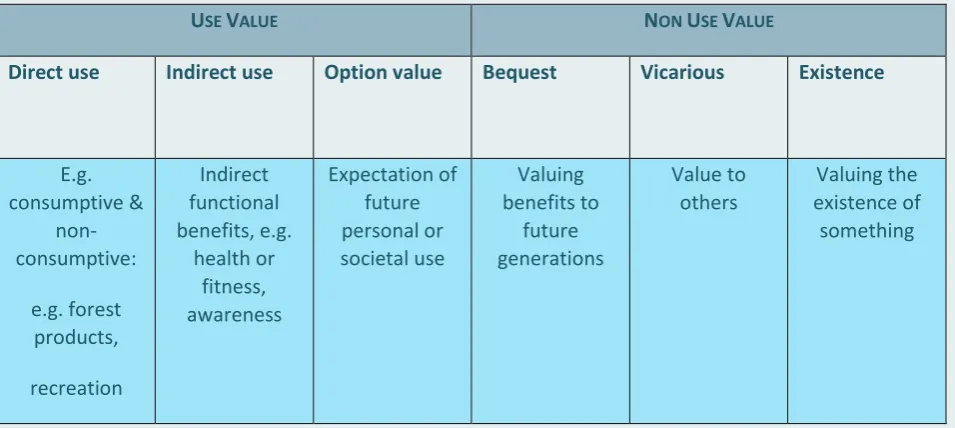
Although economic values depend on utility, they do not have to depend on use. The Total Economic Value (TEV) typology is not specific to environmental goods, but is helpful for demonstrating how goods, including public goods, are valued. The TEV classifies values associated with (1) direct use, (2) indirect use and (3) non-use. Although it precedes the MA (2005), the typology can be broadly applied to ecosystem services. Provisioning services, for example, provide direct use benefits in terms of food and shelter (e.g. timber for housing). Regulating services provide indirect benefits by maintaining the quality of water or through such services as pollination or flood moderation by wetlands. Option values are a sub-category of use values that recognise the potential value of benefits, including from ecosystem services that could be realised in the future. Non-use values are a separate class and include existence values associated with the satisfaction people receive from knowing that certain landscapes, habitats or species simply exist, irrespective of use. Non-use values also include personal, altruistic and bequest values related to the satisfaction that people realise from making environmental goods available to others or to future generations. It is an important distinction that neoclassical economics allows for these values, but believes that they are captured within the individual’s own set of preferences or utility.
Figure 3: Total Economic Value
USE VALUE NON USE VALUE
Direct use Indirect use Option value Bequest Vicarious Existence
E.g. consumptive &
non-consumptive:
e.g. forest products, recreation
Indirect functional benefits, e.g.
health or fitness, awareness
Expectation of future personal or societal use
Valuing benefits to
future generations
Value to others
Valuing the existence of
something
The TEV addresses values as they affect the preferences of individuals, including where bequest or vicarious values are concerned. They apply equally to both private and public goods. Public goods are non-rival and non-excludable in their consumption (i.e. no one person can accumulate these goods and others cannot be excluded from their use). The nature of many environmental goods causes them to also be public goods, freely available and typically characterised as non-market goods. Although they have no price, these goods nevertheless have value. However, in the absence of price signals to manage supply and demand, they are vulnerable to misuse and degradation, which would reduce overall social welfare. Acknowledging that public goods are valued is a first step to estimating these values through the use of non-market valuation techniques to ensure that the users of public goods are made conscious of the impact of this use for others. Non-market valuation is used to represent the value of public goods in monetary terms. Money is a medium that is understood by policy-makers and can be used to influence behaviour.
decision-making (as discussed above). This is the pragmatic case for using economic methods to value nature. For example, value estimates can be used to inform the design of economic instruments such as taxes or subsidies to internalise the external costs (or benefits) of any damaging (or beneficial) impacts to users. Although human behaviour can be resistant to change, there is no shortage of examples of how behaviour can respond strongly to financial incentives. Furthermore, economists argue that they are most comfortable valuing marginal changes in supply or demand, usually small changes. They are dismissive of attempts to value nature as a whole or an entity.2 For decision-making, including that by individuals as consumers, small changes are also easier to compare – or trade off – against small changes in another good.
However, the question of whether nature should be valued can be a philosophical question. There is also a practical concern that monetary valuation will lead inexorably to a commodification of nature. This fear is bound up with the criticism of ecosystem services as reducing nature to the status of a service provider for human beings (Sullivan, 2009). Compensation or payments for ecosystem services (PES) or markets, such as biodiversity offsets or carbon trading, can be a useful means to recognise the value of nature and to influence behaviour. However, these instruments also conform closely to prevailing governance models that compensate owners of land or property rights. In this way, monetisation could arguably condition people to think of nature as a commodity (Vohs et al, 2006). Commodification could obscure other forms of value and have adverse implications for traditional rights, culture or equity (Smith, 2007; Kosoy & Corbera, 2010; Gomez-Baggerthun & Ruiz-Perez, 2011). It could also crowd out opportunities to draw on traditional or moral obligations towards nature and which can affect other behavioural incentives (Vatn, 2009; Vatn, 2010). This replacement of former behavioural incentives or other values for nature could be counterproductive to its protection (McCauley, 2006; Dempsey & Robertson, 2012; Schroter et al, 2014).
5.3
Socio-cultural values
Socio-cultural values apply to all areas of human activity. They include economic or utilitarian values, but also many other forms of value including those associated with our social relationships or the culture to which we belong. These values can be a product of our individual circumstances, but are not limited to individually held needs or preferences. Rather, they can extend to shared values within a community. This can include shared understandings and rights that are often articulated in cultural norms, spiritual beliefs and practices. An awareness of these wider values helps to explain the importance that we attach to eudaimonistic perspectives on what constitutes the good life and the importance that we attach to principles of fairness, rights, responsibilities or spiritual needs (Jax, 2013).
Whereas neoclassical economics assumes that values arising from social constructs can be captured by individual preferences, ecological economics recognises the
2
existence of value pluralism; i.e. of a range of types of value, shaped by varying worldviews or knowledge systems (Holland, 2002; Martinez-Alier et al, 1998; de Groot et al, 2002). Not all values are commensurate. In social psychology, core
transcendental values are believed to guide behaviour; the principles behind them are thought to be broadly universal, if culture-specific in the emphasis that is placed upon them (Kenter et al, 2016). They include such examples as achievement, conformity and security (Schwartz, 1992). Transcendental values are largely equivalent to what are sometimes described as held values, i.e. values that are formed early in life and influenced by family and culture (Rockeach, 1973; Scholte et al, 2014). These are further influenced by deontological principles which guide people towards a sense of what is right or wrong and which may be informed by cultural values (de Groot et al, 2002). These can include an adherence to ethical beliefs, which can also extend to an eco-centric belief in the rights of nature (Berger, 1966).
According to Kenter et al (2016), transcendental values in turn inform contextual values about the importance or worth of something (similar to assigned values). The link between the two sets of values is equivalent to the conceptualisation of the Value-Belief-Norm (VBN) theory (Stern et al, 1999) in which transcendental values influence beliefs around the consequences of actions, in turn shaping personal norms and behaviour.3 Through this process, transcendental values are mediated into contextual values.
A dependence on a utilitarian approach alone, even one bolstered by quantified estimates from economic valuation surveys, could still fail to attract the endorsement of local communities, leading potentially to opposition from those who feel unrepresented. It is therefore important to take these wider values into account, not just for the sake of avoiding the criticism of peers in the behavioural sciences, but to ensure that value estimates are accepted by the communities they affect. Such considerations apply not only to biodiversity but also to the values associated with well-established customs, ways-of-life, cultural landscapes, heritage, ancestral lands and spiritual sites. Clearly, an awareness of the diversity and strength of socio-cultural values can inform the acceptability of projects, procedural approaches or the siting of infrastructure such as pipelines, roads and windfarms.
The relationship between individual and shared/community values is important. Transcendental and contextual values are both held by the individual and shared (as noted above). The latter apply especially to people’s positions on what might be important to society, including the role of public goods. In most societies, to varying degrees, the social and cultural context introduces a restriction on individuals’ ability to act purely in their own interests (Thrift, 2004; Kumar & Kumar, 2008).4 Social institutions set rules and constraints which get internalised (Vatn, 2009) and decisions often end up as compromises rather than necessarily expressions of free choice (Sen, 2014).
3
There is a broad equivalence too with the Theory of Planned Behaviour (Ajzen, 1991) and the Value Change Model (Bardi & Goodwin, 2011).
4
Incommensurability arises when people are restricted from squaring these different values and are unable to trade off different outcomes based on utility-based preferences alone (Martinez-Alier et al, 1998; Daniel et al, 2012; Vatn, 2009; O'Neill
et al, 2008). For this same reason, values cannot be reduced to a single metric such as price. However, socio-cultural values are not static; the commitment to particular values can change under the influence of time, institutions, social norms and life experiences (Vining & Merrick, 2012). Change can also occur in response to changes in individual circumstances, an acceptance of new information or broader social change (Diaz et al, 2014).
5.3.1 SCV, socio-ecological systems and ecosystem services
Transcendental and contextual values apply to the environment just as they apply to other aspects of life. For ecosystem services, a confusion of terms often arises between socio-cultural values and cultural ecosystem services. Socio-cultural values are not restricted to cultural services, but can, too, be associated with supporting, provisioning and regulating services. Indeed, a range of socio-cultural values attach to each of these services. In particular, in areas where people work the land or harvest fish or other wild species, there are values associated with the natural environment that relate to ways of life and cultural practices. These relationships are especially strong where there is a direct conscious awareness of one’s dependence on the natural environment or of the links between human activities and the ecosystem through socio-ecological relationships. Consequently, transcendental cultural values can extend to the contextual values that people assign to supporting and regulating ecosystem services in sustaining productive systems and livelihoods. For research into ecosystem services to be informed by an understanding of these wider values requires an awareness of the place of the natural environment in societies’ needs for many different types of goods, services, experiences and relationships (Jacobs, 1995).
The cultural context informs the extent to which environmental values are shared (Kumar & Kumar, 2008; Thrift & Whatmore, 2004). As so many environmental goods are public goods, transcendental values and deontological principles of right and wrong tend to determine people’s relationship and attitude towards these goods. A relationship can be identified with ecosystem services in this respect in that the benefits of provisioning services in most societies are realised at the individual level, usually through markets, while the benefits of regulating and cultural services are usually shared public goods. Choices with regard to the use of public goods are fundamentally ethical because people are aware of their impact on others (Vatn, 2009). Power relationships can, however, cause conflicts to arise between the space set aside for provisioning services and other ecosystem services and the relative level of investment in the maintenance of either. Private property rights to the environment are in confrontation with the extent to which shared rights and responsibilities apply.
Section 6: Valuation of Ecosystem Services
6.1
Economic valuation
Expenditure and cost-based methods
Several environmental economic methods are available to value environmental goods and ecosystem services. Expenditure methods can be used to identify the value of environmental goods that are in some way linked to a market. For example, the production function method is commonly applied where an ecosystem service provides an intermediate input into some final market good. The proportional contribution of the ecosystem input needs to be estimated and represented as a proportion of the market value. This approach is very useful for identifying the effect of changes in the ecosystem service on the value of final goods that are traded in a market place, most typically goods derived from provisioning ecosystem services.
Non-market valuation techniques are used where there is no direct or indirect market link. Cost-based methods such as avoided expenditure can be used to demonstrate the value of ecosystem services in cases where their loss could lead to social costs or where there would be a need to replace the ecosystem service with an artificial or technical solution. Typical examples are the use of these methods to value the regulating ecosystem service benefits of wetlands in mitigating flooding, of saltmarsh or dunes in minimising storm damage, or of the freshwater ecosystem in providing for clean water. In these cases, damage could occur in the form of property damage. Damage could also occur to lives or health which can be estimated on the basis of public healthcare costs, loss of productivity (due to sick days) or with reference to a value of statistical life (VSL) (based on people’s willingness to pay to avoid injury or death). Expenditure could be required to provide flood relief schemes, storm walls or wastewater treatment plants. Cost-based methods only provide an indicator of society’s willingness-to-pay for the ecosystem services, but they can still be a useful means of demonstrating the implications of the neglect of natural capital
Revealed preference
maximum willingness-to-pay, including non-use values. Neither are they very useful for measuring change, unless conducted before and after an actual event.
Stated preference
In stated preference methods, people are presented with scenarios of possible environmental change within a questionnaire-based survey. Unlike with RP, these scenarios can be hypothetical and manipulated to resemble a particular change. They can also be used to capture use and non-use values.
a) Contingent valuation method (CVM)
In the CVM a description is given of an environmental change and people are asked for their maximum willingness-to-pay (or willingness-to-accept) an amount to avoid the change (if adverse) or to realise it (if positive). Essentially, they are asked to
trade off an amount of income that will leave them with a utility level equal to that which they had before. People may be asked openly to express a willingness-to-pay amount or be asked whether or not they would pay a particular amount (varied across respondents) and perhaps a follow-on amount that is a little higher or lower. Generally, the latter dichotomous method is preferred in that it is more ‘incentive compatible’ (similar to a true market situation).
A multinomial regression or logit model is applied to identify the factors that influence the amount people are willing to pay. However, CVM is vulnerable to various hypothetical response biases and to the risk of protest bids where people refuse to express a willingness-to-pay. A protest bid differs from a zero bid where the respondent feels unable to afford an amount. This response usually occurs because the person is just unable to contemplate a monetary figure, because s/he believes that a monetary figure would fail to represent their preferences, or that the question is unethical and that the environment cannot be priced.
A practical issue of relevance to ecosystem services is that the change scenario is typically applied to a single environmental good (as a whole). There have been CVM surveys which have presented more than one scenario of change or types of change, but these tend to be rather cumbersome to apply (i.e. they require large surveys or presume that respondents can distinguish the difference, etc).
b) Choice experiments
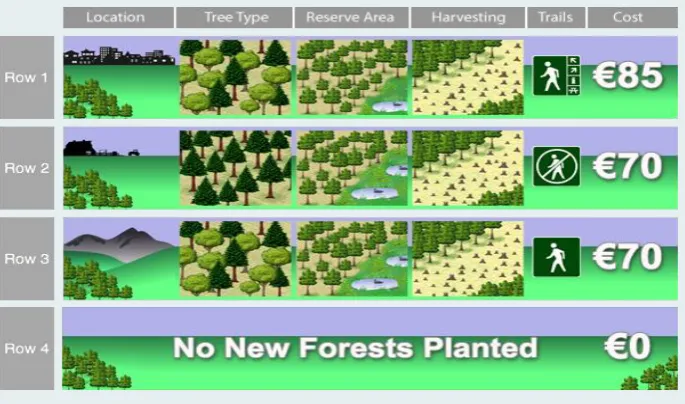
consistent between the alternatives, but the levels of provision of the attributes (represented by the rows) vary. The combinations presented to any one respondent in any one choice set are varied through the use of an underlying factorial design. People choose between (trade off) the alternatives on the basis of which one offers the preferred combination of attribute levels. One of these attributes will be a price variable (e.g. a tax payment), which can then be used to provide a monetary value for the others.5 At its simplest, a multinomial logit model (MNL) is used to estimate the probability of choice according to random utility theory. Over the full set of preference responses, the price attribute can be used to estimate a price for each physical attribute level.
Figure 4: Examples of choice experiment
Source: Upton et al, 2012. Each row represents an alternative.
The CE approach is generally now used in preference to CVM due to its ability to address attributes that can typically be associated with individual features or measures of relevance to environmental managers. CE is also less vulnerable to strategic biases in that the price level is less upfront as one of several attributes. Preference heterogeneity can be modelled through the use of latent choice approaches (Boxall & Adamowicz, 2002) or more sophisticated alternatives to MNL such as mixed logit or random parameters logit (Train, 2003). However, these methods do not go far in explaining why people may have different preferences or values. Although, in principle, an experiment could be packaged as a moral choice,
5
the price element largely confines the trade-offs to individual utility motivations. Alternative means of quantification can be used instead of a price variable, but these do not always provide the incentive for consistent choices, or for statistical significance (van Zanten et al, 2017). A practical weakness is that choice experiments can rarely include more than 5–8 attributes or three attribute levels due to the cognitive challenge for the respondents, particularly when being asked about less familiar goods. Many environmental goods can be described as being unfamiliar and people may be unaccustomed to choosing between them. The statistical complexity of the factorial design also rises exponentially where there are many attributes.
6.1.1
Limitations of economic valuation
From a theoretical point of view, non-economists argue that economic values fail to account for value plurality. Incommensurability of values often surface in the form of protest bids, but these have often been treated as an inconvenience rather than an inherent weakness of the method. In addition, it is argued that the methods used determine the type of values produced (Hill, 2008). They also determine what type of data is useful and how information is conveyed to participants (Vatn, 2009). The willingness-to-pay question ensures that people are encouraged to behave as consumers by making choices on the basis of individual preferences. Instead, it has been suggested, people should be motivated to behave as citizens given the public-good nature of the environment or of ecosystem services (Sagoff, 1988).
At a practical level, the manner in which valuation is undertaken (short face-to-face interviews, Internet, telephone or postal surveys) can fail to provide people with a sufficient understanding of ecosystems as a complex good. In particular, people are not confronted with the uncertainties that are inherent to the continued flow of ecosystem services. It has been argued that economic valuation elicits a demand value without adequate consideration of the ecological factors affecting supply (Straton, 2006). For ecological economists this includes the need to consider both the inherent quality of the ecosystem and the subjective value of the user (Georgescu-Roegen, 1982). Even if in this instance the former can be reduced to scientific information, this information can be complex and difficult to explain in terms of marginal changes in the supply or demand of a final good. A major challenge occurs where the ecological input is ‘lumpy’ or where our ecological knowledge cannot yet explain or measure marginal changes (Bullock, 2016). The latter can be problematic for economic valuation. People may be able to value distinct changes, but it might not be possible to estimate a demand curve without being able to value small changes in supply and demand. However, interest in ecosystem services could attract more funding for scientific research in this area, which would be useful for future valuation studies. Progress will also follow from closer collaboration between natural scientists and economists (Atkinson et al, 2012).
situations where they are abundant, but not where they are scarce or where their sustainability is at risk (Gerlagh & van der Zwann, 2002). One fundamental demonstration of this is the valuation of wilderness. For ecosystem services, location matters (Bateman et al, 2011) as they are valued in relation to their capacity to supply final benefits and so values are likely to be higher where there are more people. This means that wilderness areas could be valued less unless their existence is very well-known and they have a high non-use value. While economic values are entirely anthropocentric, many people would argue that wilderness has an intrinsic value. Our remaining wilderness also often contains unique landscapes or habitats for important species that are irreplaceable (Krutilla, 1967). It would, therefore, deserve to be categorised as critical natural capital value. However, it could be difficult to define this value in terms of tangible ecosystem services. The crucial argument here is that natural capital is not equivalent to ecosystem services and cannot be valued in these terms alone. Natural capital is the asset base that has the capacity to provide for a continual flow of renewable resources (Helm, 2015). Its value is not represented by current flows or marginal values of ecosystem services, but by its capability to maintain these flows over generations. In addition, it has an option value (refer back to the TEV) for preserving future potential uses. For example, wilderness has an option value by harbouring species that might have important but unknown therapeutic values (Maler et al, 2008; Folke et al, 2010; Pascual, 2010; Gomez-Baggerthun & Barton, 2013). Natural capital also as an insurance value. This resilience is contained in the dynamic and innumerable interactions that occur within ecosystems and between ecosystems and the abiotic environment. Being rarely acknowledged in decision-making and, indeed, being largely unknown, these interactions are not valued in an anthropological sense (Mace, 2014). Pascual et al (2015) prefer to represent option values as a separate branch distinct from use and non-use values. In particular, the fundamental contribution of high biodiversity for providing a range of known and unknown ecosystem services is at risk of being overlooked (Atkinson et al, 2012).
Box 1: UK Environment Plan and Pioneer Areas
In the UK, the Department for Environment, Food and Rural Affairs (DEFRA) is developing a 25-year Environment Plan to underpin the government’s commitment to ensure no net loss of natural capital over a generation (see http://www.naturalcapitalcommittee.org/). As part of this plan, DEFRA will establish four Pioneer Areas, consisting of a river catchment, an urban area, a distinct landscape, and a marine area. It is intended that these Pioneer Areas will be managed based on the principles of Natural Capital, harnessing the knowledge of local stakeholders. The Natural Capital Committee will be reviewing and evaluating the performance of the Environment Plan. It is developing approaches to measure changes in natural capital and to ensure that natural capital is included in national accounts.
6.2
Sociocultural valuation
Other disciplines accept the existence of a range of values types – and not just those determined by utility and the preferences of the individual. These values are often listed under the heading of social or cultural values. The principal means of identifying and representing these sociocultural values is through semi-structured or unstructured interviews, collection of narratives, or participatory/deliberative methods. A frequent criticism is that these techniques are qualitative in nature, whereas decision-makers are more accustomed to working with numbers or monetary estimates. However, as discussed below, there is scope to introduce or combine more quantitative approaches, including the use of scorings or ratings, participatory mapping, deliberative monetary valuation and participatory multi-criteria analysis. Alternatively, sociocultural valuation can be used to complement quantified methods or just presented alone in its own right. A more reasonable criticism is that group-based methods may not be representative of the wider population. This is sometimes addressed through the use of large-scale parallel surveys. However, what qualitative methods might lack in terms of figures and predictive power, they often more than make up for in explanatory power (Hill, 2008) and by providing a more comprehensive understanding of values and value diversity.
Interviews and narratives
Qualitative approaches include in-depth discussions that are flexible enough to reveal the complexity of values and how people see the world (Grove-Hills et al, 1990; McHenry, 1997). These methods are most commonly used in social research or anthropology, and include the use of narratives and actor-orientated approaches (Satterfield et al, 2013). In the context of socio-ecological systems, Gould et al
application to native fishing rights in north-west Canada, they proposed a new framework to ensure that social and cultural values were adequately represented. The framework emphasises the initial use of qualitative interviews to identify people’s perceptions, values and interdependencies, before moving to stakeholder deliberation.
Deliberation
Using discussion groups to explore values (discourse-based valuation and deliberation) has a long history (Wilson & Howarth, 2002). At its simplest form, deliberation can be undertaken through the use of once-off focus groups. This approach has often been used to help design economic valuation or to provide a further interpretation of the results. Generally, though, deliberation is understood to involve social interaction using group discussions or workshops spread over several sessions. It differs from simple stakeholder participation by not being a negotiation towards a compromise, but rather an examination of values or preferences. By these means, common priorities can often be agreed (Vatn, 2009). Based on a range of applications, Kenter et al (2016) identify four main stages: 1) acquisition and exchange of information, 2) expression of reasoned opinions, 3) identification and critical evaluation of options, and 4) identification of the contextual values of different options and selection of a preferred option. Methodically applied, deliberation allows participants to discuss a wide range of issues of relevance, including rights, responsibilities, fairness, individual and social values. They can discuss how much an issue is worth to them relative to their existing values and can debate and exchange ideas with others. Deliberation is the obvious choice for identifying value plurality as it allows participants to reflect on their values and to share this knowledge with others in a non-adversarial arena. It is especially useful for dealing with complex or unfamiliar goods such as ecosystem services for which (contextual) values are poorly formed.
Scientific information can be injected into the process, but social learning also arises from the information provided by other participants themselves (Reed et al, 2010). Social learning implies that values can be drawn out using a process of value construction (Simon, 1979). This contrasts with the assumptions of economics, in which it is assumed that values are quite fixed in nature and are just waiting to be revealed in surveys (Seidl, 2002). Although some values are more rigid than others (e.g. transcendental compared with contextual values), so-called ‘double-loop learning’ has been observed whereby people begin to question their former beliefs in response to new information (Keen & Mahanty, 2006: Reed et al, 2010). Although, in practice, Kenter et al (2016) believe that most deliberation to date has focused on the contextual values of the issue to hand, they argue that a discussion of transcendental values can allow for greater insights and a broader treatment of environmental topics.
and inter-generational equity. Such issues are ideally suited to exploration within a deliberation process (O'Hara, 1996).
Deliberation is not guaranteed to lead to an agreed conclusion. It may, for example, be difficult for participants to grasp the concept of ecosystem services. Potschin and Haines-Young (2011) report on several participatory processes in Britain in which the concept was still poorly understood by some participants even after years of engagement. In these circumstances, it may be necessary for the experts to draw the links between the final benefits that are valued by the participants and the ecosystem services that provide for these. Kenter et al (2016) also remark on the need for a capable facilitator who can explain the raison-d’être for the deliberation process to participants at the outset and manage the group interaction. They add that success depends on the absence or moderation of power dynamics, a varied mix of participants and engagement by all participants. Good facilitation can avoid the ‘dysfunctional consensus’ that occurs where peer pressure, or the desire for social acceptance, causes participants to accept a position that they do not really agree with (Kenter et al, 2016). Open minded facilitation that does not prejudice in favour of one particular knowledge set over another (e.g. scientific knowledge or the knowledge of a minority of influential stakeholders), is essential to arrive at genuinely agreed results.
6.2.1
Analytical deliberation
Figure 5: Scores given for ES benefits (initial group scores and after individual interviews), Fingal OPERAs
Nb. Env = environmental quality, inspire = inspiration, social = social interaction
Participatory mapping was also used in the Fingal project. A map is used to help stakeholders identify place-based values, including locations of ecosystem service value. This approach has been shown to stimulate engagement and further insights into people’s relationships with ecosystem services (Raymond et al, 2009; Brown, 2013). Although many obvious locations can be identified, insights can be provided on lesser-known locations that may be unfamiliar to decision-makers, but which are important for some types of ecosystem services.
Deliberation can also be combined with economic valuation in the form of
deliberative monetary valuation (Spash, 2007; Spash, 2008) by, for example, including successive rounds of choice experiments. As with the example of the rating process used in Fingal, the argument is that participants will have a fuller understanding by which to arrive at value estimates, including of social values (Howarth & Anderson, 2007; O'Neill et al, 2008). In an application in Scotland, Kenter (2014) found that the relative valuation of environmental attributes was higher when estimated after the use of deliberation, but that willingness-to-pay estimates were lower overall than those of a straight economic valuation. He argued that this was due to the greater consideration given to substitute public
0 20 40 60 80
Tangible Values
Series2
SCORE 1
0 20 40 60 80
Less Tangible Values
SCORE 2
spending opportunities. Willingness-to-pay can also be estimated using group-based or social CVM (Gregory & Wellman, 2001).
There are evident benefits in using deliberative monetary valuation but, if used for an inappropriate application, there is also the danger of potentially incommensurate values being ignored or of participants’ own words being obscured (Narayan et al, 2000). Gowdy et al (2013) have argued that it is misleading to try to amalgamate values that have been elicited using different methods. The approach has also been accused of debasing the richer insight provided through interviews or deliberation. Indeed, in a study of nature conservation by Clark et al (2000) participants themselves rejected the reduction of the deliberation to economic estimates.
A promising alternative is the use of participatory multi-criteria analysis (PMCA) (Karjalainen et al, 2013) as this uses a quantitative weighting of objectives and scoring of alternative options, but avoids monetary values. The virtue of the method is that it provides a means to address both quantitative indices (including monetary values) and non-quantitative indices, and to determine the extent to which these can be compared when they might otherwise be treated as being entirely incommensurable. Garmendia and Gamboa (2012) present an example of such an approach for the management of an estuary in northern Spain. In this example, social learning was evident amongst a diverse group of stakeholders, leading to a change in values between rounds of discussion. The researchers were able to use methods that charted these changes in values over time. PMCA has much potential for environmental applications, since it can be combined with deliberation to focus on distinct solutions to evident problems.
6.3
Environmental and ecosystem services valuation in Ireland
Rather few primary environmental valuations have been undertaken In Ireland. A scoping exercise was performed by Bullock et al (2008). Most subsequent studies have involved a descriptive or similar broad assessment of the benefits of ecosystem services. For example, the EPA SIMBIOSIS study (Stout et al, 2012) examined the sectoral benefits of ecosystem services. The ECORISK project (Bullock & O'Shea, 2013) gave examples of how ecosystem services valuation can be used to support environmental liability assessment in the case of environmental damage. However, Hynes et al (2014) estimated the value of water-related ecosystem services using discrete-choice economic valuation. The ongoing ESManage project (Feeley et al, 2016) is using stakeholder workshops (choice experiments) and interviews to examine and value freshwater ecosystem services. Various other studies have applied quantitative methods to look at peatland services (Bullock & Collier, 2011), freshwater (Norton et al, 2012; Stithou et al, 2011), forestry (Upton
et al, 2012; Ní Dhubháin et al, 1994; Clinch, 1999), and green space (Bullock, 2008; Cowell & Lennon, 2014).
Section 7: Values and Environmental Sustainability
In common with many other countries, and in line with the UN Conference on Environment and Development in Rio de Janeiro in 1992, Ireland has a strategy for sustainable development. Environmental values are relevant to two definitions of sustainability, which can be viewed as being at polar ends of a spectrum. On the one hand, there is weak sustainability. Weak sustainability is underpinned by the assumption of neoclassical economics that technical progress allows one category of resources to be substituted for another so that the total stock of human or natural capital can be maintained. Under this definition, it is assumed that future generations will have sufficient human-made capital to substitute for the depletion of natural capital (in the sense of natural resources). Strong sustainability, on the other hand, believes that not all forms of natural capital can be substituted. The argument here is closer to the popular description of Natural Capital, or Critical Natural Capital.
The definitions, therefore, range from a technocentric belief in unlimited substitution possibilities to a more ecocentric perspective that some natural capital must be preserved (Turner, 1993). There is an inherent connection to the discussion of values in that a technocratic perspective accepts the potential for trade-offs between human and natural capital or between different elements of natural capital. In contrast, an ecocentric position would argue that many trade-offs are not possible and that ultimately there are limits to growth (Georgescu-Roegen, 1971; Daily, 1991).
Section 8: Values and Wellbeing
The contribution that natural settings can make to a general sense of wellbeing is very clear and is evident from the many studies that reveal a positive relationship with physical and mental health. However, while a strong relationship between the natural environmental and human wellbeing is not in doubt, nature is clearly only one of the factors that contributes to eudaimonistic values of what is perceived to be good living or to quality of life more generally. Given the many other factors that contribute to wellbeing, including objective considerations such as education and employment as well as factors such as equity, rights, social connections and personal circumstances, research into the link with environment should be wary of over-reaching itself, particularly with respect to cultural ecosystem services (Fish, 2011). Unless research into ecosystem services is able to provide a satisfactory explanation of the link with wellbeing, its enduring usefulness for decision-making may be limited.
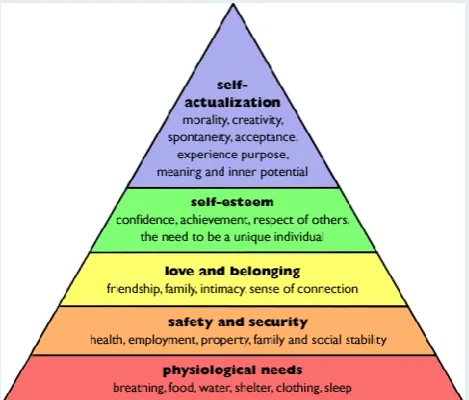
The study of quality of life and wellbeing is well-established. It began with objective indicators such as income, employment, housing and education, and has extended into work on social indicators, (e.g. Bauer, 1966) and subsequently into an understanding of subjective wellbeing. Needs approaches identify connections between wellbeing and the fulfilment of a range of basic or individual needs (Streeten et al, 1981; Doyal & Gough, 1984; Doyal & Gough, 1991) or capabilities (Sen, 1985). This work began with the Maslow hierarchy of needs (Maslow, 1954) in which fundamental human needs form the base of a pyramid above which Maslow envisages relationships between a range of higher human needs, culminating in self-fulfilment. Within this hierarchy it is not difficult to identify the role of ecosystem services as ‘needs satisfiers’ (King et al, 2014); for instance, when provisioning ecosystem services meet people’s primary needs for food and shelter, regulating services provide for human health, or cultural services have a relation with higher personal or psychological needs.
Figure 6: Maslow hierarchy of needs (Maslow pyramid)
More recent work into wellbeing has emphasised the need for people to themselves define the range of objective and subjective indicators that are relevant to their quality of life (McGregor, 2004; Martin et al, 2010) or psychological wellbeing (Ryff & Keyes, 1995). This approach draws on people’s thoughts and feelings about their life and circumstances (King et al, 2014). Autonomy (independence), mastery (control), social connectedness and personal security have been revealed to be important (Campbell, 1976; Diener, 2012; Ryff & Keyes, 1995). Such factors relate closely to fulfilment of basic needs and capabilities, depending on the opportunities and resources to which people have access (King et al, 2014). Practical applications include the Happy Planet Index (Marks et al, 2006), which combines objective and subjective indices. This and subsequent indices – for example, the WeD-QoL and Resources and Needs Questionnaire (RANQ) – have been designed to allow people to define for themselves the dimensions they consider to be important (Martin et al, 2010).
Section 9: Environmental accounting
9.1
Environmental economics in accounting
To ensure that natural capital is adequately represented in national accounts, Target 2 of the Convention on Biological Diversity (as agreed in Aichi, Japan in 2010) includes a commitment to integrate biodiversity into national accounting. This commitment was confirmed by the 2012 Rio+20 Conference. To this end, the EU 7th Environmental Action Programme aims to develop physical and monetary environmental economic accounts.
A System of Environmental Economic Accounting (SEEA) was first developed by the UN Statistics Commission in 1993. The international standard for the SEEA was adopted in 2012. The core part is the SEEA-Central Framework (SEEA-CF Volume 1), which accounts for biotic and abiotic stocks and flows. Measured in biophysical terms, these include flows into the economy (inputs) and out from the economy (outputs such as waste, pollution). The accounts are supplemented by data on environmental spending, environment taxes and environmental subsidies. EuroStat is now requiring that member states compile environmental accounts based on the SEEA template, including of material flows, environmental taxes, environmental goods and services, and environmental protection expenditure. Future data will be required on environmental subsidies and transfers, resource management, water and forests.
The core component of the SEEA is supported by SEEA-Experimental Ecosystem Accounting (SEEA-EEA Volume 2), which applies environmental economic valuation to the ecosystem assets and, more especially, the flows identified in Volume 1. However, this latter volume remains at an experimental level. The two sets of accounts are designed to complement one another; the former is measured in Basic Statistical Units, while the latter provides information on the condition of ecosystems and their value to human beings.
Various EU member states have gone on to develop experimental accounts, including Spain, Germany and the UK. The UK, for example, has compiled Ecosystems Accounts for freshwater and woodlands. Spatial measures are also being developed to reveal variations in natural capital and ecosystem services that might otherwise be concealed by national data. The EU 2020 Biodiversity Strategy calls for the Mapping and Assessment of Ecosystem Services (MAES) (EC, 2014). To this end, Ireland has recently prepared a preliminary MAES.
To date, however, only economic valuation has been examined. Moreover, this has relied mostly on production function and cost-based rather than welfare-based methods. There is an ongoing debate on the validity of these two methods, irrespective of that of socio-cultural wider values discussed earlier. Weber (2011), for example, believes that valuation should be based on restoration costs rather than subjective methods such as RP or SP. The contrary argument has been put forward in the UK National Ecosystem Assessment (NEA, 2011) – that such estimates represent technological capacities rather than the marginal valuation of wellbeing (ten Brink et al, 2016). In principle, the SEEA-EEA allows both approaches to be used, but with adjustments. One argument has been to identify the frontier beyond which economic valuation becomes unreliable due to complexity, scale or cultural factors (Radermacher & Steurer, 2014).
9.2
Diverse values in accounting
The more diverse values of ecosystems have so far not featured in the accounting debate. Socio-cultural values are largely context-specific. Data is time-consuming to collect and values can be expected to vary spatially and over time. Many such values also relate to cultural ecosystem services that might otherwise be measured by the aforementioned subjective economic methods. However, such values could be combined with the mapping of ecosystem services at local level (as discussed earlier) and so would provide richer information for the MAES. They could also be used to interpret the validity of biophysical and environmental economic accounts. In particular, given the prevailing interest in measures of subjective wellbeing, the potential exists to complement economic claims on the measurement of wellbeing and to explore how subjective wellbeing relates to biophysical accounts.
It is worth noting that conventional national accounts were never intended to measure wellbeing (Agarwala et al, 2014). Conventional accounts are based on exchange values, not welfare values. Biophysical accounts seem the more likely to be developed by the Aichi deadline of 2020 (ten Brink et al, 2016). However, even biophysical accounts have their limitations in terms of data availability for the treatment of degradation (Radermacher & Steurer, 2014). Experimental environmental economic accounts will need to be interpreted in combination with these biophysical accounts and indicators. For example, as in the example given earlier, a pristine but remote environment may be undervalued because it provides few ecosystem services since there are few people (i.e. beneficiaries) living near it. Other hurdles to be overcome include how to manage aggregation, the use of estimates for ‘benefits transfer’ to other locations, the treatment of uncertainty, and the choice of discount rate (ten Brink et al, 2016).