Proceedings of the 2019 Conference on Empirical Methods in Natural Language Processing 4217
Meta Relational Learning for Few-Shot Link Prediction in Knowledge
Graphs
Mingyang Chen1,*,Wen Zhang1,*,Wei Zhang2,Qiang Chen2,Huajun Chen1,3,†
1College of Computer Science and Technology, Zhejiang University
2Alibaba Group
3AZFT Joint Lab for Knowledge Engine
{mingyangchen, wenzhang2015, huajunsir}@zju.edu.cn
{lantu.zw, lapu.cq}@alibaba-inc.com
Abstract
Link prediction is an important way to complete knowledge graphs (KGs), while embedding-based methods, effective for link prediction in KGs, perform poorly on relations that only have a few associative triples. In this work, we propose a Meta Relational Learn-ing (MetaR) framework to do the common but challenging few-shot link prediction in KGs, namely predicting new triples about a relation by only observing a few associative triples. We solve few-shot link prediction by focusing on transferring relation-specific meta informa-tion to make model learn the most important knowledge and learn faster, corresponding to relation meta and gradient meta respectively in MetaR. Empirically, our model achieves state-of-the-art results on few-shot link prediction KG benchmarks.
1 Introduction
A knowledge graph is composed by a large amount of triples in the form of
(head entity, relation, tail entity) ((h, r, t)
in short), encoding knowledge and facts in the world. Many KGs have been proposed (Vrandei and Krtzsch, 2014; Bollacker et al., 2008;Carlson et al.,2010) and applied to various applications (Bordes et al., 2014; Zhang et al., 2016,2019a).
Although with huge amount of entities, re-lations and triples, many KGs still suffer from incompleteness, thus knowledge graph comple-tion is vital for the development of KGs. One of knowledge graph completion tasks is link prediction, predicting new triples based on ex-isting ones. For link prediction, KG embed-ding methods (Bordes et al., 2013; Nickel et al., 2011;Trouillon et al.,2016;Yang et al.,2015) are
* Equal contribution.
† Corresponding author.
relation-specific meta information
(China, CountryCapital, Beijing)
(Russia, CountryCapital, Moscow)
(UK, CountryCapital, London)
(USA, CountryCapital, ?)
relation-specific meta information
Relational Learner
(Satya Nadella, CEOof, Microsoft)
(Tim Cook, CEOof, Apple)
(Sundar Pichai, CEOof, Google)
(Jack Dorsey, CEOof, ?)
[image:1.595.311.521.220.382.2]… … … …
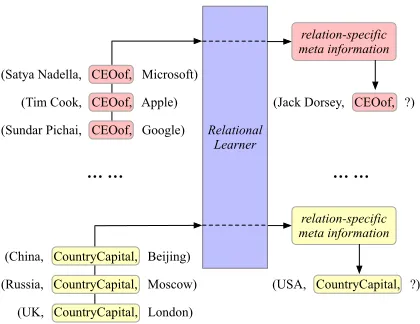
Figure 1: An example of 3-shot link prediction in KGs. One task represents observing only three instances of one specific relation and conducting link prediction on this relation. Our model focuses on extracting relation-specific meta information by a kind of relational learner which is shared across tasks and transferring this meta information to do link prediction within one task.
promising ways. They learn latent representations, called embeddings, for entities and relations in continuous vector space and accomplish link pre-diction via calculation with embeddings.
The effectiveness of KG embedding methods is promised by sufficient training examples, thus results are much worse for elements with a few instances during training (Zhang et al., 2019c). However, few-shot problem widely exists in KGs. For example, about 10% of relations in Wiki-data (Vrandei and Krtzsch, 2014) have no more than 10 triples. Relations with a few instances are called few-shot relations. In this paper, we devote to discuss few-shot link prediction in knowledge graphs, predicting tail entitytgiven head entityh and relationr by only observing K triples about r, usuallyKis small. Figure1depicts an example of 3-shot link prediction in KGs.
(2018) made the first trial and proposed GMatch-ing, learning a matching metric by considering both learned embeddings and one-hop graph struc-tures, while we try to accomplish few-shot link prediction from another perspective based on the intuition that the most important information to be transferred from a few existing instances to in-complete triples should be the common and shared knowledge within one task. We call such infor-mationrelation-specific meta informationand pro-pose a new framework Meta Relational Learning (MetaR) for few-shot link prediction. For exam-ple, in Figure1, relation-specific meta information related to the relation CEOof or CountryCapital
will be extracted and transferred by MetaR from a few existing instances to incomplete triples.
The relation-specific meta information is help-ful in the following two perspectives: 1) transfer-ring common relation information from observed triples to incomplete triples, 2) accelerating the learning process within one task by observing only a few instances. Thus we propose two kinds of relation-specific meta information: relation meta
and gradient meta corresponding to afore men-tioned two perspectives respectively. In our pro-posed framework MetaR, relation meta is the high-order representation of a relation connecting head and tail entities. Gradient meta is the loss gradi-ent of relation meta which will be used to make a rapid update before transferring relation meta to incomplete triples during prediction.
Compared with GMatching (Xiong et al.,2018) which relies on a background knowledge graph, our MetaR is independent with them, thus is more robust as background knowledge graphs might not be available for few-shot link prediction in real scenarios.
We evaluate MetaR with different settings on few-shot link prediction datasets. MetaR achieves state-of-the-art results, indicating the success of transferring relation-specific meta information in few-shot link prediction tasks. In summary, main contributions of our work are three-folds:
• Firstly, we propose a novel meta relational learning framework (MetaR) to address few-shot link prediction in knowledge graphs.
• Secondly, we highlight the critical role of relation-specific meta information for few-shot link prediction, and propose two kinds of relation-specific meta information, relation
metaand gradient meta. Experiments show that both of them contribute significantly.
• Thirdly, our MetaR achieves state-of-the-art results on few-shot link prediction tasks and we also analyze the facts that affect MetaR’s performance.
2 Related Work
One target of MetaR is to learn the representation of entities fitting the few-shot link prediction task and the learning framework is inspired by knowl-edge graph embedding methods. Furthermore, us-ing loss gradient as one kind of meta informa-tion is inspired by MetaNet (Munkhdalai and Yu, 2017) and MAML (Finn et al., 2017) which ex-plore methods for few-shot learning by meta-learning. From these two points, we regard knowl-edge graph embedding and meta-learning as two main kinds of related work.
2.1 Knowledge Graph Embedding
Knowledge graph embedding models map rela-tions and entities into continuous vector space. They use a score function to measure the truth value of each triple (h, r, t). Same as knowledge graph embedding, our MetaR also need a score function, and the main difference is that represen-tation forr is the learned relation meta in MetaR rather than embedding of r as in normal knowl-edge graph embedding methods.
One line of work is started by TransE (Bordes et al.,2013) with distance score function. TransH (Wang et al.,2014) and TransR (Lin et al., 2015b) are two typical models using different methods to connect head, tail entities and their re-lations. DistMult (Yang et al., 2015) and Com-plEx (Trouillon et al., 2016) are derived from RESCAL (Nickel et al., 2011), trying to mine latent semantics in different ways. There are also some others like ConvE (Dettmers et al., 2018) using convolutional structure to score triples and models using additional information such as entity types (Xie et al., 2016) and relation paths (Lin et al., 2015a). Wang et al. (2017) comprehensively summarize the current popular knowledge graph embedding methods.
2.2 Meta-Learning
Meta-learning seeks for the ability of learning quickly from only a few instances within the same concept and adapting continuously to more con-cepts, which are actually the rapid and incremental learning that humans are very good at.
Several meta-learning models have been pro-posed recently. Generally, there are three kinds of meta-learning methods so far: (1)Metric-based
meta-learning (Koch et al., 2015; Vinyals et al., 2016;Snell et al.,2017;Xiong et al.,2018), which tries to learn a matching metric between query and support set generalized to all tasks, where the idea of matching is similar to some near-est neighbors algorithms. Siamese Neural Net-work (Koch et al., 2015) is a typical method us-ing symmetric twin networks to compute the metric of two inputs. GMatching (Xiong et al., 2018), the first trial on one-shot link predic-tion in knowledge graphs, learns a matching metric based on entity embeddings and local graph structures which also can be regarded as a metric-based method. (2) Model-based
method (Santoro et al.,2016;Munkhdalai and Yu, 2017; Mishra et al., 2018), which uses a spe-cially designed part like memory to achieve the ability of learning rapidly by only a few train-ing instances. MetaNet (Munkhdalai and Yu, 2017), a kind of memory augmented neural net-work (MANN), acquires meta information from loss gradient and generalizes rapidly via its fast parameterization. (3) Optimization-based ap-proach (Finn et al., 2017; Lee and Choi, 2018), which gains the idea of learning faster by chang-ing the optimization algorithm. Model-Agnostic Meta-Learning (Finn et al., 2017) abbreviated as MAML is a model-agnostic algorithm. It firstly updates parameters of task-specific learner, and meta-optimization across tasks is performed over parameters by using above updated parameters, it’s like “a gradient through a gradient”.
As far as we know, work proposed by Xiong et al.(2018) is the first research on few-shot learning for knowledge graphs. It’s a metric-based model which consists of a neighbor encoder and a matching processor. Neighbor encoder enhances the embedding of entities by their one-hop neigh-bors, and matching processor performs a multi-step matching by a LSTM block.
Training
Task #1 (CountryCapital)
Support (China,CountryCapital, Beijing)
Query (France,CountryCapital, Paris)
Task #2 (CEOof)
Support (Satya Nadella,CEOof, Microsoft)
Query (Jack Dorsey,CEOof, Twitter)
Testing
Task #1 (OfficialLanguage)
Support (Japan,OfficialLanguage, Japanese)
[image:3.595.306.525.65.235.2]Query (Spain,OfficialLanguage, Spanish)
Table 1: The training and testing examples of 1-shot link prediction in KGs.
3 Task Formulation
In this section, we present the formal definition of a knowledge graph and few-shot link prediction task. A knowledge graph is defined as follows: Definition 3.1 (Knowledge Graph G) A knowl-edge graphG = {E,R,T P}. E is the entity set.
R is the relation set. And T P = {(h, r, t) ∈ E × R × E}is the triple set.
And a few-shot link prediction task in knowledge graphs is defined as:
Definition 3.2 (Few-shot link prediction task T) With a knowledge graphG = {E,R,T P}, given a support setSr ={(hi, ti) ∈ E × E|(hi, r, ti)∈ T P}about relationr ∈ R, where|Sr|=K,
pre-dicting the tail entity linked with relationrto head entity hj, formulated as r : (hj,?), is called
K-shot link prediction.
As defined above, a few-shot link prediction task is always defined for a specific relation. Dur-ing prediction, there usually is more than one triple to be predicted, and withsupport setSr , we call
the set of all triples to be predicted as query set
Qr ={r: (hj,?)}.
The goal of a few-shot link prediction method is to gain the capability of predicting new triples about a relationrwith only observing a few triples about r. Thus its training process is based on a set of tasks Ttrain = {Ti}Mi=1 where each task Ti = {Si,Qi} corresponds to an individual
few-shot link prediction task with its own support and query set. Its testing process is conducted on a set of new tasksTtest = {Tj}Nj=1 which is similar to Ttrain, other than thatTj ∈ Ttestshould be about
Embedding Learner
R
′ TrR
′Tr
Relation-Meta Learner
G
TrG
TrEmbedding Learner Support Step
Query Step
R
T rR
T [image:4.595.115.486.84.238.2]r
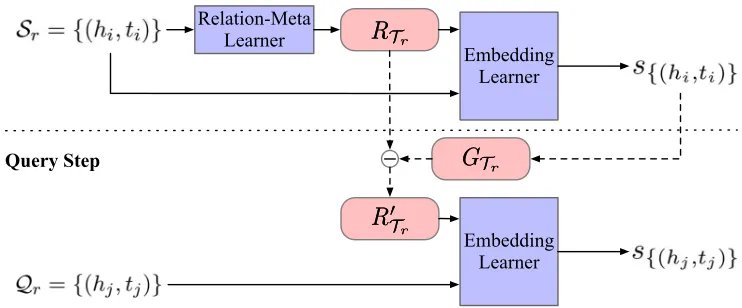
Figure 2: Overview of MetaR.Tr ={Sr,Qr},RTr andR
′
Tr represent relation meta and updated relation meta,
andGTrrepresents gradient meta.
Table 1 gives a concrete example of the data during learning and testing for few-shot link pre-diction.
4 Method
To make one model gain the few-shot link predic-tion capability, the most important thing is trans-ferring information from support set to query set and there are two questions for us to think about: (1) what is the most transferable and common in-formation between support set and query set and (2) how to learn faster by only observing a few in-stances within one task. For question (1), within one task, all triples in support set and query set are about the same relation, thus it is naturally to sup-pose that relation is the key common part between support and query set. For question (2), the learn-ing process is usually conducted by minimizlearn-ing a loss function via gradient descending, thus gradi-ents reveal how the model’s parameters should be changed. Intuitively, we believe that gradients are valuable source to accelerate learning process.
Based on these thoughts, we propose two kinds of meta information which are shared between support set and query set to deal with above prob-lems:
• Relation Meta represents the relation con-necting head and tail entities in both support and query set and we extract relation meta for each task, represented as a vector, from sup-port set and transfer it to query set.
• Gradient Metais the loss gradient of rela-tion meta in support set. As gradient meta shows how relation meta should be changed
in order to reach a loss minima, thus to ac-celerate the learning process, relation meta is updated through gradient meta before being transferred to query set. This update can be viewed as the rapid learning of relation meta.
In order to extract relation meta and gradient mate and incorporate them with knowledge graph embedding to solve few-shot link prediction, our proposal,MetaR, mainly contains two modules:
• Relation-Meta Learner generates relation meta from heads’ and tails’ embeddings in the support set.
• Embedding Learnercalculates the truth val-ues of triples in support set and query set via entity embeddings and relation meta. Based on the loss function in embedding learner, gradient meta is calculated and a rapid update for relation meta will be implemented before transferring relation meta to query set.
The overview and algorithm of MetaR are shown in Figure2and Algorithm1. Next, we in-troduce each module of MetaR via one few-shot link prediction taskTr ={Sr,Qr}.
4.1 Relation-Meta Learner
To extract the relation meta from support set, we design a relation-meta learner to learn a mapping from head and tail entities in support set to relation meta. The structure of this relation-meta learner can be implemented as a simple neural network.
In taskTr, the input of relation-meta learner is
Algorithm 1Learning of MetaR
Require: Training tasksTtrain
Require: Embedding layer emb; Parameter of relation-meta learnerφ
1: whilenot donedo
2: Sample a taskTr={Sr,Qr}fromTtrain 3: GetRfromSr(Equ.1, Equ.2)
4: Compute loss inSr(Equ.4) 5: GetGby gradient ofR(Equ.5) 6: UpdateRbyG(Equ.6)
7: Compute loss inQr(Equ.8) 8: Updateφandembby loss inQr 9: end while
meta via a L-layers fully connected neural net-work,
x0=hi⊕ti
xl=σ(Wlxl−1+bl)
R(h
i,ti)=W
LxL−1+bL
(1)
wherehi ∈Rdandti ∈Rdare embeddings of
head entityhi and tail entityti with dimension d
respectively. Lis the number of layers in neural network, andl ∈ {1, . . . , L−1}. Wland blare
weights and bias in layer l. We use LeakyReLU for activationσ.x⊕yrepresents the concatenation of vector x and y. Finally, R(h
i,ti) represent the relation meta from specific entity parehiandti.
With multiple entity-pair specific relation meta, we generate the final relation meta in current task via averaging all entity-pair specific relation meta in current task,
RT
r =
PK
i=1R(hi,ti)
K (2)
4.2 Embedding Learner
As we want to get gradient meta to make a rapid update on relation meta, we need a score func-tion to evaluate the truth value of entity pairs un-der specific relations and also the loss function for current task. We apply the key idea of knowl-edge graph embedding methods in our embedding learner, as they are proved to be effective on eval-uating truth value of triples in knowledge graphs.
In taskTr, we firstly calculate the score for each
entity pairs(hi, ti)in support setSras follows:
s(hi,ti)=khi+RTr−tik (3)
where kxk represents the L2 norm of vector x. We design the score function inspired by TransE
(Bordes et al.,2013) which assumes the head en-tity embedding h, relation embedding r and tail entity embedding tfor a true triple(h, r, t) satis-fyingh+r=t. Thus the score function is defined according to the distance between h+ r and t. Transferring to our few-show link prediction task, we replace the relation embeddingrwith relation metaRT
r as there is no direct general relation em-beddings in our task and RT
r can be regarded as the relation embedding for current taskTr.
With score function for each triple, we set the following loss,
L(Sr) = X
(hi,ti)∈Sr
[γ+s(hi,ti)−s(hi,t′i)]+ (4)
where [x]+ represents the positive part of x and γ represents margin which is a hyperparameter. s(hi,t′
i)is the score for negative sample(hi, t ′
i)
cor-responding to current positive entity pair(hi, ti)∈ Sr, where(hi, r, t′i)∈ G/ .
L(Sr)should be small for taskTrwhich
repre-sents the model can properly encode truth values of triples. Thus gradients of parameters indicate how should the parameters be updated. Thus we regard the gradient ofRT
r based onL(Sr)as gra-dient metaGT
r:
GT
r =∇RTrL(Sr) (5)
Following the gradient update rule, we make a rapid update on relation meta as follows:
RT′
r =RTr −βGTr (6)
where β indicates the step size of gradient meta when operating on relation meta.
When scoring the query set by embedding learner, we use updated relation meta. After get-ting the updated relation metaR′, we transfer it to
samples in query set Qr = {(hj, tj)}and
calcu-late their scores and loss of query set, following the same way in support set:
s(hj,tj)=khj +R ′
Tr−tjk (7)
L(Qr) = X
(hj,tj)∈Qr
[γ+s(hj,tj)−s(hj,t′j)]+ (8)
Dataset Fit # Train # Dev # Test
NELL-One Y 321 5 11
Wiki-One Y 589 16 34
NELL-One N 51 5 11
[image:6.595.307.525.68.195.2]Wiki-One N 133 16 34
Table 2: Statistic of datasets. Fit denotes fitting back-ground into training tasks (Y) or not (N), # Train, # Dev and # Test denote the number of relations in training, validation and test set.
4.3 Training Objective
During training, our objective is to minimize the following loss L which is the sum of query loss for all tasks in one minibatch:
L= X
(Sr,Qr)∈Ttrain
L(Qr) (9)
5 Experiments
With MetaR, we want to figure out following things: 1) can MetaR accomplish few-shot link prediction task and even perform better than pre-vious model? 2) how much relation-specific meta information contributes to few-shot link predic-tion? 3) is there any requirement for MetaR to work on few-shot link prediction? To do these, we conduct the experiments on two few-shot link prediction datasets and deeply analyze the experi-ment results1.
5.1 Datasets and Evaluation Metrics
We use two datasets, NELL-One and Wiki-One which are constructed by Xiong et al. (2018). NELL-One and Wiki-One are derived from NELL (Carlson et al., 2010) and Wiki-data (Vrandei and Krtzsch, 2014) respectively. Furthermore, because these two benchmarks are firstly tested on GMatching which consider both learned embeddings and one-hop graph structures, a background graph is constructed with relations out of training/validation/test sets for obtaining the pre-train entity embeddings and providing the lo-cal graph for GMatching.
Unlike GMatching using background graph to enhance the representations of entities, our MetaR can be trained without background graph. For NELL-One and Wiki-One which have background
1The source code of experiments is available at
https://github.com/AnselCmy/MetaR
Background Conf. Description
BG:Pre-Train Use background to train entity embedding in ad-vance.
BG:In-Train Fit background graph into training tasks.
BG:Discard Discard the background graph.
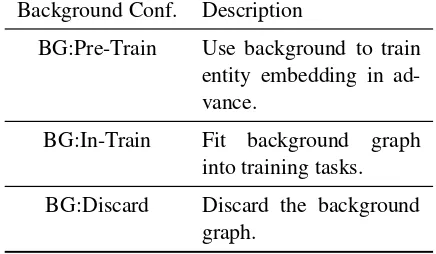
Table 3: Three forms of datasets in our experiments.
graph originally, we can make use of such back-ground graph by fitting it into training tasks or using it to train embeddings to initialize entity representations. Overall, we have three kinds of dataset settings, shown in Table 3. For setting of
BG:In-Train, in order to make background graph included in training tasks, we sample tasks from triples in background graph and original training set, rather than sampling from only original train-ing set.
Note that these three settings don’t violate the task formulation of few-shot link prediction in KGs. The statistics of NELL-One and Wiki-One are shown in Table2.
We use two traditional metrics to evaluate different methods on these datasets, MRR and Hits@N. MRR is the mean reciprocal rank and Hits@N is the proportion of correct entities ranked in the top N in link prediction.
5.2 Implementation
MRR Hits@10 Hits@5 Hits@1
NELL-One 1-shot 5-shot 1-shot 5-shot 1-shot 5-shot 1-shot 5-shot
GMatching RESCAL .188 – .305 – .243 – .133 – GMatching TransE .171 – .255 – .210 – .122 – GMatching DistMult .171 – .301 – .221 – .114 – GMatching ComplEx .185 .201 .313 .311 .260 .264 .119 .143 GMatching Random .151 – .252 – .186 – .103 –
MetaR (BG:Pre-Train) .164 .209 .331 .355 .238 .280 .093 .141 MetaR (BG:In-Train) .250 .261 .401 .437 .336 .350 .170 .168
Wiki-One 1-shot 5-shot 1-shot 5-shot 1-shot 5-shot 1-shot 5-shot
GMatching RESCAL .139 – .305 – .228 – .061 – GMatching TransE .219 – .328 – .269 – .163 – GMatching DistMult .222 – .340 – .271 – .164 – GMatching ComplEx .200 – .336 – .272 – .120 – GMatching Random .198 – .299 – .260 – .133 –
[image:7.595.83.515.63.337.2]MetaR (BG:Pre-Train) .314 .323 .404 .418 .375 .385 .266 .270 MetaR (BG:In-Train) .193 .221 .280 .302 .233 .264 .152 .178
Table 4: Results of few-shot link prediction in NELL-One and Wiki-One.Boldnumbers are the best results of all and underline numbers are the best results of GMatching. The contents of (bracket) after MetaR illustrate the form of datasets we use for MetaR.
sizes of two hidden layers in relation-meta learner are 500, 200 and 250, 100 for NELL-One and Wiki-One.
5.3 Results
The results of two few-shot link prediction tasks, including 1-shot and 5-shot, on NELL-One and Wiki-One are shown in Table4. The baseline in our experiment is GMatching (Xiong et al.,2018), which made the first trial on few-shot link predic-tion task and is the only method that we can find as baseline. In this table, results of GMatching with different KG embedding initialization are copied from the original paper. Our MetaR is tested on different settings of datasets introduced in Table3. In Table 4, our model performs better with all evaluation metrics on both datasets. Specifi-cally, for 1-shot link prediction, MetaR increases by 33%, 28.1%, 29.2% and 27.8% on MRR, Hits@10, Hits@5 and Hits@1 on NELL-One, and 41.4%, 18.8%, 37.9% and 62.2% on Wiki-One, with average improvement of 29.53% and 40.08% respectively. For 5-shot, MetaR increases by 29.9%, 40.5%, 32.6% and 17.5% on MRR, Hits@10, Hits@5 and Hits@1 on NELL-One with average improvement of 30.13%.
Thus for the first question we want to
ex-Ablation Conf. BG:Pre-Train BG:In-Train
standard .331 .401
-g .234 .341
-g -r .052 .052
Table 5: Results of ablation study on Hits@10 of 1-shot link prediction in NELL-One.
plore, the results of MetaR are no worse than GMatching, indicating that MetaR has the capa-bility of accomplishing few-shot link prediction. In parallel, the impressive improvement compared with GMatching demonstrates that the key idea of MetaR, transferring relation-specific meta infor-mation from support set to query set, works well on few-shot link prediction task.
[image:7.595.306.525.402.478.2]5.4 Ablation Study
We have proved that relation-specific meta infor-mation, the key point of MetaR, successfully con-tributes to few-shot link prediction in previous sec-tion. As there are two kinds of relation-specific meta information in this paper, relation meta and gradient meta, we want to figure out how these two kinds of meta information contribute to the performance. Thus, we conduct an ablation study with three settings. The first one is our complete MetaR method denoted as standard. The second one is removing the gradient meta by transferring un-updated relation meta directly from support set to query set without updating it via gradient meta, denoted as-g. The third one is removing the rela-tion meta further which makes the model rebase to a simple TransE embedding model, denoted as-g -r. The result under the third setting is copied from Xiong et al.(2018). It uses the triples from back-ground graph, training tasks and one-shot train-ing triples from validation/test set, so it’s neither
BG:Pre-Train nor BG:In-Train. We conduct the ablation study on NELL-one with metric Hit@10 and results are shown in Table5.
Table5shows that removing gradient meta de-creases 29.3% and 15% on two dataset settings, and further removing relation meta continuous de-creases the performance with 55% and 72% com-pared to the standard results. Thus both rela-tion meta and gradient meta contribute signifi-cantly and relation meta contributes more than gradient meta. Without gradient meta and rela-tion meta, there is no relarela-tion-specific meta in-formation transferred in the model and it almost doesn’t work. This also illustrates that relation-specific meta information is important and effec-tive for few-shot link prediction task.
5.5 Facts That Affect MetaR’s Performance
We have proved that both relation meta and gra-dient meta surely contribute to few-shot link pre-diction. But is there any requirement for MetaR to ensure the performance on few-shot link predic-tion? We analyze this from two points based on the results, one is the sparsity of entities and the other is the number of tasks in training set.
The sparsity of entities We notice that the best result of NELL-One and Wiki-One appears in different dataset settings. With NELL-One, MetaR performs better onBG:In-Traindataset set-ting, while with Wiki-One, it performs better on
BG:Pre-Train. Performance difference between two dataset settings is more significant on Wiki-One.
Most datasets for few-shot task are sparse and the same with NELL-One and Wiki-One, but the entity sparsity in these two datasets are still signif-icantly different, which is especially reflected in the proportion of entities that only appear in one triple in training set, 82.8% and 37.1% in Wiki-One and NELL-Wiki-One respectively. Entities only have one triple during training will make MetaR unable to learn good representations for them, be-cause entity embeddings heavily rely on triples re-lated to them in MetaR. Only based on one triple, the learned entity embeddings will include a lot of bias. Knowledge graph embedding method can learn better embeddings than MetaR for those one-shot entities, because entity embeddings can be corrected by embeddings of relations that connect to it, while they can’t in MetaR. This is why the best performance occurs in BG:Pre-train setting on Wiki-One, pre-train entity embeddings help MetaR overcome the low-quality on one-shot en-tities.
The number of tasks From the comparison of MetaR’s performance between with and with-out background dataset setting on NELL-One, we find that the number of tasks will affect MetaR’s performance significantly. With BG:In-Train, there are 321 tasks during training and MetaR achieves 0.401 on Hits@10, while without back-ground knowledge, there are 51, with 270 less, and MetaR achieves 0.279. This makes it reason-able that why MetaR achieves best performance
on BG:In-Train with One. Even
NELL-One has 37.1% one-shot entities, adding back-ground knowledge into dataset increases the num-ber of training tasks significantly, which comple-ments the sparsity problem and contributes more to the task.
Thus we conclude that both the sparsity of enti-ties and number of tasks will affect performance of MetaR. Generally, with more training tasks, MetaR performs better and for extremely sparse dataset, pre-train entity embeddings are preferred.
6 Conclusion
Specif-ically, using relation meta to transfer common and important information, and using gradient meta to accelerate learning. Compared to GMatching which is the only method in this task, our method MetaR gets better performance and it is also in-dependent with background knowledge graphs. Based on experimental results, we analyze that the performance of MetaR will be affected by the number of training tasks and sparsity of entities. We may consider obtaining more valuable infor-mation about sparse entities in few-shot link pre-diction in KGs in the future.
Acknowledgments
We want to express gratitude to the anony-mous reviewers for their hard work and kind comments, which will further improve our work in the future. This work is funded by NSFC 91846204/61473260, national key re-search program YS2018YFB140004, and Alibaba CangJingGe(Knowledge Engine) Research Plan.
References
Kurt Bollacker, Colin Evans, Praveen Paritosh, Tim Sturge, and Jamie Taylor. 2008. Freebase: A collab-oratively created graph database for structuring hu-man knowledge. In Proceedings of the 2008 ACM SIGMOD International Conference on Management of Data, pages 1247–1250. ACM.
Antoine Bordes, Nicolas Usunier, Alberto Garcia-Duran, Jason Weston, and Oksana Yakhnenko. 2013. Translating embeddings for modeling multi-relational data. In Advances in neural information processing systems, pages 2787–2795.
Antoine Bordes, Jason Weston, and Nicolas Usunier. 2014. Open question answering with weakly super-vised embedding models. InJoint European confer-ence on machine learning and knowledge discovery in databases, pages 165–180. Springer.
Andrew Carlson, Justin Betteridge, Bryan Kisiel, Burr Settles, Estevam R Hruschka, and Tom M Mitchell. 2010. Toward an architecture for never-ending lan-guage learning. InTwenty-Fourth AAAI Conference on Artificial Intelligence.
Tim Dettmers, Pasquale Minervini, Pontus Stenetorp, and Sebastian Riedel. 2018. Convolutional 2d knowledge graph embeddings. In Thirty-Second AAAI Conference on Artificial Intelligence.
Chelsea Finn, Pieter Abbeel, and Sergey Levine. 2017. Model-agnostic meta-learning for fast adaptation of deep networks. InInternational Conference on Ma-chine Learning, pages 1126–1135.
Diederik P. Kingma and Jimmy Ba. 2015. Adam: A method for stochastic optimization. InInternational Conference on Learning Representations.
Gregory Koch, Richard Zemel, and Ruslan Salakhut-dinov. 2015. Siamese neural networks for one-shot image recognition. In ICML deep learning work-shop, volume 2.
Yoonho Lee and Seungjin Choi. 2018. Gradient-based meta-learning with learned layerwise metric and subspace. InInternational Conference on Machine Learning, pages 2933–2942.
Yankai Lin, Zhiyuan Liu, Huanbo Luan, Maosong Sun, Siwei Rao, and Song Liu. 2015a. Modeling rela-tion paths for representarela-tion learning of knowledge bases. In Proceedings of the 2015 Conference on Empirical Methods in Natural Language Process-ing, pages 705–714.
Yankai Lin, Zhiyuan Liu, Maosong Sun, Yang Liu, and Xuan Zhu. 2015b. Learning entity and rela-tion embeddings for knowledge graph complerela-tion. InTwenty-Ninth AAAI Conference on Artificial In-telligence.
Nikhil Mishra, Mostafa Rohaninejad, Xi Chen, and Pieter Abbeel. 2018. A simple neural attentive meta-learner. In International Conference on Learning Representations.
Tsendsuren Munkhdalai and Hong Yu. 2017. Meta networks. InInternational Conference on Machine Learning, pages 2554–2563.
Maximilian Nickel, Volker Tresp, and Hans-Peter Kriegel. 2011. A three-way model for collective learning on multi-relational data. InInternational Conference on Machine Learning, volume 11, pages 809–816.
Adam Santoro, Sergey Bartunov, Matthew Botvinick, Daan Wierstra, and Timothy Lillicrap. 2016. Meta-learning with memory-augmented neural networks. InInternational Conference on Machine Learning, pages 1842–1850.
Jake Snell, Kevin Swersky, and Richard Zemel. 2017. Prototypical networks for few-shot learning. In Ad-vances in Neural Information Processing Systems, pages 4077–4087.
Th´eo Trouillon, Johannes Welbl, Sebastian Riedel, ´Eric Gaussier, and Guillaume Bouchard. 2016. Com-plex embeddings for simple link prediction. In In-ternational Conference on Machine Learning, pages 2071–2080.
Oriol Vinyals, Charles Blundell, Timothy Lillicrap, Daan Wierstra, et al. 2016. Matching networks for one shot learning. InAdvances in Neural Informa-tion Processing Systems, pages 3630–3638.
Quan Wang, Zhendong Mao, Bin Wang, and Li Guo. 2017. Knowledge graph embedding: A survey of approaches and applications. IEEE Transactions on Knowledge and Data Engineering, 29(12):2724– 2743.
Zhen Wang, Jianwen Zhang, Jianlin Feng, and Zheng Chen. 2014. Knowledge graph embedding by trans-lating on hyperplanes. InTwenty-Eighth AAAI Con-ference on Artificial Intelligence.
Ruobing Xie, Zhiyuan Liu, and Maosong Sun. 2016. Representation learning of knowledge graphs with hierarchical types. InIJCAI, pages 2965–2971.
Wenhan Xiong, Mo Yu, Shiyu Chang, Xiaoxiao Guo, and William Yang Wang. 2018. One-shot relational learning for knowledge graphs. InProceedings of the 2018 Conference on Empirical Methods in Nat-ural Language Processing, pages 1980–1990. Asso-ciation for Computational Linguistics.
Bishan Yang, Wen-tau Yih, Xiaodong He, Jianfeng Gao, and Li Deng. 2015. Embedding entities and relations for learning and inference in knowledge bases. In International Conference on Learning Representations.
Fuzheng Zhang, Nicholas Jing Yuan, Defu Lian, Xing Xie, and Wei-Ying Ma. 2016. Collaborative knowl-edge base embedding for recommender systems. In Proceedings of the 22nd ACM SIGKDD interna-tional conference on knowledge discovery and data mining, pages 353–362. ACM.
Ningyu Zhang, Shumin Deng, Zhanlin Sun, Guany-ing Wang, Xi Chen, Wei Zhang, and Huajun Chen. 2019a. Long-tail relation extraction via knowledge graph embeddings and graph convolution networks. InProceedings of the 2019 Conference of the North American Chapter of the Association for Computa-tional Linguistics: Human Language Technologies, Volume 1 (Long and Short Papers), pages 3016– 3025.
Wen Zhang, Bibek Paudel, Liang Wang, Jiaoyan Chen, Hai Zhu, Wei Zhang, Abraham Bernstein, and Hua-jun Chen. 2019b. Iteratively learning embeddings and rules for knowledge graph reasoning. In The World Wide Web Conference, pages 2366–2377. ACM.