The Report of the
High Level Group on
Manufacturing
i
Foreword
I hear a lot about the fact that, as a developed economy, Ireland is increasingly shifting toward a
services economy. And indeed the figures support this fact. Unfortunately this statement has also
been misinterpreted to mean that Ireland is no longer ‘in manufacturing’ – and this could not be
further from the truth.
I firmly believe that there is a future for manufacturing operations in Ireland – last year was the best
year for manufacturing since 2002, with an 8% growth in output. When I look at the contribution
that manufacturing has made to the development of Ireland’s economy, I realise just how
fundamentally important it is. Manufacturing not only contributes in terms of direct employment
and expenditures in the economy – but also in terms of creating secondary employment, stimulating
innovation and research and development, and as a driver of technological advances and
international management capability.
Manufacturing is evolving and it will be different in the future – it will be even more technologically
advanced and activities across the value chain may be located in different countries and undertaken
by different companies across the world where it makes most strategic or economic sense.
High-value manufacturing activities in Ireland will be knowledge intensive, capital intensive and
skills intensive. Successful firms will engage in developing a participative culture, where
management and staff work collectively to ensure the success and longer term sustainability of the
firm to the benefit of all.
Innovation, increased productivity, continuous learning, flexibility and adaptability will become the
norm, as firms anticipate change and respond in a way that enables them to take advantage of
opportunities and to turn challenges into opportunity.
Today, firms need to view monies spent on research, development and innovation, reskilling and
training, and organisational change as an investment in the future of the company – and NOT as a
cost or outlay that is only too readily cut in times of cost pressures.
While firms can engage in transformational change, it is important too that the business environment
remains supportive. I cannot ignore the issue of the rate of rising costs. It is a key concern to
manufacturing firms – and one that, if not addressed with a sense of urgency, will have a detrimental
ii
manufacturing – and will diminish our potential to attract foreign direct investment and to stimulate
new start ups in manufacturing activities.
I wish to thank the members of the High Level Group on Manufacturing, which included
representatives from employers, employees (through their Union representatives), Government and
the development agencies, for their invaluable contributions. Through open and honest discussion,
we came to a shared understanding of the real challenges and opportunities facing the sector. We
also identified a limited, but essential, number of actions for employers, employees and the
Government to take.
Together we agree that a coordinated and collaborative approach is absolutely necessary if we are to
realise our vision of a robust, advanced and high value manufacturing sector in Ireland. We each
have a role to play and we each commit to playing our part.
Ireland has successfully adapted in the past - and I am confident that we can do so again.
Ireland’s future in manufacturing will be realised if we work together and maintain a strong focus on
bringing about the change necessary to be a compelling player in global markets.
iii
Table of Contents
Executive Summary ...4v
1
The Manufacturing Sector in Ireland Today ...5H5H1 1.1 Background ...6H6H1
1.2 Manufacturing in Ireland...7H7H2
1.3 Ireland’s Performance in Context ...8H8H9
2
The Business Environment : Trends, Challenges and Opportunities ...9H9H10 2.1 Overview ...10H10H10
2.2 Global Factors ...11H11H11
2.3 Domestic Factors...12H12H16
2.4 An Extended Definition of Manufacturing ...13H13H25
2.5 The Business Environment – Building Ireland’s Advantage ...14H14H26
3
High Value Manufacturing : What it Means for the Firm...15H15H283.1 In-Depth Understanding of Markets and Customers...16H16H30
3.2 Capital Intensive – Knowledge Intensive – Skills Intensive...17H17H31
3.3 Characteristics of High Value Manufacturing Firms ...18H18H39
4
Actions Required : Conclusions and Recommendations...19H19H404.1 Overview ...20H20H40
4.2 Response of the High Level Group on Manufacturing ...21H21H42
4.3 The Business Environment - Cost Competitiveness ...22H22H43
4.4 Actions required at Firm Level - The Transformation of Manufacturing ...23H23H50
4.5 Reskilling and Management Development for the Innovative Firm………..56
4.6 Awareness and Take up of Initiatives ...24H24H58
4.7 Making it Happen...25H25H60
4.8 Conclusion ...26H26H62
v
Executive Summary
The High Level Group on Manufacturing (the Group) was established in 2007, resulting from the
Social Partnership process and Toward 2016 Agreement0F0F
1
. The Group brought together
representatives from Government, company representatives from the manufacturing industry (the
employers) and from the Unions (representing employees) to consider the challenges facing the
manufacturing sector. The enterprise development agencies were represented in an advisory
capacity. The Group was asked to identify measures to meet those challenges identified having
regard to initiatives already underway.
This report represents a shared understanding of the challenges facing the manufacturing sector and
of how the nature of manufacturing itself has evolved. It outlines the characteristics of the firm likely
to be successful in today’s complex and increasingly competitive environment. The report identifies
the focused actions needed by employers, employees (and their Union representatives) and
Government to respond to challenges and take advantage of opportunities to further develop the
sector in Ireland.
We, (the Group), are not proposing a ‘silver bullet’, but rather that a collective and inclusive
approach on a limited number of key areas is essential – to address reskilling, innovation, and
productivity improvements at firm level, and to address cost competitiveness and enhance sector
specific infrastructures at the business environment level.
Manufacturing Matters
Manufacturing has played a strong role in Ireland’s economic development over the past decade.
Not only does manufacturing contribute to employment, economic output and exports, but it is also a
key driver of innovation and technological advance. Manufacturing also generates additional jobs
indirectly. Ireland’s management capability, high quality outputs, productivity growth and project
management skills have evolved as a result of its success in attracting high quality foreign direct
investment (FDI) in manufacturing, and in stimulating the growth of indigenous firms with a focus
on exports.
For many reasons, it is important that manufacturing continues to play a fundamental part of
Ireland’s future economic development.
vi
Manufacturing accounts for 221,000 direct jobs, and an additional 165,000 through secondary
employment. Manufacturing firms spent €25 billion in the Irish economy and contributed €35
billion to Irish Gross Value added in 20061F1F
2
The Definition of Manufacturing has Evolved
However, the nature of manufacturing activities undertaken in Ireland in the future will be somewhat
different from that of the past.
A number of global trends have a direct impact on how manufacturing is defined today:
The increased pace of globalisation presents opportunities through emerging large scale markets. It also presents challenges because of the increased intensity in world wide
competition
Technological advances have been significant and permeate all elements of production and business processes and the management of global operations
There is an increased blurring of manufacturing and services activities that impacts on how a company does business and differentiates its offering
Customer demands for products customised to their particular needs have implications for stock management, flexibility in production processes and delivery mechanisms
New global business models have impacted on how companies address new markets, and have implications for partnering, revenue sharing and off-shoring.
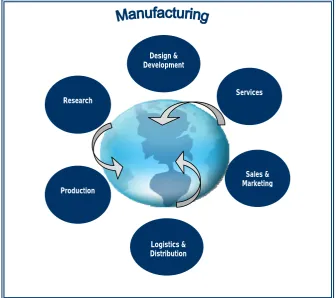
These trends inform an extended definition of high value manufacturing that makes a distinction
between production and manufacturing. Production is seen as only one aspect (albeit an important
one) of the entire supply chain (Figure 1 overleaf).
The definition of high value manufacturing today encompasses a broad range of activities from
research and development through design, production, logistics and distribution to marketing and
after sales services
vii
Figure 1: An Extended Definition of High-Value Added Manufacturing
Source: Defining High Value Manufacturing (IFM, DTI, CBI), 2006
This means that production itself may or not be the defining element of a manufacturing firm’s
activities. Activities across the supply chain may be located in different countries and undertaken by
different companies across the world, where it makes most strategic or economic sense.
This concept of high-value manufacturing should not be regarded as being relevant only to what may
be termed ‘modern’ manufacturing sectors – nor indeed, should it be assumed that every firm
operating within these sectors is generating high value.
The Characteristics of a High Value Manufacturing Firm
There are a number of characteristics that are evident within those manufacturing firms that create
high value and have a differentiated competitive advantage. They are particularly relevant to
companies operating from an open and developed economy like Ireland and serving global markets.
Companies that will be successful in creating high value have: Research
Design & Development
Services
Sales & Marketing
viii
A focus on gaining an in-depth understanding of markets and customer needs
Operations that are capital intensive, knowledge intensive and skills intensive
A participative company culture which involves proactive and open communications between management and staff
Looking at each of these elements in turn, we can identify the implications for how a firm operates
and continuously builds its capabilities.
Area of Focus
Implications for the Firm
Markets
Customers
Serving existing markets and addressing new markets necessitates a new way of doing business within global supply chains, including partnerships, revenue sharing models and licensing
Strong customer relationships and in-depth knowledge of their needs enables development of innovative new products, services and solutions
Capital Intensive
Knowledge Intensive
Skills Intensive
Investment in capital equipment and leading edge technology to drive productivity through automation and computerisation is fundamental
Innovation, including non-technological innovation, across all elements of the business functions is essential in order to gain a competitive edge through differentiation. Even more mature manufacturing areas can benefit from the application of new knowledge to continuous improvement and the use of technologies
Continuous investment in people is vital in today’s business environment - in continuous learning, reskilling and in developing management capability for the innovative organisation
Strong Participative Culture
Employee involvement and empowerment is a key factor in developing the type of workplace that will achieve success through flexibility, adaptability, innovation and problem solving
ix
Actions Required At Firm Level
1. Innovation and Productivity leading to Transformational Change
1.1 Technological
Innovation
We acknowledge the tangible progress that has been achieved to date in building the innovation
capacity and capability of firms. This has been realised (in part) through an enhanced range of
supports to encourage businesses to invest more in R&D and through increased public investment in
research to provide the skilled graduates needed for enterprise research and innovation.
Manufacturing firms need to continue to undertake a progressively innovative approach, and/or to
realise a step-change in their production and business processes that would place them at the
leading-edge of manufacturing and need to have an appropriate range of supports available to help in this
continued evolution.
We have identified three main areas of focus that are relevant to all manufacturing firms operating
from Ireland, including large-scale operations and SMEs.
(i)
Transformational Change & Productivity
Companies need to embrace new technologies and adopt leading edge processes that result in
transformational change, increased productivity and longer term sustainability. This requires
enabling companies to invest in automation and in process R&D, adopt new technologies and/or
adapt them to their specific needs, embrace leading edge manufacturing processes and global
business models and increase competencies in advanced engineering design of automated systems.
(ii)
Energy Efficiency in Manufacturing
In today’s cost environment it is vital that companies themselves engage in improving the efficient
use of energy and build competences. They need to understand and embrace the most advanced
methodologies and technologies available and to proactively engage in achieving a step change in
improving energy efficiencies.
(iii)
The Factory of the Future
Companies need also to be aware of how the Factory of the Future is likely to look, and how it may
impact their operations. Companies need to keep abreast of how emerging technologies, new
materials and processes, and convergence across technologies, sectors and products will inform
x
Of particular relevance to these aspects of technological innovation is the Competence Centre
Initiative which was introduced by the enterprise development agencies in 2007. Competence
Centres are collaborative entities established and led by industry. They are to be resourced by highly
qualified researchers associated with research institutions and are to undertake market focused R&D,
defined by a group of companies, and based on industry needs.
Recommendations
Establish National Manufacturing Competence Centre(s)2F2F
3
(with a sectoral focus, where relevant)
that would actively engage with industry, both large companies and SMEs, to address the current and future needs of production, through R&D and innovation in process, supply chain
management, and energy efficiency, and to address training and reskilling needs.
Suggested areas of focus include (as a priority):
▪ Transformational Change and Improving Productivity
▪ Preparing for the Factory of the Future
▪ Increasing Energy Efficiencies
(Action:DETE, Enterprise Development Agencies)
It is essential that firms actively engage with Competence Centres and utilise the capability,
know-how and services being provided and to provide continuous feed-back so that such Centres remain relevant to the needs of, and easily accessible by, manufacturing firms.
(Action: Manufacturing Firms)
1.2.
Non-technological Innovation: Applying Innovation across Business Processes
and Workplace Systems
The concept of innovation should not be considered solely in terms of scientific or technological
innovation. We believe that greater recognition is needed of the critical role that other forms of
innovation play in fostering productivity growth. This includes, for example:
Regular benchmarking of performance against competitors, including aspects such as employee motivation, workplace systems and HR practices, reskilling and development etc., with a view
to embedding systematic enhancements and innovation within the culture of the firm;
xi
Systematic market watch relevant to the firm, assessing key trends, competitor strategies, and also developing strong customer and partner relationships;
Engaging in new ways to address markets through partnerships, alliances and/or outward direct investment; and
Appropriate use of ICT across all facets of the business, both internally and externally to link with international clients, suppliers and partners.
To date, while the development agencies have focused on a range of initiatives in benchmarking and
process improvement, there is a need to broaden initiatives to address the areas of business process
improvement and workplace reorganisation.
Recommendations
Manufacturing firms should engage in benchmarking, (supported by the development agencies), at a sectoral level in relation to their international counterparts in order to gain a more in-depth
understanding of areas for improvement across production, business and workplace processes. They should then focus efforts (with the support of the agencies where relevant) on capital
investment, R&D, skills enhancement and/or organisational change that would have greatest impact on productivity, competitiveness and longer term sustainability. The social partners also
have a role in promoting engagement with these initiatives.
(Action: Enterprise Development Agencies, Social Partners)
Within this context, the enterprise development agencies should develop and intensify supports for business and workplace innovation to include incentives for business process reengineering,
change management, organisational change, market development capability and new business model development.
(Action: Enterprise Development Agencies, Social Partners, NCPP)
Develop a User Guide on Productivity Improvement and Management to better inform both employees and employers of the practical actions that need to be taken in the workplace to realise
increased productivity.
xii
2. Reskilling and Management Development for the Innovative Firm
Ireland’s skilled workforce has played a significant role in attracting FDI and in the development and
growth of indigenous companies. We recognise that in today’s challenging global environment,
continued commitment to increasing the participation levels of people who are in employment in
education and training is fundamental to underpinning Ireland’s future success. Enhanced skills also
increase the mobility of people and equip them to take on alternative opportunities.
Together with initiatives to support non-technological innovation, the development agencies need to
revitalise the use of training grants for upskilling and management development in specific areas to
support transformational change and develop the key skills needed – in areas such as technology
management, supply chain management, market development, product development and also in
supplementing existing skills so that individuals develop strong inter-disciplinary capability (e.g.
engineering coupled with business skills).
Approaches that have proven to be effective to date in delivering industry led and relevant
programmes (such as Skillnets) should be promoted, and supported to meet increased demand.
A step change in reskilling will only be realised if all parties - the State, employers, Unions and
employees, proactively engage in supporting and embracing continuous advancement in the
workplace.
Recommendations
Having regard to the commitments contained in Towards 2016 and the NDP and the vision
contained in the National Skills Strategy we recommend specific action be taken that optimises the use of available resources to focus efforts on reskilling people in the workforce at all levels and on
developing world-class management capability as follows:
Increase funding to meet the demand arising for the services of those organisations (such as Skillnets), that have demonstrated an effective delivery mechanism. Manufacturing firms needs to
actively engage with training providers and other bodies such as Skillnets and FÁS to outline their specific training and development needs.
(Action: DETE)
Increase resources for the provision of relevant courses for people in employment. The focus should be on the development of skills, at all levels, specific to the manufacturing sector in order to
xiii
Intensify the use of training funds to realise a step-change in capability at all levels to enable companies to engage proactively in transformational change.
(Action: DETE, Enterprise Development Agencies)
The High Level Group on Manufacturing acknowledges that the Expert Group on Future Skills Needs (EGFSN) is exploring options to incentivise people to participate in training whilst in
employment. Options being considered include individual learning accounts, brokerage services, learning leave and tax incentives. Given the fundamental importance of upskilling, appropriate
initiatives should be implemented as a matter of priority. (Action: DETE, EGFSN)
As part of its action plan, the Management Development Council should have specific regard to the needs of manufacturing SMEs in Ireland to build leadership and management skills relevant to an
innovative environment operating within a global context.
(Action: Management Development Council)
As agreed in the Towards 2016 agreement (Section 7.9) put in place a targeted fund to alleviate
the fees in public institutions for part-time courses at third level by those at work who have not previously pursued a third level qualification.
(Action: Department of Education and Science)
Manufacturing firms need to engage in the programmes offered, and provide continuous feed-back of their needs as they evolve over time. Both management and employees also need to commit to
taking up (relevant) training and reskilling initiatives.
(Action: Social Partners)
3. Awareness and Take up of Initiatives
We have already stated that manufacturing in Ireland is facing significant challenges – and indeed,
the definition of manufacturing itself has evolved. It is absolutely critical that firms engage
proactively in making a transformational change in how they operate. The development agencies
have a role to play to aggressively market their support programmes (including financial supports
and advice) over the near term to stimulate take up by firms.
Although there is a wide range of state initiatives already in place to support the development of
xiv
appears to be a relatively low level of awareness amongst companies about the availability of
supports and how to access them. Secondly, from a company perspective, there are issues in relation
to the process, including access to information, the application, eligibility, criteria applied and
subsequent draw-down of supports.
Recommendations
Review and enhance the effectiveness of the development agencies’ Productivity Improvement Fund, Benchmarking, Training and R&D supports to significantly improve uptake and drawdown
by manufacturing companies.
(Action: DETE, Enterprise Development Agencies)
Increase and intensify efforts to promote the range of support initiatives, to include:
a national promotion campaign about available supports
the increased use of “advocates” for SMEs to reach out to companies and employees (building on the pilot initiative introduced by EI to encourage companies to engage in R&D)
a streamlining and simplification of the process and improve access to programmes through, for example, the use of on-line application processes where appropriate etc, and
Continue working with the NCPP3F3F
4
to encourage employees in the manufacturing sector to avail
of training and upskilling opportunities.
(Action: Enterprise Development Agencies)
Prioritise the implementation of a comprehensive central web-based resource of relevant, up to
date, user led business information for enterprises as called for by the Small Business Forum.
(Action: DETE, Enterprise Development Agencies)
The Business Environment
At the same time, it is important that the business environment remains conducive to both
indigenous and foreign manufacturing firms operating from Ireland.
The availability of a highly skilled and innovative work-force, an environment that encourages and
stimulates investment in research and development, entrepreneurship and continuous learning, a cost
base that is in line with other developed economies, an agile and responsive Government, supportive
fiscal and regulatory structures and a high quality of life are all factors that will position Ireland as a
xv
‘good place to do business’. We are aware of a number of strategies and policies that have been
developed to progress Ireland’s development in each of these areas.
However, our primary concern is that the high pace of inflation has resulted in a loss of cost
competitiveness when benchmarked against other developed economies. This is a critical issue for
manufacturing firms
We have identified a limited number of areas that need to be addressed urgently – and which, if not
addressed, will continue to have a negative impact on the future for manufacturing in Ireland.
Actions required to Enhance the Business Environment
4. Ireland’s Relative Cost Competitiveness
The biggest immediate challenge facing the manufacturing sector is the loss of cost competitiveness.
Between 2000 and 2006, Ireland experienced a loss of 15% in international price competitiveness4F4F
5
.
The rate of inflation in recent years has been consistently higher than that of our European and
competing counterparts and is problematic. High inflation rates are impacting not only on the
competitiveness of firms operating in Ireland but also on the living standards of employees.
We acknowledge that some of the price increases are outside our control. There is a need to address
those factors over which we do have control.
A failure to take immediate action in addressing cost competitiveness will negate the benefits of the
productivity gains that can be, and are being, achieved by many companies within the
manufacturing sector
Ireland has benefited from high levels of growth over recent years, and living standards have
improved substantially. As a developed economy, this is as it should be. It is important that
improvements in standards of living are not compromised through efforts to address cost
competitiveness and rates of inflation, and that such efforts are complemented by improved
productivity in all firms (whether trading locally or internationally) and in the public sector.
xvi
The Group strongly endorses the proposal by the National Competitiveness Council for the
development of a national programme to restore cost competitiveness that includes setting inflation
targets close to the Eurozone target rate of inflation of 2%5F5F
6
The following aspects of cost competitiveness are particularly relevant to the manufacturing sector:
Energy
Waste
Local Authority Charges
Local Professional Services
Energy Policy and Efficiency
Over the years 2001 to 2007, Irish industrial electricity prices increased by almost 70% - nearly
twice the increase in the EU-15 average of 36.4%, although this is as a result of a number of both
external and internal factors. The development of energy policy is complex and necessitates a
balancing between somewhat conflicting aspirations in terms of reasonable costs (relative to EU
competitors), security of supply and sustainability. We are also aware of the fact that energy markets
are subject to EU internal market legislation and that State intervention to directly control wholesale
or retail energy prices is not permitted.
From a manufacturing perspective, however, the issue of costs is now paramount. We contend that
energy policy to date has not achieved an impact in this area, although the implementation of the
recommendations contained within the Energy White Paper (May 2007) and the establishment of the
all island Single Energy Market introduced in November 2007 should, over time, lead to a more
efficient and cost effective electricity market.
Recommendation
It is critical that the issue of energy costs is prioritised, and that practical steps are implemented in
the immediate term that will bring energy costs back in line with the EU.
(Action: DCMNR)
Within this context, the need for continued and enhanced efforts to promote more efficient energy
use by both business and residential users to achieve Ireland’s target of a 20% reduction in energy
demand by 2020 becomes increasingly important. Firms themselves must play a role in terms of
xvii
taking steps to increase energy efficiency, and, where applicable, avail of the supports managed
through SEI6F6F
7
and the development agencies.
Recommendation
Enhanced financial supports should be offered to companies to assist them in the drive towards
increased energy efficiency, together with mechanisms to raise awareness and share best practice amongst firms.
(Action: SEI, DETE, Enterprise Development Agencies)
Waste
A recently published Waste Benchmarking Report7F7F
8
shows that Ireland is the second most expensive
country for non-hazardous landfill and is by far the most expensive for biological waste treatment
gate fees against a range of benchmarked countries. Ireland is currently heavily reliant on landfill as
a waste treatment option and the costs of such landfill in Ireland are among the highest in the EU.
The full range of waste management options and infrastructures need to be available to firms, from
minimisation and recycling and to energy recovery to disposal.
From a manufacturing perspective we suggest that the overarching goal should be the development
of an appropriate mix of competing waste management and treatment infrastructures that will meet
best practice in environmental standards and result in real reductions in costs to industries (so that
they are more closely aligned with competitor countries) and an increase in efficiencies.
Recommendations
The High Level Group on Manufacturing endorses the recommendations outlined in the Waste Benchmarking Report which are set out below, and emphasises the urgent need for action in
addressing issues that directly impact on price structures.
The development of specific additional waste management infrastructures, particularly thermal treatment, biological treatment and reprocessing facilities must be accelerated.
(Action: DoEHLG, public and private infrastructure providers)
7 Sustainable Energy Ireland
xviii
The required resources to progress the development of markets for recycled materials, as identified in the Market Development Group work programme, need to be put in place without further delay
so that work on delivering the various elements of the work programme can commence. (Action: DoEHLG, Market Development Group)
The relative roles and responsibilities of the State in the regulation and management of the waste
sector at national, regional and local level need to be reviewed to address the issues affecting infrastructure provision. As a first step there is a need for a clear statement of policy for the sector
and clarity on roles of current and/or future public bodies in the area. (Action: DoEHLG)
Regional waste management plans need to be effectively coordinated to ensure that Ireland is benefiting from the economies of scale that can exist in the delivery of national waste
infrastructure.
(Action: DoEHLG)
The impact of the Strategic Infrastructure Act 2006 and the proposed legal reforms on the speed of
delivery of important new infrastructure need to be maximised to ensure the expected benefits are being realised.
(Action: DoEHLG)
Firms have a role to proactively seek ways of engaging in cleaner, greener behaviours. A range of
waste/pollution prevention or resource conservation initiatives is being undertaken by different
organisations8F8F 9
. We consider that initiatives need to be more heavily marketed by the relevant
agencies, and complemented with raising the awareness and capability of firms so that they engage
effectively in them.
Recommendation
Concerted efforts are required to ensure that businesses are fully aware of the benefits of waste prevention and how best to exploit waste management reduction processes and technologies9F9F
10 .
(Action: DETE, Enterprise Development Agencies, IBEC, EPA).
9 The National Waste Prevention Programme - Second Annual Report 2005/06, EPA, September 2006.
http://www.epa.ie/OurEnvironment/Waste/NationalWastePreventionProgramme/AnnualReports/pdfsforNWPPAnnualReports/FileU pload,10897,en.pdf
xix
Local Authority and Development Charges
Local Authorities play an important role in supporting enterprise development through investment in
local infrastructures and services – and many work very closely with existing and potential
investment companies to deliver a proactive service. We acknowledge that the level of services
provided has expanded in response to the demands by industry, households and communities. This
has been coupled with an increase in services and development charges. Such charge increases have
been significant over recent years, and although steps have been taken at the request of the Minister
to keep increases in the annual rate on valuation (ARV) to the minimum required we remain
concerned that businesses are levied disproportionately for goods and services.
We are aware that a Government Interdepartmental Committee carried out a review of development
contributions and issued revised guidelines in May 2007. The revised guidelines address the issue of
the need for greater transparency in the way in which development contributions are levied and
applied. From the perspective of the manufacturing sector, we welcome the revised guidelines as a
first step in addressing the competitiveness implications of development charges. It is important that
they are applied as a matter of priority by the Local Authorities.
Recommendation
Local Authorities should have specific regard to the impact of rising costs for industry and
employment in their areas in the context of the increasingly competitive global environment. A rebalancing of the contributions is required together with increased engagement with business
regarding expenditures and recovery.
(Action: Local Authorities)
Costs of Professional Services
Manufacturing firms based in Ireland rely on locally provided professional services, including legal,
audit and accountancy services – the costs of which have a direct impact on their final product
pricing structures. The recent National Competitiveness Council’s Annual Competitiveness Report
(published November 2007) demonstrates that Dublin is the most expensive against benchmarked
cities for legal fees, and the four main cities in Ireland are more expensive than Belfast, Derry,
Manchester or Copenhagen for accountancy fees.
The Competition Authority undertook a review of a range of professional services in the domestic
market and identified clear actions that would counter the existing regime that effectively allows for
xx
Recommendation
Establish implementation structures to coordinate effective responses to the recommendations of
the Competition Authority’s review of these sectors of the economy in order to deliver the type of fundamental reform that is called for by the Authority.
(Action: Department of An Taoiseach, Department of Justice, Equality and Law Reform)
We all have a role to play
As a small open economy, Ireland needs to respond in a way that ensures manufacturing firms can
readily adapt to take advantage of global opportunities and address challenges.
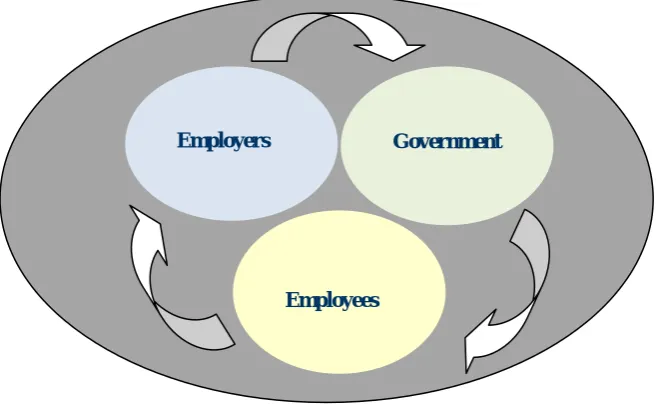
The Group agrees that there is a need for coordinated and comprehensive action by Government,
employers and employees if Ireland is to continue to be attractive for high-value manufacturing
[image:21.595.112.442.446.649.2]activities underpinned by an innovative, adaptive and responsive environment and culture (Figure 2).
Figure 2: Working Together to Make it Happen
Employers Government
xxi
Government For Government a primary role is to develop and implement public
policy that ensures that the broad business environment underpins the development of a sustainable manufacturing sector. Government has a role to play in ensuring that key decisions are taken without undue delays, cognisant of the pace of change in the competitive environment in which businesses operate, and that barriers to timely decision making are addressed.
Employers Employers need to develop the management and leadership capability relevant to an innovative firm operating in a global context. They need to
invest in building capacity within their firms to produce innovative products and specialise in the activities that yield value added for the firm, and to support and encourage employees’ engagement in continuous learning.
Employees Employees, and their trade unions, need to embrace ongoing change and adaptability and to be aware of the changing skills needs of the
manufacturing sector. Employees should be supported and encouraged through the provision of information, advice and facilities that encourage their commitment to lifelong learning so that they can take advantage of opportunities for advancement, whether that is within their existing workplace, or alternative employment elsewhere.
Making it Happen
Recommendation
We recommend the establishment of a Manufacturing Forum to drive the implementation of actions
required at Government level and at individual firm level (including employers and employees) that will result in the change required, both at the firm level and in the business environment. The
Forum should be established under the auspices of the social partners, acknowledging the importance of a collaborative approach. It should report to the social partners annually. The
Forum should be supported and facilitated by DETE and Forfás.
xxii
5.
The Role of the Manufacturing Forum
The make-up of the Forum should be such that it acts as a strong champion and advocate for the
sector and becomes a respected voice for the manufacturing sector, valued by employers, employees
and their unions and Government. The Forum should ensure that manufacturing remains central to
current and future industrial policy, and:
Take responsibility to progress the implementation of the recommendations outlined in this report (directly or indirectly as appropriate) and undertake an evaluation of progress against
actions one year following the establishment of the Forum and annually thereafter;
Act as a vehicle for the open and frank exchange of information and views between manufacturing representatives and relevant Government Departments, regulatory bodies,
development agencies and NCPP on issues concerning the development of the sector as they
arise;
Act as a “clearing house” to address obstacles to the implementation of the actions required to develop the manufacturing sector; and
Identify ways of raising awareness of the continuing importance of manufacturing to Ireland’s future economic development and of manufacturing as a viable and rewarding career option.
Communication to the wider community of employers, employees and Government will be critical
to the Forum’s success:
The Government representatives will ensure that issues raised by the Forum are brought to the attention of relevant parties within the Government sector and will arrange for direct contact
with the Forum where this would be of value in progressing implementation of
recommendations and/or gaining an in-depth two-way understanding of more complex issues.
The business representatives on the Forum will promote workplace innovation, investment in increasing productivity, management development and employee training and reskilling to their
members and peers (as appropriate).
The employee representatives on the Forum will engage with their members to raise awareness of the challenges facing the sector, and of the need for adaptability and flexibility, and
xxiii
Conclusion
Ireland’s economic growth has been driven to a large extent by its success in attracting FDI in
manufacturing and in stimulating the growth of indigenous companies.
Whereas the industry faces considerable challenges – it also faces opportunities. Firms, through
their management and employees, need to position themselves to take advantage of these
opportunities. Firms operating from a small open economy like Ireland are impacted to a greater
extent by external forces, so that they cannot compete in low margin activities. As this report
outlines, there are many ways in which individual firms can differentiate their offering and generate
added value.
Innovation across all elements of the value chain, increased productivity, continuous learning and
development and reskilling at all levels within the firm, and an adaptive flexible workforce, are
today’s ‘table stakes’.
Whereas firms, through employers, Unions and employees, can play their part in engaging in
innovation and enhancing productivity, we cannot ignore the criticality of regaining cost
competitiveness across a number of key areas of concern to the manufacturing sector. As it stands
today, even the more progressive firms contend that they are ‘running to stand still’ as improvements
in productivity are quickly eroded by high levels of inflation.
A strong future for manufacturing in Ireland will not become a reality without concerted and focused
action in a relatively small number of areas.
We believe that collectively, with each of us playing our role, we can make the necessary
transformation to ensure that a highly competitive, sustainable, high value manufacturing sector will
1
1
The Manufacturing Sector in Ireland Today
1.1
Background
The manufacturing sector has played a key role in Ireland’s economic success and currently
accounts for 11% of total employment and 23% of economic output GVA10F10F 11
.
The impact of the manufacturing sector is felt throughout the economy. Manufacturing has a large
impact on job creation, both direct and indirect, and sustains about 74 secondary jobs per 100 direct
manufacturing jobs, across all skills levels. Manufacturing activities provide inputs to other sectors
of the economy and satisfy a broad range of final and intermediate demands.
High value-added manufacturing, in particular, is a key driver of innovation and technological
advance. It increases opportunities for attracting and embedding R&D activities, collaboration with
the higher education sector and stimulating networks. Ireland’s management capability, high quality
outputs, productivity growth and project management skills have evolved as a result of our success
in attracting high quality FDI in manufacturing, and our focus on stimulating the growth of
indigenous firms.
11 Gross Value Added (GVA) at basic prices is a measure of the value of the goods and services produced in a region (less the materials and services used which come from outside the region) priced at the value which the producers received minus any taxes payable and plus any subsidies receivable as a consequence of their production or sale (CSO)
Manufacturing directly accounts for 11% of Irish employment (221,000 jobs) 4 new jobs in manufacturing create an additional 3 service jobs in the economy Manufacturing firms’ total direct spend in the Irish economy exceeds €25 billion The sector contributed 23% (or €35bn) to Irish Gross Value Added in 2006
2
1.2
Manufacturing in Ireland
There are some 4,300 manufacturing companies in Ireland (with 4,500 plants). Irish owned
companies account for almost 90% of these, of which a high proportion is made up of small firms
employing less than 50 people11F11F 12
. Foreign owned companies based in Ireland account for almost
50% of manufacturing employment and over 80% of manufacturing output.
1.2.1
Employment Over the Past Decade
1995-2000
Total Manufacturing employment in Ireland increased significantly in the period 1995
to
2000, rising from 215,000 to 248,000 (QNHS Q4 data). A significant proportion of this growth waspredicated on the dot.com era which saw global telecommunications and computer companies
doubling their work-forces, and Ireland benefiting from large flows of FDI.
2001-2004
Since 2000, and following a thirty year period in which Ireland managed to buck international
trends, employment levels declined steeply in each of the years from 2001-2004 falling to 218,400,
with an accumulated loss of 30,000 jobs. Much of these losses resulted from the downsizing of those
ICT companies that had experienced such exponential growth in the preceding five years12F12F 13
.
2005-2006
Employment levels stabilised in 2005. In 2006 we saw a small increase of 2,400 jobs bringing the
overall employment levels in manufacturing to approximately 221,000.
Within these employment figures there is a constant ‘churn’: of jobs lost and new jobs created; of
firms discontinuing operations and of new firms setting up in Ireland (both indigenous and foreign)
in both manufacturing and services activities.
Figure 1.1 overleaf shows employment by ownership and sector for the years 1995 and 2006.
12 Source: CSO – Census of Industrial Production (companies employing more than 3 persons)
3
Figure 1.1: Manufacturing Employment by Ownership and Sector: 1995, 2006
13F13F14 0 5000 10000 15000 20000 25000 30000 35000 40000 Forei g n Indi gi nous Forei g n Indi gi nous Forei g n Indi gi nous Forei g n Indi gi nous Forei g n Indi gi nous Forei g n Indi gi nous Forei g n Indi gi nous Forei g n Indi gi nous Forei g n Indi gi nous Forei g n Indi gi nous Forei g n Indi gi nous Forei g n Indi gi nous Forei g n Indi gi nous Forei g n Indi gi nous Basic & Fab Metals Chemicals & Chem Prods. Clothing, Footwear etc. Medical & Precision Equip. ICT Food Products etc. Machinery & Equip NEC Other Mfng. NEC Other Non-Metallic Pulp, Paper etc. Rubber & Plastic Prods. Textile & Textile Prods. Transport Equip. Wood & Wood Prods. 1995 2006
Source: Forfás, ABSEI
While traditionally Ireland never had a large manufacturing base, the share of the total workforce
directly employed in the sector has dropped from 16% to 11% in the past decade.However, this
reduced share is attributable more to the dramatic rise of services and construction employment
rather than a major decline in manufacturing employment.
Figure 1.2 overleaf shows the transition over the 10 year period from 1996 to 2006 where services
increased to 66% of the total 2.016 million employed, from 61% in 1996 of the total 1.328 million
employed – while industry (which includes transport, electricity and gas supply, mining and
quarrying as well as manufacturing), dropped from 20% to 15% over the same period.
Approximately 160,000 additional jobs are created indirectly by, and are therefore reliant upon, the
manufacturing sector. Whereas the average is 74 additional jobs created per 100 manufacturing
jobs, sectoral differences are evident. The Pharmaceuticals sector sustains 137 services jobs per 100
manufacturing jobs, and Publishing/Print and Recorded Media 20814F14F 15
.
14 The NACE code Electrical and Optical Equipment has been disaggregated to show ICT and Medical Technologies/Precision Equipment separately.
4
Figure 1.2: Employment by Broad Sector
15F15F16
11%
20%
61%
8% 6%
15%
66% 13%
Agriculture
Industry (minus construction)
Services
Construction
Source: CSO
1.2.2
Sectoral Variations
The last decade has seen an increased concentration of manufacturing activity in four areas: Food
and Drink; Electrical and Optical Equipment (which includes ICT and Medical Devices);
Chemicals/Pharmaceuticals and Print/Recorded Media (a sub-sector within Pulp, Paper and Paper
Products).16F16F 17
Together, these four areas account for 65% of all manufacturing employment and 85%
of manufacturing GVA.
The relative employment shares of the manufacturing sub sectors remained quite stable over the
period 1995 to 2006, with a few notable exceptions. A large fluctuation in the employment level of
the electrical and optical equipment sector (which has been subdivided here into the broad headings
of ‘ICT’ and ‘Medical Devices’) can be explained by the spike in ICT employment which coincided
with the dotcom boom around 2000. In contrast with this spike in ICT was the more consistent
employment growth in the medical devices sector, which doubled in size between 1995 and 2006
(Figure 1.3 overleaf).
Also notable is the demise of the textile industry. From being the 3rd largest manufacturing sub sector (in employment terms) in 1995, with almost 9,000 employees, this low skill, cost sensitive
industry has all but disappeared from the industrial landscape today, employing less than 2,000
people. This story contrasts with the development of the chemicals industry, which, in 1995
accounted for a similar portion of employment as the textile industry. Steady growth over the period
16 It is not possible to isolate Manufacturing employment from Industrial employment at broad sectoral level for 1996 and accordingly the data shown relates to overall Industrial employment for both years
17 The latter 3 areas are often referred to as “modern manufacturing”
5
since 1995 has seen this high value sector of manufacturing become one of Ireland’s key industries,
[image:29.595.84.549.187.372.2]employing more than 24,000 people.
Figure 1.3: Manufacturing Employment by Sub Sector for Agency Supported
Companies, selected years
17F17F18 15% 6% 6% 9% 9% 21% 34% 20% 8% 6% 10% 10% 18% 28% 14% 11% 7% 9% 11% 20% 28%
Electrical & Optical Equipment
Medical Devices
Basic Metals Etc.
Publishing, Printing and Reproduction of Recorded Media Chemicals Etc.
Food Products & Beverages
Other
Source: Forfás ABSEI
Other sectors which show growth in employment levels over the period include the Basic
Metals/Fabricated Metal Products sector and the Wood/Wood Products sector. However, job gains
in these areas may be related to the construction industry boom and as such may be susceptible to a
downturn in that sector.
1.2.3
Output and Productivity
Manufacturing as a percentage of total GVA has declined in a number of OECD countries with the
exception of Finland (Figure 1.4 overleaf). While Ireland has followed this trend, manufacturing
still accounts for a greater share of total GVA (24.5% in 2005) than that of any of the other countries
shown.
18 The ‘Medical devices’ sector is normally classified under the ‘electrical and optical equipment’ heading within the NACE codes, but has been separated out to more accurately reflect the decrease in employment in ICT and increase in Medical Devices over the period 2000-2006
6
Figure 1.4: Manufacturing Contribution to GVA (Selected OECD Countries)
18F18F19 0 5 10 15 20 25 30 A u str ia B el gui m D
enmark Finl
and France Germany Greece Irel and Italy N etherl ands No rwa y P ol and P ortugal S pai n Un ite d K ingdom Un ite d S tates Japan
Manufacturing 1990 Manufacturing 2005
Source: OECD
Although there has been a decrease in manufacturing’s relative contribution to GVA, there has been
strong growth in real output of 35% (in volume terms), over the period 2000 and 200619F19F 20
. However,
while volume growth has increased substantially since 2000, manufacturing turnover has not
increased at the same pace, rising by 16% from 2000 to 2006. This reflects the fact that the average
price received for manufacturing goods has fallen by 9% since 2000 (Figure 1.5).
The fact that manufacturing production continued to increase while employment dropped over the
same period points to strong productivity growth in the sector.
Figure 1.5: Manufacturing Output
134.9 116.1 123 118.4 124.4 128.2 110
107.7 110.3 107.2 108.4
113
101.7 100.5
92.4 90.2 90.1 90.7
100 80 90 100 110 120 130 140
2000 2001 2002 2003 2004 2005 2006
Industrial P ro ductio n Vo lume Indices M anufacturing Output P rice Index Industrial Turno ver Indices
Source: CSO
7
1.2.4
Sectoral Variations
Table 1.1 shows the change in employment and GVA for all sectors over 1995 to 2006 and
highlights the growing importance of the four major sectors which in 2006 accounted for 65% of
manufacturing employment and 85% of manufacturing output.
The predominantly foreign owned sectors Chemicals /Pharmaceuticals and Electrical / Optical
Equipment account for 54% of output in 2006 and 36.5% of manufacturing employment.
The performance of the Food and Drinks Sector, in which indigenous firms predominate, is
noteworthy in that in 1995 the sector accounted for almost 20% of manufacturing output but
declined considerably to 12% in 2000 and has since recovered strongly to the point where this sector
[image:31.595.84.515.335.699.2]accounts for 17%.
Table 1.1: Percentage Contribution of Manufacturing Sectors to Total
Manufacturing Employment and GVA
1995 2000 2006
Empl. % GVA % Empl. % GVA % Empl. % GVA %
Food Products and Beverages 20.8 19.9 17.6 12.1 19.8 17.0
Textile and Textile Products 8.9 2.9 3.8 1.0 1.9 0.7
Leather and Leather Products 0.7 0.2 0.3 0.1 0.1 0.0
Wood and Wood Products 2.0 1.0 2.2 1.0 3.0 1.2
Pulp, Paper and Paper Products etc20F20F
21
8.7 10.4 9.7 15.2 8.7 14.5
Chemicals Pharmaceuticals etc 8.6 27.6 9.5 32.8 11.3 32.5
Rubber and Plastic Products 4.2 2.4 4.1 1.6 4.4 1.6
Other Non-Metallic Mineral Products 4.1 4.2 4.5 3.2 4.9 2.7
Basic Metals / Metal Fabrication Etc 6.0 3.4 6.0 3.3 7.3 3.0
Machinery and Equipment, N.E.C 6.5 3.9 5.8 2.4 4.9 2.5
Electrical and Optical Equipment 21F21F
22
20.9 20.1 28.3 24.5 25.2 21.4
Transport Equipment 4.3 2.0 4.1 1.5 3.8 1.6
Manufacturing N.E.C. 4.2 2.1 4.0 1.2 4.6 1.4
Manufacturing Industries (NACE 15-37)
100 100 100 100 100 100
Contribution of the Four Main Sectors 59.0 78.0 65.1 84.6 65.0 85.4 Source: CSO
8
1.2.5
Expenditures – Contribution to the Economy
The manufacturing sector makes a valuable contribution to the Irish economy in terms of
expenditures on wages, and Irish-sourced materials and services. The combined spend by the
manufacturing sector amounted to €25.7 billion in 2006 and has been relatively consistent since
1999. Irish companies contributed to over half of this total in 200.
The slight reduction in the level of materials sourced in Ireland since 2001 may be explained to
some extent by the off-shoring of low-margin ICT manufacturing activities to lower-cost locations
[image:32.595.92.520.296.510.2](Figure1.6).
Figure 1.6: Manufacturing, Direct Expenditures
Source: Forfás Agency Data
Manufacturing companies also provide for a large share of corporation taxes, contributing €1.6bn, or
30% of the total corporation tax yield in 2005. MNCs are responsible for over 90% of the total
corporation tax receipts from manufacturing (Table 1.2).
Table 1.2: Corporation Tax from Manufacturing by Sector 2003/2005
2003 (€K) 2004 (€K) 2005 (€K)
Total Corporation Tax Manufacturing 1,605,400 1,634,200 1,654,000
Total Corporation Tax Yield 5,161,000 5,332,000 5,492,000
Manufacturing as % Total Yield 31.10% 30.60% 30.10%
Source: CSO 0
5000 10000 15000 20000 25000 30000
1995 1996 1997 1998 1999 2000 2001 2002 2003 2004 2005 2006
€
(m
)
Wages
Irish Sourced Materials
Irish Sourced Services
[image:32.595.126.504.633.745.2]9
1.3
Ireland’s Performance in Context
Manufacturing activities play an important role in Ireland’s economic structure, and will continue to
do so. The trends experienced by the sector in Ireland have occurred within the context of
significant global change. These include the opening of new markets, the increased pace of
technological advances, the transition toward servicisation and changing global business models and
supply chains. The next chapter describes these global trends in more detail and leads to a broader
10
2
The Business Environment : Trends, Challenges and
Opportunities
2.1
Overview
In this chapter we consider major global trends, exploring the challenges they pose and
opportunities they present for manufacturing companies in Ireland. We also look at the domestic
environment and the challenges presented within the global context.
These global and domestic factors both influence the responses required to ensure that Ireland’s
manufacturing sector continues to evolve and develop.
The increased pace of globalisation has resulted in intensified competition between and within firms.
Advances in technology have enabled new global business models and supply chains that are disaggregated, and dispersed to locations where it makes economic sense. This
presents opportunities for companies to focus on developing distinctive competences
within the global supply chain, new products, services and solutions.
There is an increasing blurring of the former distinction between manufacturing and services as we see companies producing innovative products, services and solutions
tailored to a customer’s specific requirements.
There is an urgent need to tackle Ireland’s loss of cost competitiveness.
In a developed higher-cost economy like Ireland, increasing productivity and innovation within firms is crucial if manufacturing firms are to be successful on a global stage.
The definition of high value manufacturing today encompasses a broad range of activities from research and development through design, production, logistics and distribution to
11
2.2
Global Factors
2.2.1
Increased Pace of Globalisation
Markets have become much more open and competition has intensified significantly over recent
years. The value chain is increasingly disaggregated with activities distributed to locations that make
the most economic or strategic sense. Advances in technology enable communication and
management to take place on a global scale, and underpin new business models and innovative
products, services and solutions.
Intensified Competition for Inward Investment
The clearest demonstration of the benefits to Ireland from globalisation is illustrated by inward FDI.
This has been one of the principal drivers of the strong economic performance of Ireland over the
last two decades. As Ireland has gained from the mobility of investment, competition from other
locations has intensified.
That said, Ireland remains attractive for investments in capital intensive, high value, low labour
intensive activities, and for sectors where the regulatory framework and/or compliance issues are a
high priority. In addition to attracting FDI, IDA Ireland has placed significant focus on embedding
existing multinational enterprises in Ireland, by encouraging them to increase the scale of activities,
and to expand the range of activities undertaken. Such skills and knowledge intensive activities
include R&D, supply chain management, technical support and headquarter functions.
Although the rate of return on FDI investment in the Irish manufacturing sector compares
favourably with the EU average, it has slipped significantly from an average of 30.3% in the
1995-99 period (ranked 1 of those benchmarked) to 17.9% in 2000-2005 (ranked 3)22F22F
23
(Figure 2.1
overleaf). At the same time the rate of return in a number of other countries is improving
significantly. Ireland continues to punch above its weight when it comes to attracting overseas
investment, but if these trends continue Ireland will drop quickly down the rankings.23F23F
24
23 Forfás/US Bureau of Economic Analysis
12
Figure 2.1: Average Return on Investment in Manufacturing by Country/Region
24F24F25 0.00% 5.00% 10.00% 15.00% 20.00% 25.00% 30.00% 35.00% F
inland China Ireland
S wit z er land Ko re a P oland Hungar y India Cz ec
h Republic Singapor
e Neder lands Canada EU G er m any UK F ranc e 1995-1999 2000-2005
Source: Bureau of Economic Analysis, US
Increased Competition for Investment within Multinationals
The reality of the business world means that there is ongoing churn as mature products reach the end
of their life cycle and are replaced by next generation products – and as products become
commoditised relocation to other lower cost locations makes economic sense. Apart from costs,
relocation decisions can also be as a result of business takeovers, consolidations or changes in
product or market focus.
From the Irish subsidiary’s perspective this reality presents a challenge, as they compete with other
divisions or subsidiaries of their own companies to retain existing functions and attract new
investment. It also presents an opportunity to develop higher-end manufacturing and related
activities.
In this context, it is essential for the Irish based subsidiary to invest in productivity improvements
and innovation and to engage in activities and functions that are critical to the parent company, so
that the Irish entity plays a more strategic role.
Opportunities for Internationalisation and Outward Investment
The expansion of the EU, successive rounds of WTO trade liberalisation and the ending of old
political divisions have seen the emergence of countries and regions such as China, India, Russia
25
13
and Eastern Europe as major new markets. This has presented new business opportunities for Irish
manufacturing companies to expand their operations overseas.
Outward Direct Investment (ODI) has grown significantly over the period 2000 to 2005 when it
reached $117.9 billion – with manufacturing being the most common activity by subsidiaries of
Irish companies overseas. Anecdotally, it is said that there are about 90,000 people employed in
Irish owned businesses based in the US alone.
Irish companies invest overseas not only to internationalise and pursue opportunities in new
markets, but also to access lower cost inputs, and/or to maintain international competitiveness and
the long term sustainability of the company.
Although there is considerable debate regarding the impact of ODI, a recent statement by Forfás25F25F
26
indicates that it is largely beneficial for the economy. ODI can facilitate the Irish operation to
restructure toward higher skills, higher value activities which result in improved productivity and
wealth creation.
While the net impact of ODI is positive for Ireland’s economy, there are potentially negative effects,
as in some instances it can be accompanied by job losses. The employment churn that can arise from
ODI has implications for those in low skilled jobs in areas where opportunities for alternative
employment in different industries or sectors are not readily available.
Increased Competition for Investment Domestically
As well as competing for investment with foreign locations, the manufacturing sector competes for
funds domestically with other sectors of the economy. It appears that the negative perception
surrounding the future of manufacturing is discouraging potential investors while the recent high
returns in property have attracted significant amounts of investment (although there is now evidence
of a slow down in the property market).
This issue is principally relevant for indigenous firms that are at a growth phase, and require funding
as they attempt to increase scale and capacity, so that they can more effectively target market
opportunities.