ii
DEDICATION
iii
ACKNOWLEDGEMENTS
iv
ABSTRACT
v
ABSTRAK
vi
vii
TABLE OF CONTENTS
TITLE DEDICATION
ACKNOWLEDGMENT ABSTRACT
ABSTRAK
TABLE OF CONTENTS LIST OF TABLE
LIST OF FIGURES
LIST OF ABBREVIATIONS LIST OF SYMBOLS
LIST OF APPENDICES xxi
i iii iv v vi viii xiv xvii xxi xxii xxiv
CHAPTER 1 INTRODUCTION 1
1.1 Background 1.2 Objectives of study
1.3 Problem statement 1.4 Scope of research 1.5 Significance of study 1.6 Thesis structure
1 3 3 4 5 5
CHAPTER 2 LITERATURE REVIEW 7
2.1 Introduction
2.2 Types of clay soil
2.3 Batu Pahat Soft Clay (BPSC)
2.3.1 The physical properties of BPSC 2.3.2 Particle size distribution of soft clay
viii
2.4 Additives and modifiers in hot mix asphalt 2.5 Chemical propeties of additives
2.6 Mineral fillers
2.6.1 Ordinary Portland cement 2.6.2 Fly ash
2.6.3 Diatomaceous earth 2.6.4 Hydrate lime
2.7 Asphalt binder
2.8 Effect of filler in asphalt binder 2.9 Filler interaction of asphalt binder
2.10 Influence of filler on aging resisitance of asphalt binder
2.11 Rheology properties of asphalt binder 2.11.1 Dynamic shear rheometer 2.11.2 SHRP (rutting parameter) 2.12 Linearity of asphalt binder
2.12.1 Isochornal plots 2.12.2 Master curves 2.13 Scanning electron microscope
2.14 Effect of filler in the asphalt mixture performance test
2.14.1 Permanent deformation
2.14.2 Factors affecting rutting of asphalt mixtures
2.15 Moisture susceptibility 2.16 Dynamic creep
2.17 Resilient modulus
2.18 Using waste materials as filler in asphalt mixture 2.19 Summary 11 12 13 14 15 16 16 17 18 20 22 23 23 25 26 28 29 30 31 32 33 36 37 40 42 44
ix
3.1 Introduction
3.2 Process framework
3.3 Expreimental process and materials
3.3.1 Specific gravity of asphalt binder 3.3.2 Batu pahat soft clay
3.4 Cone-penetration test of soft clay
3.4.1 Determine the plastic index and plastic limit of BPSC
3.4.2 Aggregate structure design 3.5 Blending procedure
3.6 Physical properties of asphalt binder 3.7 Storage stability test
3.8 Temperature susceptibility
3.8.1 Pen-Vis Number (PVN) 3.8.2 Penetration index 3.9 Viscosity
3.10 Asphalt binder aging methods
3.11 Rheological properties of asphalt binder 3.11.1 Dynamic Shear Rheometer (DSR) 3.12 Fourier transforms infrared spectroscopy 3.13 Scanning electron microscopy
3.14 Surface energy test
3.15 Superpave mix design method 3.15.1 Superpave Specimens
3.16 Volumetric properties of asphalt mixture
3.16.1 Maximum specific gravity (Gmm CoreLok)
3.17 Material selection of asphalt mixture 3.18 Ageing procedures of asphalt mixture 3.19 Performance testing of asphalt mixture
3.19.1 Resilient modulus test 3.19.2 Wheel tracking test
x
3.19.3 Dynamic creep test
3.19.4 Moisture susceptibility test 3.20 Summery
66 68 69 CHAPTER 4 RESULTS AND ANALYSIS ON ASPHALT INDER 70
4.1 Introduction
4.1.1 Plastic and liquid limit results of BPSC
4.2 Point of homoeneity
4.3 Physical properties of asphalt binde 4.3.1 Softening point results 4.3.2 Penetration results 4.3.3 Ductulity results 4.3.4 Loss on heating result 4.4 Storage stability results
4.5 Viscosity results
4.6 Physical properties of aged index results 4.6.1 Aged viscosity index
4.6.2 Aged softening point index 4.6.3 Aged penetration index 4.7 Temperature susceptibility 4.8 Scanning electron microscope
4.8.1 Standard less quantitative elements analysis
4.9 Surface energy of asphalt binder
4.10 Fourier transforms infrared spectroscopy 4.11 Rheological properties of asphalt binder
4.11.1 Rutting performance (G*/sin δ ≥ 1.0kPa)
4.11.2 Rutting RTFO parameter (G*/sin δ ≥ 2.2kPa)
4.12 Fail temperature
xi
4.13 Creep and recovery (unaged) 4.14 Creep and Recovery (short-term) 4.15 Multiple stress creep recovery (unaged) 4.16 Multi Creep and recovery (short-term) 4.17 Frequency sweep (unaged) 10 rad/s 4.18 Frequency sweep (short-term)
4.19 Rheological properties of base and BPSC modified binder
4.19.1 Isochronal plot (10 rad/s) 4.19.2 Master curve (unaged) 4.19.3 Master curve (short-term) 4.20 Summary 103 105 109 111 114 115 117 117 119 120 122 CHAPTER 5 ANALYSIS ON ASPHALT MIXTURES 124
5.1 Introduction
5.2 Materials and mix design D 5.2.1 Materials
5.2.2 Aggregate mix design and gradation 5.2.3 Superpave mix design
5.3 Performance tests of asphalt mixture 5.3.1 Resilient modulus
5.3.2 Dynamic creep 5.3.3 Wheel tracking
5.3.4 Moisture susceptibility 5.3.5 Indirect tensile strength 5.4 Contributions and Applications
5.5 Impact of Incorporation BPSC into Asphalt Mixtures
5.5.1 Durability 5.5.2 Ruttin
xii
5.6.1 Cost of construction
5.7 Correlations between asphalt binder and mixture 5.7.1 Correlation between Mr and ITS 5.7.2 Correlation between Mr and G*/sin δ
short-term
5.7.3 Correlations between wheel tracking and G*/sin δ (rutting)
5.8 Summary
147 148 149
151
152 152 CHAPTER 6 CONCLUSION AND RECOMMENDATION 154
6.1 Introduction 6.2 Conclusion
6.2.1 Physical and rheological properties of asphalt binder
6.2.2 Engineering Properties of Asphalt Mixture
6.2.3 Oxidative aging effects in asphalt binders and mixtures
6.3 Recommendations REFERENCES
APPENDICES
154 154
155
156
xiii
LIST OF TABLES
2.1 Physical properties of Batu Pahat soft clay 10
2.2 Typical moisture contents 10
2.3 Generic classification of asphalt additives and modifiers 12 2.4 Various factors affecting the permanent deformation 34
3.1 Properties of Batu Pahat soft clay 49
3.2 Gradation limit of 19.00 mm nominal maximum size 51
3.3 Blending binder protocol 51
3.4 The physical properties of asphalt binder 80/100 52
3.5 Superpave compaction parameter 60
3.6 Volumetric properties of superpave mix design criteria 61
3.7 Design matrix for the asphalt mixture 62
3.8 The parameters for resilient modulus (ASTM D4123) 64
3.9 Rutting depth test parameters 66
3.10 Dynamic creep test Parameters 67
4.1 Results of liquid and liquid limit of BPSC 71
4.2 Optimum blending time 72
4.3 Comparison of significant difference level of ductility 76
4.4 Post Hoc multiple comparison of ductility 76
4.5 Comparison of significant difference level of loss on
heating 78
4.6 Comparison of significant difference level of storage
stability 79
4.7 Post hoc multiple comparison of storage stability test 79
4.8 Aging index of viscosity 83
4.9 The softening point aging index after Aging 85
4.10 The penetration aging index after aging 86
4.11 The PI and PVN for base and BPSC-modified-asphalt binder 87 4.12 Chemical composition for unmodified binder 88
xiv
4.14 Designations of main groups of modified asphalt binder 93 4.15 Comparison of significant difference of unaged for rutting 97 4.16 Post hoc multiple comparisons between modified and
unmodified 98
4.17 Comparison of significant difference of unaged and S-T 101 4.18 Post hoc multiple comparisons between modified and
unmodified 102
4.19 Comparison of significant difference of compliance creep
for base and S-T 107
4.20 Post hoc multiple comparisons of compliance creep for
base and S-T 108
4.21 Comparison of significant difference of multiple stress
creep recovery for unaged and short-term aged 113 4.22 Post hoc multiple comparisons of multiple stress creep
recovery for unaged and short-term aged 113 4.23 Comparison of significant difference of master curve of
ageing conditions 121
4.24 Post hoc multiple comparisons of master curve of ageing
conditions 122
5.1 Results of aggregate properties 126
5.2 Mix designations and nominal maximum size of aggregate 126 5.3 Specific gravity of course, fine aggregate and BPSC 126 5.4 Optimum binder contents and volumetric properties of
BPSC 128
5.5 Comparison of significant difference for ageing conditions
at 25°C 130
5.6 Post Hoc multiple comparisons between Base and
BPSC-modified-asphalt mixture at 25°C (1000ms) 130 5.7 Ageing index for resilient modulus tests at 25 and 40°C
(1000ms) 132
5.8 Comparison of significant difference of unaged and
short-term aged 40°C 132
xv
mixture at 40°C 133
5.10 Ageing index for dynamic creep test 40°C 135 5.11 Comparison of significant difference of resilient modulus
at 40ºC 136
5.12 Post hoc multiple comparisons of resilient modulus for
unmodified and BPSC-modified-asphalt binder 136 5.13 Ageing index for wheel tracking test at 45°C 139 5.14 Significant difference of wheel tracking for unaged 139 5.15 Significant difference of wheel tracking for short-tem aged 139 5.16 Post hoc multiple comparison of unaged and aged mixtures 140 5.17 Significant difference of ITS for dry condition mixtures 142 5.18 Significant difference of ITS for wet condition mixtures 142 5.19 Post hoc multiple comparison of ITS for dry and wet
condition 143
5.20 Summary of the impact of essential asphalt mixture
parameters 146
xvi
LIST OF FIGURES
2.1 Soft clay area of RECESS Malaysia 9
2.2 Process of gradually filling the voids in compacted
filler with binder 19
2.3 Schematic of dynamic shear rheometer testing
configuration 24
2.4 Dynamic shear rheometer test operations 24
2.5 General shape of an isothermal plot 28
2.6 General shape of an isochronal plot 29
2.7 Construction of a master curve with dynamic
parameters 30
2.8 Failure zones under tire load 32
2.9 Permanent deformation 33
2.10 2.11
2.12
Influence of creep stress intensity on strain rate Cumulative plastic strains versus time for creep testing
The fillers effect on asphalt mix properties
38
39 42
3.1 Flow chart of the experimental 47
3.2 Equipment for producing BPSC 49
3.3 Cone-penetration equipment 50
3.4 Storage stability procedures 53
3.5 Rolling thin-film oven test equipment 55
3.6 Fourier transforms infrared spectroscopy 57
3.7 Field emission scanning electron microscopy 57 3.8 Schematic layout and device of surface energy
method 58
3.9 Superpave gyratory compactor 59
3.10 SGC mold configuration 59
xvii
3.12 Wheel tracking device 66
3.13 Dynamic creep device 66
3.14 Moisture susceptibility 68
4.1 Plot result semi-log graph and determine the liquid limit
71
4.2 Optimum blending time 72
4.3 Softening point versus BPSC Contents 73
4.4 Penetration against BPSC contents at 25°C 74
4.5 Ductility versus different ratios of BPSC Contents 75 4.6 Loss on heating of RTFO versus BPSC Contents 77 4.7 Different in softening points between the top and
bottom for BPSC modified binder 78
4.8 Viscosity of different percentages of BPSC modifier
asphalt binder under unaged 80
4.9 Viscosity of different percentages of BPSC modifier
asphalt binder under short-term 81
4.10 Viscosity ageing index of BPSC Contents at 135°C 82 4.11 Softening point ageing index of BPSC contents 84 4.12 Penetration aging index values of BPSC contents 85
4.13 Electron images of unmodified samples 88
4.14 Distribution of BPSC particles sizes in asphalt binder 89 4.15 Typical image during the contact angles measurement 90
4.16 Surface energy of BPSC contents 91
4.17 FTIR spectra of base and BPSC modified binder 92 4.18 Carbonyl index 1700 cm-¹ of modified and
unmodified binder 94
4.19 Sulfoxide index 1030 cm-¹ of modified and
unmodified binder 94
4.20 G*/sin δ of unaged binder against various ratios of
BPSC at 64ºC 96
4.21 Complex modulus (G*) against temperature 97
xviii
samples 98
4.23 G*/sin δ of short-term aged binder versus different
ratios of BPSC at 64ºC 99
4.24 Complex modulus (G*) of short-term aged against
temperature 100
4.25 Phase angles (δ) of short-term aged against
temperatures 101
4.26 High failure Temperatures of unmodified and
modified binder 103
4.27 Compliance creep and recovery of unaged samples
(3Pa) 104
4.28 Compliance creep and recovery of unaged samples
(10Pa) 104
4.29 Compliance creep and recovery of unaged samples
(50Pa) 105
4.30 Creep and recovery of short-term (3Pa) 106
4.31 Creep and recovery of short-term (10Pa) 106
4.32 Creep and recovery of short-term (50Pa) 107
4.33 Multiple stress creep recovery of unaged binder under
stress level of (100 Pa) 110
4.34 Multiple stress creep recovery of unaged binder under
stress level of (3200 Pa) 110
4.35 Multiple stress creep recovery of short-term aged
binder under stress level of (100 Pa) 111
4.36 Multiple stress creep recovery of short-term aged
binder under stress level of (3200 Pa) 112
4.37 Complex modulus (G*) at 10 rad/s 114
4.38 Phase angel (δ) at 10 rad/s 115
xix
4.43 Complex modulus of master curve for unaged 120 4.44 Complex modulus of master curve for short-term aged 121
5.1 NMAS 19 mm aggregate gradation 125
5.2 Resilient modulus of unaged and short-term aged at
25ºC 129
5.3 Resilient modulus of unaged and short-term aged at
40ºC 131
5.4 Dynamic creep of unaged at 40°C 134
5.5 Dynamic creep of short-term aged at 40°C 135
5.6 Wheel tracking results of unaged 137
5.7 Wheel tracking results of short-term aged 138
5.8 Moisture sensitivity of asphalt mixture 141
5.9 Indirect tensile strength 142
5.10 Correlations between MR and ITS at 25ºC for unaged 150 5.11 Correlations between MR and ITS at 25ºC for
short-term aged 150
5.12 Correlations between Mr at 40°Cand G*/sin δ
(unaged) 151
5.13 Correlations between Mr at 40°C and G*/sin δ
(Short-term) 151
xx
LIST OF ABBREVIATIONS
F - Recovered Angle
G*/sin δ - Superpave™ rutting factor
G* - Complex shear modulus
δ - Phase angle
A - Thermal diffusivity
FTU - High failure temperatures of unaged asphalt binder
E - Cumulative micro-strain
FTS - High failure temperatures of short-term-aged asphalt binder
G’ - Elastic component or storage modulus G’’ - Viscous component or loss modulus
Jnr - Creep compliance
Ω - Average angular recovery speed
[∇MR]A - Rate of aging effect on resilient modulus due to long-term aging condition at 25℃
[∇MR]T - Rate of test temperature effect on resilient modulus
∆MR - Difference in resilient modulus ∇MR - Resilient modulus gradient
γ - Ratio of the strain
σ - Constant applied load
PI - Penetration index
S.P - Softening point
Au - Gold
C - Carbon
𝑆 - Sulfur
Pt - Platinum
CI - Chorine
SI - Silicon
O - Oxygen
xxi
LIST OF SYMBOLS
A - Aging
AI - Specific heat
AI - Asphalt Institute
AASHTO - American association of state highway and transportation officials
ASTM - American society for testing and materials ANOVA - Analysis of Variance
AC - Aging Condition
BT - Asphalt Binder Type
BPSC - Batu Pahat Soft Clay
CGN - Compaction Gyration Number
DSR - Dynamic Shear Rheometer
DG - Dense-Grade
ESALs - Equivalent Single Axle Loads 𝐺𝑠𝑏 - Bulk Specific Gravity of Aggregate 𝐺𝑏 - Specific Gravity of Asphalt
𝐺𝑠𝑒 - Effective Specific Gravity of Aggregate 𝐺𝑚𝑏 - Specific Gravity of Aggregate
𝐺𝑚𝑚 - Maximum Specific Gravity of Paving Mixture
HMA - Hot Mixture Asphalt
ITS - Indirect Tensile Strength
MSCR - Multiple Stress Creep Recovery
MT - Mixing Temperature
𝑁𝑖𝑛𝑖𝑡𝑖𝑎𝑙 - Compaction Parameter 𝑁𝑑𝑒𝑠𝑖𝑔𝑛 - Compaction Parameter 𝑁𝑚𝑎𝑥𝑖𝑚𝑢𝑚 - Compaction Parameter
xxii
SHRP - Strategy Highway Research Program
OBC - Optimum Bitumen Content
𝑃𝑏𝑒 - Effective Asphalt Content, percent by total weight
of Mixture
𝑃𝑏 - Asphalt. Percent by total weight of mixture
PG - Performance Grade
RTFO - Rolling Thin Film Oven
RV - Rotational Viscometer
SMA - Stone Matrix Asphalt
SFE - Surface Free Energy
STA - Short-Term-Aging
SGC - Superpave Gyratory Compactor TSR - Tensile Strength Ratio
UTM - Universal Testing Machine
VFA - Voids Filled Asphalt
VMA - Voids Mineral Aggregate
xxiii
LIST OF APPENDICES
APPENDIX TITLE PAGE
A Physical Properties of Aggregate 193
B Volumetric Properties and OBC of Asphalt Mixture 196
C Asphalt mixture 205
D Physical Properties of Asphalt Binder 213
E Statistical Analysis Data Output 229
F Statistical Analysis Data Output of Physical and
1 CHAPTER 1
INTRODUCTION
1.1 Background
There are many potential ways to improve the performance of asphalt binder and mixture which are applied in the surfacing course of road pavements. Currently, researchers and engineers are still looking and take into consideration the most important user requirements of asphalt pavement towards economy and safety on road and highway construction [1]. Additionally, road pavement is always subjected to external loads including mechanical loading induced by heavy traffic and thermal loading [2]. Similarly, highway agencies stipulated the use of specific materials for highway pavement construction to assure positive performance of pavements. Hence, the tests used in the paving industry are only empirical in nature [3].
2
moisture sensitivity and permanent deformation (rutting). The scientists and engineers are constantly searching on equally important different methods to improve the performance of asphalt mix, and using some modifiers of hot mix asphalt [6].
More importantly, many research works have been implemented to modify the asphalt binder properties. Thereby, the modification of asphalt binder to improve the performance properties was significantly increased since the implementation of the Strategic Highway Research Program (SHRP) binder specifications [7]. The state highway agencies have appointed modifier content to be comprehensive in asphalt binder [8]. Moreover, asphalt modifiers were applied in the road construction industry as early as 1950s, that applicable in improving the performance of asphalt pavements in terms of increasing resistance to pavement distresses [9].
In order to enhance good quality of asphalt binder, polymer modification has become one of the most popular methods to obtain a good performance for road pavement materials [10]. Then again, modified binders have been utilized in Superpave mixtures of numerous state agencies with potential to ameliorate the mixtures [11]. In contrast, modifiers of asphalt binder were altered in function, efficiency, and evolution of modified asphalt material; also it may enhance the total performance of pavements [12]. However, the compatibility among asphalt binder and the modifier is not guaranteed, and segregation during storage at high temperature can affect the performance of asphalt binder [13].
3
1.2 Objectives of study
The main objectives of this research are based on:
i. To investigate the physical, chemical and rheological properties of BPSC-modified-asphalt binder.
ii. To evaluate the effect of BPSC on performance tests of asphalt mixture. iii. To determine which modified binders provide maximum initial durability
benefit with minimum regression due to aging.
iv. To develop regression models among the performance of asphalt binder and mixture corresponding to the influence of BPSC in terms of permanent deformation.
1.3 Problem statement
Hot mix asphalt should satisfy and has sufficient stability, durability, flexibility, coefficient of friction, and workability for good pavement performance. In addition, to produce a mixture with those properties, a suitable coating of the aggregated grains by asphalt binder and suitable compaction up to designated air void ratio should be guaranteed [17]. Recently, the continuous increase in the traffic numbers may cause an accelerated deterioration of the road network [18]. Thus, the damage of road asphalt layers is considered as the biggest challenge faced by countries around the world today [19].
4
hardening and resistance to moisture damage. Antioxidants were used in the past to control age-hardening of asphalt mixtures with some successes [21]. Additionally, numerous attempts are still trying to resolve those factors in reducing the road maintenance cost and enhancing pavement design life. Therefore, it was important to acknowledge that some user agencies were indicated an increase of service life or reduced the risk of the early distresses development through the use of modified asphalt binders. Otherwise, asphalt mixes must be able to resist the existing heavy loads and expected future loads for an acceptable period of time. This demands some modifications to the reinforcement of asphalt binder [22].
In order to enhance the durability of asphalt mixture versus pavement distress, mineral filler are commonly used. Therefore, several paving technologist found that mineral filler plays a dual function in asphalt mixture by acting as mineral aggregate to fill voids and producing contact point among coarse aggregate particles to strengthen the asphalt mixture [23]. However, using soft clay as filler to modify asphalt binder and mixture was not intensively done by researchers. Moreover, the effect of soft clay as filler on the properties of asphalt mixture and binder should be studied.
1.4 Scope of research
5
dynamic creep and wheel tracking were conducted in order to observe the effect of BPSC on the asphalt mixtures. Meanwhile, storage stability, viscosity, physical and rheological properties tests for asphalt binder was also performed. Equally important, the asphalt binder and mixture were tested based on Superpave’s specification and its recommended criteria at high and intermediate temperatures, but the rheological properties at low temperatures were not investigated. Complementary to this procedure, specimens were subjected to aging condition with short-term aging by using rolling thin film oven (RTFO) according to ASTM D 2872.
1.5 Significance of study
This study was conducted to determine the most suitable and optimum BPSC particles in the asphalt mixture and expectant to produce a new road material and to contribute towards producing cheap and effective asphalt mixtures for road construction. Therefore, the performance of rheological properties of asphalt binder and mixture tests can provide superior indication to characterize the use of BPSC particles as a new additive for the best design selection of HMA. In the present study, the applications of BPSC particles were demonstrated for the first time to modify the asphalt binder and mixture. Hence, the benefit of using modification was expected to enhance the physical and mechanical properties of asphalt binder and mixture, as well as to resist the phase segregation among the asphalt and the modifier. This means to improve the storage stability of modified asphalt binder.
1.6 Thesis structure
6
Chapter one explains an overview of the research, including the introduction, problem statement, expected outcome, and objectives. Chapter two provides previous studies related to BPSC history, and also
study on the effect of fillers on asphalt binder and mixture of hot mix asphalt.
Chapter three describes the experimental plan, such as laboratory equipment, materials properties of aggregates, binders, and mixture. Chapter four presents the results of rheological, chemical, and physical
properties tests, which were conducted on the asphalt binder modified by BPSC contents. This chapter is also based on the detailed discussion and analysis of experimental data.
Chapter five discusses the performance of asphalt mixture modified with BPSC. It also provides a discussion on experimental data acquired from conducted testing and presents the contribution and application of BPSC on the performance of asphalt mixture.
7
2 CHAPTER 2
LITERATURE REVIEW
2.1 Introduction
This chapter presents the summary review of related literature including scientific papers, technical reports, and dissertations that had been conducted on modification of asphalt binders and mixtures. Moreover, this literature review is presented in three fundamental parts: Batu Pahat Soft Clay (BPSC) history, additives and modifiers in hot mix asphalt, as well as the effect of fillers on asphalt binder and mixture.
2.2 Types of clay soil
8
primarily the result of physical and mild chemical weathering processes, and it retains much of the chemical structure of their parent rocks [27].
Soil classification in road and railway engineering is the ranking of different soils with respect to their use ability in mechanical and mechanical-physical way related to the long term performance of the road pavement or railway structure [28]. According to the latest available information of the unified soil classification system, the soil sample was classified as clay of high plasticity (CH). It composes of 23% sand, 15% silt, and 62% clay [29]. Furthermore, kaolin is a subgroup of the clay family of mineral which includes kaolinite, dickite, nacrite, and halloysite [30]. Alternatively, Huat and Ali [31] reported that mineral compositions of the tropical residual soils in Malaysia are mostly dominated by kaolinite which occurs from weathering processes. On the other side, their major clay mineral have been between the most important industrial raw materials [32]. Also, bentonites are the clay rocks modified from glassy igneous material such as a volcanic ash [33]. In the same way, bentonites are greatly affected from the acid activation, ion exchange, heating and hydrothermal treatments [34].
2.3 Batu Pahat Soft Clay (BPSC)
9
needs to be applied for reducing imported soil from other places. Ho and Chan [38] stated that soft clays are introduced as cohesive soil, where water content is higher than its liquid limits. Mokhtar [39] pointed that the soft soil includes the term of soft clay soils, and have a big portions of fine particles such as clay soils and silts. More recently, Mohd and Zain [40] expressed the opinion that various types of soils are ranked as soft soils such as soft clays, peat soils, organic soft soils, and soft clays.
[image:33.595.134.505.472.716.2]In addition, previous study [41] showed that BPSC may be a crucial factor to probable damage to the rural road structure. Based on the findings of Chan and Abdullah [42], had concluded that the engineering properties of these clay soils can be enhanced by adding ordinary Portland cement for modification. In other research, Malaysia is well known to have many areas with soft clay soil as the major soil distribution percentage. This is because Malaysia has many coastal areas and rivers. Soft clay has particle sizes of less than 0.002 mm. Therefore, when a soil has 50% or more particles with sizes of 0.002 mm or less, it is generally termed as clay [43]. The areas which consist of soft clay area in Peninsular Malaysia are shown in Figure 2.1.
10
2.3.1 The physical properties of BPSC
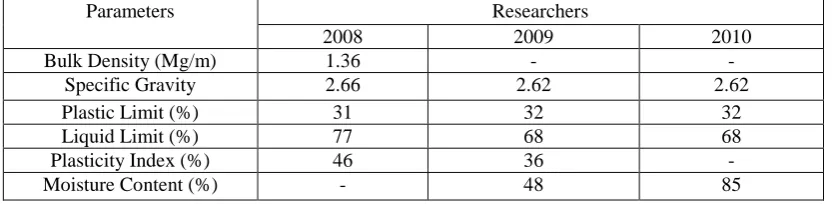
[image:34.595.112.529.288.390.2]Soft clay usually causes difficulty in construction process because of its strength and low hardness properties [44]. The physical properties of BPSC have been experimentally achieved by some previous studies as shown in Table 2.1.
Table 2-1: Physical properties of Batu Pahat soft clay [36]
Parameters Researchers
2008 2009 2010
Bulk Density (Mg/m) 1.36 - -
Specific Gravity 2.66 2.62 2.62
Plastic Limit (%) 31 32 32
Liquid Limit (%) 77 68 68
Plasticity Index (%) 46 36 -
Moisture Content (%) - 48 85
Additionally, Rafidah and Chan [45] stated that the increment in the moisture content caused the clay to become smooth and sticky till it cannot retain its original shape when it is described as being in a liquid state as shown in Table 2.2.
Table 2-2: Typical moisture contents [45]
Soil type Moisture contents %
Moist sand 5-15
Wet sand 15-25
Moist silt 10-20
Normally consolidated clay low plasticity 20-40 Over consolidated clay high plasticity 10-20
Organic clay 50-200
Extremely high plasticity clay 100-200
2.3.2 Particle size distribution of soft clay
[image:34.595.106.534.532.633.2]11
alumina octahedrons as its basic mineral units [25]. In addition, particles with size below 75µm are considered as fillers [46]. In the same way, soft clay is the finest of all and it can only be clearly monitored by using microscopic tools, with soil grains finer than 0.075mm [47]. Clay also has large surface area because of its fine size and platy character of the individual minerals, and it has different surface chemical reactions and different bulk physical properties [48]. Aside from this, clay and silt soil are part of cohesive soil because their particles are closed together and they tend to stick within its particles [49]. In the other research, Jordan [50] indicated that clay minerals are mostly specified by their small particle size, affinity for water, response to chemical alternates in their environment, and are referred for their crystallization.
2.4 Additives and modifiers in hot mix asphalt
12
2.5 Chemical properties of additives
The Superpave asphalt binder specifications based on SHRP require the asphalt binders to meet stiffness criteria at both high and low pavement service temperatures. However, most regular asphalt binders are not qualified for the requirements in areas with extreme climate conditions. In the meantime, traffic volume and loads have increased significantly in recent years [55]. This has caused lots of premature rutting and cracking of HMA pavement constructed with neat asphalt binders. Modifications of asphalt binders become of considerable interest in the improvement of pavement performance and service life. Table 2.3 shows generic classification of asphalt additives and modifiers. Some specific technical reasons for using additives and modifiers in HMA are listed as follows:
Obtaining stiffer mixtures at high service temperatures to minimize rutting. Obtain softer mixtures at low service temperatures to minimize thermal
cracking.
Improve fatigue resistance of HMA mixtures.
Improve resistance to aging or oxidation; rejuvenate aged asphalt binders. Permit thicker asphalt films on aggregate for increased mix durability. Improve abrasion resistance of mixture to reduce raveling.
Reduce flushing or bleeding; reduce structural thickness of pavement layers. Reduce life cycle costs and improve overall performance of HMA pavements.
Table 2-3: Generic classification of asphalt additives and modifiers
Type Generic Examples
Filler
Mineral Filler: crusher fines
lime
Portland cement fly ash
13
Type Generic Examples
Extender Sulfur
Lignin
Polymers
Rubber:
a. Natural latex b. Synthetic latex c. Block copolymer d. Reclaimed rubber
Natural rubber
Styrene-butadiene or SBR Polychloroprene latex
Styrene-butadiene-styrene (SBS), Styrene-isoprene-styrene (SIS) Crumb rubber modifier
Plastic
Polyethylene/Polypropylene Ethylene acrylate copolymer Ethyl-vinyl-acetate (EVA) Polyvinyl chloride (PVC) Ethylene propylene or EPDM Polyolefins
Combination Blends of polymers above
Fiber
Natural: asbestos rock wool
Man-made: polypropylene polyester fiberglass mineral cellulose
Oxidant Manganese salts
Antioxidant Lead compounds
Carbon Calcium salts
Hydrocarbon Recycling and rejuvenating oils
Hard and natural asphalts
Anti-stripping Agent Amines Lime
Waste Materials
Roofing shingles Recycled tires Glass
Miscellaneous
Silicones
Deicing calcium chloride granules
2.6 Mineral fillers
14
mixture. However, addition of mineral fillers has dual purpose when added to asphalt mixtures. A portion of the mineral filler that is finer than the asphalt film thickness mixed with asphalt binder forms a mortar or mastic and contributes to improved stiffening of mix. This modification to the binder that may take place due to addition of mineral fillers could affect asphalt mixture properties such as rutting and cracking [23].
Atkins [56] pointed out that the importance of mineral filler fraction was often overlooked even though it is one of the most important components of HMA. In general, filler have various purposes among which, they fill voids and hence reduce optimum asphalt content and increase stability, meet specifications for aggregate gradation, and improve bond between asphalt cement and aggregate [57]. Therefore, numerous studies have investigated utilize of mineral filler as an additive in hot mix asphalt. In addition, several types of filler materials such as fly ash, limestone, cement, hydrated lime, silica and fine sand were used as filler in asphalt binder composites as followed down:
2.6.1 Ordinary Portland cement
15
Some fines have a considerable effect on the asphalt cement making it acts as a much stiffer grade of asphalt cement compared to the neat asphalt cement grade [62]. The filler has the ability to increase the resistance of particle to move within the mix matrix and works as an active material when it interacts with the asphalt cement to change the properties of the mastic [63].
2.6.2 Fly ash
16
2.6.3 Diatomaceous earth
Diatomite has been used since ancient times for agriculture and grain storage. The Chinese used it 4,000 years ago for oriental medicine and agriculture. Therefore, Diatomite has many importance industrial benefits because of its unique physical properties, such as high porosity (35-65%), lightweight, low density, low thermal conductivity, high liquid absorption capacity, chemically inert and large surface area [73]. The unique physical properties of diatomite make it useful in civil engineering application. Their stud indicated that the addition of raw diatomite to cement up to 10% has produced positive results, but increased addition of raw diatomite reduce strength due to higher water demands related to the porosity of diatomite [74]. It is also suggested that diatomite and sup plasticizing admixture could be applied to enhance the mechanical properties of conventional asphalt mixture. In asphalt, diatomite was used as a type of modifier to improve the performance of asphalt mixture. Yi-qiu et al [75] found that the low temperature properties of diatomite modifier asphalt mixture and found that it performance better at low temperatures than neat asphalt mixture. Also it was indicated that diatomite and glass fiber improved permanent deformation resistance and fatigue performance of asphalt mixture, also has a significant effect on the stiffness of asphalt mixture.
2.6.4 Hydrate lime
17
asphalt mixture. Wang and Sha [77] examined the limestone and limestone filler effect upon hardness and found that it was significant compared to granite and granite fillers. Likewise, Behiry [78] stated that using hydrated lime gave better results than Portland cement, and had the ability to enhance the mechanical performance of asphalt mixture. In another study, hydrated lime would provide resistance to moisture damage and chemical ageing [79]. It was also determined that the modified asphalt mixture with recycled waste lime gave higher resistance against stripping than unmodified asphalt mixture [80]. Addition of hydrated lime to asphalt can increase penetration and lower the viscosities of asphalt binder [81]. Likewise, asphalt mixture with hydrated lime has slightly greater stability than the mixture with a crushed stone dust. This indicates that the hydrated lime improves the stability of the mixture [82]. Sangiori et al. [83] reported that waste bleaching clay can lead to an enhancement of mechanical properties of the asphalt mixture.
2.7 Asphalt binder
Asphalt binder is used as an adhesive material in roadway and roofing construction. However, there are many types of distress like low temperature cracking, fatigue, and permanent deformation that can reduce the quality and performance of road pavement during life service [84]. Recently, Pan [85] showed that the performance of asphalt binder is also highly related to its service conditions which involve climatic conditions and traffic conditions, such as temperature, moisture and traffic loads. The study of Kharghehpoush [86] showed that asphalt binder is highly particularly important material with respect to highways. Thus, national transportation agencies have expressed interest in asphalt binder modifiers from renewable resources [87].
18
performance grade [88]. Meanwhile, most asphalt binders adhesives that utilized for pavement materials are derived mostly from fossil fuels [89].
Asphalt binder additives can be defined as a material added in the binder to improve its properties, and also an ideal additive should be able to decrease the temperature susceptibility, control age hardening and must be compatible with any type of binder [90]. However, an internal report of the Asphalt Institute identified 48 types of binder modifiers comprising of 13 polymers, 10 hydrocarbons, 6 mineral fillers, 6 antioxidants, 6 anti-stripping additives, 4 fibers, 2 extenders, and 1oxidant [91].
According to Zanzotto and Kennephl [92], asphalt additives should be capable to improve the binder properties at both low and high in-service temperatures, and it should be strong enough to withstand traffic loads at high temperature, which any cause permanent deformation, and flexible enough to avoid excessive thermal stresses at low asphalt temperatures.
2.8 Effect of filler in asphalt binder
Several studies have been investigated to understand the stiffness impact of mineral filler on asphalt binder. In addition, use hydrated lime with SBS modified binder had a good improvement of asphalt binder stiffness [93]. While, a study carried out by Cross and Brown [94] investigated that using various types of mineral fillers such as hydrated, cement, limestone lead to increase the stiffness of asphalt binder. An excess of filler leads to mastic stiffening and the increase of cracking susceptibility [95].
19
work done by Rostler and Dannenberg [97], the black carbon was applied as filler in asphalt binder, which leads to higher viscosity compared to the original sample. Meanwhile, Garrigues and Vincent [98] stated that the added of sulfur in the asphalt binder could improve the physical properties of asphalt binder. Figure 2.2 shows the process of gradually filling the voids in a compacted filler; the binder essentially plays two roles that of a lubricant making the relocation of grains easier and that of a liquid in which they can be suspended.
Filler particles
Voids Binder
[image:43.595.112.513.278.582.2](a) (b) (c) (d)
Figure 2-2: Process of gradually filling the voids in compacted filler with binder [95] Moreover, nanoclay would enhance the physical properties of asphalt binder and reduce the costs extensively [99]. Prowell et al. [100] reported that the addition of fines to the asphalt binder can improve the stiffness of asphalt binder. The higher asphalt content when apply in an incorporation with acid filler presents lower viscosity, whilst the main filler show a higher viscosity [101]. Anderson [102] pointed out that the rheological behavior of the asphalt binder was influenced by the
Filter-binder mix with all voids filled with binder
Filter-binder mix with excess binder
after voids filled Filter-binder mix
with insufficient binder to fill voids Filter particles only
20
size of the filler particles. The addition of nanoclay enables to achieve better physical properties in conventional composites [103]. Incorporation of up to 5% nanoclay in asphalt binder lowered the penetration value and increased the softening point [104].
2.9 Filler interaction of asphalt binder
The asphalt and filler interaction have a significant role on the performance of asphalt mastic, and they have ability to effect by the temperature and loading frequency. To evaluate the asphalt and filler interaction, Hafeez and Kamal [105] found that the size of filler and interactions among asphalt binder and filler greatly affected by the reinforcement of asphalt mastic.
Zhang et al. [106] also found that the interaction ability of filler and asphalt could be reflected by the change in the rheological properties of asphalt mastic. On the other hand, Bhasin [107] explained that anti-striping property of asphalt aggregated in water is limited for the evaluation of the asphalt and filler interaction. It is well known that interaction between filler and asphalt binder is based on the coefficient of variation of phase angel [108]. Tan et al. [109] defined the complex viscosity coefficient to evaluate asphalt and aggregate interaction ability. Hence, the segregation is not evident for asphalt and aggregate. Clopotel et al. [110] assumed that the change in the viscosity of the matrix asphalt is entirely because of the change in the glass transition temperature. Thereby, asphalt and filler interaction capacity would be analyzed and evaluated by glass transition temperature and physicochemical interaction model [111].
21
and composition a small number of chemical compounds impact asphalt filler interaction. Similarly, Anderson [63] found that the filler has the capability to boost the resistance of particle to move through the mix matrix and acts as an active material when it interacts with the asphalt binder to alternate the properties of the mastic. Most importantly, Hesami and Kringos [114] pointed out that the chemical compositions of asphalt binder on the surface of filler is rearranged when the asphalt and filler are mixed. Also Zhang [115] applied interface molecular models of chemical and aggregate oxide compositions of binder by molecular dynamics to analyse the interaction between binder and aggregate. It can be indicated that an alteration in temperature or chemical composition would impose segregation among the asphalt molecules [116].
In the other research, El-Shafie et al. [117] showed that addition of nanoclay to asphalt binder leads to increase in softening point, viscosity and decrease in penetration. It was concluded that nanoclay can improve properties such as stability, stiffness modulus and indirect tensile strength and resulted in excellent performance compared to that of unmodified binder [118]. Then again, the clay minerals, mostly specified by their small particle size, affinity for water, and response to chemical alternates in their environment are referred for their crystallization and viscosity-increasing capabilities in aqueous components [50].
22
2.10 Influence of fillers on aging resistance of asphalt binder
The principal cause of asphalt binder ageing in service is the atmospheric oxidation of certain molecules with the formation of highly polar and strongly interacts functional groups containing oxygen. Qin et al. [122] also mentioned that the aging can significantly change the rheological properties of asphalt binders and cause asphalt hardening. Hence, it is importance to have a good understanding of changes in rheology and structure of asphalt binders under aging environments. Aging phenomenon is considering as one of the main causes for the failure of wearing course. Therefore, the benefits of using filler to enhance the aging resistance are studied by many researchers.
Wu et al., [123] reported that an oxidation which occurs in asphalt roadway pavements during construction and service life can affect the rheological properties of binder. Shenoy [124] argued that asphalt binder ageing has implications during the construction of pavements and their long-term performance. Meanwhile, Moraes [125] stated that that the aging process in asphalt pavement might be detrimental when too much hardening is observed, and aging may be beneficial when a soft mixture hardens in an adequate pavement.
In contrast, Bautista [126] reported that the properties of the asphalt binder relied on the period of aging that can be considered in terms of rheological, and studied the effect of fillers on the aging of asphalt binder mixes.
23
polar molecules to increase the viscosity of asphalt binder. It is well known that small particles sizes of filler prevent oxygen dispersal during asphalt binder [130].
Then again, fly ash appears to enhance the resistance of aging in asphalt binder. This leads to the increase in the service life of asphalt pavement [131]. Likewise, the asphalt mixture with hydrated lime had slightly greater stiffness which leads to reduce the ageing of asphalt binder [82].
2.11 Rheology properties of asphalt binder
Rheological characterization could be defined as a science dealing with the flow and deformation of different materials. Shafabaksh and Ani [132] claimed that the rheological of the asphalt binder would influence the performance of asphalt binder. Moreover, Yusoff et al. [133] reported that the fundamental rheological properties of binder materials are normally measured using DSR from low to high temperatures.
2.11.1 Dynamic shear rheometer
24
Figure 2-3: Schematic of dynamic shear rheometer testing configuration [133]
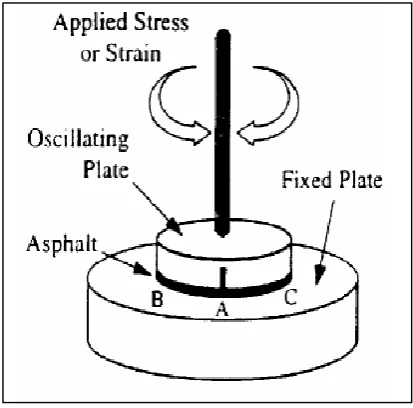
The DSR testing procedure is given in AASHTO TP5. As shown in Figure 2.4, the asphalt binder sample is constrained between a fixed plate and an oscillating plate. Hence, all Superpave DSR test are conducted at a frequency of 10 radians per second, which is equivalent to 1.59Hz [136].
[image:48.595.215.422.515.719.2]159
REFERENCES
1. Al Allam, A. M., Mohd, H. M. I. B. H., Masirin, M. E. A., & Kamaruddin, N. H. M. Influence of using Batu Pahat soft clay on the mechanical properties of hot mix asphalt mixture. In Malaysian Technical Universities Conference on Engineering and Technology 2015.
2. Soltani, M., Moghaddam, T., Karim, M. & Baaj, H. Analysis of fatigue properties of unmodified and polyethylene terephthalate modified asphalt mixtures using response surface methodology. Engineering Failure Analysis, (2015). 58: p 238-248.
3. Angelo, J. New high-temperature binder specification using multistress creep and recovery. Transportation Research Circular E-C147. 2010. pp 0097-8515.
4. Awwad, M. and Shbeeb, L. The use of polyethylene in hot asphalt mixtures. American Journal of Applied Sciences, 2007. 4(6): pp. 390-396.
5. Kedarisetty, S.,Biligiri, K. & Sousa, J. Advanced rheological characterization of Reacted and Activated Rubber (RAR) modified asphalt binders. Construction and Building Materials, 2016. 122: pp. 12-22.
6. Abtahi, S. M., Sheikhzadeh, M. & S.M. Hejazi, Fiber-reinforced asphalt-concrete–a review. Construction and Building Materials, 2010. 24(6): p. 871-877.
160
8. Hrdlicka, G. M., Tandon, V., Prozzi, J., Smit, A., &Yildrim, Y. Evaluation of binder tests for identifying rutting and cracking potential of modified asphalt binders. 2007.
9. Roberts, F. L., Kandhal, P. S., Brown, E. R., Lee, D. Y., & Kennedy, T. W. Hot mix asphalt materials, mixture design and construction. 1991.
10. Zhu, J., Birgisson, B. & Kringos, N. Polymer modification of bitumen: Advances and challenges. European Polymer Journal, 2014. 54: pp. 18-38. 11. Xiao, Y., Evaluation of engineering properties of hot mix asphalt concrete for
the mechanistic-empirical pavement design. Doctoral dissertation. Florida State University 2016.
12. Mohamed, A.A. A study on the physical and mechanical properties of asphaltic concrete incorporating crumb rubber produced through dry process Doctoral dissertation. Universiti Sains Malaysia. 2007 .
13. Yildirim, Y., Polymer modified asphalt binders. Construction and Building Materials, 2007. 21(1): p. 66-72.
14. Roque, R., Birgisson, B., Drakos, C., & Sholar, G. Guidelines for use of modified binders. 2005.
15. Brule, B., Polymer-modified asphalt cements used in the road construction industry: basic principles. Transportation Research Record: Journal of the Transportation Research Board, 1996 (1535): p. 48-53.
16. Hadidy, A. &T. Yi-Qiu, Mechanistic approach for polypropylene-modified flexible pavements. Materials and Design, 2009. 30 (4): p. 1133-1140. 17. Yener, E. & S. Hinislioglu, Effects of exposure time and temperature in aging
test on asphalt binder properties. International Journal of Civil and Structural Engineering, 2014. 5(2): p. 112.
161
19. Chen, X.,& Xu, Z. Effects of load and temperature on permanent deformation properties of HMA. Road Pavement Material Characterization and Rehabilitation. 2009. pp. 49-55. No. 191.
20. Hamid, B., Z. Hassan, & N. Shams, The use of polymer modification of bitumen for durant hot asphalt mixtures. Journal of Applied Sciences Research, 2008. 4(1): p. 96-102.
21. Apeagyei, A., Buttlar, W. & Dempsey,. B. Moisture damage evaluation of asphalt mixtures using. AASHTO T283. 2006. 51: p. 61801.
22. Kennedy, T. W., Huber, G. A., Harrigan, E. T., Cominsky, R. J., Hughes, C. S., Von Quintus, H., & Moulthrop, J. S. Superior performing asphalt pavements (Superpave). Strategic Highway Research Program, National Research Council, Report No. SHRP-A-410, 1994.
23. Mehari, Z.B. Effect of different types of filler materials on characteristics of hot-mix-asphalt concrete. Master thesis, Addis Ababa University 2007. 24. Hasmida, W. & Hassan, W. Strength characteristic of soft soil reinforced with
coir fibres. Doctoral dissertation, Universiti Malaysia Pahang. 2010.
25. Zaki, A. The in-situ properties of clay soil in Pekan using cone penetration test. Doctoral dissertation, Universiti. Malaysia Pahang. 2010.
26. Naeini, S. &Moayed, R.Z. Effect of plasticity index and reinforcement on the CBR value of soft clay. International journal of Civil engineering, 2009. 7(2): p. 124-130.
27. Dawson, A. R., & Correia, A. G. The effects of subgrade clay condition on the structural behaviour of road pavements. European Symposium Euroflex 1996. pp. 113-119.
162
29. Mousavi, S. & Wong, L.S. Utilization of brown clay and cement for stabilization of clay. Jordan Journal of Civil Engineering, 2015.Vol 9, No. 2. 30. De, S.S.P,. De, S.S.H & Brindley. G. Mineralogical studies of kaolinite-halloysite clays'part iv a platy mineral with structural swelling and shrinking characteristics. American Mineralogist, 1900. 51(5-6).
31. Jamaludin, S., Huat, B. B., & Maail, S. Engineering properties and classification of tropical residual soils. Tropical Residual Soils Engineering 2004. pp. 37-55.
32. Park, J. H., Shin, H. J., Kim, M. H., Kim, J. S., Kang, N., Lee, J. Y., & Kim, D. D. Application of montmorillonite in bentonite as a pharmaceutical excipient in drug delivery systems. Journal of Pharmaceutical Investigation, 2016. 46 Vol.(4), pp.363-375.
33. Güven, N. Bentonites-Clays for molecular engineering. Center for Nanophase Research Elements, 2009. Vol. (5), pp. 89–92.
34. Bleifuss, R., Activation of non-swelling bentonite. Mineral Resources Research Centre, University of Minneapolis, Minnesota, 1973. 10: p. 41. 554 55.
35. Jahromi, S.G. & Khodaii, A. Effects of nanoclay on rheological properties of bitumen binder. Construction and Building Materials, 2009. Vol (8). pp. 2894-2904.
36. Chan, C. M., & Ibrahim, K. A. Using soft clay modified with cement-agricultural wastes as road construction materials. International Conference on Transportation Geotechnic. 2008. pp. 25-27.
163
38. Ho, M.H. & Chan, C.M. Some mechanical properties of cement stabilized Malaysian soft clay. World Academy of Science Engineering and Technology 2011. 74: pp. 24-31.
39. Mokhtar, M., Mechanical properties of soft clay stabilized with cement-rice husks (RH). Doctoral dissertation. Universiti Tun Hussein Onn Malaysia 2011.
40. Mohd, H.M.I.B.H. & Zain, R.B.M. Overview and preliminary study of approach-slab design concept for bridges. Procedia Engineering, 2013. 54: pp. 774-784.
41. Hoan, H.M. & Ming, C.C. The potential of using rubberchips as a soft clay stabilizer enhancing agent. Modern Applied Science, 2010. Vol (10): pp.122. 42. Chan, C.M. & Abdullah, S.H. Settlement behaviour of a cement-stabilised
malaysian clay. International Conference on Case Histories in Geotechnical Engineering 2008. pp 7.41.
43. Terzaghi, K., Peck, R.B. & Mesri, G. Soil mechanics in engineering practice. Third Edition.1996
44. Nor, A. M., Pakir, F., Arifin, A., & Sanik, M. E. Stabilization of Batu Pahat Soft Clay by Combination between TX-85 and SH-85 Stabilizers. Journal of Advanced Research in Materials Science 2015.. Vol. 14, No.1. p 1-7.
2289-7992.
45. Rafidah, B. R., & Chan, C. M. Reusing Soft-Soils with Cement-Palm Oil Clinker (POC) Stabilization. International Conference on Engineering and Education 2008. pp. 1-4.
46. Kavussi, A. & Hicks, R. Properties of bituminous mixtures containing different fillers. Journal of the Association of Asphalt Paving Technologists, 1997. 66.
164
48. Carroll, D., Clay minerals: a guide to their X-ray identification. Geological society of America 1970. Vol. 126.
49. Brand, E.W. &. Brenner, R.P. Soft clay engineering. Elsevier Scientific Publishing Company. 1981. Vol. 20.
50. Jordan, J. W. Organophilic clay-base thickeners. National Conference on Clays and Clay Material. 1963. Vol. 10, pp. 299-308.
51. Baumgardner, G.L. Characterization and implementation of ground tire rubber as post-consumer polymers for asphalt concrete. Doctoral dissertation, Mississippi State University 2015.
52. Cleven, M.A., Investigation of the properties of carbon fiber modified asphalt mixtures. Doctoral dissertation, Michigan Technological University.2000. 53. Baumgardner, G. L., Masson, J. F., Hardee, J. R., Menapace, A. M., &
Williams, A. G. Polyphosphoric acid modified asphalt. Journal of the Association of Asphalt Paving Technologists, 2005. Vol (74): pp. 283-305.
54. Nuñez, J.Y.M., Domingos, M.D.I & Faxina, A.L. Susceptibility of low-density polyethylene and polyphosphoric acid-modified asphalt binders to rutting and fatigue cracking. Construction and Building Materials, 2014. Vol (73): pp. 509-514.
55. Merusi, F. & Giuliani, F. Intrinsic resistance to non-reversible deformation in modified asphalt binders and its relation with specification criteria. Construction and Building Materials, 2011. 25(8): p. 3356-3366.
56. Atkins, H.N., Highway materials. soils, and concretes, Third Edition Prentice Hall, 1997.
165
58. Oruc, S., F. Celik, & Aksoy, A. Performance of cement modified dense graded cold-mix asphalt and establishing mathematical model. Indian Journal of Engineering And Materials Sciences, 2006. Vol 13. No (6): pp. 512.
59. Ahmed, H.Y., Othman, A.M & Mahmoud, A.A. Effect of using waste cement dust as a mineral filler on the mechanical properties of hot mix asphalt. Assiut University bulletin for environmental researches Egypt, 2006. Vol (9). No 1.
60. Dos,. S. Bardini, V.S., Júnior, J.L.F & Klinsky, L.M.G. Influence of mineral filler on volumetric properties of hot mix asphalt. International Journal of Pavements Conference. 2013. pp 156-1.
61. Ramaswamy, S. D., & Aziz, M. A. The effect of filler type and shape of aggregates on the stability of bituminous mixes. Conference In Road Engineering Association of Asia and Australasia.1983. Vol (3).
62. Kandhal, P. Evaluation of baghouse fines in bituminous paving mixtures (with discussion). Association of Asphalt Paving Technologists Proceedings. 1981. Vol (50).
63. Anderson, D.A. Guidelines for use of dust in hot mix asphalt concrete mixtures.Association of Asphalt Paving Technologists Proceedings Technical Sessions, 1987. Vol (56).
64. Makusa, G.P., Soil stabilization methods and materials. Master Thesis. Luleå University of Technolog. 2012.
65. Torrey, S., Coal ash utilization: fly ash, bottom ash and slag. Book Reviews. 1978.
66. Santagata, E., Bassani, M., & Baglieri, O. Use of vitrified municipal solid waste bottom ash as a filler substitute in asphalt mixtures. In Sustainability, Eco-Efficiency and Conservation in Transportation Infrastructure Asset
Management. 2014, pp. 15-21.
166
68. Suhaibani, A.S. & Tons, E.T. Properties of fly ash-extended-asphalt concrete mixes. Transportation Research. 1991.
69. Tons, E., R.O. Goetz, & Razi, M. Fly ash as asphalt reducer in bituminous base courses. University of Michigan, College of Engineering, Department of Civil Engineering. 1983.
70. Stroeven, P., He, H., & Hanh, P. H. Asphalt concrete with fly ashes of different sources as filler replacement. In Key Engineering Materials. 2012 Vol. (517), pp. 315-322.
71. Tapkin, S., Mechanical evaluation of asphalt-aggregate mixtures prepared with fly ash as a filler replacement. Canadian Journal of Civil Engineering, 2008. 35(1): pp. 27-40.
72. Tapkin, S. Improved asphalt aggregate mix properties by portland cement modification. Proceedings of The Papers Submitted for Review at 2nd Eurasphalt And Eurobitume Congress.2000.
73. Bakr, H., Diatomite: its characterization, modifications and applications. Asian journal of materials science, 2010. 2(3): pp. 121-136.
74. Yılmaz, B. & Ediz, N. The use of raw and calcined diatomite in cement production. Cement and Concrete Composites, 2008. 30(3): p. 202-211. 75. Yi-qiu, T., Z. Lei, &. Xing-you, Z. Investigation of low-temperature
properties of diatomite-modified asphalt mixtures. Construction and Building Materials, 2012. 36: pp. 787-795.
76. Gardiner, M. & Epps, J. Four variables that affect the performance of lime asphalt-aggregate mixtures. Transportation Research Record, 1987(1115). 77. Wang, Z. and Sha, A. Micro hardness of interface between cement asphalt
167
78. Behiry, A.E.A.E.M., Laboratory evaluation of resistance to moisture damage in asphalt mixtures. Ain Shams Engineering Journal, 2013. Vol (40) 3: pp. 351-363.
79. Lesueur, D., Petit, J. & Ritter, H.J.The mechanisms of hydrated lime modification of asphalt mixtures: a state-of-the-art review. Road materials and pavement design, 2013. Vol 14(1): pp. 1-16.
80. Do, H.S. & Mun, P.H. A study on engineering characteristics of asphalt concrete using filler with recycled waste lime. Waste management, 2008. Vol 28 (1): pp. 191-199.
81. Petersen,. J.C. Lime-treated pavements offer increased durability. Roads and Bridges, 1988. Vol 26 (1).
82. Ogundipe, O.M., Marshall stability and flow of lime-modified asphalt concrete. Transportation Research Procedia, 2016. Vol (14): pp. 685-693. 83. Sangiorgi, C., Tataranni, P., Simone, A., Vignali, V., Lantieri, C & Dondi, G.
Assessment of waste bleaching clay as alternative filler for the production of porous asphalts. Construction and Building Materials, 2016. Vol (109): pp. 1-7.
84. Martínez, A., A. Páez, & Martín, N. Rheological modification of bitumens with new poly-functionalized furfural analogs. Fuel, 2008. 87(7): pp. 1148-1154.
85. Pan, J., A study of asphalt aging behavior using molecular dynamics simulations. Doctoral dissertation. The University of New Mexico. 2015. 86. Kharghehpoush, R. Rheological Properties and (NMR) Analysis of Furfural
Modified Binders. Doctoral dissertation. Dalhousie University. 2002.
168
88. Hrdlicka, G. M., & Tandon, V. Estimation of hot-mix asphalt concrete rutting potential from repeated creep binder tests. In Transportation Research Board 86th Annual Meeting. 2007, No. 07-2886.
89. Metwally, M. & Raouf, M.A. Development of non-petroleum binders derived from fast pyrolysis bio-oils for use in flexible pavement.. Doctoral dissertation. Iowa State University 2010.
90. González, M. N. Rheology and engineering parameters of bitumen modified with polyolefins, elastomers and reactive polymers. 2010, Vol. 70.
91. Anderson, R. & Bahia, H. Evaluation and selection of aggregate gradations for asphalt mixtures using Superpave. Transportation Research Record: Journal of the Transportation Research Board, 1997(1583): pp. 91-97.
92. Zanzotto, L. & Kennepohl, G. Development of rubber and asphalt binders by depolymerization and devulcanization of scrap tires in asphalt. Transportation Research Record: Journal of the Transportation Research Board, 1996(1530): pp. 51-58.
93. Yilmaz, M. & Yalcin, E. The effects of using different bitumen modifiers and hydrated lime together on the properties of hot mix asphalts. Road Materials and Pavement Design, 2016. 17(2): pp. 499-511.
94. Cross, S.A. & Brown, E.R. Selection of aggregate properties to minimize rutting of heavy duty pavements, Effects of aggregates and mineral fillers on asphalt mixture performance.1992.
95. Blazejowski, K., Stone matrix asphalt. Theory and Practice. 2011, Vol. 201. 96. Anderson, D., H. Bahia, & Dongre, R. Rheological properties of mineral
filler-asphalt mastics and its importance to pavement performance, in Effects of aggregates and mineral fillers on asphalt mixture performance. 1992. 97. Rostler, F., R. White, & Dannenberg,. E. Carbon black as a reinforcing agent
169
98. Garrigues, C. & Vincent, P. Sulfur/asphalt binders for road construction. New uses of sulfur. Advances in chemistry, Series, 1975. 130-153.
99. Liu, D.-l., H.b. Yao, & Bao, S.y. Performance of nano-calcium carbonate and SBS compound modified asphalt. Journal of Central South University (Science and Technology), 2007. 3: pp. 036.
100. Prowell, B. D., Zhang, J., & Brown, E. R. (2005). Aggregate properties and the performance of superpave-designed hot mix asphalt. Transportation Research Board.2005, No. 539.
101. Winniford, R. S. The rheology of asphalt-filler systems as shown by the microviscometer. In American Society for Testing and Materials, 1961, pp. 109-120.
102. Anderson, D.A., Tarris, J.P & Brock, D. Dust collector fines and their influence on mixture design. Journal of the Association of Asphalt Paving Technologists, 1982. Vol. 51: pp. 363-374.
103. Hemmasi, A. H., Ghasemi, I., Bazyar, B., and Samariha, A. Influence of nanoclay on the physical properties of recycled high-density polyethylene/bagasse nanocomposite. Middle-East Journal of Scientific Research, 2011. 8(3): pp. 648-651.
104. Zhang, Z. P., Wu, X. J., Nan, X. F., Jia, M., and Han, J. C. The influence of nano-montmorillonite on high temperature performance of asphalt. In Advanced Materials Research. 2014, Vol. 1015, pp. 283-286.
105. Hafeez, I. & Kamal, M.A. Effects of mineral filler to polymer modified bitumen ratio on the design properties of hot mix asphalt and its performance. Mehran University Research Journal of Engineering & Technology. 2009. (4). Vol 29. pp. 0254-7821.

![Figure 2-2: Process of gradually filling the voids in compacted filler with binder [95]](https://thumb-us.123doks.com/thumbv2/123dok_us/8753291.892380/43.595.112.513.278.582/figure-process-gradually-filling-voids-compacted-filler-binder.webp)