Munich Personal RePEc Archive
Task-Specific Abilities in Multi-Task
Agency Relations
Thiele, Veikko
University of British Columbia
16 February 2007
Task-Specific Abilities in Multi-Task Agency Relations
∗Veikko Thiele
†Sauder School of Business
University of British Columbia
February 29, 2008
Abstract
This paper analyzes a multi-task agency framework where the agent exhibits task-specific
abilities. It illustrates how incentive contracts account for the agent’s task-specific abilities
if contractible performance measures do not reflect the agent’s contribution to firm value.
This paper further sheds light on potential ranking criteria for performance measures in
multi-task agencies. It demonstrates that the value of performance measures in multi-task
agencies cannot necessarily be compared by their respective signal/noise ratios as in
single-task agency relations. It is rather pivotal to take the induced effort distortion and
measure-cost efficiency into consideration – both determined by the agent’s task specific abilities.
Keywords: Task-specific human capital, performance measurement, distortion, multi-task
agencies, congruence, incentives.
JEL classification: D23, D82, J24
∗I like to thank Gerald Feltham, Sandra Chamberlain, Chia-Chun Hsieh, Anja Schöttner, Louis-Philippe Sirois,
and Chee-Wee Tan for valuable comments and suggestions. Financial support by the Konrad-Adenauer Foundation
is gratefully acknowledged and appreciated.
†Address: 2053 Main Mall, Vancouver, BC, Canada V6T 1Z2, phone: +1 604 822-3605, fax: +1 604 822-3163,
1
Introduction
Empirical investigations have offered an abundance of evidence suggesting that individuals are
highly responsive to monetary incentives (see e.g. Asch [1990], Paarsch and Shearer [1999] and
Lazear [2000a]). Nevertheless, the specific effects of reward schemes are somewhat ambiguous
when individuals are required to perform a collection of different tasks. In such situations, Kerr
[1975] cautioned against the consequences of a reward system that inefficiently overemphasizes
some tasks while underemphasizing others. An illustrative example cited by Kerr [1975] is the
difficult trade-off between research and teaching responsibilities encountered by faculties at
universities. Since teaching quality is harder to assess relative to research output, and
prospec-tive promotion decisions mainly hinge on research performance, it is a common phenomenon
for faculty members to focus on research at the expense of teaching.1 In general, inefficient
effort allocations occur when available performance measures do not reflect employees’ true
contribution to firm value [Feltham and Xie, 1994]. In this case, employees focus on less or
even non-valuable tasks, and disregarding more beneficial ones [Feltham and Xie, 1994].2
Previous multi-task agency literature such as Feltham and Xie [1994], Banker and
Thevaran-jan [2000], and Datar, Kulp, and Lambert [2001] focus on performance measure congruity and
its effects on the efficiency of incentive contracts, but absent from these studies is the possibility
that agents may perform some tasks more efficiently than others.3 Recent literature however,
emphasizes the role of acquiring human capital for specific tasks (see e.g. Lindbeck and Snower
[2000], Gibbons and Waldman [2006] and Gibbons and Waldman [2004]).4 Since individuals
differ substantially in their learning aptitudes, which inevitably lead to discrepancies in skills
and abilities [Gibbons and Waldman, 2006], it is reasonable to infer that different individuals
might perform different tasks with varying degrees of ease.5 For example, Sapienza and Gupta
1
See Brickley and Zimmerman [2001] for an empirical study of this example.
2See as well the discussion in Gibbons [1998].
3Schnedler [2006] is an exception. However, his focus is different in the sense that he investigates the
con-sequences of different marginal effort costs on the relative value of incongruent performance measures for the
provision of incentives.
4For empirical evidence see Baker, Gibbs, and Holmström [1994].
5Maher, Ramanathan, and Peterson [1979] conceive the term ‘congruence of perception with preferences’ to
indicate the phenomenon that even if an individual possesses the correct perception of different tasks, there might
[1994] indicate in their study of principal-agent relations within venture capital-backed firms
that the frequency of venture capitalist (principal) - CEO (agent) interaction is partially
depen-dent on the CEOs’ venture experience. They provide evidence that CEOs with prior experiences
(i.e. greater proficiency) in start-up ventures would have a lesser tendency of consulting with
their venture capitalist.
In order to understand the nature of contracts in multi-task agency relations, it is essential
to investigate whether and how task-specific abilities influence the agent’s preferences for her
effort allocation and the optimal provision of incentives in response to these abilities. This paper
thus focuses on multi-task agencies in order to gain new insights into the provision of incentives
if performance measures are incongruent with the principal’s objective and the agent exhibits
different abilities for performing relevant tasks.
This paper investigates how incentive contracts respond to individual task-specific abilities
combined with incongruent performance measures. It further demonstrates how the value of
performances measures can be compared in multi-task agencies. The analysis indicates that
the signal/noise ratio—sufficient to rank performance measures in single-task agencies—can
only be applied if all available measures provide the same information about the agent’s relative
effort allocation. The proposed ranking criteria is in general contingent on the agent’s specific
abilities such that different agents may imply various orderings of performance measures.
This paper proceeds as follows. In section 2, I give an overview of the model and derive the
first-best contract in section 3. I provide in section 4 the second-best contract and focus on the
relation between performance measure congruity and effort distortion in section 5. In section
6, I investigate how performance measures can be ranked in multi-task agencies, in particular
when agents are characterized by task-specific abilities. Section 7 concludes.
2
The Model
Consider a single-period agency relationship between a risk-neutral principal and a risk-averse
agent. The principal owns an asset and requires the agent’s productive effort. Once employed,
i.e. the principal cannot split and allocate them to different agents.6 The agent implements an
effort vectore= (e1, ..., en)t,e ∈E ⊆ Rn+, whereei is the agent’s effort allocated to taski.7
Effort is non-verifiable and all activitiesei ∈Eare measured in the same unit.
To incorporate task-specific abilities for the agent, I adapt Lazear’s [2000b] approach for a
single-task agency model to this multi-task framework. In this sense, the abilities differ across
tasks and determine the absolute and marginal effort costs borne by the agent. LetΨbe ann×n
matrix representing the agent’s task-specific abilities. The agent’s effort costs are contingent on
Ψ and take the formC(e) = etΨe/2, where Ψis a diagonal n×n matrix defined byΨ = diag (ψ1, ..., ψn),ψi >0,i = 1, .., n. A higher ability for performing taskiis characterized by
a lowerψi,i= 1, ..., n, and vice versa.8
The agent’s preferences are represented by the negative exponential utility function
U(w,e) =−exp [−ρ(w−C(e))], (1)
whereρdenotes the Arrow-Pratt measure of absolute risk-aversion andwas the agent’s wage.
For parsimony, letw¯= 0be her reservation wage implying a reservation utilityU¯ =−1.
By conducting efforte, the agent contributes to the principal’s non-verifiable gross payoff
V(e) = µte+ εV, where εV is a normally distributed random component with zero mean
and varianceσ2
V, representing firm-specific and economy wide risk. Then-dimensional vector µ = (µ1, ..., µn)t, µi ≥ 0, i = 1, ..., n, characterizes the marginal effect ofe on gross payoff
V(e). Since V(e) is non-verifiable, it cannot be part of an explicit single-period incentive
contract. The only verifiable information about e, however, is provided by the performance
measure
P(e) =ωte+ε, (2)
whereω = (ω1, ..., ωn)t∈Rn+is the vector of performance measure sensitivities. The random
componentε is normally distributed with zero mean and varianceσ2
, and represents potential
effects on the performance measure beyond the agent’s control.
6
For considerations on how multiple tasks are efficiently split among several agents, refer e.g. to Holmström
and Milgrom [1991], Corts [2007], and Schöttner [2006].
7All used vectors are column vectors where ‘t’ denotes the transpose. 8
A similar approach is used by MacLeod [1996], whereψi,i= 1, ..., n, are random variables. However, his
work is different in the sense that he focuses on the relationship between explicit and implicit incentive contracts
As pointed out by Feltham and Xie [1994], the performance measure does not necessarily
capture the agent’s contribution to the gross payoff perfectly. Formally, if there exists a constant
λ 6= 0satisfyingµ=λω, performance measureP(e)is congruent with the gross payoffV(e).9
Otherwise, the performance measure is incongruent and its application in an incentive contract
motivates the agent to implement an inefficient effort allocation across tasks [Feltham and Xie,
1994, Baker, 2002].
Baker [2002] provided a geometric measure for performance measure congruity. Since his
result is fundamental to the subsequent analysis, it is summarized in the following definition.
Definition 1. The congruence of performance measureP(e)to gross payoffV(e)with respect
to the marginal effect of eis measured by ΥC(ϕ) = cosϕ, where ϕ is the angle between the
vector of gross payoff sensitivitiesµand the vector of performance measure sensitivitiesω.
Accordingly, as long as vectorµ and vector ω are linearly independent, the performance
measure does not reflect the agent’s contribution to gross payoff, and therefore, is incongruent.
Formally, there exists no constant λ 6= 0 satisfying µ = λω, thereby implying ϕ 6= 0. A
more congruent performance measure thereby implies a smaller angleϕ and leads to a higher
measure of congruity ΥC(ϕ)due to the definition of the cosine. Finally note thatϕ ∈ [0, π/2]
sinceµi, ωi ≥0,i= 1, ..., n, whereϕis represented in radian measure.
In line with previous multi-task literature, I restrict my analysis to a compensation scheme
wwhich is linear in performance measureP(e). The paymentwtakes therefore the form
w(e) = α+βP(e), (3)
where α denotes the fixed payment and β denotes the incentive parameter. The transfer α is
utilized to split the surplus between the principal and the agent, whereasβ is used to provide
the agent with incentives for implementing effort.
Since the compensation scheme is linear, the agent’s utility is exponential, and the error term
is normally distributed, maximizing the agent’s expected utility is analogous to maximizing her
9This phenomenon is described by several terms in the multi-task agency literature: performance measure
congruity[Feltham and Xie, 1994, Bushman, Indjejikian, and Penno, 2000, Hughes, Zhang, and Xie, 2005],
non-distorted performance measure [Baker, 2000, 2002], and goal congruence[Anthony and Govindarajan, 1995,
Banker and Thevaranjan, 2000]. For the sake of consistence, I use the term performance measure congruity
certainty equivalent
CE(e) = α+βωte− 1
2e
t
Ψe− ρ
2β
2
σ2
, (4)
whereρβ2
σ2
/2is the required risk premium in order to compensate the agent for the uncertainty
in her incentive paymentβP(e).
The timing of this problem is as follows. First, the principal offers the agent a contract
(α∗, β∗). If this contract guarantees the agent at least the same expected utility as her best
alternative, she accepts. After the agent implementedeand the random variablesεandεV are
realized, the payments take place.
For clarification, I subsequently illustrate the distinction between effort intensity and effort
allocation. Formally, let two arbitrary activities ek and ej vary toeˆk and eˆj, respectively. If
the ratio between both activities remains identical such that ek/ej = ˆek/ˆej, k, j = 1, ..., n,
k 6= j, the relative effort allocation remains the same. In contrast, if ek/ej 6= ˆek/ˆej for at
least one pair(k, j)∈ {1, ..., n},k 6=j, the relative effort allocation varies. The overall effort
intensity, however, changes without affecting the effort allocation, if there exists a constant
λ >0satisfyinge=λˆe, whereˆeis the modified effort vector.
For the ease of comparing different effort allocations, it is useful to commit to the subsequent
definition throughout this paper.
Definition 2. The agent implements a distorted effort allocation if there exists no constantλ6= 0
satisfyingµ=λe.
The implemented effort allocation is referred to be distorted if it does not reflect the agent’s
marginal contribution to gross payoffV(e). Note, however, that non-distortion is not
necessar-ily optimal since this concept does not incorporate the corresponding costs for implementing an
arbitrary effort vector.
3
The First-Best Contract
Before I move on to the second-best contract, it is useful to derive the first-best solution of
this problem as a benchmark for the subsequent analyzes. Then, the first-best effort allocation
and intensity can be compared to the second-best environment, where the agent’s effort is
Suppose the principal can specify a desired effort intensity and allocation in an enforceable
contract. In this case, she appoints the effort vectorewhich maximizes the difference between
the expected gross payoffV(e)and costsw=C(e):
max
e
Π(e) = µte−1
2e
t
Ψe. (5)
Letφ≡Ψ−1µ= (µ
1/ψ1, ..., µn/ψn)tbe the vector of the payoff-cost sensitivity ratios. Then,
the first-best effort vector is
ef b =φ. (6)
The principal maximizes her expected profit by assigning each activityei in accordance to its
payoff-cost sensitivity ratio µi/ψi, i = 1, ..., n. Activities with high ratios are consequently
more intensively conducted relative to activities with low ratios.
Recall thatef bis distorted if there exists no constantλ 6= 0satisfyingµ=λef b, see
defini-tion 2. In contrast, if the agent has different abilities across tasks, it is optimal to implement a
distorted effort allocation in order to balance the benefits and costs of all relevant tasks.
By substitutingef b in (5) and using the relationµtφ = kµkkφkcosκfor vector products,
the expected first-best profit becomes
Πf b = 1
2kµkkφkcosκ, (7)
whereκis the angle between vectorµand vectorφ, andk·kdenotes the length of the respective
vector.
The agent’s task-specific abilities affect the expected first-best profit in two ways. The first
effect is a result of the overall cost intensity for implementing an arbitrary effort vector. To
illustrate this effect, consider two agents A andB characterized byΨA andΨB, respectively.
If ΨA = λΨB, λ > 1, agent A exhibits a less overall cost intensity than agent B for the
implementation of an arbitrary effort vector. Observe, however, that both agents share the same
relative task-specific abilities across tasks. Therefore, λkφAk = kφBk, whereas κA = κB.
The second effect follows from the relation between the payoff sensitivitiesµand the agent’s
relative task-specific abilities Ψ. Consider for instance the agent’s ability ψi to perform task
i. If this ability is increasing (i.e. ψi decreases) relative to the other abilities, the agent could
implement the same effort vector, but suffers less disutility of effort for performing task i. In
leads to a higher angleκifψi < 1, and to a lower κ, otherwise. For the principal, however, it
is optimal to enhance ef bi until the marginal benefit of taskiis equal to its marginal costs, i.e.
µi =ψiei. Consequently,Πf bincreases. This eventually implies that a potential decline incosκ
is preponderated by an increase ofkφk.
4
The Second-Best Contract
If the principal cannot directly contract overe, she faces an incentive problem for motivating the
agent to implement appropriate effort. Since the gross payoffV(e)is non-verifiable, the only
contractible information is the performance measureP(e). However, the application ofP(e)
in an incentive contract may cause two inefficiencies. First, the performance measure—and
therefore the agent’s compensation—is uncertain such that the risk-averse agent requires a risk
premium for accepting a contract dependent onP(e). Second, the performance measure can be
incongruent and, therefore, motivate the agent to inefficiently allocate her effort across tasks.
The subsequent analysis focuses on the second inefficiency since the trade-off between incentive
risk and the agent’s desire for insurance is intensively analyzed by previous literature.10
In a second-best environment, the principal’s problem is to design a contract(α∗, β∗) that
maximizes her expected profit Π = E[V(e)−w(e)]while ensuring the agent’s participation.
The optimal linear contract therefore solves
max
α,β,e
Π≡µte−α−βωte (8)
s.t.
e= arg max
˜
e
α+βωte˜− 1
2˜e
t
Ψ˜e−ρ
2β
2
σ2
(9)
α+βωte−1
2e
t
Ψe−ρ
2β
2
σ2
≥0, (10)
where (9) is the agent’s incentive condition and (10) her participation constraint.
First, observe that (9) can be replaced bye = Ψ−1
ωβ. For the subsequent analysis, let
Γ ≡ Ψ−1ω = (ω
1/ψ1, ..., ωn/ψn)t be the vector of measure-cost sensitivity ratios. Thus, the
agent implements
e∗ =Γβ. (11)
10
For a detailed analysis in a LEN-setting, see e.g. Spremann [1987], Baker [1992], and Prendergast [1999];
In contrast to the first-best scenario, the agent’s effort ei for performing taskidepends on the
measure-cost sensitivity ratioωi/ψiand the incentive parameterβ.
In order to maximize her expected profit, the principal setsα such that the agent’s
partic-ipation constraint is binding. By solving (10) for α and substituting the resulting expression
together withe∗ in the principal’s objective function (8), the maximization problem simplifies
to
max
β Π≡µ t
Γβ− β
2
2
ωtΓ+ρσ2
. (12)
The first-derivative ofΠwith respect toβ gives the optimal incentive parameter
β∗ = µ tΓ
ωtΓ+ρσ2. (13)
Besides the precision of the performance measure, 1/σ2
, with the agent’s risk tolerance, 1/ρ,
the optimal incentive parameter is a function of the gross payoff sensitivitiesµ, the performance
measure sensitivitiesω, and the measure-cost sensitivity ratiosΓ. Recall that Γ = Ψ−1ω, i.e.
Γ comprises the agent’s task-specific abilitiesΨ. Hence, β∗ incorporatesΨin two ways: (i)
by its relation to the gross payoff sensitivities µin the numerator; and (ii), by its relation to
the performance measure sensitivitiesωin the numerator and denominator. It can therefore be
inferred that agents with different task-specific abilities may obtain diverse incentive contracts,
even if they are in charge of performing an identical set of tasks and evaluated by the same
information system.
Substituting β∗ in (12) and using geometric representations give the principal’s expected
second-best profit
Π∗ = kµk
2
kΓk2
cos2
θ
2(kωkkΓkcosξ+ρσ2), (14)
whereθdenotes the angle between the vector of payoff sensitivitiesµand the vector of
measure-cost sensitivity ratiosΓ. The angle between the vector of performance measure sensitivitiesω
and vectorΓis denoted byξ.
5
Performance Measure Congruity and Effort Distortion
In this section, I focus more intensively on performance measure congruity and its effect on
Performance measure congruity refers to the degree of alignment between the agent’s marginal
effect on her performance measure and on the expected gross payoff [Feltham and Xie, 1994].
Performance measure congruity can thus be characterized by the angle ϕ between the vector
of payoff sensitivitiesµand the vector of performance measure sensitivitiesω, as emphasized
by Baker [2002]. In contrast, effort distortion refers to the relation between an implemented
effort vector eand the vector of the payoff sensitivities µ. If the agent’s effort allocation
re-flects its relative contribution toV(e), her effort is non-distorted, see definition 2. However, as
shown in section 3, effort distortion is not necessarily inefficient. Even the first-best effort is
distorted if the agent has comparative advantages in performing some tasks relative to others.
Nevertheless, a distorted effort allocation is inefficient if it deviates from the one implemented
under first-best. The agent implements an efficient (first-best) effort allocation if there exists a
constantλ >0satisfyingef b =λe∗. Recall thatef b =Ψ−1
µande∗ =βΨ−1
ω. This leads to
the first observation.
Corollary 1. Only a congruent performance measure withµ = λω, λ ∈ R∗, leads to a
first-best effort allocation. If in additionψi = ˆψ >0,i= 1, ..., n, the second-best effort vectore∗ is
non-distorted.
Observe that the first part of this corollary is independent of the agent’s task-specific
abili-ties. Consequently, I achieve the same observation as Feltham and Xie [1994] even for a more
general setting with task-specific abilities. If the applied performance measure is incongruent,
we can infer that the agent is motivated to implement an inefficient effort allocation, regardless
of her characteristics. However, the extent of this inefficiency is determined byΨ. Finally,
iden-tical task-specific abilities additionally lead to non-distorted effort if the applied performance
measure is congruent. The rationale for this observation is that identical abilities for performing
all relevant tasks imply that the agent’s preference for her effort allocation is only determined
by the relative contribution of her tasks to the performance measure. If this measure reflects the
agent’s relative contribution to firm value, i.e. it is congruent, she is motivated to implement
non-distorted effort.
As we know from previous literature, the principal can motivate the agent to implement any
desired effort intensity by providing an appropriate incentive parameterβ. In contrast, the effort
generates only one performance measure. It can be deduced from previous observations thatΓ
plays an important role for the induced effort allocation.
Proposition 1. Ifψk 6=ψj for at least one pair(k, j) ∈ {1, ..., n},k 6=j, thenΥD(θ) = cosθ
measures effort distortion under second-best.
ProofSee appendix.
Note that the measure ΥD(θ) is negatively related to effort distortion. The less distorted
the agent’s effort allocation with respect to µ, the smaller is θ, and consequently, the higher is
ΥD(θ). Ifθ = 0, the application of performance measureP(e)motivates non-distorted effort.
Observe, however, that an incongruent performance measure induces non-distorted effort if
µ=λβΓ,λ∈R∗, or equivalently,
ω =Ψµ(λβ)−1
. (15)
In this case, the performance measure sensitivitiesωare a transformation of the agent’s marginal
contribution to gross payoff µ and her task-specific abilities Ψ. However, as pointed out by
corollary 1, a non-distorted effort allocation can only be optimal ifP(e)is perfectly congruent
and the agent experiences identical abilities for performing all relevant tasks.
Suppose the available performance measureP(e)changes such that the agent is motivated
to implement a less distorted effort allocation. Formally, θ decreases. This implies, ceteris
paribus, a higher expected profitΠ∗. Note, however, that there is a second effect onΠ∗captured
by ξ as the angle between ω and Γ. To illustrate this effect, we can re-formulate the agent’s
effort costs by substitutinge∗:
C(·) = 1 2β
2
kωkkΓkcosξ. (16)
The properties of the agent’s task-specific abilities affect her effort costs in two ways. The first
effect is a result of the effort cost intensity over all tasks. For illustrative purposes, assume that
the effort costs take the formC(e) =etλΨe/2withλ > 0. Increasingλimplies that all tasks
become more costly to perform, thereby leading to a higher kΓkwithout affecting cosξ. The
second effect is caused by the relation between the performance measure sensitivitiesωand the
agent’s task-specific abilitiesΨ. The relative abilities across tasks thereby affectkΓkandcosξ.
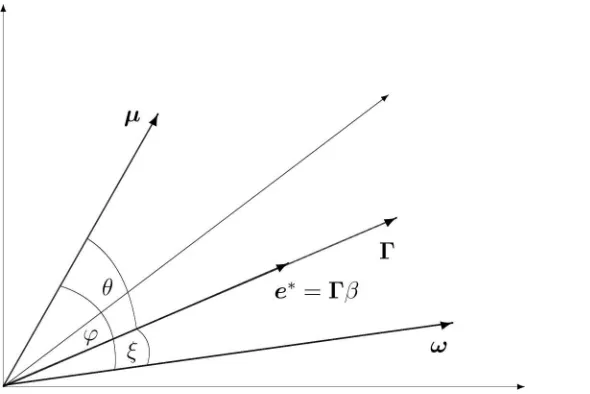
Figure 1: Performance Measure Congruity and Effort Distortion forn = 3
measures the agent’s effort costs (in utility terms) for a particular effort allocation motivated by
P(e).
Corollary 2. Ifψk 6=ψj for at least one pair(k, j)∈ {1, ..., n}, k 6=j, thenΥM/C(ξ) = cosξ
characterizes the measure-cost efficiency.
The previous results are illustrated in figure 1 for the three-dimensional case (n = 3).
Be-sides the second-best effort vectore∗, it depicts the vectors of the gross payoff sensitivitiesµ,
performance measure sensitivities ω, and measure-cost sensitivity ratios Γ. The effort vector
e∗ has the same direction as Γ, only their lengths differ, depending on β. Observe that e∗ is
not necessarily on the plane spanned by µand ω. The location ofe∗ relative toµ
character-izes the induced effort distortion (angle θ), whereas the relation between µ and ω measures
the congruity of performance measure P(e)(angleϕ). Finally, the measure-cost efficiency is
characterized by the relation ofΓtoω(angleξ).
If vector µ and vector ω point in the same direction, then ef b = λe∗, λ > 0, i.e. the
incentive contract motivates the agent to implement the first-best effort allocation, see corollary
1. Nevertheless, inducing a first-best effort intensity by adjustingβ can only be optimal if the
agent is either risk-neutral or the performance measure is perfectly precise. Otherwise, the
principal imposes to much incentive risk on the agent which requires the payment of a higher
risk premium to ensure her participation.
Now consider the case where the agent has identical abilities for all tasks, i.e. ψi = ˆψ >0,
direction. This additionally implies thate∗ = ωβ/ψˆandξ = 0. Thus, e∗ andω are identical
with respect to their direction, only their lengths differ, depending on β and ψˆ. Accordingly,
the measure of congruity is now identical to the measure of distortion. This observation is
summarized and proofed by the subsequent proposition.
Proposition 2. Ifψi = ˆψ >0,i= 1, ..., n, thenΥD(ϕ) = ΥC(ϕ) = cosϕ.
ProofSee appendix.
If agents do not exhibit different task-specific abilities, performance measure congruity and
effort distortion are captured by the same measure. However, if we allow the agent to possess
different abilities across tasks, it becomes pivotal to distinguish between both concepts. The
ap-plication of incongruent performance measures in incentive contracts leads to inefficient effort
allocations, but the extent of these inefficiencies are further determined by the agent’s relative
abilities for performing the relevant tasks.
Consider again the expected second-best profit Π∗ from section 4. According to the
pre-vious observations, it depends on three elements: (i) the measure of distortion ΥD(θ) in the
numerator;(ii)the measure-cost efficiencyΥM/C(ξ)in the denominator; and(iii), the agent’s
risk aversion ρin conjunction with the varianceσ2
of the applied performance measure in the
denominator. It is common knowledge that the trade-off between incentive risk and the agent’s
desire for insurance affects optimal incentive contracts. Moreover, as demonstrated by Feltham
and Xie [1994] and Baker [2002], incentive contracts in multi-task agency relations are adjusted
to the congruity of applied performance measures. However, the previous analysis indicates that
the measure-costs efficiency is a third crucial factor whenever the agent performs some tasks
more efficiently than others due to task-specific abilities.
6
Ranking Performance Measures
As Feltham and Xie [1994] emphasized, performance measures may differ with respect to their
congruity and precision. The previous analysis additionally indicates that task-specific abilities
play a crucial role for the contract efficiency. This section therefore focuses on how the attributes
of performance measures and agents eventually determine the relative value of measures in
Consider a setPofm≥2performance measuresPi(e) =ωtie+εi, withPi(e)∈P⊆Rm
and εi ∼ N(0, σi2).11 To illustrate the relative value of individual performance measures, we
can compare the expected profits each of them would induce if applied in the agent’s incentive
contract. Then, performance measurePk(e)is referred to be strictly superior, if it provides the
principal a strictly higher expected profit than all other available measuresPi(e)∈P,i6=k.
For single-task agency relations, Kim and Suh [1991] have shown that the value of
per-formance measures can be compared by their respective signal/noise ratio. Schnedler [2006]
generalized their signal/noise ratio to a setting, where the agent is in charge of conducting
mul-tiple tasks. By applying the formulation proposed by Schnedler [2006] (see Definition 2), the
signal/noise ratio of performance measuresPi(e)is
Λi =
(∇Pi(e∗))t(∇Pi(e∗))
σ2
i
, (17)
where∇Pi(e∗)is the gradient of performance measurePi(e)with respect toe. In single-task
agencies, performance measures with higher signal/noise ratios provide more precise
informa-tion about the implemented effort and are therefore strictly preferred to measures with lower
ratios. In this multi-task setting, the signal/noise ratio of performance measuresPi(e)is
Λi =
kωik2
σ2
i
. (18)
One can infer from the previous analysis that signal/noise ratios are not necessarily sufficient
to rank performance measures in multi-task agencies, especially, when agents differ in their
task-specific abilities.12 This deduction is supported by the next proposition.
Proposition 3. Performance measurePk(e)is strictly superior to any other performance
mea-surePj(e)∈P,j 6=k, if and only if,
kωkk
kΓkk
ΥM/C(ξ k)
(ΥD(θ k))2
+ ρσ
2
k
kΓkk2(ΥD(θk))2
< kωjk
kΓjk
ΥM/C(ξ j)
(ΥD(θ j))2
+ ρσ
2
j
kΓjk2(ΥD(θj))2
, (19)
whereΥD(θ
i)is the measure of distortion induced byPi(e), andΥM/C(ξi)is the related
quan-tification for the measure-cost efficiency,i={j, k}.
11Subscriptirefers henceforth to performance measureP
i(e)∈P.
12
Schnedler [2006] comes to the same conclusion by analyzing a multi-task agency framework, where the agent
ProofFollows directly by rearranging Π∗(P
k(e)) > Π∗(Pj(e))and substituting ΥM/C(ξi) =
cosξi andΥD(θi) = cosθi,i=k, j.
The value of a performance measure in comparison to any other measure is contingent
on two ratios: (i) the normalized ratio between the measure-cost efficiency ΥM/C(·) and the
induced effort distortionΥD(·); and,(ii)the normalized inverse of the distortion measureΥD(·)
with the precision1/σ2
kof the performance measure and the agent’s risk tolerance1/ρ. Observe
finally that performance measure congruity does not directly enter into this ranking criteria.
It, however, affects indirectly the measure of effort distortion ΥD(θ
i) and the measure-cost
efficiency characterized byΥM/C(ξ i).
In fact, the value of performance measures in multi-task agencies cannot necessarily be
compared by their respective signal/noise ratios. It is rather pivotal to take the induced effort
distortion and measure-cost efficiency into consideration—both determined by the performance
measure sensitivities ωi relative to the agent’s task specific abilitiesΨ. Therefore, comparing
the value of performance measures requires specific knowledge about the agent’s
character-istics, which is not necessary for ranking performance measures in single-task agencies. In
multi-task agencies, however, the agent’s characteristics eventually determine the principal’s
preference for a specific information system.
Corollary 3. Supposeψi = ˆψ > 0, i = 1, ..., n. Then, performance measurePk(e)is strictly
superior to any other performance measurePj(e)∈P,j 6=k, if and only if,
1 ΥC(ϕ
k)
h
1 + ˆψρΛ−1 k
i12
< 1 ΥC(ϕ
j)
h
1 + ˆψρΛ−1 j
i12
, (20)
where Λi, i = {j, k}, is the signal/noise ratio of performance measurePi(e), and ΥC(ϕi) its
congruity measure.
ProofSee appendix.
If the agent’s preference for an effort allocation depends only on the characteristics of her
performance evaluation since her abilities are identical for all tasks, we can use adjusted
sig-nal/noise ratios to rank performance measures in multi-task agencies. Nevertheless, it is still
required to knowψˆandρin order to assess the relative value of performance measures.
The subsequent proposition offers a sufficient condition ensuring that performance measures
can be ranked exclusively by their respective signal/noise ratios, and therefore, independent of
Proposition 4. Suppose there exist constantsλj 6= 0satisfyingωi =λjωjfor alli, j = 1, ..., m,
i6=j. Then, performance measurePk(e)is strictly superior to any other performance measure
Pj(e)∈P,j 6=k, if and only if,Λk >Λj.
ProofSee appendix.
Accordingly, the signal/noise ratio is sufficient to rank performance measures in multi-task
agencies, if all measures provide the same information about the agent’s relative effort
alloca-tion. In this case, observe that ΥC(ϕ
i) = ΥC(ϕj), i, j = 1, ..., m, i.e. all performance
mea-sures share the same measure of congruity.13 As a consequence, every available performance
measure—if applied in the agent’s incentive contract—would imply the same effort distortion
and measure-cost efficiency. Then, their relative value is defined by their precision and scale,
which in turn is represented by their respective signal/noise ratio.
To investigate the effects of task-specific abilities on the ordering of performance measures,
it is insightful to eliminate effects related to their precision. By setting ρ = 0, condition (19)
simplifies to
ν cos
2
θk
cos2θ
j
> cosξk cosξj
, ν = kωjk
kωkk
kΓkk
kΓjk
. (21)
The value of performance measurePk(e)relative toPj(e)depends—besides on their precision
and scaling as previously emphasized—on their relative effort distortion (cosθi) and relative
measure-cost efficiency (cosξi) weighted by the multiplierν, i = k, j. In order to make both
measures comparable, it is essential to normalize their scale kωik, and exclude their effect on
kΓik, i=k, j. Accordingly, if either the agent is risk-neutral or the realization of performance
measures is not influenced by random effects, the relative value of performance measures
de-pends on two factors: (i) the motivated effort allocation and its contribution to gross payoff
V(e); and,(ii)the imposed costs to motivate this effort allocation.
7
Conclusion
Applying incongruent performance measures in incentive contracts motivates agents to
imple-ment an inefficient effort allocation across relevant tasks. This paper incorporates task-specific
13Note that the reversed inference cannot be made, i.e. ifΥC(
ϕi) = ΥC(ϕj), it is not necessarily true that
ωi=λjωj,λj = 06 ,i, j= 1, ..., m,i6=j. In this case, the signal/noise ratio is not sufficient to rank performance
abilities in a multi-task agency framework and investigates their effects on the provision of
in-centives. As demonstrated, incentive contracts are tailored to the agent’s task-specific abilities
and, particularly, depend on three factors: (i)the inefficiency of effort distortion as a result of
applying incongruent performance measures in incentive contracts, relative to the agent’s
task-specific abilities (distortion effect), (ii) the agent’s effort costs associated with the motivated
effort allocation (measure-cost efficiency); and (iii), the precision of the information system
with the agent’s risk-aversion (risk effect).
This paper further proposes a ranking criteria for performance measures in multi-task
agen-cies. One important observation is that the signal/noise ratio, commonly used to assess
perfor-mance measures in single-task agencies, is not a sufficient ranking criteria in multi-task
agen-cies. The relative value of performance measures depends—besides on their precision—on
their congruity relative to the agent’s task-specific abilities, thereby implying that their ranking
is tied to the agent’s characteristics. Hence, we can infer that the selection of ‘suitable’ agents
for a given information system provides the principal some latitude to improve the contract
efficiency.
This paper is part of a larger research agenda. Previous multi-task literature focused
pri-marily on performance measure congruity and its effect on incentive contracts. As this paper
illustrates, we can shed more light on the nature of incentive contracts in multi-task agency
relations, when we keep in mind that agents may differ in their skills and abilities to perform
8
Appendix
Proof of Proposition 1.
Effort distortion refers to the relation ofe∗ toµ and can be therefore measured by the vector
productµte∗. Sincee∗ =Γβ,
µte=β
n
X
i=1
µiΓi =βkµkkΓkcosθ. (22)
First note thatkµkdoes not affect the relative importance of tasks forV(e). Furthermore,βkΓk
determines the lengths of vectore∗, but not its direction in then-dimensional space. The length
is arbitrary in the sense that it can be adjusted by β. Consequently, ΥD(θ) = cosθ ∈ [0,1]
measures the induced effort distortion under second-best.
Q.E.D.
Proof of Proposition 2.
To measure effort distortion, we can use the vector product µte∗. Ifψ
i = ˆψ >0, i = 1, ..., n,
thene∗ =βω/ψˆ. This leads to
µte= β ˆ ψ
n
X
i=1
µiωi =
β ˆ
ψkµkkωkcosϕ. (23)
Again, kµk does not affect the relative importance of tasks for V(e), and βkωk determines
the lengths of vector e∗ but not its direction in the n-dimensional space. Thus, Υ¯D(ϕ) =
cosϕ∈[0,1]measures distortion under second-best ifψi = ˆψ >0,i= 1, ..., n. Consequently,
¯
ΥD(ϕ) = ΥC(ϕ).
Q.E.D.
Proof of Corollary 3.
Ifψi = ˆψ > 0, i = 1, ..., n, thenΓi = ωi/ψˆandkΓik =kωik/ψˆ, i = {j, k}. Consequently,
ΥM/C(ξ = 0) = 1andΥ¯D(ϕ
i) = ΥC(ϕi), see proposition 2. By substitutingΛi =kωik2/σi2,
i = {j, k}, the ranking criteria of proposition 3 can be reformulated to the one stated in the
corollary.
Proof of Proposition 4.
Observe first that the expected profit on the basis ofPi(e)can be written as
Π∗ = (µ tΓ
i)
2
2(ωtiΓi+ρσ2i)
. (24)
Recall thatΓi = Ψ−1ωi. Consequently, performance measurePk(e)is strictly superior to any
other performance measurePj(e)∈P,∀j 6=k, if and only if,
µtΨ−1ω k
2
2(ωtkΨ−1
ωk+ρσk2)
> µ
tΨ−1ω j
2
2(ωtjΨ−1
ωj+ρσj2)
. (25)
Ifωk =λωj, we can re-scalePj(e)such that it is characterized by the same sensitivity ineas
Pk(e). Accordingly,
¯
Pj(e) = ωtje+
εj
λ, (26)
whereVar¯
Pj(e)
=σ2
jλ−
2
. Letω ≡ωi,i=j, k. This leads to
µtΨ−1ω2
2(ωtΨ−1
ω+ρσ2
k)
> µ
tΨ−1ω2
2(ωtΨ−1
ω+ρσ2
jλ−2)
, (27)
which can be re-arranged to
1 σ2 k > λ 2 σ2 j . (28)
Recall that after re-scaling,ωk=ωj. Thus, (28) can be written as
kωkk2
σ2
k
> λ
2
kωjk2
σ2
j
, (29)
which is identical toΛk >Λj.
References
Anthony, R. N. and V. Govindarajan (1995). Management Control Systems(eight ed.). Richard D. Irwin, Inc.
Asch, B. J. (1990). Do incentives matter? The case of navy recruiters. Industrial & Labor Relations Review 43(3), 89–106.
Baker, G. (1992). Incentive contracts and performance measurement. Journal of Political Economy 100(3), 598–614.
Baker, G. (2000). The use of performance measures in incentive contracting. American Eco-nomic Review 90(2), 415–420.
Baker, G. (2002). Distortion and risk in optimal incentive contracts. Journal of Human Re-sources 37(4), 728–751.
Baker, G., M. Gibbs, and B. Holmström (1994). The internal economics of the firm: Evidence from personnel data. Quarterly Journal of Economics 109(4), 881–919.
Banker, R. D. and A. Thevaranjan (2000). Goal congruence and evaluation of performance measures. Working Paper, University of Texas at Dallas.
Brickley, J. A. and J. L. Zimmerman (2001). Changing incentives in a multitask environment: Evidence from a top-tier business school. Journal of Corporate Finance 7, 367–396.
Bushman, R. M., R. J. Indjejikian, and M. C. Penno (2000). Private predecision information, performance measure congruity, and the value of delegation. Contemporary Accounting Re-search 17(4), 561–587.
Corts, K. S. (2007). Teams vs. individual accountability: Solving multitask problems through job design. RAND Journal of Economics 38(2), 467–479.
Datar, S., S. C. Kulp, and R. A. Lambert (2001). Balancing performance measures. Journal of Accounting Research 39(1), 75–92.
Feltham, G. A. and J. Xie (1994). Performance measure congruity and diversity in multi-task principal/agent relations. Accounting Review 69(3), 429–453.
Gibbons, R. (1998). Incentives in organizations. Journal of Economic Perspectives 12(4), 115– 132.
Gibbons, R. and M. Waldman (2004). Task-specific human capital. American Economic Re-view 94(2), 203–207.
Gibbons, R. and M. Waldman (2006). Enriching a theory of wage and promotion dynamics inside firms. Journal of Labor Economics 24(1), 59–107.
Holmström, B. (1979). Moral hazard and observability. Bell Journal of Economics 10(1), 74–91.
Holmström, B. and P. Milgrom (1991). Multitask principal-agent analyses: Incentives contracts, asset ownership, and job design. Journal of Law, Economics and Organization 7, 24–52.
Hughes, J. S., L. Zhang, and J. Xie (2005). Production externalities, congruity of aggregate signals, and optimal task assignments. Contemporary Accounting Research 22(2), 393–408.
Kerr, S. (1975). On the folly of rewarding a, while hoping for b. Academy of Management Journal 18(4), 769–783.
Kim, S. K. and Y. S. Suh (1991). Ranking of accounting information systems for management control. Journal of Accounting Research 29(2), 386–396.
Lazear, E. P. (2000a). Performance pay and productivity. American Economic Review 90(5), 1346–1361.
Lazear, E. P. (2000b). The power of incentives. American Economic Review 90(2), 410–414.
Lindbeck, A. and D. J. Snower (2000). Multitask learning and the reorganization of work: From tayloristic to holistic organization. Journal of Labor Economics 18(3), 353–376.
MacLeod, W. B. (1996). Complexity, contract and the employment relationship. Boston College Working Papers in Economics, No 342.
Maher, M. W., K. V. Ramanathan, and R. B. Peterson (1979). Preference congruence, in-formation accuracy, and employee performance: A field study. Journal of Accounting Re-search 17(2), 476–503.
Paarsch, H. J. and B. S. Shearer (1999). The response of worker effort to piece rates: Evidence from the british columbia tree-planting industry. Journal of Human Resources 34(4), 643– 667.
Prendergast, C. (1999). The provision of incentives in firms. Journal of Economic Litera-ture 37(1), 7–63.
Rees, R. (1985). The theory of principal and agent part i. Bulletin of Economic Research 37(1), 3–26.
Sapienza, H. J. and A. K. Gupta (1994). Impact of agency risks and task uncertainty on venture capitalist-ceo interaction. Academy of Management Journal 37(6), 1618–1632.
Schnedler, W. (2006). Task difficulty, performance measure characteristics, and the trade-off between insurance and well-allocated effort. IZA Discussion Papers 765, Institute for the Study of Labor (IZA).
Schöttner, A. (2006). Relational contracts, multi-tasking, and job design. Forthcoming Journal of Law, Economics, and Organization.