ORIGINAL RESEARCH ARTICLE
THE IMPORTANCE OF SELF-KNOWLEDGE IN THE PROCESS OF
PROFESSIONAL CHOICE OF THE ADOLESCENT: ORIGINAL STUDY
1
Camilla Soligo Dias,
1Maria José C. Oger Affonso and
2Idiberto Jose Zotarelli Filho
1
Unorp - University Center North Paulista (PhysicologyDepartment)- São José do Rio Preto – SP, Brazil
2Unipos - Post graduate and continuing education, Street Ipiranga, 3460, São José do Rio Preto SP,
Brazil 15020-040
ARTICLE INFO ABSTRACT
Introduction: The experience of professional choice is often marked by anguish caused by internal and social conflicts, so the adolescent at this stage needs to deal with the influences of family and friends, so the importance of self-knowledge as an essential internal resource and facilitator is emphasized. in the future planning process.
Objective: The objective of the present study was to verify the position of adolescents in relation to their professional choices, investigate social influences, the importance of self - knowledge in
deciding and articulating future plans.
Methods: Participated in the study 20 students of the 3rd year of high school, in a primary and secondary school, aged between 17 and 18 years.
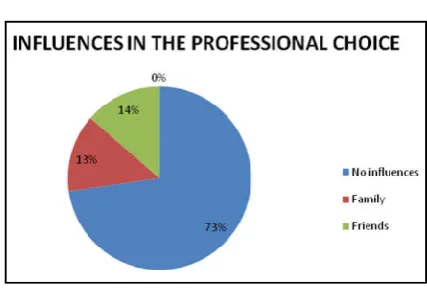
Results: The results indicate that (68%) of the adolescents consider themselves undecided and confused about their professional choice, on the other hand (32%) consider themselves optimistic and confident about their own decisions. According to the types of social influences analyzed, (73.0 %) of respondents chose to make decisions independently, (14.0 %) showed to be
influenced by friends and (13.0 %) indicated family influences.
Conclusion: Adolescents were undecided about the professional plans, most of the subjects surveyed, sought to decide life independently, but (82.0 %) of the subjects demonstrated impotence in relation to the capacity for self-knowledge, therefore, one can perceive the lack of internal resources, which may hamper the process of professional planning and self-actualization.
Corresponding author
Copyright ©2017, Camilla Soligo Dias et al.This is an open access article distributed under the Creative Commons Attribution License, which permits
unrestricted use, distribution, and reproduction in any medium, provided the original work is properly cited.
INTRODUCTION
The experience of professional choice is often marked by anguish caused by internal and social conflicts, so the adolescent at this stage needs to deal with the influences of family and friends, so the importance of self-knowledge as an essential internal resource and facilitator is emphasized. in the future planning process. Self-knowledge, the family, the group of friends, are determining factors in the construction of a professional project (Paula, 2014). During adolescence there are several transformations that move the life of the subject in a significant way. The conflicts of this stage are necessary for the construction of a personal and social identity. Adolescence is a complex phase in human development, marked by
biological, social and psychic issues (Paula, 2014). In the sense of being able to find oneself internally and externally, the young person tends to worry about making important decisions that can impact the meaning of one's life. It is during adolescence the period of consolidation of identity and the moment of making choices that may define its future (Ventura, 2014). The process of professional choice begins during adolescence, this is the first impulse that leads the subject to think about their future and begin to architect their life plans. The transition to adulthood requires young people to develop their skills and become capable of managing one's life (Veriguine, 2014). In relation to the professional choice, it is possible to observe subjects undecided and others more determined. Opting for a profession requires maturity, autonomy and courage so that the individual can fit in the
ISSN: 2230-9926
International Journal of Development Research
Vol. 07, Issue, 10, pp.16414-16419, October,2017
Article History:
Received 08th July, 2017
Received in revised form 28th August, 2017
Accepted 14th September, 2017 Published online 30th October, 2017
Citation: Camilla Soligo Dias, Maria José C. Oger Affonso and Idiberto Jose Zotarelli Filho,2017. “The importance of self-knowledge in the process of
professional choice of the adolescent: original study”, International Journal of Development Research, 7, (10), 16414-16419
ORIGINAL RESEARCH ARTICLE OPEN ACCESS
Keywords:
different professional environments and also in his own life firmly establishing his identity. Professional choice requires that the teenager think about decision-making issues and explore the knowledge of self and the choices themselves (Ventura, 2014). The second moment is marked by the influences of the external environment, being the main ones, the family and the friends. Influences can facilitate or hinder the process of choices, as well as cause future losses that arouse frustration and distress by compromising the condition of self-realization. The lack of support from the social environment, especially family life, prevents young people from following their own desires in relation to their professional career (Lewandowski, 2014). A process of conscious professional choice happens when the subject acquires sufficient self-knowledge to think about their motivations, abilities, abilities, values, desires, expectations and everything that relates to their EGO, since it is through self-knowledge that the young person is positioned in front of the environment in a conscious way, this concept suggests that the subject is able to position himself in life, find a professional path compatible with his professional ideals.
Self-knowledge involves the way people think of themselves in relation to social roles, it is an individual construction (Martins, 2013). The process of choice is continuous, and the first professional choices are not defined only in adolescence, but it is a question of finding a way to self-actualization in order to make assertive decisions in the face of circumstances. During the professional life, the human being will face new situations of decision, which can take it to new directions (Lewandowski, 2014). Throughout the events, living conditions change and situations may require new attitudes, but what remains is the practice of self-knowledge that provides security and capacity to rethink and rebuild itself in the face of future needs, it is a continuous process. Through self-knowledge, there will always be the possibility of reflecting on what is happening to him, as well as positioning himself before the facts (Veriguine, 2014). The objective of the present study was to verify the position of adolescents in relation to their professional choices, investigate social influences, the importance of self - knowledge in deciding and articulating future plans.
MATERIALS AND METHODS
Experimental and clinical studies were included (case reports, retrospective, prospective and randomized trials) with qualitative and / or quantitative analysis. Initially, the key words were determined by searching the DeCS tool (Descriptors in Health Sciences, BIREME base) and later verified and validated by MeSh system (Medical Subject Headings, the US National Library of Medicine) in order to achieve consistent search.
Mesh Terms
The words were included Self-realization, adolescent,
profession, conscience, choices, self-knowledge. For further
specification, the "self-knowledge" description for refinement was added during searches. The literature search was conducted through online databases: Pubmed, Periodicos.com and Google Scholar. It was stipulated deadline, and the related search covering all available literature on virtual libraries.
Series of Articles And Eligibility
A total of 40 articles were found involving temporomandibular dysfunction. Initially, it was held the exclusion existing title and duplications in accordance with the interest described this work. After this process, the summaries were evaluated and a new exclusion was held. A total of 25 articles were evaluated in full, and 17 were included and discussed in this study.
Participants
Participated in the study 20 students of the 3rd year of high school, in a particular College of Elementary and Middle School, aged between 17 and 18 years.
RESULTS AND DISCUSSION
the situations of the external world acting sensibly can avoid conflicting situations. Another aspect, and still specific, is to reflect the intensity of idealization on the intended profession that the young person presents, so questions behind a decision need to be questioned in order to obtain a secure confirmation. The choice of a profession is a complex task and implies a certain maturity so that the decision making is done in a conscious and autonomous way (Junqueira, 2014). The young person who manifests a higher degree of maturity regarding professional choice tends to seek more information about the particularities and perspectives that make up a particular profession. Vocational maturity is defined as a set of attitudes and behaviors that must be undertaken in the search for the desired profession (Silva, 2014). Deciding on a profession is not defining professional life, but rather promoting the first steps to architect the future, is the beginning of personal entrepreneurship. The situation of choice is not an isolated act, but an ongoing process of decision-making (Gonzada, 2014). The decision-making process occurs throughout life, because change is an ongoing process in all stages, social, economic, personal and professional, in the current society, situations are unpredictable, the information process is accelerated and the adolescent is at the mercy of all these contemporary instabilities. Every decision involves difficulties because it implies having an attitude to make choices (Gonzada, 2014). In adolescence the subject is invited to make the first professional choices, however, the moment requires greater internal capacity, an optimistic subject can present a considerably better established identity, an undecided subject needs to explore the internal characteristics to elaborate his identity and thus facilitate the decision-making process. Psychological factors can influence professional choice, such as personality traits, values, expectations about the future, and maturity to make choices (Silva, 2016). The process of choosing the young person suffers social influences from family and friends, these effects can shake a project of life or a personal idealization. The social factor influences the young person who is in the process of professional choice, which may imply a postponement or doubt in the decision making process (Ventura, 2014). According to the data, (73.0%) being the majority of the adolescents surveyed, they demonstrated an independence in relation to the professional choice, they may have greater freedom to continue analyzing the professions, evaluating external factors and defining for oneself. However, there is family pressure on one side (13.0%) and also influence on the part of friends (14.0%). It is common for the undecided teenager to feel pressured, but influences from the social environment can manipulate the subject's decision making, causing negative impacts on the adolescent's life (Figure 1). The family group as well as that of friends carry the main pressures at the moment of professional choice (Lewandowski, 2014). The family, through its culture, beliefs, organization, and forms of relationships, generally tends to influence the process of choice and decision making of the young person. In the case of family members who are able to relate to the young person in a responsive and flexible way, they come to value individuality and also the participation of adolescents in life planning.
The parental style in the life of the adolescent can be decisive for the good development of the subject, his formation of identity and construction of partner roles. The flexible participation of the family is positive to stimulate the independence and autonomy of the adolescent. Authoritarian parents emphasize control by exercising a restrictive pattern
[image:3.595.312.557.227.361.2]that relies on authoritarianism; on the other hand, permissive parents tend to value self-regulation and self-expression of children (Magalhães, 2012). When the family influences negatively or narcissistically, it tends to exert a controlling authority, manipulating ideas and feelings in situations of doubt, in which it can trigger psychological losses and future consequences for the young person's life (Figure 2). The family influence varies according to the parental styles, understood in the emotional climate and in the attitudes of the parents (Ventura, 2014). The ideal role of the family in the professional choice of the adolescent would be to guide the young person in the face of moments of conflict, abdicating his possible demands or even of personal dreams not realized and so projected in the plans of the other.
Figure 1. Graph showing the percentage of respondents' responses in groups
Figure 2. Graph showing in groups the percentage of influences of the interviewees
[image:3.595.325.539.394.538.2]conscious choices depending on how he perceives himself and knows his or her life expectancy, so the future project depends on the conditions and dispositions of the adolescent. Self-concept is like a construct that is individually constructed and developed within internal and social contexts (Martins, 2013).
Figure 3. Graph showing the percentage of self-knowledge of the interviewees in groups
According to the data obtained (82.0%) of the students surveyed, they believe they do not have the capacity for self-knowledge. Self-concept is the main factor in the process of life choices. Maturity for professional choice will depend on the individual's knowledge of various aspects of himself (Neiva, 2005). Self-knowledge implies exploring internal aspects about one's own personality, observing beliefs, values, moral judgment, preferences, desires, behaviors, feelings that permeate the traits of the EU. Through a wide perception about you, you can understand your own functioning before life (Figure 4).
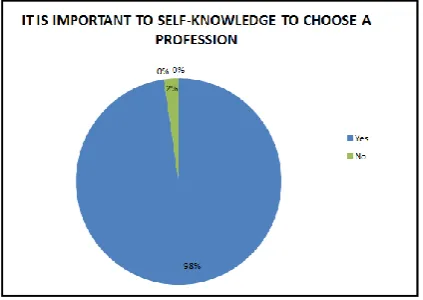
Figure 4. Graph showing in groups the percentage of respondents' answers about the importance of self-knowledge
Self-knowledge is the individual's encounter with his personality traits, in which he allows the young person to discover and evaluate their aptitudes, interests and ability (Silva, 2014). Self-knowledge is a peculiar essence, particular and intrinsic to be developed internally, if it is something that makes each subject unique and valued, the individual who is capable of developing self-knowledge, can acquire greater insight into the self and the personality which make it essential to develop adequate capacities so that the adolescent is able to self-assess and position itself in the face of conflicts, events, changes and decision-making processes. The higher the level of self-knowledge, the greater the sense of security and autonomy for personal and professional fulfillment (Silva, 2014). The self-perceiving individual may be better able to deal with the moments of conflict in relation to the
[image:4.595.57.269.438.588.2]Conclusion
The adolescents were undecided about the professional plans, most of the subjects surveyed, sought to decide life independently, however (82%) of the subjects demonstrated impotence in relation to the capacity for self-knowledge, therefore, one perceives the lack of resources, which may hamper the process of professional planning and self-actualization.
Acknowledgements
The work was financially supported by Unorp - University Center North Paulista - São José do Rio Preto – SP, Brazil. We also thank all the students who agreed to participate in interviews, and to all who contributed to the development and publication of results.
Disclosure of Potential Conflicts of Interest
The authors declare that they have no conflicts of interests.
REFERENCES
Aguiar, R. H. F; Conceição G. I. M: Orientação vocacional e promoção da saúde integral em adolescentes. Disponível em <http://pepsic.bvsalud.org/scielo.php?script=sci_arttext &pid=S1808-42812013000100006> Acesso em 13/05 22:28. Estudos e Pesquisas em Psicologiaversão On-line ISSN 1808-4281, vol.13 no.1 Rio de Janeiro abr. 2013. Almeida, R. E. S: A temporalidade de um espaço temporal transicional e sua vivência para o adolescente em grupos de orientação profissional. Winnicott e-prints [online]. 2015, vol.10, n.1, pp. 01-12. ISSN 1679-432X. Universidade Estadual de Londrina (UEL-PR). Disponível em <http://pepsic.bvsalud.org/scielo>Acesso em 30/03/2016 14: 40. Londrina, 2015.
Altmann, R. A. B; Colombo C. S; Luft M. H; Drugg S. M: Sensibilização para escolha profissional na adolescência: Modalidade do trabalho: Relatório técnico-científico Evento: XV Jornada de Extensão. Disponível em < https://www.revistas.unijui.edu.br/index.php/salaoconhec imento/article/download/3372/2780> Acesso em 13/05/2016 22:37. Ciencias Tecnologia Desenvolvimento social, UNIJUI, 2014.
Campos, F. R. R; Noronha P. P. A: A Relação entre indecisão profissional e otimismo disposicional em adolescentes. Disponível em <http://pepsic.bvsalud.org/scielo.php? script=sci_abstract&pid=S1413-389X2016000100011> Acesso em: 13/05/2016 22:32. DOI: 10.9788/TP2016.1-15. ISSN 1413-389X Trends in Psychology/ Temas em Psicologia – Vol. 24, nº 1, 219-232, 2015.
Faria, L. P; Loureiro N: Aconselhamento de Carreira Multicultural: Abordagens Teóricas e Implicações para a prática. Disponível em <http://pepsic.bvsalud.org/ scielo.php?script=sci_issues&pid=16793390&lng=pt&nrm =iso> Acesso em 30/03/2016 14: 35. Revista Brasileira de Orientação Profissional, jan.-jun. 2015, Vol. 16, No. 1, 11-21. Universidade Europeia, Lisboa, Portugal; Clínica Saúde Atlântica, Porto, Portugal; 2015.
Gonzada, V. R. L; Lipp N. E. M: Relação entre escolha profissional, vocação e nível de estresse em estudantes do ensino médio. Disponível em <https://www. researchgate.net/publication/272825047_Relacao_entre_es colha_profissional_vocacao_e_nivel_de_estresse_em_estu
dantes_do_ensino_medio> Acesso em 05/05/2016 10:47. Psicologia Argumento Artigo; doi: 10.7213/ psicol.argum.32.078.AO10 ISSN 0103 7013. Psicol. Argum; v. 32, n. 78, p. 149-156, jul./set. Curitiba, 2014. Junqueira L. M; Silva M. L: Maturidade para a escolha de
carreira: Estudo com adolescentes de um serviço-escola: Disponível em <http://pepsic.bvsalud.org/scielo.php? script=sci_arttext&pid=S1679-33902014000200009> Acesso em 05/05/2016 10:45. Revista Brasileira de Orientação Profissionalversão impressa ISSN 1679-3390, prof vol.15 no.2 187-199. Universidade de São Paulo, FFCLRP, Ribeirão Preto-SP, 2014.
Lewandowski, F. M: O trabalho da psicologia no processo da
escolha profissional. Disponível em
< https://www.revistas.unijui.edu.br/index.php/salaoconhec imento/article/download/3370/2778.> Acesso em 13/05/2016 22:36.Modalidade do trabalho: Relato de experiência Evento: XV Jornada de Extensão Revistas Eletrônicas UnijuíCiencia Tecnologia Desenvolvimento social, 2014.
Magalhães, O. M; Alvarenga P; Teixeira P. A: Relação entre parentais, instabilidade de metas e indecisão vocacional em
adolescentes. Disponível
em<http://pepsic.bvsalud.org/scielo.php?script=sci_arttext &pid=S167933902012000100004> Acesso em 13/05/2016
22:35. Revista Brasileira de Orientação
Profissionalversão impressa ISSN 1679-3390, jan.-jun. 2012, Vol. 13, No. 1, 15-25. São Paulo, 2012.
Martins, M. S. D: Desenvolvimento da identidade vocacional de jovens institucionalizados em centros educativos portugueses. Disponível em <http://www.reveduc.ufscar. br/index.php/reveduc/article/viewFile/652/289> Acesso em 13/05/2016 22:59. Revista Eletrônica de Educação, Vol. 7, No 3 (2013), São Carlos (SP): Universidade Federal de São Carlos ISSN 1982-7199. Universidade de Lisboa Instituto de educação 2015.
Monteiro, A. M; Basso C: Orientação profissional –
Auxiliando o pensar:Disponível em
<http://revistas.fw.uri.br/index.php/revistadech/article/view /265> Acesso em 30/03/2016 14:10; Revista de Ciencias Humanas Capa > v. 6, n. 6 (2005) >MonteiroISSN 1981-9250; Rio Grande do Sul, 2015.
Neiva C. M. K; Silva B. M; Miranda R; Esteves C: Um estudo sobre a maturidade para a escolha profissional de alunos do ensino médio; Disponível em <http://pepsic.bvsalud.org/ scielo.php?script=sci_arttext&pid=S1679-33902005 000100002> Acesso em 05/04/2016 15:20hs. Revista Brasileira de Orientação Profissional, 2005, 6 (1), pp. 1 – 14, versão On-line ISSN 1984-7270, São Paulo 2005. Paula, V. A; Dutra M. A; Boas V. A: Percepções de
adolescentes e seus cuidadores quanto ao nível de maturidade para escolha profissional – Um estudo de caso. Disponível em <http://dx.doi.org/10.12819/ 2014.11.4.12.1> Acesso em 13/05/2016 22:26. ISSN Impresso: 1806-6356 ISSN Eletrônico: 2317-2983. Revista FSA, v. 11, n. 4, art. 12, p. 206-218, out/dez. Teresina, 2014.
Pereira, S. A; Chaves W. H. M; Galvão C: See discussions, stats, and author profiles for this publication at. Disponível em <https://www.researchgate.net/publication/262451079> Acesso em 15/04/2016 14:00hs. Orientação Profissional no Programa Adolescente Aprendiz em Uma ONG de
PortoAlegre; DOI:
Silva, V. D; Silva N. T; C. C: Avaliação do raciocínio e dos interesses profissionais de estudantes do ensino médio. Disponível em <http://www.faex.edu.br/_arquivos/ _revistas/103394001411502276_7-O.pdf> Acesso 13/05/2016 22:54. E-locução | revista científica da faex Edição 06 – Ano 3, pág. 140 a 154, 2014.
Ventura, D. C; Noronha P. P. A: Autoeficácia para escolha profissional, suporte familiar e estilos parentais em adolescentes. Disponível em <http://pepsic.bvsalud.org/ pdf/avp/v13n3/v13n3a03.pdf>Acesso 02/04/2016 15:00.
Avaliação Psicológica, 2014, 13(3), pp. 317-324. Universidade São Francisco, Itatiba-SP, Brasil, 2014. Veriguine, R. N; Basso C; Soares, P. H. D: Juventude e
perpsctivas de futuro: A orientação Profissional no
programa primeiro emprego. Disponível em
<http://dx.doi.org/10.1590/1982 – 370000902013. Acesso em 05/05/2016 10:40. Psicologia: Ciência e Profissão, 34(4), 1032-1044. Universidade Federal de Santa Catarina, 2014.