An Exploratory Study on Simulated Teaching as
Experienced by Education Students
Janet Presnilla-Espada
Leyte Normal University, Philippines,Lungsod ng Tacloban, Juan Luna St *Corresponding Author:[email protected]
Copyright © 2014 Horizon Research Publishing All rights reserved.
Abstract
Empirical research has shown that simulated teaching could be one of the most powerful tools in preparing college education students for a solid field teaching experience. With the right function and mechanics, this pedagogy can equip students with the necessary teaching skills, aptitudes and competencies. Using a 30-item Likert-type Perceptions Scale on Simulated Teaching this 3- year exploratory study examined 352 undergraduate education students’ perceptions on their simulated teaching experience wrapped in a live action role play. The study, anchored on the model-centered instruction, transfer of learning and embodied cognition theories further probed into their beliefs, attitudes and responses in the course of the immersion process. Results showed that majority of the respondents strongly believed they should be exposed to teaching prior to practicum and agreed that early training could develop their competence in teaching. They showed a highly positive attitude towards simulated teaching as an effective way to acquire and apply both content and skills in teaching and learning. Based on the findings, it may be concluded that when simulated teaching functions under conditions such as clear goals, guidelines, proper mentoring and guidance from teachers, students are then able to unlock and develop their potentials and prepare for every issue they will face in their practicum stage. The study further confirms a long-held principle that prolonged practice builds expertise.Keywords
Simulation, Simulated Teaching, College Teaching, Student Teaching
1. Introduction
Simulated teaching could be one of the most powerful means of preparing teacher education students for a solid field teaching experience (Salas, Wildman, Piccolo, 2009:561; Salas, et. al. 2008; Hyltoft, Karwowski & Soszynski 2008). It provides an atmosphere where they apply their knowledge, complex skills and competencies in a
non-threatening and purposeful environment (Bell & Kozlowski, in press; Cannon-Bowers &Bowers, in press; Moreno & Mayer, 2005). It builds confidence and proficiency in teaching. (Salas, Wildman & Piccolo, 2009). Due to its ability to replicate multiple situations and provide immediate feedback it can produce more learning in a reduced time frame. (Keys & Wolfe, 1990; Lane, 1995).
The National Center for Education Statistics reports that out of five teachers only one feels adequately prepared in today’s classroom (NCES, 1999). This could be attributed to the prevailing education system’s propensity to focus solely on the teaching of theory and its failure to put that theory to practice (Lane, 1995:610). As a result, students enter the academic arena with deficiencies in communication skills, classroom management and instructional delivery (Ferber & Nillas, 2010:63). They stand in front of their students with looks of uncertainty and doubt in their teaching capabilities and competence. (Salas, et.al, 2009:559). With lack of confidence they can easily withdraw from the challenge, and in due course, quit teaching.
The skills in lesson planning, classroom management and communication skills are behavioral skills that cannot be totally developed through knowledge-based training methods alone. They can be acquired best through practice (Salas, et. al., 2009:561; Goldstein, 1991). Traditional lecture-and paper-based technique may be effective in terms of imparting factual and conceptual knowledge; yet, student teaching experience remains to be most influential when it comes to learning how to teach (Caires, 2007).
Empirical evidence indicates that as early as in the lower years prior to practicum, students should be active participants in the learning process and learning should occur in a meaningful or relevant context (Bell & Kozlowski, in press; Cannon-Bowers &Bowers, in press; Moreno & Mayer, 2005). From this perspective simulation is projected as a powerful tool for creating more realistic, experiential learning environments; thereby helping schools and universities meet the emerging demands for teacher training. (Bell & Kozlowski, 2007).
In simulation, a synthetic environment is created to manage an individual’s experiences in order to acquire attitudes, concepts, knowledge and skills for purposes of improving performance (Bell, Kanar and and Kozlowski, 2008). The teacher sets the parameters used to achieve the desired outcomes; hence, a simulation can only be effective if it engages students in the behavior or skill being developed. (Salas, et.al., 2009:566) Bound by the principle of constructivism, students experience the reality of the scenario, make decisions within its context and obtain meaning from it. Because simulations are game-based and hands-on, proper motivation allows students to attain both training and enjoyment (Mathieu & Martineau, 1997; Tannenbaum & Yuki, 1992) than other passive methods; (i.e., lectures) thereby providing an inner motivation that encourages a high level of retention of the content under study (Tharenou, 2001). Simulations increase interest, involvement and enthusiasm toward the educational material. (Keys & Wolfe, 1990; Raia, 1966;, in Salas, et. al., 2009)
The earlier simulation schemes have resulted in an increased prevalence of simulated training both in academia and industry (Greenberg & Eskew, 1993). Faria, (1998) for instance, revealed that 97.5% of business schools today use simulation games in their curricula. Medical simulations have been steadily replacing traditional skills teaching (Buck, 1991). Management students have found it effective to practice emergency response strategies without fear of negative personal or organizational consequences (Keith and Frese, 2008).
Ogawa (1997) believed that students can acquire and apply higher level communication skills and strategies by working with groups and by having them teach the class (Stevick, 1976). Based on the neo-Vygotskian learning theory, cognitive psychology, evaluation and assessment, Ogawa challenged his ESL students learning English to teach their class with focus on solving communication problems while teaching. Ogawa argued that the college students’ 14 years of experience watching teachers communicate with their students could serve as an authentic reference in teaching. He added that when students are able to imitate how their teacher explains and expounds ideas, use strategies and manage the class they develop communication skills at a rapid pace. To illustrate clearly, Fine (2002:4) proposed that for a game to work best, players must be willing to set aside their natural selves and put on the mask of a fictional self. In other words, they must lose themselves to the game in order to experience fluency in articulating their thoughts.
Fine (2002), however, reminds that performing a character such as that of Ogawa’s (1997) live action role play (larp) may not be totally continuous but it is what makes the game more appealing considering that players use attitudes and solutions that have been acquired in previous experiences instead of simply playing the assigned character (Walton, 1993:138; Lankoski et. al. 2004). It goes to show that role play allows for independent, creative and strategic shifts in solving a problem. In support of the foregoing observation,
Stevick (1976:65) claimed that when students are investing more personal effort into learning they achieve mastery of the subject matter and attain a higher level of retention.
While Ogawa (1997) utilized his TESL classroom to provide a real setting for simulated teaching, it is interesting to note how Gibson (2009) trained education students by allowing them to teach virtual students in a table top setting. This game allows the teacher to choose from several options in dealing with explicit reactions and issues arising from various classroom conditions. The teacher’s performance is documented to provide a detailed, moment-by-moment analysis of decisions made and their impacts (Kruse & Gibson, 2009).
Although Gibson (2009) claims that the simSchool creates a wide variety of classroom environments, Greenberg and Eskew (1993) observed that its limited features may fail to respond to a behavior that crop up beyond the experimental table top setting. However, Gibson (2009) counters that people who practice with a simulator develop a deeper heuristic understanding because immersion in multimedia involves use of the physical, emotional, and cognitive pathway.Besides, repeated exposure to the same game will lead to skills mastery. Supporting that statement is an earlier evidence which revealed that pre-service teachers outscored non-players in their teaching skills after their exposure to simSchool (Kruse & Gibson, 2009).
1.2. Theories and Simulation Models
This study is anchored on the model-centered instruction, embodied cognition and transfer of learning theories.
Gibbons’s (2001) model-centered-instruction (MCI) theory proposes that the core function of instruction is to encourage learners to build knowledge about objects and events in their environment (Gibbons, 2001). Knowledge is represented by models that learners construct as they process information through interactions and observations. Learners then focus attention on information or activities that will activate their learning processes. In the absence of real objects, events or environments, teachers create representations called models (Gibbons, 2001). In applying this principle, simulated teaching activates students’ learning processes while teaching the class. It includes a problem component which acts as stimulus designed for learners to focus attention on specific information about the model teacher which is partly or fully conceptualized by the learners themselves. There are major problems assigned in simulated teaching such as instructional delivery, materials construction and classroom management. The students’ available skills determine how they solve problems, process information, construct mental models, and develop heuristic skills.
environment where it operates (Damasio, 1994: in Lankoski & Jarvela (2012). Everything has a meaning which is strongly connected to possible actions dictated by the physical body in particular settings. Teaching, in general, is a concept that has certain meanings for certain people. It could be facilitating, imparting of knowledge, touching lives or showing an example. Salas and others (2012: 20) mentioned Fodor’s Language of Thought where he clearly points out that the brain operates under amodal symbols as representations of perceived objects. In grounded cognition, knowledge is organized and tightly grounded on systemic beliefs. For instance the teacher’s manner of dealing with students is stored and processed in the auditory systems. As a student interacts with the teaching environment, a certain meaning of teaching is produced. In line with this thinking, Pierce (2012) suggests that habits are established by beliefs; and varying beliefs are portrayed by varying modes which give rise to varied actions.
Both embodied cognition and model-centered instruction link straight to the transfer of learning theory which recognizes the worth of Ogawa’s and Gibson’s experiments indicating positive transfer from a simulated context to the real setting (Perkins, 1992; Hipkins, Lander & Whatman, 2011). Positive transfer occurs when learning in one context improves the performance in another; while near transfer takes place when contexts and performances are closely associated with each other. Perkins’s findings suggest that transfer may happen through two mechanisms: reflexive or low road transfer, which is the triggering of well-practiced routines by stimulus conditions similar to the learning context while the other is the mindful or high road transfer involving effortful abstractions and a search for connections. Positive transfer occurs further when players provide more percentage of the features of the characters they are portraying. Salomon and Perkins (1998) propose “hugging” as a vehicle for promoting positive or near transfer. It organizes lessons in a way that initial skills and knowledge “hug” the most desired transfer task closely. It demonstrates that when the learning experience hugs the target performance, the likelihood of an automatic transfer of the experience is maximized. What is learned in one classroom about a certain subject leads to the attainment of related goals in another setting (Perkins, 1993) simply because students’ learning and achievement levels depend primarily on initial learning which enables subsequent transfer (Gage & Berliner, 1983; Glaser, 1984).
The aforementioned theories confirm that the success of simulated teaching depends on the players’ active involvement in executing the pedagogy. Lankoski and others (2003:35) assert that in a role playing game the fictive world that players imagine is inadequate; thus players need to constantly add details or information available to them. The details filled are more or less aligned with the information about the game world and characters. Fine (2002) noted that it is easier to fill details to a character or to a fictive world that resembles the player and his or her everyday environment. Confirming this view is Walton’s (1993)
reality principle which proposes that people will naturally assume the fictional world to be similar to the day-to-day experience except for those parts explicitly stated in the fiction to be different. Nakamura (2001) and Nephew (2006) assert that students should not be required to portray the role of someone who is unfamiliar, which results in a tendency to perform stereotypical portrayal. They suggest that games should have rules to ensure that characters behave according to the game fiction and not fall back to familiar behaviors. However, this should not stop players from adding more enriching details to make an effective portrayal.
In comparing Ogawa’s larp and Gibson’s tabletop it is worth noting that Ogawa’s live action role play makes use of a real arbiter who can fill in gaps, add details and explicate them when needed (Lankoski, 2009). In Ogawa’s setting, the arbiter is the teacher who provides immediate feedback and reinforcement to the student engaged in simulated teaching. Aldrich (2003) and Gibbons (2001) assert that the presence of the mentor makes simulation instructional because it allows the learner to immerse in the key system of the environment. The actions become true in the fiction at an instant they are performed. However, this is not true with table top role play games because the negotiation and arbitration processes can easily be repeated and modified since it is easier to freeze and go back in time during the process.
What makes game and simulated teaching more powerful is the fact that with a virtual environment there is no damage to real children or people. You can work with all kinds of virtual or live students including those with special needs. You play, create, and explore different strategies and you get to experience freedom from financial, time and administrative constraints of physical classrooms and fieldwork. Simulations helps build a community through crowd-sourced knowledge, shared content creation, and forums that promote dialogue and mentorship. (Gibson, 2009)
Despite evidence of positive effects on learning, simulation models have their own limitations. There are reasons of cost, reluctance to adopting new methods of teaching and the skepticism that what was learned from a simulator may never be transferred to actual learning. A harder challenge to meet is the fact that simulations can never fully replicate real life experience and may even fail to include something essential in their systems (Buck, 1991; Bell, Kanar & Kozlowski, 2008; Greenberg & Eskew, 2009). However, recent policy recommendations for professional development promote the use of simulation models where exposure to the real environment may be impossible. This radical move emanates from the underlying principle that expertise is built by practice in a variety of contexts (Kruse, Gibson, 2009; Girod, Girod, & Denton, 2007).
1.3. Simulation and Student Teaching
individuals who desire to become teachers. It is the spot where theory meets practice (Ferber & Nillas, 2010). During this period students are expected to apply what they have learned and demonstrate their ability to handle lesson planning, organization and other necessary skills that teachers are called to do on a daily basis. Since normal experiential learning that leads to proficiency in any field is associated with prolonged exposure to that practice, students intending to become teachers ought to be exposed to teaching long before they engage in formal practicum (Girod, Girod, & Denton, 2007). The fastest and easiest way to develop this skill is through the use of simulation.
The past decades have witnessed the conduct of several simulation studies each projecting a distinctive purpose and revealing wide-ranging results (Greenberg & Eskew, 1993). Most of these studies focused on attitudes and behaviors in organizational contexts making use of three dimensions: subjects’ level of involvement, the role being played and the degree of response specificity provided. Some studies were deemed ineffectual and labeled as deception studies because the respondents made judgments about situations presented to them that may or may not have been hypothetical but for which rationale was given to account for their behavior. Conversely, others were labeled as effective because the subjects were given relatively high level of involvement. Weick (1965), Fromkin and Streufert (1976) advocate that simulation studies should impose greater demands for more interaction and integration of real life experiences into the simulated setting. This feature predicts behavior that goes beyond the exploratory environment compared to those with very low involvement. Furthermore, Greenberg (1993) proposes that role playing should create experiences that simulate salient attributes of that setting.
1.4. The Problem
From the preceding standpoint, the present study explored a simulation model under a framework where teacher education students were directly engaged in a live active role playing (larp) game in a real classroom environment. Playing the role of a teacher, each student took turns in teaching the class improvising the language, props and costumes. This role play identified itself with a criterion which required participants to articulate their thoughts and beliefs about the experience, their attitudes and responses to certain situations and the actions they took in response to the challenges encountered during the immersion process. In a deeper sense, the framework anchors itself on the notion that a person’s understanding of the nature of teaching predicates that person’s view of how teaching should take place in the classroom. One’s manner of presenting it indicates what one believes to be most essential in it (Hersh, 1979). In short, the expression of intended behavior reveals much about students’ beliefs regarding the norms that regulate that particular behavior. (Harruma & Secords,1972; Greenberg, 1993)
This study therefore aimed to capture students’ experiences in simulated teaching- an innovative pedagogy
intended to provide early practice teaching to students learning how to teach. Specifically, it tried to explore their beliefs, attitudes, and responses to varied situations that took place in the simulated environment. The results of the study intend to improve the initial training of teacher education students.
2. Method
2.1. Design and Procedure
This exploratory study used both quantitative and qualitative research design utilizing descriptive analysis of data to examine the respondents’ cognitive, affective and conative perceptions on simulated teaching. The Simulated Teaching Perceptions Scale (STPS) was the main instrument utilized for obtaining quantitative data while journals, videos and interviews provided qualitative data which strengthened quantitative findings.
2.2. Context of the Study
Simulated teaching took place in the classroom of the teacher-researcher for three consecutive years beginning in 2010 up to 2013. Using live action role play (larp) in simulation, the students played the role of a “teacher” teaching a topic which was part of the college content indicated in the syllabus of the subjects handled by the teacher-researcher. The ordinary classroom was transformed into a laboratory where each student was tasked to do some research on the assigned topic, write a plan; prepare instructional materials; look for teacher’s attire and accessories; make props and other materials deemed necessary in teaching. Each was required to rehearse prior to the delivery of the lesson. Since the pedagogy focused more on instructional delivery, (i.e., communication skills and use of appropriate teaching methods and techniques) materials preparation and classroom management, the students were not obliged anymore to submit detailed lesson plans and assessment papers because those skills were being taught more comprehensively in other classes.
In the course of teaching, the teacher-researcher filled in the gaps and added details by explaining, elaborating, illustrating ideas and modeling teaching practices that were too complicated for the students to understand and execute. Since their common waterloo was public speaking, the mentor likewise provided varied demonstrations on speech act and grammar.
gradually increased them to challenge the students to exhibit the desired level of competence in teaching.
For the past three years, all students who took subjects under the teacher-researcher completed at least 648 hours of simulated teaching; enough to remove some filters that block their confidence in teaching. This contextual immersion literally empowered the students to stand and deliver their lessons in their most creative ways, putting aside the conventional paper-lecture-based or “reporting” method of discussing topics. Beyond empowerment were vicarious and hands-on experiences in actual teaching which provided heuristic training.
The overall view of the current study was not to compare the varied experiences of the students going through simulation in varying academic year levels but to obtain a holistic analysis of the metamorphic influence of simulated teaching on the students’ teaching orientations and perspectives.
2.3. Participants
A total of 342 eighteen and nineteen-year old, female-dominated teacher education students underwent immersion in simulated teaching for a period of at least three years beginning in their second year of university course work until the last semester prior to practicum including two summers. The mainstream involved marginalized students taking up education courses majoring in preschool education most of whom belonged to the lower academic bracket as reflected in the ranking of all freshmen students. Most of them completed their secondary education in the public national high schools in the periphery of the city. The rest of the participants had other specialization courses and were considered good in their respective fields.
The participants were chosen using the non-scientific sampling where individuals in a population cannot be given equal chances of being included as samples for some reasons.
Among the three non-scientific methods, (i.e., purposive, incidental and quota sampling) incidental sampling was used in the current study because the samples taken were only the most available. Being the proponent of the simulated teaching pedagogy, only the teacher –researcher understood its concept and process; therefore it could only be applied in her classes. The nearest individuals she could get then as subjects in the study were her own students. To establish consistency of results, the pedagogy was applied in three succeeding years until the sample reached the desired size sufficient enough for data analysis.
2.4. Content, Pedagogy and Materials
The content used by the students in teaching were the lessons reflected in every syllabus of the subjects handled by the teacher-researcher for the last three years which were the following: curriculum development; introduction to preschool education; home-school relationship; preschool
curriculum; personal and social development; creative arts, music and drama for young children; classroom management as well as organization and management of child development programs. All the lessons within these subjects were taught by the students under the careful guidance of the teacher.
The pedagogy used was Simulated Teaching - a student-mentor collaborative method which is based on the assumption that early exposure to student teaching will build students’ competence and skills in teaching. It seeks to condition students to think, act, and behave like real teachers in a simulated field training environment. Instead of simply reporting, the student was made to teach a topic with emphasis on instructional delivery which included communication skills, materials construction and classroom management. Using the context of college teaching, seventy percent (70%) of the session was allotted for simulated teaching while thirty percent (30%) went to mentoring and evaluation.
From a more specific view, the ambiance resembled a theatrical rehearsal where the mentor could freely explain and clarify vague issues as well as demonstrate teaching routines, behavior and teaching strategies which were observed to be inadequately performed by the students. The method highlighted mastery of the lesson, communication skills, eye contact, materials, feedback to and from students, class interaction and scaffolding. Random conferences pointed out teaching strengths and deficiencies but the teacher never failed to shower students with praises, appreciation and recognition of efforts. These gestures encouraged students to go beyond their limits and strive for excellence.
The instructional materials utilized by the students in teaching included powerPoint presentations, graphic organizers, real objects, pictures and other manipulatives. They were given the choice to create their own concepts and use varied media forms.
2.5. Instruments
The main instrument used in the study was a 30-item Likert-type Perceptions-Scale on Simulated Teaching (PSST) which contained 10 items each of cognitive, affective and conative tendencies. The instrument, with a coefficient reliability of .80 using Cronbach Alpha, elicited information on students’ beliefs, attitudes and responses toward the circumstances involved in simulated teaching. The respondents specified their level of agreement or disagreement on a symmetric agree-disagree scale for a series of statements. The range captured the intensity of their perception for a given item while the results of analysis revealed a pattern that contained scaled properties of the items. Interviews, journals, videos and pictures were likewise included to validate and support the subjects’ responses in the questionnaire.
The quantitative data gathered were analyzed using descriptive statistical tools like means and percentages. Qualitative data obtained from the journals, interviews and videos were transcoded, tallied and summarized. Themes and patterns of responses were then established and interpreted and were used to support quantitative findings.
3. Results and Discussion
This section answers the questions posed in the study. Both quantitative and qualitative data are presented and implications are provided to shed more light on the findings most essential in the study.
3.1. What were the Students’ Beliefs on Simulated Teaching?
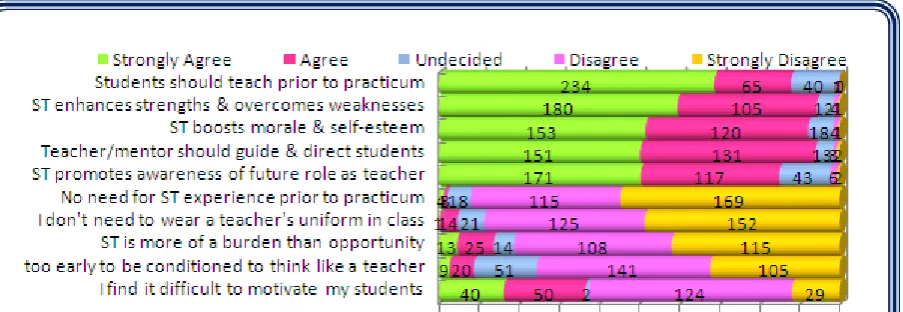
Figure 1 reflects what students think about simulated teaching. Evidenced by relatively high weighted mean scores, their beliefs leaned most toward a perceived need for actual teaching experience prior to student teaching (
x
=4.56). This result corroborates with a high level of disagreement (x
=4.43) over the negative statement, “There’s no need for simulated teaching prior to practicum.” It directly responds to what Ferber and Nillas (2010:84) call an urgent need for a “practical approach where experience can be simulated; yet exposing students to real-life situations, expectations and strategies relative to classroom management.” In a particular study, pre-service teachers who recalled their student teaching experience regretfully expressed that they would have been more prepared to face challenges encountered in actual teaching had they been exposed to real situations and practical strategies during their early coursework (Ferber & Nillas, 2010). This makes simulated teaching an ideal technique in education programs.The respondents indicated strongly that while teacher play can hone their potentials it can also help in overcoming their
pitfalls in teaching (
x
=4.52). This finding confirmed a highly negated item that stated, “Simulated teaching is moreof a burden than an opportunity” (
x
=4.04).The resultimplies the respondents’ optimism in viewing simulated teaching as an avenue to maximize their potentials. In support of this finding, Shiflett, Elliott, Salas and Coovert (2004) assert that simulations enable trainees to immerse in an experience by creating a micro- or synthetic world that captures their attention and exposes them to essential contextual characteristics relevant to the domain of performance. Moreover, the high level of immersion which is inherent in simulations can stimulate greater effort and encourage learners to engage more actively in the process resulting in the accumulation of expected knowledge, skills and attitudes (Kraiger, Ford, & Salas,1993).
Respondents further believe that continuous practice of the pedagogy can build self confidence and elevate their self-esteem (
x
=4.42). In their own words, the subjects were specific in pointing out how they developed confidence through simulated teaching.I had a chance to stand as teacher (Resp.# 206)”; “..We focused on the delivery of lessons (Resp.# 87); “We were always reminded not to be afraid to face our classmates..or even to make mistakes. At first I was shy, but later on I got used to looking at the class and pretending I was their teacher. I could even deliver reports in other subjects much better than before and I’m no longer shy..”(Resp. # 76); and “I think that simulated teaching is really helping us become more confident..” (Resp.# 105).
Salas and others (2009:559) observed that when students engage in a simulated scenario similar to the expected setting, they develop skills at a much faster pace because familiarity in the previous synthetic context connects them directly to the actual context; thus, removing the filters that block learning such as lack of confidence and fear of the unknown. (Perkins, 1992).
[image:6.595.87.539.546.702.2]The findings highlighted the crucial role of the mentor as guide in the classroom (
x
=4.42). Ferber and Nillas (2010) reported that student teachers’ difficulties were closely associated with mentoring and supervisors’ feedback. In fact, honest feedback from mentors was most helpful in improving the classroom practices of student teachers. In a close scrutiny of student teacher-mentor relationships, Grimmlett and Ratzlaff (1986) observed that student teachers are often placed under the care of supervisors and cooperating teachers who are unprepared for their role as mentors. Their incompetence, lack of confidence and insufficient experience added to conflicts and poor communication skills prevent them from giving valuable feedback to the students.Edwards (1997) also reported that other mentors often refrain from communicating observed strengths and weaknesses in order to avoid upsetting the student teachers. Student teachers have found this behavior a great deterrent in their growth as future teachers (Ferber & Nillas, 2010). This perspective makes the presence of a highly competent and confident mentor in a simulated teaching environment inevitable. In simulated teaching, students get a first-hand feedback from their teachers in an informal mode which makes the process less-threatening and enjoyable.
The respondents strongly believed that simulated teaching promotes awareness of their role as future teachers (
x
=4.32). This is confirmed by their disagreement for the notions, “It’stoo early to be conditioned to think and act like a teacher (
x
=3.96) and that there’s no need to wear the teacher’s
uniform or business attire when facing the students (
x
=4.32). This belief is supported by a student’s statement
echoed by many other respondents in a random interview saying,
“…This method is useful because it will prepare us for our future work as teachers..”(Resp.# 23).. “When I’m wearing a teacher’s attire it makes me want to behave like a real
teacher (Resp.88).
The above results could further be attributed to the nature of simulated teaching which diverts a conventional perspective of fieldwork to something unorthodox as requiring students to “teach” a topic, not to “report” it. Integrating fieldwork with coursework subsequently results in a high level of awareness of their future role as teachers.
The participants remained undecided whether they could motivate their students to learn or not (
x
=3.21). This might have been attributed to the mentor’s counter statements to earlier assumptions that they were giving the right motivation when in reality they weren’t. To confirm this finding, video analyses reflected some students’ confidence in delivering the lesson but not the skills in demonstrating focusing techniques. The lack or absence of focusing techniques was a major failure in teaching besides other factors observed in the study. Grant and Gillet (2006) emphasized the importance of acquiring foundational knowledge in teaching strategies, skills and techniques, particularly that of gaining students’ undivided attention. This study therefore suggests the conduct of coursework trainings to enhance students’ focusing strategies.3.2. What Were the Students’ Attitudes toward Simulated Teaching?
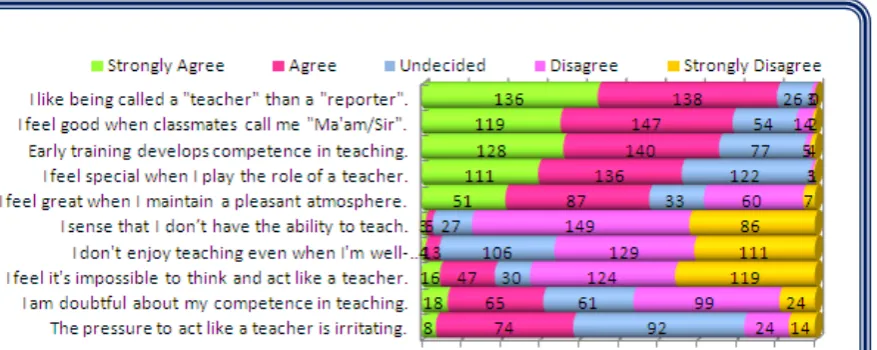
[image:7.595.95.534.535.710.2]Results in Figure 2 signify that the subjects had positive attitudes toward simulated teaching as evidenced by an overall weighted mean of 3.78. Specifically, the respondents liked being called a “teacher” more than just a “reporter” (
x
=4.34); felt good whenever classmates called them Ma’am or Sir instead of their names or family names (x
=4.09) and felt special and important every time they engaged in teacher play (x
=3.95). They felt good about maintaining a positive atmosphere in the classroom (x
=3.48) and strongly disagreed that they didn’t enjoy teaching even when they were well-prepared (x
=3.91).Overall, those feelings emanate from a sense of self-worth generated from the positive experience of being highly regarded and listened to by students during simulation. According to Young and Allain, (1999) the mind usually gives meaning to the present as it integrates past experiences into its repertoire of gists or episodic memories. To illustrate further, students’ role in the ordinaryclassroom is that of a student; whereas, in simulated teaching, they act as teachers. This new experience challenges an old belief system that they will remain to be students until they engage in formal practicum. However, simulation takes them to the limelight and transforms them overnight into teachers. Their past, stereotypical experiences with previous teachers are activated and applied in the newly assumed role. Those past experiences, whether negative or positive, will help them pull through with or give up the idea of teaching. Nevertheless, if they continue to make overall memory connections between the mind, body and emotions in a healthy way, positive experiences will start to battle against and eradicate old belief systems that may have been toxic and start building more confidence and enthusiasm even before the actual field teaching.
The spontaneous behavior of the respondents may likewise be explained by an inherent feature of teaching which necessitates connecting with students (Ferber & Nillas, 2010: 74). In the study of Ferber and Nillas (2010) student teachers reported that there was nothing else more rewarding than to be able to establish relationships and interact with students. This connection eradicated the walls hindering the learners to communicate and work with them.
Meanwhile, the subjects indicated a positive attitude towards the notion that early training can build their competence in teaching (
x
=4.08). Concurrent with this is their disagreement that “It’s impossible to think and act like ateacher” (
x
=3.84). The respondents’ strong disagreementto the notion that they don’t have the ability to teach (
x
=4.15) and that they doubted their competence in teaching (x
=3.17) also attested a positive self-assessment of their capabilities as future teachers. These results suggest the respondents’ high motivation to participate in simulated teaching. Marks (2007) emphasized that attitude towards early training, which is one of the major factors affecting student teaching performance is a prerequisite for life-long learning. The earlier the student is conditioned to think and behave like a teacher, the longer will knowledge, skills and competencies be internalized in teaching.The participants could not decide whether they felt irritated or not when asked to think and behave like a teacher (
x
=2.82). This negative feeling may be enthused by the anxiety of not measuring up to their mentor’s and colleagues’ standards. The constant possibility of committing errors andblunders may have actually shaken their seemingly high level of confidence. Bertone, Chalies, Clark and Mead, (2006) reported that student teachers failed to accept and apply critical suggestions because they felt that their identity as a teacher was being questioned. This negative reaction may have influenced their view of reality which reinforces the core belief and strengthens the trigger established in the past. That trigger could be any negative experience the student connects with the current situation. Unconsciously activated, the trigger creates a negative response like student resistance to mentor feedback. (Young & Allain, 1999 ).
Random interviews with some respondents revealed their optimism contrasted by accounts of complexities along the way. The following remarks exemplified their feelings toward simulated teaching:
“I never imagined I’d be a teacher to my classmates. It’s so amazing! (Resp.# 47; Even if I was nervous, the fact that I was being trained to be a teacher made me feel more
privileged than the other students. ;“(Resp. # 131).“….I
liked simulated teaching because I knew it will improve us, but I really found it difficult to act out the role of a teacher. I’m not good in acting. I felt so awkward….”(Resp. # 71); “I didn’t know about my topic. How could I teach it? Maybe my classmates knew more about it than me. What if they ask questions and I can’t answer?” (Resp.#67)”; I felt like there was always a challenge for us to teach well. It made me decide to do my best all the time (Resp# 305).”
The verbal responses of the participants mirrored the interactive, dynamic nature of simulated teaching evoking varied stimuli and responses. Kozlowski & DeShon (2004) contend that simulated teaching holds high fidelity which proposes contextual richness and embeds cues and contingency into the instructional experience; thereby prompting varied psychological processes relevant to performance in the real world. This suggests that when participants are confronted with issues relative to the role they play, they define and re-define the circumstances, properties and contents of the hypothetical, imaginary world (Montola, 2008:23). Simulated teaching is therefore a rich avenue for developing and enhancing student creativity.
3.3. How Did the Students Respond to Simulated Teaching?
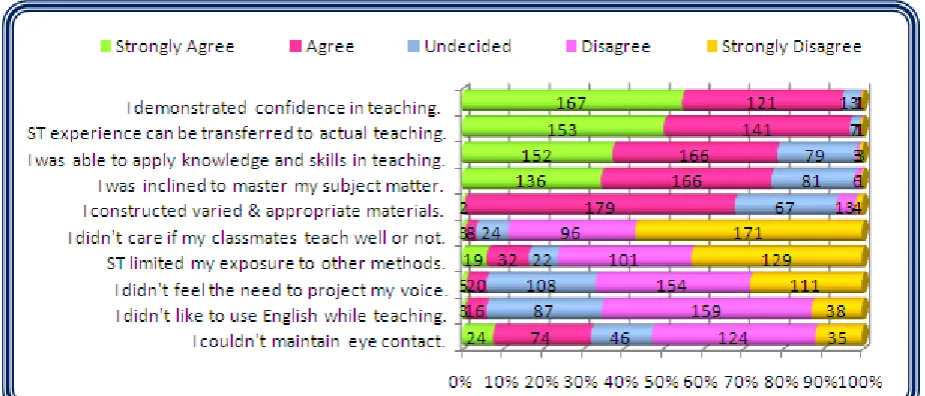
Figure 3. Responses to simulated teaching
The participants reported that after the simulation experience they demonstrated more confidence in teaching
(
x
= 4.34) and were able to transfer that experience tosimilar tasks in other subjects (
x
= 4.09). These results aresupported by the studies of Perkins, 2009; Salas, Wildman, Piccolo, 2009; Hyltoft 2008, Karwowski & Soszynski 2008; Bell & Kozlowski, in press; Cannon-Bowers &Bowers, in press; and Moreno & Mayer, 2005. Furthermore, Young and Allain (1999) attest that confidence is developed when a person experiences the present in a safe, trusting and accepting environment. Every time a successful experience occurs, the mind condenses it into a gist that is added to its repertoire thereby boosting more confidence. Simulated teaching offers a high degree of interactivity (Bell, Kanar & Kozlowski, 2008) giving the player a chance to meet a series of decision situations, responses from the audience and feedback from the mentor making him or her more adept at confronting classroom issues.
A result contradictory to the aforementioned findings states that the subjects were undecided whether they could
maintain eye contact or not (
x
= 3.24). Normally, eyecontact is associated with confidence; but based on direct observations and video analysis, most of the subjects’ initial performances were characterized by the absence or lack of eye contact. This may be due to the fact that direct eye contact can distract a person from composing one’s thoughts and recalling information (Doherty-Sneddon,2006). While teaching, the subjects may have focused more on the delivery of the lesson instead of connecting with the students; or they may have been too shy to look directly in the eyes of the students. Interestingly, a research conducted by British psychologists revealed that children who avoid eye contact are more likely to respond to questions correctly than children who maintain eye contact (Phelps, Doherty-Sneddon, Warnock, 2006). The reason behind this is that while individuals obtain practical information from
looking at the face when listening to someone, the process of looking at faces is a difficult mental process. Although we tend to commonly agree with Doherty-Sneddon ( 2006) that a blank stare could mean a lack of understanding, results in the aforementioned study suggest that when students are trying to concentrate and process something that is mentally demanding, it may be tough for them to maintain eye contact. Nevertheless, more than two thousand studies suggest that eye contact has a positive impact on the retention and recall of information and may produce more efficient learning (Fullwood & Doherty-Sneddon, 2006;Mayer, 2005; Estrada,Patel, Talente & Kraemer, 2005).
Simulated teaching allowed for the application of prior
knowledge and skills in teaching (
x
=4.08) andparticipants were motivated to master the subject matter
assigned to them (
x
=3.95). This result finds support inStevick’s (1976:65) claim that when students are investing more personal effort into learning they achieve mastery of the subject matter and attain a higher level of retention. Meanwhile, they reported that they were encouraged to
construct varied and appropriate instructional materials (
x
=3.48). They strongly disagreed that simulated teaching
limited their exposure to other teaching methods and
practices (
x
=3.91). One participant confessed, “I usedvaried methods to make my lesson more
interesting...”(Resp.#55). They disagreed to the idea that
there’s no need to project their voice while teaching (
x
==3.84). Since they were playing the role of a teacher, they were compelled to project their voice so that everybody could hear them. They also disagreed that they did not like tospeak English” (
x
==3.70) As a matter of fact, studentsenjoyed listening to their classmates who succeeded in using English and mimicking their teachers’ speech act. Participants strongly denied that they didn’t care if their
classmates taught well or not(
x
=4.15).Direct observation [image:9.595.75.538.86.284.2]received high commendations and warm applause from their classmates and mentor. One respondent recalls, “I was inspired by my classmate’s efficient way of teaching. I wish I could do the same thing. ”
The foregoing results suggest that during the role play, participants were focused son behaviors that activated their learning processes. Bergstrom (2009) advocates that simulations should achieve high fidelity and validity of outcomes. Simulations have rules. How participants perceive, interpret and execute the rules in teaching will determine the outcome of teaching; hence, role play is a fusion of all the facets within the individual person. Gibbons (2001) reminds that even if the mentor defines the parameters of the game, the learners are still the ones who conceptualize the teaching model. Pierce (2012) argues that substantial models will most likely stem from the learners’ deeper understanding of the nature of teaching. This may be achieved if students were exposed to simulated teaching in all their classes. One limitation noted in the study is the fact that the said pedagogy was only applied in one or two subjects of each respondent. The lack of consistency in training students may have caused a delay in developing the target behavioral skills. It is therefore suggested that teachers undergo training in mentoring and adapt simulated teaching in their respective classrooms.
4. Conclusion
By far, the findings of the study prove that simulated teaching can be a viable instrument in unlocking and developing the students’ teaching skills prior to practicum. It accentuates the role of the mentor in molding and nurturing the right orientations and perspectives of teaching. Using clearly - defined goals and context-based guidelines, students are empowered to express their creative thoughts and gain control over the teaching-learning process. The respondents themselves signified that consistent early training establishes a strong foundation and prepares them to meet the demands of real teaching. As the sweetest wine is fermented by time, so is the great teacher who is seasoned by years of training and experience.
Acknowledgements
This paper was supported in part by Dr. Manuel R. Espina, my Mentor; Dr. Gabino L. Petilos, my Statistician; Dr. Jude A. Duarte, LNU President; Prof. Luis Lorenzo B. Domingo, Prof. Ed Chair; my family-Tatay, Nanay,Relly, Miko, Nukie and Raffy; and friends-Argie, Elijah, Eric, Henry, Jocylen, Steve, Philip and Portia, for all the love and support; and above all, to the Almighty Jehovah God.
REFERENCES
[1] Aldrich, C. (2003). A field guide to educational simulations. Learning Circuits: American Society for Training and Development.
[2] Anderson, J. (1997). ACT: A simple theory of complex cognition. American Psychologist, 51 (4), 355-365.
[3] Bell B.S., Kanar, Adam M., &Kozlowski S.W.J. (2008). Current issues and future directions in simulated-based training. CAHRS Working Paper #08-13). Ithaca, NY: Cornell University, School of Industrial and Labor Relations, Center for Advanced Human Resource Studies. Retrieved on June 19, 2013 http://digitalcommons.ilr.cornell.edu/cahrswp/ 492.
[4] Bell, B. S., & Kozlowski, S. W. J. (in press). Active learning: effects of core training design elements on self-regulatory processes, learning, and adaptability. Journal of Applied Technology, 1-61.
[5] Bergström, K. (2012). Playing for Togetherness. Designing for Interaction Rituals through Gaming. Doctoral dissertation, Chalmers University of Technology & University of Gothenburg.
[6] Bergström, K. (2010). The implicit rules of board games – on the particulars of the lusory agreement. In: Mindtrek, Mindtrek -Envisioning Future Media Environments.Tampere, Finland. ACM Digital library.
[7] Bertone, S., Chalies, S., Clarke, A., & Meard, J. (2006). The dynamics of interaction during post-lesson conferences and the development of professional activity: study of a pre-service physical education teacher and her co-operating teacher. Asia-Pacific Journal of Teacher Education, 34(2), 245-264.
[8] Buck, G.H. (1991). Development of simulators in medical education. Gesnerus, 48 (1),7-28.
[9] Caires, S., Alemeida, L.S. (2007). Positive aspects of the teacher training supervision: The student teachers’ perspective. European Journal of Psychology of Education, 22(4), 515-528.
[10] Cannon-Bowers, J. A., & Bowers, C. A. (in press). Synthetic learning environments: On developing a science of simulation, games and virtual worlds for training. In S. W. J. Kozlowski & E. Salas (Eds.), Learning, Training, and Development in Organizations. Mahwah, NJ: Erlbaum. [11] Cannon-Bowers, J. A., Tannenbaum, S. I., Salas, E., &
Volpe, C. E. (1995). Defining team competencies and establishing team training requirements. In R. Guzzo & E. Salas (Eds.), Team effectiveness and decision making in organizations (pp. 333-380). San Francisco: Jossey-Bass. [12] Doherty-Sneddon, G. (2006). Noverbalni komunikace deti.
Portal. Praha.
[13] Edwards, A. (1997). Guests bearing gifts: The position of student teacher in primary school classroom. British Educational Research Journal, 23 (1), 27-37.
[14] Estrada, C.A., Patel S.R., Talente, G, & Kraemer, S. (2005). The 10-minute oral presentation: what should I focus on?.Am. J. Med. Sci. 329 (6): 306–309.
259-273.
[16] Faria, A. J. (2001). The changing nature of business simulation/gaming research: A brief history. Simulation & Gaming, 32, 97-110.
[17] Faria, A. J. (1998). Business simulation games: Current usage levels – an update. Simulation & Gaming, 29, 295-308.
[18] Faria, A. J., & Nulsen, R. 1996). Business simulation games: Current usage levels. A ten year update. In, A. L. Patz & R. Butler, (Eds.), Developments in business simulation and experiential exercises, Madison, WI: Omnipress. 22–28 [19] Ferber, T. & Nillas, L. (2010). Through the eyes of student
teachers: successes and challenges in field teaching experiences. National Teacher Education Journal, 3, (2), 61-86.
[20] Fine, G.A. (2002). Shared fantasy: role playing games as social worlds, University of Chicago Press.
[21] Fodor, J.A.Fodor, J.A. & Pylyshyn, Z.W.
(1988).Connectionism and cognitive architecture: A critical analysis. Cognition, 28(1), 3–71.
[22] Fullwood C. , Doherty-Sneddon, G. (2006). Effect of gazing at the camera during a video link on recall. ApplErgon, 37 (2):167-751.
[23] Gage N.L. & Berliner D. (1983). Educational Psychology.Boston:Houghton Mifflin.
[24] Gibbons, A. S. (2001). Model-centered instruction. Journal of Structural Learning and Intelligent Systems, 14 ( ), 511-540.
[25] Gibson, D. (2009). Modeling classroom behavior in software a gents. In Gibson, D. and Baek, Y. Young (Eds.), Digital Simulations for Improving Education: Learning Through Artificial Teaching Environments, Hershey, PA: IGI Global. [26] Gibson, D. & Kruse, S. (2011). Next generation learning
challenge: simulating teaching. Educause Quarterly. [27] Giebelhaus, C.R., & Bowman, C.L. (2002). Teaching
mentors: is it worth the effort. The Journal of Educational Research, 95(4), 246- 254.
[28] Giebelhaus, C.R., & Bowman, C.L. (2002). Teaching mentors: is it worth the effort. The Journal of Educational Research, 95(4), 246-254.
[29] Girod, G., Girod, M., & Denton, J. (2007). Lessons learned in modeling, connecting, teaching and learning. in D. Gibson, C. Aldrich, & M. Presnky (Eds.), Games and Simulations in Online Learning: Research and Development Frameworks. Hershey, PA: IGI Global, 206–222.
[30] Glaser, R. (1984). Education and thinking: the role of knowledge. American Psychologist, 39, 93-104.
[31] Goldstein, L. L. (1991). Training in work organizations. In M. D. Dunnette & L. M. Hough (Eds.), Handbook of industrial organizational psychology 2 ( ) 507–620.
[32] Grant, C. A., & Gillette, M. (2006). A candid talk to teacher educators about effectively preparing teachers who can teach everyone’s children. Journal of Teacher Education, 57, 292-299.
[33] Greenberg, J., & Eskew, D. E. (1993). The role of role playing in organizational research. Journal of Management, 19 (2), 221-240.
[34] Grimmett, P., & Ratzlaff, H. C. (1986). Expectations for the cooperating teacher role. Journal of Teacher Education, 37, 41-50.
[35] Goldstein, L. L. (1991). Training in work organizations. In M. D. Dunnette & L. M. Hough (Eds.), Handbook of Industrial Organizational Psychology , 2, 507–620. Palo Alto, CA: Consulting Psychologists Press.
[36] Goldstein, A.P.,& Simonson, N.R. (1971). Psychological approaches to psychothereapy research. In A.E. Bergin, & S.L. Garfield (Eds.), Handbook of Psychothereapy and Behavior Change. New York:Wiley, 51-71.
[37] Hellstrom M. (2012). A tale of two cities: Symbolic capital and larp community formation in Canada and Sweden. International Journal of Role-Playing. 3, 33-48.
[38] Hersh, R. (1986). Some proposals for revising the philosophy of mathematics. In T. Tymoczko (Ed.), New Directions in the Philosophy of Mathematics. Boston: Birkhauser.
[39] Hyltoft, M. 2008. The role-players' school:osterskov efterskole. In: Montola, M. & Stenros, J., (Eds). Playground Worlds – Creating and Evaluating Experiences of Role-Playing Games.Helsinki: Gummerus.
[40] Karwowski, M. & Soszynski, M. (2008). How to develop creative imagination? Assumptions, aims and effectiveness of role play training in creativity (RPTC). Thinking Skills and Creativity, 3 (2), 163-171.
[41] Katz, J. A. (1999). Institutionalizing elegance: When simulation becomes a requirement.Simulation & Gaming, 30, 332-336.
[42] Keith, N., & Frese, M. 2008. Effectiveness of error management training: A meta-analysis. Journal of Applied Psychology, 93(1): 59–69.
[43] Keys, J. B., & Biggs, W. D. (1990). A review of business games. In J. W. Gentry (Ed.), Guide to Business Gaming and Experiential Learning. East Brunswick, NJ: Nichols/GP, 48–73.
[44] Keys, B., & Wolfe, J. (1990). The role of management games and simulations in education and research. Journal of Management,16(2): 307–336.
[45] Kraiger, K., Ford, J. K., & Salas, E. (1993). Application of cognitive, skill-based, and affective theories of learning outcomes to new methods of training evaluation. Journal of Applied Psychology, 78: 311–328.
[46] Kozlowski, S. W. J., & Bell, B. S. (2007). A theory-based approach for designing distributed learning systems. In S. M. Fiore & E. Salas (Eds.), Toward a science of distributed learning Washington, DC: APA, 15-39.
[48] Kozlowski, S. W. J., Gully, S. M., Brown, K. G., Salas, E., Smith, E. M., & Nason, E. R. (2001). Effects of training goals and goal orientation traits on multidimensional training outcomes and performance adaptability. Organizational Behavior and Human Decision Processes, 85,1-31.
[49] Kozlowski, S. W. J., Toney, R. J., Mullins, M. E., Weissbein, D. A., Brown, K. G., & Bell, B. S. (2001). Developing adaptability: A theory for the design of integrated-embedded training systems. In E. Salas (Ed.), Advances in Human Performance and Cognitive Engineering Research, New York: JAI Press1,59-123.
[50] Kraiger, K., & Jerden, E. (2007). A meta-analytic investigation of learner control: Old findings and new directions. In S. M. Fiore & E. Salas (Eds.), Toward a science of distributed learning, Washington, DC: APA,1, 65-90.
[51] Lane, D. C. (1995). On a resurgence of management simulations and games. The Journal of Operational Research Society, 46(5): 604–625.
[52] Lankoski, P., 2011. Player character engagement in computer games. Games and Culture, 6, pp.291–311.
[53] Lankoski, P., Jarvela S. (2012).An embodied cognition approach for understanding role-playing. International Journal of Role-Playing, 3, 18-32.
[54] Lillard, A.S., (1993). Pretend play skills and the child’s theory of mind. Child Development, 64 (2), pp.pp. 348–371. [55] Lopez-Real, F., Stimpson, P., Bunton, D. (2001).
Supervisory Conferences: and exploration of some difficult topics. Journal of Education for Teaching, 27(2), 161-173. [56] Marks, M.J. (2007). Influences on pre-service teacher
socialization: a qualitative study. presented at the American Educational Research Association Annual Meeting.
[57] Mathieu, J. E., & Martineau, J. W. (1997). Individual and situational influences on training motivation. In J. K. Ford, S.Kozlowski, K. Kraiger, E. Salas, & M. Teachout (Eds.), Improving Training Effectiveness in Work Organizations: 193–221. Mahwah, NJ: Erlbaum.
[58] Mayer, R. E., & Jackson, J. (2005). The case for coherence in scientific explanations: Quantitative details can hurt qualitative understanding. Journal of Experimental Psychology: Applied, 11, 13-18.
[59] Mayer, R. E. (2001). Multi-media learning. Cambridge, UK: Cambridge University Press.
[60] Mayer, R. E., & Anderson, R. B. (1992). The instructive animation: Helping students build connections between words and pictures in multimedia learning. Journal of Educational Psychology, 84, 444-452.
[61] Mayer, R. E. (1989). Models for understanding. Review of Educational Research, 59, 43-64.
[62] Montola, M. (2012). On the Edge of the Magic Circle. Understanding Role-Playing and Pervasive Games. Doctoral dissertation, University of Tampere.
[63] Montola, M. (2008). The invisible rules of role-playing.The social framework of role-playing process. International journal of role-playing, 1(1),pp.22–36.
[64] Moreno, R., & Mayer, R. E. (2007). Interactive multimodal
learning environments. Educational Psychology Review, 19, 309-326.
[65] Nakamura, L. (2001). Race In/For Cyberspace: Identity Tourism and Racial Passing on the Internet. Available at: http://mysite.du.edu/~lavita/dmst_2901_w12/docs/nakamura _race_in_cyberspace.pdf [Accessed September 11, 2012]. [66] National Center for Education Statistics, (1999). Teacher
quality: a report on teacher preparation and qualifications of public school teachers, Office of Educational Research and Improvement, U.S. Department of Education, Washington ,DC.
[67] Nephew, M. (2006). Playing with Identity:Unconscious Desire and Role-playing Games.In J. P. Williams, S. Q. Hendricks, & K. Winkle, (Eds). Gaming as Culture. Jefferson, N.C.:McFarland,120–139.
[68] Ogawa, N. (1997). Let your students teach their class. TESL Journal, 3 (12), pp. 8-20.
[69] Perkins, D. N. (1993). Teaching for understanding. American Educator: The Professional Journal of the American Federation of Teachers,17 (3),8;28-35
[70] Perkins, D. N. (1992). Transfer of learning. International Encyclopedia of Education, Second Edition, Oxford England: Pergamon Press.
[71] Perkins, D. N. (1992). Smart Schools: From training memories to educating minds: New York: The Free Press. [72] Perkins D.N. and Salomon,G. (1988).Teaching for transfer.
Educational Leadership, 46 (1)22-32.
[73] Pierce, C. A., & Aguinis, H. 1997. Using virtual reality technology in organizational behavior research. Journal of Organizational Behavior, 18: 407– 410.
[74] Phelps, F. G., Doherty-Sneddon, G., Warnock, H. (2006). "Helping children think: Gaze aversion and teaching". British Journal of Developmental Psychology 24 (3):577. [75] Raia, A. P. ( 1966). A study of the educational value of
management games. The Journal of Business, 39(3): 339 –352.
[76] Salas, E., Cooke N.J., &Rosen, M.A. (2008). On teams, teamwork, and team performance: discoveries and developments. Human Factors:Golden Anniversary Issue, 540-547.
[77] Salas, E., Wildman, J.L, Piccolo, R.F. (2009). Using simulation-based training to enhance management education. Academy of Management Learning & Education, 8 (4), 559–573.
[78] Stevick, E. (1976). Memory, meaning and method. Rowley, Mass.: Newborn House,19;65.
[79] Schiflett, S. G., Elliott, L. R., Salas, E., & Coovert, M. D. (Eds.) (2004). Scaled worlds:development, validation, and application. Surrey, England: Ashgate Publishing Limited. [80] Summers, G. J. (2004). Today’s business simulation industry.
Simulation & Gaming, 35(2): 208–241.
[81] Tannenbaum, S., & Yukl, G. (1992). Training and development in work organizations. Annual Review of Psychology, 43(1): 399–441.
to participation in training and development. Journal of Occupational & Organizational Psychology, 74(5): 599–621. [83] Walton, K.L., 1993. Mimesis as make-believe : on the
foundations of the representational arts,Cambridge: Harvard University Press.
[84] Wolfe, J. (1997). The effectiveness of business games in strategic management course work. Simulation & Gaming: An Interdisciplinary Journal, 28(4): 360–376.