Volume 2007, Article ID 60595,9pages doi:10.1155/2007/60595
Research Article
Two-Dimensional Electrostatic Problem in a Plane with
Earthed Elliptic Cavity due to One or Two Collinear
Charged Electrostatic Strips
B. M. Singh, J. G. Rokne, and R. S. Dhaliwal
Received 16 August 2006; Accepted 23 November 2006
Recommended by Hans Engler
A two-dimensional electrostatic problem in a plane with earthed elliptic cavity due to one or two charged electrostatic strips is considered. Using the integral transform technique, each problem is reduced to the solution of triple integral equations with sine kernels and weight functions. Closed-form solutions of the set of triple integral equations are ob-tained. Also closed-form expressions are obtained for charge density of the strips. Finally, the numerical results for the charge density are given in the form of tables.
Copyright © 2007 Hindawi Publishing Corporation. All rights reserved.
1. Introduction
γ
y
d
o c γ
A B
[image:2.468.122.348.73.130.2]a b x
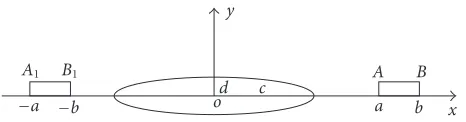
Figure 1.1. One charged strip in a plane with elliptic cavity.
y
d
o c
A B
a b x
A1 B1
a b
Figure 1.2. Two charged collinear strips in a plane with elliptic cavity.
In this paper, we consider two-dimensional electrostatic problems in a plane with an earthed elliptic cavity and (i) one charged strip of finite length aty=0,a < x < b; (ii) two charged strips of finite length aty=0,a <|x|< b. The geometry of the problems is shown in Figures1.1,1.2. Using the integral transform technique, each problem is reduced into triple integral equations with weight functions.
Closed-form solutions of the triple integral equations are obtained by using the method discussed by Singh [3,8]. In each problem, we have obtained the closed form expressions for the charge density of the strips. The numerical results are given for the charge density in the form of tables. These types of problems have application in mathe-matical physics.
As we know, an analytic solution has some advantages over numerical and approxi-mate solutions so that in many cases, analytical solutions in closed form are desired for accurate analysis and design. Moreover, analytical solutions can serve as a benchmark for the purpose of judging the accuracy and efficiency of various numerical and approximate methods.
2. Basic equations
In Cartesian coordinates (x,y), an ellipse centered at the origin is given by the equation
x2 c2 +
y2
d2 =1. (2.1)
We introduce elliptic coordinates (ξ,η), which are defined by
[image:2.468.120.353.192.253.2]whereξ≥0, 0< η <2π, andl=(c2−d2)1/2. The ellipse becomes the coordinate line
ξ=γ=cosh−1
c l
, 0< η <2π. (2.3)
In elliptic coordinates, the electrostatic potential functionV satisfies the differential equation
∂2V ∂ξ2 +
∂2V
∂η2 =0. (2.4)
3. Boundary conditions and solution of problem (2.1)
Due to the geometric symmetry, the problem reduces to finding a functionV(ξ,η) satis-fying (2.4) in the regionγ < ξ≤ ∞, 0≤η≤πsubject to the conditions
V(ξ,π)=0, ξ > γ,
V(γ,η)=0, 0< η < π, (3.1)
V(ξ, 0)=Δ(ξ), α < ξ < β,
∂V(ξ,η)
∂η
η=0
=0, γ < ξ < α,β < ξ, (3.2)
where
α=cosh−1
a l
, β=cosh−1
b l
. (3.3)
We can easily find the solution of Laplace equation (2.4) in the form
V(ξ,η)=
∞
0
sinhu(π−η) sinh(uπ) f(u) sin
u(ξ−γ)du, (3.4)
which satisfies the boundary conditions (3.1) identically and the remaining conditions (3.2) lead to the following triple integral equations:
∞
0 f(u) sin
u(ξ−γ)du=Δ(ξ), α < ξ < β,
∞
0 ucoth(πu)f(u) sin
u(ξ−γ)du=0, γ < ξ < α,β < ξ,
(3.5)
for the determination of f(u).
On introducingx1=ξ−γ,a1=α−γ,b1=β−γ, the above equations (3.5) reduce to
the following integral equations:
∞
0 f(u) sin
ux1 du=Δ
x1+γ , a1< x1< b1, (3.6)
∞
Assuming
∞
0 coth(πu)u f(u) sin
ux1 du=π
2R
x1 , a1< x1< b1, (3.8)
we find its inverse Fourier sine transform as
u f(u) coth(πu)=
b1
a1
R(t) sin(ut)dt. (3.9)
Substituting from (3.9) into (3.6), interchanging the order of integrations and using the following integral from Gradshteyn and Ryzhik (see [9, 4.117(2), page 516]):
∞
0 u
−1tanh(
uπ) sin(ut) sinux1 du=1
2log
sinhx1/2 + sinh(t/2)
sinhx1/2 −sinh(t/2)
, (3.10)
we find that
b1
a1
R(t) logsinh
x1/2 + sinh(t/2)
sinhx1/2 −sinh(t/2)
dt=2Δx1+γ , a1< x1< b1. (3.11)
Differentiating both sides of the above equation with respect tox1, we find that
b1
a1
R(t) sinh(t/2)dt
cosh(t)−coshx1 =
Δx1+γ coshx1/2 =p1
x1 (say), a1< x1< b1, (3.12)
where prime denotes the derivative with respect tox1. Making use of a suitable Tricomi
theorem given by Singh [3], we find that
R(t)= −2 cosh(t/2)
π2
cosh(
t)−cosha1
coshb1 −cosh(t)
1/2
×
b1
a1
cosh
b1 −cosh(y)
cosh(y)−cosha1
1/2 sinh(
y)p(y)dy
cosh(y)−cosh(t)
+ 2C1cosh(t/2)
cosh(t)−cosha1
coshb1 −cosh(t) 1/2
, a1< t < b1,
(3.13)
whereC1is an arbitrary constant. IfΔ(x1) is constant such that
Δx1+γ =Δ1(constant), (3.14)
we find that
px1 =0, (3.15)
and from (3.13), we find that
R(t)= 2C1cosh(t/2)
cosh(t)−cosha1 coshb1 −cosh(t) 1/2
Substituting the value ofR(t) from (3.16) into (3.11) and using the integral
b1
a1
cosh(t/2) logsinhx1/2 + sinh(t/2) /
sinhx1/2 −sinh(t/2) dt
cosh(t)−cosha1 coshb1 −cosh(t) 1/2
= π
sinhb1/2 K
sinh
a1/2
sinhb1/2
, a1< t < b1,
(3.17)
we find that
C1= Δ1
πK(δ)sinh
b1
2
, (3.18)
where
δ=sinh
a1/2
sinhb1/2
, (3.19)
andK() is the complete integral defined in Gradshteyn and Ryzhik (see [9, page 905]). From (3.16) and (3.18), we find that
R(t)= Δ1cosh(t/2) sinh
b1/2 πK(δ)cosh2(t/2)−cosh2a1/2
cosh2b1/2 −cosh2(t/2)
1/2, a1< t < b1.
(3.20)
The charge density of the strip is defined by the relation
σ1= −1
4lπsinh(ξ)
∂V(ξ,η)
∂η
η=0
= 1
4lπsinh(ξ)
∞
0 u f(u) coth(uπ) sinh
u(ξ−γ)du, α < ξ < β,η=0.
(3.21)
The above equation can be written in the form
σ1= R
x1
8πsinh(ξ)l
= Δ1sinh
(β−γ)/2 cosh(ξ−γ)/2 8πsinh(ξ)K(δ)sinh2(ξ−γ)/2 −sinh2
a1/2
sinh2b1/2 −sinh2
(ξ−γ)/2 1/2l,
a < x < b, y=0,
(3.22)
where
ξ=cosh−1
x l
, a1=cosh−1
a l
−γ, b1=cosh−1
b l
−γ. (3.23)
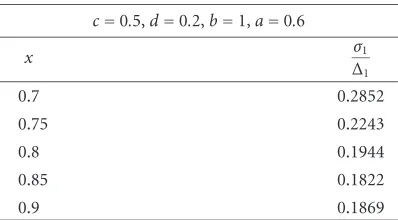
Table 3.1. Numerical results for problem (2.1).
c=0.5,d=0.2,b=1,a=0.6
x Δσ1
1 0.7 0.2852 0.75 0.2243 0.8 0.1944 0.85 0.1822 0.9 0.1869
4. Boundary conditions and solution of problem (2.2)
Since the configuration to be investigated in problem (2.2) is symmetric with respect tox
andyaxes, we require to find an electrostatic functionV(ξ,η) which is harmonic in the regionγ < ξ <∞, 0< η < π/2 and satisfies the conditions
∂V(ξ,η)
∂η
η=π/2=
0, ξ > γ, (4.1)
V(γ,η)=0, 0< η <π
2, (4.2)
V(ξ, 0)=V0(ξ), α < ξ < β, (4.3)
∂V(ξ,η)
∂η
η=0
=0, γ < ξ < α,β < ξ. (4.4)
Suitable solution of (4.4) can be written in the form
V(ξ,η)=
∞
0
A(u) coshu(π/2−η) cosh(πu/2) sin
(ξ−γ)udu, (4.5)
which satisfies conditions (4.1) and (4.2), and the conditions (4.3) and (4.4) give rise to the following integral equations:
∞
0 A(u) sin
ux1 du=V0
x1+γ , a1< x1< b1, (4.6)
∞
0 uA(u) tanh
uπ
2
sinux1 du=0, 0< x1< a1,b1< x1<∞, (4.7)
for the determination ofA(u). By assuming
∞
0 uA(u) tanh
uπ
2
sinux1 du=R0
x1 , a1< x1< b1, (4.8)
and using (4.7), we find that
uA(u) tanh
uπ
2
=2
π
b1
a1
Substituting from (4.9) into (4.6), interchanging the order of integrations and using the following integral from Gradshteyn and Ryzhik (see [9, 4.116(3), page 516]):
∞
0 u
−1cothuπ
2
sin(ut) sinux1 du=1
2log
tanhx1+ tanht
tanhx1−tanht
, (4.10)
we find that
1
π
b1
a1
R0(t)
tanhx1+ tanht
tanhx1−tanht
dt=V0
x1+γ , a1< x1< b1. (4.11)
Differentiating both sides of the above equation with respect tox1, we obtain
1
π
b1
a1
2R0(t) tanh(t)dt
tanh2(t)−tanh2x1
=V0
x1+γ
sech2x1
=px1 (say), a1< x1< b1, (4.12)
where prime denotes the derivative with respect tox1. Using a suitable Tricomi theorem
given by Singh [3], we find that
R0(t)= −sech 2
(t)
π
tanh2(
t)−tanh2a1
tanh2b2 −tanh2(t)
1/2
×
b1
a1
tanh2
b1 −tanh2
x1
tanh2x1 −tanh2a1
1/2
2 tanhx1 sech2
x1 p
x1 dx1
tanh2x1 −tanh2(t)
+ C2sech
2
(t)
tanh2(t)−tanh2a1
tanh2b1 −tanh2(t)
1/2, a1< t < b1,
(4.13)
whereC2is an arbitrary constant. If we assume thatV0(x1+γ)=Δ0(constant), then we
find that
px1 =0, (4.14)
R0(t)= C2sech
2
(t)
tanh2(t)−tanh2a1
tanh2b1 −tanh2(t)
1/2. (4.15)
Substituting the value ofR0(t) from (4.15) into (4.11) and using the integral
b1
a1
sech2tlogtanhx1 + tanh(t) /tanhx1 −tanh(t) dt
tanh2(t)−tanh2a1
tanh2b1 −tanh2(t) 1/2
= π
tanhb1 K
tanh
a1
tanhb1
, a1< x1< b1,
(4.16)
we obtain
C2= Δ0tanh
b1
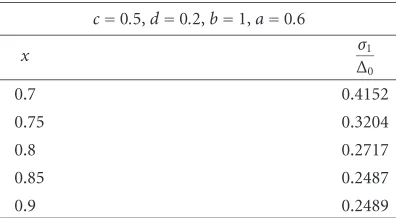
Table 4.1. Numerical results for problem (2.2).
c=0.5,d=0.2,b=1,a=0.6
x Δσ1
0 0.7 0.4152 0.75 0.3204 0.8 0.2717 0.85 0.2487 0.9 0.2489
whereK() is the complete integral defined in Gradshteyn and Ryzhik (see [9, page 905]). From (4.15) and (4.17), we find that
R0(t)= sech
2
(t) tanhb1 Δ0 Ktanha1/tanhb1 tanh2(t)−tanh2
a1
tanh2b1 −tanh2(t) 1/2
, a < t < b.
(4.18)
The charge density is given by
σ1= −1
sinh(ξ)l
∂V(ξ,η)
∂η
η=0
= 1
sinh(ξ)l
∞
0 A(u) tanh
πu
2
sinu(ξ−γ)du= R0
x1
4πsinh(ξ)l
= sech
2 x1 tanh
b1 Δ0
4πsinh(ξ)Kδ1 tanh2x1−tanh2a1 tanh2b1−tanh2x1
1/2, a1< x1< b1, y=0,
(4.19)
where
δ1=tanh
a1
tanhb1 . (4.20)
The above result may be written in the following form:
σ1= sech
2
(ξ−γ) tanh(β−γ)Δ0
4πsinh(ξ)Kδ1 tanh2(ξ−γ)−tanh2a1 tanh2b1−tanh2(ξ−γ) 1/2l
,
a < x < b, y=0.
(4.21)
References
[1] C. J. Tranter, “Some triple integral equations,” Proceedings of the Glasgow Mathematical
Associa-tion, vol. 4, pp. 200–203 (1960), 1960.
[2] K. N. Srivastava and M. Lowengrub, “Finite Hilbert transform technique for triple integral equa-tions with trigonometric kernels,” Proceedings of the Royal Society of Edinburgh. Section A.
Math-ematics, vol. 68, pp. 309–321, 1970.
[3] B. M. Singh, “On triple integral equations,” Glascow Mathematical Journal, vol. 14, pp. 174–178, 1973.
[4] B. M. Singh, “Quadruple trigonometrical integral equations and their application to electrostat-ics,” Journal of Mathematical and Physical Sciences, vol. 9, no. 5, pp. 459–469, 1975.
[5] B. M. Singh, J. G. Rokne, and R. S. Dhaliwal, “Quadruple trigonometrical series equations and their application to an inclusion problem in the theory of elasticity,” Studies in Applied
Mathe-matics, vol. 112, no. 1, pp. 17–37, 2004.
[6] D. A. Spence, “A Wiener-Hopf solution to the triple integral equations for the electrified disc in a coplanar gap,” Proceedings of the Cambridge Philosophical Society, vol. 68, pp. 529–545, 1970. [7] I. N. Sneddon, Mixed Boundary Value Problems in Potential Theory, North-Holland, Amsterdam,
The Netherlands, 1966.
[8] B. M. Singh, “On triple trigonometrical integral equations,” Zeitschrift f¨ur Angewandte
Mathe-matik und Mechanik, vol. 53, pp. 420–421, 1973.
[9] I. S. Gradshteyn and I. M. Ryzhik, Table of Integrals, Series, and Products, Academic Press, New York, NY, USA, 4th edition, 1965.
B. M. Singh: Department of Computer Science, The University of Calgary, Calgary, Alberta, Canada T2N-1N4
Email address:[email protected]
J. G. Rokne: Department of Computer Science, The University of Calgary, Calgary, Alberta, Canada T2N-1N4
Email address:[email protected]
R. S. Dhaliwal: Department of Mathematics and Statistics, The University of Calgary, Calgary, Alberta, Canada T2N-1N4