Evaluation of the Vitek 2 ID-GNB Assay for Identification of
Members of the Family
Enterobacteriaceae
and Other Nonenteric
Gram-Negative Bacilli and Comparison with the
Vitek GNI
⫹
Card
Caroline M. O’Hara* and J. Michael Miller†
Epidemiology and Laboratory Branch, Division of Healthcare Quality Promotion, Centers for Disease
Control and Prevention, Atlanta, Georgia 30333
Received 9 August 2002/Returned for modification 14 November 2002/Accepted 19 February 2003
We evaluated the Vitek 2 ID-GNB identification card (bioMe´rieux, Inc., Durham, N.C.) for its ability to
identify members of the family
Enterobacteriaceae
and other gram-negative bacilli that are isolated in clinical
microbiology laboratories. Using 482 enteric stock cultures and 103 strains of oxidase-positive, gram-negative
glucose-fermenting and nonfermenting bacilli that were maintained at
ⴚ
70°C and passaged three times before
use, we inoculated cards according to the manufacturer’s directions and processed them in a Vitek 2
instru-ment using version VT2-R02.03 software. All panel identifications were compared to reference identifications
previously confirmed by conventional tube biochemical assays. At the end of the initial 3-h incubation period,
the Vitek 2 instrument demonstrated an accuracy of 93.0% for the identification of enteric strains; 414 (85.9%)
were correctly identified at probability levels ranging from excellent to good, and an additional 34 (7.1%)
strains were correctly identified but at a low level of discrimination. Nineteen (3.9%) strains were unidentified,
and 15 (3.1%) were misidentified. The 19 unidentified strains were scattered among 10 genera. Three of the 15
misidentified strains were lactose-positive
Salmonella
spp. and were identified as
Escherichia coli
; another was
a lactose-positive, malonate-negative
Salmonella enterica
subsp.
arizonae
strain that was identified as
E. coli
. Of
the 103 glucose-fermenting and nonfermenting nonenteric strains, 88 (85.4%) were correctly identified at
probability levels ranging from excellent to good, and 10 (9.7%) were correctly identified, but at a low level of
discrimination, for a total of 95.1% accuracy with this group. Two strains were unidentified and three were
misidentified. The errors occurred for strains in three different genera. With the increased hands-off approach
of the Vitek 2 instrument and accuracies of 93% for the identification of enteric organisms and 95.1% for the
identification of nonenteric organisms with the ID-GNB card, use of this product presents an acceptable
method for the identification of most gram-negative organisms commonly isolated in the clinical laboratory. A
comparison of these results to those obtained by testing 454 of the same strains with the Vitek GNI
ⴙ
card
revealed no significant difference in the abilities of the two cards to identify these organisms accurately.
Because relatively few commercially available molecular
methods for the identification of clinically significant
gram-negative bacilli in the clinical laboratory exist today, the need
for identification procedures that use more conventional
cesses remains. Some of these phenotypic identification
pro-cedures are based on colorimetric or pH-based changes and
usually require 18 to 24 h to identify organisms. Some are
based on changes in preformed enzymes, shortening to 2 to 4 h
the time necessary to make an identification.
The newest instrument for bacterial identification and
sus-ceptibility testing is Vitek 2 from bioMe´rieux, Inc. (Durham,
N.C.). This is a fully automated system designed to decrease
the turnaround time for the identification of bacteria and
de-termination of antimicrobial susceptibilities. The instrument
also provides a more hands-off approach than the original
Vitek instrument.
The Vitek 2 ID-GNB card is a 64-well card designed for the
automated identification of most clinically significant
ferment-ing and nonfermentferment-ing gram-negative bacilli.
Because no U.S. studies have evaluated this instrument with
an extensive organism library, we tested the ability of the Vitek
ID-GNB card and the Vitek 2 instrument to identify strains of
the family
Enterobacteriaceae
as well as glucose-fermenting and
-nonfermenting gram-negative bacilli.
(This paper was presented in part at the 102nd General
Meeting of the American Society for Microbiology, Salt Lake
City, Utah, 19 to 23 May 2002 [C. M. O’Hara and J. M. Miller,
Abstr. 102nd Gen. Meet. Am. Soc. Microbiol., abstr. C14, p.
101, 2002].)
MATERIALS AND METHODS
Culture collection.A total of 482 biochemically typical and atypical isolates of the familyEnterobacteriaceaefrom the stock culture collection of the Centers for Disease Control and Prevention (CDC) were taken from storage in defibrinated sheep blood at⫺70°C and passaged three times on tryptic soy agar with 5% sheep blood (TSA II; Becton Dickinson Biosciences, Inc., Sparks, Md.) before use. In addition, 103 biochemically typical and atypical nonenteric,
glucose-* Corresponding author. Mailing address: Epidemiology and
Labo-ratory Branch, Division of Healthcare Quality Promotion, Centers for
Disease Control and Prevention, Mailstop C16, Atlanta, GA 30333.
Phone: (404) 639-2316. Fax: (404) 639-3822. E-mail: [email protected].
† Present address: Bioterrorism Preparedness and Response
Pro-gram, National Center for Infectious Diseases, Centers for Disease
Control and Prevention, Atlanta, GA 30333.
2096
on May 15, 2020 by guest
http://jcm.asm.org/
fermenting and -nonfermenting gram-negative bacilli were taken from the CDC stock culture collection. Ten recently isolatedSalmonellastrains from hospitals in the Atlanta, Ga., area were obtained from the Georgia Central Public Health Laboratory and passaged a third time on 5% sheep blood agar before use. All incubations were performed at 35⫾1°C, unless indicated otherwise. ID-GNB cards were inoculated according to the directions of the manufacturer and
processed in the Vitek 2 instrument with software version VT2-R02.02 (8 June 2000). Final test results were available in approximately 3 h.
Media and biochemical tests.Biochemical tests for the identification of enteric organisms were performed with conventional media and by the methods de-scribed by Edwards and Ewing (1), with some modifications by Hickman and Farmer (4) and Farmer et al. (2). Biochemical tests for identification of
nonen-TABLE 1. Enteric strains tested with the ID-GNB card
Reference identification No. (%) of strains identified at the following probability level
a:
n Excellent Very good Acceptable Good Low Unidentified Error
Buttiauxella agrestis
2
1
1
Cedecea davisae
6
2
2
1
1
Cedecea lapagei
4
3
1
Citrobacter amalonaticus
10
3
4
2
1
Citrobacter braakii
6
2
1
1
1
1
Citrobacter farmeri
5
3
2
Citrobacter freundii
2
2
Citrobacter koseri
10
4
2
1
2
1
Citrobacter youngae
5
1
1
2
1
Edwardsiella tarda
10
4
1
2
2
1
Enterobacter aerogenes
10
4
3
1
1
1
Enterobacter asburiae
10
5
2
2
1
Enterobacter cancerogenus
10
4
2
1
1
1
1
Enterobacter cloacae
10
2
3
1
3
1
Enterobacter gergoviae
10
6
3
1
Enterobacter sakazakii
10
3
2
5
Escherichia coli
30
7
10
2
5
2
3
1
Escherichia fergusonii
10
7
1
2
Escherichia hermannii
10
4
1
4
1
Escherichia vulneris
10
5
1
1
1
1
1
Ewingella americana
10
4
4
1
1
Hafnia alvei
10
6
3
1
Klebsiella ornithinolytica
10
6
3
1
Klebsiella oxytoca
10
5
1
1
3
Klebsiella pneumoniae
subsp.
ozaenae
10
3
3
3
1
Klebsiella pneumoniae
subsp.
pneumoniae
10
3
4
1
2
Klebsiella pneumoniae
subsp.
rhinoscleromatis
10
4
5
1
Kluyvera ascorbata-K. cryocrescens
10
6
1
1
1
1
Leclercia adecarboxylata
10
4
4
1
1
Moellerella wisconsensis
8
7
1
Morganella morganii
10
6
3
1
Pantoea agglomerans
7
1
1
3
1
1
Pantoea dispersa
1
1
Proteus mirabilis
10
8
2
Proteus penneri
10
2
6
1
1
Proteus vulgaris
10
8
2
Providencia alcalifaciens
7
7
Providencia rettgeri
8
3
1
4
Providencia rustigianii
2
2
Providencia stuartii
14
4
8
1
1
Rahnella aquatilis
2
2
Salmonella enterica
subsp.
arizonae
10
2
7
1
Salmonella
group
14
11
3
Salmonella
group, lactose positive
3
3
Salmonella
serotype Paratyphi A
2
1
1
Serratia fonticola
10
2
3
2
3
Serratia liquefaciens
group
10
6
2
1
1
Serratia marcescens
10
2
5
2
1
Serratia odorifera
10
5
3
2
Serratia plymuthica
10
3
2
1
1
3
Serratia rubidaea
10
5
3
1
1
Shigella
group (three species)
6
3
1
1
1
Shigella sonnei
4
1
2
1
Yersinia enterocolitica
group (four species)
18
11
4
1
2
Yersinia pseudotuberculosis
6
1
2
1
1
1
Total
482
212 (44.0)
126 (26.1)
29 (6.0)
47 (9.8)
34 (7.1)
19 (3.9)
15 (3.1)
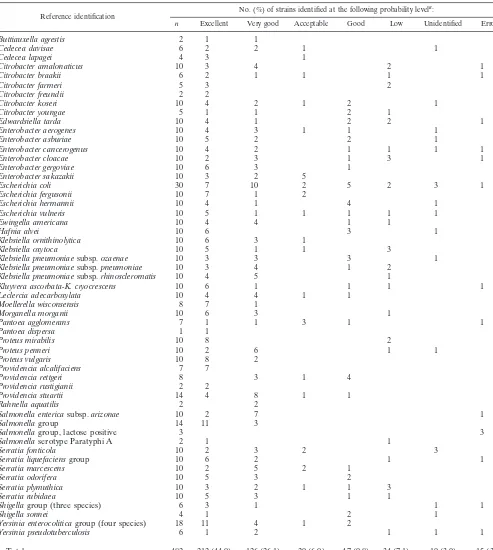
aA total of 85.9% of strains were correctly identified at probability levels ranging from excellent to good.
on May 15, 2020 by guest
http://jcm.asm.org/
[image:2.603.46.539.80.630.2]teric organisms were performed by the methods of Weyant et al. (10) and Schreckenberger (9). Commercial media were used whenever possible.
Vitek 2 system.The Vitek 2 system is a fully automated, continuous-access testing system that can accommodate 60 identification or susceptibility cards at one time in one module. Additional modules that extend the capacity in incre-ments of 60 cards are available.
The inoculation of cards begins with the preparation of a standardized bacte-rial suspension in 0.45% saline equivalent to a McFarland 0.5 to 0.63 standard, the range indicated by the manufacturer. The suspensions are standardized in a
Densi-Chek 2, which is first adjusted with a semisolid calibrator. The suspensions are then placed into the Smart Carrier boat on the Smart Carrier cassette. The boat and cassette each contain a memory chip with information for the suspen-sions in that load. If a susceptibility test is to be performed simultaneously with the identification, an additional blank tube with 0.45% saline is placed in alter-nating slots. The time between suspension preparation and card filling for 10 isolates is less than 20 min. Suspensions are prepared in groups of 12 or less.
[image:3.603.50.539.89.217.2]The ID-GNB cards each have a bar-coded label that is scanned into the memory chip before the cards are loaded into the corresponding slot.
TABLE 2. Enteric strains that were misidentified
Reference identification ID-GNB identification (level of accuracy)
Citrobacter amalonaticus
...
Citrobacter youngae
(low)
Citrobacter braakii
...
Citrobacter freundii
(low)
Enterobacter cancerogenus
...
Enterobacter amnigenus
(low)
Enterobacter cloacae
...
Enterobacter asburiae
(good)
Edwardsiella tarda
, biogroup 1...
Salmonella
group (very good)
Escherichia coli
, LAO
anegative ...
Citrobacter freundii
(low)
Kluyvera cryocrescens
...
Enterobacter amnigenus
(low)
Pantoea agglomerans
...
Citrobacter freundii
(acceptable)
Salmonella
, lactose-positive ...
Escherichia coli
(very good; three strains)
Salmonella arizonae
, lactose-positive...
Escherichia coli
(very good)
Serratia liquefaciens
...
Serratia odorifera
(excellent)
Shigella flexneri
...
Escherichia coli
(good)
Yersinia pseudotuberculosis
...
Yersinia pestis
(low)
aLAO, lysine, arginine, and ornithine.
TABLE 3. Nonenteric strains tested with the ID-GNB card
Reference identification
No. (%) of strains identified at the following probability levela:
n Excellent Verygood Acceptable Good Low Unidentified Error
Acinetobacter baumanii
6
6
Actinobacillus ureae
2
2
Aeromonas hydrophilia-A. caviae
6
6
Aeromonas sobria
4
2
1
1
bAgrobacterium
spp.
2
1
1
Bergeyella zoohelcum
3
3
Brevundimonas diminuta
2
1
1
Brevundimonas vesicularis
2
1
1
cBurkholderia cepacia
7
3
1
1
2
Chromobacterium violaceum
4
3
1
Chryseobacterium indologenes
4
2
1
1
Chryseobacterium meningosepticum
3
3
Empedobacter brevis
2
1
1
dMyroides
spp.
2
2
Ochrobactrum anthropi
2
1
1
Pasteurella aerogenes
3
2
1
Pasteurella haemolytica
2
1
1
Pasteurella multocida
3
3
Pasteurella pneumotropica
2
1
1
Plesiomonas shigelloides
5
4
1
Pseudomonas aeruginosa
10
9
1
Pseudomonas luteola
2
1
1
Pseudomonas oryzihabitans
2
1
1
Ralstonia pickettii
5
1
2
1
1
Shewanella putrefaciens
3
2
1
Sphingobacterium multivorum
2
1
1
Sphingomonas paucimobilis
2
1
1
Stenotrophomonas maltophilia
8
5
1
2
Weeksella virosa
3
3
Total
103
61 (59.2)
13 (12.6)
6 (5.8)
8 (7.8)
10 (9.7)
2 (1.9)
3 (2.9)
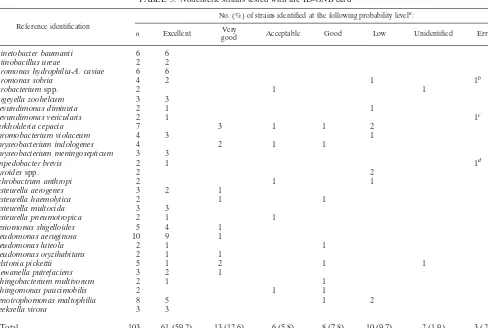
aA total of 85.4% of strains were correctly identified at probability levels ranging from excellent to good. bIdentified asAeromonas hydrophila-A. caviae(excellent).
cIdentified asChryseobacterium indologenes(low). dIdentified asChryseobacterium indologenes(very good).
on May 15, 2020 by guest
http://jcm.asm.org/
[image:3.603.52.540.366.694.2]Once the Smart Carrier boat is loaded into the Vitek 2 instrument, the instrument automatically reads the information from the memory chip, makes the dilution that is necessary if a susceptibility test is to be included, fills the test cards, severs the filling straws from the cards, and incubates the cards for 3 h. When the process is complete, onboard software and automation move the cards to the discard area, analyze the data, and print the results.
ID-GNB card.The ID-GNB card is a 64-well card that contains 41 biochemical tests (13 more substrates than the number included on the GNI⫹card) and two negative control wells. Of the 41 biochemical tests, 21 are with conventional substrates that include adonitol,L-arabinose,D-cellobiose,D-galacturonate,D
-glucose,D-glucuronate,myo-inositol,D-maltose,D-mannitol,D-melibiose,
palati-nose, D-raffinose, L-rhamnose, saccharose,D-sorbitol, D-trehalose, lysine and
ornithine decarboxylases, urease, malonate, and tryptophane deaminase. Twenty wells contain preformed enzymes. These include glucose-1-phosphate, 5-keto-D
-gluconate,␣-arabinosidase,␣-galactosidase,␣-glutamate,-cellobiosidase, -ga-lactosidase, -glucosidase, -glucuronidase, -mannosidase, -N -acetyl-glu-cosaminidase, -N-acetyl-galactosaminidase, -xylosidase, Glu-Gly-Arg arylamidase,␥-glutamyl-transferase,L-lysine arylamidase, phosphatase,L-proline
arylamidase, L-pyrrolidonyl arylamidase, and CBZ-arginine arylamidase. The
remaining wells are empty. Differences in the substrates between this card and the GNI⫹card can be seen by consulting the respective product inserts.
Occasionally, additional off-line same-day testing may be required to complete an identification. Those tests listed by the manufacturer for the completion of an identification were performed with CDC conventional biochemicals. These in-cluded tests for indole production, motility, oxidase,-hemolysis, and determi-nation of brown, orange, purple, red, or yellow pigments.
Taxonomy.Organism identifications were taken from the Vitek database, even though some taxonomic changes may have occurred since the database was compiled.
Classification of answers.Answers may be categorized into one of several confidence levels (excellent, very good, good, acceptable), all of which are an estimate of how closely a given profile corresponds to a particular taxon relative to all the other taxa in the database. The percentage of identification ranges from 99.9 to 80.0%. This value is extrapolated from thetindex, which is an estimate of how closely the profile corresponds to the most typical set of reactions for each taxon and which is actually calculated from the algorithm. The value of thet
index varies between 0 and 1 and is inversely proportional to the number of atypical tests. Thus, a confidence level of excellent is a combination of a per-centage of identification ofⱖ99.9% and atindex ofⱖ0.75. A confidence level of acceptable combines a percentage of identification ofⱖ80.0% and atindex of
ⱖ0. In the case of a low level of discrimination, supplementary tests are pro-posed.
RESULTS AND DISCUSSION
The 482 enteric strains tested in this study included 21
gen-era and 60 species (Table 1). They represented most major
species of the family
Enterobacteriaceae
, and all were of human
origin. Because the CDC is usually not given patient histories
when isolates are submitted, it is not known if they were
clin-ically relevant, but most of the sources would indicate that the
possibility of clinical relevance might exist. At the end of the
initial 3-h incubation period, 414 (85.9%) isolates were
cor-rectly identified at confidence levels ranging from excellent to
good. Another 34 (7.1%) were correctly identified, but at a low
level of discrimination. In the clinical setting, these results
would have to be carefully evaluated to determine if they were
correct. The Vitek 2 instrument could not identify 19 (3.9%) of
the 482 isolates and gave an answer of “unidentified
organ-ism.” Fifteen (3.1%) strains were incorrectly identified (Table
2), although six were at least in the correct genus. Most of
these incorrect identifications were at the low level of
discrim-ination.
Of special interest in Table 2 are the lactose-positive
Salmo-nella
strains, one of which was
Salmonella enterica
subsp.
ari-zonae
. All four of these isolates were identified as
Escherichia
coli
at the very good probability level.
Table 3 shows the test results for 103 isolates of nonenteric
gram-negative bacilli that were a mixture of
glucose-ferment-ing and glucose-nonfermentglucose-ferment-ing, positive and
oxidase-negative organisms. They include 21 genera and 30 species. At
the end of the initial incubation period, 88 (85.4%) strains
were correctly identified at probability levels ranging from
ex-cellent to good. Ten (9.7%) were correctly identified, but at a
low level of probability, and three (2.9%) were misidentified.
The latter three included one isolate each of
Aeromonas sobria
,
Brevundimonas vesicularis
, and
Empedobacter brevis
. Two
(1.9%) strains were not identified.
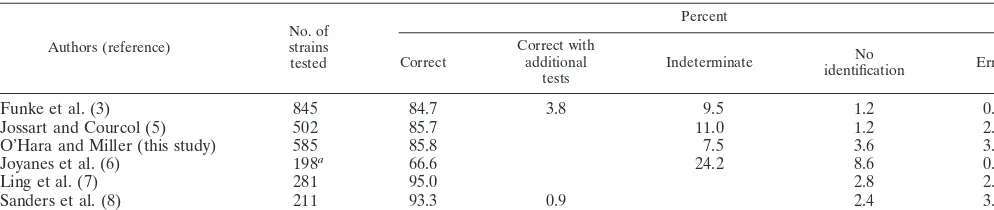
Table 4 presents a comparison of the results of this study and
those of the four other studies of the Vitek 2 instrument that
have been published. There is no significant difference in the
results obtained in this study compared with those obtained by
Funke et al. (3) or Jossart and Courcol (5), although the
smaller studies of Joyanes et al. (6), Ling et al. (7), and Sanders
et al. (8) showed significantly better results.
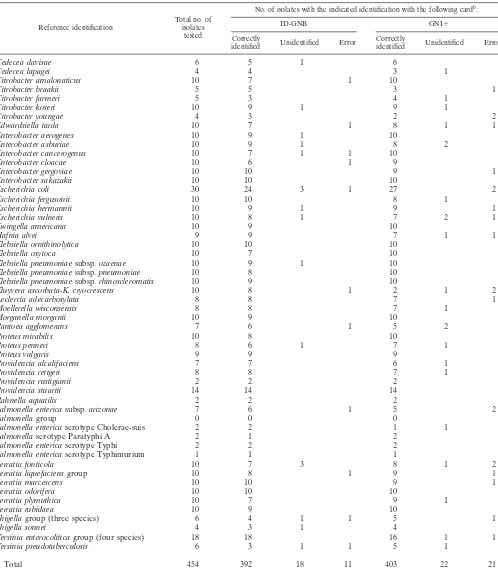
Table 5 shows a comparison of the results obtained when
454 of the same strains listed in Table 1 were tested with the
Vitek GNI
⫹
card. Table 5 lists those strains that were correctly
identified, unidentified, or identified in error. The 25 strains in
the tests with the ID-GNB card and the 8 strains in the tests
with the GNI
⫹
card for which there was a low probability of
correct identification are not listed in Table 5. Even though the
error rate was higher (4.6%) with the GNI
⫹
card, only 1.7% of
the identifications had low-probability confidence levels,
whereas with the ID-GNB card, 5.5% of the identifications had
low-probability confidence levels. Thus, there is no significant
difference in the abilities of these two cards to identify these
strains accurately (Yates’ corrected
P
value,
⬎
0.05).
[image:4.603.44.541.81.186.2]The question of the relative acceptable level of accuracy
when a “system” approach is used for identification is often
TABLE 4. Other published evaluations of the ID-GNB card and Vitek 2 instrument
Authors (reference) No. ofstrains tested
Percent
Correct Correct withadditional
tests Indeterminate
No
identification Error
Funke et al. (3)
845
84.7
3.8
9.5
1.2
0.8
Jossart and Courcol (5)
502
85.7
11.0
1.2
2.2
O’Hara and Miller (this study)
585
85.8
7.5
3.6
3.1
Joyanes et al. (6)
198
a66.6
24.2
8.6
0.5
Ling et al. (7)
281
95.0
2.8
2.1
Sanders et al. (8)
211
93.3
0.9
2.4
3.3
aThe study included onlyPseudomonas aeruginosa,Acinetobacter baumannii, andStenotrophomonas maltophilia.
on May 15, 2020 by guest
http://jcm.asm.org/
posed. This is a decision that must be made by each laboratory
after it takes into consideration many variables. The two most
prominent of these variables are the source of the specimen
and whether the susceptibility pattern matches the
[image:5.603.48.546.80.652.2]identifica-tion of the organism. For example, an identificaidentifica-tion of
Pantoea
agglomerans
from urine might not merit the same amount of
concern that it would if it was isolated from blood or spinal
fluid. Some laboratories are not willing to accept an answer
TABLE 5. Comparison of levels of accuracy of identification between ID-GNB and GNI
⫹
cards
aReference identification Total no. ofisolates tested
No. of isolates with the indicated identification with the following cardb:
ID-GNB GNI⫹
Correctly
identified Unidentified Error identifiedCorrectly Unidentified Error
Cedecea davisae
6
5
1
6
Cedecea lapagei
4
4
3
1
Citrobacter amalonaticus
10
7
1
10
Citrobacter braakii
5
5
3
1
Citrobacter farmeri
5
3
4
1
Citrobacter koseri
10
9
1
9
1
Citrobacter youngae
4
3
2
2
Edwardsiella tarda
10
7
1
8
1
1
Enterobacter aerogenes
10
9
1
10
Enterobacter asburiae
10
9
1
8
2
Enterobacter cancerogenus
10
7
1
1
10
Enterobacter cloacae
10
6
1
9
Enterobacter gergoviae
10
10
9
1
Enterobacter sakazakii
10
10
10
Escherichia coli
30
24
3
1
27
2
Escherichia fergusonii
10
10
8
1
Escherichia hermannii
10
9
1
9
1
Escherichia vulneris
10
8
1
7
2
1
Ewingella americana
10
9
10
Hafnia alvei
9
9
7
1
1
Klebsiella ornithinolytica
10
10
10
Klebsiella oxytoca
10
7
10
Klebsiella pneumoniae
subsp.
ozaenae
10
9
1
10
Klebsiella pneumoniae
subsp.
pneumoniae
10
8
10
Klebsiella pneumoniae
subsp.
rhinoscleromatis
10
9
10
Kluyvera ascorbata-K. cryocrescens
10
8
1
2
1
2
Leclercia adecarboxylata
8
8
7
1
Moellerella wisconsensis
8
8
7
1
Morganella morganii
10
9
10
Pantoea agglomerans
7
6
1
5
2
Proteus mirabilis
10
8
10
Proteus penneri
8
6
1
7
1
Proteus vulgaris
9
9
9
Providencia alcalifaciens
7
7
6
1
Providencia rettgeri
8
8
7
1
Providencia rustigianii
2
2
2
Providencia stuartii
14
14
14
Rahnella aquatilis
2
2
2
Salmonella enterica
subsp.
arizonae
7
6
1
5
2
Salmonella
group
0
0
0
Salmonella enterica
serotype Cholerae-suis
2
2
1
1
Salmonella
serotype Paratyphi A
2
1
2
Salmonella enterica
serotype Typhi
2
2
2
Salmonella enterica
serotype Typhimurium
1
1
1
Serratia fonticola
10
7
3
8
1
2
Serratia liquefaciens
group
10
8
1
9
1
Serratia marcescens
10
10
9
1
Serratia odorifera
10
10
10
Serratia plymuthica
10
7
9
1
Serratia rubidaea
10
9
10
Shigella
group (three species)
6
4
1
1
5
1
Shigella sonnei
4
3
1
4
Yersinia enterocolitica
group (four species)
18
18
16
1
1
Yersinia pseudotuberculosis
6
3
1
1
5
1
Total
454
392
18
11
403
22
21
aNumbers in the correctly identified, unidentified, and error columns may not add to the total number. Identifications at the low level of accuracy were not included. bA total of 410 (90.3%) strains were correctly identified with the ID-GNB card (error rate, 2.4%), whereas a total of 425 (93.6%) strains were correctly identified
with the GNI card (error rate, 4.6%).
on May 15, 2020 by guest
http://jcm.asm.org/
that has less than an 85% probability of being accurate; others
want an answer that is at least 90% accurate. Another
consid-eration is whether the laboratory is able or willing in terms of
time and money to perform the additional testing needed.
The hands-off approach to the Vitek 2 instrument with the
Smart Carrier station is a major improvement of the Vitek
instrument. Having demonstrated an overall accuracy above
90%, testing with the ID-GNB card presents an acceptable
method for the identification of the most commonly isolated
members of the family
Enterobacteriaceae
and nonenteric
gram-negative bacilli.
REFERENCES
1. Edwards, P. R., and W. H. Ewing.1972. Identification ofEnterobacteriaceae, 3rd ed. Burgess Publishing Co., Minneapolis, Minn.
2. Farmer, J. J., III, M. A. Asbury, F. W. Hickman, D. J. Brenner, and the
EnterobacteriaceaeStudy Group.1980.Enterobacter sakazakii: a new species of “Enterobacteriaceae” isolated from clinical specimens. Int. J. Syst. Bacte-riol.30:569–584.
3. Funke, G., D. Monnet, C. deBernardis, A. von Graevenitz, and J. Freney.
1998. Evaluation of the VITEK 2 system for rapid identification of medically relevant gram-negative rods. J. Clin. Microbiol.36:1948–1952.
4. Hickman, F. W., and J. J. Farmer III.1978.Salmonella typhi: identification, antibiograms, serology, and bacteriophage typing. Am. J. Med. Technol.
44:1149–1150.
5. Jossart, M. F., and R. J. Courcol.1999. Evaluation of an automated system for identification of Enterobacteriaceae and nonfermenting bacilli. Eur. J. Clin. Microbiol. Infect. Dis.18:902–907.
6. Joyanes, P., M. del Carmen Conejo, L. Martinez-Martinez, and E. J. Perea.
2001. Evaluation of the VITEK 2 system for the identification and suscep-tibility testing of three species of nonfermenting gram-negative rods fre-quently isolated from clinical samples. J. Clin. Microbiol. 39:3247– 3253.
7. Ling, T. K. W., P. C. Tam, Z. K. Liu, and A. F. B. Cheng.2001. Evaluation of VITEK 2 rapid identification and susceptibility testing system against gram-negative clinical isolates. J. Clin. Microbiol.39:2964–2966.
8. Sanders, C. C., M. Peyret, E. S. Moland, S. J. Cavalieri, C. Shubert, K. S. Thomson, J. M. Boeufgras, and W. E. Sanders, Jr.2001. Potential impact of the VITEK 2 system and the advanced expert system on the clinical labo-ratory of a university-based hospital. J. Clin. Microbiol.39:2379–2385. 9. Schreckenberger, P. C.2000. Practical approach to the identification of
glucose-nonfermenting gram-negative bacilli. University of Chicago, Chi-cago, Ill.
10. Weyant, R. S., C. W. Moss, R. E. Weaver, D. G. Hollis, J. G. Jordan, E. C. Cook, and M. I. Daneshvar.1995. Identification of unusual pathogenic gram-negative aerobic and facultatively anaerobic bacteria, 2nd ed. The Williams & Wilkins Co., Baltimore, Md.