HOW ARE INDIVIDUAL DIFFERENCES IN SCHIZOTYPY RELATED
TO TYPE 1 (AUTOMATIC/HEURISTIC) AND TYPE 2
(REFLECTIVE/EFFORTFUL) THINKING PROCESSES?
ANNABEL BROYD
May 2018
A thesis submitted in partial fulfilment of the requirements of the University of East London for the degree of Professional Doctorate in Clinical Psychology
ACKNOWLEDGEMENTS
There are several people I would like to thank, who not only made this thesis possible, but also made it an enjoyable learning experience for me. Firstly, I am incredibly grateful for the guidance, enthusiasm and interesting discussions I had from my main supervisor, Volker Thoma. I am also very grateful for the valuable suggestions and guidance from my external supervisors, Ulrich Ettinger and Paul Allen.
I would also like to thank Trishna Patel and Matthew Jones-Chesters for their advice on mediation models and statistical analysis. Thanks also to Daniel Edgcumbe and Elena Gomis Vincent for their advice on practical aspects of the study. Thanks also to Ken Gannon for his ongoing support, kindness and willingness to help with any research matters throughout the three years of training.
A huge thanks to my family and friends for their ongoing support and
ABSTRACT
Background: Human reasoning is often conceptualisedwithin ‘dual process’
frameworks, comprising Type 1 (automatic/heuristic) and Type 2 (reflective/effortful) processes, as well as ‘thinking styles’. These processes have not yet been
comprehensively investigated in relation to schizotypy; a continuum of normal variability of psychosis-like characteristics and experiences. This could provide insights into thinking processes associated with psychosis-related phenomena, bypassing the limitations of psychiatric diagnosis and the confounding factors associated with clinical populations.
Aims: This study sought to investigate whether individual differences in schizotypy (‘unusual experiences’ and ‘introvertive anhedonia’) were related to thinking processes and thinking styles. Another aim was to examine how schizotypy, thinking processes and thinking styles were related to cognitive reflection, informed by dual process theories.
Method: The study employed a cross-sectional design and data was collected through an online survey. A large sample (n = 1,512) completed several measures pertaining to personality and reasoning. Correlations examined the association between schizotypy and reasoning processes. Regression analysis was used to further examine predictors of cognitive reflection, and multiple mediation models tested whether thinking styles and processes mediated the association between schizotypy and cognitive reflection.
Results: Schizotypy was associated with greater reliance on intuitive thinking, less reliance on deliberative thinking, as well as a hastier, less reflective reasoning style. Unusual experiences, thinking processes and thinking style were independent predictors of cognitive reflection, and schizotypy contributed to significant additional variance in reflection over other predictor variables. Thinking processes and thinking style had a small mediating effect on the relationship between schizotypy and cognitive reflection.
TABLE OF CONTENTS
1.INTRODUCTION ... 1
1.1. Chapter Overview ... 1
1.2. Dual Process Theories of Reasoning ... 1
1.2.1. Overview ... 1
1.2.2. Evidence for Dual Process Theories ... 3
1.2.3. Cognitive Inhibition ... 4
1.2.4. Behavioural Tasks of Type 2 Control over Type 1 Processes ... 5
1.2.5. Tripartite Model of the Mind ... 6
1.2.6. The Cognitive Reflection Test ... 8
1.2.7. Self-Report Measures of Thinking Styles ... 9
1.2.8. Critiques of Dual Process Theories ... 10
1.3. Schizotypy ... 12
1.3.1. Schizotypy and Psychosis ... 12
1.3.2. Definition of Schizotypy ... 13
1.3.3. Measures of Schizotypy ... 13
1.3.4. Why Investigate Schizotypy? ... 15
1.4. Reasoning in Psychosis ... 16
1.4.1. Type 1 Processing ... 16
1.4.2. Type 2 Processing ... 18
1.4.3. Inhibitory Control ... 19
1.4.4. Thinking Style ... 20
1.5. Reasoning in Schizotypy ... 21
1.5.1. Search Strategy ... 21
1.5.2. Type 1 Reasoning ... 22
1.5.3. Cognitive Inhibition ... 23
1.5.4. Antisaccades ... 25
1.5.5. Jumping to Conclusions ... 26
1.5.6. Bias Against Disconfirmatory Evidence ... 28
1.5.7. Hypersalience of Evidence-Hypothesis Matches ... 29
1.5.8. Logical Reasoning ... 29
1.5.10. Reflective Mind ... 32
1.5.11. Summary of Reasoning in Schizotypy ... 32
1.6. Research Aims and Rationale ... 33
1.7. Research Questions ... 34
2.METHODOLOGY ... 35
2.1. Overview ... 35
2.2. Epistemology ... 35
2.3. Design ... 36
2.4. Procedure ... 36
2.5. Participants ... 37
2.5.1. Recruitment ... 37
2.5.2. Inclusion Criteria ... 37
2.5.3. Exclusion Criteria ... 38
2.6. Materials ... 38
2.6.1. Demographics ... 38
2.6.2. Schizotypy ... 38
2.6.3. Cognitive Reflection ... 39
2.6.4. Thinking Style ... 41
2.6.5. Type 1 Processing ... 41
2.6.6. Type 2 Processing ... 42
2.7. Ethical Considerations ... 42
2.7.1. Informed Consent and Confidentiality ... 42
2.7.2. Potential Distress ... 43
2.8. Data Analysis ... 43
2.8.1. Approach to Analysis ... 43
2.8.2. Power Analysis ... 44
3.RESULTS ... 45
3.1. Overview ... 45
3.2. Sample Characteristics and Demographics ... 45
3.2.1. Sample Size ... 45
3.2.2. Missing Data ... 46
3.2.3. Outliers ... 47
3.3. Associations between Variables ... 48
3.4. Research Question One ... 49
3.5. Research Question Two ... 50
3.5.1. Linear Regression ... 50
3.5.2. Regression Analysis Assumptions ... 52
3.6. Research Question Three ... 53
3.6.1. Overview and Approach ... 53
3.6.2. Mediation Model for Unusual Experiences ... 54
3.6.3. Mediation Model for Introvertive Anhedonia ... 56
4.DISCUSSION ... 58
4.1. Chapter Overview ... 58
4.2. Sample Characteristics ... 58
4.3. Results Summary and Overview ... 59
4.4. Research Question One ... 60
4.4.1. Schizotypy and Type 1 Processing ... 60
4.4.2. Schizotypy and Type 2 Processing ... 61
4.4.3. Schizotypy and Cognitive Reflection ... 61
4.4.4. Schizotypy and Thinking Style ... 62
4.5. Research Question Two ... 63
4.6. Research Question Three ... 66
4.7. Implications ... 67
4.8. Study Limitations and Caveats ... 70
4.9. Study Strengths ... 72
4.10. Reflective Account ... 73
4.11. Future Research ... 74
4.12. Conclusion ... 76
5.REFERENCES ... 77
6.APPENDICES ... 103
Appendix A: Literature Search Flowchart ... 103
Appendix B: Participant Information and Consent Sheet ... 105
Appendix C: Survey Questionnaires ... 107
Appendix D: Personality Summaries ... 114
Appendix F: Ethical Approval Letter ... 117
Appendix G: Statistical Software Output ... 119
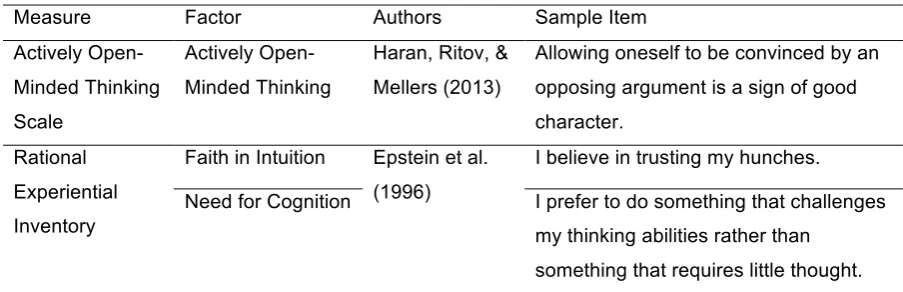
LIST OF TABLES AND FIGURES Table 1. Thinking style self-report measures with sample items ... 10
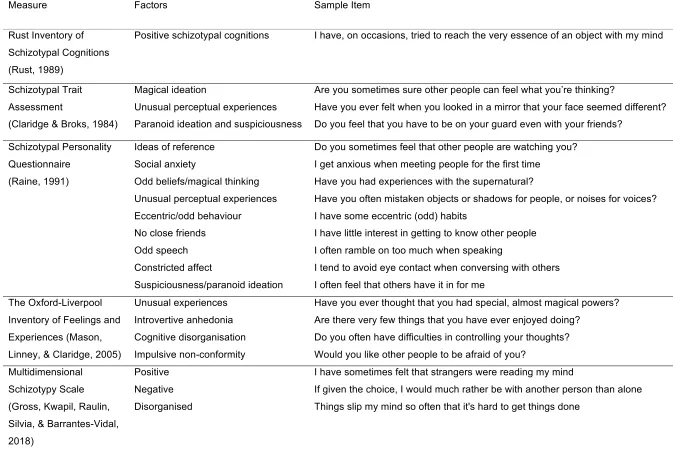
Table 2. Schizotypy self-report measures with sample items ... 14
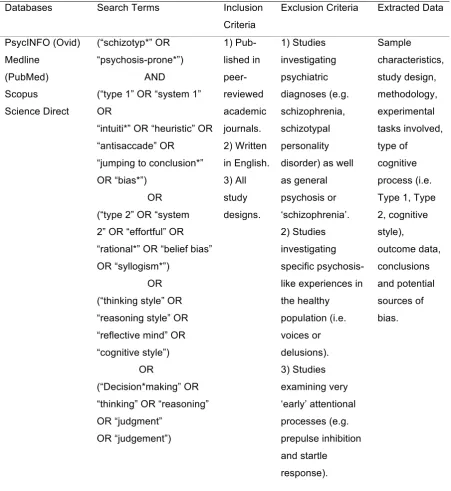
Table 3. Search strategy ... 22
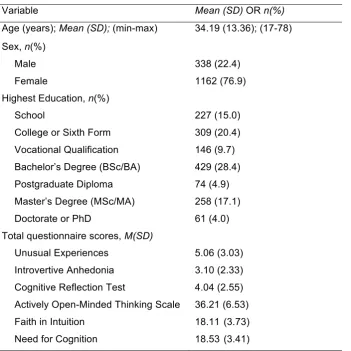
Table 4. Sample characteristics ... 46
Table 5. Skewness and kurtosis ... 48
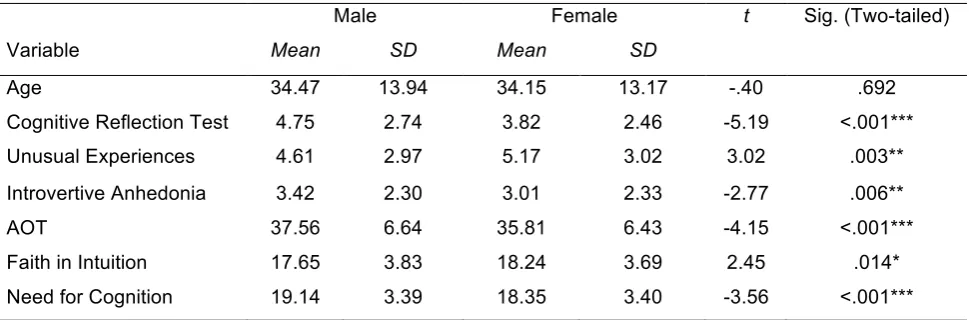
Table 6. T-tests by sex ... 48
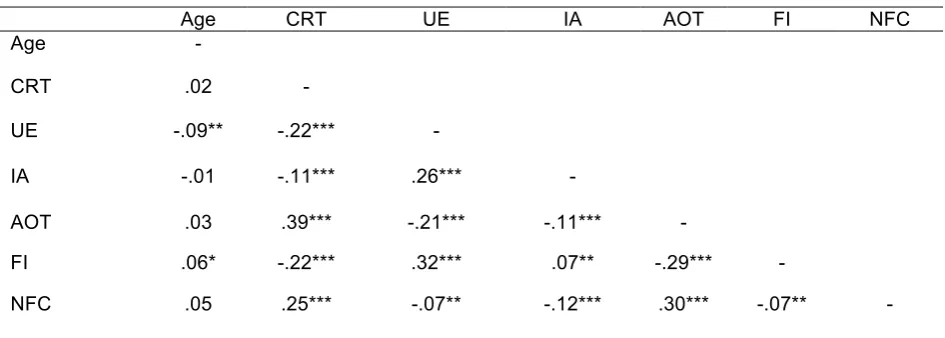
Table 7. Correlation coefficients ... 49
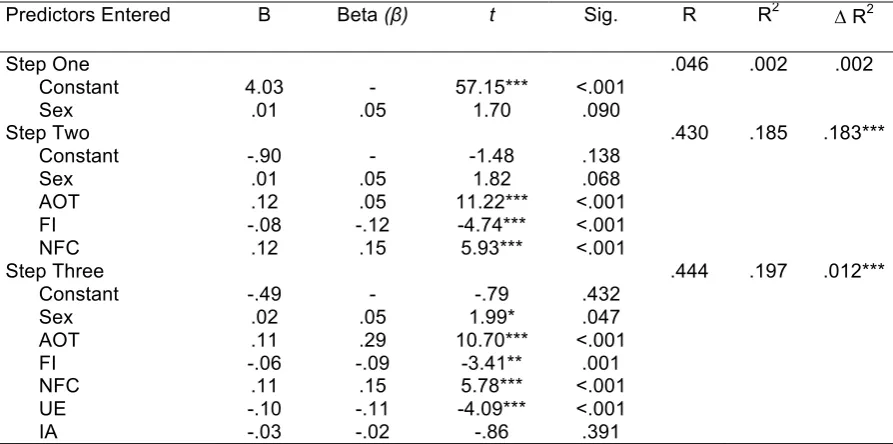
Table 8. Hierarchical multiple regression ... 51
Table 9. Indirect effects of unusual experiences on cognitive reflection ... 55
Table 10. Indirect effects of introvertive anhedonia on cognitive reflection ... 57
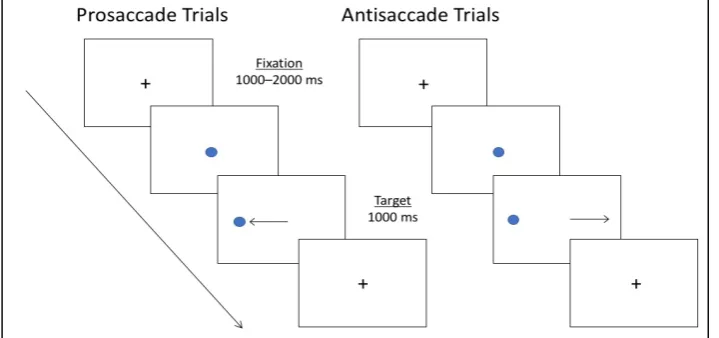
Figure 1. Example antisaccade task ... 5
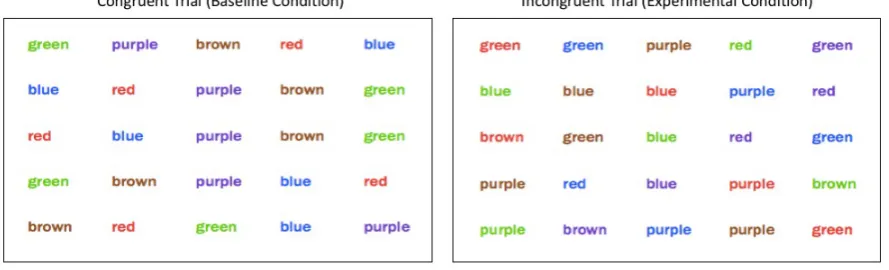
Figure 2. Example Stroop test ... 6
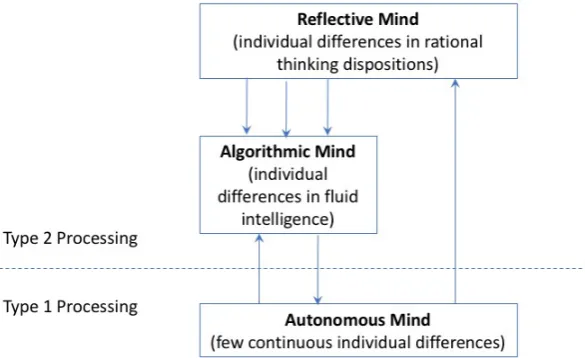
Figure 3. Stanovich’s Tripartite Model of the Mind ... 7
Figure 4. Multiple mediation model for unsual experiences ... 54
CHAPTER ONE INTRODUCTION
1.1. Chapter Overview
This study sought to investigate how individual differences in schizotypy are related to Type 1 (automatic/heuristic) and Type 2 (reflective/effortful) thinking processes. This chapter will first set the scene by providing a general overview of dual process theories of reasoning. This will include reference to terminology, theoretical
variations, the current evidence base related to dual process models, as well as areas of controversy and critiques. The concept of schizotypy will be introduced, and contextualised in relation to continuum models of psychosis-like characteristics and experiences. The current research into psychosis and reasoning will then be
discussed and appraised in a narrative review. This will be followed by a systematic review of the evidence base relating schizotypy to various aspects of reasoning in the context of dual process models (including Type 1 and Type 2 thinking processes, thinking style, cognitive inhibition and cognitive biases). The chapter will conclude by outlining the aims, rationale and research questions of the present study.
1.2. Dual Process Theories of Reasoning
1.2.1. Overview
It is important that theories of reasoning and decision making are first outlined more generally in order that specific predictions can be made regarding the relationship between thinking processes and schizotypy. Dominant models of reasoning tend to come under the umbrella term of ‘dual-process’ theories of higher cognition. Such dual process theories have become ubiquitous within the field of cognitive
processing can be thought of as supporting explicit or ‘conscious’ processing, given that definitions of ‘consciousness’ are somewhat ambiguous (Evans & Frankish, 2009), it may in fact be more accurate to define Type 2 processes as a set of interacting processes, including a flow of information through ‘working memory’ (Evans & Over, 1996). Type 2 processing can therefore be purported to be slower, more deliberative than Type 1, and correlated with cognitive capacity (or working memory; Evans, 2010). Dual process models have recently been popularised as ‘fast and slow thinking’, most notably by Daniel Kahneman (Kahneman, 2011).
Earlier versions of dual process theories asserted that Type 1 and Type 2 processes are each supported by distinct and localised neural architecture, which can be
termed ‘System 1’ and ‘System 2’ (e.g. Evans, 2003; Stanovich, 2005). By these accounts, neural correlates of System 1 are generally thought to be evolutionarily ancient and ubiquitous across animals, supporting implicit, unconscious, or preconscious cognition. System 2, on the other hand, is considered to have
developed relatively recently in our human evolutionary history, supporting the higher level and abstract logical reasoning that only humans are capable of (Evans &
Frankish, 2009).
Theorists supporting System 1/System 2 terminology also concede that System 1 may in fact refer to a multiplicity of different neural systems all supporting more general Type 1 cognitive processes (Evans, 2008), while System 2 may rely on working memory processes to support hypothetical thinking or ‘cognitive decoupling’ (Evans & Stanovich, 2013). Therefore the functional and regional specialisation assumed by the term ‘system’ (particularly in the case of System 1) may be misleading. This is further complicated as the terms Type 1/Type 2 and System 1/System 2 often appear to be (erroneously) used interchangeably throughout the reasoning literature. Keith Stanovich, one of the theorists who initially coined the terms System 1 and System 2, concedes himself that the terms should be
1.2.2. Evidence for Dual Process Theories
Dual process theories of reasoning originally emerged from an observation of conflict between non-logical intuitive biases and logical processes on tasks where people were carrying out deductive logical reasoning tasks (Evans, 1977). Indeed, pre-existing beliefs have consistently been reported to interfere with the ability to reason logically (using Type 2 processes), giving rise to increased errors on such tasks (Evans, Barston, & Pollard, 1983; Klauer, Musch, & Naumer, 2000). This now well-replicated finding is known as the ‘belief bias effect’ (Evans & Curtis-Holmes, 2005) because our pre-existing heuristic beliefs (Type 1 processes) tend to compete with, and interfere with our higher level reasoning processes (Type 2 processes), leading to biased incorrect responses.
The syllogistic reasoning task is a seminal task in which the ‘belief bias effect’ has been clearly demonstrated. Syllogisms involve applying deductive reasoning to arrive at a logical conclusion following two (or more) statements (known as ‘premises’) that are asserted to be true. The conclusion can be logically valid or invalid (that is, either objectively correct or incorrect), but crucially can also be either believable or unbelievable. For example, through effortful and deliberative reasoning it may become clear that the statements “all flowers have petals” and “roses have petals” do not logically lead to the conclusion “roses are flowers” (Markovits & Nantel, 1989), despite the conclusion sentence being semantically believable according to our pre-existing knowledge of the world. However, evidence suggests that people are more likely to endorse conclusions on these reasoning tasks when they are believable (even when they are not logically correct), than when they are unbelievable. This appears to be a robust effect, that has been reported across several behavioural studies (e.g. Evans, Barston, & Pollard, 1983; Evans & Curtis-Holmes, 2005; Klauer, Musch, & Naumer, 2000; Morley, Evans, & Handley, 2004; Neys, 2006; Revlin, Leirer, Yopp, & Yopp, 1980). Interestingly, the belief bias effect has been reported to be less prominent in people with higher cognitive ability
(Stanovich & West, 1997), but only if they are motivated or instructed explicitly to ignore believability of the problem (Evans, Handley, Neilens, Bacon, & Over, 2010).
Neuroimaging studies have also reported neural and functional correlates of
right inferior frontal cortex (IFC) has been reported in people who perform better on syllogistic reasoning problems where prior beliefs and logic conflict (Tsujii &
Watanabe, 2009, 2010). Furthermore, repetitive transcranial magnetic stimulation (rTMS) of the right IFC, which is thought to temporarily disrupt brain activity in targeted areas, has been found to enhance the belief bias effect (Tsujii, Masuda, Akiyama, & Watanabe, 2010). This makes sense as the right IFC is known to play a key role in inhibitory cognitive functions (Aron, Robbins, & Poldrack, 2004) and may suggest that rTMS in this area disrupts the ability to inhibit irrelevant semantic information. This indicates that the right IFC may be a crucial neural substrate implicated in the interaction or conflict between Type 1 and Type 2 processes.
Another study using event-related brain potentials (ERP) also identified greater P500 electrophysiological activity in central-frontal cortical regions on incongruent belief bias syllogisms than either congruent syllogisms or a baseline condition (Luo et al., 2008). Evidence from psychometrics has also found Type 2 processing to be
empirically and strongly linked with cognitive ability, while Type 1 processing has no such association (Evans, 2003). This seems to suggest there are qualitative
differences between the two types of processing.
1.2.3. Cognitive Inhibition
It has been questioned whether cognitive reasoning biases occur through lax monitoring (i.e. simply assuming our intuitions or ‘gut feelings’ are correct) or
whether people in fact realise they are biased (i.e. they are aware of conflict between Type 1 intuition and Type 2 logic), but are not successfully able to block their
tempting intuitive beliefs (De Neys, 2010). The latter explanation implies an impaired ability to inhibit and over-ride a tempting ‘prepotent’, dominant or automatic response (Svedholm-Häkkinen, 2015). Application of cognitive inhibitory control is therefore relevant for understanding reasoning in the context of dual process models.
Recent research supports the idea that effortful and deliberative (Type 2) processing is required to over-ride intuitive responses when reasoning. For example, the belief bias effect tends to increase under increased time pressure (Evans & Curtis-Holmes, 2005). This may arise through greater constraints being placed on cognitive
been reported in situations where burden on executive resources has been
manipulated through use of a secondary distractor task (De Neys, 2006). Here, the effect was robust enough to be ubiquitous across all participants tested, regardless of their natural working memory capacity or cognitive ability. There is also evidence to suggest that a metacognitive ‘feeling of rightness’ or confidence related to one’s intuitive answers may render one’s Type 2 intervention or inhibition of Type 1
processes less likely (Thompson, Prowse Turner, & Pennycook, 2011). Overall, this suggests that Type 2 processes can be used to exert ‘top-down’ inhibitory control of Type 1 responses, and that this in turn may be linked to working memory demands and levels of subjective confidence in one’s intuition.
1.2.4. Behavioural Tasks of Type 2 Control over Type 1 Processes
Behavioural tasks, such as the ‘antisaccade task’ can be used to assess the ability to inhibit a dominant or automatic response. The antisaccade task uses eye-tracking software to monitor the ability to inhibit the reflexive response of looking towards a sudden onset target by asking the subject to make a volitional saccade in the
opposite direction to (i.e. looking away from) the target (see Figure 1). Performance on antisaccade trials can then be compared to the ‘prosaccades’ of the subject (i.e. their performance when following the target). It is thought to be a reliable, relatively objective, sensitive and direct way of measuring the ability to resolve conflict
[image:12.595.73.433.554.723.2]between volitional (Type 2) and reflexive (Type 1) behavioral responses (Ettinger, Kumari, Crawford, & Davis, 2003) and has been used to assess inhibitory control in both clinical and non-clinical samples (Hutton & Ettinger, 2006).
Other tasks, such as the Stroop test (Stroop, 1935), also provide insights into inhibitory control by similarly tapping into this conflict between Type 1 and Type 2 processing. In a typical Stroop task, colour names are presented in incompatibly coloured ink (e.g. the word ‘green’ written in blue ink) and participants are asked to name the colour of the ink rather than reading the word itself (see Figure 2). This involves inhibiting the prepotent and automatic response of simply reading the word and having to consciously over-ride it by looking for and naming the colour instead. An ‘interference effect’ is shown when the time to name the ink colour takes longer than the time taken to read the written word. The straightforward word reading task is therefore administered before the inhibitory task to serve as a baseline level of
[image:13.595.72.517.412.547.2]comparison. Greater interference effects will be identified in people with reduced inhibitory control. Whilst this has been a popular and influential task in cognitive research, it could be argued that the antisaccade task constitutes a purer and more direct measure of inhibition, as it does not tap into language or reading ability, and is also unaffected by colour-blindness.
Figure 2.Example of baseline and experimental conditions on a typical Stroop test
1.2.5. Tripartite Model of the Mind
individual differences in reasoning. Despite including an additional third component, the tripartite model still assumes a distinction between Type 1 and Type 2 thinking processes and is therefore still compatible with traditional dual process theories.
Figure 3.Stanovich’s tripartite model of the mind and related individual differences (based on Evans & Stanovich, 2013)
Stanovich outlined three levels within his tripartite model (Evans & Stanovich, 2013). The ‘Autonomous Mind’ is responsible for Type 1 processing, while the ‘Algorithmic Mind’ and the ‘Reflective Mind’ are both responsible for different levels of Type 2 processing. A hierarchy of control is suggested within the model, where the
Reflective Mind controls the Algorithmic Mind, and both in turn exert control over the Autonomous Mind. The reflective mind comprises higher level cognitive styles, thinking dispositions, personal values and attitudes towards forming and changing beliefs. This might include, for example, the degree to which one thinks extensively about problems before they respond, the amount of information they collect before making decisions, whether they integrate others’ points of view into their decisions or their tendency to adjust their beliefs by factoring in the quality of evidence available to them. Conversely, cognitive ability (or intelligence) is captured by the ‘algorithmic mind’. Variations in intelligence and thinking styles can together exert control over a primed ‘Type 1’ response to determine whether it is either expressed or inhibited. It follows therefore, that according to the model, people who are both higher in
2008). This ability will be depleted when motivation is lacking or when less effortful Type 1 processing is sufficient in order to generate a correct response (Stanovich & West, 1998).
The tripartite model is thought to operate in a ‘default interventionist’ fashion (Evans, 2007). This means that by default most of our responses are fast and relatively autonomous, and they are then intervened upon by Type 2 processes only when cognitive resources (i.e. working memory), motivation and environmental cues allow it. While Stanovich’s model shares attributes with other dual process models (e.g. Kahneman, 2011), there are other theorists who posit that Type 1 and Type 2 processes operate in parallel, known as ‘parallel-competitive’ structures (Barbey & Sloman, 2007; Sloman, 1996; Smith & DeCoster, 2000). However, these parallel-competitive models arguably fail to account for why some processing is much faster and less effortful, and do not explain why Type 2 processes often seem to over-ride a primed Type 1 response.
Individual differences in the reflective mind may allow people to engage preferentially in one system over another. For example, people with a greater reflective thinking disposition demonstrate longer response times on reasoning tasks than low-logic reasoners who are more subject to the ‘belief bias effect’ (Stupple et al., 2011). Theories that do not acknowledge the influence of thinking style may therefore fail to adequately explain the intricacies of human reasoning.
1.2.6. The Cognitive Reflection Test
The ‘Cognitive Reflection Test’ (CRT; Frederick, 2005) is a behavioural measure of cognitive reflection or the ‘reflective mind’, which also taps into cognitive inhibitory control of Type 2 over Type 1 processes. It consists of a series of reasoning problems that assess a person’s ability to inhibit a tempting intuitive (or ‘lure’)
response and then engage in reflective reasoning to calculate an alternative correct response. For example, consider the following problem:
Here, an incorrect and intuitive answer of ‘100’ is primed, and it requires reflective thinking to override this response with the correct response of ‘5’. This highlights how humans are ‘cognitive misers’ in that they default to heuristic processing that is non-demanding and of low computational expense (Toplak, West, & Stanovich, 2014). This may be because Type 2 processing tends to require much greater
concentration and can be experienced as aversive or unpleasant due to its interference with other thoughts and actions. A study by Toplak and colleagues (Toplak, West, & Stanovich, 2011) found that the CRT was a predictor of rational thinking performance on a series of heuristics and biases tests, including belief bias syllogisms. Furthermore, the CRT was found to predict rational thinking, independent of measures of intelligence, executive functioning or thinking disposition (although the CRT is also thought to tap into aspects of intelligence and thinking disposition). The CRT is empirically useful in that it is relatively easy to administer (as it is in questionnaire format) and is a performance based measure of cognitive reflection, rather than relying on self-report.
1.2.7. Self-Report Measures of Thinking Styles
Self-report attitudinal measures have also been developed to assess individual differences in thinking style (which are thought to contribute to Stanovich’s Reflective Mind). A list of such measures with sample items are displayed in Table 1. The validated ‘Actively Open-Minded Thinking Scale’ (Haran, Ritov, & Mellers, 2013) assesses the personal tendency to engage in open, reflective and flexible thinking. Indeed research suggests that individual differences in actively open-minded thinking are a predictor of a person’s ability and tendency to reason about their previously held beliefs (Stanovich & West, 1997). This measure only aims to capture variability in Type 2 processing as it is characterised by flexible cognitive control.
‘analytical-rational’ and the other ‘intuitive-experiential’ and is therefore broadly analogous to dual process models of Type 1 and Type 2 thinking.
Table 1. Self-report measures of thinking styles with sample items Measure Factor Authors Sample Item
Actively Open-Minded Thinking Scale
Actively Open-Minded Thinking
Haran, Ritov, & Mellers (2013)
Allowing oneself to be convinced by an opposing argument is a sign of good character.
Rational Experiential Inventory
Faith in Intuition Epstein et al. (1996)
I believe in trusting my hunches.
Need for Cognition I prefer to do something that challenges my thinking abilities rather than
something that requires little thought.
These scales can be critiqued for failing to clearly delineate type of reasoning from style of reasoning (Evans & Frankish, 2009). However, this is likely an artefact of the inevitable complexity and overlap between these variables, which arguably cannot be clearly teased apart and distinguished using behavioural or self-report measures. It could also be argued that self-report measures may never truly capture thinking style, as by its very nature cognitive style may be subject to bias and a lack of awareness of one’s own preferences. On the other hand, it could also be counter-argued that these measures are intended to be attitudinal measures of personal preference, implying that they are effective in measuring what they claim to measure.
1.2.8. Critiques of Dual Process Theories
While undoubtedly influential in informing current understandings of reasoning and decision making, dual process theories have nevertheless faced criticism. For example, they have been critiqued for being somewhat vague in their theoretical definitions, lacking conceptual clarity and inadequately evidenced (Keren & Schul, 2009). For example, theories often imply that Type 1 processing is biased and error-prone, while Type 2 processing is accurate, logical and normatively rational (Epstein, 1994). The evidence that Type 2 processes can also be subject to biases (e.g.
equally, to assume that logical deliberative judgments cannot be prone to errors (Evans, 2007). However, dual process theorists have admitted that the distinction between Type 1 and Type 2 processes is unlikely to be completely categorical and inflexible (Stanovich, 2013). While the two types are purported to embody two qualitatively distinct forms of processing, they are nevertheless thought to each comprise an amalgamation of cognitive and neural processes (Evans & Stanovich, 2013). Additionally, within dual process models there can be legitimate variations in terms of proposed structure (e.g. default interventionist vs. parallel competitive) and their underlying neurocognitive processes.
Other critics argue that dual process theories are unnecessary in explaining human reasoning as the processes can adequately be explained by unified or ‘single system’ accounts (Kruglanski & Gigerenzer, 2011; Osman, 2004). For example, some theorists posit a continuum of reasoning ranging from intuitive to analytical, without discrete distinctions between the two (e.g. Hammond, 1996). Alternatively, Kruglanski and Gigerenzer (2011) posit that a range of cognitive processes can be described through overarching ‘rule based’ judgments. For example, they suggest that the widely observed ‘belief bias effect’ merely provides evidence for conflict of different types of rules, rather than evidence for dual process theories per se.
However, it could equally be argued that ‘rule’ is such a broad and non-specific term, which could encompass any number of reasoning processes, that even the presence of rule based reasoning would not invalidate the existence of two different types of processing. Furthermore, single system accounts fail to account for why different areas of the brain are have been associated with Type 1 and Type 2 processing respectively (Schneider & Chein, 2003).
Some criticisms of dual process models may have arisen because different types of dual process theories have been grouped together in a way that implies they are conceptually similar, when in fact many possess subtle differences. The incorrect assumption of homogeneity between the theories is known as the ‘clustering problem’ (Evans & Stanovich, 2013). Contrary to what critics may suggest (Kruglanski & Gigerenzer, 2011), the defining features of Type 1 and Type 2
correlated features, which are more likely to occur alongside one another within one type of processing (Evans & Stanovich, 2013). For example, there appears to be consensus that Type 2 processing is slow, sequential and reliant on working
memory, while Type 1 processing is considered fast and relatively automatic (Evans & Stanovich, 2013). Indeed, it could further be argued that within psychology, it is rare that models and theories are considered all-encompassing, deterministic and empirically unfalsifiable, due to the subjective and varied nature of human thought and behaviour. Therefore, this thesis will primarily draw on Stanovich’s tripartite dual process model to inform theory related to reasoning and decision making, and how it relates to schizotypy.
1.3. Schizotypy
1.3.1. Schizotypy and Psychosis
The term ‘schizotypy’ refers to a continuum of psychosis-like characteristics and experiences, ranging from those characterised as less extreme, to the more extreme states that might be observed in clinical psychosis (Ettinger, Meyhöfer, Steffens, Wagner, & Koutsouleris, 2014). Conceptualising psychosis-like experiences on a continuum contrasts with early theories of psychosis which posited that such experiences were ‘all-or nothing’, categorical and observable phenomena (Bleuler, 1950), leading to discrete terms and psychiatric diagnoses such as ‘schizophrenia’. ‘Schizophrenia’ is thought to consist of a range of illness-related ‘symptoms’ that through a checklist approach of assessing the number and combination of symptoms, are used to inform psychiatric diagnosis (American Psychiatric Associaton, 2013). These include ‘positive symptoms’ (delusional beliefs and hallucinations), ‘negative symptoms’ (such as ‘anhedonia’ or reduced ability to experience pleasure, cognitive difficulties and less interest in other people) and disorganised thoughts and speech (Cowen, Harrison, & Burns, 2012). A diagnostic approach remains very dominant in psychiatry today, despite the questionable validity and ethical implications (e.g. stigma and disempowerment) of the
1.3.2. Definition of Schizotypy
Schizotypy is thought to encompass a range of human experiences and traits including unusual beliefs and perceptions, magical thinking, anhedonia and
introversion (Fisher et al., 2004). It has been linked to creativity and artistic pursuits (Burch, Pavelis, Hemsley, & Corr, 2006; O’Reilly, Dunbar, & Bentall, 2001) as well as mating success (Nettle & Clegg, 2006). Authors have conceptualised the constructs that make up schizotypy in slightly different ways and there has been debate about its latent structure. One study using factor analysis suggested that it comprises four primary factors: ‘aberrant perceptions and beliefs’, ‘cognitive disorganisation’, ‘introvertive anhedonia' and ‘asocial behaviour' (Claridge et al., 1996). Elsewhere, ‘introvertive anhedonia’ and ‘cognitive disorganisation’ were acknowledged as two factors, but ‘unusual experiences’ and ‘impulsive non-conformity’ were included as the third and fourth factors (Mason, Claridge, & Jackson, 1995). ‘Disorganised schizotypy’ (or ‘cognitive disorganisation’) is thought to reflect disorganised thoughts and speech, while ‘impulsive conformity’ refers to disinhibited, impulsive or non-conforming behaviour. Others have conceptualised just two reliable dimensions; ‘positive schizotypy’ and ‘negative schizotypy’ (Kwapil, Barrantes-Vidal, & Silvia, 2008). Indeed these do appear to be the most consistently replicated factors (Vollema & van den Bosch, 1995) with a general consensus that schizotypy
comprises at least these two dimensions (Fisher et al., 2004). ‘Unusual experiences’ and ‘introvertive anhedonia’ can be considered to reflect central aspects of positive and negative schizotypy respectively, which may in turn be related to positive and negative ‘symptoms’ in clinical psychosis. However, a recent study found that while higher ‘negative’ and ‘disorganised’ aspects of schizotypy were predictive of poorer mental health, there was no relation between ‘positive’ schizotypy and mental health (Ödéhn & Goulding, in press).
1.3.3. Measures of Schizotypy
Several psychometric measures have been developed to capture individual
Table 2. Self-report measures of schizotypy with sample items
Measure Factors Sample Item
Rust Inventory of Schizotypal Cognitions (Rust, 1989)
Positive schizotypal cognitions I have, on occasions, tried to reach the very essence of an object with my mind
Schizotypal Trait Assessment
(Claridge & Broks, 1984)
Magical ideation
Unusual perceptual experiences Paranoid ideation and suspiciousness
Are you sometimes sure other people can feel what you’re thinking?
Have you ever felt when you looked in a mirror that your face seemed different? Do you feel that you have to be on your guard even with your friends?
Schizotypal Personality Questionnaire
(Raine, 1991)
Ideas of reference Social anxiety
Odd beliefs/magical thinking Unusual perceptual experiences Eccentric/odd behaviour No close friends
Odd speech Constricted affect
Suspiciousness/paranoid ideation
Do you sometimes feel that other people are watching you? I get anxious when meeting people for the first time
Have you had experiences with the supernatural?
Have you often mistaken objects or shadows for people, or noises for voices? I have some eccentric (odd) habits
I have little interest in getting to know other people I often ramble on too much when speaking
I tend to avoid eye contact when conversing with others I often feel that others have it in for me
The Oxford-Liverpool Inventory of Feelings and Experiences (Mason, Linney, & Claridge, 2005)
Unusual experiences Introvertive anhedonia Cognitive disorganisation Impulsive non-conformity
Have you ever thought that you had special, almost magical powers? Are there very few things that you have ever enjoyed doing?
Do you often have difficulties in controlling your thoughts? Would you like other people to be afraid of you?
Multidimensional Schizotypy Scale (Gross, Kwapil, Raulin, Silvia, & Barrantes-Vidal, 2018)
Positive Negative Disorganised
I have sometimes felt that strangers were reading my mind
The O-LIFE was, until recently, based on the largest dataset of schizotypal
measures. It is also firmly established as a research tool having been widely used in studies, with favourable psychometric properties (Mason, Linney, & Claridge, 2005). It comprises four factors including Unusual Experiences, Introvertive Anhedonia, Cognitive Disorganisation, and Impulsive Non-Conformity. Very recently and
subsequent to data collection in the present study, the ‘Multidimensional Schizotypy Scale’ was created based on a large online sample (n = 6265). The measure taps into positive, negative and disorganised aspects of schizotypy (Gross et al., 2018). This scale also claims to have good psychometric properties, including reliability and high item-scale correlations (Kwapil, Gross, Silvia, Raulin, & Barrantes-Vidal, 2018), but does not yet have an established evidence base.
1.3.4. Why Investigate Schizotypy?
In the reasoning literature, there is a much larger evidence base around
‘schizophrenia’ and psychosis or particular psychosis-like experiences (e.g. hearing voices or delusional beliefs) than there is in relation to schizotypy. This may be because diagnostic categories and ‘symptoms’ are considered more ‘objective’ and the findings seemingly more ‘groundbreaking’ within the scientific or medical
research into schizotypy is arguably better able to capture heterogeneity and multi-dimensional features (Barrantes-Vidal, Grant, & Kwapil, 2015), as opposed to having to fit into a discrete and narrowly-defined diagnostic category.
Nevertheless, one could still argue that the concept of ‘schizotypy’ also relies on reductionist terminology as a means of capturing rich, unique and individual human experiences. Therefore, it must be acknowledged that there are also limitations of using continuum models of psychosis, and of assuming that schizotypy itself (and its underlying factors) are observable, reliable and valid constructs. While schizotypy has been criticised for being just another means of categorising psychosis-like experiences (Rawlings, Williams, Haslam, & Claridge, 2008), the current study aims to regard schizotypy as an individual difference that varies across the population like any other. It is also hoped that a normalising and continuum view of such
experiences will discourage any negative, pathologising or deterministic connotations related to either psychosis or schizotypy.
1.4. Reasoning in Psychosis
This section will briefly outline some of the key findings, debates and areas of controversy within the psychosis and reasoning literature. Until recently, dual process theories had not been integrated into psychosis-related frameworks. However, this has been attempted more recently, but only in relation to delusional beliefs (Ward & Garety, in press; Ward, Peters, Jackson, Day, & Garety, 2018). In these studies, the authors have posited that a combination of over-reliance on Type 1 reasoning processes alongside a lower propensity to use Type 2 reflective
reasoning processes may be implicated in the maintenance of unusual or distressing beliefs. With research overwhelmingly focusing on ‘positive symptoms’, there
appears to be less of an established evidence base into other aspects of psychosis and their relationship with decision making. This section will not discuss research related to schizotypy, as this will be covered in greater depth in the systematic literature review section that follows.
1.4.1. Type 1 Processing
hastier decisions and/or with greater conviction. The JTC bias has typically been assessed using a behavioural task called ‘the Beads Task’ (Huq, Garety, & Hemsley, 1988). This task requires participants to engage in probabilistic reasoning based on two jars which contain complimentary ratios of coloured beads. After the jars are hidden from view, beads are drawn one-by-one from one of the jars. Participants are then required to estimate which of the jars the bead is being drawn from and the task is terminated once a final decision is made. This task can assess the degree of
certainty with which decisions are made, as well as how rapidly a conclusion is reached (i.e. the number of ‘draws to a decision’). A higher degree of certainty and greater speed of arriving at a decision is thought to be indicative of a tendency to make decisions based on little evidence, or ‘jumping to conclusions’.
Several studies have suggested that people with psychosis demonstrate a greater JTC bias than non-clinical subjects (Garety, Kuipers, & Fowler, 2001; So, Siu, Wong, Chan, & Garety, 2016). In the context of dual process models, this can be
considered analogous to making decisions based on intuition or ‘gut feeling’ i.e. a Type 1 process. Evidence from two independent meta-analyses also suggests that the JTC bias is more prominent in people with psychosis than in controls, with
medium to large effect sizes (Hedge’s g = 0.53, Dudley, Taylor, & Wickham, 2015; g = 0.71, McLean, Mattiske, & Balzan, 2017). These studies also found evidence for small to medium effects of increased JTC bias in people with delusions in psychosis compared with people without delusions in psychosis (Hedge's g = 0.29, Dudley et al., 2015; g = 0.33, McLean et al., 2017). Another meta-analysis by Ross and colleagues (Ross, McKay, Coltheart, & Langdon, 2015) found an association
between delusions and the JTC bias in ‘delusion-prone’ samples, with a small effect size (r = 0.10). This may indicate that the JTC bias is associated specifically with delusions (rather than psychosis more generally) and that the effect is more
rather than psychotic experiences that are non-distressing or absent from paranoia. However, another study reported a comparable JTC effect across clinical and non-clinical voice hearers, although non-clinical voice hearers scored more highly on
‘emotional reasoning’ than non-clinical voice hearers (Daalman, Sommer, Derks, & Peters, 2013). Notably, Balzan, Delfabbro, Galletly and Woodward (2012) have discussed some limitations related to task comprehension of the ‘beads task’. They have suggested that only the ‘premature decision’ component, but not the ‘over-adjustment’ component (i.e. radically altering beliefs in the face of little disconfirming evidence) appears to be a genuine feature of psychosis. Nevertheless, the current evidence appears to implicate greater reliance on Type 1 or intuitive reasoning in psychosis.
1.4.2. Type 2 Processing
As might be expected from an apparentincreased tendency to engage in intuitive Type 1 processing, the literature seems to indicate that people with psychosis are correspondingly less adept at Type 2 processing (e.g. Mujica-Parodi, Greenberg, Bilder, & Malaspina, 2001). For example, people with a diagnosis of ‘schizophrenia’ (e.g. Garety & Hemsley, 1997) or those with persecutory ideation (Freeman, Evans, & Lister, 2012) have been found to reason lesslogically than non-clinical controls. Furthermore, poorer performance on deductive reasoning tasks is also reportedly associated with greater functional activity in brain areas subserving logical reasoning abilities in medication-naïve participants diagnosed with schizophrenia (Ramsey et al., 2002). This excessive recruitment of reasoning-related brain areas may imply poorer cognitive efficiency when carrying out logical or Type 2 reasoning tasks, potentially suggesting this type of reasoning is more challenging for people with psychosis.
reasoning as control subjects, potentially suggesting that Type 2 reasoning (or a more reflective thinking style) may be protective in avoiding distress or paranoia.
On the other hand, Owen, Cutting, & David (2007) interestingly found that theoretical rationality was actually enhanced in people diagnosed with schizophrenia compared with controls. Using deductive reasoning problems (belief bias syllogisms), they found that people with psychosis reasoned more logically and accurately than controls when logic conflicted with common-sense. However, the sample size of the clinical group was relatively small (n = 17) and all participants were taking anti-psychotic medication, potentially confounding the results. Nevertheless, people diagnosed with schizophrenia are also reported to be more likely to misinterpret metaphorical or abstract meanings (e.g. proverbs) according to their concrete or literal meanings (Heinz, 2014). This may imply a reduced propensity to be distracted by conflicting contextual information when reasoning in a logical way. These
discrepant findings need to be investigated further, whilst also considering the additional influence of inhibitory control, ‘cognitive style’ or attitudes about thinking, which may complicate the picture.
1.4.3. Inhibitory Control
reduced working memory capacity (either through natural cognitive ability or increased cognitive ‘load’) is thought to render Type 2 processing less effective at overriding intuitive responses. A study by Ettinger et al. (2017) reported task-specific cognitive inhibitory impairments in schizophrenia, which were confined to the Stroop and antisaccade tasks. Interestingly, there was no evidence of impairments on other tasks pertaining to cognitive inhibition, potentially alluding to a varied or
non-generalised profile of cognitive inhibitory processes in psychosis.
1.4.4. Thinking Style
A study by Freeman and colleagues (Freeman, Lister, & Evans, 2014) used the REI to assess self-reported reasoning styles across people with persecutory delusions (n
= 30) and a large sample of controls (n = 1000). Interestingly, not only were analytic reasoning scores lower in the clinical group (an effect that was expected), but intuitive thinking processes were unexpectedly also found to be lower within this group. The authors posited that this could be an artefact of the self-report nature of the measure, and people potentially not being metacognitively or objectively aware of their own thinking styles or preferences. Furthermore, the clinical group was small and although they were deemed ‘medically stable’, medication and other mental health difficulties might have confounded the findings. Lastly, persecutory delusions reflects quite a specific aspect of psychosis, and the picture may differ across other aspects of psychosis.
A recent literature review by Ward and Garety (in press) highlighted how, for people with delusional beliefs, there may be a cognitive disposition towards lower belief flexibility. Belief flexibility refers to the ability to ‘decouple’ or distance oneself from one’s beliefs in order to reflect on alternatives or the prospect of being mistaken in one’s beliefs. This clearly shares similarities with cognitive style or Stanovich’s ‘Reflective Mind’.Another study consisting of a sample of 41 adults with a
schizophrenia diagnosis reported that lower self-reflectivity was associated with less accurate appraisals of one’s own work performance (Luedtke et al., 2012).
evidence (BADE). This refers to a tendency to be less likely to integrate new evidence that disconfirms one’s existing beliefs. This finding has also been
corroborated in a recent meta-analysis, which identified greater BADE in people with psychosis vs. healthy controls (g = 0.33) as well as in people with delusions in
psychosis vs. people without delusions in psychosis (g = 0.31), with small to medium effect sizes (McLean et al., 2017). This seems to make intuitive sense, as delusions tend to persist even in the light of novel, falsifying or objectively conflicting evidence (Broyd, Balzan, Woodward, & Allen, 2017). While some studies have suggested that BADE is not related to ‘negative symptoms’ (e.g. Juárez-Ramos et al., 2014), other studies provide preliminary evidence for a potential association (Eisenacher et al., 2016). The BADE seems to draw parallels with aspects of the ‘Actively Open-Minded Thinking Scale’, which includes items tapping into the propensity to consider and revise one’s established beliefs in response to new or conflicting evidence.
1.5. Reasoning in Schizotypy
For the systematic literature review into reasoning processes in schizotypy, a search was carried out according to the Reporting Items for Systematic Reviews and Meta Analyses (PRISMA) guidelines (Moher, Liberati, Tetzlaff, & Altman, 2009). Searches, paper selection and data extraction was performed by the author and verified by the thesis supervisor.
1.5.1. Search Strategy
The search strategy used to identify relevant literature for the present study is
displayed in Table 3. Electronic databases were searched from when online records began up until July 2017. Another keyword search (using the term “schizotypy”) was carried out in Scopus in April 2018 to identify any additional recent and relevant articles. Articles published after the initial search were also identified through email alerts created through Ebsco and Scopus based on the search terms specified below.
review articles were also undertaken (see Appendix A for literature search flowchart).
Table 3. Search strategy for systematic literature review
Databases Search Terms Inclusion Criteria
Exclusion Criteria Extracted Data
PsycINFO (Ovid) Medline (PubMed) Scopus Science Direct (“schizotyp*” OR “psychosis-prone*”) AND
(“type 1” OR “system 1” OR
“intuiti*” OR “heuristic” OR “antisaccade” OR
“jumping to conclusion*” OR “bias*”)
OR (“type 2” OR “system 2” OR “effortful” OR “rational*” OR “belief bias” OR “syllogism*”)
OR (“thinking style” OR “reasoning style” OR “reflective mind” OR “cognitive style”)
OR
(“Decision*making” OR “thinking” OR “reasoning” OR “judgment” OR “judgement”) 1) Pub-lished in peer-reviewed academic journals. 2) Written in English. 3) All study designs. 1) Studies investigating psychiatric diagnoses (e.g. schizophrenia, schizotypal personality disorder) as well as general psychosis or ‘schizophrenia’. 2) Studies investigating specific psychosis-like experiences in the healthy population (i.e. voices or delusions). 3) Studies examining very ‘early’ attentional processes (e.g. prepulse inhibition and startle response). Sample characteristics, study design, methodology, experimental tasks involved, type of cognitive process (i.e. Type 1, Type 2, cognitive style), outcome data, conclusions and potential sources of bias.
1.5.2. Type 1 Reasoning
2014; Tsakanikos & Reed, 2005a, 2005b) compared to their low-scoring counterparts. ‘Jumping to perceptions’ refers to a bias towards believing that
ambiguous perceptual experiences are real and external (Colbert, Peters, & Garety, 2010). These studies typically assessed automatic detection of fast moving words (or non-words) presented more quickly than could be captured by a deliberative
response bias, and found a higher number of ‘false positive’ (or false alarm)
perceptions in schizotypy. These findings may make intuitive sense in the context of hallucinatory experiences potentially being linked to a stimulus that is perceived in the absence of an objectively experienced stimulus. Another study which assessed reaction time of visual cueing similarly revealed impairments on the jumping to
perceptions task both in negative schizotypy (in males) and impulsive non-conformity (more so in females) (Mason, Booth, & Olivers, 2004). This however constitutes a less pure measure of visual attention than eye tracking tasks due to the reliance on motor control and the subject having to make a response on a computer.
Similarly, intuitive thinking (assessed by the REI, Pacini & Epstein, 1999) has also been associated with unusual beliefs (Boden, Berenbaum, & Topper, 2012) as well as both paranormal beliefs and schizotypy (disorganised thinking and cognitive-perceptual domains) in teachers (Genovese, 2005). Another study by Wolfradt et al. (1999) conversely found that the introvertive aspects of schizotypy may be
associated with greater reliance on intuitive thinking, while participants with a preference for both intuitive and rational thinking styles scored highly on cognitive-perceptual aspects of schizotypy. However, the study was correlational, had small effect sizes and was based purely on self-report. Nevertheless, there appears to be some evidence that greater reliance on intuitive/automatic (i.e. Type 1) thinking may be more common amongst those with higher schizotypy scores.
1.5.3. Cognitive Inhibition
As mentioned above, research into cognitive inhibition can shed light on how effectively Type 2 processes can intervene on automatic and intuitive Type 1
Positive schizotypy has been associated with impaired top-down inhibitory processing on a perceptual task (Bullen, Hemsley, & Dixon, 1987) as well as impaired inhibition on a cognitive task (Peters et al., 1994). Using another task tapping into inhibitory control, the ‘Cued Letter Comparison Task’, Steel, Hemsley, and Pickering (2007) also found that positive schizotypy was associated with lower
inhibition when responding to unexpected targets in the context of a previous letter cue. Another study by Migo et al. (2006) also reported a negative association between conditioned inhibition and schizotypy in a university sample. However, a study by Kerns (2006) using confirmatory factor analysis found that only
‘disorganised’ schizotypy (reflecting disorganised thoughts and speech) was
associated with impaired pre-potent inhibition assessed through three tasks tapping into cognitive control, including the Stroop task.
In another study using the Stroop paradigm (Stroop, 1935), Louise et al. (2015) found that impulsive non-conformity, cognitive disorganisation and unusual
experiences were all related to impairments on the task, while introvertive anhedonia was not. Beech, Baylis, Smithson, & Claridge (1989) also reported a significant Stroop effect in higher general schizotypy, but only for items presented for a short duration (≤100ms). Conversely, three other studies reported no association between Stroop interference and general schizotypy (Green & Williams, 1999; Kaplan & Lubow, 2011) and social anhedonia (Martin & Kerns, 2010). These discrepant findings may reflect impaired inhibition only at more automatic stages of information processing, which may suggest that tasks such as the antisaccade task are better able to detect these processes. It may also be that different subtypes of schizotypy (rather than general schizotypy) are related to inhibition. For example, in a recent study by Ettinger et al. (2017), a range of tasks tapping into cognitive inhibition were administered and a variable performance profile was identified across the tasks according to different domains of schizotypy. They found that negative and
disorganised schizotypy were both associated with poorer performance on the ‘stop signal’ task, and disorganised schizotypy was also associated with increased errors on the ‘Simon task’. While positive schizotypy was associated with poorer
antisaccade performance, there were no significant associations between any
cognitive inhibition (the ‘flanker’ and ‘go/no-go’ task). However, a recent meta-analysis found no evidence of cognitive inhibition in either positive, negative or overall schizotypy (Steffens, Meyhöfer, Fassbender, Ettinger, & Kambeitz, in press).
1.5.4. Antisaccades
Sixteen papers investigating antisaccades in relation to schizotypy met criteria for inclusion in the review. Antisaccade tasks assess the ability to apply inhibitory cognitive control, by requiring participants to make a saccade in the opposite
direction to a visual target, when the temptation is to visually follow the target. A recent study by Koychev et al. (2016) investigated antisaccades in those with low, medium and high schizotypy scores and found a graded performance between high schizotypy (with the most impaired performance) and low schizotypy (with the least impaired performance). This graded performance suggests that antisaccade errors may be directly related to individual differences in schizotypy and related inhibitory processes.
A study by Schmechtig et al. (2013) also reported impaired antisaccade performance in schizotypy. While the study did not investigate different features of schizotypy separately, several other studies have reported an association between positive schizotypy and antisaccades (Aichert, Williams, Möller, Kumari, & Ettinger, 2012; Ettinger et al., 2005, 2017; Gooding, 1999; Holahan & O’Driscoll, 2005; Larrison, Ferrante, Briand, & Sereno, 2000; O’Driscoll, Lenzenweger, & Holzman, 1998). Ettinger et al. (2005) found no evidence of antisaccade deficits in negative
schizotypy and two other studies reported no association between high schizotypy and antisaccade errors (Klein, Brügner, Foerster, Müller, & Schweickhardt, 2000; Meyhöfer et al., 2017).
Gooding, Shea, & Matts (2005) on the other hand, reported antisaccade deficits in negative schizotypy (social anhedonia) and no effect in positive schizotypy. Gooding (1999) reported increased antisaccade errors in both positive and negative
schizotypy, although a more robust effect was reported for positive schizotypy (p
conscripts of the Greek Air Force. Different outcomes across studies could reflect use of different questionnaire measures of schizotypy, as well as different study designs, including correlational measures versus testing those at either extreme of the schizotypy spectrum.
On balance, it seems that impaired antisaccade performance (indicative of inhibitory deficits) may be a genuine feature of schizotypy, perhaps most notably for positive schizotypy. In addition, evidence suggests that saccadic performance appears not to be confounded by mood (i.e. anxiety, depression or neuroticism) (Ettinger et al., 2005; Smyrnis et al., 2004), making it more likely that it taps into schizotypy directly. Furthermore, behavioural antisaccade deficits appear to have underlying
neurobiological correlates including reduced function of the thalamus, cerebellum, visual cortex and putamen; areas which are thought to also be affected in people diagnosed with ‘schizophrenia’ (Aichert et al., 2012). Further, Gooding and
colleagues (2005) reported temporal stability of antisaccade performance over time, in a relatively large sample of 121 participants, suggesting that, at the more extreme end, it may potentially identify a trait association with psychosis.
A recent systematic review by Myles and colleagues (2017) appraised the existing evidence base regarding eye movements in both people high in schizotypy and biological relatives of people with a ‘schizophrenia’ diagnosis. They found a robust behavioural effect for increased anti-saccade errors in high schizotypy, although effect sizes generally appeared to be smaller than in first-degree relatives. Along with another narrative review by Wan and colleagues (Wan, Thomas, Pisipati, Jarvis, & Boutros, 2017), this lends further support to the hypothesis that increased
antisaccade error rates, indicative of impaired inhibitory control, may be a feature of schizotypy.
1.5.5. Jumping to Conclusions
the aforementioned methodological limitations related to the classic beads task, such as issues around task miscomprehension and reliability (Balzan et al., 2012),
comparable outcomes have been reported on variations of the task. For example, Moritz et al. (2017) recently identified a JTC bias on both a variant of the classic beads task as well as a similar but arguably more straightforward task, ‘the box task’. The box task (Andreou et al., 2015; Clark, Robbins, Ersche, & Sahakian, 2006) requires subjects to estimate which of two colours of balls will be displayed more frequently in a matrix of grey boxes. Participants are told that one colour is always in the majority, and that they are free to make their decision after clicking as many boxes as they wish, serving to reveal the colours of the balls beneath. This approach ensures that the total amount of available evidence is clear to the participant as they can see the number of remaining boxes in the matrix. This differs from the ‘bead task’, in which the remaining beads are always hidden from the subject’s view, thereby increasing potential ambiguity of whether it is the evidence related to the
current bead or the sequence of beads that the participant should evaluate.
Highly ‘psychosis-prone’ individuals showed a particularly strong JTC bias (as evidenced by decreased decision thresholds) on the box task relative to low scorers (Moritz et al., 2017). The authors suggested that this appears to support a ‘liberal acceptance’ account of reasoning, whereby lower thresholds for making decisions (i.e. making decisions based on less evidence) causes the reasoner to feel
overconfident in their judgment. The study design involved a large population based approach, thereby providing evidence for the JTC bias via a mechanism of liberal acceptance in a large sample of 80 high schizotypy scorers and 1,150 low
schizotypy scorers, which was not drawn from a university sample as is often the case. This JTC bias was also found to be exaggerated in a similar version with added time pressure. Furthermore, the box task appeared to produce a more robust effect than the classic variation of the beads task, suggesting that the box task may be a more sensitive measure of JTC type biases. Furthermore, no such JTC bias effect was identified when comparing people who scored high vs. low on depression or ‘negative symptoms’. This suggests that the JTC bias may be a feature of
Moritz et al., (2012) also reported an association between JTC bias and paranoia within another large sample of 1899 participants from the general population. While paranoia may draw parallels with positive schizotypy, it could be argued it constitutes quite a specific form of positive schizotypy, and may therefore tap into delusion-like phenomenology rather than schizotypy per se. Indeed, the study found that hasty decision making was associated with paranoia specifically, but was not associated with general ‘suspiciousness’. Brugger and Graves (1997) found that people scoring highly in paranormal beliefs (assessed through the Magical Ideation Scale) tested fewer hypotheses during a problem-solving task and endorsed hypotheses more readily than low scorers, which seems consistent with a ‘liberal acceptance’ account of reasoning.
Another study by Sellen et al. (2005) administered the O-LIFE questionnaire to participants and investigated the JTC bias in relation to the four underlying schizotypy dimensions (unusual experiences, introvertive anhedonia, impulsive nonconformity, and cognitive disorganisation). A regression analysis revealed a significant JTC effect for those with high scores in impulsive non-conformity, while there was no significant effect for the other dimensions. As this seemingly conflicts with findings from other studies, this could be an artifact of the study design, in which participants were not selected on the basis of having schizotypy scores at extreme ends of the continuum, meaning that differences may not have been prominent enough to be detected. However, a study by Juárez-Ramos et al. (2014) that
adopted this approach, also reported no significant differences between high and low schizotypy across a number of measures including JTC, BADE and feedback
sensitivity (whether someone is able to use information to change an incorrect interpretation). However the study included just 15 participants per group, and may therefore have been underpowered to detect modest effect sizes.
1.5.6. Bias Against Disconfirmatory Evidence
plausibility of four interpretations of a scenario as more evidence is progressively revealed to produce a ‘mini story’. Participants with high scores in schizotypy were found to be more resistant to revising their beliefs in the light of new disambiguating evidence. A more recent study in a Spanish sample (Orenes, Navarrete, Beltrán, & Santamaría, 2012) reported no significant BADE effect in a traditional picture-based version of the task (Moritz & Woodward, 2006), but did identify an effect in a more sensitive version in which reaction times were the outcome measure of interest, as opposed to plausibility ratings. This may reflect the need to utilise more sensitive measures in schizotypy compared with psychosis or clinical samples, in which the effect sizes are likely to be larger and more detectable. Furthermore, the scores in the ‘Unusual Experiences’ domain which are often examined and reported within schizotypy research were relatively low in the present sample, and should therefore be interpreted cautiously.
1.5.7. Hypersalience of Evidence-Hypothesis Matches
There is also preliminary evidence to suggest that another confirmation bias, named a ‘hypersalience of evidence-hypothesis matches’ may be a feature of schizotypy. Specifically, people with delusions or ‘delusion-prone’ people have found to assign excessive weight to evidence which matches their existing hypotheses (Balzan et al., 2013a, 2013b), while considering non-matching information in a similar way to
controls. However, this bias has not yet been investigated in relation to schizotypy more generally, and may tap into reasoning related to delusions specifically.
On balance, there is some evidence for the presence of data-gathering biases, such as JTC, BADE and hypersalience of evidence-hypothesis matches in schizotypy, potentially indicating greater reliance on intuitive Type 1 thinking processes (JTC) or a less flexible, open-minded reasoning style (BADE and hypersalience of evidence-hypothesis matches). However, as might be expected, it appears the effects are less extreme than in people with psychosis or clinical samples. Therefore these effects may not be identified without sufficiently large samples or sensitive tasks.
1.5.8. Logical Reasoning
search identified five relevant papers, across which the findings were somewhat mixed. In a large sample of 254 participants, Dagnall, Denovan, Drinkwater, Parker, & Clough (2016) found that people with high scores on the schizotypy dimension of Unusual Experiences performed more poorly on reasoning problems involving statistical bias (perception of randomness and conjunction fallacy). However, the association was relatively weak and the relationship was found to be mediated by paranormal beliefs. This finding was confirmed more recently by the same research group who found that schizotypy had a negligible effect on reasoning performance using the same problems, perception of randomness and conjunction fallacy
(Denovan, Dagnall, Drinkwater, & Parker, 2018). Lower levels of paranormal beliefs, however, were associated with superior performance on perception of randomness problems, but not conjunction problems. This suggests that presence of paranormal beliefs, as opposed to schizotypy, may be associated with poorer reasoning on such statistical bias reasoning problems.
Conversely, a study by Karimi, Windmann, Güntürkün, & Abraham (2007) interestingly reported enhanced reasoning in people with higher scores in schizotypy. The study looked at two different types of reasoning; ‘incremental thinking’ (involving incremental and goal-related thinking), and what the authors termed ‘insight problem solving’ (where the solutions relied on creative or divergent thinking). As predicted by the research team, those with higher scores in general schizotypy were found to be better at insight or creative problem solving than their lower scoring counterparts, but were no better on solving focused ‘incremental’ problems. This ability to acquire new or original perspectives may indicate that people high in schizotypy are less biased by context when reasoning and more able to think laterally and creatively. This may suggest that high schizotypy scorers may show variation in their reasoning profile that cannot simply be categorised into Type 1 and Type 2 processes. However, this finding may require further investigation as a more recent study reported no evidence for an association between insight problem solving and schizotypy (Webb, Little, Cropper, & Roze, 2017).
found to be associated with impaired ability to make conditional inferences. No effects were found for the remaining schizotypy dimensions of introvertive anhedonia, unusual experiences and cognitive disorganisation. Conversely, in a relatively large sample of 205 college students, Tsakanikos (2004) found that all four O-LIFE domains were associated with impairments when performing logical
reasoning problems, although only negative schizotypy (introvertive anhedonia) was found to be significant after correcting for random guessing. These discrepancies may reflect variation in reasoning tasks, samples and schizotypy measures.
1.5.9. Context
Seven studies investigating contextual processing in schizotypy were deemed to be eligible for inclusion in this review. Four studies investigated the ability to integrate contextual semantic information in a top-down way in schizotypy. For example, using an Event Related Potential (ERP) approach, Del Goleto, Kostova, & Blanchet (2015) found that high schizotypy scorers did not make efficient use of semantic context while they were read mini stories ending with either a literal, ironic or incompatible statement. Unlike their low schizotypy-scoring counterparts, they did not show the changes in N400 or P600 amplitudes indicative of incompatible or ironic endings respectively. This echoes the findings of another ERP study by Kiang and Kutas, 2005) in which N400 amplitudes in overall schizotypy similarly suggested a reduced
tendency to use context to inhibit unrelated information. Another study by de Loye, Beaucousin, Bohec, Blanchet and Kostova (2013) found that people with higher general schizotypy scores showed less ‘surprise’ as demonstrated through the N400 amplitude when a semantically unexpected word was used to complete a sentence. However, another study by Humphrey, Bryson, and Grimshaw (2010) found no relation between positive schizotypy (the only dimension they looked at) and metaphor processing in a behavioural task. Perhaps this is because behavioural measures are less sensitive to capturing these differences than neuroimaging measures.