Department o f Management
London School o f Economics and Political Science
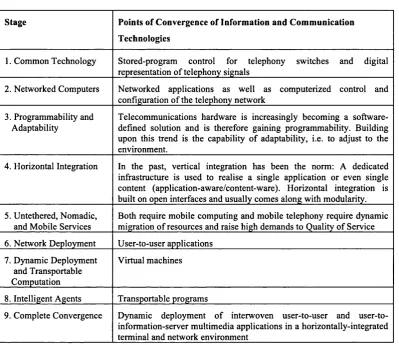
Houghton Street, London WC2A 2AE, United Kingdom
B
V
Unfolding the Convergence Paradox:
The Case of Mobile Voice-over-IP in the UK
JAN DIRK HERZHOFF
A Dissertation submitted to the Department of Management
(Information Systems and Innovation Group)
of the London School of Economics and Political Science
UMI Number: U615B39
All rights reserved
INFORMATION TO ALL USERS
The quality of this reproduction is dependent upon the quality of the copy submitted.
In the unlikely event that the author did not send a complete manuscript and there are missing pages, these will be noted. Also, if material had to be removed,
a note will indicate the deletion.
Dissertation Publishing
UMI U615BB9
Published by ProQuest LLC 2014. Copyright in the Dissertation held by the Author. Microform Edition © ProQuest LLC.
All rights reserved. This work is protected against unauthorized copying under Title 17, United States Code.
ProQuest LLC
789 East Eisenhower Parkway P.O. Box 1346
Declaration
I certify that the thesis I have presented for examination for the MPhil/PhD degree of the London School of Economics and Political Science is solely my own work other than where I have clearly indicated that it is the work of others (in which case the extent of any work carried out jointly by me and any other person is clearly identified in it).
The copyright of this thesis rests with the author. Quotation from it is permitted, provided that full acknowledgement is made. This thesis may not be reproduced without the prior written consent of the author.
Abstract
The notion of digital and in particular Information and Communication Technology (ICT) convergence has, over the past 40 years, been in the centre of many technological discourses in different functional systems of society: from the economic and mass media to the legal and political systems. Recently, a new convergence discourse has emerged around next-generation wireless infrastructures and services. One manifestation can be seen in discussion of the mobile Internet, and in particular of new converging services connecting mobile telephony networks to the Internet. Contrary to the prominence of the topic in other domains, the Information Systems community has relegated the notion of ICT convergence to the sidelines. Only recently have there been calls to include convergence as one of the drivers for the design of new mobile infrastructures and services. However, a systematic analysis of the idea of ICT convergence is still missing. Thus, based on an extensive literature review, this dissertation aims firstly to understand if there is space for a more theoretical development of this concept in the information infrastructure literature. Secondly, it provides an initial conceptual clarification of the ICT convergence discourse. Thirdly, it suggests a systems-theoretical unfolding of the identified core distinction between convergence and divergence, namely the convergence paradox. Finally, the role of technology in these discourses is examined.
This dissertation analyses the notion of convergence and provides a systems- theoretical understanding of its dynamics from a second-order cybernetics perspective. The theoretical framework of this study is based on Niklas Luhmann’s Theory o f Social Systems. More specifically, it uses analytical strategies based on the work by Nils A. Andersen to understand the characteristics of convergence, eventually to unfold the convergence paradox.
The empirical study investigates the convergence discourses around mobile Voice- over-IP in the UK from 2000-2009. The corpus of data encompasses 39 semi structured interviews with telecommunications experts in the field o f mobile VoIP, a wide range of documents, and direct observations from practitioners’ conferences. The empirical study has been part of the EPSRC / Mobile VCE Core-5 Flexible Networks Project.
Acknowledgements
A doctoral dissertation is an intellectual journey where you come across many different people - some you only meet briefly, some who travel with you the whole way. I have the deepest gratitude to my two supervisors, Prof. Ian Angell and Dr. Carsten Sorensen. Prof. Angell has already introduced me during my Masters studies to Systems Theory and later on to the Theory of Distinctions. The discussions with him were always stimulating and I am proud of having been his last PhD student he accepted. I would also like to thank Dr. Sorensen who triggered my interest in the ideas of ICT convergence and information infrastructures in his fantastic lectures during my Masters studies in 2003. Carsten has always believed in my ideas, and showed faith in my research decisions and I will be always grateful to him for this.
My gratitude also goes to Rudi Hirschheim who introduced me to the field of Information Systems and in particular to the Information Systems and Innovation Group at the London School of Economics. Furthermore, I would like to thank Dr. Edgar Whitley who gave me guidance throughout my time at LSE. I would also like to give a special thanks to Prof. Jannis Kallinikos who brought me even closer to the Luhmannian perspective of Systems Theory.
On the practical side, I am grateful to EPSRC and Mobile VCE for providing a scholarship and also access to some of my interviewees. In particularly, I would like to thank Walter Tuttlebee for his support and the great opportunity to work on the Core-5 Flexible Networks project. Finally, I would also like to thank the 39 interviewees that participated in the study.
From my peers, I enjoyed the academic discussions in particularly with Aleksi Aaltonen, Ben Eaton, Dr. Magda Hercheui, Attila Marton and of course Dr. Daniel Osei-Joehene. I would also like to specially thank Dr. Silvia Elaluf-Calderwood for providing important feedback on the content and form of this dissertation.
My gratitude also goes to all other members of the Information Systems and Innovation Group, who made the time at LSE a wonderful experience.
List of Acronyms
3G Third Generation
3 GPP 3rd Generation Partnership Project
CMI Convergent Mobile Infrastructure
EBITDA Earnings before Interest, Tax, Depreciation and Amortisation
EPSRC Engineering and Physical Sciences Research Council
GSMA Global System for Mobile Communication Association
ICT Information and Communication Technology
IMS Internet Protocol Multimedia Subsystem
IP Internet Protocol
IPTV Internet Protocol Television
IS Information Systems
ISOR Information Systems and Organisational Research
MNO Mobile Network Operator
MVNO Mobile Virtual Network Operator
Ofcom Office o f Communications
PDA Personal Digital Assistant
PSTN Public Switched Telephone Network
SIP Session Initiation Protocol
SMS Short Messaging Service
UMTS Universal Mobile Telecommunication System
VoIP Voice over IP
WAP Wireless Application Protocol
WiFi Wireless Fidelity
Table of Contents
LIST OF ACRONYMS... 6
TABLE OF CONTENTS... 7
LIST OF TABLES AND FIGURES... 1 1 PROLOGUE...1 3 1. INTRODUCTION...1 6 1 .1 Ba c k g r o u n da n d Mo t i v a t i o n... 1 6 1 .2 Re s e a r c h Pr o b l e m... 1 9 1.2.1 Previous Research...20
1.2.2 Problem Statem ent and Research Question...22
1.2.3 Significance o f the Study...25
1 .3 Ov e r v ie w o ft h e Re s e a r c h Ap p r o a c h... 2 5 1.3.1 Theoretical Framework....26
1.3.2 Research Design: The Case o f Mobile VoIP....26
1.3.3 Fieldwork Strategy...27
1 .4 Ob j e c t iv e, Li m i t a t i o n s, a n d Ou t l i n e o f Th e Di s s e r t a t i o n... 2 8 2. LITERATURE REVIEW...3 1 2 .1 In i t ia l Co n c e p t u a lc l a r i f ic a t i o n o f Co n v e r g e n c e in In f o r m a t i o n Sy s t e m s...3 2 2.1.1 Studying Convergence Discourses in IS...32
2.1.2 Contexts o f Convergence Discourses in IS....35
2.1.3 The Five Convergence Discourses in IS...36
2.1.4 Initial Dimensions o f Convergence...40
2 .2 Co n v e r g e n c es t u d ie s - b l a z in g Th et r a i l... 4 6 2.2.1 The Idea vs. the Phenomenon o f ICT Convergence...46
2.2.2 Convergence a Fad or Fashion?...54
2.2.3 Dimensions o f ICT Convergence...5 9 2 .3 Re v is it in g Mo b il e In f o r m a t i o n In f r a s t r u c t u r e s... 6 4 2.3.1 Foundations...64
2.3.2 Convergence Discourses in Context o f Mobile Information Infrastructures 66 2.3.3 The Example o f Mobile VoIP...70
2.4.1 Limitations o f the Literature Review...72
2.4.2 Shortcomings o f Previous Research...72
2.4.3 Key Differentiators o f This Research compared to Previous Research...73
3. RESEARCH DESIGN...7 4 3 .1 Ph il o s o p h ic a l As s u m p t i o n s... 7 4 3.1.1 Ontological and Epistemological Framing...75
3.1.2 Research Approach: Second-Order Observation...79
3.1.3 Second-Order Observation through Analytical Strategies...82
3 .2 Re s e a r c h De s ig n St r a t e g y: Ca s e St u d y Me t h o d...8 4 3.2.1 Case Study as Research Design Strategy...84
3.2.2 Unit o f Analysis....88
3.2.3 Research Question and Propositions...88
3.2.4 Quality Criteria...90
3 .3 Fie l d w o r k St r a t e g ya n dd a t aa n a l y s i s...9 2 3.3.1 Corpus Construction...92
3.3.2 Gaining Access...94
3.3.3 Primary Data and Secondary Data... 95
3.3.4 Data Analysis...102
3 .4 Co h e r e n c e, Lim it a t i o n s, a n d Su m m a r yo ft h e Re s e a r c h De s i g n... 1 0 3 4 . THEORETICAL FRAMEWORK...1 0 5 4 .1 Th e o r ie s Fo r Se c o n d- Or d e r Ob s e r v a t i o n...1 0 5 4.1.1 Overview Discourse Analytical Strategies...106
4.1.2 Rationality fo r choosing Luhmann's Systems Theory as Analytical Strategy. 108 4.1.3 Compatibility o f Theory with Epistemological Assumptions...112
4 .2 Lu h m a n n's Sy s t e m s Th e o r y... 1 1 3 4.2.1 Situating Luhmann in the Larger Context o f System Theories...113
4.2.2 Distinctions and Forms...114
4.2.3 Meaning...117
4.2.4 Systems and Environment...117
4.2.5 Differentiation and Codes...118
4.2.6 Technology...120
4 .3 An a l y t ic a l St r a t e g i e sw i t h i n Sy s t e m s Th e o r y... 1 2 1 4.3.1 Semantic Analysis...121
4.3.2 Form Analysis...123
4.3.3 Systems Analysis...123
4.3.5 Coupling Analysis...124
4.3.6 Technology Analysis...124
4.3.7 Fashion Analysis...124
4 .4 Th e o r e t i c a l Im p l ic a t io n s, Co n t r i b u t i o n s, a n d Li m i t a t i o n s... 1 2 6 4.4.1 Implications fo r Research Design...127
4.4.2 Implications fo r Data Collection and Analysis...128
4.4.3 Limitations o f Luhmann's Theory...130
5. DESCRIPTION OF THE EMPIRICAL FINDINGS FROM FIELDWORK...1 3 2 5 .1 Co n t e x t: Th e U K Mo b il e Te l e c o m m u n i c a t i o n s Se c t o r...1 3 3 5.1.1 Actors and Descriptions o f the Mobile Telecommunications Sector....133
5.1.2 History o f the UK Mobile Telecommunications Sector...138
5 .2 Ca s e De s c r i p t i o n: Mo b il e VoI P int h e U K ... 1 4 2 5.2.1 Introduction to Mobile VoIP...143
5.2.2 History o f Mobile VoIP...145
5.2.3 Seeking the IT Artefact in Mobile VoIP...155
5.2.4 Socio-Economics o f Mobile VoIP...160
5 .3 Co n v e r g e n c e Dis c o u r s e ss u r r o u n d in g Mo b il e VoI P ... 1 6 2 5.3.1 Overview Convergence Discourses in UK Mobile Telecommunications...162
5.3.2 The Four Core Distinctions o f Mobile VoIP...168
5.3.3 Convergence Discourses Emerging around Core Distinctions...170
5.3.4 Convergence Paradox...177
5 .4 In i t ia l Fin d i n g s...1 7 8 5.4.1 Convergence as Fashion...178
5.4.2 Characteristics o f Convergence...179
5.4.3 The Convergence Paradox...182
5.4.4 Blocks to Convergence...183
6. DESCRIBING THE CONVERGENCE PARADOX THROUGH DISTINCTIONS... 1 8 5 6 .1 An a l y s is o ft h e Em p ir ic a l Fin d i n g s...1 8 5 6.1.1 Semantic Analysis...189
6.1.2 Form Analysis...196
6.1.3 System Analysis...200
6.1.4 Differentiation Analysis...203
6.1.5 Coupling Analysis...204
6.1.6 Technology Analysis...205
6.1.7Fashion Analysis...209
6.2.1 Convergence as Difference-Reduction Programme...212
6.2.2 Limits o f Convergence...213
6.2.3 The Convergence Paradox...216
6.2.4 Unfolding the Convergence Paradox...219
6.3A Ne w Gu i d in g Di s t i n c t i o n: Co n v e r g e n c ev s. Co n t r o l...221
6.3.1 Relationships between Control and ICT Convergence...222
6.3.2 Control as Counter-Concept o f Convergence...226
6.3.3 Convergence, Fragmentation, and Control...232
6.3.4 Discussion o f the Implications fo r Systems Design...233
6 .4 Ch a p t e r Su m m a r y... 2 3 7 7. CONCLUSION, LIMITATIONS, AND SUGGESTIONS FOR FUTURE RESEARCH 2 3 8 7.1 Re s e a r c h Qu e s t io n s Re v i s i t e d...239
7.1.1 Is ICT Convergence Just a Fad or Fashion?...239
7.1.2 What are the Convergence Discourses around Mobile VoIP?...240
7.1.3 What are Characteristics o f Convergence Discourses around Mobile VoIP?... 240
7.1.4 What are the Limits o f ICT Convergence?...241
7.1.5 What is the Role o f Technology in the Convergence Discourse?....241
7.1.6 The over-arching Research Question: The Convergence Paradox...242
7.2 Co n t r ib u t i o n s Re v is it e d...244
7.2.1 Contribution to Theory...244
7.2.2 Contribution to Methodology...247
7.2.3 Contribution to Practice...248
7.3 Th i r d- Or d e r Ob s e r v a t io n s: Li m it a t io n sa n d Re f l e c t i o n s...249
7.3.1 Limitations o f this Study...249
7.3.2 Generalisability o f the Findings...251
7.3.3 Ethical Issues during Empirical Fieldwork...251
7.4 Su g g e s t i o nf o r Fu t u r e Re s e a r c h...251
BIBLIOGRAPHY...2 5 3
List of Tables and Figures
Li s t o f f i g u r e s
Fig u r e 0 - 1 Co n v e r g in g Riv e r s ( Go o g l e Ea r t h, 2 0 0 9 ) a n d Pa t h w a y s ( Miq u e l Ma r t i n) ...1 3
Fig u r e 0 - 2 Co n v e r g in g Ge n e t i c Al g o r it h m ( Ex a m p l e) ... 1 3
Fig u r e 0 - 3 Ja c k s o n Po l l o c k's Co n v e r g e n c eN o. 1 0 ( Al b r i g h t-Kn o x Ar t Ga l l e r y) ... 1 4
Fig u r e 1 - 1 Ou t l i n eo ft h e Di s s e r t a t io n (Ow n Fig u r e) ...3 0
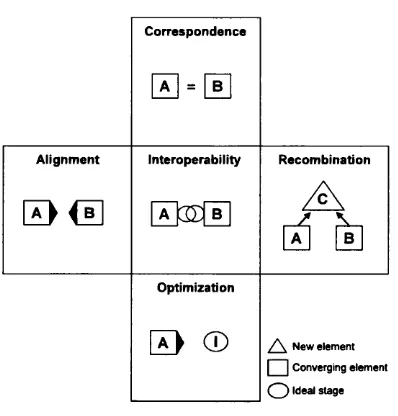
Fig u r e 2 - 1 Fo r m so f Co n v e r g e n c e Co m m u n ic a t io n (Ow n Fig u r e) ... 4 1
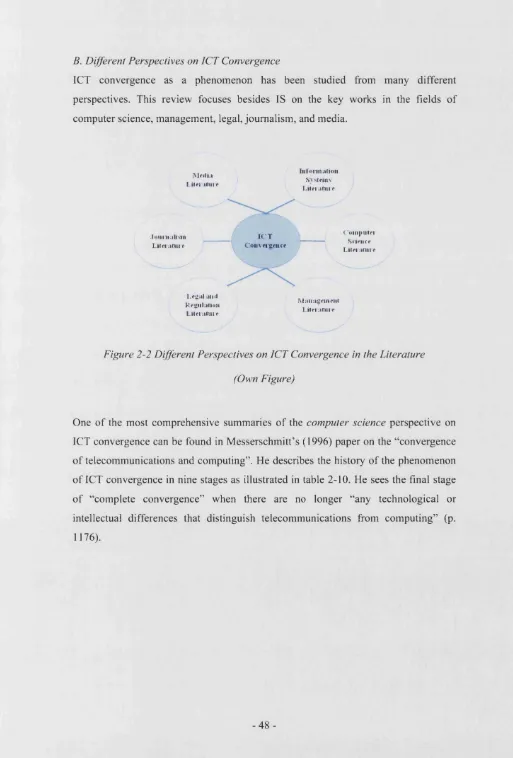
Fig u r e 2 - 2 Di f f e r e n t Pe r s p e c t iv e so n IC T Co n v e r g e n c eint h e Li t e r a t u r e...4 8
Fig u r e 2 - 3 Fo r m so f Co n v e r g e n c eid e n t i f i e d int h e Li t e r a t u r e Re v i e w...5 7
Fig u r e 3 - 1 Ma c h in eo f An a l y t ic a l St r a t e g i e s... 8 3
Fig u r e 5 - 1 Fr a m e w o r kf o r Mo b il e Te l e c o m m u n ic a t io n s In d u s t r y... 1 3 6
Fig u r e 5 - 2 Th e Fo u r So c io- Te c h n ic a l Sy s t e m s...1 3 7
Fig u r e 5 - 3 Re v e n u e s U K Mo b il e Op e r a t o r sin G B P , Bi l l i o n s... 1 4 1
Fig u r e 5 - 4 Av e r a g e E B IT D A De v e l o p m e n t U K M N O s f r o m 2 0 0 0 - 0 8 ... 1 4 2
Fig u r e 5 - 5 Lu c e n t Te c h n o l o g ie s Mo b il e VoI P Pa t e n t... 1 4 6
Fig u r e 5 - 6 Mo b il e VoI P Pa t e n to f Tr u p h o n e... 1 4 8
Fig u r e 5 - 7 Ov e r v i e wo fa Ge n e r ic 3 G Mo b il e Ne t w o r k (Ow n Fig u r e) ... 1 6 0
Fig u r e 5 - 8 Ar t ic l e so n Co n v e r g e n c eint h e U K Bu s in e s sp r e s s... 1 6 3
Fig u r e 5 - 9 Dis t r i b u t i o n b e t w e e n Co n v e r g e n c e Ar t ic l e sin Mo b il ea n d No n- Mo b il e Co n t e x t s 1 6 4
Fig u r e 5 - 1 0 Fo u r Dim e n s i o n so f Co n v e r g e n c e...1 8 0
Fig u r e 6 - 1 Ob s e r v in g Co n v e r g e n c et h r o u g h Dis t i n c t i o n s ( Ow n Fig u r e) ... 1 8 7
Fi g u r e 6 - 2 Ob s e r v in gt h e Co n c e p to f Co n v e r g e n c e... 1 9 0
Fi g u r e 6 - 3 Co n d e n s a t io no f Me a n i n gw i t h i n t h e No t io n o f IC T Co n v e r g e n c e ( Ow n Fig u r e) 1 9 0
Fig u r e 6 - 4 Dis t i n c t i o n sa r o u n dt h e In f o r m a t io n In f r a s t r u c t u r e... 1 9 3
Fig u r e 6 - 5 Th e Fo r m o f Co n v e r g e n c e ( Ow n Fig u r e) ... 1 9 6
Fig u r e 6 - 6 Pr o b l e m Nim b u z zp l a n st oa d d r e s sa n dt h e So l u t io n ( Ke m p e r 2 0 0 9 ) ... 1 9 8
Fig u r e 6 - 7 Ov e r v i e w Co n v e r g e n c e Dis c o u r s e sint h e U K Pr e s s...2 0 6
Fig u r e 6 - 8 Ov e r v i e w Re l a t i o n s h i p Co n v e r g e n c ea n d Co n t r o l ( Ow n Fig u r e) ... 2 2 4
Lis to f Ta b l e s
Ta b l e 1 - 1 Ov e r a r c h i n g Re s e a r c h Qu e s t i o n... 2 4
Ta b l e 2 - 1 Co n v e r g e n c e Co n t e x t sin I S ... 3 5
Ta b l e 2 - 2 : Co n v e r g e n c e Ar c h e t y p e sin Co n t e x t... 3 6
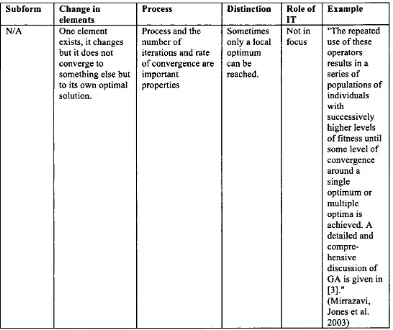
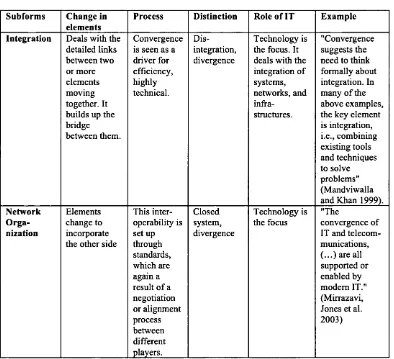
Ta b l e 2 - 3 Co n v e r g e n c ea s Al i g n m e n t... 3 7
Ta b l e 2 - 4 Co n v e r g e n c ea s Co r r e s p o n d e n c e... 3 7
Ta b l e 2 - 5 Co n v e r g e n c ea s Re c o m b i n a t i o n... 3 8
Ta b l e 2 - 6 Co n v e r g e n c ea s Op t i m i z a t i o n... 3 9
Ta b l e 2 - 7 Co n v e r g e n c ea s In t e r o p e r a b i l i t y... 4 0
Ta b l e 2 - 8 Th r e e Di m e n s i o n so f Co n v e r g e n c e i d e n t i f i e d int h e IS Li t e r a t u r e... 4 3
Ta b l e 2 - 9 Th en i n es t a g e so f IC T c o n v e r g e n c e b a s e do n Me s s e r s c h m i t t ( 1 9 9 6 ) ... 4 9
Ta b l e 3 - 1 : Ep i s t e m o l o g i c a l As s u m p t i o n so f Pr e v io u s St u d i e s o n Co n v e r g e n c e... 8 0
Ta b l e 3 - 2 Wh a tisac a s e (a d a p t e df r o m Ra g ina n d Be c k e r, 1 9 9 2 : 9 ) ... 8 6
Ta b l e 3 - 3 Re s e a r c h Qu e s t i o n sa n d Pr o p o s i t i o n s... ... 9 0
Ta b l e 3 - 4 Qu a l it y Cr i t e r i aa d a p t e df r o m Ga s k e l la n d Ba u e r ( 2 0 0 0 : 3 4 4 ) ... 9 1
Ta b l e 3 - 5 Ov e r v i e w Th is Dis s e r t a t i o n's Pr im a r y Da t a Co l l e c t i o n Me t h o d s... 9 2
Ta b l e 3 - 6 Ba c k g r o u n do fi n t e r v i e w e e s... 9 6
Ta b l e 3 - 7 Ov e r v i e w In t e r v i e w e e s...9 8
Ta b l e 4 - 1 : Ex a m p l e so f Fu n c t io n a l Sy s t e m sa f t e r Lu h m a n n ( 1 9 9 7 ) ... 1 1 9
Ta b l e 4 - 2 : Ov e r v i e w An a l y t ic a l St r a t e g i e s... 1 2 6
Ta b l e 5 - 1 : Ac t o r sint h e Mo b il e Te l e c o m m u n ic a t io n s Se c t o r...1 3 4
Ta b l e 5 - 2 Ve n t u r e Ca p i t a l Fu n d in go ft h e 8 Big g e s t Mo b i l e VoIP Co m p a n i e s ( Pr e s s Re l e a s e s) . . 1 5 1
Ta b l e 5 - 3 Su m m a r y His t o r ic a l De v e l o p m e n t Mo b il e VoI P ( Ow n Ta b l e) ... 1 5 5
Ta b l e 5 - 4 : Ex a m p l e so f Mo b il e VoI P Ar c h i t e c t u r e s... 1 5 7
Ta b l e 5 - 5 : Mo b il e VoI P Cl i e n ts in Co m p a r i s o n (Co r p o r a t e W e b Sit e s) ... 1 5 8
Ta b l e 5 - 6 : In t e r n a t i o n a l Ca l l in g Ra t e s ( Ex a m p l e: U K - In d i a) , 2 0 ™ Ja n u a r y 2 0 1 0 ... 1 6 1
Ta b l e 5 - 7 : Pr o f i l e so f Te l e c o m m u n i c a t i o n s Pr o f e s s i o n a l su s in g Co n v e r g e n c ein Li n k e dIn U K .... 1 6 5
Ta b l e 5 - 8 : Di s t r i b u t i o n o f Key Co n v e r g e n c e Di s t i n c t i o n s, in Pe r c e n t... 1 6 7
Ta b l e 5 - 9 Se l f- De s c r i p t i o n Mo b il e VoI P Co m p a n i e s... 1 6 8
Ta b l e 5 - 1 0 IC T Co n v e r g e n c ea c c o r d in gt o Mo b il e Ne t w o r k Op e r a t o r s ( Of c o m 2 0 0 9 ) ... 1 6 9
Ta b l e 5 - 1 1 Wh o l e s a l e Mo b il e Vo ic e Ca l l Te r m in a t i o n Ra t e s ( Of c o m 2 0 0 9 ) ...1 7 1
Ta b l e 5 - 1 2 So m e Ke y Dif f e r e n c e s Be t w e e n Mo b il e Ne t w o r k sa n dt h e In t e r n e t... 1 7 5
Ta b l e 6 - 1 Re l a t i o n s h i pb e t w e e n Su b- Qu e s t i o n sa n d An a l y t ic a l St r a t e g i e s... 1 8 6
Ta b l e 6 - 2 Po s s ib l e Co n c e p t u a l Sh i f t s (b a s e do n An d e r s e n 2 0 1 0 ) ... 1 9 2
Ta b l e 6 - 3 Fin d i n g sf r o m An a l y s is... 2 1 1
Ta b l e 6 - 4 Id e n t i f i e d Co n t r o l Po in t s Re l e v a n tt o Mo b il e VoI P ...2 3 2
Prologue
[image:15.595.29.540.32.798.2]How can convergence be represented in an image? Images o f convergence that immediately come to mind are o f two rivers merging into one big stream or two pathways uniting into one. The leftmost picture in Figure 1 below shows a Google Earth satellite image o f the Rhine and the M osel merging into each other in Koblenz, Germany. The picture to the right in Figure 0-1 is the famous converging path in the Japanese Tea Garden in San Francisco.
Figure 0-1 Converging Rivers (Google Earth, 2009) and Pathways
(with the explicit permission o f Miquel Martin)
A slightly different depiction o f convergence is the inclination o f a line towards an axis as shown in the fitness curve o f a genetic algorithm below (Figure 0-2). W hat is interesting here is that the convergence o f the line with the axis sets a limit. The line will never actually reach the axis, in contrast to the two previous examples.
20G
IO C
*C 3 2C 0 3 C 0 4 3 0 t o e 60C .*00 SCO W 0 ‘ C0C
>01,11 ar
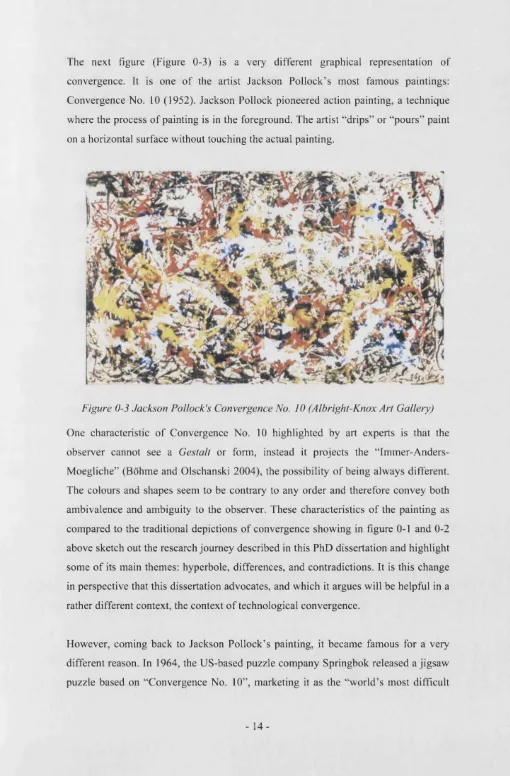
The next figure (Figure 0-3) is a very different graphical representation o f convergence. It is one o f the artist Jackson Pollock’s most famous paintings: Convergence No. 10 (1952). Jackson Pollock pioneered action painting, a technique where the process o f painting is in the foreground. The artist “drips” or “pours” paint on a horizontal surface without touching the actual painting.
Figure 0-3 Jackson Pollock's Convergence No. 10 (Albright-Knox Art Gallery)
One characteristic o f Convergence No. 10 highlighted by art experts is that the observer cannot see a Gestalt or form, instead it projects the “Immer-Anders- M oegliche” (Bohme and Olschanski 2004), the possibility o f being always different. The colours and shapes seem to be contrary to any order and therefore convey both ambivalence and ambiguity to the observer. These characteristics o f the painting as compared to the traditional depictions o f convergence showing in figure 0-1 and 0-2 above sketch out the research journey described in this PhD dissertation and highlight some o f its main themes: hyperbole, differences, and contradictions. It is this change in perspective that this dissertation advocates, and which it argues will be helpful in a rather different context, the context o f technological convergence.
jigsaw puzzle”. Hundreds of thousands of Americans bought the puzzle. The first
‘hype’ of convergence in the history of mankind was bom.
One year before Springbok marketed the convergence puzzle, Rosenberg (1963)
coined the term technological convergence. Technological convergence as a
phenomenon has been around as long as mankind has existed. However, only in the
past 30 years, has the idea of convergence started to play an influential role. This
happened with the emergence of digitalisation, and in particularly the coming
1. Introduction
This chapter introduces the PhD dissertation through presenting the relevance of the
topic of digital and in particular ICT convergence discourses for both the private and
public sectors. The argument presented here suggests considering convergence not
just as a short-lived management fad, but to take it seriously as both practitioners and
their observers do. The central research themes framed in this introduction are
threefold: first, convergence in the context of mobility; second, convergence as an
idea and not as a phenomenon; and third, the contradictory nature of convergence.
Based on the identified shortcomings of the existing literature on convergence, a
systematic second-order cybernetic analysis of the notion o f convergence in the
context of mobile information infrastructures is proposed. Finally, the research
approach is outlined and the overall structure of the dissertation is presented.
1.1 BACKGROUND AND MOTIVATION
The digitalisation of the world has taken on a new momentum (Yoo 2010). Physical
artefacts in everyday life are becoming increasingly digitalised, that is they all start
speaking in the same binary language of 0’s and 1 ’s (Kallinikos 2006; Murray 2010).
One of the promises of digitalisation is that unlimited interoperability between
digitalised artefacts becomes theoretically possible. One consequence o f this process
is that system designers, managers, and regulators face an increasingly non
transparent web of interconnected applications and networks (Marton 2010).
These artefacts are embedded in specific discourses and are shaped through an
ongoing socio-economic process (Orlikowski and Iacono 2001). One discourse that
has accompanied this process of digitalisation since its infancy is the discourse of
convergence (Herzhoff 2009; Tilson, Lyytinen et al. 2010a). The phenomenon o f ICT
convergence has been intensively discussed in the academic literature. However,
despite the apparent maturity of this research area (Farber and Baran 1977; Lind
2004); there is no generally accepted definition of convergence (Nystrom 2008). In
primarily on technical and economic aspects (Kaerrberg and Liebenau 2006) while
neglecting equally important social aspects (Jenkins 2006).
One recent manifestation can be seen in discussions of the mobile Internet, and in
particular of new converging services connecting mobile telephony networks to the
Internet (Minges 2005). The converging information infrastructures not only enable
new services, but also they impose design and regulatory challenges (Lyytinen and
Yoo 2002; Shin 2006). The diffusion of new converged services like IPTV (the
convergence of TV and the Internet) or mobile Internet (the convergence of mobile
telephony networks and the Internet) has only increased in pace recently. It is
therefore crucial to provide a more robust theoretical underpinning of this
phenomenon, so that it can inform future innovation and regulatory
recommendations. Tilson et al. (2010) argue that understanding this phenomenon of
digital convergence and in particularly the underlying digital infrastructures, is a
significant opportunity for IS research. This dissertation follows this call and is
therefore situated at the intersection between the literature on the design of
information infrastructures, mobility, and convergence studies. The following
paragraphs show the relevance o f convergence discourses in the public and private
sectors.
In 2002, the New York Times (Landler and Fabrikant 2002) credited David Geffen,
one of the co-founders of the film production company DreamWorks SKG with
Stephen Spielberg and Jeffrey Katzenberg, with the following statement:
"Convergence may be the most expensive word in history. It has cost people
billions." He was referring to the numerous business strategies, initial public
offerings and mergers & acquisitions, which have been rationalised through the idea
of digital and ICT convergence during the 1990s. Technological convergence has
been particularly accorded tremendous importance in the ICT industry, and especially
in the telecommunication sector. It has been used to justify large investments (Lind
2004) or to solicit funds for entrepreneurial endeavours (Knox 2003). In the
economic system, the notion o f convergence has also been used to shape the structure
of many organisations as in the case o f the Time Warner AOL merger in 2000
However, these discourses on convergence are not only situated at an industry or
organisational level, but also at an individual level. Telecommunications specialists
still carry the notion of convergence in their job title (e.g. “Convergence Specialist at
BT pic” or “Manager of Convergence Products at Vodafone Group”), and they
highlight specific knowledge on convergence in their profiles on professional social
networking websites such as Linkedln (linkedin.com).
In the political and regulatory system, the idea of convergence has significantly
shaped the technology policy agenda. The first regulatory report influencing the UK
regulatory framework was the green paper on Convergence by the European
Commission (European Commission 1997).
The most recent case is related to the Convergence Think Tank, which provided the
groundwork for Lord Carter’s Digital Britain Report (Carter 2009). On 21st
December 2007, the Department o f Culture, Media and Sport and the Department for
Business Enterprise & Regulatory Reforms announced the establishment o f a so-
called Convergence Think Tank to discuss the future o f communications in the UK.
It consisted of five seminars and consultation rounds with key industry players from
the telecommunications and media sector. In October 2008, the Convergence Think
Tank was superseded by the Digital Britain initiative.
Furthermore, discourses on convergence play an important role for government
regulators. In the UK, the regulatory body Ofcom was founded in 2002, and enacted
through the Communications Act 2003 based on the idea of ICT convergence. Shin
(2006) argues that in particular “the focus o f the Communications Act has been
placed on interoperability and access-related aspects in the regulation o f gateways in
convergent service” (p. 47). Convergence still plays an important role for the
regulator. For example, according to a Google search, 2,420 pages of Ofcom’s
86,200 indexed web pages contain the notion of convergence related to ICT.
Finally, the idea of convergence is increasingly embedded in the design of mobile
devices, services, and networks (Lyytinen and Yoo 2002). Devices like Apple’s
iPhone are called “converged devices”; applications like mobile VoIP are called
are called “converged networks”. Yoo, Boland et al. (2009) argue that the notion of
digital convergence needs to be expanded to “all forms of artefact design, process
change, and experience creation to theorize about these kinds of ‘radical’ digital
innovations” (p. 278).
The notion of convergence seems to touch many parts of our social lives (Steinmuller
2000). This overview has shown that convergence discourses have become quite
prominent in society, and have had major influences in both the public and private
sectors. It is therefore relevant from both the public and private sectors’ perspectives
to understand the underlying dynamics of these discourses. In particular the
challenges through new mobile information infrastructures and services suggest that
it is necessary to study these discourses in the particular context o f mobility. The
emergence of new convergence discourses around mobility indicates that a new
chapter of convergence is currently being written.
1.2 RESEARCH PROBLEM
Despite the importance assigned to the notion o f convergence in non-academic
discourses, and its impact on organisations and society, the academic discourses
around ICT convergence in particular in the IS literature have been very superficial,
taking the notion either for granted or relegating it to the sidelines (Herzhoff 2009;
Tilson, Lyytinen et al. 2010a). While the literature review shows that the broader
management, computer science, and new media literature have studied convergence
extensively, the literature on Information Systems where the notion of digital
convergence shows high relevance, has only recently discovered the notion as a
concept in the context of mobile networks and services.
According to Lyytinen and Yoo (2002), convergence is seen along with mobility and
mass scale as one of the three main drivers that designers have to consider in the
development of these new information infrastructures and services. However, a
critical review of the IS literature has shown that even seven years after Lyytinen and
Yoo (2002) published their research agenda in the Journal of Information Systems
Research, the understanding o f the notion of convergence in particular in the IS
Relatively few researchers have attempted to provide the kind of theoretical insight
needed on convergence to tackle new design and regulatory challenges (Knox 2003;
Jansen and Nielsen 2005; Nystrdm 2008; Tilson, Lyytinen et al. 2010b). In general
convergence has been treated merely as a descriptor for technological change in the
1980s and 1990s (Lind 2004). Therefore, a systematic analysis of the notion of
convergence is necessary. This kind of analysis contributes not only to the
information infrastructure literature but also to the wider context of convergence
studies. These studies focus primarily on the phenomenon and less on the notion of
convergence and how it is enacted in reality.
The following section shows the main shortcomings of previous studies on ICT
convergence.
1.2.1 Previous Research
As part of this dissertation, an extensive literature review on convergence in the IS
literature and adjacent fields has been carried out, and this has been supplemented by
a review on studies around information infrastructures and mobility. Four main
shortcomings of the existing literature have been identified.
1. Previous studies have primarily focused on the drivers and the consequences
of convergence, neglecting to study convergence as an idea constructed by a
multi-disciplinary discourse (Knox 2003). In particularly, they do not take
into account the observer.
2. Most of the previous studies focused on convergence in the general ICT
domain, neglecting the recently emerged discourse around mobility
(Wareham, Busquets et al. 2009).
3. Studies on ICT convergence focus either on the social-economic or on the
technology, but do not consider a socio-technical perspective on convergence
(Jenkins 2006). Therefore, the role o f technology shaping these discourses is
rather unclear.
4. Finally, the literature on convergence is loaded with contradictions. Firstly,
although the notion of convergence has taken a very prominent position in the
(Lind 2004), and by others as an important concept (Lyytinen and Yoo 2002).
Secondly, it is unclear if convergence is a process (Hacklin 2007) or an
endpoint (Storsul and Stuedahl 2007). Is it a vision or already there? Thirdly,
the notion of convergence is often taken for granted, and few studies question
this assumption (Knox 2003).
Some scholars have attempted to deal with this contradictory nature of ICT
convergence. Ludes (2008) suggests that convergence under pressure leads to
fragmentation and therefore to divergence. This suggests that a convergence
programme facing resistance might move in a different direction, leading eventually
to divergence. Appelgren (2004) takes a different view. She sees convergence and
divergence as the two opposite sides o f the same coin. They both happen
simultaneously. Finally, Nystrom (2008) sees divergence as one of the elements of
the overall convergence process.
In particular, it is unclear what the role o f technology is in this paradox. Henry
Jenkins (2006) calls this the “fallacy” o f convergence. He uses this argument to reject
the idea of technological convergence and proposes instead a social dimension:
“convergence culture”. Jenkins (2006) argues that the convergence paradox is a
fallacy since it firstly presupposes that following convergence all functionality will
be embedded in one converged entity; secondly, it assumes that convergence is solely
a technical matter. There are some problems with this view however. Technological
convergence is often used with the assumption of technological determinism, namely
that technology is the primary cause for social change. However, the argument by
Jenkins to disregard technological forces and focus on the social forces in the
convergence process might lead to the other extreme, social determinism (Hughes
1994).
In the literature on information infrastructures, some scholars have also pointed
towards this paradox. Kallinikos argues that in the past, most ICT artefacts were
developed either uncoupled or loosely connected through gateways (Kallinikos
2006). Path-dependencies further increased the fragmentation of different
technologies through backward and sideways compatibilities (Bowker and Star
and institutional segmentations, resulting in a highly fragmented terrain of
information infrastructures. An opposing trend is what he calls functional unification.
The binary character of digitalisation opens up in theory the possibility for making all
software mutually compatible (Kallinikos 2006).
In conclusion, some scholars have briefly addressed the contradiction between
convergence and divergence. Based on those previous studies, several propositions
have been sketched out. However, this PhD dissertation aims to move beyond the
previous literature through conducting an empirically grounded systematic analysis
guiding the unfolding of this paradox.
1.2.2 Problem Statement and Research Question
This PhD dissertation began out of an interest in the idea of convergence. The
literature review showed that one school o f thought regards convergence as an
important factor for mobile services and infrastructure design. However, it is still
quite unclear what is meant by convergence. Previous studies show that the idea o f
convergence has not been systematically analysed from an IS perspective. Hence an
extensive literature review on the use of convergence in the IS literature was
conducted (see chapter two), and five archetypes o f convergence were identified. The
distinction between convergence and divergence was the main guiding distinction.
However, a study exploring this contradiction between convergence and divergence
systematically is still missing, in particularly in the IS field.
The convergence paradox poses further questions. If system designers should focus
more on convergence, what if there is divergence rather than convergence? What if
convergence is just a rhetorical device, as has been suggested by some scholars
(Appelgren 2004; Lind 2004)? The findings from the literature review frame the
research problem and the research question this study aims to answer. This lays out
the ground for the problem this PhD dissertation aims to address and the specific
research questions to be answered.
In the academic debate around new mobile information infrastructures, ICT
IS literature has shown that the notion of convergence is under-researched and loaded
with contradictions. Is convergence just another fad or an important concept? Is
convergence an endpoint or a process? Is convergence, divergence? These
contradictions reveal the practical problems with the notion of convergence as
descriptor for technological change, and in particularly for the design o f information
infrastructures. It also poses theoretical problems o f how to address convergence.
How can a taxonomy of convergence be built? Does it make sense to design for
convergence, if designers are faced not with convergence but an increasing
fragmentation?
The role o f the research question is to focus the research and set boundaries, enabling
the researcher to create a sound research design and answer the question with the
available resources (Flick 2002). As pointed out by Flick (2002), research questions
must be dealt with at different stages of the research process; they develop over time.
Multiple interactions have been observed between research questions and aspects of
this dissertation, necessitating a continual refmement o f the over-arching research
question throughout the course of the study.
Based on the problem statement above, an initial starting point for a research
question was set to understand better why convergence is so prevalent in practice, but
is not reflected upon in the academic literature. Is the notion of convergence just a
fashion, or is there more to it? Furthermore, what are characteristics of the
convergence discourse, and what is the function o f convergence? Finally, is
convergence inevitable, what are the limits of convergence? Another proposition
identified in the literature is that convergence and divergence o f information
infrastructures might happen in parallel. Furthermore, some observers see
convergence as a future utopian end-point; others argue convergence is already there.
A third group argues that convergence is a process.
There seem to be many contradictions around the notion of convergence and this
dissertation aims to analyse them systematically to provide a conceptual clarification
of convergence for the information infrastructure literature. The following question
Table 1-1 Overarching Research Question
How can we conceptualise the notion o f ICT convergence using second-order
observation to understand the contradictory discourses around convergence in the
case o f mobile VoIP in the UK?
The overarching research question consists of two parts. It assumes that it can
provide a better understanding of the contradictory discourse between convergence
and fragmentation through a second-order conceptualisation. This second-order
conceptualisation requires an understanding o f the existing convergence discourses,
their characteristics, and their limits. Furthermore, since focus of this study is
technological convergence, the role of technology in these discourses needs to be
examined. Based on the overarching research question, the following five sub
questions emerged:
• Is ICT convergence in the context of mobile telecommunications just another
fad or fashion?
• How has the idea of convergence been used in the discourse around mobile
VoIP applications? What are special forms of convergence communication;
what distinctions are made?
• What are the characteristics of the ICT convergence discourses around mobile
VoIP?
• What are the limits of ICT convergence?
• What is the role of technology in the ICT convergence discourses?
As Schutz (1962) suggests, we can build first-level and second-level constructs. First-
level constructs are theories on the phenomenon itself, whereas second-level
constructs are theories on how an observer observes the phenomenon. We can build a
theory explaining whether an observed phenomenon is a “war dance, a bartender
trade, or the reception of a friendly ambassador”; or we can investigate how the
observed persons understand the dance. In Luhmann’s terms (Luhmann 2002),
focusing less on the constructs than on the process o f observation, we can observe
either the dancers (first-order observation), or how the dancers themselves understand
The literature review will show that research not only in Information Systems but
also in such related fields as management and new media has yet to provide a
substantial theoretical conceptualisation of ICT convergence - despite its thirty-year
history and wide impact on practice, regulation, and society. Furthermore, most
studies offer only a first-order analysis, neglecting equally important second-order
analysis (Lee and Sarker 2008). Therefore, it is not the phenomenon of ICT
convergence in the context of the mobile Internet that this PhD dissertation wants to
understand, but the idea of it, and how participants in the discourse on convergence
have shaped this idea.
1.2.3 Significance of the Study
This research belongs to an emerging body of literature, which aims to make sense of
the phenomenon of ICT convergence. In particular, several recent PhD dissertations
build the background for this dissertation (Nielsen 2006; Tilson 2006; Hacklin 2007;
Muller 2008; Nystrom 2008). Furthermore, it aims to contribute to an emerging
branch in the literature on information infrastructures represented by the work of
Lyytinen, Yoo, and Tilson. In the context o f this previous work, this research
distinguishes itself through four main contributions:
• First, it focuses exclusively on the idea of convergence, and not on the
phenomenon.
• Second, it provides an initial conceptual clarification of ICT convergence
from a second-order observation.
• Third, it uses systems-theoretical concepts to provide a new understanding of
the convergence paradox.
• Fourth, the case study o f mobile VoIP as well as the theoretical lens of
Luhmann’s Theory of Social Systems is new to this field.
1.3 OVERVIEW OF THE RESEARCH APPROACH
This section presents an overview of the research approach taken. First, the
conceptual framework will be briefly presented. Second, the research design will be
1.3.1 Theoretical Framework
The data analysis is based on the previously mentioned analytical strategies derived
from Niklas Luhmann’s Theory of Social Systems. Since the focus o f the research
question is not the phenomenon of convergence itself but rather the understanding of
convergence, an analytical approach is needed that supports this particular type of
investigation (Andersen 2003). A good way to access social systems is the
observation of communication. Luhmann’s Theory of Social Systems has been
chosen as the most appropriate to guide the data analysis for the following reasons:
• It assumes that communication is the main operation in society.
• It offers a set of analytical strategies to deal particularly with contradictions.
• It has been successfully applied in the past in the field of Information Systems.
The operationalization of Luhmann’s “grand theory” (Lee 2000) has been conducted
through Andersen’s (2003) concept of analytical strategies. Andersen suggests that
besides systems analysis there are five more types of analytical strategies, which he
derived from Luhmann’s Theory of Social Systems. These will be presented and
discussed in detail in chapter four.
1.3.2 Research Design: The Case of Mobile VoIP
Flick (2002) sees the role of a research design as “the means of achieving the goals of
the research” (p. 152). The over-arching research design is based on an empirical
study of the convergence discourses in the UK mobile telecommunications sector,
and in particular the case of the introduction o f mobile VoIP in the UK. Mobile VoIP
may be defined as (Verkasalo 2006) "voice-oriented services, in which voice is
transmitted over IP networks, and the service is used with a mobile handset" (p. 1); it
is usually accompanied by instant messaging capabilities and presence functionality.
Some observers see it as potentially one of the most disruptive forces in the mobile
telecommunications industry, insofar as it targets the core business of mobile
operators, namely mobile voice calls and messaging (Christensen, Johnson et al.
Mobile VoIP is a very recent example of converging information infrastructures, so
scholars have been studying it for only a few years. The literature is driven mainly by
technical (Banyasz and Ivancsy 2005; Algell 2006) and economic questions
(Nystrom and Hacklin 2005; Mellberg 2006), with no consideration of underlying
dynamics. Mobile VoIP is a particularly interesting instance of convergence because
it exemplifies both ICT convergence and mobility. In the 1990s, the concept of ICT
convergence was used primarily to describe the integration of phone and computer
(Yoffie 1996; Hacklin 2007). Mobile VoIP application may be regarded as the
cutting edge of the next generation of ICT convergence, the convergence of mobile-
telephony networks and the Internet.
1.3.3 Fieldwork Strategy
The empirical study has been conducted in the UK over a time span of VA years
between June 2008 and December 2009. However, the overall investigation in this
research project started already in June 2007. The primary data collection methods
encompassed three forms. First, 39 semi-structured interviews were conducted with
experts in the field of mobile VoIP. The interview data collected resulted in more
than 40 hours of recorded material. Second, document inspection encompassing over
1,300 business press articles from Reuters Factiva from 2000 to 2009, company
presentations, annual reports, patents, white-papers, and court proceedings was
conducted. The third method was direct observations o f two practitioner’s
conferences in 2009 (Open Mobile Summit and Westminster eForum) dealing with
developments around the mobile Internet, and in particular with mobile VoIP.
Corpus construction was used as the sampling strategy (Bauer and Aarts 2000).
Since the convergence discourse is the unit of analysis, every data including the
interviews has been examined as text, i.e. in their written form through the
transformation of interview recordings into transcripts. The primary data was
supplemented by experiments with mobile VoIP applications, data from the wider
convergence discourses in the telecommunications industry (e.g. the transcripts from
the Convergence Think Tank o f the UK government, and observational data on
meeting recordings, presentations, observations, whitepapers, and reports from the
leading UK universities and private organisations engaged in the mobile
telecommunications sector. Material was collected while participating during one
year of this project, where together with electrical engineers a methodology was
developed for a socio-economic analysis that can inform the design of flexible
networks.
1.4 OBJECTIVE, LIMITATIONS, AND OUTLINE OF THE DISSERTATION
The main aim of this study is to deliver a rigorous, coherent, well-argued research
document that is worthy of a PhD. To achieve this objective, this study aims to
provide an argument on how discourses around convergence of mobile VoIP in the
UK are constructed, and how they can be used to understand the convergence
paradox. Therefore, to summarise, the objectives of this study are threefold: first, to
provide a systematic analysis of convergence discourses in the context of mobile
VoIP, second to construct from this systematic analysis a theorization of
convergence, and third to answer the stated research questions.
Gregor (2006) suggests five different types of theoretical contributions for IS
research: theory for analysing, theory for explaining, theory for predicting, theory for
explaining and predicting, and theory for design and action. This dissertation aims for
a theoretical contribution primarily in the form of theory for analysing. Hence, this
dissertation aims to develop a conceptual framework to describe convergence
discourses, and to understand better the paradoxical relationship between ICT
convergence and fragmentation in the context of information infrastructures. This
study contributes to the literature on information infrastructures and also to the wider
field of technological convergence studies.
The forms of convergence within the scope of this dissertation focus primarily on
technical convergence in the mobile telecommunications industry, and in particular
on the convergence o f mobile telephony networks with the Internet. Furthermore, the
analytical focus is not on the phenomenon itself, but on the discourse o f convergence,
and how practitioners in the telecommunications industry are making sense of
convergence. The focus is on mobile VoIP in the UK as one instance o f convergence
layer is part of the analysis.
VoIP has a long history, however, the main focus of this study is the time period
between 2007 and 2009, supplemented by contextual data between 2000-2009.
Furthermore, only a single case study has been conducted. These limitations restrict
the possibilities of generalization. However, it is argued that through theoretical
generalization (Mitchell 1983; Seale 1999; Lee and Baskerville 2003) the conceptual
framework of ICT convergence that is developed may also be useful for other studies
related to information infrastructures.
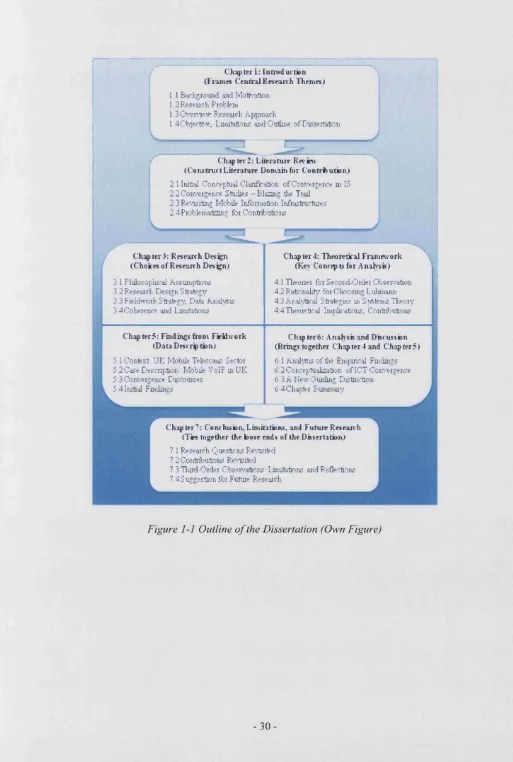
This dissertation consists of seven chapters. The second chapter will present a critical
review of the literature on first- and second-order research on ICT convergence,
locate the position o f this dissertation within the literature, and set the stage for its
contributions in the information infrastructure literature. Chapter three outlines the
research design for the field study. Chapter four discusses different approaches for
second-order observations, and introduces Niklas Luhmann’s Theory of Distinction
and Systems Theory as the primary analytical strategies informing the collection and
analysis of empirical data. The findings and analysis from the case study are
presented in the following two chapters five and six. Chapter six will also discuss the
findings and their implications for the wider debates around convergence. Finally,
chapter seven assesses the contributions and limitations of this study, and offers
Chapter 1: Introduction (Frames Central Research Themes;
1 1 Background and Motivation 1 2 Research Problem
1 3 Overview Research Approach
1 4 Objective, Limitations and Outline o f Dissertation
Chap ter 2: Literature Review (ConstructLiterature Domain for Contrfiution)
2.1 Initial Conceptual Clarification o f Convergence in IS 2 2 Convergence Studies - Blazing tlie Trail
2 3 Revisiting Mobile Information Infrastructures 2 4Problematmng for Contributions
Chapter?: Research Design (Choices o f Researrh Design;
3 1 Philosophical Assumptions 3 2 Research Design Strategy 3 3 Fieldwork Strategy, Data Analysis 3 4 Coherence and Limitations
Chap ter 4: Theoretical Framework (Key Concepts for Analysis;
4 1 Theories for Second-Order Observation 4 2 Rationality for Choosing Luhmann 4 3 Analytical Strategies in Systems Theory 4 4 Theoretical Implications, Contributions
Chapter?: Findings from Fieldwork (D ataD escrption;
5 1 Context UK Mobile Telecoms Sector 5 2 Case Description Mobile V oIP in UK 5 3 Convergence Discourses
5 4 Initial Findings
Chap ter 6: Analysis and Discussion (Brings together Chapter4 and Chapter?;
6 1 Analysis o f the Empirical Findings 6 2 Conceptualisation o f ICT Convergence 6 3 A New Guiding Distinction
6 4 Chapter Summary
Chapter?: Conclusion, Limitations, and Future Research (Ties together the loose ends o f the Dissertation;
7 1 Research Questions Revisited 7 2 Contributions Revisited
7 3 Third-Order Observations Limitations and Reflections 7 4 Suggestion for Future Research
[image:32.595.26.539.37.799.2]2. Literature Review
"Convergence is by definition a process crossing boundaries and therefore raises the need for multiple units of investigations."
Hacklin (2007 : 15)
This chapter brings together three different research domains, namely ICT
convergence studies, information infrastructures, and mobility. The literature on
information infrastructures suggests considering ICT and digital convergence as an
important factor in the design of next-generation information infrastructures and
services, in particular, in the context of mobility (Lyytinen and Yoo 2002; Wareham,
Busquets et al. 2009; Yoo, Boland et al. 2009; Tilson, Lyytinen et al. 2010a;
Lyytinen 2011). However, a systematic conceptualisation of convergence in this
body of literature is missing (Herzhoff 2009). Instead, convergence appears rather
ambiguous and ambivalent to the observer (Storsul and Stuedahl 2007).
The approach taken in this review aims for an initial conceptual clarification of ICT
convergence. The first section (2.1) of this literature review deals with the question
how ICT convergence can be conceptualised from an IS perspective. Three initial
dimensions of convergence discourses are identified. These dimensions are further
examined in the wider multidisciplinary discourse of convergence studies. Here, this
dissertation makes the important distinction between the phenomenon and the idea o f
ICT convergence. The distinction is, as outlined above, based on the differentiation
between first and second order observations.
The second section (2.2) presents, in particular, the key debates and perspectives
developed in the adjacent fields to information systems, such as management science,
computer science, and new media. In the following section (2.3), the review revisits
the intersection of the information infrastructures and mobility literature, and
contrasts it with the findings from the previous two sections.
The final section (2.4) pulls all the components together, and marks the specific body
of literature this dissertation aims to contribute to. The aim o f this chapter within the
• Provide an overview on the key debates and perspectives on ICT
convergence,
• identify shortcomings of the existing literature, and
• construct the literature domain for the contribution intended by this study.
2.1 INITIAL CONCEPTUAL CLARIFICATION OF CONVERGENCE IN INFORMATION SYSTEMS
Information systems are, according to Angell and Smithson (1991), “social systems
whose behaviour is heavily influenced by the goals, values and beliefs of individuals
and groups, as well as the performance o f the technology” (p. 12). Hence, within the
information systems discipline technology is studied as an element of a social system
(Avgerou 2000). As Orlikowski and Iacono (2001) point out, technological artefacts
are always embedded in a specific social setting, i.e. specific time, place, and
discourse. The designer o f a technology operates within the context of a discourse
that shapes that designer’s contribution (Kallinikos 2005). Hence, a systematic
analysis of the role o f the discourses concerned with convergence within the overall
IS literature is suggested.
Summarised, this section has three aims. First, to examine the role of convergence
discourses in the IS literature. Second, to understand in particular, how the idea of
ICT convergence can be conceptualised from an IS perspective. Third, using the
identified dimensions of convergence to provide the input for a review of the wider
convergence literature. As this section is interested in how IS scholars describe
convergence, the primary focus is not the phenomenon of convergence itself. At this
point this dissertation does not commit to a specific definition of ICT convergence.
Instead, this definition will emerge from the following analysis.
2.1.1 Studying Convergence Discourses in IS
The methodology o f this literature review on the convergence discourses within IS is
primarily influenced by the Grounded Theory approach, which has been used
approach to analysing IS journal papers uses a form of content analysis in which
categories are developed solely on the basis of the findings from the data, and not
imposed from any preconceived position (Agar 1980). This study follows the Corbin
and Strauss (1990) version of Grounded Theory, although it differs from that
approach in two distinct ways. First, the data selection is based on corpus
construction (Bauer and Aarts 2000) instead of theoretical sampling. Second, the
focus is not only on the core category, but also on the core distinction using
Luhmann’s Theory of Distinction as additional analytical strategy.
The approach of informing Grounded Theory with the Theory o f Distinction is new,
especially in the IS field, although it has already proven valuable in other domains of
social sciences (Gibson, Gregory et al. 2005). Luhmann’s Theory of Distinction has
been used as an analytical strategy to sharpen the perception of differences in the data
analysis (Andersen 2003). It is consistent with Grounded Theory in several ways.
Firstly, both approaches are interested in the emergence o f meaning, and focus on
what has been communicated and how it has been organized. However, they differ in
one distinct aspect: traditional Grounded Theory searches for the core category,
whereas the Theory of Distinction is concerned with the “guiding distinction”
(Gibson, Gregory et al. 2005). The guiding distinction is particularly important in a
second-order study since, similar to Koselleck’s (1985) notion o f a counter-concept it
keeps the concept in place and defines its restrictions (Andersen 2008).
Corpus construction (Bauer and Aarts 2000) has the advantage o f offering a
vocabulary that is independent of the sampling logic, and so overcomes the
shortcomings of theoretical sampling, such as multiplication of sampling methods
(Corbin and Strauss 1990). The goal is to select "incidents" of a phenomenon, not to
sample a population (Bauer and Aarts 2000). Barthes (1967) suggests selecting a data
corpus based on relevance, homogeneity, and synchronicity. By keeping the focus on
information systems, relevance was ensured, whereas homogeneity of the corpus was
achieved by taking only journal articles into consideration. Finally, synchronicity has
been maintained by focusing on journal articles that were published between 1998
This study focuses only on the leading academic IS journals. The decision to focus on
this body of literature and to exclude other journals, conference papers, etc., is driven
by relevance and resource constraints. The primary aim here is to see how the notion
of convergence is treated and used in the mainstream IS journals. Ten IS journals
have been drawn upon based on the ranking from Louisiana State University, since it
distinguishes among management, practitioners’, and "pure" IS journals. The selected
journals (MIS Quarterly, Journal of Information Systems Research, Journal of MIS,
Journal of the AIS, Information & Organisation, European Journal of Information
Systems, Journal of Strategic Information Systems, Information Systems Journal,
Information & Management, and Decision Support Systems) also appear frequently
in the top ten rankings (Peffers and Tang 2003; Rainer and Miller 2005).
A full text search has been conducted on the term "convergence" using Business
Source Premier, Sweetwise, and ScienceDirect. The search has not been limited to
"ICT convergence" to achieve a broad understanding of the convergence discourses
within IS, and to increase the variety of the findings. The only exception for the
analysis period between 1998 and 2008 is the Journal o f the AIS since it was first
published in 1999. This timeframe has been selected to cover an extended period, but
at the same time it benefits from the easy data access to conduct a full-text search.
Another relevant factor is that no electronic versions are available for most of the
journals before 1998. Based on the search results, a corpus of 341 journal articles has
been constructed and imported into the software package Atlas.ti. Twenty-four
articles that used the term “convergence” only in their bibliographies were excluded.
2.1.2 Contexts o f Convergence Discourses in IS
Each article has been searched for the term “convergence,” and the relevant
paragraphs have been coded by repeatedly asking what the term means in the
particular instance, in what context it is used, and what distinctions the author(s) of
the article make. Based on the context
codes, six categories have been
identified in which authors use
convergence. Three contexts are
closely related to the general research
process, and three were related to the
phenomenon presently under study.
The findings suggest that the IS
community uses the concept of
convergence to describe (I) research
streams and theoretical concepts
coming together; (II) quality criteria in
methodology sections; and (III) the
processing of quantitative and
qualitative data analysis. The contexts
can be broadly separated into (IV)
decision-making; (V) technological
change; and (VI) other contexts.
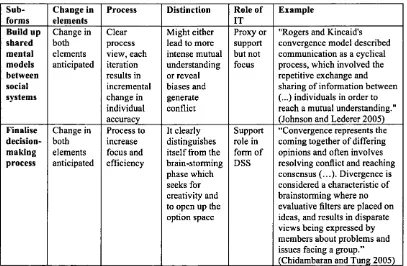
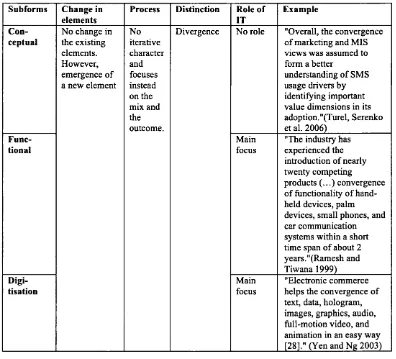
Table 2-1 illustrates the different sub-themes and the number o f occurrences in the
data corpus. One interesting aspect of this data is that convergence in the context of
technological change has only 46 occurrences, which account for less than 15% of
the articles (total = 317). In the next step, some initial concepts were identified along
with their properties and their dimensions, and the data coded accordingly. These
insights and the method of constant comparison (Corbin and Strauss 1990)