i
Work to be done? Exploring the Current
Contribution of Educational Psychologists to
Special Schools which Cater for Children and Young
People with Profound and Multiple Learning
Difficulties (PMLD)
Sophie Winter
April 2017
A thesis submitted in partial fulfilment of the requirements of the
University of East London for the degree of Professional Doctorate in
ii
Declaration
This work has not previously been accepted for any degree and is
not currently being submitted for any other degrees.
This research is being submitted in partial fulfilment of the
requirements of the University of East London for the degree of
Applied Educational and Child Psychology. The thesis is a result of
my own work and investigation, except where otherwise stated.
Other sources are acknowledged by explicit references in the text. A
full reference list is included in the thesis.
I hereby give permission for my thesis, if accepted, to be available
for reading and for inter-library loan, and for the title and summary to
be made available to outside organisations.
………..
Sophie Winter
iii
Acknowledgements
I would first like to thank my cohort at UEL for being the most inspiring, caring, crazy and supportive bunch of people I have been lucky enough to have met. I know that we will continue to be friends long after the doctorate is complete.
The UEL tutor team for being amazing and down to earth. I couldn’t have studied anywhere else. In particular, I want to thank my tutor and Director of Studies, Dr. Helena Bunn. I will always remember your support during the most difficult times. Despite being the busiest woman I know, you always have time for me. Your compassion, enthusiasm, positivity and energy has inspired me. I am truly thankful.
My family and friends for their never ending support. I am blessed with wonderful people in my life. In particular, my boyfriend Charles for accepting that the doctorate sometimes makes you crazy and my aunt, for being my constant.
Thank you to all the EPs and schools who took part in my research. It literally wouldn’t exist without your input.
iv
Abstract
This exploratory study aimed to discover the current contribution of Educational Psychologists to special schools catering for children and young people (CYP) with profound and multiple learning difficulties (PMLD) from the perspective of educational psychologists (EPs) and special school staff. A systematic literature review highlighted that no research has been carried out in this area. It did however highlight other areas of research previously undertaken in regards to CYP with PMLD and research which had captured the views of educational psychologists and (special) school staff. The research was carried out in light of the recognition that an increasing number of CYP with PMLD are entering specialist provision and an identified role for EPs in working with children who have severe, complex or challenging needs.
The researcher created an online survey which was distributed to 146
Educational Psychology Service across England in addition to independent and private EPs. The survey was also sent to 288 special schools across England, identified as catering for CYP with PMLD. A number of 207 responses were received from EPs and 44 from special school staff. The quantitative data was analysed using descriptive statistics and the qualitative data was analysed using quantitative and qualitative content analysis.
Important findings regarding the current contribution EPs are making to these specialist settings was highlighted in addition to potential barriers and
opportunities to practice. The impact of this on future EP practice and research implications are also discussed.
Key words: Educational Psychologist, Educational Psychology Service, Special
v
Contents Page
Chapter 1: Introduction
1.1 Introduction to the Current Chapter………...… 1
1.2 Definition of Terms……….... 1
1.2.1 Profound and Multiple Learning Difficulties: Definitions ………..………..……2
1.2.2 Special Educational Needs………...…….3
1.2.3 Special Schools and Types of Provision………..……..4
1.2.3.1 Local Authority Maintained Special Schools……….……..…5
1.2.3.2 Independent Special Schools………..……..5
1.2.3.3 Non-maintained Special Schools ………..…………..….6
1.2.4 Children and Young People………..…………...…6
1.3 National Context……….……….…….6
1.4 Local Context and Background……….…….8
1.5 Educational Psychology Services’ Delivery Model………..…..9
1.6 ‘Unique’ Specialist Educational Provision for CYP with PMLD……….………..10
1.7 Legislation….……….…………...………..12
1.8 The Role of the Educational Psychologist……….….13
1.9 Multiprofessional Working with Children and YP with PMLD………...………...15
1.10 Purpose of the Research………...……16
1.11 Research Questions………...……16
1.12 Chapter Summary………...……...…17
Chapter 2: Literature Review 2.1 Introduction to the Literature Review………..…18
2.2 Details of Systematic Literature Search……….……19
2.3 Summary of Previous Research Findings………..……21
2.3.1 Challenging Behaviour and PMLD………21
2.3.2 Curriculum/Education Provided for CYP with PMLD………...24
2.3.3 Special Schools and Staff Working for Children and YP with PMLD…………..27
vi
2.4 Previous research capturing the contribution of EPs to (special) schools and the views
of professionals………...34
2.4.1 How have the Views of Educational Psychologists and (Special) School Staff related to the contribution of EPs previously been gained? ………..35
2.4.2 What are EPs and other Support Services Currently Providing to (special) Schools in England? ……….…….42
2.4.1.1 Training……….………42
2.4.1.2 Consultation……….………43
2.4.1.3 Multiagency Working……….….43
2.4.1.4 Other Support Services……….….44
2.4.3 Discrepancies and Potential Barriers to Practice……….……..46
2.5 Considering the Contexts of Research………...47
2.6 Conclusions Linking Previous Research to Current Research Aims……….48
2.7 Chapter Summary…….……….………49
Chapter 3: Methodology and Exploratory Research Process 3.1 Introduction to the Current Chapter……….……50
3.2 Ontological and Epistemological Assumptions……….…….51
3.2.1 Research Paradigms……….………..51
3.2.2 Critical Realism………51
3.2.3 The Researcher’s Position……….54
3.3 Purpose of the Research………..54
3.4 Research Technique………...55
3.5 Research Design……….….…..56
3.6 Development of the Research Tool……….………56
3.6.1 Expert Jury and Participant Validation Group……….57
3.7 Data Collection and Analysis……….……..58
3.7.1 Identifying Participants………60
3.7.2 Data Collection……….61
3.7.3 Data Analysis……….……..62
3.7.4 Content Analysis ……….…62
3.7.4.1 Content Analysis in the Current Research………....64
3.7.4.2 Semantical Content Analysis and Sign-vehicle Analysis………64
vii
3.8 Validity and Reliability………66
3.9 Ethical Considerations………...…68
3.9.1 Maintaining Ethical Standards………..…….…68
3.9.2 Informed Consent………..…..69
3.9.3 Right to Withdraw……….……69
3.9.4 Anonymity Risk……….………69
3.9.5 Data Protection……….………70
3.10 Relevance and Impact of Research………70
3.11 Chapter Summary………..71
Chapter 4: Analysis of Results 4.1 Introduction to the Chapter………...72
4.2 Revisiting the Research questions……….….72
4.3 Rationale for Analysis of Results……….……73
4.4 Setting the Scene………...74
4.4.1 The EP and its Service………74
4.4.2 Setting the Scene: The Special School and its Staff………..78
4.5 What is the Contribution? The Current Picture………..81
4.5.1 Link EP and Special Schools……….81
4.5.2 Special school Contacts……….84
4.5.3 Scheduled Visits and Indirect Contact between EPs and Special Schools……88
4.5.4 Indirect Contact………91
4.6 What work is currently being carried out? ……….91
4.7 Effectiveness and Impact of EP involvement……….94
4.8 Unique Contribution of the EP………..97
4.9 Whose Role is it to Work with Special Schools? ………..98
4.10 Acknowledging and Overcoming Barriers………..99
4.10.1 Who is the Best ‘Man’ for the Job? ………100
4.10.2 Time, Time, Time………...…102
4.10.3 National and Local Context………..104
4.10.3.1 EP Capacity………...104
4.10.3.2 Statutory Work………...104
viii
4.10.3.4 Political and Government Constraints………...106
4.10.3.5 School Budgets and Traded Services………...106
4.10.4 The ‘Culture’ of the Special School……….107
4.10.5 Communication………..107
4.10.6 Lack of Shared Understanding………108
4.10.7 Relationships………..108
4.11 Moving Forward Together………..113
4.11.1 Ideal Contribution………..113
4.11.2 Embracing Opportunities………..115
4.11.2.1 Systemic Work (Whole School Work)………116
4.11.2.2 Staff Support………..117
4.11.2.3 Parent and Family Work………..118
4.11.2.4 ‘Giving Psychology Away’………...119
4.11.2.5 Multiagency Work……….120
4.11.2.6 Transition Work……….121
4.11.2.7 Individual Work……….……….121
4.11.2.8 Training………...…………122
4.12 Summary of Findings………..125
4.12.1 Actualising the ‘Ideal’: Carving a Role for the EP……….…125
4.13 Chapter Summary………126
Chapter 5: Discussion 5.1 Chapter Overview………128
5.2 Discussion in Relation to the Research Questions………128
5.2.1 What is the current contribution of EPs to Special Schools which Cater for CYP with PMLD from the Perspective of EPs and Special School Staff?...129
5.2.2 What is the Current Contribution of EPs to Special Schools which Cater for CYP with PMLD from the Perspective of EPs?...129
5.2.3 What is the Current Contribution of EPs to Special Schools which Cater for CYP with PMLD from the perspective of Special School Staff?...132
5.3 Understanding the Current Picture………136
5.4 Implications for EP Practice………138
5.4.1 The Importance of Building Relationships……….138
ix
5.4.3 Finding a Niche………..143
5.4.3.1 Challenging Behaviour……….145
5.4.3.2 Supporting the Emotional Wellbeing of the School Community………147
5.4.3.3 Training………...149
5.5 Summary: Knowing Your Own Worth………...150
5.6 Strengths and Limitations of Current Research………..150
5.6.1 Strengths……….150
5.6.2 Limitations (Including Practical Issues in Research) ………..…151
5.6.2.1 Response Rate………151
5.6.2.2 Incomplete Data………..151
5.6.2.3 Participants………..152
5.6.2.4 Distribution of Survey……….152
5.6.2.5 Survey Questions………153
5.6.2.6 Demographic of Special Schools………..154
5.6.2.7 Demand Characteristics……….155
5.6.2.8 Researcher’s Agenda……….……156
5.7 Implications for Future Research………..156
5.7.1 The use of Video Interactive Guidance in PMLD special schools………….…156
5.7.2 The use of Video Enhanced Reflective Practice in PMLD special schools….157 5.7.3 Needs of Support Staff in PMLD Schools………..158
5.7.4 The role of the EP in Supporting Mainstream Settings which Cater for CYP with PMLD………...158
5.7.5 Gaining the voice of the CYP with PMLD………..…159
5.8 Reflexivity………..159
5.8.1 Reflexive Diary……….………..…160
5.8.2 The Role of the Researcher……….………160
5.8.3 Reflections on the Research Journey………161
5.9 Summary of Chapter………162
x References
Appendices
Appendix A. Summary of the literature review process………..175
Appendix B. Summary of the selected articles ………….………..176
Appendix C. UEL Ethical Approval……….183
Appendix D. Email cover letters i Educational Psychologists……….187
ii Special Schools………...188
iii NAPEP……….………….189
iv EPNET……….………….190
Appendix E. Research and Consent Information……….191
Appendix F. Original proposed survey questions (EP and special school) and amendments following expert jury and participation validation group………192
Appendix G. Educational psychologist survey questions and example response………...196
Appendix H. Special school survey questions and example response……….199
Appendix I. Example content analysis of qualitative information i Educational psychologists’ responses………201
xi
List of Abbreviations
SEN Special Educational Needs
EPS Educational Psychology Service
PMLD Profound and Multiple Learning Difficulties
LA Local Authority
UEL University of East London
CYP Child and Young People
SLD Severe Learning Difficulties
MLD Moderate Learning Difficulties
HCPC Health and Care Professionals Council
DoH Department of Health
DfE Department for Education
DfEE Department for Employment and Education
DfES Department for Education and Skills
EHCP Education, Health and Care Plan
PIMD Profound Intellectual Multiple Disabilities
SEND CoP Special Educational Needs and Disability Code of Practice
EP Educational Psychologist
PEP Principal Educational Psychologist
SENCo Special Educational Needs Coordinator
SLT Speech and Language Therapist
TA Teaching Assistant
OT Occupational Therapist
VIG Video Interactive Guidance
xii
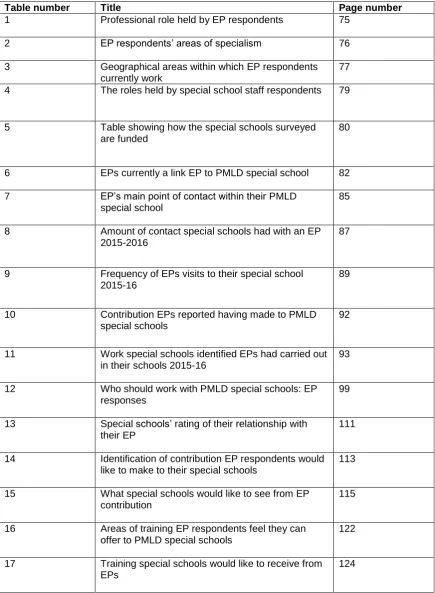
[image:12.595.109.545.90.684.2]List of Tables
Table number Title Page number
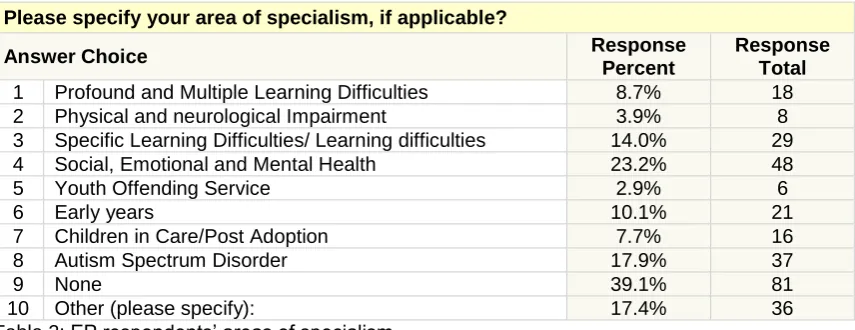
1 Professional role held by EP respondents 75
2 EP respondents’ areas of specialism 76
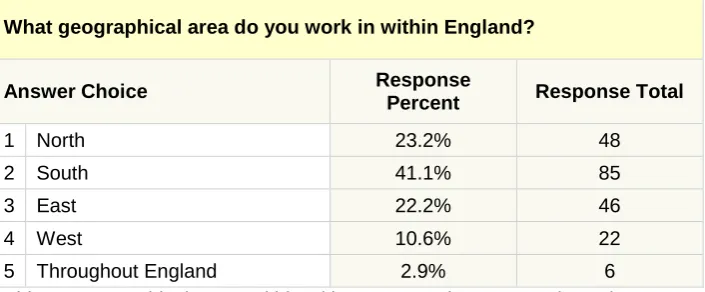
3 Geographical areas within which EP respondents currently work
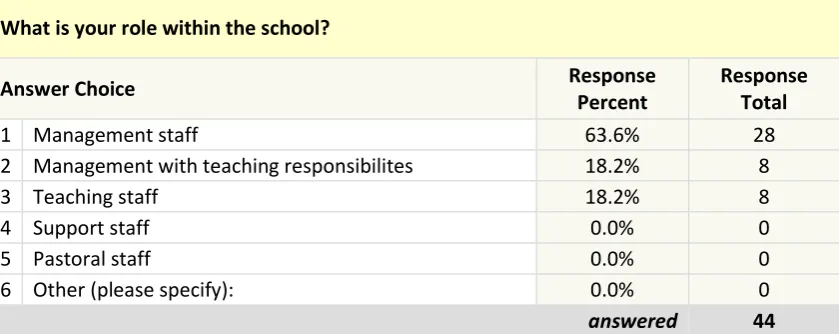
77 4 The roles held by special school staff respondents 79
5 Table showing how the special schools surveyed are funded
80
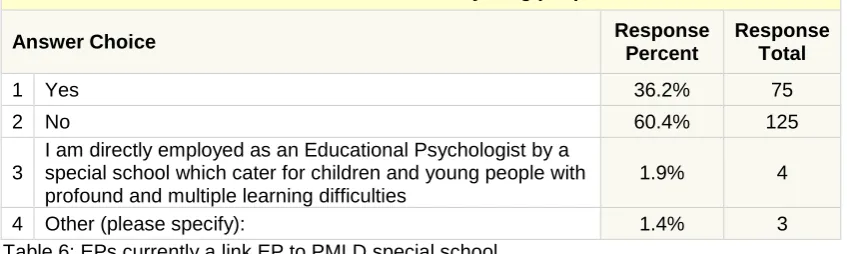
6 EPs currently a link EP to PMLD special school 82 7 EP’s main point of contact within their PMLD
special school
85
8 Amount of contact special schools had with an EP 2015-2016
87
9 Frequency of EPs visits to their special school 2015-16
89
10 Contribution EPs reported having made to PMLD special schools
92
11 Work special schools identified EPs had carried out in their schools 2015-16
93
12 Who should work with PMLD special schools: EP responses
99
13 Special schools’ rating of their relationship with their EP
111
14 Identification of contribution EP respondents would like to make to their special schools
113
15 What special schools would like to see from EP contribution
115
16 Areas of training EP respondents feel they can offer to PMLD special schools
122
17 Training special schools would like to receive from EPs
xiii
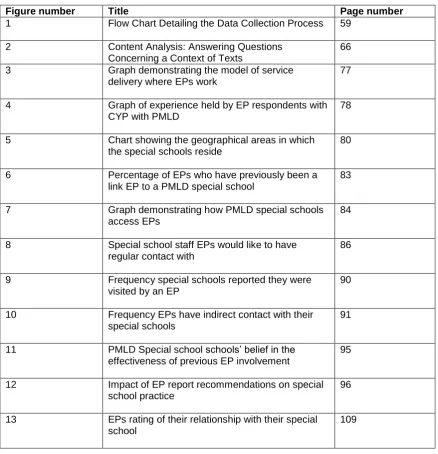
[image:13.595.108.547.86.541.2]List of Figures
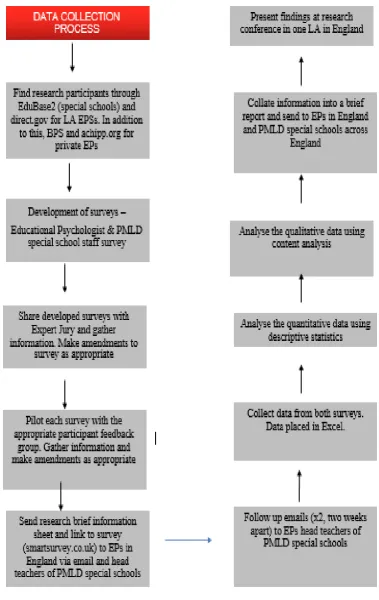
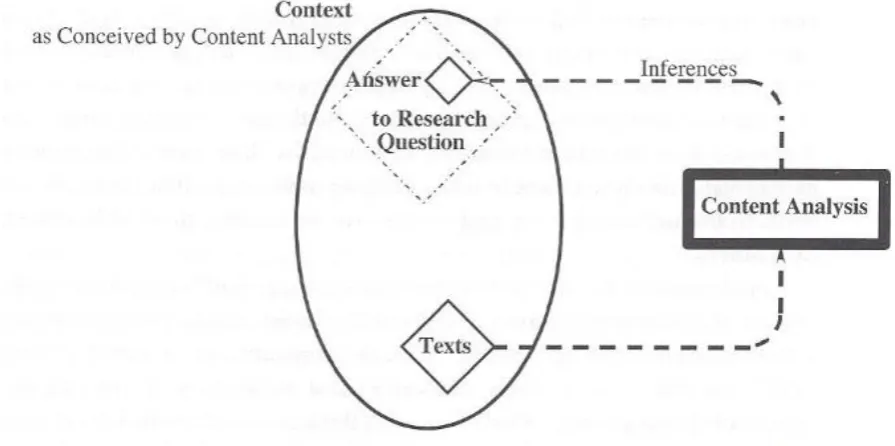
Figure number Title Page number
1 Flow Chart Detailing the Data Collection Process 59 2 Content Analysis: Answering Questions
Concerning a Context of Texts
66 3 Graph demonstrating the model of service
delivery where EPs work
77
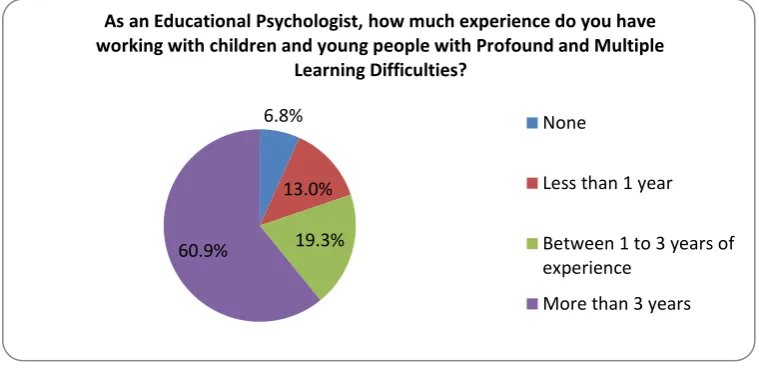
4 Graph of experience held by EP respondents with CYP with PMLD
78
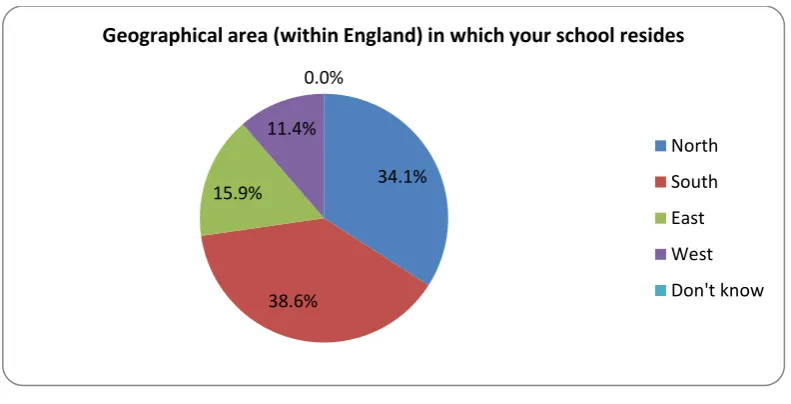
5 Chart showing the geographical areas in which the special schools reside
80
6 Percentage of EPs who have previously been a link EP to a PMLD special school
83
7 Graph demonstrating how PMLD special schools access EPs
84
8 Special school staff EPs would like to have regular contact with
86
9 Frequency special schools reported they were visited by an EP
90
10 Frequency EPs have indirect contact with their special schools
91
11 PMLD Special school schools’ belief in the effectiveness of previous EP involvement
95
12 Impact of EP report recommendations on special school practice
96
13 EPs rating of their relationship with their special school
1
Chapter 1: Introduction
1.1. Introduction to the Current Chapter
This chapter introduces the research and the context within which it was
undertaken. It begins with a definition of the primary terms used in the research, in order to aid the reader’s understanding (1.2). Next, the current research is
placed in the national context (1.3) in addition to the local context (1.4).
Educational Psychology Services (EPS) delivery model is discussed (1.5) alongside the ‘unique’ setting of special schools, in particular those which cater
for children and young people (CYP) with PMLD (1.6). Legislation related to
CYP with Profound and Multiple Learning Difficulties (PMLD) is then described
(1.7). Next, the role of the Educational Psychologist (EP) in supporting PMLD
schools is explored (1.8) alongside that of other multidisciplinary professionals
(1.9). The chapter then explains the purpose of the research and what led the
researcher to undertake this research (1.10). Finally, the research questions are
stated (1.11) and the chapter is summarised (1.12).
1.2 Definition of Terms
Some of the regularly used terms within this research are explained to facilitate the reader’s understanding. This is necessary as there is a great range of
terminology used within society and the educational settings for CYP with
special educational needs (SEN). The author begins with exploring definitions
related to profound and multiple learning difficulties (PMLD), an area of focus in
2
(SEN) and special school provision in England are defined, as they represent
the other focus area of the current research related to educational settings for
CYP with PMLD. Lastly, definitions of children and young people are briefly
explored.
1.2.1 Profound and Multiple Learning Difficulties: Definitions
Thinking around CYP with profound and multiple learning difficulties (PMLD) is
said to vary amongst theorists (Jones, 2005). The World Health Organisation
(1992) defined CYP with PMLD as those having an IQ under 20 (WHO, 1992 as
cited in PMLD Network, 2001). An emphasis on a range of impairments,
including cognitive, personal and skill deficits with the perception of
deterioration of these skills has been highlighted (Ouvrey, 1987 as cited in
Jones, 2005). Ouvrey (1987)
Simmons and Bayliss (2007) note that in addition to their cognitive delays, they
also experience additional forms of disability such as sensory impairment and/or
physical. As such they are highly dependent on others for their basic care
needs and considered to have lifelong support needs (Carnaby & Cambridge,
2002 as cited in Simmons and Bayliss, 2007).
Lacey and Ouvrey (1998) provided a more holistic and positive definition of
PMLD, a shift away from the deficit model, which represented a collaborative
approach between those involved in supporting the CYP with PMLD in addition
to the consideration of the abilities as well as the profound difficulties they
experience (Lacey & Ouvrey, 1998 as cited in Jones, 2005). Simmons and
3
as having PMLD’s individual and diverse abilities in addition to each child
individually in order to understand the behaviours and interactions of each CYP
(Simmons and Bayliss, 2007).
The Special Educational Needs and Disability (SEND) Code of Practice (CoP)
(Department of Health & Department for Education, 2015) states that children
with PMLD are likely to have severe and complex learning difficulties as well as
physical difficulties and/or sensory impairments. This is encompassed under the
Cognition and Learning area of need in the CoP.
The literature suggests that profound and multiple learning difficulties and
profound and multiple learning disabilities are often used interchangeably. The
PMLD Network argues that the need for clarity and consistency in terminology is essential so that ‘the population of children and adults with PMLD can be
counted and, more importantly, their needs fully understood’ (PMLD Network,
2001). For clarity, the term profound and multiple learning difficulties will be
used in the body of this research thesis, in line with the definition the SEND
CoP offers.
1.2.2 Special Educational Needs
In 2014, the SEND CoP was published (Department for Education and Department of Health, 2015). The SEND CoP states that ‘a child or young
person has SEN if they have a learning difficulty or disability which calls for special educational provision to be made for him or her’ (2015, p15). The
4
the previous statement of SEN which the children and young people received to
an EHCP. It is likely however that a large majority of the CYP with PMLD
currently in specialist provision were assessed following the legislation outlined
in the 2001 code of practice (DfES, 2001). This is in addition to those who have
been assessed under the new code of practice and received a transfer of their
statement to an EHCP.
In January 2015, the Department for Education (DfE) reported that 15.4% of
pupils in England were identified as having SEN (DfE, 2015) - this equates to
1,301,445 pupils. It is noted that there is a decrease since 2010, due to the
decrease in SEN without an Education, Health and Care (EHC) plan. There are
currently 2.8% of pupils in schools in England who have a statement of SEN or
an EHC plan. This is equal to 236,165 pupils.
1.2.3 Special Schools and Types of Provision
Of the 2.8% of children with a statement of SEN, 40.5% of them attend a
specialist provision maintained by the LA (DfE, 2014). Additionally, there are
independent specialist provisions. Special schools are increasingly catering for
CYP with PMLD, often providing a separate provision for these students with
specific needs within their intake of other needs, including SLD.
The government states that special schools with pupils aged 11 and older can
specialise in 1 of 4 areas of SEN. This includes communication and interaction;
cognition and learning; social, emotional and mental health and sensory and
5
categories in order to reflect the special needs they cater for, such as ASD or
hearing impairment (Gov.UK, 2017).
1.2.3.1 Local Authority Maintained Special Schools
Many special schools are overseen or ‘maintained’ by the LA. These includes
voluntary-aided schools, the majority of which are faith schools and voluntary
controlled schools directed by the LA. Community special schools are controlled
and managed by the LA, who employs the staff, owns the building and land and
sets the admission arrangements. Finally, foundation or trust special schools
are schools run by their governing body who employ the staff and set own
admissions criteria.
1.2.3.2 Independent Special Schools
Some special schools are independent of the LA. The Children and Families Act
(2014) gives parents and young people the right to express a preference for
independent specialist provision during the EHCP process. It must however be defined as an ‘Independent Special School’ under section 41 of the Children
and Families Act 2014 for the LA to have a duty to name this provision (DfE,
2014). Those not named as an Independent Special School do not have to
adhere to the SEND CoP, which means provision for those with SEN can vary
greatly between different, non-special independent schools. They are however
6
1.2.3.3 Non-maintained Special Schools
Non-Maintained Special Schools (NMSS) are schools for children with SEN
approved by the Secretary of State for Education under Section 342 of the
Education Act 1996 as independent special schools. They teach children with
SEN, are independent of the LA control and run on a not-for-profit basis. They
also must demonstrate that they operate at a level at least equivalent to state
maintained special schools (DfE, 2015).
1.2.4 Children and Young People
The UN Convention on the Rights of the Child defines a child as everyone
under 18, with the UK ratifying this convention (UN General Assembly
Resolution 44/25, 1989). Again, the United Nations defines persons between
the ages of 15 and 24 as youth or young people (UN General Assembly 56/180, 2001). In the SEND CoP, a ‘young person’ is considered to be a person over
compulsory school age (16) and under 25, whilst a ‘child’ is below 16 years old.
This research aims to investigate primarily the contribution EPs make to special
schools which cater for CYP with PMLD, as defined by the CoP.
1.3 National Context
A significant increase in the number of CYP with PMLD has been reported by
head teachers of special schools within the UK (Male & Rayner, 2007). More
7
mainstream environment, leaving a large proportion (83% or 8,736) in special
schools (Public Health England, 2014).
Indeed, the vital need to prepare for the impact in the education system as
special schools receive more profoundly disabled young children has been
emphasised (Carpenter, Egerton, Brooks, Cockbill, Fotheringham & Rawson, 2011). As highlighted in this report, one governor reported “the diverse range of
children…is causing us to restructure our school” (op cit., p7). The increased
levels of support CYP with PMLD require as learners has also been noted,
presenting with diverse abilities and individual characteristics and behaviours
which requires appropriate education (Jones, 2005).
Professionals must therefore be prepared to meet the challenges of the changing demographic makeup of students entering the nation’s schools
(Ysseldyke, Burns, Dawson, Kelley, Morrison, Ortiz & Telzrow, 2006). This is
particularly pertinent to the role of the EP, whose role includes not only
supporting and responding to the needs of the CYP but also supporting the
schools within which they reside.
Several reports have also noted that special schools want more specialist
advice in order to enable them to function in an effective way, with the
suggestion that EPs need to develop particular specialism to be used as a
source of knowledge or expertise when working with children with the most
severe and complex needs (DfEE, 2000; Farrell, Woods, Lewis, Rooney,
Squires, & O’Connor, 2006). The DfEE report (2000) noted that special schools
8
EPs about particular types of special needs because they engage with them on
a daily basis (DfEE, 2000).
This is reiterated in the Department for Education’s ‘Support and aspiration: A
new approach to special educational needs and disability. A consultation’
(2011). In this paper, the widening role of the EP is discussed. It is suggested that EPs can ‘help develop the skills of teachers and other professionals
working with pupils with SEN’ (DfE, 2001, p135). In addition to this, it is
suggested that when EPs are deployed to work directly with families, they can help parents understand their child’s needs and guide them in the support
required to help the child fulfil their potential.
1.4 Local Context and Background
Although the current research takes place on a national scale, there is also an
important local context within which it can be placed. The EPS within which the
researcher is placed has long considered their role within the specialist
educational provisions in the county.
Having worked within special schools across two counties and as a trainee EP
within a large LA EPS, there appears a prevailing discourse regarding complex
relationships between EPSs and special schools. Professionals in both EPS
and special school settings have provided support for the belief that this may be
an enduring issue across many LAs. One LA indeed responded to this issue by
carrying out a small appreciative enquiry piece of work which explored three LA
9
evaluation of the work the EPs carry out but also what special schools would
like EPs to be able to provide in the future, with the aim of building more
positive working relationships. This approach highlights that it may be, in part,
the perceived contribution of the EP, which is an important factor in this.
1.5 Educational Psychology Services’ Delivery Model
Educational Psychology Services (EPSs) vary in regards to their structure and
model of service delivery. Some are funded by the LA whereas others offer a
part traded model. This means that educational institutions can purchase ‘blocks’ of time from the EPS in addition to the statutory time provided by the
local authority. Fully traded models exists by educational institutes buying in all
additional time to that given to providing statutory advice, which is funded by the
LA.
There is also an increasing number of EPs working in private practices or as
independent practitioners. Furthermore, there is a very small proportion of
special schools that have an EP who works full time in their special school. EPs
can also be employed directly by other services such as Child and Adolescent
Mental Health Service (CAMHS), voluntary and charitable organisations, social
enterprises, schools and school groups (both state and independent sector) and
private consultancy firms. Some EPs are also employed as university lecturers
10
1.6 ‘Unique’ Specialist Educational Provision for CYP with PMLD
Special schools are a unique form of provision (Rayner, Gunter, Thomas, Butt,
& Lance, 2005). Considering the needs of the CYP with PMLD, they often
require alternative and highly different resources, pedagogies and curricula
based on their individual needs. Furthermore, it also concerns the wider context
of the special school itself and the staff who work within it (Julian, 2002; Aires,
2000). Research has shown a significant positive association between the
number of LSAs employed and the proportion of the pupils with PMLD in
addition to their understanding of pedagogical approaches required and
learning opportunities provided for CYP with PMLD (Male & Rayner, 2007;
Simmons & Bayliss, 2007). EPs, with knowledge of a wide variety of disabilities
and professional practice, may thus be well placed to provide training when the
capacity is not available within the schools (Farrell et al, 2006).
In addition to developing understanding and skills related to the education of
PMLD CYP, previous research indicates that there are significant emotional
pressures which impact on staff that are particular to those working with pupils
with PMLD. This includes a relatively high prevalence of challenging behaviour
and characteristics which can make interactions difficult and potentially less
satisfying for school staff (Ware, 1996; Kiernan & Kiernan, 2004). The report
that the environment of a PMLD special school may be more emotionally
demanding than other settings suggests that there may be a role for the EP in
supporting them via avenues such as supervision. Skills possessed by EPs
11
individuals from different professional backgrounds work in reflective ways and
enhance practice (Farrell et al, 2006; Dunsmuir & Leadbetter, 2010).
Special schools are also known to host a variety of support services for their
CYP. Research has found a significant positive association between the
number of PMLD students and the number of hours provided by an
Occupational Therapist (OT), Physiotherapist and Speech and Language
Therapist (SLT) in addition to a variety of other support services (Male &
Rayner, 2007). This is said to bring additional work pressures and demands for
staff to be able to work as part of a cohesive and effective team (Aires, 2000).
Effective training for staff in these environments could include training on
effective multi-agency working practices and as EPs are experienced in working
as part of a multiagency team, they may be well placed to provide this (Aires,
2000).
Special schools are said to value, and indeed want more time for the EPs to
support the parents of the children in their school (DfEE, 2000). Research
focused on parents of children with PMLD highlighted that parents may need additional support and guidance due to their child’s additional complex needs
(de Geeter, Poppes & Vlaskamp, 2002). Parents are reported to experience heightened concerns around their child’s future, more medical problems as well
12 1.7 Legislation
Historically, students with PMLD would have been considered ‘uneducable’ and
unlikely to attend any type of formal schooling (Varma, 2008). The 1970
Education (Handicapped Children) Act saw children with severe and profound
learning difficulties moved from care settings to special schools, transferring the
responsibility to the Department of Education and Science (GB.DES, 1970).
Article 2 of the First Protocol: Right to education of the Human Rights Act 1998,
states that no one can be denied the right to an education. This includes the
right to an effective education which is adequate and appropriate and access to
existing educational institutions.
The Salamanca Statement (UNESCO, 1994) states that every child has its own
individual traits, interests, abilities and learning needs and that mainstream schools with an ‘inclusive orientation are the most effective means of combating
discriminatory attitudes, creating welcoming communities, building an inclusive society and achieving education for all’.
The SEND CoP (2014) is a national statutory guidance for organisations which
work with and support CYP who have SEN or disabilities. It resulted in an
integrated assessment and where appropriate single EHCP for the support for
those with more complex needs. The CoP provides statutory guidance on
duties, policies and procedures relating to Part 3 of the Children and Families
Act 2014. In addition to this, the CoP covers the 0-25 age range, representing a
change in the practice of EPs who previously had primarily worked with
13
Furthermore, there is an increased emphasis on the participation of children,
young people and parents in decision making.
Guidance is provided on joint planning and commissioning of services ‘to
ensure close co-operation between education, health and social care’ (op. cit.
p14). EPs are referred to throughout the CoP in regards to assisting in better
identifying needs and offering early support. It is noted that schools should work
closely with the LA in making appropriate requests for specialist services which
includes EPs. EPs also retained their role in providing psychological advice and
information for an EHC plan needs assessment. It has been noted that EPs
should remain involved in statutory assessment for children with severe and
complex needs (Farrell et al, 2006). Moreover, it was acknowledged in the Green Paper that ‘EPs can make a significant contribution to supporting
families’ (DfE, 2001. p104). This provides an additional avenue through which
EPs may be able to contribute to PMLD special schools.
The SEND CoP provides a stronger emphasis on high aspirations and
improving outcomes for children and young people, in addition to helping those
with SEND make a successful transition to adulthood. It has been said that
outcomes for CYP continue to be poor for those with PMLD.
1.8 The Role of the Educational Psychologist
EPs are said to have a perennial obsession with reflecting on their role with the
professional having difficulty in finding confidence in its role and contribution
14
EP to CYP with SEN took place in mainstream primary and secondary schools
(Boyle & MacKay, 2007). Other research including special school teachers was
conducted outside of the UK in the United States (Gilman & Medway, 2007).
Furthermore, two papers published by the DfEE (Kelly & Gray, 2000 and
Department for Education and Skills (Farrell et al, 2006) included views from
both mainstream and special school teachers on the role of the EP.
In Farrell’s report, all respondent groups identified an important role for EPs in
working with children who have severe, complex or challenging needs (Farrell
et al, 2006). One paper explored the potential role of the EP in relation to CYP with PMLD’s inclusion into mainstream schools (Wills, 2006). A variety of
different opportunities and contributions EPs could provide to facilitate inclusion,
including direct training and group work to support social inclusion were
highlighted. Furthermore, it has been noted that EPs should remain involved in
statutory assessment for children with severe and complex needs as this may
be an area in which EPs could make a significant contribution (DfE, 1998;
Farrell et al, 2006).
Previous literature has predominantly focused on the contribution of the EP to
mainstream school settings (Gilman & Gabriel, 2004; Boyle & Mackay, 2007).
The contribution of the EP specifically to PMLD special schools is yet to be
researched however and indeed, this will be the first time the views of the EP
15
1.9 Multiprofessional Working with Children and YP with PMLD
It is argued that multidisciplinary collaboration is believed to be very important
for the education of pupils with SEN, particuarly for those pupils with the most
severe disabilities. The SEND CoP, as highlighted above, has placed renewed
emphasis on the importance of professionals working together for the interests
of the CYP. Whitty and Campbell (2004) argue that educational intervention
alone cannot result in social inclusion and justice but that inter-agency working
may instead provide the answer. The PMLD special school setting is said to be
predominantly multi-professional, with one report describing how any one child
can be seen in school by up to 25 different professionals (Aires, 2000).
Strogilos, Lacey, Xanthacou & Kaila (2011) focused on the Educational context
in Greece, referring to a law passed in 2000 (Law 2817/2000) which increased
the number of health and social professionals working in schools. It is argued
that the change in category of all health and social professionals working in schools from ‘special staff’ to ‘special educational staff’ was an important step
for the inclusion of health and social professionals into the educational system and the creation of a similar ‘reality’. This legislation thus placed teachers and
other professionals together in some schools although it continued to be
questioned how much this led to increased collaboration.
Wright and Kersner (1999) from their survey of 54 physical disability (PD)
special schools across England found, on average, SLTs spent two and a half
days a week working with children and their teachers, although this varied
16
could be as many as 10 adults in a class at any one time. EPs however were
not mentioned amongst the professionals in the classroom.
1.10 Purpose of the Research
Government legislation and reports clearly acknowledge the role for EPs in
working with CYP with PMLD. It is also evident that the perceived needs within
the context of a PMLD school differ markedly to that of mainstream schools and
indeed to a certain degree, other special schools. The existing body of research
is yet to explore the perceived contribution of the EP to special schools for CYP
with PMLD. This is what the current research aimed to do. This was achieved
through gaining the perspectives of both EPs and PMLD special school staff via
a nationwide survey, which was created specifically to explore the issues raised
in previous research which has been highlighted above. This information was
collated into descriptive statistics and qualitative information to provide a broad
overview of the current picture of the EP contribution. It is hoped that by doing
this, this study will provide a much needed insight into the current and potential
contribution EPs can provide to PMLD schools and go some way to informing
future EP practice.
1.11 Research Questions
This is an exploratory piece of research. The research questions which drove
17
What is the current contribution of the Educational Psychologist to special
schools which cater for children and young people with profound and multiple
learning difficulties from the perspective of the Educational Psychologist?
What is the current contribution of the Educational Psychologist to special
schools which cater for children and young people with profound and multiple
learning difficulties from the perspective of special school staff?
1.12 Chapter Summary
This chapter began by presenting definitions of various important terms used within this research, in order to aid the reader’s understanding (1.2). The
research was then placed within a national (1.3) and local context (1.4). The
different EP service delivery models were then explored (1.5) alongside the
special school settings for CYP with PMLD (1.6). Legislation and its relevance
to the current research was then discussed (1.7). The role of the EP (1.8)
alongside other multiprofessionals working with CYP with PMLD was then
explored (1.9). The chapter finished by outlining the purpose of the research
18
Literature Review
2.1 Introduction to the Literature Review
This chapter begins by outlining the search strategy that the author used to
develop and refine the systematic literature search (2.2). This explicitly states
the search terms used, in addition to the inclusion and exclusion criteria applied.
Due to the restricted research and literature which has been conducted on the
current contribution of EPs to special schools for children with PMLD, the broad
areas which are covered in prior literature are identified and a summary
provided. These have been categorised into specific subject themes for ease of
the reader (2.3).
Next, specific research identified in the systematic literature review in addition to
government research papers and those found through hand searching are
further explored (2.4). These are again categorised to create a framework
including; What are EPs currently providing to (special) schools and what do
schools (and EPs) want? (2.4.1), How do other professionals currently
contribute to special schools? (2.4.2), How have the views of Educational
Psychologists and (special) school staff previously been gained? (2.4.3) and
Discrepancies and barriers to practice (2.4.4). The context in which this
research has been conducted is then considered (2.5) and Conclusions are
made linking previous research to current research aims (2.6). Finally, the
19
2.2 Details of Systematic Literature Search
A systematic literature review was carried out on 11/08/2016 to identify and
explore previous relevant research on the research area highlighted in the
previous introductory section. It also acted to highlight the current gaps in the
research and the unique contribution that this current study will add to the body
of knowledge. The literature search was conducted through EBSCOHost Web. The search included ‘PsycINFO’, ‘PsycARTICLES’ and ‘Education Research
Complete’ databases.
A variety of searches were conducted using different terminology and variation
of combinations in order to try and capture as much of the relevant previous
research as possible. EBSCO always search terms to be carried out using
and/or functions which allows different terminologies to be included. The search was limited to ‘Peer Reviewed Articles’. The search was conducted using the
following search terms (please see Appendix A for a detailed description of
inclusion and exclusion criteria):
‘Profound and Multiple Learning Difficult*’ OR ‘Profound Intellectual
Disabilit*’ OR ‘Significant learning disabilit*’ OR ‘Mental Retardation’
AND ‘Special School’ OR ‘Special Education’ OR ‘Specialist provision’
AND ‘Educational Psycholog*’ OR ‘Psycholog*’ OR ‘Support Services’
OR ‘Professional’ OR ‘Multidisciplinary Team’
20
applied. This included only journals written between the years 2000-2016, those
which had been peer reviewed in addition to English language titles only.
This generated N = 120 journal articles. 21 were removed as duplications,
resulting in N = 99 journal articles. From these results the titles and abstracts
were reviewed in order to establish their relevance to the research question. It
was found that none of the articles generated (N=0) related specifically to the
research question.
Themes however emerged from exploring the existing research highlighted in
the systematic literature review detailed above. These are still of interest to the
current research as they provide information as to what areas relating to PMLD
have been previously researched. A number of 89 articles were excluded as
they primarily constituted literature reviews and/or were not situated within the
school context and thus deemed unrelated to the current research. 13 articles
were identified for further discussion from the systematic literature review in
addition to 6 which were hand searched from the articles identified (See
Appendix B).
These articles related to the education and wellbeing of CYP with PMLD within
the school setting; all areas EPs have experience of working within. The areas
identified were also guided by literature discussed in the introduction and
included: the presentation of challenging behaviour, educational provision for
CYP with PMLD, Special schools and staff working with CYP with PMLD and
21
2.3 Summary of Previous Research Findings
Much of the research which resulted from the search above has focused on
areas such as challenging behaviour, specialist school staff, specific learning
needs of children with PMLD and facilitating participation of those with PMLD,
which formed the themes of the present critique of the literature. The majority of
the articles discussed below have gained the perspective of school staff (both special and mainstream, or ‘regular’ schools as they are referred to in some
research) and parents. Very few studies outside of the government papers
reported later have gained the views of professionals in regards to their
perspective of their contribution to special schools, particularly in relation to
those catering for children and YP with PMLD.
Much of the research discussed below has been conducted outside of the
United Kingdom. The cultural context and its impact on the findings and relation
to practice in the UK is included in the critique.
2.3.1 Challenging Behaviour and PMLD
A considerable amount of the research found has focused on the challenging
behaviour presented by children and YP with PMLD. Emerson defined challenging behaviour as ‘culturally abnormal behaviour(s) of such intensity,
frequency or duration that the physical safety of the person or others is likely to
be placed in serious jeopardy, or behaviour which is likely to seriously limit the
self-22
injurious behaviour, stereotypical behaviour and aggressive/destructive
behaviour (Poppes, van der Putten & Vlaskamp, 2014).
It is argued that challenging behaviour is very common in those with profound
and intellectual multiple disabilities (PIMD) (Poppes, Van der Putten &
Vlaskamp, 2010). Those with PIMD are said to be more likely to suffer from
health difficulties such as seizures and pain due to issues such as constipation
and respiratory problems and an increased difficultly in communicating wants
and needs is said to confound these issues (Matson, Dixon & Matson, 2005;
Watt-Smith, 2009 as cited in Poppes et al., 2010). It is said that these conditions
are often related with the manifestation of challenging behaviours (op. cit.).
Broomhead (2013) explored the perceptions of both parents and teachers
regarding differential treatment or stigma experienced by pupil with challenging
behaviour. This study included children with a variety of needs, including PMLD.
Semi-structured interviews were carried out with 10 parents of children with
challenging behaviour in addition to 15 educational practitioners employed in
both mainstream and behavioural, emotional and social difficulties (BESD)
schools. Difficulties in managing challenging behaviour in mainstream schools,
lack of time for teachers to explore underlying causes of the behaviour and lack
of training in this area are highlighted.
The study reported that three children of parents interviewed were receiving support on School Action Plus, ‘receiving support from external services such
as Educational Psychology’ (p5) although EP involvement is not verified in the
study. Data was collected via semi structured interviews with parents and via
23
mainstream and eight in a special school for pupils with BESD. From the interviews, two avenues of thought were highlighted regarding ‘unwanted’ or
‘preferential’ treatment perceived by parents and/or professionals to be
experienced by pupils with challenging behaviour.
The study does not specifically report on those students with PMLD and how
this relates to their experience in both mainstream and special schools. When
further, in-depth information is included in the study, they were related to
children with a specific need of BESD, and consequently little information can
be taken from it for the purpose of the current research.
Other studies have focused more specifically on challenging behaviour related
to children and YP with PMLD. Poppes et al., 2014 explored how challenging
behaviour is addressed in daily practice in 6 residential care facilities in the
Netherlands. They used a stratified sample of 30 people selected from an
existing database of 181 children and adults with PIMD on the basis of those with ‘the most severe and frequently reported challenging behaviours’ (p128).
It was reported that all direct staff had access to healthcare psychologists in all
facilities and used Individual Plans (IPs) drawn up by the direct staff under the
responsibility of the healthcare psychologist. It was found that this sample group
presented challenging behaviour on an hourly or daily basis. Despite this, it was
found that 48.2% of the challenging behaviours observed by staff who worked
directly with those with PIMD was not noted in these IPs. It was also reported
that the nature of the information recorded was not specific which in turn could
24
behaviour was reported in this manner (p134). The results present implications
for understanding the root cause of the behaviour presented in those with PIMD
and the importance of record keeping in informing future practice and the type
of support required for individuals. The sample size here was relatively small
(n=30) affecting the external validity of the findings. The sample was also
purposefully chosen to represent those demonstrating the highest prevalence,
frequency and perceived severity of challenging behaviour.
2.3.2 Curriculum/Education Provided for CYP with PMLD
Many papers have written about the need for a distinctive, tailored curriculum
for CYP with PMLD (Byers, 1999; Male & Rayner, 2007). Head teachers of
special schools catering for PMLD noted that this pupil population presented
particular challenges in terms of providing a broad, balanced and relevant
curriculum (Male & Rayner, 2007 as cited in DfE, 2013). Furthermore, Byers
(1999) noted that EPs have a role in enabling mainstream schools to have the
skills and confidence to adapt and deliver the curriculum in an effective way.
Goss (2006) argued that teaching and learning for pupils with severe and
multiple learning difficulties could be enriched by a closer focus on the CYP
emotional factors in addition to carefully identifying what is meaningful to them. He refers to this as ‘meaning-led’ learning. Goss’ research represents a small –
scale piece of qualitative research which attempts to bring together
psychotherapy and special educational needs. Five in-depth interviews with
parents of CYP with PMLD (n = 3) or SLD (n = 2) aged between 7- 17 years
were conducted. Here, parents informed the researcher how their child learns,
25
be enhanced. Interestingly, the participants were selected by teachers in two schools on the basis of who they felt ‘would be best placed, and most willing to
share the kind of information and insights required for the study’ (op. cit. p214)
and this is important to bear in mind when considering the results of this study.
The subjective nature of the responses is acknowledged by the researcher.
The interviews were semi-structured and contained open questions. Themes
were identified as to how their parents felt their child best learned and included
Intensive Interaction, sensory cues and adults modelling and shared role-playing, if interested. The researcher argues that ‘we can underestimate the
value of perspectives of the people who know a pupil best’ (p216).
Consequently, the author suggests a ‘meaning audit’ for pupils which can be
carried out and incorporated into schools planning cycles whilst acknowledged
that pupil profiles are an established component of teacher planning.
A framework for collecting such ‘meaningful information’ which is said to be two
fold is proposed; from a ‘human circle’ or those who work or come into contact
with the CYP on a regular basis and is likely to involve family, school staff and carers and then the ‘material circle’ which holds information from the human
circle plus information from professionals. Questions are then posed to these
two groups by the class teacher of the CYP through interviews and the data
analysed. In reference to the analysis, it is stated that lists will be drawn up
looking at commonalities and patterns. A systematic process for analysis is not
specified or guidelines provided within this research and thus gives room for the
26
Whilst it is acknowledged that this research is small scale and provides just one example of the use of the proposed ’meaning audit’ from the authors own
teaching practice, it represents an interesting piece of research in the current
context of placing the CYP and parents at the centre of decision making.
Lawson, Waite and Robertson (2005) explored the distinctiveness of curriculum
provision provided for CYP with learning difficulties at 14-16 years (Key Stage
4) in the context of opportunities and challenges. A questionnaire was sent via
post to Key Stage 4 co-ordinators in 413 settings for CYP with severe and
profound and multiple learning difficulties. Attempts to identify those in
mainstream-based provision proved difficult, due in part to difficulties in identifying students ‘labelled’ as having severe or profound multiple learning
difficulties (p13). In total, 125 responses were received. Furthermore, three
meetings were held which involved different professionals such as teachers,
connexions advisers and LEA officers to discuss the curriculum for Key Stage 4.
Case study visits were also carried out to four special schools and two
mainstream schools catering for students with learning difficulties and
discussions with Key Stage 4 coordinators and other Key Stage 4 staff took
place, where possible. This mixed methods approach is a clear strength in this
research.
Quantitative analysis of the data collected from the questionnaires took place
using coding categories derived from two researchers reading the comments.
What methodology underlined this analysis and if the researchers shared and
agreed the same categories for the data is not discussed. The process of
developing the questionnaire is also not highlighted. Following analysis of the
27
including achievement of accreditation, preparation for post-16 and
development of life skills and independence. Differences to Key Stage 3
highlighted by respondents included increased choice and autonomy. Whether
the school catered for students up until 19 or if students left at 16 influenced
whether the students were prepared for the next phase in the same setting or
prepared for moving on.
Whilst this research only focused on Key Stage 4, and is therefore restrictive in
its implication for other ages and stages of the curriculum, it highlights the
distinctive curriculum provision which is required for students with PMLD.
2.3.3 Special Schools and Staff Working for Children and YP with PMLD
Simmons and Bayliss (2007) highlighted the continued challenges and
controversies related to the education of young people with PMLD. They
conducted research into how children with PMLD could be ‘included’ in general
classroom life in a special school designated for children with Severe Learning
Difficulties (SLD). They used an interpretivist methodology and a grounded,
ethnographic approach. Participant and non-participant observation was
employed in addition to informal and formal semi-structured interviews.
Based on 8 weeks of observations, in which the researchers acted as Learning Support Assistants (LSAs), it was concluded that ‘school staff lacked sufficient
understanding of PMLD stemming from few opportunities for additional training resulting in inappropriate educational experiences’ (p21). The strengths of this
study included the opportunity to gain the individual views of the staff within the
28
with children with PMLD and believed they required additional training. It is
important to note however that this research is reflective of only one specialist
provision. It therefore cannot be generalised to all specialist settings who cater
for PMLD and SLD students. Furthermore, many special schools now have
specialist provision within their school for children with PMLD so their unique
needs can be met.
In another qualitative piece of research, Ashdown and Darlington (2007)
reported on the progress and outcomes of a special school reorganisation in
one LA, focusing specifically on the implications of this for the education of
children with PMLD. Here, the importance of co-operative teams and
partnerships with professionals from different disciplines in addition to parents
was emphasised. It is important to note that one of the researchers was
employed by one of the special schools reported on in the paper. Consultations
with parents took place, who shared concerns about the vulnerability of PMLD students when ‘mixed’ with SLD and MLD students. Parents also were reported
to have expressed concern over potential lack of specialist staff as well as
specialist resources. It is not reported however how many parents were
consulted and by whom, the structure the consultations took and how the
consultations were recorded. Furthermore, this report again only focuses on
one local authority so again there is an issue of generalisation of the findings
often associated with qualitative studies.
Richard Crombie, an EP, undertook research based within a special school for children and young people with both SLD and PMLD aged 2 – 19 years using
29
collected via observations (including both Narrative and Engagement Profiles)
which were primarily focused at staff behaviours. Subsequent characterisation of practice included sensitivity to needs, affirmation of children’s own
achievements, sharing the experiences with the CYP, total engagement with the
CYP in the activities and sensitivity to the CYPs preferences. Empathy was said
to be at the heart of this practice, relating this to both relationships and
communication with the CYP. This was reiterated through consultations
conducted with the parents of CYP who attended the school. Whilst case study
methodology is effective in investigating real world complex issues, it is argued
that findings from case studies cannot necessarily be applied beyond the
specific context studied. (Crombie, Sullivan, Walker & Warnock, 2014).
Jones (2005) paper resulted from a four-year project with 14 teachers of pupils
with PMLD. The researcher used questionnaires and individual and group
interviews as a method of data collection. Teachers completed questionnaires
related to their professional experience and were interviewed about their
training, professional development and personal experience of working with disabilities. Finally, the teachers were put into groups to talk about the ‘nature of
PMLD’ with a focus of the group interview being provided in the form of a video
of 3 pupils with PMLD who presented as very different learners (Jones, 2005).
The authors report that the teachers presented similar views about their
perceived understanding of PMLD; that is, a group of pupils with complex and
multiple learning difficulties who although sharing common characteristics, were
individual and unique. The basis of the pupils difficulties were discussed, such
30
multi-sensory impairment, said to compound the difficulties experienced by the
child.
When reviewing this study, it is pertinent to consider methodological factors and
potential drawbacks which influenced the results collected. It is suggested that
the interview format, which was open-ended, may have resulted in the teachers
experiencing difficulty at first at talking about how they viewed their PMLD
students. The author themselves highlights the possibility that the research
design may have influenced the data provided by the teachers interviewed; ‘Strengths and attributes of the pupils were not apparent in the data, but this
could indeed be a reflection of the limiting impact of the research design’ (p383)
The impact of the research design on the resulting data is an important lesson
to bear in mind in this current research. The author also reflects on their
influence as the researcher on the questions asked, something which is
included in the ‘researcher’s position’ in the current study.
Martin & Alborz (2014) conducted a qualitative study at a special school in
England, exploring the views of 17 teaching assistants (TAs) and 5 teachers on
the extent to which teaching assistant training had equipped them to support
students with complex learning needs. The study took place in a
non-maintained special school for pupils with PIMD with limited or no verbal abilities.
23 staff members volunteered to be part of the study, 17 of which were teaching assistants. These participants were self-selected but ‘the researcher was
sufficiently familiar with the staff to know the participants were representative of the staff as a whole’ (p313). This is an interesting comment in itself as it
31
One-to-one semi structured interviews were conducted with nine staff and 14
staff completed questionnaires. How the participants were assigned to each
method of data collection however is not stated. It was found that the senior
management placed emphasis on education and training of their staff, which
included in-service training and an induction period. TAs commented on the
difficulty of finding appropriate external training opportunities. TAs also reported
requiring more in-depth training on communication tools and strategies, given
the complex needs of the students. It was found that whilst the expectation was
that this would be provided by the class teacher, this did not routinely happen.
Further to this, training on managing challenging behaviour was found to focus
on behavioural interventions rather than in-depth education about what
underpins the emergence of behaviour in CYP with PIMD. It was reported that
knowledge sharing amongst staff tended to be informal and there was not a culture of ‘seeking out expertise’ (p318). Whilst this study only took place in one
special school, it does provide some interesting information regarding the
training and experiences of teaching assistants working with CYP with PIMD.
2.3.4 Gaining the Views and Including CYP with PMLD
The SEND CoP has acted to emphasise the importance of the voice of the child
or young person, enabled through pupil participation. When considering gaining the voice of CYP with PMLD, this can be seen especially important; ‘Children
and young people everywhere – across all regions and sections of society –
want their views, experiences and suggestions listened to. It remains true that the hardest voices to reach are the ones that we most need to hear.’ (Learning
32
both a pragmatic and moral motive for pupil’s views to be heard with children
having both a lot of information to contribute themselves as well as the right to
be heard (Gersch, 1996 as cited in Harding, 2009).
Hayes (2004) makes reference to visual annual reviews developed by EPs in Nottingham City alongside a special school for children with SLD. Hayes’ study
evaluated the effectiveness of the method used, which involved preparing the pupil before the review and running the review itself. The pupil’s answers were
prepared for the meeting using forms of communication accessible to them. The
EP facilitated this by providing the TA who supported the CYP with a list on
likes/dislikes, what they felt they were good at or needed to work on at home or
school, questions around their learning in addition to friendships, independence
and inclusion.
The evaluation of this method was based on a review of one Year 6 pupil with
moderate learning difficulties (MLD). Adult participants were asked to record the
perception of how effective it was via a structured questionnaire. The pupil was
also able to give feedback through the use of visual symbols. It was found that
all adults rated the form of review as very good, commenting that it was more
child centred and involved the young person more than other methods of review. These ‘other’ methods of review are however not named. It would be
interesting to know what additional experience of annual reviews those adults in
this meeting had and were drawing on in order to compare. Moreover, the TA,
LEA support teacher and mother felt that there was no difference in the amount