Equal Employment
Opportunity (EEO)
program status report for
fiscal year (FY) 2014
Table of contents
Table of contents ... 2
1.
Agency identifying information ... 4
2.
Total employment ... 5
3.
Leadership ... 7
4.
List of subordinate components covered in this report ... 8
5.
Executive summary ... 9
5.1
Essential Element 1: Demonstrated commitment from agency
leadership ... 11
5.2
Essential Element 2: Integration of EEO into agency’s strategic mission13
5.3
Essential Element 3: Management and program accountability ... 15
5.4
Essential Element 4: Proactive prevention ... 16
5.5
Essential Element 5: Efficiency ... 18
5.6
Essential Element 6: Responsiveness and legal compliance ... 20
6.
Workplace analysis ... 22
6.1
Permanent workforce: participation of class grouping ... 24
6.2
Temporary workforce: participation of class grouping ... 25
6.5
New hires: temporary ... 31
6.6
New hires by mission critical occupations ... 33
6.7
Non-competitive promotions ... 41
6.8
Separations ... 44
6.9
Awards ... 54
7.
Certification of establishment of continuing equal employment
opportunity programs ... 57
8.
EEO program status report ... 59
9.
EEO plan for attaining the essential elements of model EEO
program ... 60
10.
EEO plan to eliminate identified barrier ... 68
11.
Special program plan for the recruitment, hiring, and
advancement of individuals with targeted disabilities ... 82
1.
Agency identifying
information
TABLE 1: AGENCY IDENTIFYING INFORMATION
Part A
1. Agency Consumer Financial Protection
Bureau
2. Address 1700 G Street NW
3. City, State, Zip code Washington, DC 20552
4. CPDF Code FR FT
2.
Total employment
TABLE 2: TOTAL EMPLOYMENTData as of September 30, 2014.
Part B
Permanent full-time and part-time
employees 1,187
Temporary employees 232
Employees paid from
non-appropriated funds 0
FIGURE 1: TOTAL EMPLOYMENT
Permanent full-time and part-time employees
1,187 Temporary
employees 232
3.
Leadership
TABLE 3: LEADERSHIPRichard Cordray, Director, Consumer Financial Protection Bureau Part C
Head of agency
Richard Cordray
Director, Consumer Financial Protection Bureau
Agency Head Designee M. Stacey Bach
4.
List of subordinate
components covered in this
report
FIGURE 2: CFPB SUPERVISION REGIONS
Regions
§
Northeast
§
Southeast
§
Midwest
5.
Executive summary
Mission
The Consumer Financial Protection Bureau (CFPB or Bureau) is the nation’s first federal agency
focused solely on consumer financial protection. The Dodd-Frank Wall Street Reform and
Consumer Protection Act (Pub. L. 111-203) (July 21, 2010) (Dodd-Frank Act) created the CFPB
to protect consumers and to encourage fair and competitive consumer financial markets. CFPB
officially began operations on July 21, 2011.
CFPB’s mission is to make markets for consumer financial products and services work for
Americans—whether they are applying for a mortgage, choosing among credit cards, or using
any number of other consumer financial products. CFPB helps consumer finance markets work
by making rules more effective, by consistently and fairly enforcing those rules, and by
empowering consumers to take more control over their lives.
CFPB will achieve its mission and vision through data-driven analysis, innovative use of
technology and valuing the best people and great teamwork. CFPB will use data purposefully to
support informed decision-making in all internal and external functions. CFPB strives to be an
innovative, 21st century agency in its approach to technology. Finally, CFPB invests in
world-class training and support to create an environment that encourages employees at all levels to
tackle complex challenges.
If CFPB achieves its mission, it will have facilitated the development of a consumer finance
marketplace where customers can see prices and risks and can easily make product
comparisons. The envisioned consumer finance marketplace will work for American consumers,
responsible providers, and the economy.
§
Consumer Education & Engagement (CEE)
§
Supervision, Enforcement, & Fair Lending (SEFL)
§
Research, Markets, & Regulations (RMR)
§
External Affairs (EA)
§
Legal (LD)
§
Operations (OPS)
These Divisions work together to:
§
Write rules, supervise regulated entities, and enforce federal consumer financial
protection laws;
§
Restrict unfair, deceptive, or abusive acts or practices;
§
Take consumer complaints;
§
Promote financial education;
§
Research consumer behavior;
§
Monitor financial markets for new risks to consumers; and
§
Enforce laws that outlaw discrimination and other unfair treatment in consumer finance.
This Equal Employment Opportunity (EEO) Program Status Report for Fiscal Year (FY) 2014
highlights CFPB’s accomplishments in FY2014 in establishing an EEO Program and identifies
areas where the Bureau will take further actions to improve its EEO Program. FY2014
presented challenges to, and also identified opportunities for growth in, the CFPB’s EEO
Program. When CFPB uncovered differences in employee performance ratings for FY2013 it
corrected those issues and began to focus with additional rigor on its internal policies and
practices that promote equal opportunity and fairness among employees. During FY2014, CFPB
reaffirmed its commitment to ensuring that talented and diverse staff are treated fairly and with
respect, and Bureau leadership has recommitted to enforcing the standards of fairness that it
expects of the companies and industries it regulates.
The collaboration of the Office of Equal Employment Opportunity (EEO Office), the Office of
Minority and Women Inclusion (OMWI) and the Office of Human Capital (OHC) supports
CFPB’s mission by ensuring fairness and equality under the law for all employees and applicants
for employment and by cultivating a working environment that supports staff in their efforts to
protect consumers. Pursuant to Section 342 of the Dodd-Frank Act, OMWI develops standards
for equal employment opportunity and diversity, which the OHC incorporates into CFPB
Human Capital Management. The EEO Office, OMWI, and OHC monitor the impacts and
results of these standards, cultivate successful policies and practices to reinforce them, and
develop mitigating strategies to strengthen all EEO and diversity and inclusion programs.
CFPB’s EEO Office, which has been internally operated since February 2013, works to ensure
that CFPB complies with all federal laws related to EEO and external civil rights compliance;
provides a neutral forum for the discussion, investigation and resolution of certain EEO matters;
and strives to integrate EEO into CFPB’s everyday work. CFPB’s EEO Office also strives to
empower individuals to participate constructively to their fullest potential in support of the
CFPB’s mission. CFPB’s EEO Office endeavors to ensure that CFPB reflects the rich diversity of
the nation and provides a full and fair opportunity for all employees and applicants, and that
CFPB employees have the working environment that will support them in their efforts to protect
consumers. The EEO Office maximizes its partnership with Bureau leadership, employees,
management, and the National Employees Treasury Union (NTEU) to achieve this vision.
EEO plan action items and self-assessment
CFPB developed and implemented action items for its EEO Plan as set forth in its FY2013 status
report. Throughout FY2013 and FY2014, CFPB implemented most of the action items and made
significant strides in developing a model EEO Program by conducting a self-assessment,
pursuant to MD-715, and incorporating the following essential program elements.
5.1
Essential Element 1: Demonstrated
commitment from agency leadership
Since its inception, the Bureau has been committed to maintaining a workplace that promotes
professionalism and productivity, respects the dignity of all, and embraces transparency toward
and education of employees about their EEO rights and responsibilities. When potential EEO
appropriate corrective action when warranted. For example, Director Cordray elevated OMWI
to his executive office and subsequently directed the office to conduct a series of listening
sessions in the summer of 2014 to determine the veracity of recent allegations of discrimination
and intolerance. The results of those listening sessions are being used to establish priorities for
program development and to drive positive change at the Bureau in support of EEO, diversity,
and inclusion objectives.
Further demonstrating commitment from CFPB leadership, the Bureau ensures that all EEO
policy statements are timely and current. After CFPB issued its initial EEO policy statement on
August 29, 2012, the Bureau re-issued EEO policy statements in February 2013 and April 2014.
The policy statements affirm that the CFPB Director, EEO Director, CFPB managers, and
front-line supervisors will uphold and enforce the principles of EEO. The CFPB Director re-issued an
annual No FEAR Act statement in April 2014, and issued a stand-alone policy statement to all
employees about CFPB as a harassment-free workplace in August 2014.
These policy statements, as well as general EEO program information, were communicated to all
employees using all media available, including the Bureau intranet (e.g.,
http://www.consumerfinance.gov/equal-employment-opportunity/
), and other CFPB-wide
communication avenues such as the Director’s weekly message to all employees, and a rotating
NewsFeed on the intranet. CFPB provides new employees with policy statements during
orientation and again provides them to employees promoted to supervisory ranks. CFPB also
posts EEO information on bulletin boards and stands available throughout the Bureau, in the
EEO Office, and in OHC office space. EEO notices also appear on employee paystubs.
Beyond communicating its commitment to EEO program policies, CFPB management also
enforces EEO policies. Each CFPB supervisor and manager’s performance plan includes
competencies to assess their ability to maintain a diverse workforce, communicate effectively,
and resolve conflict. In FY2015, CFPB will provide managers and supervisors with additional
guidance setting forth behavioral indicators to evaluate actionable support of the EEO Program
at CFPB, including compliance with EEO laws, conflict resolution, and diversity and inclusion.
CFPB employees also have access, via CFPB’s intranet and email, to the policy and procedures
for reasonable accommodation for individuals with disabilities and to the procedures for
reporting inappropriate conduct to the OHC. If inappropriate conduct is reported, the OHC
conducts a management inquiry and imposes corrective action or discipline, as necessary, in line
with guidance set forth in the Farragher/Ellerth line of Supreme Court cases.
5.2
Essential Element 2: Integration of EEO
into agency’s strategic mission
The reporting structure for the EEO Program provides the Principal EEO Official with authority
to carry out a successful EEO Program. The EEO Director has direct access to the CFPB’s
Director, including monthly one-on-one meetings, and EEO officials and staff have the
knowledge, skills, and abilities to carry out the duties and responsibilities of their positions. In
FY2014, the EEO Office further developed its organizational structure and more clearly defined
the EEO staff’s roles and responsibilities—initiatives that will continue in FY2015 and FY2016.
Currently, the EEO Director has authority to ensure implementation of agency EEO action
plans. To underscore the importance of equal employment opportunity and fairness, in
November 2014, the Director moved the EEO Office from being administratively housed within
the Operations Division to the Front Office, renamed it the “Office of Civil Rights” to reflect the
internal- and external-focused civil rights compliance role it undertakes, and more closely
aligned it with OMWI under a new umbrella organization called the “Office of Equal
Opportunity and Fairness.” Subsequent versions of this report will reflect these updated office
titles and structures accordingly.
In FY2014, the EEO Office further supported CFPB’s mission by:
§
Tasking EEO staff to conduct reviews of EEO cases to ensure tactical trends related to
EEO and diversity and inclusion were identified. This allowed the EEO Director to
provide real-time feedback and recommendations to the Director and senior leadership.
§
Securing detailees who possess subject matter expertise in instructional design,
including developing or obtaining EEO training modules/briefings, which can be
delivered upon request.
§
Establishing a senior Attorney-Advisor position, thereby providing the EEO Office with a
total of three attorneys (including the EEO Director) who can help ensure the Bureau is
enforcing EEO laws.
§
Instituting a standing meeting with the EEO Director, OMWI Director, and Chief Human
Capital Officer to ensure efforts are continually made to advance and coordinate EEO
and diversity and inclusion initiatives throughout the Bureau.
The EEO Director and other staff supporting the EEO Program have regular and effective means
of informing the CFPB’s Director and senior management officials of the status of EEO
programs, and are involved in and consulted on, management/personnel actions. The EEO
Director meets monthly with CFPB’s Director, the Bureau’s Chief of Staff, and the Bureau’s
Deputy Chief of Staff. The EEO Director also briefs senior leadership including the Director,
Deputy Director, Chief of Staff, Deputy Chief of Staff, the OMWI Director and all Associate
Directors on a quarterly basis. Following the submission of the Bureau’s FY2013 MD-715 report,
the EEO Office presented to the CFPB’s Director and other senior officials the “State of the
Agency” briefing, which covered all components of the EEO report. Additionally, prior to
making decisions, OHC has invited the EEO Office and OMWI to attend meetings and to
provide comments regarding recruitment strategies, vacancy projections, succession planning,
selections for training/career development opportunities, and other workforce changes. The
new Office of Equal Opportunity and Fairness is exploring opportunities for further integration
with OHC and other management functions within the Bureau.
The EEO Director has authority and funding available to ensure implementation of EEO action
plans. The EEO Office and OMWI made requests for additional resources in FY2013 and
FY2014. To ensure sufficient human resources allocations to the various offices supporting the
EEO Program that are necessary for robust operations, OHC, the EEO Office, and OMWI began
a series of discussions in FY2014 to better define roles and responsibilities and then to assign
additional personnel resources, as necessary. This strategic planning process is ongoing under
the auspices of the CFPB’s Strategy and Project Management Offices, at the conclusion of which
the CFPB expects to reach a decision. CFPB has committed sufficient budget to support the
success of its EEO Program, and the EEO Office obtained full-time contract support during
FY2014.
The EEO Program also allocated sufficient resources to train all new and existing employees,
including on administrative and judicial remedial procedures. No FEAR Act and sexual
harassment trainings are provided to all new and existing employees and are also a mandatory
yearly requirement.
5.3
Essential Element 3: Management and
program accountability
EEO Program officials provide EEO updates to management/supervisory officials regularly. The
EEO Program officials have not coordinated the development and implementation of EEO Plans
with all appropriate agency managers; however, joint meetings with OHC and OMWI on EEO
and diversity and inclusion plans are planned with all division leaders for FY2015 and FY2016.
The Chief Human Capital Officer and the EEO Director meet regularly to discuss whether
personnel programs, policies, and procedures are in conformity with instructions contained in
EEOC Management Directives (MDs). The Merit Promotion Program Policy and Procedures,
and Employee Development/Training Programs are reviewed every 18 months. CFPB is in the
process of developing, with union input, a new performance management system.
CFPB will continue to review findings of discrimination to determine the appropriateness of
taking disciplinary action against employees. When an adjudicatory body finds discrimination,
CFPB will ensure full and prompt compliance with orders accompanying such decisions. OHC
reviews disability accommodation decisions and actions to ensure compliance with its written
procedures and analyzes the information tracked for trends and problems. The EEO Office
provides comments based on any issues raised and also proactively provides feedback based on
trends identified when disability claims are filed with the EEO Office.
CFPB provides training to managers and supervisors in order to ensure understanding of
individual supervisors’ responsibilities under civil rights laws, including the benefits of
Alternative Dispute Resolution (ADR). During FY2014, the EEO Office obtained institutional
support for a new and mandatory, two-day supervisory training led by the EEOC Training
Institute that covered topics including:
§
A History of EEO Laws;
§
The Federal EEO Complaint Process;
§
Reasonable Accommodation;
§
ADR; and
This module has been refined by the EEOC over time and is the typical module it deems
sufficient to meet supervisory training requirements. By November 2014, approximately 85% of
CFPB supervisors and managers had attended this two-day training, and plans exist to offer
additional sessions during FY2015 and subsequent fiscal years to train all remaining and new
supervisors. Anti-discrimination and anti-retaliation training, including information about
merit principles and prohibited personnel practices, is also incorporated into structured
interviewing, new supervisor, and other training modules presented by OHC as well as in
mandatory annual No FEAR Act and harassment prevention training. Additionally, the EEO
Office or OMWI arranged in FY2014 for internal presentations on topics including disability
rights, providing reasonable accommodation, the Part 1614 Complaint Process, retaliation
prevention, preventing and responding to harassment, avoiding age discrimination claims,
unconscious bias, diversity awareness, and complying with EEO laws when hiring.
In FY2014, the EEO Office also worked closely with OMWI and the External Affairs (EA)
Division to provide public and private sector leaders to address the CFPB workforce in support
of heritage month celebrations, including Hispanic Heritage, Native American, African
American History, Women’s History, Asian Pacific American Heritage, and LGBT Pride.
Some divisions and offices have also begun to offer their own additional programs in support of
diversity and inclusion efforts. OMWI is working on an Employee Resource Group policy, in
conjunction with the EEO Office, OHC, and the Executive Advisory Council, for issuance in
FY2015.
5.4
Essential Element 4: Proactive
prevention
CFPB is committed to preventing prohibited conduct before it occurs. The EEO Office offers
forward-facing assistance, including formal and informal training opportunities and day-to-day
assistance through its open door policy encouraging employees to reach out for technical
assistance. Due to an increase in the number of informal and formal complaints filed in FY2014
compared to FY2013, the EEO Office prioritized its existing resources to best ensure regulatory
case-processing requirements were met. As complaint volume stabilizes and the cross-office
strategic planning process ends, the EEO Office expects to allocate expanded resources to
provide additional proactive assistance and prevent unlawful discrimination, harassment, and
CFPB, including OHC and OMWI, conducts analyses throughout the year to identify and remove
unnecessary barriers to employment, including reviewing applicant flow data, survey data, and
other demographic data. The EEO Office has met with the Chief Human Capital Officer, the
Director of OMWI, and Senior Management Officials to identify and assess potential barriers
that may impede the realization of equal employment opportunities. When barriers or
employee challenges are identified, senior management, OMWI and the EEO Office work closely
together to develop solutions and responses. For example, the CFPB’s approach to remediating
performance rating discrepancies discovered in CFPB’s FY2012 and FY2013 performance cycles
was a direct result of collaboration between Bureau executives and the aforementioned program
offices. CFPB’s OHC and OMWI have also analyzed the workforce based on race, national
origin, sex and disability, and the EEO Office has built upon this work with the completion of
the MD-715 annual reports.
CFPB’s Senior Management encourages all employees to use ADR, and the CFPB offers
mediation services through the EEO Program as well as through OHC and NTEU for other
workplace disputes. CFPB’s ADR Policy requires all supervisors and managers to participate in
the ADR process when recommended by the EEO Office and/or OHC. The EEO Office offers
ADR during the informal and formal stages of the EEO complaint process via contract
mediators. Information on ADR is available and circulated regularly to employees, and a new
ADR training module available to all employees is being piloted in FY2015. The EEO Office has
also made significant progress in providing all employees with information to orient them to
their rights and responsibilities under the various anti-discrimination and anti-retaliation laws
that apply in the federal sector through new employee orientation, other required trainings,
posters, intranet content, all-employee emails, paystub notices, and policy statements from the
Director. Targeted guidance for managers has also been provided through a manager-only
email communication.
As part of the annual employee survey (AES), employees are asked about how included they feel
in their work units and in the Bureau. The results are then analyzed and are used by OMWI in
deciding on new programs to support employees. In FY2015, the following initiatives have
begun and/or are planned to support EEO and diversity and inclusion goals, based on employee
feedback:
§
Diversity workshop for managers
§
Executive Advisory Council
§
Diversity Working Group (staff level)
The EEO Program Status Report for FY2015 will provide information about continued progress
on these and other relevant Bureau initiatives.
5.5
Essential Element 5: Efficiency
CFPB is a data-driven, 21st century agency that embraces the use of technology to meet mission
needs. Staff and contractors of the EEO Office, along with the OHC, have training and
experience required to conduct the MD-715 demographic analysis, and CFPB has implemented
adequate data collection and analysis systems that permits regular tracking of the information
that MD-715 requires. EEO complaint tracking and monitoring systems, however, continue to
need improvement to increase the overall effectiveness of the CFPB’s EEO Programs. Currently,
the EEO Office uses Excel to track complaints, and the EEO Office is in the process of obtaining
commercial tracking software to track and monitor complaints in coordination with the
Bureau’s Office of Technology and Innovation. Meeting complaint processing deadlines in
FY2014 was the EEO Office’s first priority, which resulted in fewer human resources focused
solely on data entry, tracking, and monitoring.
The OHC Employee and Labor Relations (ELR) team processes requests for reasonable
accommodation. In FY2014, the ELR team processed 47 requests in total. Three of those
requests required additional time awaiting third party assessments, representing 6% of the total
requests, and 44 of those requests were processed within the timeframe set forth in the policy.
By offering EEO counseling, mediation, and investigation services through qualified third-party
contractors from the GSA Schedule, CFPB provides a fair and efficient dispute resolution system
in accordance with 29 C.F.R. Part 1614. All contractors meet the 32 hours of training and eight
hours of refresher training requirements set by the EEOC’s MD-110, and CFPB holds contactors
accountable for counseling and investigation processing timeframes. If the contractor were to
miss a regulatory deadline, the EEO Office would terminate its relationship with that contractor.
Despite an increased caseload compared to FY2013, CFPB has been able to comply with
timeframes in accordance with the EEOC regulations for processing EEO complaints of
employment discrimination. In FY2014, all EEO counseling and investigations were completed
within permissible regulatory timeframes, although one Final Agency Decision (FAD) was
issued untimely. Days in investigation averaged 214 —an increase from FY2013—caused by the
increased formal complaint caseload. Further, when a settlement agreement is reached, the
EEO Office works with program offices to ensure timely compliance, and it also will ensure
timely compliance with EEOC Administrative Judge (AJ) decisions, when rendered.
CFPB ensures that the investigation and adjudication function of its complaint resolution
process are separate from CFPB’s legal defense arm or other offices with conflicting or
competing interests. To ensure neutrality, the EEO Office has lawyers on staff who can conduct
legal sufficiency reviews of EEO matters, including accept/dismiss decisions, Reports of
Investigations (ROIs), and FADs.
Efficient and fair dispute resolution process and effective systems exist for evaluating the impact
and effectiveness of the agency’s EEO complaint processing program. The EEO Office identifies
and monitors trends in complaint processing to determine whether CFPB is meeting its
obligations under Title VII and the Rehabilitation Act via data from the No FEAR Act report and
Form 462. CFPB has an ADR Program during the pre-complaint and formal complaint stages of
the EEO process, and offers mediation for non-EEO workplace disputes through OHC, under an
Administrative Grievance policy, and through a negotiated grievance process. During FY2014,
the EEO Office set up approximately twenty mediations. CFPB also requires managers and
supervisors to attend ADR training, which was provided on various dates in FY2014 through the
EEOC Training Institute. CFPB’s ADR Policy requires all supervisors and managers to
participate in the ADR process when recommended by the EEO Office and/or the OHC. The
Legal Division, not the responsible management official (RMO) directly involved in the dispute,
has settlement authority for EEO cases at the administrative level, and the Legal Division works
closely with the RMOs to approve resolution terms.
CFPB has systems in place for maintaining and evaluating the impact and effectiveness of its
EEO programs. CFPB provides reasonable financial resources for the EEO complaint process to
ensure efficient and successful operation by contractors. CFPB’s EEO Office is working to
obtain additional staff to further its mission. The EEO Office Director and other EEO staff
members review data received from OHC to ensure that the data is accurate, timely, and
contains all the required data elements for submitting annual reports to the EEOC. The EEO
Office also provides quarterly EEO updates to senior leadership. OHC and OMWI track
recruitment efforts and analyze data to identify potential barriers.
5.6
Essential Element 6: Responsiveness
and legal compliance
CFPB is committed to ensuring full compliance with the law and incorporating EEO best
practices into its everyday business. When potential issues have become apparent through
self-monitoring, CFPB leadership has committed to diagnosing the root causes of those issues and
making any necessary adjustments. For example, CFPB management currently is working
collaboratively with NTEU to design and implement a new performance management system,
and representatives from OMWI, OHC, and the EEO Office have participated in discussions
about the revised system. A formal process for reviewing ratings and identifying any potential
disparities or unequal treatment prior to finalizing them will be incorporated into future fiscal
year protocols.
In FY2013, CFPB did not have “compliance with EEOC orders” encompassed in the performance
standards of any agency employees; currently, the EEO Director’s performance standards
include compliance with EEOC orders. There have been no findings of discrimination imposed
against CFPB to date. Submissions from the Bureau have been or will be provided for the Form
462 Report, the Federal Equal Opportunity Recruitment Program (FEORP) Report, the
Disabled Veterans Affirmative Action Program (DVAAP) Report, and the annual No FEAR Act
report.
In FY2014, 89.8% of employees completed No FEAR Act Training, and 88.4% of employees
completed harassment prevention training. Information about noncompliance has been
provided to senior leaders, who have been charged with ensuring compliance.
Summary of Work Force Profiles
The workforce profile data represents the demographics of the CFPB workforce by race, sex, and
disability and was retrieved from CFPB database systems. The data is based on information as
of September 30, 2014.
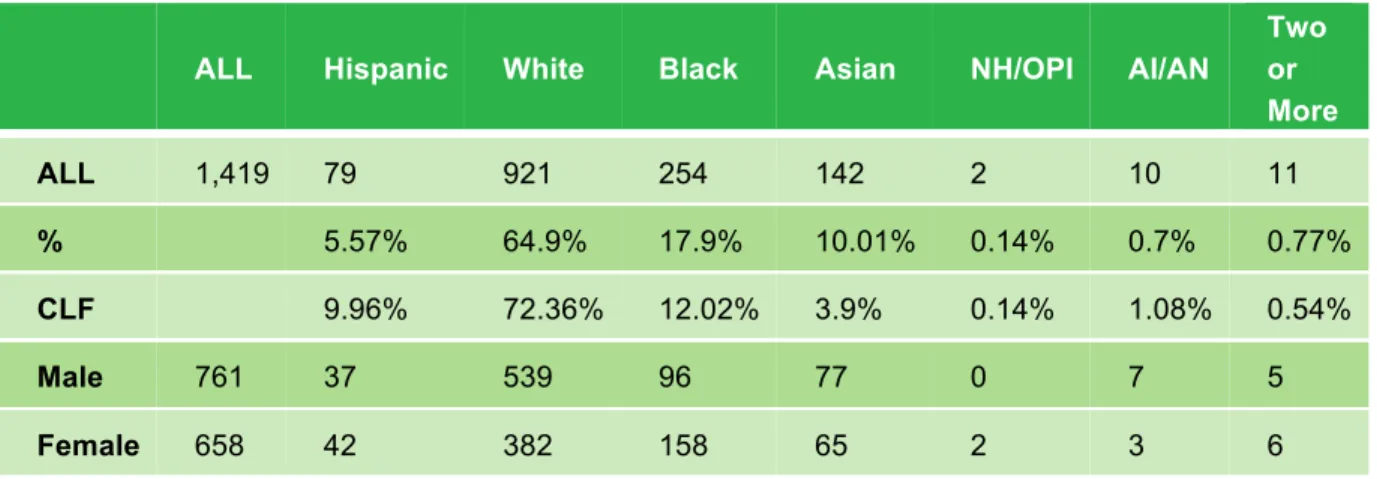
The total CFPB workforce is 1,419 employees, including 1,187 permanent employees and 232
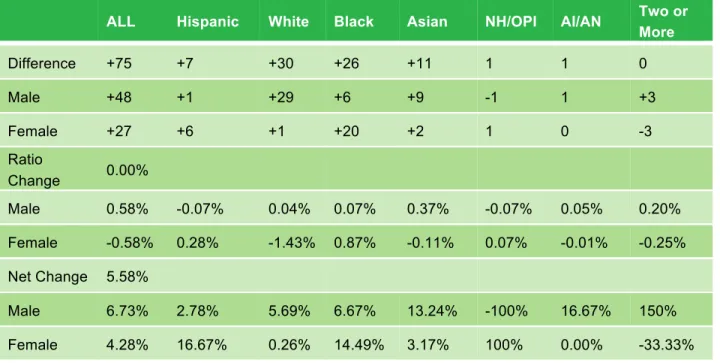
temporary employees. The total workforce grew by 75 employees during FY2014, representing a
rate of change of 5.58 percent.
During FY2014, all EEO group populations experienced net growth with the exception of
females of two or more races, American Indian or Alaska Native females, and Native Hawaiian
or Other Pacific Islander males. Referring to the 2010 U.S. Census Civilian National Labor
Force (CLF), overall CFPB demographics have not changed significantly since FY2013.
As a result of CFPB’s Special Program Plan for the Recruitment, Hiring and Advancement of
Individuals with Targeted Disabilities (see also Part J), there was a growth of 17 new employees
with reportable disabilities from the beginning of FY2014 to the close of FY2014, representing a
net change of 16.5 percent, which far exceeds the rate of change for the total workforce.
6.
Workplace analysis
Specific information follows:
TABLE 4: TOTAL WORKFORCE – FY2013
ALL Hispanic White Black Asian NH/OPI AI/AN
Two or More ALL 1,344 72 891 228 131 2 9 11 % 5.36% 66.3% 16.97% 9.75% 0.14% 0.67% 0.82% CLF 9.96% 72.36% 12.02% 3.9% 0.14% 1.08% 0.54% Male 713 36 510 90 68 1 6 2 Female 631 36 381 138 63 1 3 9
TABLE 5: TOTAL WORKFORCE – FY2014
ALL Hispanic White Black Asian NH/OPI AI/AN
Two or More ALL 1,419 79 921 254 142 2 10 11 % 5.57% 64.9% 17.9% 10.01% 0.14% 0.7% 0.77% CLF 9.96% 72.36% 12.02% 3.9% 0.14% 1.08% 0.54% Male 761 37 539 96 77 0 7 5 Female 658 42 382 158 65 2 3 6
TABLE 6: TOTAL WORKFORCE – FY2013 COMPARED TO FY2014
ALL Hispanic White Black Asian NH/OPI AI/AN Two or More Difference +75 +7 +30 +26 +11 1 1 0 Male +48 +1 +29 +6 +9 -1 1 +3 Female +27 +6 +1 +20 +2 1 0 -3 Ratio Change 0.00% Male 0.58% -0.07% 0.04% 0.07% 0.37% -0.07% 0.05% 0.20% Female -0.58% 0.28% -1.43% 0.87% -0.11% 0.07% -0.01% -0.25% Net Change 5.58% Male 6.73% 2.78% 5.69% 6.67% 13.24% -100% 16.67% 150% Female 4.28% 16.67% 0.26% 14.49% 3.17% 100% 0.00% -33.33%
At the close of FY2014, CFPB employed a total of 1,419 employees—1,187 permanent employees
and 232 temporary employees. This was a significant decrease in temporary employees from
383 (28.5 % of the total workforce in FY2013) to 232 (16% of the total workforce in FY2014).
The number of permanent employees increased by 227 (15.9 %) in FY2014.
Males comprised 624 or 52.56% of the permanent workforce—slightly higher when compared to
the CLF availability of 51.86%. Females comprised 563 or 47.44% of the permanent workforce,
as compared to 48.14% of the CLF.
6.1
Permanent workforce: participation of
class grouping
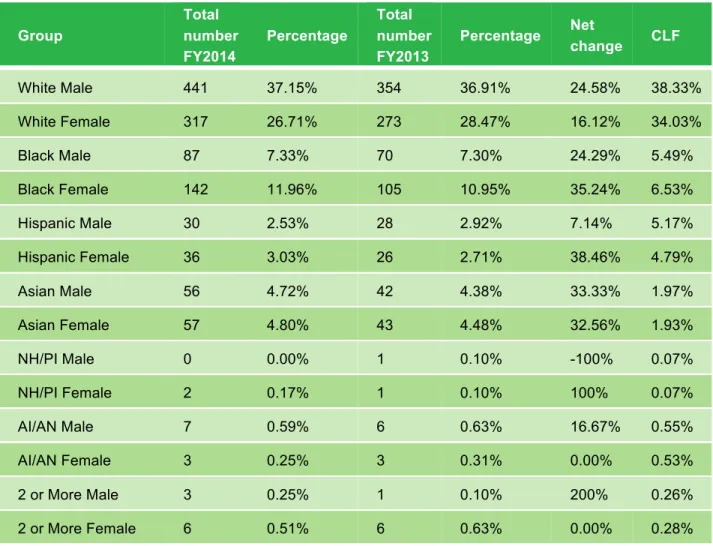
TABLE 7: WORKFORCE (ALL)
White females are employed at CFPB at a rate of 26.71% (317), which is below the CLF of
34.03%. Hispanic males are employed at a rate of 2.53% (30) and Hispanic females at 3.03%
(36), which are slight improvements over the FY2013 employment rates but still below the CLF
of 5.17% and 4.79%, respectively. American Indian/Alaska Native males are employed at 0.59%
(07) and females at 0.25% (03), which was above the CLF rate for males (0.55%), but below the
CLF for females (0.53%). Males who are two or more races were reported at 0.25% (03), slightly
below the CLF of 0.26%.
Group Total number FY2014 Percentage Total number FY2013 Percentage Net change CLF White Male 441 37.15% 354 36.91% 24.58% 38.33% White Female 317 26.71% 273 28.47% 16.12% 34.03% Black Male 87 7.33% 70 7.30% 24.29% 5.49% Black Female 142 11.96% 105 10.95% 35.24% 6.53% Hispanic Male 30 2.53% 28 2.92% 7.14% 5.17% Hispanic Female 36 3.03% 26 2.71% 38.46% 4.79% Asian Male 56 4.72% 42 4.38% 33.33% 1.97% Asian Female 57 4.80% 43 4.48% 32.56% 1.93% NH/PI Male 0 0.00% 1 0.10% -100% 0.07% NH/PI Female 2 0.17% 1 0.10% 100% 0.07% AI/AN Male 7 0.59% 6 0.63% 16.67% 0.55% AI/AN Female 3 0.25% 3 0.31% 0.00% 0.53% 2 or More Male 3 0.25% 1 0.10% 200% 0.26% 2 or More Female 6 0.51% 6 0.63% 0.00% 0.28%Asian males are employed at a rate of 4.72% (56) and Asian females at 4.80% (57), which were
significantly above the CLF of 1.97% and 1.93% respectively. CFPB employed Black males at a
rate of 7.33% (87) and Black females at 11.96% (142), which were above the CLF of 5.49% and
6.53%, respectively. Females who are two or more races were reported at 0.51% (06), which is
above the CLF of 0.28%.
6.2
Temporary workforce: participation of
class grouping
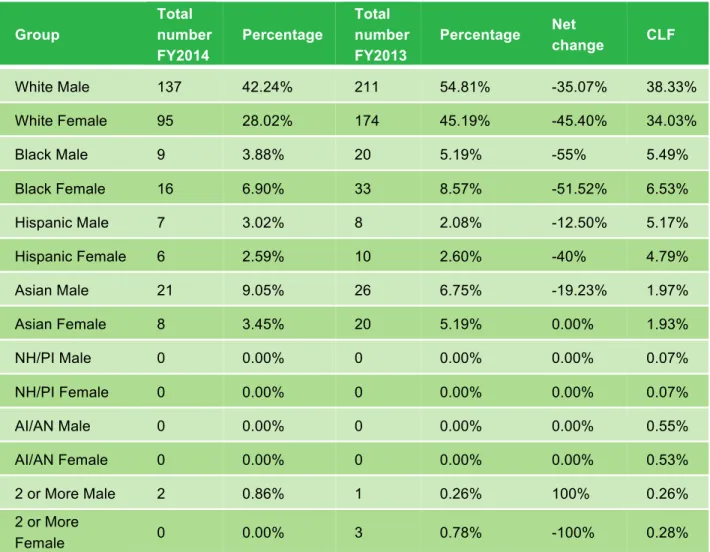
TABLE 8: TEMPORARY WORKFORCEGroup Total number FY2014 Percentage Total number FY2013 Percentage Net change CLF White Male 137 42.24% 211 54.81% -35.07% 38.33% White Female 95 28.02% 174 45.19% -45.40% 34.03% Black Male 9 3.88% 20 5.19% -55% 5.49% Black Female 16 6.90% 33 8.57% -51.52% 6.53% Hispanic Male 7 3.02% 8 2.08% -12.50% 5.17% Hispanic Female 6 2.59% 10 2.60% -40% 4.79% Asian Male 21 9.05% 26 6.75% -19.23% 1.97% Asian Female 8 3.45% 20 5.19% 0.00% 1.93% NH/PI Male 0 0.00% 0 0.00% 0.00% 0.07% NH/PI Female 0 0.00% 0 0.00% 0.00% 0.07% AI/AN Male 0 0.00% 0 0.00% 0.00% 0.55% AI/AN Female 0 0.00% 0 0.00% 0.00% 0.53% 2 or More Male 2 0.86% 1 0.26% 100% 0.26% 2 or More Female 0 0.00% 3 0.78% -100% 0.28%
At the end of FY2014, there were no Native Hawaiian/Pacific Islander males or females and no
American Indian/Alaska Native males or females in the temporary workforce. There were also
no females of two or more races in the temporary workforce. With the exception of Males of two
or more races, with an increase of 0.6%, all other groups saw net losses in participation rates.
Black males’ net change of 55.00% (from 20 to 9 employees) and Black females’ net change of
-51.52% (from 33 to 16 employees) were the highest net changes areas for CFPB.
6.3
Analysis of senior pay bands by
grouping (permanent employees)
White males and females are represented in all senior bands CN-53 to CN-81/82/90.
Black males and females, Hispanic males and females, and Asian males and females are also
represented in all senior bands CN-53 to CN-81/82/90.
Native Hawaiian/Pacific Islander males are not represented in any senior bands 53 to
CN-81/82/90 and Native Hawaiian/Pacific Islander females are only represented in senior band
CN-60.
American Indian/Alaska Native males are represented in senior band CN-53 only. American
Indian/Alaska Native females are represented at senior bands CN-60 and CN-71.
Males and females of two or more races are represented at senior bands CN-53 and CN-60, and
CN-53 and CN-71, respectively.
TABLE 9: SENIOR PAY BANDS BY GENDER Male Female GS-13/CN-53 132 110 54.55% 45.45% GS-14/CN-60 165 146 53.05% 46.95% GS-15/CN-71 104 107 49.29% 50.71% CN-81/82/90 34 19 64.15% 35.85%
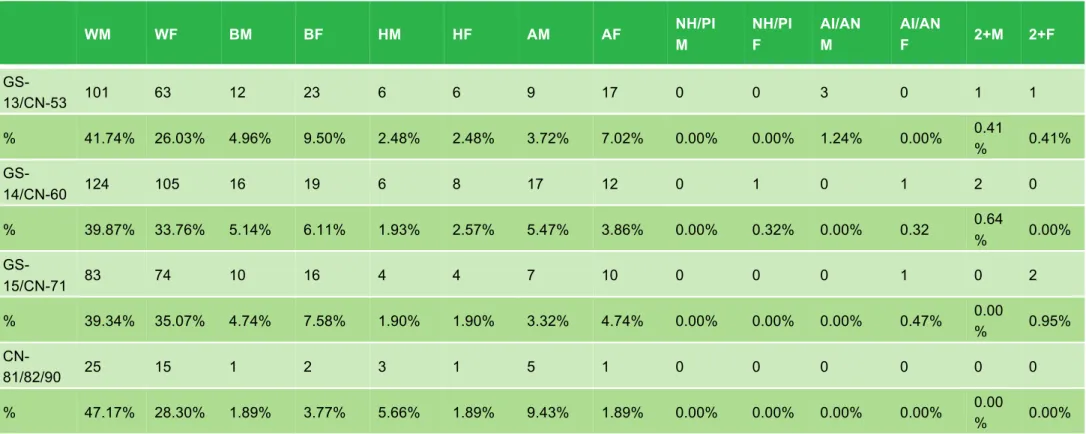
TABLE 10: SENIOR PAY BANDS BY GROUPING WM WF BM BF HM HF AM AF NH/PI M NH/PI F AI/AN M AI/AN F 2+M 2+F GS-13/CN-53 101 63 12 23 6 6 9 17 0 0 3 0 1 1 % 41.74% 26.03% 4.96% 9.50% 2.48% 2.48% 3.72% 7.02% 0.00% 0.00% 1.24% 0.00% 0.41 % 0.41% GS-14/CN-60 124 105 16 19 6 8 17 12 0 1 0 1 2 0 % 39.87% 33.76% 5.14% 6.11% 1.93% 2.57% 5.47% 3.86% 0.00% 0.32% 0.00% 0.32 0.64 % 0.00% GS-15/CN-71 83 74 10 16 4 4 7 10 0 0 0 1 0 2 % 39.34% 35.07% 4.74% 7.58% 1.90% 1.90% 3.32% 4.74% 0.00% 0.00% 0.00% 0.47% 0.00 % 0.95% CN-81/82/90 25 15 1 2 3 1 5 1 0 0 0 0 0 0 % 47.17% 28.30% 1.89% 3.77% 5.66% 1.89% 9.43% 1.89% 0.00% 0.00% 0.00% 0.00% 0.00 % 0.00%
6.4
New hires: permanent
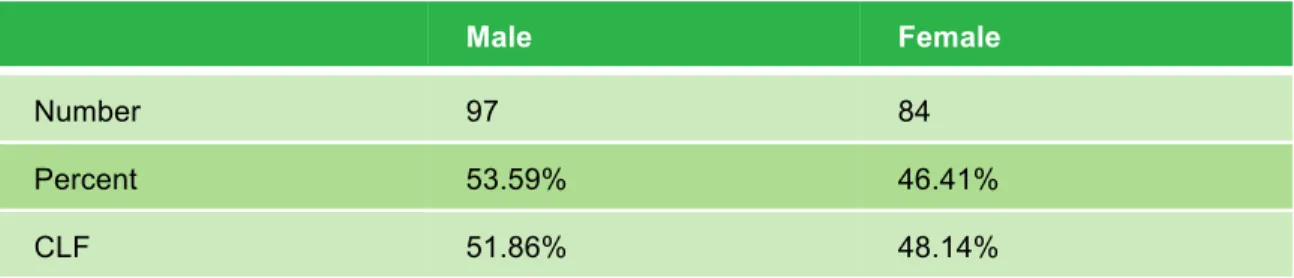
Permanent new hires for FY2014 consisted of 84 females (46.41 %), which is lower than the CLF availability of 48.14%. White
females were 26.52% (48) of the new hires, which is lower than the 34.03% CLF availability. Black females were 12.71% (23) of
the new hires, which is above the 6.53% CLF availability. Hispanic females were 3.31% (6) of the new hires, which is lower than
the 4.79% CLF availability. Asian females were 2.76% (5) of the new hires, which is above the 1.93% CLF availability. Native
Hawaiian/Pacific Islander females were 0.00% (1) of the new hires, which is lower than the 0.07% CLF availability. American
Indian/Alaska Native males were 1.10% (2) of the new hires, which is above the 0.55% CLF availability. American Indian/Alaska
Native females were 0.55% (1) of the new hires, which is slightly above the 0.53% CLF availability. Males of Two or more races
were 0.55% (1) of the new hires, which is above 0.26% CLF availability. Females who are two or more races were not in the
permanent hires for FY2014.
TABLE 11: NEW PERMANENT HIRES BY GENDER
Male Female
Number 97 84
Percent 53.59% 46.41%
TABLE 12: NEW PERMANENT HIRES BY GROUPING WM WF BM BF HM HF AM AF NH/PI M NH/PI F AI/AN M AI/AN F 2+M 2+F # 67 48 11 23 3 6 13 5 0 1 2 1 1 0 % 37.02% 26.52% 6.08% 12.71% 1.66% 3.31% 7.18% 2.76% 0.00% 0.00% 1.10% 0.55% 0.55% 0.55% CLF 38.33% 34.03% 5.49% 6.53% 5.17% 4.79% 1.97% 1.93% 0.07% 0.07% 0.55% 0.53% 0.26% 0.26%
6.5
New hires: temporary
Temporary hires for FY2014 consisted of 27 (24.11%) White females, which is lower than the
CLF availability of 34.03%. Black males consisted of 7 or 6.25% of the new hires, which is above
the CLF availability of 5.49%. Hispanic males made up 3.57% (4) of the new hires and Hispanic
females consisted of 4.46% (5), which are both lower than the CLF availability of 5.17% and
4.79%. Asian males made up 5.36% (6) of the new hires and the females also comprised 5.36%
(6), both above the CLF availability of 1.97% and 1.93%, respectively. Native Hawaiian/Pacific
Islander males and females, American Indian/Alaska Native males and females, and Two or
More Races males and females were not in the temporary hires for FY2014.
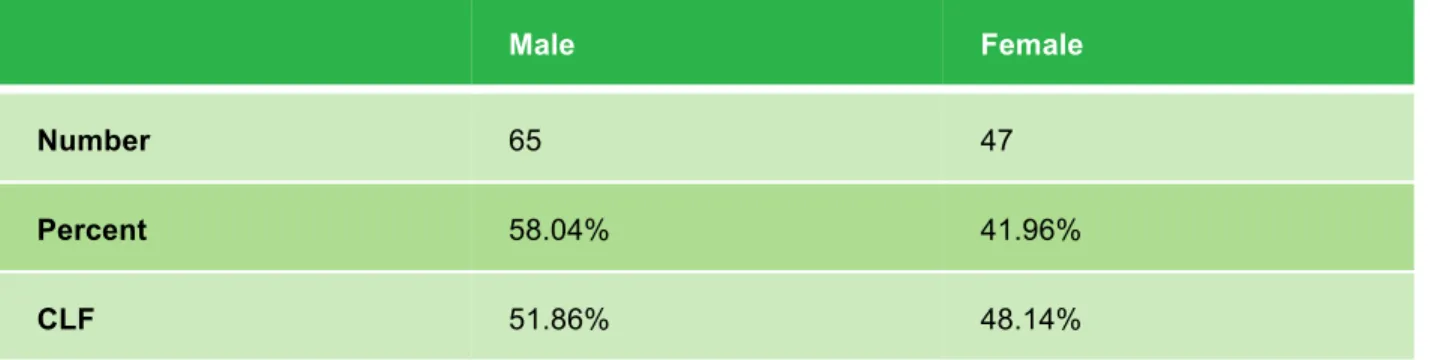
TABLE 13: NEW TEMPORARY HIRES BY GENDER
Male Female
Number 65 47
Percent 58.04% 41.96%
TABLE 14: NEW TEMPORARY HIRES BY GROUPING WM WF BM BF HM HF AM AF NH/PI M NH/PI F AI/AN M AI/AN F 2+M 2+F # 48 27 7 9 4 5 6 6 0 0 0 0 0 0 % 42.86% 24.11% 6.25% 8.04% 3.57% 4.46% 5.36% 5.36% 0.00% 0.00% 0.00% 0.00% 0.00% 0.00% CLF 38.33% 34.03% 5.49% 6.53% 5.17% 4.79% 1.97% 1.93% 0.07% 0.07% 0.55% 0.53% 0.26% 0.26%
6.6
New hires by mission critical
occupations
CFPB has four key occupational groups that are instrumental and deemed “mission critical” to
perform the mission of the Bureau.
6.6.1
Examiner (0570)
During FY2014, CFPB hired 85 examiners (0570 Series), 54 (63.5%) of which were male and 31
(36.5%) of which were female:
§
32 or 37.60% were White males
§
16 or 18.80% were White females
§
10 or 11.80% were Black males
§
8 or 9.40% were Black females
§
5 or 5.90% were Hispanic males
§
1 or 1.20% were Hispanic females
§
4 or 4.70 % were Asian males
§
6 or 7.10% were Asian females
§
3 or 3.85% were Males of Two or more races
TABLE 15: NEW EXAMINERS BY GENDERMale Female
Number 54 31
TABLE 16: NEW EXAMINERS BY GROUPING WM WF BM BF HM HF AM AF NH/PI M NH/PI F AI/AN M AI/AN F 2+M 2+F # 32 16 10 8 5 1 4 6 0 02 0 0 3 0 % 37.60% 18.80% 11.80% 9.40% 5.90% 1.20% 4.70% 7.10% 0.00% 0.00% 0.00% 0.00% 3.50% 0.00% CLF 44.10% 28.30% 3.60% 8.70% 3.10% 3.70% 3.70% 4% 0.00% 0.00% 0.10% 0.30% 0.20% 0.30%
6.6.2
General attorney (0905)
During FY2014, CFPB hired 16 employees in the the General Attorney Program (0905 series)
occupations, comprised of 43.8% (7) males and 56.20% (9) females:
§
White males (5) comprised 31.20% of the hires
§
White females (3) comprised 18.80% of the hires
§
Black males (1) comprised 6.20% of the hires
§
Black females (1) comprised 6.20% of the hires
§
Hispanic females (2) comprised 12.50% of the hires
§
Asian males (1) comprised 6.20% of the hires
§
Asian females (2) comprised 12.50% of the hires
§
Females of two or more races (1) comprised 6.2% of the hires
TABLE 17: NEW GENERAL ATTORNEYS BY GENDERMale Female
Number 7 9
Percent 43.80% 56.20%
TABLE 18: NEW GENERAL ATTORNEYS BY GROUPING WM WF BM BF HM HF AM AF NH/PI M NH/PI F AI/AN M AI/AN F 2+M 2+F # 5 3 1 1 0 2 1 2 0 0 0 0 0 1 % 31.20% 18.80% 6.20% 6.20% 0.00% 12.50% 6.20% 12.50% 0.00% 0.00% 0.00% 0.00% 0.00% 6.20% CLF 59.70% 26.70% 2.10% 2.60% 2.50% 1.80% 1.80% 1.80% 0.00% 0.00% 0.30% 0.20% 0.20% 0.20%
6.6.3
Economist (0110)
During FY2014, CFPB hired 34 employees in the Economists (0110 series) occupations,
comprised of 35.3% (12) females and 64.7% (22) males:
§
White males (20) comprised 58.8% of the hires
§
White females (4) comprised 11.8% of the hires
§
Black females (2) comprised 5.9% of the hires
§
Hispanic males (1) comprised 2.9% of the hires
§
Asian males (1) comprised 2.9% of the hires
§
Asian females (5) comprised 14.7% of the hires
§
Females of two or more races (1) comprised 2.9% of the hires
TABLE 19: NEW ECONOMISTS BY GENDERMale Female
Number 22 12
Percent 64.7% 35.3%
TABLE 20: NEW ECONOMIST BY GROUPING WM WF BM BF HM HF AM AF NH/PI M NH/PI F AI/AN M AI/AN F 2+M 2+F # 20 4 0 2 1 0 1 5 0 0 0 0 0 1 % 58.8% 11.8% 0.00% 5.9% 2.9% 0.00% 2.9% 14.7% 0.00% 0.00% 0.00% 0.00% 0.00% 2.9% CLF 55.8% 25.2% 2.8% 2.7% 3.3% 1.80% 4.4% 2.7% 0.00% 0.10% 0.20% 0.10% 0.40% 0.40%
6.6.4
Miscellaneous administration and program (0301)
During FY2014, CFPB hired 317 employees in the Miscellaneous Administration and Program
(0301 series) occupations, comprised of 48.3% (153) males and 51.7% (164) females:
§
White males (102) comprised 32.2% of the hires
§
White females (82) comprised 25.9% of the hires
§
Black males (24) comprised 7.6% of the hires
§
Black females (49) comprised 15.5% of the hires
§
Hispanic females (10) comprised 3.2% of the hires
§
Hispanic males (9) comprised 2.8% of the hires
§
Asian males (15) comprised 4.7% of the hires
§
Asian females (16) comprised 5.0% of the hires
§
Native Hawaiian or Pacific Islander females (1) comprised 0.3% of the hires
§
American Indian or Alaska Native females (1) comprised 0.3% of the hires
§
Females of two or more races (5) comprised 1.6% of the hires
§
Males of two or more races (3) comprised 0.9% of the hires
TABLE 21: NEW MISC. ADMINISTRATION BY GENDERMale Female
Number 153 164
Percent 48.3% 51.7%
TABLE 22: NEW MISC. ADMINISTRATIONBY GROUPING WM WF BM BF HM HF AM AF NH/PI M NH/PI F AI/AN M AI/AN F 2+M 2+F # 102 82 24 49 9 10 15 16 0 1 0 1 3 5 % 32.2% 25.9% 7.6% 15.5% 2.8% 3.2% 4.7% 5.0% 0.00% 0.3% 0.00% 0.3% 0.9% 1.6% CLF 27.1% 43.8% 3.6% 8.8% 2.8% 5.80% 2.4% 3.2% 0.00% 0.10% 0.20% 0.40% 0.40% 0.70%
6.7
Non-competitive promotions
At the close of FY2014, 322 employees were eligible for career ladder promotions−192 were
males and 130 were females. Of the 322 employees eligible, 305 received promotions and 17 did
not receive promotions. Of the 305 who were eligible and received promotions, 301 received the
promotion with one to twelve months’ time in band. The demographic breakdown of this
population is:
§
120 or 39.87% White males
§
55 or 18.27% White females
§
29 or 9.63% Black males
§
36 or 11.96% Black females
§
18 or 5.98% Asian males
§
21 or 6.98% Asian females
§
2 or 0.66% American Indian males
§
1 or 0.33% American Indian females
§
1 or 0.33% Two or more races males
Of the 305 eligible employees who received promotions, 1 received the promotion with thirteen
to twenty-four months’ time in band, of which 1 or 100% was a White female. Three of the
eligible employees received the promotion with twenty-five or more months’ time in band, of
which 1 or 33.33% was a White male and 2 or 66.67% were White females.
TABLE 23: NON-COMPETITIVE PROMOTIONS BY GENDER
Male Female
Eligible for Promotions 192 130
Percent (of those eligible) 59.63% 40.37%
Did Not Receive 10 7
TABLE 24: NON-COMPETITIVE PROMOTIONS BY GROUPING WM WF BM BF HM HF AM AF NH/PI M NH/PI F AI/AN M AI/AN F 2+M 2+F Eligible 128 60 29 40 11 8 21 21 0 0 2 1 1 0 % 39.75% 18.63% 9.01% 12.42% 3.42% 2.48% 6.52% 6.52% 0.00% 0.00% 0.62% 0.31% 0.31% 0.00% Did Not Receive 7 2 0 4 0 1 3 0 0 0 0 0 0 0 % 41.18% 11.76% 0.00% 23.53% 0.00% 5.88% 17.65% 0.00% 0.00% 0.00% 0.00% 0.00% 0.00% 0.00%
6.8
Separations
6.8.1
Total separations
There were a total of 86 permanent employees that were separated during FY2014, of which 42
or 48.84% were males and 44 or 51.16% were females. Separations include resignations,
terminations, transfers, and retirements. White females at 29 or 33.72% and White males at 25
or 29.07% were the largest groups who separated from CFPB. Other rates of separation include:
§
Black males−4 or 4.65%
§
Black females−8 or 9.30%
§
Hispanic males−5 or 5.81%
§
Hispanic females−1 or 1.16%
§
Asian males−6 or 6.98%
§
Asian females−4 or 4.65%
§
Native Hawaiian/Pacific Islander males−1 or 1.16%
§
American Indian/Alaska Native males−1 or 1.16%
§
American Indian/Alaska Native females−1 or 1.16%
§
Two or more races females−1 or 1.16%
TABLE 25: TOTAL SEPARATIONS BY GENDER
Male Female
Number 42 44
TABLE 26: TOTAL SEPARATIONS BY GROUPING WM WF BM BF HM HF AM AF NH/PI M NH/PI F AI/AN M AI/AN F 2+M 2+F # 25 29 4 8 5 1 6 4 1 0 1 1 0 1 % 29.07% 33.72% 4.65% 9.30% 5.81% 1.16% 6.98% 4.65% 1.16% 0.00% 1.16% 1.16% 0.00% 1.16%
6.8.2
Resignations
Of the 86 separations, 47 were resignations, the majority of which were White males (14) and
White females (14). Other resignation rates include:
§
1 or 2.13% Black males
§
3 or 6.38% Black females
§
5 or 10.64% Hispanic males
§
1 or 2.13% Hispanic females
§
5 or 10.64% Asian males
§
2 or 4.26% Asian females
§
1 or 2.13% Native Hawaiian / Pacific Islander males
§
1 or 2.13% Two or more races females
TABLE 27: RESIGNATIONS BY GENDER
Male Female
Number 26 21
TABLE 28: RESIGNATIONS BY GROUPING WM WF BM BF HM HF AM AF NH/PI M NH/PI F AI/AN M AI/AN F 2+M 2+F # 14 14 1 3 5 1 5 2 1 0 0 0 0 1 % 29.79% 29.79% 2.13% 6.38% 10.64% 2.13% 10.64% 4.26% 2.13% 0.00% 0.00% 0.00% 0.00% 2.13%
6.8.3
Terminations
There was 1 termination, which was a Black male.
TABLE 29: TERMINATIONS BY GENDERMale Female
Number 1 0
TABLE 30: TERMINATIONS BY GROUPING WM WF BM BF HM HF AM AF NH/PI M NH/PI F AI/AN M AI/AN F 2+M 2+F # 0 0 1 0 0 0 0 0 0 0 0 0 0 0 % 0.0% 0.0% 100% 0.0% 0.0% 0.0% 0.0% 0.0% 0.0% 0.0% 0.0% 0.0% 0.0% 0.0%
6.8.4
Transfers
There were 26 transfers, which consisted of 8 White males, 10 White females, 1 Black male, 3
Black females, 1 Asian male, 2 Asian females and 1 American Indian/Alaska Native male.
TABLE 31: TRANSFERS BY GENDERMale Female
Number 11 15
TABLE 32: TRANSFERS BY GROUPING WM WF BM BF HM HF AM AF NH/PI M NH/PI F AI/AN M AI/AN F 2+M 2+F # 8 10 1 3 0 0 1 2 0 0 1 0 0 0 % 30.77% 38.46% 3.85% 11.54% 0.00% 0.00% 3.85% 7.69% 0.00% 0.00% 3.85% 0.00% 0.00% 0.00%
6.8.5
Retirements
During FY2014, there were 10 retirements, of which 4 (40%) were male employees and 6 (60%)
were female employees. Of the 10 retirements, 3 were White males (30%), 4 were White females
(40%), 1 was a Black male (10%), 1 was a Black female (10%) and 1 was an American Indian
female (10%).
TABLE 33: RETIREMENTS BY GENDER
Male Female
Number 4 6
TABLE 34: RETIREMENTS BY GROUPING WM WF BM BF HM HF AM AF NH/PI M NH/PI F AI/AN M AI/AN F 2+M 2+F # 3 4 1 1 0 0 0 0 0 0 0 1 0 0 % 30% 40% 10% 10% 0.00% 0.00% 0.00% 0.00% 0.00% 0.00% 0.00% 10% 0.00% 0.00%
6.9
Awards
In FY2014, CFPB granted 1,242 monetary awards as part of the pay-for-performance program,
656 (52.82%) of which were awarded to male employees and 586 (47.18%) were awarded to
female employees. The distribution of the awards to groups was as follows:
§
White males (464) received 37.36% of the awards
§
White females (343) received 27.62% of the awards
§
Black males (87) received 7.0% of the awards
§
Black females (131) received 10.55% of the awards
§
Hispanic males (34) received 2.74% of the awards
§
Hispanic females (34) received 2.74% of the awards
§
Asian males (63) received 5.07% of the awards
§
Asian females (68) received 5.48% of the awards
§
Native Hawaiian / Pacific Islander females (1) received 0.089% of the awards
§
American Indian / Alaska Native males (6) received 0.48% of the awards
§
American Indian / Alaska Native females (3) received 0.24% of the awards
§
Two or more races males (2) received 0.16% of the awards
§
Two or more races females (6) received 0.48% of the awards.
TABLE 35: AWARDS BY GENDERMale Female
Number 656 586
TABLE 36: RETIREMENTS BY GROUPING WM WF BM BF HM HF AM AF NH/PI M NH/PI F AI/AN M AI/AN F 2+M 2+F # 464 343 87 131 34 34 63 68 0 1 6 3 2 6 % 37.36% 27.62% 7% 10.55% 2.74% 2.74% 5.07% 5.48% 0.00% 0.08% 0.48% 0.24% 0.16% 0.48%
Summary of EEO plan objectives to eliminate barriers or correct
deficiencies
For its FY2015 Plan update, CFPB has developed action plans to eliminate possible barriers in
two areas as summarized below and set forth fully in Part I.
NON-COMPETITIVE PROMOTIONS
CFPB will take measures to ensure that non-competitive promotions reflect the overall gender
breakdown of the agency, as feasible, by ensuring that women are promoted at the rate at which
they are represented in the eligible pool and by having the management team closely guide
supervisors on professional growth opportunities and employee development. (see also Part I-1
for more detail.)
SEPARATIONS
CFPB wants to address the discrepancy in White females, who were overrepresented among
employees separated in FY2014. OMWI will conduct an investigation to determine the specific
reasons for the separations involving White female employees and the amount of employee
dissatisfaction among White female employees. (See also Part I-2 for more detail).
7.
Certification of establishment
of continuing equal
employment opportunity
programs
I, M. Stacey Bach, Director, Equal Employment Opportunity Office, am the Principal EEO
Director/Official for the Consumer Financial Protection Bureau.
The agency has conducted an annual self-assessment of Section 717 and Section 501 programs
against the essential elements as prescribed by EEO MD-715. If an essential element was not fully
compliant with the standards of EEO MD-715, a further evaluation was conducted and, as
appropriate, EEO Plans for Attaining the Essential Elements of a Model EEO Program, are
included with this Federal Agency Annual EEO Program Status Report.
The agency has also analyzed its work force profiles and conducted barrier analyses aimed at
detecting whether any management or personnel policy, procedure or practice is operating to
disadvantage any group based on race, national origin, gender or disability. EEO Plans to
Eliminate Identified Barriers, as appropriate, are included with this Federal Agency Annual EEO
Program Status Report.
I certify that proper documentation of this assessment is in place and is being maintained for
EEOC review upon request.
8.
EEO program status report
CFPB conducted the mandatory self-assessment of its EEO Program by completing the
Self-Assessment Checklist. CFPB will retain the checklist and supporting documentation and data,
and make it available upon request by the EEOC.
9.
EEO plan for attaining the
essential elements of model
EEO program
EEOC FORM 715-01 PART H-1
U.S. Equal Employment Opportunity Commission FEDERAL AGENCY ANNUAL
EEO PROGRAM STATUS REPORT Consumer Financial Protection Bureau FY 14 STATEMENT of MODEL PROGRAM ESSENTIAL ELEMENT DEFICIENCY:
The EEO Office needs additional personnel resources to ensure that agency self-assessment and self-analyses prescribed by EEO MD-715 are conducted annually and to maintain an effective complaint processing system.
OBJECTIVE: The EEO Office seeks to obtain sufficient staff resources to be
fully operational and in compliance with EEOC’s requirements for creating and maintaining a Model EEO Program.
RESPONSIBLE OFFICIAL: EEO Director
DATE OBJECTIVE INITIATED: April 30, 2014
TARGET DATE FOR COMPLETION OF OBJECTIVE:
PLANNED ACTIVITIES TOWARD COMPLETION OF OBJECTIVE:
The EEO Office submitted requests for additional resources in FY2013 and FY2014. The EEO Office anticipates a decision by the end of the FY2015 strategic planning process involving the EEO Office, OMWI, and OHC, and will readjust timeframes as needed depending on progress made.
REPORT OF ACCOMPLISHMENTS and MODIFICATIONS TO OBJECTIVE:
In FY2014, the OHC, EEO Office and OMWI Office engaged in a series of discussions to better define roles and responsibilities, to identify types of functions for the EEO Office and OMWI, and to discuss the required staffing level to carry out mandated statutory and regulatory
requirements/functions in 29 C.F.R Part 1614 and Section 342 of the Dodd-Frank Act. In FY2014, the EEO Office submitted requests for FTEs.
EEOC FORM 715-01 PART H-2
U.S. Equal Employment Opportunity Commission FEDERAL AGENCY ANNUAL
EEO PROGRAM STATUS REPORT Consumer Financial Protection Bureau FY 14 STATEMENT of MODEL PROGRAM ESSENTIAL ELEMENT DEFICIENCY:
CFPB has not yet established Special Emphasis Programs (SEP) (e.g., Federal Women’s Program, Hispanic Employment Program, People with Disabilities Program Manager) or a Selective Placement Program (SPP).
OBJECTIVE: CFPB seeks sufficient resources to establish EEO related SEPs
and create a SPP.
RESPONSIBLE OFFICIAL: EEO Director, OMWI Director, OHC Director
DATE OBJECTIVE INITIATED: April 30, 2013
TARGET DATE FOR COMPLETION OF OBJECTIVE:
PLANNED ACTIVITIES TOWARD COMPLETION OF OBJECTIVE:
The EEO Office will obtain appropriate funding and resources for CFPB’s EEO Office including MD-715 and SEP. The CFPB will also create full-time or collateral SEP Managers to carry out the program responsibilities for the SEP Programs.
The responsible offices will appoint a Human Resource Specialist to serve as the Selective Placement Specialist. The responsibilities will include developing ongoing plans and initiatives to address the employment of persons with targeted disabilities and establishing hiring goals for individuals with disabilities and targeted disabilities under the EO 13458. The responsible offices will also establish inter-agency partnerships with other federal agencies staff responsible for recruiting, hiring, accommodating and training of persons with disabilities; establish contact with the US Department of Labor’s Office of Disability Employment Policy (ODEP) Job
Accommodation Network (JAN), the State Department of Education, Division of Rehabilitation Services, and Veterans Administration Medical Center. The responsible offices will attend and participate in the Workforce Recruitment Program for College Students with Disabilities sponsored by the
Departments of Labor and Defense. REPORT OF ACCOMPLISHMENTS and MODIFICATIONS TO OBJECTIVE:
CFPB has created a working group to focus on diversity recruitment, with a special focus on Hispanic recruiting, led by OMWI. Various targeted recruitment events occurred in FY2014. Moreover, in FY2014, the OHC, EEO Office and OMWI Office engaged in a series of discussions to better define roles and responsibilities, to identify the types of functions for the EEO Office and OMWI, and to discuss the required staffing level to carry out mandated statutory and regulatory
requirements/functions. In FY2014, the EEO Office and OMWI submitted requests for FTEs. OHC has dedicated a person on its recruitment team to work on Schedule A disability hiring initiatives. Additionally, training was offered by the EEOC Training Institute and other educational resources about Schedule A hiring were deployed. In FY2015, the following initiatives have begun and/or are planned: diversity workshop for managers, employee resource group policy, mentoring bank, Executive Advisory Council, and Diversity Working Group (staff level).
EEOC FORM 715-01 PART H-3
U.S. Equal Employment Opportunity Commission FEDERAL AGENCY ANNUAL
EEO PROGRAM STATUS REPORT Consumer Financial Protection Bureau FY 14 STATEMENT of MODEL PROGRAM ESSENTIAL ELEMENT DEFICIENCY:
CFPB has not yet established SEPs to monitor for coordination and compliance with EEO guidelines and principles, such as FEORP - 5 C.F.R. Part 720; Veterans Employment Programs; and Black/African American; American Indian/Alaska Native, Asian American/Pacific Islander programs.
OBJECTIVE: CFPB will establish SEPs.
RESPONSIBLE OFFICIAL: EEO Director, OMWI Director
DATE OBJECTIVE INITIATED: April 30, 2013
TARGET DATE FOR COMPLETION OF OBJECTIVE: September 30, 2015 PLANNED ACTIVITIES TOWARD COMPLETION OF OBJECTIVE:
The responsible offices will establish an executive diversity and inclusion council, prepare proposal for full-time and collateral duty SEPMs, and show visible support of SEP programs by attending and providing remarks at SEP activities and observances. The responsible offices will develop Standard Operating Procedures (SOP) on managing SEPs within CFPB, establish collaboration between EEO, OMWI, and EA to identify roles and responsibilities in coordinating observances and commemorative events, and establish partnership with employees’ professional groups and support participation in employee resource groups.
REPORT OF ACCOMPLISHMENTS and MODIFICATIONS TO OBJECTIVE:
In April 2014, OMWI launched an Executive Advisory Council for diversity and inclusion initiatives. In 2014, CFPB submitted its DVAAP report, setting forth a roadmap for the hiring of veterans with disabilities, and its FEORP report to support diversity recruitment. Heritage Month events were organized for Disability Employment, Hispanic Heritage, Black History, Women’s History, LGBT Pride, Native American, Caribbean-American, and Asian Pacific Heritage. Division and office-specific commemoration events were offered. In FY2014, the OHC, EEO Office and OMWI Office engaged in a series of discussions to better define roles and responsibilities, to identify the types of functions for the EEO Office and OMWI, and to discuss personnel resources; planned activities may be adjusted at the end of the strategic planning process. A policy for employee resource groups will be released by OMWI in FY2015.
EEOC FORM 715-01 PART H-4
U.S. Equal Employment Opportunity Commission FEDERAL AGENCY ANNUAL
EEO PROGRAM STATUS REPORT Consumer Financial Protection Bureau FY 14 STATEMENT of MODEL PROGRAM ESSENTIAL ELEMENT DEFICIENCY:
To date, the EEO Office has not coordinated the development and implementation of EEO Plans with all appropriate agency managers to include Agency Counsel, Human Resource Officials, Finance, and the Chief Information Officer.
OBJECTIVE: The EEO Office will meet with senior managers to identify
barriers that may be impeding the realization of equal employment opportunity.
RESPONSIBLE OFFICIAL: EEO Director, OHC Director