G o v e r n m e n t o f M a l a w i
Towards Quality Education:
Implementing the
National Education Sector Plan
2009 - 2013
M i n i s t r y o f E d u c a t i o n , S c i e n c e a n d T e c h n o l o g y A u g u s t 2 0 0 9Education
Sector
Implementation
Plan
TABLE OF CONTENTS
ACRONYMS ... 5 FOREWORD ... 9 PREFACE ... 11 EXECUTIVE SUMMARY ... 12 1. SITUATION ANALYSIS ... 14 1.1 MACROECONOMICFRAMEWORK... 141.2 EDUCATIONSECTORCONTEXT... 15
1.2.1 Overall Sector Conditions ... 15
1.2.2 Access and Equity... 17
1.2.3 Quality and Relevance ... 18
1.2.4 Governance and Management... 18
1.3 VISION ANDMISSION OF THEEDUCATIONSECTOR... 19
1.4 THEPRINCIPLES ANDRATIONALEGOVERNINGEDUCATIONFINANCING IN THEMGDS ... 21
1.5 LESSONS FROM THEIMPLEMENTATION OFPREVIOUSEDUCATIONPLANS... 22
2. EDUCATION SECTOR POLICY REFORM AND STRATEGIC PRIORITIES ... 25
2.2.1 Strategic Priority 1: Quality and Relevance of Education ... 27
2.2.2 Strategic Priority 2: Access to, and Equity in, Education ... 28
2.2.3 Strategic Priority 3: Governance and Management of Education Delivery... 28
SECTION C... 30
3.0 INSTITUTIONAL FRAMEWORK AND CAPACITY DEVELOPMENT ... 30
3.1 OVERVIEW... 30
3.2 ORGANISATIONALRESTRUCTURING ANDCAPACITYENHANCEMENT... 30
3.3 INSTITUTIONALRESTRUCTURING... 31
3.3.1 Leadership... 31
3.3.2 Institutional, Policy Linkages and Coordination ... 31
3.3.3 Performance Management System... 31
3.3.4 Planning, Monitoring and Evaluation Capacity ... 31
3.3.5 Management Capacity ... 32
3.4 FINANCING... 32
3.5 PROCUREMENT... 32
3.6 INFRASTRUCTURE... 33
SECTION D... 34
4. SECTOR AND SUB-SECTOR ACTIVITIES ... 34
4.1 OVERVIEW... 34
4.2 EARLYCHILDHOODDEVELOPMENT... 34
4.2.1 Priority 1: Access and Equity ... 34
4.2.2 Priority 2: Quality and Relevance... 34
4.2.3 Priority 3: Governance and Management ... 35
4.3 OUT OFSCHOOLCHILDREN ANDYOUTH... 39
4.3.1 Priority 1: Access and Equity ... 39
4.3.2 Priority 2: Quality and Relevance... 39
4.3.3 Priority 3: Governance and Management ... 40
4.4 ADULTLITERACY... 44
4.4.2 Priority 2: Quality and Relevance... 44
4.4.3 Priority 3: Governance and Management ... 44
4.5 PRIMARYEDUCATION... 47
4.5.1 Priority 1: Quality and Relevance... 47
4.5.2 Priority 2: Access and Equity ... 47
4.5.3 Priority 3: Governance and Management ... 48
4.6 SECONDARYEDUCATIONPROFILE OFPROGRAMMES... 61
4.6.1 Priority 1: Access and Equity ... 61
4.6.2 Priority 2: Quality and Relevance... 61
4.6.3 Priority 3: Governance and Management ... 61
4.7 TEACHEREDUCATION... 66
4.7.1 Priority 1: Access and Equity ... 66
4.7.2 Priority 2: Quality and Relevance... 66
4.7.3 Priority 3: Governance and Management ... 66
4.8 TECHNICAL ANDVOCATIONALDEVELOPMENTPROGRAMMES... 71
4.8.1 Priority 1: Governance and Management ... 71
4.8.2 Priority 2: Access and Equity ... 71
4.8.3 Priority 3: Quality and Relevance... 71
4.9 HIGHEREDUCATIONDEVELOPMENTPROGRAMME... 81
4.9.1 Priority 1: Governance and Management ... 81
4.9.2 Priority 2: Access and Equity ... 81
4.9.3 Priority 3: Quality and Relevance... 81
4.10 INSTITUTIONALFRAMEWORK ANDCAPACITYDEVELOPMENTPROGRAMME... 85
4.10.1 Governance and Management... 85
SECTION E ... 87
5. FINANCING... 87
5.1 INTRODUCTION... 87
5.2 RESOURCEREQUIREMENTPROJECTIONS... 87
5.3 FUNDINGGAPANALYSIS... 90
5.4 FUNDINGMODALITIES... 91
5.4.1 Overview ... 91
5.4.2 Financial Assistance ... 91
5.4.3 General Budget Support ... 91
5.4.4 Sector Budget Support ... 91
5.4.5 Pool Support... 92
5.4.6 Project Support... 92
5.5 PLANNING, BUDGETING, REPORTING ANDMONITORING... 92
5.6 FINANCIALMANAGEMENT... 95
5.7 DISBURSEMENTS BYCOOPERATINGPARTNERS... 95
5.8 DISBURSEMENTS FROMMOETOOPERATIONALLEVELS... 96
SECTION F ... 97
6. MONITORING ANDEVALUATIONFRAMEWORK... 97
6.2 GUIDINGPRINCIPLES... 97
6.3 ROLES ANDRESPONSIBILITIES OFDEPARTMENTS ANDSTAKEHOLDERS... 98
6.4 MONITORINGINDICATORS... 98
APPENDIX A... 106
Ministry of Women and Child Development... 107
Ministry of Youth and Sports Development... 107
Ministry of Public Works... 107
Ministry of Economic Planning and Development... 107
Ministry of Health... 107
Ministry of Water and Sanitation... 107
Ministry of Local Government... 107
Local Assemblies... 107
REFERENCES... 104
TABLES Table 1: Enrolment vs. ORT Funding Trends in Primary and Secondary Schools (2000 - 2008) ... 16
Table 2: Malawi's Progress Towards Achieving the MDGs ... 21
Table 3 Policy Reform Agenda ... 26
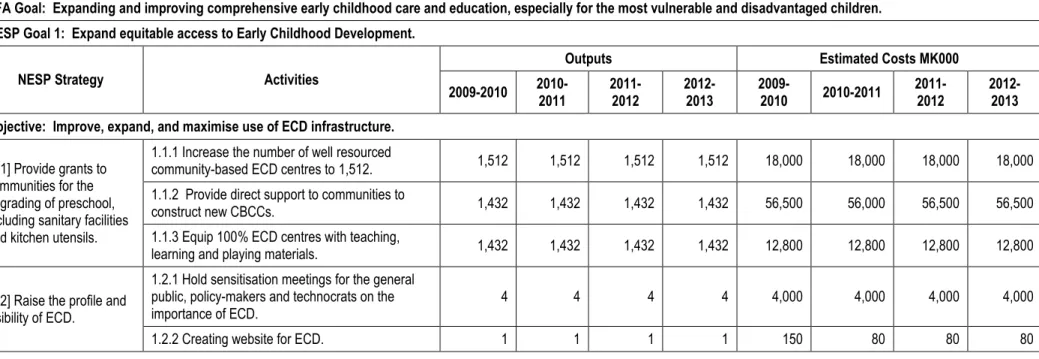
Table 4: ECD Activity Matrix ... 36
Table 5: Out of School Children and Youth ... 40
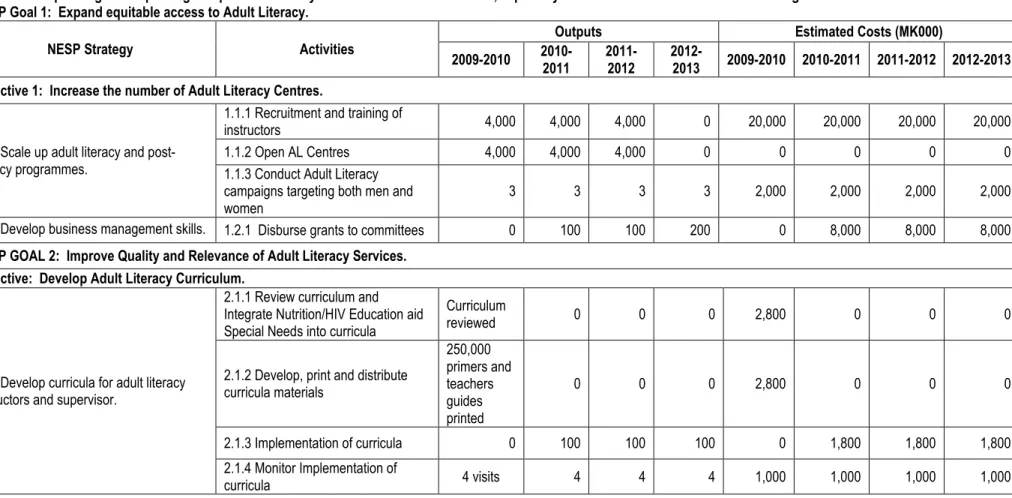
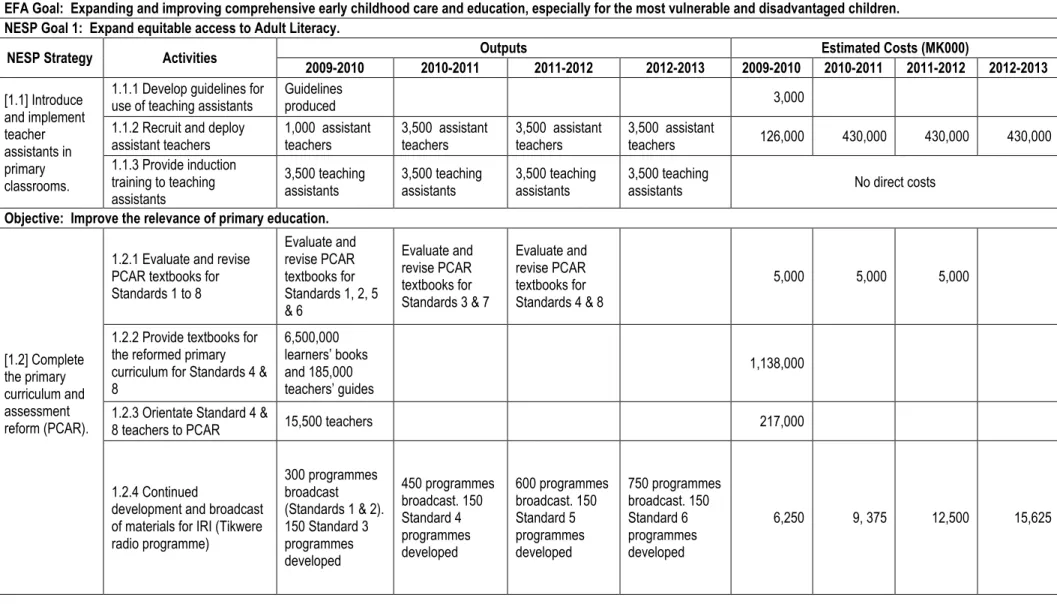
Table 6: Adult Literacy Activity Matrix ... 45
Table 7: Primary Education Activity Matrix... 49
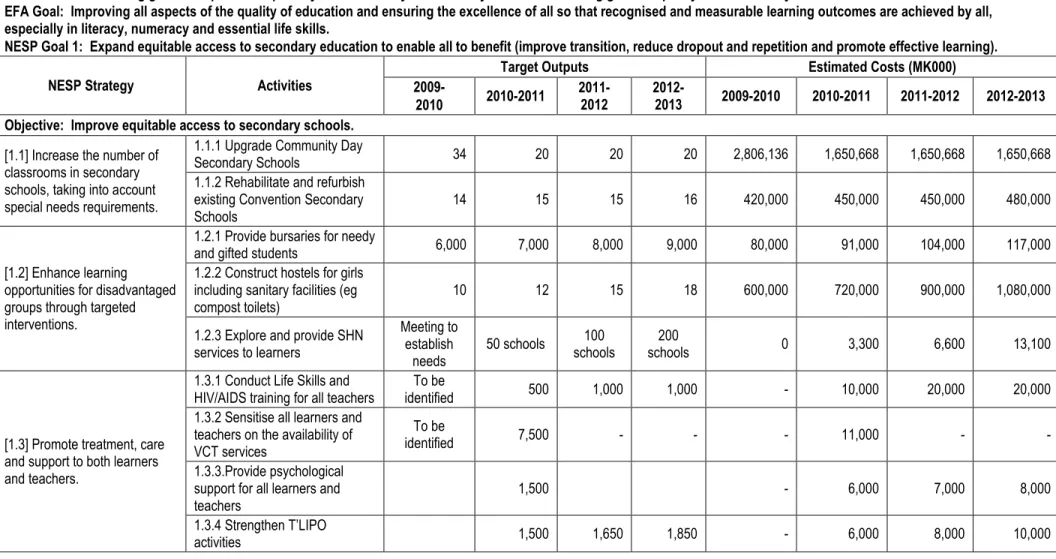
Table 8: Secondary Education Activity Matrix... 62
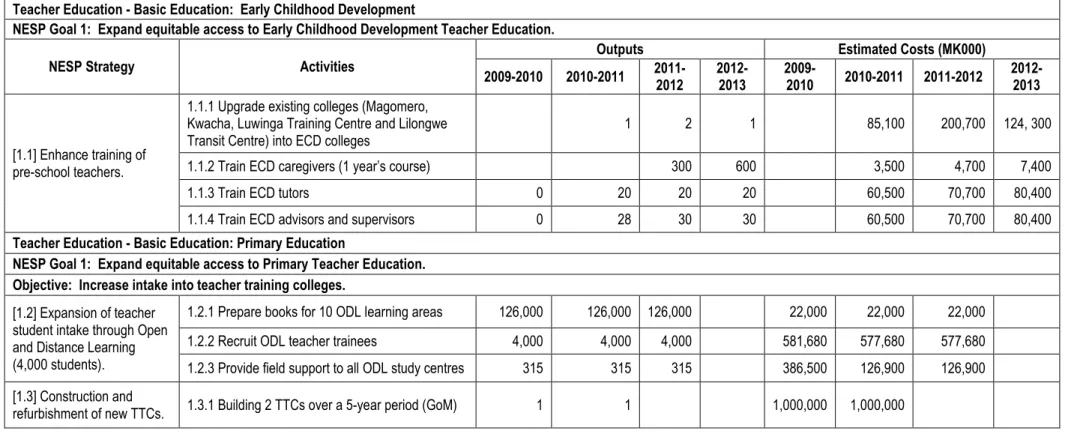
Table 9: Teacher Education Activity Matrix... 67
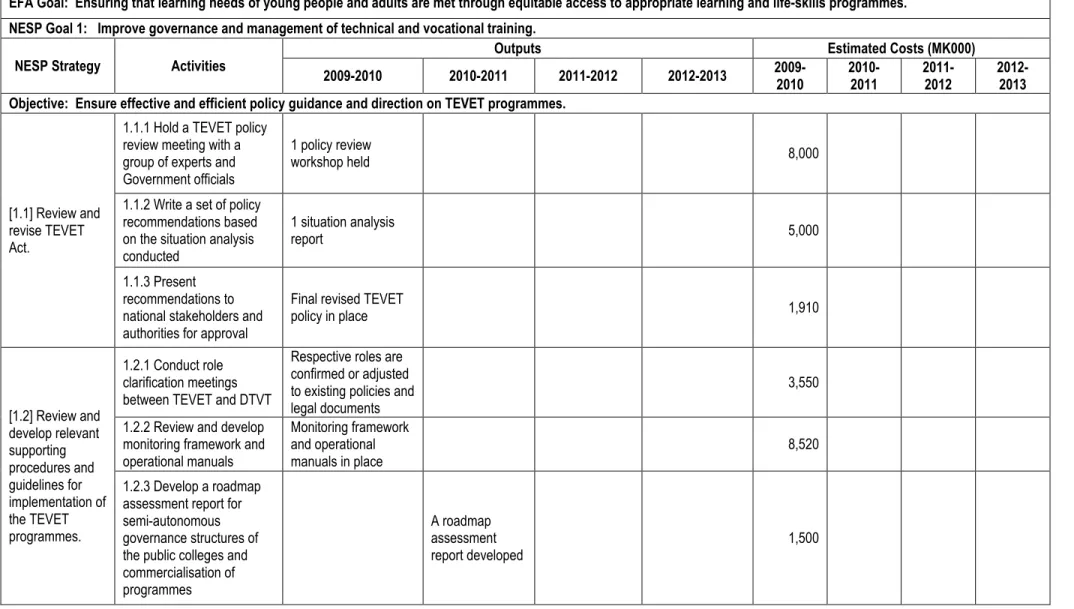
Table 10: Technical and Vocational Education Activity Matrix ... 72
Table 11: Higher Education Activity Matrix ... 82
Table 12: Administration and Support Services Activity Matrix ... 86
Table 13: Summary of Total Required Resources by Sub-Sector 2009-2013 ... 87
Table 14: Percentage Allocation of Total Required Resources by Sub-sector... 88
Table 15: Summary of the Total Required Recurrent Resources by Sub-sector ... 88
Table 16: Percentage Share of Required Recurrent Resources by Sub-sector... 89
Table 17: Summary of Capital Resource Projections by Sub-sector... 89
Table 18: Percentage Share of Required Capital Resources by Sub-sector ... 90
Table 19: Funding Gap Analysis for ESIP (2009) ... 90
Table 20: Total Annual Financing Gaps... 91
Table 21: Planning, Budgeting, Reporting and Monitoring Calendar ... 93
ACRONYMS
AL Adult Literacy
APS Automatic Promotion System
APPM Association of Primary and Playgroups in Malawi
AU African Union
CBCC Community Based Child Centres
CBE Complementary Basic Education
CBO Community-Based Organisation
CDSS Community Day Secondary School
CIDA Canadian International Development Agency
CPD Continuing Professional Development
CSO Civil Society Organisations
DEC Distance Education Centre
DEM District Education Management
DEMIS District Education Management Information System
DEPIP District Education Plan Institutionalisation Programme
DfID Department for International Development
DP Development Partner
DP&C Development Planning and Cooperation
DSS Direct Support to Schools
DTVT Directorate of Technical and Vocational Training
ECD Early Childhood Development
EFA Education for All
EMAS Education Messages and Advisory Services
EMIS Education Management Information System
ESSUP Education Sector Support Programme (WB)
FBO Faith-Based Organisation
FPE Free Primary Education
FTI Fast Track Initiative
GBS General Budget Support
GoM Government of Malawi
GTZ German Technical Cooperation
HEIs Higher Education Institutions
HIV/AIDS Human Immunodeficiency Virus/Acquired Immune
Deficiency Syndrome
ICT Information and Communication Technology
IFMIS Integrated Financial Management Information System
IHS Integrated Household Survey
IMS Information Management System
INSET In-Service Education and Training
IPTE Initial Primary Teacher Education
IRI Interactive Radio Instructions
JCE Junior Certificate of Education
JFA Joint Financing Agreement
JICA Japanese International Cooperation Agency
JSR Joint Sector Review
LSE Life Skills Education
M & E Monitoring & Evaluation
MANEB Malawi National Examination Board
MASTEP Malawi Special Teacher Education Programme
MCDE Malawi College of Distance Education
MDAS Malawi Development Assistance Strategy
MDG(s) Millennium Development Goal(s)
MGDS Malawi Growth and Development Strategy
MIE Malawi Institute of Education
MIITEP Malawi Integrated In-Service Teacher Education
Programme
MoE Ministry of Education
MoEST Ministry of Education, Science and Technology
MoW&CD Ministry of Women and Child Development
MoYDS Ministry of Youth Development and Sports
MPRSP Malawi Poverty Reduction Strategic Paper
MSCE Malawi School Certificate of Education
MTEF Medium Term Expenditure Framework
NALP National Adult Literacy Programme
NCHE National Council for Higher Education
NCPSMPS National Community Participation Strategy in the
Management of Primary Schools
NER Net Enrolment Ratio
NESP National Education Sector Plan
NFE Non-Formal Education
NGO Non-Governmental Organisations
NLS National Library Services
ODL Open and Distance Learning
OOOSCY Out of School Children and Youth
PAF Performance Assessment Framework
PCAR Primary Curriculum and Assessment Reform
PEA Primary Education Advisor
PIF Policy and Investment Framework
PoW Programme of Works
PRESET Pre-Service Education and Training
PRISAM Private Schools’ Association of Malawi
PSLCE Primary School Leaving Certificate Examination
PSR Public Sector Reform
PTA Parent Teacher Association
PTR Pupil Teacher Ratio
R M & E Research, Monitoring and Evaluation
SADC Southern African Development Community
SCAR Secondary Curriculum and Assessment Reform
SFP School Feeding Project
SHN School Health and Nutrition
SNE Special Needs Education
SMC School Management Committee
SSA Sub-Saharan Africa
SWAp Sector-Wide Approach
SWG Sector Working Group
TALULAR Teaching and Learning Using Locally Available
Resources
TTC Teacher Training College
TEMIS Teacher Education Management Information System
T’LIPO Teachers Living Positively (with HIV and AIDS)
TEVET Technical, Entrepreneurial and Vocational Education
Training
TEVETA Technical, Entrepreneurial and Vocational Education
Training Authority
TRF Textbook Revolving Fund
TVT Technical and Vocational Training
TWG Technical Working Group
UNESCO United Nations Education Scientific and Cultural
Organisation
UNICEF United Nations Children’s Fund
UNFPA United Nations Fund for Population
USAID United States Agency for International Development
WFP World Food Programme
FOREWORD
The National Education Sector Plan (2007-17) sets out the Government’s approach for achieving the national education goals and objectives between 2008 and 2017. The goals and objectives stipulate expanded equitable access to education, improved quality and relevant education and improved governance and management of the sector as three key themes for positively realising the Malawi Growth and Development Strategy (MGDS). Indeed, the MGDS is the pillar for socio-economic and industrial growth for Malawi and the main thrust of the national plan for poverty reduction. As a sign of commitment, the Government has increased its allocation of funds to the Education Sector in the current (2009/10) national budget to improve the quality and efficiency of the system. Through this increased funding, the Government shows its support for the policy reform agenda, including a focus on decentralisation, community support to education programmes and information-sharing.
The means for realising the MGDS through education are many and varied, sometimes involving very specific actions by the Government through ministries such as Education, Science and Technology, Women and Child Development and Youth Development and Sports and, at other times, involving direction or support from private individuals or institutions and civil societies.
The Education Sector Implementation Plan (ESIP) 2009-2013 serves as a guide for the articulation of the broad development objectives of the NESP strategy 2008-2018. It extracts strategies and activities to be undertaken in the five-year period which would later be refined and redefined in annual work plans and budgets. The ESIP is an operational tool for all managers and implementers at every level of the education system.
The ESIP serves as an important instrument for monitoring implementation performance (targeting mainly outcomes and impact). In this respect, it should provide the framework for tracking resource applications.
The document consists of six sections.
Section Aoutlines the general context by providing a situation analysis of the Malawi Education Sector. It covers the macroeconomic framework, education sector context and vision and mission of the education sector.
Section Bidentifies and articulates strategic priorities for the sector during the ESIP implementation period.
Section C presents the institutional framework and capacity development. It looks at organisational and institutional restructuring, capacity enhancement, financing, procurement and physical infrastructure.
Section Dsets out the broad programmes by sub-sector. It covers objectives, expected outcomes and the main activities to be implemented over the 2009-2013 period.
Section E discusses the funding modalities, presenting various options for financing the National Education Sector Plan. It also covers issues of planning, budgeting, reporting and monitoring as well as financial management.
Section F outlines how monitoring and evaluation function will be carried out for the implementation period. It presents key indicators that will be tracked and outlines the roles and responsibilities of the different partners.
The ESIP presents detailed financing requirements according to the NESP as well as currently known available resources for the period 2009-2013. These serve to demonstrate that the Ministry of Education, and the education sector as a whole, is severely constrained from achieving its mandate and vision because of the limited resource envelope currently available.
I sincerely wish to thank all education stakeholders who, through several consultations, participated in developing the ESIP. These stakeholders are development partners, civil societies, private sector and Government personnel. It is anticipated that the very same stakeholders will be active in the actual implementation of this Plan. Furthermore, their support in whatever form will be invaluable.
It is the hope of the Ministry that this document will serve not only as a plan of implementation but as a catalogue of priorities and activities which the Government, development partners, civil society organisations and all other stakeholders in the sector can endorse and contribute to in a tangible manner. Such a movement towards harmonisation and coordination of efforts in the education sector will go a long way towards the realisation of our common goal: the provision of quality education to all Malawians.
Dr. George T. Chaponda, MP
PREFACE
The National Education Sector Plan (2008-2017) entails education related actions requiring the involvement of various stakeholders such as Government through the ministries of Education, Science and Technology; Women and Child Development and Youth Development and Sports; private individuals or institutions and civil society organisations. In order to execute this 10-year plan, we have developed an Education Sector Implementation Plan for the first five years (2009-2013).
The development of this implementation plan was facilitated by a task force comprising all education stakeholders; that is, Government Technical Working Groups, Development Partners, Civil Society and Private Sector. The Directorate of Education Planning in the Ministry of Education served as the secretariat of the task force. The plan attempts to lay the path for the implementation of all education programmes and activities in the next five years. All strategies contained in the plan have been prioritised according to the gaps identified by sub-sectors and resources currently available in the budget.
Executing the strategies in this plan will place considerable responsibility on the Government, mainly the Ministry of Education, Science and Technology, its directorates and related institutions. The Government and all its stakeholders, however, may not have all the resources in place to realise this plan. As such, there is need for deliberate effort to ensure that prioritisation is understood and respected and any action being adjusted should reflect reality. As the development of this plan was participatory and consultative, its implementation should follow the same
collective participation and ownership by all stakeholders. It is the hope of the Ministry that all stakeholders will follow this plan and ensure that adequate funding, personnel and working modalities are in place to ensure effective implementation.
B.H. Sande
EXECUTIVE SUMMARY
The National Education Sector Plan (NESP) 2008-17 sets out the Government of Malawi’s (GoM) strategy for achieving national education goals and objectives for the coming decade (2008-2017). The Education Sector Implementation Plan (ESIP) 2009-2013 serves as a guide for the articulation of the broad development objectives of the NESP strategy 2008-2018. The ESIP is an operational tool for all managers and implementers at every level of the education system. The ESIP responds to critical issues identified in most recent sector analyses, especially the Country Status Report, 2009 (CSR): it indicates major policy reforms, sets clear priorities for each sub-sector by NESP and Education for All (EFA) goal and presents realistic and sustainable budget options.
The objective of this ESIP is to provide details of the activities that each education sub-sector will undertake in the four-year period 2009-2013 in order to fulfil the strategies to achieve the NESP goals. The ESIP sets the following priorities: basic education (early childhood development, primary education, out of school children and youth and adult literacy), secondary education, teacher education, technical, entrepreneurial and vocational education and higher education, respectively. Within basic education, primary education is accorded the highest priority, followed by early childhood development (ECD), out of school children and youth and adult literacy.The ESIP organises these priorities into three thematic areas, as (i) access and equity, (ii) quality and relevance, and (iii) governance and management.
The main components of the ESIP include:
(1) Policy Reform Agenda and Strategic Priorities: This mainly addresses the overall policy reform agenda of the education sector and the strategic priorities that guide sub-sectoral planning. It highlights the main policy documents where the policy agenda is largely derived, the most important being the National Education Sector Plan and the Operational Supplements and the Draft National Education Sector Policy Statement. The education sector strategic priorities according to the NESP
and ESIP are Quality and Relevance, Access and Equity, Governance and
Management.
(2) Sector and Sub-sector Activities: This section outlines all the sub-sector current and planned activities and projected costs until the financial year 2012/13. The sub-sectors are: Basic Education (ECD, Out of School Youth, Adult Literacy), Secondary Education, Tertiary Education, Teacher Education, Technical and Vocational Training. Each sub-sector has highlighted their priorities in line with the NESP themes.
(3) Institutional Framework and Capacity Development: This section outlines what needs to be done to develop capacity at various levels in the ministry. Areas tackled under this section include developing a robust system for collecting human resource performance information and record management systems at all levels; strengthening the utilisation of transparent and efficient management support systems in financial management, procurement, information and reporting systems and infrastructure management; strengthening human resource planning systems in line with ESIP aspirations.
(4) Financing: This section presents the overall sector financial status. It summarises the financial needs as presented in Section 3 of the Implementation Plan and further outlines the funding modalities, presenting various options for financing the National Education Sector Plan. It also covers issues of planning, budgeting, reporting and monitoring, and financial management. Section F is the monitoring and evaluation framework.
(5) Monitoring and Evaluation Framework: This is the last section in the Plan and it summarises the various techniques that will be used to ensure that quality issues are addressed in the implementation of the Plan. It outlines and discusses a comprehensive list of indicators that will be used to check activity progress in the different sub-sectors presented in this Plan. The indicators used are the key indicators in the NESP. Furthermore, this section links the education sector research agenda to policy reform presented in Section 2 of the Plan.
SECTION A
1.
Situation Analysis
1.1
Macroeconomic Framework
The Malawi economy has shown considerable improvement over the last three years, with real GDP growth rates for 2006/07 and 2007/08 averaging over 8% and expected to be similarly high for 2008/09. The steady increase in economic growth has resulted in Malawi reaching a GDP per capita of approximately US$300 in 2008 (Annual Economic Report 2009). This positive performance of the Malawian economy can be attributed mainly to the recent sound economic policies and favourable weather conditions for agriculture.
Nevertheless, in comparison with the entire SADC region, Malawi still records the third lowest GDP per capita and ranks in the bottom five in Africa. The forecast for the economy remains encouraging, however, given Government’s increased emphasis on value addition on domestic products coupled with the discovery and mining of uranium.
Compared with other Sub-Saharan African countries, the rate of Malawi’s domestic revenue mobilisation as a proportion of GDP is higher than the average. The average rate for low-income, non-oil producing African countries is 17% of GDP per annum, while that of Malawi is 19%. This is especially encouraging considering that the Malawi Government has reduced the budget deficit to approximately 1% of GDP. In turn, Government has increased its volume of expenditure to more than 33% of GDP. This constitutes a good opportunity for the country to increase spending in the education sector.
In terms of donor support, Malawi still receives the bulk of its assistance in the form of project aid, which accounted for 65.2% of official development assistance in 2007/08 (Malawi Aid Atlas). In 2007/08, Malawi received support from its development partners amounting to MK76.3 billion, an increase of MK13.7 billion from MK62.6 billion reported in the 2006/07 financial year. Out of total project aid disbursed, Malawi received 10.6%, the third highest allocation across Government. The Government of Malawi developed the Malawi Growth and Development Strategy (MGDS) as its overarching policy framework for 2006-2011. The overall objective of the MGDS is to reduce poverty through sustained economic growth and infrastructure development. The MGDS tries to balance wealth creation and social development for Malawi. However, the stated priority of the strategy is towards economic growth, with less emphasis on investments in social development such as education and health. However, economic growth will have a big impact on the development of these social sectors. Contrary to the MGDS statement, the current policy statements do give more emphasis to education. This underscores the need for the NESP to be endorsed so that there can be increased funding and attention to the education sector, thereby mitigating the priority of the Government development strategy towards direct economic growth. Government strategies for the education sector, in particular those relating to the fulfilment of the Millennium Development Goals (MDGs) and Education for All (EFA) requirements, are captured under the
theme of social development. Implementation of the MGDS takes place through the Government budget, in line with the Medium Term Expenditure Framework. Budgeting in Malawi has moved from the traditional line-item format towards activity-based budgeting. This has led to some improvements in monitoring and achievement of results although challenges remain. The challenges include weaknesses in the execution of medium-term budgeting and capacity constraints in these institutions.
The Government of Malawi, through its strategies and reforms, aims to improve the social and economic conditions of the country. The mandate of the Ministry of Education is to contribute towards social development as articulated in the MGDS. The National Education Sector Plan (NESP) is the Ministry’s tool for fulfilling this mandate. The NESP is a 10-year plan addressing the three thematic areas of access and equity; quality and relevance and governance and management. The objective of the Education Sector Implementation Plan (ESIP) is to operationalise the NESP.
1.2
Education Sector Context
1.2.1 Overall Sector Conditions
The Malawian demographic context is one in which the country’s population, estimated at 13 million inhabitants in 2008, is increasing at the rate of 2.4% per year. The school-age population (the 6-17 age group) represents 37% of the total population. This proportion is the highest in the SADC region and represents a heavy burden on the education sector (Malawi Country Status Report 2008. It is estimated that 85% of the population lives in the rural areas. This poses a challenge in terms of relocation of teachers because of the remoteness of some areas.
The HIV pandemic has also dramatically affected the development and performance of the education sector. The adult HIV prevalence rate stands at 12% as of 2007 and this has resulted in an increase in the rates of attrition and absenteeism among teachers. Also due to HIV, the number of orphans, estimated to be 7% of children below the age of 17, has increased. These children are less likely to go to school than their peers.
There are a number of contributing factors to the declining state of primary and secondary education in Malawi. Since the introduction of the largely unplanned free primary education initiative in 1994, the education system has been unable to cope with the enrolment explosion it caused. The increased number of students placed a strain on existing infrastructure, teaching and learning materials and qualified teachers in the system. The free primary education initiative resulted in the education system becoming funnel-like in nature: great numbers enter at the primary level, but few progress to the secondary level and beyond. Further, those who can be accommodated in the limited secondary sector do not receive education of a high quality because of inadequate infrastructure, teaching and learning materials and qualified teachers. Distance education centres were converted into Community Day Secondary Schools without proper infrastructure and qualified teachers.
The provision of technical and vocational education in Malawi is highly diverse, fragmented and uncoordinated, with multiple private and public provider systems.
The quality of education offered is negatively affected by multiple factors including inadequate equipment and facilities, shortage of training materials and high trainee/teacher ratios.
Higher education in Malawi is characterised by low enrolment rates, limited infrastructure, high unit costs and internal inefficiencies as well as inequities regarding access to these institutions. Enrolment figures are among the lowest in the region, with only 52 students per 100,000 inhabitants, and the unit cost of higher education is 22 times the GDP per capita of Malawi, compared with the average SADC cost of three times GDP per capita.
The total education public recurrent expenditures amounted to MK22.3 billion in the 2007/08 fiscal year1. This represents 19.4% of total Government recurrent expenditures and it is an increase compared with 2001/02 (16%). Preliminary data for 2008/09 indicates a decreasing trend that would prevent Malawi from catching up with both the SADC average (20.8%) and the EFA-FTI reference benchmark (20%). Primary education receives the largest share of the recurrent education expenditures with 44% of the total. The share for higher education (27%) is higher than that for secondary education (22%). The share allocated to pre-school, literacy, TEVET and teacher training does not exceed 7% in total.
In particular, the expansion of the primary and secondary education sectors required proportionate increases in funding to the education system. However, this has not been the case in Malawi. Table 1 below illustrates that, in real terms, the increases in Government funding to the education sector have been negligible. On average, in the eight-year period under review, the average growth rate in primary and secondary school enrolment exceeded the growth rate in ORT funding. The growth rate in ORT funding surpassed the growth rate in enrolment in only two years during the period.
Table 1: Enrolment vs. ORT Funding Trends in Primary and Secondary Schools (2000-2008)
2000/01 2001/02 2002/03 2003/04 2004/05 2005/06 2006/07 2007/08
Primary Education
Enrolment 3 067 843 3 187 835 3 164 191 3 067 843 3 166 786 3 200 646 3 280 714 3 306 926
Growth rate 0 4% -1% -3% 3% 1% 2% 1%
Real ORT (1994 constant prices) 304 211 550 91 045 165 41 571 182 36 372 732 31 035 964 35 725 255 34 617 566 39 021 674
Growth rate 0% -121% -78% -13% -16% 14% -3% 12%
Secondary Education
Enrolment 164 459 176 252 116 493 131 100 180 157 183 854 218 310 210 325
Enrolment growth rate 0% 7% -41% 12% 32% 2% 17% -4%
Real ORT (1994 constant prices) 62 770 738 47 185 316 22 533 709 36 307 715 36 464 570 31 435 750 34 142 911 37 723 785
Real ORT growth rate 0 -29% -74% 48% 0% -15% 8% 10%
Source: EMIS 2000-2008; Approved Budget Documents (No. 5), 2000/01 – 2007/08
There are a number of development agencies supporting education in Malawi. They provided US$53.8 million in support of the education sector in 2007/08. On average, between 2004 and 2006, education in Malawi benefited from aid equivalent to 1.9% of GDP (compared with 1.1% of GDP on average in Sub-Saharan Africa). 1.2% of
1
This figure includes all education expenditures from the Ministry of Education (MoE) and all other ministries outside the MoE.
GDP was direct support to education and 0.7% of GDP was the estimated education share from global budget support.
1.2.2 Access and Equity
One of the three themes on which Malawi’s NESP is founded relates to access and equity to education to ensure that the distribution and utilisation of resources and opportunities in education are fairly targeted to reach all members of society. As mentioned earlier, Malawi has a high population growth rate. The total population is estimated to increase by 20% between 2008 and 2018. This has huge implications for access to education in its own right and is compounded by the very high rate of repetition in the system.
Table 1 shows that, since 2000, enrolment has increased at all levels of education, with annual growth rates of 60% in pre-school and a doubling of enrolment in public universities. The same table shows that enrolment ratios have, however, decreased in primary education, although access rates in the first four standards show a high multi-age phenomenon. This is due to the high proportion of over-age new entrants, dropouts and repetition. At the secondary level, access probability to Form 1 is approximately 17%, a very low proportion of the age cohort. At universities, Malawi records one of the lowest enrolment ratios in Sub-Saharan Africa at only 52 per 100,000 inhabitants. Limited infrastructure is a significant factor contributing to the constrained access at the tertiary level.
Enrolment data at the primary level indicates that, although access to Standard 1 in primary education is close to universal, survival remains unsatisfactory, with a 35% completion rate. Malawi is not succeeding in its goal of universal primary education. Survival rates have improved within primary education, from 23% in 2004 to 32% in 2007, but this is still too low and completion rates are not expected to improve under current school conditions without considerable additional resources.
There are both demand and supply constraints to access to primary education in Malawi. On the demand side, poverty is the underlying factor that explains low rates of access in this sub-sector. Surveys investigating non-attendance reveal that economic difficulties, illnesses and disabilities are some of the reasons relating to low enrolment and poor attendance. On the supply side, inadequate infrastructure, distance to schools and high repetition rates also negatively affect access to education. Further, the large majority of the population (82%) still lives in rural areas where school supply and demand are weaker. It is estimated that there are still about 600,000 primary school age children not enrolled in primary schools.
On the matter of equity, schooling patterns show disparities according to gender, income and location. The gender parity indices decrease from 1.04 in the first four standards of primary to 0.50 in higher education and 0.38 in TEVET programmes. Girls are also 5.5 times more likely to be enrolled in non-formal education than boys. Location and income disparities are more pronounced in access trends. At the primary level, access to Standard 8 differs by 14% between boys and girls, and by 34% between urban and rural. Income levels also have a direct impact on access probability. There is a difference of 44% between the richest quintile and poorest quintile of the population. The disparities in access to education related to income
are most striking at the tertiary level, where only 0.7% of the poor quintile gains admission to universities, as opposed to 91% from the richest quintile (CSR 2009).
1.2.3 Quality and Relevance
The second theme identified in the NESP/ESIP relates to quality and relevance, as targeted outcomes of the education sector. The focus here is on the quality of learning and its relevance, as well as the effectiveness and efficiency in the way education is delivered.
The internal efficiency coefficient at the primary level remains particularly low (35% in 2007). This implies that 65% of public resources are used for repeated years or for school years of students who are dropping out before completing the cycle. Indeed, the system requires 23 student-years to produce one graduate instead of 8 years with a perfect efficiency. The situation has slightly worsened since 1999, when the IEC was 39%. An increase in repetition is mainly responsible for this degradation and the related rise in wasted resources. Evidence, at national and international level, shows that high repetition rates do not favour better mastery of learning and also have adverse effects on student-teacher ratios, progression rates and costs. In 1999, repetition induced a 20% waste of resources (partial IEC of 80%); in 2007, the waste of resources was 29% (partial index of efficiency of 71%). Dropout also remains a major issue, inducing a 50% waste of resources. Indeed, in a system with no repetitions, the partial efficiency index (dropout-related only) would be 49%. High dropout rates have the greatest adverse affect on the efficiency of the system. Internal efficiency at secondary level is slightly better. Inefficiencies resulting from repetition in the secondary sub-sector remained low at 5-6% between 2004 and 2007. The major problems in the sub-sector stem from dropouts, which alone led to 29% wastage of public resources in 2007. Much gain in internal efficiency could be realised from a reduction in dropout and repetition.
The Southern & Eastern Africa Consortium for Monitoring Education Quality (SACMEQ), measures pupil performance on a comparative basis. SACMEQ test scores and national examination pass rates over the past decade confirm that education quality in Malawi is poor and deteriorating. The percentage of children reaching a minimum level of mastery in reading in English halved over the 1998-2004 period, to reach barely 9% in 1998-2004. After 6 years of primary schooling, there are still 15% of children who are not literate. Pass rates at national examinations range from 74% for PSLE to 52% for JCE and to 44% for MSCE. The low achievement at MSCE is striking and raises serious issues on the level of knowledge acquired throughout the schooling system. The ministry is currently implementing a curriculum and assessment reform programme in primary education. Major issues include the way in which learning is assessed and how learners progress through the system.
1.2.4 Governance and Management
The third theme highlighted in the NESP/ESIP is that of governance and management of the education system, to enable more effective and efficient delivery of services. The 2008/09 Malawi Education Country Status Report revealed that in 2007 as many as 42% of teachers in the primary education sub-sector were
allocated randomly rather than according to the number of students enrolled in schools. This was well above the SADC average of 31% and suggests that there is need for improvement in the management of human resources at primary level. The allocation of teachers in Malawi is highly skewed towards urban areas. Pupil-qualified teacher ratios in primary schools in urban areas were at 46:1 compared with 86:1 in rural areas. Even greater disparities are seen when considering deployment of qualified teachers. Indeed, their allocation tends to have benefited urban settings (47:1), leaving rural areas seriously deprived of qualified teachers (95:1). This disparity largely emanates from the lack of incentives to deploy and retain qualified teachers in rural settings.
The situation at the secondary level is relatively better, where the degree of randomness in teacher allocation was observed to be 28%. Thus, at secondary level, 72% of teachers are allocated to public schools based on the number of students enrolled in the schools, as opposed to unexplained factors. Community Day Secondary Schools (CDSSs) are less well-resourced than other schools, although they enrol nearly half of the secondary student population. They are under-funded, have under-qualified teachers, poorer learning environments and lack appropriate teaching and learning materials and equipment.
1.3
Vision and Mission of the Education Sector
The Constitution of the Republic of Malawi asserts that education is a fundamental human right. The national long-term development strategy for Malawi (Vision 2020) envisaged the total elimination of poverty by the year 2020 and accorded high priority to the education sector, which is considered pivotal in bringing about social and economic transformation. The Vision 2020 analysis was incorporated into the subsequent Policy and Investment Framework (PIF, January 2000) for Malawi. The PIF set out a long-term development strategy and a systematic approach for investments into the education sector (up to 2012). The PIF pointed out that the “broad policy of the Malawi Government is to alleviate poverty” and that “Education is the centrepiece of this policy.” The PIF made clear that investment in education yields “broad economic and social benefits”, lists some specific benefits and states that: “Government further recognises that education is an important ingredient in the development and nurturing of an educated leadership and effective governance. It is a catalyst for the raising of national consciousness, group solidarity and social cohesion.”
The Malawi PIF articulated specific targets, strategies and the policy framework for the education sector. The framework incorporated the international commitments in education, to which Malawi is signatory: the Millennium Development Goals (MDGs) and Education for All (EFA) (Refer to Box 1). The EFA Fast Track Initiative (FTI) potentially offers a means by which Malawi might access extra funding in order to expedite the achievement of its goals. Mindful of the FTI indicative framework, this scheme, together with the existing key national plans and targets, informs the National Education Sector Plan (NESP) and provides the contextual background.
Box 1: Malawi and the Dakar Education for All Goals
The Education for All (EFA) initiative is founded on the principle that education is a fundamental human right. EFA is a concerted global undertaking aimed at improving basic education. A set of goals has been articulated by EFA at the World Education Conference in Jomtien,Thailand, in 1990.
The EFA goals have been endorsed by the Malawi Government, guiding and giving substance to its national education policies. However, many Sub-Saharan African countries, Malawi included, recorded marginal progress towards achievement of the EFA goals. The disappointing performance of these countries formed the background to the World Education Forum in Dakar, Senegal, in 2000. At this forum, the need for and commitment to the EFA initiatives were reaffirmed. The Dakar Framework which emerged from this meeting includes the following goals:
[a] Expanding and improving comprehensive early childhood care and education, especially for the most vulnerable and disadvantaged children.
[b] Ensuring that, by 2015 all children, particularly girls, children in difficult circumstances and those belonging to ethnic minorities, have access to, and complete, free and compulsory primary education of good quality..
[c] Ensuring that learning needs of young people and adults are met through equitable access to appropriate learning and life-skills programmes.
[d] Achieving a 50% improvement in levels of adult literacy in 2015, especially for women, and equitable access to basic and continuing education for all adults.
[e] Eliminating gender disparities in primary and secondary education by 2005, and achieving gender equality in education by 2015, with a focus on ensuring girls’ full and equal access to and achievement in basic education of good quality.
[f] Improving all aspects of the quality of education and ensuring excellence of all so that recognised and measurable learning outcomes are achieved by all, especially in literacy, numeracy and essential life skills.
More recently, the Malawi Growth and Development Strategy (MGDS) endorses this vision for education, stating that “[Education]…is a catalyst for socio-economic development, industrial growth and an instrument for empowering the poor, the weak and the voiceless. Education enhances group solidarity, national consciousness and tolerance of diversity. It facilitates the development of a culture of peace which is conducive and critical for socio-economic, political and industrial development. Hence, education is critical and necessary for economic and industrial growth and development.”(MGDS, 4.3.4)
The Mission of the Ministry of Education during implementation of the 2009-2017 NESP is: To provide quality and relevant education to the Malawi nation. Taken together, the above sentiments and goals can be described as the vision of and mission for education in Malawi.
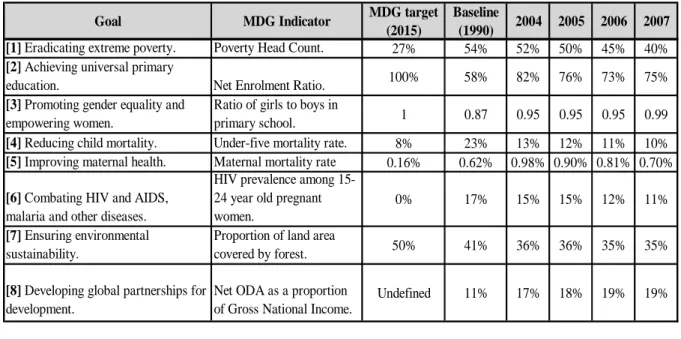
In implementing its Vision and Mission, Malawi will make its main Strategic Priority the improvement of quality, equity, relevance, access and efficiency in Basic Education, working to meet the Millennium Development Goals. In addition, Secondary Education will double enrolment during the 10 years, while focussing on upgrading quality and on the retention of girls. Access to Technical and Vocational Education will expand and the colleges will be rehabilitated. At the Higher Education level, enrolment in existing public universities will double in 10 years, with significantly increased efficiency to minimise costs to the budget, complemented by the expansion of private tertiary education. Table 2 gives an indication of how Malawi has progressed in achieving the MDGs.
Table 2: Malawi's Progress towards Achieving the MDGs
Goal MDG Indicator MDG target (2015)
Baseline
(1990) 2004 2005 2006 2007 [1]Eradicating extreme poverty. Poverty Head Count. 27% 54% 52% 50% 45% 40%
[2]Achieving universal primary
education. Net Enrolment Ratio. 100% 58% 82% 76% 73% 75%
[3]Promoting gender equality and empowering women.
Ratio of girls to boys in
primary school. 1 0.87 0.95 0.95 0.95 0.99
[4]Reducing child mortality. Under-five mortality rate. 8% 23% 13% 12% 11% 10%
[5]Improving maternal health. Maternal mortality rate 0.16% 0.62% 0.98% 0.90% 0.81% 0.70%
[6]Combating HIV and AIDS, malaria and other diseases.
HIV prevalence among 15-24 year old pregnant women.
0% 17% 15% 15% 12% 11%
[7]Ensuring environmental sustainability.
Proportion of land area
covered by forest. 50% 41% 36% 36% 35% 35%
[8]Developing global partnerships for development.
Net ODA as a proportion of Gross National Income.
Undefined 11% 17% 18% 19% 19%
Source: 2008 Ministry of Economic Planning and Development MDGs report
1.4
The Principles and Rationale Governing Education
Financing in the MGDS
The country’s overarching operational strategy, the MGDS, was designed to facilitate the achievement of the country’s vision as well as the Millennium Development Goals. The operational strategy asserts that an educated and healthy population is necessary to achieve sustainable economic growth. Hence, by building an educated and healthy population as well as achieving economic growth, Malawi would be on course to achieve and sustain the Millennium Development Goals and Education for All.
Government’s recognition of the important role the education sector plays as a catalyst for socio-economic development and industrial growth is manifest in the rising proportion of national budgetary allocations to the sector. In 2006/07, the education sector received 16% of the national budget; in 2007/08 the sector received 18%; and in 2008/09 the sector received 19%. Overall, the sector has been receiving the third highest budgetary allocation behind the agriculture and health sectors. The education sector has identified the following three priority goals in the MGDS: Equipping students, especially at the basic education level, with essential
knowledge and skills to enable them to function as competent and productive citizens,
At secondary level, to provide the academic basis for gainful employment in the informal, private and public sectors,
At tertiary level, to produce high quality professionals with relevant knowledge and skills in relevant fields.
In order to achieve the goals stated above, the sector will implement the following strategies:
Training more teachers,
Rehabilitating existing schools and building additional school infrastructure,
including teachers’ houses at all levels,
Improving the teaching-learning environment to reduce absenteeism, repetition and dropout rates for both sexes,
Reviewing and reforming school curricula to address national needs,
Implementing affirmative policies relating to the selection of pupils and students
to secondary and tertiary levels,
Providing a conducive environment for girls and students with special education needs to enhance equity, and
Equipping managers with managerial skills through targeted training and induction.
1.5
Lessons from the Implementation of Previous Education
Plans
The National Education Sector Plan (NESP) has been developed as a 10-year vision for the Ministry of Education. It follows a line of four strategic plans developed by the ministry over the years. The lessons learnt from the implementation of the previous plans have greatly benefited the formulation of the NESP and have influenced the present ESIP. A brief recap of these plans, as well as their shortcomings, will better situate the current plan.
The first education plan of note was supported by the American Council of Education in 1965. At that time, the focus of the sector was fixed on higher education. As such, it was not a comprehensive plan and suffered from problems of capacity constraints. Following this, the first Education Plan of 1973-1980 was born. However, this plan did not redress the lack of comprehensiveness of the previous document. It focused on the necessary inputs at the primary school level without due consideration of management issues and overall financial implications. In particular, funding gaps were poorly estimated.
The second Education Plan in 1985 responded to the shortcomings of the previous documents by its extremely comprehensive nature but suffered from being too exhaustive in its treatment of the education sector. The document was not a realistic one and did not adopt a system of prioritisation, nor was it linked with overall national strategies. As such, it could not be effective on many levels. Finally, the Policy and Investment Framework (PIF) 2000 was formulated and implemented. However, this was an over-ambitious document which also lacked a sense of realism and prioritisation. The prerequisites of capacity and systems were also not considered.
Against this background, the Ministry of Education aimed to make its new National Education Sector Plan (NESP) 2007-2018 and, by extension, the Education Sector Implementation Plan (ESIP) 2009-2013, as practical and as prioritised as possible. Crucial to the success of the NESP is an injection of a sense of realism concerning what the Ministry, and the sector as a whole, can achieve within a specified time, given the institutional and human capacity limitations which prevail.
As such, the Ministry has prepared this implementation plan in a manner which recognises that much needs to be done by way of building capacity and institutional systems so as to ensure that its plans stand a better chance of being realised. This emphasis on meeting the challenges of capacity is reflected in Chapter 3, which outlines how the Ministry intends to strengthen its institutional framework through organisational restructuring and capacity enhancement. The focus of the Ministry during the NESP period will be on strengthening the efficacy of the Ministry’s various management, administrative and support systems and structures (particularly those relating to financing and procurement) at all levels of service delivery.
The Ministry is confident that, if the bedrock of a sound institutional framework can be achieved, the activities included in the NESP can, in turn, be completed. As such, the Ministry has re-prioritised its initial activities so that only the most critical ones are carried out in the first period of implementation, during which the institutional framework will be reformed and strengthened in order to bear the burden of increased levels of activity in the second period of implementation from 2013 to 2018.
Against this background, this chapter has presented the Ministry’s reduced list of strategic priorities and activities from the NESP which can be feasibly carried out in the implementation period 2009-2013. With regard to the requisite reform of the institutional framework, the Ministry has identified the following strategies as key to its success, and consequently the success of the entire implementation plan.
Establishment of an effective mechanism for the enhancement of the
decentralisation process.
Strengthening leadership, organisational culture, management systems and practices at all levels.
Development of a robust system for collecting human resource performance information.
Strengthening utilisation of transparent and efficient management support systems in financial management, procurement, information and reporting systems and infrastructure management.
Strengthening the management and coordination of the implementation of ESIP with all parties, including Development Partners.
Strengthen institutional and policy linkages and coordination.
Reorientation of the sector budget to the financing of core functions and better integration of Government budget resources and donor support.
The Ministry wishes to position itself to respond to existing and emerging challenges in the education sector. Tactically, this requires a strong institutional set-up and changes to the current system in the manner specified above and elaborated upon in subsequent chapters. The Ministry of Education requires the support of its Development Partners as well as all stakeholders in its placement of systemic capacity strengthening at the top of its reform agenda.
SECTION B
2.
Education Sector Policy Reform and Strategic
Priorities
2.1
Policy Reform Agenda
The Malawi education system belongs to everyone and reinvigorating it will take the combined efforts of the Government, private sector, development partners, civil society and parents/guardians. Against the backdrop of the constraints and challenges outlined in Chapter 1, the Government intends to address these issues through a “business as unusual approach” guided by local (decentralised) responses that follow both local and internationally agreed priorities set forth in the framework of the Millennium Development Goals and the Dakar World Education Forum for Action, promoting Education for All by 2015.
A policy agenda designed to address the critical issues of retention, promotion and quality has been designed based upon the information contained in the following documents:
Malawi Country Status Report (2008/2009), which is a detailed analytical document of the education sector that serves to highlight the weaknesses and strengths of the sector and ultimately recommends remedial policies on a sub-sectoral basis to help improve quality, access and governance in the system.
National Education Sector Plan and the Operational Supplements, which
outline the priorities of the sector and the strategies and activities to address these priorities.
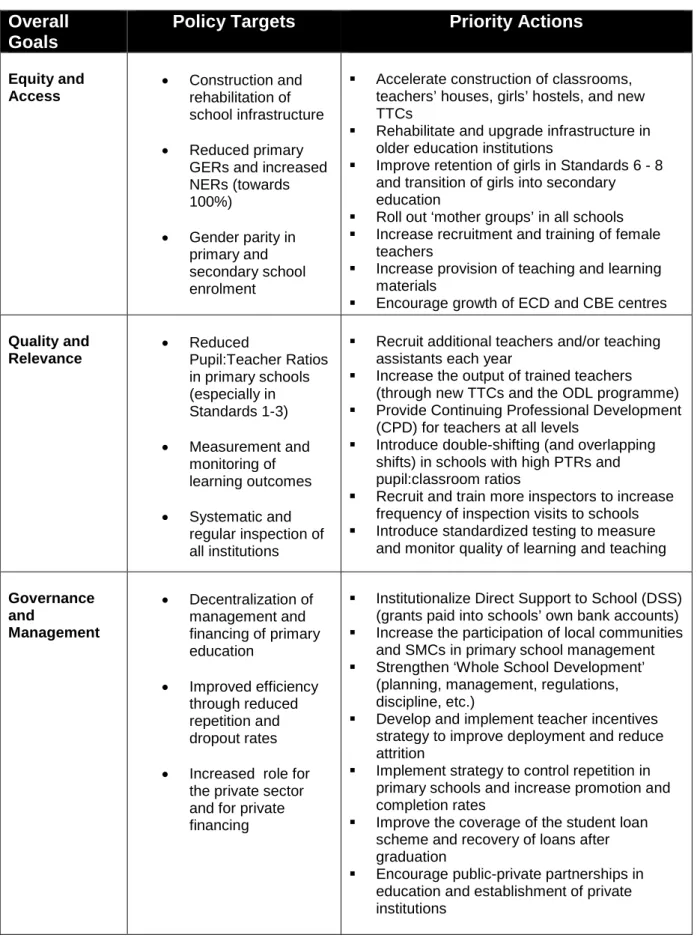
The Draft National Education Sector Policy Statement (2008), which is a consolidation of all the policies governing the education sector in the country. An important policy issue which arises from these documents and cuts across all the education sub-sectors is the need to improve quality and efficiency within the sub-sectors, in particular in the Basic Education sub-sector. Based on the findings of the Malawi Country Status Report, the triggers to improving the quality of learning at the most important level - the school - are primarily dependent on the following policy targets: (1) reducing wastage and inefficiency in the system, ie reducing dropout and repetition rates; (2) drastic measures to reduce pupil-qualified teacher ratios, eg the introduction of parallel and distance modes of training, recruitment of assistant teachers; (3) better managing the allocation of teaching staff and other resources in schools; (4) scaling up classroom construction; (5) bigger role for the private sector and private financing, and (6) much more focus on In-Service Training (INSET) and Continuous Professional Development (CPD), among others. In Higher Education, one of the important policy reforms is the cost sharing through student loans which will reduce the burden on the Government and increase access to higher education. Clearly, there is an urgent need for radical interventions to take place. The most critical (potential) policy options to address these key areas during the 2009-2013 implementation cycle are outlined in the table below.
Table 3: Policy Reform Agenda
Overall Goals
Policy Targets Priority Actions
Equity and Access Construction and rehabilitation of school infrastructure Reduced primary
GERs and increased NERs (towards 100%) Gender parity in primary and secondary school enrolment
Accelerate construction of classrooms, teachers’ houses, girls’ hostels, and new TTCs
Rehabilitate and upgrade infrastructure in older education institutions
Improve retention of girls in Standards 6 - 8 and transition of girls into secondary education
Roll out ‘mother groups’ in all schools
Increase recruitment and training of female teachers
Increase provision of teaching and learning materials
Encourage growth of ECD and CBE centres
Quality and Relevance Reduced Pupil:Teacher Ratios in primary schools (especially in Standards 1-3) Measurement and monitoring of learning outcomes Systematic and regular inspection of all institutions
Recruit additional teachers and/or teaching assistants each year
Increase the output of trained teachers (through new TTCs and the ODL programme)
Provide Continuing Professional Development (CPD) for teachers at all levels
Introduce double-shifting (and overlapping shifts) in schools with high PTRs and pupil:classroom ratios
Recruit and train more inspectors to increase frequency of inspection visits to schools
Introduce standardized testing to measure and monitor quality of learning and teaching
Governance and Management Decentralization of management and financing of primary education Improved efficiency through reduced repetition and dropout rates Increased role for
the private sector and for private financing
Institutionalize Direct Support to School (DSS) (grants paid into schools’ own bank accounts)
Increase the participation of local communities and SMCs in primary school management
Strengthen ‘Whole School Development’ (planning, management, regulations, discipline, etc.)
Develop and implement teacher incentives strategy to improve deployment and reduce attrition
Implement strategy to control repetition in primary schools and increase promotion and completion rates
Improve the coverage of the student loan scheme and recovery of loans after graduation
Encourage public-private partnerships in education and establishment of private institutions
.2
Strategic Priorities
2.2.1 Strategic Priority 1: Quality and Relevance of Education
The EFA Goals urge that all aspects of the quality of education should be improved in order to achieve excellence in learning outcomes. This is a sentiment echoed in the NESP and is theoverarching priority of the Ministry of Education, Science and Technology in Malawi. In the NESP, this important strategic theme is identified as Quality and Relevance and is aimed at reducing dropout and repetition as well as the promotion of effective learning. The focuses of the Ministry of Education in the implementation period are:
Teacher Professional Development: This initiative focuses on addressing the critical concern of getting more and better qualified teachers into the education system to reduce pupil-teacher ratios and promote quality teaching and learning. This will be achieved by an intensive drive to train and upgrade the qualifications of more teachers. The Ministry will increase the number of qualified teachers in the education system by constructing and expanding teacher training colleges and implementing a distance learning programme for teacher trainees. Recruitment of assistant teachers is also a new initiative designed as a short-term measure to fill gaps. It is envisaged that these recruits will be fast-tracked to join one of the approved teacher training programmes offered, after two years of service. To address the existing problem of the quality of learning, the Ministry plans to maximise the use of Teacher Development Centres as resource centres for continuous teacher development.
The Ministry, however, recognises that the mere production of teachers is not sufficient to redress the problem of shortages owing to high rates of absenteeism and attrition. Therefore, the Ministry will simultaneously introduce a package of teacher incentives to motivate and retain the majority of teachers trained at Government’s expense in our school as well as measures to enhance attendance, retention and promote quality of learning in the classroom. Similar initiatives have to be implemented in the non-formal education sectors of adult literacy and out of school youth. There is need to improve on the quality of instructors by providing them with adequate training as well as through the provision of various incentives to improve their retention.
Curricula Reform and Implementation: The focus of curricula reform is to ensure that the curriculum being offered in schools in Malawi is one which is relevant and will provide graduates with the necessary knowledge and skills to be successful in all future endeavours. To this end, the Ministry is rolling out PCAR in primary education and plans to revise the curricula offered at all other levels of education, enhancing their practicality, modes of delivery and forms of assessment. Furthermore, the Ministry will focus on improving the pedagogy and teaching methods used in schools, assessment of learning outcomes and pupils achievement as well as inspection and quality assurance in the system.
Teaching and Learning Materials: The Ministry will focus on providing these inputs to all learning institutions, including those of non-formal education, to create a positive on the quality of education offered and received. The Ministry will adopt innovative and untraditional means of providing teaching and learning
materials, eg Teaching and Learning Using Locally Available Resources
(TALULAR), accelerated reading skills programmes and providing
complementary readers.
2.2.2 Strategic Priority 2: Access to, and Equity in, Education
The Government of Malawi is committed to ensuring access to education for all its citizens, and the NESP subsequently aims to “ensure that all children have access to, and complete, free and quality primary education” in line with the EFA Goal of free and compulsory education of good quality for all by 2015. The focus of the Ministry of Education during this implementation period is to increase the number of children accessing all levels of education. Another common theme running through the EFA goals is that of equity. Equitable access to education for all, as well as the more progressive assertion that gender disparities in primary and secondary education should be eliminated, is targeted by EFA. The NESP identifies equity as a main strategic priority and targets those children disadvantaged by gender, poverty, special needs and geographical location.
Infrastructure Development: The focus of infrastructure development is to improve and expand educational infrastructure through the construction, rehabilitation and maintenance of classrooms, school facilities and teachers’ housing, especially in rural areas. Further, the Ministry will construct disability-friendly facilities, as well as expand and improve girl-disability-friendly structures, including sanitary facilities and female school accommodation. This will be executed by both Government and community efforts.
Complementary Schemes: The aim of this initiative is to maximise the use of existing educational infrastructure through double-shifting and multi-grade teaching. Programmes catering for early childhood development, complementary basic education, out of school youth education and adult literacy will be implemented to help widen access to education for every section of the population.
Incentive Schemes: The aim is to provide monetary and other incentives to attract students who may otherwise refrain from attending school. Grant schemes are planned to support girls in isolated areas and orphans. A school feeding programme is also being rolled out to target poor families.
Support Structures: The aim is to provide a safety net for those at risk of not attending or dropping out of school. For example, mother groups are being established to support female education in primary schools and HIV/AIDS support programmes set up at the school level.
2.2.3 Strategic Priority 3: Governance and Management of Education Delivery
Implicit in all of the EFA Goals is the requisite efficient and effective administrative functioning of the education delivery system. This is captured in the third NESP thematic area of intervention, improved governance and management of the education system. To this end, Government is developing a Sector Wide Approach to planning (SWAp) for the sector through which allocation of resources will be in line
with strategic priorities as outlined in the NESP. Other initiatives include institutionalisation of the preparation of annual programmes of works (PoWs), Joint Sector Review (JSR) and formalisation of the Joint Financing Agreement (JFA). The focus areas of the Ministry of Education in the implementation period are:
Community Participation: The Ministry of Education subscribes to the notion that“someone’s child is your child also” and to this end, the National Strategy on Community Participation in the Management of Primary Schools has been launched, the aim being to educate and empower communities to play a more active role in education provision and accountability. During the implementation period, the Ministry intends to continue its roll-out of the NSCPMPS via monetary support and training to communities.
Public-Private Partnerships: The private sector has already been filling some of the gaps in education provision in Malawi through the establishment of private primary and secondary schools. There is vast potential for private-public partnerships (PPPs) in every sector of education. The Ministry is ready to accelerate its partnership with the private sector to improve the delivery of education via the establishment of a database of existing private schools in Malawi and further moves towards utilisation and regulation of private sector involvement in education provision. In addition, Government will encourage more private financing of education, especially at tertiary level.
Decentralisation: Education provision in Malawi is moving from a highly centralised, and consequently inefficient, approach to one which is localised, decentralised and more efficient. As a first step, budgets for primary education have been devolved to the district assemblies. The Ministry intends to deepen the levels of decentralisation in all sub-sectors, with emphasis on the processes of planning, budgeting, financing and monitoring and evaluation.
Capacity Building: The Ministry recognises that, in order to carry out the programmes outlined in its implementation plan, capacity at all levels needs to be increased, including reducing vacancy rates. The Ministry will define career paths at primary level (eg PEAs) and other staff grades at district and headquarters level. In addition, the Ministry will finalise and implement staff norms and establishment levels for all education institutions. The Ministry will concentrate its efforts in this regard towards strengthening financial and management capacities at the school level.
Monitoring and Inspection: In order to evaluate the performance of the education sector, and to speedily identify and resolve problems where they arise, the Ministry will focus on monitoring of the plan, measurement of performance and quality assurance of the system. Head teachers will be trained to provide more professional supervision while reducing the involvement of external inspectors in education. This bid to strengthen internal efficiency will be guided by the monitoring framework developed for the 2009-2013 implementation period.
SECTION C
3.0 Institutional Framework and Capacity Development
3.1
Overview
The efficacy of Ministry of Education, Science and Technology administrative support systems and structures at all level will be key to the implementation of the ESIP. It is therefore necessary to outline the system within which the Ministry will operate commensurate to the needs arising from the ESIP. This then calls for the restructuring and strengthening of management systems and structures at both the headquarters and lower levels for the efficiency and effectiveness of ESIP implementation.
From the functional review and capacity gap analysis conducted within the EFA/FTI capacity assessment guidelines, it has been learnt that services such as planning, procurement, accounting, school inspection and advisory, human resource capacity building affects implementation of the education programmes at all levels. This section therefore summarises the major considerations identified to address the systemic hiccups and capacity gaps requisite for the successful implementation of the ESIP.
3.2
Organisational Restructuring and Capacity Enhancement
In order to implement the ESIP effectively and efficiently, the Ministry of Education will focus on the following:
[a] Establish an effective mechanism for the enhancement of the decentralisation process through raising the profile of Direct Support to schools and school-based financing which is aligned to the performance of such schools using school-based internal efficiency as a basic criterion.
[b] Strengthen leadership, organisational culture, management systems and practices at school and zone or cluster level through the active engagement of communities and redefinition of the roles and rules for the SMCs and PTAs.
[c] Develop robust system for collecting human resource performance
information and record management systems at all levels.
[d] Strengthen utilisation of transparent and efficient management support systems in financial management, procurement, information and reporting systems and infrastructure management.
[e] Strengthen the management and coordination of the implementation of the ESIP with all parties, including development partners.
[f] Strengthen institutional and policy linkages and coordination in line with the ESIP aspirations.
3.3
Institutional Restructuring
3.3.1 Leadership
In a bid to strengthen all leadership aspects, the Ministry of Education, Science and
Technology will promote the development of customised leadership and
management courses by institutions of higher learning, implement a training plan for all levels and revise career paths for posts in the system. This will require the creation of establishments of warrants for all individual schools and the development of school-based funding formulae to be used for training of school managers. In addition to this, there will be need to reconstitute and empower the training committee, review appointment policy for leadership positions and encourage performance reviews.
Furthermore, the Ministry of Education, Science and Technology will rectify overlapping and conflicting roles that exist within and among departments. In realising this, the MoE is developing a communication strategy that aims at raising a communication culture through the most up-to-date and standardised technologies.
In addition, the Ministry has evaluated roles of departments, tasks and
responsibilities that, if operationalised, will mitigate the existing overlaps.2
To address the weak leadership capacities they have identified, the Ministry of Education, Science and Technology is geared towards formulating and implementing a new leadership development framework. In collaboration with the development partners, the Ministry will engage in the organisational development process through Technical Assistance in Institutional Development.
3.3.2 Institutional, Policy Linkages and Coordination
Capacity assessments conducted by the MoE indicate weaknesses in institutional and policy linkages. In light of this, MoE will implement periodic reviews of policies to improve linkages, encourage teamwork at intra- and inter-ministerial level and improve monitoring and evaluation and analytical capacity to enable the assessment of policy impact within the realms of the ESIP