Relapsed Multiple Myeloma
Sagar Lonial
11
Department of Hematology and Medical Oncology, Winship Cancer Institute, Emory University School of
Medicine, Atlanta, GA
Advances in treatment options for patients with multiple myeloma have made a significant impact on the overall survival of patients and have helped achieve levels of response and duration of remission previously not achievable with standard chemotherapy-based approaches. These improvements are due, in large part, to the development of the novel agents thalidomide, bortezomib, and lenalidomide, each of which has substantial single-agent activity. In addition, a large number of second-generation agents are also in clinical development, such that the repertoire of available treatment options continues to expand. To better interpret clinical trials performed in the relapsed setting, it is important that definitions of relapse categories are used to help better pinpoint the specific benefit for a given therapy, especially in the combination therapy setting as it aids in determining if ongoing work should be continued or abandoned for a given new agent. Insights from preclinical modeling and in vitro work have identified several new combinations, new targets and second- or third-generation versions of existing targets that hold great promise in the setting of relapsed myeloma. Combinations of thalidomide, bortezomib, and lenalidomide with conventional agents or among each other have resulted in enhanced response rates and efficacy. Clinical trials of agents such as carfilzomib, pomalidomide, vorinostat, panobinostat, and elotuzomab are just a few of the many exciting new compounds that are being tested in phase 1 and phase 2 clinical trials for relapsed patients. Further clinical and translational testing are critical to better understanding how best to combine these new agents, as well as identifying patient populations that may best benefit from treatment with these developing new agents.
The spectrum of treatment options for patients with relapsed multiple myeloma has dramatically changed over the past 10 years such that many patients can now enjoy long periods of remission following relapse. These prolonged remissions are due, in large part, to the development of new classes of agents, such as thalidomide, bortezomib, and lenalidomide—all of which have substantial single-agent and combination activity. In addition, a large number of second-generation agents or new targets are also in clinical develop-ment, and the repertoire of available treatment options continues to expand.
Definition of Relapsed/Refractory Disease
In the context of relapsed and/or refractory, three groups of patients exist.1,2 The first is a group that has “relapsed” disease, which
specifically includes patients whose first progression occurs in the absence of any therapy following successful initial therapy. Al-though the definition of relapsed disease requires aⱖ25% increase in the serum or urine protein and ⱖ 0.5 mg/dL, the presence of “biochemical” relapse alone is not indication for additional systemic therapy. Because the patient time to relapse can be quite variable (weeks to months), patients should have some form of symptomatic relapse prior to initiation of therapy, because many patients could survive for some time with biochemical progression and yet not require additional therapy beyond careful monitoring.
The next category is comprised of patients having relapsed and refractory disease, who are defined as progression on a specific therapy, or within 60 days of completion of a given therapy (International Myeloma Working Group Consensus Panel, Interna-tional Myeloma Workshop, February 2009). Historically, this was limited to steroid or alkylator-based approaches; thus, “refractory”
was a generic term. But, more recently, it has become associated with specific agents, such as bortezomib or lenalidomide refractory relapse. This is clearly important because patients who are refrac-tory to bortezomib may still be responsive to lenalidomide or vice versa, and this agent-specific resistance may continue to be relevant for the sequential evaluation and integration of new agents that are in development in the relapsed setting. This group of patients may be especially challenging among the group of patients who have received multiple prior lines of therapy and outside of clinical trials have few treatment options.
The final category is primary refractory, which also represents a potentially challenging group of patients who did not achieve a response following induction therapy. As with refractory disease, this category is most useful when described in the context of specific agents or combinations, and it is particularly important to distin-guish the group of patients who can have a variable course with less aggressive tempo of disease despite initial resistance.
Characteristics of Relapse
As one considers the salvage treatment options, characteristics associated with the relapsed disease are important (Table 1). First, what was the duration of the first response? It is known that, among patients with remission duration of⬍6 months, their duration of response is inferior to patients with remission duration of greater than 12 months. Patients with rapid progression or aggressive relapse are also to be considered differently from those with indolent slowly progressive relapse. Additional factors for consider-ation include agents previously utilized for either induction or previous relapse salvage (both response to and tolerance of these agents), as well as duration of response. Each of these factors is
utilized to plan for the choice of relapse therapy. For instance, a patient with indolent relapse who received a proteasome inhibitor-based treatment, followed by high-dose therapy, is a good candidate for a single-agent approach (eg, immunomodulatory agent-based approach). Conversely, a patient with short duration remission (6 months) is more likely to benefit from combination therapy, because single agents are less likely to be useful in this circumstance. Additionally, patients with a high-risk feature (del 17p, t(4:14) or t(14:16)) usually warrant combination therapy approaches, given the rapidity of relapses and its aggressive nature.
Allogeneic Transplant
The use of allogeneic transplant for the treatment of relapsed myeloma remains a strategy with limited clinical benefit. Most studies evaluating its use in this setting demonstrate long-term, disease-free survival of 10% to 20%, with a significant fraction of patients developing debilitating chronic graft-versus-host disease or relapse.3,4Even among patients with biologically poor risk disease
as defined by Injury Severity Score or cytogenetics, few patients are ultimately cured with allogeneic transplant.5Given the significant
limitations of treatment-related mortality, morbidity, and poor overall outcomes, the use of allogeneic transplant for the manage-ment of relapsed myeloma should be discouraged until more effective and less toxic approaches are established.
Chemotherapy and Second Transplant
In the setting of relapsed disease, the use of conventional or high-dose chemotherapy has been a long-standing approach as salvage therapy. Chemotherapy regimens (eg, DCEP [dexametha-sone, cyclophosphamide, etoposide, and cisplatin] or DT-PACE [cisplatin, doxorubicin, cyclophosphamide, and etoposide]) have traditionally been used in the induction setting, but they have been used extensively in the relapsed setting as well.6,7Overall response
rates for salvage combination chemotherapy are between 30% and 60%, with morbidity and mortality that is related to the intensity of therapy, as well as the refractoriness of the patient at the time of chemotherapy administration. Trieu and colleagues8presented data
on the use of cyclophosphamide weekly with alternate-day pred-nisone as salvage therapy and demonstrated an overall response rate of 41%, with a median progression-free survival (PFS) of 18.6 months and an overall survival (OS) of 28.6 months. With regard to the role of second autologous transplant, a series from Olin et al9
reviewed 66 patients who underwent second autologous transplant as salvage therapy for relapsed myeloma and identified a median PFS of 8.5 months, with a median OS of 20.7 months. Subset analysis suggested that patients with five or more prior therapies, or a median PFS of⬍1 year following the first transplant were less likely to benefit from a second transplant. Overall, patients likely to gain significant benefit from a second autologous transplant, as viewed from a PFS perspective, are those with durations of response
longer than 2 years. However, autologous transplant can have value in the context of reestablishing hematopoiesis among a group of heavily pretreated patients with poor hematologic reserve, thus allowing them to receive additional cytotoxic or investigational therapy once their counts and disease status are improved.
Thalidomide
Thalidomide is one of the first novel agents to be evaluated in relapsed/refractory myeloma patients, based initially on its inhibi-tory effects on angiogenesis.10,11 Initial trials used doses ranging
from 200 mg/day to 800 mg/day, and demonstrated activity despite a heavily, pretreated refractory patient population. A subsequent review by Glasmacher and colleagues12demonstrated that
thalido-mide alone produced partial remission rates in 30% of patients, and other studies have demonstrated that the overall response rate can be significantly enhanced with the addition of concomitant dexametha-sone. Toxicities associated with thalidomide include sedation, constipation, and increased risk of venous thromboembolism, as well as peripheral neuropathy that occurs more frequently if the daily dose exceeded 200 mg. In terms of a dose-response effect, investigators from Investigations and Fraud Management studied 100 versus 400 mg/day that showed no difference in 1-year OS, and patients randomized to receive 100 mg were more likely to have dexamethasone added due to suboptimal response, but clearly had a lower incidence of significant toxicity.13
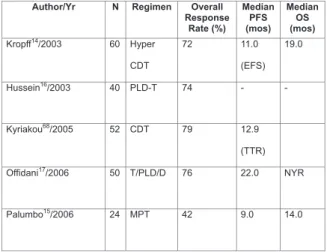
Thalidomide has also been combined with conventional cytotoxic drugs (eg, alkylating agents14,15and anthracyclines),16,17as well as
with novel agents, such as bortezomib,18 in relapsed/refractory
myeloma (Table 2). Trials combining thalidomide with conven-tional chemotherapy are clearly active, and result in overall response rates of 60% to 75%, with complete remission (CR) rates of approximately 20% in a number of early phase I/II studies. One case-matched study by Offidani et al19 compared thalidomide ⫹
dexamethasone⫹pegylated liposomal doxorubicin (ThaDD) with thalidomide⫹ dexamethasone alone. ThaDD produced a higher overall and complete response rate than thalidomide⫹ dexametha-sone (92% and 30% vs 63% and 10%, respectively). In addition, the median PFS and OS were better with ThaDD (21 vs 11 months and 35 vs 20 months, respectively).19Thalidomide combinations with
chemotherapy, specifically anthracyclines, carry an increased risk of
Table 2. Selected thalidomide combinations in relapsed/refractory myeloma
Author/Yr N Regimen Overall Response Rate (%) Median PFS (mos) Median OS (mos) Kropff14/2003 60 Hyper CDT 72 11.0 (EFS) 19.0 Hussein16/2003 40 PLD-T 74 - -Kyriakou68/2005 52 CDT 79 12.9 (TTR) Offidani17/2006 50 T/PLD/D 76 22.0 NYR Palumbo15/2006 24 MPT 42 9.0 14.0
C indicates cyclophosphamide; D, dexamethasone; T, thalidomide; PLD, pegylated liposomal doxorubicin; M, melphalan; P, prednisone; EFS, event-free survival; TTR, time to relapse; NYR, not yet reached.
Table 1.Factors in selecting treatment for relapsed/refractory myeloma
• Disease-related factors
-Duration of response to initial therapy
-FISH or cytogenetic profile (e.g., t(4;14) or p53 deletion) •Regimen-related
-Prior drug exposure (relapsed vs refractory) -Toxicity of regimen (combination vs single agent)
-Mode of administration (e.g., oral or intravenous)
-Previous Transplant
•Patient-related factors
-Pre-existing toxicities (e.g., cumulative myelosuppression, peripheral neuropathy
-Co-morbid conditions (e.g., renal failure, diabetes mellitus) -Age
-Performance Status
venous thromboembolic (VTE) complications, which often requires more intense prophylaxis than is used when patients received thalidomide with dexamethasone or bortezomib. In one series from the Arkansas group, the combination of doxorubicin with thalido-mide, as part of the DT-PACE regimen, resulted in a ⬎ 25% incidence of deep venous thrombosis, necessitating more intense anticoagulation prophylaxis.20
Bortezomib
Bortezomib is a proteasome inhibitor with potent antimyeloma activity as a single agent.21The large randomized APEX
(Assess-ment of Proteasome Inhibition for Extending Remissions) trial demonstrated the superiority of bortezomib given intravenously on days 1, 4, 8 and 11 of a 21-day cycle over pulse dexamethasone in myeloma patients with relapsed/refractory disease who had received no more than three prior treatment regimens. The overall response rate was 38%, and median time to progression (TTP) was 6.2 months, compared with only 18% and 3.5 months with dexametha-sone at the time of the first analysis.22Further follow-up has yielded
a response rate of 43%, compared with 9%, with bortezomib, and a longer median OS of 29.8 versus 23.7 months, despite the fact that over 60% of patients in the dexamethasone arm were allowed to crossover to receive bortezomib.23
The toxicity profile of bortezomib has been well-characterized, and includes nausea, diarrhea, cyclic reversible thrombocytopenia, fatigue, and peripheral neuropathy.21,22,24,25Peripheral neuropathy
occurs in about one-third of patients and may have a painful component. Dose modification or discontinuation of bortezomib is required in the latter setting; the neuropathy improves or resolves in a high proportion of affected individuals, although often over a several month period.26
Bortezomib combinations have been evaluated in a number of different settings and are being widely tested due to the minimal effect on marrow function and its ease of use in renal insufficiency27
and lack of thrombogenicity.28 From preclinical evaluations, the
combination of bortezomib with immunomodulatory agents, alkyla-tors, and other novel agents are predicted to have significant activity based on preclinical rationale (Table 3).18,29 –32 These generally
produce high overall response rates, in the range of 50% to 80% with CR/near CR rates of 15% to 30%, although their impact on duration of response and OS is uncertain at this time. However, one large randomized trial comparing bortezomib alone with bort-ezomib ⫹ pegylated liposomal doxorubicin demonstrated the superiority of the combination in terms of TTP (9.3 vs 6.5 months)
and OS, despite only a modest increase in overall response rate (52% vs 44%).33Preclinical studies have demonstrated that many
new investigational antimyeloma agents demonstrate at least addi-tive benefits when combined with bortezomib, setting the stage for a multitude of ongoing phase I/II clinical trials of such combinations.
Lenalidomide
Lenalidomide is the most recent novel agent approved for relapsed/ refractory myeloma in the United States and Europe. Approval was based on the results from two parallel trials (009 and MM-010), in which lenalidomide⫹dexamethasone was compared with dexamethasone alone in patients with progressive myeloma who had received one to three prior regimens. The dose of lenalidomide was 25 mg on days 1 to 21 of a 28-day schedule, with pulse dexamethasone given on days 1 to 4, 9 to 12, and 17 to 20 for the first four cycles and with dose reduction of dexamethasone for subsequent cycles.34,35The results of the two trials were identical,
with overall response rates of 60% and 61% for lenalidomide⫹ dexamethasone, compared with 20% and 24% with dexamethasone as a single agent. The median TTP was approximately 11 months in both trials, whereas the median OS with the combination was not yet reached in the North American trial (MM-090)34 and was 29.6
months in the European trial (MM-010).35The benefit of
lenalido-mide⫹dexamethasone was apparent despite extensive crossover of patients from the dexamethasone to lenalidomide⫹dexamethasone arm, similar to what was seen in the APEX trial.
Lenalidomide is associated with fewer and different toxicities than thalidomide, with less somnolence, constipation, and peripheral neuropathy. However, it is associated with an increased risk of VTE, similar to thalidomide, and thromboprophylaxis of some form is required.36However, unlike thalidomide, lenalidomide is
associ-ated with myelosuppression.34,35If significant neutropenia occurs,
either the dose of lenalidomide can be reduced or granulocyte-colony stimulating factor can be given while maintaining the full lenalidomide dose. Experience with lenalidomide in patients with renal sufficiency is relatively limited, although the drug has been administered to patients with variable degrees of renal compromise without prohibitive toxicity, with close observation on myelosuppres-sion as a main side effect.37,38
Lenalidomide-based combinations, in a similar vein to those proposed with thalidomide, are currently in progress (Table 4). These include combinations with doxorubicin or pegylated liposo-mal doxorubicin39,40and cyclophosphamide.41,42Based on
preclini-cal models, combinations of lenalidomide with the histone deacety-lase (HDAC) inhibitors vorinostat and panobinostat, as well
Table 4. Selected lenalidomide combinations in relapsed/refractory myeloma
Author/Yr N Regimen Overall Response Rate (%) CR Rate (%) Median TTP (mos) Median OS (mos) Schey/200941 31 LCD 81 36 (VGPR) --
--Knop/200940 66 LDoD 73 15 8 88% 1yr
Reece/200942 15 LCP 74 45 (VGPR) --
--Baz/200639 52 LPLDVD 75 29 (nCR) 61%(1yr) 84%(1yr)
Anderson/200952 64 RVD 84% 26 (nCR) 12 29
LCD indicates lenalidomide, cyclophosphamide, dexamethasone; LDoD, lenalido-mide, doxorubicin, dexamethasone; LCP, lenalidolenalido-mide, cyclophosphalenalido-mide, pred-nisone; LPLDVD, lenalidomide, pegylated liposomal doxorubicin, vincristine, dexa-methasone; RVD, Revlimid, Velcade, dexamethasone (lenalidomide, bortezomib, dexamethosone); VGPR, very good partial response.
Table 3. Selected bortezomib combinations in relapsed/refractory myeloma
Author/Yr N Regimen Overall Response Rate (%) CR/nCR Rate (%) Median PFS (mos) Median OS (mos) Pineda-Romané/200818 85 VTD 63 22 -- 22 Biehn/200729 22 B + PLD 63 36 9.3(TTP) 38.3 Popat/200530 22 B + iv Mel +/- Dex 43 5 6.8(TTP)
--Palumbo/200731 30 VMPT 67 17 61%(1yr) 84%(1yr)
Reece/200832 13 B+Cy+P 85 54 >12 >12
nCR indicates near CR; V, bortezomib (Velcade); T, thalidomide; D, dexametha-sone; B, bortezomib; PLD, pegylated liposomal doxorubicin; iv, intravenous; Mel, melphalan; Dex, dexamethasone; M, melphalan; P, prednisone; Cy, cylophophospha-mide.
combinations with monoclonal antibodies and proteasome inhibi-tors are also in progress.
Combinations in Development
Rationale for Combinations
The rationale for combination studies in relapsed or newly diag-nosed disease is two-fold. First, it is clear across most of oncology that combinations are more effective than single agents at inducing responses, and, if tolerable, durable responses. Second, exposure of malignant cells to a single agent often results in preferential overactivation of a survival pathway, one that can then be targeted using a second agent. This concept of induced pathway dependence or addiction forms the basis for many rationally based combinations in myeloma, as described later. Finally, the use of combinations should also take advantage of other potential mechanisms of action for a given single agent that can be enhanced when used in conjunction with another agent.
Proteasome Inhibitor-Based Approaches
In addition to the effects of single-agent proteasome inhibitors on plasma cell apoptosis, there are a number of combination strategies that are predicted by preclinical data and appear to warrant further clinical study. The first of these involves the combination of the heat shock protein (HSP) inhibitor 17AAG with bortezomib. Early data from Mitsiades and colleagues43suggested that exposure to
bort-ezomib resulted in a compensatory stress response that included early and rapid upregulation of HSP 90, in addition to HSP 27 and other markers of cellular stress. In vitro and in vivo work further demonstrated that the combination of a HSP-90 inhibitor, in conjunction with bortezomib, appeared to induce significant regres-sion of tumors in xenograft models. A phase I clinical trial conducted by Richardson and colleagues,44combining
tanespimy-cin with bortezomib, demonstrated not only an encouraging overall response rate (57%), but also that there were patients with bort-ezomib-resistant disease who responded, suggesting reversal of bortezomib resistance. Additionally, other HSP inhibitors are in development, and given the preclinical data suggesting that overex-pression of HSPs are found broadly in cancer cells, the concept of combinations of agents utilizing an HSP inhibitor as part of the therapy is being tested in multiple different tumors.45
Additional data are emerging combining bortezomib with HDAC inhibitors (vorinostat, LBH 589 [panobinostat], and depsipeptide) and in preclinical models have demonstrated significant synergy. Mechanistically, this is thought to be related to the effects of HDAC inhibitors on HDAC 6, which is critical to the function of an alternative pathway of protein catabolism: the aggresome/autoph-agy pathway.46When patients are exposed to proteasome inhibition,
the alternative pathway is upregulated (aggresome pathway), and protein catabolism occurs via this alternative pathway. Preliminary data from two phase I studies presented at the 2007 Annual Meeting of the American Society of Hematology 2007 combining the HDACi vorinostat with bortezomib demonstrated significant re-sponses; and, among the patients who were defined as bortezomib-resistant, the overall response rate was 30%.47,48
Preclinical data from Hideshima et al49 has also explored other
potential survival responses among malignant plasma cells follow-ing treatment with bortezomib. One interestfollow-ing potential pathway to target is the PI3K/AKT/mTOR pathway that appears to be activated following exposure to bortezomib. Several agents are in develop-ment both in the preclinical and clinical settings that are testing the
ability to block both the proteasome and PI3K/AKT/mTOR path-ways. The combination of the alkylphospholipid perifosine, an AKT inhibitor, is being tested with bortezomib in a trial from Richardson and colleagues,50 and, to date, has demonstrated encouraging
preliminary activity in the relapsed myeloma setting. Additional direct PI3K inhibitors are currently in development, and their use either alone or in combination with strategies that induce cellular dependence on PI3K as part of a survival mechanism is underway as well.
Finally, the combination of the immunomodulatory lenalidomide with bortezomib was also predicted in preclinical models to have synergistic effects in combination, and this too has been tested in clinical trials both in the relapsed and newly diagnosed myeloma setting.51Among all patients with relapsed disease, 84% of patients
responded to the RVD combination (revlimid, bortezomib, and dexamethasone),52,53and in the newly diagnosed patient population,
the overall response rate was 100%, with 44% of patients achieving a CR/near CR.54
In addition to the effects of lenalidomide on directly inducing apoptosis of myeloma cells, lenalidomide, perhaps more so than thalidomide, is also an immunomodulatory agent that enhances natural killer (NK) cell function, increases T-cell secretion of interleukin (IL)-2, and increases overall immune activation.55Given
theses properties, there is strong preclinical and clinical rationales to combine lenalidomide with other “immune-based” treatment ap-proaches, such as monoclonal antibodies and vaccines. There is clinical data suggesting that the responses with thalidomide are associated with an increase in NK cell number and function, as manifested by increased IL-2 and interferon-␥ secretion. For lenalidomide, there are data supporting NK cell expansion follow-ing exposure to lenalidomide, both among normal healthy volun-teers and patients with myeloma.56For this reason, the approach of
lenalidomide ⫹ monoclonal antibody holds great promise as a therapeutic strategy to enhance not only the efficacy of lenalido-mide, but also to enhance the efficacy of our currently available monoclonal antibodies. In a pilot phase I/II trial combining the CS1 antibody elotuzomab with lenalidomide and low-dose dexametha-sone, the overall response rate for the first 28 patients treated was 82%, and, among the cohort of patients that were lenalidomide-naive, the response rate jumped to 95%.57Although this data is very
preliminary in nature, it certainly provides clinical support for the concept of lenalidomide enhancing the efficacy of a monoclonal antibody and will be further tested with a number of different antibodies in the future as well.
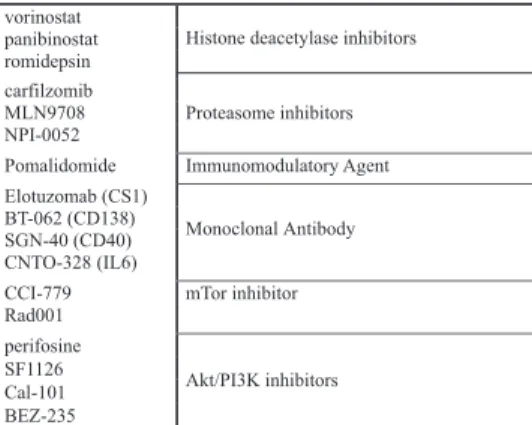
Table 5.New agents and targets in development
vorinostat panibinostat romidepsin
Histone deacetylase inhibitors carfilzomib
MLN9708 NPI-0052
Proteasome inhibitors
Pomalidomide Immunomodulatory Agent
Elotuzomab (CS1) BT-062 (CD138) SGN-40 (CD40) CNTO-328 (IL6) Monoclonal Antibody CCI-779 Rad001 mTor inhibitor perifosine SF1126 Cal-101 BEZ-235 Akt/PI3K inhibitors
Second Generation and New Versions of Active
Agents
Clearly, the activity of proteasome inhibition and immunomodula-tory agents is established in myeloma therapy and is being explored in other diseases as well.
Second-generation proteasome inhibitors are now in development with different functional abilities. PR-171 (carfilzomib) as an irreversible inhibitor of chymotryptic activity of the proteasome, the same site of inhibition induced by bortezomib that is currently being tested in phase I/II trials in myeloma and other diseases.58,59Phase II
trials evaluating the efficacy of carfilzomib in the relapsed and refractory populations,60and in the bortezomib-exposed61and
bort-ezomib-naive62populations thus far have demonstrated encouraging
activity. Although only a small fraction of patients with bortezomib refractory disease achieve an objective response, there are a number of patients who achieve stable disease for prolonged periods; and, in the vast majority of trials to date, the incidence of peripheral neuropathy appears to be lower among patients treated with carfilzomib63when compared with bortezomib, allowing for longer
durations of therapy. Additionally, there are other proteasome inhibitors in development that have different spectrums of activity (pan-proteasome inhibition with NPI-0052), as well as oral protea-some inhibitors that are in preclinical and clinical development. Complementary to the development of newer proteasome inhibitors, there is the development of a new immunomodulatory agent CC-4047 (pomalidomide). Data initially presented by Schey and colleagues64showed safety and efficacy of this agent in myeloma,
and demonstrated a potent immune-activating effect. Trials from the Mayo Clinic and from Richardson and colleagues66have
reevalu-ated the efficacy of pomalidomide in the context of sensitive and refractory relapse. Lacy and colleagues65presented data initially on
a cohort of 60 relapsed patients and demonstrated an overall response rate of 63%; and, among lenalidomide-resistant patients, the response rate was 40%. Subsequent to this, Richardson and colleagues66performed a phase I dose escalation study increasing
the dose of pomalidomide to 4 mg, and demonstrated, among patients refractory to lenalidomide and bortezomib, an overall response rate of 28%. An update of the Mayo Clinic experience among patients refractory to lenalidomide treated with pomalido-mide also demonstrated a similar 32% overall response rate.67
It is clear that the availability of new classes of agents (Table 5), and new, proteasome inhibitors and immunomodulatory agents have changed the natural history of myeloma over the past 10 years. Their use both in the induction setting and the relapsed setting either alone or in combinations has resulted in significant improvements in OS for patients. The wealth of second-generation agents and new agents in development currently suggest that this improvement will continue. Ongoing enrollment to phase II/III trials (Table 6) is critical to successful drug development, and will allow physicians access to even more life-saving advances as we seek to prolong durations of remission, or eventually cure patients of multiple myeloma.
Disclosures
Conflict-of-interest disclosure: The author has been a consultant to Millennium, Celgene, Novartis, and BMS, and has received re-search funding from the same sources.
Off-label drug use: Use of experimental agents in the treatment of relapsed myeloma.
Correspondence
Sagar Lonial, MD, Winship Cancer Institute, Emory University, 1365 Clifton Rd., Bldg. C, Rm. 4004, Atlanta, GA 30322; Phone: (404) 727-5572; Fax: (404) 778-5530; e-mail: [email protected]
References
1. Anderson KC, Kyle RA, Rajkumar SV, Stewart AK, Weber D, Richardson P. Clinically relevant end points and new drug approvals for myeloma. Leukemia. 2008;22:231–239.
2. Kyle RA, Rajkumar SV. Criteria for diagnosis, staging, risk stratification and response assessment of multiple myeloma.
Leukemia. 2009;23:3–9.
3. Gahrton G, Tura S, Ljungman P, et al. Prognostic factors in allogeneic bone marrow transplantation for multiple myeloma.
J Clin Oncol. 1995;13:1312–1322.
4. Kroger N, Perez-Simon JA, Myint H, et al. Relapse to prior autograft and chronic graft-versus-host disease are the strongest prognostic factors for outcome of melphalan/fludarabine-based dose-reduced allogeneic stem cell transplantation in patients with multiple myeloma.Biol Blood Marrow Transplant. 2004; 10:698 –708.
5. Garban F, Attal M, Michallet M, et al. Prospective comparison of autologous stem cell transplantation followed by dose-reduced allograft (IFM99 – 03 trial) with tandem autologous stem cell transplantation (IFM99 – 04 trial) in high-risk de novo multiple myeloma.Blood. 2006;107:3474 –3480.
6. Lee CK, Barlogie B, Munshi N, et al. DTPACE: an effective, novel combination chemotherapy with thalidomide for previ-ously treated patients with myeloma. J Clin Oncol. 2003;21: 2732–2739.
7. Munshi N, Desikan K, Jagannath S, et al. Dexamethasone, cyclophosphamide, etoposide and cisplatinum (DCEP), an effective regimen for relapse after high-dose chemotherapy and autologous transplantation (AT) [abstract 586a].Blood. 1996; 88.
8. Trieu Y, Trudel S, Pond GR, et al. Weekly cyclophosphamide and alternate-day prednisone: an effective, convenient, and well-tolerated oral treatment for relapsed multiple myeloma after autologous stem cell transplantation. Mayo Clin Proc. 2005;80:1578 –1582.
9. Olin RL, Vogl DT, Porter DL, et al. Second auto-SCT is safe and effective salvage therapy for relapsed multiple myeloma.
Bone Marrow Transplant. 2009;43:417– 422.
10. Singhal S, Mehta J, Desikan R, et al. Antitumor activity of thalidomide in refractory multiple myeloma. N Engl J Med. 1999;341:1565–1571.
11. Glasmacher A, Hahn C, Hoffmann F, et al. A systematic review of phase-II trials of thalidomide monotherapy in patients with relapsed or refractory multiple myeloma. Br J Haematol. 2006;132:584 –593.
12. Dimopoulos MA, Zervas K, Kouvatseas G, et al. Thalidomide and dexamethasone combination for refractory multiple my-eloma.Ann Oncol. 2001;12:991–995.
13. Yakoub-Agha I, Doyen C, Hulin C, et al. A multicenter
Table 6.New agents in phase III clinical trials
Bortezomib +/- Vorinostat
Bortezomib/Dex +/- Perifosine
Bortezomib/Dex +/- Panobinostat
Lenalidomide/Dex +/- Carfilzomib
prospective randomized study testing non-inferiority of thalido-mide 100 mg/day as compared with 400 mg/day in patients with refractory/relapsed multiple myeloma: results of the final analysis of the IFM 01– 02 study [abstract 7520].J Clin Oncol. 2006;24.
14. Kropff MH, Lang N, Bisping G, et al. Hyperfractionated cyclophosphamide in combination with pulsed dexamethasone and thalidomide (HyperCDT) in primary refractory or relapsed multiple myeloma.Br J Haematol. 2003;122:607– 616. 15. Palumbo A, Avonto I, Bruno B, et al. Intravenous melphalan,
thalidomide and prednisone in refractory and relapsed multiple myeloma.Eur J Haematol. 2006;76:273–277.
16. Hussein MA, Baz R, Srkalovic G, et al. Phase 2 study of pegylated liposomal doxorubicin, vincristine, decreased-frequency dexamethasone, and thalidomide in newly diagnosed and relapsed-refractory multiple myeloma. Mayo Clin Proc. 2006;81:889 – 895.
17. Offidani M, Corvatta L, Marconi M, et al. Low-dose thalido-mide with pegylated liposomal doxorubicin and high-dose dexamethasone for relapsed/refractory multiple myeloma: a prospective, multicenter, phase II study.Haematologica. 2006; 91:133–136.
18. Pineda-Roman M, Zangari M, van Rhee F, et al. VTD combination therapy with bortezomib-thalidomide-dexametha-sone is highly effective in advanced and refractory multiple myeloma.Leukemia. 2008;22:1419 –1427.
19. Offidani M, Bringhen S, Corvatta L, et al. Thalidomide-dexamethasone plus pegylated liposomal doxorubicin vs. tha-lidomide-dexamethasone: a case-matched study in advanced multiple myeloma.Eur J Haematol. 2007;78:297–302. 20. Zangari M, Siegel E, Barlogie B, et al. Thrombogenic activity
of doxorubicin in myeloma patients receiving thalidomide: implications for therapy.Blood. 2002;100:1168 –1171. 21. Richardson PG, Barlogie B, Berenson J, et al. A phase 2 study
of bortezomib in relapsed, refractory myeloma.N Engl J Med. 2003;348:2609 –2617.
22. Richardson PG, Sonneveld P, Schuster MW, et al. Bortezomib or high-dose dexamethasone for relapsed multiple myeloma.
N Engl J Med. 2005;352:2487–2498.
23. Richardson PG, Sonneveld P, Schuster M, et al. Extended follow-up of a phase 3 trial in relapsed multiple myeloma: final time-to-event results of the APEX trial.Blood. 2007;110:3557– 3560.
24. Richardson PG, Barlogie B, Berenson J, et al. Extended follow-up of a phase II trial in relapsed, refractory multiple myeloma:: final time-to-event results from the SUMMIT trial.
Cancer. 2006;106:1316 –1319.
25. Lonial S, Waller EK, Richardson PG, et al. Risk factors and kinetics of thrombocytopenia associated with bortezomib for relapsed, refractory multiple myeloma.Blood. 2005;106:3777– 3784.
26. Richardson PG, Briemberg H, Jagannath S, et al. Frequency, characteristics, and reversibility of peripheral neuropathy dur-ing treatment of advanced multiple myeloma with bortezomib.
J Clin Oncol. 2006;24:3113–3120.
27. Chanan-Khan AA, Kaufman JL, Mehta J, et al. Activity and safety of bortezomib in multiple myeloma patients with ad-vanced renal failure: a multicenter retrospective study.Blood. 2007;109:2604 –2606.
28. Lonial S, Richardson PG, San Miguel J, et al. Characterisation of haematological profiles and low risk of thromboembolic events with bortezomib in patients with relapsed multiple myeloma.Br J Haematol. 2008;143:222–229.
29. Biehn SE, Moore DT, Voorhees PM, et al. Extended follow-up of outcome measures in multiple myeloma patients treated on a phase I study with bortezomib and pegylated liposomal doxoru-bicin.Ann Hematol. 2007;86:211–216.
30. Popat R, Oakervee HE, Foot N, et al. A phase I/II study of bortezomib and low dose intravenous melphalan (BM) for relapsed multiple myeloma [abstract 2555].Blood. 2005;106. 31. Palumbo A, Ambrosini MT, Benevolo G, et al. Bortezomib,
melphalan, prednisone, and thalidomide for relapsed multiple myeloma.Blood. 2007;109:2767–2772.
32. Reece DE, Rodriguez GP, Chen C, et al. Phase I-II trial of bortezomib plus oral cyclophosphamide and prednisone in relapsed and refractory multiple myeloma. J Clin Oncol. 2008;26:4777– 4783.
33. Orlowski RZ, Nagler A, Sonneveld P, et al. Randomized phase III study of pegylated liposomal doxorubicin plus bortezomib compared with bortezomib alone in relapsed or refractory multiple myeloma: combination therapy improves time to progression.J Clin Oncol. 2007;25:3892–3901.
34. Weber D, Knight R, Chen C, et al. Prolonged overall survival with lenalidomide plus dexamethasone compared with dexa-methasone alone in patients with relapsed or refractory multiple myeloma [abstract 412].Blood. 2007;110.
35. Dimopoulos M, Spencer A, Attal M, et al. Lenalidomide plus dexamethasone for relapsed or refractory multiple myeloma.
N Engl J Med. 2007;357:2123–2132.
36. Palumbo A, Rajkumar SV, Dimopoulos MA, et al. Prevention of thalidomide- and lenalidomide-associated thrombosis in myeloma.Leukemia. 2008;22:414 – 423.
37. Niesvizky R, Naib T, Christos PJ, et al. Lenalidomide-induced myelosuppression is associated with renal dysfunction: adverse events evaluation of treatment-naive patients undergoing front-line lenalidomide and dexamethasone therapy.Br J Haematol. 2007;138:640 – 643.
38. Chen N, Lau H, Kong L, et al. Pharmacokinetics of lenalido-mide in subjects with various degrees of renal impairment and in subjects on hemodialysis.J Clin Pharmacol. 2007;47:1466 – 1475.
39. Baz R, Walker E, Karam MA, et al. Lenalidomide and pegylated liposomal doxorubicin-based chemotherapy for re-lapsed or refractory multiple myeloma: safety and efficacy.Ann Oncol. 2006;17:1766 –1771.
40. Knop S, Gerecke C, Liebisch P, et al. Lenalidomide, adriamy-cin, and dexamethasone (RAD) in patients with relapsed and refractory multiple myeloma: a report from the German My-eloma Study Group DSMM (Deutsche Studiengruppe Mul-tiples Myelom).Blood. 2009;113:4137– 4143.
41. Schey S, Morgan GJ, Ramasamy K, et al. CRD: a phase 1 dose escalation study to determine the maximum tolerated dose of cyclophosphamide in combination with lenalidomide and dexa-methasone in relapsed/refractory myeloma [abstract 3707].
Blood. 2008;112.
42. Reece DE, Masih-Khan E, Khan A, et al. Phase I-II trial of oral cyclophosphamide, prednisone and lenalidomide (Revlimid®)
(CPR) for the treatment of patients with relapsed and refractory multiple myeloma [abstract 1874].Blood. 2009;114.
43. Mitsiades CS, Mitsiades NS, McMullan CJ, et al. Antimyeloma activity of heat shock protein-90 inhibition.Blood. 2006;107: 1092–1100.
44. Richardson PG, Chanan-Khan AA, Lonial S, et al. Tanespimy-cin ⫹bortezomib demonstrates safety, activity, and effective
target inhibition in relapsed/refractory myeloma patients: up-dated results of a phase 1/2 study [abstract 2890]. Blood. 2009;114.
45. Peng C, Li D, Li S. Heat shock protein 90: a potential therapeutic target in leukemic progenitor and stem cells harbor-ing mutant BCR-ABL resistant to kinase inhibitors.Cell Cycle. 2007;6:2227–2231.
46. Catley L, Weisberg E, Kiziltepe T, et al. Aggresome induction by proteasome inhibitor bortezomib and alpha-tubulin hyper-acetylation by tubulin deacetylase (TDAC) inhibitor LBH589 are synergistic in myeloma cells.Blood. 2006;108:3441–3449. 47. Weber DM, Jagannath S, Mazumder A, et al. Phase I trial of oral vorinostat (suberoylanilide hydroxamic acid, SAHA) in combination with bortezomib in patients with advanced mul-tiple myeloma [abstract 1172].Blood. 2007;110.
48. Badros A, Burger AM, Philip S, et al. Phase I study of vorinostat in combination with bortezomib for relapsed and refractory multiple myeloma.Clin Cancer Res. 2009;15:5250 – 5257.
49. Hideshima T, Catley L, Yasui H, et al. Perifosine, an oral bioactive novel alkylphospholipid, inhibits Akt and induces in vitro and in vivo cytotoxicity in human multiple myeloma cells.
Blood. 2006;107:4053– 4062.
50. Richardson P, Wolf JL, Jakubowiak A, et al. Perifosine in combination with bortezomib and dexamethasone extends progression-free survival and overall survival in relapsed/ refractory multiple myeloma patients previously treated with bortezombib: updated phase I/II trial results [abstract 1869].
Blood. 2009;114.
51. Mitsiades N, Mitsiades CS, Poulaki V, et al. Apoptotic signaling induced by immunomodulatory thalidomide analogs in human multiple myeloma cells: therapeutic implications.
Blood. 2002;99:4525– 4530.
52. Anderson K, Jagannath S, Jakubowiak A, et al. Lenalidomide, bortezomib, and dexamethasone in relapsed/refractory multiple myeloma (MM): encouraging outcomes and tolerability in a phase II study [abstract 8536].J Clin Oncol. 2009;27.
53. Richardson PG, Weller E, Jagannath S, et al. Multicenter, phase I, dose-escalation trial of lenalidomide plus bortezomib for relapsed and relapsed/refractory multiple myeloma. J Clin Oncol. 2009;27:5713–5719.
54. Richardson PG, Weller E, Lonial S, et al. Lenalidomide, bortezomib, and dexamethasone combination therapy in pa-tients with newly diagnosed multiple myeloma.Blood. 2010; 116: 679 – 686:.
55. Richardson P, Anderson K. Immunomodulatory analogs of thalidomide: an emerging new therapy in myeloma. J Clin Oncol. 2004;22:3212–3214.
56. Chang DH, Liu N, Klimek V, et al. Enhancement of ligand-dependent activation of human natural killer T cells by lenalidomide: therapeutic implications. Blood. 2006;108:618 – 621.
57. Lonial S, Vij R, Harousseau J-L, et al. Phase 1/2 study of
elotuzumab in combination with lenalidomide and low dose dexamethasone in relapsed or refractory multiple myeloma: interim results [abstract 432]. Blood. 2009;114.
58. Orlowski RZ, Stewart K, Vallone M, et al. Safety and antitumor efficacy of the proteasome inhibitor carfilzomib (PR-171) dosed for five consecutive days in hematologic malignancies: phase 1 results [abstract 409]. Blood. 2007;110.
59. Alsina M, Trudel S, Vallone M, Molineaux C, Kunkel L, Goy A. Phase 1 single agent antitumor activity of twice weekly consecutive day dosing of the proteasome inhibitor carfilzomib (PR-171) in hematologic malignancies [abstract 411]. Blood. 2007;110.
60. Jagannath S, Vij R, Stewart AK, et al. Initial results of PX-171– 003, an open-label, single-arm, phase II study of carfilzomib (CFZ) in patients with relapsed and refractory multiple myeloma (MM) [abstract 864]. Blood. 2008;112. 61. Siegel D, Wang L, Orlowski RZ, et al. PX-171– 004, an
ongoing open-label, phase II study of single-agent carfilzomib (CFZ) in patients with relapsed or refractory myeloma (MM); updated results from the bortezomib-treated cohort [abstract 303]. Blood. 2009;114.
62. Wang L, Siegel D, Kaufman JL, et al. Updated results of bortezomib-naive patients in PX-171– 004, an ongoing open-label, phase II study of single-agent carfilzomib (CFZ) in patients with relapsed or refractory myeloma (MM) [abstract 302].Blood. 2009;114.
63. Vij R, Wang L, Orlowski RZ, et al. Carfilzomib (CFZ), a novel proteasome inhibitor for relapsed or refractory multiple my-eloma, is associated with minimal peripheral neuropathic effects [abstract 430].Blood. 2009;114.
64. Schey SA, Fields P, Bartlett JB, et al. Phase I study of an immunomodulatory thalidomide analog, CC-4047, in relapsed or refractory multiple myeloma.J Clin Oncol. 2004;22:3269 – 3276.
65. Lacy MQ, Hayman SR, Gertz MA, et al. Pomalidomide (CC4047) plus low-dose dexamethasone as therapy for relapsed multiple myeloma.J Clin Oncol. 2009;27:5008 –5014. 66. Richardson P, Siegel D, Baz R, et al. A phase 1/2 multi-center,
randomized, open label dose escalation study to determine the maximum tolerated dose, safety, and efficacy of pomalidomide alone or in combination with low-dose dexamethasone in patients with relapsed and refractory multiple myeloma who have received prior treatment that includes lenalidomide and bortezomib [abstract 301].Blood. 2009;114.
67. Lacy MQ, Gertz MA, Hayman SR, et al. Pomalidomide (CC4047) plus low dose dexamethasone (pom/dex) is active and well tolerated in lenalidomide refractory multiple myeloma (MM) [abstract 429].Blood. 2009;114.
68. Kyriakou C, Thomson K, D’Sa S, et al. Low-dose thalidomide in combination with oral weekly cyclophosphamide and pulsed dexamethasone is a well tolerated and effective regimen in patients with relapsed and refractory multiple myeloma.Br J Haematol. 2005;129:763–770.