CADEMICS &
B
REAKFAST
C
ONNECTION
PILOT
Nutrition Consortium of NYS
235 Lark Street
Albany, NY 12210
website: www.HungerNYS.org
Final Report on New York’s
Classroom Breakfast Project
NUTRITION CONSORTIUM OF NYS
BOARD OF DIRECTORS
Ron Soloway, ChairRussell Sykes (former member), Past Chair
William Shapiro, 1stVice Chair
Veronica Costa, 2ndVice Chair
Mark Quandt, Treasurer
Carmela Estes, Secretary
Ladan Alomar
Oscar Best (former member) Anne Erickson (former member)
Susan Hager Don Friedman Jack Kennedy Maureen Murphy Shelly Nortz (former member)
Joan Doyle Paddock Don Walker Bridget Walsh
VITAGRANT (ABC PILOT)
COMMITTEE
William Shapiro, Chair
Oscar Best Maureen Murphy
Don Walker
NUTRITION CONSORTIUM OF NYS
STAFF
Lisa Frank Allison, Child Nutrition Program Specialist Elizabeth Chiera, Fiscal Assistant
Gail A. Cooney, Fiscal Administrative Assistant Mark T. Denley, Fiscal Director
Casey Dinkin, Child Nutrition Outreach Coordinator Gloria Goolsby, NOEP Program Facilitator
Carrie Jackson, Sr. Accountant
E. Yvette James, Director of Outreach and Education Misha R. Marvel, M.S.W., Program Analyst
Edie Mesick, Executive Director Paulette A. Miller, NOEP Program Facilitator
Cathy Roberts, Food Stamp Specialist Patricia Vidoni, NOEP Program Facilitator
ACKNOWLEDGMENTS
The Nutrition Consortium of New York State greatly appreciates the support of the many public agencies, private foundations and individuals who made this publication possible. In particular, we acknowledge the NYS Attorney General for their support of ABC Pilot implementation and evaluation. Funding for the Academics and Breakfast Connection Pilot was secured by the Nutrition Consortium of NYS from the Indirect Vitamins
Purchasers Antitrust Litigation Settlement administered by the New York State Attorney General.
In addition, we acknowledge the financial support for the evaluation of the ABC Pilot and the preparation and publication of this report provided by the Community Food and Nutrition Program (a program through which the U.S. Department of Health and Human
Services allocates funds to the New York State Department of State), the New York State Department of Health’s Nutrition Outreach and Education Program (supported in part by
funds from the New York State Office of Temporary and Disability Assistance and USDA/FNS), and by our partners in our Campaign to End Hunger, including FRAC; MAZON: A Jewish Response to Hunger; the Robert Sterling Clark Foundation; Share Our Strength; and many individual donors throughout the state.
We also recognize and express our gratitude to the ABC Pilot evaluation team at Harvard Medical School, Massachusetts General Hospital for their statistical analyses of the ABC Pilot results, assistance in generating a final report, and for the development of a
companion publication – the ABC Pilot Technical Report. This ABC Pilot evaluation
team includes: J. Michael Murphy, Ed.D., Jennifer E. Drake, M.A., and Kristin M. Weineke, M.A.
Finally, we express our appreciation of the support of our dedicated Board of Directors and the Board Vitagrant (ABC Pilot) Committee both in the planning and implementation phases of this endeavor, as well as in our ongoing fight against hunger in New York State.
We also thank the staff at the Nutrition Consortium. In particular, we acknowledge Lisa Allison, Child Nutrition Program Specialist, for her hard work in designing and securing funding for the ABC Pilot, in monitoring implementation and progress, and in issuing multiple Pilot reports, including the preparation, as principal author, of this final report.
TABLE OF CONTENTS
Executive Summary i
I. School Breakfast Program Overview 1
Why Breakfast is Important 2
Why Classroom Breakfast? 3
II. The Academics & Breakfast Connection (ABC) Pilot 4
ABC Pilot School Selection Process 5
ABC Pilot Implementation 6
Implementation Approaches 7
III. Evaluating the ABC Pilot 8
IV. Impact of the ABC Pilot 10
A. Breakfast Program Participation
B. Academic Performance Indicators 12 1) Tardiness
2) Disciplinary Office Referrals
3) Absenteeism and Visits to the School Nurse 13 4) Principal and Teacher Assessments
V. Additional Analyses of Program Impact 14
Outcomes in higher versus lower poverty schools Outcomes by size of participation increase
VI. Conclusions 15
VII. Recommendations 16
Endnotes 17
Appendix A -- Teacher Survey Results
Appendix B -- Principal Survey Results
EXECUTIVE SUMMARY
During the 2003-2004 school year, twenty schools in upstate New York implemented the Academics & Breakfast Connection (ABC) Pilot – a program designed to produce replicable classroom breakfast models that reduce childhood hunger and improve academic performance. Funded by a grant from the Nutrition Consortium of New York State, elementary and secondary students of varying income levels participated in the Pilot in rural, urban and suburban schools throughout the state. Funding for the Academics & Breakfast Connection Pilot was secured from the Indirect Vitamins Purchases Antitrust Litigation Settlement administered by the New York State Attorney General. As ABC Pilot participants, Pilot schools served breakfast to all students at no charge (regardless of income) and students consumed their meals in the classroom setting.
The following are some highlights of ABC Pilot results:
School Breakfast Program participation increased dramatically:
Program participation more than doubled -- the percentage of enrolled students eating breakfast at school increased from 23% to 58%
During the ABC Pilot school year, over 5,000 students received breakfast on an average day compared to the 1,883 who ate breakfast during the previous year
School-wide data on student performance showed improvement in all areas studied:
From the year before Pilot implementation to the year of Pilot operation:
Tardiness declined from 3.0 to 2.6 days per student per year, a statistically significant difference
Disciplinary office referrals decreased significantly, from 1.3 to 1.1 referrals per student per year
Absenteeism rates fell from 7.9 to 7.4 days per student per year, though this result did not reach statistical significance
Visits to the school nurse declined from 9.3 to 8.7 per student per year, though this difference did not reach statistical significance
The ABC Pilot had a positive impact on education:
100% of the Principals of ABC Pilot schools believe the Pilot made an important contribution to the education process
Nearly all Principals (87%) reported that they believed the ABC Pilot classroom breakfast program contributed to improvements in academic performance
Teachers (nearly 80%) agreed that the Pilot made an important contribution to the education process
72% of teachers reported that the Pilot did not interfere with teaching
Most teachers (85%) reported fewer complaints of hunger from students
Teachers and principals expressed strong support for the ABC Pilot:
I. School Breakfast Program Overview
The School Breakfast Program is a federal nutrition assistance program administered by USDA’s Food and Nutrition Service at the national level and by the State Education Department in New York State. Established by Congress as a permanent program in 1975, the School Breakfast Program provides schools and residential child-care institutions with reimbursement funds for the costs associated with providing children with breakfast.
As a result of state legislation in 1993, New York State requires that all elementary and severe-need schools operate a school breakfast program, unless they apply for a waiver through the State Education Department. (Severe need schools are defined as those in which 40% of school meals had been served to free/reduced price eligible children two years prior to the current year.) Today, nearly 90% of New York State’s public schools operate the School Breakfast Program.
Every student can participate in the school breakfast program and some may receive breakfast for free or at a reduced-price. Students from households with income below 130% of poverty ($24,505 per year for a family of four in 2004) qualify to receive free breakfasts, and those from households with incomes between 130% and 185% of poverty (between $24,506 and $34,873 per year for a family of four in 2004) qualify to receive breakfast at a reduced-price, set at 25 cents in New York State schools. All other students must pay full price for breakfast at school – generally between $0.50 and $1.00.
Why Breakfast is Important
Nutrition is critical to a child’s ability to learn.
According to the Center on Hunger, Poverty and
Nutrition, the body must use its energy reserves to keep
organs functioning whenever the body is unable to
obtain energy from food. This means that a hungry
child has less energy available for cognition and social
activities, resulting in learning difficulties
1.
Recent national surveys indicate that 3% to 7% of children in the United States
experience hunger, and another 7% to 16% live in families where food insecurity is
a major concern. These studies also show that 10% of families with incomes at or
below the poverty level experience hunger and another 30% experience food
insecurity. Figures for New York State are similar to the national average.
2,3These numbers are important because studies conducted over the past decade show
that hunger and food insecurity are related to poorer health and mental health, and
poor academic outcomes for children.
4-7Breakfast consumption, in particular, is linked to learning and academic
performance. In a 1989 article, researchers documented the impact of breakfast on
academic achievement. By tracking changes in school achievement scores before
and after the implementation of a free school breakfast program, the researchers
documented increases in language, reading and math aptitude test scores among
breakfast program participants
8. Similarly, researchers in Minnesota found that
students increased their math and reading test scores when they had access to
universal school breakfast programs where breakfast is available to all students
free of charge
9,10.
Studies also indicate that the School Breakfast Program has a positive impact on
behavior, attendance and overall health. An article in the Archives of Pediatric and
Adolescent Medicine explored the effects of universal breakfast programs in
Baltimore and Philadelphia and found reductions in student absenteeism, tardiness
and behavior problems
11. In addition, a study of a free breakfast program in
Minnesota documented a link between breakfast program participation and
improved student attention and declines in discipline problems
9,10.
Why Classroom Breakfast?
Barely 1 in 5 low-income students participate in the School
Breakfast Program in New York State, despite the program’s
availability in nearly 90% of our public schools
12.
Low participation is primarily due to the fact that very few schools make breakfast
part of the official school day. While a student’s daily schedule typically includes
a lunch period, this is not true of breakfast. Most school districts provide breakfast
prior to the start of the school day when bus schedules often make it difficult for
students to get to the cafeteria in time to eat and back to classrooms before the bell
rings. Furthermore, many school districts only set aside 10-15 minutes for the
breakfast program. This makes it impossible for food service staff to serve all of
the students that may want and need to participate. And unfortunately, studies
show that stigma continues to play a role in preventing students from getting a
school breakfast
13. Unlike lunch, where nearly every student goes to the cafeteria,
students have to choose to go to the cafeteria for breakfast in the morning. Many
choose not to go in order to avoid being labeled as poor.
By making breakfast part of the school day, classroom breakfast removes these
barriers to participation and increases program access for students that need it
most. Over the past few years, multiple studies have shown that more students
participate in the breakfast program when breakfast is offered at no charge, and
that schools allowing students to eat in the classroom experience even greater gains
in breakfast program participation. In a large national demonstration project
conducted by the United States Department of Agriculture, participation more than
doubled in schools that provided free breakfast in the classroom, while schools that
provided free breakfast in the cafeteria saw more modest gains of about 50%
2. In
addition, demonstration projects in Boston, Baltimore and the state of Maryland
have shown a doubling (and even tripling) of participation rates when breakfast is
served in the classroom
15-16.
Most importantly, classroom breakfast ensures that children are in classrooms and
ready to learn when lessons start.
II. The Academics & Breakfast Connection (ABC) Pilot
Seeking to combat childhood hunger and to improve a child’s ability to learn in
school, the Nutrition Consortium of NYS created the Academics & Breakfast
Connection (ABC) Pilot. Funding for the Academics & Breakfast Connection
Pilot was secured from the Indirect Vitamins Purchases Antitrust Litigation
Settlement administered by the New York State Attorney General. Twenty schools
participated in the Pilot and received funding to assist with the implementation of
classroom breakfast program during the 2003-2004 school year.
ABC Pilot schools included elementary and secondary schools from rural, urban
and suburban areas of sixteen upstate counties, with schools having different levels
of low-income student enrollment. Students at Pilot schools received breakfast at
no charge regardless of income and consumed the meal in their classrooms.
Ultimately, the ABC Pilot resulted in several replicable New York State-based
models for classroom breakfast program implementation. The remainder of this
report provides an overview of the most important findings. A technical report
with more detailed statistical analyses is available through the Nutrition
ABC Pilot School Selection Process
In planning for the ABC Pilot, Nutrition Consortium staff convened meetings with State
Education Department representatives, school food service directors and individuals involved in classroom breakfast projects in other states. Insight from these meetings proved instrumental in developing our ABC Pilot.
Food service directors at each of New York’s nearly 700 public school districts received an ABC Pilot application packet. The application collected general information about the schools such as current enrollment and program participation, and some specific details about their Pilot
implementation plan and estimated program costs. The application also required principal and superintendent signatures to demonstrate commitment to Pilot implementation. The Nutrition Consortium received 87 letters of intent from 50 school districts in upstate New York, and thirty-six districts submitted complete applications. Note: The Consortium did not receive any New York City school applications.
To select ABC Pilot schools, the Nutrition Consortium’s Board of Directors Vitagrant
Subcommittee and agency staff developed scoring criteria. In addition to scoring the individual
applications from each school district, the Consortium created an 18-cell matrix to help ensure that a diverse sample of schools participated in the ABC Pilot. Each matrix cell identified an applicant as rural, suburban or urban; as small, medium or large; and as having high or low percentages of low-income students enrolled in the school. With a goal of including one school from each of the 18 cells in the ABC Pilot, the Consortium chose to fund the highest scoring applicant school in each cell. Overall, the ABC Pilot schools selected represent 15 of the 18 cells in the matrix. (The Appendix to this report includes this 18-cell matrix.)
To select ABC Pilot schools, the Nutrition Consortium scored Pilot applications based on the following goals and criteria:
Goal: To serve breakfast daily to a minimum of 4,000 children (total) through the ABC Pilot
Goal: To select a variety of school-types from throughout the state, preferably at least one school from each matrix cell, to ensure that models will be replicable throughout the state.
Criteria:
o Principal and superintendent commitment to implementing the ABC Pilot and
tracking Pilot results
o Soundness of implementation plan
o Scope of service (including number of grades/classrooms or school-wide and also
menu options)
o Anticipated increase in participation
o Soundness and efficiency of proposed budget
This selection process resulted in nineteen ABC Pilot schools receiving Pilot funding from the Nutrition Consortium, with a twentieth school added at the half-year point.
ABC Pilot Implementation
To implement the ABC Pilot, schools received grants from the Nutrition
Consortium averaging $8500, although individual Pilot grants ranged from $4,000
to $10,000. Pilot schools continued to operate the School Breakfast Program
according to USDA regulations as administered by the New York State Education
Department. Although ABC Pilot students received breakfasts at no charge, the
schools’ reimbursement process through the State Education Department did not
change. Schools received reimbursements based on the number of meals served
within each payment category: students eligible for free meals, students eligible for
reduced-price meals, and students that pay for their meals. As participation by
students eligible for free and reduced-price breakfast increased, school
reimbursements increased. In most ABC Pilot schools, this economy of scale
increase in reimbursement funds sustained the free classroom breakfast program.
ABC Pilot funding assisted schools with classroom breakfast start-up and
implementation costs. All but two schools utilized Pilot funds to purchase
equipment necessary for classroom breakfast program start-up. This equipment
included: food service carts, hot/cold food carriers, coolers, counter slant units,
juice airpots, heat lamps, trays/sheet pans, and garbage cans. Also, some schools
used Pilot funds to supplement state meal reimbursements, and some purchased
non-food supplies such as paper goods.
School Funding Levels
$6,001 - $8,001 $4,000 - $6,000 $8,001 - $10,000 55% 20% 25%
Implementation Approaches
Every school designed its own classroom breakfast implementation plan.
▪
Classroom Delivery: eleven schools elected to
deliver meals directly to participating Pilot
classrooms
▪
Cafeteria-to-classroom: two schools distributed
meals to students as they came through the
cafeteria line. Students then took the meals
back to their classrooms.
▪
Hallway Stations: three schools set up
distribution stations in the school hallways so
that students could pick up breakfasts on their
way to class.
▪
Mixed Service: four schools utilized a
combination of methods. For example, one
school delivered breakfast to the younger
students in kindergarten through second grade,
while older students came through the cafeteria
line and took their meal back to class.
While each ABC Pilot school developed an implementation plan that worked best for
them, they periodically made changes to keep the program operating smoothly. For
example, one school switched from hallway cart service to classroom delivery, while
another school switched from hallway service to cafeteria pick-up.
Pilot schools also differed in their approach to menu planning. Eight schools offered
both hot and cold morning meals to students; nine schools served only cold breakfast
items; and one school served only hot breakfasts. As with meal service, schools
adjusted their menu offerings as they assessed program participation and took
individuals’ comments into account. Three schools switched from serving both hot
and cold breakfasts to an all-cold menu, and one school added hot breakfasts to their
menu in response to teacher, parent and student requests. Like all schools operating
school breakfast programs, all ABC Pilot schools were required to continue to meet
the nutritional requirements and meal patterns set forth by USDA.
III. Evaluating the ABC Pilot
To assess the impact of the ABC Pilot, the Nutrition
Consortium developed tools to evaluate the Pilot’s effect on
hunger, academic performance and other outcomes. The
Consortium then collected and compiled data and survey
results submitted by Pilot schools at two different points in
the 2003-04 school year.
Data collected from ABC Pilot schools included breakfast program
participation rates and incidences of absenteeism, tardiness, disciplinary
referrals, and visits to the school nurse. In addition, the Nutrition Consortium
surveyed teachers, principals and food service directors to gather their
assessments of the Pilot. Teachers reported on the Pilot’s effect on their
ability to teach, student well being, academic performance, classroom
behavior, and attentiveness. Food service director surveys obtained
information around Pilot operation and program costs, and principal surveys
appraised the Pilot’s overall impact on student behavior and academic
performance. Nutrition Consortium staff also collected anecdotal
information and comments from staff and students during visits to each Pilot
school.
In most instances, school food service directors maintained breakfast
program participation records, school administrative staff collected
information on absenteeism, tardiness and disciplinary referrals, and school
nurses recorded student visits. In addition, the Nutrition Consortium used
New York State Education Department data to confirm school breakfast
participation at each Pilot school. For school breakfast participation,
absences and most other indicators, information was available for the year
before the ABC Pilot and the year of Pilot implementation. This allowed for
pre-post comparisons of outcomes. To assess the statistical significance of
the ABC Pilot results, the Consortium retained a professional evaluation
group from Massachusetts General Hospital in Boston with extensive
experience in assessing universal free school breakfast programs in several
other states and cities
2,15-16.The Nutrition Consortium also attempted to measure academic outcomes
more directly, but this proved to be extremely difficult. Each Pilot school
served students of different grade levels, and in many cases, schools utilized
different testing tools to monitor student academic performance. Many of the
schools also did not have mechanisms in place to report year-to-year changes
in academic performance. Since these problems prevented the Nutrition
Consortium from being able to use test scores to directly measure academic
outcomes, the Consortium developed surveys for principals and teachers to
help provide an overview of perceived academic improvements.
As discussed in the next section of this report, the ABC Pilot succeeded in
creating replicable New York State-based classroom breakfast models.
Participation in the School Breakfast Program at Pilot schools soared;
tardiness, absenteeism, disciplinary referrals and nurses visits all showed
improvements; and principals and teachers expressed strong support for their
classroom breakfast programs. In fact, 94% of Pilot school principals and
85% of teachers agreed that the ABC Pilot had a positive impact on students.
These positive results occurred across the gamut of school types included in
the Pilot, with some improvements more prominent in higher poverty schools
and in those schools that experienced the largest increases in breakfast
IV. Impact of the ABC Pilot
The ABC Pilot resulted in several New York State-based classroom breakfast models that can be duplicated by schools throughout the state. The Pilot dramatically increased participation in the School Breakfast Program, resulted in reductions in tardiness, absenteeism, disciplinary referrals and visits to the school nurse, and generated tremendous support among principals and teachers alike. These positive results occurred across the spectrum of the different Pilot schools, with some more substantial improvements in schools with higher concentrations of low-income students and in those schools that saw greater increases in breakfast program participation.
A. Breakfast Program Participation
When looked at as a whole, the rate of school breakfast participation in Pilot
schools more than doubled. Figure 1 represents official state data showing that after ABC Pilot implementation, breakfast participation increased from an average of 23% in March of 2003 to 58% in March of 2004. In raw numbers, this means that more than 5,000 students ate breakfast daily at schools operating the ABC Pilot – up from under 1,900 in the same schools the previous year.
Figure 1
Percent of Average Daily Participation March 2003 vs. March 2004
23% 58% 0% 10% 20% 30% 40% 50% 60% 70% March 2003 March 2004
In addition, we note that participation almost doubled among the poorest students at the ABC Pilot schools (those from families certified as eligible for free or reduced-price school meals), with participation among these students increasing from 34% in March 2003 to 59% in 2004. This finding is remarkable since these are students that already qualified to receive free or reduced-price meals at schools before the ABC Pilot began, and this confirms results from other demonstrations that universal free and classroom breakfast programs together are effective ways to fight hunger as they get more food to children from the poorest families.
Another significant result of the ABC Pilot is that School Breakfast Program participation rates at Pilot schools approached and exceeded the statewide participation rate for the School Lunch Program. This is especially interesting because School Lunch Program participation traditionally exceeds breakfast program participation for many of the reasons mentioned earlier in this report – most students have lunch period as part of the official school day, more time is set aside for the lunch program, and stigma is less prevalent. During the 2003-04 school year, school lunch participation averaged 53% of students enrolled in public schools. That same year, participation in the breakfast program at ABC Pilot schools reached 58%.
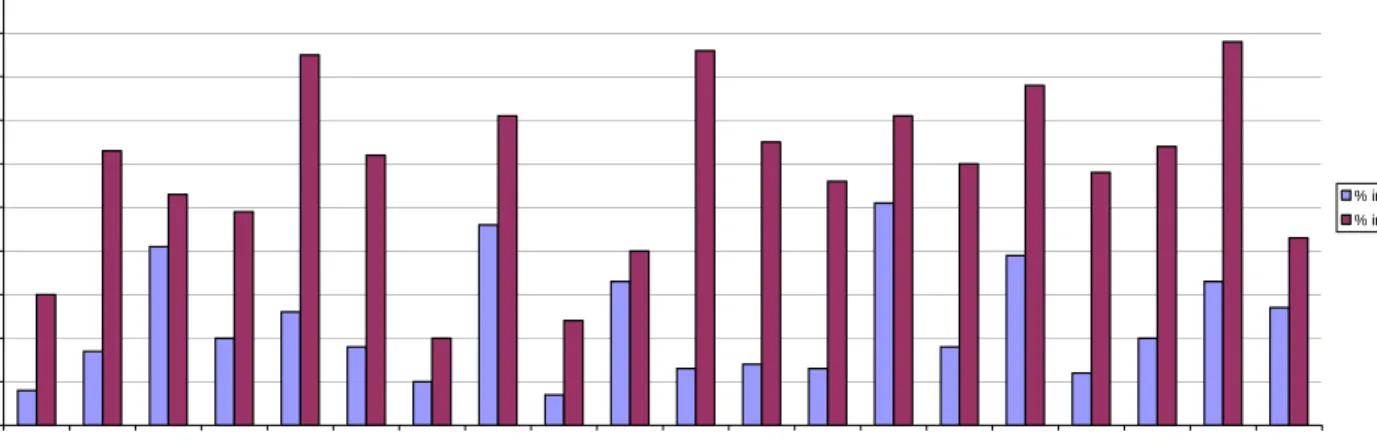
Breakfast program participation increased in all twenty ABC Pilot schools.
Figure 2 below shows average daily breakfast program participation for each of the Pilot schools for the same index month (March) of the year before the Pilot (2002-03) and of the year of Pilot implementation (2003-04).
Figure 2
Percent of Average Daily Participation
0 0.1 0.2 0.3 0.4 0.5 0.6 0.7 0.8 0.9 1 Ale xand e Bos ton V Bur gard Cas ey Pa Che stnu t Cly de E l Dov er M i Dry den S Edm esto n Fort Mon Ham ilton Hin sdal e Hol ley E PS #61 E Richf iel Spe cial Stu art M Tiog a E l Val ley E Woe stin a School % in March 2003 % in March 2004
Any school can successfully implement a classroom breakfast program regardless of its socioeconomic characteristics. Additional analyses showed that participation increases were roughly the same for urban versus rural schools, high versus lower poverty schools, and
elementary versus secondary schools. In all groups, participation was relatively low prior to Pilot implementation (around 20%) and doubled after the start of the Pilot.
B. Academic Performance Indicators
For the 2002-03 and 2003-04 school years, ABC Pilot schools provided the Nutrition
Consortium with monthly totals of tardiness, disciplinary office referrals, absenteeism, and visits to the school nurse – all factors that contribute to a student’s ability to achieve their academic potential. This allowed for analysis of what happened to these outcomes prior to and during the ABC Pilot. For each school, data on each outcome variable were averaged across the ten months of school pre-ABC implementation and post-ABC implementation. Then, statisticians
evaluating the ABC Pilot determined the statistical significance of each outcome.
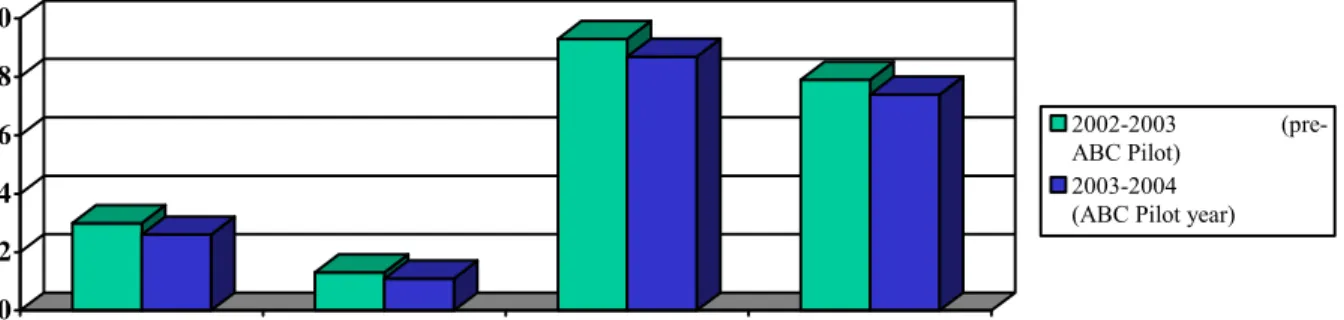
Figure 3: Student outcomes for ABC Pilot
(per student/per year)
1) Tardiness
“Kids are in class on time, not marked tardy because they’re in the cafeteria.”
- Teacher, Edmeston Central Figure 3 shows that the average number of days tardy per student decreased from 3.0 in the school year prior to ABC Pilot implementation to 2.6 during the Pilot school year. The Pilot evaluation team found this change to be statistically significant, indicating that this decrease in tardiness is not likely to have been due to chance. This finding is further supported by the fact that 63% of teachers surveyed attributed their students’ on-time arrivals to the classroom breakfast program.
2) Disciplinary Office Referrals
“There was an immediate change in rowdiness in the upper grades.”
Principal, Casey Park Elementary Figure 3 also shows a statistically significant change in disciplinary referrals. Prior to ABC Pilot implementation, disciplinary office referrals at ABC Pilot schools averaged 1.3 referrals per student per year. This average fell to 1.1 during the ABC Pilot school year. Again, these
findings were supported by reports from the schools: 75% of the Pilot school principals surveyed stated that the classroom breakfast program contributed to a decline in disciplinary office
0 2 4 6 8 10
Days Tardy* Office Referrals* Nurse Visits Absences * = statistically significant findings
2002-2003 (pre-ABC Pilot)
2003-2004 (ABC Pilot year)
Also, as mentioned earlier in this report, hungry children may exhibit behavior problems and it is difficult for these children to pay attention to lessons. Of the 265 teachers surveyed at ABC Pilot schools, 85% of teachers agreed that there were fewer complaints of hunger in the mornings since implementation of the Pilot. Furthermore, 75% of teachers reported that their students were better able to pay attention when they participated in the classroom breakfast program and 55% of teachers noted improvements in student classroom behavior since the Pilot began. 3) Absenteeism and Visits to the School Nurse
Absenteeism and visits to the school nurse also declined during the ABC Pilot school year. As Figure 3 shows, the average number of absences per student per year declined from 7.9 to 7.4, and nurse visits fell from 9.3 visits per student per year to 8.7. While neither of these outcomes reached statistical significance, these results do show a trend toward lower absenteeism rates and fewer nurses’ office visits.
4) Principal and Teacher Assessments
As noted in Section II of this report, ABC Pilot schools operated their classroom breakfast programs in ways that best suited them. While principals did report some hesitance among various staff prior to starting classroom breakfast programs, a majority of principals reported great support for the program once it was up and running. Prior to implementing the ABC Pilot, 50% of principals found it difficult to generate support among janitorial staff and 37% expressed difficult in garnering support among teachers. By the end of the Pilot school year, 77% of principals agreed that there was great support among janitorial staff, and 73% found there to be great support among teachers.
Perhaps more striking is the direct response of teachers to the ABC Pilot – almost 80% of teachers stated that they hoped their school would continue the classroom breakfast program in the next year. Also, while 58% of teachers surveyed stated that they had been hesitant about the ABC Pilot and the effect classroom breakfast would have on their teaching day, 76% reported that the program did not interfere with their ability to teach after all.
In terms of academic performance:
▪ 100% of ABC Pilot school principals and almost 80% of teachers stated they believed the Pilot made an important contribution to the education process
▪ 87% of principals believe that classroom breakfast contributed to an improvement in academic performance
▪ Teachers (nearly 80%) agreed that the Pilot made an important contribution to the education process
▪ 72% of teachers reported that the Pilot did not interfere with teaching ▪ Most teachers (85%) reported fewer complaints of hunger from students
Overall, principals expressed great satisfaction with the ABC Pilot. In fact, 75% of principals planned to continue classroom breakfast operations in the following school year.
V. Additional Analyses of Program Impact
The ABC Pilot evaluation team conducted several additional sets of analyses to further test the patterns found. Findings are summarized here briefly, but can be reviewed in greater detail in a separate technical report available through the Nutrition Consortium17. This technical report also contains more detail about the other analyses presented throughout this report.
Outcomes in Higher versus Lower Poverty Schools
The ABC Pilot evaluation team hypothesized that the impact of the Pilot would have been higher in schools with a higher concentration of low-income students. The ABC Pilot included ten higher poverty schools and ten lower poverty schools. Higher poverty schools are those with 40% or more of enrolled students eligible for free or reduced-price school meals, and lower poverty schools are those with free/reduced-price eligibility rates of 39% or less. The results of this analysis showed:
▪ Higher poverty Pilot schools had significantly larger decreases in tardiness
▪ Higher poverty Pilot schools experienced a larger decrease in disciplinary office referrals (though not a statistically significant difference)
▪ In terms of the Pilot’s impact on student education, student punctuality and hunger complaints, teachers from higher poverty Pilot schools rated the program’s impact on students significantly more positively than teachers from lower poverty schools
Outcomes by Size of Participation Increase
The ABC Pilot evaluation team also hypothesized that the impact of the Pilot on student outcomes would be stronger in schools that experienced the largest increases in breakfast program participation. However, aside from teachers’ assessments of the ABC Pilot and its effect on students (which were more positive), no statistical difference existed in the impact on student outcomes in schools with varying increases in breakfast program participation.
To conduct this assessment, the evaluation team categorized the Pilot schools as follows: large gain schools are those that increased breakfast program participation rates by at least 51%; medium gain schools experienced increases between 31% and 50%; and smaller gain schools increased participation by less than 31%.
In the Pilot schools with the largest increases in participation, teachers rated the program’s overall impact on students significantly more positively, including the Pilot’s impact on the learning process, on student punctuality and on hunger complaints. Teachers in these schools were also significantly more likely to want the program to continue for another year, and significantly less likely to say that the program interested with their ability to teach.
VI. Conclusions
When asked what he would do if his school did not
continue to offer classroom breakfast next year, one
student replied:
“I would fall asleep in class like I used to.”
-Holley Elementary student
Classroom breakfast works! The ABC Pilot resulted in decreased hunger and
improvements in factors critical to student learning, and teachers and principals
alike took note of the important contribution classroom breakfast makes to the
education process. Also, the Pilot yielded classroom breakfast models that any
school can implement and reap the same benefits – primary or secondary schools
in rural, suburban or urban areas, and schools with either high or low
concentrations of students from low-income families.
The results of the ABC Pilot echo those of free classroom breakfast demonstration
projects elsewhere in the nation. The fact that these findings are so very similar to
those already reported in other demonstration projects throughout the United States
provides further support for their validity and importance. Particularly striking is
the doubling (and tripling) effect of free classroom breakfast on program
participation. Large increases occur even among students from the poorest
families who were already eligible for free and reduced-price meals prior to
implementing the ABC Pilot. This emphasizes the point that serving breakfast in
the classroom is a very effective way to increase breakfast eating among poor
children – whom we know especially need the nutritional support.
VII. Recommendations
The ABC Pilot demonstrated that in New York State, as in other areas of the
country, free classroom breakfast programs make a big difference. They are
well-received by academic and food service staff, are effective in increasing
the number and percentage of students who eat breakfast at school, and have
a positive impact on objective indicators of student learning, behavior, and
health.
Based on these findings, the Nutrition Consortium’s overarching
recommendation is for all New York State schools to establish classroom
breakfast programs. To achieve this goal we recommend that New York
State:
▪
Provide classroom breakfast start-up grants to school districts
▪
Strengthen the state’s
School Breakfast Program Expansion Law
by
requiring approval of a majority of the voting public before a school
district can decline to operate a School Breakfast Program
▪
Strengthen the state’s
School Breakfast Program Expansion Law
by
requiring schools to set aside a minimum of 20 minutes for breakfast
program operation
▪
Establish free breakfast programs at all schools with 50% of students
eligible for free/reduced-price school meals
▪
Increase availability of free meals by making students eligible for free
meals if household income falls below 185% of poverty. Currently,
students qualify for free meals if household income falls below 130%
of poverty. Students from households with incomes between 131% and
185% of poverty must pay a reduced-price for meals.
Endnotes
1. Center on Hunger, Poverty and Nutrition Policy (1998). Statement on the link between nutrition and
cognitive development in children. http://www.centeronhunger.org/cognitive.html#references
2. McLaughlin JE, Bernstein LS, Crepinsek M, Daft LM, Murphy JM. Evaluation of the School Breakfast Program Pilot Project: Findings from the First Year of Implementation. Alexandria, VA: U.S. Department of Agriculture, Food and Nutrition Service, Office of Analysis, Nutrition, and Evaluation; 2002.
3. Nord M, Andrews M, Carlson S. Household Food Security in the United States, 2003: USDA; 2004 October. Report No.: FANRR-42.
4. Murphy JM, Wehler CA, Pagano ME, Little M, Kleinman RE, Jellinek MS. Relationship between hunger and psychosocial functioning in low-income American children. J Am Acad Child Adolesc Pyschiatry
1998;37:163-70.
5. Kleinman RE, Murphy JM, Little M et al. Hunger in children in the United States: potential behavioral and emotional correlates. Pediatrics 1998;101:E3.
6. Alaimo K, Olson CM, Frongillo EA, Jr. Food insufficiency and American school-aged children’s cognitive, academic, and psychosocial development. Pediatrics 2001;108(1):44-53.
7. Alaimo K, Olson CM, Frongillo EA, Jr., Briefel RR. Food insufficiency, family income, and health in US preschool and school-aged children. Am J Public Health 2001;91:781-6.
8. Meyers AF, Sampson AE, Weitzman M, Rogers BL, Kayne H. School Breakfast Program and School Performance. American Journal of Diseases of Children, 1989; 143(10): 1234-9.
9. Minnesota Department of Children FL, Food and Nutrition Service. School breakfast programs energizing the classroom: A summary of the three year study of the universal school breakfast pilot program in Minnesota Elementary Schools. 1997.
10. Wahlstrom KL, Bemis A, and Schneider J. (1997). Minnesota Universal Breakfast Pilot Study: Final
Report, Year Three, 1996-1997. Minneapolis, MN: Center for Applied Research and Educational
Improvement, University of Minnesota.
11. Murphy JM, Pagano M, Nachmani J, Sperling P, Kane S, Kleinman R. The relationship between school breakfast and psychosocial and academic functioning: Results from an inner city sample. Archives of
Pediatric and Adolescent Medicine. 1998;152:889-907.
12. New York State Education Department, Child Nutrition Program Administration. March 2003 and March 2004.
13. Glantz FB, Berb R, Porcari D, Sackoff E, and Pazer S. (1994). School lunch eligible non-participant stuffy:
Final report. Report prepared for the U.S. Department of Agriculture, Food and Nutrition Service.
Cambridge, MA: Abt Associates Inc.
14. Kleinman RE, Hall S, Green H et al. Diet, breakfast, and academic performance in children. Ann Nutr
Metab 2002;46 Suppl 1:24-30.
15. Murphy JM, Pagano M, Bishop S. Impact of a Universally Free, In-Classroom School Breakfast Program on Performance: Results from the Abell Foundation’s Baltimore Breakfast Challenge Program Evaluation. Boston: Massachusetts General Hospital; 2001.
16. Murphy JM, Pagano ME. Effects of a universally free, in classroom breakfast program: Final Report from the Thurd Year of the Maryland Meals for Achievement Evaluation. Baltimore: Maryland State
Department of Education; 2001.
17. Murphy JM, Drake JE, & Wieneke KM. Nutrition Consortium of New York State ABC Pilot: Technical Report. April, 2005.
Teacher Surveys of the ABC Pilot Program (total surveys received = 265)
% Agree % Disagree
1) When I heard that our school would be implementing a classroom breakfast program, I was hesitant about the program and concerned
about the effect it would have on my teaching day. 58% 42%
2) I hope that our school continues to offer the classroom breakfast
program next year. 79% 21%
3) Overall, the ABC Pilot has had a positive impact on my students. 85% 15%
4) Due to the classroom breakfast program, my students are in class on
time for the start of lessons 63% 37%
5) The ABC Pilot interferes with my ability to teach. 24% 76%
6) I have seen improvements in student classroom behavior since
implementation of the ABC Pilot. 55% 45%
7) My students that participate in the breakfast ABC Pilot are better
able to pay attention to lessons throughout the morning. 75% 25%
8) There are fewer complaints of hunger in the mornings since
implementation of the ABC Pilot. 85% 15%
9) I believe that the ABC Pilot makes an important contribution to the
Principal Surveys (17 ABC Pilot school principals returned surveys)
% Agree % Disagree 1) Prior to implementation of classroom breakfast, it
was difficult to generate support among the following
staff:
a. Janitorial 50% 50%
b. Teaching 37% 63%
c. Cafeteria 13% 87%
2) Now that the program has been in operation throughout the school year, there is great support for classroom breakfast among the following staff:
a. Janitorial 77% 23%
b. Teaching 73% 27%
c. Cafeteria 80% 20%
3) Overall, the ABC Pilot has had a positive impact on
students. 94% 7%
4) I believe that the ABC Pilot makes an important
contribution to the education process. 100% 0%
5) I believe that classroom breakfast has contributed to an
improvement in academic performance. 87% 13%
6) I believe that classroom breakfast has contributed to a
decline in disciplinary office referrals. 75% 25%
7) Will you continue to operate classroom breakfast next
Rural
urban suburban
Low high low high low high
small a-Hamburg CSD a-Schalmont CSD a-Gorham-Middlesex CSD a-Alexander CSD
b-Tioga CSD (Tioga Elem)
b-Clyde-Savannah CSD d-Auburn City SD e-Highland Falls-Fort Montgomery CSD (Fort
Montgomery Elem) f-Liverpool CSD medium g-Dover UFSD g-Hadley-Luzerne CSD (Stuart Townsend MS) h-Edmeston CSD h-Hinsdale CSD
I-Port Jervis City SD (Hamilton Elementary)
j-Buffalo City SD (PS #61) j-Buffalo City SD (Burgard Vocational School)
k-Orange/Ulster BOCES (Special Ed K-12)
L-Westbury UFSD (Dryden Street School)
large m-Richfield Springs
CSD
n-Holley CSD
Small School (enrollment:<450) Medium (enroll: 451-649) Large (enroll. > 650)
ABOUT THE NUTRITION CONSORTIUM OF NEW YORK STATE, INC. The Nutrition Consortium of New York State, Inc., formed in 1985, is a statewide, private, nonprofit organization dedicated to addressing problems of hunger.
Hunger is a dreadful reality for many families in New York State: children are going to bed or starting their day without having eaten; working adults are going without food in order to pay the rent and heating bills; and the unemployed, the poor and near poor individuals and families are too often going hungry.
The Consortium believes that the crippling reality of hunger in New York State and the USA is unacceptable, and that it is reversible. We contend that a governmental response to hunger through state and federal nutrition assistance programs is the appropriate first line of attack in the fight to end hunger. Full use of these programs, made possible by adequate federal and state support in the form of funds, policies and actions will significantly reduce the incidence of hunger.
The mission of the Nutrition Consortium of New York State, Inc., is to alleviate hunger for poor and near poor residents of New York State, by expanding the availability of, access to, and use of governmental nutrition assistance programs, through outreach, education and advocacy. In pursuit of this mission, the Nutrition Consortium engages in the following activities:
Outreach to low income populations regarding eligibility for nutrition assistance programs, and to provide enrollment information in order to maximize the number of New Yorkers who benefit from these programs.
Education regarding nutrition assistance programs to the general public, eligible populations, policy makers, existing and potential program administrators and others through the use of meetings, media, promotional materials and additional documents, research and publications.
Program development and implementation aimed at designing new programs or improving and coordinating existing governmental nutrition assistance programs, as well as working to establish needed programs throughout the state.
Policy work with policy makers and administrators to ensure that an adequate and integrated response to hunger is in place, and to ensure that programs are operational consistent with their intent.
Coalition building to unify varied interests and coordinate the dissemination of information regarding hunger policy and programs throughout the state.
Research and the publication of findings to identify emerging problems and highlight the existence of hunger in NYS, and to offer recommendations to alleviate hunger through policies and programmatic responses.