Can Elicitation Methods Increase the
Precision of Fair Value Estimates?
by
Lev Timoshenko
A thesis
presented to the University of Waterloo in fulfillment of the
thesis requirement for the degree of Doctor of Philosophy
in Accounting
Waterloo, Ontario, Canada, 2016
ii
Author's Declaration
I hereby declare that I am the sole author of this thesis. This is a true copy of the thesis, including any required final revisions, as accepted by my examiners.
iii
Abstract
This dissertation is motivated by recent changes in financial reporting regulation effected by the adoption of IFRS in Europe, Australia, and Canada, and SFAS 142 (FASB 2001) and SFAS 157 (FASB 2007 and 2011) in the U.S., that significantly increased users’ exposure to fair values. The implementation of the fair value hierarchy, as well as the switch from amortization to impairment testing of goodwill, highlighted problems with auditing highly complex, judgment-dependent and inherently uncertain fair values. There is a concern that such fair values may not always be auditable, and that requiring auditors to provide positive assurance on them may necessitate changes to the financial reporting model.
The dissertation consists of two parts, the process study and the elicitation study. The process study, using the audit of goodwill/cash generating unit (CGU) impairment under IFRS as a specific example, provides quasi-experimental evidence about the fair value auditing process which can help to better understand and improve the auditing of complex fair values. The study relies on an analysis of verbal protocols to develop an understanding of how auditors and valuation specialists deal with the task. The study finds that for all of the participants who developed an auditor’s range, the width of the range is many times the audit materiality, and intervals for the experienced auditors are narrower on average than those for junior auditors. There are signs of possible issues with both interpretation and application of fair value auditing and accounting standards across all groups of the participants. At least some of the issues with application of the standards appear to be related to judgmental shortcuts (heuristics) which have not been researched in a valuation task context in prior auditing literature. Some of the experienced and junior auditors do not appear to have a complete grasp of the applicable valuation methodology. Finally, the results shed light on the division of responsibilities between
iv
assurance and valuation groups and the use of third party experts when auditing fair value impairments. The process study contributes to the literature by obtaining direct quasi-experimental evidence on auditors’ and valuation specialists’ process when they perform a fair value auditing task, and investigating the process differences among auditors with different levels of experience and experts.
The objective of the elicitation study is to develop techniques that can be used by auditors and valuation specialists when auditing complex fair values, by experimentally testing elicitation methods for fair value models’ parameters. The study tests two probability distribution elicitation methods - the cumulative distribution function (CDF) method and the credible interval (CI) method. Quantitative analysis performed in this study indicates that the CDF method has a potential to improve the participants’ unaided judgment regarding fair value intervals, at least for junior auditors, while the CI method does not yield similar improvement. When the two methods are compared to each other, the CDF method proves to be more effective for experienced and junior auditors, while the opposite is true for valuation specialists. The distributions developed with the help of the CDF method are subjected to the effects of anchoring heuristic to a lesser degree than those built using the CI method. Qualitative analysis based on verbal protocols in the elicitation study indicates that the CDF distribution elicitation method surpasses the CI method for the purposes of quantification of uncertainty inherent in complex fair value estimates. The study contributes to the literature by combining auditing and elicitation research in fair value auditing settings, and has a potential to improve the practice of auditing of goodwill and possibly other complex fair values, by providing information for the development of relevant decision aids.
v
Acknowledgements
This thesis would not have been possible without Efrim Boritz’s (dissertation supervisor) invaluable advice, constant attention, and patient support. I am also grateful for guidance, insightful comments, and challenging questions of the members of my dissertation committee, Alan Webb, Brad Pomeroy, and Joanne Wood. I thank Dave Vert for his help with developing and validating the experimental instrument. Louise Hayes provided excellent research assistance. The thesis benefited from comments of anonymous reviewers, discussants, and participants at the 2016 European Accounting Association Annual Congress, 2016 Canadian Academic Accounting Association Annual Conference, and 2016 American Accounting Association Annual Meeting. I would also like to mention Joan Muir, Christine Hampton, and Ann Bisch who supplied highest quality transcription services. I thank the University of Waterloo and CGA-Canada for their financial support and the Canadian Public Accountability Board for the Keith Boocock Doctoral Scholarship funding. All errors are my own.
Finally, this dissertation would never have been completed had it not been for the support of my father, Mikhail Timoshenko.
vi
Dedication
vii
Table of Contents
Author's Declaration ... ii Abstract ... iii Acknowledgements ... v Dedication ... vi List of Figures ... x List of Tables ... xi Chapter 1 - Introduction ... 1 1.1MOTIVATION ... 11.2CGU(CASH GENERATING UNIT)IMPAIRMENT AS AN EXAMPLE OF FVTASK ... 3
1.3SUMMARY OF THE MAIN FINDINGS ... 7
1.4OUTLINE OF THE STUDY ... 14
Chapter 2 - Literature Review ... 15
2.1FVFINANCIAL REPORTING AND AUDITING STANDARDS ... 15
2.2ARCHIVAL STUDIES ON AUDITABILITY OF FVS ... 16
2.3BEHAVIORAL RESEARCH ON FVAUDITING ... 17
2.3.1 Biases in Auditors’ Judgment When Evaluating FV Estimates ... 18
2.3.2 The Use of Valuation Experts ... 19
2.3.3 Studies of FV Audit Process ... 21
Chapter 3 - How Are FV Impairments Audited? A Study of Auditors and Valuation Specialists ... 24
3.1INTRODUCTION ... 24
3.2MOTIVATION AND LITERATURE REVIEW ... 25
3.2.1 Characteristics of FVs Affecting Their Auditability ... 26
3.2.2 The Impact of Audit Quality on Representational Faithfulness of FVs ... 27
3.2.3 The Influence of Information Uncertainty/Imprecision of Complex FVs on Auditors’ Judgment ... 28
3.2.4 Studies of FV Audit Process ... 29
3.2.5 The Use of Valuation Experts in FV Auditing ... 31
3.3DEVELOPMENT OF RESEARCH QUESTIONS ... 33
3.3.1 FV Audit Process Map and Development of Research Questions... 33
viii
3.4RESEARCH DESIGN ... 41
3.4.1 Research Methodology ... 41
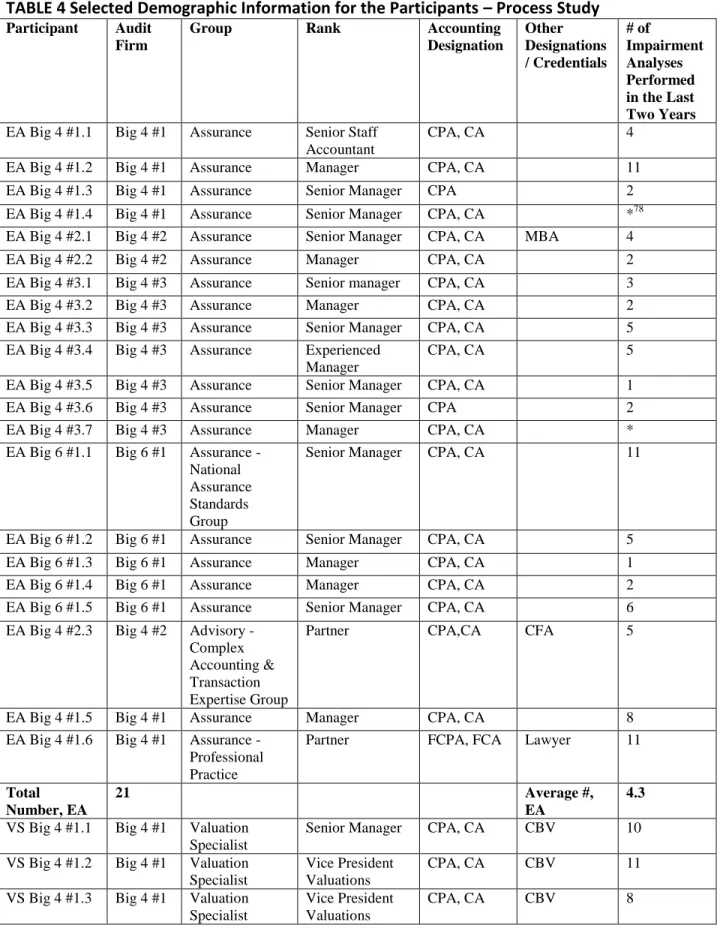
3.4.2 Participants ... 43
3.4.3 Quasi-Experimental Instrument ... 45
3.4.4 Administration of the Quasi-Experiment – Quasi-Experimental Session ... 49
3.5RESULTS ... 51
3.5.1 Annual Impairment Testing and the Source of Goodwill (RQ 1 and 2)... 51
3.5.2 The Determination of CGUs (RQ 3) ... 52
3.5.3 Assessment of the Risk of Material Misstatement and Estimation Uncertainty (RQ 4 and 5) ... 53
3.5.4 Choice Between Fully Substantive vs. Combined Approach (RQ 6) ... 54
3.5.5 Choice Between Testing Management’s vs. Developing Auditor’s Estimate (RQ 7) ... 54
3.5.6 Use of Alternative Assumptions vs. Use of Alternative Model (RQ 8) ... 57
3.5.7 Reasoning for the Application of the Alternative Assumptions and/or Model (RQ 9) ... 58
3.5.8 Sources of Information for and Issues Considered When Developing Alternative Assumptions/Model (RQ 10) ... 58
3.5.9 Participants’ Range and its Relation to Materiality (RQ 11) ... 59
3.5.10 Participants’ Consideration of FVLCS vs. VIU of the CGU (RQ 12) ... 60
3.5.11 Participants’ Consideration of Management’s Bias (RQ 13 and 14) ... 61
3.5.12 Participants’ Heuristics When Selecting Alternative Model and/or Assumptions (RQ 15)... 62
3.5.13 Participants’ Heuristics When Narrowing Participants Own Range (RQ 16) ... 67
3.5.14 Use of Internal Specialists (RQ 19) ... 67
3.5.15 Division of Labor Between Auditors and Valuation Specialists (RQ 19) ... 68
3.5.16 Use of 3rd Party Valuation Specialists (RQ 19) ... 68
3.6DISCUSSION AND CONCLUSION... 69
Chapter 4 - Can Probability Distribution Elicitation Methods Increase the Precision of FV Estimates? ... 76
4.1INTRODUCTION ... 76
4.2MOTIVATION AND LITERATURE REVIEW ... 80
4.2.1 Characteristics of FVs Affecting Their Auditability ... 81
4.2.2 The Influence of Information Uncertainty/Imprecision of Complex FVs on Auditors’ Judgment ... 82
4.2.3 Eliciting Probability Distribution Information from Individuals ... 85
4.3DEVELOPMENT OF RESEARCH QUESTIONS AND HYPOTHESES ... 86
4.4RESEARCH DESIGN ... 92
4.4.1 Research Methodology ... 92
ix
4.4.3 Experimental Instrument ... 99
4.5RESULTS ... 102
4.5.1 Implied Confidence Levels for the Unaided Intervals (RQ 3) ... 102
4.5.2 Comparison of the Unaided Judgment to Assisted Judgment with the Elicitation Methods (RQ 1) ... 103
4.5.3 Comparison of the Effectiveness of CDF (E1) and CI (E2) Elicitation Methods (RQ 2) ... 105
4.5.4 Comparison of the CDF (E1) and CI (E2) Elicitation Methods with Regard to Their Susceptibility to the Anchoring Heuristics (H 1) ... 106
4.5.5 Comparison of the CDF (E1) and CI (E2) Elicitation Methods with Regard to Their Ability to Assist With Quantification of Uncertainty (RQ 4) ... 107
4.5.6 Between-Participants Comparison of the Elicited Distributions... 108
4.5.7 Analysis of the Unaided and Aided Intervals from the Perspective of Audit Materiality ... 109
4.5.8 Other Findings Resulting From Concurrent Verbal Protocols Analysis ... 110
4.6DISCUSSION AND CONCLUSION... 112
Chapter 5 - Discussion and Conclusion ... 117
5.1CONTRIBUTION ... 117
5.1.1 Contribution to Academic Literature ... 117
5.1.2 Contribution to Audit Practice ... 118
5.1.3 Contribution to Regulation and Standard Setting ... 120
5.1.4 Contribution to Education ... 121
5.2SUGGESTIONS FOR FUTURE RESEARCH ... 122
5.3LIMITATIONS... 125
References ... 201
x
List of Figures
FIGURE 1 Case Instruction (Process Study) ... 46 FIGURE 2 Levered vs Debt Free Valuation Approaches ... 66 FIGURE 3 Example of the Elicitation Method Template (CDF Elicitation Method) ... 101
xi
List of Tables
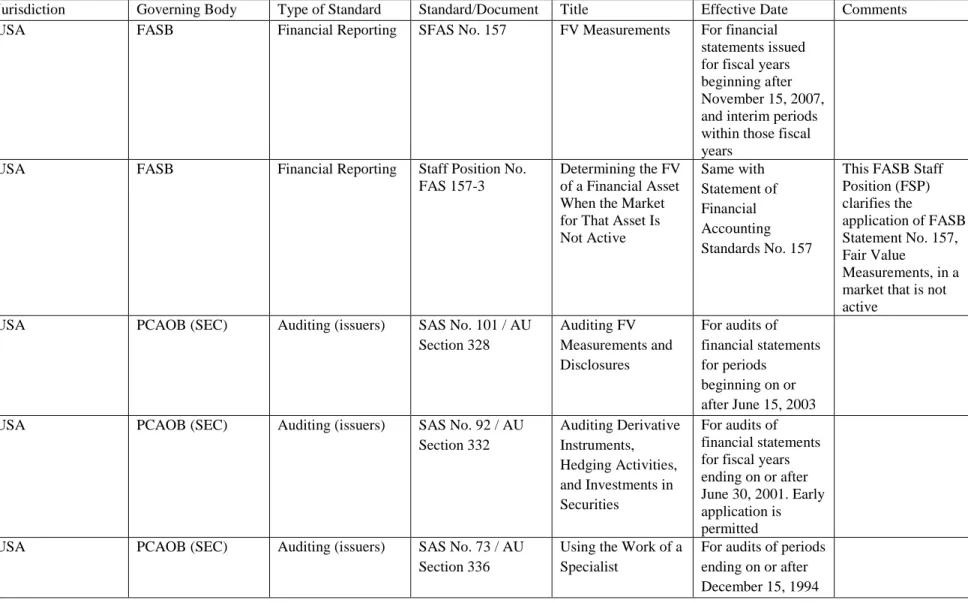
TABLE 1 Current Financial Reporting and Auditing Regulation on Fair Values ... 137
TABLE 2 Behavioral Studies on Fair Value Auditing ... 139
TABLE 3 Detailed Audit Process Information for Impairment Testing of Goodwill and Related Research Questions ... 145
TABLE 4 Selected Demographic Information for the Participants – Process Study ... 170
TABLE 5 Outline of the Experimental Case Content ... 172
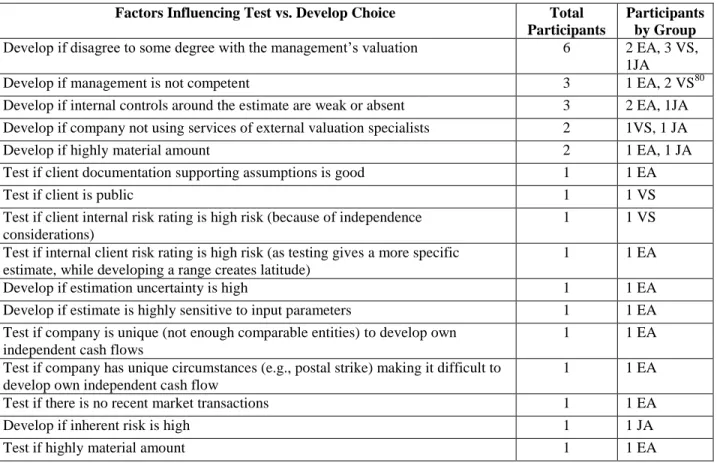
TABLE 6 Factors Influencing Test Management’s Estimate vs. Develop Auditor’s Estimate or Range Choice... 174
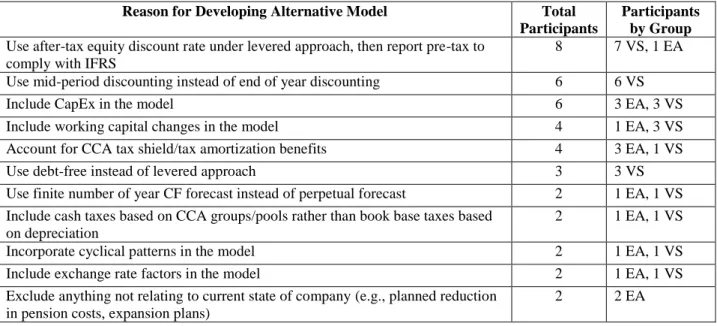
TABLE 7 Reasons for Developing an Alternative Model and Assumptions ... 175
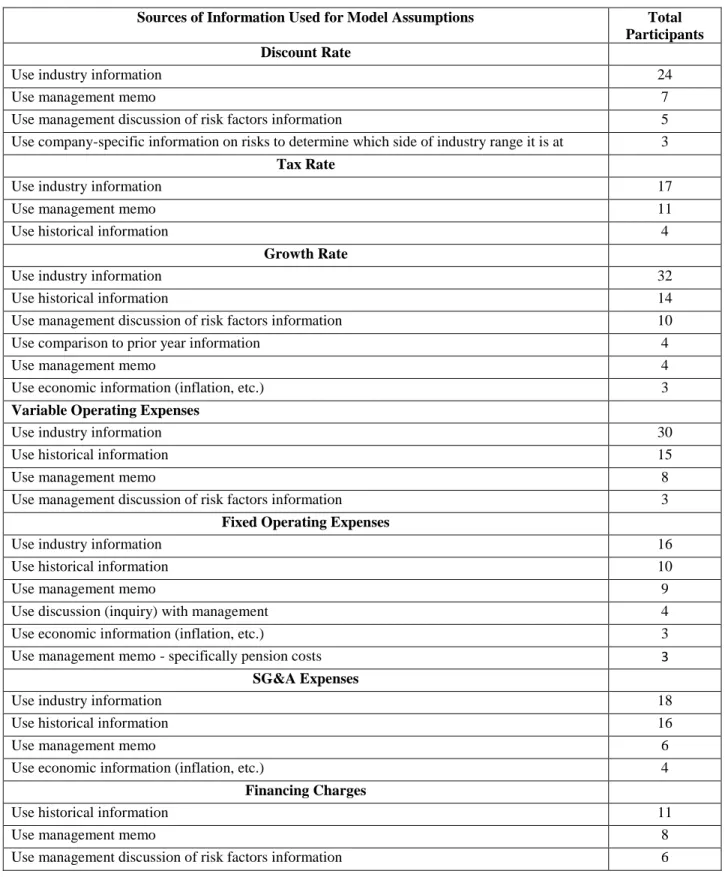
TABLE 8 Information Used to Evaluate/Develop Alternative Model Assumptions ... 177
TABLE 9 Width of the Participants' Range and Its Relation to Audit Materiality ... 180
TABLE 10 Probability Distribution Elicitation Methods ... 182
TABLE 11 Illustration of the Elicitation Methods Used in the Study ... 183
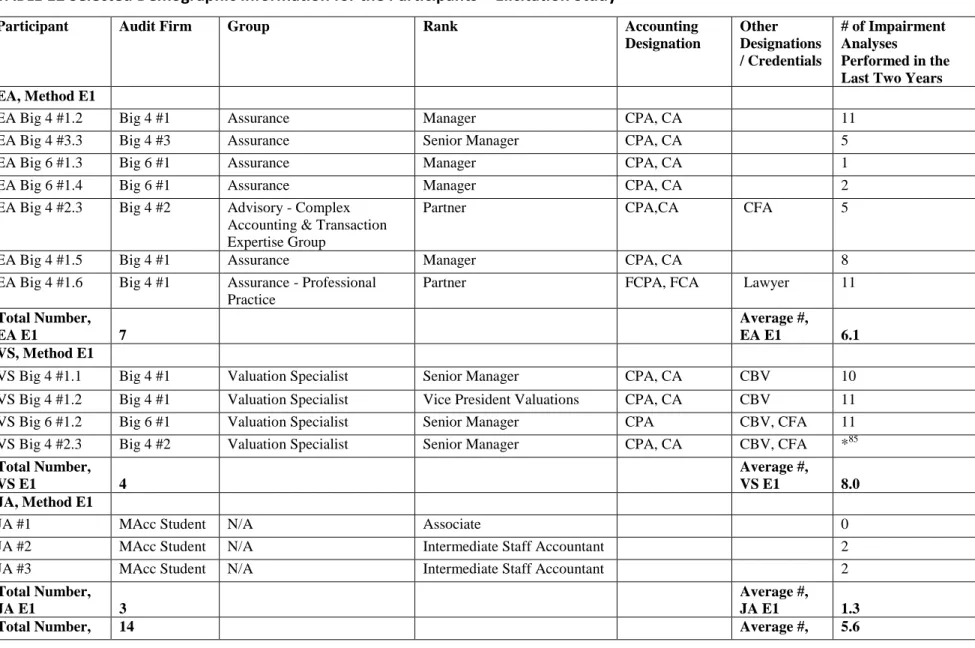
TABLE 12 Selected Demographic Information for the Participants – Elicitation Study ... 185
TABLE 13 Comparison of Elicited Intervals to Unaided Intervals for Each Group of Participants ... 188
TABLE 14 Implied Confidence Levels for the Unaided Auditor’s Intervals for the CGU Recoverable Amount Computed via Comparison to the Assisted Auditor’s Intervals ... 191
TABLE 15 Valuation Model Input Parameters for Which Elicited Distributions Were Developed While Point Estimates Where Used for the Unaided Auditor’s Interval ... 199
TABLE 16 Comparison of Elicitation Methods for Each Group of Participants ... 201
1
Chapter 1 - Introduction
1.1 Motivation
Recent changes in financial reporting regulation effected by the adoption of International Financial Reporting Standards (IFRS) in Europe, Australia, and Canada, as well as the
introduction of Statement of Financial Accounting Standards (SFAS) 142 (FASB 2001) and SFAS 157 (FASB 2007 and 2011) in the U.S. significantly increased users’ exposure to fair values (FVs) and thus made the issue of fair value auditing extremely important for the stakeholders. The new standards introduced a three-level hierarchy of FV types based on the observability of inputs, as well as annual goodwill impairment testing, replacing goodwill amortization. These changes highlighted problems with auditing highly complex, judgment-dependent and inherently uncertain fair values at the higher levels of the hierarchy. There is a concern that in some circumstances such complex FVs may not be auditable, and that requiring auditors to provide positive audit-level assurance on them may necessitate changes to the current financial reporting model, e.g., reporting ranges or confidence intervals, rather than point
estimates (Christensen, Glover, and Wood 2012).
Given the increased significance of FV reporting to the stakeholders, understanding of the various aspects of FV auditing process is an important objective of auditing research. Recent studies of FV auditing process (Cannon and Bedard 2015; Glover, Taylor, and Wu 2016;
Griffith, Hammersley, and Kadous 2012 and 2015) rely predominantly on interview- and survey- based methodologies, which provide an understanding of a broad scope of issues that the
auditors face when dealing with complex FVs. However, the lack of specific context in interview and/or survey settings does not always permit to perform a more in-depth investigation of the
2
issues in question. A qusi-experimental study based on methodology such as verbal protocol analysis (Biggs and Mock 1983) and employing a uniform task across all of the participants may be better suitable to achieve the latter objective. The first part of this study applies concurrent verbal protocols analysis methodology to an experimental case based on goodwill impairment to obtain knowledge about the details of FV auditing process related to auditing and reporting standards, auditing and valuation methodological aspects, and judgmental shortcuts employed by the participants.
Another major motivation for the study is the absence of direct evidence on valuation specialists’ involvement in fair value audits.1
As many fair values are based on highly technical models with unobservable input parameters and rely on complex judgment calls (Christensen et al. 2012; Ramanna and Watts 2012), they often require involvement of specialists. Current assurance standards define a specialist as "a person (or firm) possessing special skill or
knowledge in a particular field other than accounting or auditing" (AU sec. 336, paragraph .01), or “an individual or organization in a field of expertise other than accounting or auditing” (ISA 620), so persons/firms possessing such skill or knowledge in fair valuation field are called valuation specialists. As mentioned above, current FV auditing literature provides primarily indirect evidence on the involvement of valuation specialists in FV audits. For example, in Cannon and Bedard (2015), of 96 FV auditing experiences analyzed by the authors, only three are supplied by valuation experts. Both Griffith et al. (2012 and 2015) are based solely on interviewing 24 experienced auditors with no feedback from valuation specialists. Similarly, Glover’s et al. (2016) sample consists exclusively of auditor participants. This concern is also applicable to Griffith (2014, 2015, and 2016), where only auditors’ perspective is taken into
1
“Direct” (vs. “indirect”) evidence on the involvement of valuation specialists is defined as evidence obtained from the valuation specialists themselves. Indirect evidence is secondary type of evidence obtained from other parties involved in FV audits, such as auditors.
3
account, even though the studies concern the use of valuation experts. This study obtains direct evidence of valuation specialists’ involvement in FV audits as 22% of its total sample (or 30% of the experienced participants sub-sample) is represented by practicing valuation specialists
employed with major public accounting firms.
Finally, extant analytical, archival, and behavioral studies on FV auditing identify a number of problems in audits of complex FVs related, but not limited to, high estimation uncertainty, difficulty with developing auditors’ ranges, and auditors’ possible preference to follow the management’s approach when auditing FV estimates instead of developing their own estimate or ranges (e.g., Christensen et al. 2012; Griffith et al. 2012 and 2015; Smieliauskas 2012). At the same time, the extant studies recommendations are mostly concerned with a modification to current auditing guidance (Cohen, Gaynor, Montague, and Wayne 2016;
Maksymov, Nelson, and Kinney 2015) or auditor’s mindset intervention (Griffith, Hammersley, Kadous, and Young 2014) which would change auditors’ behavior in some way, leaving decision aid-related solutions out of consideration. This opens an avenue for future research on decision aids which might assist auditors with developing auditor’s ranges for complex FVs. As
Smieliauskas (2012) notes, a systematic method needs to be found which would help auditors with quantifying accounting risk and improve the FV estimates ranges calibration. The second part of this study offers and tests one class of decision aids which auditors can use for developing FV auditor’s ranges – decision aids based on probability distribution elicitation methods.
1.2 CGU (Cash Generating Unit) Impairment as an Example of FV Task
There are several potential candidates available to be the exemplar FV audit task in a behavioral study. These are financial instruments, pension liabilities, as well as impairments of
4
assets arising from business combinations valued at FV under IFRS (including goodwill, intangibles, and fixed assets). As impairments arising from business combinations are determined via CGU(s) impairment according to IAS 36 (IASB 2004a), the terms “CGU
impairment” and “goodwill impairment” can and will be used interchangeably in this study. The selection of the audit task for this study has been influenced by three main factors: 1) The level of overall complexity, and particularly estimation uncertainty, inherent in the task; 2) Importance of the task for the stakeholders; and 3) Novelty and scale of the contribution. Below, I discuss each of these factors in more detail.
Goodwill impairment is a multi-step process requiring extensive use of professional judgment by both client management and the auditors, which creates a potential for “judgmental misstatements” discussed previously. According to IAS 36 (IASB 2004a), goodwill impairment testing involves identifying the organization’s cash generating units (CGUs), allocating the goodwill balance to the identified CGUs, and comparing the carrying value of each CGU to it recoverable amount to quantify the impairment, if any. Neither of these steps is straightforward. Identification of CGUs is challenging because under IAS 36 (IASB 2004a) management needs to find (and the auditors need to verify) the smallest possible subset of assets that produces
independent cash inflows for the company.2 IAS 36 (IASB 2004a) explicitly states that the CGUs identification process requires judgment, while goodwill allocation to CGUs depends on the expected synergies of the business combination and does not directly depend on the
allocation of other assets or liabilities acquired in a business combination, which makes the allocation a subjective and difficult judgmental task. Determination of a CGU’s recoverable amount involves calculating its FV less costs to sell and/or its value in use, which includes the
2 This is different from identification of CGUs under SFAS 142 (FASB 2001), which permits the use of management’s reporting structure to define the CGUs – a much more straightforward approach.
5
identification of appropriate active markets, the determination of the amount and timing of future cash flows and the estimation of relevant discount and growth rates. In line with this reasoning, Cannon and Bedard (2015) in their field study find that the impairments are most frequently characterized by the highest level of estimation uncertainty among other FV auditing tasks (about 41%), while 83% of those impairments with the highest estimation uncertainty relate to goodwill.3 Ramanna and Watts (2012) state that estimation uncertainty inherent in goodwill impairments may render them unauditable, while their empirical results indicate that goodwill impairments are related to debt covenants that rely on the goodwill balance and the CEO’s protecting their reputation (agency theory rather than information signaling goals), which is not a desired situation for users of the financial statements.
While goodwill balances are certainly difficult to audit, recent research demonstrates that they represent an important issue for both auditors and users of financial statements. Ayres, Neal, Reid, and Shipman (2016) document that material goodwill impairments are significantly
associated with subsequent auditor switches. Also, the auditor switch becomes more likely when the relative magnitude of the impairment charge is higher. These results highlight the importance of the goodwill impairment issue to both audit firms and public companies. It appears that auditing of goodwill balances is an area which generates a high level of business risk to the auditors and affects auditor-client relationship. Köhler, Ratzinger-Sakel, and Theis (2015) experimental results suggest that a discussion of goodwill impairment issues, such as the magnitude of assumptions changes leading to goodwill impairment, when included in key audit matters (KAM) paragraph in auditor’s report, significantly influences users’ decisions with regard to the company.
6
Despite the complexity of the task and the heavy demands it places on the professional judgment of the accountants and auditors, as well as the importance of goodwill reporting and auditing to the stakeholders, prior auditing research on goodwill is relatively undeveloped and predominantly limited to archival methodology papers. For example, the series of studies by Carlin et al. (2007 and 2008) and Carlin and Finch (2008) concentrate on public companies’ compliance with the disclosure requirements of IAS 36 (IASB 2004a) related to goodwill impairment, and the ability of their auditors to enforce the compliance requirement. Shepardson (2013) finds that that the audit committee member (ACM) contextual experiences with goodwill impairment issues (proxied by interlocks with companies that likely went through the
impairment testing process in the past) is associated with a higher likelihood of goodwill write-off, and the effect is the most pronounced when the experience is obtained in a manager’s (vs. a monitor’s) capacity. Stokes and Webster (2009) find that higher audit quality (measured by Big 4/non-Big 4, switches to Big 4, and other proxies) contributes to representational faithfulness of goodwill balances under IFRS. The result highlights a disparity in goodwill impairment audit outcomes between the Big 4 and non-Big 4 auditors, while it is not entirely clear whether the disparity is due to differences in the audit process, the audit effort, or both. Shipman, Carcello, and Neal (2016) investigate the impact of non-audit fees on auditor’s independence in the context of goodwill impairment and find an inverse relationship of the non-audit fees to the likelihood of impairment in a situation where goodwill is likely to be impaired, meaning that non-audit services may compromise the independence.
Favere-Marchesi and Emby (2005) is one of the few experimental auditing studies on goodwill impairment, which establishes that a new concurring audit partner is more likely to recommend a write-down of purchased goodwill than a continuing concurring audit partner,
7
highlighting the issue of auditor’s independence for this type of audit task. Recently, Griffith (2014) uses a goodwill impairment task (in the U.S. GAAP context) to investigate the interaction of audit-team specialists’ caveats and client source credibility when auditing complex estimates and finds that auditor’s review of evidence with regard to a biased complex estimate and related audit judgments incorporate a caveat if the estimate originates from a source which is perceived to have low credibility (if the preparer’s source credibility is perceived as high, the caveat is disregarded). In a related study, the author investigates how relational ques in specialists’ work interact with client source credibility when considered by auditors (Griffith 2016).
1.3 Summary of the Main Findings
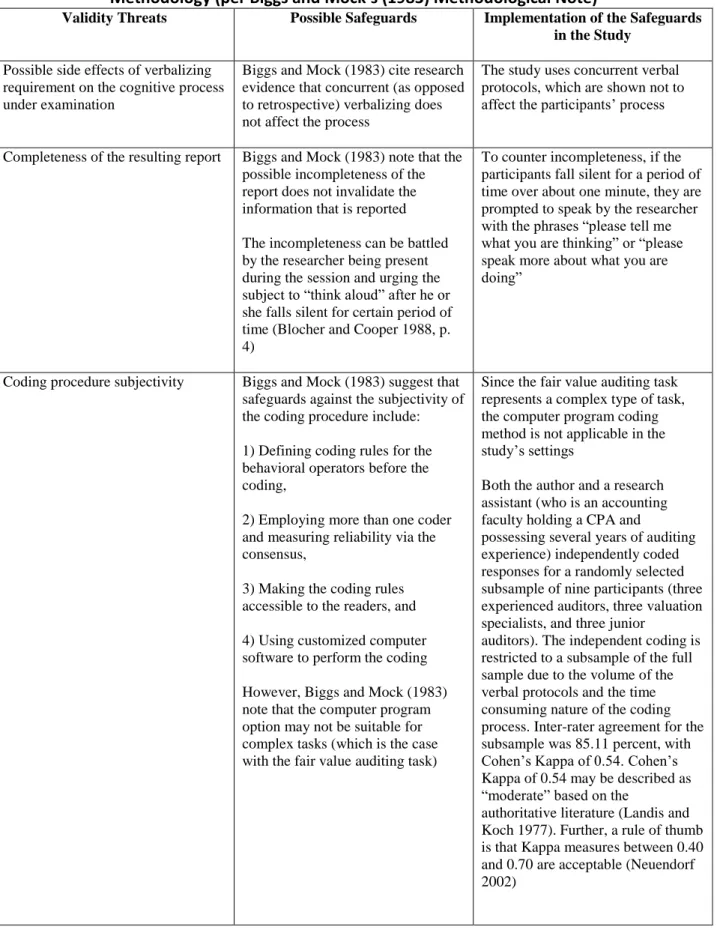
The process study is a quasi-experiment with the objective of describing currently under-researched process of auditing complex FV estimates. The reliance on quasi-experimental methodology based on concurrent verbal protocols (Blocher and Cooper 1988, Biggs and Mock 1983, and Biggs et al. 1988) is justified by the fact that it produces much more detailed
information on the FV auditing process than the extant interview-based research (Cannon and Bedard 2015, Glover et al. 2016, and Griffith et al. 2012 and 2015). This is achieved by
providing a concrete context of the experimental case, which helps the participants to think about fine details of the FV auditing and FV estimation processes, leading to collection of rich process information which would not be possible to obtain in lacking specific context interview
methodology studies. The use of the uniform experimental case also allows for valid process comparisons among different participant groups (experienced auditors, valuation specialists, and junior auditors). The experimental case used is CGU/goodwill impairment case under IFRS/IAS. The particular focus of the process study is obtaining qualitative information related to three
8
areas: 1) methodological aspects of the auditing and fair valuation processes, 2) interpretation, application, and interaction of reporting, auditing, and valuation standards, and 3) judgmental shortcuts arising within the auditing process, including those arising from uncertainties inherent in complex FVs.
In addition to qualitative results, the process study also provides some quantitative findings. The main such finding is related to the width of the participants’ intervals, its relation to audit materiality, and its dependence on the participants’ expertise (proxied by the work
experience). Particularly, it is discovered that for all groups of the participants, the width of their auditors’ intervals is multiple times the audit materiality. This result confirms concerns raised by Christensen et al. (2012) about auditors’ ability to provide positive-level assurance on complex FV balances. The participants’ intervals developed in the process study fall under Smieliauskas’ (2012) “estimate nightmare” scenario, so that all points inside or outside of the participants’ ranges have a significant risk. While the number of available observations does not permit to come to any conclusion for valuation specialists, a negative relationship is found between the auditors’ expertise and the width of the auditors’ intervals. Particularly, the width of the experienced auditors’ intervals is narrower on average than the width of the junior auditors’ intervals.
As mentioned, a set of results of the process study includes issues related to interpretation and application of relevant auditing and financial reporting guidance (primarily ISA 540 and IAS 36). One such finding is how the participants classify their audit approach under two mutually exclusive categories prescribed by ISA 540, testing management’s estimate vs. developing auditor’s own estimate or range. It appears that participants across all of the groups have difficulty with classifying their actions under the above categories. Additionally, a pluralism of
9
opinions exists on exactly what audit procedures are encompassed by each of the two categories. Some participants define developing auditor’s own estimate or range as completely disregarding the management’s work and creating a new valuation model along with its inputs from the scratch, while others suggest less radical interpretations such as altering the timing and amount of the management’s cash flows, or performing a sensitivity analysis using the management’s model. These findings provide a basis for reconciling conflicting results in prior interview-based studies of FV auditing process regarding the relative number of auditors choosing to test
management’s estimate vs. develop their own estimate or range (Cannon and Bedard 2015, Glover et al. 2016, and Griffith et al. 2012 and 2015).
The process study also sheds light on the participants’ motives when classifying their actions as either testing the management’s estimate or developing their own estimate or range. Particularly, senior-level participants suggest that since it is not possible to recognize the auditor’s estimate on the face of financial statements due to independence considerations, developing auditor’s own estimate or range represents an inefficient option. An efficient option is to guide/coach the management to correctly develop their own estimate, which can then be audited and reported on the balance sheet. The participants also suggest that this course of action benefits the audits in subsequent years, as the management acquires a skill to perform valuation tasks. At the same time, another reason for the majority of valuation specialists to classify their actions as testing the managements estimate may be grounded in the interaction between audit and valuation standards. The Canadian valuation standards place all of the valuation
engagements into two exhaustive “buckets”: a comprehensive valuation (assuming an extensive amount of work) and an estimate (assuming a limited amount of work). Since valuation
10
a true independent estimate, and since valuation for financial reporting purposes falls into the estimate category, valuation specialists may tend to classify an audit engagement they participate in as testing management estimate under ISA 540.
The application of auditing standards is found to be affected by judgmental shortcuts employed by the participants. Some of these shortcuts have not been well researched in the FV audit task context in the extant literature. For example, many experienced and junior auditors use the midpoint of their auditor’s range to arrive at a point estimate for the CGU RA. This approach to determining a FV point estimate is not recommended in the auditing standards and may be a manifestation of the availability heuristics. It also runs contrary to the results in Griffin (2014), who finds that auditors use the nearest bound of their FV interval to calculate the amount of suggested adjustment to the management’s estimate. An additional problem discovered is that many participants do not recognize the necessity to narrow down their range given the audit materiality when arriving at a conclusion about the material misstatement in FV estimates, which represents a non-ISA 540 approach. At the same time, the participants who do recognize such necessity do not seem to offer a specific/systematic procedure(s) for narrowing down the range. They most frequently cite a general discussion with management as a way to reduce the range’s width.
Another instance of the availability heuristics identified in the FV auditing process is the use of “+/-10% rule” by some valuation specialists in order to develop an auditor’s range from a point estimate of the CGU RA, which is not suggested in either auditing or valuation standards. Moreover, since the “+/-10% rule” leads to auditor’s ranges which are many times the amount of the audit materiality, its application by valuation specialists imply that this group of participants considers FV estimation uncertainty in isolation from the audit materiality. This approach may
11
be a consequence of valuation specialists acting primarily as business advisors in their
professional practice, leading to a treatment of technical auditing concepts (i.e., audit materiality) different from that of auditors, who act primarily as assurance providers.
The process study also reveals methodological problems in the FV audit and valuation processes, including (but not limited to) insufficient understanding of valuation methodology by some of the experienced and junior auditors. A good illustration of such problem is that auditors do not always distinguish between two different approaches to discounted cash flow valuation – levered vs. unlevered (debt-free) methods. This may lead to application of an inappropriate discount rate in the analysis, which produces a highly material difference in the resulting CGU RA estimate.
As discussed, the process study demonstrates the difficulties that the participants experience with producing a reasonable range for the CGU RA. The issue encompasses several distinct problems, including: 1) Participants not recognizing the necessity to narrow down the range given the amount of audit materiality; 2) Participants relying on judgmental shortcuts to arrive at a point estimate (e.g., using a midpoint of the range as a point estimate); 3) Participants not having a systematic method of reducing the range given the audit materiality. One of the ways to alleviate the above problems is to introduce a decision aid to help the auditors and valuation specialists to produce a reasonable range for complex FV estimates.
The elicitation study tests probability distribution elicitation methods as a candidate for such a decision aid. More precisely, two elicitation methods – cumulative distribution function method (CDF) and credible interval method (CI) – are tested and compared between each other as well as to the unaided judgment in an experiment using the same CGU/goodwill impairment case and the same groups of participants as in the process study. The reason for choosing the
12
CDF and CI methods is that they are very often used to elicit individuals’ probability distributions in business settings, as shown in the extant literature.
One of the results of the elicitation paper is calculating “implied confidence levels”, which are levels of confidence exercised by the participants in their unaided intervals for the model input parameters, determined through comparisons to the assisted intervals developed with the help of elicitation methods. The averaged implied confidence levels for experienced auditors are in 55% – 62% range, while implied confidence levels for junior auditors are in 59% – 66% range.4
Therefore, experienced auditors appear to require a lower level of confidence for the input parameter intervals for FV models, implying a negative relationship between the level of confidence and auditor’s expertise (proxied by experience).
The investigation of effectiveness of probability distribution elicitation methods for improving unaided judgment indicates that the CDF method has such ability, while the CI method does not. Particularly, if a 50% percent confidence level is chosen for the valuation model input parameters, the use of the CDF method yields a smaller standard deviation of the interval widths (and thus more consistency among the participants) than unaided judgment.5 The use of the CI method does not lead to a similar result.
A direct comparison of the CDF distribution elicitation method to the CI method also demonstrates a higher effectiveness of the CDF method. For both experienced and junior auditors, for the comparable intervals (25% to 75% cumulative distribution under the CDF and 50% confidence interval under the CI), the CDF method produces a set of intervals which 1) result in narrower (on average) intervals for the resulting FV, and 2) have a smaller standard deviation of the interval widths and lower and upper bounds for the resulting FV, than the CI
4
The implied confidence levels for valuation specialists are difficult to estimate reliably due to the small number of observations.
13
method. In other words, the use of the CDF method leads to a better compliance with IAS 540 and to a higher consistency of judgment among auditors, compared to the CI method. For valuation specialists, however, interval widths for the resulting FV, as well as their standard deviations and the standard deviations of their lower and upper bounds are smaller for the CI method, compared to the CDF method. This may be explained either by a small sample size available for this group of participants, or alternatively by valuation specialists being more skillful than auditors with the use of probability distributions.
The results in the verbal protocols suggest that the CDF distribution elicitation method surpasses the CI method for the purposes of quantification of uncertainty inherent in complex FV estimates. For the group of words characteristic of the quantification of uncertainty process, the CDF method has higher frequencies of occurrence for a larger number of individual words, as well as has a higher composite index based on equal weighting of frequencies for all of the words in the group, compared to the CI method.
Finally, I hypothesize and find that the CDF distribution elicitation method, compared to the CI method, has smaller susceptibility to the anchoring heuristics. This prediction is based on the fact that the CI method routine operates in “interval” terms, while the CDF method routine operates in “value” (a distributional fractile) terms. Thus, the participants’ prior-held beliefs about the parameter intervals may enter the elicitation process more easily when the CI method is used rather than when the CDF method is used.
The elicitation study thus contributes to the academic literature by bringing together auditing research and elicitation research in a FV auditing setting. From a practical perspective, the paper has the potential to improve current audit practices related to auditing of goodwill
14
impairment and possibly other complex FVs. This is accomplished by providing information valuable for the development of decision aids useful in FV audits.
1.4 Outline of the Study
This dissertation study consists of five chapters. The Introduction chapter (Chapter 1) provides general motivation for the study, discusses the reasons for choosing goodwill/CGU impairment as a basis for the experimental case, as well as outlines the main results of the two studies comprising the dissertation. Chapter 2 provides a comprehensive literature review which includes both FV reporting, auditing, and valuations standards and academic studies related to the FV auditing subject. The literature review focuses on the auditing research since the
introduction of the new FV reporting standards (circa 2007). Archival and behavioral papers are addressed in separate sections. Chapter 3 is the first of the two studies comprising the
dissertation. As mentioned above, it is called the “process study” because it relies on the process analysis methodology based on concurrent verbal protocols. Chapter 4 is the second dissertation study, called the “elicitation study” since it experimentally tests probability distribution
elicitation methods as a means to assist auditors with constructing reasonable ranges for complex FVs. Chapter 5 concludes the dissertation study. It contains a discussion of the study’s
contributions to academic research, regulation and standard settings, as well as education. It also provides suggestions for future research arising from the dissertation’s findings, and lists the limitations of both of the studies comprising the dissertation.
15
Chapter 2 - Literature Review
2.1 FV Financial Reporting and Auditing Standards
Table 1 summarizes current financial reporting and auditing rules on FVs both in the U.S. and IFRS-adopting countries. It demonstrates that under both of the regimes, the systems of relevant standards are complex and evolving. In IFRS jurisdictions, IFRS 13 “Fair Value
Measurement” (IASB 2011) governs the use of FVs for financial and nonfinancial assets and sets up a three-level hierarchy based on the observability of inputs to the valuation, while
International Accounting Standard (IAS) 36 and 39 (IASB 2004a and 2004b) prescribe rules for impairment of assets (including goodwill) and financial instruments, respectively.6 Both IFRS 13 and SFAS 157 define the levels of as in a parallel way, whereby Level 1 inputs represent “quoted prices (unadjusted) in active markets for identical assets or liabilities that the entity can access at the measurement date”, Level 2 inputs represent “inputs other than quoted prices included within Level 1 that are observable for the asset or liability, either directly or indirectly”, and Level 3 inputs represent “unobservable inputs for the asset or liability” (IASB 2009, pp. 23, 25, 26). With regard to goodwill, U.S. rules are different from IFRS because SFAS 142 permits reliance on management’s reporting structure to define the business units used in the assessment of goodwill, whereas IAS 36 defines a cash generating unit (CGU) as the smallest possible subset of assets that produces independent cash inflows for the company.
International Standard on Auditing (ISA) 540 “Auditing Accounting Estimates, Including FV Accounting Estimates, and Related Disclosures” (IAASB 2008) guides the auditing of
6 In the U.S., SFAS 142 (FASB 2001) changed the measurement of goodwill from amortization of acquisition cost to valuation based on periodic impairment testing, which entails fair value determination of business units. Subsequently, SFAS 157 (FASB 2007 and 2011) established a framework for measuring fair values (with three levels, as in IFRS 13) and expanded the disclosures.
16
estimates, including FVs, for IFRS adopters.7 As discussed below, these auditing standards have been criticized for applying legacy methods used for auditing historical cost financial statements to FVs such as Level 2 and 3 FVs or the value of goodwill impairment, which are subject to a much higher level of uncertainty.
Canadian CICBV practice standards8 include 18 valuations standards which are intended to encompass different valuations engagements such as valuations for issuing a fairness opinion, valuations for financial reporting (auditing), valuations for litigation support, etc. Valuation engagements for financial reporting purposes are governed by Practice Standard No. 110 “Valuation Report Standards and Recommendations” and Appendix B to Practice Standard No. 110 “Valuation for Financial Reporting”.
2.2 Archival Studies on Auditability of FVs
Using financial statements of Wells Fargo and General Motors as examples, Christensen t al. (2012) demonstrate that a small change in one of the inputs to a Level 3 FV can produce a highly material “swing” in the reported FV. The authors question whether positive assurance on such balances can be obtained and suggest that negative review-level assurance or positive assurance on the ranges seem more realistic (Christensen et al. 2012, p. 140).
These concerns are echoed in Smieliauskas (2012), who introduces three scenarios: 1) “Accounting estimate nirvana” occurs when the width of the reasonable range of an estimate does not exceed the material misstatement, implying that any point in the reasonable range does
7 For audits of U.S. issuers, AU Section 328 “Auditing Fair Value Measurements and Disclosures” (AICPA 2002) guides auditing fair values belonging to the hierarchy. The U.S. Public Company Accountability and Oversight Board (PCAOB) (2013) states that besides AU Section 328, three other relevant standards are AU Section 332 (AICPA 2001), AU Section 336 (AICPA 1998), and AU Section 342 (AICPA 1997), which relate to auditing derivatives, hedges, and investment securities, reliance on a specialist, and auditing accounting estimates, respectively.
17
not have a significant estimation risk, as defined in ISA 540 (IAASB 2008); 2) “Estimate
problem” exists when the width of the reasonable range is greater than the material misstatement but does not exceed twice the material misstatement, meaning there is at least one estimate with no significant risk. 3) “Estimate nightmare” takes place when twice the material misstatement is smaller than the width of the reasonable range, so that all points inside or outside of the
reasonable range have significant risks (Smielauskas 2012, p. 279), under which a change to another financial reporting framework is necessary.
Ramanna and Watts (2012) comment that SFAS 142 (FASB 2001), in contrast with prior standards, derives the goodwill impairment amount from unverifiable management estimates of its current value. They find9 that management’s private information (measured by share
repurchases, insider trading, 10-K tone, and one-year-ahead returns) does not bear on goodwill impairments, while agency-based predictions have some grounds (debt covenants that rely on the goodwill balance and the CEO’s tenure are (weakly) linked to non-impairments).
Summarizing, some complex FV balances are very sensitive to small variations in input model parameters. This may lead to situations when it is not possible to provide positive assurance on a point estimate of a complex FV. Also, management appear to use subjectivity in complex FVs to meet debt covenants and/or protect their reputation rather than signal insider information. This increases the importance of auditing for such balances.
2.3 Behavioral Research on FV Auditing
While archival studies primarily deal with issues around the reporting outcomes of FV audits, the experimental and interview-based studies shed light on the underlying audit process.
9 The sample consists of firms with strong market signs of goodwill impairment, specifically when a firm’s book value exceeds its market value (BTM>1) for two years in a row in 2003-2006.
18
These studies are summarized in Table 2. They provide information about behavioral aspects related to FV audits such as biases and reliance on experts.
2.3.1 Biases in Auditors’ Judgment When Evaluating FV Estimates
Montague (2010) shows that auditors are subjected to more confirmation bias (i.e., auditor seeks more confirming than disconfirming evidence) when they are asked to counter (vs. support) management’s estimate or generate their own estimate, while this bias increases the professional skepticism.10 Additionally, the confirmation bias is the highest in
“counter/disconfirm” condition with high estimation uncertainty. Cohen et al. (2016) follow Monatgue (2010) in investigating the procedure frame11 on the auditor’s actions. In a single-factor experiment the authors find that a balanced frame (vs. a positive or negative ones) causes auditors to use more evidence countering, rather than supporting management’s assertions, resulting in higher perceived RMM, and leading to lower FV balances, implying that revising current audit standards from positive to balanced frame leads to more conservative FV audits. Maksymov et al. (2015) investigate how audit procedure positive vs. negative frame (defined as the need to ascertain whether management’s assumptions are reasonable vs. not reasonable, respectively), efficiency pressure (high vs. low), and the extent posterior verifiability of audit quality (rated by the participants) bear on budgeted time for Level 3 FVs audit
procedures. The authors find that the negative frame leads to planning for more audit hours, especially for procedures that are perceived as less verifiable. This implies that re-framing audit procedures from the (typical in practice) positive frame to a negative one is expected to increase audit effort.
10 In Montague (2010), the professional skepticism is measured via skeptical judgment and action (the risk of material misstatement of the estimate and the quantum of recommended adjustment, respectively).
11 Three levels of procedure frame are considered, where “support” represents a positive frame, “support and oppose” represents a balanced frame, and “oppose” represents a negative frame.
19
Griffin (2014) experimentally manipulates subjectivity (Level 2 vs. 3 FV), imprecision (narrow vs. wide estimate range), and footnote disclosure about estimate inputs (present vs. absent) and finds that the interaction between subjectivity and imprecision makes an adjustment more likely, while disclosure reduces the interaction. Griffin (2014) also discovers that auditors calculate the FV adjustment quantum by comparing management’s FV estimate to the nearest bound (vs. the midpoint) of the auditors’ range, implying a strict application of auditing standards.
Earley, Hoffman, and Joe (2014) experimentally investigate whether auditors experienced in the FV auditing task exercise skepticism about the management's SFAS 157 (FASB 2007) Level 2 vs. 3 classification judgments, because they may subconsciously gravitate towards the management's classification, as happens with Sarbanes-Oxley Section 404 internal control judgments (Earley et al. 2008). They find that auditors do exercise skepticism, especially when the management settles on the less conservative FV reporting alternative.
Summarizing, auditing complex FVs is a process which can be subjected to a number of biases. Estimation uncertainty/imprecision appears to be an important feature of FV balances, which influences both auditors’ biases and the amount of adjustment suggested by the auditors.
2.3.2 The Use of Valuation Experts
Carpentier, Labelle, Laurent, and Suret (2008) observe that auditing FV assets with no liquid active market can be made easier by obtaining help from outside experts and by
introducing valuation standards by practitioner bodies. Carpentier et al. (2008) ask a group of 43 Chartered Business Valuators (CBVs) to follow the Canadian Venture Capital Association’s (CVCA’s) recommendations to value a small, private, pre-IPO high tech firm and find that, despite the uniform guidance provided by the CVCA, the respondents rely on a variety of
20
methods and utilize different multiples in the valuation process. Carpentier et al. (2008) note that these differences in the valuation process translate into a very wide range of resulting FMVs, and that the post-IPO value verification reveals overstatement.
Jamal, Marshall, and Tan (2011) experimentally gauge the effectiveness of two means for reducing the bias of professional accountants (e.g., acting as auditors or business valuators) arising from the desire to please a fee-generating client, disclosure and certification, by asking 161 participants to value a business for issuing a fairness opinion. The participants are placed either into a “no conflict” control condition or into conditions created by manipulating the type of conflict (with the selling party, or with both the buying and the selling parties) and the bias reduction mechanism (no mechanism, disclosure, certification, or the combination of both). The authors discover that when only the selling party is present, conflict disclosure is dysfunctional as it produces bias. When both the buying and the selling parties are present, the biased is observed across all of the conditions. The authors conclude that the certification mechanism of bias reduction is ineffective, but the disclosure mechanism is dysfunctional.
Joe et al. (2015) conduct an experiment with 92 audit seniors employed with a “Big 4” firm, in which the evidence quantification level (low vs. high) and control environment risk (low vs. high) are manipulated with the proportional effort allocated to FV audit procedures serving as a dependent variable. The authors find that the auditors allocate less proportionate effort to testing the subjective inputs of management’s FV estimate when both the quantification evidence level and control risk are high. In a supplemental experiment, an introduction of a regulatory practice alert (re: focus audit effort on FV inputs that are subject to management bias) is not resulting in a change of effort allocation documented in the first study.
21
Griffith (2015) analyzes interview data with 28 auditors who used valuation specialists and establishes that they apply auditing standards’ guidance for external specialists to internal valuation specialists. Further, if there is no relevant guidance, the auditors lead the specialists to comply with the audit team’s prevailing position. Griffith (2015) finds that main issues in the area are related to the complex FVs’ inherent uncertainty, which causes the auditors to rely on reports of valuation specialists that they cannot competently review or even understand.
Griffith (2014) notes that audit-team valuation specialists often produce caveats to let the auditors know about reservations on certain assumptions (while the overall conclusion on the estimate is “clean”). The author, using an experiment with 78 experienced auditors, finds that their review of evidence with regard to a biased complex estimate and related audit judgments incorporate a caveat if the estimate originates from a source which is perceived to have low credibility (prepared by the client in-house). If the preparer’s source credibility is perceived as high (prepared by a third party), the caveat is disregarded.
Summarizing, the body of research evidence regarding valuation specialists’ performance in audit and/or valuation tasks is at present fairly limited. For the purpose of this study, the most important finding from the extant literature implies that current professional
recommendations/standards for business valuators may not be effective in helping them to deal with uncertainty inherent in complex FVs, and that valuation processes used by the valuators are far from being uniform. A modification to the existing recommendations as well as their
supplementation with relevant decision aids might be necessary to achieve an improvement.
2.3.3 Studies of FV Audit Process
Griffith et al (2012) expect that the audit process for complex estimates will not be similar to the one for historical cost numbers, since the two tasks have different goals and
22
structures, and call for a framework for understanding the process. The authors interview 24 auditors experienced with complex estimates, and conclude that the auditors rely less on their own models but rather prefer to test management’s (or specialist-developed) models for complex estimates, which leads to underweighting of external evidence. Griffith et al. (2012) suggest that this underweighting can be corrected via modifications to the auditing standards, changes to their implementation, as well as staffing valuation tasks with auditors who have a suitable cognitive processing style. The authors also find that auditors’ decision to verify management’s estimate may be based on effort and efficiency consideration, given their investment in understanding management’s model. Also, better communication with the valuation specialists and using more experienced auditors may decrease their excessive reliance on the specialists, because it likely stems from auditors not understanding the specialists’ models.
Griffith et al. (2015), based on the same interview data, find that auditors most frequently elect to verify the management’s estimate, rather than to develop an auditor’s own estimate or review subsequent events, and that they examine separate elements of management’s estimates in isolation without looking at the “big picture”. Based on institutional theory, the authors name two root causes of this situation: excessive focus on verifying management’s estimates in the standards and audit firms’ current distribution of knowledge between auditors and specialists, whereby the auditors do not know enough about valuation.
Cannon and Bedard (2015) conduct a survey-based field investigation of auditing of complex FV estimates and find that uncertainty in the estimates is positively related to the assessed inherent risk, but in a number of cases the estimate’s inherent risk is assessed below maximum even though the uncertainty leads to ranges that are larger than materiality. They find that use of a valuation specialist by the client triggers the reliance on a specialist by the auditors.
23
In their sample of engagements, the auditors most frequently (in 53% of the cases) choose to develop their own independent estimate or range for a FV, instead of testing managements estimate or evaluating subsequent realizations. Cannon and Bedard (2015) observe that obtaining positive assurance on complex FVs may not always be possible.
Griffith’s et al. (2014) experiment shows that a deliberative mindset intervention helps auditors to detect unreasonable estimates because such intervention assists them in finding conflicting information from other audit areas and including it into the analysis. The authors suggest that the intervention forces the auditors think broader instead of working harder, thus improving audit quality of complex estimates.
Summarizing, while the above studies shed some light on the auditing process of complex FVs, they do not offer any structured decision aids that can help to overcome the process shortcomings. Additionally, there is not enough information on how and why the processes are different between the auditors and valuation specialists.
24
Chapter 3 - How Are FV Impairments Audited? A Study of Auditors
and Valuation Specialists
3.1 Introduction
Recent changes in financial reporting regulation effected by the adoption of International Financial Reporting Standards (IFRS) in Europe, Australia, and Canada, as well as the
introduction of Statement of Financial Accounting Standards (SFAS) 142 (FASB 2001) and SFAS 157 (FASB 2007 and 2011) in the U.S. significantly increased users’ exposure to FVs and thus made the issue of FV auditing extremely important for the stakeholders. The new standards introduced a three-level hierarchy of FV types based on the observability of inputs, and moved from goodwill amortization to its impairment testing. These changes highlighted problems with auditing highly complex, judgment-dependent and inherently uncertain items such as FVs at the higher levels of the hierarchy and goodwill impairments. There is a concern that in some
circumstances such FVs may not be auditable, and that requiring auditors to provide positive audit-level assurance on them may necessitate changes to the current financial reporting model, e.g. reporting ranges or confidence intervals, rather than point estimates (Christensen et al. 2012; Smieliauskas 2012). Current auditing standards have been criticized for applying legacy methods used for auditing historical cost balances to complex FVs, which are subject to a much higher level of uncertainty, and regulators point to numerous problems with FV audits in recent years (IFIAR 2014).
The complexity and novelty of FV auditing tasks to the auditors, the proliferation of problems with FV auditing discovered by the regulators, together with the importance of FV reporting and audit quality to capital markets, make the understanding of the underlying FV auditing process a promising avenue for research. This paper provides quasi-experimental
25
evidence about the process of FV auditing obtained based on verbal protocols methodology, which helps to better understand and improve the auditing of complex FVs (using goodwill impairment task as a specific example). Particularly, the study investigates the ways in which auditors deal with uncertainty inherent in the goodwill impairment audit task, and compares process differences between the auditors and valuation specialists.
The following section provides motivation and literature review that focuses on the auditing research since the introduction of the new FV reporting standards (circa 2007). It also looks at the suitability of goodwill impairment as an exemplar FV auditing task. It is followed by a discussion of relevant theory and the development of research questions. The next section outlines the research methodology, followed by a discussion of quasi-experimental results. The conclusion summarizes academic and practical contributions of the study.
3.2 Motivation and Literature Review
The literature review focuses on several unexplored areas that a quasi-experimental study of the FV auditing process can help to address. First, a discussion of the features of complex FV estimates which make them difficult to audit highlights a necessity to investigate how auditors deal with these problematic areas. Second, prior archival results establish a relationship between audit quality and the quality of reported FVs. These results suggest a need to understand differences in the auditing process among auditors of different quality, since these differences have a bearing on the resulting FVs’ reliability and representational faithfulness. Third, there is evidence that the features of complex FVs that make them difficult to audit influence a number of auditors’ biases as well as key audit judgments, e.g. the suggested adjustment. Since little is known about the mechanisms of such influence, a process study will be useful for uncovering
26
these mechanisms. Forth, extant interview based studies of the auditing process, while helpful with identifying the difficult areas, provide little information on how auditors deal with them when obtaining assurance. Finally, a review of the papers on valuation specialists’ involvement with FV audits indicates a lack of direct evidence about the specialists’ auditing process.
3.2.1 Characteristics of FVs Affecting Their Auditability
Prior archival papers shed light on the characteristics of FV reporting that contribute to the difficulty of providing assurance on such balances. For complex model-based FVs, a major problem appears to lie in very high sensitivity of resulting FVs to variations in the input
parameters. Christensen et al. (2012) demonstrate this on the examples of Wells Fargo’s
mortgage-backed securities and General Motors’ pension liabilities, whereby very small changes in interest and discount rates respectively cause material swings in the reported amounts. The authors question whether positive assurance on such balances can be obtained, as negative
review-level assurance or positive assurance on the ranges may be more realistic. These concerns are echoed in an analytical paper by Smieliauskas (2012), who introduces three scenarios: 1) “Accounting estimate nirvana” occurs when the width of the reasonable range of an estimate does not exceed the material misstatement, implying that any point in the reasonable range does not have a significant estimation risk, as defined in ISA 540 (IAASB 2008); 2) “Estimate
problem” exists when the width of the reasonable range is greater than the material misstatement but does not exceed twice the material misstatement, meaning there is at least one estimate with no significant risk. 3) “Estimate nightmare” takes place when twice the material misstatement is smaller than the width of the reasonable range, so that all points inside or outside of the
reasonable range have significant risks (Smieliauskas 2012, p. 279), under which a change to another financial reporting framework is necessary.
27
This research points to the necessity to understand how auditors deal with such input parameter-sensitive models while providing assurance on complex FVs. Does the auditing process adequately address the underlying challenges?
3.2.2 The Impact of Audit Quality on Representational Faithfulness of FVs
Extant archival research demonstrates that audit quality (measured by different proxies) has a positive relationship with representational faithfulness of reported complex FVs, both perceived and actual. Stokes and Webster (2009) find that higher audit quality (measured by Big 4/non-Big 4, switches to Big 4, and other proxies) contributes to representational faithfulness of goodwill balances12 under IFRS. Vergauwe, Gaeremynck, and Stokes (2011) document that during 2007-2009, for European real estate firms valuing investment property based on model estimates, the investors perceive that greater audit effort (measured via unexpected audit fees or audit delay) adds to the FVs reliability (measured using the bid-ask spread). Bratten, Caushiolli, and Myers (2012a), using a sample of U.S. bank holdings during 2000-2008, discover that the effect of auditor industry specialization13 on the earnings management methods of such companies is influenced by their exposure to FV accounting. They find that specialist auditors reduce transaction-based earnings management through timing of the realization of gains and losses on sales of investments, because clients of such auditors make more conservative estimates (possibly due to the knowledge possessed by the industry specialist auditors).
These results pose a question of what drives the disparity in FV audit outcomes between the auditors of different quality: differences in the audit process, the audit effort, or both. If effort
12 FASB and IASB Conceptual Frameworks define the representational faithfulness property in a similar way, e.g. SFAC 8 (FASB 2010) states that to be representationally faithful, financial information “must … represent the phenomena that it purports to represent” in “complete, neutral, and free from error” manner (p. 17). Economic goodwill is a part of the firms’ investment opportunity set (IOS), where Chalmers, Godfrey, and Webster’s (2009) IOS composite measure is based on factor analysis of market-to-book, price-to-earnings, and other ratios.
28
is the key to improving representational faithfulness of FVs, and the auditor’s process is not a significant determinant of the audit quality for such audits, creating incentives for more hours spent on auditing FVs (such as raising penalties for audit firms) will solve the problem. If the process does matter, it is important to determine what aspects of it distinguish a high-quality auditor from a low quality one.
3.2.3 The Influence of Information Uncertainty/Imprecision of Complex FVs on Auditors’ Judgment
While papers discussed above demonstrate that certain features inherent in complex FVs contribute to the difficulty of auditing of such balances, a number of experimental articles look at how these features affect the auditors’ biases and judgments such as the amount of proposed adjustment. Montague (2010) shows that auditors are subjected to more confirmation bias (i.e., auditor seeks more confirming than disconfirming evidence) when they are asked to counter (vs. support) management’s estimate or generate their own estimate, while this bias increases the professional skepticism. Additionally, the confirmation bias is the highest in
“counter/disconfirm” condition with high estimation uncertainty.
Griffin (2014) experimentally manipulates subjectivity (Level 2 vs. 3 FV), imprecision (narrow vs. wide estimate range), and footnote disclosure about estimate inputs (present vs. absent) and finds that the interaction between subjectivity and imprecision makes an adjustment more likely, while disclosure reduces the interaction. Griffin (2014) also discovers that auditors calculate the FV adjustment quantum by comparing management’s FV estimate to the nearest bound (vs. the midpoint) of the auditors’ range, implying a strict application of auditing standards.
29
Maksymov et al. (2015) investigate how audit procedure frame (an auditor judges
whether management’s assumptions are reasonable vs. not reasonable), efficiency pressure (high vs. low), and the extent posterior verifiability of audit quality (rated by the participants) bear on budgeted time for Level 3 FVs audit procedures. The authors find that the negative frame leads to planning for more audit hours, especially for procedures that are perceived as less verifiable. This implies that re-framing audit procedures from the (typical in practice) positive frame to a negative one is expected to increase audit effort.
The above papers offer evidence that features of complex FVs such as estimation
uncertainty/imprecision and difficult ex-post verifiability bear both on the auditors’ biases and on the key audit judgments, e.g. on the amount of adjustment suggested by the auditors. However, they provide a limited insight into the mechanisms of such influence. A process study that sheds light on these mechanisms will produce information useful for assisting the auditors when they deal with uncertainty/imprecision and proposing any corrective actions, if necessary.
3.2.4 Studies of FV Audit Process
Griffith et al. (2012) interview 24 auditors experienced with complex estimates and identify the steps that the auditors follow in the process and the issues that are problematic in the auditors’ view. They conclude that the auditors rely less on their own models but rather prefer to test management’s (or specialist-developed) models, which leads to underweighting of external evidence. Griffith et al. (2012) suggest that this can be corrected via modifications to the auditing standards, changes to their implementation, staffing valuation tasks with auditors who have a suitable cognitive processing style, as well as better communication with the valuation specialists and using more experienced auditors. The authors also find that auditors’ decision to verify