PART VII
Summary of the application for the Request for Authorization
of genetically modified herbicide tolerant
cotton
FOR CULTIVATION IN ACCORDANCE WITH REGULATION (EC) N° 1829/2003
A. GENERAL INFORMATION
1. Details of application a) Member State of application: Spain
b) Application number: EFSA-GMO-ES-2011-XX c) Name of the product (commercial and other names): GlyTolTM cotton, GHB614 cotton (OECD code BCS-GHØØ2-5)
d) Date of acknowledgement of valid application: Not available at the date of application
2. Applicant
a) Name of applicant: Bayer CropScience AG, represented by Bayer BioScience NV b) Address of applicant:
Bayer CropScience AG Bayer BioScience NV Alfred-Nobel-Strasse 50 Technologiepark 38 D - 40789 Monheim am Rhein B-9052 Gent E-mail address: [email protected]
c) Name and address of the person established in the Community who is responsible for the placing on the market, whether it be the manufacturer, the importer or the distributor, if different from the applicant (Commission Decision 2004/204/EC Art 3(a)(ii)):
GHB614 cotton will be cultivated in the EU by the same farmers who currently cultivate conventional cotton and will be processed and distributed by the same operators that are involved nowadays
3. Scope of the application
GM plants for food use
Food containing or consisting of GM plants
Food produced from GM plants or containing ingredients produced from GM plants
Feed containing or consisting of GM plants
Feed produced from GM plants
Import and processing (Part C of Directive 2001/18/EC)
Seeds and plant propagating material for cultivation in Europe (Part C of Directive 2001/18/EC)
4. Is the product being simultaneously notified within the framework of another regulation (e.g. Seed legislation)?
Yes No
If yes, specify
5. Has the GM plant been notified under Part B of Directive 2001/18/EC and/or Directive 90/220/EEC?
Yes No
If no, refer to risk analysis data on the basis of the elements of Part B of Directive 2001/18/EC
6. Has the GM plant or derived products been previously notified for marketing in the Community under Part C of Directive 2001/18/EC or Regulation (EC) 258/97?
Yes No
If yes, specify:
7. Has the product been notified in a third country either previously or simultaneously?
Yes No
If yes, specify:
Authorized in the EU for food and feed import since June 2011. Authorized for cultivation and commercial use in USA and Brazil.
Authorizations for food in New Zealand and Australia, for food, feed and industrial uses in Mexico, Canada, Japan and Korea.
8. General description of the product
a) Name of the recipient or parental plant and the intended function of the genetic modification: The recipient plant is cotton, Gossypium spp. The genetic modification confers tolerance to the active ingredient glyphosate. GlyTol® cotton varieties are developed by traditional breeding methods from crosses between GHB614 cotton and conventional cotton. Glyphosate (N-phosphonomethyl-glycine) is a non-selective, foliar applied, broad-spectrum and post emergent herbicide.
The epsps gene was originally isolated from maize. The 2mepsps gene encodes a modified 5-enolpyruvyl-shikimate-3-phosphate synthase (2mEPSPS), that is insensitive to the action of glyphosate, and thereby allows the plant to grow in the presence of the herbicide. The modified 2mEPSPS protein differs from the wild type maize EPSPS enzyme by two amino acid substitutions.
GlyTol® glyphosate tolerance technology for cotton provides season-long, in-plant tolerance to glyphosate herbicide. This new technology solution will empower cotton growers in the EU with a new choice for greater freedom in their weed management decisions.
GlyTol® cotton expresses the protein 2mEPSPS in the vegetative and reproductive tissue of the plant, which provides robust tolerance to registered formulations of glyphosate. This allows for a flexible window of over-the-top applications of glyphosate, extending the window for control of economically damaging weeds.
b) Types of products planned to be placed on the market according to the authorisation applied for: The application is for seed and propagation material cultivation in the EU.
c) Intended use of the product and types of users:
GHB614 cotton is intended to be used as conventional cotton that is currently cultivated in the EU. The users will be the same as for conventional cotton (e.g. farmers, breeders, etc.)
d) Specific instructions and/or recommendations for use, storage and handling, including mandatory restrictions proposed as a condition of the authorisation applied for:
GHB614 cotton is authorized for import in the EU for food and feed purposes since June 2011. In addition GHB614 cotton has been shown to be equivalent to its conventional counterpart except for the intended trait.
Therefore no specific instructions and/or recommendations for use, storage and handling different as for conventional cotton need to be applied.
e) Any proposed packaging requirements:
Cotton grain will be packaged as cotton currently in the market.
f) A proposal for labelling in accordance with Articles 13 and Articles 25 of Regulation ((EC) 1829/2003. In the case of GMOs, food and/or feed containing or consisting of GMOs, a proposal for labelling has to be included complying with the requirements of Article 4, B(6) of Regulation (EC) 1830/2003 and Annex IV of Directive 2001/18/EC:
GHB614 cotton does not harbour characteristics that require specific labelling. Hence, no additional labelling is proposed other than the GM labelling requirements under regulations (EC) 1829/2003 and 1830/2003.
g) Unique identifier for the GM plant (Regulation (EC) 65/2004; does not apply to applications concerning only food and feed produced from GM plants, or containing ingredients produced from GM plants): BCS-GHØØ2-5.
h) If applicable, geographical areas within the EU to which the product is intended to be confined under the terms of the authorisation applied for. Any type of environment to which the product is unsuited:
GHB614 cotton is expected to be grown in the same areas were conventional cotton is currently cultivated. No specific restrictions are necessary for GHB614 cotton as it is equivalent to its conventional counterpart.
9. Measures suggested by the applicant to take in case of unintended release or misuse as well as measures for disposal and treatment
GHB614 cotton has been shown to be equivalent to its conventional counterpart and therefore do not present any competitive advantage compared to conventional cotton.
GHB614 cotton volunteers can be controlled mechanically, by hand or applying herbicides (except glyphosate).
B. INFORMATION RELATING TO THE RECIPIENT OR (WHERE APPROPRIATE) PARENTAL PLANTS
1. Complete name
a) Family name: Malvaceae
b) Genus: Gossypium
c) Species: hirsutum
d) Subspecies: Not applicable
e) Cultivar/breeding line or strain: GHB614 cotton
f) Common name: cotton
2 a. Information concerning reproduction (i) Mode(s) of reproduction
Vegetative proliferation of cotton requires human intervention; therefore the mode of reproduction can be restricted to sexual reproduction only, through the production of seeds.
Cotton is mainly an autogamous species however some degree of insect mediated cross-pollination may take place.
Gene flow will not occur into compatible wild Gossypium species, as these are not present in the EU (ii) Specific factors affecting reproduction
The main abiotic environmental factors affecting cotton reproduction which also determine the areas of cotton production are high light intensity and optimaltemperature profiles, such as a) active vegetative growth range: 15 - 38 °C, b) accumulated heat GD 15.5°C need: 1,200 units, c) number of frost free days: 200, d) rapid and consistent spring warming pattern.
(iii) Generation time
Cotton when found in nature is a perennial shrub, which has been domesticated and converted to an annual crop. The generation time of cultivated cotton varies between 100 and 200 days.
2 b. Sexual compatibility with other cultivated or wild plant species
There are no identified non-cotton plants that are sexually compatible with cultivated cotton varieties presently found in the EU.
Pre-zygotic, and post-zygotic barriers greatly limit the sexual compatibility of G. hirsutum and G. barbadense with other plant species in the Gossypiae tribe. In addition plants of the Gossypium genus are not native to Europe. Several members of the Malvaceae family are cultivated as ornamental plants (e.g. Hibiscus rosa-sinensis) or vegetables (e.g. Abelmoschus esculentus–okra), but hybridisation experiments of these species with Gossypium spp. failed or resulted in sterile seeds.
G. hirsutum and G. barbadense, allotetraploid species that combine the AADD genomes, can hybridise only with other tetraploid members of the Gossypium genus including G. tomentosum, G. darwinii, G. mustelinum, G. hirsutum, G. barbadense and G. lanceolatum, which species are not known to have a habitat in Europe.
3. Survivability
a) Ability to form structures for survival or dormancy
Cotton is cultivated annually and cannot survive without human assistance. Seeds are the only vegetative structure for survival. Some wild forms may produce “hard seeds” that, upon drying, become impermeable to water and suffer delayed germination. However this trait is undesirable agronomically and has been largely eliminated from modern cultivars through breeding and selection.
Cultivated cotton does not produce seeds which can persist in the environment for long periods of time. b) Specific factors affecting survivability
The main factors affecting survivability of cotton are related to soil microclimate such as temperature and humidity. If planted in moist soil before the soil temperature reaches 15 °C, the cotton seed is likely to rot and die.
4. Dissemination
a) Ways and extent of dissemination
The two differentiated reproductive structures suitable for dispersal of cotton genes in the environment are the seed and pollen.
- Seed dispersal could occur during transport, at sowing and essentially before and during harvest. - Pollen dispersal studies conclude that when out-crossing occurs, it is principally located around the
pollen source and decreases significantly with distance. b) Specific factors affecting dissemination
Seeddispersal: Cotton seed has no structural modifications to facilitate transfer by animals. Dissemination is mainly the result of human activity.
Pollen dispersal in cotton shows a correlation with insect prevalence. Proximity of more attractive vegetation, climate and insect management will essentially limit the extent of cross-pollination.
5. Geographical distribution and cultivation of the plant, including the distribution in Europe of the compatible species
Plants of the tribe Gossypiae originated in the tropics and subtropics. Wild species of the tribe are extremely sensitive to photoperiod conditions and do not flower in long day-light regime, therefore they are essentially excluded from temperate climates. In spite of their origin, more than 50 % of cultivated cottons are produced in temperate zone above 30° Latitude N, but they also tend to be plants of the southern hemisphere.
Gossypium hirsutum in its wild form is distributed over the most arid areas of Central America and in the South and North of America, with wild populations that are rare and sporadic, while South America is considered to be the center of origin of the species G. barbadense. Cultivated G. hirsutum (Upland or Mexican cotton) represents over 90 % of world-wide production besides one only “New World” tetraploid species, G. barbadense (Pima, South American cotton or Egyptian cotton) and two “Old World” diploid species: G. arboreum and G. herbaceum. Main cotton producers are China, USA, India, Pakistan, Uzbekistan, Brazil and Turkey.
In Europe, the cultivated cotton is mainly G. hirsutum. No wild relatives have been reported.
6. In the case of plant species not normally grown in the Member State(s), description of the natural habitat of the plant, including information on natural predators, parasites, competitors and symbionts
Today, cotton is commercially grown in Greece and Spain, and very few hectares also in Bulgaria and Portugal.
7. Other potential interactions, relevant to the GM plant, of the plant with organisms in the ecosystem where it is usually grown, or used elsewhere, including information on toxic effects on humans, animals and other organisms
Cotton is known to interact with other organisms in the ecosystem including a range of arthropods, bacteria, fungi, nematodes, surrounding weed species, animals and humans. The crop has been cultivated in Spain and Greece for centuries and has a history of safe use.
Studies conducted under European climatic conditions have shown that the interaction of GHB614 cotton with non target organisms was equivalent to the interaction of its conventional counterpart, and therefore it does not present any risk different than conventional cotton that is currently grown.
C. INFORMATION RELATING TO THE GENETIC MODIFICATION
1. Description of the methods used for the genetic modification
2. Nature and source of the vector used
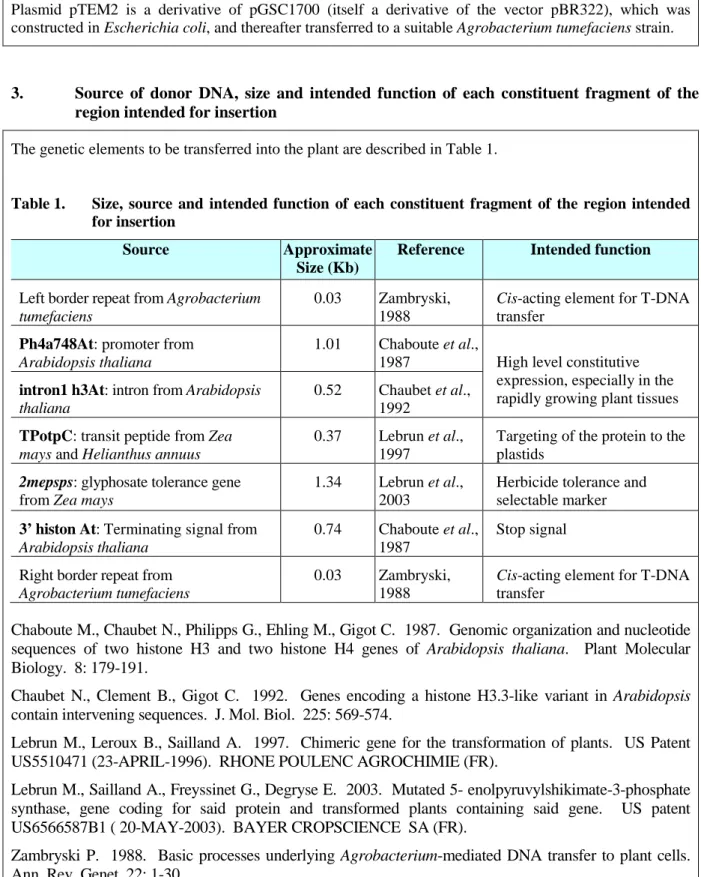
Plasmid pTEM2 is a derivative of pGSC1700 (itself a derivative of the vector pBR322), which was constructed in Escherichia coli, and thereafter transferred to a suitable Agrobacterium tumefaciens strain.
3. Source of donor DNA, size and intended function of each constituent fragment of the region intended for insertion
The genetic elements to be transferred into the plant are described in Table 1.
Table 1. Size, source and intended function of each constituent fragment of the region intended for insertion
Source Approximate
Size (Kb)
Reference Intended function
Left border repeat from Agrobacterium tumefaciens
0.03 Zambryski, 1988
Cis-acting element for T-DNA transfer
Ph4a748At: promoter from Arabidopsis thaliana
1.01 Chaboute et al.,
1987 High level constitutive expression, especially in the rapidly growing plant tissues intron1 h3At: intron from Arabidopsis
thaliana
0.52 Chaubet et al., 1992
TPotpC: transit peptide from Zea mays and Helianthus annuus
0.37 Lebrun et al., 1997
Targeting of the protein to the plastids
2mepsps: glyphosate tolerance gene from Zea mays
1.34 Lebrun et al., 2003
Herbicide tolerance and selectable marker 3’ histon At: Terminating signal from
Arabidopsis thaliana
0.74 Chaboute et al., 1987
Stop signal Right border repeat from
Agrobacterium tumefaciens
0.03 Zambryski, 1988
Cis-acting element for T-DNA transfer
Chaboute M., Chaubet N., Philipps G., Ehling M., Gigot C. 1987. Genomic organization and nucleotide sequences of two histone H3 and two histone H4 genes of Arabidopsis thaliana. Plant Molecular Biology. 8: 179-191.
Chaubet N., Clement B., Gigot C. 1992. Genes encoding a histone H3.3-like variant in Arabidopsis contain intervening sequences. J. Mol. Biol. 225: 569-574.
Lebrun M., Leroux B., Sailland A. 1997. Chimeric gene for the transformation of plants. US Patent US5510471 (23-APRIL-1996). RHONE POULENC AGROCHIMIE (FR).
Lebrun M., Sailland A., Freyssinet G., Degryse E. 2003. Mutated 5- enolpyruvylshikimate-3-phosphate synthase, gene coding for said protein and transformed plants containing said gene. US patent US6566587B1 ( 20-MAY-2003). BAYER CROPSCIENCE SA (FR).
Zambryski P. 1988. Basic processes underlying Agrobacterium-mediated DNA transfer to plant cells. Ann. Rev. Genet. 22: 1-30.
D. INFORMATION RELATING TO THE GM PLANT
1. Description of the trait(s) and characteristics which have been introduced or modified GHB614 cotton is tolerant to glyphosate herbicide. The herbicide tolerance is based upon the 2mepsps gene, which encodes a modified 5-enolpyruvyl-shikimate-3-phosphate synthase (2mEPSPS). Glyphosate is a broad-spectrum herbicide that works by inhibiting the enzyme, EPSPS, involved in the shikimic acid pathway for aromatic amino acids in plants and micro organisms. The epsps gene was originally isolated from maize (Zea mays L.). The modified 2mEPSPS protein differs from the wild type maize EPSPS enzyme by two amino acid substitutions, which results in a protein with high tolerance to glyphosate. The 2mEPSPS enzyme is not inhibited by glyphosate and the expression is sufficiently high to provide a good level of specific activity and ensure glyphosate tolerance to cotton event GHB614.
2. Information on the sequences actually inserted or deleted a) The copy number of all detectable inserts, both complete and partial
Southern blot, PCR and sequence analysis demonstrated that the glyphosate-tolerant GHB614 cotton contains one copy of the 2mepsps gene.
b) In case of deletion(s), size and function of the deleted region(s) Not relevant. No deletion occurred.
c) Chromosomal location(s) of insert(s) (nucleus, chloroplasts, mitochondria, or maintained in a non-integrated form), and methods for its determination
Based upon Southern blot and genetic segregation analysis, it was demonstrated that the DNA is integrated in a single genetic locus in the cotton nuclear genome (chromosome).
d) The organisation of the inserted genetic material at the insertion site
The characterization of the inserted sequences in GHB614 cotton confirmed the presence of one intact copy of the 2mepsps gene cassette, and also the absence of vector backbone. There are no antibiotic resistance markers present in GHB614 cotton.
3. Information on the expression of the insert
a) Information on developmental expression of the insert during the life cycle of the plant
The promoter used for the transformation of GHB614 drives a constitutive expression of the 2mepsps gene. The amount of 2mEPSPS protein in the leaves of GHB614 during the vegetative life cycle of the plant has an upper limit of approximately 15 µg/g fresh weight (0.14% of the total crude protein). The amount of 2mEPSPS protein in fuzzy seed in European conditions can be up to 38.4 µg/g fresh weight (0.016% of the total crude protein).
b) Parts of the plant where the insert is expressed
Controlled by a promoter and an intron, both of plant origin, the expression of the 2mepsps gene is mainly targeted to rapidly growing green tissues of the plant. Expression level was measured by 2mEPSPS protein specific ELISA. Tissue samples were harvested from greenhouse grown cotton, under conditions representative of cotton cultivation, at the 2-3 and 4-6 leaf stages of growth, pre-flowering and at flowering. It was found that 2mEPSPS protein ranged between 0.45 - 11.16 µg/g fresh weight of leaves, 0.99 - 4.04 µg/g fresh weight of roots, 1.58 - 1.94 µg/g fresh weight of stems, depending on the growth stage of the plant, and was 5.47 ± 0.22 µg/g fresh weight of apices, 5.35 ± 0.25 µg/g of squares and 0.16 ± 0.01 µg/g fresh weight of pollen. 2mEPSPS protein comprises a maximum of 0.39 %, 0.34 %, 0.18 %, 0.06 % and 0.001 % of the total crude protein in leaves, apices, roots and squares, stems and pollen respectively, of cotton event GHB614.
4. Information on how the GM plant differs from the recipient plant in a) Reproduction
The trait present in GHB614 cotton is herbicide tolerance and had no effect on the mode and rate of seed reproduction which was found to be the same as for conventional cotton.
b) Dissemination
Cotton can be disseminated by: pollen and seed. No differences in dissemination capacity were observed between GHB614 cotton and conventional cotton in the frame of application EFSA-GMO-NL-2008-51. In the frame of this application no differences were observed between GHB614 cotton and its conventional counterpart either. Therefore GHB614 cotton does not disseminate differently from its conventional counterpart.
c) Survivability
GHB614 cotton is equivalent to its conventional counterpart. Therefore the genetic modification has not altered the seed characteristics and the survival of GHB614 cotton.
d) Other differences
The only difference between GHB614 cotton and conventional cotton is the tolerance to the glyphosate herbicide.
5. Genetic stability of the insert and phenotypic stability of the GM plant
The trait is inherited as a single dominant gene. Stability of the inserted DNA has been demonstrated by Southern blot analysis for plants of different generations, different environmental growth conditions and from crosses into different genetic backgrounds.
The resulting Southern blots demonstrate the molecular stability of the cotton GHB614 at the genetic level over multiple generations, different locations, and in 2 distinctive genetic backgrounds.
Phenotypic stability was demonstrated by Mendelian inheritance.
6. Any change to the ability of the GM plant to transfer genetic material to other organisms
a) Plant to bacteria gene transfer
No aspect of the nature of the genetic elements used gives any indication that a transfer from GHB614 cotton to bacteria could occur.
b) Plant to plant gene transfer
Genetic transfer possible only to cotton. There is no evidence of genetic transfer and exchange under natural conditions with organisms other than those with which cotton is able to produce fertile crosses through sexual reproduction. There are no indications that the potential for successful exchange of genetic material has changed due to the genetic modification.
7. Information on any toxic, allergenic or other harmful effects on human or animal health arising from the GM food/feed
7.1 Comparative assessment Choice of the comparator
GHB614 was compared to its parent variety, Coker 312. Additional commercial varieties were included in the comparative assessment.
7.2 Production of material for comparative assessment
a) Number of locations, growing seasons, geographical spread and replicates
GHB614 cotton has been grown in 2007 and 2008 in Spain in 30 field trials. The minimum number of replicate in the field trials were 3. Three treatments were compared in each location: a) conventional counterpart grown using conventional herbicide weed control, b) GHB614 cotton grown using conventional herbicide weed control, and c) GHB614 cotton grown with glyphosate herbicide weed control.
b) The baseline used for consideration of natural variations
A range of values to be expected for each nutritional component was established from published literature, from the values for the reference counterpart variety and from commercial varieties grown in the same sites.
7.3 Selection of material and compounds for analysis
Bayer CropScience undertook a systematic review of the composition of the seed derived from GHB614. The scope of the evaluation included the seed and selected processed seed products. The components selected for compositional and nutritional analyses comprise the important nutrients of cotton, as defined by the OECD. These are proximates, amino acids and fatty acids, micronutrients such as vitamins and minerals, and anti-nutrients such as gossypol and cyclopropenoid fatty acids. The data demonstrate that GHB614 cotton has the same nutritional composition as its conventional counterpart.
7.4 Agronomic traits
Throughout the field testing history of GHB614 there were no differences observed that could be attributed to pleiotropic effects of the 2mepsps gene insertion. Neither did GHB614 cotton differ from the parent variety in agronomic or reproductive characters. The agronomic evaluations included a detailed phenotypic analysis based upon plant variety description, agronomic performance evaluations common to yield trials, pest resistance evaluations and agronomic practice evaluations.
GHB614 cotton has been demonstrated to have the same agronomic performance as conventional cotton.. 7.5 Product specification
GHB614 cotton will be introgressed in a number of varieties adapted to European climatic conditions. In addition products derived from GHB614 cotton have been shown to be equivalent to its conventional counterpart (EFSA-GMO-NL-2008-51).
Glyphosate-tolerant GHB614 cotton is distinguished from other cotton only by the tolerance to the herbicide glyphosate.
7.6 Effect of processing
GHB614 cotton will be grown using the agronomic practices of the region of production, and the seed is harvested, transported, stored and processed using the same processes as cotton currently in commerce. The genetic modification was not aimed at changing the processing method.
In addition it has been demonstrated that GHB614 cotton is compositionally equivalent to its conventional counterpart. GHb614 cotton will be processed in the same way as conventional cotton and therefore no difference in the effect of processing is expected.
7.7 Anticipated intake/extent of use
The intake of cottonseed oil and linters in the diet of the European Union is not anticipated to change with the introduction of GHB614 cotton. Cottonseed and cottonseed products derived from GHB614 cotton are not different in quality or nutritional composition from the cottonseed products now consumed. No change in the use patterns for cotton is anticipated. No potential dietary and nutritional impacts have been identified for cottonseed and cottonseed products derived from GHB614 cotton.
7.8 Toxicology
7.8.1 Safety assessment of newly expressed proteins
The 2mEPSPS protein is not toxic to mammals and does not possess any of the characteristics associated with food allergens. Findings to support this conclusion include:
- The coding sequence of the 2mepsps gene is derived from maize, a safe crop plant widely used for food and feed with little pathogenic, toxic or allergenic effects for humans and animals;
- The 2mEPSPS protein is quickly degraded and denatured in simulated gastric and intestinal fluids; - The identity of the 2mEPSPS enzyme with the wild type maize EPSPS is greater than 99.5 %. The
metabolic effects of the 2mEPSPS in plants are comparable to those of endogenous plant EPSPS enzymes except for the insensitivity to glyphosate;
- The 2mEPSPS is present at extremely low levels in GHB614 cotton;
- An acute oral toxicity study of 2mEPSPS in mice confirmed that the protein is not toxic to mice at the high dose tested of 2000 mg/kg body weight.
- A 90 day rat feeding study with GHB614 cotton did not show any adverse effect.
Supplemental information was also provided by a poultry feeding study showing no adverse effects on chickens.
7.8.2 Testing of new constituents other than proteins
No other constituent than the 2mEPSPS protein is novel and no changes in composition of cotton were discovered by chemical analysis.
7.8.3 Information on natural food and feed constituents
Plants are known to naturally produce toxins and allergens that often serve the plant as natural defence compounds against pests and pathogens. The inclusion of cottonseed products in human food or animal feed is limited due to the presence of some anti-nutrients in cottonseed that could act as toxic compounds. These anti-nutritional and toxic factors are gossypol and cyclopropenoid fatty acids (CPFA). Gossypol is present in the meal and the seed. Thus, the cottonseed is processed to reduce the content of gossypol and CPFA to acceptable levels as well as to minimise the toxicological properties of these two compounds. Cottonseed oil intended for human consumption is highly purified: the purification process substantially reduces the content of CPFA and gossypol. Therefore, cottonseed oil and meal are currently considered not to contain common food toxins or anti-nutritional compounds of concern for human and animal health, because either the product only has minor amounts of these active compounds or their levels decrease (or they even disappear) during processing.
Natural constituents of cotton have not been changed in GHB614 Cotton as it has been demonstrated in extensive compositional analysis following the OECD consensus document on “compositional considerations for new varieties of cotton: key food and feed nutrients and anti-nutrients”.
7.8.4 Testing of the whole GM food/feed
Although not scientifically requested, two zootechnical studies were conducted to supplement the safety evaluation, one with broiler chicken and another with rats. These studies demonstrate the safety and wholesomeness of GHB614 cotton as well as confirm its substantial equivalence with its conventional counterpart.
7.9 Allergenicity
7.9.1 Assessment of allergenicity of the newly expressed protein
The 2mEPSPS protein does not possess any of the characteristics associated with food allergens. The 2mEPSPS protein has no homology with any known allergens, toxins or anti nutrients. The 2mEPSPS protein has no glycosylation sites present on certain food allergens.
The 2mEPSPS protein forms only an extremely minor part of the crude protein fraction in GHB614, making it unlikely to become a food allergen, as food allergens tend to be major proteins.
7.9.2 Assessment of allergenicity of the whole GM plant or crop
Cotton (Gossypium spp.) is not considered an allergenic food crop. Therefore, no allergic reaction is expected from its current use pattern.
7.10 Nutritional assessment of GM food/feed 7.10.1 Nutritional assessment of GM food
The introduced trait in GHB614 cotton is intended for agronomic benefits. Extensive compositional analysis was undertaken, taking into consideration the OECD consensus document on “compositional considerations for new varieties of cotton: key food and feed nutrients and anti-nutrients”. No change in the nutritional composition was intended and upon extensive analysis, none was found.
The primary use of cotton is for the textile industry. However the by-products of cotton ginning find many uses in human and animal diets. Compositional equivalence was demonstrated for the food proprieties of the cottonseed oil. The key nutrients, fatty acids and vitamin E (tocopherol), which are the principal components of cottonseed oil, were investigated. The lipid profile is preserved in GHB614 cotton, and the fatty acid levels in the cottonseed oil samples are similar to those of the conventional cottonseed oil samples and within the range reported in the literature.
Cottonseed oil from GHB614 cotton has the same nutritional composition as its conventional counterpart, and values for nutritional components fall within the range of values reported for cotton commodities in commerce.
7.10.2 Nutritional assessment of GM feed
Extensive compositional analysis was undertaken, taking into consideration the OECD consensus document on “compositional considerations for new varieties of cotton: key food and feed nutrients and anti-nutrients”. The by-products of cottonseed processing (cottonseed meal and cottonseed hulls) can be used in animal feed. Cotton contains some anti-nutritional factors, most of which are concentrated in the meal fraction. The anti-nutritional compounds include gossypol and cyclopropenoid fatty acids, which are subject to heat denaturation. Cottonseed meal is typically subjected to a moist heat treatment to facilitate oil removal. This treatment denatures proteins and detoxifies the gossypol that otherwise would cause the cottonseed meal to be unsuitable as an animal feed. Anti-nutritional compounds common to cotton were best measured in toasted cottonseed meal and are well below acceptable levels, and similar to levels in conventional cotton.
In addition, the wholesomeness of GHB614 cotton has been demonstrated in two zootechnical studies with chickens and rats.
7.11 Post-market monitoring of GM food/feed
No post-market monitoring plan is required for GM food/feed produced from GHB614 cotton (European Commission decision 2011/354/EU)
8. Mechanism of interaction between the GM plant and target organisms (if applicable) GHB614 cotton expresses the 2mEPSPS protein that confers tolerance to the herbicide glyphosate therefore there are no target organisms.
9. Potential changes in the interactions of the GM plant with the biotic environment resulting from the genetic modification
9.1 Persistence and invasiveness
Since there are no populations of sexually compatible wild relatives of cotton in the EU the probability of gene transfer from cotton to wild relatives is negligible. The comparative assessment of phenotypic and agronomic characteristics demonstrated that the weediness and invasiveness potential of GHB614 cotton is no greater than conventional cotton, therefore the probability that GHB614 cotton will become more persistent in agricultural environments or more invasive of natural habitats than conventional cotton is also negligible.
9.2 Selective advantage or disadvantage
None. Agronomic performance shows no disadvantage. GHB614 cotton can be controlled with any herbicide active on cotton (except glyphosate).
9.3 Potential for gene transfer
Plant to bacteria gene flow. In order for any horizontal gene transfer to lead to a new type of micro-organism and therefore to introduce a significant impact, some of the following conditions will have to be fulfilled:
- the uptake should result in the incorporation of complete undegraded DNA
- the plant targeted genes should result in significant expression in a prokaryotic background - the expression should represent a significant increase over the background level
- the traits should convey a competitive advantage to the strain in which they are incorporated.
Sequence analysis of GHB614 cotton confirmed the insertion of one copy of the 2mepsps gene cassette only and also the absence of vector backbone sequences. GHB614 cotton does not contain either an origin of replication from plasmid pTEM2, or any sequences responsible for an enhanced frequency of recombination. Furthermore the introduced 2mepsps gene is under the control of a eukaryotic promoter, which is not functional in bacteria. Considered altogether, these facts make the possibility of gene transfer from plants of GHB614 to bacteria to be unlikely.
Plant to plant gene flow. Gene flow to other crop cotton is possible in cotton producing areas of Europe. Measurement of natural pollen movement from GHB614 cotton to cultivated cotton found the rate of out-crossing to be the same as for other cotton.
9.4 Interactions between the GM plant and target organisms
The introduced trait is herbicide tolerance to glyphosate herbicide. There are no target organisms. 9.5 Interactions of the GM plant with non-target organisms
Based on the literature review concerning EPSPS proteins and on the results of the studies on the composition of arthropod populations and soil microbial activity provided in the ERA of the present application, Bayer CropScience concludes that the cultivation of GHB614 cotton is very unlikely to have
an adverse effect on non-target organisms and in soil microorganisms under European environmental conditions
9.6 Effects on human health
EFSA already assessed the potential adverse effects of GHB614 cotton in the frame of the food and feed import application and concluded that GHB614 cotton is unlikely to have any adverse effect on human and animal health in the context of its intended uses (EFSA-GMO-NL-2008-51). All the studies presented in the present application demonstrated that GHB614 cotton is as safe as conventional cotton.
Given the exposure, the low levels of protein expression in the plant and the lack of any adverse effect in acute oral mice studies, it is very unlikely that GHB614 could have any adverse effect on human health.
9.7 Effects on animal health
The primary use of cotton is for its lint; however cotton seed and the by-products of cotton processing are often included in animal diets. The nutritional composition of GHB614 cottonseed was demonstrated to be equivalent to other conventional cotton.
In a poultry feed study no indications of toxic or adverse effects were associated with any of the feed provided. In addition a 90 day rat study has shown the absence of any adverse effect of GHB614 cotton. Cottonseed of GHB614 is therefore not anti-nutritional or toxic for animals and no effects on animal health are expected.
9.8 Effects on biogeochemical processes
Potential effects on biogeochemical processes were assessed in a study performed in Spain. Soil respiration and soil nitrogen transformation were found to be equivalent for GHb614 cotton and for tis conventional counterpart.
Adverse effects on sustainable agricultural production due to GHB614 cotton cultivation on biogeochemical processes will be negligible
9.9 Impacts of the specific cultivation, management and harvesting techniques
The commercial management regime for the GHB614 cotton varieties is the same as for conventional cotton. The only difference in GHB614 cotton production is the use of glyphosate herbicide for weed management. The use of glyphosate for weed management will extend the weed management application window for controlling economically damaging weeds.
An assessment is presented in this section of the ERA evaluating the potential risks that GHB614 cotton cultivation could have in changing the cotton cultivation, management and harvesting techniques.
GHB614 cotton cultivation could increase the adoption of minimum or conservation tillage, in addition the use of glyphosate herbicide could influence weed population in the future. Bayer CropScience will provide a user guide to each farmer purchasing GHB614 cottonseed and will promote the use of Good Agricultural Practices. If these recommendations are followed the likelihood that GHB614 cotton cultivation will result in adverse effects due to any change in the cultivation, management and harvesting techniques is very low.
10. Potential interactions with the abiotic environment
No interaction with the abiotic environment is foreseen that would differ from cotton currently cultivated and in commerce. Soil enrichment and lesser soil erosion may be a benefit of the cultivation of GHB614 cotton as farmers will be able to practice minimum tillage and conservation tillage systems.
11. Environmental monitoring plan (not if application concerns only food and feed produced from GM plants, or containing ingredients produced from GM plants and if the applicant has clearly shown that environmental exposure is absent or will be at levels or in a form that does not present a risk to other living organisms or the abiotic environment)
11.1 General (risk assessment, background information)
Following the recommendations of the EFSA Guidance for environmental risk assessment1 a monitoring plan has been developed in accordance with Annex VII of the Directive 2001/18/EC. 11.2 Interplay between environmental risk assessment and monitoring
The ERA in the present application has taken into account the seven areas of assessment outlined in the EFSA Guidance for environmental risk assessment1.
The ERA concluded that with regard to the above mentioned characteristics, there are no potential adverse effects on the receiving environment including human and animal health due to the cultivation of GHB614 cotton in the EU. Therefore, no specific risk management strategies were identified and no case-specific monitoring is necessary for GHB614 cotton cultivation. The monitoring will focus on general surveillance aiming to identify potential unintended adverse effects of GHB614 cotton on human health or the environment.
11.3 Case-specific GM plant monitoring (approach, strategy, method and analysis)
The ERA did not identify any adverse effects of GHB614 cotton cultivation on the human and animal health or the environment. Therefore according to the EFSA guidance for ERA1 and Annex VII of Directive 2001/18/EC a case-specific monitoring is not required.
11.4 General surveillance of the impact of the GM plant (approach, strategy, method and analysis) The objective of general surveillance (GS) is to identify the occurrence of unanticipated adverse effects of the viable GMO or its use on human or animal health or the environment that were not predicted in the ERA and it is not hypothesis driven.
The baseline and controls for general surveillance will be the historical knowledge and experience of conventional cotton growers before the introduction of GHB614 cotton and the acquired experience in relation with the parallel cultivation of GHB614 cotton and conventional cotton in the same or neighboring farms. The effect is defined as a result of a cause that changes the values of the baseline outside the natural variation.
The major challenge of GS will be to determine if:
• the observed effect is outside the natural variation
• the effect is adverse or not
• the adverse effect is determined or associated with the cultivation of GHB614 cotton Time-period
The general surveillance time-period is proposed for the period of consent and that is for a maximum of 10 years.
Responsibilities
Unless stated otherwise in the monitoring plan the authorization holder, placing on the market the GHB614 cotton, is responsible for putting into practice the principles and to perform the actions described in the plan and for informing the European Commission and the Member States of any unanticipated adverse effects observed during the cultivation of GHB614 cotton.
1 EFSA Panel on Genetically Modified Organisms (GMO); Guidance on the environmental risk assessment of genetically
Strategy
GS is mainly based on routine observation, documentation and evaluation of general scientific evidence that would make possible the identification of unanticipated, adverse effects caused by the release into the environment of GHB614 cotton
Methods
It is proposed to develop a GS database for the storage of collected data from the farmer’s questionnaire
A proposal for a farmers’ questionnaire is described in Appendix 3 of the present application
The applicant may consider to use the information publicly available in the annual reports of the existing networks on a case-by-case (e.g. if a potential adverse effect is reported in a subset of questionnaires in a certain region) and where the integration of these data is possible within GSD
11.5 Reporting the results of monitoring
The monitoring results will be reported on an annual basis and the reports will be delivered to the European Commission.
12. Detection and event-specific identification techniques for the GM plant
The detection method for GHB614 cotton was sent to the Community Reference Laboratory (CRL) of the Joint Research Centre of the European Commission (EC-JRC) for the purposes of experimental testing and validation in the frame of the food and feed application (EFSA-GMO-NL-2008-51). Appropriate control samples were also made available to the JRC-CRL. The method was validated on 12/09/2008 (http://gmo-crl.jrc.ec.europa.eu/statusofdoss.htm).
E. INFORMATION RELATING TO PREVIOUS RELEASES OF THE GM PLANT AND/OR DERIVED PRODUCTS
1. History of previous releases of the GM plant notified under Part B of the Directive 2001/18/EC and under Part B of Directive 90/220/EEC by the same notifier
a) Notification number
Releases of GHB614 have been notified under Part B of the Directive 2001/18/EC in Spain in 2006 (B/ES/06/10-CON),2007 (B/ES/07/28-CON; B/ES/07/40-CON), 2008 (B/ES/08/38), 2009 (B/ES/09/34), 2010 (B/ES/10/23) and 2011 (B/ES/11/11).
b) Conclusions of post-release monitoring
No persistent volunteers that could not be managed by current agricultural practice were observed.
c) Results of the release in respect to any risk to human health and the environment (submitted to the Competent Authority according to Article 10 of Directive 2001/18/EC)
No human and animal health or environmental risks were observed.
2. History of previous releases of the GM plant carried out outside the Community by the same notifier
a) Release country :
GHB614 has been field tested in the USA since 2002 under permit numbers 02-072-04n; 02-296-01n; 03-064-14n; 03-255-03n; 04-064-10n; 04-247-01n; 05-060-03n; 05-091-07n; 05-217-05-n; 05-257-04n; 06-031-01n; 06-054-02n; 06-054-03n; 06-089-03n; 06-223-106n; 044-101n; 065-110n; 07-065-111n; 07-082-101n; 07-122-102n; 07-137-101n; 07-243-106n.
GHB614 has been also field tested in Argentina in 2007 under permit number N° 281.585/06. b) Authority overseeing the release
USA: United States Department of Agriculture (USDA)
Argentina: National Advisory Committee on Agricultural Biosafety (CONABIA). c) Release site
USA: Information on the releases at www.aphis.usda.gov/ Argentina: information on the releases at
http://www.sagpya.mecon.gov.ar/new/0-0/programas/conabia/bioseguridad_agropecuaria2.php d) Aim of the release
See E.2.a., field releases for breeding and variety development, technical developments for best agronomic practices and cotton integrated pest management systems have been conducted.
e) Duration of the release
The generation time for cotton from planting to harvest is 100 to 200 days. f) Aim of post-releases monitoring
g) Duration of post-releases monitoring
One or two seasons, until no volunteers observed. h) Conclusions of post-release monitoring
Occurrence of volunteers is very infrequent and dependent upon mild conditions in the winter season. i) Results of the release in respect to any risk to human health and the environment
No risk to human health or the environment has been indicated by the field release experience.
3. Links (some of these links may be accessible only to the competent authorities of the Member States, to the Commission and to EFSA):
a) Status/process of approval
The JRC website http://gmoinfo.jrc.ec.europa.eu/gmp_browse.aspx provide publicly accessible links to up-to-date databases on the regulatory progress of notifications under Directive 2001/18/EC and Regulation (EC) No 1829/2003.
b) Assessment Report of the Competent Authority (Directive 2001/18/EC)
A notification for GHB614 cotton according to Directive 2001/18/EC has not been submitted by Bayer CropScience.
c) EFSA opinion
EFSA issued a positive opinion on GHB614 cotton for food and feed import on March 2009. Scientific Opinion of the Panel on Genetically Modified Organisms on an application (Reference EFSA-GMO-NL-2008-51) for the placing on the market of glyphosate tolerant genetically modified cotton GHB614, for food and feed uses, import and processing under Regulation (EC) No 1829/2003 from Bayer CropScience. The EFSA Journal (2009) 985, 1-24..
d) Commission Register (Commission Decision 2004/204/EC) Not yet available.
e) Molecular Register of the Community Reference Laboratory/Joint Research Centre Information on detection protocols is available at
http://gmo-crl.jrc.ec.europa.eu/summaries/GHB614_validated_Method.pdf f) Biosafety Clearing-House (Council Decision 2002/628/EC
http://bch.biodiv.org/
g) Summary Notification Information Format (SNIF) (Council Decision 2002/812/EC) http://gmoinfo.jrc.ec.europa.eu/
Reference notifications B/ES/06/10-CON; B/ES/07/28-CON; B/ES/07/40-CON, B/ES/08/38, B/ES/09/34 and B/ES/10/23.