Theses & Dissertations Boston University Theses & Dissertations
2019
Residential segregation and school
segregation: a comparative case
study of educational choice
programs
https://hdl.handle.net/2144/39607
Thesis
RESIDENTIAL SEGREGATION AND SCHOOL SEGREGATION: A COMPARATIVE CASE STUDY OF EDUCATIONAL CHOICE PROGRAMS
by
MARIAH ALEXANDER B.A., Boston University, 2019
Submitted in partial fulfillment of the requirements for the degree of
Master of Arts 2019
© 2019 by
MARIAH TAKU ALEXANDER All rights reserved
First Reader
Katherine Levine Einstein, Ph.D. Assistant Professor of Political Science
Second Reader
Dino P. Christenson, Ph.D.
iv
MARIAH ALEXANDER
ABSTRACT
Research has thoroughly documented reciprocal patterns of residential and school segregation. School segregation remains at high levels around the country, despite
explicit desegregation policies. Due to the embedded nature of residential and school segregation, policies characterized by limited intervention have fallen short at alleviating either. This study departs from previous research, as it looks closely into four
metropolitan area case studies, analyzing the historical path that led each metropolitan area to their current school choice program, the intent behind each program, and the reasons programs may differ. My research analyzes whether school choice programs have different impacts on school segregation in the context of historical desegregation and surrounding residential segregation, in order to identify whether school choice programs can help to alleviate school segregation. This study finds that metropolitan area school segregation tends to be higher than the surrounding metropolitan residential segregation. Cities with historical desegregation battles showed resistance to implementing
desegregation policies in favor of more open voluntary programs. Voluntary school choice programs rarely alleviated and often exacerbated segregation in schools. White students disproportionately attended schools outside of the public school system, while minority students remained in traditional public or charter schools. School choice programs have been limited in their impact due to restrictions on race-based admissions
v segregation remains high and relatively unchecked.
vi
INTRODUCTION ... 1
RESEARCH QUESTION AND HYPOTHESIS ... 7
LITERATURE REVIEW ... 12
CONTRIBUTION ... 21
METHODS AND EXPECTED FINDINGS ... 25
DATA AND ANALYSIS ... 33
LIMITATIONS ... 97
CONCLUSION ... 100
BIBLIOGRAPHY ... 109
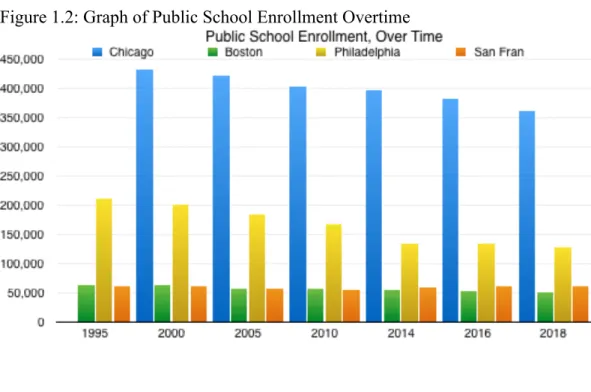
FIGURE 1.1- FIGURE 1.4 ... 69 FIGURE 2.1- FIGURE 2.4 ... 71 FIGURE 3.1- FIGURE 3.2 ... 74 FIGURE 4.1- FIGURE 4.2 ... 76 FIGURE 5.1- FIGURE 5.2 ... 77 FIGURE 6.1- FIGURE 6.2 ... 78 FIGURE 7.1- FIGURE 7.2 ... 79 FIGURE 8.1- FIGURE 8.2 ... 80 FIGURE 9 ... 81 FIGURE 10.1- FIGURE 10.2 ... 83 vii
Introduction
Residential segregation and segregation within schools are highly charged and interconnected problems that have plagued the United States since integration efforts first began. Desegregation has been a policy goal of the federal and state governments across the United States. Explicit and forced integration policies, such as busing, indicate attempts by the federal government to integrate schools that had once been strictly segregated. In the years since desegregation, court ordered policies and judicial oversight of desegregation has ended.
Explicit actions from federal and state governments as well as policy implementation at the local level have led to deeply rooted cycles of residential segregation in the United States. Tangentially, self-selection by families into
communities has exacerbated and contributed to residential segregation, along with these policy decisions. Residential segregation is defined for the purpose of this paper as the level to which whites reside in different areas than minorities (also referred to as
neighborhood segregation and spatial segregation). Historical discrimination, particularly in the implementation of policies at the local levels, has led to perpetuating cycles of segregation across residential areas. Unequal application of loans from the Federal Housing Administration, redlining of neighborhoods through the Home Owners’ Loan Corporation, and explicit decisions of homeowners and real estate agents have kept minority families out of certain neighborhoods (Orfield, 1980). These types of policies allowed and encouraged white flight to the suburbs, leading to a disproportionate amount of minority and low-income individuals in inner cities (Armor, 1980). As a result there
have been limited levels of racial integration into these majority white and high-income neighborhoods (Spader et al, 2017). These policies have perpetuated cycles of poverty by stifling home ownership of minorities (particularly blacks) (Orfield, 1980). The homes that black and minority populations have been given access to home ownership have historically been in lower valued neighborhoods, regardless of income, thereby furthering cycles of poverty and limiting mobility economically (Orfield, 1980). Additionally, zoning choices, regulations of affordable housing, and continued discrimination continue to perpetuate segregation across residential areas (Spader et al, 2017). Minority families thus have become deliberately spatially fenced off in certain neighborhoods that are lower valued and less affluent than white neighborhoods.
The separation of minority and white families spatially has implications that reach far into individual lives and trajectories. Education is particularly impacted by residential segregation. School segregation and residential segregation have a cyclical relationship— families with resources often select into communities on the basis of a number of
variables (affluence of neighborhood, neighborhood schools, etc.). Minority families and families without resources tend to live spatially separate from white and affluent families (Spader et al., 2017). Thus, neighborhood schools often reflect the disparate composition of surrounding residential areas. Moreover, families with resources are able to choose to send their children to schools other than public schools—including private, parochial, and magnet or exam schools. In more recent years, many cities have also begun to experience black flight from the public school system, as public schools in cities have increasingly served lower income and minority students. As a result, public schools within cities are
becoming “not simply black institutions, but black lower class institutions” (Metcalf, 1983). School segregation is often higher than surrounding residential segregation, indicating the choices of affluent families and particularly white students to leave the public school system.
Though residential segregation is problematic in itself, the focus of this paper will be perpetuating cycles of educational inequality, driven in part by residential segregation. Residential segregation has drastic impacts on educational trajectories and disparate impacts on minority children in comparison with white children. Nationally, in 2014-2015, 81% of revenue for public schools comes from local property taxes (varies by state); thus, the surrounding values of properties and affluence of neighborhoods have impacts on the quality of schools in those neighborhoods (National Center for Education Statistics, 2017). There are also no requirements for funding to be the same across
districts, leading funding inequities to be driven by segregation across districts (see San
Antonio Independent School District v. Rodriguez). Funding will be lower in districts that are majority-minority with less affluent populations in comparison with majority-white districts (often suburbs) containing more affluent populations. In contrast, residential segregation will impact the composition of schools, particularly with policies in which preference is given for neighborhood assignment. Often, when neighborhoods are highly segregated, the district is highly segregated as well as the two are interconnected.
School choice programs have a reciprocal and interconnected relationship with residential and school segregation. Particularly during the era of forced integration, school choice policies often had implications particularly for white and affluent families.
Court ordered and forced integration policies led to families, particularly white families, fleeing certain areas often in favor of areas that were more “favorable” (i.e., white and affluent areas) (Armor, 1980). For instance, as busing policies were implemented, many white students fled the respective school districts as students of color began to enroll in white schools in white neighborhoods (Armor, 1980). Thus, it is important to recognize that school choice programs can also lead to white students leaving the school district. There has been a well-documented pattern of white flight from districts or schools undergoing influxes of minority students (Armor, 1980; Orfield, 1980; Pearce, 1985). Families, particularly those with resources, often select neighborhoods or districts to reside in based on the school choice procedure and the schools offered in the area. This has important impacts on the surrounding levels residential segregation, because as families select communities based on school choice, residential areas will be impacted by these choices.
Despite the fact that de jure segregation in schools ended with Brown v. Board in
1954, public schools re-segregated due to losses in white enrollment. Particularly areas with high minority populations, white families with resources often choose to relocate or send their children to schools outside of the public school system—“the most serious white flight effects occur in districts having substantial populations of minorities, which require more extensive mandatory reassignment to accomplish desegregation, and in central-city districts with available suburbs, which offer the opportunity for convenient residential relocation” (Armor, 1980). In 1977, the court ruled that even if no de jure segregation existed in schools, de facto segregation must still be dismantled when a
system existed that “intentionally created and maintained the segregated character of the
core city schools” (see Keyes v. School District No. 1, Denver). This ability to mitigate
school segregation was limited in the 2007 Supreme Court ruling in Parents Involved in
Community Schools v. Seattle School District No. 1, whichruled that racial assignment was unconstitutional. In other words, schools could not use race as a factor in admissions. Demographic data could be used in determining attendance zones or locations for new schools (Greenhouse, 2007). Despite the ability of districts to use demographic data to provide some alleviation to segregation, many school districts are actually drawn to exacerbate segregation (Greenhouse, 2007).
My research looks into whether school choice programs can alleviate some of the symptoms of residential segregation. It is imperative to recognize the reciprocal
relationship between residential and school segregation. It is also imperative to
acknowledge that school choice programs are not implemented in a vacuum—they are implemented purposefully. Politicians, school boards, and local constituents drive intent in school choice. School choice programs often reflect the desires of those active in decision-making processes in the area. School choice programs do not always arise with goals of integration, and more often than not reflect a desire to maintain the status quo. However, for the purpose of this paper, I will be tracing the historical decision-making that led to the current school choice policy. I will look specifically at how school choice programs impacted school segregation in the context of the surrounding residential segregation. Through case studies, I will draw conclusions about the impact of school choice programs on school segregation.
Through a case study of four metropolitan areas, I find evidence that school choice programs are extremely limited by individual choice and Supreme Court rulings. Individual choices drive whether or not individuals stay in the public education system and therefore comply with school choice programs. Supreme Court rulings limiting inter-district solutions and the use of race in school assignment have additionally proven to be roadblocks to true integration in the public school system. Voluntary school choice programs were largely unsuccessful once race-based assignment was discontinued. Metropolitan areas with historically contentious desegregation battles mustered weaker attempts at desegregation in schools and the voluntary choice programs fell short. White families in metropolitan areas attended schools outside of the public system in higher proportions than public schools. School segregation in all metropolitan areas was
consistently higher than residential segregation. In all, school choice programs were most effective when race could be used in assigning students, or when reassignment policies were mandatory in public schools. My research allows for further expansion into the viability of other school choice programs and reinvestment in public schools.
Research Question
Previous literature has documented reciprocal cycles of residential segregation and school segregation, in which minority families and white families remain largely separate in residential areas and schools. The connection between school segregation and residential segregation has been documented through literature, including those
aforementioned. Neighborhood schools often reflect the segregation of surrounding residential areas. Disproportionate amounts of white students have fled the public school system nationally. Research has shown that though expanded school choice programs have the potential to increase diversity within schools by expanding opportunities for minority and less affluent families, increased school choice often increases segregation within schools.
School choice mechanisms describe K-12 education options, in terms of the programs that offer alternatives to public schools. The most common school choice programs are enrollment laws, scholarship tax credit programs, school voucher programs, open enrollment programs, charter schools, and magnet schools. Public schools are typically assigned by geographic location. Thus, in areas with high residential
segregation, public schools often reflect segregation in terms of the racial breakdown of their populations.
In order to further this research, I will look into whether educational choice mechanisms can help to alleviate segregation within school districts. In areas with high levels of residential segregation, I will analyze the educational choice programs that are employed. More specifically, do school districts with higher rates of residential
segregation have more open choice programs (in which it is easier to enroll children in any school including private, public, and charter—such as open enrollment) or do they tend to have more restricted school choice aimed at alleviating some school segregation (such as voucher programs or random assignment)? Do these choice mechanisms help to alleviate segregation that persists in schools within districts due to residential
segregation? What is the resulting level of school segregation comparatively to
residential segregation? I will compare residential segregation to school segregation in order to see the patterns of the two and their reciprocal relationship. Furthermore, I will look at the historical pathway in each city district that led to the current school choice program. This will also provide important insight towards evaluating whether or not school choice programs can provide any mediating effect in school segregation.
In the era since the court ended its policies of integration oversight and forced integration, I will look into contemporary attempts that cities have made towards
integration. Since these school choice programs are limited from programs such as forced busing, these school choice programs may not have as far a reach as prior ones. Affluent families still often choose areas to live in based in part on the educational opportunities, which will shape levels of surrounding residential segregation. Though there is a
reciprocal relationship between housing patterns and school choice programs, I will be specifically looking at the contemporary era in how cities chose to construct their choice mechanisms and the results on mitigations or exacerbations of segregation within
schools. I will trace historically how each city arrived at its current school choice program and what the impacts over time on school segregation were.
In districts that contain schools with large white populations or large minority populations, educational choice programs that incentivize more diversity within district schools may be prioritized. Broader choice mechanisms enabling more free enrollment in any school across districts may not have the resulting effect of alleviating segregation within schools, as has been well documented by white flight from public schools. Though broader school choice programs may represent an effort by the district to alleviate
segregation in schools, expanded school choice has been shown to increase the segregation in schools, particularly if educational choice does not include specific stipulations or restrictions aimed at increasing diversity. Districts that have different choice mechanisms may also be particularly encouraging for white and affluent
populations to leave public schools in favor of more limited private schools. Though the school choice program may give families a wide selection of schools, students without access to resources or transportation may not be able to go to the same schools that white students do (less affluent and minority students may be more highly affected).
School choice mechanisms arise for reasons. I will look into the origins of each school mechanism, as pertains to their specific goals. Particularly in areas with high residential segregation, I will look into whether these school choice programs arose with reference to mitigating the effects of residential segregation or providing equal
educational opportunities. Additionally, I will look into how these school choice
programs arose—in terms of whether there was a demand for change and what caused the contemporary system to be implemented.
Hypothesis
Since literature has documented the link between school segregation and residential segregation, it would be imperative for school districts with high residential segregation to have programs that attempt to mediate these effects within schools. Within areas that have high rates of residential segregation, I would expect broader school choice mechanisms in order to encourage diversity and equal opportunity—but only if the metropolitan area values desegregation in schools. Many areas exhibit a preference for the status quo. Thus, I would expect areas with more historically hostile desegregation battles to have less explicit goals towards desegregation and perhaps fewer reforms throughout the years. The current basis of literature has started to show the unequal and often-detrimental effects of completely open choice, however, many proponents of school choice argue that more open policies remain the best at creating diversity and equality of opportunity. Thus, even within school districts with goals of desegregation, I would expect more open choice to try to mitigate racial segregation within public schools as well as improve enrollment levels across racial groups within public schools. I would expect school districts that provide more open school choice programs, but with stipulations specifically helping to mitigate the perpetuation of residential segregation (such as limited choice programs or transportation options) to be more effective at mitigating segregation in schools. I would expect districts that provide completely open school choice policies without limitations to be less effective at mitigating school segregation, regardless of the intended effect. I would expect choice programs that are completely open to maintain or exacerbate the residential segregation within schools. Due
to past research, when parents can enroll their students in any school they choose, students of different races will be disproportionately drawn to different types of schools and different areas. Thus, if districts do not make a conscious and well-thought out effort (driven by research), the effect of residential segregation will likely be maintained. School districts must balance choice with desegregation goals, such as incentivizing or assigning students from different racial and socioeconomic groups to schools that would not necessarily be their zoned neighborhood school. I would also expect white students to disproportionately secede from educational choice programs through entrance into
private, parochial, or other selective schools. I would expect that in areas with goals of desegregation, school segregation would be lower overall than areas without those same goals and with more contentious historical desegregation battles.
Literature Review
Literature has established the reciprocal relationship between residential segregation and school segregation. Due to historical discriminatory policies and
implementation, residential segregation has remained an extremely pervasive and deeply rooted problem through contemporary times. School segregation, similarly, has been a
politically charged issue that has perpetuated since Brown v. Board. School and
residential segregation are intertwined, thus, an examination of school segregation is most effective in conjunction with residential segregation.
In the years since mandatory desegregation policies and judicial oversight has ended, school segregation remains at very high levels—often in the context of residential segregation (Frankenberg, 2013; Reardon et al, 2012; Reardon & Yun, 2005). In 2000, school segregation nationally between blacks and whites was lower than neighborhood residential segregation nationally, due to explicit integration efforts. However, in metropolitan areas between 2000 and 2010 as many desegregation efforts ended, the “segregation of Black and White youths in schools and neighborhoods [was] nearly identical in 2010” (Frankenberg 2013). Fewer whites are enrolled in public schools nationally than in the past, dropping dramatically between 2000 and 2010, particularly in minority schools (Frankenberg 2013; Fiel 2013). School desegregation policies (such as magnet, charter schools, transfers, and busing) indicate attempts to break the link between housing and schooling patterns through diversifying schools (Frankenberg 2013).
Supreme Court decisions have limited solutions to school segregation; thus, particularly in districts and metropolitan areas in which residential segregation is high, it is increasingly difficult to integrate at a meaningful level. The Supreme Court has limited inter-district solutions in terms of per-pupil expenditures, establishing that there is no fundamental right to education; therefore, there is no requirement for “absolute equality
or precisely equal advantages” (see San Antonio Independent School District v.
Rodriguez). Another major roadblock to school choice efficacy has been limitations on the use of race as a basis for admission and assignment to schools with the goal of racial
balancing (see Parents Involved in Community Schools v. Seattle School District).
School zones across districts capture differing racial and economic groups, often reflecting inequities from segregated neighborhoods. Students’ zoned schools generally reflect a largely similar population to the surrounding residential area. School districts often encompass both areas with less affluent, minority populations as well as areas with more affluent, white populations. School choice programs are the programs that districts use in assigning their students to public schools, including voucher programs, magnet schools, charter schools, and intra- and inter-district transfer plans. School choice programs provide an opportunity to mitigate segregation in public schools by allowing students to attend schools aside from their zoned neighborhood public school. School choice programs employed within residentially segregated districts thus impact school compositions.
Literature has established that individuals with lesser educational opportunities will have fewer opportunities to break out of cycles of poverty, more difficulty achieving
higher levels of education, and fewer job opportunities. Concentrations of disadvantaged students (racially and socioeconomically) have greater impact on achievement of
individual’s later in life (Borman & Dowling, 2010; Rumberger & Palardy, 2005). Disadvantaged students are more likely to live in segregated neighborhoods with higher populations of minority and low-income families; therefore, disadvantaged students are more likely to be zoned to attend lower-performing schools (Orfield et al., 2014a). This highlights the drastic implications of residential segregation—since school segregation is tied to residential segregation, areas with high levels of residential segregation will likely have high levels of school segregation. If state and local policies do not address school segregation, high-minority and high-poverty schools (concentrated in high-minority and high-poverty areas) will limit student’s educational outcomes, more than individual-level characteristics.
Proponents of expanded school choice argue that allowing students and parents to choose from an expanded pool of schools will lead to more diversity racially and
economically. This theory, the liberation model, asserts that expanded choice in the school marketplace will lead to more efficient and better performing schools (Phillips, Larsen, Hausmen 2014; Betts 2005). Affluent, and often white, families have the opportunity to exercise school choice regardless of school choice policies through
neighborhood choice as well as placing their children in private schools (Johnson, 2006). Expanded choice has been argued to advance equality of opportunity as minority and less advantaged families lacking natural opportunities of choice (i.e., the resources to send their children to private schools or move neighborhoods for educational opportunities)
will no longer be constrained by their neighborhoods (Schneider et al., 2000; Betts, 2005; Friedman, 1955). Instead, these families will benefit the most through equal access to more integrated or higher performing schools as more affluent families (Chubb & Moe, 1990; Frankenberg, Siegel-Hawley, & Wang, 2011; Lubienski, Gulosino, & Weitzel, 2009). Minority and less affluent families would have an avenue to leave
underperforming neighborhood schools, mitigating the perpetuation of neighborhood segregation racially and economically in neighborhood public schools (The Friedman Foundation for School Choice, 2012; Archbald, 2004; Bifulco, Ladd, & Ross, 2009). School choice proponents argue that school choice programs offer an avenue to address educational inequities without addressing residential segregation. Educational choice, in theory, could create more diversity and educational opportunity (particularly for
disadvantaged students) than neighborhood schools could provide.
Many studies find that expanded choice does not have the mitigating impacts on segregation within schools asserted under the liberation theory. The conditions that would produce market efficiency in the educational marketplace are rarely ever realistic for a school district or individuals. Literature has demonstrated that expanded school choice programs generally increase the effects of residential segregation racially and
economically (Bifulco et al., 2009; Fiel, 2013; Ladd, Clotfelter, & Holbein, 2015; Frankenberg, Siegel-Hawley, & Wang, 2011; Frankenberg, Siegel-Hawley, & Wang, 2009; Saporito and Sohoni, 2006, 2007). Minority and less affluent families seeking higher achieving schools or alternatives to their zoned schools will have disproportionate constraints placed upon them by their residential area—in terms of access to information
and transportation, time, financial resources and affluence, and social networks. Families do not have equal ability to access information about different school options and quality. Minority and less affluent families face barriers in enrolling their students in schools that may be more difficult to gain entrance to or that require transportation (Frankenberg 2009). Minority and less affluent families participate in school choice at lower levels and disproportionately remain in neighborhood-zoned schools—due in part to unequal barriers to exercising choice (Phillips, Larsen, Hausmen, 2014). Findings also suggest that white, affluent families exercise choice more often and move away from their neighborhood schools, resulting in furthering the racial and economic stratification among schools that preexisted due to neighborhood segregation (Holme, 2002; Saporito and Sohoni 2006, 2007; Goyette, 2008; Bifulco, Ladd, and Ross, 2009).
Expanded choice often leads parents to choose schools that are close to home and have a more homogenous, strong representation of their own race (Glazerman & Dotter, 2016). About 20% of racial isolation in schools can be attributed to school choice (Fiel, 2013). White families leave economically and racially diverse public schools to more affluent and white schools. White and affluent families similarly participated at the lowest rate in school choice when their neighborhood schools had lower rates of poverty and less minority students (Phillips, Larsen, Hausmen, 2014). Not only are white families more likely to flee racially and economically diverse schools in favor of more segregated schools with a higher population of affluent, white students, but minority students also move from more diverse schools to schools with higher populations of minority students (Bifulco and Ladd, 2007; Booker et al., 2005; Garcia, 2007). Charter schools exacerbate
segregation in public schools because a disproportionate amount of low-income and non-white students attend charter schools in urban areas (Miron, et al., 2010). Research shows that the average black charter school is almost 75% black and proportionately less white students attend charter schools (Frankenberg, Siegel-Hawley, & Wang, 2010). Families with more resources (typically white, affluent families) can also afford to send their children to private schools that tend to be higher in performance as well as
disproportionately white and affluent (Fiel, 2013). Research has demonstrated that compared to white non-parents, white parents are more likely to “move to specific districts for predominantly white schools” (Owens, 2017). Transportation and time resources impact the ability of families to send their children to certain types of schools, contributing to the presence of majority non-white charter schools and the overall trend of white flight from public education. Thus, in metropolitan areas, expanded school choice including private schools and charter schools can exacerbate the residential segregation present within and across districts.
This pattern of white avoidance of schools with high minority populations can be found in all types of schools—private, charter, public, and magnet schools. Private school enrollment contributes to increased racial segregation in schools and was highly linked to residential segregation (Reardon, 2011; Saporito, 2009). White students have a higher propensity to exercise choice and leave neighborhood schools through enrolling in magnet or private schools when they reside in neighborhoods with higher black
populations, even when other possible trends are accounted for (Saporito, 2009; Bifulco et al., 2009; Lankford & Wyckoff, 2006; Saporito, 2003). The relationship of enrollment
and racial composition does not hold for minority students. The typical black student is now in a school where “almost two out of every three classmates (64%) are low income, which is nearly double the level in schools of the typical white or Asian student (37% and 39%, respectively)” (Center for Public Education 2017). Charter schools proliferated as an attempt to create more diverse schools; however, studies have shown that charter schools consistently draw predominantly minority students from public schools, leading to increased segregation (Bifulco and Ladd, 2007; Booker et al., 2005; Garcia, 2007). Minority students that choose charter schools tend to move to schools with more racial segregation than their neighborhood public schools, whereas white students tended to attend charter schools with less minority students and disadvantaged students (Kotok et al, 2017). In charter schools, “segregation levels for black students are outpacing steadily increasing public school segregation” (Frankenberg, 2009). Thus, the movement of both minority and white students increase segregation, furthering entrenched patterns of spatial segregation that preexist in neighborhood-zoned schools.
Race may be a proxy for school quality, explaining how the composition of locally zoned schools partially drives participation in school choice. The actual quality of the school does not drive participation in school choice; however, higher diversity within schools is correlated with “higher teacher-student ratios, lower quality teachers,
decreased safety, and lower student achievement” (Lareau & Goyette, 2014). Even accounting for school quality (academic achievement, discipline records, safety distance from home, etc.), racial compositions drive school choice (Saporito, 2003). White families tend to exercise school choice and select schools based off their racial
composition—avoiding schools with higher rates of minority (particularly black) students (Saporito, 2003). Findings suggest that students zoned to lower performing schools did not participate more in school choice than those zoned to higher performing schools. Particularly in diverse areas, school choice increases school segregation regardless of school quality (Phillips, Larsen, Hausmen 2014; Saporito, 2003). Racially and
economically diverse areas experienced increased levels of school segregation with school choice, and schools became less affluent and less white (Phillips, Larsen, Hausmen, 2014). In contrast, school choices of minority families is not linked to racial composition (Saporito, 2003). Choices of white, affluent students lead to increased economic and racial segregation in public schools. Since advantaged families (white and affluent) have the ability to exercise choice in neighborhood and school choices,
segregationist tendencies are perpetuated into schools. Furthermore, segregation on the basis of race and class often increases with school choice. Highly segregated
neighborhood schools or private schools are often more appealing to white and affluent families who desire more homogenous environments. White families that remain in racially balanced schools (whether charter, magnet, or public) do so because they prioritize diversity; though white flight from diverse schools is thoroughly documented trend.
Studies have shown that the liberation model and proponents of school choice have fallen short in estimates of the equality of participation in school choice and the resulting stratification of populations. Disadvantaged families do not have increased access to more advantaged schools. Instead, school choice has increasingly stratified
school populations and left less affluent, minority families in schools segregated from their more affluent, white counterparts. School choice likely will contribute to increased segregation in schools, unless policies are particularly designed to encourage racial balance in schools. Without explicit policies counteracting residential segregation
reflected in schools, minority and low-income families often struggle to cope with school choice. School choice is typically complicated at face value, and for families facing constraints it becomes even more difficult. Only policies that specifically assist disadvantaged families (with measures such as “extensive outreach and free
transportation”) will help to mitigate inequities in educational opportunities perpetuated by residential segregation (Frankenberg 2009).
This literature provides a base to look into school choice mechanisms. Since residential segregation is a politically charged and difficult problem to address, it is imperative to look into other ways in which districts can alleviate educational segregation driven by residential segregation. If districts have different choice mechanisms resulting in school segregation reflecting surrounding residential segregation to different degrees, then perhaps school choice programs can help to mitigate school segregation.
Contribution
Previous literature has looked into the impact of school choice programs in terms of success in alleviating segregation within schools. Due to the limited ability of inter-district funding solutions for public schools and limitations of using race as a basis for
admission (resulting from Supreme Court cases such as Milliken v. Bradley and Parents
Involved in Community Schools v. Seattle School District No.1), the programs states choose will have an impact on the resulting segregation and composition of public schools within different districts across the state. Though addressing residential
segregation would help to alleviate the resulting segregation in public schools, due to its deeply rooted nature and the inability of the government to force populations to integrate residentially, residential segregation is difficult to address.
Previous literature has looked into the impacts of various school choice programs, such as transfer programs, and the impacts these have had on the compositions of public schools. For instance, research has looked into the impacts of the expansion of charter schools and the composition of these schools in cities, including higher percentages of minority students attending charters, respectively. Previous literature has also looked at the impacts of private and choice or exam schools on exacerbating segregation with schools. Literature has furthermore examined how drawing school zones can impact the composition of neighborhood schools through either exacerbating existing segregation residentially or mitigating it, depending on how zones are drawn. Research has also thoroughly developed the propensity of white and affluent students to flee the public schools system.
My research will further the field through a four city comparison case study. These case studies explore whether districts in cities with different levels of residential segregation construct their educational choices differently. More specifically, whether these different choice mechanisms can alleviate the symptoms of residential segregation that perpetuates through public schooling. If districts with higher levels of residential segregation or similar levels of residential segregation have certain school choice programs that result in lower levels of segregation in schools, then perhaps educational choice programs can help alleviate patterns of residential segregation within schools. Case studies provide the most explanatory information for this type of research question. School programs and residential areas cannot mandate compliance; meaning, individual choices will determine segregation in both schools and residential areas. Individuals can choose to live in certain areas as well as leave the public school systems. Therefore, case studies that explore in depth compliance with school programs will allow for a more complete picture of the impact of these programs.
Past research has looked at whether school choice programs exacerbate existing residential segregation patterns within schools. I will contribute by looking into the process by which school choice mechanisms are chosen—a deliberate choice that has drastic impacts on the composition and success of schools. I will also contribute by tracing the development of such a program, its immediate impact on segregation in schools, and its impact on school segregation down the line. Many studies look at the school choice program as the starting point, while I will look at the development of a school choice program. Previous literature looks either closely at particular case studies
(by individual school) or at more macro-level impacts of choice mechanisms, without disaggregating types of choice mechanisms. Much of the previous literature has looked at the impact of school choice programs in specific districts. My research departs from previous literature by looking closely at particular metropolitan areas, encompassing the entire metropolitan area in order to see the whole picture of residential segregation and neighborhood schools. My research will look at the impacts at a metropolitan level, which allows for an extensive analysis of the impacts that a district-level policy can have on a metropolitan area. This will also help account for white flight and non-compliance. Each case study will help illuminate the process and intent behind school choice
programs. Since school choice programs do not arise in a vacuum and are chosen deliberately, a case study provides the most thorough approach. Case studies provide quantitative data exploring levels of segregation (residentially and in schools),
enrollment, and public school characteristics, and also qualitative data that will help paint a picture of the larger processes leading to individual school choice programs.
I will explicitly explore the path of each city to its current school choice program, with a broader look into the impacts at the metropolitan area. Though school choice programs are employed at the district level, impacts are seen at the metropolitan level. Due to spillover effects, school choice programs will have implications for individual selection in terms of where to live and what type of schools to attend. By looking at metropolitan level segregation, my research is able to more thoroughly show the path to school choice programs and the respective ability to mitigate segregation. My research traces the impacts of the various programs in the context of preexisting levels of
residential segregation, historical desegregation, and the intent with which these programs were chosen.
Methods and Expected Findings
I compared four case studies of metropolitan areas around the United States: Boston, San Francisco, Chicago, and Philadelphia. For the purpose of my research, case studies were the best method. Case studies allow a purposeful tracing of the path of how each particular school choice program came into existence and what their impacts have been. A large-scale quantitative research project may provide more data points for inferences, however, would not take into account the external factors—such as the historical path and intent behind each program. Through case studies, each path will not be treated as the same. Instead the processes that led to each individual choice program will be taken into account. Large-scale quantitative analyses would not take into account whether people opted out or did not participate in each choice program (through leaving the district or attending other schools). The reasoning behind each programs success or failure will not be understood in broad quantitative analysis. In smaller, in-depth case studies, the reason each plan may have failed or succeeded will be more closely examined. Tracing historical desegregation, the political processes that lead to each program, compliance with programs, and flight from the public school system all reflect deliberate choices to understand more deeply the rationale behind each program and its success or failure. Thus, through my research, I will more thoroughly understand the nuance behind each programs success or failure through in depth understandings of the intent and rationale behind each respective program.
First, I analyzed school choice mechanisms that each metropolitan area chose to use in the assignment of students and how specific programs arose. Second, I evaluated
data on the numerical breakdowns of public schools, private schools, charter schools, and magnet schools. I looked at the percentages of minority students in each type of school in each city as well as the total enrollment. Third, I analyzed dissimilarity indices.
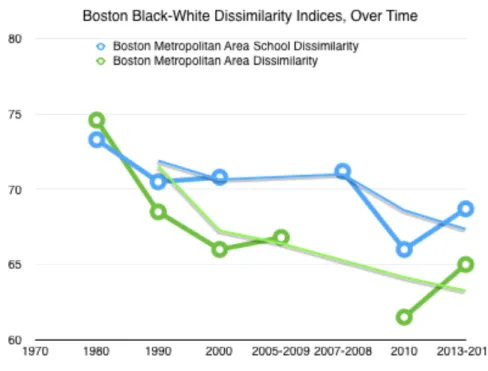
Dissimilarity indices are a commonly used description of segregation that measures the “percentage of a group’s population that would have to change residence for each
neighborhood to have the same percentage of that group as the metropolitan area overall” (ranges from complete integration at 0 to complete segregation at 100) (Census Bureau, Measures of Residential Segregation). In each specific metropolitan area, I looked at the change in segregation over time, measured by dissimilarity indices. Then, I looked at the metropolitan area school dissimilarity indices overtime. The dissimilarity indices of school districts provide the percentage of students that would need to change schools in order for the racial composition of each school to mirror the racial composition of all students in the metropolitan area. Fourth, I compared the timeframe of school choice programs with the school dissimilarity indices overtime. Specifically, when school choice programs were implemented, I examined how metropolitan area school segregation changed (decreased or increased) and the extent of change, thus evaluating the impact of a specific program. In order to look at the impact of the specific school choice program, I looked at levels of metropolitan school segregation in the context and in relation to metropolitan residential segregation. More specifically, how residential segregation changed; and within that context, how school dissimilarity changed in the presence of the school choice programs. In other words, as residential segregation increased or decreased overtime, I evaluated whether school dissimilarity followed the same pattern. Finally, I
analyzed how the number and composition of private, public, magnet, and charter schools may have impacted school choice program implementation and patterns of school
segregation.
Boston and San Francisco are slightly smaller cities in terms of populations (4,836,531 and 4,727,357, respectively), whereas Chicago and Philadelphia have larger populations (9,533,895 and 6,096,120, respectively). In terms of people per square mile, all four cities are comparable. San Francisco metropolitan area has 1,913.6 people per square mile, Boston has 1,387.5, Chicago has 1,324.9, and Philadelphia has 1,324.5. San Francisco and Boston have similar metropolitan area white-black dissimilarity indices (61.5 and 59.3, respectively) and Chicago and Philadelphia have similar metropolitan area white-black dissimilarity indices (75.9 and 73.7, respectively). These characteristics make the cities comparable in terms of looking at historical pathways that have led to certain choice mechanisms.
I focused on the metropolitan areas of these cities, because due to historical policies and white flight, white families disproportionately reside in the suburbs. Thus, the effects of school choice policies on residential segregation and the degree of
residential segregation will be more evident at the metropolitan level. Cities may be more dramatically impacted by segregation, as inner cities themselves tend to be highly
segregated. School choice programs are implemented at the district level, thus, I focused on district level policies. However, I focused on the impact of these programs at the metropolitan areas. School choice programs have implications for the surrounding metropolitan area in terms of spillover effects. City districts are often heavily minority,
thus, to get a clearer picture on the impacts of a school choice program it is imperative to recognize and assess spillover. Metropolitan areas will be impacted by white flight from public schools and inner cities. Selection effects in terms of where individuals live will be driven in part by school choice policies. Metropolitan area data will capture the flight to suburbs as well as the segregation residentially and in schools in order to see the full impact of these policies. Metropolitan area data will similarly help to highlight flight from city school districts, flight from public schools, as well as the overall compliance with public schools and choice programs. This helped provide a more complete analysis of to what degree each program contributed to mitigating or exacerbating segregation in schools. To see the overarching impact and effectiveness of these programs, I analyzed the city district school choice policy and the metropolitan area effects.
I focused on dissimilarity between white and black populations, as policies and discrimination tended to be more pointed towards blacks. Historically, black populations have faced the most explicit segregation and discrimination. Other minority populations, particularly Hispanics, have been impacted drastically and experience residential
segregation and school segregation, as well as cycles of poverty. Hispanics have been marginalized in some of the literature. However, for the purpose of this paper, I place emphasis on the impacts of residential segregation on school segregation, mediated through school choice mechanisms, on black students.
I explored how each city school districts’ contemporary construction of school choice impacts school segregation in the metropolitan area immediately and more long term. I analyzed whether the disparity between school and neighborhood segregation
changes over time—through collecting data on metropolitan area school dissimilarity indices over time. I further explored the construction of school choice mechanisms in terms of whether goals of integration and addressing inequities perpetuating from
residential segregation are prioritized or whether school choice programs are constructed with goals that are independent of spatial and school segregation. I then looked at the numerical proportion of students within the district in each type of school and the school district’s dissimilarity index, in order to make comparisons between residential
segregation in a district, the district’s choice mechanisms, and the resulting segregation of the school district. The goal of my research was to identify whether any mechanisms alleviate some of the residential segregation that exists.
Boston has relatively open school choice program with a computerized lottery and takes into account the quality and proximity of schools in this lottery. Boston has made explicit goals to mitigate inequality in educational opportunities, which drive the
computerized lottery system. Chicago similarly has an open school choice program with a lottery, however, tiers of schools are not considered in the selection process and a vast majority of students are placed in the general lottery. Philadelphia’s school choice program allows students to apply to different schools than their assigned neighborhood schools, by applying to up to five different schools across the school district (transfers). San Francisco’s school choice was explicitly chosen to create integrated schools in light of the preexisting residential segregation. San Francisco school choice program was a computerized lottery with parental choice, and uses tiebreakers (such as census tract integration preference) in order to mitigate perpetuated segregation in schools.
I expect that areas with high residential segregation will experience high levels of school segregation. I expect the demand in these cities to be for more open school choice programs, due to more traditional liberation theories. Thus, I expect that even in cities that prioritize desegregation of schools and equality of educational opportunities, more open school choice programs will lead to higher levels of school segregation than before the school choice was implemented and then the surrounding residential segregation. Proponents of school choice have argued that increased school choice will lead to higher integration in schools, therefore, cities that have larger populations of minorities that remain racially isolated may try to mitigate the effects of residential segregation in schools by allowing students the ability to exercise school choice.
School choice mechanisms are implemented through explicit and deliberate choices—thus, the goals of these programs will be important to identify. These programs may have been selected for explicit reasons to help mitigate existing segregation or allow students more freedom in their choices of school. The goals of each program will help to identify reasons behind their implementation and resulting levels of segregation in schools in the context of surrounding residential segregation. For instance, if school selection was more restricted, school segregation may more closely mimic neighborhood segregation while white and affluent students may find alternative ways to exercise their choice (through moving to areas that are predominantly white with higher performing neighborhood schools). More open school choice may lead to more movement or
increased segregation within schools in comparison with the surrounding residential areas due to the disproportionate use of school choice by white and affluent families.
I expect that more open school choice programs will not mitigate residential segregation, but will instead exacerbate the preexisting segregation within schools. I expect programs with explicit goals of integration will be the most successful at mitigating school segregation, including programs that allow movement away from neighborhood schools, but also provide opportunities for particularly minority and less affluent students to participate in school choice at higher or equal rates than white and affluent students.
Previous literature has established that though completely open school choice policies may be appealing in theory, the contexts in which disadvantaged (minority and less affluent) students exercise choice in leaving lower performing and racially isolated schools at comparable rates to white and affluent students rarely exist. Instead, school choice often leads to white and affluent families leaving neighborhood schools with high levels of diversity or minority populations. I would expect metropolitan areas with high levels of residential segregation to try methods of expanded choice; thus, I would expect these programs to fall short in mitigating segregation. Metropolitan areas with specific goals of integration may utilize expanded school choice with limitations or stipulations to encourage disadvantaged families to participate, which I would expect would lead to mitigations in racial isolation within schools.
Private and charter schools both exacerbate the effects of residential segregation, as these schools often attract either advantaged students (private schools) or
disadvantaged students (charter schools). Magnet schools have similarly been shown to decrease segregation. Studies have also shown that school choice tends to be racially
based. Thus, magnet schools that started with explicit desegregation goals have become less effective at desegregation due to the choices parents make. As choice schools have been shown in the literature to often increase levels of segregation, it is imperative to look into whether districts have different choice mechanisms when residential
segregation is high. Districts with many private and charter school options may thus have higher segregation in schools will likely be higher.
This research is important because it will look first at whether districts construct their choices differently in the context of existing levels of residential segregation. I expect that districts with higher levels of residential segregation will have different choice mechanisms—likely programs with more choice (whether through choice schools or open enrollment programs). I expect this because in theory, these programs could help segregation within schools and thus offer a theoretically appealing solution as well as offer parents an alluring sense of a higher degree of control in their children’s education. Then, I will look at whether these different choice mechanisms mitigate or exacerbate school segregation in different residential contexts. In summary, I will look at the historical path that led metropolitan areas to their current school choice program, the intent behind them, and why they may differ. My research will look at whether different school choice programs have different impacts on segregation within schools in the context of historical desegregation and the surrounding residential segregation. The goal of this research is to identify whether certain school choice mechanisms can help to alleviate segregation within schools perpetuated from existing residential segregation.
Data and Analysis
Historical Background of Desegregation in Metropolitan Areas Boston
Boston’s historical desegregation battle has shaped neighborhood composition. As aforementioned, desegregation policies often shape where families choose to live and whether they send their children to public schools. After the Supreme Court ruling in Brown v. Board in 1954, Boston was largely unresponsive to calls for desegregation. The Boston School Committee continuously opposed rulings and court orders directing action towards desegregation, particularly including busing policies. Due to the lack of change
post-Brown v. Board, the Boston NAACP led numerous protests and boycotts and built a
case against de facto segregation in Boston public schools. At this time, there were thirteen schools in Boston that were at least 90% black. Furthermore, 45 of the 55 “racially imbalanced” schools in Massachusetts were in Boston. The Racial Imbalance Act was passed in 1965, which stated that any school in which the student population was over 50% minorities was “racially imbalanced” and must desegregate under threat of the loss of state funding (Metcalf, 1983; Wolff, 2013).
The Boston School Committee blatantly disobeyed state orders imposed by the Racial Imbalance Act, and refused to develop a busing plan or support the
implementation of one. The Committee tried numerous times to strike down the Racial Imbalance Act, denying that school policies were perpetuating segregation and racial imbalance among public schools. Predominantly white schools were overcrowded and
majority black schools were often under enrolled. A system of feeder schools existed in Boston where middle schools (ending in grade and predominantly in black
neighborhoods) fed into high schools (grades 9-12) whereas junior high schools (ending in grade 9 and predominantly in white neighborhoods) fed into other high schools (grades 10-12). Two of the largest black junior high schools in Boston were converted into
middle schools, establishing clear evidence that they had created or maintained a system maintaining segregation in schools (Metcalf, 1983; Wolff, 2013). Due to a lack of compliance, with the Racial Imbalance Act, funds were withheld from Boston schools multiple times (initially $21 million, later over $50 million) (Metcalf, 1983; Wolff, 2013).
In 1972, the Boston NAACP filed the lawsuit Morgan v. Hennigan, alleging
discriminatory practices by the Boston School Committee in creating and maintaining a segregated public school system through policies such as open enrollment, control of transfers, continued inferior schools, and the hiring of predominantly white faculty and administrators. The court ruled that intent in the existence of a dual system was evident in Boston and the Boston School Committee was ordered to devise a plan by June 1973 for “maximum progress” in integrating Boston schools. The ruling forbade Boston School Committee from violating the Racial Imbalance Act by any policy or practice that would increase racial imbalance. The Racial Imbalance Act was amended in 1974 to no longer include obligatory aspects, while still guaranteeing black students transfer opportunities from majority black schools to white schools. New plans were required to address segregation in Boston public schools, as the Court ruled that “neutral conduct [was] no
longer constitutionally sufficient” to address the increasing racial imbalance (Morgan v. Hennigan,1974).
Anti-desegregation sentiments continued to increase as the demand for desegregation plans increased, leading to riots and boycotts (Metcalf, 1983). Racial tensions rose and a large portion of the white population moved to suburbs across district lines or left the public school system (Metcalf, 1983). Boston School Committee once
again refused to submit a plan ordered by the Morgan v. Hennigan ruling, leading to the
court-establishment of a magnet school district in an effort to improve the quality of education in public schools, replacing the feeder system, redistricting, and most controversially, the busing of 24,000 students (Metcalf, 1983; Wolff, 2013). White student enrollment dropped during the first year of busing to the point that for the 1975-1976 school year, more minority students were enrolled than white students. In 1971, there were 57,000 white students enrolled; by 1977, only 29,000 white students remained enrolled in the district (Wolff, 2013; Richer, 1998).
In 1987, Boston’s desegregation was ruled successful and Boston was officially in compliance with civil rights law. Thirteen public schools remained “racially identifiable” (over 80% of the population white or black), however, the court ruled “all these schools [were] in compliance with the district court’s desegregation orders” because their racial enrollment was “rooted not in discrimination but in more intractable demographic obstacles.” (Court Finds Schools Desegregated, 1987). The Boston School Committee assumed full control of the desegregation plan in 1988, ending the court-mandated busing
plans (Hernandez, 1985). By this time, total Boston public school enrollment had
dropped from 100,000 to 57,000, with white students making up only 15% of the student population (Metcalf, 1983; Richer, 1998). Subsequent rulings continued to rollback active desegregation policies, including terminating racial guidelines for assignment plans.
In 1988, court-mandated busing ended and Controlled Choice, a plan that divided the city into required racially balanced zones, was implemented. The city was divided into three zones, whereby an algorithm generated “choice baskets” based off of student geography and high quality schools. Stipulations were included about “ideal racial
percentages” in order to reflect the student population of each of the three zones. Students could select schools within their zone, within another zone, or a citywide school. The computerized lottery system broke ties with priorities typically involving distance from home.
In 1993, the Massachusetts Education Reform Act reformed several parts of education—but one of the most important pieces was the creation of public charter schools. Charter schools have generally continued to perpetuate the racial imbalance in schools. Charter schools in Boston tend to be predominantly white or minority while private and exam schools are predominantly white.
The use of race in zoning and school assignments ended in 1999, in which the implementation of a new plan began. This plan was a compromise between neighborhood schools and expanded open school choice programs. The “New Choice Plan” stated that “half of the seats at a given school are subject to walk zone preference… the remaining
seats are open to students outside the walk zone” (BPS). In 2005, a new algorithm was put in place that treated each school as two separate schools –with walk zone preference and open to the public.
In 2012, the zoned Controlled Choice system ended. The busing system continued until 2013, when it was dramatically reduced. The desegregation programs that remain in place today are voluntary (Pursuing Equity in Boston Public Schools, 2018). According to their website, in the current school choice program, “every family receives a
customized list of schools… which includes every school located within a one-mile radius of a family’s home. The list includes at least two top performing BPS schools and at least four schools that are in the top half of district performance” (Boston Public
Schools 2018). A computerized lottery makes the assignments. There are options schools, which are open as well to prevent from overcrowding or to provide access to specialized programs. Citywide schools are open to all families regardless of location as are regional schools (Tier I and Tier II option schools). Boston Public Schools has made explicit efforts to identify unequal education opportunities (caused by race, socioeconomic status), which has driven the use of the algorithm with the goal of providing access to high quality schools close to home.
The difficulty has been the lack of quality schools throughout the city, in
predominantly minority areas of the city. As research has found, the home-based school assignment system in Boston “failed to address many existing inequities, and in some cases, exacerbated them” (Boston Area Research Initiative, 2018). In Boston, 60% of public school students attend schools other than their neighborhood schools. White
enrollment dropped dramatically to a point, but between 2004 and 2011, it increased. However, this increase in white enrollment only impacted a third of public schools, indicating continued segregation of public schools (Kimelberg and Billingham, 2012).
In Boston public schools, minority populations are overrepresented while white populations underrepresented. Boston offers private schools (typically white and affluent populations, charter schools (typically majority-minority students), and exam schools (which tend to have higher white populations). Exam schools are not representative of the public school system at large because they attract higher achieving populations and are high performing public schools. Boston student populations remaining in the typical public school system tend to be majority-minority students with lower socioeconomic status, creating greater roadblocks to educational attainment within the public system.
Chicago
Chicago is one of the most highly segregated metropolitan areas in the country. High levels of residential segregation have perpetuated into the struggling public school system. Desegregation attempts were historically met with high levels of opposition. Thus, largely, Chicago’s public system has been characterized by segregation without enough interference to effectively mitigate the effects of white flight.
After Brown v. Board, the Chicago School Superintendent, Benjamin Willis,
rejected desegregation demands and refused to allow transfers, even in overcrowded and predominantly black schools. Instead, Chicago schools implemented mobile classrooms in black schools to mitigate overcrowding, which continued in black schools while white schools remained empty. The lack of a transfer system and maintenance of mobile
classrooms were highly criticized. Even in the face of threats of withholding funds from Chicago Public Schools by the federal government, desegregation plans were not created. Politician intervention, including from the Mayor, and pressure from white constituents kept desegregation plans from reaching implementation (Herrick, 1970; Orfield, 1978; Gerson, 1978).
In 1966, the new Superintendent pushed for an integration plan that would send black students to white schools. Board members and politicians responding to white constituents continued to oppose any initiatives, even coming from the superintendent and other school leaders. Even while pushes for integration were unsuccessful fled to the suburbs or to non-public education in order to avoid integration, as happened in many other cities (Herrick, 1970; Orfield, 1978). This indicated that white families would likely refuse to comply with integration by any means possible. The white student population dropped by almost 75 percent between 1970 and 1990—indicating a shift to the suburbs and to private or parochial education (Belsha, 2017). Around two-thirds of white students attended private schools in Chicago by the 1990s (Belsha, 2017). White students had substantially fled the public school system (either in suburban schools or private and parochial schools) while minority students (particularly black) made up the vast majority of the public school system in Chicago (Herrick, 1970; Orfield, 1978).
In 1976, after the Chicago School Board had failed to address segregation within schools for years, the State Board of Education ruled that Chicago Public Schools were not in compliance with the Board’s Rules of Establishing Requirements and
of Chicago Public Schools refused to submit a plan as per the State Board’s requirements, reflecting a continued desire for Chicago schools to remain segregated. In response, Chicago schools were put on probation—if no acceptable desegregation plan was submitted, the State Board would cut off state and federal funds to Chicago schools. (Herrick, 1970; Orfield, 1978; Gerson, 1978).
The City Wide Advisory Committee (including representatives from finance, education, civil rights, etc.) proposed the “Equalizing Educational Opportunities Plan,” which would establish magnet schools in all city districts as well as a school exchange program. If voluntary aspects of the plan fell short, city districts would have to bus students. This plan was never submitted for approval, due to resistance. In place, Access to Excellence (a voluntary five year plan) was implemented, which was criticized by whites and blacks alike. Access included a “permissive enrollment program,” which allowed transfers to different schools if space was available. Magnet schools were opened a metropolitan voluntary exchange program was implemented. Access relied on
voluntary transfers primarily to address school segregation (Gerson, 1978).
In 1978, Access was found to have “reduced the segregation of black students by four-tenths of one percent and cost $30,000 per student integrated” (Bogira, 1988). This indicated a larger problem playing out in Chicago and stunting desegregation: voluntary plans were implemented to appease the State without any true impact on the segregation of schools. Voluntary programs are rarely effective when surrounding communities have no desire to integrate. Mandatory busing was met with hostility from white parents and