Department of Industrial Management and Logistics Faculty of Engineering, LTH
Lund University
Developing a Decision Support Tool
for Increased Warehouse Picking Efficiency
Authors: Elina Gildebrand, Kristina Josefsson
Supervisor: Joakim Kembro, Division of Engineering Logistics Examiner: Prof. Jan Olhager, Division of Engineering Logistics
i
Abstract
Title: Developing a Decision Support Tool for Increased Warehouse Picking Efficiency
Authors: Elina Gildebrand, Kristina Josefsson
Supervisor: Joakim Kembro, Department of Industrial Management and Logistics, Lund
University.
Problem description: Warehousing is central in order to achieve a competitive supply chain,
and considered essential for the success, or failure, of businesses today. In general, warehouses account for a large share of the company logistics costs. Consequently, there is a need for warehouses to operate smoother, faster and more accurate. Within warehousing, the most labor-intensive and costly warehouse operation is order picking, this is mainly due to the large amount of travelling involved. All articles included in this study agree that order picking account for at least 50 percent of warehouses' total operating costs. Warehouses thus carry great potential to justify the expenses they bring through reducing the time spent on activities that are not value adding.
Purpose: The overall goal in this thesis is to provide guidance for how a warehouse can
operate more efficient by improving its picking performance, which also includes reviewing the closely interlinked warehouse operations storage allocation and routing.
Research questions: How can a decision support tool for reviewing the choices of storage
allocation, order picking, and routing methods in manual warehouse operations be put together in a structured way? Which features should be considered in the decision support tool for choosing methods for improving warehouse operations?
Methodology: The guidance for improved picking performance was framed into a decision
support tool building on a thorough review and analysis of the research available in the area. A case study on picking efficiency was conducted in order to create a deep understanding for the issues and challenges that prevail in warehousing, and also to ensure that the final recommendations and the answers to the research questions have good support in academia. Once the tool was created, an illustrative example was used to demonstrate the use of the tool on a more detailed level and to test its comprehensibility and usability.
Conclusions: In many areas, the resulting tool manages to provide unequivocal guidance for
how to improve a warehouse’ picking operations. Multiple features are identified as important for the decision process; among those are demand skewness, seasonality among different SKUs, total demand variation and pick list size. Company objectives and priorities were also identified as a central feature due to the interrelatedness of the decisions connected to picking and their well-known tradeoffs. The research is however sometimes scarce, and further studies need to be carried-out in order to complement and level the strength of the tool.
Keywords: Order picking, picking efficiency, routing, storage allocation, warehouse operations, warehousing
ii
Sammanfattning
Titel: Utveckling av beslutsverktyg för effektivare plockhantering i lager
Författare: Elina Gildebrand, Kristina Josefsson
Handledare: Joakim Kembro, Institutionen för teknisk ekonomi och logistik, Lunds
universitet.
Problembeskrivning: Lagerverksamhet utgör en central del i att uppnå en konkurrenskraftig
försörjningskedja och betraktas som direkt avgörande för ett företags framgång, eller utebliven sådan. Det är en dyr verksamhet, och en stor del av ett företags totala logistikkostnader kan hänvisas direkt till lagret. Följaktligen finns det ett behov för lager att prestera jämnare, snabbare och mer precist. Orderplockning är den tveklöst kostsammaste och mest resurskrävande lageraktiviteten. Den huvudsakliga anledningen är att orderplockning till stor del består av transporter mellan platser, vilket inte i sig tillför något värde och därmed enbart är resurskrävande. Alla vetenskapliga artiklar som är inkluderade i studien är eniga om att minst 50 procent av ett typiskt lagers driftkostnader kan härledas till orderplock. Lagret har därmed stor potential att rättfärdiga sina kostnader, genom att reducera den andel tid och resurser som läggs på icke värdeskapande aktiviteter.
Syfte: Det övergripande målet med uppsatsen är att skapa vägledning för hur lager kan öka
sin effektivitet genom att förbättra sina plockprocesser. Detta inkluderar även de närliggande beslutsområdena lagerplatsallokering och ruttplanering.
Forskningsfrågor: Hur kan ett beslutsverktyg för att granska metodval för
lagerplatsallokering, orderplockning och ruttplanering vid manuell lagerverksamhet sättas ihop på ett strukturerat sätt? Vilka egenskaper bör beaktas i ett beslutsverktyg för att välja metoder som förbättrar lagerverksamheten?
Metod: Beslutsverktyget skapades utifrån en grundlig genomgång samt analys av den
forskning som finns inom området. En fallstudie om effektivisering av plockhantering genomfördes med syftet att skapa en djupgående förståelse för de problem och utmaningar som förekommer i en lagerverksamhet, liksom att säkerställa att de slutgiltiga rekommendationerna och svaren på forskningsfrågorna var väl förankrade i akademin. När verktyget var skapat användes ett illustrativt exempel för att demonstrera dess användning på en detaljerad nivå, samt för att testa hur lätt det är att förstå och använda.
Slutsats: Beslutsverktyget som skapats lyckas ge tydliga rekommendationer och vägledning
inom många områden för hur ett lagers plockprocesser kan förbättras. Flera egenskaper identifieras som särskilt viktiga att beakta i beslutsprocessen; bland annat skevhet i efterfrågan, säsongsförknippad efterfrågan mellan olika lagerplatsenhet, total variation i efterfrågan samt längden på plocklistorna. Företags egna mål och prioriteringar identifieras också som centrala i beslutsverktyget eftersom alla beslut är tätt sammanvävda och generellt innebär ständiga kompromisser. Inom flera områden relaterade till plockhantering visade sig forskningen emellertid vara otillräcklig, och ytterligare studier krävs för att stärka beslutsverktyget.
iii
Nyckelord: Effektiv plockhantering, lagerhantering, lagerplatsallokering, lagerverksamhet, orderplockning, ruttplanering
iv
Preface
This thesis was conducted during the spring of 2014 as the final part of our education in Industrial Engineering and Management with master specialization in Supply Chain Management at Lund University, Faculty of Engineering. The research process has been very interesting and we have gained insights and knowledge both about the field of warehouse operations and the ups and downs of managing a half-year project. Team effort has been a key ingredient; it is evident that the Swedish saying “shared joy is a double joy, shared sorrow is a half sorrow” also goes for academic writing.
The project was initiated by the Thule Group and we could not have tested the theoretical tool and reached the same level of the result without their participation. We would like to thank Carl Risholm for the opportunity to perform this assignment with Thule, and would also like to express our gratitude to our company supervisor Rickard Andersson and the other Thule managers who have given us valuable support and information throughout the project. Last but not least, we would like to thank our supervisor at Lund University, Joakim Kembro, for all feedback and suggestions, which successively have improved the quality of our thesis. Finally, we would like to thank our families and friends who have supported us during these five years at Lund University.
“The greater the obstacle, the more glory in overcoming it.”
Molière
Lund, June 2014
Elina Gildebrand
v
Table of Contents
1 Introduction ... 1
1.1 Background: The Increasing Focus on Warehouse Operations ... 1
1.2 Problem Discussion ... 2
1.3 Purpose ... 3
1.4 Research Questions ... 4
1.5 Illustrative Example: The Thule Group ... 4
1.6 Delimitations ... 4
1.7 Target Group ... 5
1.8 Structure of the Thesis ... 6
2 Methodology ... 7 2.1 Research Philosophy ... 7 2.2 Research Approach ... 8 2.3 Research Strategy ... 9 2.4 Research Choices ... 10 2.5 Time Horizons ... 11
2.6 Research Techniques and Procedures ... 11
2.7 Trustworthiness of the Research ... 14
3 Frame of Reference ... 19
3.1 Physical Design of the Warehouse ... 20
3.2 Storage Allocation Methods ... 22
3.3 Order Picking Methods ... 30
3.4 Routing Methods ... 34
3.5 Demand Pattern; Seasonality ... 37
4 Developing the Decision Support Tool ... 39
4.1 Existing Decision Support Models for Redesigning Warehouses ... 39
4.2 Theoretical Result; Decision Support Tool ... 41
5 Illustrative Example; Empirical Data ... 49
5.1 The Thule Group and Its New DC ... 49
5.2 Physical Warehouse Constraints at the Huta DC ... 50
5.3 Product Characteristics ... 51
5.4 Order Characteristics in the Huta DC ... 53
vi
6 Applying Decision Support Tool on the Huta DC ... 57
6.1 Step 1: Warehouse and Product Characteristics and Constraints ... 57
6.2 Step 2: Order Characteristics ... 58
6.3 Step 3: Objectives; Priorities and Tradeoffs ... 66
6.4 Step 4: Storage Allocation Method ... 67
6.5 Step 5: Order Picking Method ... 72
6.6 Step 6: Routing Method ... 73
6.7 Final Recommendations to the Huta DC ... 75
7 Analysis of Decision Support Tool ... 79
7.1 Analysis of Existing Theory ... 79
7.2 Analysis of Tool Structure ... 83
7.3 Analysis of Tool Performance and Usability ... 84
8 Conclusions ... 89
8.1 Resulting Design of the Decision Support Tool ... 89
8.2 Significant Features for Decision Support in Warehouse Operations ... 91
8.3 Suggestions for Further Studies ... 92
References ... 94
Appendix A – Interview Guide ... 98 Appendix B – Comparisons of Different Storage Allocation Methods ... III Appendix C – Order Data Sample ... IV Appendix D – Full and Partial Pallet Compilations ... V Appendix E – Demand Skewness Low Season ... VI Appendix F – Sample of SKU Classifications in High and Low Season ... VII
vii
List of Figures
Figure 1 Focus areas for improving warehouse picking operations. ... 3
Figure 2 Methodological research choices in Saunders et al.’s research ‘onion’ (2009). ... 7
Figure 3 Comparison of different research approaches (inspired by Arbnor & Bjerke (2009), and Fischer (2001)) ... 9
Figure 4 Research process in seven steps. ... 11
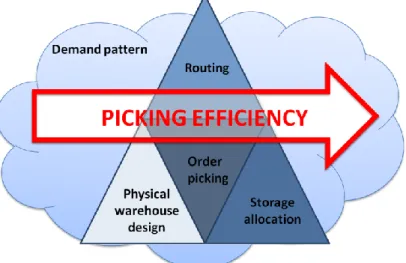
Figure 5 Overview of factors covered in frame of reference. ... 19
Figure 6 Framework for warehouse design and operation problems, Gu et al. (2007). ... 21
Figure 7 U-shaped layout (Bartholdi III & Hackman, 2010). ... 23
Figure 8 Flow-through layout (Bartholdi III & Hackman, 2010). ... 23
Figure 9 Usage of cross aisle (Bartholdi III & Hackman, 2010). ... 23
Figure 10 Comparison of CBS and random storage (Petersen, et al., 2004)... 26
Figure 11 Demand skewness patterns (Petersen II, 2000). ... 26
Figure 12 Savings of CBS over random storage (Petersen, et al., 2004). ... 27
Figure 13 Performance of CBS compared to VBS (Petersen, et al., 2004). ... 27
Figure 14 Two common storage configurations (Petersen, 2002). ... 28
Figure 15 Variants of allocation of storage classes (Petersen, et al., 2004). ... 28
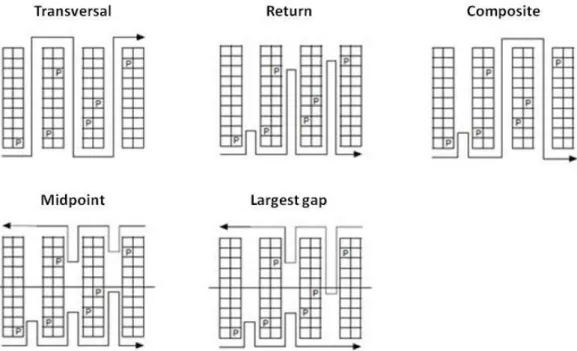
Figure 16 Examples of routing methods (Petersen II, 1997). ... 35
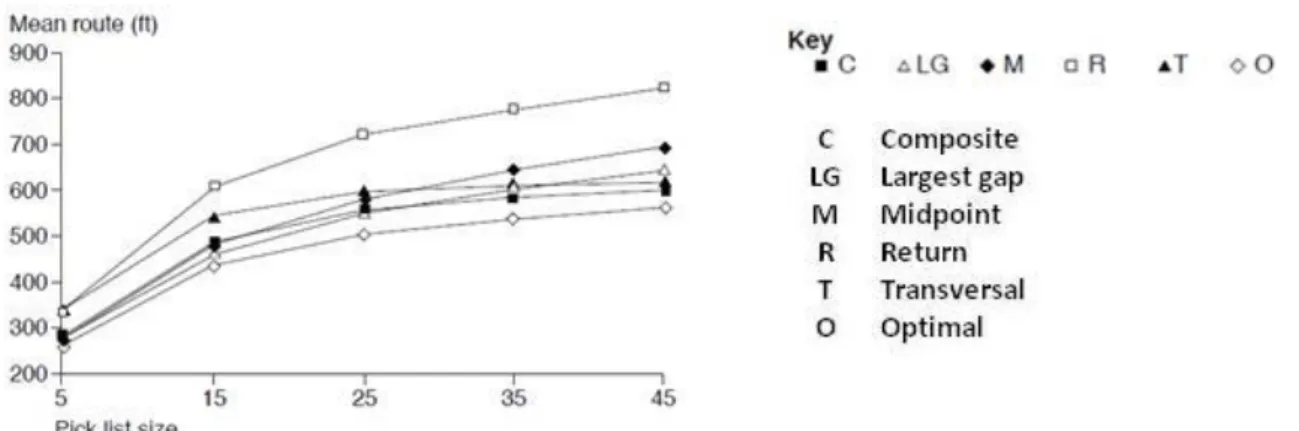
Figure 17 Impact of number of aisles in a warehouse on the performance of routing methods (Petersen II, 1997). ... 35
Figure 18 Interaction of routing methods by pick list size (Petersen II, 1997). ... 36
Figure 19 Storage capacity requirements over time, inspired by Frazelle (2002). ... 38
Figure 20 Overview of the created decision support tool. ... 42
Figure 21 Radar chart comparing the different storage allocation methods’ performance ... 45
Figure 22 Radar chart comparing the different order picking methods’ performance. ... 46
Figure 23 Radar chart comparing the different routing methods’ performance... 47
Figure 24 Detailed layout suggestion for the Huta DC (Andersson, 2014b). ... 51
Figure 25 Demand distribution in number of unique pick lines per month ... 54
Figure 26 Comparison of the demand patterns of number of unique pick lines and order quantity per month. ... 54
Figure 27 The cumulative percentage of the SKUs and the accumulated share of all unique pick lines they represent. ... 54
Figure 28 The average number of picks per day for the most popular SKUs ... 55
Figure 29 Input and output in illustrative example, step 1. ... 57
Figure 30 Schematic layout of storage areas on floor level after step 1. ... 58
Figure 31 Input and output in illustrative example, step 2. ... 58
Figure 32 Distribution of the demand in number of pick lines per month ... 59
Figure 33 The cumulative percentage of SKUs picked in full pallets during high season that represent a certain accumulated share of all unique pick lines ... 63
Figure 34 The cumulative percentage of SKUs picked in partial loads during high season that represent a certain accumulated share of all unique pick lines ... 63
Figure 35 The cumulative percentage of SKUs picked from flow racks during high season that represent a certain accumulated share of all unique pick lines ... 64
viii
Figure 36 Suggested ABCD classification of the SKUs picked in partial loads during high
season. ... 65
Figure 37 Input and output in illustrative example, step 3. ... 66
Figure 38 Output in illustrative example, step 4. ... 67
Figure 39 Schematic layout for high season of storage areas on floor level after step 4. ... 71
Figure 40 Output in illustrative example, step 5. ... 72
Figure 41 Output in illustrative example, step 6. ... 73
Figure 42 Final recommendations to the Huta DC visualized in the decision support tool. .... 75
Figure 43 Recommended SKU allocation in high versus low season ... 77
Figure 44 Simplified version of the decision support tool. ... 90
Figure 45 Comparison of storage configuration strategies (Petersen, et al., 2004). ... III Figure 46 Comparison of CBS and random storage, optimal routing (Petersen, et al., 2004). III Figure 47 Comparison of CBS and random storage, transversal routing (Petersen, et al., 2004). ... III Figure 48 Order data sample, provided by the Thule Group (Risholm, 2014). ... IV Figure 49 The percentage of SKUs picked in full pallets during low season that represent a certain accumulated share of all unique pick lines. ... VI Figure 50 The percentage of SKUs picked in partial loads during low season that represent a certain accumulated share of all unique pick lines. ... VI Figure 51 The percentage of SKUs picked from flow racks during low season that represent a certain accumulated share of all unique pick lines. ... VI
List of Tables
Table 1 Relevant research strategies for different situations (Yin, 2009). ... 9Table 2 Evaluation of storage allocation methods. ... 29
Table 3 Average distribution of order picker time (Bartholdi III & Hackman, 2010). ... 30
Table 4 Evaluation of order picking methods. ... 32
Table 5 Evaluation of routing methods. ... 36
Table 6 Framework for the design of warehouse layout (Hassan, 2002). ... 40
Table 7 Planned physical constraints to Thule's Huta DC (Andersson, 2014b). ... 50
Table 8 Sample of the product information provided by Thule (Risholm, 2014). ... 52
Table 9 Product characteristics of the SKUs to be stored in the Huta DC (Risholm, 2014). .. 52
Table 10 Sample of the order information provided by Thule (Risholm, 2014). ... 53
Table 11 Summary of characteristics for the orders representative for the Huta DC (Risholm, 2014). ... 53
Table 12 Thule’s main objectives regarding its warehouse operations... 55
Table 13 Storage division and number of SKUs and pick locations in each area after step 1 . 58 Table 14 Number of SKUs, number of unique pick lines, and order volume in number of pallets. ... 61
Table 15 Calculated means and standard deviations of order volume and order quantity ... 62
Table 16 Calculated means and standard deviations of order size and pick quantity. ... 62
Table 17 Suggested ABCD classification. ... 64
ix
Table 19 Recommended storage allocation methods during high and low season. ... 71 Table 20 Storage division and percentage of pick locations, SKUs and unique pick lines during high season for each area after step 4. ... 71 Table 21 Recommended order picking methods during high and low season. ... 73 Table 22 Recommended routing methods during high and low season. ... 75 Table 23 Compilation of the outbound volume and unique pick lines ... V Table 24 Compilation of the number of SKUs ever to be ordered in full or partial pallets, as well as even full, partial pallets or both. ... V Table 25 Sample of SKUs picked in partial pallets, sorted by popularity. ... VII Table 26 Classification criteria in x picks per day. ... VII
x
Glossary of Terms and Abbreviations
Abbreviations
3PL Third-Party Logistics provider
AS/RS Automated Storage and Retrieval Systems
CBS Class-Based Storage
COI Cube-Per-Order Index
DC Distribution Center
ERP Enterprise Resource Planning
I/O Input/Output
KPI Key Performance Indicator
LTH Lunds Tekniska Högskola – Faculty of Engineering at Lund University
SCM Supply Chain Management
SKU Stock Keeping Unit
TSP Travelling Salesman Problem
VBS Volume-Based Storage
VLM Vertical Lift Module
WMS Warehouse Management System
Explanation of Terms
3PL A firm that provides multiple logistics services for use by customers.
ABC-classification
Term used to categorize SKUs within warehousing. It suggests that SKUs are not of equal value/importance, and should be managed accordingly.
Batching Refer to the picking of multiple SKUs from separate orders in one route, as opposed to single picking.
Case picking Order picking of cases or cartons containing a specific number of individual items from a pick location.
COI Ratio of the maximum allocated storage space to the number of storage/retrieval operations per unit time. The SKUs with the lowest COI are stored in the most desirable locations. Using COI, both popularity and space requirements are taken into account.
DC A type of warehouse or storage location where the main functions are buffering and storage, as well as additionally distribution of the goods. ERP Business management software used to store and manage data from
every part of a business. A system for managing and coordinating all the resources, information, and functions of a business.
xi
Flow rack Storage rack with shelves equipped with rollers or wheels that allow products to "flow" from the back of the rack to the front. Suitable for small-quantity order-picking.
Forward area Limited area located close to the I/O points where SKUs are stored for easy retrieval by an order picker; it usually contains smaller amounts of fast-moving SKUs and is replenished from the reserve.
Item The individual article of a certain product or SKU.
Lean Philosophy in production and SCM that all expenditure of resources should create value for the end customer, i.e. add something to the product or service that the customer is willing to pay for. All non-value adding actions are considered waste and should be eliminated.
Order A type of request for goods or services, e.g. customer order, purchase order, sales order, work order.
Order line Each entry in an order. Usually contains the item and quantity requested. In this study each order line is considered an individual pick. At Thule several identical order lines can exist since each represent unique picks. Order picking The process of retrieving a number of items from their storage locations
to fill a number of independent customer orders. Order picking
method
The way the picking of SKUs in an order should be organized. Might also be referred to as order picking process, policy, and strategy, although not in this thesis.
Order size Number of SKUs per order. Order volume Number of pallets per order.
Pareto principle A concept that states that for many events, roughly 80 percent of the effects come from 20 percent of the causes, also known as the Pareto law or 80/20 rule. Often used for sorting data.
Partial pallet picking
Order picking of less than a full pallet, see also Case picking and Piece picking.
Pick density This term has several different definitions, this thesis uses the following: Ratio of number of SKUs in an order out of all SKUs in the warehouse. Pick location Location where a SKU is picked directly to meet an order. In the
illustrative example in the thesis, all pick locations are on the floor level. Piece picking Order picking of individual items from a pick location, also known as
broken case picking.
Product Type of good, e.g. bike carrier.
Reserve area Area where SKUs are stored in the most economical way i.e. in bulk or full pallets.
Routing The process of selecting paths to specific destinations, e.g. determining how to move in a warehouse to retrieve all SKUs on a pick list.
SCM “The integration of key business processes from end-user through original suppliers that provides products, services, and information that add value for customers and other stakeholders” (The Global Supply
xii Chain Forum, 1994-2014).
Seasonality Regular or semi-regular fluctuations in demand that result in overall cyclic variations, e.g. periodic demand variations that create a high season with high demand some part of the year and a low season with low demand another part of the year. Seasonality can also refer to the individual variations in popularity for season related SKUs.
SKU A product kept in stock, its individual articles or items share the same product/item/article number.
Slotting See Storage allocation.
Slotting measures Criteria used to determine the order or ranking of the SKUs about to be slotted/allocated.
Storage allocation
The process of assigning a certain SKU to a certain storage location. Storage
allocation method
The strategy of where to place and store different SKUs in a warehouse, according to which pre-requisites, in order to facilitate the order picking. TSP Combinatorial optimization problem the determines the shortest possible
route, i.e. given a set of nodes to visit in a network and their distances it determines the shortest patch that visit each node exactly once, and then returns to the point of origin, often used in planning and logistics. Computationally difficult, so the TSP is often used as a benchmark for the large number of optimization heuristics that also exist.
Unique pick line Unique number given to each row in the order data, it should correspond to each individual picks made in the warehouse, although it sometimes contains multiple pallets which obviously is more than one pick.
VLM High density storage system for small parts, where they are stored vertically in AS/RS carousels.
Warehouse Storage location where the main function is buffering and storage.
WMS Computer system used to control the movement and storage of materials within a warehouse and process the associated operations.
1
1 Introduction
This initial chapter will describe the background to the research area addressed in this master thesis. The problem at hand, as well as the purpose and research questions will be discussed. An introduction to the company serving as illustrative example will be presented, and the target group of the report described. Finally the structure of the report will be provided.
1.1 Background: The Increasing Focus on Warehouse Operations
Supply Chain Management (SCM) is a concept that has gained more and more attention during the last thirty years, as business leaders have started to understand the competitive advantage of a well-performing supply chain. A competitive supply chain is achieved through the integration of both internal and external business functions such as purchasing, production, sales and distribution (Christopher, 2011). One of the aims of the integration is to minimize the inventory throughout the supply chain, which usually is achieved through smoother, faster and more accurate distribution (Frazelle, 2002). A large part of the distribution is warehousing, especially in terms of costs. Several studies have found that warehousing typically account for between 20 and 25 percent of companies’ logistics costs (De Koster, et al., 2007; Establish Davis Logistics Costs and Service, 2013), or between 2 and 5 percent of total cost of sales, depending on company size and type of industry (Frazelle, 2002; Establish Davis Logistics Costs and Service, 2013). Consequently, there is a need for the warehouses to operate smoother, faster and more accurate just like the whole distribution chain. They are even considered essential for the success, or failure, of businesses today (Baker & Canessa, 2009).
Many companies have therefore increased their focus on improving their warehouse operations, often with the aim of reducing inventory and increasing turnover of stock, and thereby freeing capital, but also to increase customer satisfaction. This is achieved both by avoiding and resolving issues related to warehousing that might cause late or inaccurate deliveries, which have a direct, negative impact on customer service (Huertas, et al., 2007), and by offering value-adding services. As a result, the role of warehouses has changed: From having the single purpose of storing or buffering products between points of origin and points of consumption, they now also provide activities such as consolidation of goods from different manufacturing facilities, returns processing, and spare part services (Frazelle, 2002; De Koster, et al., 2007). Another focus area is the warehouse operations connected to manual handling. Receiving store keeping units (SKUs) from production or suppliers, put-away of SKUs, storage, order picking (retrieving the SKUs according to customer orders) while following a certain picking route, and finally shipping of goods to customers, are all performed by human labor in most warehouses, and labor means wages and high costs (Frazelle, 2002; Gu, et al., 2007). The most labor-intensive and costly warehouse operation is order picking, mainly due to the large amount of travelling involved. All articles included in this study agree that order picking account for at least 50 percent of warehouses' total operating costs, the most cited figure concluded by Tompkins et al. (1996) is 55 percent.
2
However, warehousesalsocarry great potential to justify the expenses they bring, for example through reducing the time spent on activities that are not value-adding (Theys, et al., 2010). This is a challenge for most companies due to the complexity of the area of warehousing. All warehouse operations are interconnected, and will be affected by previous steps and decisions. Moreover, the links between the different warehouse operations mean that resources such as space, labor, and equipment need to be allocated to each function in a coordinated way to avoid sub-optimization. Hence, decisions regarding improvement of the warehouse efficiency and the establishment of warehouse methods need to consider both the insertion (store) and extraction (order picking) methods (Le-Duc & De Koster, 2005; Gu, et al., 2007).
1.2 Problem Discussion
Current SCM trends that demand higher customer service at reduced costs (Frazelle, 2002), together with increased demand volatility, makes it necessary for the warehouse to stay flexible and adaptable. The high requirements on warehouse operations leave almost no room for errors; smaller orders are to be delivered rapidly within tight time windows while larger warehouses should keep more make-to-stock items but smaller buffers (Le-Duc & De Koster, 2005; De Koster, et al., 2007; Chackelson, et al., 2011). Altogether this makes it extremely complex to improve the overall performance of a warehouse. At the same time, it increases the need of ensuring that the most suitable method always is used i.e. updating the operation procedures as the external factors change. Order picking will be the main focus of this thesis, since it is the undisputedly most labor-intensive and costly warehouse operation.
Most of the current research in order picking is centered on a specific situation or decision problem, but a solution to one situation is seldom applicable to another. De Koster et al. (2007) argue that there is a lack of general design procedures for order picking. They also claim that the design of real order picking systems often is complicated due to a wide spectrum of factors such as demand patterns, mechanization level, information availability, which impact design choices (De Koster, et al., 2007). The complexity might, according to Gu et al. (2010), be the reason why research on the actual selection process is so scarce. There is no doubt that additional research within the area of warehouse performance would be valuable. However, by reviewing the research that does exist, Gu et al. (2010) conclude that prevailing decision support tools mainly compare picking methods by considering the order structure. Other important factors such as storage allocation and detailed implementation of the order picking methods are assumed fixed. Warehouse operations and systems are however highly interdependent, so in order to improve the order picking one must also consider other aspects. Especially important are the design of the storage allocation, and the choice of routing method; which determines order picking sequence and path. This is in line with Gu et al.’s statement that there is “a need for research focusing on the operational management of warehousing systems, where the different processes in the warehouse are considered jointly, the problems are placed in their dynamic nature, and multiple objectives are considered simultaneously” (Gu, et al., 2007, p. 17). Similarly, Chan and Chan (2011) recognize that more combinations of factors should be included in the study of improving the performance
3
of order picking. This master thesis will adhere these recommendations through expanding the area of picking to include also the closely interlinked areas of storage allocation and routing. In many warehouses the current operations can be improved by e.g. adapting to changed circumstances through redesigning and updating its methods. This update of processes is not only important when successive change take place or due to new logistics trends, but should also be contemplated when a company experience cycling changes such as seasonality. Consequently, a review of warehouse methods should be conducted on a regular basis.
The starting point in this thesis is an existing warehouse with given premises and limitations such as warehouse dimensions, racks, warehouse management system (WMS), and product characteristics, and stretches from the storage operations to the activity of sorting. Decisions to make in an updating process will be summarized along with related possibilities. Further, it will provide theoretically anchored decision support for which choices to consider in a given situation as well as which parameters to base them on. Beyond generating guidelines, the aim is also to encourage a holistic and unified view of the warehouse processes. It is especially important to emphasize the features connected to warehouse operations that have the greatest effect on performance. Identifying these features is central in order to avoid unnecessary, time-wasting data collection and analysis that are likely to occur when a problem is not sufficiently framed.
1.3 Purpose
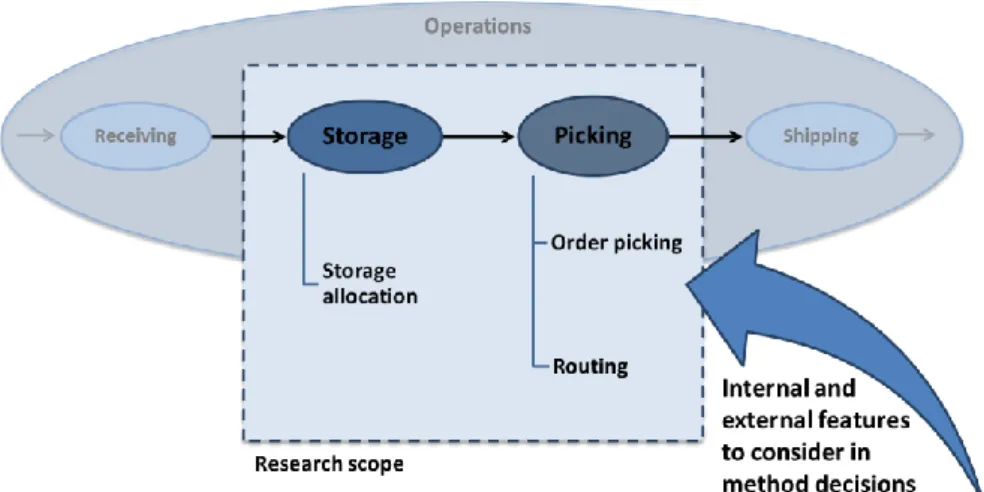
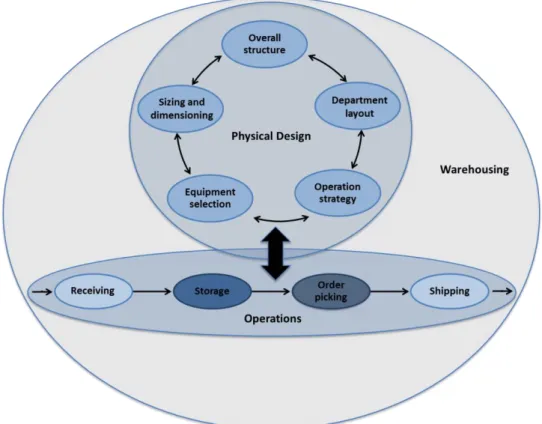
The overall goal in this thesis is to provide guidance for how to operate more efficient by reviewing the warehouse picking performance. Due to its resource demanding nature, large gains can be expected from improving the picking methods and the closely interlinked decision areas of storage allocation and routing. The guidance will be structured into a decision support tool with hands-on recommendations, created from the most recent and relevant research within the field. The tool will be designed in a simple and structured way to encourage a continuous review of the current processes. The scope of the thesis is presented in Figure 1.
Figure 1 Focus areas for improving warehouse picking operations by creating a decision support tool (Gildebrand & Josefsson, 2014).
4
1.4 Research Questions
The following research questions are created to capture the purpose:
1. How can a decision support tool for reviewing the choices of storage allocation, order
picking, and routing methods in manual warehouse operations be put together in a structured way?
2. Which features should be considered in the decision support tool for choosing methods for
improving warehouse operations?
1.5 Illustrative Example: The Thule Group
The Swedish company Thule Group initialized this research on warehouse operations. It wanted advice on which order picking methods to use in its planned distribution center (DC) in Huta, Poland, a decision that also affects the choice of storage allocation and routing methods. The methods should consider physical constraints and multiple order characteristics, especially the strong seasonality of the products. In order to provide advice that could be applicable for other companies as well, the problem and research questions described in the previous chapters were identified along with a need for a research based decision support tool. In the process of developing the tool, data from a real company was needed for some basic testing of its usability and to see what the outcome might be. It was also vital in order to get realistic input from practitioners regarding company objectives, constraints and requirements etc. The Thule Group's Huta DC was therefore used as an illustrative example to show how to use the tool and what to consider when updating or designing the methods to use in storage allocation, order picking and routing. The warehouse in question is estimated to open for business in December 2014. It is thereby not yet possible to measure its performance,. Instead, recommendations are designed from what is known to date. Starting from scratch is usually not an option in warehouse operations design, which is why the tool created in this thesis primarily aims to be applicable in already existing warehouses and why some factors will be considered fixed also in the illustrative example. The Huta DC is more thoroughly described in chapter 5. Illustrative Example; Empirical Data.
1.6 Delimitations
The study has not considered research on automatic warehouses, since it is the human labor intense operations that are the focus in this thesis. The decision support tool is designed on a general level, to be applicable on any manually operated warehouse, and therefore does not use calculations and simulations of different scenarios. Consequently it is up to each company using the method to do the succeeding steps of actually determining which SKUs to put where, how to form zones or batches, the actual picking route etc.
Further, differences among warehouses are not put as constraints. Most of the research articles simplify the circumstances and make generalizations about travel time, warehouse layout etc. Hence, the facts used and compared are not performed in identical settings. The authors believe the results to be valid as long as they are not contradictive. This is strengthened by the
5
fact that the researcher themselves do not seem to stress the discrepancies among different settings studied. Many areas are interlinked to those of order picking and storage allocation. Three that are excluded from the scope of this study are replenishment, inventory levels and safety stock. This was both because of time limitations; to be able to make a more comprehensive study of a narrower field, and most of the previous research did not seem to look at such a wide area.
The data used when creating the illustrative example in this study was limited to one year of Thule’s order history. It was still considered representative due to the large amount of information, small but probable changes such as added products or some extra orders would not impact the general picture it provides. The same reasoning lies behind the delimitation of data input also conducted on the illustrative example: spare parts and SKUs to be stored in a vertical lift module (VLM) were not included. The spare part storage was to be managed separately by Thule, and do not stand for an extensive part of the orders. Thule considers the VLM storage to be optimal for small and infrequently ordered SKUs, and want to store as many SKUs as possible there. The company performed the selection of these SKUs themselves so storage decisions regarding the VLM were thereby not included in the study. Consequently related picks were not included in the analyzed order data either, but it was assumed that travel connected to these items would not affect the overall performance of the picking since the VLM is positioned close to the input/ output (I/O) points, and thereby not cause any detours. However, to get a complete picture of the situation all SKUs and storage areas should be included when using the decision support tool. Moreover, suspicions that method choices are based on non-representative order data increase the motives for doing an update i.e. using the decision support tool.
1.7 Target Group
Research on isolated or narrow aspects within warehouse operations are easy to find. If however interested in recommendations covering combinations of decision problems, the sources are scarce. The purpose with this thesis was, as mentioned in 1.3 Purpose, to collect excising research to build a decision support tool for improving warehouse order picking. The findings thus primarily aims to be of relevance for warehouse managers with an interest in how picking performance can be improved and guidelines for how to update current procedures when external factors, like order characteristics, change. The outcome should be of particular interest to the Thule Group since the research focus derived from them, and the result was developed through their specific case. For academia, the main contribution was a review of the literature and research available in the field. It established a ground and a starting point for further research, both through identified gaps in the research within picking optimization and through emphasizing the complexity of the problem and the need for a broader scope in research to develop hands-on applicable methods.
6
1.8 Structure of the Thesis
This master thesis has the following outline:
Chapter 1 Introduction includes a background to the research area, a problem discussion as well as the purpose of the study summarized in the two research questions. An introduction to the company serving as illustrative example will be given, and the target group of the report described. Finally the structure of the report will be provided.
Chapter 2 Methodology describes and motivates the methodological choices made regarding research philosophy, approach, strategy and methods in this study, before describing the research procedures performed in seven steps. Lastly, the trustworthiness of the research is discussed.
Chapter 3 Frame of Reference provides the theoretical framework connected to choosing warehouse operations methods. The physical design of a warehouse, and storage allocation, order picking, and routing methods are described in detail and evaluated based on different criteria, connected to company’s priorities in warehousing.
Chapter 4 Developing the Decision Support Tool takes its starting point in two existing decision support models for redesigning warehouses, before combining them and the aspects identified in the evaluations in chapter 3 in to a basis for developing the decision support tool. It continues with presenting the created conceptual model for how to make the right choices when updating and improving the storage allocation, picking and routing methods in a warehouse, which is then explained in the succeeding sections step by step.
Chapter 5 Illustrative Example; Empirical Data presents the information about the Thule Group needed in order to provide an illustrative example of how to use the decision support tool presented in chapter 4.2. The empirical data includes all information needed to update the warehouse operations for the Huta DC: the physical warehouse constraints, product
characteristics, and order characteristics.
Chapter 6 Applying the Decision Support Tool provides an illustrative example of how the decision support tool can be used in practice by applying it on the Thule Group. The indications of each step are analyzed and concluded, before the final recommendations for the Huta DC are summarized.
Chapter 7 Analysis of Decision Support Tool analyses the theory that compose the tool, as well as the tool itself; structure, strengths and weaknesses.
Chapter 8 Conclusions summarizes the outcome of the master thesis and answers the research questions. Finally suggestions for further studies are presented with aspects of interest for both researchers and practitioners.
7
2 Methodology
This chapter will describe the methodological choices to make regarding research philosophy, approach, strategy and methods. It will discuss and motivate the choices made for this study, before describing the research procedures performed in seven steps. Lastly, the trustworthiness of the research will be discussed.
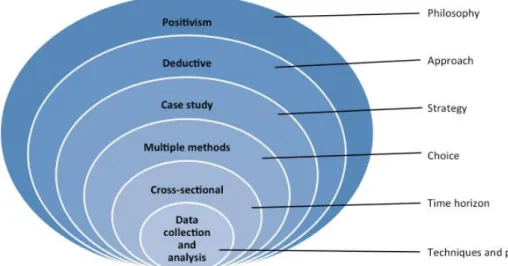
Making a well-informed choice regarding research strategy and design is essential for the process of answering the research questions. This is central for the continued work, hence need to be accompanied with a plan, containing clearly defined objectives and constraints for how to the answers will be reached (Saunders, et al., 2009). There are several important choices to be made when deciding on a suitable and logically designed research methodology. In order to structure the decision-making, the ‘research onion’ by Saunders et al. (2009) was used as a framework. Figure 2 illustrates an expanded version that includes the final alternative adopted in each layer for the Thule study. The choices were made step by step, starting on the outside and gradually, layer by layer, getting closer to the core –the actual data collection and analysis. This chapter is structured in the same way by stepwise describing the different layers, including motivation of each choice for the procedure used in the thesis.
Figure 2 Methodological research choices presented in an adapted version of Saunders et al.’s research ‘onion’ (2009).
2.1 Research Philosophy
The first step according to Saunders et al. (2009) is to determine which philosophy to adopt throughout the research, which is what is considered knowledge and how new knowledge is developed. The research questions in this thesis are about finding improvement methods and making decisions mainly based on hard, observable facts. The aim is that the resulting decision support tool should be applicable for many types of companies, although alterations might be needed depending on the circumstances. Hence, a positivistic research philosophy is suitable. Positivism is the typical view within natural sciences and it is based on observability and objectivity, meaning that the input should be observable facts rather than impressions, and the result should be the same even if the researcher is replaced (Saunders, et al., 2009; Patel & Davidsson, 1994). The goal is to be able to generalize the outcome by empirically proving
8
different hypothesis, and ultimately create universal laws and mathematical formulas that can describe cause and effect (Patel & Davidsson, 1994). This choice is in line with many other logistical researches since positivism is the most common philosophical stance in logistics research (Gammelgaard, 2004).
2.2 Research Approach
The next layer in the research ‘onion’ (Saunders, et al., 2009) depicts which research approach to use. There are several suitable methodological approaches to scientific research, depending on the field of studies, the context and the personal opinions of the researchers. For this study, the phrasing of purpose and research questions together with the use of an illustrative example indicated that the base of the study would be already established theories regarding storage allocation, order picking and routing, although adapted to a new setting. This approach corresponds to Kovács and Spens (2005) description of the deductive research; it takes its starting point in existing theories, moving from a general law to a specific case. The deductive research process aims to identify and explain causal relationships between specific variables (Saunders et al., 2009). Hence, it is more suitable for testing already existing theories than for creating new science, and for this reason the deductive approach dominates the relatively young field of logistics (Kovács & Spens, 2005). Deductive research requires that it is possible to control variables and that the methodology used is structured and replicable to get a reliable result. In order to be able to generalize the outcome it is important to ensure that the size of the sample studied is sufficient (Saunders, et al., 2009). The aim of this master thesis was to identify the relationships between different order characteristics and warehouse operation methods. The starting point was an extensive literature review, which is used to decide the method that is the most suitable in each specific situation. In order to be able to follow the deductive research requirements, the methodology used is thoroughly described in this chapter. The included articles are thought to strengthen the research foundation by using both simulations and case studies to demonstrate and prove their main ideas. The outcome should therefore be applicable to specific situations.
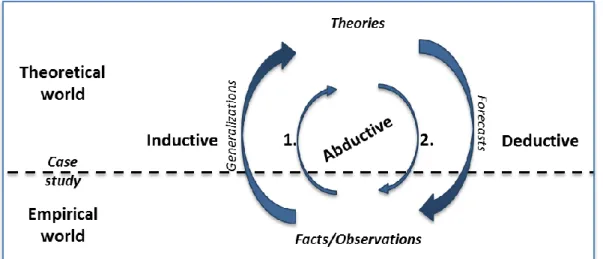
Arbnor and Bjerke (2009) also describe two other major research approaches: the inductive and the abductive. The inductive approach was not an option since no new theory was to be developed through the empirical case data (Kovács & Spens, 2005). The abductive research approach has a more cyclic nature (Fischer, 2001) and can be viewed as a combination of the other two approaches: The first part of an abductive study is inductive and develops new theories. The theories are then tested in the second part by using them in deductive research to forecast and conclude different observations (Arbnor & Bjerke, 2009). The time constraints of this study prohibit such an extensive study. The abductive process also requires that the researchers are very experienced in the relevant field to succeed, and this was not thought to be the case. Figure 3 shows the deductive approach in comparison with these two other research approaches. In the context of this study, theories refers to the frame of reference, while forecasts can be compared to the decision support i.e. the answer to the research questions. Facts/observations is the evaluated outcome of using the decision support which is a state the illustrative example do not reach, i.e. the deductive half-circle is not fully completed.
9
Figure 3 Comparison of different research approaches (inspired by Arbnor & Bjerke (2009), and Fischer (2001))
2.3 Research Strategy
The next methodology decision to make, the third layer of the research onion, concerns the research strategies. There are many strategies when it comes to doing research; common examples are experiments, surveys, archival analyses, histories and case studies. When deciding what method to use, there are several factors to take into account according to Yin (2009). Initially, the form of the research questions should be analyzed. One way to categorize them are depending on the purpose of the research and which of the questions who, what,
where, how and why, they answer. For example, if a research question answers how or why, it
is usually explanatory and will likely result in the use of case studies, histories and experiments. With this background, it is obvious that the defining of the research questions is a crucial step in the early research process (Yin, 2009). An overview over when to use different research and in connection to what research question depending on the goal or purpose of the study can be found in Table 1.
Table 1 Relevant research strategies for different situations (Yin, 2009).
The aim of this master thesis was primarily to create a decision support tool that highlights the methods for storage allocation, order picking and routing, which have the strongest support in research for bringing improvements regarding picking efficiency within a specific warehouse. This includes identifying and using cause-effect relationships so the research is explanatory to its nature, which is further strengthened by the first research question, which asks how.
Explanatory researches often use case studies, histories or experiments depending on the
Research purpose Question type Suitable research strategies
Exploratory
- develop pertinent hypotheses and
propositions for further inquiry
what survey, archival analysis,
case studies, histories, experiments
Predictive
- describe the incidence or prevalence of
a phenomenon or predict outcomes
who, where, how
many, how much survey, archival analysis
Explanatory
10
degree of control of events. This study uses all three alternatives to some extent, although partly from a secondary source. The literature review in chapter 3 Frame of Reference is based on previous research conducted by using both actual companies and simulation models i.e. histories, case studies and experiments. The literature study ends with two examples of existing decision support models for redesigning warehouses. These parts of the literature review were then both used to create the resulting theoretical decision support tool, which was then illustrated by following the procedures in a real life company setting. The process described is a case study of the subject methods for increasing picking efficiency, from which a conceptual model evolved. Typically, a case study combines several data collection methods such as archives, interviews, questionnaires and observations (Eisenhardt, 1989). The purpose when choosing a case study is to gain a thorough understanding within a specific area. In this thesis, it is also about mapping the existing research within the targeted area in order to create value for warehouses that wish to improve their operations in the future. The main criticism regarding case studies is that it provides a weak basis for generalization due to its narrow focus. Over time the value of learning from specific cases has been better recognized and its prevalence is successively increasing in many scientific disciplines (Dubois & Gadde, 2002). This is not considered an issue in this master thesis, since the method provides a strong theoretical tool that intends only to provide a starting-point for future research and adjustments, which eventually could serve as subject for generalization. For further discussions in this matter, see chapter 2.7 Trustworthiness of the Research.
An experimental outcome or an evaluating test of the performance of the decision support tool tested on the Thule case was unfortunately not possible due to the limited scope of the project. Further, the warehouse settings in which the operations eventually will take place are not expected to run until December 2014, when this research already will be finished. Hence, it was not possible to test, isolate and measure in that environment, which would be required if doing an experiment.
2.4 Research Choices
The fourth layer for decision-making regarded the area of research choices (Saunders, et al., 2009), choosing the method to use for answering the research questions. This can be referred to as choosing mono method or multiple methods, i.e. using either a single data collection technique with corresponding analysis procedure, or using more than one data collection technique and analysis procedure. This research study uses a case study of the subject
methods for increasing picking efficiency including a wide scope of research articles, order
data analyses and interviews; hence the research choice was a multiple methods. The reason for this choice was to get a broader perspective on the studied problem, and to increase the trustworthiness of the research. For further elaborations on this matter, see chapter 2.7.
11
2.5 Time Horizons
Another important decision, according to Saunders et al. (2009), to make prior to the research start regards the time horizon of the study. Should it capture a snapshot of the situation, from now on referred to as cross-sectional studies, or a longer period of time, so called longitudinal studies? The choice between these are highly related to the kind of research one are to perform, and does not relate to the research strategy. The longitudinal studies have a great strength in the possibility to study the development over time, but also research with time constraints can contribute with change analyses if utilizing already performed studies as a foundation for the further research (Saunders, et al., 2009).
Due to the limited time frame and scope of this master thesis, longitudinal studies were not possible to conduct; hence cross-sectional is the best description. The collected historical data used in the illustrative example cover one year of Thule’s order history, which can be considered a short period of time in a fast growing company with significant seasonality. Further, the interviews only represent a snapshot of the situation. The literature used in chapter 3 Frame of Reference is from different years, stretching over longer periods of time but most of them are also to be considered as separate cross-sectional studies and do not provide a longitudinal study if considered together.
2.6 Research Techniques and Procedures
The core of the research ‘onion’ concerns research procedures and techniques, or rather how the data should be collected and analyzed (Saunders, et al., 2009). This master thesis studies methods for increasing picking efficiency by doing an extensive literature review and combining the different recommendations in to a decision support tool in the shape of a conceptual model. The theoretical framework is analyzed by comparing the different recommendations and their implications for companies in terms of when each method is suitable. The tool is tested on a real life setting through an illustrative example by doing a trial run with data from the Thule Group. The actual application is then analyzed based on performance and usability; implementing and analyzing performance of the decision recommendations is left for further studies.
More detailed descriptions of the data collection and research analysis, is provided in the following sections through a seven-step multi-stage rocket, illustrated in Figure 4.
Figure 4 Research process in seven steps (Gildebrand & Josefsson, 2014).
2.6.1 Step 1: Determining Project Scope
The initial step in this study was to determine the scope and establish a project plan, which was done together with the supervisors at LTH and the Thule Group iteratively. By doing a broad literature search with key words like “warehousing” and “order picking” the researchers’ basic knowledge of the research area was enhanced. Some gaps in current research could be identified, leading to the problem discussion, purpose and research
12
questions presented in chapter 1 Introduction. The execution of the project was planned in order to meet the limited time frame of the master thesis of totally 20 weeks.
2.6.2 Step 2: Determining Research Methodology
The next step was to decide on research methodology using Saunders et al.’s research ‘onion’ as a framework (2009), according to previous chapters 2.1 to 2.5.
2.6.3 Step 3: Literature Review and Creating a Frame of Reference
Once the research structure and methodology was determined, the next step was to conduct an extensive literature review in order to address the purpose and research questions. By finding, reading and summarizing relevant research articles a frame of reference was constructed. The actual search process was performed by using different databases: EBSCOHost, Elsevier, JSTOR, Scopus, and Web of Science. The main key words used were warehouse,
warehousing, picking, order picking, storage allocation, storage assignment, classification,
and seasonality in different combinations. When needed the search result was further
narrowed down by putting constraints on times cited and/or publication date. The aim was to find the most recent research in order to conclude the state of the art within the topic of order picking, which meant focusing on recently published articles. However, the selection of suitable articles was not that extensive. For this reason, un-cited scientific articles, as well as frequently cited articles from as long back as 1989, also were included in the study.
When promising articles were found, a brief browsing and reading of the abstract was done in order to determine their relevance to the project at hand. If they were judged as relevant and to be from a reliable source they were put in the internal project library, otherwise they were discarded (for more information about the source evaluation see chapter 2.7 Trustworthiness of Research). The references in the relevant articles were examined in order to find additional relevant articles. This was mainly done based on author name, article title or the piece of information referred to. In fact, the main part of the literature included in the frame of reference was not found directly through the databases, but rather through backtracking the reference lists in relevant articles. The retrieval of these articles was often done with the assistance of the search engine Google Scholar.
The next part of the literature review was to read through the articles i.e. the content of the project library and categorize them based on main topic. The categorization was done according to what the browsing indicated would be the structure of the frame of reference: literature review and frameworks, general about warehouse operations, order picking and storage allocation. The final structure of the literature review was however achieved iteratively by writing and getting supervisor feedback.
2.6.4 Step 4: Determining a Decision Support Tool
The fourth step was to evaluate the key factors found in theory for determining order picking methods. As the last part of the literature review, it meant summarizing different research result and comparing their statements on how certain characteristics influence the storage, order picking, and routing decisions. The idea was to identify important relations that determine how decisions should be conducted, and compile them into a decision support tool: A stepwise instruction of which warehouse, product, and order characteristics to consider and
13
how to consider them when deciding on methods to use in ones warehouse operations. It should provide guidance for updating these procedures, while taking different pros, cons, and tradeoffs connected to company objectives in to account. Some factors were not satisfyingly examined in current research, why the tool is not comprehensive but can be further developed and expanded.
2.6.5 Step 5: Illustrative Example; Empirical Data and Applying Decision Support Tool
When the decision support tool was finalized from a theoretical point of view, next step was to apply it on a real case, provided by the Thule Group. The purpose was to get practical input to the theory-based tool by using information about the Thule Group and its Huta DC as an illustrative example. In this step, the data collection and analysis sometimes overlapped which gave the researchers a head start in the analysis and also allowed them to take advantage of flexible data collection (Eisenhardt, 1989).
The basic company and warehouse information was received through the company website as well as through unstructured interviews with the company representative Carl Risholm (Project Manager Supply Chain) during company visits. Short semi-structured qualitative research interviews were also carried out with three of Thule’s managers involved in warehousing and the new DC: Rickard Andersson (Vice President Supply Chain, Sweden), Marcus Hunt (Supply Chain Manager, UK), and Monika Janas-Kaszuba (Project Manager, Poland). The purpose was to collect support for how Thule wished to prioritize its warehouse objectives and thereby should act in the tradeoff situations. The semi- or unstructured interview approach means that the interviews were non-standardized and used an explanatory approach were the interviewee and its answers affect the questions asked. The difference between the two is that the semi-structured interviews use a predetermined list of questions to cover, but some may be omitted and others added depending on the nature of the interview. Unstructured interviews on the other hand are completely informal; the goal is to explore a research area in depth by letting the interviewee talk freely. No predetermined questions are set, but it is important for the interviewer to have a clear idea of what to achieve through the interview (Saunders, et al., 2009). Here, the interviewees were e-mailed the interview guide, found in Appendix A, and initially also answered in writing. Then follow up interviews were held to clarify some points with Janas-Kaszuba on Skype on 2014-03-20, and with Andersson in Malmö on 2014-03-28. The quantitative order and product data to use in the different decision steps was collected through the company’s ERP system and compiled in Excel-files provided by Risholm (2014). It contained all orders from July 2012 to June 2013 of SKUs to be stored in the Huta DC. To conclude, the empirical data collected from the Thule Group was both primary and qualitative (interviews), and secondary and quantitative (order history). Next, the decision support tool was gone through step by step to determine the suitable warehouse operation methods regarding storage allocation, order picking and routing to apply to Thule’s Huta DC. In the initial phase Yin (2009)’s recommendation to start the analysis process with playing with the collected data to find appropriate strategies to proceed with was used. This process included filtering and sorting the information as well as analyzing the outcome, all based on the parameters the tool suggests to be able to follow its
14
recommendations. Sometimes lack of or inadequate theory called for assumptions, e.g. regarding where exactly to draw the line between A, B and C SKUs, as well as how to determine the size of the corresponding zone. Similarly, assumptions were made when the data provided from Thule were ambiguous, e.g. regarding number of unique picks. This step was conducted both to test the theoretical tool and show how it should be used, and to identify problems and discrepancies between theory and practice.
2.6.6 Step 6: Analyzing the Decision Support Tool
The next step was to analyze the decision support tool itself, its theoretical foundation, guidance and ease of use. The main idea was to compare different research results, their common opinions and their extensiveness before moving on to evaluating the applicability of the tool. How cohesive, clear and comprehensible was the implications from research? Was the advice understandable and did the outcome seem reasonable? What about gaps or indecisiveness? And how did the tool perform in reality in terms of usability? Which reasons determined the structure of the tool? Any alternatives? Did the tool recommend different methods for different time periods and storage areas? Which features settled the decisions? Did this outcome seem reasonable?
2.6.7 Step 7: Conclusions and Further Studies
The last step in this master thesis project was to conclude the outcome in terms of the final decision support tool and answering the research questions. The process of doing this also involved a final review, and an opportunity for the authors to summarize their own reflections and ideas regarding the study. This process involved identifying and expressing improvement areas and suggestions for further studies related to the topics of warehouse operations and picking efficiency.
2.7 Trustworthiness of the Research
There are several criteria for judging the quality of research designs. Yin (2009) presents four widely used tests to ensure that research is trustworthy:
Construct validity identifies correct operational measures for the concepts being studied.
Internal validity seeks to establish a causal relationship (for explanatory or causal
studies).
External validity defines an area to which a study’s findings can be generalized (not
always the purpose).
Reliability ensures that the operations of a study can be repeated, with consistent results.
2.7.1 Validity
The first three bullet points regarding validity are concerned with whether the findings really are about what they appear to be about or not. Is it really the intended variable that is measured? Is it the identified relationship between two variables casual? And can the findings be applied outside the area in which the study was performed? Raising these questions is an important step in ensuring validity, but it is also important to be aware of possible threats. It can be participants dropping out of studies, participants changing behavior due to them being