Patron: Her Majesty The Queen Rothamsted Research Harpenden, Herts, AL5 2JQ
Telephone: +44 (0)1582 763133 Web: http://www.rothamsted.ac.uk/
Rothamsted Research is a Company Limited by Guarantee Registered Office: as above. Registered in England No. 2393175. Registered Charity No. 802038. VAT No. 197 4201 51. Founded in 1843 by John Bennet Lawes.
Rothamsted Repository Download
A - Papers appearing in refereed journals
Blackwell, M. S. A., Darch, T. and Haslam, R. P. 2019. Phosphorus Use
Efficiency and Fertilizers: future opportunities for improvements. Frontiers
of Agricultural Science and Engineering.
The publisher's version can be accessed at:
•
https://dx.doi.org/10.15302/J-FASE-2019274
•
http://journal.hep.com.cn/fase/EN/10.15302/J-FASE-2019274#1
The output can be accessed at:
https://repository.rothamsted.ac.uk/item/8wxzv
.
© 30 July 2019, Rothamsted Research. Licensed under the Creative Commons CC BY.
Frontiers of Agricultural Science & Engineering CN 10-1204/S https://doi.org/10.15302/J-FASE-2019274 ISSN 2095-7505 Review
Phosphorus use efficiency and fertilizers: future opportunities
for improvements
Martin BLACKWELL ()1, Tegan DARCH1, Richard HASLAM2
1 Department of Sustainable Agriculture Sciences, Rothamsted Research, North Wyke, Okehampton, Devon, EX20 2SB, UK
2 Department of Plant Sciences, Rothamsted Research, Harpenden, Hertfordshire, AL5 2JQ, UK
Front. Agr. Sci. Eng., Just Accepted Manuscript • https://doi.org/10.15302/J-FASE-2019274
http://journal.hep.com.cn on July 29, 2019
© The Author(s) 2019. Published by Higher Education Press. This is an open access article under the CC BY license (http://creativecommons.org/licenses/by/4.0)
Just Accepted
This is a
“
Just Accepted
”
manuscript, which has been examined by the peer-review process
and has been accepted for publication. A
“
Just Accepted
”
manuscript is published online
shortly after its acceptance, which is prior to technical editing and formatting and author
proofing. Higher Education Press (HEP) provides
“
Just Accepted
”
as an optional and free
service which allows authors to make their results available to the research community as
soon as possible after acceptance. After a manuscript has been technically edited and
formatted, it will be removed from the
“
Just Accepted
”
Web site and published as an Online
First article.
Please note that technical editing may introduce minor changes to the manuscript text
and/or graphics which may affect the content, and all legal disclaimers that apply to the
journal pertain. In no event shall HEP be held responsible for errors or consequences arising
from the use of any information contained in these
“
Just Accepted
”
manuscripts. To cite this
Front. Agr. Sci. Eng.
https://doi.org/10.15302/J-FASE-2019274 Verso: Front. Agr. Sci. Eng.
Recto: Martin BLACKWEL et al. Phosphorus use efficiency and fertilizers: future opportunities for improvements Available online at http://journal.hep.com.cn/fase
REVIEW
Phosphorus use efficiency and fertilizers: future opportunities
for improvements
Martin BLACKWELL ()1, Tegan DARCH1, Richard HASLAM2
1 Department of Sustainable Agriculture Sciences, Rothamsted Research, North Wyke, Okehampton, Devon, EX20 2SB, UK
2 Department of Plant Sciences, Rothamsted Research, Harpenden, Hertfordshire, AL5 2JQ, UK
Abstract The continued supply of phosphate fertilizers that underpin global food production is an imminent crisis. The rock phosphate deposits on which the world depends are not only finite, but some are contaminated, and many are located in geopolitically unstable areas, meaning that fundamental changes will have to take place in order to maintain food production for a growing global population. No single solution exists, but a combination of approaches to phosphorus management is required not only to extend the lifespan of the remaining non-renewable rock phosphate reserves, but to result in a more efficient, sustainable phosphorus cycle. Solutions include improving the efficiency of fertilizer applications to agricultural land, alongside a better understanding of phosphorus cycling in soil-plant systems, and the interactions between soil physics, chemistry and biology, coupled with plant traits. Opportunities exist for the development of plants that can access different forms of soil phosphorus (e.g., organic phosphorus) and that use internal phosphorus more efficiently. The development of different sources of phosphorus
fertilizers are inevitably required given the finite nature of the rock phosphate supplies. Clear opportunities exist, and it is now important that a concerted effort to make advances in phosphorus use efficiency is prioritized.
Keywords organic phosphorus, phosphorus fertilizer, phosphorus use efficiency, rock phosphate
1 I
ntroduction
The commercial inorganic phosphorus fertilizer industry began in 1842 when Sir John Bennett Lawes of Rothamsted Research, UK, patented the first commercial phosphate fertilizer, or “chemical manure”. Lawes created his fertilizer by dissolving animal bones in sulfuric acid, creating what was termed “superphosphate”. While proving a great success, there were not enough bones to supply the increasing demand for phosphorus fertilizers and alternative sources of phosphorus were sought and the rock phosphate industry was developed. Today, global food production is highly dependent upon phosphorus fertilizers produced from the processing of rock phosphate, although these deposits occur in a limited number of locations globally.
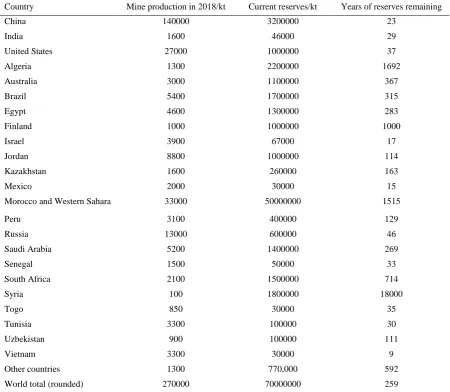
The largest rock phosphate deposits occur in Morocco and Western Sahara with an estimated 50 Gt of rock phosphate available, while China, having the second largest known reserves of about 3.3 Gt mines the largest quantities of rock phosphate[1]. Table 1 shows the estimated rock phosphate reserves and recent rates of production of some of the key countries from which phosphate is sourced. Although the overall estimate of 259 years of rock phosphate remaining at current production rates suggests there are no imminent issues regarding phosphate supplies, if trends in mining and geopolitical considerations are 1considered, some interesting statistics arise. For example, this global estimate of 259 years of future supply was reduced from about 300 years just 3 years ago, reflecting increasing demand. China holds the second largest reserves in the world and is the greatest producer of rock phosphate (with no exports), but has only 24 years of supply remaining at current production rates, while India and the United States both
Received May 10, 2019; accepted July 3, 2019 Correspondence: [email protected]
© The Author(s) 2019. Published by Higher Education Press. This is an open access article under the CC BY license (http://creativecommons.org/licenses/by/4.0)
have only 36 years of supply. If the estimated remaining number of years supply of rock phosphate continues to decline at the current rate (i.e., 300–259 years of supply in 3 years, a 14% change in the estimate), it could be argued that all supplies will be exhausted by 2040. While this latter scenario is unlikely, it does highlight that significant changes in demand are occurring and that imminent,
fundamental changes in the global phosphorus trade, use and recycling efforts will be necessary in order to secure phosphorus availability. This is especially pertinent in China, India and the USA, the three countries with largest populations on the planet, which rely on rock phosphate to feed their people. Another threat to the supply of phosphate fertilizer is that countries with some of the largest deposits, e.g., Algeria, Jordan and Syria are situated in areas of recent political instability, meaning rock phosphate deposits do not necessarily need to become depleted before the effects of scarcity on food production are noticed. It is important to recognize that these statistics oversimplify a much more complex issue of phosphate fertilizer supply, global reserves and trade dynamics, as presented by Cordell and White[2]. However, there is generally a consensus among researchers that phosphorus fertilizer supply is a crucial aspect of future global food security. Therefore, in the face of this potential crisis in availability of rock phosphate in key parts of the world, there is a pressing need to look again at how phosphate fertilizer is used, where it can be obtained, how it can be most efficiently used in agriculture, and potential alternative sources for the production of phosphate fertilizer.
Table 1 World mine production of rock phosphate and current known reserves in thousand tonnes. Years of reserves remaining are calculated by dividing known reserves by the latest annual rate of mine production[1].
Country Mine production in 2018/kt Current reserves/kt Years of reserves remaining China 140000 3200000 23
India 1600 46000 29 United States 27000 1000000 37 Algeria 1300 2200000 1692 Australia 3000 1100000 367 Brazil 5400 1700000 315 Egypt 4600 1300000 283 Finland 1000 1000000 1000 Israel 3900 67000 17 Jordan 8800 1000000 114 Kazakhstan 1600 260000 163 Mexico 2000 30000 15 Morocco and Western Sahara 33000 50000000 1515 Peru 3100 400000 129 Russia 13000 600000 46 Saudi Arabia 5200 1400000 269 Senegal 1500 50000 33 South Africa 2100 1500000 714 Syria 100 1800000 18000
Togo 850 30000 35
Tunisia 3300 100000 30 Uzbekistan 900 100000 111 Vietnam 3300 30000 9 Other countries 1300 770,000 592 World total (rounded) 270000 70000000 259
2 Improving phosphorus use efficiency: what are the problems?
quantity of phosphate fertilizers required for optimal crop growth in different types of soils. Depending on the soil type, its existing physical condition and chemical status, it is estimated that no more than 8% of phosphorus added to soil in fertilizers is recovered in crops[3]. The remainder is either adsorbed to different degrees to soil particles and organic matter, taken up by soil microbes, organically complexed or lost to surface waters. Historically, to ensure optimum yields it became commonplace for farmers to adopt a prophylactic approach to the use of phosphorus fertilizers involving over-application. This has led to an accumulation of phosphorus in soils in forms that are often described as slowly available phosphorus. This accumulation brings with it another set of problems, because it is vulnerable to both leaching and loss by erosion, resulting in eutrophication of surface waters[4] and also represents a significant inefficiency in phosphorus use. However, it also now represents a reserve of phosphorus that can potentially be exploited for agricultural production[5–7], if the correct technology and management interventions are developed and utilized, as described below.
3 How much phosphorus fertilizer do crops require?
One of the most important factors in ensuring phosphorus fertilizer use efficiency is in the calculation of the amount required to be added to soils for optimum plant growth. The usual process for determining how much phosphorus is required to be added is a two-stage process. First, the measurement of the available phosphorus status of the soil. Then, using tables derived from critical-phosphorus experiments (see section 5), recommendations on the quantity of phosphorus required to be added to the soil for specific crops can be made. There are many potential problems with this process, not least the fact that the different
adsorption properties of different soil types are seldom taken into consideration although some systems do account for soil type, e.g., the recommendations of Scotland’s Rural College for managing soil
phosphorus[8]. Also, often the method of measurement of available phosphorus is inaccurate and not appropriate for the soil type, i.e., whether it is in an acidic or alkaline soil.
4 Measuring soil available phosphorus
In Europe alone, there are more than ten different soil tests used as standard measurements of available soil phosphorus[9]. These standard tests typically involve extraction of soils with solutions that either decrease the soil-solution ratio, impose a pH change or add anions that displace phosphate ions from soil surfaces. The result is the measurement of phosphorus in the soil solution and from pools that were relatively loosely adsorbed to the soil, with such approaches referred to as phosphorus quantity tests. The
concentration of inorganic reactive phosphorus in the extractant is then measured using standard analytical techniques. Recently, interest has grown in the use of sink methods, some of which were developed quite a long time ago, such as resin strips[10] or diffusive gradients in thin films (DGT)[11]. These are purported to more realistically represent the action of a plant root than simple solution extraction techniques as they remove phosphorus from the soil solution, thus stimulating the resupply of soil-solution phosphorus and better reflect true phosphorus availability. These methods are referred to as phosphorus intensity tests. Whichever type of test is used, ultimately it is the relationship between the value measured at the start of a crop cycle (or growing season) to the growth response of plants that is important, and the better that relationship, the more useful the soil test. Another important measurement when determining availability of phosphorus and how much fertilizer needs to be added is the phosphate buffer index (PBI) or capacity (PBC) of a soil. This is a measure of the ease with which phosphorus associated with the solid soil fraction can become soluble, or conversely the capacity of a soil to lock up added phosphorus, making it
unavailable for plant uptake. Soils with a high PBI generally require high application rates of phosphorus fertilizer to achieve target available phosphorus indices[12]. The issue is further complicated by the fact that adding the same amount of phosphorus fertilizer to different soils that have the same available phosphorus quantity or intensity values does not necessarily result in the same final available phosphorus value. This is because PBI is affected by differences in soil physical, chemical and biological properties and phosphorus can be adsorbed or fixed in different ways and can subsequently have different desorption kinetics. This metric of the capacity of soil to adsorb phosphorus from phosphorus added in fertilizers, and buffer phosphorus in the soil solution, is increasingly recognized as important. Consequently, it is now
5 Critical-phosphorus tests
To determine whether a soil should receive phosphorus fertilizer applications, the available phosphorus determined by the soil extraction is compared to predetermined target index values. In the UK, the most commonly used measure of available phosphorus involves an Olsen (sodium bicarbonate) extraction, and currently target phosphorus values are generally recommended as 16–25 mg·L−1 P in soil (referred to as Index 2); at or below these values, phosphorus applications are advised that maintain or raise soil available phosphorus concentrations to levels that are assumed to be optimal for plant growth[13]. These target levels are not determined according the specific soil and crop but are derived from historical critical-phosphorus tests. In these tests, crop yield is measured in a single soil at increasing soil phosphorus concentrations, and a typical example is given in Fig. 1, with barley grain biomass grown in a low-phosphorus, organic soil[14]. Characteristically, for a critical-phosphorus curve yield increases with phosphorus additions, but
eventually plateaus when phosphorus is no longer the yield-limiting factor. The shape of the response indicates that phosphorus additions bring diminishing returns, and in Fig. 1, 90% of the maximum yield is attained by adding 464 ± 77.9 mg·kg−1 P in soil (about 557 kg·ha−1 P). This quantity may seem high, but it should be remembered that the initial available phosphorus (Olsen phosphorus) value of the soil was 6.7 mg·L−1 P, and that earlier it was explained that typically less than 8% of the added phosphorus is recovered in the crop. Changing the phosphorus status of an Index 0 soil to that of optimum available phosphorus concentration initially requires considerable inputs and increases in soils with higher PBI. In Fig. 1, 95% of the maximum yield is achieved at 600 ± 103 mg·kg−1 P in soil (about 720 kg·ha−1 P), further demonstrating that as the soil phosphorus status increases, a modest increase in yield requires considerable additional phosphorus fertilizer. Thus, farmers have to make decisions on what available phosphorus value to target in relation to potential profit.
Most soil phosphorus tests do not enable the consideration of the plant contribution to phosphorus availability, e.g., via the production of organic acids and phosphatase enzymes respectively, which affect the adsorption and forms (via mineralization) of phosphorus in soils. Continuous cycling of phosphorus through organic and inorganic forms by soil microbes further complicate the situation and in combination all these factors mean that the available phosphorus status of a soil is continually changing. These
complexities mean that soil tests are not applicable universally to all soil types, although many researchers have tried to find such a test. For example, Nawara et al.[15] examined the ability of five different soil tests (three quantity and two intensity tests) to predict yields from 11 soil types from long-term experiments in Europe and found that no test was superior to any another for predicting critical-phosphorus values across the range of soil types. In soils with high PBC, the performance of intensity tests, such as the DGT, has been shown to predict plant growth more accurately than other soil phosphorus tests[16,17]. This supports the argument that, rather than continuing to use single soil tests across a range of soil types, the range of soil types to which individual soil tests can be applied requires refining.
Further improvements in the prediction of critical-phosphorus values can be achieved through modification of the extraction methods, as demonstrated in recent work by Recena et al.[18] Their study supports the case for developing different phosphorus fertilizer recommendations for different soil types, as well consideration of the role of organic phosphorus in plant nutrition. Regarding the former, they found that variance in cumulative phosphorus uptake explained by Olsen extractable reactive phosphorus in 36 soils used in a phosphorus depletion experiment increased from 47%, when all soils were considered together, to 63%, when soils were separated into two groups based on their calcium-carbonate equivalent to clay ratio. Measuring total phosphorus instead of just reactive phosphorus increased the value to 59% when considering all samples, but when separated into the two groups, this further increased to 73%. It is reported that most of the additional phosphorus measured when total phosphorus is measured in extracts compared to reactive phosphorus is usually in organic form. The findings by Recena et al.[18,19], that considering total phosphorus in Olsen extracts gives a better relationship with yield than measurement of reactive phosphorus alone, indicates that organic phosphorus does contribute to plant nutrition and needs to be considered when making fertilizer recommendations.
Although organic phosphorus was previously considered unavailable to plants, work by George et al.[20] and Giles et al.[21], among others, has shown that plants can be engineered to use soil organic phosphorus by increasing their production of root exudates such as organic acids and phosphatase enzymes. Organic phosphorus commonly constitutes 30% to 90% of the total phosphorus in soils[6]. More efficient utilization of this soil resource would help improve crop yields and phosphorus use efficiency in agricultural systems where access to fertilizers is limited. For example, it is estimated there is enough monoester phosphorus in soils globally to provide average crop nutrition for about 117 years[7]. Microorganisms are also known to contribute to the mobilisation and hydrolysis of soil organic phosphorus for uptake by plants, but the nature of the relationships and relative roles of plants versus microbes are still largely unknown.
6 A change in philosophy
A 10-year research program into phosphorus management in arable crops by the Agriculture and
Horticulture Development Board, UK, recently published its findings[3]. One of the key recommendations was a move toward a fundamental change in approach for phosphorus fertilization based on the philosophy of “feed the crop, not the soil”[22]. This incorporates allowing soil phosphorus index to fall below the conventional recommendation of Index 2 (16–25 mg·L−1 P)[3] to Index 1 (10–15 mg· L−1 P) in some situations, especially if soil structure is suitable. Subsequent applications of phosphorus then reflect crop requirements, not higher soil phosphorus requirements. Such an approach requires regular testing of soils for available phosphorus to ensure this lower phosphorus status is not reduced, but is maintained at the required level, as potentially there is less room for error in the sometimes-unreliable existing soil tests. Other recommendations include the measurement of grain phosphorus as an indicator of phosphorus deficiency, and incorporation of other measures of phosphorus availability in soils, e.g., PBI (see above).
Achieving these aims will require considerable investment in a long-term program of practical field and laboratory studies that accounts for soil, crop, fertilizer and climatic variability along with different soil tests. These need to be accompanied by the development of faster, simpler and more reliable field tests for measuring soil phosphorus status, to enable farmers themselves to carry out frequent testing, rather than relying on sending samples to laboratories.
7 Soil pH
There has been extensive research into the value of maintaining soil pH at optimum values to maximise the availability of reactive phosphorus, with a pH of between 6 and 6.5 generally being considered appropriate for most soils[23]. Another window of availability occurs at around pH 4.5, but despite this being suitable for the availability of phosphorus, it is too acidic for the growth of most crops. However, there has been little research into the effect of pH on the mobility or bioavailability of organic phosphorus compounds. With regard to soil organic phosphorus, Turner and Blackwell[24] reported that, except under strongly acidic conditions, pH had little impact on the abundance of different forms of organic phosphorus in arable soil that had not received any phosphorus inputs for more than 160 years. However, of more relevance to agriculture today, organic phosphorus can comprise a significant proportion of the total phosphorus in organic fertilizers, such as livestock manure and slurry. In a meta-analysis, Darch et al.[25] found organic phosphorus to comprise about a quarter of the total extractable phosphorus in these fertilizers.
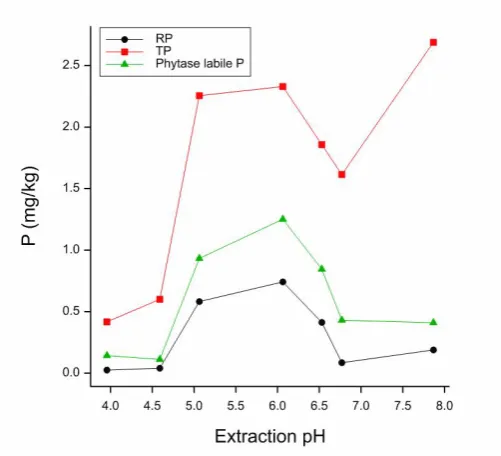
Furthermore, a proportion of the organic phosphorus may be easily hydrolysed to phosphate once it is in soil solution[25]. Consequently, it is important to understand the effect of pH on the mobility of organic phosphorus, and the results for a single soil are shown in Fig. 2. An acidic soil with and initial pH of 5.1 was adjusted to a range of soil pH between 4 and 8. It was then extracted with ultrapure water and analyzed for reactive, total and phytase-labile phosphorus. The data indicated that total phosphorus extraction was greatest at moderately acidic pH, pH 5–6, although it appeared to increase again at pH 7.8 (Fig. 2). The trend of reactive phosphorus and phytase labile phosphorus concentrations also followed this same pattern, with the exception of a further increase at alkaline pH. The proportion of the total
phosphorus that is phytase-labile changed with pH, from 30% at pH 4.5 and 7.5, to 90% at pH 6 (Fig. 2). This implies that by maintaining (acidic) soils at pH 5–6, the availability of the phosphorus applied in fertilizer, or that which is already contained in soil, is maximized, meaning that requirements for additional phosphorus fertilizers will be reduced. However, the lack of data on the effect of pH on organic
phosphorus availability across a range of soil types and phosphorus contents means that pH recommendations differ according to the proportion of soil phosphorus that is in an organic form.
8 Micronutrient antagonism and synergism
Another topic that is poorly understood but may impact on phosphorus availability and uptake by plants is related to the interactive effects of phosphorus and different micronutrients and toxic trace elements, including Cd (Nino-Savala et al.[26]). No interaction between any two nutrients added to the soil from a fertilizer is possible, such that the yield response to the nutrients is the sum of the response to the two nutrients added individually[27]. However, there may also be synergistic or antagonistic interactions between the nutrients, such that the yield response is either larger or smaller than expected from the effect of the individual nutrients[27]. Synergistic effects have been reported between phosphorus and N, Mg, Mn and Mo, but excess soil phosphorus has been shown to induce deficiencies of nutrients including S, K, Fe, Cu, Zn and Fe[28,29]. It is sometimes unclear if these antagonistic effects result in decreased concentrations of nutrients in crops, or reduced yields, or both, but both are important for food security[30]. Potential reasons for the antagonistic effects of phosphorus on other nutrients are varied, but can include phosphorus affecting the mobility of other elements in the soil, affecting the uptake, translocation or utilization of the other nutrients, or dilution of them in the plant material due to an increase in dry matter production[29]. However, it is clear that the interactions between elements are complex, and can vary between studies[27], possibly due to soil or plant differences, or variation in the ratios of different nutrients. Despite the
importance of plant nutrient interactions for determining the efficiency of use of nutrients applied to soil in fertilizers, this topic has received relatively little attention. However, without this information it will not possible to design future sustainable agricultural systems, especially with the increasing prevalence of precision agriculture, therefore further research is imperative.
9 Novel fertilizers
Opportunities also exist through the development of novel types of fertilizers, which may have different phosphorus solubility or release kinetics, based on their physical and chemical properties. This may arise due to the sourcing of phosphorus fertilizers from materials other than rock phosphate. This is something that is not only an opportunity but also an imperative, given the issues surrounding the continued supply of phosphate fertilizers derived from rock phosphate deposits, as discussed earlier. Recycled phosphorus fertilizers will undoubtedly increase in prevalence in the coming years, providing considerable
opportunities for innovation, for example, in their formulation and release kinetics. Examples of recycled fertilizers include struvite-based fertilizers recovered from sewage works, calcium phosphate from the demineralization of milk products from the dairy industry and processed abattoir wastes that are rich in phosphate from bones.
As well as managing the soil, there are many opportunities to improve phosphorus fertilizer use efficiency by influencing different plant traits, as discussed above in relation to plant root exudates. Root morphology is one such example and has received considerable attention[31], but other opportunities exist with the development of plants with the capacity for active in planta phosphorus management and apportionment.
10 Membrane lipid remodeling: a strategy to improve crop
phosphorus use efficiency
Phosphate forms a major component of fundamental biomolecules such as nucleic acids, adenosine
phosphates and phospholipids. Ignoring stored vacuolar phosphorus, cellular phospholipids can account for up to a third of organic phosphorus in cells (in the order of RNA > phospholipids > phosphate-esters > DNA > phosphorylated proteins) and therefore represent a major proportion of the phosphorus
budget[32,33]. Adaptive metabolic responses that release these stores can make a major contribute to plant adaption to growth under low-phosphorus conditions and represents a target for improving crop
phosphorus use efficiency. In phosphorus-deficient plants, the amounts of glycolipids increase at the expense of membrane phospholipids, e.g., phosphatidylcholine. The replacement of membrane
phospholipids by glycolipids represents one of the most prominent changes in higher plants in response to phosphorus limitation.
(Fig. 3). Metabolic adaptation and membrane remodeling enables plants to adapt to extremely low-phosphorus environments[33,34]. Yet the fundamental understanding of the processes underpinning
membrane lipid exchange in crops remains limited. Membrane remodeling is critical to plant performance during phosphorus stress and has been demonstrated by knockout studies in Arabidopsis thaliana[35].
Beyond model species, changes in phospholipases are part of a complex transcriptional response that crops, e.g., brassica species, use to manipulate membrane lipids and enhances phosphorus recycling[36]. Transcripts involved in the catabolism of phospholipids and the biosynthesis of galactolipids/sulfolipids accumulate to significantly greater abundance, while the production of phospholipids is reduced. The combined analysis of the transcriptome and lipidome in two rice genotypes with different degrees of tolerance to low phosphorus availability confirmed that the Dular (low-phosphorus-tolerant genotype) had a stronger expression of lipid remodeling genes in the shoot and to a lesser extent in the roots, when compared to the PB1 low-phosphorus sensitive genotype[37]. Evidence indicates that transcriptional responses to phosphorus availability are highly heritable and provide potential targets for breeding crops with improved phosphorus use efficiency[38–41].
Fig. 3 Leaf lipid remodeling in response to growth at low soil phosphorus. PL, phospholipids; PLD, phospholipiase D; PLC, phospholipiase C; NPC5, non-specific phospholipiase C5; PA, phosphatidic acid; PAH, phosphatidic acid phosphohydrolase; DAG, diacylglycerol; MGDG, Monogalatosyldiglycerol; MGDGS, monogalactosyl diacyglycerol synthase; DGDG, digalactosyldiacyglycerol; DGDGS, digalactosyldiacyglycerol synthase; SQD2, sulfolipid synthase; SQDG, sulphoquinovosyldiglyceride.
11 Intercropping
In addition to improving the use of organic and residual phosphorus in soils, another method for better utilization of soil phosphorus is intercropping, where two or more species are grown in close proximity, rather than in monocultures[42]. To test this, we grew ryegrass and white clover either as monocultures or as a mixed sward with a 3:1 ratio of grass to clover, but with the same total seed mass as the monocultures. Mixed swards had an 18%–35% increase in yield compared to that predicted from the monoculture yields, but there was no significant effect on the phosphorus concentration of the sward. Consequently,
phosphorus uptake by the mixed sward was 22%–26% greater than in the monocultures. The cause of the increased phosphorus use efficiency in the mixed sward may be facilitation, whereby one plant increases the availability of phosphorus and the other benefits, or a reduction in competition, because the two species are able to access different pools of phosphorus or access different physical locations within the soil[43].
12 Conclusions
Future phosphorus fertilizer availability is one of the most critical issues related to global food security and the sustainable intensification of agriculture that is required to achieve it. There are many opportunities for improving phosphorus use efficiency in agriculture in order to make the current sources of phosphorus fertilizer last longer, and also to prevent waste and losses to surface waters, and subsequent eutrophication. We suggest that some of the key areas that should be targeted as part of a wider effort to improve
phosphorus use efficiency are as follows.
(1) Refining phosphorus fertilizer application recommendations by:
a. Using the most appropriate soil test for individual soils to understand phosphorus availability.
b. Improving understanding of the fate of added phosphorus and subsequent availability in specific soil types, e.g., apportionment and speciation of added phosphorus in soils and plants.
c. Incorporating organic phosphorus into soil tests.
d. Changing the philosophy from maintaining soil phosphorus status at a relatively high index to a lower index.
e. Establishing soil by crop-specific critical phosphorus application rate recommendations.
(2) Managing soil pH to optimize availability of soil phosphorus.
(3) Developing novel and recycled phosphorus fertilizers to reduce the reliance on rock phosphate for phosphorus fertilizers.
(4) Developing plant traits for phosphorus use efficiency, especially;
a. Remodeled membrane lipids that lower the phosphorus requirements of plants.
b. Root morphology that enables plants to more efficiently scavenge soils for phosphorus.
c. Root exudates that mobilize and hydrolyze phosphorus not immediately available to plants, and thus exploit the accumulated phosphorus in soils arising from historic phosphorus applications.
(5) Developing phosphorus-efficient cropping systems such as intercropped swards, and other novel cropping systems or combinations.
As well as the specific points listed above, some fundamental issues still need to be addressed. These include improved understanding of the relative roles of plants versus microbes in the cycling and the availability of soil phosphorus, to facilitate better management. Also, improvement and maintenance of soil structure will have significant impacts. Basic issues such as access to phosphorus fertilizers by farmers in terms of both affordability and availability are still fundamental issues, and likely to remain so in the future, but the development of novel fertilizers that are sourced locally could help remedy this. Of course, tackling these issues and developing more knowledge to enable this will require considerable investment in research, technology and sometimes infrastructure. Given the potentially imminent issue of phosphorus fertilizer availability in some parts of the world and the growing pressures on global food security, it is now important that a concerted effort to increase phosphorus use efficiency is prioritized.
Acknowledgements Rothamsted Research is supported by funding from The UK Biotechnology and Biological Sciences Research Council (BBS/E/C/000I0310, BBS/E/C/000I0320, BBS/E/C/000I0120). Research by Richard Haslam was funded by the Biotechnology and Biological Sciences Research Council through the Tailoring Plant Metabolism Institute Strategic Grant BBS/E/C/000I0420.
Compliance with ethics guidelines Martin Blackwell, Tegan Darch, and Richard Haslam declare that they have no conflicts of interest or financial conflicts to disclose.
This article is a review and does not contain any studies with human or animal subjects performed by any of the authors.
References
2. Cordell D, White S. Peak phosphorus: clarifying the key issues of a vigorous debate about long-term phosphorus security.
Sustainability, 2011, 3(10): 2027–2049 doi:10.3390/su3102027
3. AHDB. Review of AHDB-funded research on phosphorus management in arable crops. Research Review No. 93. Available at AHDB (Agriculture and Horticulture Development Board) website on April 26, 2019
4. Conley D J, Paerl H W, Howarth R W, Boesch D F, Seitzinger S P, Havens K E, Lancelot C, Likens G E. Controlling eutrophication: nitrogen and phosphorus. Science, 2009, 323(5917): 1014–1015 doi:10.1126/science.1167755 PMID:19229022
5. Sattari S Z, Bouwman A F, Giller K E, van Ittersum M K. Residual soil phosphorus as the missing piece in the global phosphorus crisis puzzle. Proceedings of the National Academy of Sciences of the United States of America, 2012, 109(16): 6348– 6353 doi:10.1073/pnas.1113675109 PMID:22431593
6. Stutter M I, Shand C A, George T S, Blackwell M S A, Bol R, Mackay R L, Richardson A E, Condron L M, Turner B L, Haygarth P M. Recovering phosphorus from soil: a root solution? Environmental Science & Technology, 2012, 46(4): 1977–1978
doi:10.1021/es2044745 PMID:22280364
7. Menezes-Blackburn D, Giles C, Darch T, George T S, Blackwell M, Stutter M, Shand C, Lumsdon D, Cooper P, Wendler R, Brown L, Almeida D S, Wearing C, Zhang H, Haygarth P M. Opportunities for mobilizing recalcitrant phosphorus from agricultural soils: a review. Plant and Soil, 2018, 427(1–2): 5–16 doi:10.1007/s11104-017-3362-2 PMID:30996482
8. Sinclair A, Crooks B, Edwards T, Coull M. Technical Note TN 668. Available at FAS (Farm Advisory Servixe) website on July 15, 2019
9. Jordan-Meille L, Rubaek G H, Ehlert P A I, Genot V, Hofman G, Goulding K, Recknagel J, Provolo G, Barraclough P. An overview of fertilizer-P recommendations in Europe: soil testing, calibration and fertilizer recommendations. Soil Use and
Management, 2012, 28(4): 419–435 doi:10.1111/j.1475-2743.2012.00453.x
10. Hislop J, Cooke I J. Anion exchange resin as a means of assessing soil phosphate status—a laboratory technique. Soil Science, 1968, 105(1): 8–11 doi:10.1097/00010694-196801000-00003
11. Zhang H, Davison W, Gadi R, Kobayashi T. In situ measurement of dissolved phosphorus in natural waters using DGT.
Analytica Chimica Acta, 1998, 370(1): 29–38 doi:10.1016/S0003-2670(98)00250-5 PMID:21168548
12. Holford I C R. Evaluation of soil phosphate buffering indexes. Australian Journal of Soil Research, 1979, 17(3): 495–504
doi:10.1071/SR9790495
13. AHDB. RB209 Section 3: grass and forage crops. Available at AHDB (Agriculture and Horticulture Development Board) website on February 20, 2019
14. Menezes-Blackburn D, Paredes C, Zhang H, Giles C D, Darch T, Stutter M, George T S, Shand C, Lumsdon D, Cooper P, Wendler R, Brown L, Blackwell M, Wearing C, Haygarth P M. Organic acids regulation of chemical-microbial phosphorus transformations in soils. Environmental Science & Technology, 2016, 50(21): 11521–11531 doi:10.1021/acs.est.6b03017 PMID:27700099
15. Nawara S, Van Dael T, Merckx R, Amery F, Elsen A, Odeurs W, Vandendriessche H, McGrath S, Roisin C, Jouany C, Pellerin S, Denoroy P, Eichler-Lobermann B, Borjesson G, Goos P, Akkermans W, Smolders E. A comparison of soil tests for available phosphorus in long-term field experiments in Europe. European Journal of Soil Science, 2017, 68(6): 873–885
doi:10.1111/ejss.12486
16. Mason S, McNeill A, McLaughlin M J, Zhang H. Prediction of wheat response to an application of phosphorus under field conditions using diffusive gradients in thin-films (DGT) and extraction methods. Plant and Soil, 2010, 337(1–2): 243–258
doi:10.1007/s11104-010-0521-0
17. Speirs S D, Scott B J, Moody P W, Mason S D. Soil phosphorus tests II: a comparison of soil test-crop response relationships for different soil tests and wheat. Crop & Pasture Science, 2013, 64(5): 469–479 doi:10.1071/CP13111
18. Recena R, Diaz-de la Torre I, Garcia-Lopez A M, Delgado A. The determination of total phosphorus improves the accuracy of the bicarbonate extraction as an availability index. Soil Use and Management, 2019, 35(2): 346–354 doi:10.1111/sum.12498
19. Recena R, Diaz I, Delgado A. Estimation of total plant available phosphorus in representative soils from Mediterranean areas.
Geoderma, 2017, 297: 10–18 doi:10.1016/j.geoderma.2017.02.016
20. George T S, Gregory P J, Hocking P, Richardson A E. Variation in root-associated phosphatase activities in wheat contributes to the utilization of organic P substrates in vitro, but does not explain differences in the P-nutrition of plants when grown in soils.
Environmental and Experimental Botany, 2008, 64(3): 239–249 doi:10.1016/j.envexpbot.2008.05.002
21. Giles C D, Richardson A E, Cade-Menun B J, Mezeli M M, Brown L K, Menezes-Blackburn D, Darch T, Blackwell M S A, Shand C A, Stutter M I, Wendler R, Cooper P, Lumsdon D G, Wearing C, Zhang H, Haygarth P M, George T S. Phosphorus acquisition by citrate- and phytase-exuding Nicotiana tabacum plant mixtures depends on soil phosphorus availability and root intermingling. Physiologia Plantarum, 2018, 163(3): 356–371 doi:10.1111/ppl.12718 PMID:29498417
22. Withers P J A, Sylvester-Bradley R, Jones D L, Healey J R, Talboys P J. Feed the crop not the soil: rethinking phosphorus management in the food chain. Environmental Science & Technology, 2014, 48(12): 6523–6530 doi:10.1021/es501670j PMID:24840064
24. Turner B L, Blackwell M S A. Isolating the influence of pH on the amounts and forms of soil organic phosphorus. European
Journal of Soil Science, 2013, 64(2): 249–259 doi:10.1111/ejss.12026
25. Darch T, Blackwell M S A, Hawkins J M B, Haygarth P M, Chadwick D. A meta-analysis of organic and inorganic phosphorus in organic fertilizers, soils, and water: implications for water quality. Critical Reviews in Environmental Science and
Technology, 2014, 44(19): 2172–2202 doi:10.1080/10643389.2013.790752
26. Nino-Savala A G, Zhang X, Ma X, Fangmeier A, Li H, Tang A, Liu X J. Cadmium pollution from phosphate fertilizers in arable soils and crops: an overview. Frontiers of Agricultural Science and Engineering, 2019. doi: 10.15302/J-FASE-2019273
27. Rietra R, Heinen M, Dimkpa C O, Bindraban P S. Effects of nutrient antagonism and synergism on yield and fertilizer use efficiency. Communications in Soil Science and Plant Analysis, 2017, 48(16): 1895–1920 doi:10.1080/00103624.2017.1407429
28. Sumner M E, Farina M P W. Phosphorus interactions with other nutrients and lime in field cropping systems. New York:
Springer, 1986, 201–236
29. Fageria V D. Nutrient interactions in crop plants. Journal of Plant Nutrition, 2001, 24(8): 1269–1290 doi:10.1081/PLN-100106981
30. Eggersdorfer M, Kraemer K, Cordaro J B, Fanzo J, Gibney M J, Kennedy E T, Labrique A, Steffen J. Good nutrition: perspectives for the 21st Century. Basel: Karger, 2016
31. Hossain M A, Kamiya T, Burritt D J, Tran L S P, Fujiwara T. Plant macronutrient use efficiency: molecular and genomic perspectives in crop plants. US: Academic Press, 2018. doi: 10.1016/C2016-0-03180-7
32. Veneklaas E J, Lambers H, Bragg J, Finnegan P M, Lovelock C E, Plaxton W C, Price C A, Scheible W R, Shane M W, White P J, Raven J A. Opportunities for improving phosphorus-use efficiency in crop plants. New Phytologist, 2012, 195(2): 306– 320 doi:10.1111/j.1469-8137.2012.04190.x PMID:22691045
33. Dissanayaka D M S B, Plaxton W C, Lambers H, Siebers M, Marambe B, Wasaki J. Molecular mechanisms underpinning phosphorus-use efficiency in rice. Plant, Cell & Environment, 2018, 41(7): 1483–1496 doi:10.1111/pce.13191 PMID:29520969
34. Lambers H, Cawthray G R, Giavalisco P, Kuo J, Laliberté E, Pearse S J, Scheible W R, Stitt M, Teste F, Turner B L. Proteaceae from severely phosphorus-impoverished soils extensively replace phospholipids with galactolipids and sulfolipids during leaf development to achieve a high photosynthetic phosphorus-use-efficiency. New Phytologist, 2012, 196(4): 1098–1108
doi:10.1111/j.1469-8137.2012.04285.x PMID:22937909
35. Yu B, Xu C, Benning C. Arabidopsis disrupted in SQD2 encoding sulfolipid synthase is impaired in phosphate-limited growth. Proceedings of the National Academy of Sciences of the United States of America, 2002, 99(8): 5732–5737
doi:10.1073/pnas.082696499 PMID:11960029
36. Hammond J P, Mayes S, Bowen H C, Graham N S, Hayden R M, Love C G, Spracklen W P, Wang J, Welham S J, White P J, King G J, Broadley M R. Regulatory hotspots are associated with plant gene expression under varying soil phosphorus supply in
Brassica rapa. Plant Physiology, 2011, 156(3): 1230–1241 doi:10.1104/pp.111.175612 PMID:21527424
37. Mehra P, Pandey B K, Giri J. Comparative morphophysiological analyses and molecular profiling reveal Pi-efficient strategies of a traditional rice genotype. Frontiers of Plant Science, 2016, 6: 1184 doi:10.3389/fpls.2015.01184 PMID:26779218
38. Hammond J P, Bennett M J, Bowen H C, Broadley M R, Eastwood D C, May S T, Rahn C, Swarup R, Woolaway K E, White P J. Changes in gene expression in Arabidopsis shoots during phosphate starvation and the potential for developing smart plants.
Plant Physiology, 2003, 132(2): 578–596 doi:10.1104/pp.103.020941 PMID:12805589
39. Wu P, Ma L, Hou X, Wang M, Wu Y, Liu F, Deng X W. Phosphate starvation triggers distinct alterations of genome expression in Arabidopsis roots and leaves. Plant Physiology, 2003, 132(3): 1260–1271 doi:10.1104/pp.103.021022 PMID:12857808
40. Misson J, Raghothama K G, Jain A, Jouhet J, Block M A, Bligny R, Ortet P, Creff A, Somerville S, Rolland N, Doumas P, Nacry P, Herrerra-Estrella L, Nussaume L, Thibaud M C. A genome-wide transcriptional analysis using Arabidopsis thaliana
Affymetrix gene chips determined plant responses to phosphate deprivation. Proceedings of the National Academy of Sciences of
the United States of America, 2005, 102(33): 11934–11939 doi:10.1073/pnas.0505266102 PMID:16085708
41. Morcuende R, Bari R, Gibon Y, Zheng W, Pant B D, Bläsing O, Usadel B, Czechowski T, Udvardi M K, Stitt M, Scheible W R. Genome-wide reprogramming of metabolism and regulatory networks of Arabidopsis in response to phosphorus. Plant, Cell &
Environment, 2007, 30(1): 85–112 doi:10.1111/j.1365-3040.2006.01608.x PMID:17177879
42. Brooker R W, Bennett A E, Cong W F, Daniell T J, George T S, Hallett P D, Hawes C, Iannetta P P, Jones H G, Karley A J, Li L, McKenzie B M, Pakeman R J, Paterson E, Schöb C, Shen J, Squire G, Watson C A, Zhang C, Zhang F, Zhang J, White P J. Improving intercropping: a synthesis of research in agronomy, plant physiology and ecology. New Phytologist, 2015, 206(1): 107– 117 doi:10.1111/nph.13132 PMID:25866856
43. Betencourt E, Duputel M, Colomb B, Desclaux D, Hinsinger P. Intercropping promotes the ability of durum wheat and chickpea to increase rhizosphere phosphorus availability in a low P soil. Soil Biology & Biochemistry, 2012, 46: 181–190