e-ISSN: 2278-067X, p-ISSN: 2278-800X, www.ijerd.com
Volume 14, Issue 1 (January 2018), PP.19-31
Experimental Investigation on Performance and Emissions of
Emulsified Biodiesel Operated Diesel Engine at Various Engine
Operating Conditions
1
Meet DevendrabhaiNaik,
2Dr.MurariMohon Roy,
3Margesh Ashok Amin
1Graduate Student, 2Associate Professor, 3Graduate Student
Department of Mechanical Engineering,
Lakehead University, Thunder Bay, Ontario, Canada P7B 5E1 Corresponding Author: Dr. MurariMohon Roy
Abstract
- An experimental investigation on a light-duty diesel enginewas conducted to determine the effect of emulsified biodiesel’s performance and emissions. Biodiesel was produced on site by a transesterification process from canola oil, emulsified with 5vol% and 10vol%of water. In order to prepare the emulsified fuel, two different types of emulsifiers, Sorbian Monooleate (Span 80) and Polyoxymethylene Sorbian Monooleate (Tween 80), were used. The engine was operated at three different speeds 1000, 2100 and 3000 rpm and at each speed, three loads were applied: low (≈20%), medium (≈50%) andhigh(˃80%).Properties such as density, viscosity and calorific value of emulsified fuel were measured. Brake thermal efficiency (BTE) and brake-specific energy consumption(BSEC) were tested as the performance parameters. Regulated emissions carbon monoxide (CO), hydrocarbon (HC), oxides of nitrogen (NOx) and smoke were measured. Performance andemissions of emulsified biodiesel were compared to that of petroleum diesel. Improved NOx and smoke were
achieved by using emulsified biodiesel over diesel.
Keywords- Biodiesel, Emulsification, Emissions and Performance, Diesel Engine,Transesterification process, Fuel properties.
--- --- Date of Submission: 20 -01-2018 Date of acceptance: 05-02 2018 --- ---
Nomenclature
B0 100vol% diesel
BF Base fuel (50 vol % diesel + 50 vol % kerosene) B20 Base fuel with 20vol % biodiesel
B50 Base fuel with 50 vol % biodiesel B100 100% biodiesel
BSEC Brake-specific energy consumption BSFC Brake-specific fuel consumption BTE Brake thermal efficiency
cc Cubic centimetre
CO Carbon monoxide
CO2 Carbon dioxide
cSt Centistoke
ºC Degree Celsius EB Emulsified biodiesel
MJ/kWh Mega Joule per Kilowatt-hour Kg/L Kilogram per liter
HC Hydrocarbon
HLB Hydrophile-lipophile balance kg/m3 Kilogram per cubic meter kJ/kg Kilojoule per kilogram
kW Kilowatt
mg/m3 Milligram per cubic meter ml/min Milliliter per minute
mm Millimeter
NO2 Nitrogendioxide
NOx Oxides of nitrogen
O2 Oxygen
O/W Oil-in-water
O/W/O Oil-in-water-in-oil PM Particulate matter ppm Parts per million rpm Revolution per minute Span80 SorbianMonooleate
Tween80 PolyoxymethyleneSorbianMonooleate
W/O Water-in-oil
W/O/W Water-in-oil-in-water
I.
INTRODUCTION
Biodiesel, being renewable in nature and offering a hope of some measure of independence, has been highlighted and researched during the last decade as one of the feasible alternative fuels for diesel engines.Production of biodiesel is usually obtained from vegetable oils, used cooking oils, or animal fats by transesterification [1]. Biofuels, which are used as alternative fuels, can be very effective in reducing engine emissions along with other benefits including energy security, lower toxicity, higher lubrication, local availability, and sustainability [2].Biodiesel can be used with some precautions in diesel engines in many sectors including on-road vehicles, off-road mobile equipment, and vehicles and stationary equipment such as transportation [3]. The main pollutants emitted from diesel engines that contribute to environmental pollution include HC, CO, NOx, and particulate matter(PM) or smoke from the combustion process [4-6]. However, the
only drawback reported in using biodiesel in diesel engine is the increased production of NOx due to the
availability of increased oxygen and higher temperature. This problem can be overcome by applying two important measures:delaying the injection timing (which needs engine modification), or by using an exhaust gas recirculation (EGR) system in the engine; however, volumetric efficiency will be reduced due to the higher temperature of the mixture. Hence, the other possibility of reducing NOx emission from an engine running on
biodiesel could be by using its emulsion with water [7].One of the biggest advantagesof water-diesel emulsions in diesel engines is a significant decrease in NOx emissions [8, 9]. It was discovered that the presence of water
vapor in reactants influenced the physics and chemical kinetics of combustion [10]. Combustion efficiency, engine power and engine torque were significantly improved with the addition of water in the form of emulsion [11]. The viscosity and calorific value of an emulsion fuel are two important indicators affected by water content of the emulsified fuel.Fuel with higher viscosity than diesel fuel resulted in a reduction in the injection rate, power, fuel atomization, and vaporization; consequently, an incomplete combustion, which resulted in higher soot emissions [12-13]. Research conducted by Zhang et al. [14] concluded that an increase in water content increases viscosity in an emulsified fuel. Qi et al. [15] reported that an increase in the percentage of water concentration in the emulsion fuel decreases the heating value of the emulsified fuel and raises the ignition delay of diesel engines. Hsieh et al. [16] focused their study on finding a combination between hydrophile-lipophile balance (HLB) of emulsifiers and gross heating value. The relationship was found to be linear, and the maximum HLB value indicated the minimum gross heating value.
Emulsified fuel is a blend of fuel(which is non-polar liquid), and water (polar liquid) with various emulsifiers such as Tween80 and Span80, which usually consists of two surfactants that can reduce the surface tension between immiscible liquids [7]. The surfactant that has more affinity towards polar liquid is called hydrophilic, while the surfactant that has more affinity towards a non-polar liquid is considered as lipophilic. Every surfactant has a numerical value varying from 0 to 20,calledHLB [17]. The emulsion is mainly of two types: the first is named as two-phase emulsion in which they are subdivided in two types which is water-in-oil (W/O), or oil-in water(O/W) [18]; the second is named as three-phase emulsion which isalsosubdivided into water-in-oil-in-water(W/O/W), or oil-in-water-in-oil (O/W/O)[19].
The two most important phenomena attributed to emulsion combustion in a diesel engine aremicro-explosion and puffing. Micro-aremicro-explosion is the process in which there is quick breakdown of droplets, which ultimately results in secondary droplet atomization [20]. The main reason is that water and oil have different boiling temperatures, which results in the water evaporating much faster than the oil in a hot combustion chamber. In water-in-oil emulsions, water droplets are the dispersed phase, surrounded by oil. The process of micro-explosion takes place in the hot combustion chamber where the water droplets reach superheating much faster than the oil; whereas, in the case of puffing, water leaves the oil droplets as a fine mist [20, 21].Most of the researchers have not agreed, however, on the occurrence of micro-explosions in diesel engines, as was outlined by Weibiao et al [22].
significant reduction in NOx and PM emission when the diesel engine ran on emulsion fuel. According to Yang
et al. [24],BTE is higher in diesel engine performance fuelledby emulsion fuel with nano-organic additives,compared to neat diesel. The experiment conducted by Senthil et al. [25] investigated diesel engine emissions and performance, and concluded that the emulsion fuel resulted in slightly higher BTE, adecrease in NOxand smoke, and a significant increase in CO and HC emission. From the investigation conducted by
Ogunkoya et al. [26], a diesel engine with three different types of emulsion fuel showed increased BSEC anda significant decrease in mechanical efficiency and output power compared to the base fuels.The water, which is added to the fuel, normally acts as a diluent as it lowers the combustiontemperature and thus suppresses NOx
formation.In the case of experiments by Zaid et al., an increase in water content resulted in an increase in BTE, an increase in brake-specific fuel consumption (BSFC), and a decrease in exhaust gas temperature [27]. It was found in ref. [26] that significant reductions in carbon and hydrogen deposits are possible as water content in emulsions is increased.
In this research work, a two-phase emulsion of base fuel (BF), biodiesel-BF blends of B0,B20, B50 was carried outusing two different levels of water concentration (5%and 10%), with Span 80 and Tween 80 in a modern small unmodified diesel engine. The base fuel is the blend of 50 vol% kerosene (kerosene’s cloud point is -78˚C) with 50 vol% winter diesel (winter diesel’s cloud point is -40˚C), whose cloud point is -50˚C, lower than winter diesel by 10˚C. To our knowledge, this base fuel with biodiesel and emulsification is the first research to test a diesel engine for performance and emissions. The emulsion characteristics, engine performance, and engine emissions at various operating conditions of the enginewere investigated.Increasing the concentration of water compared to pure blend has the additional benefit of reduction of fuel consumption.
II.
MATERIALS AND METHODS
2.1 MATERIALS
The following materials were used for the production of biodiesel and its emulsification and for engine test: 1) Diesel,having low sulphur content,was purchased from a local gas station in Thunder Bay;
2) Canola oil from a local supermarket to producebiodiesel on site;
3) Methanol and sodium hydroxide(NaOH)were obtained from Lakehead University’sChemistry lab; 4) Span 80 and Tween 80 were purchased from a Canadian supplier.
2.2 BIODIESELPRODUCTION
Biodiesel can be producedthrough various processes, namely direct blending (dilution), micro-emulsion, catalytic cracking and transesterification [28,29]. In this research work,a base-catalyzed transesterification method was used with sodium hydroxide as the catalyst and methanol as the base.Our lab developed a biodiesel production method, and tested biodiesel quality according to ASTM standards; we also produced biodiesel which conforms to ASTM 6751 standards [30]. The biodiesel production process efficiency averaged 80% volume collection of pure biodiesel, which means that from 1 L of canola oil, we produced 800 mL of pure biodiesel.
2.3EMULSIFICATION OF FUELS
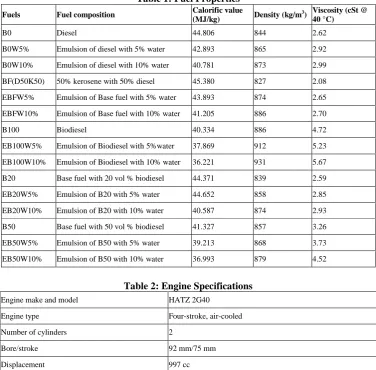
An emulsion is a combination of two or more liquids immiscible in nature, one present as droplet or dispersed phase distributed throughout the other, or the continuous phase. It is generated by means of mechanical agitation in the presence of surface active agents, sometimes called emulsifiers or surfactants. The most commonsurfactants used in the water-in-diesel emulsion are Sorbian monooleate (Span 80)and polyethylene glycol Sorbian monooleate (polysorbate 80).Emulsified fuel was prepared using the external force method. The fuels used were diesel and biodiesel-diesel blends, namely B0,base fuel (BF), B20, B50, and B100. Once various kinds of blends were prepared, two levels of water concentration (5% and 10%) in emulsion were investigated. Emulsified fuels properties are shown in Table 1.
2.4 ENGINE SETUP
An air-cooled, 2-cylinder, 4-stroke light-duty (HATZ 2G40) diesel engine with a direct fuel injection system was used; its specifications are shown in Table 2. A schematic diagram of the experimental system is outlined in Figure 1.In the engine, smoke was measured using a device calledSmart 1500 opacity meter, and various kinds of gas such as NO, NO2, CO, CO2, O2were measured using a Nova Gas analyzer and DWYER
Table 1: Fuel Properties
Table 2: Engine Specifications
Engine make and model HATZ 2G40
Engine type Four-stroke, air-cooled
Number of cylinders 2
Bore/stroke 92 mm/75 mm
Displacement 997 cc
Compressions ratio 20.5:1
Rated power 17 kW @ 3600 rpm
Figure 1: Schematic diagram of experimental setup
2.5 MEASUREMENT APPARATUS
A capillary u-tube viscometer was used to determine the kinematic viscosity for various types of fuels following ASTM D445 standard. A plain jacket bomb calorimeter was used to measure the heating value of the fuels and blends. Pure biodiesel (B100) had the viscosity of 4.72 cSt; with 5% and 10% water, it had 5.23
Fuels Fuel composition Calorific value
(MJ/kg) Density (kg/m
3) Viscosity (cSt @ 40 °C)
B0 Diesel 44.806 844 2.62
B0W5% Emulsion of diesel with 5% water 42.893 865 2.92
B0W10% Emulsion of diesel with 10% water 40.781 873 2.99
BF(D50K50) 50% kerosene with 50% diesel 45.380 827 2.08
EBFW5% Emulsion of Base fuel with 5% water 43.893 874 2.65
EBFW10% Emulsion of Base fuel with 10% water 41.205 886 2.70
B100 Biodiesel 40.334 886 4.72
EB100W5% Emulsion of Biodiesel with 5%water 37.869 912 5.23
EB100W10% Emulsion of Biodiesel with 10% water 36.221 931 5.67
B20 Base fuel with 20 vol % biodiesel 44.371 839 2.59
EB20W5% Emulsion of B20 with 5% water 44.652 858 2.85
EB20W10% Emulsion of B20 with 10% water 40.587 874 2.93
B50 Base fuel with 50 vol % biodiesel 41.327 857 3.26
EB50W5% Emulsion of B50 with 5% water 39.213 868 3.73
cStand 5.6 cSt, respectively. Base fuel (BF) had the lowest viscosity of 2.08 cSt; with 5% and 10% water, it had 2.65cSt and 2.70cSt, respectively.Pure diesel hadthe highest heating value of 44.806MJ/kg; with 5% and 10% water, it had42.893MJ/kg and 40.781MJ/kg, whereas biodieselhadlowestheating value of 40.334MJ/kg; with 5% and 10% water, it had 37.869MJ/kg and 36.221MJ/kg, respectively.
2.5.1EMISSION MEASUREMENTS
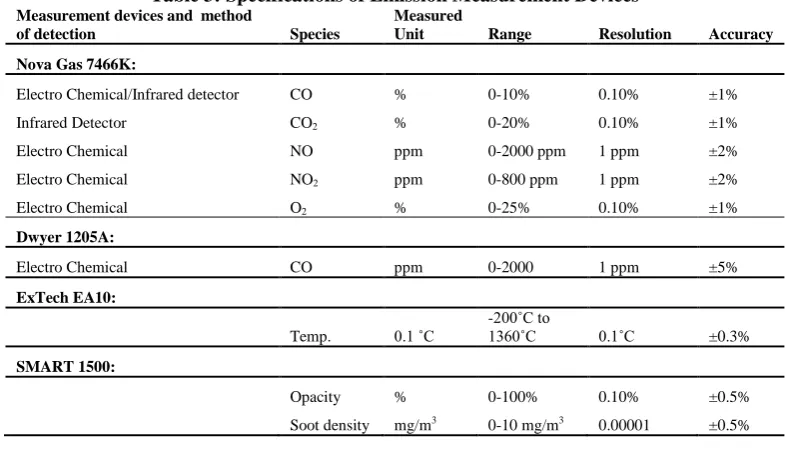
For emission testing, several devices were used: Nova Gas 7466K for emissions of NO, NO2, CO, CO2,
O2, a DWYER 1205A analyzer for precise CO emission, a Smart 1500 opacity meter to measure the amount of
smoke produced, and a J-type thermocouple to measure the exhaust gas temperatures. The specifications of emission measurement devices are shown in Table 3.
Table 3: Specifications of Emission Measurement Devices Measurement devices and method
of detection Species
Measured
Unit Range Resolution Accuracy
Nova Gas 7466K:
Electro Chemical/Infrared detector CO % 0-10% 0.10% ±1%
Infrared Detector CO2 % 0-20% 0.10% ±1%
Electro Chemical NO ppm 0-2000 ppm 1 ppm ±2%
Electro Chemical NO2 ppm 0-800 ppm 1 ppm ±2%
Electro Chemical O2 % 0-25% 0.10% ±1%
Dwyer 1205A:
Electro Chemical CO ppm 0-2000 1 ppm ±5%
ExTech EA10:
Temp. 0.1 ˚C
-200˚C to
1360˚C 0.1˚C ±0.3%
SMART 1500:
Opacity % 0-100% 0.10% ±0.5%
Soot density mg/m3 0-10 mg/m3 0.00001 ±0.5%
III. RESULTS
AND
DISCUSSIONSThe performance and emissions of a diesel engine using biodiesel and base fuel with their emulsions at different engine operating conditions were investigated. A mixture of 50 vol% diesel and 50 vol% kerosene was used as the base fuel (BF) for this research.This BF hada lower cloud point (-50˚C) compared to diesel (-40˚C). Therefore, biodiesel blends with base fuel is more efficientthan blending it with diesel in severe Canadian winters. Three engine speeds were selected: low (1000 rpm), medium for maximum torque (2100 rpm), and high for maximum power (3000 rpm), as well as loads such as low, medium and high at each engine speed. A totalof six fuels and their emulsions were tested, namely diesel (B0), BF, B20, B50, B100, K100 with 5% and 10%water concentration in emulsions.
3.1 EMULSION FUEL PROPERTIES
From Table 1, it is clearthat the fuel viscosity for a particular blend increasedwith the increase in water content in the blend.For example,pure diesel(B0) had kinematicviscosity of 2.62 cSt, whereas for diesel with 5% and 10%,itwas 2.92cSt and 2.99cSt, respectively.Density also changed due to emulsification [31-33].For example, the density of pure diesel was 0.832 kg/L, whereas for 5%and 10% emulsion of diesel, itwas 0.852 kg/L and 0.859kg/L, respectively. It was observed that water addition reduced the heating value of the emulsion [31,34].It was found that the heating value of pure diesel was 44.81 MJ/kg,whereas diesel with 5%and 10% water had heating values 42.57 MJ/kg and 40.33 MJ/kg, respectively.
3.2 ENGINE PERFORMANCE
3.2.1BRAKE-SPECIFICENERGYCONSUMPTION(BSEC)
3.2.2 BRAKE THERMAL EFFICIENCY (BTE)
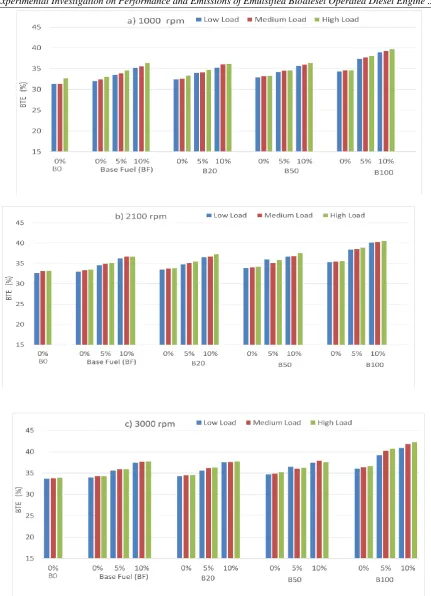
Figure 3 shows BTE for different emulsified fuels. Base fuel blends with biodiesel had slightly higher BTE compared to diesel at all engine conditions, as oxygen content in biodiesel promotes burning efficiency. We did not see significant change in BTE at different engine speeds up to B50 without and with emulsification. However, there is 3-4% BTE increase for B100 without and with emulsification. Higher oxygen content of B100, and micro-explosion with emulsified fuels may have helped the combustion. As micro explosion takes place in the emulsion fuels, which improves the air fuel mixture and thus enhances improvement in combustion efficiency, this is one of the reasons for increasing BTE in emulsified fuels compared to pure fuel blends [36].
3.3 ENGINE EMISSIONS 3.3.1 NOx EMISSION
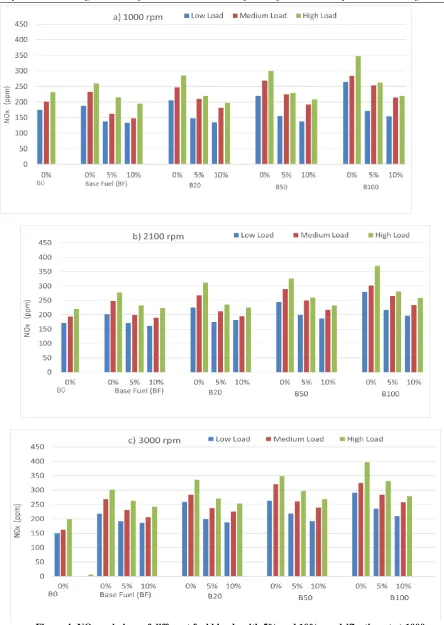
Figure 4 compares NOx emission of various kinds of fuels and their emulsions at various speeds and
loads.It was observed that NOx emissions increase with the increased load and biodiesel content for all fuels as
the combustion temperature was higher at higher load due to the increased fuel supply and with higher biodiesel content, higher oxygen was available for the combustion. Water addition in the blend shows NOx reduction and the higher the water percentage, the higher the reduction is for all engine loads and speeds. 10% water shows about 30-35% NOx reduction compared to no water case. This is due to the water’s heat energy absorption, which led to a reduction in peak flame temperature.Similar results were obtained by Buyukkaya [37] and Man et al. [38].
3.3.2 SMOKE EMISSION
Figure 5 depicts smoke opacity of different fuels and their emulsions at various engine loads and speeds. It is observed from the figure that smoke opacity was higher with higher biodiesel content in the blends. Although there is a general perception that biodiesel reduces smoke, it did not happen in our small modern unmodified diesel engine. Higher viscosity of biodiesel and its blends adversely affected the smoke emissions. Due to a shorter penetration length of the spray (from the tip of the nozzle to the combustion chamber walls) of this small diesel engine, there was a higher chance of a larger amount of fuel adherence to the combustion chamber walls; this is part, together with higher viscosity, might be responsible for higher smoke formation. Reduction in smoke with higher water concentration was observed due to micro-explosion of emulsion fuel and better fuel mixing and vaporization in the combustion chamber.From Figure 5, it was found that smoke opacity reduction at 10% water concentration for all emulsion fuels averaged between 10% and 15%, compared to their fuel bases at the same engine load condition.
3.3.3 CO AND HC EMISSION
Figure 6 outlines CO emission of different fuels and their emulsions at various engine loads and speeds. CO is mainly formed byincomplete combustion. The reduction in CO emission is due to higher combustion efficiency and temperature therefore, the biodiesel-diesel blends decreased CO emission compared to pure diesel. CO was also reduced by adequate turbulence and high temperature environment with an increase in load. As there was lower combustion temperature created by water content in the emulsions, CO emissions increased with an increase in water concentration. From Figure 6, we see that there was a considerable decrease (60-70%) in average CO emission of B100 than B0 in different load and speed conditions. On the other hand, we see that with an increase in water concentration, there was an increase in CO emissions (i.e., with 10% water, CO increased by 20-40% compared to base fuel of same type at all load and speed conditions).
Figure 6: CO emissions of different fuel blends with 5% and 10% emulsification at a) 1000 rpm, b) 2100 rpm, and c) 3000 rpm
0 500 1000 1500 2000 2500
0% 0% 5% 10% 0% 5% 10% 0% 5% 10% 0% 5% 10%
CO
(p
p
m
)
a) 1000 rpm Low Load Medium Load High Load
B20
Base Fuel (BF) B50 B100
0 500 1000 1500 2000 2500
CO
(p
p
m
)
b) 2100 rpm
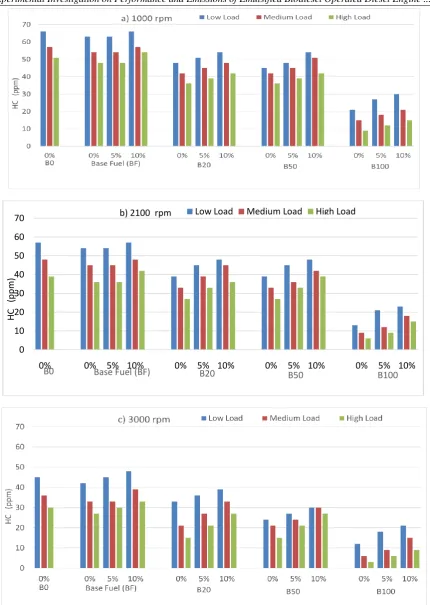
Figure 7: HC emissions of different fuel blends with 5% and 10% emulsification at a) 1000 rpm, b) 2100 rpm, and c) 3000 rpm
0 10 20 30 40 50 60 70
0% 0% 5% 10% 0% 5% 10% 0% 5% 10% 0% 5% 10%
H
C
(p
p
m
)
b) 2100 rpm Low Load Medium Load High Load
IV.
CONCLUSIONS
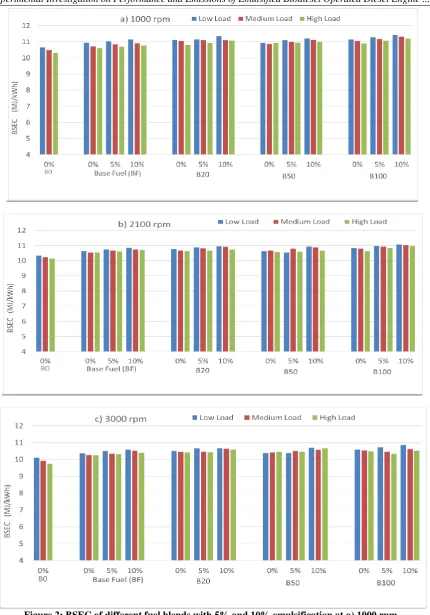
The following are the conclusions from this experimental investigation.The viscosity of emulsified fuel was higher than diesel and the base fuel, and the calorific value of emulsified fuels was far less than that of diesel and base fuel. For all engine conditions, there was no significant BSEC change of emulsion fuels up to B50 blends; however, the BTE of B100 fuel blends were 3-4% higher than diesel or base fuel. Due to emulsification, there was a decrease in NOx and smoke emission, and the higher
the water content, the higher the reductions. Maximum reduction of 35% in NOx was obtained with blends with
10% water content. Water content in the fuel blends helped reducing smoke emissions, and at 10% water content, maximum smoke opacity reduction was found as 15%, compared to their fuel bases at the same engine load condition.There was about 60-70% CO reduction with B100 and blends than diesel or base fuel. CO emission for the blends with higher concentrations of water increased with an increase in percentage of water at all engine conditions.CO emission with 10% water content fuel blendswas 20-40%higher compared to the base fuel’s CO emission. HC emission showeda similar trend to that of CO emission, but in a varying magnitude.HC emission with 10% water content fuel blends was 20-60% higher compared to that of fuel blends with no water.However, B100 emulsified blends show a significant HC reductions (≈50% for 5% water content and ≈15% for 10% water content).
ACKNOWLEDGMENT
ThankstoJoe Ripku, Technologist in the Mechanical Engineering Department, and to Debbie Puumala, Technician in the Department of Chemistry, for their assistance throughout this project. A special thanks to Manpreet Sindhu, Mrugesh Patel, and RamneekKumar Singh, Graduate Students of the Mechanical Engineering Program at Lakehead University for their help and support during this work.
REFERENCES
[1] https://www.afdc.energy.gov/fuels/biodiesel_production.html[2] Rakopoulos D.C., Rakopoulos C.D., Giakoumis E.G., Papagiannakis R.G., Kyritsis D.C. Influence of properties of various common bio-fuels on the combustion and emission characteristics of high-speed DI (direct injection) diesel engine: Vegetable oil, bio-diesel, ethanol, n-butanol, diethyl ether. Energy 2014;73:354–366.
[3] http://www.nrcan.gc.ca/energy/alternative-fuels/fuel-facts/biodiesel/3511
[4] Baskar P., Senthilkumar A. Effects of oxygen enriched combustion on pollution and performance characteristics of a diesel engine. EngSciTechnol, Int J 2016;19(1):438–443.
[5] McCarthy P., Rasul M., Moazzem S. Analysis and comparison of performance and emissions of an internal combustion engine fuelled with petroleum diesel and different bio-diesels. Fuel 2011;90(6):2147–2157.
[6] Hulwan D., Joshi S. Performance, emission and combustion characteristic of a multicylinder DI diesel engine running on diesel–ethanol–biodiesel blends of high ethanol content. Appl Energy 2011;88(12):5042–5055.
[7] H. Raheman, Sweeti K. Performance and emissions of emulsified biodiesel operated diesel engine. International Conference on Biological, Civil and Environmental Engineering (BCEE-2014) March 17-18, 2014 Dubai (UAE), pp. 110-117.
[8] R.V. Babu and S. Sendilvelan. Reduction of pollutants in CI engine using emulsion fuels to reduce overall traffic-induced emissions.Global J Research Engi 2011, 11(2):11-15.
[9] J.S. Basha and R.B. Anand. Role of nanoadditive blended biodiesel emulsion fuel on the working characteristics of a diesel engine. J Renew Sustain Energy 2011; 3(2), 023106.
[10] N. Samec, B. Kegl, R.W. Dibble. Numerical andexperimental study of water/oil emulsified fuelcombustion in a diesel engine. Fuel 2002;81:2035–2044.
[11] M. Abu-Zaid. Performance of single cylinder, direct injection diesel engine using water fuel emulsions. Energy Convers Manage 2004;45(5):697–705.
[12] Russo D., Dassisti M., Lawlor V., Olabi A. State of the art of biofuels from pure plant oil. Renew Sustain Energy Rev 2012;16(6):4056–4070.
[13] Mielenz JR. Ethanol production from biomass: technology and commercialization status. CurrOpinMicrobiol 2001;4(3):324–329.
[14] Zhang J., Yuan H., Zhao J., Mei N. Viscosity estimation and component identification for an oil-water emulsion with the inversion method. ApplThermEngi 2017;111:759–767.
[15] Qi D., Chen H., Matthews R., Bian Y. Combustion and emission characteristics of ethanol–biodiesel– water micro-emulsions used in a direct injection compression ignition engine. Fuel 2010;89(5):958– 964. [16] Hsieh CT, Lin PH, Lai JH. An emulsification method of bio-oils in diesel. China Steel Technical Report
[17] Castel V., Rubiolo A., Carrara C. Droplet size distribution, rheological behaviour and stability of corn oil emulsions stabilized by a novel hydrocolloid (Breagum) compared with gum arabic. Food Hydrocolloids 2017;63:170–177.
[18] Debnath B.K., Saha U.K., Sahoo N. A comprehensive review on the application of emulsions as an alternative fuel for diesel engines. Renew Sustain Energy Rev 2015;42:196–211.
[19] Li Y., Zhang Z., Ge B, Men X., Xue Q. A versatile and efficient approach to separate both surfactant-stabilized water-in-oil and oil-in-water emulsions. Sep PurifTechnol 2017;176:1–7.
[20] Hagos F.Y., Aziz A.R.A, Tan I.M. Water-in-Diesel Emulsion and its Micro-Explosion Phenomenon-Review. Communication Software and Networks (ICCSN), 2011 IEEE 3rd International Conference, Xi’an, Shanxi, China (27–29 May 2011), pp. 314–318.
[21] Khan M.Y., Abdul Karim Z.A., FtwiYohanessHagos, A. Rashid, A. Aziz, Isa M. Tan. Current Trends in Water-in-Diesel Emulsion as a Fuel. The Scientific World Journal 2014;Article ID 527472, pp. 1-15. [22] Weibiao F., Jingsong Gong, LingyunHou. There is no micro-explosion in the diesel engines fueled with
emulsified fuel. Chin Sci Bull 2006;51(10):1261–1265.
[23] Scarpete E.D. Diesel-water emulsion, an alternative fuel to reduce diesel engine emissions. A Review. Machines, Technologies, Mater 2013;7:13–16.
[24] Yang W., An H., Chou S, et al.Impact of emulsion fuel with nano-organic additives on the performance of diesel engine. Appl Energy 2013;112:1206-1212.
[25] Senthil R., Arunan K., Silambarasan R. Experimental investigation of a diesel engine fueled with emulsified biodiesel. Int J ChemTech Res 2015;8(1):190–195.
[26] Ogunkoya D., Li S., Rojas O.J., Fang T. Performance, combustion, and emissions in a diesel engine operated with fuel-in-water emulsions based on lignin. Appl Energy 2015; 154:851–861.
[27] Abu-Zaid M. Performance of single cylinder, direct injection diesel engine using water fuel emulsions. Energy Convers Manage 2004;45(5):697–705.
[28] Husnawan M., Masjuki H.H.I.,Mahlia T.M., Saifullah M.G. Thermal analysis of cylinder head carbon deposits from single cylinder diesel engine 32fuelled by palm oil – diesel fuel emulsions. Appl Energy 2009;86(10):2107–2113.
[29] Munack, A. (2006), Books: Biodiesel – A comprehensive handbook. Martin Mittelbach, Claudia Remschmidt (Ed.). Biotechnology Journal, 1: 102. doi:10.1002/biot.200690003.
[30] Roy M.M., Wang W., Bujold J. Biodiesel production and comparison of emissions of a DI diesel engine fuelled by biodiesel-diesel and canola oil-diesel blends at high idling operations. Appl Energy 2013;106:198–208.
[31] Armas O., Ballesteros R., Martos F.J., Agudelo J.R. Characterization of light-duty diesel engine pollutant emissions using water-emulsified fuel. Fuel. 2005;84(7-8):1011–1018.
[32] Nadeem M., Rangkuti C., Anuar K., Haq M.R.U., Tan I.B., Shah S.S. Diesel engine performance and emission evaluation using emulsified fuels stabilized by conventional and gemini surfactants. Fuel. 2006;85(14-15):2111–2119.
[33] Siegmund S.C., Storbeck M.L., Cross J.B., Fogler H.S. Physical properties of water in fuel oil emulsions (density and bulk compressibility). J. Chem. Eng. Data, 1980;25(1): 72–74.
[34] Park J., Huh K., Park K. Experimental study on the combustion characteristics of emulsified diesel in a RCEM. Proceedings of the Seoul FISITA World Automotive Congress; Seoul 2000 FISITA World Automotive Congress, June 12-15, 2000, Seoul, Korea, F2000A073, pp. 1-6.
[35] Fahd M.E.A, Wenming Y., Lee P., Chou S., Yap C.R. Experimental investigation of the performance and emission characteristics of direct injection diesel engine by water emulsion diesel under varying engine load condition. Appl Energy 2013;102:1042-1049.
[36] Kannan K., Udayakumar M. NOx and HC emission control using water emulsified diesel in single
cylinder diesel engine. ARPN JEngi and Appl Sci. 2009;4(8):59–62.
[37] BuyukkayaEkrem. Effects of biodiesel on a DI diesel engine performance, emission and combustion characteristics. Fuel 2010;89(10):3099–3105.
[38] Man X.J., Cheung C.S., Ning Z., Wei L., Huang Z.H. Influence of engine load and speed on regulated and unregulated emissions of a diesel engine fueled with diesel fuel blended with waste cooking oil biodiesel. Fuel 2016;180:41–49.