*Corresponding Author: Sushruta Mulay
H.K.College of Pharmacy, Near MHADA Complex, Pratikshanagar, Jogeshwari (W), Mumbai 400102, India. Email: [email protected]
Mobile: +91-9594374489
Review Article
Aloe Vera
- A Review
Sushruta Mulay*, Amol Borade, Archana Bele, Anubha Khale
*Maharashtra Educational Society’s, H.K. College of Pharmacy, Oshiwara, Jogeshwari (W ),Mumbai 400102, India.
1. INTRODUCTION
Aloe Vera is a common name of one particular species of genus aloe a member of xanthorrhoeaceae family1. It is one of approximately 400 or more species of aloe and is most commonly used in consumer products. Aloe Vera (L) burm f. Aloe Barbadensis (Mill) or Miller is commonly used to refer to Aloe Vera. Aloes are perennial leaf succulent xerophytes with structural and physiological adaptations for survival in arid regions. They are widely spread in sub Saharan Africa, Arabian Peninsula and a number of Indian Ocean islands. Most aloes have thick fleshy leaves enlarged to accommodate aqueous tissue2-5 Leaf cuticle is thick and is covered with a layer of wax. Surface of wax has a distinct pattern of ridges and/or micro papillae. Aloes occur in wide range of sizes from a few inches to many tens of feet. The flowers (inflorescence) are basically typical of species but vary in the form as well as colour. (red, orange, yellow or even white).
2. DIFFERENT SPECIES OF ALOE VERA TRADITIONALLY USED FOR COMMERCIAL PRODUCTION
2.1. Aloe Ferox
It is a single-stemmed aloe usually grows up to 2 m or taller6. The stem is covered in dried leaves, and the crown is a dense rosette of dull green to reddish brown succulent ones. Each leaf can be up to 1 m long, with dark brown spines along the margins and often scattered on the leaf surfaces, especially on the lower surface. The flowers are bright orange, tubular and about 3 cm long with dark orange stamens protruding from the mouth. The flowers are in up to ten or more cylindrical racemes on a branched panicle. Forms with bright red, yellow or white flowers are also known.
2.2. Aloe Spicata (Bottle-Brush Aloe)
It is a large aloe that grows up on a trunk as a shrub to 4 to 6 feet tall and can be solitary but more often clusters with a few 3 feet
wide rosettes of long gracefully-recurved and relatively narrow leaves that gradually taper to a point. These leaves are deeply guttered on the upper surface and are a bright green color attractively infused with orange-pink to red tones, particularly near the margins, which also have sm all firm teeth7. In mid to late winter appear the non-branching 3 foot long spikes, 3 to 5 to a rosette, with densely-packed sessile greenish-yellow colored flowers that appear to be yellow-orange because of the so-colored prominent exerted stamens.
2.3. Aloe Africana
It is a solitary plant, bearing an erect stem up to 2 m high (exceptionally up to 4 m), with a skirt of dry leaves8. Its leaves, crowded in a dense, apical rosette, are gracefully spreading to recurved, firm linear-lanceolate, up to 0.65 m long, with a grey-green surface, and its margins arm ed with small, reddish teeth. Flowers are borne on an erect, unbranched to branched raceme. Its beautiful tubular flowers are up to 55 mm long and curved, the latter feature distinguishing it immediately from close relatives. Its winged seeds are formed in dehiscing capsules and dispersed by wind.
2.4. Aloe Perry Baker
These are succulent plants belonging to the Lily family, with perennial, strong and fibrous roots and numerous, persistent, fleshy leaves, proceeding from the upper part of the root, narrow, tapering, thick and fleshy, usually beset at the edges with spiney teeth. Many of the species are woody and branching9. In the remote districts of S.W. Africa and in Natal, Aloes have been discovered 30 to 60 feet in height, with stems as much as 10 feet in circumference. The flowers are produced in erect, terminal spikes. There is no calyx; the corolla is tubular, divided into six narrow segments at the mouth and of a red, yellow or purplish color. The capsules contain numerous angular seeds.
3. ALOE VERA LEAF MORPHOLOGY
3.1. Rind
It is outermost waxy cuticle which acts as a barrier against moisture loss. Rind contains multiple layers. Just below the waxy cuticle lies a region wherein reside the aloe associated bacteria. Below this Abstract
Aloe Vera is one of the nature’s most used therapeutic healing herb being used globally due to its widespread habitat. However it is not considered as a part of modern drug therapy. Formulations of aloe vera whether a part of a complex mixture of a drug or a single require rigorous monitoring of therapeutic efficacy. Identifying the correct species and making a correct formulation of aloe vera is a great task. Clinical research has shown a wide array of biological activities but research as a formulation is admittedly lacking. The reason may be difficulty in postulating, separating, isolating and eventually providing verified active ingredients in dosable quantities and may be lack of well-designed clinical trials. There are also cautionary investigations & warning of possible allergic effects on some patients. Independent quality and compliance standards are needed to be established in products used internally as there is a concern about products having a little or no aloe in them. The current article is a phytochemical review, constraints analysis and about the potential of aloe vera as a mainstay of drug therapy.
ISSN (Online) 2249-6084 (Print) 2250-1029
International Journal of Pharmaceutical and
Phytopharmacological Research (eIJPPR)
[Impact Factor – 0.7826]
Journal Homepage: www.eijppr.com
Article info
Article History: Received 23 August 2013 Accepted 30 December 2013
Keywords:
level is the chlorophyll rich rind region where the bulk of photosynthesis occurs. The rind is rich in oxalic acid. 10
3.2. Mesophyll
Mesophyll contains the xylem and phloem vascular bundles11. It contains plant’s highest concentration of anthraquinones and chromones. When the plant is well hydrated the mesophyll can be easily stripped off with the rind from gel fillet.
3.3 Gel
The gel is in the inner parenchyma portion of A Barbadensis leaf. It contains two elements one is liquid portion of gel and other is cellulose rich fibrous pulp. Filleting is accomplished by two methods manual removal of rind with knife and filleting by machine12-14 Filleting is done by removing tip of the leaf and trimming sides of the leaf. After trimming upper and lower surfaces of leaf are removed rind is removed from the flat side of the leaf. By discarding the rind the gel is scraped off or scooped with the knife away from the rind.
4. CHEMICAL CONSTITUENTS OF ALOE LEAF
4.1. Anthraquinone Glycosides
Yellow sap fraction (latex) that drains when leaf is cut open from the base is composed of number of anthraquinone glycosides15. These are low molecular weight and hydrophobic in nature. These compounds are linked together act synergistically as a group. The principle one is barbaloin(aloe emodinanthrone C-10 glycoside).It is a drastic purgative.This effect of aloin would be due to its biotransformation in the gut to aloe em odin (1, 8-dihydroxy-3-(hydroxymethyl)-9, 10-anthracenedione according to some authors.It is one of the most important anthraquinones found in several species of aloe.It has recently attracted someattention due to its possible anticancer activity in particular, it was found to inhibit N-acetyltransferase activity and gene expression in human malignant melanoma cells and to have anti-proliferativeand pro-apoptotic effects on gastric andtongue cancer cells16.However the mechanisms of its anticancer activity have not yet been completely explained.Aloin can be quantified in crude aloe extracts and in formulations in order to avoid adulterations and to certify the activity of sample to avoid laxative property in health drinks except health drinks prepared from aloe vera by fermentation method. It can be quantified in crude aloe extracts and in formulations in order to avoid adulterations and to certify the activity of sample to avoid laxative property in health drink. Gs- MS, Capillary electrophoresis are widely used. In a recent method HPLC with both UV absorption and fluorimetric detection in series can be used. As aloe emodin displays high absorbance at 254 nm and also possesses native fluorescence at 515 nm when excited at 435 nm both UV absorption and fluorimetric detection can be coupled to HPLC. This gives a high degree of selectivity and specificity.Other yellow sap constituents are homonataloin, aloinosides A&B,and aloes in,chrysophanic acid.
Free anthraquinones and anthrones are present in aloe species and a major component is found in roots and subterranean stem. AnthraquinoneHelminthosporin is found in roots of aloe. Aloesaponarin II is an isomer of chrysophanol where position of groups on carbon atoms 1 and 3 are reversed is present in aloe saponaria. 6-hydroxy derivative, deoxyerythrolaccin is also found in aloe saponaria. Chrysophanolanthrone is present in aloe flowers17. Anthrone –O-glycosides are not often reported as aloe constituents. Few O glycosides found are em odin-o galactoside, aloe-emodin-11O- rhamnoside. 7-O glucosylnataloe – emodin and 11-O- rhamnosyl aloe emodin.
4.2. Carbohydrate Fraction
The gel fraction of aloe contains complex polysaccharides like polyhexoses and certain other minor carbohydrates like hexans, xylose,mannose, arabinose, galactose, and glucose. Several pectic polysaccharides are rich in hexuronic acid like glucronic, mannuronic, and galacturonic acid which upon hydrolysis give glucose, mannose, and traces of galactose, arabinose and xylose. The major polysaccharide is acetylated glucomanan – acem anan having ratio of mannose:glucose as 15:1 approximately18. Acemanan(core of juice) is the major therapeutically active in aloe vera gel.It has molecular weight of approximately 105daltons. Only
products containing acemanan or 1-4 acetylated glucomanans can be accurately labeled as aloe vera. The glucomanan is highly acetylated the degree of acetyl substitution is greater than 0.7 per sugar residue. Som e sugar residues in glucomanan doubly or even triply substituted. Making them strongly hydrophobic in a normally hydrophilic polysaccharide. Thus the moisture is not easily lost through the film. High percentage of mannose having a pair of hydroxylic group in a cis configuration also appears to be the reason for presence of gelled water in aloe leaf. On deacetylation aloe polysaccharides loses gelling property19. Hence it appears that the hydrophobic acetylated sugar residues form a surface film on the gelled water clusters held in hydrophilic inner portion of the gel. The 1H NMR spectrum these different acetate groups give signal which can be utilized as the fingerprint of aloe vera.
Fig 1: Parenchymatous cells from Aloe Vera filet.
The small “granules” attached to the inner surface of the cell walls might contain the bioactive polysaccharide acemannan.
4.3. Alkaloids
A few alkaloids have been reported to be found in aloe vera. A distillation extracts of aloe vera gives Dragendroff’s positive reaction.
4.4. Phenolic Compounds
Flavonoids are widely distributed in aloe plants flavones isovitexin, apigenin. Dihydroflavonol. And dihydroisorhamnetin and flavanonenarigenin are reported in 31 aloe species. Aloenin is isolated from A arorescens. A number of structures based on naphthalene and tetralin nuclei have been found.Other phenolic constituents present are hom onataloin, aloenosides, chrysophanol, chrysophanolglucoside , anthranol, aloesaponol I, Aloesaponol II, Aloesaponol III , aloesaponol IV, aloesaponol I glucoside, aloesaponol II glucoside, aloesaponol III glucoside, isoleutherolglucoside, aloesaponarin I, aloesaponarin II, helminthosporin, isoxanthorin, aloesin, 6-O-P coumaroylaloeresin, 2-O-P_ coumaroylaloeresin, 2-O-Feruloyl aloeresin, aloenin, asphodelin, bianthraquinoid pigment B, Bianthraquinoid pigment Candbianthraquinoid pigm ent D.
4.5. Chromones
Chromones are leaf exudates compounds predominantly exist in pericyclic cells underneath the leaf skin. Chromones are ignored as impurities due to their colour and GI irritation. Chromones are derivatives of 8-Cglucosyl – 7 hydroxy – 5 methyl 2-propyl-4- chromone.Substituted acyl groups are coumaroyl, cinnamoyl, caffeoyl, feruloyl and tiglyl. Variation in chromones arises due to degree of oxidation in propyl side chain and methylation of –OH groups in C7 side chain and esterification of glucose moiety. Aloesin is regarded as the parent compound aloe chromones20. Aloe chromones reveal hundreds of structures with anti-inflammatory, anti-ulcer tyrosine kinase inhibition. Skin protection, laxative effect. Some chromones present in aloe vera and aloe nobilis have been found to act as β secretase inhibitor (BACE 1). It is the valuable target for treatment of Alzheimer disease.
4.6. Phytosterols
in diet is the inhibition of absorption and subsequent compensatory stimulation of the synthesis of cholesterol. They are generally regarded as a kind of functional factor which could lower serum cholesterol and LDL-C level. Among different kinds of phytosterols, β-sitosterol has the most powerful serum cholesterol-lowering effect. Campesterol and sitosterol have a △5 double bond and an additional one-carbon or two-carbon substituent in the side chain at C-2421. Brassicasterol and stigmasterol have double bonds at 5 and 22 positions, also an additional methyl or ethyl substituent at C-24. These substituents are intro-duced by trans-methylation reactions. Methyl and ethyl substituents may have α or β chirality. Most 24-ethyl sterols are 24α-epimers, whereas 24-m 24-ethyl sterols occur as mixtures of 24α-epimers and 24β-epimers. Alkylation of C-24 is a reaction specific to plants. Sitosterol is the principal sterol in plant materials. Generally it refers to β-sitosterol which has 5 double bond and α-ethyl at C-24 [1]. The structure of β-sitosterol is definite. But little has been reported concerning γ-sitos-terol, an epim er of β-sitosterol, which has been described as a 5 sterol and β-ethyl at C-24. Thompson (1963) [2] and Nishioka (1965) [3] respectively reported on γ-sitos-terol in early years, but little chromatography information about how to separate these two epimers could be found. Beta sitosterol is an important kind of phytosterols that commonly occurs. Epimer of Beta sitosterol is Gammmasitosterol can be separated and identified by HPLC, GC-MS methods.
4.7. Lectins
Presence of a lectin like substance in aloe was first reported in 1978. Lectins are characterized by their cell agglutinating activities(hemoagglutinating activities.) Lectins bear at least two sugar binding sites precipitate polysaccharides, glyco proteins and glycol lipids. Lectins are mainly useful for studying cell surface chemical structures and malignant changes in cells. Aloctin A and Aloctin B are lectins purified from Aarborescens. Aloctin A is one of the most studied lectin in aloe22. Aloctin A has hemaggutinating and mitogenic activities of acidic precipitate of aloe extracts. Aloctin B is a fraction with hemaglutinating activity of acidic supernatant of aloe extracts. Aloctin A has molecular mass of 18 KDa consists of two subunits (α &β) linked by a disulphide bond and contains more than 18 % neutral sugar by weight. Aloctin B has molecular mass of about 24 KDa consists of two subunits (γ2) linked by a disulphide bond and contains more than 50 % by weight of neutral sugar.
4.8. Other Components
The leaf gel consists of saponins, tannins, cardiotonic glycosides, terpenoids(limonene, myrecene), isoprenoids, polyphenols, salicylic acid, sulphur derivatives, organic acids like succinic, malic, lactic and p coumaric acid, aloctin, magnesium lactate, biological growth factors like auxins and gibberilins..Amino acids present are lysine, histidine, arginine, aspartic acid, threonine, serine, glutamic acid, proline, glycine, alanine, valine, methionine, isoleucine, leucine, tyrosine, and phenylalanine. Vitamins present are Vitamin A, B1, B2, B4, B6 and B12.Isoenzyme such as superoxide dismutase is present in inner gel and in the outer aloe leaf skin.
5. PROCESSING OF ALOE VERA LEAVES
5.1. Washing
Aloe Vera leaves are placed in pre wash bath of calcium hypochlorite solution to remove surface dirt and for disinfection. Leaves are washed thoroughly with purified water to calcium hypochlorite solution and are allowed to dry. Leaves are cut from half inch of the base and leaf margins are cut by drawing knife from apex to base.Freshly harvested leaves are washed within 2-4 hours. The biological activity is lost if washing of leaves is delayed upto 24 hours, Leaves must not be bruised. Washing should be oriented towards removing organisms from outside the cuticular surface.
5.2. Filleting
The upper and lower skin of each leaf is carefully removed with the help of knife and the mucilaginous mass made up of parenchymatous tissue and gel (chunks/fillets) is cut into small pieces. Care is taken to avoid contamination of yellow sap with the fillet. In mechanical filleting process (Dimetrical mechanism) the leaf is carried into frame of machine with broad axis of leaf at right angle to horizontal. A vertical knife then bisects the leaf splitting it along broad axis. Alm ost simultaneously a set of rollers press the rind
side of leaf firmly expressing the gel. The set and tension of the rollers decide how much of mesophyll is expressed together with gel. If roller pressure is too high gel gets contaminated with anthraquinones.
5.3. Intermediate Processing
Aloe Vera juice undergoes fermentation as it serves as an excellent nutritional media for microbial growth. It also undergoes various enzymatic and non-enzymatic degradation reactions leading to discoloration of juice. Thus it becomes essential to preserve the juice. To clarify the juice diatomaceous earth is added to it. It is then filtered until clear juice is obtained. In intermediate processing the growth of bacteria should be controlled prior to processing by understanding them and in the environment in which they live. Endogenous organisms are associated with exterior surface of leaf outer portion of rind brown tips of leaf. Organisms can be contaminated during processing predominantly micrococci and sometimes fungi. Maintaining bacterial flora is important in health drinks as they usually contain monosaccharides and disaccharides added as sweetener offering a rich media for growth23. Organisms commonly found are cocobacilli (streptococcus morbillorium, enterococcus faecium Gram negative rods such as enterobactor species klebsiella and serratia and gram positive rods such as bacillus diptheroids . These organisms are observed only in gel and not isolated from surface of plant. Absence of malate and presence of lactate in HPLC profiles indicates possible presence of micrococci . The growth of these micro organisms is not inhibited by citrate or sorbate and is only slowed by benzoates.If product is contaminated more than 103 micrococci/ml most preservative system cannot inhibit their growth. Few signs of contamination are observed on physical examination. Thus microbial contamination requires a rigorous monitoring. Fungal contamination is generally manifested immediately as colonies of mold are seen floating on the surface of gel.
Different techniques used for preservation are:
Batch Pasteurization
It is the traditional method of reducing the bacterial numbers. Aloe juice is fed into a steam jacketed electrically heated or gas fired kettle. And temperature is raised to 65˚C for 15 minutes. And then allowed to cool at near ambient a by radiation and/or convection.
HTST(High Temperature Short Time pasteurization)
The product entering HTST unit is initially heated in the first stage of exchanger by product leaving HTST. It then passes through a heater section where the temperature is raised to 90-950C and then proceeds into set of holding coils where pasteurization occurs. Typical pasteurization time is 1 to 5 minutes. The pressurized product then reenters the regenerating heat exchanger its own temperature decreases to about 35 to 450C. A final heat exchanger cools the leaving gel to desired temperature with chilled glycol and water.
Ultra Pasteurization
In this method product stream is not only sealed but is pressurized such that temperature in excess of 100 OC can be attained.
Filtration
Filtration method is widely used for large scale sterilization as extreme pseudo plasticity of gel results in back pressure during filtration. However it can be used for small scale laboratory filtration as the gel must be first broken by passage through multiple filters of decreasing porosity.
High hydrostatic pressure treatment
of polysaccharides also occurs when whole leaf is exhaustively treated with cellulase during preprocessing to boost the yield of juice.Micrococci assimilate the malic acid.Thus over processing or misprocessing of generally lowers polysaccharide content, disappearance of glucose, appearance of lactic acid diminished to absent levels of organic acid malate.
6. ANALYSIS OF ALOE VERA
Aloe pulp is indeed a very unique plant tissue. One aspect of its analysis is to establish the basic chemical composition of the pulp. Another is for detailed structural analysis of various compounds in relation to biological activity. Clearly, the first aspect is not yet mature. This is evidenced by the lack of a consistent approach for the initial pulp processing and adoption of standardized methods.Generally the elemental analysis, amino acid composition, ash content, moisture content and heavy metal content are the primary tool to qualify the pulp.General analytical methods such as HPLC and gel permeation or gel filtration chromatography are widely used for fractionation, purification,and size determination26. Ion exchange chromatography is used to separate charged molecules from neutral ones. To identify acetyl and methyl groups on a polysaccharide Gas chromatography is used. To identify specific structure of a compound NMR, IR spectroscopy is used.
6.1 Analysis of Pulp and its Components
Analysis of pulp requires processing of pulp. Fresh aloe vera leaves are usually first allowed to drain off the yellow liquid before the rind is removed with a sharp blade. The clear pulp is homogenized. pH is 4 to 4.5. It is filtered or centrifuged and filtrate or centrifuge supernatant is used for analysis. It is often freeze dried at this stage before being further processed. Pulp is analyzed for presence of prescribed limits of active material absence of heavy metals, aflatoxins pesticide residue27.
6.1.1. Physical Appearance
The liquid gel preparation is a viscous solution. It may be clear or very cloudy depending upon pore size of filter used for filtration. Occurrence of yellowish or brownish colour indicates that it has been contaminated with anthraquinone from rind28. Or it has not been processed in a timely manner and oxidation of phenols has been occurred.
6.1.2. Anthraquinones Analysis
Unfortunately aloe gel industry uses essentially no quality control as the content of anthraquinone m olecules radically changes during charcoal filtration of routine processing of aloe gel. But measuring the presence of am ount of anthraquinone in aloe gel should be important as it has a potential for carcinogenicity (gastro intestinal cancer in rats). Topically applied aloe emodin in ethanol solution interacts with U V radiation to cause developm ent of pigment skin tumour29.
6.1.3. Carbohydrates
Analysis ofpolysaccharides in Aloe Vera is critically important in confirming the misrepresented and commercial Aloe Vera products. Total carbohydrates
Analysis of total sugar composition is often desired to monitor the consistence of pulp or products derived from it. The most commonly used method is the phenol-sulfuric acid assay for total carbohydrate content and the m-hydroxydiphenyl method for uronic acid content.The total carbohydrate content can also be analyzed by HPLC and High performance anion exchange pulsed amperometric detector analysis.The molecular weights of aloe mannans have been determined in most cases by size exclusion chromatography, equilibrium ultracentrifugation and osmometry. Using neutral polysaccharides (such as dextran) with known molecular weights as standards. Specific rotation has been widely used to determine the configuration of the glycosidic linkage in aloe polysaccharides30, especially the mannan.Glycosidic sugar linkages can be determined by methylation analysis in mannans by GC MS or enzymatic degradation method.
Analysis of maltodextrin
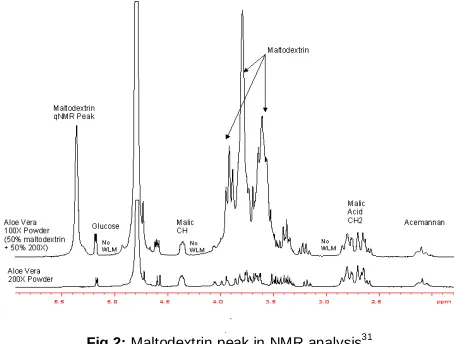
Maltodextrin is often added by manufacturer as a substitute to glucose. Maltodextrin is an oligosaccharide used as an additive in aloe vera products as it is easily digestible and being absorbed rapidly.Commercial maltodextrins are essentially dextrans
(predominantly glucose)Maltodextrin is readily observed by 1HNMR 100X sample contains 50% weight of maltodextrinThe peak at 5.4 and 3.5 to 4.0 ppm for 200X sample.
Fig 2: Maltodextrin peak in NMR analysis31
6.1.4. Identification of proteins
For identification of the proteins, amino acid composition and N-terminal sequencingcan be performed. For further analysis, antibodies may be generated against the proteinand the gene for the protein may be cloned and sequenced based on the information from peptide sequencing32.
6.1.5. Analysis of lipid components
Lipids can be first fractionated on a silica gel column and then analyzed by TLC. Identification or structural determination is obtained by GC-MS and NMR spectroscopy. So far, several lipid compounds, including cholesterol, lupeol, and β sitosterol, have been identified in aloe pulp.
6.1.6. Analysis of small organic compounds
Malic acid
Malic acid is a desirable analyte as it is a marker of freshness.It is a major organic acid in a native aloe vera gel. Malic acid and acetylated mannan appear to be the most important and specific, especially for product identification. It is the most characteristic of the aloe pulp among all the compounds identified so far.Gram negative bacteria grow in aloe assimilate malic acid and produce other organic acid such as lactate. The malic acid content in the pulp is estimated to be 5.4–8.7%, depending on growth conditions of the plant33. Anthraquinones derivatives (such as aloins A and B) and chromones (such as aloesin) have been most often detected and identified in the yellowish exudates from the leaf or extracts prepared from rinds or whole leaf identified and isolated anthraquinones and chromones from the pulp. Aloins have been identified as the active compound for the purgative effect of aloes. The compounds like vitamins, amino acids, monosaccharides, many kinds of acidsor salts can usually be isolated and identified by HPLC and MS. Further confirmationcan be obtained with IR and MR.
Glucose is the dominant monosaccharide in the pulp, accounting for as much as 95% of the total soluble monosaccharides. It can be isolatedand detected by HPLC as the so-called ‘E peak.’ The presence of malic acid can also be determined by 1H-NMR.
Mannan
rapidly degraded. The degradation may be caused by an enzyme such as m annanase. Present in the pulp, by elevated temperature and pH, or by bacterial contamination since bacteria are also a source of m annanase. In some aloe products, the pulp preparation is treated with cellulase. The cellulase preparations, depending on their source and purity, can be contaminated with mannanases that may also degrade the mannan. Thus, the presence and integrity of this mannan is a good measure of the quality of the product. The mannan, when extracted from fresh gel, generally has a molecular weight greater than one million, as measured by HPLC-based size exclusion analysis. That is, the native mannan is a very large molecule. Ross et al. (1997) have found HPLC-based molecular weight analysis of the mannan to be a very useful indicator of quality. The mannan is eluted as a broad peak at 5–7 minutes. In samples that were not well preserved or properly processed, this peak is absent. The method also allows a quantitative estimation of the amount of the mannan present in a product.
1H-NMR is used to identify the acetylated mannan in the aloe products. This approach allows detection of acetylation, the chemical signature of the acetylated mannan. However, NMR does not measure one important aspect of the molecule’s integrity, i.e. its size. In addition, this technology requires expensive instruments. Thus, as an alternative, the size exclusion analysis described by Ross et al. (1997) may be combined with acetylation determination by GC-MS. That is, the mannan peak is collected during size exclusion analysis and then subjected to saponification and GC-MS.
Molecular weight of aloe mannans can be determined with size exclusion chrom atography using neutral polysaccharides with known molecular weight as standards. Equilibrium centrifugation or osmom etry can be used. Aloe mannan is inherently unstable and can undergo degradation easily by pH change, elevated temperatures, bacterial contamination or enzymes such as mannose present in aloe pulp. When dissolved mannan is isolated from fresh pulp produces viscous solution showing pseudoplasctic flow. Once mannan is degraded gel becomes less viscous and shows Newtonian flow.
Mannan is indicator of quality and source of aloe. Since aloe mannan is unique to aloe vera plant aloe mannan size, acetylation and glycosidic linkage is measured for quality control. If products are not preserved properly size of mannan is smaller or even a typical mannan peak would be absent. If product is adulterated a signal of acetyl group would be absent.
Aloe vera whole leaf markers: Whole leaf markers of aloe vera citrates, isocitrates lactones, citric acid, these can be identified by 1 H NMR spectroscopy.
6.1.7 Aloe Vera analysis by NMR
As most herbs, fruits and beverages are complex mixture of similar chemistry products, 1H NMR has a unique advantage of analysis as it requires very little sample preparation and gives unique spectra of components.
Testing of aloe vera raw m aterials revolves around acemanan and whole leaf marker and presence of glucose and malic acid.
Saccharides distributions
Formulation ingredients such as sucrose, propylene glycol and flavor
Preservatives such as sorbates benzoates and citrates
Whole leaf markers(isocitrates, isocitrate lactone)
Adulterants : Maltodextrins
Contaminants, Degradation products:NMR analysis also tells about degradationdue to excessive heat hydroxylation of acemanan acetyl groups takes place and acetic acid and formic acid is formed. Form ation of lactic acid due to lactobacillus bacteria present in skin of aloe vera plant. Enzymatic degradation of takes place leads to formation of succinic acid and fumaric acid.
Fig.3: Identification of degradation products of Aloe Vera
7. THERAPEUTIC APPLICATIONS OF ALOE VERA
7.1. Laxative effect
Aloe is the most potent laxative drug among anthraquinone drugs (cascara, frangula, senna and rhubarb). Aloe latex possesses laxative properties and is used traditionally to treat constipation. The anthraquinone glycoside Barbaloin acts as a prodrug chemically stable at stomach pH and sugar moiety of glycoside prevents their absorption into upper part of GI tract and after reaching the large intestine glycosides liberate aglycones aloe emodin, rheinem odin and chrysophanol which acts as laxative34. Bacterial glycosidases present in colon cleave the C Glycoside bond of glycosides. Their transformations into active aglycones is carried out by eubacterium species. Bioavailability of aloe emodin is only less than 10% and half life is 48-50 hours. Taken in doses of 0.25mg laxative action of aloe starts after 6 to 12 hours with loose bowel moment. However pesistant abdominal cramps flatulence and gripping or colic (lasting for 7-8 days) are the major side effects of aloe.It is safe for nursing m others as as rhein active metabolite of aloe emodin passes into breast milk but a laxative effect is not found in infants. To get predictable pharmacologic effect only standardized preparations of aloe should be used. It should not be used for more than one or two weeks for self treatment of constipation.
7.2. Wound healing property
enhancement of phagocytosis. It also increases secretion of interleukin1, interferon and TNF (Tumor Necrosis Factor).
7.3. Anti-inflammatory property
Aloe acts as a thromboxane A2 synthetase inhibitor prevents its production, dilates arteries and enhances local blood flow. Aloe gel can block vasoactive substances responsible for inflammation can constrict small blood vessels, can block PMN (Polymorphonuclear leucocyte) infiltration37. Can inhibit production of oxygen free radicals and can dilate the capillaries allowing for increase in blood supply to damaged tissue. Emolin, barbaloin and emodin can be broken down by Kolbe reaction into salicylates. Aloe gel contains an abundance of fatty acids that allow for competitive inhibition of thromboxane production.
7.4. Oral lichen planus
It is an autoimmune disorder affects mucous membrane appearing as white lacy patches38 and swollen tissues. It requires a routine monitoring and treatment as there is risk of developing mouth cancer in affected areas. In a clinical study conducted by Choonakaran C et al in oral lichen plus patients aloe vera gel was found more effective in improving clinical and symptomatological improvement.
7.5. Immunomodulatory action
Aloe gel directly stimulates immune system through its active ingredient acemannan. It increases lympholytic response to alloantigen, it activates macrophages and activates complement C339. Modified aloe polysaccharide prevents UV irradiation induced immune suppression and inhibits UV irradiation induced tumour necrosis factor release from human epidermoid carcinom a cells.
7.6. Antibacterial activity
Acemanan present in aloe gel has been shown to have antibacterial activity against streptococcus species enterobactercloaceae, citrobacter species, seratiamarcescens, klebsiella pneumonia, pseudomonas aeroginosa staphylococcus aureus. Aloe gel also accelerates the rate of healing decreases prostanoids production. Medha et al reported antibacterial activity of aloe vera against common pathogens when mixed with antibacterial drug likeroxithromycincefixime and levofloxacin helps in inhibiting growth of staphylococcus aureus staphylococcus epidermis E. Coli and B. sublitis.With less side effects.
7.7. Psoriasis
Anthrones in aloe vera are used as antipsoriatic agents. The antipsoriatic property of anthrones is due to inhibition of oxygen consumption of the cells, reduction in size of intracellular species and decrease in ribosomes and mitochondria interaction with DNA inhibition of various enzyme systems associated with cell proliferation and inflammation and a redox reaction resulting in mitochondrial damage and destruction of membrane lipids40.
7.8. Antiviral activity
Aloe extract is considered as a possible therapy for AIDS alone or in combination with azidothymidine. It is also able to reduce dosage of antiviral treatment upto 90% can be effectively used to reduce the side effects of Azidothymidine. Acemannan increases production of cytotoxic T cells in a dose dependant manner. It inhibits glycosylation of viral glycoproteins. Other anthraquinone glycosides such as rhein and emodin have antiviral activity against cytomegalovirus41. Anthraquinoneglycosides also inhibit several viruses in vitro such as herpes simplex of type I and II, varicella zoster, pseudo rabies and influenza.
7.9. Antidiabetic activity
It has been reported by Bunypraphatsara and Yogchaiyudha on administration of aloe gel in diabetic patient’s blood glucoselevel reduced from 250 mg to141 mg and also reduced were serum triglyceride levels. Effect of aloe gel in combination with glibenclamide showed similar decrease in blood glucose level and serum triglyceride levels42.
7.10. Antihyperlipidemic activity
In hyperlipidemic patients who had not responded to dietary interventions 10 ml of gel was administered to hyperlipidemic patient’s serum cholesterol levels were observed after 4, 8 and 12
weeks total cholesterol was decresed by 15.4%, triglycerides by 25.2%and LDL by 18.9 %. Recent investigation by Manojkumar states that aloe vera gel with probiotic lactobacillus rhamnosus improves lipid profiles in hypercholesteromic rats. The atherogenic index was decreased by 45 % along with increase in fecal lactobacillus species counts. As it increased cholesterol synthesis and absorption and thus reduced the risk of cardiovascular disease. The argument for aloe as a weight loss stimulator usually revolves around supposed metabolism boosting properties within the plant. By boosting one's metabolism, calories burn at a faster rate-even when at rest than they would normally. Supposedly, the metabolic rate in cells of the liver increase, leading to increased energy expenditure. Another claim made for aloe's power to influence weight loss involves the digestion of collagen proteins in aloe. Because protein requires more energy to digest, the body burns more calories supplying the energy needed for the body to digest the proteins, leading to weight loss43.
7.11. In gastric ulcers
An early clinical study found that oral administration of aloe gel was effective in the treatment of peptic ulcer. A component from cape aloe named aloe ulcin suppresses ulcer growth and L histidinedecaroxylase in rats44. A lectin fraction (glycoprotein from aloe arborescens, aloctin A has shown an antiulcer effect in rats. Another high molecular weight fraction is found to be very effective in healing mechanically and chemically induced ulcers and not induced by stress.
7.12. Anti cancer activity
The polysaccharide acem annan is found to be effective in treatment of fibrosarcoma in dogs, cats and mice and increased survival rates. The anti tumour effect of acemannan may be due to stimulation of production of tumor necrosis factor, interleukin1 and interferon by macrophages. However it appears that large doses are necessary to produce anti tumour effects. Aloe Vera in combination with squalene and vitamin A and E has been demonstrated to have chemo protective properties in prevention and treatment of mouse skin tumors. Aloe Vera with vitamin supplementation has been found to be able to reduce the severity of chemical hepatocarcinogenesis in rats. Aloctin A a promising immunomodulator rather than cytotoxic agent when administered to mice inhibited growth of methylcholanthrene induced fibrosarcoma. Anthraquinone aloe emodin is active against P-3888 Leukaemia in mice and selectively inhibits human neuroectodermal tumor cell growth in tissue cultures and in animal models. The cytotoxicity mechanism consists of induction of apoptosis. Frenkel et al (1993) have suggested equal amount of honey with equal amount of aloe with 2-3 tablespoonfuls of gin, vodka or whisky taken regularly. Honey increases effect of aloe for its content of caffic acid phenethyl ester a potent chemopreventive agent useful for various types of cancer. A recent clinical study has shown that concomitant administration of aloe and melatonic increase therapeutic results of breast cancer gastrointestinal cancer, brain gioblastoma as it increases interleukin 2 activity. It has also been demonstrated that aloe latex enhances the activity of 6 – fluorouracil and cyclophosphamide45.
7.13. Aloe Vera in burning mouth syndrome
Burning mouth syndrom e is the most common among woman in middle aged to elderly aged groups it is idiopathic it is manifested as subjective burning sensation of tongue lips and entire oral cavity without any objective lesions . Clinical studies have confirmed the potential of topical aloe vera gel in combination with tongue protector (glycerine) showed an improvement in burning mouth symptoms46. However a double blind study performed by Su et al to determine whether aloe vera is able to reduce the severity and duration of radiotherapy induced mucositisin did not improve mucositisin head and neck cancer patients
7.14. AloeVera in arthritis
Aloe vera promotes. Natural sterols having the strongest anti-inflammatory effect in Aloe Vera are- lupeol, beta sitosterol, and campesterol. Aloe vera contains an Aspirin like substance called salicylic Acid which has pain relieving properties and reduces inflammation by inhibiting the production of prostaglandin hormones- which encourage inflammation. Aspirin or “acetylsalicylic acid” is chemically derived from natural salicylic acid. Researchers in Mexico found that Aloe Vera inhibits cyclooxygenase (COX-2), an enzyme that causes inflammation via the arachidonic acid pathway. Again, it does this without causing the unwanted side-effects of the COX-2 drugs.
7. ADVERSE EFFECTS, TOXICITY AND DRUG INTERACTIONS
7.1 Laxative abuse
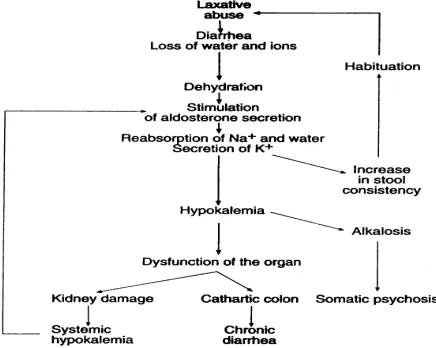
Aloe latex when used as a laxative causes abdominal complaints such as abdominal pain, cramps and flatulence. Other side effects include hem orrhoidal congestion and coloration of urine. Urine becomes orange if pH is acidic or reddish purple if pH is alkaline due to renal excretion of hydroxyl anthracene derivatives. Prolonged use of antidiarrhoeal causes watery diarrhea results in electrolytic imbalance. Loss of sodium leads to secondary hyperaldosteronism. Increase in loss of potassium can lead to hypokalemia. This results in fatigue, muscular weakness, weight loss, mental disturbances, steatorrhoea, electrocardiographic abnormalities and kidney dysfunction. Dark brown colouration of intestinal mucosa due to pigment lipofuscin has been found due to abuse of aloe extending upto rectum. Anthraquinone derivatives have shown genotoxicity in salmonella assay. In recent years the risk of colon cancer has been related to use of anthraquinone laxatives. It has also been demonstrated that a positive correlation between melanosis coli a marker for chronic abuse of anthranoid laxatives and colon carcinoma exists.
Fig. 4: Metabolic consequences of laxative abuse48
Table-1: Aloe- Drug Interactions
Possible Drug
Interaction Possible mechanism
Aloe latex and anthranoid derivatives
Antidiarrhoeal Antagonism
Glucoresins Synergism
Cardioactive glycosides Potassium depletion leading to adverse cardio vascular effect Liquorice, corticosteroids,
Diuretics
Potassium depletion may be exacerbated
NSAIDS Antagonism
Vitamins Reduced absorption of vitamins Minerals Reduced absorption of minerals
Aloe Gel
Hydrocortisone Additive effect Antidiabetic Additive effect UV radiation photodermatitis
8. QUALITY AND SAFETY ASSURANCE IN THE PROCESSING OF ALOE VERA GEL JUICE
To ensure the biological integrity, the organoleptic stability and quality of final product the following are the steps which require hazard control points.
8.1. Addition of vitamin C and citric acid
The pH of aloe vera gel juice is a measure of its active acidity which influences its flavor, processing requirements and safety49. In order to ensure effective pasteurization and to achieve better flavor pH of aloe vera juice is usually adjusted to 3.0 to 3.5 with citric acid addition.pH is examined by automatism pH measurem ent .If pH is greater than 3.5 it should be adjusted by citric acid. This it can prevent growth of bacilli and clostridia.
8.2. Pasteurization
The spoilage microflora of aloe vera gel juice is limited to acid tolerant bacteria, yeasts and molds in the environment of pH 3.0 to 3.5. At pasteurization the aloe gel juice is therm ally treated continuous monitoring of temperature and by testing the microbiological load of the pasteurized product to check that it is in conformity with current microbiological standards. Retreatment of juice is needed if pasteurization looses control.
9. DIFFERENT ALOE BASED PRODUCTS
The primary component of the plant used in most products is the leaf which can be processed in two ways to get Aloe Vera juice. The yellow sap aloe latex that drains when leaf is cut open from the base. It is used in OTC laxative preparations of Aloe Vera. This substance is found between the rind and inner leaf material and is bitter yellowish brown to reddish bitter tasting substance. It contains anthraquinones including powerful constituent called aloin50 which acts as a laxative. IASC (International Aloe Science Council) Standard for aloin in products for oral consumption is < 10ppm. For topical use it is 50 ppm of aloin.
9.1 Aloe Vera Leaf Juice
Aloe Vera leaf juice is made by taking entire Aloe Vera leaves and grinding them up via some type of maceration. Enzyme such as cellulose breaks down the rind and heavier weight material and then the resultant slurry is filtered by charcoal filtration to remove any other unwanted material such as aloe latex.
9.2. Aloe Vera gel
It is a gel present in parenchymatous tissue of the leaf. It oozes out naturally when fillet or chunk is separated from the leaf skin.
9.3. Aloe Vera inner leaf juice
Aloe Vera inner leaf juice is made by removing the rind prior to processing either by machine or by hand and then rinsing away the aloe latex. The remaining gelatinous inner leaf material is then ground crushed into Aloe Vera inner leaf juice. The health drink should contain 85-90 % aloe vera juice. The thinning of aloe gel takes place due to degradation of polysaccharides by various enzymes.
9.4 Curacao Aloes
It is yellow to yellowish brown or olive brown in colour. It is naturally drained from aloe vera leaves (after cutting). It is then boiled on an open fire in large copper pans until it thickens and then allowed to harden.
9.5 Cape Aloes
It is obtained in a similar way from aloe ferox species.
Curacao aloes and cape aloes are used as a source of anthraquinone derivatives in preparation of laxative drinks.
9.6. Aloin
9.7. Concentrated aloe vera juice
Concentrated juice provides a small dose of aloe. The juice is concentrated under thin film vaccum evaporation at temperature not exceeding 50 0C to avoid breakdown of polysaccharides. It is in the strength 5X, 10X and 40X with percentage of solids 2.5, 5 and 20 respectively. However there is loss of terpenes which give a characteristic flavor to aloe juice. Darkening of juice is due to polyphenolic condensation and destruction of polysaccharide due to the action of cellulase.
9.8. Aloe Vera spray dried powder
It is highly concentrated version (200X) fine powder light to beige colour only 0.05 to 0.5% can be used in formulations. The inner gel (fillet) is carefully removed of freshly harvested aloe leaves to minimize disruption of the Aloin layer. The gel is then further processed to remove the pulp and fiber. The resultant gel is pasteurized to maintain its efficacy. The gel is then concentrated utilizing low temperature evaporation to produce a liquid concentrate ready for spray drying. The gel remains under refrigeration until dried. The gel concentrate is spray dried without the use of a matrix, nor the addition of preservatives or other additives.
9.9. Freeze dried or lyophilized Aloe
This process, employing high vacuum technology and precise temperature control,is obviously very expensive. Freeze-drying is potentially the method of choice for production of the finest quality finished product to be used in the manufacture of cosmetics. If high quality aloe, prepared from gel fillets and subjected to careful preliminary/intermediate processing is the feedstock for lyophilization, a very high quality product will result. However, it is more economical to feed poor quality, processed, over-concentrated color changed aloe with high solids content into the process.
10. CONCLUSION
As a result of overexploitation habitat destruction many species of Aloe are endangered and are in need of conservation. Focus should include limiting the concentration of potentially carcinogenic phenolic compounds (As natural products are not mean safe products) while ensuring minimum requirements for polysaccharides and efforts should be aimed to satisfy the regulatory requirementprocessing of pulp: As there are many different aloe species there is fluctuation in chemical composition. This demands analytical methods which are well standardized and calibrated. The international aloe science council and other countries such as the European Union, China and Korea have established standards what is and what is not Aloe Vera in finished products.We may expect to see widening use of aloe vera and eventually use verified active ingredients in dosable quantities.
REFERENCES
1. Chang X L, Feng Y M, Wang W H, Comparison of the polysaccharides isolated from skin juice, gel juice and flower of aloe arborescens tissues, 2011;42:13-19. 2. Grace O, Dzajic A Jager A Nyberg, Onder A.,
Monosaccharide analysis of succulent leaf tissue in Aloe Phytochemistry, 2013; 93: 79-87.
3. Grundmann O. Aloe Vera Gel Research Review, Natural medicine journal 2012;1:1-12.
4. Wintola O, Summonu T, Afolayan The effect of aloe ferox mill in the treatment of loperamide induced constipation in wistar rats. A, BMC gastroenterology 2010; 10:95
5. Vasani R, Saple D.G.,Surjushe A. Aloe Vera A Short Review I J Dermatol 2008; 53(4) 163-166.
6. Miranda M., A.Vega-Gálveza, P. K.,J.Shic, S. Xuec, E. Uribe Food and Bioproducts Processing Effect of temperature on structural properties of Aloe vera (Aloe barbadensis Miller) gel and Weibull distribution for modelling drying process 2 0 1 0 ; 8 8: 138–144
7. Grace O., Simmonds MSJ, Smith G., Wyk A. Therapeutic uses of aloe L.(Asphodelaceae) J of Ethnopharm acology, 2008;119: 604-614
8. www.iasc.org -International aloe science council- A Primer 9. www.iasc.org International aloe science council- A Primer 10. www.iasc.org International aloe science council guidelines.
11. Surjushe A., Vasani R., Saple D.G., Aloe Vera A Short Review Indian J Dermatol 2008; 53(4), 163-166.
12. CT Ramchandra, P SrinivasaRao Processing of aloe vera leaf gel a review. Ame J of Agri& biosciences 2008; 3(2):502-510.
13. Ravi S., Kabilar P., Velmurugan S., Ashok Kumari R., Gayathri M., J of Exp Science 2011; 1:2
14. Davis R.H. Aloe Vera a Scientific Approach Vantage press Inc New York USA 290-306.
15. C T Ramchandra P Srinivasarao Processing of aloe vera gel- A Review American J of Ag and Bio sc 2008;2: 502-510.
16. Bozzi A Perrin C Austin S Verat A Quality and authenticity of commercial aloe vera gel powders 2006.
17. Shao A Broadmeadow A Safety of purified decolourised (low anthraquinone) whole leaf aloe vera (L) Burm f juice in a 3 month drinking water toxicity in F344 rats. Food ChemToxicol 2013; 57:21-31.
18. Jellassi B, Anchelin M Anthraquinoneemodin inhibits human cancer cell invasiveness by antagonisisng P2 X7 receptors. Carcinogenesis 2013; 37(7): 1487-96.
19. X L Chang, Y M Feng W.H. Wang Comparision of the polysaccharides isolated from skin juice, gel juice and flower of aloe arborescens tissues J of Taiwan ins of chem. Engg. 2011(42) 13-19.
20. Femenia A, Simal A, Compositional features of polysaccharides from aloe vera Carbohydrpolymer 1999;39: 109.
21. 19. Kacurakova M.P. FTIR plant cell wall model compounds pectic polysaccharides and hemicelluloses. Carbohydrpolym 2000;43: 195.
22. Lv L Yang QY BACE (Beta secretase) inhibitory chromone glycosides from aloe vera and aloe nobilis. Planta med 2008; 74(5) : 540-5.
23. Moon E J, Lee Y M A novel angiogenic factor derived from aloe vera gel B Sitosterol, a plant sterol Angiogenesis 1999;3(2):117-23.
24. Akey N, Turkay G Tumor preventive effect of aloe vera leaf pulp lectin (Aloctin !) on Ehrlich ascites tumors in mice. Phytother Res 2007; 27(11)1070-5.
25. Rajendran A, Narayanan V., Photochemical and Electrochemical stabilities of Aloe Vera Sap Journal of Applied Sciences Research;2007;3:1871-1878.
26. Juan E Reyes, Manuel I Guanoquiza Microbiological stabilization of aloe vera (aloe barbadensis miller gel by High hydrostatic pressure treatment. Int J of Food Microbiology 2012; 158:218-224.
27. XiuLian Chang, Changhai Wang., Effects of heat treatments on the stabilities of polysaccharides substances and barbaloin in gel juice from aloe vera miller. J of food engineering 2006; 75:245-251.
28. Roberto Mandrioli, Laura Mercalini Determination of aloe emodin in aloe vera extracts and commercial formulations by HPLC with tandem UV absorption and fluorescence detection. Food Chem 2011; 126: 387-393.
29. Annex to CAC/RCP 1-1996 Rev 3 (1997), Amd (1999). Hazard analysis and critical control point (HACCP) system and guidelines for its application.
30. Amar Surjushe, ReshamVasani, Aloe Vera: A short review. Indian J Dermatol, 2008; 53(4):163-166.
31. Shao A, Broadmeadow A Safety of purified decolourised (low anthraquinone) whole leaf Aloe Vera(L) Burm f juice Food ChemToxicol 2013;57:21-31.
32. JTN Chow, Chemical characterization of immunomodulating polysaccharide of aloe vera L, 1-44. 33. John C Edwards, Quantitative 1 H NMR method of complex
mixture analysis Process NMR Associates.
34. J Hamman, Composition and applications of aloe vera leaf gel, 2008; 13(8):1599-1616.
35. A Bozzi, C Perrin, S Austin- Quality and authenticity of commercial aloe vera gel powders. 2007; 103:22-30. 36. Tyler V E, Pharmacognosy Lea and Febiger, Philadelphia,
1981:60-63.
38. Davis RH, Donato J JAnti inflammatory and wound healing activity of a growth substance in Aloe Vera J am Paediatr Med ASS 1994; 84(2):77-81.
39. Vanquez B, Avila G Anti inflammatory activity of extracts from aloe vera gel. J Ethnopharmacol 1996; 55(1):69-75. 40. N Salazar, Sanchez, P Lopez Jornet Efficacy of tropical
aloe vera in patients with oral lichen Planus: A randomized double blind study. J Oral Pathology 2010; 39(10). 41. Choonhakarn C, Busaracome P. The efficacy of aloe vera
gel in the treatment of oral lichen planus a randomized controlled trial Br J Dermatol 2008;158:573-577.
42. Syed T A, Ahmad S A Management of psoriasis with aloe vera extract in a hydrophilic cream: a placebo controlled double blind study. Trop Med Int Health 1996;1(4):505-9. 43. Keivan Z., Moloud A., Antiviral activity of aloe vera against
herpes simplex virus type2: An in vitro study. African J of Biotech 2007; 6(15):1770-1773.
44. Beppu H., Shimpo K., Chihara T., Kaneko T., Tamai I., Antidiabetic effects of dietary administration of aloe arborescens miller components on multiple low dose streptozotocin induced diabetes in mice: Investigation on hypoglycemic action and systemic absorption dynamics of
aloe components. J of Ethnopharmacology 2006; 103(3): 468-477.
45. Manoj Kumar, Shruti R. Probiotic lactobacillus rhamnosus and aloe vera gel improve lipid profiles in hypercholesterolemic rats. Nutrition 2013; 29:574-579. 46. Sai Krishna Borra, Radha Krishna Lagisetty, Antiulcer
effect of aloe vera in Non SteroidalAntiinflammatory drug induced peptic ulcer in rats 2011;5(6):1867-1871.
47. Peng SY, Norman, Decreased mortality of Norman murine sarcoma in mice treated with immune modulator acemannan. J Molecular Biotherapy 1981; June 3(2):79-87. 48. Zakrzewska J M , Forrrrrssel H., Interventions of the treatment of burning mouth syndrome a systematic review J Orofac Pain 2003;17:293-300.
49. Bhat G, Aloe Vera: Nature’s soothing healer to periodontal disease. J IndSoc-periodontal 2011; 15(3):205-209. 50. Aloe Vera Science and Safety; National Centre for
complem entary and alternative medicine.