A Role Of Microfinance In Promoting SHG Activities
Dr.D.Madan Mohan
Abstract
Microfinance is a term used to refer to the activity of provision of financial services to clients who are excluded from the traditional financial systems on account of their lower economic status. These financial services will most commonly take the form of loans (see micro credit) & savings, through some microfinance institutions will offer other services such as insurance & payment services. The Microfinance is changing the landscape of banking across the world. It has changed the ivies of people & revitalized communities in the world’s poorest as well as richest countries. The microfinance is a better targeted financial help to a clientele that is poorer & vulnerable than traditional bank clients. The broad classification of microfinance includes rural credit through specialized banks traditional informal microfinance like loans from friends & relatives money lenders etc.This paper focuses on the awareness of Micro Finance and in promoting he SHG activities.
Keywords: Microfinance ,money lenders ,micro credit
Introduction
People living in poverty –like everyone else need access to a diverse range of financial services, including loans, saving services, insurance & money transfers. Access to financial services can help enable the poor to increase income & smooth consumption flows, & thus expend their asset base & reduce their vulnerability to the external shocks that are a part of their daily existence. The availability of financial services acts as a buffer against sudden emergencies, business risk & seasonal slums that can push a family into destitution. More & better financial services specifically geared towards low income groups can help poor households to move from everyday survival to planning for the future, investing in better nutrition, improver living condition & children’s health & education.
Microfinance has the potential to benefit poor people both indirectly, through increased growth, & directly as they gain access to needed services. Impact studies show that in money cases ,microfinance reduced poverty through increasing income levels. Studies also show that microfinance improves poor people’s lives by contributing to improved healthcare, children’s education & nutrition & women’s empowerment.
In particular, the ability to borrow, save & earn income reduced economic vulnerability for women & their households, increased financial & food security can bring a new confidence & hope which often translates to a greater sense of empowerment to a person.
Nonetheless, microfinance is not a panacea. Even the most innovative & participative programmes can lead to unwanted negative impacts. Microfinance has in many cases been shown to benefit the better off poor more than the truly destitute. Many early impact studies on microfinance showed increasing income levels, but more recent & better designed studies have shown that in many cases the impact varies per income group. In most cases the better off benefit more from micro credit, due to their higher skills level, better market contacts &
Principal / Professor, Indur P.G.College of Business Management, Achanpally, Bodhan-503180, Nizamabad (dist),
higher initial resource base. Lower income groups may be more risk-averse & benefit more from saving & micro insurance.
Many microfinance & micro credit programmed target women in particular, largely due to their (generally) higher repayment rates, but in many cases this is mixed blessing. If a programmed excludes men, particularly in areas where access to financial services is limited, the man may require his wife to get the loan for him. Others have argued that exclusive access for women actually increases her bargaining power within the household. While inspiring examples abound of women taking loans & then using the income from their business to provide employment to others, feed their children’s send them to school, & become empowered members of their community & their household, many more examples exist of vivacious circles of debt, family violence & increased workloads.
Access to Microfinance
The consultative group to assist the poor (CGAP) estimates that of the three billion poor people of working age who could be making use of these services about 500 million-one sixth currently have access to formal financial services.
If we are ever to reach the estimated three billion poor people who could use financial services, it will require a whole range of institutions, not just traditional NGO microfinance institutions to do it. Microfinance institutions have played a key role in the development of microfinance & they will continue to do so. But what is really needed-to reach both further & deeper-is a whole range of institutions that will jostle & compete with one another to serve poor people & to innovate to reach more & more poor people.
Self helpgroup.(SHG)
SHG is a holistic programme of micro-enterprises covering all aspects of self-employment, organization of the rural poor into self Help groups and their capacity building, planning of activity clusters, infrastructure build up, technology, credit and marketing.It lays emphasis on activity clusters based on the resources and the occupational skills of the people and availability of markets.Self-Help Group refers to self-governed, peer controlled, informal group of people with same socio-economic background and having a desire to collectively perform common purposes. Here poor people voluntarily come together to save whatever amount they can save conveniently out of their earnings, to mutually agree to contribute to a common fund and to lend to the members for meeting their productive and emergent needs.SHGs have been able to mobilize small savings either on weekly or monthly basis from persons who were not expected to have any savings. They have been able to effectively recycle the resources generated among the members for meeting the emergent credit needs of members of the group.SHG is a group formed by the community women, which has specific number of members like 15 or 20. In such a group the poorest women would come together for emergency, disaster, social reasons, economic support to each other have ease of conversation, social interaction and economic interaction.A SHG is an informal association to enhance the member’s financial security as primary focus and other common interest of members such as area development, awareness, motivation, leadership, training and associating in other social inter-mediation programmes for the benefit of the entire community.
SHG Activites:
4.To have collective decision making.
5. To solve conflicts through collective leadership mutual discussion. 6.To provide collateral free loan with terms decided by the group at the
Are you aware about Microfinance.
S.No. Result No. of respondent Percentage
1 Yes 88 88
2 No 12 12
Interpretation
From the above weinterpretate that 88% people aware about the microfinance & 12% people who unaware about the microfinance.A depth study is required to look at the channels where microfinance can commuincate to 12% of people. Channels being print and digital media as well by arranging community programmes.
Educational Qualifications of sample Respondents Elementary Primary Secondary Higher
secondary
UG NILL
3 30 60 16 6 65
Out of the total respondents, 36.11 percent of the women are illiterate and the next majority of the women (33.33 percent) have done up to secondary education. It is noticeable that more than 63.89 percent of the respondents belong to literacy category
Maintenance Level of the family by women
To greater extend To some extent To low extent
43 129 8
Interpretation
Regarding maintenance level of the family, 129 (65.69 percent) respondents out of 180 respondents revealed that they are capable to maintain their family affairs to some extent and 43 respondents accepted it to a greater extent they can manage their family after becoming member in self-help group
Graph showing why they need microfinance by respondents To
star t
Business
To
develo p
existing business
House
hol d purpose
Education purpose
Low rate of intrest
88 33 35 8 16
Interpretation
Out of the total respondents, nearly half of the respondents (88 respondents) have taken microfinance to taken-up a new business and next they have taken up for household purposes and to promote their existing business respectively.
Microfinance provides the better service than traditional bank service? S. No. Result No. of respondent Percentage
1 Yes 65 74
2 No 23 26
better.Microfinances need to provide additional services to its customers like a nationalised ban5k .This can be done by using innovative products to attract these 26.14% people.
Reduce in Poverty Level
To greater extend To some extent To low extent
165 15 0
Interpretation
From the above graph it is clear that 91.67 percent of the sample respondents stated that microfinance has minimized their poverty level to a greater extent and rest of the percentage stated that there is impact on their poverty some extent. It is noticeable that none of the respondent stated that negatively.
Microfinance provides the better service than traditional bank service?
S. No. Result No. of respondent Percentage
1 Yes 65 74
2 No 23 26
Interpretation
From the above we interpretative that 73.86% people consider that microfinance provides the better service & 26.14% people consider the traditional system of bank service is better.Micro finances need to provide additional services to its customers like a nationalised ban5k .This can be done by using innovative products to attract these 26.14% people.
Purpose of loan is taken through Microfinance
S.NO PURPOSE NO.OF
RESPONDENTS
PERCENTAGE
1 SMALL BUSINESS 25 28.41
2 COTTAGE INDUSTRY OR SERVICE ACTIVITY
15 17.04
3 ARTISIAN ACTIVITY 12 13.63 4 HANDLOOM ACTIVITY 20 22.73
5 TRANSPORT SECTOR 16 18.18
Interpretation
From the above we interpretation that 18% people take the loan for the purpose of transport sector activity, 23% people take the loan for the agricultural & allied activity, 14% people take the loan for the artisan activity, 17% people take the loan for the tiny/cottage industry & 28% people take the loan for the purpose of small business. Number of loans given to small business is highest among other sectors
Conclusion
The legitimacy of microfinance is beyond doubt. In a context of growing financialisation, the poor more than anybody else need microfinance services. In the same vein, in a context where democracy remains mainly formal and inaccessible to the poorest, the collective approach (which is at the core of Indian microfinance through the Self-help-group concept) undeniably represents a tool for democratic practices and therefore for grass roots development, especially for women.
of clients went from a few thousand to several millions, microfinance is nowadays at the core of many agendas, be they public or private. Indian microfinance, both in terms of the number of clients and the volume of credit disbursed, is not anecdotal any more. Because of the socio- economic, political, even cultural questions it raises, microfinance becomes a societal challenge. If it is indeed urgent not to let oneself be blinded by the surrounding optimism and not to under-estimate the present weaknesses of microfinance, it is equally necessary to identify efficient and innovative experiments in order to better reflect on the future of microfinance.
Bibliography
➢ Daley-Harris, S. (2005), State of the Microcredit Summit Campaign Report 2005, Washington: Microcredit Summit Campaign.
➢ Dasgupta, R. (2005), ‘Microfinance in India. Empirical Evidence, Alternative Models and Policy Imperatives’, Economic and Political Weekly, 60(12): 1229-1237.
➢ Fisher, T. and Sriram, M.S. (2002), Beyond micro-credit: Putting development back into micro-finance, New-Delhi: Vistaar Publications.
➢ Guerin, I. and Palier, J. (2005), Microfinance challenges: Empowerment or disempowerment of the poor?, Pondicherry: French Institute of Pondicherry.
A Study on quality of Hospital facilities & patient satisfaction
through various Health Care Departments
Raj Sinha
Abstract
Most of the hospital follows a structured quality assurance and continuous monitoring programme, developed by Quality Committee of the hospital, mainly on the basis of NABH
standards, an constituent board of QCI which is set up to establish and operate accreditation programme for healthcare organisations. It involves Healthcare Facilities, Quality Promotion, IEC Activities, Education and proper training for Quality & patient Safety and Recognition. Purpose is to provide a medical governance framework for high quality care and its periodic evaluation for Continuous improvement. These include a strong culture of safety that has been inculcated, a decrease in the incidence of adverse events and constant monitoring of quality within the system.Quality improvement is about ensuring that hospital focus is on improving, not just maintaining services. Quality improvement involves a focus on the safety, effectiveness, efficiency, acceptability, accessibility and appropriateness of services for consumers (who might be patients, relatives / parents, or the hospital and other health care professionals).
Keywords:Quality, Safety, Hospital, Patient care, satisfaction
Introduction: NABH is abbreviated as National Accreditation Board for Hospitals and Healthcare Providers is based on following international linkages: lSQua (International Society for Quality in Health Care) and ASQua (Asian Society for Quality in Healthcare).. The NABH standard touches every area where hospital faces difficulties in day to day issues where patients are of utmost importance. The prime focus is on requirement of patient, Care, Satisfaction, Information & Safety etc. Accreditation has following stages:
Fig 1.1: Stages of Accreditation
NOTE: Accreditation is valid for 3 years.
Continuous Quality Improvement strives to raise the benchmark in all aspect of service delivery and meet the quality standard. Following are some Key Points which ensure the
uniform quality of patient care processes within the healthcare by developing and implementing an effective and continuous program to measure, assess, and improve Quality. Key Points 1: Access, Assessment and Continuity of Care
Key Points 2: Care of Patients
Key Points 3: Management of Medication Key Points 4: Patient Right & Education (PRE) Key Points 5: Hospital Infection Control
Objective: To assess the framework for developing a strategy for high quality health care, and its periodic evaluation for continuous improvement thereby ensuring quality assurance system by proper Risk Management System.
Key Points 1: Access, Assessment and Continuity of Care:
Registration Process: Patients undergo Registration prior to any facilities which he wants to undertake in most of the hospital. A UID (Unique Identification Number) is generated which helps the hospital to identify patient across premises which ensure continuity of care across surroundings.
Patients enter in hospital through 3 Sources: OPD, Admission & Emergency.
OPD: OPD means an Out Patient Department of a hospital where patients are provided medical consultations and other allied services that is done on same day. The outpatient department is an important part of the overall running of the hospital which is mostly stationed on the Ground or First floor with car-parking facilities nearby. Wheelchairs and stretchers are available for non-ambulatory patients. Patients will register at a reception desk and there is seating for them while they wait for their appointments. Each doctor will have a consulting room and there may be smaller waiting areas near these. It contain following parts:
• Consultation Chamber
• Laboratory facilities such as: Blood Sample Collection
• Radiology investigation: X-Ray, MRI, USG, Mammography, CT scan, Etc
• Procedure Room for Dressing
• Cafeteria
• Washroom
• Nursing Counter
• Billing counter which includes: Help desk, Reception, Registration, Investigation counter, Grievance cell, Feedback, etc
The importance is as follows:
• 30–35% of hospital revenue is generated by ways of consultation fees, diagnostic tests etc.
• 50% of IPD patients come directly through OPD.
• It is a screening point (triage) for patients according to plan treatment.
Admission: Patients will only be accepted in the organization if their treatment falls within the scope of services. They are admitted mainly through below sources:
• OPD
• Emergency
• Direct pre-scheduled
Admission are to be accepted 24 hours a day, 7 days a week and as per scope of services. The patients are admitted only under the doctor who has the authority to admit the patients in that hospital. The Admission policy categories are as follows:
Categories Responsibilities
Third Party Assurance TPA Desk/ Patient Attendant
Cash Admission Desk/ Patient Attendant
PSU / Corporate Admission Desk/ Corporate Desk/ Marketing ICU / Emergency (Critical) CMO, Nursing, PCS Executive
Re - Admission Consultant/PCS Executive Booking policy - Room Appointments PCS Executive
Table 1.1: Admission Policy Category
The visiting time for the patient relatives are based on bed categories such as Ward / Private Rooms, SICU / MICU, Neuro ICU, CCU / CTVS, etc. Mostly timing is divided in dual shift: Morning and Evening.
Key Formats or records which are kept:
• Admission request form.
• Estimate form
• In Patient Information sheet
• A / D Form
• Registration form
• Bed transfer register
Emergency: The primary focus of any Emergency Department is to treat the critically ill and injured first in order to save life. An emergency is any medical problem that could cause death or permanent injury if not treated on priority. Severe pain in some instances can also be a medical emergency, such as the Chest pain accompanied by sweating, nausea, vomiting, and shortness of breath, radiating pain that moves to the arm or neck, dizziness, or feeling that your heart is beating irregularly or too fast, pain associated with kidney stones or appendicitis, etc. Following are the ways to reach patient to the hospital when they require health care on the urgent basis:
• Directly with some attendant
• Ambulance
• Unidentified Patient
Unidentified patients: As soon as patient is brought to casualty an emergency line of treatment get start and patient’s registration shall be done as per hospital MLC Policy that clearly mention the patient as unidentified. Records are updated as and when the details of the patient are available and the same is informed to police.
Based on the Initial assessment done by CMO & nurse patient are shifted in emergency to following triage:
Colour Condition Timeliness
Red Very Critical Patient Urgent basis Yellow Critical Patient 20-25m Green Stable Patient 1 Hour
Black Expired Patient Shifted to Mortuary
Initial Assessment (IA): Every Inpatient (OPD, Emergency, and Unidentified) record MUST have a documented IA. The purpose is to ensure that patients undergo an appropriate assessment by qualified individuals to formulate a plan of care , which shall be documented with sign, name, date and time duly endorsed by the person making the entry. With the help of Doctor, Nurse and dietician the IA is conducted and documented.
Once the patient arrives in OPD /Emergency the following vitals / parameters are to be check by nursing staff and on duty doctors.
• Pulse
• BP
• Respiration
• Temperature
• History of illness
• Height and weight
• Allergies or any associated disease/ surgical procedures
• Physical findings
Areas Responsibility Response Time Record Emerge
ncy
CMO < 5 Mins Triage assessment sheet Consultant < 30 Mins Hospital Letter head Nursing < 2 min Triage assessment sheet
OPD Consultant By Appointment / Walk in
Doctor Prescription
Ward RMO < 30 min History & examination sheet Nursing < 30 min Nursing assessment
ICUs Nurses < 30 min Nursing daily record
RMO /
Intensives
< 30 min ICU chart / History Examination sheet
Consultant < 24 hrs of admission Progress notes
Wards / ICU
Dieticians < 24 hrs of admission Nutritional assessment sheet
Table 1.3: Initial Assessment Table
Key Formats or records which are kept:
• Patient Assessment / Examination Sheet
• Emergency Record / IPD Case file
Plan of Care: It has following 5 Components: Curative, Preventive, Palliative, Rehabilitative & Nutritive. Plan Of Care must include “Preventing aspects of treatment / Care” which is documented so that treatment can be plan accordingly.
For Eg: Ischemic heart disease
Plan of Care: Regular Exercise, Avoid Smoking
Regular Reassessment: Once the initial assessment is over patient is reassessed periodically based on their treatment plan which is documented in the case sheet.
Key Formats or records which are kept:
• Patient Assessment / Progress Note / Sheet
• Medications sheet
• Nursing care of plan
Continuity Of Care: To provide uninterrupted supply of service information about patient’s care and response to treatment is shared among medical, nursing and care providers. The exchange in information is documented before shifting of any employee for smooth functioning of proper care of patient during their stay in hospital.
Discharge Process: The termination of an admission/ commitment to Hospital stay that ends the provision of treatment and other legal obligation of the Hospital towards the patient. Following are the ways of doing discharge in hospital:
• Routine Discharge
• Discharge on Request
• Transfer to other hospital
• LAMA (Leave Against Medical Advice)
• Death
• Outside MLC
At the time of termination of patient during his stay in hospital Discharge Summary is handed over to the patient which contains following details: Patient Name, UIN, Admission date, Discharge Date, Reason for Admission, Significant Findings, Diagnosis, Investigation Reports, Procedure performed, Medication administered, Follow Up advice, Medication to be taken, When & How to obtain urgent case and In case of Death- Summary which will include cause of death.
Categories Types Of Summary Documents to be Given
Normal Discharge Discharge Summary Original Investigation Report & Film are provided to the patients.
LAMA LAMA Summary
Death Death Summary
MLC Discharge Summary Original Investigation Report & Film are not
provided to the patients. Only photocopies of investigation reports are provided.
Table 1.4: Categories of Discharge Summary
Key Formats or records which are kept
• Discharge summary
• Death certificate and death summary
• LAMA summary
• Complete medical record file
Key Points 2: Care of Patients:
Vulnerable Patients: Those patients who are prone to injury and disease which includes: Elderly Senior citizen > 65 years, Babies and children < 12 years, mentally challenged patient, physically challenged patient, Female patient – unescorted, Patient with language problem e.g. foreign patient, Unconscious patient and sedated patient. These patients are never left alone at any point of time. The hospital ensures that vulnerable patients (elderly, physically and / or mentally challenged and children) are protected from abuse, which we define as a violation of an individual’s human or civil rights by anyone.
Hospital Staff response time is expected to be <90s or as soon as possible. Meanwhile Onsite staff has to start CPR (Cardio Pulmonary Resuscitation) Process.
Surgical Safety: To ensure Correct Patient at the Correct Site. The OT staff use methods known to minimize the risk for surgical site infection, Secure and accurately identify all surgical specimens and effectively communicate and exchange critical information for the safe conduct of operation there by establishing routine Surveillance of surgery Capacity, Volume and results.
Pain Management: The patient’s pain is identified in the initial screening/assessment and
reassessment on a regular basis. All care givers monitor patients pain which is documented and appropriate action are taken.
Time Out: Also known as Surgical Pause is a brief pause before the incision to confirm the patient, the procedure and the site of operation.
Key Points 3: Management of Medication
Medication Order: Contents will have following details:
• Patient Information
• Medication Name
• Dose, Time, Route, Frequency
• Clinician’s Signature with date & time
Medication Errors: Following are the 5 kinds of Medication Errors:
• Prescription Error
o Medicine prescribed should be in legible and clear handwriting.
• Transcription Error
o Typing mistake should be avoided
• Dispensing Error
o Cut Strips of medication should always be dispense in envelopes labelling Brand Name, Generic Name, Expiry Date and Batch No.
• Administration Error
o Correct identification of the patient
• Near Miss
o Medicine should be given on appropriate time by dose prescribed.
Medicine Administration: Following are the 10 Rights of Medication Administration:
• Right Person
• Right Drug
• Right Dose
• Right Time
• Right Route
• Right Education
• Right To Refuse
• Right Assessment
• Right Evaluation
• Right Documentation
• Name of the drug (generic/Brand), Strength, and quantity.
• General appearance of the medication (e.g. melting, clumping etc.)
• Expiry dates before administration.
Three Checks
• While removing from stock
• Before loading
• After loading (prior to administration).
Storage of Medications: Are done as per manufacture’s guidelines. Following is the list of
different types of medication and their storage:
Medication Storage
High Risk Stored Separately in one cupboard under lock and key with orange colored high alert medication warning sticker outside cupboard
Narcotics Drugs Separate Container/cupboard under double lock and keys with 2 different staffs.
Refrigerated drugs 2 to 8 degrees Celsius Expiry date <3 months
Unopened vial: -20 degrees Celsius
Open vial: 2 to 8 degree Celsius for 1 month Blood and Blood
Products
Whole blood, packed RBCs: -2 to 6 degrees Platelets, platelets aphaeresis: 20 to 24 degrees Fresh frozen plasma: -40 to -80 degrees Celsius
Whole blood & PRBCs must be transfused within 4 hrs of issue
Table 1.5: Storage Of Medication
LASA Drugs: Look Alike/Sound Alike Drugs:
Colour Labels Drug
Pink Sound Alike
Yellow Look Alike
Table 1.6: Drug Colour Label Key Points 4: Patient Right & Education (PRE)
Patient’s Rights and Responsibilities: Following are some of the patient’s rights in hospital:
• Patient is treated with respect and dignity
• They are addressed by proper name
• Give correct information about the diseases for which he has come to hospital for proper care
• Maintain Privacy and confidentiality in all patient treatment.
• Protection from physical Abuse and Negligence Following are some of the patient’s responsibility:
• Provide accurate and complete correct and truthful information such as:
o Patient identity
o Medical Complaints
o Past illness
o Hospitalization
o Medications
o Pain, etc
• Clarify his doubts if patient is unable to understand Consultant queries during check up.
• Abide by all hospital Rules and Regulations such as:
o Non Smoking Policy
o Visitor Timing of meeting admitted patients
o Employees should be treated with courtesy & respect,
• Patient should reach on appointment time.
• Pay service bills on timely manner.
Informed Decisions & Care: The purpose is to ensure that the Hospital is protecting patient and family rights and informs them about their rights during care for any modification of treatment plan. The patient has the right to know:
• treatment plan
• proposed plan of treatment including their risks factors and any alternatives / benefits in future
• methodology of the proposed treatment
• sign the informed consent to initiate their treatment
• Expected Results
• The Possible Complications
• Consultation
• Concerns & Requests
• Right to information and Education
All the above information is documented in Admission Information sheet.
Consent Policy: The purpose of obtaining a patient's general consent is to ensure that patient is informed about the routine medical and nursing care that will be provided to the patient based on which he takes decision of getting registered and admitted in this hospital. Information about and consultation on any proposed clinical / surgical/ non-surgical procedural initiative, it’s likely alternatives and impacts. Two or more persons are said to be in consent with each other when they agree upon the same thing in same manner. There are two types of consent existing in heath care intuitions.
• General Consent
• Admission Consent
o Informed Consent
o High Risk Consent
▪ Surgery
Patient Complaint/ Redressal Policy: If patient is dissatisfied by the services of hospital, he can register a complaint in a prescribed format of that hospital. This complaint is made either to Grievance cell or in the Feedback, which is later viewed by Area in charge. All the feedbacks are submitted to the Quality department via PA to Medical Director for further analysis and corrective or preventive measures.
Complaint Register & OPD and IPD feedback form/Analysis is maintained in hospitals.
are as follows:
• Front Office
o Information related to cost of treatment, doctors availability, and scope of services with any general enquiries for any points. They also handle patient complaints, feedbacks and suggestions shall be collected (written) by the Front office personnel.
• Doctors / Nursing / Physiotherapists:
o All information regarding diagnosis, treatment, prognosis. This will be done at the time of OPD consultation, admission and after the patient is admitted in the hospital till patients discharge from the hospital exist gate.
• Dietician:
o Food related Issues, assessment for the need of foods and complaints
• Floor Manager / MOD’s
o Patient complaints during their stay in the hospital will be handled by the floor manager and also patient feedbacks and suggestions shall be collected by them after their discharge. Corrective and preventive action has to be taken and documented / inform to patients.
• PCS
o All the Patient complaints during the OPD registration, consultations to till patients out from the hospital and also complaints / feedback / suggestions has to be handle by the PCS staffs. They have to review and analyzed for corrective action and same has to be documented / informed to patients.
• Administration, Quality, Operations Dept
o All queries and grievances which cannot be handled at the lower levels will be finally forwarded here. Also patient’s rights and responsibilities shall be displayed at all floors and staffs are trained on the same.
Key Points 5: Hospital Infection Control
Hand Hygiene: Good hand hygiene, the simple task of cleaning hands at the right times and in the right way, can prevent many hospital-acquired infections and save lives. The “Your Five Moments for Hand Hygiene” are:
Fig 1.2: Five Moments for Hand Hygiene
1. before touching a patient
2. before clean/aseptic procedures 3. after body fluid
exposure/risk 4. after touching a
patient
5. after touching patient
Fig 1.3: Hand Hygiene technique with soap and water
Biomedical Waste Management: Anything tested or used on an individual, or any trash from biological experiments are medical waste. Hospital Waste is to be cleared within 48 hrs of Segregation. It is mainly generated from health care facility, Research Facility and Laboratories.
Container Colour Description
White Needle, Scapels, blades
Yellow Ampulated body parts, All non plastic contaminated with blood and body fluids like cotton, bandage,plaster casts, etc
Red All infected/containment Plastics like BT Sets, Gloves, Catheters
Blue Broken/Unbroken glass, medicines vials & Ampoules
Black General waste like, Kitchen waste, paper
Table 1.7: BioMedical Waste management- Put the right waste in the right colour PPE’s: Personal Protective Equipment’s includes sterile gown, eye mask, shoe covers, boots, cap, mask, gloves, etc on entry in ICU’s, CCU’s and other Critical Care areas. Always use hand hygiene before and after touching the patient, and after contact with respiratory secretions and contaminated objects or materials.
Infection Control Surveillance: Personal protective equipment (PPE) to be worn to provide a protective barrier for personnel &also protect the patient from microorganisms present on the hands of personnel and reduce the likelihood of personnel contaminating their hands or clothing and transmitting microorganisms to the environment or to other patients. Key Aspects of Infection control program include-
• Surveillance for infections in patients and personnel
• Education for infection prevention
• Monitoring of Antibiotics
• Monitoring of SSI ( Surgical Site Infections)
• Access, Assessment and Continuity of Care: Registration Process, OPD, Admission, Emergency and Unidentified patients.
• Care Of Patients: Vulnerable Patients, Surgical Safety, Pain Management, Time Out, etc.
• Management Of Medication: Medication Order, Medication Errors, Medication administration and Storage.
• Patient Right & Education (PRE): Patient Rights and Responsibilities, Informed Decisions & Care, Consent Policy, Patient Complaint/ Redressal Policy, Effective Communication, etc
• Hospital Infection Control: Hand Hygiene, Biomedical Waste Management, PPE’s & Infection Control Surveillance
References
➢ Kunders, G.D. (2004). Hospitals: Facilities Planning and Management. Tata McGraw-Hill Education. pp. 221–222. ISBN 978-0-07-050269-7.
➢ Patient Satisfaction Survey as a Tool Towards Quality improvement Rashid Al-Abri* and Amina Al-Balushi
➢ https://www.nabh.co/NABHStandards.aspx
➢ Kizer KW. Patient safety: a call to action: safety is a critical component of quality. MedGenMed 2001,3, 10.
➢ Berwick D. Will is the way to win the patient safety war. Health Servey J 2007, 117, 18– 19.
➢ Zohar D, Luria G. The use of supervisory practices as leverage to improve safety behavior: a cross-level intervention model.J Saf Res 2003, 34, 567–77.
➢ Guidotti TL. How can managers visibly promote safety and health protection? J Occup Environ Med 2010,52, 1141–2.
➢ Conway J. Getting boards on board: engaging governing boards in quality and safety. Jt Comm J Qual Patient Saf 2008; 34: 214–20.
➢ Goeschel CA, Wachter RM, Pronovost PJ . Responsibility for quality improvement and patient safety: hospital board and medical staff leadership challenges. Chest 2010;138:171–8.
➢ West E. Management matters: the link between hospital organisation and quality of patient care. Qual Saf Health Care2001;10:40–8.
➢ Glickman SW, Baggett KA, Krubert CG, et al Promoting quality: the health-care organization from a management perspective. Int J Qual Health Care 2007;19: 341–8.
vkt dk fon~;kFkhZ ewY;ijd 'kCn ls vifjfpr ugh gSA Hkkjrh; laLd`fr dh vk/kkjf'kyk ekuoh; ewY;ksa ij gh izfrf"Br gSA fdlh Hkh ifjokj] lekt ;k jk"Vª dh vkfFkZd mUufr HkkSfrd lalk/kuksa ij gh ugha vfirq ml jk"Vª ds ukxfjdksa }kjk O;og`r thou&ewY;ksa ij vk/kkfjr gSA
ekuo thou dks LoLFk fn'kk nsus okys yksdksidkjh rRoksa dk uke gS & ekuo&ewY;] ftuls LoLFk O;fDrRo ,oa LoLFk ifjokj dh lajpuk gksrh gS rFkk Øe'k% LoLFk lekt ,oa lqn`<+ jk"Vª dh uhao fufeZZr gksrh gSA ;s ekuo ewY; ekuo thou ds fo"k; >a>korksa esa Hkh euq"; dh thou :ih ukSdk ds fy, vkdk'knhi dh Hkk¡fr ekxZn'kZu djrs jgsrs gS] mls fnXHkzfer gksus ls cpkrs gSA ^loZtu fgrk; rFkk loZtu lq[kk;* dh Hkkouke`r ls Hkjs gq, ;s ekuo ewY; ml lathouh cqêh dh rjg gS tks e`r izk; izk.kksa esa Hkh 'okWl Qwd nsrs gSA ;s ekuo&ewY; vewY; gksrs gq, Hkh ekuo thou dks ewY;oku cukrs gSA ekuo&ewY;ksa dh nkSyr ls ,d fu/kZu Hkh Lo;a dks /kuoku ls vf/kd larq"V vuqHko djrk gS rFkk buds vHkko esa ,d /kuoku Hkh Lo;a dks nfjnz vuqHko djrk gSA
ekuoh;&ewY; 'kCn esa ekuo 'kCn euukFkZd eu~ /kkrq ls fu"iUu euq 'kCn ls viR; ds vFkZ esa v.k~ izR;; djus ij ^ekuo 'kCn* fu"iUu gksrk gS ftldk vFkZ gS& euq dh lUrfrA
blh izdkj laLd`r O;kdj.k ds vk/kkj ij ewY; 'kCn dk O;qRifr ewysu le% ewY; vFkok ewysu vkukH; ewY;e~ ds vuqlkj gqbZ gS ftldk vFkZ gS ewy ds leku ewY;! ewY; 'kCn ewy + ;r~ izR;; ds la;ksx ls fu"iUu gS ftldk vFkZ gS fdlh oLrq dk fofue; Lo:Ik fn;k tkus okyk /ku] nke] cktkjHkko vkfnA
vaxzsth esa bl 'kCn ds fy, oSY;w] xzhd esa ,fDl;kst] teZu esa oSV vkSj Ýkalhlh eas okyksj dk iz;ksx gksrk gSA*
ewY; 'kCn oLrqr% vFkZ'kkL= dk gS] ijarq orZeku esa ;g uhfr'kkL=] n'kZu'kkL=] euksfoKku] lekt'kkL= rFkk lkfgR; tSls fo"k;ksa esa Hkh iz;ksx gksus yxk gSA MkW0 uxsanz ds vuqlkj ekun.M vkSj ewY; vkfn 'kCn ewyr% lkfgR; ds 'kCn ugha gSA ik'pkR; vkykspuk 'kkL= esa budk lekos'k vFkZ'kkL= vFkok okf.kT; 'kkL= ls fd;k x;k gSA† lEizfr ewY;
'kCn dk lokZf/kd iz;ksx uhfr'kkL= esa n`f"Vxkspj gksus yxk gSA ewY;cks/k dk l{kkr~ lac/ka ekuoh; psruk ls gSA ekuoh; psruk izHkq iznr og nhif'k[kk gS tks mls mfpr vuqfpr] dj.kh;&vdj.kh; dk drZO; cks/k djkrh gS bl izdkj ekuoh; ewY;ksa dh tUeHkwfe ekuoh; psruk gh gSA bl ifjizs{; esa dqN fopkj n'kZuh; gSA
ge ekurs gSa fd lc izfrekuksa dk] lc ewY;ksa dk L=ksr ekuo dk foosd gS ogh mls lnln~ dk Kku nsrk gS fQj ml lr~ vkSj vlr~ dk {ks= pkgs gks ;k u gksA‡ vr% ewY; dk ewy L=ksr euq"; dk foosd gS tks lR; vkSj vlR;
ds jkg ij pykrk gSA
ewY;ksa dk laca/k euq"; dh psruk ls vfuok;Z gSA ewY; dk laca/k ek= Kku] ek= bPNk ;k Hkkouk ls ugh gS vfirq ewY; lexz psruk ds fo"k; esa gSA§ vr% ik.Ms; dk dguk gS fd ewY; fdlh ,d rRo ls tqM+k ugha gksrk ;g euq";
dh lEiw.kZ psruk ls tqM+k gksrk gSA
euq"; dh Lora= vkRepsruk dk lEeku ,oa fodkl djss] D;ksafd ogh ekuoh; bfrgkl dh leLr izxfr ds fy, mÙkjnk;h gSA** bl izdkj ewY; cks/k ;k fu.kZ; ds fy, ekuoh; foosd dks tkx`r j[kuk rFkk mlds vuq#i vkoj.k
djuk vfuok;Z gSA gekjh fu"Bk lexz ekuork ds izfr gksuh pkfg,] gesa ;g vuqHko djus esa leFkZ gksuk pkfg,] Hkys gh gekjs jk"Vªh; fgrksa dks gkfu igq¡ps] fdarq ;fn mlls ekuork dk] ekuo tkfr dk j{k.k gksrk gS rks og mfpr gSA
fo'kky uxj] jksgrd
* xksfoUnpUnz ik.Ms; &ewY;ehekalk] i`0 1 † MkW0 uxsUnz & fopkj vkSj fo'ys"k.k] i`0 1
vr% MkW0 loZiYyh jk/kkd`".ku~ ds vuqlkj jk"Vªh;rk rc rd mi;ksxh 'kfDr gS tc rd og drZO;] loZekU; dh HkykbZ] fu"Bk vkSj lkekU; dY;k.k ds fy, R;kx ds mPp fl)kar geesa txkrh gSA blds vfrfjDr Hkr`Zgfj us Hkh ekuoh; ewY;ksa ds izoÙkZd xzaFk ^uhfr'krde~* esa ekuo dh Jsf.k;k¡ fu/kkZfjr dh gS lkFk gh ekuo dks ifjHkkf"kr Hkh fd;k gS fd os lPps iq#"k ekuo dgykus ;ksX; gS tks LokFkksZa dks NksM+dj ijfgr esa rRij jgrs gSa] os lkekU; tu gS tks O;fDr LokFkZ lk/ku ds lkFk&lkFk ijfgr esa rRij jgrs gSa] os O;fDr euq"; ds :Ik esa jk{kl gS] tks LokFkksZ ds fy, ijfgr dks u"V dj nsrs gSA
fo'o dY;k.k ,oa fo'o 'kkafr dh izfr"Bk ds fy, vkt ekuo ewY;ksa dks vkRelkr~ djus dh egrh vko';'drk gSA vkradoknh fgalk] u'khys inkFkksZa ds lsou esa gks jgh mÙkjksÙkj o`f) rFkk HkkSfrd lq[k&le`f) dh fyIlk ls fnXHkzfer ekuo] lekt esa fxjrs gq, ekuoewY;ksa ds nq"ifj.kkeksa ds :Ik esa lkeus fo|eku gSA euq"; esa euq";rk yqIr gksrh tk jgh gSA
vkt fo'o esa rel~ dk iz/kkU; gS] blh rkefld Kku ds dkj.k fo'o 'kkafr fou"V gksrh tk jgh gSA dgh /keZ ds uke ij rks dgh o.kZ] tkfr] fyax] Hkk"kk ,oa laLd`fr ds vk/kkj ij fgalk ,oa izfrfgalk gks jgh gSA bl le; Hkkjr gks ;k Jhyadk] lksfo;r la?k ;k vU; dksbZ jk"Vª fdlh u fdlh :Ik esa ogk¡ tufgalk gks jgh gSA euq"; fgald Ik'kqor~ euq"; dks gh ekj jgk gSA balkfu;r ij 'kSrkfu;r gkoh gksrh tk jgh gSA Qyr% vUrjkZ"Vªh; vkardokn vkt fo'o dh Toyar leL;k cu cSBk gSA ck:nh lqjaxksa] ce /kekdksa ,oa ,Veh t[khjks ij fot;h vVwVgkl djrs efLrdksa us vkt ekul larfr ds Hkfo"; vkSj vfLrRo ij gh iz'u fpg~u yxk fn, gSA vkt la;qDr jk"Vª la?k n~okjk vkgwr lgL=kfCn fo'o&'kkafr f'k[kj] lEesyu ij tqVs vusd 'kkluk/;{kksa dh mifLFkfr blh fpark dks txtkfgj djrh gSA vr% vkt euq"; esa euq";Ro dks tkx`r djus ds fy, ekuo&ewY;ksa dh e'kky dh iznhIr djus dh ije~ vko';drk gSA rHkh fo'o esa yksd dY;k.k ,oa fo'o&'kkafr dh izfr"Bk lEHko gSA
ekuo thou dks LoLFk fn'kk nsus okys xq.kksa dks ekuo ewY;ksa dh laKk ls vfHkfgr fd;k tk ldrk gSA bl izdkj _f"k;ksa }kjk iznr vkpkj&lafgrk ;k thou n`f"V dk uke gh ekuo&ewY; gS] ftuls ekuo thou dk iw.kZ ,oa lkFkZd lnqi;ksx gks ldrk gSA thou dks vuq'kkflr ,oa lqokflr djus okys rÙoksa dks Hkh ekuo&ewY;ksa dh Js.kh esa j[kk tk ldrk gSA tSls& vlR; dh vksj ugh] lR; dh vksj c<+ksA va/kdkj dh vksj ugha] izdk'k dh vksj] euq"; dks c<+uk pkfg,A blh izdkj euq"; dks e`R;q dh vksj ugha cfYd ve`Ro dh vksj c<+uk pkfg,A†† bUgha ewY;ksa dks thou
ds vuq'kkflr ,oa lqokflr ewY;ksa dh Js.kh esa j[kk tkrk gSA blh izdkj euq"; dks vdyqf"kr d`R; ;k cqjkbZ ls ;qDr dyqf"kr d`R;ksa dks NksM+dj vdyqf"kr d`R;ksa dk vkpj.k djuk pkfg,A‡‡
la{ksi esa] ekuoh; &thou&ewY; ds vuqie rRo gS] ftuls euq"; ds ewY; izfr"Bk ,oa ;'k esa Hkh o`f) gksrh gS] ;s euq"; ds ekid gS rFkk fo'odY;k.k ds es:n.M ds leku gSA oSfnd lkfgR; esa ekuoh; ewY; fo'odY;k.k :ih i`Fohyksd vkSj firk ds leku vkdk'k dks e/kqjrk iznku dh xbZ gSA§§ vkSj ;tqosZn esa lfork nsork ls izkFkZuk dh xbZ
gS fd os lfork nsork gekjs leLr nqjkpkjksa dks nwj djs ,oa tks gekjs fy, dY;k.kdkjh gks mls gedks izkIr djk,¡A***
euqLe`fr esa /kS;Z] {kek] la;e] pksjh u djuk] ckg~;&vkH;kUrj ifo=rk] bfUnz;ksa dks oa'k esa djuk] foosdefr] Kku] lR;] Øks/k u djuk ;s nl ekuo ewY; ds Lo:Ik ekus x, gSA laLd`r lkfgR; esa ekuo&ewY;ksa dks /keZ ,oa uhfr tSls 'kCnksa ls Hkh vfHkO;Dr fd;k tkrk gSA ekuo&ewY; 'kCn dk vFkZ {ks= cgqr O;kid gS blds vUrxZr ^vkn'kZ xq.k lewg] U;k;iw.kZ vkpj.k ,oa fo'odY;k.k O;oLFkk fnXn'kZu feyrk gSA loksZÙke ekuo&ewY; lR; dks izfrf"Br djrh gqbZ ckYehfd jkek;.k esa ;g dgk x;k gS fd bl txr~ esa lR; gh bZ'oj gS] lR; ij gh lnk /keZ dh fLFkfr jgrh gSA lcds ewy esa lR; gh gSA lR; ls Js"B dksbZ in ugha gSA††† blh izdkj egkHkkjr esa /keZ ds :Ik esa of.kZr ekuo
thou ewY;ksa ds izknqHkkZo ds fo"k; esa ,d mYys[k esa dgk x;k gS fd izkf.k;ksa ds vH;qn; ,oa dY;k.k ds fy, gh /keZ dk izopu fd;k x;k Fkk vr% tks bl mís'; ls la;qDr gks vFkkZr~ ftlls vH;qn; vkSj fuJs;l~ fl) gksrs gh ogh
†† vlrks ek ln~xe;
Rkelks ek T;ksfrxZe;
e`R;ksekZ ve`re~ xes;sfrA o`gnk 1-3-28
‡‡ ;kfuo/kkfu dekZf.k rkfu lsfor";kfuA uks brjkf.kA rSfÙkjh; mifu"kn 1-112 §§ e/kquDreqrks"klsA e/kqer~ izkfFkZo jt%
e/kq /kkSjLrq u% firkA _Xosn 1-90-6
*** fo'okfu nso lforqnqZfjrkfu ijklqo
;n~ Hknza rUu vk lqoAA ;tq0 30-3
††† lR;esos'ojh yksds lR;s /keZ% lnkmmfJr%A
/keZ gSA‡‡‡ ,sls 'kkL= osrkvksa dk fu'p; gS fd izkf.k;ksa dh fgalk u gks] vr% vfgalk /keZ gSA blfy, /keZ dk mins'k
fn;k x;k gSA§§§
dqN ewY; ,sls gS tks lekt ds fy, t:jh gSA vkpk;Z fHk{kq dk ;g n`f"Vdks.k cgqr gh mi;ksxh gS fd &tgk¡ lekt O;oLFkk dks pykuk gS rFkk lekt ds vk/kkj ij fparu djuk gS] ogka uSfrdrk vkSj /keZ dks chp esa ykus dh t:jr ughaA ogk¡ lkekftd n`f"V ls gh lkspuk gksxkA ,d lanHkZ ;q) ds fo"k; esa gS ;q) djs ;k ugh\ jk"Vªh; fgr dh n`f"V ls ;q) djuk t:jh gks tkrk gS] ;fn ogka /kkfeZd n`f"V ls lkspk tk,xk rks eq[kZrkiw.kZ ckr gh gksxhA blds foijhr ;g dgk tk ldrk gS fd gj ekuo oxZ o lekt fdUgha ewY;ksa vkSj jhfr;ksa ij vk/kkfjr gS] ysfdu tc og O;fDr lekt dk vax cu tkrk gS rks lkekftd izk.kh dgykrk gS vkSj lekt esa mldks fofHkUu xq.k] fo|k] ri] nku] 'khyrk dk Hkko viukuk pkfg,A**** rHkh og lkekftd Hkkouk ls lektlsoh ;k lekt&laKd O;fDr dgyk,xkA
vr% dgk x;k gS fd /keZ dks le>us ds fy, ftruk O;fDr dks le>uk t:jh gS mruk gh lekt dks le>uk t:jh gks tkrk gSA /keZ ds lkFk deZ dk fl)kar tqM+k gqvk gS deZ dh O;k[;k O;fDr vkSj lekt nksuksa ds lanHkZ esa gksrh gSA tSudeZ foKku ds vuqlkj xkS=deZ vkB izdkj ls Hkksxk tkrk gS& tkfr] dqy] cy] :i] ri] Jqr] ykHk vkSj ,s'o;ZA :i] cy] Jqr] ri ;s O;fDr ls lacf/kr gSA tkfr] dqy] ykHk ,s'o;Z ;s lekt ls lacf/kr gSA deZ izd`fr;ksa dk fo'ys"k.k djus ls ;g irk pyrk gS fd dqN deZ&izd`fr;k¡ lekt dh lkis{k crkbZ xbZ gSA vdsys O;fDr esa Hkh mudk fo'ks"k vFkZ ugh gksrk ijarq os lekt ds lanHkZ es lkFkZd cu tkrh gSA
fu"d"kZ :Ik esa dgk x;k gS fd lkfgR; esa fu:fir lekt fo"k;d ekuoh; thou ds ewY;ksa dk vR;f/kd egRo gS] tks ewY; :ih /ku O;fDr us ,df=r fd;k gS og lekt esa O;fDr dh izfr"Bk dk dk;Z djrk gS vkSj ,d&nwljs dh lgk;rk djds O;fDr dks lkekftd :Ik ls izfrf"Br thou thus ds <ax dks iznf'kZr djrk gSA
1- _Xosn lafgrk] lEiknd & ia0 Jh jke 'kekZ] Hkxorh nsoh 'kekZ] izdk'kd & czãopZl~ 'kfUrdqat] gfj}kj 2- ;tqosZn lafgrk] lEiknd & ia0 Jh jke 'kekZ] Hkxorh nsoh 'kekZ] izdk'kd & czãopZl~ 'kfUrdqat] gfj}kj 3- egkHkkjr ia0 jke ukjk;.k nÙk 'kkL=h ik.Ms;] xhrk izsl] xksj[kiqjA
4- egkHkkjr vuq'kklu ioZ] xhrk izsl xksj[kiqj
5- euqLe`fr] izks0 lqjsUnz dqekj] vk"kZ lkfgR; izpkj VªLV] [kkjh ckoyh] fnYyhA 6- uhfr'kkL= dk losZ{k.k] laxe yky ik.Ms;] lsaVªy cqd fMiks] iz;kxA 7- Hkkjrh; laLd`fr ds dqN fopkj] Mk0 loZiYyh jk/kkd`".kuA
8- fopkj vksj fo'ys"k.k] MkW0 uxsUnz 9- ewY; ehekalk] xksfoan pUnz ik.Ms;
10- fgUnh lkfgR; % ,d vk/kqfud ifjn`'; vKs;A
‡‡‡ izHkok;kZ; Hkwrkuka /keZizopua d`re~
;% L;kr~ izHkola;qDr% l /keZ% bfr fu'p;%AA egk v0 109-10
§§§ vfglkFkkZ; Hkwrkuka /keZ izopua d`re~A
;% L;knfaglk lEi`Dr% l /keZ bfr fu'p; %AA egk l0 109-12
**** ;s"kk u fo|k] u riks] u nku]
Kkua u ] 'khya u ] u xq.kksa u /keZ% rs eR;Z yksds Hkqfo Hkkj Hkwrk%
Children’s Buying Behaviour towards Attractive Packaging of
Food Products
Dr. M. Jaya
Dr. K. Malarvizhi
Abstract
Yester years witnessed the purchase decisions by the elderly persons in the family. Their decision also based on quality, price and with a limited competition. The time scale invited the children’s to participate in the purchase decisions of their products. But today, purchased decisions are dictated by the children’s of the home. They decide the choice and parents execute the choice of their kids whether it is food items, dress materials or electronic gadgets. This study took an initiative to graph the changes in the purchase pattern of food items and what really influences the purchase decisions of food products by the children. The perception of the children on the attributes of packaging namely colour, design, information, size, brand and quality were analysed. The focus of the study for primary data collection is children from selected schools in Chennai city. The simple random sampling method is adopted for the analysis. The analysis throws light on the strong relationship between packaging of food products and the purchasing behaviour of the children. Further, the study identifies the importance of colour, design and quality of the package through high beta co-efficient in the regression table. Thus the manufacturers can give appropriate importance to these factors while taking the product packaging decision.
Keywords: Packaging, Attributes, Advertisement, Perception Analysis, buying behaviour
Introduction
Yester years witnessed the purchase decisions by the elderly persons in the family. Their decision also based on quality, price and with a limited competition. The time scale invited the children’s to participate in the purchase decisions of their products. But today, purchased decisions are dictated by the children’s of the home. They decide the choice and parents execute the choice of their kids whether it is food items, dress materials or electronic gadgets. Social media advertisements, peer group, status of parents, ready availability makes the children to decide the purchase. If both the parents are working, they pacify their kids to purchase anything they desire as they are not available to take care of their genuine needs and wants, especially food items. This study took an initiative to graph the changes in the purchase pattern of food items and what really influences the purchase decisions of food products by the children.
Packaging
Adults view quality as their main criteria for purchase decisions while the children’s judges the book by its cover. Kids are concerned about the packaging of a product. Packaging attracts the eyes, increases the affordability, protects the goods, satiates their desire and acts as the main criterion for the purchase decision of kids. It also increases the shelf time of the
product which directly helps the manufacturers, retailers and consumers for the prolonged and continued usage of the product. Variation in the colour, quantity, taste, price and size of the package acts as a boost for the marketing of a product. The glittering packaging materials, soft touch of the cover, convenient tearing or piercing for opening, ease of carrying, quality maintenance, eye-catchy words etc., attracts the children to select a particular brand of a product. Milk products and liquid items packed at a particular temperature gives high utility to those items with tetra packing.
Conceptual Framework
The packaging of a product attracts children to impulsively purchase a product. Thus the packaging has to be very attractive and eye catching for children to get influenced. The attributes of packaging plays a key role and influences the children’s preference and choices and forms their purchase behaviour. Parents in turn are executing the purchase decision decided by their children. The theoretical framework of the study is developed based on the review of literature.
Parent's Purchasing Decision Influence on
Chilren's Purchase Behaviour Attributes of
Packaging Colour
Design
Information
Size
Brand
Attributes Of Packaging
ATTRIBUTES IMPACT
➢ COLOUR Eye catchy colours grasp the attention of children in food products. The colour of package attracts, influences and decides the purchasing behaviour of the children. Few colour are even names after the products like fanta orange, chocolate brown etc.,
➢ DESIGN Design of wrapper identifies the product itself. The colourful image of the products inside displayed on the package invites and acts as a prelude for the purchase.
➢ INFORMATION The information provided in the package is very essential. It should show the quantity, ingredients, price, details about the manufacturer, date of expiry and the nutritional value about the product, so that it facilitates the comparison among mutually exclusive products.
➢ SIZE Availability of the product in different sizes of package aids in matching the purchase with the requirements. The various packaging material also varies with the quantity (size) of the product. Depending upon the quantity of the product, packaging varies to suit its requirements.
➢ BRAND (NATIONAL & INTERNATIONAL)
Brand image plays a key role in purchase decisions. Advertisement of a brand and its recognition in the young minds, leads to repetitive purchasing behaviour among the children. National and International brand are well recognised by the millennium kids well.
➢ QUALITY Quality of packaging material articulate about the product. The packaging usually highlights the quality of the product and creates a good impression about the product.
Attributes
of
Packaging
Colour
Design
Information
Size
Brand
Review Of Literature
Shefali and Vijita Singh Aggarwal (2018) explores the influence of children on family purchase decisions by investigating the role of demographics variables of children and parents along with national culture and Family communication patterns. The authors developed a conceptual model which incorporates the influence of demographic variables and national culture on family communication patterns, and their subsequent influence on children influence in family purchase decisions across product categories and buying process stages.
Sharma & Sonwaney (2014) analysed the influence of mother employment status also on children consumption behaviour. The study shows that the mother employment status has no significant influence on children influence in purchasing decisions. The study was carried down in the urban India based on the product type and decision stages which leads to the moderating effect on buying decisions. Shah et al., (2013) identifies labelling as the most visible part of a product and forms an essential element of the marketing mix. Further the information on the packaging plays a major role, as it provides basic information and supports the marketing communication strategies of the company and paves way for identification and brand image building.
Karbasivar & Yarahmadi (2011) analyses the promotional activities, cash discount and window displays on the impulse purchasing behaviour of the selected sample consumers. The analysis reveals that there is a vital relationship between window display, credit card, promotional activities (discount, free product) and consumer impulse buying behaviour. Saeed, Lodhi, Mukhtar, Hussain, Mahmood and Ahmad (2011), integrate the brand image, brand attachment and environmental effects and their impact on consumer purchase decision. The analysis reveals that brand image and brand attachment has a positive relationship with purchase decision while environmental effects do not influence the purchase decision. Butkeviciene, Stravinskiene and A. Rutelione (2008) considers impulse buying as the appropriate factor in CE retailing, and justifed the use of sales packaging. At the same time, the importance of optimisation is indispensable. On the other hand, the authors indicate that a costly packaging in an ineffective way is not justifiable from economical and environmental perspective.
Adelina & Morgan (2007) are of the opinion that packaging was one of the most valuable tool in current marketing communications. Further the authorsidentifies the importance of packaging with its elements and the impact on the purchasing behaviour of consumers. Erzsebet & Zoltan (2007) made an exploratory analysis on the buying behaviour of baby care products by adopting risk reduction strategies. The authors through both qualitative and quantitative research proved that consumers’ needs satisfied with the product in terms of reliability and performance and packaging.
The review of the literature throws a beacon light on the research carried down on the product packaging and purchasing decision of various products by the customers in the varied age groups in various geographical locations. The lacunae of research study concentrating on the children’s influence on the purchasing decision are identified. Hence this study aims to bridge that research gap.
Objectives Of The Study
To analyse the various attributes of packaging its influence on the buying behaviour of children.
Research Methodology
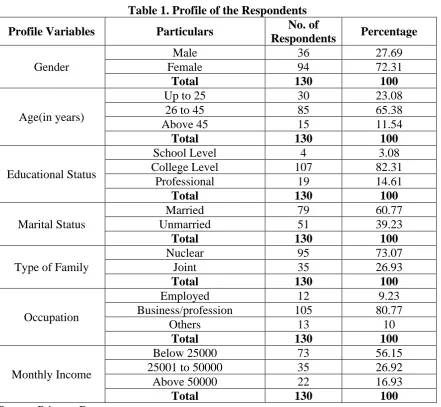
The study is based on the primary data which is collected through a standardized questionnaire. The focus of the study for primary data collection is children from selected schools in Chennai city. The simple random sampling method is adopted for the analysis. The children in the age group of 10 to 15 years were chosen for the data collection. The respondents being children, informal discussions was done to understand the packaging influence and further parents were also interviewed to understand the influence exerted by their children in their purchasing decision. The period of the study (reference period) i.e. period of data collection was 2018 -2019.
Limitations Of The Study
➢ The packaging of food products alone is selected for the study. Other types of goods do not form a part of the analytical forum.
➢ The focus of the study is based on the opinions of the consumers about the packaging. The opinions vary with different time zones and geographical variations. Hence it cannot be generalised in total.
Analysis & Interpretations
The perception of the children on the attributes of packaging namely colour, design, information, size, brand and quality were analysed. The relationship between the attributes of packaging was carried down by correlation analysis to understand the relationship between the variables. Multiple regression analysis was applied by considering children’s buying behaviour as dependent variable and the attributes of packaging as independent variable.
Table 1: Perception analysis on the Children’s Purchasing Behaviour
Var iab les S tr on gly Disagr ee Disagr ee M od er ate ly Agr ee Agr ee S tr on gly Agr ee T otal M ean SD
Colour 8 15 45 76 106
250
4.03 1.09
Design 10 12 48 102 78 3.90 0.91
Information 53 69 33 55 40 2.84 0.84
Size 36 43 67 39 65 3.22 0.69
Brand 35 28 65 80 42 3.26 0.85
Quality 19 15 32 97 87 3.87 1.01
Source: Computed from Primary Data
also influence them is very clear through the mean score of 3.87. Though the brand, size and information has an active role to play, it does not carry a predominant influence on their purchasing decision.
Table 2: Correlation Analysis on the attributes of packaging of food products
Variables Particulars Colour Design Information Size Brand Quality
Colour
Pearson
Correlation 1.000 0.953** 0.642 0.834** 0.095** 0.302
Design
Pearson
Correlation 0.953** 1.000 0.679 0.832 0.967** 0.932**
Information
Pearson
Correlation 0.642 0.679 1.000 0.925** -0.107 0.135
Size
Pearson
Correlation 0.834** 0.832 0.925** 1.000 -0.056 0.312
Brand
Pearson
Correlation 0.095**
0.967** -0.107 -0.056 1.000 0.914**
Quality
Pearson
Correlation 0.302 0.932** 0.135 0.312 0.914** 1.000 ** Correlation is significant at the 0.01 level (2-tailed).
The attributes of packaging indicate the power of inducement for the purchasing behaviour of children. The correlation analysis is carried down to understand the relationship between the attributes of packaging. There is a significant relationship between colour and design, size and brand. Further high correlation also exists between information and size and also brand and quality. Thus the attributes of packaging show a significant correlation relationship between the variables.
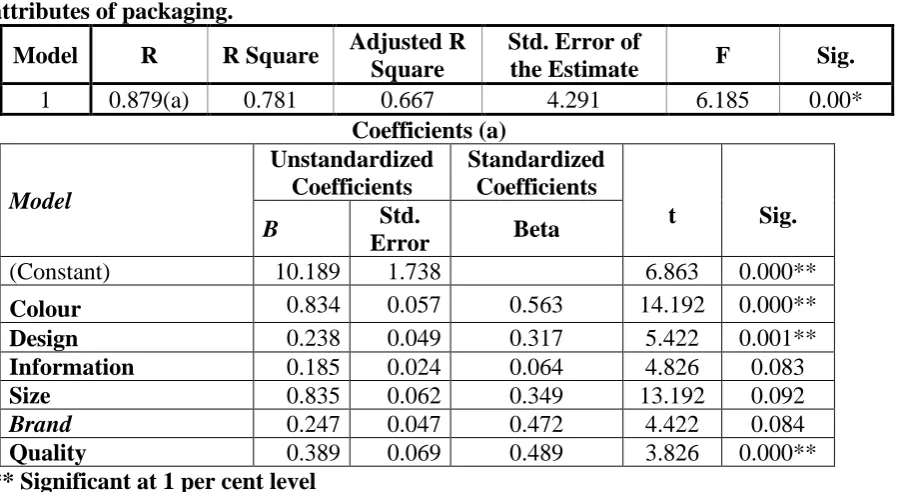
Table 3: Multiple Regression Analysis of Children’s buying behaviour and Attributes of Packaging
H1: There is significant relationship between the Children’s buying behaviour and
attributes of packaging.
Model R R Square Adjusted R Square
Std. Error of
the Estimate F Sig.
1 0.879(a) 0.781 0.667 4.291 6.185 0.00*
Coefficients (a) Model Unstandardized Coefficients Standardized Coefficients
t Sig.
B Std.
Error Beta
(Constant) 10.189 1.738 6.863 0.000**
Colour 0.834 0.057 0.563 14.192 0.000**
Design 0.238 0.049 0.317 5.422 0.001**
Information 0.185 0.024 0.064 4.826 0.083
Size 0.835 0.062 0.349 13.192 0.092
Brand 0.247 0.047 0.472 4.422 0.084
Quality 0.389 0.069 0.489 3.826 0.000**
** Significant at 1 per cent level
buying behaviour and the attributes of packaging of food products. The variable children’s buying behaviour is taken as dependent variable and the attributes of food packaging like colour, design, information, size, brand and quality are taken as independent variables. It is clear from the results of regression analysis that there is a significant relationship of 88 per cent between the buyer behaviour and the attributes of packaging of food products. The ANOVA test made shows that f value of 6.185 is significant at 1 per cent level. The high beta co-efficient in the regression table clearly indicates the importance of colour, design and quality as the most influencing factor in the attributes of the packaging. Thus the manufacturers and policy makers can give appropriate importance to these factors while taking the product packaging decision.
Conclusion
The study traces down the changes happening in the purchasing behaviour of the consumers over the years. The children took the decision making in their hands today, especially for the food products. What makes a children to choose a particular product becomes the subject matter of analysis for today’s manufacturer. This is a maiden step to unravel the main ingredient for the point of selection of a children, especially towards the packaging of food products. The attributes of packaging like colour, design, information, size, brand and quality are analysed in relation to children’s purchasing behaviour. The primary data was collected from school children’s through random sampling method. The analysis throws light on the strong relationship between packaging of food products and the purchasing behaviour of the children. Further, the study identifies the importance of colour, design and quality of the package through high beta co-efficient in the regression table. Thus the manufacturers can give appropriate importance to these factors while taking the product packaging decision.
Bibliography
Underwood, R. L., 2003. The communicative power of product packaging: creating brand identity via lived and mediated experience. Journal of Marketing Theory and Practice, winter, 62-76.
Butkeviciene, V., Stravinskiene, J., & Rutelione, A., 2008. 'Impact of consumer package communication on consumer decision making process', Inzinerine Ekonomika-Engineering Economics (1), pp. 57-65.
Ampuero, O., & Vila, N., 2006. Consumer perceptions of product packaging. Journal of Consumer Marketing, 23(2), 100-112.
Underwood, R.L., Klein, N.M., & Burke, R.R., 2001. Packaging communication: attentional effects of product imagery. Journal of Product & Brand Management, 10 403-422.
Saeed, R., Lodhi, R.N., Rauf, A., Rana, M.I., Mahmood, Z., and Ahmed, N., 2013, Impact of Labelling on Customer Buying Behavior in Sahiwal, Pakistan. World Applied Sciences Journal 24 (9): 1250-1254.
Adelina Broadbridge & Henry Morgan, 2007, consumer buying behavior and perception toward retail brand baby products.
Karbasivar, A. and Yarahmadi, H., 2011. Evaluating Effective Factors on Consumer Impulse Buying Behavior. Asian Journal of Business Management Studies 2 (4): 174-181.
2011. Factors Affecting Consumer Purchase Decision in Clothing Industry of Sahiwal, Pakistan. World Applied Sciences Journal 24 (7): 844-849.
Alice, L., 2006, the power of packaging, United States of America, pp. 186-216.
Singh, A., Sharma, P.K., and Malviya, R., 2011. “Eco Friendly Pharmaceutical Packaging Material” World Applied Sciences Journal, 14(11): 1703-1716.
UNDERWOOD R.L. & KLEIN, N.M. 2002. Packaging as Brand Communication: Effects of Product Pictures on Consumer Responses to the Package and Brand. Journal of Marketing, Theory & Practice, 10(4), 58-68.
UNDERWOOD, R. L., KLEIN, N. M. & BURKE, R. R. 2001. Packaging
communication: attentional effects of product imagery. Journal of Product & Brand Management, 10 (7), 403-422.
Shefali and Vijita Singh Aggarwal. 2018 , A Conceptual Model of Children’s Influence in Family Purchase Decisions. RESEARCH REVIEW International Journal of Multidisciplinary, 3(1), 282-289.
Phytochemical screening and detection of antimicrobial
activities of medicinal plants : Dalbergia sissoo (Sheesham),
Plumeria rubra (Gulchi) and Solanum nigrum (Makoi)
SIDDHI BHARDWAJ
RASHMI CHANDRA
VINAY DWIVEDI
Abstract
To investigate the antibacterial activity and phytochemical screening, solvent extracts of the leaves of Dalbergia sissoo, Plumeria rubra and Solanum nigrum were prepared. The antibacterial activity of leaf extracts of above plants were evaluated by disc diffusion method against selected three bacterial species. All the extracts were shown positive effect against gram-positive bacteria and gram-negative bacteria. The extract of Dalbergia sissoo, and Solanum nigrum was found to be the most active against the Bacillus subtilis. Phytochemical analysis showed that the extracts contain carbohydrates, flavanoids, terpenoids, saponins, alkaloids, proteins, steroids, tannins, glycosides.
Keywords: Antimicrobial, Phytochemical, Dalbergia sisoo, Plumeria rubra,Solanum nigrum
Introduction
People from the ancient times have been exploring the natural resouces particularly plants in search of new medicines. These plants has been found effective in the treatment of several diseases caused by microbes. As per WHO estimation, 80 percent of the people worldwide rely on plant based medicines for their primary health care needs (Farnsworth et al. 1985).
The medicinal plants generally produce variety of secondary metabolites which owe as an important source of microbicides, pesticides and many pharmaceutical drugs. Plant products still remain as the principal source of pharmaceutical agents used in traditional medicine (Ibahim et al 1997 and Ogundipe, et al. (1998).
Phytochemical screening play very important role to identifying new sources of therapeutically and industrially important compounds like phenolic compounds, alkaloids, flavonoids , saponins, steroids, tannins, terpenoids etc.
Dalbergia sissoo belong to family fabaceae is a fast-growing nitrogen-fixing tree which can easily be propagated and will grow on any well-drained soil, even on pure sand. In ayurveda, various parts of shisam tree are used for treating various diseases. The leaves are used for eye pain, swelling, painful urination, gynaecological disorders (Duke and Wain, 1981).
IMS Engineering College, Ghaziabad
Associate Professor & HOD, Department ofBiotechnology IMS Engineering College, Ghaziabad. Uttar Pradesh.
India