RFID BASED OBJECT REMINDER SYSTEM
Sachin A. Urabinahatti1, Manjunath R. Hudagi21. INTRODUCTION:
In recent years, sensor network research has been a hot topic. In a smart home, sensors are deployed at home to collect information from the environment. The collected information is then processed by the server to provide suitable services to the user. Some people tend to forget things when they leave home for work or school. It is desirable that people are reminded with the things they forgot to bring along with.
We have encountered that due to lack of efficiency of human brain to remember each and every day to day life items such as wallets, car keys, mobile, watch etc. As a result of which humans tend to forget these items. Such a lack of efficiency can lead to greater loss and high amount of discomfort. Hence, we are proposing an implementation of networking domain which will help humans to remember and if lost to detect such items using RFID (Radio Frequency Identification) and mobile technologies.
There are modern ways for tracking this daily used item but they are also inadequate and do not provide higher efficiency in producing results. Because if any of the item is lost its probability of recovery is less i.e. the modern methods are cure oriented implementations but our proposed system is a precaution-oriented implementation. Hence it capitalizes the saying “Precaution is better than cure”.
The RFID object reminder system which is been implemented has a wider scope and it is going to be helpful for all the users such as children, working class and the elders. It will help them to keep their regular use items under their observation when the system is in use. It also reduces the risk while carrying valuable items/objects which are tagged by RFID tags and are under the surveillance of the object reminder system.
2. PROBLEM STATEMENT:
Humans forget their daily use important things such as wallets, car keys, watch, mobiles etc. that is because remembering things becomes quite difficulty due to rush and loss of some valuable item will lead to discomfort.
2.1. Objectives:
To avoid the greater loss and high amount of discomfort generated due to loss precious daily use items. To provide a more trustworthy and significantly effective system.
Increasing the efficiency of each and every individual for managing the time pressure and to benefit the individual.
2.2. Proposed System:
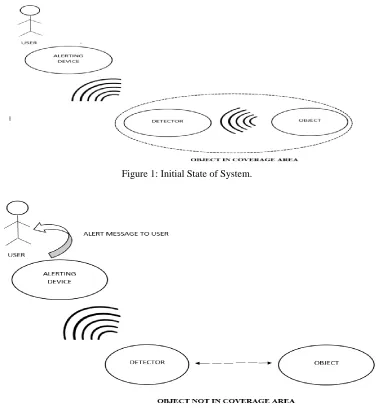
Figure 1 demonstrates initial state of the proposed system: -
The detector generated coverage area network has object which have been uniquely identified are placed within the network. As the object is inside the network the detector will not send any distressed signals to the Alerting device. As a result of which the user can ensure that his/her belongings are secure.
1
Asst. Prof., Dept. of Computer Science and Engineering, TKIET, Warananagar
2
Asst. Prof., Dept. of Computer Science and Engineering, TKIET, Warananagar
DOI: http://dx.doi.org/10.21172/1.103.41
e-ISSN:2278-621X
Abstract- Sensor Network Research has been a hot topic. In a Smart home, sensors are deployed at home to collect user information in the environment. The collected information is then processed by the server to provide suitable service to the user. We have encountered that humans forget their daily used important things such as wallet, car keys, watch etc. that is because remembering things becomes quite difficult due to rush and loss of some valuable item will lead to discomfort. The conventional manner of remembering the daily used items is directly dependent on individual’s ability to remember. Here a system is proposed which is integration of Radio Frequency Identification devices like RFID Tags and RFID readers which work as a signalling mechanism along with Raspberry Pi to communicate with a mobile application which is intended to identify the tagged object and to notify the user during any distractions.
Figure 2 demonstrates the final state of the proposed system: -
When the object will move away from the coverage area of the detector. That will initiate a computational process which includes the following steps:
Step 1: Identifying which object has left the coverage area.
Step 2: Sending distressed signals by the detector to the alerting device.
Step 3: Alerting device will alert the user about the movement of object outside the coverage area by various methods. Step 4: The User after receiving information from alerting device will take the necessary action.
The proposed system has been designed on basis of following analysis
2.3 RFID Tag & Reader:
It is being chosen because RFID provides the fastest way to transfer signals in an efficient manner in a restricted range parameter. It is much more economic than other signaling technologies. The active tag work on a frequency of “10-15 MHz” and provides detection range up to 10 meters.
2.4 Raspberry Pi:
The Raspberry Pi board has microcontroller, memory, and multiple pins. The microcontroller can be used to perform computations and memory to store required data. The pins can be used to connect any kind of different module to the Raspberry Pi. It works backbone for embedded system.
Figure 1: Initial State of System.
2.5. Implementation
JavaScript Object Notation or JSON:
In computing, JavaScript Object Notation or JSON is an open-standard file format that uses human-readable text to transmit data objects consisting of attribute–value pairs and arraydata types (or any other serializable value). It is a very common data format used for asynchronous browser–server communication, including as a replacement for XML in some AJAX-style systems. JSON is a language-independent data format. It was derived from JavaScript, but as of 2017 many programming languages include code to generate and parse JSON-format data. The official Internet media type for JSON is application/json . JSON filenames use the extension JSONObject:
For parsing a JSON object, we will create an object of class JSONObject and specify a string containing JSON data to it. Its syntax is − String in;
JSONObject reader = new JSONObject(in);
The last step is to parse the JSON. A JSON file consist of different object with different key/value pair e.t.c. So JSONObject has a separate function for parsing each of the component of JSON file.
Its syntax is given below –
JSONObject sys = reader.getJSONObject("sys"); country = sys.getString("country");
JSONObject main=reader.getJSONObject("main"); temperature = main.getString("temp");
The method getJSONObject returns the JSON object. The method getString returns the string value of the specified key. Methods of JSON
1) get(String name):
This method just Returns the value but in the form of Object type. 2) getBoolean(String name)
This method returns the boolean value specified by the key. 3) getDouble(String name)
This method returns the double value specified by the key. 4) getInt(String name)
This method returns the integer value specified by the key. 5) getLong(String name)
This method returns the long value specified by the key.
2.6. User Manual Software Installation: Raspberry pi Installation: - 2. VNC
Enabling VNC Server
On your Raspberry Pi, run the following commands to make sure you have the latest version of VNC Connect:
sudo apt-get update
sudo apt-get install realvnc-vnc-server realvnc-vnc-viewer
Now enable VNC Server. You can do this graphically or at the command line.
2.7. Enabling Vnc Server Graphically
On your Raspberry Pi, boot into the graphical desktop.
Select Menu > Preferences > Raspberry Pi Configuration > Interfaces. Ensure VNC is enabled.
You can enable VNC Server at the command line using raspi-config: sudo raspi-config
Navigate to Interfacing Options.
Scroll down and select VNC > Yes. Connecting to your Raspberry Pi with VNC Viewer
3. INSTALLATION OF PHPHMYADMIN
3.1 Hardware Implementation
All the RFID tags are being continuously read by the receiver and identified by the Unique ID assigned to all the tags. This process is repeated in loop for every 6 seconds to ensure that the Tag is within the range. When the receiver ensures that tags are in the range it does not triggers the mechanism to LED Bulb.
If any of the tag is out of range, it is detected by the receiver and it enables the Light bulb mechanisms. By triggering this, the user is indicated that an item which is connected to the tag is lost (i.e. Tag’s out of range).
The user is provided with feature of selection of the required item. In the above placed output, the application requires the user to select the desired item, which is then matched with the database contents of available item and are been kept under surveillance for every 6 seconds. Receiver sends a response to the application if any of the tag is lost. it is being informed to the user via a notification.
4. CONCLUSION
The design and development of RFID object remainder system has been proven viable due its efficient and quick way of functioning
The integration of raspberry pi microcontroller with integration of RFID technology powered by the python language, alongside Android application it provides efficient wireless detection of daily used items enabling the user to carry out multitasking in a reduced stress level.
5. REFERENCES
[1] Smart object reminders with RFID and mobile technologies.
[2] Authors -Hui-Huang Hsu, Cheng-Ning Lee, Jason C. Hung Timothy K. Shih
[3] An RFID-based reminder system and security system for smart home. Authors- M. Uma Rani, A. Pradeep Kumar
[4] RFID Based Object Localization System using Ceiling Cameras with Particle Filter Authors- Stefanos NIKOLAIDIS, Ryuichi UEDA, Tamio ARAI
Effective RFID-based Object Tracking for Manufacturing Authors - James Brusey, Duncan C Mcfarlane