Center
Center
Doctoral Dissertations Theses, Dissertations, Capstones and Projects
2019
NAVIGATING THE RACIALIZED NEOLIBERAL GAZE: ASIAN
NAVIGATING THE RACIALIZED NEOLIBERAL GAZE: ASIAN
AMERICAN WOMEN DIVERSITY, EQUITY, AND INCLUSION
AMERICAN WOMEN DIVERSITY, EQUITY, AND INCLUSION
PROFESSIONALS IN U.S. HIGHER EDUCATION
PROFESSIONALS IN U.S. HIGHER EDUCATION
Ariana DasGupta
The University of San Francisco
NAVIGATING THE RACIALIZED NEOLIBERAL GAZE: ASIAN AMERICAN WOMEN DIVERSITY, EQUITY, AND INCLUSION PROFESSIONALS IN U.S.
HIGHER EDUCATION
A Dissertation Presented to
The Faculty of the School of Education
Department of International and Multicultural Education
In Partial Fulfillment
Of the Requirements for the Degree Doctor of Education
by
Ariana A. DasGupta San Francisco, CA
ii
The University of San Francisco
ABSTRACT
Substantial research has addressed the experience of Asian American students in
higher education (Hune, 2002; Ng & Lee, 2007; Buenavista, Jayakumar, &
Misa-Escalante, 2009; Museus & Chang, 2009; Museus & Kiang, 2009; Pak, Maramba, &
Hernandez, 2014; Palmer & Maramba, 2015), and a growing body of literature explores
the state of Asian American faculty in higher education (Lee, 2002; Li & Beckett, 2005;
Lin, Pearce, & Wang, 2009; Yook 2013). Though research examining how Asian
American administrators experience higher education is increasing (Suzuki, 2002;
Neilson, 2004; Neilson & Suyemoto, 2009; Li-Bugg, 2011; Reeves, 2015), no studies to
date have examined how Asian American women who are diversity, equity, and inclusion
(DEI) professionals in higher education experience their roles. This phenomenological
study used in-depth interviews to examine how the experiences of Asian American
women DEI professionals in higher education demonstrate conformity and conflict with
neoliberalism. In doing so, this study found agentive possibilities for Asian American
women even as they navigate the commodifying nature of what this study terms the
iii
SIGNATURE PAGE
This dissertation, written under the direction of the candidate’s dissertation committee
and approved by the members of the committee, has been presented to and accepted by
the Faculty of the School of Education in partial fulfillment of the requirements for the
degree of Doctor of Education. The content and research methodologies presented in this
work represent the work of the candidate alone.
Ariana A. DasGupta April 30, 2019
Candidate Date
Dr, Genevieve Negrón-Gonzales April 30, 2019
Chairperson Date
Dr. Susan Katz April 30, 2019
Committee Member Date
Dr. Monisha Bajaj April 30, 2019
Committee Member Date
Dr. Mary Wardell-Ghirarduzzi April 30, 2019
iv
DEDICATION
To my parents,
who left their parents,
so my siblings and I
could have the luxury
v
ACKNOWLEDGMENTS
In many ways, the hardest part of the dissertation is writing this page well as I
have many to thank, and an ironic lack of words to thank them properly. An entire
community holds me up, and has held me up through this process.
I would like to first thank my dissertation committee – Dr. Genevieve
Negrón-Gonzales, Dr. Susan Katz, Dr. Monisha Bajaj, and Dr. Mary Wardell-Ghirarduzzi – for
pushing me to reach a higher standard for myself, for this dissertation, and beyond. Each
of you has supported me over the years in ways that extend far beyond merely being my
professors. You have shown me what it means to cultivate a community that can be
caring and challenging, and to demonstrate what it truly means to be a scholar
practitioner.
Dr. Gregory Tanaka, your beautifully stubborn vision that a better world can
exist, and that we all have a role in birthing it, guided this dissertation work in a profound
way. I am indebted to your kind generosity of spirit in a way that I truly lack the words to
explain.
Jenni Bosco, my writing partner from day one. I am so thankful to have someone
as caring and encouraging as you to commiserate with and celebrate with, through all of
this. I can finally come over to have some wine now.
MJ Kober, thank you for being my first friend at USF. Your care for me means so
much. I will be happy to taste test more baked goods, now that I may have more time.
This past year has been filled with joy because of the daily support of my team in
the Office of Diversity Engagement and Community Outreach. Gladys Perez, Liz Lopez,
vi
cherish each of you, and feel humbled that we can be in this professional journey together
– one that is so much more than just work.
Dr. Mary Wardell-Ghirarduzzi, you are the reason this dissertation exists. Our
work is indescribably joyful, and can be so painful, so full of contradictions and
revelations. Not a day goes by that we do not talk about this. In the midst of all these ups
and downs, you have cared for me, mentored me, and held me to higher standards of
what is right. I revel in the love you have poured into me, and the trust you have in me. I
thank you, wholeheartedly.
Seibi Lee for reminding me that striving for excellence is an art, that art demands
excellence, and that everything is art. Thank you for demonstrating that in all that you do,
and asking for nothing less of me.
Boo, for being by my side through this process, for 3 years, even with 3,000 miles
between us. Thank you for your patience, care, and love.
My brother, Joyee, meticulously edited this dissertation. I would not trust anyone
else to put in the care that he did to make this a better study. I am so thankful for this way
in which he showed me his brotherly love. Lifetime supply of Hajmola on its way!
Two Drs. DasGupta precede me, and therefore were doubly at risk of getting
dramatic phone calls from me on a daily basis on account of 1) having gone through the
process themselves, and 2) for being my parents. There are no words to thank them for
vii
TABLE OF CONTENTS
ABSTRACT ... ii
SIGNATURE PAGE ... iii
DEDICATION ... iv
ACKNOWLEDGMENTS ... v
LIST OF FIGURES ... x
LIST OF TABLES ... xi
CHAPTER I: THE RESEARCH PROBLEM ... 1
Background of the Researcher ... 1
Statement of the Problem ... 3
Background and Need ... 5
Purpose of the Study ... 11
Research Question ... 12
Theoretical Framework ... 12
Neoliberal hegemony ... 12
Racialized neoliberal gaze ... 15
Educational Significance ... 18
CHAPTER II: REVIEW OF THE LITERATURE ... 20
Overview ... 20
Asian American Women in Higher Education ... 20
Underrepresentation in faculty and administration ... 21
Diversity in Higher Education ... 27
Benefits of diversity ... 29
Challenges to diversity ... 30
Critiques of the diversity rationale ... 32
Neoliberalism and Higher Education ... 35
An overview of neoliberalism ... 36
Ideological underpinnings of neoliberalism ... 38
The neoliberal university ... 39
Summary ... 43
CHAPTER III: METHODOLOGY ... 45
Overview ... 45
Research Question ... 45
Background of the Researcher ... 46
viii
Participants ... 49
Data Collection ... 52
Data Analysis... 56
CHAPTER IV: RESULTS ... 63
Overview ... 63
Asian American Women Racial Identity Formation: Participant Profiles ... 64
Alice ... 64
Hyun-Ju ... 65
Patricia ... 66
Saanvi ... 67
Leigh... 68
Francis ... 69
Gloria ... 70
Harriet ... 71
Findings ... 73
Theme #1: Different Entry Points into the DEI Field with a Common Lack of Standards and Guidelines ... 74
Theme #2: Conflict between the Stated Purpose of DEI Work in Higher Education and Reality ... 75
Theme #3: Neoliberal Ethos Dominates the Foundation of DEI Work in U.S. Higher Education ... 78
Diversity, equity, and inclusion is marketized ... 79
Neoliberal individualism manifests in the leveraging of certain identities ... 80
Theme #4: Invisibilization Occurs via the Model Minority Myth ... 83
Invisibilization occurs through racial binarization and “triple marginalization” ... 84
An assumption of no race-based needs ... 85
A lack of personal and societal awareness ... 85
Theme #5: Hired to Maintain the Status Quo ... 87
Theme #6: Compared to and Seen as Suspect by Colleagues of Color... 88
They felt a comparison to other women of color ... 89
They faced suspicion from colleagues of color ... 90
Theme #7: Navigate Stereotypes with Culturally Informed Practice ... 93
Theme #8: Embody the Role of a Secret Agent ... 96
Opportunity to build multiracial coalitions ... 97
ix
CHAPTER V: DISCUSSION AND IMPLICATIONS ...102
Neoliberal Marketization of DEI as Interest Convergence ... 103
Not If They Are Racially Commodified, but How ... 105
The Racialized Neoliberal Gaze ... 108
Contributions to the Field ... 111
New theory: The racialized neoliberal gaze ... 112
Ontological: Agency in the face of the racialized neoliberal gaze ... 114
Methodological: Parrhesiastic truth telling ... 116
Reflections beyond the Study ... 119
REFERENCES ...125
APPENDIX A: IRBPHS APPROVAL LETTER ...146
APPENDIX B: SAMPLE OUTREACH EMAIL ...147
APPENDIX C: CONSENT FORM ...148
APPENDIX D: INTERVIEW GUIDE ...150
APPENDIX E: FIRST ROUND CODES ...152
APPENDIX F: CODES GROUPED UNDER SUBCATEGORIES ...157
APPENDIX G: SUBCATEGORIES GROUPED UNDER CATEGORIES ...162
x
LIST OF FIGURES
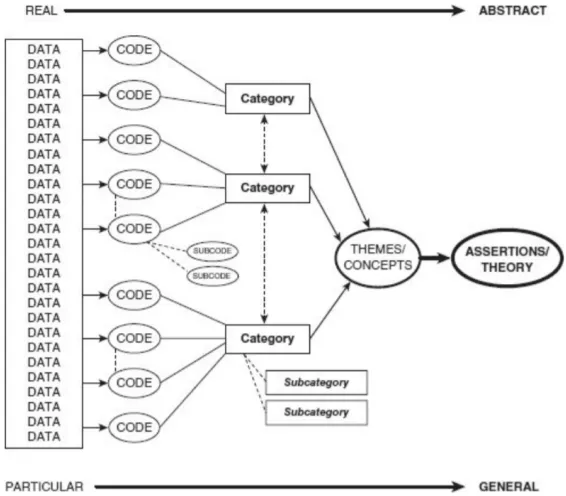
Figure 1. A codes to theory model. Retrieved Saldaña, J. (2016). The coding manual for qualitative researchers. Thousand Oaks, CA: Sage. 14. ... 59
xi
LIST OF TABLES
CHAPTER I: THE RESEARCH PROBLEM Background of the Researcher
I recall, when I was around six years old, watching a program about Dr. Martin
Luther King, Jr., on our local Public Broadcasting Station with my mother. Sitting on the
blue couch on a cold day, curled up near our space heater, my face slowly wrinkled with
confusion as I watched the United States of the ‘50s and ‘60s come alive on the screen.
Finally, when I just could not hold it in any longer, I asked my mother the question that
was bubbling inside me.
“Ma, what am I?” She did not quite understand the question at first.
“What do you mean, ‘What am I?’?” I clarified as much as I could using my
6-year old brain.
“I mean… am I Indian or am I American?” I know now that she really had to
process the question I asked, but back then, her answer seemed to come pretty quickly.
“Well, Ria, you’re Indian, but you’re also American.”
I apparently shook my head, and said, “No, that’s not true. I’m not American.”
She was perplexed.
“Of course you’re American. You were born 14 miles from the White House. You
don’t get more American than that.” I shook my head more assuredly.
“No, I know I’m not American.” Now, my mother’s confusion was all over her
face.
“Why would you say that?”
My mother is a sociologist and, for more than 25 years of teaching racial
identity-formation theory, made full use of the rich material I gave her. I am thankful for the
story, too, because it has always helped me to identify the moment at which my personal
relationship with race began.
As an Asian American woman diversity, equity, and inclusion (DEI) professional,
I occupy a racial positionality that continues to perplex me in the same way that it did
almost 27 years ago, though I find myself approaching solace amidst the confusion. In the
highly racialized environment that is higher education, and in the world of diversity work
where that racialized environment is even more intensely felt, it has been fascinating to
experience my “in-between” identity in praxis. Coupled with my identity as a woman, my
Asian Americanness has been a blessing and a curse – I am too American to be Indian,
too Indian to be American. As a first generation, South Asian American woman, I bring a
complex awareness of the various layers that make up the social landscape of the United
States, but also risk invisibility and derision, since I do not fall in the generally
recognized racial binary of Black or White. Yet, this identity also has molded me as
chameleonic, giving me the skills to bend and shape as needed, morph to be accepted,
and morph to rebel.
My hope for this study was to interrogate this question of belonging by putting it
in the context of the professional position I hold today as an Asian American woman in
American higher education, playing the critical role of a DEI professional. I interviewed
other Asian American women DEI professionals and studied my conversations with them
to determine how they have experienced their professional roles and how that has been
As I suspect might be the case with many others, this dissertation is deeply
personal (“research is me-search”). It is an attempt to see if my experience has been
singular, to find and understand myself, and to explore the identities of other women like
me who find themselves forever negotiating and resolving their “in-betweenness,” always
questioning where they belong, if they belong.
The following sections focus on analyzing the findings from my conversations
with Asian American woman DEI professionals in order to understand what their
positions can reveal about neoliberalism in higher education, a force that continues to
create the very inequities our profession is meant to address.
Statement of the Problem
Diversity, equity, and inclusion (DEI) professionals are administrative officials in
higher education who are charged with promoting and advancing diversity, equity, and
inclusion in their colleges and universities through implementation of programs,
development of trainings, and advisement of policy. Because the DEI professional is a
relatively new position in higher education, comprehensive demographic data on those
holding such positions do not yet exist, even while the field grows steadily. The only
existing demographic study to date cites that, in the United States, higher education chief
diversity officers (CDOs) – in other words, executive level administrative DEI
professionals – are 87% people of color and 58% women (Williams & Wade-Golden,
2007, p. 37). Of the CDOs in this 2007 study, 3% were Asian American (Williams &
Wade-Golden, 2007, p. 37). While this study suggests Asian American DEI professionals
are the third most widely represented racial group among CDOs after African Americans
Asian American DEI professionals continue to be overlooked in a growing field of
research that attempts to understand the racialized and gendered positionalities of DEI
higher education administrators within a predominantly white male professional field.1
In addition to this, current research has not attempted to understand what the racial and
gender experiences of Asian American DEI professionals who are women reveal about the neoliberal underpinnings of the DEI realm in the context of higher education in the
United States.
The complex racial positioning of “Asianness” throughout United States history
(Kim, 1999; Suzuki, 1989, 2002; Zia, 2000) may lend itself to the ambiguous position
that Asian American DEI professionals occupy both among other DEI professionals and
within higher education leadership. The term ‘Asian American’ refers to any person
living in the United States who has origins in East Asia, South Asia, or Southeast Asia.
Asian Americans have been relegated to an unassimilable status both due to a persistent
classification as foreigner on one hand and as unique, model minority on the other (Kim,
1999; Prashad, 2000; Rana, 2011; Xu & Lee, 2013). This creates an uncertain and
unstable ground upon which Asian American DEI professionals stand via their racial
identities in higher education, all while holding positions in a field that must contend with
race and racism as part of its professional purview.
The foundation is even more unstable for Asian American women who are DEI professionals due to the compounded injustices to which women of color have been
historically subjected (Collins, 2000; Crenshaw, 1991; Nixon, 2013, 2017). DEI
1 A 2016 study by the College and University Professional Association for Human Resources (CUPA-HR)
professionals are charged with creating systems of equity and inclusion around race and
gender, among other areas; at the same time, there is a crisis in representation with which
Asian American women who occupy the roles must contend. Specifically, while
discussions around racial equity are often central to the obligations of their work, the
particulars of their own intersectional identities are left largely untouched and
un-interrogated within the institutional spaces that they occupy. Without the recognition of
this gap between representation and responsibility, Asian American woman DEI
professionals can be left unsupported and isolated, left to champion for equity while
having few spaces to advocate for themselves. Although their experiences may share
important similarities with the other women of color who by and large occupy the field,
studies examining the DEI professional role (Greenfield, 2015; Nixon, 2013, 2017;
Williams & Wade-Golden, 2007, 2013, 2014; Wilson, 2013) are still scarce. Moreover,
none to date look to understand the particular racial and gender-based experiences of
Asian American women occupying these roles in higher education or what these
experiences reveal about the neoliberal formations of the DEI paradigm in United States
higher education.
Background and Need
Over the past decade, there has been a proliferation of DEI professional positions
created with the expressed goal of advancing diversity, equity, and inclusion in higher
education. Even while having a DEI position has rapidly become the norm, as well as a
certain marker of legitimacy for an institution of higher education (Berrey, 2015;
Warikoo, 2016), critics have argued that the creation of such positions may serve as a
when the upper ranks of the professoriate and university administration remain
overwhelmingly white and male (ACE, 2017; Seltzer, 2017). Others have extended this
idea of interest convergence (Bell, 1980) to the realm of neoliberalism by noting the
contradictory role of diversity in being espoused both as a desired quality in the global
marketplace as well as the solution to addressing the inequities rendered by free market
ideology. Further examination of the DEI professional role in higher education,
particularly the experiences of an often invisibilized group of Asian American women,
can offer an important contribution to the sparse literature.
Although a majority of the growing ranks of higher education chief diversity
officers (CDOs) have been and continue to be women of color (Williams &
Wade-Golden, 2007), few efforts have been attempted to understand the unique positionalities
of these professionals – namely senior administrators at colleges and universities – as
they navigate an administrative field still dominated by white men (ACE, 2017;
CUPA-HR, 2016). Many of these attempts have taken place in doctoral dissertations, most
notably in Nixon’s (2013) work looking specifically at the experience of African
American women and Latina CDOs. Ahmed’s work (2012) similarly uses an affective
lens to bring light to the difficult nature of diversity work, which she describes as a
thankless “brick wall,” as it is primarily one occupied by women of color, Apart from
these works, many studies, such as Williams and Wade-Golden’s (2007, 2008, 2013)
foundational works on the field, are primarily interested in examining the scope and
strategies of CDO work, looking to establish standards and best practices for the
profession. These studies offer important critical examinations of a new and complex
light on the overlooked experiences of those who occupy the DEI roles, such as Asian
American women. Furthermore, they lack a critical eye towards the neoliberal context in
which the DEI field is rooted and situated.
While very little demographic data exist about DEI professionals in higher
education, even the limited numbers are revealing. In 2016, 196 diversity officers
participated in a study by the National Association of Diversity Officers in Higher
Education (NADOHE) (Abdul-Alim, 2016). Though the study did not gather
demographic data, it did provide an idea as to how many DEI professionals were
affiliated with NADOHE during that time. Just a few years later, in 2019, at the national
conference of NADOHE, nearly 500 participants were registered. Speaking to the growth
of the field, the president of NADOHE proudly noted in his opening remarks for the
conference that membership had increased 300% in five years, and that there were 320
new members in 2018, with overall representation from nearly 1,000 institutions and all
but three states (Ervin, 2019). The conference often includes a very small number of
international attendees, some DEI professionals associated with the corporate sector, and
higher education administrators who are interested in diversity work but do not hold a
diversity professional role. Nonetheless, the majority of the attendees are DEI
professionals in higher education, and the registration lends itself to being a marker for
the steady growth of this field.
Williams and Wade-Golden’s 2007 study targeted 2,513 DEI professionals across
the country, though it ultimately focused on the 110 Chief Diversity Officers (CDOs)
from the 772 respondents who fit the criteria for the position (p. vii). Each of the targeted
the nearly 6,536 colleges and universities in the United States had a DEI professional role
(National Center for Education Statistics, 2016c). Yet, the demographic data from the
same study only pertain to the CDOs and thus are still incomplete in providing an
accurate racial and gender-based reading of the field. Williams and Wade-Golden’s
oft-cited 2007 study found that of 110 CDOs, 87% were people of color (p. 37). Of this
group of 110, 74% were African American, 10% were Latino, 13% were White, and less
than 3% were Asian American (p. 37). Of the total number of DEI professionals, 58%
were women (Williams & Wade-Golden, 2007). Though the demographic data are
limited, based on personal observations and commonly-shared understanding within the
profession, the demographic data for CDOs can be projected onto the general higher
education diversity officer field to reach the conclusion that most DEI professionals are
women of color.
Taken as a whole, the identity of these DEI professionals does not mirror the
identity of the uppermost leadership of colleges and universities. In 2008, only 16% of
senior administrators on college campuses in the U.S. were people of color (Cook, 2012),
and a 2016 study (ACE, 2017) reveals that this number remains consistent at the very top,
where 83% of college presidents are white. Uniquely, Asian Americans are
(under)represented almost equally within the communities of DEI professionals and
college presidents, with fewer than 2% of college presidents identifying as Asian
American (ACE, 2013). Yet this lack of Asian American representation in the upper
echelons of higher education is not widely characterized as a crisis within the DEI
profession, nor has it been seen as an area in need of extensive research beyond key
Furthermore, little attempt has been made to examine how the current lack of Asian
American DEI professionals may be symptomatic of the racial and gendered legacies of
higher education in the United States, particularly those attached to the model minority
myth, as well as emblematic of racialization and gendered ways of being that are inherent
to neoliberal realities.
The historical makeup of higher education further impacts the Asian American
DEI professional role. Since its inception in the United States, higher education has been
exclusionary in practice, with race serving as a primary reason for exclusion (Karabel,
2006; Wilder, 2014). Both Karabel (2006) and Wilder (2014) note that this exclusion has
been sophisticated enough to evolve with changing notions of race, such as when many
universities changed their admissions processes in the early 20th century to screen out the
rising tide of undesirable European immigrants and blacks who would have had little
problem gaining admission based on academic prowess, but lacked what was required to
meet White, male, property-holding notions of good and reputable character (Karabel,
2006). Thus, Asian American women DEI professionals must operate within institutions
still struggling to alter the staying power of this legacy to which Karabel (2006) and
Wilder (2014) speak – White, male domination in the Ivory Tower. The legacy is
reaffirmed in the present day composition of higher education leadership (ACE, 2017).
Asian American women DEI professionals must contend with the makeup of the
leadership as well as complex racial roles that Asian Americans have occupied with
regards to higher education, often serving as a face for diversity on college campuses
while also benefiting from the model minority myth that emboldens many Asian
Harvard, 2018). Ironically, these initiatives, such as affirmative action, are often meant to
lift students who face persistent structural barriers to higher education, many of whom
have historically been Asian (Chung & Zhang, 2018; Prashad, 2000). In the face of the
continued prevalence of male whiteness in university leadership, and the characterization
of Asian Americans as self-sufficient, successful, and docile (Kim, 1999), few spaces
exist for Asian American women, specifically those who are DEI professionals, to
confront their own complex identities as they are implicated within their profession.
An absence of spaces to interrogate and unpack non-White and non-Black racial
existence within a racial binary is almost certainly one that is felt by many racial groups.
While there is similarity in the experiences of DEI professionals belonging to Asian
American, Native American, and Latino communities, the experience of Asian
Americans in higher education and beyond is unique given their classification from the
mid-20th century onwards as the “model minority” (Hsu, 2015; Hune, 1998; Shih, 1989;
Suzuki, 1989, 2002; Wu, 2014). The purpose of the model minority myth has been to
position Asian American as “achievers who have overcome racism through hard work”
(Hune, 1998, p. 9), placing them in contention rather than in camaraderie with other
races. The end goal of this classification has been “to maintain anti-Black racism and
White supremacy,” thus making Asian Americans often complicit in maintaining racial
hierarchies (Ancheta, 2000; Kim, 1999; Patel, 2015; Poon, Squire, Byrd, Chan, Manzano,
Furr, & Bishundut, 2016; Prashad, 2001).
The model minority myth also leads to the designation of the Asian American
community as monolithic, thereby erasing opportunities to appreciate both the diversity
1998, 2011). This, in turn, leads to the present-day isolation of Asian American DEI
professionals in higher education whose complex and diverse in-group identities become
lost in an oversimplified racial binary. The isolation of this group is even more deeply felt
when the gendered dynamic of the group is taken into account.
The work of Kim (1999) suggests that the racial identity formation of Asian
Americans is derived via “triangulation,” whereby Asian identity is juxtaposed against
and through the dominant Black/White racial binary. This triangulation-derived racial
identity of Asian Americans can affect the ways they engage in racial equity work in
higher education and the way they and their work are perceived. Historically-founded
notions of Asian Americans as unspecified ‘other non-whites’ (Gotanda, 1985), the
model minority (Lee, 2015; Shih, 1989; Suzuki, 1989, 2002), or “unassimilable”
foreigners (Kim, 1999, p. 109) offer little space for Asian Americans to turn to
constructively examine their identities. This deep-seated, limiting conception of
Asian-Americanness impacts the work, positionality, and scope of support for Asian American
women DEI professionals. Given the inadequate examination of how these limitations
play out within neoliberal higher education—as well as of their impact—this study will
challenge this erasure of complexity by highlighting and analyzing the dynamic identities
of the study participants within the neoliberal context in which they operate.
Purpose of the Study
The purpose of this phenomenological study was to examine the experiences of
Asian American women diversity, equity, and inclusion (DEI) professionals as their work
is shaped by its placement in higher education in the United States—a system marked by
women reveal about the actions and embodiments of neoliberalism in the realm of DEI
work in the context of higher education.
Research Question
A central question guided this qualitative study of Asian American women DEI
professionals:
What do the experiences of Asian American women diversity, equity, and
inclusion professionals reveal about the relationship between neoliberalism and diversity, equity, and inclusion work in the context of higher education?
The following questions supported this central question:
• In what ways do neoliberal processes and ideologies manifest in higher education
diversity, equity, and inclusion work?
• How do Asian American women diversity professionals describe their
experiences in higher education diversity, equity, and inclusion work?
• What strategies do Asian American women use to navigate higher education
diversity, equity, and inclusion work?
Theoretical Framework Neoliberal hegemony
To examine the experiences of Asian American women diversity, equity, and
inclusion professionals in higher education, this study used a critical theoretical lens of
neoliberal hegemony. While neoliberalism is often understood primarily as an economic
model, the rise and ensuing dominance of which is addressed in Chapter 3, this study
used as a theoretical frame the understanding that economic neoliberalism is also
moves, takes hold, and is challenged. This ideology hegemonizes and makes normal the
market ethos upon which neoliberalism stands by extending its values from the economic
realm into every aspect of our sociocultural existence. Therefore, this neoliberal
hegemony profoundly impacts higher education and thus was a critical lens through
which to view the role of Asian American women DEI professionals and their consent to
and contestations of neoliberal power as it manifests via the diversity, equity, and
inclusion paradigm in the higher education realm.
Essential to the ascension of neoliberalism is the movement of market ideology –
stressing individualism, competition, and profit at all costs – from simply the market
alone into all aspects of social being. This ideological buy-in is achieved via what
Gramsci refers to as ‘hegemony.’ Gramsci (1971) suggests that capitalism, in this case
manifesting in an advanced form as neoliberalism, develops those sensibilities necessary
for its reproduction into ‘common sense.’ Here, consent to the modes of being under the
neoliberal model is not achieved by force, but rather through sociocultural means of
normalization. Referring to common sense, Harvey (2007) says,
common sense is constructed out of long-stranding practices of cultural
socialization often rooted deep in regional or national traditions. It is not the same
as the ‘good sense’ that can be constructed out of critical engagement with the
issues of the day. Common sense can, therefore, be profoundly misleading,
obfuscating or disguising real problems under cultural prejudices. Cultural or
traditional values...and fears…can be mobilized to mask other realities. (Harvey,
In the United States, cultural values such as freedom, liberty, rugged individualism, and
even diversity can therefore be mobilized and commodified towards commercial ends.
Harvey (2007) summarizes this phenomenon when he locates the means through which
neoliberalism becomes common sense, noting that the channels through which this is
accomplished are varied and employ “powerful ideological influences through the
corporations, the media, and the numerous institutions that constitute civil society – such
as the universities, schools, churches, and professional associations” (Harvey, 2007, p.
40). It is the role of the university in the construction of neoliberal common sense, and in
particular the role that diversity in higher education has in aiding that construction, that
this study sought to explore.
The theoretical lens of neoliberal hegemony was also employed to examine
resistance in the neoliberal realm. Here, Gramscian conceptualizations of agency help
build the foundation for understanding how neoliberalism may be contested. Whereas in
traditional understandings of capitalism, particularly via Marxism, “human subjects
generally ‘disappear’ amidst a theory that leaves no room for moments of self-creation,
meditation, and resistance,” (Aronowitz and Giroux, 1994, p. 230), Gramscian theories of
resistance enable the location of liberatory spaces for transformation within neoliberal
hegemony by recognizing the existence of agency (Giroux, 1983; MacLeod, 1987). In
looking to education, Giroux encourages us to name agency in order to “understand more
thoroughly the complex ways in which people mediate and respond to the interface
between their own lived experiences and structures of domination and constraint”
The lens of neoliberal hegemony, therefore, presented an opportunity to also
name the ways that Asian American women DEI professionals embodied their agentive
selves in the face of neoliberalism, thus entering into negotiations of power. Here too,
however, it was critical to recognize when the focus on individual agency became so pronounced that it had the possibility to seep effortlessly back into the realm of the
individualizing, neoliberal project. As Lipman (2011) and others warn, neoliberalism’s
staying power lies in its ability to convince us that little rather than most of our
sociocultural existence is enmeshed in its grasp (p. 6). It behooved this study, therefore,
to employ the lens of neoliberal hegemony to understand the many ways in which we
unknowingly idolize the cultures and sensibilities of neoliberalism, and how this
idolization can creep into the very spaces that we hold to be resistant, such as that of the
Asian American woman higher education diversity professional role. Ultimately, this
theoretical framework offered a powerful lens to critically examine the workings of
power in a novel location.
Racialized neoliberal gaze
The theoretical framework of neoliberal hegemony illuminated a central finding
of this study: the existence of a “racialized neoliberal gaze” that operates in diversity,
equity, and inclusion work in higher education. Taking the reality of the omnipresence of
neoliberalism, and adding to it Foucault’s (1977) imagery of the disciplining panopticon ,
the concept of the racialized neoliberal gaze suggests that neoliberalism, far from having
only impact that can be racial in nature, actually leads to neoliberal subjects performing
depth in Chapter 5, but I offer an introduction to this concept here, since it developed out
of, and clarified, the theoretical framework for this study.
Though contemporary understandings of neoliberalism may include references to
the Foucauldian notion of panopticism (Gane 2012), his early theorizations regarding the
panopticon were used to understand the shift in modes of discipline rather than locate
neoliberal technologies (Foucault, 1977). In Discipline and Punish (1977), Foucault
offers the reader two illustrations of novel discipline at work. In the first image, Foucault
presents a town overrun by the plague where, upon pain of death, townspeople must
register their identification information and all their movements and bodily functions.
They are registered and labeled (plagued or not yet stricken), constantly guarded, and
separated from one another. Foucault (1977) describes this plague stricken town,
“traversed throughout with hierarchy, surveillance, observation, writing; the town
immobilized by the functioning of an extensive power that bears in a distinct way over all
individual bodies” as the most perfectly governed city (p. 198). Here, discipline has
moved from the public control over a shackled body to widespread, private hold over a
community of individuals who have all normalized extensive documentation and
surveillance, and the classification of normal versus abnormal, seemingly for their own
security and wellbeing.
The notion of “the panopticon” – the technology that this study is concerned with
– shifts the idea of discipline deeper into the individual psyche, moving into Foucault’s
understanding of power and subject formation. The second novel form of discipline that
Foucault (1977) examines offers theoretical expansion on the architectural musings of
building as the ideal design for a prison. He envisioned a tall tower with a window that
had a view of each individual, isolated prisoner below, yet which not could be seen into
by any of the prisoners looking up. Here, with panoptic vision, “everything is in view at
once” for the overseer. The observed, on the other hand, are unsure when they are being
watched, and are controlled by the thought that they are “visible” but that their own
observation is always “unverifiable” (Foucault, 1977, p. 201). They thus become
disciplined and compliant, controlled by the threat they could, at any point, be under the
“gaze [which] is alert everywhere” (Foucault, 1977, p. 195). The panopticon, Foucault’s
early attempt to describe an omnipresent gaze, leads to the development of “implicit
systems which determine our most familiar behavior without our knowing it” (Foucault,
1971, p. 201). These systems – governing the movement and enactment of power,
shaping even the way we think and produce knowledge and interpret reality – are what
Foucault refers to as ‘discourse.’ Under the panoptic gaze, humans become governed
subjects through recursive, discursive processes that allow for control of the people
without forceful intervention because they will have internalized the very discourse that
keeps them oppressed.
Foucault’s understanding of the panopticon can be applied as a means to view the
omnipresence of the neoliberal paradigm. In his attempt to understand how the modern
state moved from control over the body to construction of a controlled, trained,
disciplined body, Foucault’s conceptualizations around discourse enable us to see
neoliberalism as a process by which human beings, via means not directly related to state
control, nonetheless become subjects whose every act and thought enact, serve, and
“discourse” thus allows us to see how humans become subjects governed by the ethos of
the market through cultural and social forces they themselves mouth and respond to
rather than through any visible, brute force. This has important parallels to Gramsci’s
(1971) concept of hegemony, which similarly offers a means to understand how the
all-commodifying nature of capitalism can become an unquestioned “common sense”—
cultural practice taken for granted as it seeps into every realm of human existence. Where
panopticism explains the all-seeing nature of neoliberalism, hegemony, when equated to
discourse, offers the process through which that gaze is internalized by subjects who
themselves embody and enact the project of neoliberalism. Springer (2012), offering a
rare conflation of Gramscian and Foucauldian thought, speaks to the concept of
neoliberalism as discourse. In doing so, Springer is able to bridge the divide between
neoliberalism as a project and the ensuing discursive processes that create subjects who
are governed by rationalities of what this study refers to as the racialized neoliberal gaze.
Connecting the panoptic gaze to the discursive elements of neoliberalism can in this way
lend clarity to the ideological technologies employed by the racialized neoliberal gaze as
it relates to the higher education diversity, equity, and inclusion context of this study.
Educational Significance
This study looked at the role of Asian American women diversity, equity, and
inclusion (DEI) professionals to understand what their experiences can reveal about the
workings of neoliberalism in higher education. By centering the voices of Asian
American DEI professionals, the study aimed to fill a gap in research pertaining to this
relatively new professional arena so as to better understand the particular positionality of
perspective to understanding how racial and gendered experiences are implicated in the
proliferation of neoliberal ideology in higher education DEI practice.
In examining the DEI professional position with an understanding of its
rootedness in neoliberal higher education, this study had the potential to examine how a
fledgling higher education administration role relates to larger structures of global
capitalism as well as related historical movements of exclusion and liberation. In doing
so, there was an opportunity to critically situate the origins, effectiveness, and future of
diversity programs in higher education within existing discussions around race, gender,
and neoliberalism.
In practical application, this work may inform administrators on how to better
reframe DEI professional responsibilities, improve climate for Asian American women
DEI professionals on campus, and offer more support to DEI professionals writ large in
the context of a profession that, as this study further revealed, is constructed to reproduce
rather than contest manifestations of neoliberalism. This, in turn, may improve campus
climate by impacting the quality of the professional life and professional outcomes of
Asian American women DEI professionals in particular, and for the larger Asian
American community on college campuses in general. Furthermore, this study may offer
a template to support research on DEI professionals belonging to other identity groups
CHAPTER II: REVIEW OF THE LITERATURE
Overview
The following chapter provides a review of the literature that grounds this study.
It is organized into three sections. The first section gives on overview of Asian American
women in higher education, paying particular attention to their ongoing
underrepresentation in the faculty and administration. The second reexamines diversity in
higher education, including prior research that looks at its benefits, challenges, and
critiques. Finally, the last section looks to existing literature regarding the impact of
neoliberalism on higher education.
Asian American Women in Higher Education
While currently no literature exists that specifically examines the experiences of
Asian American women who occupy roles as DEI professionals, much can be gleaned
through scholarship on Asian Americans in other areas of higher education. The stories of
Asian American administrators and faculty have been documented, though neither nearly
as much as those of AAPI students. These stories suggest that the experience of Asian
American women in higher education is characterized, much like other women of color,
by their intersecting racialized and gendered identities (Hune, 2006; Jackson & Harris;
2007; Jackson & O’Callaghan, 2009). Research also suggests that the experience of
Asian American women in higher education is unique in two important ways. First, in
higher education, Asian American women are under-represented among faculty and
administration, in direct contrast to Asian American representation in the student body. In
addition to this ongoing underrepresentation, Asian American women must also contend
stereotypes as they manifest in higher education. Accounts of Asian American women in
higher education as students, faculty, staff, and administration are critical for
understanding the unique experience of Asian American women as DEI professionals.
Underrepresentation in faculty and administration
In 2016, 58% of students enrolled in college, ages 18-24, identified as Asian and
21% as Pacific Islander (Department of Commerce, 2017). While the National Center for
Education Statistics does not report the breakdown of these populations by gender or note
how many of these populations are comprised of international Asian and Pacific Islander
students (Teranishi, 2010), research by others notes that Asian American women who are
U.S.-born earn degrees at higher rates than their male counterparts (Ryu, 2010;
Covarrubias & Liou, 2014). However, many note that these rates of educational
attainment do not hold true for all of the more than 48 ethnic groups that comprise the
Asian American and Pacific Islander community (Teranishi, Nguyen, Choi, Pazich, He,
& Uh, 2011; Montez, 1998; Museus & Kiang, 2009; Hune, 2011; Teranishi, Lok &
Nguyen, 2013). These scholars stress that there is a need to disaggregate these
educational attainment data so as to bring attention to ongoing barriers that Southeast
Asian and Pacific Islander women in particular must confront with regards to educational
and socioeconomic advancement, as compared to the experiences of East and South
Asians whose families may have migrated as professionals with more privileged class
backgrounds.
Myths about the unparalleled success of a conglomerate Asian American
population, discussed later, erase the unique stories of and challenges faced by some of
the Asian American experience and the true, diverse realities of this multifaceted
community also affects the ways in which its members advocate for further academic
inclusion. In the most dramatic example in recent years, some Asian Americans,
internalizing their elevated status as meritorious minorities, have sought to protest
affirmative action in higher education. In suggesting that affirmative action punishes
these students’ success, such objections have the dual effect of further restricting higher
education access to those Asian American students with the greatest need, as well as
creating a barrier between the Asian American experience and that of other communities
of color (Gerson, 2017; Park & Lui, 2014; Teranishi, 2007, 2017; Wong, 2016). Here,
nuanced study of the Asian American community has the ability to reveal how everything
from U.S. military involvement abroad to dramatically vacillating immigration policies
that opportunistically favor some Asians over others can impact how these communities
experience, or do not experience, higher education (Bald, 2013; Lee, 2007; Takaki, 1998;
Zia, 2000). Despite underrepresentation of students belonging to particular Asian
American ethnic groups, however, Asian American students writ large compose a
substantial part of the higher education landscape – a prevalence not mirrored by Asian
American women in the realm of faculty, staff, and university administration.
In the professoriate, the number of Asian American women holding faculty
positions more than doubled between 1997 and 2007, jumping from 8,846 to 19,450
(Hune, 2011). However, in this time period Asian American women were still
outnumbered by Asian American men in all levels of professorship (Ryu, 2010). This
positions were held by Asian/Pacific Islander women, compared to 6% held by
Asian/Pacific Islander men (National Center for Education Statistics, 2018).
At the highest levels of higher education administration, Asian Americans are
generally unrepresented. In a field that is 70% male and 83% white, women of color
constitute only 5% of all college presidents (American Council on Education, 2017).
With only 2% of college presidents identifying as Asian American out of about 1,500, the
number of college presidents identifying as Asian American women nationally is likely
fewer than 30 (American Council on Education, 2016).
This sparse representation holds true for DEI professionals as well. The only
existing demographic study to date cites that higher education chief diversity officers
(CDOs), or executive level administrative diversity officers, are 87% people of color and
58% women (Williams & Wade-Golden, 2007, p. 37). Only 3% of CDOs are Asian
American (Williams & Wade-Golden, 2007, p. 37). Asian American DEI professionals
who are women are the third most widely represented racial group among CDOs after
African Americans and Latinos (Williams & Wade-Golden, 2007, p. 37). Yet, as
discussed earlier, they are missing in a growing field of research that attempts to
understand the racialized and gendered positionalities of women of color higher
education administrators within a professional field that continues to be dominated by
white men (Bichsel & McChesney, 2017).
Current data regarding the representation of Asian American women are
challenging to locate, and many have argued for increased efforts to gather accurate data
about Asian Americans in higher education, paying special attention to the racial and
need to pay attention to the intersectional experience of Asian American women in order
to diagnose why they still remain underrepresented in higher education, many scholars
specifically encourage attention towards understanding the role that the model minority
myth plays in clouding the reality of Asian American women’s representation in higher
education.
Model minority myth
Many scholars have offered diagnoses attempting to understand the shortage of
Asian American women faculty, staff, and administration in higher education. Hune
(2011) notes that members of this population “[face] biases related to their race and
gender, as well as those stemming from anti-immigrant sentiments, accent discrimination,
and male-centered Western notions of communication and leadership” (p. 1). In noting
how Asian American women must contend with everyday, racialized situations of being
cast as the “other,” Hune locates the ways in which “interlocking multiple hierarchies,
such as gender, race, and immigrant/citizen work together to maintain Asian American
women’s unequal status” (Hune, 2011, p. 310). In particular, she and others highlight the
“model minority myth,” which conflates Asians into a monolithic group, set apart from
other races because of the perceived high levels of achievement of its members as well as
their simultaneous designation as the unassimilable, perpetual foreigner (Gin, 2013;
Hune, 1998, 2011; Kim, 1999; Maramba, 2011; Montez, 1998; Museus, 2009; Teranishi,
et al., 2009; Suzuki, 1989, 2002). Ultimately, this phenomenon triangulates Asian
American identity in relation to the White/Black racial binary (Kim, 1999), preserving
White supremacy in the process by presenting other people of color, particularly African
the model minority myth in higher education continues to silence the particular and
diverse needs of Asian American women.
Multiple scholars look to understand the repercussions of the model minority
myth upon Asian Americans in higher education (Shih, 1988; Suzuki, 2002; Yu, 2006;
Ng, Lee, & Pak, 2007). These scholars note that the model minority myth operates in
higher education much like it does in larger society. For one, because the myth depends
on an oversimplification of the category of Asian American, the many ethnic
backgrounds that comprise this identity marker are ignored. A 2013 report by the
National Commission on Asian American and Pacific Islander Research in Education
(CARE) looks at the importance of disaggregating the category of Asian American to
understand the nuanced experiences of the ethnic groups it comprises, particularly with
regards to their higher education experience (Teranishi et al., 2013). The report notes that
grouping all Asian Americans together creates a dangerous tendency to gloss over the
experiential distinctions of Asian American subgroups, which has the end result of
suggesting that all Asian Americans are success stories – driven, productive, and
generally wealthy members of society without struggle or need for support. Yet data from
the 2010 census reveal that while at least 47% of East Asians (Chinese, Japanese,
Korean, Taiwanese) and South Asians (Bangladeshi, Indian, Nepali, Pakistani) have at
least a bachelor’s degree, Southeast Asians (Cambodian, Hmong, Laotian, Vietnamese)
are generally less than half as likely to have the same educational attainment (Teranishi et
al., 2013, p. 8). This is mirrored in the household incomes of these groups as well, with
the average for some groups falling $25,000 below the median income for all Asian
2013, p. 9). These examples offer just a few numerical depictions of the complexity
within the Asian American population that the aggregated, oversimplified nature of the
model minority myth can gloss over.
For Asian American students, faculty, and higher education professionals, this
aggregation of subgroups also leads to a misguided aggregation of experience. Because
of widespread, socially accepted generalities around Asian American success, the model
minority myth stereotype creates a cyclical process by which all Asian Americans are
considered to have “made it” by virtue of the high socioeconomic status that some
achieve (Maramba, 2011). Aggravating this process is the fact that Asian Americans
continue to be the highest paid administrators in higher education by race and ethnicity
(Bichsel & McChesney, 2017, p. 9). Here, high earnings become a stand-in for
representation. This leads to systemic denial of the very real underrepresentation of Asian
American women in staff and administration, thus creating the false sense that there is no
focused need to research and provide resources towards increasing this population’s
representation in higher education (Gin, 2013; Hune, 2010; Maramba, 2011; Montez,
1998). Compounding this dearth is an acute lack of mentorship at the professional level,
which plays a role in constricting the pipeline for Asian American women in higher
education, particularly when it comes to upper level staff and faculty roles (Gin, 2013;
Hune, 2010; Maramba, 2011; Neilson & Suyemoto, 2009).
For those Asian American women who do enter faculty and staff ranks, their
experiences continue to be colored by gendered stereotypes surrounding the model
minority myth. Characterization of Asian American women as the exotic, erotic,
the peace and not causing trouble” (Maramba, 2011, p. 351). Because high levels of
achievement are expected of this group due to the perceived natural intelligence and
success of its members, it goes unacknowledged that Asian American women have
historically faced race- and gender-based discrimination based that continues to manifest
in higher education (Hune, 2010; Sue, Bucceri, Lin, Nadal, & Torino, 2007). Their
particular needs are neglected as it is assumed that they do not need support (Hune, 1998;
Nakanishi & Yamano; 2014; Osajima, 1995). As a result, lacking mentors and peers who
are also Asian American, these women have few places to turn for support, and their
experiences, shadowed by the intense pressure to succeed at all costs, are frequently
rendered invisible (Constantine, Smith, Redington, & Owens, 2008; Maramba; 2011; Sue
et al., 2007; Thomas & Hollenshead; 2002). Yet, ironically, when the Asian American
voice is needed, these very same women find themselves called upon as token
spokespeople for their entire extended community (Maramba, 2011; Sue, et. al., 2007).
Harkening back to the model minority myth and the compounding effects of
aggregating all Asian American ethnic subgroups, Asian Americans are seen as neither
needing support nor professional advancement, all the while having to navigate the
tokenization of often being the “only one” in administrative ranks. The impact of the
particular racialization that Asian American women in higher education face,
compounded with their gendered status, can be extended to the experience of Asian
American women DEI professionals.
Diversity in Higher Education
Though literature examining the responsibilities of and challenges faced by
much has been written about diversity in higher education. While diversity has grown to
encompass engaging difference in areas such as gender, sexual orientation, ability, class,
nationality, and immigration status, the intentions of diversity programs in their
inception, as an outgrowth of the civil rights movement, have largely centered on race.
As such, the literature around diversity in higher education still primarily maintains this
focus (Baez & Sanchez, 2017). Three primary trends in this literature can be extended to
understanding the context in which Asian American women diversity officers operate in
higher education. In one area, scholarly work has been devoted to naming the benefits of
racial diversity, primarily for student development on college campuses. Other
scholarship focuses on the myriad challenges that have arisen from recent legal
contestation of affirmative action in higher education, and how such litigation has played
a role in the emergence of a race-neutral diversity landscape. Finally, within this
environment, a significant amount of recent scholarship critiques the diversity rationale in
higher education, pointing in particular to the ways current diversity practices uphold
White supremacy and cater to the interests of capitalism. Taken as a whole, these themes
reflect the challenging landscape of diversity in higher education that Asian American
women DEI professionals must operate in.
If taken simply as the numerical representation of students, faculty, and
administrators on campuses belonging to different races and ethnicities, it is evident that
diversity on college campuses has seen mixed results.2 National statistics from 2015
show that while the proportions of Asian Pacific Islander (6.8%) and Hispanic students
(17.3%) have increased steadily since 1976, the percentages of American Indian (0.8%)
2 In this section, I use the racial and ethnic terminology employed by the researchers of each study, not my
and Black students (14.1%) have dropped after peaking in 2010 and 2011 respectively
(National Center for Education Statistics, 2016b). Despite remaining the majority group,
the proportion of White students (57.6%) in higher education has dropped consistently
since 1976 (National Center for Education Statistics, 2016b). In the faculty realm, from
2011-2015, all racial groups saw an increase in numbers of full-time faculty, apart from
Native Americans (National Center for Education Statistics, 2016a). In 2015, White
faculty (575,657) significantly outnumbered all other racial groups combined (160,887)
(National Center for Education Statistics, 2016a). Like faculty, administrators in higher
education find diverse representation far from the reality, with 86% of administration in
2016 identifying as White, 7% as Black, 3% as Hispanic/Latino, 2% as Asian, and 1% as
unidentifiable (Bichsel & McChesney, 2017). If equitable representation is the goal of
diversity initiatives in higher education, these statistics demonstrate that the goal remains
unachieved in any area of the university. However, while the realization of diversity in
higher education may not be demonstrable in numerical terms, few argue against its
benefits in the psychosocial development of students.
Benefits of diversity
Proponents of diversity in higher education point to the benefits of meaningful
interaction among people of different races, particularly in the student experience. In their
pioneering work on diversity in higher education, Gurin, Dey, Hurtado, and Gurin (2002)
point to two overarching ways in which students are shaped by diversity-minded
initiatives. First, they note that while structural diversity, or demographic representation,
is important, it is not enough by itself to guarantee that students will have the
prejudice” (Gurin, Dey, Hurtado, & Gurin., 2002, p. 333). Instead, they note that
diversity can positively shape learning outcomes by fostering “disequilibrium” (Cantor,
2004; Gurin et al., 2002; Piaget, 1971, 1975; Tienda, 2013), or the necessary social
discomfort young people must experience in order to develop a nuanced social identity
capable of navigating new and complex difference (Gurin et al., 2002, p. 334). The
psychosocial disequilibrium that intergroup experiences foster provides the “educational
rationale” (Gurin et al., 2004, p. 99) for diversity. This rationale suggests that
cross-racial, contextualized, dynamic intergroup experiences (Garces & Jayakumar, 2014) in
the formative years of college develop students who will be able to navigate and
contribute successfully to the social and democratic fabric of the nation (Hurtado, 2001).
In this second interrelated area, which Gurin et al. term “democracy outcomes,” diversity
in higher education fosters those skills that are required by “citizenship and leadership for
a diverse democracy” (Gurin et al., 2004, p. 107). In recent years, the democracy
outcomes of diversity have been widely cited in the defense of affirmative action by
scholars, lawyers, and both civic and corporate organizations.
Challenges to diversity
In 2003, Sandra Day O’Connor delivered the majority opinion in the Supreme
Court’s 5-4 decision to uphold the University of Michigan Law School’s affirmative
action admissions policy via the Grutter v. Bollinger case. In her remarks, she noted that The Law School’s claim is further bolstered by numerous expert studies and
reports showing that such diversity promotes learning outcomes and better
prepares students for an increasingly diverse workforce, for society, and for the
needed in today’s increasingly global marketplace can only be developed through
exposure to widely diverse people, cultures, ideas, and viewpoints…Moreover,
because universities, and in particular, law schools represent the training ground
for a large number of the Nation’s leaders…the path to leadership must be visibly
open to talented and qualified individuals of every race and ethnicity. (Grutter v. Bollinger, 2003, p. 18)
O’Connor’s remarks, summarizing the beneficial democracy outcomes of diversity in
higher education, mirrored those of Justice John Powell, made 25 years earlier during the
landmark affirmative action case Regents of the University of California v. Bakke (1978). In his opinion, Powell stated that using race as one of many factors in college admissions
was in the national interest since “the nation’s future depends upon leaders trained
through wide exposure to the ideas and mores of students as diverse as this Nation”
(Regents of University of California v. Bakke, 1978, p. 313).
Notably, neither of these opinions suggested that affirmative action, a product of
the civil rights movement, be used to mitigate the historical discrimination systematically
affecting minorities (Bell, 2007; Goldstein Hode & Meisenbach, 2016). In fact, Powell
concluded against the legitimacy of using affirmative action to address societal
discrimination when he stated that it was “an amorphous concept of injury that may be
ageless in its reach into the past” (Regents of the University of California v. Allan Bakke, 1978, p. 307), and that people who are “innocent of any actual discrimination” would be
punished by race-conscious policies designed to deliver justice to groups that have been
historically marginalized (Selmi, 2002). As many have cited (Bell, 2007; Garces, 2014;
the realm of diversity and higher education by centering diversity as being in the interest
of, and working towards, factors other than racial justice. This shift was solidified by the
Grutter v. Bollinger case, and provides the legal basis for many critiques of the diversity
rationale as it is employed in higher education.
Critiques of the diversity rationale
Recent literature has suggested that the shift in affirmative action policy as
recently highlighted by the Grutter v. Bollinger case has had the effect of not only limiting the ability of universities to achieve racial parity, as evidenced by the earlier
demographic data, but has also actively stood in the way of universities’ efforts to foster
the social changes necessary to achieve social equity (Ahmed, 2012; Bell, 2003; Berrey,
2011, 2015; Glasener, Martell, & Possert, 2018; Goldstein Hode & Meisenbach, 2016;
Patel, 2015; Jayakumar & Garces, 2015). Scholars (Bell, 2003, Goldstein Hode &
Meisenbach, 2016) suggest that the manner in which diversity is now sought does more
to uphold White supremacy in higher education and business interests than it does
challenge inequality in a way to meaningfully diversify higher education. Primary is the
argument made by Bell (2003) that diversity, via affirmative action, converges the
progress of minoritized students with White interests primarily by “enabling courts and
policy makers to avoid addressing directly the barriers of race and class that adversely
affect so many applicants” (Bell, 2003, p. 1622). White students, faculty, and
administrators – those who hold lasting institutional power via their whiteness –
recognize the competitive advantage that diversity fosters (Berrey, 2011; Leong, 2012;