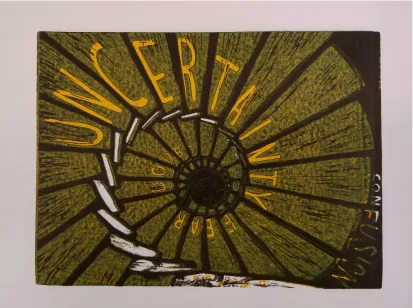
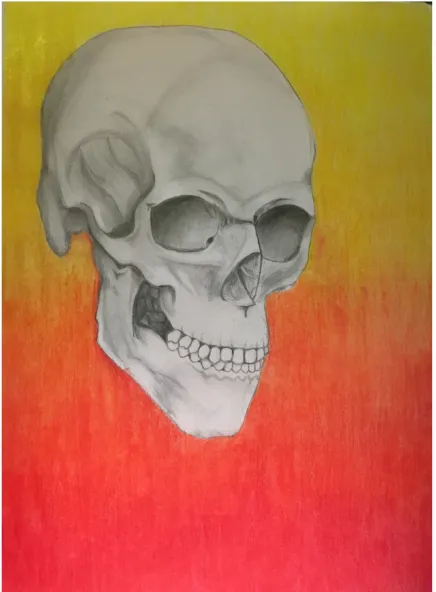
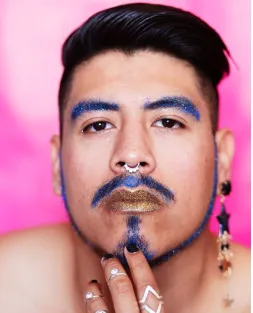
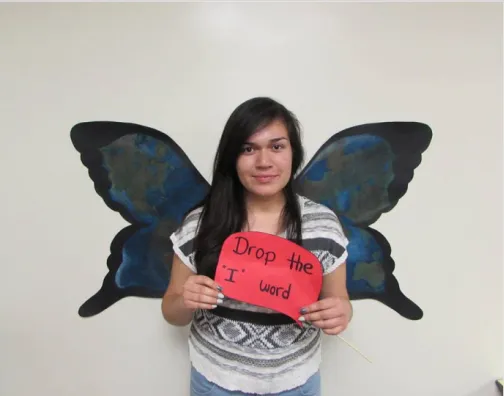
Geschke Center
Doctoral Dissertations Theses, Dissertations, Capstones and Projects
Winter 2017
Papelitos: The Visual Testimonios of
Undocumented College Students
Olivia MunozUniversity of San Francisco, [email protected]
Follow this and additional works at:https://repository.usfca.edu/diss Part of theArt Education Commons
This Dissertation is brought to you for free and open access by the Theses, Dissertations, Capstones and Projects at USF Scholarship: a digital repository @ Gleeson Library | Geschke Center. It has been accepted for inclusion in Doctoral Dissertations by an authorized administrator of USF Scholarship: a digital repository @ Gleeson Library | Geschke Center. For more information, please [email protected].
Recommended Citation
PAPELITOS:
THE VISUAL TESTIMONIOS
OF UNDOCUMENTED COLLEGE STUDENTS
A Dissertation ProposalPresented to
The Faculty of the School of Education
International and Multicultural Education Department
In Partial Fulfillment Of the Requirements of the Degree
Doctor of Education
ii
THE UNIVERSITY OF SAN FRANCISCO Dissertation Abstract
Papelitos
The Visual Testimonios of Undocumented College Students
This study investigated the role art played in the lives of nine undocumented
college students at different universities in Northern California. The purpose of this
qualitative inquiry was to examine how undocumented college students use art as a
mechanism of resistance and activation of the political self related to their immigration
status. This scholarship comes at the heels of the first year in office of the 45th president
of the United States, who ran on a platform, in part, of anti-immigrant rhetoric. Much of
the activism around undocumented immigrant rights has used art as a mechanism for
collective action, allyship, and reimagining the migrant person.
This research focused on personal narrative and participant-made artwork through
an original conceptual framework called Visual Testimonio, which is formed by three
pillars: testimonio, art as resistance strategy, and Critical Race Theory. Less about the
classically defined arts, Visual Testimonio embraces the figurative visual: creative,
vulnerable work that is moved into a public sphere, stories that are shouted, acted, and
sculpted so that oppressed viewpoints are considered and marginalized folks are seen.
Four key ideas emerged from this project. One, for undocumented people, making
and sharing self-reflective art is innately political. Art offers the maker a mechanism for
taking control of the narrative regarding immigrant people—especially in a time of
political fear and turmoil. Secondly, creating art can have emotional and mental health
iii
can serve to channel rage. The participants showed how they have used art for self and
communal care. Third, Visual Testimonio allows for the creation of sanctuary as a
reflexive resistance strategy. The centering of immigrant art can create a haven through
shared stories. Lastly, the art done by undocumented people should serve as valuable
primary texts of a lived experience. They are historical artifacts in the making. A recent
surge of creative activity around immigrant rights is in reaction to the oppressive system
that threatens millions of people. If Critical Race Theory is the lens through which stories
are examined and testimonio is the heart of the matter, the arts are the hands that form
new, more just realities. In a time of political and social persecution, this study presents
iv
This dissertation, written under the direction of the candidate’s dissertation committee
and approved by members of the committee, has been presented to and accepted by the
Faculty of the School of Education in partial fulfillment of the requirements for the
degree of Doctor of Education. The content and research methodologies presented in this
work represent the work of the candidate alone.
Olivia Muñoz December 12, 2017
____________________________ ________________
Candidate Date
Dissertation Committee
Dr. Emma H. Fuentes December 12, 2017
____________________________ ________________
Chairperson
Dr. Genevieve Negrón-Gonzales December 12, 2017
____________________________ ________________
Dr. Shabnam Koirala-Azad December 12, 2017
v
Por amor al arte
y para mi familia que es fuerte, feliz, y feroz.
vi
ACKNOWLEDGEMENTS
I am proud to be a blue-collar scholar. I was born and raised in Saginaw,
Michigan, to Mexican parents, Juan Ramon Muñoz and Maria Guadalupe Muñoz
Guzmán. Thank you for buying me and my siblings books and crayons, for putting maps
of the world on our walls, and for giving us a passion for education. Gracias por sus
sacrificios, su trabajo, y su apoyo.Sin mi familia, nada. Shout out to my smart and
hilarious siblings, Gordo, Magi, Nene y Vero, who always keep me grounded. To my
niece, Ariana, and nephews Santi and Panchis, may you soar far beyond anything I might
ever do. You are our dreams manifested. I hope that I have opened doors for all of us.
I am lucky to have an amazing circle of loved ones who have always championed
my scholarly success. Too many to name, from all parts of my life. Thank you for
cheering me on. You remind me that friends are the family we get to make.
I have so much love for the USF School of Education. A great big thank you to
my advisor, Dr. Emma Fuentes, for believing in me, for fostering an environment of
transformative learning, and for coaching me through something that once seemed
impossible. Thank you so much, Emma! To my dissertation committee members, Dr.
Shabnam Koirala-Azad and Dr. Genevieve Negrón-Gonzales: I have learned so much
from each of you including how to be a fierce scholar. Thank you all for guiding me. To
each professor and staff member who helped me countless times, thank you, thank you.
Of course, a heartfelt shout out to my IME homies for the camaraderie in and out of the
classroom. You all changed my life.
Most importantly, I give my greatest appreciation to the participants of this study.
vii
immigrant box; to D., who will film new realities; to Gris, poeta de corazón; to Jessica,
who draws rage and fights for justice; to Karina, who is spreading her butterfly wings; to
Marilu, who quietly captures her fear on paper; to Oscar, who chronicles the revolution
with his camera; and to Pamela, the sculptor-scholar. Thank you for sharing your art and
viii
TABLE OF CONTENTS
ACKNOWLEDGEMENTS ... vi
LIST OF FIGURES ... xiii
CHAPTER I: THE RESEARCH PROBLEM ... 1
Statement of the Problem ... 1
Background and Need ... 4
Mexico-U.S. immigration ... 5
Growth of anti-immigrant sentiment ... 7
A right to education ... 10
The K-12 years ... 11
Access to higher education ... 12
Purpose of the Study ... 14
Research Questions ... 15
Testimonio ... 16
Art as resistance strategy ... 17
Critical Race Theory ... 19
Visual Testimonio ... 20
Limitations and Delimitations ... 22
Significance of the Study ... 23
Summary ... 24
CHAPTER II: REVIEW OF THE LITERATURE ... 25
Critical Race Theory ... 25
CRT: History and core tenets ... 26
LatCrit ... 27
Racial identity and immigration ... 28
Community Cultural Wealth ... 30
Testimonio ... 30
Undocumented College Students ... 33
ix
Legislation ... 36
Struggles ... 37
Strides ... 38
Resistance ... 39
On campus ... 41
La lucha sigue: Intersectionality in immigration ... 42
Art and resistance ... 43
Art in education ... 43
Arts-based educational research ... 44
Art and social change ... 46
Art and immigrant rights ... 47
Conclusion ... 49
CHAPTER III: METHODOLOGY ... 52
Restatement of the Purpose of the Study ... 52
Research Design ... 54
Participants ... 56
Research setting ... 57
Data Collection ... 58
Data analysis ... 63
Data delivery ... 64
Researcher Profile ... 65
Ethical Considerations ... 66
CHAPTER IV: FINDINGS ... 69
Participants ... 70
Alejandra (painted posters, op-eds) ... 70
Bea (dance, music) ... 70
D. (video) ... 70
Gris (poetry) ... 71
Jessica (drawing) ... 71
x
Marilu (printmaking, graphic design) ... 71
Oscar (photography) ... 72
Pamela (sculpture, performance art) ... 72
A Systemic Chokehold ... 72
An American identity: The pressure to show and prove ... 74
The life of an insider/outsider: The impact of immigration status on social life ... 76
Socializing ... 76
Choice of college ... 79
Impact on academic and career goals ... 80
Internalizing the struggle: Navigating bureaucracy, expectations, and pressure ... 83
The emotional toll ... 83
Fear ... 84
Uncertainty ... 89
Balancing family systems ... 92
Growing up in a mixed-status family ... 92
The intersection of gender ... 94
Indebtedness ... 96
Financial burden ... 98
Conclusion ... 99
Turning Points ... 99
K-12 interventions ... 99
Teachers ... 100
Peers ... 104
Student clubs and programs ... 105
College campus climate for undocumented students ... 106
In search of activism ... 106
Financial support ... 108
The undocu-friendly/unfriendly campus ... 109
The 2016 U.S. presidential election as catalyst ... 118
Recollections and reactions to that night ... 119
xi
A (re)turn to art ... 124
Conclusion ... Error! Bookmark not defined. Making Art, Making Change ... 125
Testimonio para el pueblo ... 125
Coming out ... 126
Intersections of queer identity ... 127
Intersections of racial, ethnic, and national identity ... 129
Creating an artistic sanctuary ... 131
Art as inherent power ... 134
A universal language ... 135
Reclaiming culture ... 136
Inspired by other artists and media ... 140
Art as counter-academic ... 144
Art as a way to control the narrative ... 144
Challenging the narrative ... 145
Collective symbols ... 149
The Monarch butterfly ... 149
Slogans ... 152
Documenting a current moment in history ... 153
The great uncertainty ... 156
Continuing in higher education ... 156
The future ... 158
Speaking to the privileged ... 159
Conclusion ... 161
CHAPTER V: DISCUSSIONS, RECOMMENDATIONS, AND CONCLUSIONS .. 163
Summary of the Findings ... 164
Discussion ... 165
Biting the hand that chokes you: Responses to a systemic chokehold of external pressures ... 165
With pen in hand: Taking back control ... 167
xii
Turning points ... 168
K-12: Early lessons in encouragement ... 169
The undocu-friendly/unfriendly college campus ... 170
45: The unimaginable ... 171
Making art, making change ... 172
A new galaxy: Art as the manifestation of inherent power ... 172
Creating sanctuary: Art as visual refuge ... 173
Sharing in a common imagery of resistance ... 174
Documenting the undocumented: Art as historical record ... 175
Recommendations ... 175
Recommendations for would-be allies ... 175
Recommendations for K-12 educators ... 176
Recommendations for faculty ... 176
Recommendations for student affairs professionals ... 176
Recommendations for campus librarians and historians ... 177
Suggestions for Further Study ... 177
Conclusions ... 178
Summary and purpose ... 178
Reflexiónando: Engaging in Visual Testimonio ... 179
xiii
LIST OF FIGURES
Figure 1. Jessica’s drawing ... 87
Figure 3. Gris’s poem ... 92
Figure 4. Jessica’s drawing ... 122
Figure 5. Oscar’s portrait ... 129
Figure 6. Posters... 132
Figure 7. Pamela’s butterfly wings ... 132
Figure 8. Oscar’s photography ... 137
Figure 9. Pamela’s performance piece ... 138
Figure 10. Karina’s painting of Frida Kahlo ... 142
Figure 11. Oscar’s depiction of Frida Kahlo in one of his photographs ... 143
Figure 12. The Monarch butterfly symbol ... 149
Figure 13. Oscar’s photograph with Monarch butterflies ... 150
Figure 14. Alejandra’s poster with a Monarch butterfly symbol ... 151
Figure 15. Oscar’s photographs documenting protestors’ banners ... 153
CHAPTER I
THE RESEARCH PROBLEM Statement of the Problem
there are people like me pushing
so the weight of this country does not crush you that there are people like you
who will fight when I can’t we will take turns
pushing against these walls
— “A Poem so that the Weight of this Country does not Crush You”
(Reyes, 2017)
Borders, by definition, are meant to divide. They create the dynamic of “us”
versus “them.” Not all borders are created equal, however. Immigration in the United
States, specifically between Mexico and the United States, spans a long history with
complex economic and social roots. On the U.S. side, people of Latin American heritage
now make up the largest non-White group, which is also the youngest group (Hurtado,
Cervantez, & Eccleston, 2009; U.S. Census Bureau, 2016). U.S. high schools graduate
approximately 65,000 undocumented immigrant students every year (Gonzales, 2008;
Hurtado et al., 2009). While federal law guarantees them a free K-12 public education,
higher education remains out of reach for many.
For the many students who were brought to the United States as children,
sometimes as infants, the right to access higher education has been a struggle. Higher
education is still a source of holistic education—opportunities for meeting new people,
chances at internships, building a base of general knowledge, independent living—that
can change the trajectory of a whole family.Today, higher education remains out of the
economic mobility, threaten to subjugate a whole community (Darbes & Smolarski,
2012; Pope, 2016; San Miguel & Donato, 2009). “In many cases, the schools responded
not to the genuine needs of this diverse group of children but to those of other stronger
political and economic interests who sought to use schools as instruments of cultural
conformity and of social and economic subordination” (San Miguel & Donato, 2009, p.
29). Without access to higher education, this sector of students is not able to fully
participate in the country that many of them call home.
In 2001, there was hope on the horizon with the introduction of a potential
DREAM Act, which would provide a pathway to legal status for immigrant youth who
met certain age, residency, and other requirements. Support for the U.S. Senate bill grew
after the 2006 May Day walkouts and marches by immigrant activists and allies across
the country. Protestors marched in opposition to a bill passed by the U.S. House of
Representatives that increased border patrol, prison penalties for undocumented
immigrants, and sanctions against those helping undocumented immigrants (Valdivia
Ordorica, 2015). Youth activists organized quickly via social media (Valdivia Ordorica,
2015; Yang, 2007). Later, the mostly college-aged activists developed strategies to get
politicians’ attentions, including sit-ins, walks, and mock graduations. While a federal
DREAM Act ultimately failed, several states passed a variety of measures for in-state
tuition and work permits. Meanwhile, DREAMers began to explore the potential power
of proclaiming their immigration status publically. Activists began to “come out of the
shadows” as a political act.
Enter art. Much of the activism around undocumented immigrant rights has used
Perhaps most famous is the butterfly symbol brought about by activists and popularized
by Favianna Rodriguez, a San Francisco Bay Area artist. The butterfly symbol was used
to signify that migration is natural. In one of Rodriguez’s works, an orange butterfly
design is set against a yellow background. The stylized butterfly is depicted with spread
wings, its patterns composed of heavy black lines. They form two faces, looking at each
other from wing to wing, humanizing the immigration debate and a bordered country.
Other artists in the Bay Area, such as Julio Salgado, Melanie Cervantes, and Yosimar
Reyes, have depicted the immigrant struggle in comics, prints, and poetry.
Activists have also made internet-specific campaigns prompting viewers to
consider who is “deportable” and who is “undeportable” (The Stream Team, 2014). For
example, a split screen showed one portrait labeled “Deportable” of a dark-haired,
brown-skinned woman with type that read, “Brake light was out.” The other side, labeled
“Undeportable” with the exact same woman shown in a lightened photograph and with
makeshift, computer-painted blonde hair and blue eyes, read “Sold meth to middle school
children.” This movement aimed to show the different responses to immigrants of
different countries, as well as the minor infractions that sometimes make undocumented
immigrants perceived to be from Latin America more of a target.
Bell and Desai (2011) wrote that artistic engagement can prove essential for social
change to happen, for “as much as we use our critical faculties to grasp the complex and
invidious ways that systems of oppression operate, we also need to engage aesthetic and
sensory capacities so as to create and experiment with alternative possibilities—
imagining what could otherwise be” (p. 287). Involvement in art-making specifically
reasoning, and questioning approaches (Bailey & Desai, 2005, 2014; Heath & Roach,
1999).
For marginalized people dealing with complex circumstances, art can also be a
mode in which to articulate feelings of oppression (Boal, 1992; Desai, 2010; Greene,
1995; Jobin-Leeds, 2016; Roberts, 2011). However, art is still separated from other
knowledge and research processes. Eisner (2008) wrote:
Part of the reason for the separation of the arts from matters epistemological
pertains to the belief, a true one I would argue, that the arts are largely forms that
generate emotion. We seek out the arts in order to take a ride on the wings that art
forms can provide: The arts are ways to get a natural high…. The sensory side of
human experience is primary in the arts. (p. 3)
Theorists have shown the benefits of art in education, identity development, and activist
work (Bell & Desai, 2014; Boal, 1992; Duncum, 2011; Greene, 1995; Heath & Roach,
1999; Roberts, 2011). These are precisely the intersecting factors many undocumented
students are faced with when entering or pursuing college.
In this study, I examined how undocumented college students use art to examine
their political and social identities, process their experience as undocumented people in
academia, and engage in resistance efforts. I hoped to further the scholarship on
undocumented students, as well as add to research on the benefits and power of art
making.
Background and Need
Globally, migrants are a small percentage of the world’s population though they
threat to national purity; as an economic resource that fills holes in the labor market; or as
a victim of tragedy that must be saved and quickly returned home” (Feldman, 2015, p.
10). Complex and often economic-based politics have defined citizenship and those who
deserve its rights (Hinojosa, Johnson, Fox, Adlerstein, & Hernández Becerra, 2016; Pope,
2016). Mexico and the United States, intricately tied through people and labor, are in
constant examination of these dynamics. However, people from many countries and
backgrounds have been the target of anti-immigrant reactions. The 2016 U.S. presidential
election stirred up anti-Muslim sentiment, for example, which played out institutionally
as attempts at travel bans on countries with predominately Muslim populations. While a
great percentage of undocumented students are from Mexico, it is important to note that
there are many from throughout Latin America and other parts of the world.
This section examines the macro-level context for this study, specifically on the
background of migration and access to education. Mexico-U.S. immigration is
specifically explored, as well as undocumented students and their fight for education.
Mexico-U.S. immigration
The history of Mexico-U.S. immigration is complex and has had an impact on all
facets of life on both sides of the border. U.S. businesses have long looked southward for
cheap labor and resources (Castro-Salazar & Bagley, 2010; Massey, 1999). Required
documentation for entry into the United States has fluctuated throughout the years
(Acuña, 2003; De Genova, 2004). By the late 1950s, Mexico faced the insertion of
several foreign businesses, undermining the local economy and creating a population that
was socially and economically uprooted. Mexico was undergoing rapid change, namely
Valdes, 2008). The Mexican economy suffered further under the North American Free
Trade Agreement (NAFTA), signed in 1994, which allowed more freedom for U.S.
companies to move into Mexico (Bacon, 2012; Castro-Salazar & Bagley, 2010; Chasteen,
2011; De León, 2015; Massey, 1999).
In the 1930s, mass repatriation (deportation) programs commenced, oftentimes
ignoring citizenship rights of native-born citizens through the harassment and repatriation
of citizens, legal residents, and undocumented alike (MacDonald & Carrillo, 2010;
Spring, 2001). Among those who remained in the United States, segregation continued,
and to further complicate matters, waves of immigration were sometimes encouraged to
support agricultural regions in California and Texas, especially in the 1940s (Chacón &
Davis, 2006). The Bracero program, which lasted from 1942-1964, sought to contract
male migrant workers from Mexico.
While border processes fluctuated, the role of the federal Immigration and
Naturalization Service intensified. In the 1980s, it served in more of a law enforcement
role, connected to a prison-industrial complex that profited from the warehousing of
people (Welch, 2000). Undocumented immigrants were no longer simply flown or bused
home; they were kept in detention centers.
In 1990, the United Nations adopted the International Convention on the
Protection of the Rights of All Migrant Workers and Members of Their Families. In that
document, several articles detail rights migrants workers should have, such as freedom of
religion, expression, and safety. Article 16 stated that “migrant workers and members of
their families shall have the right to liberty and security of person” (United Nations,
(Suárez-Orozco, 2005). In 1994, the Clinton administration bolstered border patrol by
hiring more border agents and reinforcing the wall with Mexico. Between 1996 and 1998,
the budget of the Immigration and Naturalization Service grew by eight times, and the
budget of the Border Patrol grew six times over (Durand & Massey, 2003). It grew again
in the next century, going from 10,000 agents in 2002 to over 21,000 by 2015
(Jobin-Leeds, 2016).
The death rate tripled as traditional crossing points in cities like San Diego saw a
decrease while more and more people chanced desert crossings (Nicholls, 2013). A
reinforced border also meant less ebb and flow; immigrants were still coming, but they
weren’t going back. Despite increased border enforcement, the population of
undocumented immigrants grew from an estimated 7 million in 1997 to 10 million in
2002 and an estimated 12 million in 2008 (Nicholls, 2013). About 16 percent—some 1.5
million—were children. Approximately 5,000 children in foster care were there because
their parents were detained or deported (Applied Research Center, 2011; Stern, 2013).
Growth of anti-immigrant sentiment
The United States is the top destination country in the world (Hinojosa et al.,
2016). As of 2015, the United Nations estimates that 46.6 million people living in the
United States were not born here (Connor & López, 2016). It has multiple points of entry
but only two physical land borders: to the north, Canada, and to the south, Mexico, the
busiest migration corridor in the world (Hinojosa et al., 2016). The 2000s saw
anti-immigrant sentiment across the globe during a time when there was more migration than
somewhere other than their homeland (Hinojosa et al., 2016), and this doesn’t include
internal migrations within countries.
The increase in migration is due to many long-standing reasons—politics, war,
natural disasters—and often aided by modern advances in travel (Hinojosa et al., 2016).
Though major events have been catalysts for movement, so too have they been used to
legitimize war, spin ideology, and reframe whole groups of people. September 11th
crushed hopes for a more open immigration as conservatives capitalized on the public’s
fear to create ever-more closed border policies (Andreas, 2003; Chavez, 2008; Desai,
2010; Jobin-Leeds, 2016; Leavy, 2007; Nicholls, 2013). Many Americans believe that
immigrants have a negative economic impact on the country, and opportunistic
politicians often use them as scapegoats. Historically, it has been common for there to be
a correlation between anti-immigrant sentiment and economic anxiety (Espenshade &
Belanger, 1998). In fact, much of the recent rhetoric around immigration has been
oppositional, while at the same time, businesses promote a globalization meant for open
markets only (Andreas, 2003; Barraza, 2008; Castro-Salazar & Bagley, 2010).
Post-9/11, the concepts of patriotism and terror were juxtaposed (Leavy, 2007). In
Iconic events: Media, politics, and power in retelling history, sociologist Patricia Leavy
(2007) posited that news coverage of September 11th was political from day one, with the
press narrative steeped in patriotism—matching the state’s response. “Immigrant”
became synonymous with “criminal.” Mexican and other Latin American immigrants
were not the only ones to become scapegoats during this time. An anti-Muslim sentiment
grew as well. Federal institutions such as the Department of Homeland Security were
Immigration and Naturalization Service, newly named Immigration and Customs
Enforcement.
The 2016 U.S. presidential election navigated a wave of extreme conservatism,
including anti-immigrant sentiment. A surge of hate crimes and calls for stricter border
regulations became common. This is not uncommon, particularly during times of
financial instability. Feldman (2015) wrote:
Defensive citizens talk of immigrants in in catastrophic terms: they invade our
homeland; they arrive in waves; they are like viruses in an otherwise healthy
organism. Sympathetic citizens speak in patronizing terms to help smooth a
migrant's integration through language-training opportunities, job-training
workshops, cultural outreach events, and so on. In either case, difference conjures
up fear: the nationalist rejects the difference, the liberal attempts to transform it
into similarity, and the multiculturalist wants to cordon it off in its own isolated
space. Meanwhile, the migrant encounters what appears as homogeneity and feels
foreign. (p. 20)
For many people of color, regardless of immigration status, it is a no-win situation: If
you’re not an alien, you’re a leech on the system. With or without papers, the perception
is that you don’t fit in, don’t want to, or even that you want to change mainstream culture.
Acceptance is complicated and impacted by a number of other factors: skin color,
education level, socio-economic status, and birth country. Assimilation may come
through language acquisition and other social markers for some, but many immigrants are
one that many undocumented people from Latin America in particular have faced, as
many are poor and working class.
As of March 2008, there were an estimated 11.9 million undocumented
individuals in the United States (Passel & Cohn, 2009), 76% of whom were from Latin
American countries (59% from Mexico, 11% from Central America, and 6% other).
Passel and Cohn (2009) also found that about half of those people between the ages of 18
and 24 years were attending or had previously attended college. Many of these students
were brought to the United States as children and found out their status in high school as
they were thinking about driver’s licenses, jobs, and applying to college (Abrego, 2011;
Chavez, Soriano, & Oliverez, 2007; Gonzales, 2009; Gonzales & Terriquez, 2013;
Jobin-Leeds, 2016; Person et al., 2016). For many, the United States is the only place they have
known as home. Arts educator Cristina Llerena Navarro (2015) captured this conundrum
of citizenship thusly: “Although information, policy, and economy have become fluid
across borders, there has not been a simultaneous evolution of our definitions of
citizenship” (p. 343). With so much at stake, to confirm a person’s legality is to confirm
their personhood.
A right to education
Multiple human rights treaties, covenants, and declarations explicitly name
education as a human right (United Nations, 1948, 1979, 1989). In the United States,
higher education is perceived to be a privilege, not a right. San Miguel and Donato
(2009) wrote that during the twentieth century, education was both an instrument of
education in all of its forms served to reproduce a highly stratified society aimed
at ensuring the political and cultural hegemony of the dominant Anglo group in
the society and the socioeconomic subordination of Latinos… Latinos sought to
use education to promote their own identities and to improve their socioeconomic
status in American society. The result has been many decades of conflict and
tensions in the educational arena. (San Miguel & Donato, 2009, p. 27)
The K-12 years
Children have a constitutionally protected right to attend K-12 schooling through
the Plyer v. Doe ruling (Nicholls, 2013). In the mid-1990s, amid anti-immigrant rhetoric,
California Governor Pete Wilson tried to pass Proposition 187, which would have denied
social and educational services to undocumented immigrants, including forbidding K-12
schooling for children. Federal courts would ultimately deem this proposition
unconstitutional (Nicholls, 2013).
While in 1982 the U.S. Supreme Court ruled in Plyer v. Doe that a K-12
education would apply to all children in the United States, regardless of citizenship or
residency status, no such provision exists for a postsecondary pursuit. While the view of
higher education has shifted over time from public good to individual accomplishment, a
college-level education is generally understood to lead to greater economic opportunities
in the United States. More high-paying jobs now require college degrees while
companies export manufacturing positions out of the country to capitalize on cheap labor.
For many immigrants who start and finish their American life in low-paying service jobs,
the push for their children to succeed academically is both a point of pride and a hope for
Access to higher education
Undocumented students applying to college find that each state differs widely in
its laws regarding tuition rates, enrollment, and state-based financial aid for
undocumented students (Clark-Ibañez, 2015; Muñoz & Maldonado, 2012). Many
undocumented youths and college-eligible students became politically active in the early
2000s during the first introduction of the Development, Relief and Education for Alien
Minors Act, or DREAM Act. First introduced in Congress in 2001, it would allow
undocumented high school graduates who have lived in the United States since childhood
to pay in-state tuition and apply for state financial aid, and it led to a path toward
citizenship. It gained momentum in 2006 with May Day marches throughout the nation
(Valdivia Ordorica, 2015). Though defeated in 2010 at the federal level, several states
have passed their own “DREAM Acts,” mostly to grant undocumented students in-state
tuition (versus much higher international rates) (Eusebio & Mendoza, n.d.; Gonzales,
2009). At the time of this study in 2017, a new version of the DREAM Act was under
debate.
In 2012, a federal policy directive called Deferred Action for Childhood Arrivals
(DACA) was passed by executive order, impacting 1.7 million undocumented youth
(Migration Policy Institute, 2016). Since its enactment, DACA has benefited
approximately 37.7% of the eligible population (Pope, 2016). To be eligible for DACA,
individuals had to meet and submit evidence of the following requirements:
1. Be thirty years or younger;
3. Have a minimum of five years of continuous residence in the United States
since 2007;
4. Have been physically present in the United States on June 12, 2012;
5. Have no legal status at the time of application;
6. Be currently enrolled in school in the United States, have graduated from high
school or obtained a GED, or be an honorably discharged veteran;
7. Have no felony convictions. (Passel & Lopez, 2012)
DACA allowed qualifying people to request a temporary, two-year reprieve from
deportation and to apply for a work permit. It did not, however, provide access to federal
or state-based financial aid or a permanent remedy. Nationwide, undocumented students
are ineligible for federal financial aid, including grants, work study, and government
loans. Illinois is the only state to create a private scholarship fund for undocumented
youth though there limited private scholarships are available (Eusebio & Mendoza, n. d.).
The Migration Policy Institute (2017) estimated that approximately 728,000 DACA
applications were approved as of 2017. At the same time, record numbers of
undocumented immigrants were being deported—an average of one thousand people per
day (Foley, 2013).
Through it all, DREAMers have been at the forefront of immigration activism on
college campuses, in the community, and online (Valdivia Ordorica, 2015; Yang, 2007).
Students have staged sit-ins, walked for miles, and shared their stories publically as acts
of resistance and solidarity with each other. Relied on by many, DACA came about
because of political pressure (Ingold, 2012). Before President Obama took this executive
Ordorica, 2015). Collectives of educators, community activists, and most of all, college
students gave rise to regional and national organizations, such as United We Dream, and
campaigns against deportations and detention centers and in favor of family unification
and educational access. Art has been an integral part of the movement—from the
development of the butterfly symbol to individual social media campaigns. While other
historic social movements have likewise centered art in their work (Jasper, 2008;
Jobin-Leeds, 2016), there is need for further examination of the mostly college-aged activists at
the helm of this current effort. Many “came out of the shadows,” disclosing their
immigration status publicly at U.S. Congressional hearings, during demonstrations, and
via social media (Corrunker, 2012; Mangual Figueroa, 2015; Valdivia Ordorica, 2015).
These personal narratives were sometimes presented artfully via videos, poetry,
photography, or graphics.
Purpose of the Study
The purpose of this qualitative study was to examine how undocumented college
students use art as a mechanism of resistance and activation of the political self related to
their immigration status. This study highlighted individual students through a narrative
inquiry called Visual Testimonio and focused on how art has contributed to their college
life. I hope that these stories add to complicating the narrative of immigration and that the
experiences of undocumented students serve to impact educators, institutions of higher
Research Questions
My overarching research question for this study was as follows: How are
undocumented college students using art as a mechanism of resistance and reflection of
the political self? To further examine this question, I asked:
1. How do undocumented college students reflect on their immigration status
through art?
2. How do undocumented college students use art for political action?
3. What are undocumented college students portraying in artwork they make or
share publically?
I expand further on supporting subset questions in Chapter III.
Conceptual Framework
For this study, I developed a conceptual framework called Visual Testimonio that
is formed by three pillars: Testimonio, art as resistance strategy, and Critical Race Theory
(CRT). This framework brought together essential aspects needed to evaluate the
questions at the core of my inquiry, namely on the creative work of undocumented
college students. My motivation for creating this specific conceptual framework was to
better examine the visual landscape of artwork created by undocumented college students
about their lives. It is important to note that Visual Testimonio, though named “Visual,”
is not just about the fine arts. All forms of creative work might be examined through this
framework. Less about the classically defined arts, Visual Testimonio embraces the
figurative visual: creative, vulnerable work that is moved into a public sphere, stories that
are shouted, acted, and sculpted so that oppressed viewpoints are considered and
If CRT is the lens through which stories are examined, and Testimonio is the
heart of the matter, the arts are the hands that form new, more just realities. One
framework alone could not do the study justice. This weaving of testimonio, art, and a
CRT lens allowed for the consideration of this complex phenomenon.
While traditional research has promoted neutral perspectives, qualitative methods
have evolved to include participatory, advocacy, and reflective perspectives as part of
inquiry (Creswell, 2009). This approach fit my study as it asks about identity and
activism and considers the participants’ personal experiences as funds of knowledge. In
the next sections, I elaborate on the theories and lenses that were woven together to frame
this study, as well as expand on the tenets of Visual Testimonio.
Testimonio
Testimonio serves as the primary lens for this study and as one pillar of this
conceptual framework. Testimonio has both the ability to construct (solidarity, new
narratives, counter-stories) and to deconstruct (rhetoric, stereotypes). Testimonio, as a
more collaborative and expansive frame, aligns with a femenista tradition of theorizing
from the body and of bearing witness to injustice (Anzaldúa, 1990; Benmayor, 2012;
Cruz, 2006; Delgado Bernal, Burciaga, & Flores Carmona, 2012; Latina Feminist Group,
2001; Moraga & Anzaldúa, 1983). This may be why the recent growth in number of
dissertations by Latina scholars have used testimonio as framework and methodology
(Blackmer Reyes & Curry Rodriguez, 2012; Delgado Bernal et al., 2012).
For social justice educators, testimonio has become a pedagogical approach that
transgresses traditional paradigms in academia (Creswell, 2008). Unlike other research
the teller in communion with others sharing a collective struggle (Delgado Bernal, 2002).
In fact, testimonio is further differentiated from the interview, oral history, and memoir
forms in that the story is because and for social change; the sharing is an intentional act
meant to shed light on a wrong (Blackmer Reyes & Curry Rodriguez, 2012; Delgado
Bernal et al., 2012). This works in partnership with an artistic lens, a point of view that
values process, nuance, and abstract thinking versus empirical data and concrete
outcomes (Eisner, 2008). “The reason the deliteralization of knowledge is significant is
that it opens the door for multiple forms of knowing” (Eisner, 2008, p. 5). This study,
then, re-centers undocumented students as the experts of their own experiences and opens
another door in which their individual stories join a larger shout for social justice.
Art as resistance strategy
Studies have long shown the benefits of art in education, formation of a sense of
self, and mobilizing political action (Bell & Desai, 2014; Boal, 1992; Duncum, 2011;
Greene, 1995; Heath & Roach, 1999; Roberts, 2011). For marginalized people, art can
also be a mode in which to articulate feelings of oppression, solidarity, and fight (Boal,
1992; Desai, 2010; Greene, 1995; Jobin-Leeds, 2016; Roberts, 2011). Bell and Desai
(2011) wrote:
The arts can help us remember, imagine, create, and transform the practices that
sustain oppression as it endures across history and locality. When tuned to that
purpose, the arts play a vital role in making visible the stories, voices, and
experiences of people who are rendered invisible by structures of dominance.
Equally important, the arts confront how we have learned to see and provide new
Art as a vehicle for resistance serves as the third pillar of this framework. The arts
have proven themselves an important part of social movements (Adams, 2002; Everhart,
2012; Jasper, 2008; Jobin-Leeds & AgitArte, 2016; Wells, 2001). The fight for
immigration rights is not left behind in this. It joins a tradition: gospel music of the Civil
Rights movement, poster prints of the Chicano Movement, and now internet-shared
memes and graphics for current issues. The arts have long helped activists connect to past
movements as well as imagine a better future (Jasper, 2008; Jobin-Leeds & AgitArte,
2016; Lipsitz, 2001). Further, many social movements make use of creativity in their
tactics and strategies, not just in the production of artworks (Everhart, 2012; Jasper,
2008). Importantly, art in social movements keeps resistance at the forefront, even in its
creation. Lipsitz (2001), in writing about the poster artists of the Chicano Movement,
said:
Unlike art created primarily for the approval of critics and for display in galleries
and museums, these posters functioned as crucial components of a Chicano public
sphere created by community-based artists and activists at the grass roots. No one
invited the creators of these posters to become artists; they invited themselves. (p.
72)
This art pillar is important because social movements often ask the common person to
confront power structures—an action that takes incredible vulnerability and courage. The
arts have proven valuable entry points for doing this. This topic is further explored in
Critical Race Theory
Critical Race Theory examines events and dynamics through a lens that accounts
for the implicit bias of White supremacy in our social structures (Ladson-Billings, 1998).
Started within the realm of law studies, CRT was soon amplified in other disciplines
(Solórzano & Yosso, 2002; Yosso, 2005). Offshoots, such as LatCrit, were created to
look at systems in a more inclusive manner (Yosso, 2005). Scholars using LatCrit as a
framework for educational research have found the theory necessary for addressing the
complexities of the immigrant and first-generation experience of many Latinx students.
This can include considerations of language, phenotype, citizenship, and assimilation
(Delgado Bernal, 2002; Muñoz & Maldonado, 2012; Solórzano & Delgado Bernal, 2001;
Solorzano & Yosso, 2001). This theory was used to examine the racialized immigration
history of the United States and the inequitable access to higher education for
undocumented students.
Specifically, the CRT tenet of the unique voice of people of color is important in
this framework. This value on narratives that force perspectives counter to the
mainstream fit my study in which individual voices speak from the margins. Delgado and
Stefancic (2017) wrote:
A final element concerns the notion of a unique voice of color. Coexisting in
somewhat uneasy tension with anti-essentialism, the voice-of-color thesis holds
that because of their different histories and experiences with oppression, black,
Indian, Asian, and Latino/a writers and thinkers may be able to communicate to
status, in other words, brings with it a presumed competence to speak about race
and racism. (p. 6)
My study hopefully joins others in the CRT tradition, characterized by the
frequent use of first-person, narrative storytelling, the use of creativity, and
interdisciplinary work meant to validate people’s lived experience as sources of
knowledge and to disrupt dominant narratives about them as marginalized people (Bell,
1995; Delgado & Stefancic, 2017; Ladson-Billings, 1998). “The hope is that well-told
stories describing the reality of black and brown lives can help readers bridge the gap
between their worlds and those of others” (Delgado & Stefancic, 2017, p. 41). This tenet
of CRT is especially important as students share their stories of oppression, hope, and
activism.
Visual Testimonio
In my conceptual framework, the lived experiences of undocumented students
were illuminated by their own artwork. I used Testimonio as a framework for political
storytelling and to investigate art as a resistance strategy. I also used CRT to highlight the
unique voice of marginalized people surviving and creating in a White supremacist
system. Together, these components become Visual Testimonio, which is a concept that
explores the creative, intentional, tangible story products of participants engaged in
socio-political discourse.
To further explain, the key elements of Visual Testimonio are:
• That the artwork is created to reflect the lived experience of the artist or
this tenet follows the practice of testimonio as well as using the aspect of art
that allows for symbolic representation. It also respects the ancestral
dimension of In Lakech, or recognizing that we are all tied. Additionally, the
artwork may have been made in collaboration with others and fails to belong
to one individual.
• The creative work manifested as a result of an examination of power
systems that privilege some while oppressing others. This tenet calls in the CRT frame of looking at an issue through a lens of race and ethnicity. The
works may be reactive, such as providing a counterstory to a harmful political
narrative, or simply expressive.
• The art is deliberate in its creation and is meant to be simultaneously a
public political act and an internal healing process. This framework honors that these artworks often serve part or all of the cyclical process of being
created first as a personal practice; shared as an act of political activism or
solidarity, or to make others bare witness; and lastly that it can serve as a
support and healing mechanism for others with similar status.
• The piece may share a common language of symbolism with other like
works. Visual Testimonio does not judge art on subjective “originality,” a move that is in contrast to the evaluative methods of fine arts, which shun the
use of established symbols. Visual Testimonio also pushes back against the
commercial practice of ownership through trademarks, licensing, etc.
honors that there is collective power in the use of social movement symbols
that immediately signify to the viewer the political message intended.
In conclusion, the use of the term “visual” is twofold: It is a nod to the manifested
artworks made by the participants, and it also honors the purposeful sharing that
immigrant rights activists have done with their artwork and testimonios. It is a conceptual
framework that rejects invisibility.
Limitations and Delimitations
Like any scholarly undertaking, this study had parameters that impact the
methodology and narrow the scope of the research. The participants’ location,
availability, and willingness to participate in the study could change at any time. Further
ethical considerations and participant protection are detailed in Chapter III.
Certain parameters are set to narrow the study’s focus and truly contribute
specific knowledge to the field. Below are the limitations set by the researcher.
• Time period for data collection: Through the end of 2017.
• Location of the study: Four-year public and private institutions of higher
education in Northern California.
• Sample: Undocumented college students.
• Criteria: Participants were self-identified undocumented college students
enrolled at the time of the study or within a year of graduation.
There was no criteria for age, gender, or birthplace (other than being born outside
of the United States). However, effort was made to gather as diverse a participant pool as
definition of narrative qualitative research that focuses on a limited number of
individuals.
Significance of the Study
This study was meant to serve as one more brushstroke on the much larger
portrait of undocumented college students in America. I hope it has added to the
scholarly literature regarding immigration in general, undocumented college students in
particular, and to the field art as well.
While there has been much research on the role of art-making and lots of recent
research regarding undocumented students, there have not been any studies on how
undocumented students engage in art. Favianna Rodriguez, who popularized the
“Migration is Beautiful” butterfly symbol used in the immigrant rights movement, said “I
love the idea that art disrupts ideas and identities. It offers ways to reframe who you are”
(Singer, 2015). Examples of students using theatre, printmaking, poetry and other forms
of art for expression and political activism can be found online and in news reports.
In using testimonio, this study situated individual narratives within a larger
collective experience simultaneously marked by oppression, resilience, and resistance. In
doing so, the participants’ stories provided compelling counter-narratives that unveil
societal (and educational) inequities while re-centering stories of marginalization as
powerful sites of knowledge production and transformational resistance (Solórzano &
Delgado Bernal, 2001). The stories may serve to inform educators, student affairs
Summary
More than ever, immigrant people in the United States are under attack. Although
strides were made in the recent past to gain rights, access to higher education for
undocumented students has seen ebbs and flows of support. These students, often
unknowing of their immigration status because they were brought to the United States as
very young children, have hit barriers when seeking to continue an educational trajectory
that could potentially benefit their whole family. Many have joined political movements
looking to humanize the immigrant body, fight for rights on many fronts, and change
their campus environments specifically. Often, art has been a tool in social movements,
and it is true of this one. This study explored the experiences of undocumented college
students in Northern California, especially as they navigate their identity and agency in
regards to their immigration status. My hope was that their stories, their creations, and
their collective lived experience offer the field of education a better understanding of
these students’ lives and pressures.
The following chapter reviews existing literature on undocumented students, the
role of art in education, and the theoretical framework of CRT. Chapter II also delves into
testimonio as methodology. Finally, Chapter III details the procedures for this study,
CHAPTER II
REVIEW OF THE LITERATURE
This chapter focuses on the body of literature central for understanding the
purpose of this dissertation. It is divided into the following sections: (a) Critical Race
Theory (CRT), the theoretical framework used for the study; (b) Testimonio as a
methodology; (c) literature on undocumented college students; and lastly, (d) art in
educational and social change contexts. This literature review is meant to give
background and context to this proposed study, with an emphasis on the current status of
research regarding undocumented college students.
In the first section, I examine literature relevant to Critical Race Theory, which
serves as the lens for this research. I review major works and positions in this theory,
including relevant offshoots. Secondly, I examine the use of testimonio as method by
examining current research on this method. The bulk of this review of literature focuses
on undocumented students in higher education, including access, campus climate,
activism, and support. Then, I include readings on art in education, activism, and the
immigration rights movement. Lastly, I conclude with gaps in the literature and the
potential position of my study.
Critical Race Theory
This study applies CRT as a theoretical framework from which to analyze the
higher education experiences of undocumented immigrant students. Critical Race Theory
was used as the primary theoretical approach due to its centrality of institutional racial
inequality in the United States and the use of counter-stories (Bell, 1995; Delgado &
Because CRT inherently uses an intersectional social justice lens and testimonio is to be
the methodology, this framework makes sense for the proposed study.
CRT: History and core tenets
Critical Race Theory was first conceived in the mid-1970s as a response to the
failure of legal studies to adequately address the effects of race-based discrimination in
U.S. jurisprudence. Critical Race Theory developed initially from the work of legal
scholars Derrick Bell, Alan Freeman, and Richard Delgado (Delgado & Stefancic, 2012).
Critical Race Theory was adapted by educational theorists and elaborated by providing a
framework or key elements with a specific focus on education and pedagogy
(Ladson-Billings, 1998; Muñoz & Maldonado, 2012; Solórzano & Yosso, 2002). Adaptations
include Community Cultural Wealth and LatCrit (Pérez Huber, 2010; Solórzano &
Yosso, 2001).
Scholars have identified five central tenets of CRT:
• It supports the intersectionality of race and racism with other factors of
marginalization, such as gender and class, among others, with racism being central to analysis (Crenshaw, 1991).
• It provides a challenge to the dominant narrative within education, which continually perpetuates oppressive policies and practices that maintain the
disenfranchisement of groups and individuals. Thus, its focus is a commitment to
social justice that leads to acts of political and social resistance for marginalized
• It places value on experiential knowledge. Lived experiences are envisioned by
critical race theorists as assets rather than deficits (Ladson-Billings & Tate, 2006;
Solórzano & Yosso, 2002).
• It maintains a transdisciplinary perspective,drawing from ethnic studies,
women’s studies, sociology, history, law, and other fields (Solórzano & Yosso,
2002).
• It recognizes that a racial hierachy is endemic to the White supremacist
structure of the United States. Critical Race Theory acknowledges race as a significant factor in social constructions of contemporary society
(Ladson-Billings, 2000).
In the following subsections, I expound on developments branching from CRT that are
relevant to my study given the proposed methodology and potential population.
LatCrit
Because the majority of undocumented students are Latinx, I found it important to
incorporate Latina/o Critical Race Theory (LatCrit), an offshoot of CRT, as part of the
framework. As an extension of CRT, LatCrit is elaborated to include the aspects of
language, immigration, ethnicity, culture, and phenotype as specific intersections of
identity (Muñoz & Maldonado, 2012; Pérez Huber, Benavides Lopez, Malagon, Velez, &
Solórzano, 2008; Solórzano & Delgado-Bernal 2001; Stefancic, 1997; Valdés 1996;
Villalpando, 2004). The inclusion of this extension of CRT also helps disrupt the
Racial identity and immigration
Many scholars have noted that children of immigrants and immigrant youth go
through a particularly complex identity formation when it comes to race (Lee, 2005;
Maldonado, 2006, 2009). For Latinx people, and in particular for Mexicans, the issue of
legal status is inextricably tied to their racialization in a U.S. context, often a stark
departure from their home country’s views on race (Maldonado 2006, 2009; Muñoz &
Maldonado, 2012). They typically learn about racial identity—and their place in the
hierarchy—based on messages they receive in school (Lee, 2005; Lei, 2001; Olsen, 1997;
Valenzuela, 1999). Scholars find that parents’ message to the contrary is no match for
race-centric discourse of American society (Feagin, 2000; Lee, 2005; Winant, 2001).
Once in the United States, immigrants find a racial structure that places race in a Black
and White dichotomy, with White as the definition of American and Black as Other
(Feagin, 2000; Lee, 2005). Not only does this stratify people, but it also leaves out the
majority of immigrants.
A long-held belief is that the best course for immigrant success is to assimilate as
quickly as possible. However, in the United States this is complicated by a racialized
power system that puts people of color in an underclass position (Castro-Salazar &
Bagley, 2010; Maldonado, 2006, 2009; Suárez-Orozco & Suárez-Orozco, 2009). While
earlier waves of immigration were predominately from European countries, more
recently nearly 80 percent of people moving to the United States have originated from
Latin America, Asia, and the Caribbean (Orozco & Orozco, 2009;
Much of the literature regarding immigrant racial identity focuses on the K-12
years—understandably so, as they are formative years. However, others have interrogated
college students’ racial identity (Muñoz & Maldonado, 2012; Pérez Huber, 2009). Muñoz
and Maldonado (2012) found that their participants, undocumented college students born
in Mexico, sometimes thought that their American-born counterparts exhibited
anti-immigrant sentiments. The participants were able to articulate a racialized internal
oppression in their peers. Pérez Huber (2009) used a racist nativism framework to probe
the experiences of undocumented Chicana students’ experiences, examining how
immigrants are marginalized on the reality or perception of being non-native to the
United States. Pérez Huber (2009) wrote, “In this historical moment, racist nativism
targets Latina/o undocumented immigrants, regardless of their many contributions to U.S.
society as productive community members, as well as other Latinas/os, regardless of
citizenship status” (p. 705).
Several case studies and other research also highlight the strong familial support
(especially from mothers) of academically successful Mexican immigrant students
(Alvarez-McHatton, Zalaquett, & Cranson-Gingras, 2006; Cabrera & Padilla, 2004;
Flores & Obasi, 2005; Sarther, 2006). This follows a trend in the current literature, which
has begun to focus on resilience rather than suffering (Perez, Espinoza, Ramos,
Coronado, & Cortes, 2009). These strength-focused studies often employ a Community
Cultural Wealth model as a frame. Yosso (2005) created this framework through the lens
of Critical Race Theory to view students of color as fountains of social capital rather than
Community Cultural Wealth
Yosso’s (2005) six-part Community Cultural Wealth model builds on earlier work
by Solórzano and Villalpando (1998) drawing out resistant cultural capital. It includes
aspirational, linguistic, familial, social, navigational, and resistance capital. Yosso
defined these as inherent strengths that marginalized communities bring to educational
settings that are often seen as deficits or not recognized at all. Yosso designed this model
to capture the talents, strengths, and experiences that students of color have, creating a
strengths-based perspective for these students.
Yosso defined each form of capital and posed questions to consider in
determining how a program, school, college, or other institution can promote each
specific type of capital. Her grounding in Critical Race Theory places this work in a
tradition of honoring marginalized peoples’ lived experiences and critiquing White
supremacist notions that infuse much of our formal education system, viewing students of
color through a deficit lens. Scholars such as Pérez Huber (2009) have used the
framework explicitly, while other studies have drawn out themes that might fit the
definitions of the wealth areas. For example, several case studies and other research have
highlighted the strong familial support (especially from mothers) of academically
successful Mexican immigrant students (Alvarez-McHatton et al., 2006; Cabrera &
Padilla, 2004; Flores & Obasi, 2005; Sarther, 2006).
Testimonio
Blackmer Reyes and Curry Rodriguez (2012) defined testimonio, in part, as “a
first person oral or written account, drawing on experiential, self-conscious, narrative
525). Testimonio differs from other forms of qualitative research (and from the memoir)
by stressing the intentional and political act of sharing stories meant to draw attention to
struggles (Blackmer Reyes & Curry Rodriguez, 2012). Thus, testimonio acts as reflexive
narrative, as a political methodology that creates collective knowledge grounded in lived
experience.
The literature varies on a specific start to the emergence of testimonio
methodology, placing it broadly within the resistance movements of the 1960s and 1970s
in Latin America (Blackmer Reyes & Curry Rodriguez, 2012; Delgado Bernal et al.,
2012; Nance, 2006). This was a time when many parts of the world were going through
tremendous transformation (Della Porta & Diani, 2009) and speaking into existence a
hidden story, where before there was silence, and this was a transgressive act (Anzaldúa,
1990; hooks, 1994). Traditionally, the testimonio narrator might have been illiterate,
incarcerated, speak a different language, or have some other barrier with the researcher
(Beverley, 1989). Scholars connect testimonio to seminal works, such as I, Rigoberta
Menchú (Menchú, 1983); This Bridge Called My Back (Moraga & Anzaldúa, 1983); and
Borderlands/La Frontera (Anzaldúa, 1987), and follow a trajectory to more recent works,
such as Telling to Live: Latina Feminist Testimonios (Latina Feminist Group, 2001).
Recently, there has been an explosion of nonfiction and essay collections by Latinas with
books such as Border-Line Personalities (Herrera Mulligan & Moreno, 2004) and Wise
Latinas: Writers on Higher Education (De Leon, 2014). There has also been a growth of
testimonio in research, predominately by Chicana and Latina scholars in the field of
education (Benmayor, 2012; Blackmer Reyes & Curry Rodriguez, 2012; Delgado Bernal
emphasis on narrative research in education (Connelly & Clandinin, 1999; Creswell,
2008).
One of the appealing things about personal story-sharing is the unique perspective
of a larger story. When undocumented students and allies are able to document their own
narrative, they literally participate in the self-authorship Baxter Magolda (2007)
promoted as integral to a transformative experience in higher education. Indeed, it was
coming out of the shadows with their story (and immigration status) that ushered in the
first waves of undocumented student activism (Corrunker, 2012; Galindo, 2012;
Jobin-Leeds & AgitArte, 2016; Mangual Figueroa, 2015).
While there are many examples of testimonio research being done with
compassion and care by Suárez-Orozco and Todorova (2003), Negrón-Gonzales (2015),
Muñoz & Maldonaldo (2012), and Espino et al. (2012), at least two examples of formal
scholarship produced by students emerged during this review of literature. One by the
S.I.N. Collective (2007) at the University of California Santa Cruz chronicled the
emergence and community building by an undocumented student group.
In the other example, Gomez-Pelayo and Jovez (2013) documented the making of
a butterfly-shaped sculpture called “Wings of Resistance,” which was created on the
campus of the University of California, Berkeley by two students who identified
themselves as “artists and allies of pro-migrant art and of our undocumented
communities” (p. 2). The alignment with undocumented folks—“our”—is key here in
understanding how these students feel in solidarity with immigrant people. It is putting
In telling one’s unique story one has to have common ground, a common sense of
self, with others before the story can be consumed. We have to believe that the “I”
doing the speaking is not dissimilar to the “we” doing the reading. (p. 239)
The student artists plastered the papier mâché sculpture with the names of local and
national support organizations, resources, legislation, news articles, student testimonials,
and photographs of political actions (Gomez-Pelayo & Jovez, 2013). In this way, the
sculpture was a work of art, tribute, and informative platform all in one. Gomez-Pelayo
and Jovez wrote, “It is made with intentionality, consciousness, and love” (p. 3).
Many of the qualitative studies on undocumented college students use testimonio
or counter-stories, centering the direct experience of the participant (Castro-Salazar &
Bagley, 2010; Hernandez, Hernandez, Gadson, Huftalin, Ortiz, White, & Yocum‐
Gaffney, 2010; Muñoz & Maldonado, 2012; Negron-Gonzales, 2015; Pérez-Huber,
2009). This methodology is often chosen not only because it makes sense to let
marginalized people share their stories in their own words, but also because so much of
the activism has been through undocumented immigrants publicly disclosing their status
as a way to “come out of the shadows.”
Undocumented College Students
Research on undocumented students has grown since the early 2000s, when the
Development, Relief, and Education for Alien Minors (DREAM) Act was being fought
for at the federal level and when California and other states passed their own laws
allowing in-state tuition for undocumented students graduating from state high schools
(Abrego & Gonzales, 2010; Flores, 2010; Person, Gutierrez Keeton, Medina, Gonzalez,