1 | P a g e
Vascular Surgery
United Kingdom
Workforce Survey
2018
2 | P a g e
CONTENTS
Foreword 3
Executive Summary 4
Recommendations 5
Dashboard Summary 6
1. Introduction 7
2. Workforce Analysis 13
3. Training the Future Workforce 20
4. Workforce Survey Results 4.1. Human Characteristics 4.2. Job Characteristics 4.3. Scope of Practice
4.4. Clinical Networks & Hospital Resources 4.5. Health & Wellbeing
5. Conclusions
23
51
Bibliography 53
Appendix I. National Vascular Registry Consultant Data 54
3 | P a g e
FOREWORD
Here we present the findings of the Vascular Surgery United Kingdom (UK) Workforce Survey 2018 on behalf of the Vascular Society of Great Britain & Ireland and Specialty Advisory Committee for Vascular Surgery. This document builds upon our previously published Vascular Surgery UK Workforce Survey 2013 and describes the characteristics of our new specialty of Vascular Surgery in 2018 (5 years on). Vascular Surgery as a specialty represents one of the smaller physician specialty workforces, yet they treat a disease that is part of the number one killer in the UK and affects the fastest growing segment of the nation’s population, atherosclerosis in the elderly. Vascular Services have evolved to incorporate the management of a vast array of conditions affecting the body’s vascular system to include the arteries, veins, and lymphatics. The new generation of vascular surgeons must have a range of knowledge and technical skills consummate with the scope of modern vascular surgical practice to encompass vascular medicine, open surgery, and endovascular therapy.
Like the complex network of blood vessels throughout the body, so too there are many complex interactions between vascular surgeons, due to their specialist knowledge of blood vessels, and other specialists managing some of the most common and morbid conditions that affect our population such as stroke, heart disease, diabetes, trauma, and cancer. Vascular Disease such as atherosclerosis (blocked arteries), athero-embolism (stroke and limb ischaemia), venous thrombosis (clots), venous disease (varicose veins and ulcers), diabetic foot disease and aneurysm are amongst the commonest causes of disability, limb-loss (amputation) and death in our increasingly elderly population. By the nature of vascular disease vascular surgeons have a large urgent and emergency workload, also providing support for vascular trauma and bleeding catastrophes, making the vascular service integral to any acute clinical network.
Workforce planning is the process by which we ensure that an organisation has the right number of employees with the right knowledge skills and behaviours in the right place, at the right time. Workforce plans are the foundation that resource management activities such as recruitment, selection, orientation, training, and retention are built on. There are many factors which may impact on the shape of our vascular surgery service in the future and the workforce needed to provide it, and these include: reconfiguration of services; advances in healthcare practice; financial and political decisions. The Vascular Society of Great Britain & Ireland made recommendation on standards for a vascular surgery service in their documents “The Provision of Vascular Services 2018 (Updates on 2015 and 2012)”. The Vascular Society has also made recommendations on the standards for Specialist Training in Vascular Surgery and Vascular Surgery Training Centres. Of course any planning must recognise the uncertainty of the future but using good intelligence, robust estimates can be made. Thus, as we anticipate the changing demographics and treatable disease patterns over the next 40 years, it would appear inevitable that our specialty will be in short supply at a time when demand for our services is growing rapidly.
Mr Denis W Harkin MD FRCS FEBVS
Consultant Vascular Surgeon and Elected Council of Vascular Society Great Britain & Ireland. On behalf of Vascular Society of Great Britain & Ireland
4 | P a g e
EXECUTIVE SUMMARY
Vascular Surgery in the United Kingdom was established as a new surgical specialty in 2012. The Vascular Society of Great Britain & Ireland produced the first rigorous analysis of the specialty of Vascular Surgery in the UK with the publication of its United Kingdom Vascular Surgery Workforce Survey in 2013 and we now provide an updated assessment of the state of Vascular Surgery in the UK in the United Kingdom Vascular Surgery Workforce Survey 2018 (some 5 years on). Data from the National Vascular Registry were also analysed.
In developed countries Worldwide, both the number and complexity of vascular surgery procedures per capita population is increasing year-on-year. Worldwide there is considered to be a shortage of vascular surgeons to meet increasing demand and this shortfall is significant in the United Kingdom. With the creation of the new specialty of Vascular Surgery the Stocktake of General (and Vascular) Surgery would suggest that at least 21% of the legacy General Surgery (including Vascular Surgery) workforce are specialist vascular surgeons and demand in both general and vascular surgery is predicted to increase by 67% by the year 2029 (13 years). In many regions when the surgical specialties of general and vascular surgery diverged the national training numbers (NTN) that should have transferred from general to vascular surgery did not follow, leading to a shortfall in training within vascular surgery which need to be addressed.
We found that the number of Consultant Vascular Surgeons in the devolved Nations and United Kingdom as a whole were as follows: England (n=445) 1 per 124,987 population; Scotland (n=42) 1 per 129,162 population; Wales (n=26) 1 per 120,200 population; Northern Ireland (n=9) 1 per 207,867 population; United Kingdom (n=522) 1 per 126,514 population. The United Kingdom nations varied widely in respect to their provision of vascular surgeons per capita population, with Northern Ireland having the least provision with only 1 per 207,867 population, nearly one-half of the provision available to England, Scotland and Wales.
We found the ratio of Vascular Surgeons per capita population varied widely between devolved nations and across regions of England. The provision across England from most to least was in North East (1 per 110,196), West Midlands (1 per 110,579), South West (1 per 111,186), London (1 per 113,141), Yorkshire & The Humber (1 per 113,544), North West ( 1 per 115,216), East of England (1 per 131,243), East Midlands (1 per 144,596) and South East (1 per 185,323).
When we compare the change in Consultant Vascular Surgeon numbers from 2013 to 2018 (5 years) we find improvements in England from 384 to 445 (+61), Scotland from 39 to 42 (+3) and Wales from 22 to 26 (+4). However, in Northern Ireland by contrast numbers have actually dropped from 13 to 9 (-4) making the level of under provision even worse with only 1 per 207,867 population compared to the United Kingdom average of 1 per 126, 514 population.
5 | P a g e
could be sustained by applying maintenance numbers of NTN at a ratio of 0.4 (provided no additional Expansion is required).
The VSUKWS 2018, surveyed Members of the Vascular Society GB&I (VSGBI) based within the UK, and received 183 surveys completed by Consultant Vascular Surgeons and 47 Specialist Trainee in Vascular Surgery currently practicing in 70 Acute Hospital Trusts across the UK, 59 in England, 8 in Scotland, 2 in Wales and 1 in Northern Ireland and covering every Postgraduate Medical Training region in the UK (England, Scotland, Wales, and Northern Ireland).
It is undoubtedly clear that we need to plan for a significant expansion in the Consultant Vascular Surgeon Workforce over the short- and medium-term. To achieve this we urgently need an increase in National Training Numbers allocated to Vascular Surgery. To sustain and expand our Vascular Surgery Workforce it is essential we ensure training of sufficient numbers of new vascular surgeons. RECOMMENDATIONS
We would make the following recommendations:
1. The demand for Vascular Surgery Services is increasing Worldwide and in the United Kingdom and we should expand Vascular Surgery Services to meet that increased demand.
2. The United Kingdom has significant geographical variation in the provision of Vascular Surgery Services and that should be addressed to ensure equality of access.
3. The United Kingdom must consider expansion in the number of Consultant Vascular Surgeons to achieve the recommended provision of 1 per 100,000 population.
4. The United Kingdom must consider expansion in the number of National Training Numbers in Vascular Surgery to maintain and expand its workforce.
5. Vascular Surgeons are contracted to work hours that are too long to be considered sustainable or provide a healthy work-life balance and this must be addressed by increasing overall numbers and creating more sustainable job-plans.
6. Vascular Surgery is a rapidly evolving acute specialty and Vascular Surgeons are performing an increasing number of Endovascular Interventions and that should be supported by providing access to Endovascular (image guided theatre) facilities and Radiography support. 7. Vascular Surgery has reconfigured to create regional managed clinical networks with central
Arterial Hubs for inpatient care and complex procedures which support local Hospital Spokes which allow diagnosis and rehabilitation close to home.
7 | P a g e
1. INTRODUCTION
Vascular Surgery
Vascular Surgery in the United Kingdom was established as a new surgical specialty by an Act of Parliament in 2012. Historically, in the United Kingdom (UK) vascular care was delivered by specially trained general surgeons with sub-specialty training in vascular surgery but in recognition of the increasing demand and highly-specialised nature of modern vascular care a new specialty was created. In many European countries and Worldwide, vascular surgery has been an independent specialty for several years. The General Medical Council (GMC) approved a new Vascular Surgery Curriculum detailing the scope of vascular surgery practice and the competencies required in vascular medicine, vascular surgery and endovascular therapy. The GMC established a network of new Specialty Training Programmes in Vascular Surgery in the UK with the support of the Surgical royal Colleges through the Joint Committee for Surgical Training (JCST) and Joint Committee for Intercollegiate Education (JCIE) and upon the advices of the new Specialty Advisory Committee (SAC) for Vascular Surgery.
Vascular Surgery treats vascular disease to include the arteries, veins and lymphatics. Vascular Disease such as atherosclerosis (blocked arteries), athero-embolism (stroke and limb ischaemia), aneurysms (to prevent rupture), venous thrombosis (clots), venous disease (varicose veins and ulcers) and diabetic foot disease are amongst the commonest causes of disability, limb-loss (amputation) and death in our increasingly elderly population. Vascular surgeons have a significant unscheduled (emergency) workload, managing sepsis, ischaemia, bleeding catastrophes and vascular trauma, making the vascular surgery service integral to any acute hospital or clinical network. Modern Vascular surgeons lead multidisciplinary teams who manage the broad scope of modern vascular surgical practice to encompass vascular medicine, open surgery, and endovascular therapy. In the United Kingdom vascular surgery became a separate specialty in 2012 and as we reconfigure acute and emergency services we must ensure that commissioners and workforce planners recognise the integral role of vascular surgeons in the delivery of those acute services.
Flashback to 2013: the First Vascular Surgery United Kingdom Workforce Survey 2013
8 | P a g e
their job. We found 34% of consultant vascular surgeons indicated they were “extremely likely” to retire within the next 10 years.
Our study provided the first detailed analysis of the new specialty of vascular surgery in the UK.
Flashback to 2013: Estimating the Vascular Surgeon Workforce in the United Kingdom 2013
To arrive at an estimate of the current Vascular Surgeon Workforce in the UK and allow prediction of future workforce requirements we scrutinized data derived from the Vascular Surgery United Kingdom Workforce Survey (VSUKWS) 2013, National Health Service (NHS) Employers Electronic Staff Records (ESR), and the National Vascular Registry (NVR) surgeon level public report. The VSUKWS 2013, reported the views of 352 Consultant Vascular Surgeons, practicing in the UK. NHS Electronic Staff Records (ESR) represents an employer record of the physician workforce in the UK. The National Vascular Registry (NVR), records and reports on outcome activity data for vascular surgeons practicing in the UK (a legal requirement in England). VSUKWS 2013, surveyed 450 Members of the Vascular Society GB&I (VSGBI) based within the UK, and received 352 surveys (78% response rate) completed by Consultant Vascular Surgeons currently practicing in 95 NHS Hospital Trusts covering every Postgraduate Medical Training region in the UK (England, Scotland, Wales, and Northern Ireland). Respondents described themselves as Vascular Surgeons: none identified themselves as a General Surgeon. However, not all practicing Vascular Surgeons in the UK are members of the VSGBI. Therefore, other sources of information were considered. The National Health Service (NHS) collates data on consultant workforce primarily from Electronic Staff Records (ESR). Unfortunately, as a new specialty there is no historical data for Vascular Surgery, as previously a sub-specialty of General Surgery (pre-2013) even specialist Vascular Surgeons would have been coded as General Surgeons on these records. Therefore, we felt ESR data was currently unreliable and could not be used for further analysis. Without reliable data from employers we looked to other sources of information. The National Vascular Registry (NVR) “2013 Report on Surgical Outcomes Consultant-level Statistics” records that 458 surgeons in UK were conducting Abdominal Aortic Aneurysm (AAA) repair. With a UK population circa 63 million, this suggests that currently the ratio of vascular surgeons to capita population is 1 per 137,000.
The VSGBI recommends a minimum of 1 vascular surgeon per 150,000, and for large tertiary centres, due to added complexity of case load, 1 per 100,000 population. Many consider AAA repair to be an index procedure for a specialist vascular surgeon, and an essential skill for a Vascular Generalist equipped to manage un-selected Vascular Surgery Emergencies. Using this definition we felt the NVR data provided the most robust current estimate of vascular surgeons currently practicing in the UK, and these numbers are used in future predictions. We considered the ratio of consultant vascular surgeons, per capita population, across the UK. The Office for National Statistics gives the population for the Nations of the UK as of mid2010 to be as follows: Scotland, 5.3 million; Wales, 3 million; Northern Ireland, 1.8 million; England, 52.6 million. To determine whether there are sufficient numbers of Consultant Vascular Surgeons to deliver a safe level of Vascular Surgery Service across the respective UK Nations, we carried out weighted-capitation transformation based on assumed ideal numbers of consultant vascular surgeons' per capita population, as follows: 1 per 150,000 as VSGB (minimum number); 1 per 137,000 as number registered by NVR (surgeons conducting AAA repair); 1 per 100,000 as VSGBI (number for tertiary centres).
9 | P a g e
Flashback to 2016: General (and Vascular) Surgery United Kingdom Stocktake 2016
The Centre for Workforce Intelligence (CfWI) was commissioned by Health Education England (HEE) and the Department of Health (DH) to undertake a stocktake of the general surgery (and vascular surgery) workforce in England. The CfWI estimated the future number of CCT holders that would enable current levels of general surgery services per patient to be maintained to 2029. The CfWI also estimated how many general surgery trainees need to enter higher specialty training (HST) to ensure an adequate supply of CCT holders in the future to maintain current levels of general surgery services per patient by the end of the projection period (2029). In addition, it was recognised that there are a number of registered general surgeons who specialise solely in vascular surgery.
All English trained CCT holding surgeons currently specialising in vascular surgery gained their CCTs as general surgeons. Vascular surgery became a separate surgical specialty in 2012, at which point those surgeons specialising in vascular surgery should have ideally been re-coded from ‘general’ to ‘vascular’ surgeons on the ESR. However, most vascular surgeons have not yet been recoded so they are still registered on HSCIC systems as general surgeons.
HSCIC data (HSCIC, 2014) shows that there were 2,077 general surgery consultants (HC) in England in September 2013. The National Vascular Registry (NVR) records 458 surgeons (headcount (HC)) in the UK performing elective eAAA repair as at December 2012 (NVR, 2013). Of these, 417 indicated working within an NHS trust or health board based in England. The CfWI has calculated an average of 20 vascular surgeons completing training each year in England up to 2013, bringing the 2013 total to 437 vascular surgery consultants. Based on these figures and assumptions above it is fair to assume that as of September 2013 around 21 per cent (437/2,077) of general surgeons were practising as vascular surgery consultants.
The general surgery (including vascular surgery) consultant workforce has grown strongly over the past decade from 1,457 full-time equivalent staff (FTE) in 2003 to 2,029 FTE in 2013 (HSCIC, 2014); a 39 per cent increase and a compound annual growth rate of 3.4 per cent. The principal projection of patient demand for general surgery (including vascular surgery) forecasts growth of around 67 per cent by 2029, as a result of a growing and ageing population, greater average individual patient need and decreasing surgeon productivity.
Therefore, all available estimates would suggest that at least 21% of the legacy General Surgery (including Vascular Surgery) workforce are specialist vascular surgeons and demand in both general and vascular surgery is predicted to increase by 67% by the year 2029 (13 years).
10 | P a g e
Vascular surgery has recruited its own specialty trainees since 2013 and has proven a popular and competitive surgical specialty, with significantly more applicants per training number than general surgery and 100% uptake year-on-year of training positions. As a new specialty in 2013 the vascular surgery specialty estimated that around 20 new vascular surgeons per year would be required in UK and this was used to set the number of UK vascular surgery ST3 NTNs in 2013, distributed across England (16), Wales (one), Scotland (two), and Northern Ireland (one). These 20 posts were not new commissions but were taken from general surgery posts, which was appropriate as vascular surgeons had previously trained within the general surgery curriculum. The vascular surgery specialty has more recently revised its projected vascular surgeon requirement to between 26 and 29 per year in the UK to maintain status quo. This was discussed with HEE and resulted in HEE medical education commissioning proposals to rebadge a further eight general surgery ST3 posts to vascular surgery in England for 2015/16 (HEE, 2015), bringing the total vascular surgery NTNs in England to 24 from 2015. To maintain a stable workforce the ratio of trainees in program to consultants in post is preferred at a ratio of 0.4, to maintain workforce supply. Considering England’s training requirements if vascular surgeons represent 21% (417)of the legacy general surgery (including vascular surgery) consultant workforce, to maintain workforce supply England should have 169 (0.4 ratio) NTN in vascular surgery over a 6-year training programme that would represent and intake of 28 NTN in vascular surgery per year for England alone. Considering national recruitment for the entire United Kingdom that number to maintain the workforce would be at least 183 NTN or an intake of 30 NTN in vascular surgery per year. Obviously, there are other factors at play and as legacy general surgery (including vascular surgery) continue to separate fully and as we welcome the new consultants emerging from the specialist vascular surgery training programme in 2019 the position of vascular surgery within the wider umbrella of surgical specialties will become clear.
In 2013 we had concluded that to maintain workforce supply in United Kingdom we would recommend between 26 and 30 NTN in vascular surgery each year in the United Kingdom (26 to 28 in England).
A Worldwide Perspective: Vascular Surgery Workforce Worldwide
11 | P a g e
the UK where it may be as low as 1 consultant per 137,000 population (i.e. 7 vascular surgeons per million population).
Vascular surgery is a new surgical specialty in the UK but is well established as an independent specialty in several countries within Europe, and in North America, Australia, and Asia. In developed countries, both the number and complexity of vascular surgery procedures per capita population is increasing year-on-year. Fowkes et al., in their analysis of reported global trends noted a significant increase in the prevalence of peripheral arterial disease over the decade ending 2010. In the United States America (USA) the Healthcare Cost and Utilization Project Nationwide Inpatient Sample has demonstrates a net increase in vascular surgery procedures and based on these trends they have predicted inpatient vascular surgery workload to increase (compared to 2008) by 18% by 2015, 34% by 2020, and 72% by 2030. In the USA in 2008, it was reported that the estimated ratio of Vascular Surgeons per capita population of approximately 1 per 108,000 population. France, a close European Neighbour, by comparison to the UK has a similar population size, demographic, and socio-economic status. In France in 2011 it was reported that there were 611 active vascular surgeons for a population of circa 65 million, giving them an estimated ratio of Vascular Surgeon per capita population of approximately 1 per 107,000 population. They too recognized a substantial increase in vascular surgery procedures per capita population and predict a 61% increase in major vascular surgery interventions by the year 2030. Combined with the effect of an increasing and increasingly aged population, they predicted they would need a 30% increase in numbers of vascular surgeons.
Obviously, there are significant differences between the healthcare systems in these comparator countries, which make direct comparison difficult, but despite their obvious concerns both countries have significantly greater numbers of vascular surgeons per capita population than the UK.
Reconfiguration of Vascular Surgery Services in United Kingdom (2013 to 2018)
The Vascular Society of Great Britain & Ireland made recommendation on service reconfiguration in The Provision of Vascular Services 2012, updated in 2015 and 2018. There is substantive evidence that clinicians, clinical managers, and commissioning groups across the United Kingdom are engaged in a process of re-configuration of Vascular Surgical Services. This has led in many regions to the creation of organized clinical networks with inpatient vascular surgery services being provided in central “hub” hospitals by large teams (8, or more) and outpatient and day-case services being provided in the regional “spoke” hospitals by ambulatory vascular surgical teams.
12 | P a g e
between 8 and 10 Consultant Vascular Surgeons to provide safe and sustainable 24/7 emergency cover.
Sufficient Consultant Vascular Surgeons who are equipped as Generalist Vascular Surgeons, and able to manage an unselected emergency Vascular Surgery workload, are needed to provide safe and sustainable 24/7 emergency cover for vascular surgery services in the United Kingdom.
Summary
13 | P a g e
2. WORKFORCE ANALYSIS 2018
Vascular Surgery in the United Kingdom was established as a new surgical specialty in 2012. The Vascular Society of Great Britain & Ireland produced the first rigorous analysis of the specialty of Vascular Surgery in the UK with the publication of its United Kingdom Vascular Surgery Workforce Survey in 2013 and we now provide an updated assessment of the state of Vascular Surgery in the UK in the United Kingdom Vascular Surgery Workforce in 2018 (some 5 years on).
Workforce planning is the process by which we ensure that an organisation has the right number of employees with the right knowledge skills and behaviours in the right place, at the right time. Workforce plans are the foundation that resource management activities such as recruitment, selection, orientation, training, and retention are built on. There are many factors which may impact of the shape of our vascular surgery service in the future and the workforce needed to provide it, and these include: reconfiguration of services; advances in healthcare practice; financial and political decisions. The Vascular Society of Great Britain & Ireland made recommendation on standards for a vascular surgery service in their documents “The Provision of Vascular Services 2018 (Updates on 2015 and 2012)”. The Vascular Society has also recommendations on the standards for Specialist Training in Vascular Surgery and Vascular Surgery Training Centres. Of course any planning must recognise the uncertainty of the future but using good intelligence robust estimates can be made.
Methodology
To arrive at an estimate of the current Vascular Surgeon Workforce in the UK and allow prediction of future workforce requirements we scrutinized data derived from the Vascular Surgery United Kingdom Workforce Survey (VSUKWS) 2018, National Health Service (NHS) Employers Electronic Staff Records (ESR), and the National Vascular Registry (NVR) surgeon level public report 2018.
The VSUKWS 2018, reports the views of Members of the Vascular Society of Great Britain & Ireland. VSUKWS 2018, surveyed Members of the Vascular Society GB&I (VSGBI) based within the UK, and received 183 surveys completed by Consultant Vascular Surgeons currently practicing in 70 Acute Hospital Trusts across the UK, 59 in England, 8 in Scotland, 2 in Wales and 1 in Northern Ireland and covering every Postgraduate Medical Training region in the UK (England, Scotland, Wales, and Northern Ireland). Respondents described themselves as Vascular Surgeons: none identified themselves as a General Surgeon. However, not all practicing Vascular Surgeons in the UK are members of the VSGBI. Therefore, other sources of information were considered. NHS Electronic Staff Records (ESR) represents an employer record of the physician workforce in the UK. The National Health Service (NHS) collates data on consultant workforce primarily from Electronic Staff Records (ESR). Unfortunately, as a new specialty there is no historical data for Vascular Surgery, as previously a sub-specialty of General Surgery (pre-2013) even specialist Vascular Surgeons would have been coded as General Surgeons on these records. Therefore, we felt ESR data was currently unreliable and could not be used for further analysis. Without reliable data from employers we looked to other sources of information.
14 | P a g e
“2018 Report on Surgical Outcomes Consultant-level Statistics” records that 522 in UK were conducting Abdominal Aortic Aneurysm (AAA) repair. With a UK population circa 66 million, this suggests that currently the ratio of vascular surgeons to capita population is 1 per 126,000. Using this definition we felt the NVR data provided the most robust current estimate of vascular surgeons currently practicing in the UK, and these numbers are used in future predictions.
The VSGBI in its updated “Provision of Vascular Services 2018” recommends a minimum of 1 vascular
surgeon per 100,000 population, comparable with other similar developed economies Worldwide. Currently the ratio of vascular surgeons per capita population in the United Kingdom is 1 per 126, 000.
Vascular Surgery Consultant Workforce in United Kingdom 2018
We considered the ratio of consultant vascular surgeons, per capita population, across the UK. The Office for National Statistics gives the population for the Nations of the UK as of Office National Statistics (ONS) Population mid-year estimate 2018: United Kingdom (66,040,200); England (55,619,400); Scotland (5,424,800); Wales (3,125,200); Northern Ireland (1,870,800). To determine whether there are sufficient numbers of Consultant Vascular Surgeons to deliver a safe level of Vascular Surgery Service across the respective UK Nations, we carried out weighted-capitation transformation based on assumed ideal numbers of consultant vascular surgeons' per capita population, as follows: Weighted capitation estimate as number registered by NVR (surgeons conducting AAA repair); 1 per 100,000 as VSGBI (recommended minimum number per population).
Figure 1. United Kingdom Vascular Surgery Workforce by Nation and per capita population in 2018.
15 | P a g e
Region Consultants
(2018)
Population (2018)
Consultants (2018) per capita population
England 445 55,619,400 1 per 124,987 population
Scotland 42 5,424,800 1 per 129,162 population
Wales 26 3,125,200 1 per 120,200 population
Northern Ireland 9 1,870,800 1 per 207,867 population
United Kingdom 522 66,040,200 1 per 126,514 population
Source: National Vascular Registry (2017) Vascular Surgeons who perform Abdominal Aortic Aneurysm (AAA) and Provision of Vascular Services (2018) which recommends Vascular Surgeon 1 per 100,000 capita of population. Office National Statistics (ONS) Population mid-year estimate 2018: United Kingdom (66,040,200); England (55,619,400); Scotland (5,424,800); Wales (3,125,200); Northern Ireland (1,870,800).
https://www.ons.gov.uk/peoplepopulationandcommunity/populationandmigration/populationestimates.
We found that the number of Consultant Vascular Surgeons in the devolved Nations and United Kingdom as a whole were as follows: England (n=445) 1 per 124,987 population; Scotland (n=42) 1 per 129,162 population; Wales (n=26) 1 per 120,200 population; Northern Ireland (n=9) 1 per 207,867 population; United Kingdom (n=522) 1 per 126,514 population. The United Kingdom nations varied widely in respect to their provision of vascular surgeons per capita population, with Northern Ireland having the least provision with only 1 per 207,867 population, nearly one-half of the provision available to England, Scotland and Wales. In a region such as Northern Ireland with one of the fastest growing populations this shortfall needs urgently addressed.
Northern Ireland having the least provision with only 1 per 207,867 population, a level of provision nearly one-half of the provision available to England, Scotland and Wales
Table 2. United Kingdom Vascular Surgery Workforce by Region per Capita Population in 2018.
United Kingdom Vascular Surgery Workforce (Consultants), by Region per Capita Population (2018).
Region Consultants
(2018)
Population (2018)
Consultants (2018) per capita population
East Midlands 33 4,771,666 1 per 144,596
East of England 47 6,168,432 1 per 131,243
London 78 8,825,001 1 per 113,141
North East 24 2,644,727 1 per 110,196
North West 63 7,258,627 1 per 115,216
South West 50 5,559,316 1 per 111,186
16 | P a g e
South East Coast~ 29~ - -
South East (includes*~) 49 (*~) 9,080,825 (includes*~) 1 per 185,323
West Midlands 53 5,860,706 1 per 110,579
Yorkshire & The Humber 48 5,450,130 1 per 113,544
England 445 55,619,400 1 per 124,987
Scotland 42 5,424,800 1 per 129,162
Wales 26 3,125,200 1 per 120,200
Northern Ireland 9 1,870,800 1 per 207,867
United Kingdom 522 66,040,200 1 per 126,514 population
Source: National Vascular Registry (2017) Vascular Surgeons who perform Abdominal Aortic Aneurysm (AAA) and Provision of Vascular Services (2018) which recommends Vascular Surgeon 1 per 100,000 capita of population. Office National Statistics (ONS) Population mid-year estimate 2018: United Kingdom (66,040,200); England (55,619,400); Scotland (5,424,800); Wales (3,125,200); Northern Ireland (1,870,800).
https://www.ons.gov.uk/peoplepopulationandcommunity/populationandmigration/populationestimates.
Furthermore, we analysed the number of vascular surgeons per capita population for each of the devolved Nations and by administrative region within England. We found the ratio of Vascular Surgeons per capita population varied widely between devolved nations and across regions of England. The provision across England from most to least was in North East (1 per 110,196), West Midlands (1 per 110,579), South West (1 per 111,186), London (1 per 113,141), Yorkshire & The Humber (1 per 113,544), North West ( 1 per 115,216), East of England (1 per 131,243), East Midlands (1 per 144,596) and South East (1 per 185,323).
The South East region (which incorporates South Central and South East Coast) would appear to have the least provision in England but it is recognised that there is a degree of population overlap in these administrative regions with centralised vascular surgery centres providing care to populations across some region (Figure 2).
17 | P a g e
The last Vascular Surgery UK Workforce analysis in 2013 had highlighted a significant under provision of vascular surgery services across the UK. Stakeholders including the Departments of Health and those tasked with sustaining our workforce recognised the need for an expansion in numbers and had supported that in several of the devolved nations of the UK. When we compare the change in Consultant Vascular Surgeon numbers from 2013 to 2018 (5 years) we find improvements in England from 384 to 445 (+61), Scotland from 39 to 42 (+3) and Wales from 22 to 26 (+4). However, in Northern Ireland by contrast numbers have actually dropped from 13 to 9 (-4) making the level of under provision even worse with only 1 per 207,867 population compared to the United Kingdom average of 1 per 126, 514 population (Table 3).
The numbers of Consultant Vascular Surgeons over the last 5 years have increased in England, Scotland and Wales but in contrast have reduced in Northern Ireland.
Table 3. United Kingdom Vascular Surgery Workforce (Consultants), Change 2013 to 2018 (5 Years).
Region Consultants
(2018) Consultants (2013) Change (5 Years) Consultants (2018) per capita population
England 445 384 +61 1 per 124,987 population
United Kingdom Vascular Surgery Workforce, 2018.
East Midlands 33 East of England 47 46
Scotland 42
Wales 26 Northern Ireland 9
London 78 North East 24 North West 63
South West 50
South Central 20
South East Coast 29 Yorkshire & The Humber 48
18 | P a g e
Scotland 42 39 +3 1 per 129,162 population
Wales 26 22 +4 1 per 120,200 population
Northern Ireland 9 13 -4 1 per 207,867 population
United Kingdom 522 458 +64 1 per 126,514 population
Source: National Vascular Registry (2017) Vascular Surgeons who perform Abdominal Aortic Aneurysm (AAA) and Provision of Vascular Services (2018) which recommends Vascular Surgeon 1 per 100,000 capita of population. Office National Statistics (ONS) Population mid-year estimate 2018: United Kingdom (66,040,200); England (55,619,400); Scotland (5,424,800); Wales (3,125,200); Northern Ireland (1,870,800).
https://www.ons.gov.uk/peoplepopulationandcommunity/populationandmigration/populationestimates.
Whilst improvement in numbers has been noted in most regions we still need more. The Vascular Society of Great Britain & Ireland recommends the minimum number of Consultant Vascular Surgeons to provide safe provision of vascular surgery services is 1 per 100,000 population. That number is comparable to the provision in other similar developed economies Worldwide. To achieve that goal we considered what degree of expansion in numbers would be need across the devolved Nations and the United Kingdom as a whole (Table 4).
Table 4. United Kingdom Vascular Surgery Workforce (Consultants), needed to achieve recommended target of Vascular Surgeons, 1 per 100,000 Population.
Region Consultants (2018)
Consultants (Target)
Change (Number)
Change (%)
Target Consultants per capita population
England 445 557 +112 (25%) 1 per 100,000 population
Scotland 42 55 +13 (31%) 1 per 100,000 population
Wales 26 32 +6 (23%) 1 per 100,000 population
Northern Ireland 9 19 +10 (111%) 1 per 100,000 population
United Kingdom 522 663 +141 (27%) 1 per 100,000 population
19 | P a g e Change for Expansion rounded up to next whole consultant surgeon.
https://www.ons.gov.uk/peoplepopulationandcommunity/populationandmigration/populationestimates.
Summary
20 | P a g e
3. TRAINING THE FUTURE WORKFORCE
New Specialty of Vascular Surgery
Vascular Surgery was established as a new surgical Specialty by Act of Parliament in 2012. The extensive Scope of Vascular Surgery Practice is outlined in our approved curriculum4. The Vascular Society has made recommendations on the standards for Specialist Training in Vascular Surgery. The new Specialty Advisory Committee (SAC) for Vascular Surgery Training, on behalf of the Joint (Surgical Colleges) Committee for Surgical Training (JCST), was established to provide expert advice to the General Medical Council (GMC) and Postgraduate Training Deaneries on the Vascular Surgery Curriculum content and delivery. The new generation of Vascular Surgeons will need to have a range of new skills consummate with the scope of modern vascular surgery practice to encompass vascular medicine, open surgery, and endovascular therapy.
Vascular Surgery Training
The General Medical Council (GMC) approved 14 Training Programmes across the United Kingdom in 2013. Vascular Surgery was allotted only 20 National Training Numbers (NTN) per year. The 273 applicants for Vascular Surgery went through a National Selection process and 20 were selected. The current specialist training programme for vascular surgery is 6 years. However, it takes a minimum of 10 years from point of graduation from medical school to train a consultant vascular surgeon (2 years foundation training, 2 years core surgery training, and 6 years specialist vascular surgery training). Historically specialty training for a large minority would have been extended further by the addition of Out-of-Program-Experience (OOPE) in a specialist centre in the United Kingdom or Internationally for 1 or 2 years. However, new specialist training programmes for vascular surgery are designed to deliver high-quality training commensurate with the requirements of the vascular surgery curriculum and are eligible from a certificate of completion of training and appointment as a Consultant vascular surgeon within the United Kingdom.
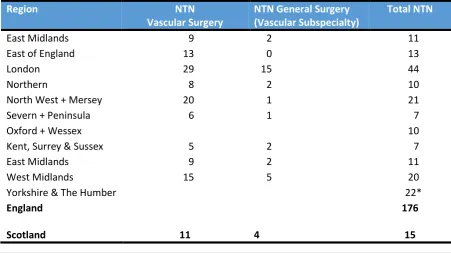
Table 5. Current Numbers National Training Numbers for Vascular Surgery in United Kingdom, 2018.
Region NTN
Vascular Surgery
NTN General Surgery (Vascular Subspecialty)
Total NTN
East Midlands 9 2 11
East of England 13 0 13
London 29 15 44
Northern 8 2 10
North West + Mersey 20 1 21
Severn + Peninsula 6 1 7
Oxford + Wessex 10
Kent, Surrey & Sussex 5 2 7
East Midlands 9 2 11
West Midlands 15 5 20
Yorkshire & The Humber 22*
England 176
21 | P a g e
Wales 5 1 6
Northern Ireland 3 0 3
United Kingdom 200
Data from Vascular Surgery Specialty Advisory Committee and Deanery, Jan 2018.
Whilst the level of service provision will ultimately be based on governmental healthcare policy in this area, it is undoubtedly clear that we need to plan for a significant expansion in the Consultant Vascular Surgeon Workforce over the short- and medium-term.
To achieve this we urgently need an increase in National Training Numbers allocated to Vascular Surgery. To sustain and expand our Vascular Surgery Workforce it is essential we ensure training of sufficient numbers of new vascular surgeons (Table 6). Most forecasts assume for sustainability a Consultant to Trainee Ratio of 0.4, and using that factor we can predict how many additional trainees would be required to create the recommended Consultant Vascular Surgery Workforce of 1 per 100,000 population.
Table 6. United Kingdom Vascular Surgery Workforce (Trainees), by Region to Achieve and Sustain Recommended Consultants per Capita Population (2018).
To expand the consultant workforce to a ratio of 1 per 100,000 population we would need new NTN in a 1 to 1 replacement ration and then to sustain that corrected workforce we would need a maintenance ratio of 0.4 NTN per consultant. Our predictions for Expansion to create the recommended consultant workforce of 1 per 100,000 population would be as follows: England to
United Kingdom Vascular Surgery Workforce (Trainees), by Region to Achieve and Sustain recommended Consultants per Capita Population (2018).
Region Population (2018) Consultants (2018) Trainees (Ratio 0.4) If Consultants (1 per 100,000)
NTN (+138) Expansion
NTN (Ratio 0.4) Maintenance
NTN Total East Midlands 4,771,666 33 13 48 (+15) +15 19 34 East of England 6,168,432 47 19 62 (+15) +15 25 40
London 8,825,001 78 31 88 (+10) +10 35 45
North East 2,644,727 24 10 26 (+2) +2 10 12
North West 7,258,627 63 25 73 (+10) +10 29 39
South West 5,559,316 50 20 56 (+6) +6 22 28
South Central* - (20)* (8)* (37)* (+17)* (15)* (22)* South East Coast~ - (29)~ (12)~ (53)~ (+24)~ (21)~ (45)~ South East (includes*~) 9,080,825*~ 49 20 90 (+41) +41 36 77
West Midlands 5,860,706 53 21 59 (+6) +6 24 30
Yorkshire & The Humber 5,450,130 48 19 55 (+7) +7 22 29
England 55,619,400 445 178 556 (+111) +111 222 333 (+155) Scotland 5,424,800 42 17 54 (+12) +12 27 39 (+22) Wales 3,125,200 26 10 31 (+5) +5 12 17 (+7) Northern Ireland 1,870,800 9 4 19 (+10) +10 8 18 (+14) United Kingdom 66,040,200 522 209 660 (+138) +138 269 407 (+198)
22 | P a g e
expand and sustain the consultant workforce from 445 to 556 (+111) would require the NTN to increase from 178 to 333 (+155); Scotland to expand and sustain the consultant workforce from 42 to 54 (+12) would require the NTN increase from 17 to 39 (+22); Wales to expand and sustain the consultant workforce from 26 to 31 (+5) would require NTN increase from 10 to 17 (+7); Northern Ireland to expand and sustain the consultant workforce from 9 to 19 (+10) would require NTN increase from 4 to 18 (+14). Obviously, the population and respective workforce needs may increase during the 6 year training cycle and the ultimate requirements may be higher. Once a new steady state is achieved the workforce could be sustained by applying maintenance numbers of NTN at a ratio of 0.4 (provided no additional Expansion is required).
We will need to train and appoint sufficient numbers of new Consultant Vascular Surgeons in the United Kingdom to maintain the status quo.
Summary
With the creation of the new specialty of Vascular Surgery the Stocktake of General (and Vascular) Surgery would suggest that at least 21% of the legacy General Surgery (including Vascular Surgery) workforce are specialist vascular surgeons and demand in both general and vascular surgery is predicted to increase by 67% by the year 2029 (13 years). In many regions when the surgical specialties of general and vascular surgery diverged the national training numbers (NTN) that should have transferred from general to vascular surgery did not follow, leading to a shortfall in training within vascular surgery which needs addressed.
Our predictions for Expansion to create the recommended consultant workforce of 1 per 100,000 population would be as follows: England to expand and sustain the consultant workforce from 445 to 556 (+111) would require the NTN to increase from 178 to 333 (+155); Scotland to expand and sustain the consultant workforce from 42 to 54 (+12) would require the NTN increase from 17 to 39 (+22); Wales to expand and sustain the consultant workforce from 26 to 31 (+5) would require NTN increase from 10 to 17 (+7); Northern Ireland to expand and sustain the consultant workforce from 9 to 19 (+10) would require NTN increase from 4 to 18 (+14). Once a new steady state is achieved the workforce could be sustained by applying maintenance numbers of NTN at a ratio of 0.4 (provided no additional Expansion is required).
23 | P a g e
4. WORKFORCE SURVEY 2018
Workforce planning is the process by which we ensure that an organisation has the right number of employees with the right knowledge skills and behaviours in the right place, at the right time. Bodies such as the Centre for Workforce Intelligence (CfWI) (http://www.cwfi.org.uk) are working in conjunction with the National Health Service to plan for the future needs of the health service so that we can implement systems now try and ensure we have the workforce needed to provide it. Workforce plans are the foundation that resource management activities such as recruitment, selection, orientation, training, and retention are built on. There are many factors which may impact of the shape of our vascular surgery service in the future and the workforce needed to provide it, and these include: reconfiguration of services; advances in healthcare practice; financial and political decisions. Of course any planning must recognise the uncertainty of the future but using good intelligence robust estimates can be made.
Before we can design the future we must have a clear understanding of the past and present, and this paper will discuss the evidence which might inform our future planning and present a strategy for looking forward.
Methodology
The Vascular Surgery UK Workforce Survey 2018 represents and update of our previous survey conducted in 2013, and was conducted on behalf of the membership of our Specialty Association, the Vascular Society of Great Britain & Ireland and in conjunction with the Specialty Advisory Committee (SAC) for Vascular Surgery of the Joint Committee for Surgical Training (JCST).
The Vascular Surgery United Kingdom Workforce Survey 2018 used the same questionnaire as that designed and used previously in 2013, designed using a common web-survey platform (SurveyMonkey®) and contained 86 questions covering the following domains: Personal Characteristics (Q1-6); Job Characteristics (Q7-38); Vascular Surgery Practice (Q39-52); Hospital Resources (Q53-68); Professional Activities (Q69-77); Work-life Balance (Q78-86), Appendix 1. We have considered survey responses under the following themes:
• Human Characteristics
• Job Characteristics
• Scope of Practice
• Clinical Networks & Hospital Resources
• Health & Wellbeing
24 | P a g e
4.1 HUMAN CHARACTERISTICS
Total Cohort Characteristics
We asked respondent to identify their current job (Q1 What is the job title for your current position?) and respondents for Total Survey includes: 183 Consultants; 47 Specialty Trainees; 3 Specialty Doctors. Figure 8. Job Title.
The distribution of responses are representative of the respective numbers of each workforce group, the recommended ratio of Consultant to Trainee to sustain a surgical specialty is 0.4.
Consultant Career Demographics
We asked Consultants how long they had been in their current position (Q2 How long have you been in your current position?).
25 | P a g e
The majority of Consultants are in early to mid-career, with 27% of respondents in post only 5 years, or less, which would suggest if respondents are reflective of the overall consultant workforce that we are a growing specialty.
Consultant Age Demographics
We asked Consultants what age they were (Q4 What is your age?), and we had no respondents under the age of 36, years old and must assume the majority of consultant vascular surgeons are appointed at that age or greater.
Figure 10. Consultant Age.
The age distribution is standard for a medical workforce with few people working beyond 60 years old. Consultant Gender Demographics
We asked Consultants to declare their gender status (Q3 Are you male or female?), and found that over 90 percent of Consultant Vascular Surgeons in the United Kingdom are Male. This represents a slight improvement since 2013 when 92.5 percent were noted to be male but needs significant improvement.
Figure 11.Consultant Gender.
Specialty Trainee Gender Demographics
26 | P a g e
consultants are female which as they become consultants will narrow the gender gap but a lot more needs to be done to encourage more female doctors into Vascular Surgery.
Figure 12.Specialty Trainee Vascular Surgery Gender.
We also need to be aware going forward that Gender may no longer be considered Binary and future surveys should also allow the opportunity to define oneself as Gender Non-Binary.
New Consultants and Gender
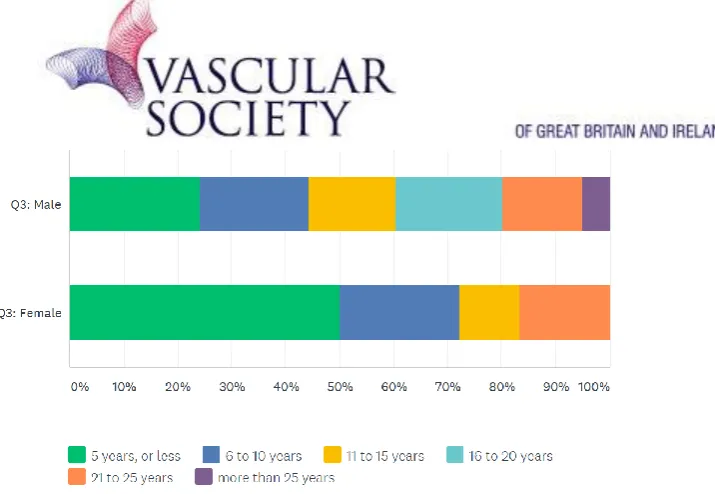
We asked New Consultants in post for 5 years, or less to declare their gender status and reassuringly the number New Consultants appointed who are female is representative of the training cohort. Figure 13. Newly Appointed Consultants Gender.
Perhaps more importantly when comparing the stage of career (Q2 How long have you been in your current position?) against gender we see that the percentage of female consultant vascular surgeons appointed is significantly greater in the last 5 years and more than double that of any historical 5 year period over the preceding 25 years.
27 | P a g e
These results would suggest increasing numbers of female Vascular Surgery Consultants are being appointed and will act as positive role models to encourage further gender rebalancing within our specialty, but again much more needs to be done to make Vascular Surgery and attract career choice for female surgeons.
Regional Distribution
We asked respondents to identify from which region of the UK they were based (Q5 In which postgraduate education deanery of the United Kingdom do you work?) and received responses from every region of the United Kingdom and as such our survey is again representative of Vascular Surgery practice in England, Scotland, Wales and Northern Ireland.
Figure 15. Regional Distribution Respondents.
28 | P a g e
Centralisation has seen the number of Inpatient Arterial hubs reduce from 95 (2013) to 70 (2018) across the United Kingdom.
Summary
29 | P a g e
4.2 JOB CHARACTERISTICS
Consultant Job Characteristics
The Consultant survey population considered their job function (Q7) to be considered a Vascular Surgeons (89%), a General and Vascular Surgeon (10%) and a Trauma Surgeon (1%). Considering new consultants in post 5 years, or less, the vast majority (96%) considered themselves as specialist Vascular Surgeon. The vast majority (95%) of respondents in total and amongst new consultants confirmed that the majority of their job (50%, or more) was in Vascular Surgery (Q8).
Full-time or Part-time Working
We asked Consultant whether they worked full-time or time (Q17 Is your job full-time or part-time?), and most consultants (91%) continue to work full-time. The majority also continue to work full-time through the respective phases of their career with even most (83%) of those established in post for over 25 years.
Figure 16. Full-time Working across the Career Points.
It is also of interest to note that there is no obvious difference in the percentage of female as compared to male consultant vascular surgeons who work part-time as compared to full time, when we compared working-time (Q17) with gender. Only a small percentage of just over 8% working part-time.
30 | P a g e
Estimated Hours Worked
We asked Consultant Surgeons how many hours they worked in an average week (Q What is the average number of hours you work per week?). We found the majority work much longer hours than is recommended for a healthy work-life balance.
Figure 18. Consultants average hours worked per week.
Over 70% of consultant vascular surgeons work between 46 and 60 hours per week, with over 60% of consultant vascular surgeons reporting that they work over 50 hours per week which is significantly more than recommended for a healthy work-life balance. There is no significant difference in hours worked between the genders.
Contracted Hours Worked
We asked Consultant Surgeons to declare from their job-plan how many hours they were contracted to work (Q In your job-plan how many total programmed activities?).
31 | P a g e
The commonest (45%) Job-plan for consultant vascular surgeons was a total of 12 Programmed Activities (PA), but concerningly over 88% are working more than the recommended 10 PA contract. There is no significant difference in Job-planned PA allocation between the genders.
We asked Consultant Surgeons to declare from their job-plan how many hours they were contracted to work which involved direct clinical care (Q In your job-plan how many programmed activities involve direct clinical care?). The component devoted to Direct Clinical Care (DCC) was an average of 8.46 PA (SD 2.85), with the commonest (35%) allocation being 10 PA for DCC.
Figure 20. Consultants programmed Direct Clinical Care Professional Activities (DCC PA).
The typical Job-Plan includes as part of Direct Clinical Care (DCC) some 2 Theatre Sessions, 1 Day Procedure Unit (DPU) Session and 2 Outpatient Clinic Sessions.
We asked Consultant Surgeons to declare from their job-plan how many hours they were contracted to work which involved supporting professional activities (Q In your job-plan how many programmed activities are for supporting professional activities?).
32 | P a g e
These are essential to maintain continued professional development and allow preparation for annual appraisal and cyclical revalidation. The commonest SPA allocation is 1.5 PA (35%), but the average is higher 2.69 SPA (SD 1.12).
Career and Changing Job Roles
Job roles do vary throughout a career (Q69 What is your job role?) with increasing responsibility for clinical management assuming roles such as clinical lead or clinical director which peeks in late mid-career with over half (52%) of those 16 to 20 years in post with a senior academic or management role.
Figure 22. Consultants Additional Job Roles by Career Stage.
33 | P a g e
As the complexity and demands of out-of-hours on-call cover increase one must pose the question is it appropriate for older surgeons to continue to deliver this physically and mentally demanding role. We asked whether surgeons leave the on-call rota at a certain age (Q35 Do you allow surgeons to leave the on-call rota at a certain age?)?
Figure 34. Do Consultants stop On-call when Older.
Unfortunately, currently the majority (89%) of teams do not, but encouragingly a minority (10%) allow surgeons 60 years old, and above to leave the on-call rota. One of the most commonly sited reasons for not allowing older surgeons to leave the on-call rota is that the condensed on-call burden will increase for the remaining team members.
We can see that larger teams (Q14: 12 surgeons) are almost twice as likely as smaller teams (Q14: 6 surgeons) to allow older surgeons to leave on-call rota.
Figure 35. Do Consultants stop On-call when Older (Small Teams compared to Large Teams).
We asked surgeons at what age they felt it inappropriate to be on-call for vascular surgery emergencies (Q36 Above what age do you feel it would be inappropriate to be on-call for vascular surgery emergencies?)?
34 | P a g e
The majority (68%) specified at 60 years old, or younger, with a significant proportion recommending stopping on-call at 55 years old (17%) and if not at 60 years old (47%).
Summary
The job characteristics within vascular surgery again show that vascular surgeons are being contracted for an working too many hours to maintain a sustainable work-life balance. In a high intensity procedural specialty such as vascular surgery long hours lead to early burn-out of surgeons with both professional and personal problems and this is a risk to patient safety. Many studies have shown the detrimental effects on health of night-work and shift-working and those dangers increase with duration and age. Because of its large emergency workload and the time-sensitive nature of many acute vascular catastrophes such as aneurysm rupture, limb ischaemia and vascular trauma the intensity of on-call work has increased. We are also covering much larger catchment areas as we have regionally reconfigured to centralised emergency vascular Hubs and whilst we have excellent trainees they require close supervision in the modern surgical environment. When teams increase in size the frequency of on-call reduces and allows the opportunity to remove surgeons in later career from the on-call rota perhaps ideally at age 55 years old.
35 | P a g e
4.3 SCOPE OF PRACTICE
Vascular Surgeons treat a broad range of conditions affecting the arteries, veins and lymphatics. In a rapidly evolving specialty such as Vascular Surgery the modern Vascular Surgeon requires a range of competencies in vascular medicine, vascular surgery and endovascular therapy. Workforce planning is the process by which we ensure that an organisation has the right number of employees with the right knowledge skills and behaviours in the right place, at the right time. The Vascular Society of Great Britain & Ireland made recommendation on standards for a vascular surgery service in their documents “The Provision of Vascular Services 2018 (Updates on 2015 and 2012)”. The Vascular Society has also recommendations on the standards for Specialist Training in Vascular Surgery and Vascular Surgery Training Centres. With the evolution of Vascular Surgery to become a separate surgical specialty there has been an increase in the amount of training time spent in specialist vascular surgery and a reduction in in exposure to general surgery. Many vascular surgeons also seek additional out of programme training to gain additional skills in high-volume super-specialists units in the United Kingdom or overseas.
Specialty Training in Vascular Surgery
Vascular Surgery Training has also changed, to meet the modern demands of Vascular Surgery, with the trend over the years to spend more dedicated time in recognised specialist vascular training units (Q9 During specialist registrar training how long did you spend in recognised specialist vascular training unit?), with newer consultants appointed over the last 5 to 10 years having spent over 70% of their training in specialist vascular training units compared to more established consultants who had perhaps spent only 30%. That is a reflection of vascular surgery as a sub-specialisation of general surgery and then developing to become a separate surgical speciality.
Figure 23. Specialist vascular surgery training by Career Stage.
36 | P a g e
of Consultants obtaining at least 1 years of OOPE, and that remains relatively constant when considering established and more newly appointed consultants.
Figure 24. Additional out of programme training in vascular surgery.
Approximately half of those who obtained OOPE received it within the UK (Q11 If you obtained out of programme training, where did you train?), of the other half travelling overseas the most popular destination by far remains Australia and New Zealand, with a small number travelling to North America but very few to Europe.
Figure 25. Where did you obtain your additional specialist vascular surgery training.
Given the proximity and the knowledge that many excellent training opportunities exist within Europe one must assume the most likely barrier for UK trainees to training in Europe is linguistic.
We also asked if consultant vascular surgeons had completed an endovascular training fellowship (Q12 Did you complete an Endovascular Training Fellowship?) and compared the likelihood of that across the last 25 years, from newly appointed to late career. We found that the likelihood of having had additional endovascular training and the duration of that additional endovascular training has progressively increased from none reported in the mature consultants (more than 25 years) to over 71% of newly appointed consultants (5 years or less), of whom over 15% have had at least 12 months additional endovascular training.
37 | P a g e
It is also of interest that it has been progressively more likely that that endovascular training has been obtained within the United Kingdom, from 21% (21 to 25 years, ago) to over 60% (5 years, or less), as we have developed both capacity for excellence in endovascular practice within the UK and specialist training programmes to support that.
Figure 27. Endovascular Training Fellowships by Location and Career Stage.
38 | P a g e
Consultant Scope of Practice
We asked consultants to describe the scope of their vascular surgery practice (Q52 Which of these operations do you perform?). The vast majority of consultant vascular surgeons perform the major index procedures of Carotid Endarterectomy (97%), Infra-inguinal Bypass (98%), Distal Bypass (97%), Amputation (99%), Open Abdominal Aortic Aneurysm (AAA) Repair (98%) and Endovascular AAA Repair (EVAR) (88%). Most also perform treatments for Varicose Veins by Vein Surgery (94%) and Endovenous Therapy (88%).
Figure 37. Scope of Operations Performed.
As expected the more complex endovascular procedures are performed by a smaller proportion of vascular surgeons, in order of increasing complexity a decreasing proportion perform Thoracic Endovascular Aortic Aneurysm Repair (TEVAR) (56%), Fenestrated EVAR (41%) and Branched EVAR (33%). With reconfiguration of services and commissioning many of these procedures are concentrated in large tertiary vascular centres and conducted by teams with enhanced endovascular skills and experience.
39 | P a g e
surgeons where they now perform the majority of EVAR (Q64 If you do EVAR, where do you perform the majority of your cases?)? The majority (53%) now perform these in a dedicated Hybrid Theatre and only a minority (17%) continue to use a Theatre with mobile imaging.
Figure 38. Where do you perform Endovascular Aneurysm Repair.
To improve imaging quality, radiation safety and facilitate more complex endovascular and joint open and endovascular hybrid therapies most large centres have installed hybrid theatres.
Career Stage and Scope of Practice
In some areas of vascular surgery practice one can see a very clear difference in practice between new consultants and those towards the end of their career and this is most apparent in Endovascular Practice.
We see that the proportion of consultants who perform peripheral angioplasty has progressively increased over the years (Q47 Do you perform peripheral angioplasty?).
40 | P a g e
Consultants approaching the end of their careers, more than 25 years in practice, report none perform angioplasty and yet we see a progressive increase in uptake of these skills, with new consultants (5 years or less) of whom nearly half (49%) now perform their own angioplasty.
A similar trend is seen in complex endovascular aortic intervention with branched or fenestrated endovascular aortic intervention (Q45 Do you perform fenestrated or branched EVAR?), with progressively increasing proportions including that vanguard who developed many of these new techniques now 10 to 15 years in practice and leading the way for the new wave of consultants the majority (58%) of whom are using these advanced skills.
Figure 40. Percentage Surgeons performing complex EVAR.
Clearly modern Vascular Surgeons in the United Kingdom have now adopted many of the Endovascular Skills required for patient care and come into line with our counterparts in Europe, North America, and the rest of the World.
That trend is reversed for complex open aortic surgery in part due to modern treatment of these conditions often involving complex endovascular intervention for these conditions previously treated by complex open surgery.
41 | P a g e
It is of some concern that when considering new consultants, in post 5 years, or less, none perform open thoracic aortic surgery. It would appear that such procedures may now require post-CCT training with a more senior and experienced consultant mentor.
Vascular Surgeons are performing many new endovascular techniques in the United Kingdom.
Summary
42 | P a g e
4.4 CLINICAL NETWORKS AND HOSPITAL RESOURCES
The survey show that both nationally and within regions there has been a reconfiguration of vascular surgery services with clinical networks created to manage centralised inpatient arterial hubs supporting a group of spoke hospitals within the region.
The typical surgeons week still includes on average 2 outpatient clinics (1 may be a joint clinic with an allied medical specialty) and 2 arterial theatre sessions and 1 day-procedure session which dependant upon skill-set may involve peripheral angioplasty, endovascular or endovenous therapy.
Consultant Teams
Reconfiguration has led to the creation of clinical networks with centralised inpatient arterial Hubs supporting regional Spoke Hospitals. To support 24/7 emergency vascular services and on-call rotas at the inpatient arterial Hub larger Teams have formed (Q14 How many consultant vascular surgeons are there in your hospital?). The median Team size is now 7 surgeons (Range 2 to 14), and the vast majority work in Teams of 6, or more (79%).
Figure 28. Consultant Team Size.
Vascular Clinical Networks
The reconfiguration of vascular surgery services has seen most regions creating managed vascular clinical networks with a central inpatient arterial hub and a range of spoke hospital services supporting outpatient assessment, diagnostics and day-procedure interventions closer to the patients home. To support this many consultants work across multiple hospital sites as part of their weekly job-plan. We asked consultants in a typical week, in how many hospitals do you work (Q29 In a typical week, in how many hospitals do you work?)?
43 | P a g e
We see that surgeons are most likely to work across 2 sites (50%), and that the vast majority (78%) are working across 2, or more, sites. The days of single site working would appear to be being consigned to the past. Most believe to create equitable and sustainable teams the demands of multi-site working and travel to spoke multi-sites should be shared across the team members, so one would expect in future the small number (22%) of single site workers may reduce further.
Joint Outpatient Clinics
Vascular Surgeons work collaboratively with a number of medical specialties to deliver joint care for patients vascular disease. We asked consultants with which specialties did they conduct joint OPC (Q28 What joint outpatient clinics with other specialties do you do?). The commonest areas in which to have joint outpatient clinics (OPC) are Diabetic Foot Disease (66%), Interventional Radiology (15%), Orthopaedics (11%), Renal (9%) and Others, the majority of which are Podiatrists and Podiatric Surgeons (28%).
Figure 29. Joint Vascular Clinics with Other Specialties.