381
Development of Algorithmic and
Mathematical-Logic Competences of Children in Chile with
Scratch
Cristian Vidal-Silva, Claudia Jiménez, Miguel Tupac Yupanqui, Sussan Sepúlveda, Erika Madariaga
Abstract— Algorithmic competences for the development of organized operations play an important role in the progress of education and learning of the logical and mathematical reasoning for children. In this context, the visual programming language Scratch is a viable tool for that purpose. Precisely, the main objective of this work is to present experiences and results of the use of that programming language with students of the primary school second year in various Chilean educational institutions, that is, in a public school, in a private school and in a private-subsidized school. These schools are in different geographical areas of the Maule region. Thanks to their social and cultural diversity along with their location, the obtained results are of a great relevance to demonstrate empirically that a significant gap does not exist for the development of algorithmic and logical-mathematical competences in children.
Index Terms— Algorithmic Competences, Mathematical-Logic Competences, Scratch, School, Children. —————————— ——————————
1 I
NTRODUCTIONAlgorithmic thinking is essential for the analysis, understanding and solution of computational problems. According to [1], the development of logical thinking is of high relevance for the human being, mainly to analyze and solve problems of his daily life and more if he begins to develop at an early age. In addition, for the mathematical and scientific foundation, algorithmic thinking is essential to face and provide solutions to problems of science and life. Likewise, as observed in [2], the development of algorithmic thinking for both the present and future generations is imperative in today's culture. In addition, as it stands out [3], the use and application of Visual Programming Languages (VPL) today represents one of the most notorious and prevalent computer techniques. This is so, even though, as highlighted [4], there is a large increase in computing devices in schools, but their effective use in the educational process of children has not been decisive. The development of logical and algorithmic reasoning (algorithmic competences) allows not only to analyze problems and deliver solutions in the computational field but in very varied situations of daily life such as in art [5] and the business world [6]. As they stand out [2] [7], algorithmic skills are developed through learning, management, use of syntax, and semantics of programming languages so that developing such skills in young children does not It is a simple task for educators. In this way, educational alternatives are necessary for the
development of algorithmic skills in children and students. There currently exist different high-level visual programming languages such as Scratch and Alice [8] [9]. Both programming approaches, Scratch and Alice, allow the elimination of syntax and semantic problems and barriers from traditional programming languages, and, through the use of multimedia objects, to facilitate the understanding and application of essential algorithmic elements such as conditional and repetitive structures. According to [10], one of Scratch's goals is to make programming accessible and motivating for everyone, even when, as they point out [11], the main pseudo-barrier in Scratch It is to understand the semantics of the actions and their classification. The objective of this work is to evaluate the development of algorithmic thinking in second-year students of three primary schools of different realities in Chile. We test if the way to involve technology as didactic means for math classes, along with the development of algorithmic and logical-mathematical skills, present a positive effect in the children's learning process. This work proposes the development of algorithmic and logical-mathematical competences in second-year basic students of schools of various socioeconomic and geographical sectors of the Maule region, to measure the development of these competencies together with analyzing their impact on academic performance in mathematics. Thus, this work seeks to validate the hypothesis of equivalence in the learning capacity of children in their early years, regardless of geographical location and socioeconomic status. Currently, in Chile, there exist public, private, and private-subsidized education institutions. This work presents experiments in each of these establishment types: Monterilla public school of the city of Teno, private-subsidized Institute Valentín Letelier of Yerbas Buenas, and Conception private school in the town of Talca. In total, five courses participated in the experiment: the second year of the Monterilla School; the second year A, B and C courses of the Colegio Concepción; and the second year of the Valentín Letelier Institute. It is relevant to note that this work is the result of the title work of one of the authors of this work [12].
2 S
CRATCH ANDC
OMPETENCES INC
HILDRENScratch is a visual programming environment created by MIT whose original focus was the attraction of people to the world ————————————————
Cristian Vidal-Silva, professor at Departamento de Administración, Facultad de Economía y Negocios, Universidad Católica del Norte, Antofagasta, Chile. E-mail: [email protected]
Claudia Jiménez, director of Ingeniería Civil Informática, Facultad de Ingeniería y Negocios, Universidad Viña del Mar, Viña del Mar, Chile. E-mail: [email protected]
Miguel Tupac Yupanqui, Universidad Continental, EAP Ingeniería de Sistemas e Informática, Huancayo, Perú. E-mail: [email protected]
Sussan Sepúlveda, Ingeniería, Asesoría y Servicios AyA SPA, Chile, 10 Oriente 1250, Talca, Chile. E-mail: [email protected]
of programming, thanks to the elimination of syntax rules along with making their semantics closer and higher, since ease of creating visual and interactive routines [2] [13]. Scratch has been occupied in various countries such as Spain, the United States, Mexico, Colombia, Argentina, as a way to introduce programming and to evaluate the effect of promoting learning development and creativity in the stages of children's education. Figure 1 shows the Scratch system that is composed of the following sections: a scenario where the action occurs, an area to select the activities that the main object can perform (in this case Scratch), an area of objects, and a programming area with the set of joined instructions for the main object.
Fig. 1. Desktop of Scratch.
The Scratch system has been a great success in computer club environments [10], where children spend more time working in Scratch than with any other available software application. There exists practical evidence that Scratch manages to foster creativity and the social effect of multimedia among classmates and friends on the web, to share projects, ask for help in completing tasks, among other matters.In a study conducted at Harvard University [14], Scratch was used to introduce beginners to programming before their transition to the Java programming language. In this study, there was a high approval of Scratch by newbies in programming, while the only learners in disagreement were those who already had some programming experience. According to traditional psychology, the term competence refers to the mastery of some knowledge [15]. In the area of education, the Organic Law of Education in Chile introduces the term basic competence in the definition of the curriculum [16]. According to [17], "curriculum means the set of objectives, basic competencies, content, pedagogical methods, and evaluation criteria of each of the teachings." In the teachings of early childhood education, according to [11], "at this educational stage, the foundations for personal and social development are laid out, and learnings are integrated that are at the base of the subsequent development of skills that are considered basic for everything the students." Thus, a basic competence is to understand the child's ability to put into practice in different contexts and situations, both theoretical knowledge and practical skills or knowledge. Thus, the concept of basic competence considers knowing how to be, knowing how to apply or applying, and knowing how to be [17]. According to the work of [18], with VPLs such as Scratch and Alice, programs are built using concrete objects and not just virtual elements or characters on the screen. Besides, as noted [19], Scratch is a suitable LPV for the development of algorithmic skills that are part of the necessary skills and minimum education of today's children.
3
B
ENEFITS OFA
LGORITHMICC
OMPETENCIES INC
HILDRENAlgorithmic thinking, or the ability to define the steps to solve a problem, is crucial in courses such as mathematics or science. Students use algorithms all the time without realizing it, especially in math. For example, to solve a massive division problem, girls and boys apply an algorithm to iterate through the digits of the number they are dividing. For each digit of the dividend (the amount to split), students must divide, multiply, and subtract. Thus, algorithmic thinking allows students to decompose problems and conceptualize solutions in terms of discrete steps. Table I [20] describes the characteristics of the cognitive process during the programming process, while Table II [20] indicates the cognitive skills involved in the programming process. The proceedings of the Scratch South conference [20] indicate that the use of Scratch to a greater extent always wants to teach its applicability to more people, especially young people and children. Scratch is a current tool in education in many Latin American countries. For example, in Argentina, at the Rosario Institute for Research in Education Sciences for creating technology for social inclusion, and having experiences with Argentine teachers in primary education to reach teachers first and then students. In addition, in Uruguay, the Scratch Day activity (Scratch Day) is carried out at the University ORT Uruguay - CEIBAL Plan, which is a day dedicated only to Scratch, in order to make it known and Scratch users can present their examples. Currently, in Chile, programming with free projects for the community is introduced with the Young BiblioRedes Program of the Directorate of Libraries, Archives and Museums (DIBAM), of the Ministry of Education, a project that teaches to program online to people from 8 years old, and Scratch is one of the courses [21].
TABLAI
383 TABLAII
COGNITIVE SKILLS IN COMPUTER PROGRAMMING.
4 E
XPERIMENTS ANDR
ESULTSThe various experiments carried out in the schools (schools), were three sessions in each establishment, in different academic schedules, which are described below.
First session: It begins with a survey, in which it is intended
to evaluate the use of student technologies, and then give way to an introduction on Scratch, where it will be taught how it works, the important parts and the essentials for students begin to focus on the tool, and can use it without problems. Tables III, IV and V show the questions and answers og those questions in the schools.
TABLAIII
QUESTIONS OF 1STSESSION OF WORK –SCHOOL MONTERILLA.
TABLAIV QUESTIONS OF 1ST
SESSION OF WORK –SCHOOL CONCEPCIÓN.
TABLAV QUESTIONS OF 1ST
SESSION OF WORK –SCHOOL V.LETELIER.
Second session: In the second session, they ask at the
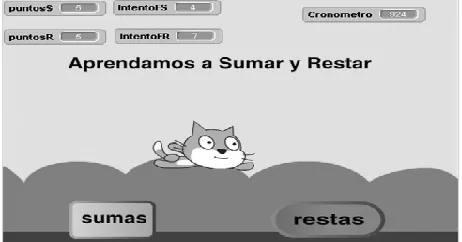
Fig. 2. Scratch simulator of mathematical exercises.
Besides, in the second session, an example Scratch application is used as a test of basic mathematical operations in the second year of primary school in Chile. Thus, students are the users to validate the learning and development of mathematical logic to solve basic problems of math operations that require feedback. That feedback is essential to motivate them to continue trying to achieve a correct response when an answer was incorrect (essay and error), where you get more points when fewer mistakes are made. That is, to analyze the advantages of using software against written tests, given immediate feedback, whether the answer is correct or not. Figure 2 shows the environment of the developed application. The questions in the mathematical test with Scratch are ten sums, five sums, and 5 five subtractions, where the sums have random numbers between 1 and 99, and the first number of each subtraction will be one at random between 25 and 50 and the second number between 1 and 25 to avoid negative subtractions). Table VI shows the results obtained in each school according to the minimum, maximum and average number of attempts, as well as the time required for resolution. Each school source is numbered as follows: 1 for a class of the Monterilla schook; 2, 3 and 4 for classes of the Concepción school; and 5 for a class of the Valentín Letelier school. It should be noted that the test activity consists of two parts: the experiment with Scratch in the second session, and a written test of the same mathematical content and with the same amount of questions, but this time without the help exposed by the software. The written test is part of the beginning of the next session.
TABLAVI
MATHEMATICS EXERCISE RESULTS IN SCRATCH
TABLAVII
RESULTS OF EXERCISE WRITTEN TEST OF MATHEMATICS
Third session: This session begins with the written math test,
the same for all students. As with the previous Scratch experiment, there are ten questions divided into five additions and five subtractions, where the most difficult thing for the students was to solve the subtractions with reservations, since, according to comments from teachers, this is the most complex for children. Thus, students will be asked to develop the test and, in the end, raise their hands to write down how long they took to do so. There is a maximum time of 20 minutes. Table VII shows the results of the written test according to the number of students, with the number of tests with correct answers, with some incorrect answers and unfinished tests.
After the written test, the students meet in groups with other classmates (4 students), to imagine a game they would like to create in the context of mathematics, and then work on their development supported by the guides. The objective of the last activity is to foster creativity and teamwork. That permits knowing their motivation to create their games to share their experiences.
4
F
INALD
ISCUSSIONWhen comparing the results obtained in each of the schools, the great contribution that technology provides in the development of mathematical exercises, as well as the advantages attainable when facing the problems with software, can be verified, since it allows verifying the veracity of the Real-time responses.
385 Institute are far from the regional capital, which is Talca, the
knowledge and manner of reception of the new skills regarding the Concepción College were much better received due to various factors such as the number of students in the room, the attachment that exists with the head teacher, and the desire to use computers..
5
C
ONCLUSIONSScratch in schools: 1) For the familiarity of children with technological elements, the insertion of Scratch permits developing algorithmic and logical-mathematical competences, regardless demographic and social sector of schools. That is, Scratch is lively, fast, and easy access for children. 2) Teachers experience a role change because they participate like students in each of the sessions, which motivates children. That invites us to analyze the reasons for this situation. 3) The option to create visual applications motivated children to occupy Scratch once the sessions were carried out. This validates what [3] proposed, that is, teachers require the continuous use of Scratch with pedagogical purposes for the next few years, and thus enhance mathematical and science learning with the help of technology. 4) Regardless of their social or demographic level, developing mechanisms to capture and maintain the attention of all students, answer questions, carry out different projects, and create and mature ideas during class are of high value in education. For example, each school in this study had different characteristics.
Even if there were differences of knowledge among students in different schools in mathematics, this unevenness did not prevent them from successfully carrying out the exercises both with Scratch and on paper, which allowed the hypothesis of this work to be validated.
With all of the above, without a doubt, Scratch represents an excellent tool for education.
R
EFERENCES[1] CVNE, “Centro Virtual de Noticias de la Educación”, CVNE, http://www.mineducacion.gov.co/cvn/1665/w3-article241894.html. 2020.
[2] C. Vidal, C. Cabezas, J. Parra, and L. López, “Experiencias Prácticas con el Uso de Scratch para Desarrollar el Pensamiento Algorítmico de Estudiantes en Chile”, vol. 8, no. 4, pp. 23–32, La Serena, Chile, Aug 2015, doi: 10.4067/S0718-50062015000400004.
[3] P. P. Ray, “A Survey on Visual Programming Languages in Internet of Things”, Scientific Programming, Vol. 2017, no. 1231430, May 2017, doi: 10.1155/2017/1231430.
[4] Y.-J. Lee, “Scratch: Multimedia Programming Environment for Young Gifted Learners”, Gifted Child Today – International Education, vol. 34, no. 2, pp. 26-31, Apr 2011 doi: 10.1177/107621751103400208.
[5] J. A. Sánchez, “Geometría Dinámica para el Análisis de obras de Arte”, UNIÒN: Revista Iberoamericana de Educación Matemática, no. 9, pp. 83-90, March 2007. [6] F. Pacheco Vera, “Formas de pensar y su utilización en el
ámbito empresarial y profesional”, XV Jornadas de Reflexión Académica en Diseño y Comunicación, año VII, vol. 7, Universidad de Palermo, Argentina, Feb 2007. [7] K. Lee, “Python Programming Fundamentals”, Ed. 2,
Springer Publishing Company, Incorporated, 2015, isbn 1447166418.
[8] I. Utting, S. Cooper, M. Kölling, J. Maloney, and M. Resnick, “Alice, Greenfoot and Scratch – A discussion”, ACM Transaction on Computing Education, vol. 10, no. 4, Nov 2010, doi: 10.1145/1868358.1868364.
[9] C-K. Chang, “Effects of Using Alice and Scratch in an Introductory Programming Course for Corrective Instruction”, Journal of Educational Computing Research, vol. 51, no. 2, pp. 185-204, Nov 2014, doi: 10.2190/EC.51.2.c.
[10]M. Resnick, J. Maloney, A. Monroy, N. Rusk, E. Eastmond, K. Brennan, A. Millner, E. Rosenbaum, J. Silver, B. Silverman, and J. Kafai, “Scratch: Programming for All”, Communication of the ACM, vol. 52, no. 11, Nov 2009, doi: 10.1145/1592761.1592779
[11]J. Moreno-León, and G. Robles, “Code to learn with Scratch? A systematic literature review”, IEEE Global Engineering Education Conference (EDUCON), pp. 150-156, 2016, doi: 10.1109/EDUCON.2016.7474546
[12]S. Sepúlveda, E. Diaz, and C. Vidal, “Aprendiendo Matemáticas con Scratch”, Computer Engineering Thesis, Universidad Autónoma de Chile, Talca, Chile, Dec 2017. [13]C. Vidal, “Scratch en las Escuelas de Chile”, Scratch al
Sur Conference, Santiago, Chile, Aug 2017.
[14]D. Malan, and H. Leitner, “Scratch for building computer scientist”, proceedings of 38th Symposium on Computer Science Education SIGCSE, Covington, Kentucky, USA, March 2007.
[15]P. Lau, and F. K. Y. Wu, “Emotional Competences as a Positive Youth Development Construct: A Conceptual Review”, The Scientific World Journal, Hindaway, 2012, doi: 10.1100/2012/975189.
[16]LeyChile, “Biblioteca del Congreso Nacional de Chile”, BCNCh,
https://www.leychile.cl/Navegar?idNorma=1006043&r=1. 2020.
[17]L. Tejada, “Las Competencias Básicas en Educación Infantil”, Revista Digital de Divulgación Educativa, vol. O, no. 2, pp. 39-43, España, 2011.
[18]M. Armoni, O. Meerbaum-Salant, and M. Ben-Ari, “From Scratch to ‘Real’ Programming”, ACM Transactions on Computing Education (TOCE), vol. 14, no. 4, Feb 2015, doi: 10.1145/2677087.
[19]C. López, and R. Sánchez, “Scratch in Special Education: Programming for All”, RED: Revista de Educación a Distancia, Universidad de Murcia, España, 2012.
[20]Scratch South, Scratch al Sur Conference Proceeding, Santiago, Chile, Aug 2017.
[21]Young Programmers, “Taller Jóvenes Programadores”, Fundación Ciencia Joven – Categoría Educación Científica,
![Table II [20] indicates the cognitive skills involved in the programming process. The proceedings of the Scratch South conference [20] indicate that the use of Scratch to a greater](https://thumb-us.123doks.com/thumbv2/123dok_us/8632907.1422615/2.612.332.558.458.740/indicates-cognitive-involved-programming-proceedings-scratch-conference-scratch.webp)