www.orientjchem.org
An International Open Free Access, Peer Reviewed Research Journal
2017, Vol. 33, No. (3): Pg.1171-1181
The Effect of Silver Nanoparticles on Selenium Speciation
Analysis in Water Sample by Flow Injection-Hydride
Generation Atomic Absorption Spectrometry
RUTTIYA POONYAKA and SAKSIT CHANTHAI
*Materials Chemistry Research Center, Department of Chemistry and Center of Excellence for Innovation in Chemistry, Faculty of Science, Khon Kaen University, Khon Kaen 40002, Thailand.
*Corresponding author E-mail address: [email protected] http://dx.doi.org/10.13005/ojc/330315
(Received: October 18, 2016; Accepted: March 09, 2017)
ABSTRACT
This study described selenium speciation analysis under catalytic activation and/or reduction using silver nanoparticles (AgNPs) in conjunction with common flow injection (FI)-hydride generation atomic absorption spectrometry (HGAAS). Generally, Se (IV) could be directly determined by HGAAS consisting of 0.25%(w/v) NaBH4 in 0.1%(w/v) NaOH as a reductant and 2 M HCl as carrier solution, while Se (VI) could not be detected. In this regard, AgNPs in which was generated in the presence of 0.25%(w/v) NaBH4 was accordingly subjected in the same reducing background. Thus,
the effects of the AgNPs on various factors affecting the Se analysis were investigated. From the results, it was demonstrated that the AgNPs gave insight into the catalytic activation for Se (IV) analysis, and also acted as pre-reducing agent for Se (VI) compared with 10%(w/v) thiourea/conc. HCl. So, the dispersed AgNPs in the HG system could serve for better sensitivity and selectivity for Se analysis. Furthermore, the conversion of Se(VI) to Se (IV) and its recovery study were validated using both of the pre-reducing agents. Both LOD and LOQ of the method were 0.5 and 1.0 µg L-1,
respectively. The method precision (%RSD) was ranged of 5.69 and 3.23 for an intra-day and an inter-day analysis, respectively. Therefore, the method using AgNPs was successfully applied to determine trace amounts of Se species in drinking water samples and found in the ranges of 0.03-0.10, 0.12-1.0 and 0.22-0.97 µgmL-1 for Se (IV), Se (VI), and total Se, respectively.
Keywords: Selenium, Silver nanoparticles, Hydride generation, Atomic absorption spectrometry, Catalytic activation, Reducing agent, Drinking water
INTRODUCTION
Selenium is essential element playing an important role in an anti-oxidation. It can also
It participates in thyroid hormone metabolism and immune system and it inhibits virulence and slows down AIDS development. Furthermore, it can reduce the risk of spontaneous abortions4.
The balanced selenium content in human food helps connecting with diabetes and also affects the prevention of asthma, and can moderate harmful effects of radiation by free radicals inhibition5. Se
deficiency is connected with acceleration of senility and development of Alzheimer´s disease. It also affects in a positive manner human mind and mental wellness6.
However, Se contents in foods and drinks are highly variable, depending on its location. Differences in toxicity occur among their various species because they follow different metabolic pathways7. Although precise feeding comparisons
of the relative toxicity or nutritive activity of different Se compounds have not yet been made, it is known that selenite is more toxic than selenate8. Thus, study
of the Se species in water or other sample provides better requirements of this element in the living system.
Total amounts of Se have almost reported. Few methods have been applied for selective determination of Se species in various matrixes. Chromatography coupled with various detectors has been used for separation and determination of all Se species. Few electrochemical methods can also be applied for Se speciation in biological fluids and environmental samples9-12. Either complete
mineralization or conversion of Se(VI) to Se(IV) makes sample preparation more complex and increases risk of sample contamination and / or loss of Se. Spectrofluorometry has also been used for determination of Se species9,11. Organoselenium like
methyl selenide can be detected by GC associated with various detection systems13,14. The most common
way for Se speciation is based on hydride generation (HG) with AAS11. Se(IV) is determined directly
under HG process, whereas Se(VI) is determined by difference after reduction15. Their severe and
systematic imprecision are almost due to the use of improper sample decomposition9,16. According to
total content of Se determination, the combination of FI technique with HGAAS is widely accepted17-22. The
FI-HGAAS was used for the determination of Se(IV) and Se(VI) via on-line pre-reduction of Se(VI)23. The
method was successfully applied to the speciation analysis of both Se species.
Since only Se(IV) forms its hydride compound, Se(VI) must be completely pre-reduced to Se(IV), if the total Se is determined. When NaBH4 is used as a common reducing agent for the determination of Se by HGAAS, only SeH2 is formed. Pre-reducing agent is normally achieved using HCl. The reduction time takes almost a week24. If its
reduction step works at elevated temperature, it is faster25,26. The reaction time usually varies from 20-45
min25,27. However, too long heating can lead to the
appearance of elemental Se24,28. The pre-reduction
can also be done using co-reducing agents27,29-31.
Speciation is the identification and quantitative determination of different forms or phases in which a given element occurs in a given substance. In water sample, the form or phase of a given element is clearly defined32-34. The significant
determination is not only the total content of the element but its speciation follows from different toxicological effects of different species in the ecosystem. For example, the inorganic Se is a few hundred times more toxic than its methylated forms. The speciation analysis of Se using HGAAS is based on its catalytic activation and/or reduction of hydride generation. Nevertheless, few analytical methods for the selective determination of Se species include ICP-MS, FI-HGAAS, or even coupled with some chromatographic techniques. However, ICP-MS approaches interference among dominant isotope35. The chromatographic ones rather give
any decomposition of species and peak overlapping problems36.Hydride generation is a chemical
derivatization technique in which some elements of the periodic table mentioned above form their volatile hydrides as indicated in the following reactions37
Thus, this study was aimed for an ultra-trace determination of inorganic Se species present in drinking water samples in order to get either higher sensitivity and/or better selectivity using the dispersed AgNPs in the presence of mild reducing condition. The method development was conducted under their catalytic activation and/or reduction of the as-prepared AgNPs solution in conjunction with common performance of FI-HGAAS.
MATERIALS AND METHODS
Chemicals
Se(IV) (1000 mgL-1), As(III) (1000 mgL-1),
and Cu(II) (1000 mg L-1) as stock solutions, chromium
nitrate, ferric nitrate, nickel chloride hexahydrate, sodium hydroxide, tin chloride pentahydrate and zinc nitrate were obtained from Carlo Erba (France). Hydrochloric acid (37%, w/v) was from Lab Scan Asia (Thailand). Se(VI) and silicon dioxide (each 1000 mgL-1) also as stock solution were bought from
Sigma Aldrich (USA). Sodium borohydride was from Lab Chem (France). Thiourea was from BDH (England). All aqueous solutions were prepared with deionized water (Milli Q Millipore 18.2 Mohm-cm) by Simplicity Water Purification system (Model Simplicity 185, Millipore Corporation, USA).
All glassware was cleaned by soaking in dilute 1% (v/v) HNO3 overnight and rinsed twice with deionized water prior to use.
Instrument
Selenium measurement was made using an atomic absorption spectrometer of the Perkin-Elmer AAnalyst 100 (Connecticut, USA) equipped with a flow injection analysis system (FIAS-100, Perkin Elmer Instruments, USA). Argon gas was used as carrier gas for the transposition of Se hydride from the gas-liquid separator to the heated quartz tube atomizer lined with Se hollow cathode lamp (Victoria, Australia). The peristaltic pump, injection time and data acquisition were controlled through Perkin Elmer AA Win lab atomic absorption software version 3.2.
Water sample
Three brands of drinking water samples (S01, S02 and S03) were obtained from a convenient store, Khon Kaen University Foods and Service Center, Khon Kaen, Thailand. The water samples (0.6 L bottled) were instantaneously used without sample pretreatment.
Operational conditions for Se analysis by FI-HGAAS
Preparation of 100 µgL-1Se(IV) or Se(VI) as
working solution was made by three steps dilution from 1000 mgL-1 Se(IV) or Se(VI) stock solution.
The step dilution from 10 mgL-1 to 100 µgL-1Se(IV)
was freshly prepared prior to use. Each calibration curve of 5, 10, 15, 20 and 25 µgL-1 for Se(IV) and
Se(VI) was separately done in 0.1 M HCl by a series dilution to mark 25-mL volumetric flask from their working solutions. For Se(VI) analysis, the pre-reducing agent (thiourea/conc. HCl or AgNPs) was appropriately added and then diluted to 25 mL with 0.1 M HCl.
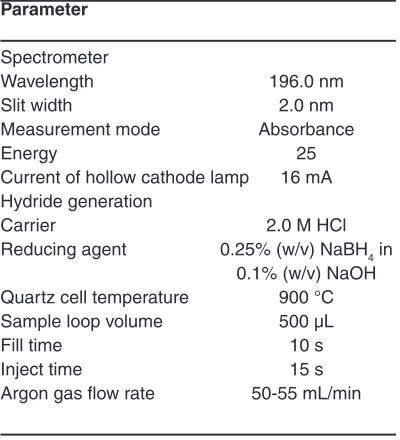
For hydride generation, a common reducing agent was chosen using 0.25% (w/v) NaBH4which was prepared by dissolving 2.5 g NaBH4 in 1.0 L of 0.1%(w/v) NaOH. This solution was freshly prepared prior to use. A 2.0 M HCl solution was used as a carrier solution. And 0.1 M HCl was used as a blank solution. The operational conditions for Se analysis using FI-HGAAS were controlled through program AA Win Lab as shown in Table 1.
Table 1: The operational conditions for Se determination by FI-HGAAS
Parameter
Spectrometer
Wavelength 196.0 nm
Slit width 2.0 nm
Measurement mode Absorbance
Energy 25
Current of hollow cathode lamp 16 mA Hydride generation
Carrier 2.0 M HCl
Reducing agent 0.25% (w/v) NaBH4 in 0.1% (w/v) NaOH Quartz cell temperature 900 °C Sample loop volume 500 µL
Fill time 10 s
Inject time 15 s
Effect of analytical matrix on Se determination
Although the suitable reducing agents can be applied for Se analysis in real samples, the matrix effect at ultra-trace level of selenium species still appears from the reducing agents used. Thus, the effect of analytical matrices on the absorbance of Se by adding each of the optimal pre-reducing agents into the standard solutions of both Se(IV) and the pre-reduced Se(VI) used as calibration curves, compared with the usual calibration curve of Se(IV) as a control were investigated under the same optimum conditions of the HGAAS. The results obtained from each of their calibration curves of both Se species either with or without the corresponding pre-reducing agents can be compared expressed as relative conversion of the two oxidation state of Se.
Concerning the pre-reduction of Se(VI), thiourea was commonly a choice of use. The concentration of thiourea in conc. HCl was optimized in the range of 5-20% (w/v). The main factors affecting on the pre-reduction were carried out using
5-25 µgL-1 Se(VI) concentration range. By using
20 µgL-1 Se(VI), the effect of the two pre-reducing
agents was comparatively studied. The effect of NaBH4 concentration was varied from 0.25 to 5.0% (w/v). The effect of AgNPs concentration was also investigated between 50 and 500 ppm.
Analytical features of merit
The analytical characteristics of the proposed method for speciation analysis were investigated under the optimum conditions. The studied parameters were linearity, limit of detection (LOD), limit of quantitation (LOQ), precision and accuracy. Linearity was obtained from calibration plot. The calibration plots were studied by analysis of standard mixtures with various concentrations ranging from 0.5 to 100.0 µgL-1 of Se(IV). All the
standard mixtures of Se(IV) and Se(VI) were prepared in the same manner. LOD and LOQ of the method were deduced based on the signal to noise ratio (S/N) of 3 and 10, respectively.
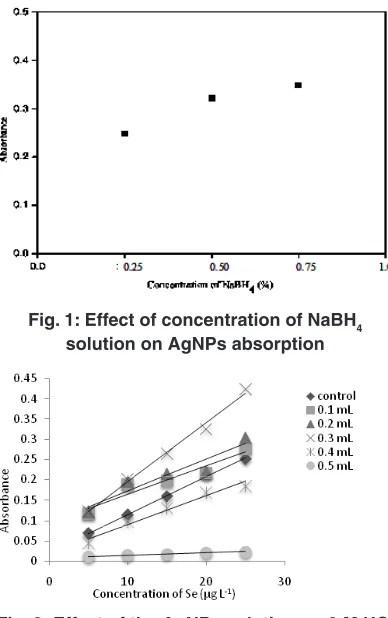
Fig. 1: Effect of concentration of NaBH4 solution on AgNPs absorption
Fig. 2: Effect of amount of AgNO3 on AgNPs absorption
Fig. 3: Effect of the AgNPs solution on 2 M HCl as slope of Se(IV) calibration
The precision of the proposed method was evaluated in terms of reproducibility and repeatability of the calibration slope. The repeatability (intra-day precision) was achieved by replicating measurements of the calibration slop within a day (n = 10). Whereas, the reproducibility (inter-day precision) was calculated from the experiments carried out in ten consecutive days (n = 10). The accuracy of the method was expressed in terms of recovery. The recovery was studied by spiking a known concentration of standard into samples before analysis in nine replicates. To test the recovery study of real sample in order to restrict other matrix effects of the water samples, each of the suitable pre-reducing agents was chosen and applied by spiking each standard solution of Se(IV) and Se(VI) at 20 µgL-1, and both Se species at 20 µgL-1 into the
drinking water sample S01as a model solution.
Real sample analysis
The Se(IV) content in drinking water sample (25 mL) was directly determined by FI-HGAAS. While the Se(VI) in this sample was completely pre-reduced to get Se(IV) by using 10% (w/v) thiourea/conc. HCl (2 mL) in comparison with 100 ppm AgNPs (1 mL) as catalytic activation and/or reduction prior to the measurement. At first, 2 mL of 10% (w/v) thiourea/ conc. HCl was added into 25 mL of the water sample and made up the final volume of 50 mL with 0.1 M HCl prior to analysis by FI-HGAAS. Alternatively, this
pre-reducing agent was also added into the water sample in the presence of 20 ngL-1Se(IV) or in the
presence of 20 ngL-1 Se(VI). For comparison, 1 mL
of 100 mgL-1 AgNPssolution was added into 25 mL
of the water sample. Then, this AgNPs solution was also added into the water sample in the presence of 20 ng L-1 Se(IV) or in the presence of 20 ng L-1
Se(VI)prior to analysis.
RESULTS AND DISCUSSIONS
Reducing back ground of HG and AgNPs solution
In this study, it was aimed to find a novel point of views for method development of selenium analysis under catalytic activation and/or reduction of silver nanoparticles (AgNPs) using FI-HGAAS. In fact, Se(IV)in water sample could be directly determined by HGAAS. Practically, in this study the on-line HG of Se(IV) was done under mild reducing conditions consisting of 2 M HCl as a carrier solution and 0.25% (w/v) NaBH4 in 0.1% (w/v) NaOH as a common reducing agent. Thus, trace amount of dispersed AgNPs in the reducing background might take action roles on either as heterogeneous catalystor as reducing agent for higher detection sensitivity.
Firstly, AgNPs at the concentration of 500 mgL-1 were obtained by an addition of silver nitrate
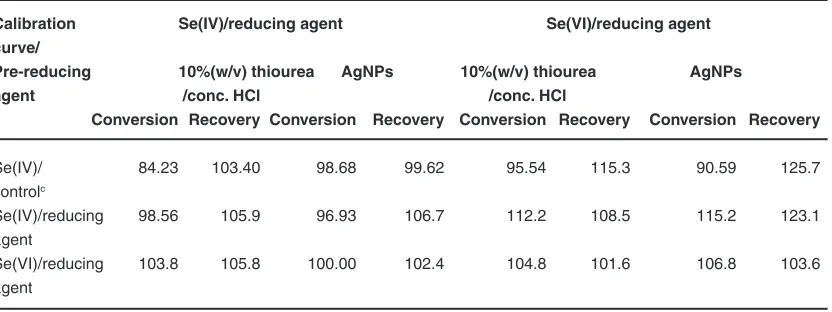
Table 2: Comparing between conversion (%)a and recovery (%)b using two kinds of the pre-reducing
agents with respect to their calibration curves of both Se(IV) and Se(VI) in the presence of each of the pre-reducing agents used
Calibration Se(IV)/reducing agent Se(VI)/reducing agent
curve/
Pre-reducing 10%(w/v) thiourea AgNPs 10%(w/v) thiourea AgNPs
agent /conc. HCl /conc. HCl
Conversion Recovery Conversion Recovery Conversion Recovery Conversion Recovery
Se(IV)/ 84.23 103.40 98.68 99.62 95.54 115.3 90.59 125.7
controlc
Se(IV)/reducing 98.56 105.9 96.93 106.7 112.2 108.5 115.2 123.1
agent
Se(VI)/reducing 103.8 105.8 100.00 102.4 104.8 101.6 106.8 103.6
agent
aConversion refers for conversion of the standard solution of Se(VI) to Se(IV).
solution drop wise into chilled solution of sodium borohydride. Two-fold molar excess of boro hydride to Ag+ was used. The reaction solution turned yellow
representing the characteristics of the spherical AgNPs. The concentration of NaBH4 had a significant effect on the absorbance of the particles. An increase in the absorbance of AgNPs with various NaBH4 concentrations was observed as shown in Figure 1.
The absorbance of AgNPs increased considerably with an increasing the boro hydride concentrations from 0.25 to 0.75% (w/v). However, the minimum concentration of 0.25% (w/v) NaBH4 was chosen for background reduction in further experiments. On the other hand, the amount of AgNO3 could also be affected on the production of AgNPs as well, if there was no complete reduction by the borohydride. Figure 2 shows the increase in the absorbance of AgNPs with an increasing of Ag+. The
absorbance increased markedly with an increase in two concentration ranges; initial range between 0.005 and 0.01 g and the other one between 0.04 and 0.05 g. Thus, the minimum amount of 0.01 g AgNO3 was used, giving the maximum wavelength at 355 nm of the AgNPs solution.
Effect of the AgNPs on the FI-HGAAS system Effect of the AgNPs on the carrier solution
Using 2 M HCl as a carrier solution in the FI-HGAAS, the addition of 100 ppm AgNPs solution with various volumes from 0.1 - 0.5 mL into the carrier solution resulted in the differences in their Se calibration curves ranging of 5-25 µg L-1. It was
found that 0.3 mL of the AgNPs solution gave higher sensitivity (about 1.6 folds) as the observed slope of the regression line: y = 0.0146x + 0.0496 with R2 = 0.9914 compared with that of the control one: y
= 0.0092x + 0.0225 with R2 = 0.9988 (Fig. 3).
Effect of the AgNPs on the borohydride concentration
Addition of 0.3 mL of AgNPs solution (100 ppm) into the NaBH4 solution with various
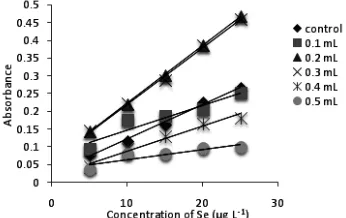
Fig. 5: Effect of the AgNPs solution on the series solution of Se(IV) calibration
Fig. 6: Effect of the AgNPs in the presence of 0.5% (w/v) NaBH4 on Se(VI) solution
Table 3: Both an inter-day and an intra-day precision of the proposed method
Inter-day (n = 10) Intra-day (n = 10)
Linear equation RSD (%) Linear equation RSD (%)
1 y = 0.0092x - 0.0113 y = 0.0092x + 0.0278 2 y = 0.0088x + 0.0355 y = 0.0093x - 0.0198 3 y= 0.0091x + 0.0286 y = 0.0105x + 0.0041
4 y = 0.0105x + 0.0045 3.23 y = 0.0100x + 0.0077 5.69 5 y = 0.0090x + 0.0373 y = 0.0089x + 0.0375
concentrations of 0.1-0.75% (w/v) also affected the slope of the Se(IV) calibration curves. It was found that 0.25% (w/v) NaBH4 solution in the presence of AgNPs solution gave higher sensitivity (about 1.9 folds) as the observed slope of the linear regression line: y = 0.0163x + 0.0567 with R2 = 0.9967 compared
with that of the control: y = 0.0085x + 0.0263 with R2
= 0.9908 as shown in Figure 4.
Effect of the AgNPs on series solution of Se(IV) calibration
The addition of 100 ppm AgNPs solution with various volumes of 0.1-0.5 mL into the series standard solution of Se(IV) for construction of the calibration curve. It was found that 0.2 mL of the AgNPs gave higher sensitivity (about 1.7 folds) as y = 0.0163x + 0.0591 with R2 = 0.9996 compared
with that of the control: y = 0.0098x + 0.0236 with R2 = 0.9933 as shown in Figure 5.
Effect of the AgNPs on the pre-reduction of Se(VI) solution
The AgNPs (100 ppm) was generated in the presence of 0.5% (w/v) NaBH4 and then was added with various volumes of 0.5-3.0 mL into the Se(VI) solution. It was found that the use of 1.0 mL of the AgNPs solution gave the highest absorbance (Fig. 6).
Effect of thiourea concentration/conc. HCl for Se(VI) determination
The concentration of thiourea used as a common pre-reducing agent was investigated in the range of 5.0-20% (w/v) with fixed 2 mL of conc. HCl, and diluted to 25 mL with deionized water prior to analysis by FI-HGAAS. As shown in Figure 7, it was found that 10% (w/v) thiourea/conc. HCl gave the highest absorbance of Se(VI) among other conditions trialed in this experiment.
Selenium speciation analysis
Effects of thiourea/conc. HCl and AgNPs on Se species
The calibration curves of Se(IV) standard solution in the presence of either 10% (w/v) thiourea/ conc. HCl or the AgNPs solution (100 ppm, 1 mL) compared with that of Se(IV) standard solution in the absence of the pre-reducing agent as a control, were
Fig. 7: Effect of thiourea (%)/conc. HCl as the pre-reducing agent for Se(VI) solution
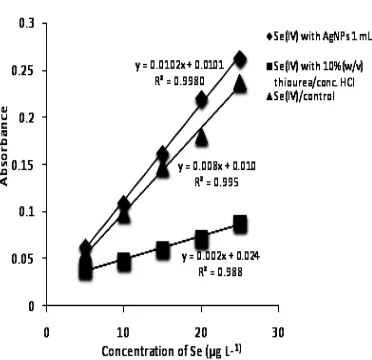
Fig. 8: The calibration curves for standard solution of Se(IV) in the presence or in the absence (control) of 10% (w/v) thiourea/conc.
HCl and the AgNPs solution (100 ppm)
Fig. 9: The calibration curves for standard solution of Se(VI) in the presence or in the absence (control) of 10% (w/v) thiourea/conc.
constructed with their linear equations as shown in Figure 8. Differences in sensitivity depicted as its slope of their calibration curves were rather clear in particular using AgNPs about 5 folds with respect to the control, indicating that there is no matrix effect for Se(IV) analysis. In addition, it was evident that the catalytic activation of the dispersed AgNPs on the calibration curve of Se(IV) was predominantly remark. While the sensitivity affected using 10% (w/v) thiourea/conc. HCl was much more pronounced.
In the same manner for Se(VI) standard solution with both of the pre-reducing agents, it was found the sensitivity of Se(VI) calibration curve (y = 0.008x + 0.012, R2 = 0.994) in the
presence of 10%(w/v) thiourea/conc. HCl (Fig.9) was not so much different with that of Se(IV) solution (y = 0.002x + 0.024, R2 = 0.988) (Fig. 8). While
Se(VI) solution (y = 0.010x + 0.010, R2 = 0.998) in the
presence of the AgNPs gave higher sensitivity about 1.25 folds comparing with that of Se(IV) solution (y = 0.008x + 0.010, R2 =0.995) (Fig. 8), even it
was nearly comparable to that (y = 0.008x + 0.012, R2 = 0.994) of using 10% (w/v) thiourea/conc. HCl
(Fig. 9). It is, therefore, demonstrated that the AgNPs present distinct roles as plausible catalytic activation and pre-reduction potential instead of using only as the common pre-reducing agent. Actually, their slopes of the two pre-reduction systems of Se(VI) also gave not much difference in the matrix effect, if they were used as the standard working solution which could be tested for the efficiency of their reduction/conversion system. All of these pre-reducing agents can be used to completely convert Se(VI) to Se(IV) for the inorganic Se determination. Alternatively, the addition of the AgNPs into the Se(VI) solution led clearly to increase its sensitivity and selectivity for Se speciation analysis.
Relative conversion of Se species and their recovery study
For comparing between the percentage conversion and their recovery study of Se(IV) and Se(VI) using the two pre-reducing systems, they were determined by their different calibration curves as shown in Table 2. The results indicated that the pre-reducing agents including 10% (w/v) thiourea/conc. HCl and the AgNPs solution show similar trends in both relative conversion and its recovery when using the same calibration curve. Therefore, both of the pre-reducing agents should be suitable to reduce Se(VI) to Se(IV). Then, two optimal pre-reducing agents were chosen. Both conversion (96.9-103.8%) and recovery (102.4-106.7%) are found in similar trends when using Se(IV) as control and Se(IV) in the presence of the pre-reducing agents as their calibration curves.
The satisfied trends in both conversion (104.8-115.2%) and its recovery (101.6-123.1%)
Table 4: Comparative study of recovery of Se(VI), Se(VI) and total Se in water sample (S01) using the pre-reduction agents after spiking their Se species
Recovery (%) ± SD (n = 3)
Pre-reducing agent Se(IV)a Se(VI)a Se(IV)/Se(VI)b
10% (w/v) Thiourea/conc. HCl 85.57 ± 7.53 103.2 ± 5.21 84.85 ± 6.32 100 ppm AgNPs solution 83.48 ± 3.36 98.90 ± 3.56 83.10 ± 4.23
asample spiked with each of 10 µg L-1 Se(IV) or Se(VI) bsample spiked with 20 µg L-1 of both Se species
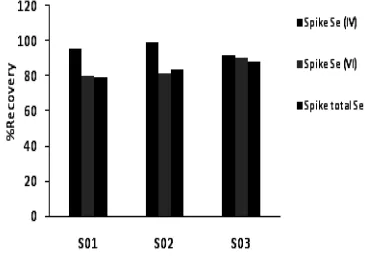
Fig. 10: Recovery (%) of water samples spiked with 10 µg L-1 of Se(IV) or Se(VI) and 20 µg L-1
were also found for Se(VI) as well. Consequently, both of them can be used as the calibration curve for the determination of inorganic Se species and total Se in water samples.
Analytical performance characteristics
The analytical performance of the FI-HGAAS system was evaluated under the optimum conditions including calibration curve, both LOD and LOQ, precision and accuracy (recovery) were investigated.
The calibration curve was constructed between 0.1 and 50.0 µg L-1 Se(IV) standard solution,
but the linearity was maintained up to 100.0 µg L-1
(y = 0.006x + 0.015) with a correlation coefficient (R2) greater than 0.9961. The LOD and LOQ
calculated as three and ten times standard deviation of absorbance of 10 reagent blanks divided by the standard calibration slope of Se(IV) were found to be 0.5 µg L-1 and 1 µg L-1, respectively. This LOD was
found less than those previously reported41,42.
Reproducibility (inter-day precision) and repeatability (intra-day precision) were investigated in terms of relative standard deviation (%RSD, n = 10) as shown in Table 3. The precision of the calibration curve of Se(VI) solution between 5
and 25 µg L-1 was in the acceptable ranges of RSD
between 3.23% and 5.69% for an inter-day and an intra-day analysis, respectively. The results gave rather higher precision for each of the calibration curve for Se analysis.
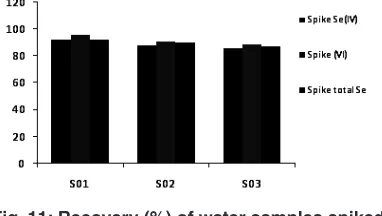
The accuracy of the proposed method was certainly concerned in terms of recovery. The recovery study of Se(IV), Se(VI) and both Se species using the two pre-reducing agents was shown in Table 4. The average recoveries (%) of Se(IV), Se(VI) and total Se in the water sample (S01) using 10% (v/v) thiourea/conc. HCl were found to be 85.57, 103.2 and 84.85, respectively. The recoveries (%) of Se(IV), Se(VI) and total Se using 100 ppm AgNPs found in that water sample were also ranged of 83.48, 98.90 and 83.10, respectively. The recoveries of the Se species in three brands of drinking water samples (S01, S02 and S03) followed by the pre-reduction with 10% (v/v) thiourea/conc. HCl were shown in Figure 10. Their average recoveries (%) of Se(IV), Se(VI) and total Se in the drinking water samples were ranged between 92.0-98.9, 79.9-90.2 and 78.9-88.3, respectively. And from Figure 11, the average recoveries (%) followed by using the AgNPs of Se(IV), Se(VI) and total Se found in these water samples were also ranged in between 92.95.9, 87.9-90.5 and 83.6-88.5, respectively. This is demonstrated that using the AgNPs instead of any common pre-reducing agent for Se speciation can be an effective work done as well.
Analysis of real samples
Generally, the residual organic matter could interfere the hydride generation. Table 5 shows the amounts of Se determination in three brands of drinking water (S01, S02 and S03). The concentration of Se(VI) was calculated as the difference between total Se and Se(IV). These samples gave at trace Se contents (µg mL-1) ranging
from 0.03-0.10, 0.12-1.0 and 0.22-0.97 for Se(IV), Se(VI), and total Se, respectively. Concerning the inorganic Se species in these water samples, the Se(VI) is found in higher contents than the Se(VI).
Effect of some interfering ions
An interference of some diverse ions was also examined in triplicate. Several other ions were added at the concentrations of 1 mg L-1or 10 mg
L-1 into 0.1 mg L-1 of Se(IV) standard solution. Their
Table 5: The contents (µg mL-1) of Se(IV), Se(VI)
and total Se in water samples
Water sample Se(IV) Se(VI) Total Se
S01 0.086 0.996 0.973
S02 0.034 0.123 0.222
S03 0.099 0.242 0.215
Fig. 11: Recovery (%) of water samples spiked with 10 µg L-1 of Se(IV) or Se(VI) and 20 µg
L-1 of both Se species (total Se) followed by
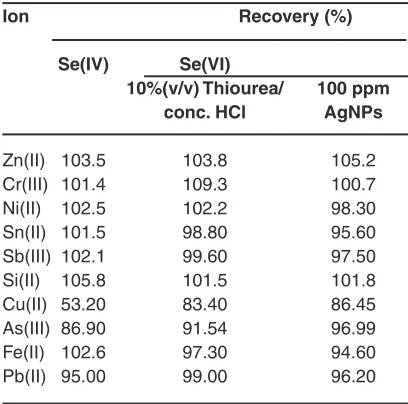
percentage relative absorbance is shown in Table 6. While the effects of Zn(II), Cr(III) and Fe(II) were negligible, serious negative interferences were observed from Cu(II) and As(III). This negative interference probably occurred because Cu(II) reacted with the produced H2Se to form CuSe43,44.
Fortunately, there was no interference from 0.1 mg L-1 Cu(II), and the contents of Cu(II) found in waste
samples were about 0.001 mg L-1. Therefore, the
effects of Cu(II) will be negligible for these drinking water samples as well. Testing of As(III) was also done and their As contents found in these water samples were less than 0.001 mg L-1, and the
interference from As(III) at this level was neither negligible.
CONCLUSION
In this study, the inorganic selenium speciation under catalytic activation and/or reduction using silver nano particles (AgNPs) in association with FI-HGAAS was developed for the first time. The AgNPs were freshly prepared by a dropwise addition of silver nitrate into chilled aqueous solution of two-fold molar excess of sodium borohydride, giving the pale yellow solution with an intense maximum absorption at 335 nm. By using AgNPs in the presence or the absence of borohydride, the results demonstrated that they acted not only as a catalytic activation for Se(IV) but also as a pre-reducing agent for Se(VI) analysis. Therefore, the dispersed AgNPs could enhance in both selectivity and sensitivity for ultra-trace determination of selenium in water samples.
ACKNOWLEDGEMENTS
The authors thank the Higher Education Research Promotion and National Research University Project of Thailand, Office of the Higher Education Commission, through the Food and Functional Food Research Cluster of Khon Kaen University, Materials Chemistry Research Center, Department of Chemistry and Center of Excellence for Innovation in Chemistry (PERCH-CIC), Thailand for financial support.
Table 6: The interference study of some diverse ions for Se species in the water sample
Ion Recovery (%)
Se(IV) Se(VI)
10%(v/v) Thiourea/ 100 ppm conc. HCl AgNPs
Zn(II) 103.5 103.8 105.2 Cr(III) 101.4 109.3 100.7 Ni(II) 102.5 102.2 98.30 Sn(II) 101.5 98.80 95.60 Sb(III) 102.1 99.60 97.50 Si(II) 105.8 101.5 101.8 Cu(II) 53.20 83.40 86.45 As(III) 86.90 91.54 96.99 Fe(II) 102.6 97.30 94.60 Pb(II) 95.00 99.00 96.20
REFERENCES
1. Giovanelli, G.; Paradiso, A.J. Agric. Food Chem. 2002,50, 7277–7281
2. Miteva, E.; Maneva, S.; Hristova, D.; Bojinova, P.J. Phytopathol. 2001, 149, 179–184 3. Foy, C.D.; Chaney, R.L.; White, M.C. Plant
Physiol. 1978, 29,511-566
4. Lombi, E.; Zhao, F.J.; Fuhrmann, M.; Ma, L. Q.; McGrath, S.P.New Phytolog. 2002, 156, 195-203
5. Onyegbule, A.F.;Okorie, D.E.; Onyegbule, C.E. Inter. J. Toxicol. Pharmacolog. Res. 2010, 2 6. Underwood, E.I. Selenium, in: Trace Elements
in Human and Animal Nutrition. New York:
Academic Press, 1977
7. Petropoulou, M.O.; Michalke, B.; Kavouras, D.; Schramel, P. Anal. Chim. Acta. 2003,478, 219–227
8. Alaejos, M.; Romero, C. Chem. Rev. 1995, 95, 227-257
9. R a p t i s , S . E . ; K a i s e r , G . ; To l g , G.Fresenius’Zeitschriftfür Anal. Chem.1983, 316, 105-123
10. Mufioz, R.; Donard, O.; Camara, C.; Ouevauviller, P. Anal. Chim. Acta.1994, 286, 357-370
M.D. Anal. Chim. Acta.1995, 308,96-101 12. Jiang, S.; Robberecht, H.; Adams, F.; Van
der Berghe, D. Toxicol. Envir. Chem.1983, 6, 191-201
13. Olsen, K.B.; Sklarew, D.S.; Evans, J.C.Spectrochim. Acta.1985, 40, 357-365 14. Verlinden, M.; Deelstra, H.A.; Adrianensses,
E. Talanta 1981, 28, 637-646
15. Welz, B.; Stauss, P.Spectrochim. Acta Part B.1993, 48, 951-976
16. Chan, C.C. Anal. Chem. 1985, 57,
1482-1485
17. Fang, Z.; Xu, S.; Wang, X.; Zhang, S. Anal. Chim. Acta1986, 179, 169-179
18. Ikeda, M. Anal. Chim. Acta. 1985, 170, 217-224
19. Pyen, G.S.; Browner, R.F.Appl. Spectro. 1988, 42, 508-512
20. Cobo, M.G.; Palacios, M.A.; Chmara, C. Anal. Chim. Acta.1993, 283, 386-392
21. Pyrznska, K.; Siepak, J.; Kowalczuk, Z. Polish J.Envir. Stud.1999, 8, 183-187
22. Cobo, M.G.; Palacios, M.A.; Camara, C.; Reis, F. Anal. Chim. Acta. 1994, 286, 371-379 23. Pyrzynska, K. Anal. Chim. Acta. 1998, 363,
141-146
24. Brindle, I.D.; Lugowska,E. Spectrochim. ActaB.1997, 52, 163-176
25. Dulivio, A.Anal. At. Spectro.1989,4,67-70 26. Niedzielski, P.; Siepak, M.; Siepak, J.;
Przybyalek, J. Polish J. Envir. Stud.2002, 11, 219-224
27. Godden, R. G.; Thomerson, D. R. Analyst.
1980,105, 1137-1156
28. Nakahara, T.Progress in Analytical Atomic Spectroscopy. New York, Pergamon Press, 1983
29. Dedina, J. Progress in Analytical Atomic S p e c t r o s c o py. N ew Yo r k , Pe r g a m o n
Press1988
30. Rajan, K.; Roppolo, I.; Chiappone, A.; Bocchini, S.; Perrone, D.; Chiolerio, A. Nanotechnol. Sci. Appl.2016, 9, 1-13 31. Leelavathi, A.; Rao, T.U.B.; Pradeep, T.
Nanoscale Res. Lett.2011, 6, 123-132 32. Sharma, V.K.; Yngard, R.A.; Lin, Y. Adv. Colloid
Interf. Sci.2009, 145, 83-96
33. Thakur, M.; Pandey, S.; Mewada, A.; Shah, R.; Oza, G.; Sharon, M. Spectrochim. Acta Part A Mol. Biomol. Spectro.2013, 109, 344-347. 34. Sohn, E.K.; Johari, S.A.; Kim, T.G.; Kim, E.;
Lee, J.H.; Chung, Y.S.; Yu, I.J. Bio. Med. Res. Int.2015, 89, 3049
35. Goa, X.; Lu, Y.; He, S.; Li, X.; Chen, W. Anal. Chim. Acta.2015, 879, 118-125
36. Zielinska, A.; Skwarek, E.; Zaleska, A.; Gazda, M.; Hupka, J. Procedia Chem.2009, 1, 1560-1566
37. Ebdon, L.; Evans, E.; Fisher, H.; Hill, S.J. An introduction to analytical atomic spectrometry. Chichester, John Wiley & Sons1998
38. Shoog, D.A.; Holler, F.J.; Nieman, T.A. Principle of instrumental analysis. 5th ed.
Philadelphia, Saunders College Publishing,
1998
39. Dedinna, J.; Tsalev, D.L. Hydride gerneration atomic absorption spectrometry. Chichester, John Wiley & Sons, 1995
40. Trung, D.Q.; Anh, C.X.; Yasaka, Y.; Fujita, M.; Tanaka, M. Anal. Sci.2001, 17, 1219-1222 41. Lobinski, R. Appl. Spectro. 1997,
51,260A-278A
42. Jackson, B.P.; Miller, W.P. Envir. Sci.Tech.
1999, 33, 270-275
43. Thompson, M.; Pahlavanpour, B.; Walton, S.J.; Kirkbright, G.F. Analyst.1978, 103, 568–579 44. Tao, G.-H.; Sturgeon, R.E. Spectrochim. Acta