113
The Strategy Of SD Pusri In Improving
Educational Quality
Herni Irmayani, Dessy Wardiah, Muhammad Kristiawan.
Abstract: In this qualitative research, the focus was the strategy SD Pusri in Improving the quality of teachers and education personnel, quality of facilities and infrastructure and quality of management. The results obtained in this study indicate that SD Pusri strategy in improving the quality of educators and educational personnel through routine supervision of principals, delegation of authority, training, upgrading, seminars, technical guidance, workshops, and training, and to evaluate the performance of educators and educational staff offset by rewards. The strategy o n improving the quality of facilities and infrastructure was done by coordinating through the early budgetary meetings, gradual fulfillment of facilities, comparative study and fulfillment the computer facilities. For management strategies, SD Pusri performed planning, program implementation and evaluation activities. The findings obtained by the Principal tend to use the concept of Total Quality Management (TQM) in the management process. Starting from the process of admission until the new graduation involving all parties. In addition, schools are always oriented to the satisfaction of school residents both internally and externally and the school together continuously in the form of improving the quality of education through various activities involving the school community. Besides being supported by parents and the community, the school also has good facilities from Yayasan Sosial Pendidikan (YSP) Pusri. Index Terms: Strategy, Quality of Education, SD Pusri
————————————————————
1
I
NTRODUCTIONThe issue of the quality of education is not only a problem for Indonesia, as said by the Assistant Director-General for Education of The United Nations Educational, Scientific and Cultural Organization (UNESCO), Qiang Tang, at the launch of Global Education Monitoring (GEM) Report 2016 in Jakarta, 6/9) that "the quality gap of education is still a constraint for many countries, especially Indonesia". The problem faced is how to get all children in school to get the same quality of education (Report 2016, in Jakarta, Tuesday 6 September 2016). When viewed from the table of Education Development Index (Education Development Index), Indonesia is ranked 5th after Thailand with Index 0.603 ranks 108th in the world. Many factors caused the poor quality of education in Indonesia such as limited access to education, the number of teachers who are not evenly distributed, and the quality of teachers is still considered less and educational facilities and infrastructure. According to Haningsih (2014) a lot of quality problems faced in the world of education, ranging from the quality of graduates, teaching, guidance and training of teachers, as well as professionalism and teacher performance. In addition, the quality is also related to managerial of education leaders, limited funds, facilities and infrastructure, educational facilities, media, learning resources, training tools and materials, school climate, educational environment, and support from parties related to education. All the weaknesses of the quality of these components of education lead to the low quality of graduates. National Education Standards are the minimum criteria of the education system in the territory of Indonesia which is
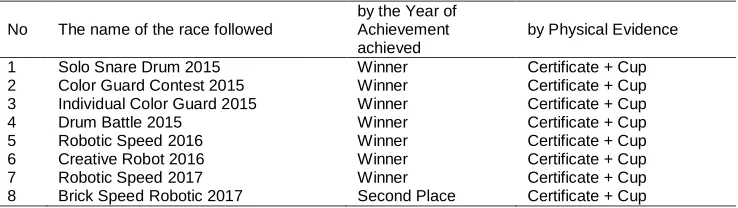
currently regulated in Government Regulation No. 32 of 2013 on Amendment to Government Regulation Number 19 Year 2005 on National Education Standards and of course will be made continuous adjustment. Its function as a basis in every program of activities implemented in the education system, starting from the planning, implementation, and supervision of education to improve the quality of national education. The purpose of this standard ensures the quality of national education in order to educate the nation and shape the character and civilization of a dignified nation. Quality learning outcomes are the expected effects of a deliberate education system. SD Pusri is one of public elementary school of private status and accredited "A" located at Jalan Mayor Zen Kelurahan Sei Selayur Kalidoni Sub district of Palembang City, South Sumatera Province and started doing the learning process based on document of Decree of Establishment of School. 390 / III.3 / F4e / 87 dated December 2, 1987 and Decree of Operational Permit no. 390 / III.3 / F4E / 87 with the National School Principal Number (NPSN) SD Pusri is under the auspices of YSP Pusri. Historically, this school was originally built only to facilitate employees and workers of PT Pusri who have children to go to school and of course the demand is limited to employees of PT Pusri. Formerly SD Pusri consisted of 2 schools namely SD YSPP I and SD YSPP II, with two building facilities, but in 2004 merged into one with the name of SD Pusri Palembang. Here are some achievements obtained by school students in various competitions both academic and nonacademic
Table 1. Student Achievement Year 2015-2017 (Observing August 31, 2017)
No The name of the race followed
by the Year of Achievement achieved
by Physical Evidence 1 Solo Snare Drum 2015 Winner Certificate + Cup 2 Color Guard Contest 2015 Winner Certificate + Cup 3 Individual Color Guard 2015 Winner Certificate + Cup
4 Drum Battle 2015 Winner Certificate + Cup
5 Robotic Speed 2016 Winner Certificate + Cup
6 Creative Robot 2016 Winner Certificate + Cup
7 Robotic Speed 2017 Winner Certificate + Cup
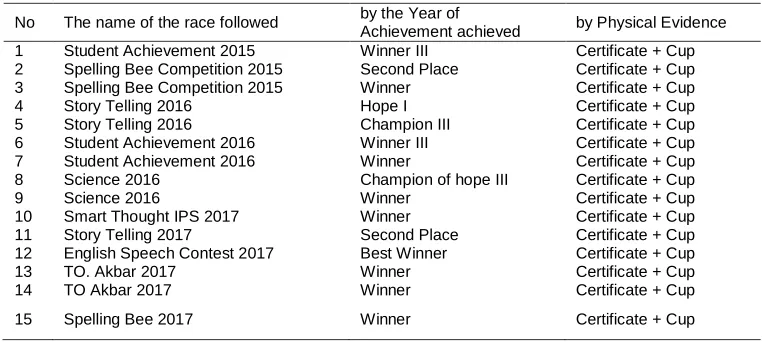
Table 2. Student Achievement Year 2015-2017 Academic Area (Observing August 31, 2017)
No The name of the race followed by the Year of
Achievement achieved by Physical Evidence 1 Student Achievement 2015 Winner III Certificate + Cup 2 Spelling Bee Competition 2015 Second Place Certificate + Cup 3 Spelling Bee Competition 2015 Winner Certificate + Cup
4 Story Telling 2016 Hope I Certificate + Cup
5 Story Telling 2016 Champion III Certificate + Cup 6 Student Achievement 2016 Winner III Certificate + Cup 7 Student Achievement 2016 Winner Certificate + Cup 8 Science 2016 Champion of hope III Certificate + Cup
9 Science 2016 Winner Certificate + Cup
10 Smart Thought IPS 2017 Winner Certificate + Cup 11 Story Telling 2017 Second Place Certificate + Cup 12 English Speech Contest 2017 Best Winner Certificate + Cup
13 TO. Akbar 2017 Winner Certificate + Cup
14 TO Akbar 2017 Winner Certificate + Cup
15 Spelling Bee 2017 Winner Certificate + Cup
In addition to student achievement, SD Pusri is also awarded Adiwiyata City and provincial level in 2013 and 2015 under the leadership of Mrs. Hesti pariza, S.Ag (Interview with Headmaster and Observation, September 30, 2017). Furthermore, in 2016 SD Pusri is also selected as a model school elementary school level. With the many achievements each school has, schools have their own strategies to improve school quality. the school's vision and mission is always evaluated annually through an annual program that is attached at the beginning of the school year. One of the additions to the school's vision and mission is that schools add environmental insight. The goal is to improve the quality of the school environment is comfortable and shady post-displacement of the school location that was in the environment PT Pusri factory to be located outside the region, but remained within the area of PT. Pusri.
2.
SCHOOL
STRATEGY
IN
IMPROVING
EDUCATION QUALITY
According to Fattah (2012: 8) Strategy is a way or approach done in assessing process quality and product quality in an organization in which is a series of decision and managerial action that determines company performance in long term (Hunger and Wheelen, 2003). Strategies also require time and security to run smoothly (Mary and Coutler, 1991: 231-232). Based on the above understanding it can be concluded that the strategy is a detailed planned managerial action in the form of operational tactics or tactics through measurable measures, time and security to achieve goals in favorable conditions. Strategies aimed at goals and objectives are the art of using all available resources and supporting achieving goals effectively and efficiently. With regard to education, the strategy must be oriented on how to ensure the quality of education can still compete or produce quality school output. According to Engkoswara & Komariah, (2010: 305), that the quality of education will be said good if the education can present services in accordance with the needs of customers. In line with what was said by Crosby (2010) that quality is conformance to customer requirement, customer satisfaction (Ishikawa, 2010), Hutchin (1991) quality is 1) conformance to applicable specifications and standards; 2) fitness for use and; 3) satisfaction of customer wants, needs, and expectations at a competitive cost. In the Regulation of the Minister of National Education No. 63 of 2009 on Quality Assurance System of Education argued that the quality of education is the level of
115 education is to use the theory of Total Quality Management
(TQM). TQM is an approach to running a business that seeks to maximize competitiveness through the continuous management of all resources including products, services, people, processes, and organizational environments (Oktriany, et al, 2015). Sallis (2006: 73) states that TQM in education is a philosophy of continuous improvement that can provide a set of practical tools to every educational institution in meeting the needs, wishes, and expectations of today's society and for the future. This theory explains that the quality of education with TQM includes three abilities, namely academic ability; social; and morals. From the above explanation, it can be argued that the school strategy to improve the quality of educators and educational personnel can be done by providing training programs and upgrading sustainable. The principal has a very central role in achieving the quality of educators and qualified personnel. In addition, the Teachers Working Group (KKG) activity, for elementary school teachers and subject teachers meeting (MGMP) can be used as a forum by teachers in improving the quality of teaching. Educators must have academic and competence qualifications as learning agents, physically and mentally healthy, and have the ability to realize the goals of national education (Solehan, 2015). Therefore, teachers must develop their potential, be it personality and ability to play an important role for the advancement of national education (Akbar and Tobari, 2016). Based on the above theories can be concluded that improving the quality of educators and educational personnel through the strategy 1) improve the qualifications of educators and educational personnel, among others, by undergoing further study of strata program, courses and training, journaling and seminar; 2) educators and educational staff should open information and communication insights, especially the use of technology; 3) the existence of the Principal's efforts to improve teacher performance can be pursued by, among other things, disciplinary development by providing good examples, motivating subordinates who perform, rewarding, giving bonuses to outstanding teachers and creating good perceptions in schools; and 4) active in teacher work group activities (KKG) both inside and outside school.
3. STRATEGY TO IMPROVE THE QUALITY OF
FACILITIES AND INFRASTRUCTURE
The procurement process of facilities and infrastructure is highly recommended to follow the applicable regulatory guidelines, as well as the implementation of facilities and infrastructure procurement should be able to prioritize the principles of transparency and accountability. For the Primary School / Madrasah Ibtidaiyah (SD / MI) Secondary School / Madrasah (SMP / MTs) Secondary School / Madrasah Tsanawiyah (SMP / MTs) Secondary School / Madrasah (SMP / MTs) Secondary School and High School / MA High School are regulated in Permendiknas Number 24 Year 2007 (Solehan, 2015). Includes studying spaces, sports venues, places of worship, libraries, laboratories, workshops, playgrounds, creative and recreational venues, as well as other learning resources needed to support the learning process, including using information and communication technologies. There are several principles that need to be considered in managing educational facilities and infrastructure in schools. The principles in question are 1) the principle of goal attainment; 2) efficient principles; 3) administrative principles, 4) principles of responsibility clarity;
and 5) the principle of cohesion (Bafadal, 2003: 5-6). Lince (2016: 172) argued that for the development of information technology capabilities this required several things such as 1) availability of facilities; 2) availability of content and materials of information technology usage method; and 3) training in the use of technology for teachers. While Tanggela (2013: 33) prioritize the procurement of ICT-based learning tools so that learning will take place more effectively and productively. The procurement process of facilities and infrastructure is strongly recommended to follow the applicable regulatory guidelines, as well as the implementation of facilities and infrastructure procurement should be able to prioritize transparency and accountability principles, and maintenance process is a follow up on facilities and infrastructure that have been purchased or held. This is important to be implemented in order to optimize the life of the goods and so that the goods are ready to be operated when needed (Darmawan, 2014). Based on the above theories can be concluded that the strategy to improve the quality of facilities and infrastructure include 1) holding the principles of management of facilities and infrastructure consistently, efficiently, responsibly and systematically; 2) provide training in the use of facilities; 3) to prioritize the completeness of facilities and infrastructure based on ICT; and 4) optimizing the life of goods with maintenance and maintenance on an ongoing basis.
4. STRATEGY TO IMPROVE QUALITY OF
MANAGEMENT
5. RESEARCH METHOD
In this research, the researcher uses qualitative research method in the form of case study with research design format using descriptive format, that is giving description about certain individual or group about the condition and symptoms that happened (Koentjaraningrat, 1993: 89). The researchers sought to investigate how the school strategy in improving the quality of education in depth on the three standards of educators and educational standards, facilities and infrastructure standards and management standards in SD Pusri. Researchers do some activities in data collection by using several instruments, namely researchers themselves, educators at SD Pusri, notebooks and recording equipment. Data analysis techniques used in this study include data reduction, data presentation and conclusion. According to Castellan (2010) in Qualitative research most of the data comes from fieldwork where the researcher spends time in the setting under study. Data analysis is an ongoing, inductive process where data are sorted, sifted through, read and reread. The data that have been obtained will be processed, then do the domain analysis to obtain a general and comprehensive picture on the object of research through data reduction process, display and verification (Miles and Huberman, 1983). To test the validity of the data, the researcher uses several test equipment, including credibility test, transferability, dependability and conformability (Sugiyono, 2007: 357). To test the credibility of the data, the researcher used Sugiyono theory (2007: 360) that is using 3 of 6 ways of testing that is 1) extension of observation; 2) increased persistence; and 3) triangulation.
6. RESEARCH RESULTS AND DISCUSSION
a. Strategy in Improving the Quality of Educators and Education
Based on observations, interviews and documentation with principals, teachers, and education personnel, it is known that school strategy in improving the quality of educators and education personnel is done by 1) routine supervision; 2) delegation of authority; 3) improving the quality of teachers through trainings, workshops, upgrading, technology guidance, and training; 4) Performance evaluation; and 5) The Principal is an exemplary example of leadership. From the results of interviews with the Principal, it is known that SD Pusri has 47 teachers and educational staff who have a minimum education qualification D3 for administrative personnel. 11 people including the Principal have been certified profession. Data obtained by researchers from 47 people consisted of teachers and education personnel with permanent status and contract. In terms of keeping the quality of teachers and school education resources quite selective from the recruitment stage until the stage of becoming a permanent employee. Based on the results of interviews with the principal obtained an explanation that the discipline of teachers is the beginning of activities to make changes to achieve good quality. This is done by the principal after seeing the condition of discipline that began to decrease among teachers and educational personnel. Bad patterns like passive absent run without clear control. Classroom learning becomes less meaningful. Students often learn with a substitute teacher because the teacher who is supposed to give the lesson is unable to attend or have gone home before the class is over. Based on the results of interviews with the principal, it is found
117 professional supervision is successful in influencing teachers
to improve the quality of learning so as to give birth to teaching-learning satisfaction, strong commitment and more effective work power. Then the results of data triangulation conducted by researchers based on observation, interviews with principals, curriculum representatives, student representatives, representatives of facilities and infrastructure, and educational personnel such as administrative and financial officers, librarians, and supported by documentary studies such as photographs or training certificates, evidence is obtained that teachers and education personnel training, workshops, upgrading, technological guidance, and training. To improve the professional competence of teachers, among others, by undergoing further study of strata program, courses and training, journals and seminar utilization (Sagala, 2009: 79), or send teachers as trainees, whether conducted by ministry of religion or other offices or agencies , providing guidance and guidance in every monthly meeting to teachers, and monitoring and evaluating the implementation of teacher and employee duties, both supervising the implementation of teaching tasks and supervising in terms of teacher and employee discipline levels (Solehan, 2015). Then Fahrudin (2015) argued that professional development of teachers can be done among others with the development and improvement of personality (achievement motivation). The principal has a role as a supervisor as well as a motivator so that teachers have achievement motivation (Maamarah, 2016: 123). McClelland (1987) argued that achievement motivation is a desire that exists within a person that encourages the person to try to achieve a standard or measure of excellence. Academic supervision carried out can improve teachers' skills in teaching and can motivate teachers to implement innovative learning. With innovative learning of course teachers can create a conducive learning atmosphere with students. Classroom learning and classroom management, this century must be tailored to the standards of advancement in information and communication technology (Lince, 2016). There are 7 teacher challenges in the 21st century according to Susanto (2010), covering 1) teaching in multicultural society, 2) teaching for the construction of meaning; 3) teaching for active learning; 4) teaching and technology; 5) teaching with new view about abilities; 6) teaching and choice; and 7) teaching and accountability Trimantara (2007) argues that a superior school should have a superior teacher as well. The teacher competence that allows to develop a superior educational institution is the competence of mastery in the subjects, learning, coaching, communication with learners, and in evaluating. Professional teachers, in learning must take four stages, namely preparation, implementation, assessment, and reflection (Suparno 1998: 172). Efforts to improve and develop teachers' professionalism can be done on a scheduled basis through Teacher Working Group (KKG) activities, for elementary school teachers and subject teachers (MGMP) (Akbar, Tobari, 2016: 504). Based on the results of interviews with principals, religious teachers and grade 6 teachers, it is found that teachers and education personnel received training and workshops by inviting competent parties such as resource persons from the Education Office of Palembang and Kecamatan, LPMP and with private institutions competent to quality of education. after the workshop was held, the principal formed a school KKG team to create a learning product in the form of learning tools that will be supervised by the principal. in addition, teachers must
use IT as a tool to support the learning process. The results of this study are supported by the results of all of Gupta (2017) that appropriate study is appropriate for professional training of teachers is essential. Instructors need to contract explore activities on priority basis for accomplishing academic excellence. .... they need to have higher level of expertise and demand to upgrade their skills on steady basis and show professional position. With this activity can increase the insight of teachers and education personnel to always follow the development of the world of education. For teachers who are adept at using IT, then the proficient teachers will teach teachers who have not understand for example the teacher is already senior but in using a computer or laptop is still not so understand. Teamwork is a very important element in improving the quality of education. Cooperation conducted in schools in the development of professionalism of teachers is also supported by the results of research Zein (2016) that the implications for future research into the Professional Development (PD) needs of primary EFL teachers. It will also inform teachers and policy makers to develop a framework of reference for the design of PD programming that is well attended to primary EFL teachers' needs. This program requires a frame of reference for designing a professional teacher development program as needed. Like the use of IT to educators. The result of field observation showed that the Head of SD Pusri always try to complete the procurement of computer facilities in every room both in the teacher room and the education staff and the use of in focus in each class. The next Strategy of SD Pusri is to evaluate the program through the principal's supervision of instructional tools. the goal is for each teacher to have appropriate learning tools and targeted, effective and efficient. So that learning outcomes will be achieved. With regard to teacher professionals, Septi (2012) findings, explains that program evaluation is done to improve teacher professionalism and then make improvements by enforcing discipline for teachers and students, and instilling responsibility and discipline. Based on the results of interviews with the principal and vice curriculum researchers are known that the evaluation through supervision conducted every 6 months or every beginning of the semester. The evaluation is not only done by the principal, but also by the foundation that influences the incentives of each teacher and educational staff given in the form of rewards. Then things that support the quality of schools based on the results of interviews with religious teachers, it is known that there is a cooperative relationship between principals, teachers, education personnel, students and parents. The principal always seeks to help solve the problem democratically for the citizens of the school. always think positive in building communication in team.
b. Strategy in Improving the Quality of Facilities and Infrastructure
funds and the need is urgent, it can be submitted to the foundation. According to Qomar (2007: 170-171) educational tools are equipment and equipment that are directly used in the teaching and learning process, such as buildings, classrooms, tables, chairs, and instructional media, while the educational infrastructure is related to all basic equipment that are not directly support the implementation of the learning process at school Barnawi (2012: 47). The educational infrastructure is a facility that indirectly support the process of teaching, such as yard, garden, school park, and the road to school From the results of interviews with the Principal, SD Pusri also receives the boss funds in addition to the committee funds received each month from the parents of students. For the management of funds other than BOS funds, directly managed by the foundation. The results of interviews with principals and representatives of infrastructure facilities are known that the excellence of SD Pusri in terms of the fulfillment of facilities and infrastructure is the foundation (YSP) Pusri fully supports the fulfillment efforts based on the principle of priority. While the BOS Fund received by the school is fully managed by the school. one of which is the fulfillment of school operational facilities such as textbooks, stationery, consumables, and maintenance costs of facilities and infrastructure routinely issued with accountability reports to the Foundation before being reported to the Education Office of Palembang In addition the school strategy in minimizing the budget one by empowering facilities and infrastructure facilities to be multifunctional. Like multifunction futsal field infrastructure also for Basketball field, Volleyball and ceremony venue. Schools also conduct comparative studies to other schools. The goal is to know and compare other school systems in order to meet the needs, especially in terms of fulfillment of facilities and infrastructure. Human resources support is urgently needed cooperatively. One of the advantages of SD Pusri in improving the quality of infrastructure facilities is to optimize the use of libraries that is by get around corner library corner into a literation corner. In terms of fulfillment of computer technology facilities in schools, based on the results of interviews with student representatives. Based on interviews with the Principal (Wednesday, December 13, 2017) that the school is equipped with a computer room that has 40 units of notebooks, and 6 units of infocus. IT fulfillment efforts are useful to support the quality of education in schools. The findings of this researcher are in line with the findings of Englund's findings, et al (2017) show clearly between novice and experienced teachers. Although the novice teachers initially held more teacher-focused conceptions, they demonstrated greater and more rapid change than experienced colleagues. Supporting conceptual change should be, therefore, be a central component of professional development activities if a more effective use of educational technology is to be achieved. Through the use of effective educational technology can improve the professionalism of teachers in an effort to improve the quality of facilities and infrastructure. The results of interviews with representatives of facilities and infrastructures, for maintenance, responsibilities submitted to representatives of facilities and infrastructure by working together with principals and school residents. In line with the demands of society that are increasingly critical of the quality of school needs, the fulfillment of the facility is done in a continuous school. With complete facilities and reliable resources, the school will have good quality. Efforts to meet this technology
must also be tailored to the needs of students in the future. So parents are more critical to choose schools that have complete facilities. The findings of this researcher in accordance with the findings Billaiya (2017) that students from 2009 to 2013 more concerned for facilities. This data indicates that year by year students are becoming quality concerned. Similarly selection criteria of education institute are related to the effect of quality aspects on students. Students choose institute on the basis of fees, brand name, infrastructure and available facilities. The findings are relevant to what is done by SD Pusri which gradually fulfill the need of infrastructure to improve the quality of education. Related to the results of interviews with principals and representatives of facilities and infrastructure, it is known that for the maintenance of facilities and infrastructure, schools use BOS funds that are budgeted each year based on program meetings. These findings are in line with the findings of Belmo (2012) explaining that the fulfillment of facilities and infrastructure through 1) planning; and 2) through self-funding, routine funds, and committee funds. Schools also cooperate with private parties to fulfill the supporting facilities of learning activities such as the use of instructional media. This research is supported by the findings of Rosita et al (2016) that the effort in improving the quality of educational facilities and infrastructure is through the maintenance of facilities and infrastructure, as well as cooperation with other institutions in the procurement of facilities and infrastructure. SD Pusri perform planning in the effort fulfillment of facilities and infrastructure by allocating funds in accordance with the priority scale. The existence of cooperation with various parties, especially the parents and the community as users of the quality of the graduates make the school always strives to meet the supporting facilities of the quality of education in stages. The principle of openness and willingness to learn is an important factor in efforts to improve the quality of facilities and infrastructure. The importance of educational technological facilities is certainly tailored to the needs and reliable resources, so that the use of technology means to be appropriate, the goals and objectives of facilities and infrastructure.
c. Strategy In Improving Quality Management
119 gradually from 2015 along with the relocation of schools. This
is done as one of the school strategies in an effort to improve the quality of service. Some activities that are summarized in the planning of SD Pusri program activities include academic and non-academic activities. In the field of academic teachers make program planning activities detailed in learning tools, ranging from the creation of an educational calendar. students in the learning process also carry out additional activities such as tutoring and Tryout for grade 6. This is consistent with the results of interviews with curriculum representatives, that teachers should have a learning plan that will be evaluated by the principal once every 6 months. Then in the planning, the school also makes academic and non-academic activities. The extracurricular activities that support nonacademic activities as a forum for students to hone the interests and talents of students. The self-development activities include 1) read write the Qur'an and tahfidz; 2) badminton; 3) chess; 4) English fun club; 5) newspaper wall; 6) marching band, 7) painting, 8) majelis taklim, 9) mathematics Olympics, 10) IPA Olympics; 11) pencak silat; 12) pool; 13) the art of dance; 14) football; and 15) choir. In the planning of the school also discusses the fulfillment of textbooks and interesting reading books as an effort to attract reading interest of students in the library. One of the school realization plans is to optimize the use of school literacy corner that is designed like a bookstore so that students are free to choose books of reading. From the data of observation result of library administration document there are 3186 titles reference book. In addition, this planning activity is made in the program of daily activities, weekly and semester. In the implementation activities carried out from the acceptance of students, do the division of tasks based on SK, do creative and innovative learning, involving the participation of the community, especially parents. Management associated with the acceptance of students is done by using various media such as cooperation with various educational institutions to do SD Pusri Expo, competitions by inviting students kindergarten in the city of Palembang, distributing brochures with attractive promo pieces and using electronic media such as using facebook application for promoting schools. Schools create daily, weekly, and semester programs. Evaluation is still done by the Principal of all school residents. In daily activities, schools apply school vision and mission into habituation with the development of religious character, independence, responsibility, mutual cooperation and nationalist. This is related to the research of Haikal (2005), indicating that the management functions have been implemented in schools in order to realize the vision and mission of the school as a supporting component for the ongoing and development of human resource management. Based on the results of interviews with the principal related to the budget of funds needed in the fulfillment of facilities and infrastructure that support the activities derived from the committee funds, Funds BOS and Social Foundation (YSP) Pusri in responsible management to YSP Pusri and also the Education Office of Palembang . In improving the quality of management, the school cooperates with various private institutions and communities especially in the neighborhood around the school. Furthermore, the strategy in improving the quality of management is to conduct monitoring and evaluation. Based on interviews with principals and teachers of class 6 it is known that there are 2 monitoring and evaluation activities conducted, namely 1) monitoring and evaluation by LPMP related to SD Pusri as Model School; and
2) monitoring evaluation conducted by the foundation. The principal also conducts monitoring and evaluation of teachers and education personnel related to all school activities, ranging from routine supervision as controlling to supervise the class. Related to the findings Mukolwe, JO, et al (2017) that there is a positive and significant relationship between academic achievement and teamwork. Regression analysis revealed that the effect of implementation of TQM on academic achievement was significant. The implications of this result are TQM for predicting academic achievements of pupils. Quality education is not only seen from the quality of graduates, but also how schools can meet the internal needs (education personnel) in accordance with applicable quality standards, so that external satisfaction such as students, parents, and society generally can be felt. Based on the results of related research on strategies in improving the quality of management, it can be concluded that researchers see SD Pusri adopt the concept of Total Quality Management (TQM) patterned in SD Pusri in school management, ranging from acceptance of students who made promotions outside school and in school , involving all citizens of schools, foundations, support institutions and parents. Researchers see SD Pusri adopt the concept of Total Quality Management (TQM) patterned in SD Pusri in school management, starting from the acceptance of students who conducted promotion outside school and in school, involving all school residents, the foundation, supporting institutions and parents. The results of research on Strategy of SD Pusri in improving the quality of education can also be viewed on YouTube at https://youtu.be/M4T3UcB5Uf0
7. CONCLUSION
Researchers can conclude there are several strategies implemented by SD Pusri in improving the quality of education as follows:
a. In improving the quality of teachers and education personnel, SD Pusri perform several strategies namely 1) routine supervision; 2) delegation of authority; 3) improving the quality of teachers through trainings, workshops, upgrading, technology guidance, and training; 4) Performance evaluation; and 5) the Principal becomes an example in leadership. Then the teacher performance results are evaluated by the Principal as a job responsibility to get rewards.
b. In improving the quality of facilities and infrastructure, SD Pusri uses several strategies of activities, namely 1) in fulfilling facilities, facilities and infrastructure, schools hold annual planning meetings; 2) Conducting Comparative Study; and 3) strive to meet the technological facilities of computers in schools.
7.
REFERENCES
This journal is made from Herni Irmayani's thesis with her own work helping by advisors Dr. Dessy Wardiah, M.Pd, and Dr. Muhammad Kristiawan, M.Pd.
[1]. Akbar, R. d. (2016). Pengembangan Sumber Daya Manusia Sebagai Salah Satu Faktor Penentu Dalam Meningkatkan Mutu Pendidikan. Prosiding Seminar Pendidikan Program Pascasarjana Universitas PGRI Palembang, 504-514.
[2]. Bafadhal, I. (2003). Peningkatan Profesionalisme Guru. Jakarta: PT. Bumi Aksara.
[3]. Barnawi, & Arifin. M. (2012). Manajemen Sarana dan Prasarana Sekolah. Yogyakarya: Ruzz Media.
[4]. Belmo, K. (2012). Manajemen Sarana dan Prasarana Pada Sekolah Menengah Kejuruan. Jurnal Program Pascasarjana Manajemen Pendidikan.
[5]. Billaiya, R, dkk (2017), Impact of Socio Economic Trends on Students in Quality Education System. International Journal Of Social Sciences And Humanities (USSH) 2017, Volume 1 No.1.
[6]. Castellen, M Catherine. (2010). Quantitative and Qualitative Research A Fiew For Clarity. International Journal Of education, Volume 2 No. 2.
[7]. Coutler, R & Stephen P.M. (1991). Manajemen, Jakarta: Prenhallindo,1991.
[8]. Crosby P. (2010). Quality is free. New York: McGraw-Hill.
[9]. Danim, S. (2007).Visi Baru Manajemen Sekolah. Jakarta: Bumi Aksara
[10]. Darmawan, D. (2014). Teknologi Pendidikan. Bandung: Remaja Rosdakarya.
[11]. Engkoswara, dan Komariah A, ( 2010). Administrasi Pendidikan. Bandung: Alfabeta.
[12]. Englund, dkk. (2016). Teaching with technology in higher education: Understanding Conceptual Change and Development In Practice, Journal Higher Education Research & Development, Volume 36.
[13]. Fahrudin, (2015) Peningkatan Kinerja Dan Pengembangan Profesionalitas Guru Sebagai Upaya Peningkatan Mutu Pendidikan Di Indonesia. Prosiding Seminar Nasional Pendidikan Ekonomi & Bisnis Fakultas Keguruan dan Ilmu Pendidikan.
[14]. Fattah, Nanang F, (2012). Pendidikan Bermutu dan Berdaya Saing, Bandung:PT Remaja Rosdakarya.
[15]. Gupta, Sunita, (2017). Higher Education Management, Policies and Strategies. Associate Professor, Department of Sociology, SBS PG College, Ummedpur, Etah. Journal of Business Management & Quality Assurance Vol 1 No 1.
[16]. Schneider, G & Gorton,T R.A. (1991). School-Based Leadership: Challenges and Opportunities. Dubuque: Wim C. Brown Company Publisher.
[17]. Haikal, F, (2005). Tesis Implementasi Manajemen Sumber daya Manusia Di MTsN Rantau Prapat Kabupaten Labuhan Batu Sumatera Utara Yogyakarta: PPs UIN Sunan Kalijaga.
[18]. Haningsih, Sri (2014). Implementasi Program Mutu Pendidikan daalam meningkatkan Budaya Akademik di Madrasah Aliyah Sunan Pendanaan (Maspa) Sardoharjo Ngaglik Sleman, DIY. El-Tarbawi. Vol. 7 no. 1.
[19]. Hatten, Timothy S. (2012). Small Business Management: Entrepreneurship and NBeyond, Fifth Edition. USA: South-Western Cengange Learning.
[20]. Hunger, D dan Wheelen, LT, (2003). Manajemen Strategi, Yogyakarta: Andi Utama
[21]. Hutchins E. (1991). The Social Organization of Distributed Cognition. In LB Resnick:283-307.
[22]. Irianto, Agus. (2011). Pendidikan Sebagai Investasi dalam Pembangunan Suatu Bangsa. Jakarta: Kencana.
[23]. Ishikawa, K. (2000). Pengendalian Mutu Terpadu. Bandung: PT. Remaja Rosdakarya.
[24]. Joni, R. T. (2009). Revitalisasi Pendidikan Profesional Guru. Jakarta: Depdiknas.
[25]. Koentjaraningrat. (1993). Metode-metode Penelitian Masyarakat. Jakarta:PT. Gramedia.
[26]. Lince, R. (2016). Strategi Peningkatan Profesionalisme Guru Dalam Menghadapi Tantangan Di Era Digital. Prosiding Temu Ilmiah Nasional Guru Tingkat VIII Universitas Terbuka Convention Center.
[27]. Maamarah, Siti dan Supramono. (2016). Strategi Peningkatan Mutu Dan Citra (Image) Sekolah Dasar Negeri Di Ungaran, Semarang. Jurnal Manajemen Pendidikan Volume 3, No. 1.
[28]. McClelland (1987). Memacu Masyarakat Berprestasi: Mempercepat Laju Pertumbuhan Ekonomi Melalui Peningkatan Motif Berprestasi, Jakarta: Intermedia.
[29]. Miles, M. B dan Huberman, A. M.(1994). Qualitative Data Analysis:A Sourcebook of New Methods. California: Sage.
[30]. Mukhtar, (2015). Strategi Kepala Sekolah dalam Meningkatkan Kinerja Guru di Aceh. Jurnal Magister Administrasi Pendidikan Volume 3 no 3.
121 [32]. Oktriany, H, W, R, Triastuti, Y, S, Prajoko, (2015).
Strategi Peningkatan Mutu Pendidikan Menggunakan Diagram Ishikawa Di SMA Negeri 1 Suruh. Prosiding Seminar Nasional Pendidikan Ekonomi & Bisnis Fakultas Keguruan dan Ilmu Pendidikan.
[33]. Qomar, Mujamil. (2007). Manajemen Pendidikan Islam. Malang: Erlangga.
[34]. Rivai, V. (2008). Manajemen Sumber Daya Manusia Untuk Perusahaan. Jakarta: Grafindo Persada.
[35]. Rosita, R, dkk, (2016). Usaha Kepala Sekolah Dalam Meningkatkan Mutu Pendidikan Islam (Studi Kasus di MTS AL-INAYAH Bandung) Vol 3, No 1
[36]. Sallis, E. (2006). Total Quality Management in Education. Manajemen Mutu Pendidikan. Jogyakarta:IRCiSoD
[37]. Sagala, H. Syaiful. (2009). Kemampuan Profesional Guru danTenaga Kependidikan, Bandung: Alfabeta.
[38]. Septi, IAY, (2012). Strategi Peningkatan Mutu Manajemen Melalui Pengembangan Program Sekolah. Jurnal Manajemen Pendidikan, Volume 23 No. 5.
[39]. Sergiovanni. (1987). The Principalship: A Reflective Practice Perspective. Boston: Allyn and Bacon Inc.
[40]. Solehan. (2015). Strategi Peningkatan Mutu Pendidikan Di Madrasah Aliyah Negeri Muara Enim: 1-15.
[41]. Sugiyono. (2007). Metode Penelitian Pendidikan. Bandung: Alfabeta.
[42]. Suhardan, D. (2014). Supervisi Profesional Layanan dalam Meningkatkan Mutu Pembelajaran di Era Otonomi Daerah. Bandung: Alfabeta.
[43]. Suharto, (2017). The Effect Supervision, School Culture, And Work Commitment Of Job Performance Primary School In Principal Of Administrative Region Ii City West Jakarta, Journal of Education Research in Administration and Management. Volume 1 No. 3.
[44]. Suparno, A. Suhaenah. (1998). Membangun Kompetensi Dasar. Jakarta: Direktorat Jendral Pendidikan Tinggi Departemen Pendidikan Nasional.
[45]. Susanto, A. (2010). Teori Belajar Pembelajaran. Jakarta: Kencana
[46]. Tenggala, (2013). Analisis Implementasi Kebijakan Pengelolaan Sarana dan Prasarana Sekolah Di SMP Negeri 2 Batu Martinus Tanggela . Jurnal Kebijakan dan Pengembangan Pendidikan Volume 1, No 1.
[47]. Trimantara, P. (2007). Sekolah Unggulan: Antara Kenyataan dan Impian. Jurnal Pendidikan Penabur No 08.
[48]. Umi, Hj, Hanik. (2011). Implementasi Total Quality Management dalam Peningkatan Kualitas Pendidikan. Semarang: RaSAIL media Group.
[49]. Zuhro, Aminatul. (2015). Total Quality Management: Capaian Kualitas Output melalui Sistem Kontrol Mutu Sekolah. Cendekia, 9(1): 79-94.