Original Research Article
Assessment of pulmonary function of industrial workers
in four different industries of Gujarat
Chinmay Jani
1*, Kushboo Jain
2, Arpita Joshi
3, D. V. Bala
4, Harshal Jadav
5, Divyesh Jetpariya
6INTRODUCTION
The modern definition of occupational health (ILO and WHO) is: “The promotion and maintenance of highest degree of physical, mental and social well-being of workers in all occupations- total health for all at work”. It is observed that substantial economic losses are incurred
by health and safety hazards at work and the reduction or loss of working capacity, as much as 10%-20% of the
GNP in some countries.1
Leigh et al have estimated an annual incidence of occupational disease between 9,24,700 and 19,02,300,
and 1,21,000 deaths in India.2 The major occupational
ABSTRACT
Background: Industrial workers working in various industries have exposure to different kind of pollutants. Exposure to various types of dust causes pneumoconiosis, a rising cause of impairment in factory workers. This study sought to analyze the effect of quantity and quality of dust variety and the duration of exposure on the pulmonary function test of the workers.
Methods: Pulmonary function testing (PFT) was done using PC based spirometer in 4 different industries of Ahmedabad and Gandhinagar cities. The PFT values obtained were compared with normal values and the number of workers with impaired PFT was found. Associations were observed between types and amount of exposure with pulmonary impairment.
Results: Out of 909 workers, 408 (44.88%) had pulmonary impairment of which 330 (80.88%) presented with restrictive lung function. It was found that maximum restrictive lung functions were found in workers exposed to metallic dust (51.4%) followed by metallic gases (43.8%). Whereas office administrative workers not having any direct exposure were having less impairment (p<0.005). Also, with increased duration of work in the industry, pulmonary impairment was also increasing. (χ2=119.89; p<0.005).
Conclusions: Exposure to various types of dust impairs lung functions. The severity increases with the increase in the amount and duration of exposure. Proper protective measures should be taken by the workers and regular check-ups should be done to know any pulmonary impairment. The workers with impairment should be removed from exposure and relocated.
Keywords: Industrial workers, Pneumoconiosis, PFT
1
Smt NHL Municipal Medical College, Ahmedabad, Gujarat, India
2
Department of Radiation Oncology, GCRI Hospital, Ahmedabad, Gujarat, India
3
Department of Medicine, Mount Sinai- Elmhurst, New York City, United States
4
Department of Community Medicine, Smt NHL Municipal Medical College, Ahmedabad, Gujarat, India
5
Department of Radiology, M P Shah Medical College, Jamnagar, Gujarat, India
6
Department of Orthopedics, C U Shah Medical College, Surendranagar,Gujarat, India
Received: 15 June 2019 Revised: 29 June 2019 Accepted: 01 June 2019
*Correspondence: Dr. Chinmay Jani,
E-mail: [email protected]
Copyright: © the author(s), publisher and licensee Medip Academy. This is an open-access article distributed under the terms of the Creative Commons Attribution Non-Commercial License, which permits unrestricted non-commercial use, distribution, and reproduction in any medium, provided the original work is properly cited.
diseases/morbidities of concern in India are: silicosis, musculoskeletal injuries, coal worker’s pneumoconiosis, chronic obstructive lung diseases, asbestosis, byssinosis, pesticide poisoning and noise induced hearing loss.
Mechanical and assembly industries have mainly copper and steel (various other metallic) dusts, silica, lead, wood, copper gases- acetylene-oxygen as the main constituents. These constituents act as pollutants and all have specific effects on the health of the workers. In the thermal power station the main pollutant is coal itself along with the high heat that is generated.
Pneumoconiosis is an occupational lung disease and a restrictive lung disease caused by exposure to various dusts. Few of them are as follow.
Coal worker’s pneumoconiosis caused by long exposure to coal dust which progressively builds up in lungs; leading to inflammation, fibrosis and sometimes necrosis. It develops after the initial, milder form of the disease known as anthracosis. This is often asymptomatic and is found to some extent in all urban dwellers due to air
pollution.3 More commonly, workers exposed to coal dust
develop industrial bronchitis, clinically defined as
chronic bronchitis.4
Silicosis (grinder’s disease) caused by inhalation of crystalline silica dust and is marked by inflammation and scarring in the form of nodular lesions in the upper lobes of lungs. Silicosis (particularly the acute form) is characterized by shortness of breath, cough, fever, and cyanosis (bluish skin).
Asbestosis is a chronic inflammatory and fibrotic lung disease of parenchyma which usually occurs after high intensity and/or long term exposure to asbestos.
Byssinosis is caused by exposure to cotton dust in inadequately ventilated working environments. It is believed to be caused by endotoxins released from gram negative bacteria.
Berylliosis is a chronic allergic type of lung response and chronic lung disease caused by exposure to beryllium and its compounds.
Pulmonary insufficiencies are highly prevalent in industrial workers of fabrication and assembly units in the industries due to exposure to silica dust, Fiber glass dust. Various chemicals are also known to cause many respiratory ailments.
This leads to impaired lung function and various other health hazards. Occupational exposures are a major cause of morbidity and disability. Pulmonary function tests give a clear idea about the condition of pulmonary functions and can give us the assessment of the respiratory problems suffered by the industrial workers.
The main aim of this study was to assess lung functions through pulmonary function tests (PFT) using a portable PC based spirometer.
Other objectives of this study were:
To associate the severity of the lung diseases with
the duration of exposure in the factory and with other personal habits/addiction.
To associate the type of lung diseases with the
specific unit in which they are working.
METHODS
This is a cross-sectional observational study carried out from February 2014 till October 2014. Data was collected from 909 industrial workers of four different industries. Out of these, two industries were of mechanical fabrication and assembly industries, one was thermal power station and the fourth was the office staff of the thermal power station.
Ethical clearance from the Institutional Review Board was taken. Informed written consent was taken from each subject in the study.
Out of 909 workers, 749 workers were exposed directly to various dusts and a control group of 160 (office
workers who are unexposed to the industrial
environment) were selected having similar age group and socioeconomic status in the industry area.
Inclusion criteria
Inclusion criteria were who had worked in the industry for a year or more; who gave written informed consent to participate in the study.
Exclusion criteria
Exclusion criteria were those having cardiovascular illness in present or past; those having kyphoscoliosis deformity; those predisposed to allergic asthma
Recording occupational and personal histories of the exposed workers
All the workers underwent a detailed socio-demographic history taking which included personal history, history of any addiction, family history and past history.
In the occupational history, department of working, working years in the specific industry and specific department and socio-economic status was collected on a pre-structured proforma.
Pulmonary function tests
The anthropometric measurement (standing height, weight etc.) was recorded. The whole maneuver was explained to the subject and they were encouraged to practice this maneuver before doing the pulmonary function test. The spirometry functions were recorded in the sitting position using an electronic computerized portable RMS-Spirometer according to the guidelines
recommended by the American Thoracic Society. 5 Each
individual performed spirometry thrice to produce the best result. The room temperature was recorded between
34-36 0C during the period of study.
The spirometer measurements were performed in workers engaged in the following departments:
Administrative Office
Coil assembly
Thermal power station
Fabrication
House keeping
Induction Heating Hardening
Painting
Panel Shop
Production
Transformer
Office staff of thermal power station (office staff)
In the PFT, workers had to do FVC (forced vital capacity), SVC (slow vital capacity) and MVV (minute ventilatory volume).
Out of various parameters, the following respiratory parameters were studied:
Forced vital capacity (FVC)
Forced expiratory volume in 1 Sec (FEV1.0)
FEV1/FVC% ratio
Peak expiratory flow rate (PEFR)
FEF 25-75%
The criteria for pulmonary impairment were defined on the basis of the American thoracic society (ATS)
guidelines.5 FEV1/FVC percent values >85% predicted
were considered normal and values less than <85%
indicated bronchial obstruction. The pulmonary
impairments were classified as per Miller’s prediction
quadrant.6
Based on the above parameters, diagnosis was done for restrictive or obstructive pulmonary disorders.
The workers were divided into the groups based on the pollutants they were exposed for further analysis of health hazards based on exposure.
Following associations were analyzed
Association of PFT with exposure to different type
of dust.
Association of PFT with departments of the workers.
Association of PFT with the duration of exposure.
Association of PFT with the prevalence of smoking.
Statistical tests and software
Analysis of data was performed by using SPSS-20.0. Results of categorical responses were presented in terms of frequencies and percentages. Chi-square test was applied and p value ≤0.05 was considered significant. Moreover, Spearman and Pearson’s test for correlation was also applied. Odds ratio was calculated as and when required.
RESULTS
Socio-demographic findings
A total of 909 workers from four industries were examined. Out of these, there were 881 males and 28 females.
Table 1: Age distribution of the workers.
Age groups (years) Number of workers (%)
≤20 48 (5.2)
21-30 375 (41.25)
31-40 212 (23.32)
41-50 167 (18.37)
51-60 103 (11.33)
>60 4 (0.4)
Total workers 909
Note: Figures in parenthesis indicate percentages.
A vast majority (98.5%) were Hindus, one percent being Muslims. Most of the workers were between the age group of twenty-one to thirty and were belonging to the socio-economic classes I-III according to modified Prasad’s classification.
Findings related to industrial exposures
We divided the workers into occupational categories based on their exposures. The departments of the administrative office and office staff of TPS had no or very insignificant direct exposure to any of the industrial pollutants.
Table 2: Exposures in various departments.
S. no. Departments Exposure No. of employees
N (%)
1 Administrative department No exposure 126 (13.86)
2 Coil assembly Copper gases, xylene, ethyelenebenzene, cumene 50 (5.5)
3 Fabrication Iron- oxide, copper, zinc & nickel, manganese,
acetylene, O2, steel dust, lead dust, cobalt. 26 (2.86)
4 House keeping Dust 66 (7.2)
5 Induction heating hardening Tin, excessive heat, grease, lubricating oil 150 (16.5)
6 Painting Xylene, benzene, silica, aluminum compounds, wood
particles 67 (7.3)
7 Panel shop Silica 42 (4.6)
8 Production Less exposure to all the above 39 (4.2)
9 Transformer Distillates of petroleum 38 (4.1)
10 Thermal power station Hydro treated light naphthenic (highly refined
mineral oil) 171 (18.81)
11 Office staff of TPS No exposure 34 (3.74)
Note: Figures in parenthesis indicate percentages.
Figure 1: Duration of employment of the workers.
119 workers (13%) had worked in the industry for less than 1.5 years. Over half (53%) of the study population, had been working in the industry for more than one and a half years but less than ten years. 122 (13.4%) and 143 (15.7%) employees had been working in the industries for ten to twenty years and twenty to thirty years respectively.
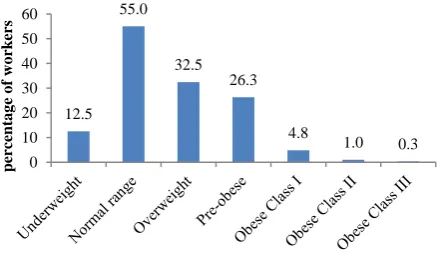
Figure 2: Body mass index of study population.
Most of the workers (55%) fell into the normal range for body mass index (BMI=18.50-24.99), but a significant number of them also fell into the overweight (BMI≥25.00) especially pre-obese (BMI=25.00-29.99) categories having around 239 (26.3%) workers. 114 (12.5%) workers were underweight (BMI<18.5).
Figure 3: Number of workers versus habit.
60% of the workers assessed presented with addiction. Among them, 360 (39.6%) workers had a current habit of chewing and 110 (12.1%) workers had quit for more than six months. 141 (15.51%) workers had a smoking habit and 52 (5.7%) of the total workers had quit smoking. 219 (24.1%) workers had a habit of consumption of alcohol on a regular basis. 76 (8.4%) workers were consuming tobacco for chewing as well as for smoking.
Associated morbidities
Most of the study population (55.11% employees) had
normal lung functions. Among those having
abnormalities, a majority of them presented with
13.1
53.0
13.4 15.7
4.7 0
10 20 30 40 50 60
<1.5 1.5-10 10-20 20-30 >30
Perc
entag
e
o
f
w
o
rk
ers
Number of years of employment Number of years of employment
12.5 55.0
32.5 26.3
4.8
1.0 0.3
0 10 20 30 40 50 60
percentag
e
o
f
w
o
rk
ers
40.9 31.2
8.5 7.2 2.1
8.4 3.6
24.1
0 5 10 15 20 25 30 35 40 45
percentag
e
o
f
w
o
rk
restrictive lung function (which is the type of abnormality seen with occupational lung diseases of pneumoconiosis).
Table 3: PFT findings in the study population.
Pulmonary function tests findings
Number of workers N (%)
Normal 501 (55.11)
Mild restriction 266 (29.26)
Moderate restriction 58 (6.38)
Severe restriction 6 (0.6)
Mild obstruction 4 (0.4)
Moderate obstruction 5 (0.5)
Severe obstruction 1 (0.1)
Early small airway obstruction 26 (2.86)
266 (29.3%) employees had mild restriction, 58 (6.9%) had moderate restriction whereas only 6 (0.6%) of them presented with severe restrictive lungs. The obstructive findings, as expected were not that significant.
Table 4: Results of pulmonary function tests in different age groups.
Age (in years) Total
Normal Restriction Obstruction
N (%) N (%) N (%)
14-19 27 19 (70.4) 6 (22.2) 0 (0)
20-24 175 100 (57.1) 65 (37.1) 3 (1.7) 25-29 182 97 (53.3) 72 (39.6) 3 (1.6) 30-34 141 84(59.6) 51 (36.2) 0 (0) 35-39 91 47 (51.6) 32 (35.2) 3 (3.3) 40-44 78 44 (56.4) 25 (32.1) 1 (1.1) 45-49 88 49 (55.7) 30 (34.1) 0 (0) 50-54 76 37 (48.7) 30 (39.5) 0 (0)
55-59 45 20 (44.4) 18 (40) 0 (0)
60-64 4 3 (75) 1 (25) 0 (0)
>64 2 2 (100) 0 (0) 0 (0)
Note: Figures in parentheses indicate percentages; ESA= early small airway.
Associations derived: PFTs
Association between the type of exposure and findings on PFTs
The Table 5 shows that the proportion of workers with abnormal lung functions ranged between 35-45%.
The association between the type of exposure and lung functions was highly significant (χ2=29.5 and p<0.0005).
It shows that the maximum restrictive lung functions were found in the study population exposed to dust including metallic dust. Coal, on the other had had a surprisingly lower value comparatively; whereas those exposed to silica having abnormal lung functions were 38% similar to the findings with lead exposure.
Table 5: Type of exposure and lung function tests.
S. No.
Type of exposure
Total no. of workers
No. of workers having PFT restriction
Percentage of exposed having PFT restriction (%)
1 Lead 26 10 38.5
2 Metallic
gases 48 21 43.8
3 Dust 292 150 51.4
4 Coal 171 53 32.3
5 Silica 65 25 38.5
Association of abnormal lung functions with the departments
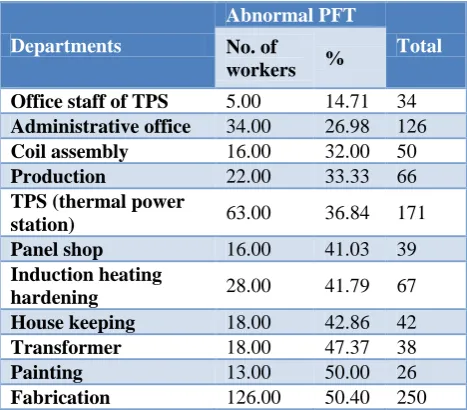
The Table 6 shows a variation of abnormal lung functions with the department of employment.
Table 6: Departments and lung function tests.
Departments
Abnormal PFT
Total No. of
workers %
Office staff of TPS 5.00 14.71 34
Administrative office 34.00 26.98 126
Coil assembly 16.00 32.00 50
Production 22.00 33.33 66
TPS (thermal power
station) 63.00 36.84 171
Panel shop 16.00 41.03 39
Induction heating
hardening 28.00 41.79 67
House keeping 18.00 42.86 42
Transformer 18.00 47.37 38
Painting 13.00 50.00 26
Fabrication 126.00 50.40 250
As mentioned before, the two departments office staff of thermal power station and administrative office had no direct exposure to any of the pollutants. Nevertheless, a small percentage of the employees (14.71% and 24.98% respectively) still suffered from restrictive lung function. This can be interpreted to say that even indirect exposure, like working in the vicinity of occupational hazards can result in lung function abnormality.
Association between duration of employment and restrictive disorders
The Figure 4 shows the association between the duration of employment of the workers in relation to the proportion of the subjects having abnormal lung function tests. On a whole, the graph shows a steady increase in the prevalence of restrictive lung functions with an increase in the duration of employment of the worker. This ranges from 37.9% of the workers having restrictive PFTs in fewer than five years of employment and around 44.7% of them presenting with restrictive lung functions when the duration of employment crosses the thirty year mark.
Figure 4: Duration of employment and restrictive lung functions.
These findings were statistically significant (Χ2
=119.89 and p<0.0001).
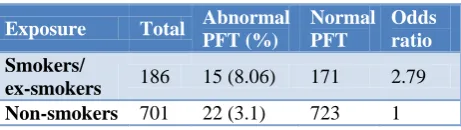
Table 7: Odds ratio of exposure to smoking and obstructive diseases.
Exposure Total Abnormal PFT (%)
Normal PFT
Odds ratio Smokers/
ex-smokers 186 15 (8.06) 171 2.79
Non-smokers 701 22 (3.1) 723 1
These results showed that smoking was an important risk factor causing respiratory disorders. Also, it was seen that smoking mainly caused obstructive disorders.
DISCUSSION
Occupational disorders are seen in various proportions in different industrial workers working in different industries. Based on the exposure the organs affected also vary. Respiratory disorders constitute 60% of the total occupational diseases in the world and 70% morbidities
are respiratory related.7,8 This shows the prevalence of
respiratory diseases and the impact of the dusts on the lungs.
In our study we have found prevalence of restrictive and obstructive disorders in workers having various different
exposures and in different departments. Our results mainly pointed that, restrictive disorders were the most prevalent amongst the respiratory disorders. We found highest prevalence of restrictive disorders in metallic gases (43.8%) and fine dust (51.4%) as an exposure. Whereas based on department, fabrication (47.2%) and transformer (47.3%) departments had the highest prevalence.
There are many studies which have found the prevalence of various different types of diseases, their pathogenesis and various other factors that lead to respiratory disorders in the industrial workers.
One of the study by Nemery et al states that the type of lung disease caused by metal compounds depends on the nature of the offending agent, its physicochemical form,
dose, exposure conditions and host factors.5 Chronic
obstructive pulmonary disease may result from occupational exposure to mineral dusts, including probably some metallic dusts, or from jobs involving the working of metal compounds, such as welding. Metallic dusts deposited in the lung may give rise to pulmonary fibrosis and functional impairment, depending on the fibrogenic potential of the agent and on poorly understood host factors. Inhalation of iron compounds causes siderosis, pneumoconiosis with little or no fibrosis.
The article by Antonini et al reviews shows that a large number of welders experience some type of respiratory illness. Respiratory effects seen in full-time welders have included bronchitis, siderosis, asthma, and a possible
increase in the incidence of lung cancer.9 Study by Meo,
Sultan et al also shows the hazardous effects of metal and metal fumes on various organs and especially lungs that
may lead to acute or chronic respiratory diseases.10
Welding and the fabrication workers in most of the industries are exposed to maximum amount of dusts. Two different studies by Loukzadeh et al and Wolf et al found significant reduction in the pulmonary capacity of the workers doing welding work. They also found that there was significant increase in prevalence of respiratory ailments as compared to controls which showed similar
results to ours.11
We had also seen that the administrative department employees were having less pulmonary dysfunction as compared to those who were directly exposed to different metallic and other dusts. Similar results were obtained in
a study by Sharifian et al.12 In a study by Sulotto et al
22% of workers working in such industries were having bronchial diseases. We also found similar results in our study but prevalence of respiratory disorders in the workers exposed to the above mentioned dust was
40.26% in our study.13
In the department of painting, carpenter and packing, the workers were exposed to wood dust, lead dust and silica dust mainly. In a study by Osman et al they also found
37.9 38.3
42.4 38.9
43.4 42.8
44.7
<5 5-9 10-14 15-19 20-24 25-29 >=30
Dura
tion
o
f
em
plo
y
m
ent
(in
y
ea
rs)
lower PFT in the workers who were exposed to the wood dust. An increase both in FEV1 and FVC values was detected among the woodworkers who had a working period less than 10 years and were exposed to wood dust
at concentrations over 4 mg/m3 compared to the
woodworkers who were exposed to wood dust at less
than 4 mg/m3. In another study by Boskabady et al
similar results were found which showed significant lower PFT values in the carpenters as compared to the
control group.14,15
In our study the PFT was decreased in the workers exposed to silica dust and prevalence of the pulmonary disorder was 33.8% as compared to the administrative workers (27%) whereas in a study by Polatli et al, they found that mean pulmonary tests were not much different in the silica exposed workers as compared to non-exposed. But they had found higher prevalence of COPD
in the exposed workers.16 In a study by Chattopadhyay et
al. higher prevalence of restrictive lung disorder was seen in the workers who were exposed to the silica Dust in as
compared to those not exposed.17 This shows that silica
exposure causes respiratory impairment in varying extent.
We also found that 32.3% workers in thermal power who were having mild or moderate restrictive disorder as compared to the office staff employees of the same company (14.71%). This shows that coal highly influences the lung functioning. Many studies favor that coal power plants have high impact on the workers as well as on the neighbor-hood environment. A study by
Caciari et al showed similar results.18 In a study by Goren
et al, significant lower PFT findings results were obtained in those exposed to coal dust than those not exposed to
it.19 In two studies by Pala, et al and Karavus et al, it has
been shown that coal burning in the thermal power plants also have deteriorating effects on the people staying in the vicinity of the plant. This shows that the coal as a pollutant effects not only the workers but also the people
staying in the neighbor-hood area.20,21
Increased duration of work in the industry will cause more exposure to the pollutants. In our study we found that with increasing duration of exposure there was a steady increase in the prevalence of restrictive lung functions with an increase in the duration of employment of the worker. There were just 37.9% of the workers having restrictive PFTs in fewer than five years of employment and around 44.7% of them presented with restrictive lung functions when the duration of employment was greater than thirty years. The more is the exposure the more is the prevalence of the lung dysfunction and more is the severity of the disease. In a study by Chattopadhyay et al they found decrease in
pulmonary functioning with increase in duration.22 Also
in another study by same author he had found decrease in
the pulmonary functioning with the increase in duration.17
Study by Wolf, et al also showed similar results to ours in which duration of work in the welding department showed a significant influence on decrease of mean
expiratory flow (MEF) 25% and 50% which is similar to our results. This shows that lung capacity decreases with increased in the duration of exposure to the metallic dusts
and fumes.11
We found in our study that odd’s of having lung diseases was 2.79 times higher in smokers as compared to non-smokers. Many studies by Boskabady et al have shown similar association between smoking and respiratory disorders. Smoking causes various harmful effects in the respiratory system especially by its constituent nicotine. In one of their study they have found that there is significant decrease in the pulmonary functioning and significant increase in the respiratory ailments in the smokers. In one of the study, pulmonary function tests (PFT) values in smokers were lower than those of non-smokers (p<0.05 to p<0.001). There were inverse correlations for PFT values and positive correlations for RS, with duration and total amount of smoking (p<0.05 to p<0.001).This showed that there was a profound effect
of smoking on PFT values and respiratory symptoms.23-25
In a study by Joseph they showed that there was a decrease in respiratory quality of life in the smokers
compared to non-smokers.26
CONCLUSION
Occupational exposure causes restrictive as well as obstructive disorders in the workers. Regular pulmonary assessment must be carried out and if required the workers should be given pollutant free interval period in the factories. Smoking is also a contributory factor which aggravates the effect of the pollutants. Proper health awareness needs to be created about safety measures, effect of exposure and its effect and effect of smoking in all the workers.
ACKNOWLEDGEMENTS
Department of Medicine, Smt NHL Municipal Medical College and Life Care Hospital, Khanpur for allowing us to use Spirometer for our study.
Funding: No funding sources Conflict of interest: None declared
Ethical approval: The study was approved by the Institutional Ethics Committee
REFERENCES
1. Implementation of the WHO Global Strategy for
Occupational Health for All. Plan of action: covering the specific period 1996-2001. Part I. Int J Occupational Med Environ Health. 1997;10(2):113-39.
2. Leigh J, Macaskill P, Kuosma E, Mandryk J. Global
3. Kumar V, Abbas Abul K, Fausto N. Robbins and Cotran pathologic basis of disease. Philadelphia, Pa: Elsevier Saunders; 2005.
4. Morgan WK. Industrial bronchitis. Br J Industrial
Med. 1978;35(4):285-91.
5. Standardization of Spirometry, 1994 Update.
American Thoracic Society. Am J Resp Critical Care Med. 1995;152(3):1107-36.
6. Rassler B, Waurick S, Meinecke CD. The
prognostic relevance of preoperative pulmonary function tests. Der Anaesthesist. 1994;43(2):73-81.
7. Weston A. Work-related lung diseases. IARC
scientific publications. 2011;(163):387-405.
8. Cullinan P. Occupation and chronic obstructive
pulmonary disease (COPD). Br Med Bulletin. 2012;104:143-61.
9. Antonini JM, Taylor MD, Zimmer AT, Roberts JR.
Pulmonary responses to welding fumes: role of metal constituents. J Toxicol Environ Health Part A. 2004;67(3):233-49.
10. Meo SA, Al-Khlaiwi T. Health hazards of welding
fumes. Saudi Med J. 2003;24(11):1176-82.
11. Wolf C, Pirich C, Valic E, Waldhoer T. Pulmonary
function and symptoms of welders. Int Arch Occupat Environ Health. 1997;69(5):350-3.
12. Sharifian SA, Loukzadeh Z, Shojaoddiny-Ardekani
A, Aminian O. Pulmonary adverse effects of welding fume in automobile assembly welders. Acta Medica Iranica. 2011;49(2):98-102.
13. Sulotto F, Romano C, Piolatto G, Chiesa A,
Capellaro E, Discalzi G. Respiratory impairment and metal exposure in a group of 68 industrial welders. La Medicina del lavoro. 1989;80(3):201-10.
14. Osman E, Pala K. Occupational exposure to wood
dust and health effects on the respiratory system in a minor industrial estate in Bursa, Turkey. Int J Occup Med Environ Health. 2009;22(1):43-50.
15. Boskabady MH, Rezaiyan MK, Navabi I, Shafiei S,
Arab SS. Work-related respiratory symptoms and pulmonary function tests in northeast iranian (the city of Mashhad) carpenters. Clinics (Sao Paulo). 2010;65(10):1003-7.
16. Polatli M, Tuna HT, Yenisey C, Serter M, Cildag O.
Lung function and IFN-gamma levels in the sera of silica-exposed workers. J Interferon Cytokine Res. 2008;28(5):311-6.
17. Chattopadhyay BP, Gangopadhyay PK,
Bandopadhyay TS, Alam J. Comparison of pulmonary function test abnormalities between stone crushing dust exposed and nonexposed
agricultural workers. Environ Health Prevent Med. 2006;11(4):191-8.
18. Caciari T, Ciarrocca M, Sinibaldi F, Capozzella A,
De Sio S, Rosati MV, et al. Coal plant: risk, disease and prevention with on environmental impact. La Clinica Terapeutica. 2013;164(2):139-46.
19. Goren AI, Bruderman I. Effects of occupational
exposure and smoking on respiratory
symptomatology and PFT in healthy panelists and COPD patients. Eur J Epidemiol. 1989;5(1):58-64.
20. Pala K, Turkkan A, Gercek H, Osman E, Aytekin H.
Evaluation of respiratory functions of residents around the Orhaneli thermal power plant in Turkey. Asia Pac J Public Health. 2012;24(1):48-57.
21. Karavus M, Aker A, Cebeci D, Tasdemir M,
Bayram N, Cali S. Respiratory complaints and spirometric parameters of the villagers living around the Seyitomer coal-fired thermal power plant in Kutahya, Turkey. Ecotoxicol Environ Safety. 2002;52(3):214-20.
22. Chattopadhyay BP, Saiyed HN, Roychowdhury A,
Alam J. Pulmonary function in aluminium smelter and surrounding community--a case study. J Environ Sci Eng. 2007;49(4):309-16.
23. Boskabady MH, Farhang L, Mahmodinia M,
Boskabady M, Heydari GR. Comparison of pulmonary function and respiratory symptoms in water pipe and cigarette smokers. Respirology. 2012;17(6):950-6.
24. Boskabady MH, Mahmoodinia M, Boskabady M,
Heydari GR. Pulmonary function tests and respiratory symptoms among smokers in the city of Mashhad (north east of Iran). Revista Portuguesa De Pneumologia. 2011;17(5):199-204.
25. Boskabady MH, Farhang L, Mahmoodinia M,
Boskabady M, Heydari GR. Prevalence of water pipe smoking in the city of Mashhad (North East of Iran) and its effect on respiratory symptoms and
pulmonary function tests. Lung India.
2014;31(3):237-43.
26. Joseph S, Pascale S, Georges K, Mirna W. Cigarette
and waterpipe smoking decrease respiratory quality of life in adults: results from a national cross-sectional study. Pulm Med. 2012;2012:868294.
Cite this article as: Jani C, Jain K, Joshi A, Bala DV,
Jadav H, Jetpariya D.Assessment of pulmonary