Original Research Article
Knowledge and attitude of patients with diabetes in government
hospitals in the Upper West Region of Ghana
Stephen Kpekura
1*, Jerry P. K. Ninnoni
2, Samuel V. Nuvor
3INTRODUCTION
Diabetes is one of the non-communicable diseases of major public health concern worldwide. About 60% of all deaths globally are as a result of non-communicable diseases including diabetes.1 Furthermore, 80% of deaths due to diabetes occur within low and middle income countries, of which Ghana is no exception. According to WHO estimates in 2007, 190 million people suffer from diabetes world-wide and about 330 million are expected to be diabetic by the year 2025.2 Diabetes lead to
complicated issues including blindness, and lower-limb amputations. Adults with diabetes have higher rates of stroke and death from heart disease than adults without diabetes.3
The management of diabetes poses a challenge to the medical and nursing staff as well as to the patients themselves. Since diabetes is a chronic disease, most diabetic patients need to continue their treatment for the rest of their lives. The emphasis is usually therefore, on the control of the condition through a schedule of blood
ABSTRACT
Background: Diabetes mellitus is a chronic progressive metabolic disorder characterized by hyperglycaemia mainly due to absolute or relative deficiency of insulin hormone. This study assessed the knowledge and attitude of clients with diabetes and its relationship with self-management practices in Government hospitals in the Upper West Region of Ghana.
Methods: The research was a cross-sectional survey and adopted stratified sampling technique to select 201 respondents. Questionnaires were used for data collection with a reliability coefficient of 0.8. The data was analyzed using the SPSS version 21.
Results: Knowledge on diabetes was high with the overall mean percentage of 72.8%. Diabetes patients had positive attitude with mean percentage of 84.4%. There was also significant relationship between knowledge of diabetes and self-management practices (p=0.0001) as well as attitude of diabetes patients and self-management practices (p=0.001).
Conclusions: Diabetes patients in the Upper West Region have in-depth knowledge on the disease condition, self-management practices and positive attitude. These sign of awareness of the disease will very much assist in making the control of the condition easier in the area.
Keywords: Knowledge, Diabetes, Patients, Self-management, Practices 1
Department of Adult Health, 2Department of Mental Health, School of Nursing and Midwifery, University of Cape Coast, Cape Coast, Ghana
3
Department of Immunology and Microbiology, School of Medical Sciences and School of Nursing and Midwifery, University of Cape Coast, Ghana
Received: 11 June 2018
Revised: 11 July 2018
Accepted: 13 July 2018
*Correspondence:
Dr. Stephen Kpekura,
E-mail: [email protected]
Copyright: © the author(s), publisher and licensee Medip Academy. This is an open-access article distributed under the terms of the Creative Commons Attribution Non-Commercial License, which permits unrestricted non-commercial use, distribution, and reproduction in any medium, provided the original work is properly cited.
glucose and urine sugar monitoring, medication and adjustment to dietary modification.4,5 The chronicity of the condition requires competent self-care, which can be developed from a thorough understanding of the disease process and the management challenges by the patient and family members. This pre-supposes a need for some form of diabetes education and counseling for the patient and family members. Educating and supporting diabetic patients and their family members in managing their daily lives were important goals of diabetic patients’ care.6
Unfortunately, about a third of people suffering from diabetes may not be aware of it early considering the insidious onset of the disease.5 Many people diagnosed with the condition demonstrate fears about the future and a general distaste because of the misconceptions about the disease and its management. This is heightened by the superstitious explanation of causation of diseases dominant in Africa where most diseases are caused by “poison” and/or “evil spirits”. Some of these problems highlighted could be taken care of if patients and indeed the general public were exposed to diabetes education.5 The burden of diabetes and other non-communicable diseases (NCDs) are projected to increase owing to a myriad of factors; unwholesome lifestyles, ageing and rapid urbanization. Therefore, the purpose of the study was to find out the knowledge level and attitude of diabetic patients in influencing their self-management practices.
METHODS
Research design
A cross-sectional survey was employed to find out from diabetic patients in the selected hospitals about their knowledge of diabetes and its management.
Study setting
This study was conducted at three hospitals in the Upper West Region of Ghana. The hospitals were the Wa Regional Hospital, Lawra District Hospital and Nandom District Hospital. These hospitals were selected because they were the only ones that run diabetic clinics in the region
Study duration
This study took place from March, 2016 to February, 2017.
Population
The target population for the study was Diabetes Patients who attended diabetic clinics in the various hospitals in the Upper West Region.
Sample and sampling procedure
The study included people with type 2 diabetes and the total number of patients who attended clinic was estimated to be 404 by the end of March 2016. Therefore the total number of patients (201) selected for the study was based on sample size calculation with the proportionate sample allocation to the three hospitals as described by Mupepi et al.7
Proportionate sampling was used to select sample size of Wa Regional Hospital (151), Lawra District Hospital (22) and finally 28 for Nandom District Hospital.
Exclusion criteria
Patient aged <20 years.
Pregnant and lactating women.
Patient on admission.
Male or female with type 1 diabetes.
Patient diagnosed of T2DM for less than one month.
Patient who decide not to be part of the study.
Data collection
Data collection for the study was done in the month of April and May, 2016. Data were collected by using questionnaires. Ample time was given to the respondents to study the nature and purpose of the study to enable them answer the questions appropriately without being rushed.8 In a situation where patients could not read and write, a suitable approach of an interpreter was used to assist in filling the questionnaire.
Data analysis
The collected data was analyzed by using the statistical Package for the social sciences (SPSS) version 21 software. Descriptive and inferential statistics techniques were employed by using frequency distribution and Pearson product movement correlations respectively.
RESULTS
Demographic characteristics
the dominant proportion (50.8%) of the respondents contracted diabetes five or more years ago. For earnings
from work, majority of the participants, (33.9%) were earning monthly salaries of less than Gh₵ 200.00.
Table 1: Socio-demographic characteristics of participants.
Frequency (f) Percentage (%) Knowledge Attitude
Age range of respondents (in years)
20-39 21 10.5
0.568 0.501
40-59 103 51.2
Above 59 77 38.3
Total 201 100.0
Sex of respondents
Male 63 31.3
0.025 0.079
Female 138 69.7
Total 201 100.0
Marital status
Never married 8 4.0
0.577 0.387
Married 153 76.1
Divorced 6 3.0
Separated 4 2.0
Widowed 29 14.4
Cohabitating 1 .5
Total 201 100.0
District
Wa 151 75.2
0.00 0.00
Lawra 22 10.9
Nandom 28 13.9
Total 201 100.0
Education level
No formal education 75 37.3
0.399 0.081
Primary school 43 21.4
Secondary school 41 20.4
Training college/Poly 17 8.5
University 25 12.4
Total 201 100.0
Occupation
Government employee 63 31.3
0.779 0.277
Self-employed 107 53.2
Private sector workers 6 3.1
Unemployed 25 12.4
Total 201 100.0
Religion
Christian 75 37.3
0.762 0.112
Islam 110 54.7
Traditional 16 8.0
Total 201 100.0
Duration
Less than one year 20 10.0 0.339
0.974
One year ago 22 10.9
Two years ago 37 18.4
Three years ago 24 11.9
Four years ago 16 8.0
Five years ago 17 18.5
More than five years ago 65 32.3
Total 201 100.0
Frequency (f) Percentage (%) Knowledge Attitude Income level
Less than GH₵200 68 33.9
0.113 0.057
GH₵200-400 34 16.9
GH₵500-700 16 8.0
GH₵800-1000 31 15.4
GH₵1000-3000 27 13.4
Not applicable 25 12.4
Total 201 100.0
*significance (p<0.05).
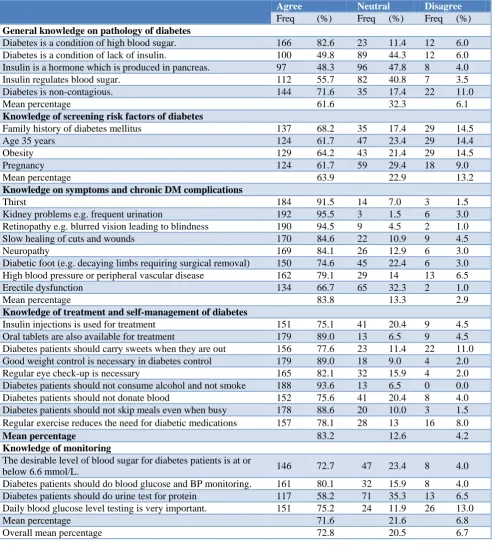
Table 2: Knowledge of diabetes patients on diabetes.
Agree Neutral Disagree
Freq (%) Freq (%) Freq (%)
General knowledge on pathology of diabetes
Diabetes is a condition of high blood sugar. 166 82.6 23 11.4 12 6.0 Diabetes is a condition of lack of insulin. 100 49.8 89 44.3 12 6.0 Insulin is a hormone which is produced in pancreas. 97 48.3 96 47.8 8 4.0 Insulin regulates blood sugar. 112 55.7 82 40.8 7 3.5 Diabetes is non-contagious. 144 71.6 35 17.4 22 11.0
Mean percentage 61.6 32.3 6.1
Knowledge of screening risk factors of diabetes
Family history of diabetes mellitus 137 68.2 35 17.4 29 14.5
Age 35 years 124 61.7 47 23.4 29 14.4
Obesity 129 64.2 43 21.4 29 14.5
Pregnancy 124 61.7 59 29.4 18 9.0
Mean percentage 63.9 22.9 13.2
Knowledge on symptoms and chronic DM complications
Thirst 184 91.5 14 7.0 3 1.5
Kidney problems e.g. frequent urination 192 95.5 3 1.5 6 3.0 Retinopathy e.g. blurred vision leading to blindness 190 94.5 9 4.5 2 1.0 Slow healing of cuts and wounds 170 84.6 22 10.9 9 4.5
Neuropathy 169 84.1 26 12.9 6 3.0
Diabetic foot (e.g. decaying limbs requiring surgical removal) 150 74.6 45 22.4 6 3.0 High blood pressure or peripheral vascular disease 162 79.1 29 14 13 6.5
Erectile dysfunction 134 66.7 65 32.3 2 1.0
Mean percentage 83.8 13.3 2.9
Knowledge of treatment and self-management of diabetes
Insulin injections is used for treatment 151 75.1 41 20.4 9 4.5 Oral tablets are also available for treatment 179 89.0 13 6.5 9 4.5 Diabetes patients should carry sweets when they are out 156 77.6 23 11.4 22 11.0 Good weight control is necessary in diabetes control 179 89.0 18 9.0 4 2.0 Regular eye check-up is necessary 165 82.1 32 15.9 4 2.0 Diabetes patients should not consume alcohol and not smoke 188 93.6 13 6.5 0 0.0 Diabetes patients should not donate blood 152 75.6 41 20.4 8 4.0 Diabetes patients should not skip meals even when busy 178 88.6 20 10.0 3 1.5 Regular exercise reduces the need for diabetic medications 157 78.1 28 13 16 8.0
Mean percentage 83.2 12.6 4.2
Knowledge of monitoring
The desirable level of blood sugar for diabetes patients is at or
below 6.6 mmol/L. 146 72.7 47 23.4 8 4.0
Diabetes patients should do blood glucose and BP monitoring. 161 80.1 32 15.9 8 4.0 Diabetes patients should do urine test for protein 117 58.2 71 35.3 13 6.5 Daily blood glucose level testing is very important. 151 75.2 24 11.9 26 13.0
Mean percentage 71.6 21.6 6.8
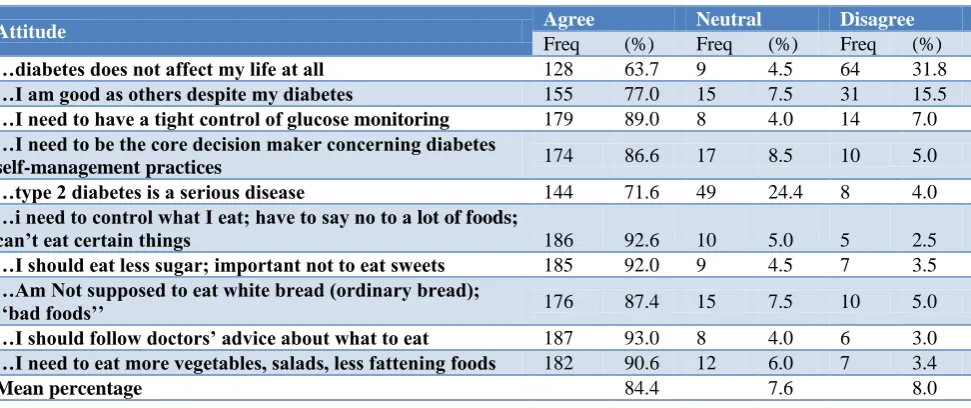
Table 3: Attitude of diabetes patients on the condition.
Attitude Agree Neutral Disagree
Freq (%) Freq (%) Freq (%)
…diabetes does not affect my life at all 128 63.7 9 4.5 64 31.8
…I am good as others despite my diabetes 155 77.0 15 7.5 31 15.5
…I need to have a tight control of glucose monitoring 179 89.0 8 4.0 14 7.0
…I need to be the core decision maker concerning diabetes
self-management practices 174 86.6 17 8.5 10 5.0
…type 2 diabetes is a serious disease 144 71.6 49 24.4 8 4.0
…i need to control what I eat; have to say no to a lot of foods;
can’t eat certain things 186 92.6 10 5.0 5 2.5
…I should eat less sugar; important not to eat sweets 185 92.0 9 4.5 7 3.5
…Am Not supposed to eat white bread (ordinary bread);
‘‘bad foods’’ 176 87.4 15 7.5 10 5.0
…I should follow doctors’ advice about what to eat 187 93.0 8 4.0 6 3.0
…I need to eat more vegetables, salads, less fattening foods 182 90.6 12 6.0 7 3.4
Mean percentage 84.4 7.6 8.0
Table 4: Pearson product movement correlation of diabetes patients’ knowledge and attitudes on diabetes and self-management practices.
Knowledge Management
Knowledge Pearson correlation 1 0.279
Sig (2-tailed) 0.0001
N 201 201
Management Pearson correlation 279 1
Sig. (2-tailed) 0.0001
N 201 201
Attitudes Management
Attitudes Pearson correlation 1 0.304
Sig. (2-tailed) 0.0001
N 201 201
Management Pearson correlation 0.304 1
Sig. (2-tailed) 0.0001
N 201 201
Also there were no differences among age groups of the participants in their knowledge (p=0.568) and attitude ((p=0.501) towards diabetes patients. However, females (p=0.025) were more knowledgeable in diabetic condition than males whereas their attitude towards the condition was similar (p=0.79). Again their marital status did not influenced their knowledge and attitude about diabetic condition. The participants from Wa district were more knowledgeable (p=0.0001) and had positive attitude (p=0.0001) towards the disease. Educational levels, occupation, religion, duration of contracting diabetes and total income of the participants did not influenced their knowledge and attitude towards the disease (p>0.05). Knowledge level of diabetes patents on diabetes
The knowledge of diabetes was assessed on the following sub scales: pathology of diseases, screening risk factors of diabetes, symptoms and complications of diabetes, treatment and self-management of diabetes and monitoring of diabetes.
From Table 2, majority of the study participants knew about the general pathology of diabetes, diabetes been a condition of high blood sugar (82.6%), insulin regulating blood sugar (55.7%), and non-contagious (71.6%). However, less than half of the study participants were aware of diabetes been a condition of lack of insulin (49.8%) and insulin been a hormone produced in the pancreas (48.3%).
On the knowledge of screening risk factors of diabetes, the study revealed that more than 60% of respondents were aware of the risk factors of diabetes such as family history (68.2%), obesity (64.2%), pregnancy (61.7%) and age more than 35 years (61.7%).
Higher percentages were scored on all the sub scales measuring the knowledge of diabetes patients on treatment and self-management practices. For instance, 89.0% agreed with the statement that oral tablets were used for the treatment of diabetes and also good weight control was necessary in controlling diabetes. The greatest percentage score (93.6%) stated that diabetes patients should not consume alcohol and also not smoke. Lastly, majority of the participants (80.1%) had very good knowledge on monitoring of diabetes and that diabetes patients undergoing glucose and BP monitoring was very important (75.2%).
Attitude of diabetes patients towards diabetes
The participants’ attitude was tested on sub-scales with average score (84.4%) indicating positive attitude of the disease (Table 3). About 93.0%of the patients believe doctor’s advice on what to eat.
About 92.6% of the participants agreed on controlling what to eat and 92% asserted on the importance of not eating sugar. Again, 90.6% believed they needed to eat more vegetables. The lowers score on the attitude scale was 63.7% which tested participants believe on how diabetes affected their life.
Relationship between knowledge level and attitude of diabetes patients and their self-management practices The Pearson product moment correlation was used to test the relationship between knowledge, attitude and management practices (Table 4). There was a significant relationship between patients knowledge on diabetes and self-management practices, (r=0.279, p=0.001) as well as patients attitudes to diabetes and self-management Practices, (r=0.304, p=0.001).
DISCUSSION
The study revealed majority of the participants had general knowledge about the pathology of diabetes condition of high blood sugar, and lack of insulin. This is in conformity with other study that also found out similar perception among it study population.9
However, participants still needed to be educated on this domain of pathology of the disease. Much attention was needed in the areas of diabetes being a condition of lack of insulin and insulin being a protein hormone which is produced in the pancreas where participant’s knowledge level was unsatisfactory. Also, in the area of knowledge about insulin regulating blood sugar level, the participants had a fair knowledge which may be due to improper translation of insulin into local dialect since majority of them had no formal education.
For the screening risk factors, majority of the participants support the fact that family history of diabetes mellitus was a risk factor. This was also in support with what was
obtained in North Malaysia.9 Ages greater than 35 years and obesity were also considered as risk factors for diabetic condition. However the knowledge level of the participants was low which presupposed that participants needed more education to increase their knowledge level on screening risk factors.
The third domain on the scale was to investigate their knowledge level on symptoms and chronic complications of diabetes. Thirst, blurred vision, kidney problems and frequent urination were perceived by participants to be symptoms of diabetes. A similar study revealed participants’ assertion of diabetes causing slow healing of wounds with neuropathy such as tiredness and weakness being symptoms of diabetes.9,10
On treatment and self-management, insulin injection and oral tablets were also available for treating diabetes.9 Besides, regular exercising, regular eye check-up, good weight control and carrying sweets when going out of the house were also accepted by the participants but was not also noted in other studies.9,11 In their studies, blurred vision was noted to be a complication of diabetes and diabetes patients should not be taken in alcohol nor smoke. Smoking could reduce blood supply to the foot as risk factor of diabetes.12
It was also agreed to the fact that diabetes patients should not donate blood. In general, the study participants had an excellent knowledge on treatment and self-management practices of diabetes and could be due to persistent education at the various diabetes clinics in the region. This knowledge level need to be maintained or improved to enhance adherence to proper self-management practices.11
Knowledge on monitoring blood sugar was very good and majority of the study participants were in agreement with blood glucose and BP monitoring by diabetes patients as very important.10 This would further enhance better management of diabetes to curtail the several unpleasant symptoms and complications. A few of them who did not agree to this point asserted that, a person did not need testing when feeling well without symptoms. However, a fair knowledge was found elsewhere with little above half of the respondents supporting daily glucose testing as very important.10
The findings of this study revealed majority of participants have positive attitude towards diabetes and asserted that diabetes did not affect their life at all. The attitude of a person usually affects his/her description to engaging in a health promoting behavior.13 It was expected that once most of the study participants had positive attitude, they should be able to practice proper self-management activities to live a normal life. A similar finding was revealed where participants asserted diabetes did not affect their life at all.14 This attitude would possibly lead them engaging in a health promoting behavior. Therefore, the positive attitude found among the majority of the participants was a positive predictor for adhering to proper self-management practices. Participants needed to be the core decision makers concerning diabetes self-management but this was contrary to what was observed at a study in San Juan, Philippines.6
Furthermore, doctor’s advice on what to eat on the basis of in-depth knowledge by the specialists about the condition and knowing what was good for them were general consensus. Also eating of more vegetables, salads, and less fattening foods was a good practice for diabetes patients.15
The study also investigated the relationship between patients knowledge on diabetes and self-management practices. There was a positive relationship between the knowledge of diabetes patients and their self-management practices which was similarly found elsewhere.16 There was four-fold increase in diabetes complications among patients who had no knowledge on self-care practices as compared to those who had knowledge.4 There was also a positive correlation between adherence to medication and level of knowledge on drug adherence.11,17 On the other hand, other research findings did not find any relationship between knowledge and self-management practices.10,18 It is possible the audience of these researches were not ready to practice what they knew about the disease.
CONCLUSION
The study has shown that diabetes patients in the Upper West Region have in-depth knowledge on the disease condition and demonstrated positive attitude through self-management practices. However, little knowledge was demonstrated on the area of disease pathology and risk factors. In addition, diabetes patients needed more education on how to monitor the condition.
Funding: No funding sources Conflict of interest: None declared
Ethical approval: The study was approved by the Institutional Ethics Committeeof the University of Cape Coast with ID. No UCCIRB/CHAS/2015/42
REFERENCES
1. Berhe KK, Demissie A, Kahsay AB, Gebru HB. Diabetes Self-Care Practices and associated factors
among Type 2 Diabetic Patients in Tikur Anbessa Specialized Hospital, Addis Ababa, Ethiopia- A Cross sectional study. Int J Pharm Sci Res. 2012;3(11):219-29.
2. Lorenzo C, Williams K. Hunt JK, Haffner MS. The National Cholesterol Education Program–Adult Treatment Panel III, International Diabetes Federation, and World Health Organization Definitions of the Metabolic Syndrome as Predictors of Incident Cardiovascular Disease and Diabetes. Diabetes Care. 2007;30:8–13.
3. Soderberg S, Zimme P, Tuomilehto J. Increasing prevalence of Type 2 diabetes mellitus in all ethnic groups in Mauritius. Diabetic Med. 2005;22(1):61-8.
4. American Diabetes Association. Nutrition Recommendation and Intervention for Diabetes. Diabetes Care J. 2006;12(1):161-5.
5. Iwueze JO. Managing your Diabetes: Assessment and Management of Patients with Diabetes Mellitus. Owerri. Skillmark Media Ltd. 2007.
6. Arden ARJG, Paz-Pacheco E, Jimeno AC, Lantion-Ang LF, Paterno E, Juban N. Knowledge, attitudes and practices of persons with type 2 diabetes in a rural community: Phase 1 of the community-based Diabetes Self-Management Education (DSME) Program in San Juan, Batangas, Philippines. Diabetes Res Clin Pract. 2010;90:160-16.
7. Mupepi CS, Sampselle MC, Johnson RBT. Knowledge, attitudes, and demographic factors influencing cervical cancer screening behavior of Zimbabwean women. J Women’s Health. 2011;20 (6):943-52.
8. Sarantakos S. Social research. 3rd Ed. Sydney: Macmillan; 2005.
9. Yun SL, Hassan Y, Abd. Aziz N, Awaisu A, Ghazali R. A comparison of knowledge of diabetes mellitus between patients with diabetes and healthy adults: A survey from north Malaysia. Patient Education and Counselling. 2007;69:47–54.
10. Phillips CK, Mashigeb PK, Clarke-Farrc CP. Knowledge of diabetes mellitus in privately-funded diabetic patients attending a rural opto¬metric practice in Malmesbury South Africa. South African Optometrist. 2012;71(2):70-7.
11. Jackson IL, Adibe MO, Okonta MJ, Ukwe CV. Knowledge of self-care among type 2 diabetes patients in two states of Nigeria. Pharmacy Practice. 2014;12(3):404.
12. Abu-Qamar ZM. Knowledge and practice of foot self-care among Jordanians with diabetes: An interview-based survey study. J Wound Care. 2014;3(5):1.
13. Pender JN, Murdaugh LC, Parsons AM. Health Promotion in Nursing Practice. 5th Edition. New Jersey: Pearson Education Inc; 2006: 47-57.
after Short-Term Continuous Subcutaneous Insulin Infusion Treatment. Diabetes Care. 2012;35(1):474– 81.
15. Shultz AJ, Corbett FC, Allen BC. Slavic Women’s Understanding of Diabetes Dietary Self-Management and Reported Dietary Behaviors. J Immigrant Minority Health. 2009;11:400–5. 16. Shrivastava SR, Shrivastava PS, Ramasamy J. Role
of self-care in management of diabetes mellitus. J Diabetes Metabolic Dis. 2013;12(1):14.
17. Bruce SP, Acheampong F, Kretchy I. Adherence to oral anti-diabetic drugs among patients attending a
Ghanaian teaching hospital. Pharmacy Practice. 2015;13(1):533.
18. Nam S, Chesla C, Stotts AN, Kroon L, Janson LS. Barriers to diabetes management: Patient and provider factors. Diabetes Res Clinical Practices. 2011;93:1-9.
Cite this article as: Kpekura S, Ninnoni JPK, Nuvor SV.Knowledge and attitude of patients with diabetes in government hospitals in the Upper West Region of Ghana. Int J Community Med Public Health