Original Research Article
Self-care practices among known type 2 diabetic patients in Haldwani,
India: a community based cross-sectional study
Neha Goyal*, Sudhir Kumar Gupta
INTRODUCTION
Diabetes, a global epidemic, has been estimated to affect approximately 424.9 million people between 20-79 years of age worldwide in 2017, with type 2 diabetes accounting for about 90% of all cases, and this figure is predicted to increase to 628.6 million by 2045.1 Currently India is considered the diabetes capital of world and there are approximately 72.9 million people suffering from diabetes in India.1 With this rising prevalence rises the
need for good self-care practices among those diagnosed with diabetes to effectively manage the disease on their own for improved health outcomes. Self-care is multidimensional and execution of practices are required in multiple domains including diet, physical activity, medication adherence, blood glucose monitoring, foot care, smoking and other lifestyle changes to achieve good glycaemic control. Despite this fact, self-care is poorly followed or sustained either due to knowledge deficit, socio-demographic factors or inadvertently, as reported in previous studies. Hence the present study was conducted
ABSTRACT
Background: The prevalence of diabetes worldwide is expected to rise to 9.9% by 2045 and with this rising prevalence raises the need for good self-care practices by patients themselves, which play a key role in effective management and prevention of complications.
Methods: Present community-based cross-sectional study was conducted among 168 type 2 diabetes mellitus patients by interviewing them using a structured questionnaire assessing their self-care practices using summary of diabetes self-care activities (SDSCA) scale. Different domains were diet, exercise, blood glucose monitoring, medication compliance, foot care and smoking and responses were graded according to number of days in previous week a particular self-care activity of a domain was followed. Data analysis was done with help of SPSS version 21.
Results: Mean age of diabetic patients in this study subjects was 54.37±13.24 years. 43.45% respondents have poor self-care practice scores. Bivariate analysis showed that self-care practices were significantly poorer among the diabetic patients less than 60 years of age, residing in rural area, either illiterate or studied till primary/intermediate, had diabetes for less than a year and were taking treatment from public health facilities. Poor self-care practices were insignificantly related with gender, marital status, occupation, monthly family income, type of family, food habits, hypertension as comorbidity, family history, BMI and mode of diagnosis. Multivariate analysis indicates that age, education and duration of diabetes are significant predictors for self-care practices.
Conclusions: Self-care practices among diabetic patients were poor among 43.45% patients and there is a need for improving them across all assessed domains.
Keywords: Self-care practices, Type 2 diabetes mellitus, SDSCA
Department of Community Medicine, Teerthanker Mahaveer Medical College and Research Centre, Teerthanker Mahaveer University, Moradabad, UP, India
Received: 08 February 2019
Accepted: 11 March 2019
*Correspondence:
Dr. Neha Goyal,
E-mail: [email protected]
Copyright: © the author(s), publisher and licensee Medip Academy. This is an open-access article distributed under the terms of the Creative Commons Attribution Non-Commercial License, which permits unrestricted non-commercial use, distribution, and reproduction in any medium, provided the original work is properly cited.
to assess self-care practices among known diabetic patients.
METHODS
This community based cross-sectional study was conducted among diagnosed type 2 diabetic patients residing in field practice areas associated with medical college. All patients who came to attention during house to house survey within study period from April to June 2014, and agreed to participate in study, were included to assess their self-care practices regarding diabetes. Total 168 type 2 diabetes mellitus patients were finally included in present study and interviewed using a structured questionnaire containing socio-demographic information, diabetes characteristics and questions assessing self-care in diabetes derived from trivial modification of revised version of SDSCA scale given by Toobert et al.2 SDSCA questionnaire contains items related to six different domains of self-care including diet, exercise, blood glucose monitoring, medication compliance, foot care and smoking. Although SDSCA measure is a self-report instrument, but in this study the responses for different items were recorded by interviewer according to number of days in previous week a particular self-care activity of a domain was followed on a scale of 0-7. More number of days reflected the better self-care practices and to allow for comparison in terms of percentages the given self-care activity was considered good if it was followed on most of days (≥5 days) in a week. If patients were sick during the past 7 days, then they recalled back to the last 7 days when they were not sick. Number of items in six domains included for calculating scores were diet (5 items), exercise (2 items), blood glucose monitoring (1 item), medication compliance (1 item), foot care (2 items) and non-smoking behaviour (1 item). Total number of days recorded as response for each item in a domain/subscale was designated as score itself for diet, exercise, medication compliance, foot care and for blood glucose monitoring and non-smoking behaviour scores were either 0 or 7, and then total score was obtained by adding all scores divided by total number of items giving equal weightage to each. Finally total scores ranged from 0 to 7 for each patient and scores less than 5 were considered poor. Data was analysed using SPSS version 21. Multivariate analysis using logistic regression was used to find the variables which could predict poor self-care practices among diabetic patients. Cox and Snell R Square for the model was 27.6% and internal consistency analysis for reliability of scale used showed Cronbach’s alpha equal to 0.68, which was acceptable. 2-tailed p<0.05 was considered significant.
RESULTS
Mean age of study subjects was 54.37±13.24 years. Out of 168 diabetes patients studied, 74 (44%) were females and 94 (56%) were males. 80 (47.6%) and 88 (52.4%) were respectively from rural and urban areas. Majority of
respondents 86 (51.2%) were between 40-60 years of age, 28 (16.7%) were less than 40 years of age, and 54 (32.1%) were above 60 years of age. Majority of study patients 156 (92.9%) were married, and belonged to joint family 92 (54.8%). As stated by them, majority 64 (38.1%) had studied till intermediate, 42 (25%) were graduates, while 28 (16.7%) had studied till primary and rest 34 (20.2%) were illiterates. According to their occupation, majority 66 (39.3%) were housewives in our study, 38 (22.6%) in service, 24 (14.3%) in business and rest were either farmers, retired or unemployed. Income per month was above 15000 in 82 (48.8%), 10000-15000 in 50 (29.8%), 5000-10000 in 24 (14.3%) and less than 5000 in 12 (7.1%). 92 (54.8%) were consuming mixed diet and remaining 76 (45.2%) were vegetarian. In majority of study participants 56 (33.3%) duration of diabetes was 1-5 years, followed by more than 10 years in 52 (31%), and in remaining duration of disease was either between 5-10 years, or less than one year. Regarding the important comorbidity, hypertension was present in 76 (45.2%) patients and diagnosis of diabetes was incidental in majority 94 (56%). Concerned risk factors, family history of diabetes was present in 52 (31%) and, 92 (54.8%) had BMI greater or equal to 25 kg/m2. 76 (45.2%) of study patients were taking treatment from private health facilities and rest from public ones (Table 1).
Among study participants 73 (43.45%) have poor care practice scores. Bivariate analysis shows that self-care practices were significantly poorer among the diabetic patients who were <40 years or between 40-60 years when compared with those above 60 years of age (OR=0.3, p=0.027; OR=0.2, p<0.001), were from rural area as compared to urban (OR=0.2, p<0.001), were either illiterate or studied till primary/intermediate as compared to graduates, had duration of diabetes for less than a year compared to others, and were taking treatment from public health facilities as compared to others taking treatment from private facility. Poor self-care practices were insignificantly related with gender, marital status, occupation, monthly family income, type of family, food habits, presence of hypertension as comorbidity, family history of diabetes, BMI and mode of diagnosis (Table 1).
and 78 (46.4%) tested blood glucose for recommended number of times. 70 (41.6%) respondents inspected their feet looking for any minor traumas, pressure marks, cracks and 24 (14.2%) inspected their footwear on most days of past week. Regarding smoking, 136 (80.9%) had not smoked during the past seven days of week. 32 (19%)
participated in spiritual discourses/ meditation to deal with stress and follow up examinations as recommended were carried out by 116 (69%). HbA1c test results during past six months were shown by 10 (5.95%) indicating fair glycaemic control (Table 2).
Table 1: Socio-demographic and clinical characteristics of respondents (n=168).
Characteristics Frequency (%) % with poor self-care practice score (n=73) OR (Odds ratio) P value
Age (in years)
<40 28 (16.7) 13 (46.4) 0.3 (0.1-0.8) 0.027
40-60 86 (51.2) 48 (55.8) 0.2 (0.1-0.4) <0.001
>60 54 (32.1) 12 (22.2) 1ref
Gender
Female 74 (44) 30 (40.5) 1.2 (0.6-2.2) 0.500
Male 94 (56) 43 (45.7) 1ref
Place of residence
Rural 80 (47.6) 47 (58.8) 0.2 (0.1-0.5) <0.001
Urban 88 (52.4) 26 (29.5) 1ref
Marital status
Never married 6 (3.6) 3 (50.0) 0.5 (0.04-5.1) 0.560
Married 156 (92.9) 68 (43.6) 0.6 (0.1-3.6) 0.621
Widowed 6 (3.6) 2 (33.3) 1ref
Education
Illiterate 34 (20.2) 16 (47.1) 0.3 (0.1-0.9) 0.036
Primary 28 (16.7) 16 (57.1) 0.2 (0.08-0.6) 0.006
Intermediate 64 (38.1) 31 (48.4) 0.3 (0.1-0.7) 0.012
Graduate 42 (25) 10 (23.8) 1ref
Occupation
Housewife 66 (39.3) 28 (42.4) 0.6 (0.2-1.5) 0.370
Farmer 4 (2.4) 2 (50.0) 0.5 (0.06-3.9) 0.513
Business 24 (14.3) 10 (41.7) 0.7 (0.2-2.0) 0.512
Service 38 (22.6) 21 (55.3) 0.4 (0.1-1.0) 0.06
Retired/unemployed 36 (21.4) 12 (33.3) 1ref
Monthly family income
<5000 12 (7.1) 8 (66.7) 0.3 (0.08-1.1) 0.081
5000-10000 24 (14.3) 14 (58.3) 0.4 (0.1-1.1) 0.09 10000-15000 50 (29.8) 19 (38.0) 1.0 (0.5-2.1) 0.90
>15000 82 (48.8) 32 (39.0) 1ref
Type of family
Nuclear 76 (45.2) 30 (39.5) 1.3 (0.7-2.4) 0.34
Joint 92 (54.8) 43 (46.7) 1ref
Food habits
Mixed 92 (54.8) 43 (46.7) 0.74 (0.4-1.3) 0.345
Vegetarian 76 (45.2) 30 (39.5) 1ref
Duration of diabetes (in year)
<1 30 (17.9) 23 (76.7) 0.1 (0.04-0.3) <0.001
1-5 56 (33.3) 22 (39.3) 0.6 (0.3-1.5) 0.35
5-10 30 (17.9) 12 (40.0) 0.6 (0.2-1.7) 0.39
>10 52 (31) 16 (30.7) 1ref
Hypertension
Present 76 (45.2) 34 (44.7) 0.9 (0.4-1.6) 0.76
Absent 92 (54.8) 39 (42.4) 1ref
Family history of diabetes
Present 52 (31) 19 (36.5) 1.5 (0.7-2.9) 0.22
Absent 116 (69) 54 (46.6) 1ref
Characteristics Frequency (%) % with poor self-care practice score (n=73) OR (Odds ratio) P value
BMI (kg/m2)
<25 76 (45.2) 31 (40.8) 1.2 (0.6-2.2) 0.52
≥25 92 (54.8) 42 (45.7) 1ref
Treatment from health facility
Public 92 (54.8) 49 (53.3) 0.4 (0.2-0.7) 0.005
Private 76 (45.2) 24 (31.6) 1ref
Mode of diagnosis
Incidental 94 (56) 47 (50) 0.5 (0.2-1.0) 0.055
Symptomatic 74 (44) 26 (35.1) 1ref
Table 2: Self-care practices of diabetes patients in present study (n=168).
Self-care practices Frequency (%)
Diet
Followed specific healthful eating plan (if any) on most days of past week 84 (50) Consumed five or more servings of fruits and vegetables during past week 80 (47.6) Avoided high calorie foods (such as red meat/full-fat dairy products including sweets and others) on
most days of past week 130 (77.3)
Consumed beverages without sugar on most days of past week 144 (85.7) Evenly spaced carbohydrates on most days of past week (including no skip meals, small frequent
meals, avoiding overeating of any trigger food) 56 (33.3)
Physical activity
Participated in at least 30 minutes of continuous physical activity as a part of daily work on most
days of past week 88 (52.3)
Participated in specific exercise on most days of past week other than routine activities 78 (46.4)
Medication compliance
Taken recommended diabetes medication as prescribed on most of days during past week 120 (71.4)
Monitoring of blood glucose
Tested blood glucose, the number of times recommended by health care provider 78 (46.4) Possess own glucometers at home and tested blood glucose for recommended number of times* 34 (20.2) Record of blood glucose test results maintained* 82 (48.8)
Foot care
Examined feet on most days during past week looking for any minor traumas, pressure marks, cracks
(including spaces between toes/around nails) 70 (41.6) Dried between toes after washing feet on most days of past week* 20 (11.9) Inspected footwear on most days during past week 24 (14.2)
Use of comfortable footwear* 61 (36.3)
Smoking/others
Not smoked during the past seven days of week 136 (80.9) Participation in spiritual discourses/meditation to deal with stress* 32 (19) Follow up examinations as recommended by health care provider* 116 (69)
HbA1c examined during past six months* 10 (5.95)
*not included in scoring.
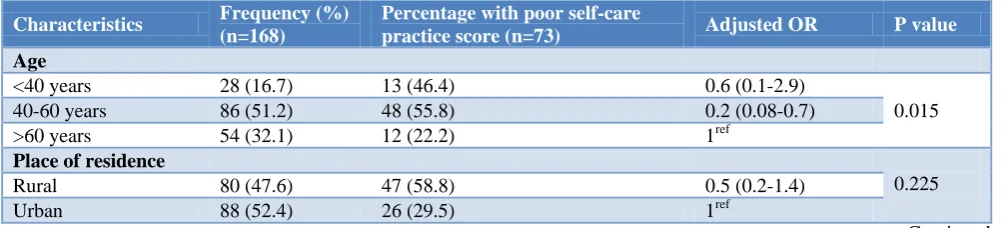
Table 3: Multivariate analysis of various factors associated with poor self-care practices.
Characteristics Frequency (%)
(n=168)
Percentage with poor self-care
practice score (n=73) Adjusted OR P value
Age
<40 years 28 (16.7) 13 (46.4) 0.6 (0.1-2.9)
0.015 40-60 years 86 (51.2) 48 (55.8) 0.2 (0.08-0.7)
>60 years 54 (32.1) 12 (22.2) 1ref
Place of residence
0.225
Rural 80 (47.6) 47 (58.8) 0.5 (0.2-1.4)
Urban 88 (52.4) 26 (29.5) 1ref
Characteristics Frequency (%) (n=168)
Percentage with poor self-care
practice score (n=73) Adjusted OR P value
Education
Illiterate 34 (20.2) 16 (47.1) 0.1 (0.03-0.6)
0.043
Primary 28 (16.7) 16 (57.1) 0.1 (0.04-0.6)
Intermediate 64 (38.1) 31 (48.4) 0.2 (0.08-0.8)
Graduate 42 (25) 10 (23.8) 1ref
Duration of diabetes (in years)
0.004
<1 30 (17.9) 23 (76.7) 0.1 (0.02-0.3)
1-5 56 (33.3) 22 (39.3) 0.6 (0.2-1.9)
5-10 30 (17.9) 12 (40.0) 0.5 (0.1-1.8)
>10 52 (31) 16 (30.7) 1ref
Treatment from health facility
0.281
Public 92 (54.8) 49 (53.3) 0.6 (0.2-1.4)
Private 76 (45.2) 24 (31.6) 1ref
Multivariate analysis of variables found significantly associated with poor self-care practices on bivariate analysis indicates that age (p=0.015), education (p=0.043) and duration of diabetes (p=0.004) are significant predictors for poor self-care practices among diabetes patients. In other words, practices become better with advancing age, education and duration of diabetes (Table 3).
DISCUSSION
The present study among type 2 diabetic patients assessed their self-care practices regarding diabetes. Self-care includes essential activities anticipated from diabetic patients themselves to effectively manage the progression of diabetes. Studies have unswervingly shown that good self-care practices by patients with diabetes can significantly reduce the probabilities of developing long-term complications like nephropathy, neuropathy and retinopathy, cardiovascular and cerebrovascular complications. Despite this fact, adherence to these activities has been found to be poor in previous studies whether unknowingly or knowingly, which may be influenced by multiple factors. And this constantly increases the treatment cost too, which can certainly be minimised by improving self‑care in diabetes management. Different aspects of self-care including healthy diet, physical activity, monitoring of blood glucose, compliance with medications and foot care, were assessed with modified SDSCA measure, and overall 43.45% patients were found to have poor self-care practices. Similar findings revealed in other studies in India using similar tool for assessment.3-5 In our study duration of diabetes was significantly related to better self-care practices, similarly Rajasekharan et al in Mangalore found better practices among participants with more duration of diabetes in few aspects, which might be due to accrued experience and exposure to self-care education measures also.6 Likewise disease duration had significant association with practices in study by Tol et al.7 In present study self-care was significantly associated with age and education, and as predictable, were better
among graduates and patients above 60 years of age. Considering the role of family members in motivating the patients for better care, we had found no significant association of practices with type of family. However in a study from Delhi among middle/high-income population family income, family size, female sex and education were independent predictors of quality of diabetes care and also a wide gap exists between knowledge and implementation of effective diabetes management practices.8 Similarly in studies by Sharma et al and Bruce et al statistically significant association has been found between diabetes knowledge and practices.9,10 In addition to knowledge, perception of illness by patients also significantly influence diabetes self-care, as shown by Kugbey et al in Ghana.11 Veerakumar et al in Trichy area of Tamil Nadu found no significant association between self-care practices and gender, occupation and family history of diabetes which is similar to findings of present study.12 On contrary better practices among males were reported in Gujarat.13
past week. As observed in Rwanda 30% diabetics did not exercise at all and none of rest 70% exercised every day.16
Adherence to recommended medications including oral anti-diabetic drugs and insulin injections was also poor and found only among 71.4%, which might be due to inattention or consultation from AYUSH practitioners. However Selvaraj et al in Puducherry had found high level of medication adherence as 95.6% patients had taken recommended medication for at least 6 days in a week, which might be ascribed to facility based study setting.17 Blood glucose monitoring is now becoming more adhered to due to availability of home available monitoring devices. Self-testing for recommended number of times was done by 20.2% in present study, which is consistent with study in Gujarat.13 Foot care practices were poorest as compared to all other areas and with exception of washing of feet, other foot care practices were less commonly followed. 41.6% inspected their feet and only 14.2% inspected their footwear on most days of week in present study. Dinesh et al in Sullia found that checking the feet and inspecting the footwear were not followed by 99.5%.3 Foot care and annual eye check-ups were least practised among self-care aspects in studies from Vishakhapatnam and Yavatmal.18,19 Similar had been observed in a study from Addis Ababa where most of patients had not even heard of what foot care is, although they had commonly suffered from injuries in feet.20 Smoking increases the risk of vascular complications in diabetes and should be quitted. Non-smoking behaviour practised by 80.9% in present study which is similar to findings of Maheshwari et al in Tamil Nadu.14 In all above discussed aspects, self-care needs to be improved and sustained, and should be accompanied with periodic follow up examinations.
CONCLUSION
In this study self-care practices among diabetic patients were poor and significantly associated with age, education and duration of diabetes. There is a need for improvement across all of the assessed domains, maybe possible with periodic training and behaviour change communication. Also the perceived barriers to self-care should be evaluated and patients should actively be involved in tailoring required modifications in their own routine. Media and innovative technological tools should be utilised.
Limitations
Assessment of self-care practices was based on recall and glycaemic control was not evaluated. It would have been better to assess each aspect of self-care distinctly rather than combining scores across them which lead to questionable internal consistency of used scale and therefore percentages related to different aspects were required for comparison.
Funding: No funding sources Conflict of interest: None declared
Ethical approval: The study was approved by the Institutional Ethics Committee
REFERENCES
1. International Diabetes Federation. IDF Atlas 8th edition, 2017. Available at: http://www.diabetesatlas .org/across -the-globe.html. Accessed on 9 January 2019.
2. Toobert DJ, Hampson SE, Glasgow RE. The Summary of Diabetes Self-Care Activities Measure: Results from 7 studies and a revised scale. Diab Care. 2000;23:943-50.
3. Dinesh PV, Kulkarni AG, Gangadhar NK. Knowledge and self-care practices regarding diabetes among patients with Type 2 diabetes in Rural Sullia, Karnataka: A community-based, cross-sectional study. J Family Med Prim Care. 2016;5:847-52.
4. Dasappa H, Prasad S, Sirisha M, Prasanna RSV, Naik S. Prevalence of self-care practices and assessment of their sociodemographic risk factors among diabetes in the urban slums of Bengaluru. J Family Med Prim Care. 2017;6:218-21.
5. Suguna A, Magal AS, Stany A, Sulekha T, Prethesh K. Evaluation of self-care practices among diabetic patients in a rural area of Bangalore district, India. Int J Curr Res Aca Rev. 2015;3(6):415-22.
6. Rajasekharan D, Kulkarni V, Unnikrishnan B, Kumar N, Holla R, Thapar R. Self-care activities among patients with diabetes attending a tertiary care hospital in Mangalore Karnataka, India. Ann Med Health Sci Res. 2015;5:59-64.
7. Tol A, Shojaeezadeh D, Eslami A, Alhani F, Mohajeritehrani M, Baghbanian A, Sharifirad G. Evaluation of self-care practices and relative components among type 2 diabetic patients. J Edu Health Promot. 2012;1:1-5.
8. Nagpal J, Bhartia A. Quality of diabetes care in the middle and high-income group populace: The Delhi Diabetes Community (DEDICOM) survey. Diab Care. 2006;29:2341-8.
9. Sharma S, Bhandari SD. Knowledge and Practice regarding Self-Care among the patients with type II Diabetes of Kapan, Kathmandu. J Adv Academic Res. 2014:85-91.
10. Bruce P. Knowledge attitude and practice about diabetes among patients with diabetes attending medicine OPD of tertiary care hospital at Kulasekharam. Int J Community Med Public Health. 2018;5:4254-7.
11. Kugbey N, Asante KO, Adulai K. Illness perception, diabetes knowledge and self-care practices among type-2 diabetes patients: a cross-sectional study. BMC Res Notes. 2017;10:381. 12. Veerakumar AM, Shanmugapriya D,
rural areas of Trichy District, Tamil Nadu. Nat J Res Community Med. 2017:6(2);120-3.
13. Raithatha SJ, Shankar U, Kumar D. Self-Care Practices among Diabetic Patients in Anand District of Gujarat. ISRN Family Med. 2014:1-6.
14. Maheshwari RU, Sowmiya KR, Kavin S. Self-care practices among type II diabetics attending primary health centre, Thiruvallur district, Tamil Nadu. Int J Community Med Public Health. 2017;4:2745-9. 15. Saleh F, Mumu SJ, Ara F, Begum HA, Ali L.
Knowledge and self-care practices regarding diabetes among newly diagnosed type 2 diabetics in Bangladesh: a cross-sectional study. BMC Public Health. 2012;12:1112.
16. Mukeshimana M, Hakizimana G, Mwali C, Umuhoza C, Uwambajimana J, Asingizwe D. The knowledge and practice of self-care management among patients attending a diabetes clinic in Kigali, Rwanda. Rwanda J Series F: Med Health Sci. 2015;2:24-30.
17. Selvaraj K, Ramaswamy G, Radhakrishnan S, Thekkur P, Chinnakali P, Roy G. Self-care practices
among diabetes patients registered in a chronic disease clinic in Puducherry, South India. J Soc Health Diabetes. 2016;4:25-9.
18. Sarada V, Madhavi S, Madhavi DB. Knowledge and self-care practices among type-2 diabetics attending tertiary care hospital, Visakhapatnam City. RGUHS Nat J Public Health. 2016;1:6-9.
19. Priya D, Hiwarkar PA, Khakse GM, Wahab SN. Int J Recent Trends Sci Tech. 2012;4:116-9.
20. Tewahido D, Berhane Y. Self-Care Practices among Diabetes Patients in Addis Ababa: A Qualitative Study. PLoSOne. 2017;12:1-10.
Cite this article as: Goyal N, Gupta SK.Self-care practices among known type 2 diabetic patients in Haldwani, India: a community based cross-sectional study. Int J Community Med Public Health