http://www.ijcmph.com pISSN 2394-6032 | eISSN 2394-6040
Original Research Article
A study of effectiveness of nutritional interventions on children with
severe acute malnutrition admitted in nutrition rehabilitation centers
of Bhopal, Madhya Pradesh
D. M. Saxena
1, Akshat Pathak
1*, Ganga Ram Mahor
1, Ramniwas Mahor
2, Anil Agarwal
2INTRODUCTION
In 2016 globally, 52 million children under five were wasted of which 17 million were severely wasted. This translates into a prevalence of 7.7 per cent and 2.5 per cent, respectively. In 2016, more than half of all wasted children lived in South Asia and about one quarter in sub-Saharan Africa, with similar proportions for severely wasted children.1 As many as 37 per cent of the children
in the developing world have low height for their age i.e. stunting, and 10 percent children have low weight for height. The rate of low height for age reflects the cumulative effects of under nutrition and infections since birth or even before birth; high rates are often suggestive
of bad environmental conditions and/or early
malnutrition.2 Malnutrition among under-five children is a major public health problem in India. Severe acute malnutrition (SAM) is an important preventable and
ABSTRACT
Background: The prevalence of under-nutrition among under-five children is high and varies widely. Children with severe acute malnutrition require immediate attention along with proper nutritional rehabilitation not only to decrease mortality but also to achieve full potential after recovery. Nutrition rehabilitation centres (NRCs) were started to control severe malnutrition and decrease the prevalence of severe malnourished children to less than 1% among children aged 1–5 years.
Methods: The present study was conducted from July 2016 to June 2017; 500 children admitted to five different NRCs in Bhopal district of Madhya Pradesh were observed during their stay at NRCs and children were followed up during a period of 6 months after discharge from NRCs. Mothers of the children were interviewed on various health issues of children and feeding practices at the NRCs using a predesigned and pretested interview schedule.
Results: The study group consisted of 252 boys and 248 girls; 51.20% were between 13 and 36 months of age. All 500 children were analysed for anthropometric indicators. A statistically significant difference was obtained between the weight of children at admission, discharge and follow up (ANOVA=106.2, p<0.001); difference of mid upper arm circumference (MUAC) at admission, discharge and follow up was also statistically significant (ANOVA=24.02, p<0.001). The average weight gain during the stay at the centers was 8.95±3.59 g/kg/day. The mothers of the children lacked adequate information on health issues and composition and preparation of nutrient rich diets for their children.
Conclusions: The NRCs were effective in improving the condition of admitted children, but the effects were not well sustained following discharge due to lack of adequate parental awareness and action.
Keywords: Malnutrition severe, Under five children, Nutrition rehabilitation centers
Department of Community Medicine, 1L. N. Medical College, Bhopal, 2G. R. Medical College, Gwalior, Madhya Pradesh, India
Received: 07 April 2018
Accepted: 09 May 2018
*Correspondence:
Dr. Akshat Pathak,
E-mail: [email protected]
Copyright: © the author(s), publisher and licensee Medip Academy. This is an open-access article distributed under the terms of the Creative Commons Attribution Non-Commercial License, which permits unrestricted non-commercial use, distribution, and reproduction in any medium, provided the original work is properly cited.
treatable cause of morbidity and mortality in below five years of age in India. SAM is defined as very low weight for height/length (Z-score below -3SD of the median WHO child growth standards), a mid-upper arm circumference of <11.5 cm, or by the presence of nutritional bipedal edema.3
National Family Health Survey (NFHS) IV in India reported the prevalence of children under 5 years of age who are stunted is 47.9% and underweight is 43.5%, a figure representing only a marginal decline from the rates recorded in NFHS 1; 1992–1993 (51%), NFHS 2;1998– 1999 (47%) and NFHS 3;2005–2006 (46%) for the underweight children.4-7 As per NFHS IV in M P 42.8% children under 5 years age are underweight for their age, 42% children under 5 years of age are stunted i.e. almost a second child is chronically undernourished, 25.8% under 5 years of age are wasted.8 Children with severe acute malnutrition require immediate attention along with proper nutritional rehabilitation not only to decrease mortality but also to achieve full potential after recovery.9 To prevent deaths due to severe acute malnutrition
(SAM), specialized treatment and prevention
interventions are required. Children with SAM, when managed in specialized units with skilled manpower and adequate resources for nutrition rehabilitation have very high levels of survival. Nutrition Rehabilitation Center
(NRC) is a unit in a health facility where children with Severe Acute Malnutrition (SAM) are admitted and managed. Children are admitted as per the defined admission criteria and provided with medical and nutritional therapeutic care. Once discharged from the NRC, the child continues to be in the Nutrition Rehabilitation program till she/he attains the defined discharge criteria from the program.3
The present work tries to analyze the effect of nutritional interventional measures undertaken at NRCs in
improving the nutritional status of admitted
childrenthrough review of select anthropometric indicators at the time of admission, discharge and during follow-up, Ascertain the awareness and knowledge amongst mothers of the admitted children regarding various health issues of children, the practices followed at NRCs during their stay at the centers and functional process like the inherent weaknesses in the setup, limited inpatient capacity and lack of enough skilled staff to treat the large number of children.
METHODS
All the children admitted to different nutritional rehabilitation centres of Bhopal from July 2016 to December 2016 were included in the study wherein children were followed up during a period of 6 months after discharge from NRC. Total 551 children were admitted in all 5 NRCs of Bhopal during July to December 2016 whereas maximum number 148 in Civil Hospital Bairagarh NRC and lowest number 79 in People’s Hospital NRC. Out of the total admissions 18
children were transferred from NRCs for some or the other medical reasons to other healthcare centres or pediatric wards. 32 children did not stay at NRCs for the duration required as mentioned in the definitions and were termed as defaulters and not included in the study. One girl child died at CHC Berasia NRC due to fall from the bed and so she was also excluded from the study group. So ultimate sample size was 500, those were studied and analyzed.
A semi-structured questionnaire was framed and mothers/ guardians (in cases where mother is not with child or died) were interviewed in order to evaluate the knowledge, attitude and practices of mothers/ guardians of admitted children regarding basic concepts of nutrition, feeding practices, malnutrition and the impact of therapeutic diets and nutritional education given at the centre. Questionnaire also included questions about socio-economic assessment of the family to identify and address contributing factors for malnutrition and about the services and care rendered for the in-patient management of malnourished children.
The study analyzed the effect of interventional measures on selected anthropometric indicators: mean weight, height and mid upper arm circumference (MUAC) at the time of admission, discharge and follow-up were calculated and appropriate statistical tests applied to ascertain if there was a significant change in the observed characteristics of the children. The average duration of stay at the centers was studied to establish any difference amongst the different age groups.
Acceptable levels of care at NRC
Performance of NRCs may be assessed based on the criteria described below. All excess mortality should always be investigated. Lessons learned could save a number of lives; analysis of reports could point out to the need for training of the staff and help change the entrenched practices. The overall functioning of the NRCs can be monitored against the sphere standards.3
Ethical consideration
The present community based longitudinal study was conducted at 5 NRCs from Bhopal district of the state of Madhya Pradesh from July 2016 to June 2017. Necessary approvals were taken from Dean L.N. Medical College and Research Centre, Bhopal, MP; Mission Director National Health Mission (NHM), Department of health and family welfare Govt. of Madhya Pradesh Bhopal; CM&HO District Bhopal, Madhya Pradesh; and Head of Institutional Ethical Committee (IEC) L.N. Medical College, Bhopal, MP.
Data and statistical analysis
well in mean±SD. Data was reviewed statistically by appropriate tests like ANOVA, ‘t’ test and chi square test. Significance level was defined at 95% confidence level (p<0.05).
RESULTS
Total 551 children were admitted in all 5 NRCs of Bhopal during July to December 2016 in which maximum 148 was in Civil Hospital Bairagarh NRC and lowest 79 in People’s Hospital NRC. Out of the total admissions 500 children remained as study subjects after applying inclusion and exclusion criteria (Table 1).
In Table 2 SAM children distribution was made according to their age and gender wise. In out of 500 SAM children 252 (50.40%) were boys and 248 (49.60%) were girls. Majority (40.40%) of the study subjects were in the age group of 13-24 months (43.6% boys and 37.1% girls) and 33.40% were in the age group of 7-12 months (30.9% boys and 35.9% girls). More than half of the total SAM children were in the age group of 13-36 months. The mean age for the total study subjects was 17.84±11.57 months and for boys it was 18.26±11.50 months while for girls it was 17.41±11.65 months.
Table 1: Admissions and study subjects in selected NRCs during study period.
Sr. no.
Name of NRC
No. of Beds
Children admitted
Medical
transfer Death Defaulter
Children remaining as study subject No. (%)
1 JP Hospital 10 125 3 0 9 113(90.4)
2 CH Bairagarh 10 148 4 0 5 139(93.9)
3 CHC Kolar 10 87 2 0 10 75(86.2)
4 People’s Hospital 10 79 1 0 6 72(91.1)
5 CHC Berasia 10 112 8 1 2 101(90.1)
Total 50 551 18 1 32 500(90.7)
Table 2: Age and Gender wise distribution of the study subjects (n=500).
Sr. no. Age group Boys (n=252) (%) Girls (n=248) (%) Total (n=500) (%) P value
1 0-6 months 15 (5.95) 23 (9.27) 38 (7.6)
χ2
= 4.39 P= 0.494(not significant)
2 7-12 months 78 (30.95) 89 (35.88) 167 (33.40)
3 13-24 months 110 (43.65) 92 (37.09) 202 (40.40)
4 25-36 months 28 (11.11) 26 (10.48) 54 (10.80)
5 37-48 months 15 (5.95) 12 (4.83) 27 (5.40)
6 49-60 months 6 (2.38) 6 (2.41) 12 (2.40)
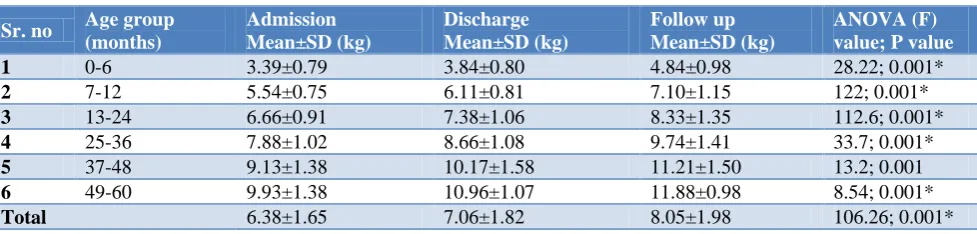
Table 3: Comparison of mean weight in different age group children at admission, discharge and at follow up.
Sr. no Age group (months)
Admission Mean±SD (kg)
Discharge Mean±SD (kg)
Follow up Mean±SD (kg)
ANOVA (F) value; P value
1 0-6 3.39±0.79 3.84±0.80 4.84±0.98 28.22; 0.001*
2 7-12 5.54±0.75 6.11±0.81 7.10±1.15 122; 0.001*
3 13-24 6.66±0.91 7.38±1.06 8.33±1.35 112.6; 0.001*
4 25-36 7.88±1.02 8.66±1.08 9.74±1.41 33.7; 0.001*
5 37-48 9.13±1.38 10.17±1.58 11.21±1.50 13.2; 0.001
6 49-60 9.93±1.38 10.96±1.07 11.88±0.98 8.54; 0.001*
Total 6.38±1.65 7.06±1.82 8.05±1.98 106.26; 0.001*
* Significant.
After the comparison of mean weight during admission, discharge and at follow up we have found that the mean weight during admission (6.38±1.65 kg) was increased at discharge and follow up (7.06±1.82 kg, 8.05±1.98 kg) respectively and it was found that this change was significant statistically (p< 0.05). More gain in weight at discharge and during follow up was found in the children up to 2 years as compared to the older ones(Table3).
After the comparison of mean MUAC during admission, discharge and at follow up we have found that the mean MUAC during admission was (11.17±0.74 cm) and it was increased to (11.46±0.67 cm) at discharge but again decreased to (11.28±0.49 cm) during follow up. Table 4 revealed that difference in mean MUAC during admission, at discharge and during follow up was significant in all age groups except the older children of 49-60 months age group.
Table 4: Comparison of mean MUAC in different age group children at admission, discharge and at follow up.
Sr. no Age group (months)
Admission Mean±SD (cm)
Discharge Mean±SD (cm)
Follow up Mean±SD (cm)
ANOVA(F) Value; P value
1 7-12 10.91±0.70 11.18±0.64 11.12±0.45 9.13; 0.001*
2 13-24 11.21±0.56 11.48±0.51 11.30±0.40 15.61; 0.001*
3 25-36 11.51±0.60 11.76±0.58 11.48±0.39 4.51; 0.012*
4 37-48 11.88±0.66 12.16±0.60 11.78±0.35 3.42; 0.038*
5 49-60 11.85±1.36 12.27±1.00 11.95±0.93 0.46; 0.631#
Total 11.17±0.74 11.46±0.67 11.28±0.49 24.02; 0.001*
* Significant #Not significant.
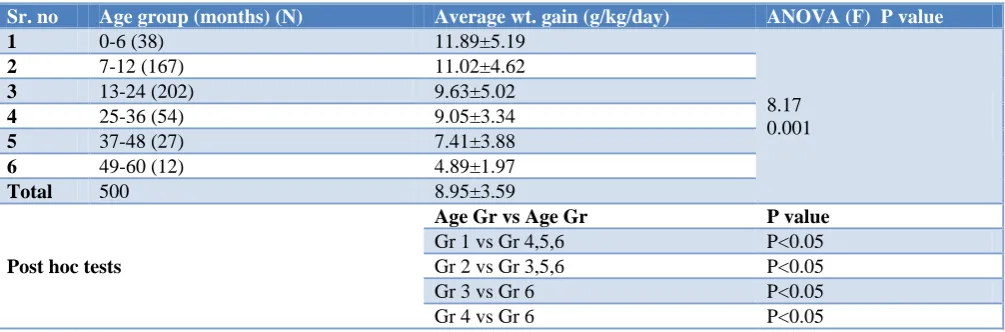
Table 5: Age wise distribution for the average weight gained per day.
Sr. no Age group (months) (N) Average wt. gain (g/kg/day) ANOVA (F) P value
1 0-6 (38) 11.89±5.19
8.17 0.001
2 7-12 (167) 11.02±4.62
3 13-24 (202) 9.63±5.02
4 25-36 (54) 9.05±3.34
5 37-48 (27) 7.41±3.88
6 49-60 (12) 4.89±1.97
Total 500 8.95±3.59
Post hoc tests
Age Gr vs Age Gr P value
Gr 1 vs Gr 4,5,6 P<0.05
Gr 2 vs Gr 3,5,6 P<0.05
Gr 3 vs Gr 6 P<0.05
Gr 4 vs Gr 6 P<0.05
The average weight gain for the study group during their stay at the centres was 8.95±3.59 g/kg/day. ANOVA (F) test was applied and the weight gain difference between different age group children was found statistically significant. After analyzing post hoc test found that younger children 0-6 month age group and 7-12 month age group got significantly higher weight gain in comparison to older (more than 2 years age group) children (Table 5).
DISCUSSION
Total 551 children were admitted in all 5 NRCs of Bhopal during July to December 2016 maximum admissions 148 in Civil Hospital Bairagarh NRC and lowest 79 in People’s Hospital NRC. Out of the total admissions 18 children were transferred from NRCs for some or the other medical reasons to other healthcare centres or pediatric wards. 32 children did not stay at NRCs for the duration required as mentioned in the definitions and were termed as defaulters and not included in the study. One girl child died at CHC Berasia NRC due to fall from the bed and so she was also excluded from the study group.
Total number of SAM children in the study was 500 of which 252 (50.40%) were boys and 248 (49.60%) were girls. Chiabi et al and Mutombo et al in Ivory Coast also
found similar findings in their study a sex ratio of 0.97 and 0.91 respectively while Ubesie et al in Nigeria had found a female predominance in malnourished children and Irena et al in Zambia in 2014, Agrawal et al and Nagar et al had a male predominance but with no statistically significant difference.10-15
The study findings reveal a statistically significant difference between the mean weight at follow up, at discharge and at admission for the entire study group (f=106.26, p<0.001). Taneja et al found statistically significant increase in mean weight of children. Rao et al and Colecraft et alin their studies found similar to our study thatthe mean weight of children was increased significantly from the time of admission to the time of discharge.18-20
The mean MUAC at admission was 11.17±0.74 cm, at discharge was 11.46±0.67 cm and at follow-up it was 11.28±0.49 cm for the entire study group. Sometimes mean MUAC during follow up was decreased due to again negligence of parents for providing sufficient nutrition to children. The difference between MUAC at follow-up, at discharge and at admission was found to be statistically significant for the entire study group (f=24.02, p<0.001). Similarly, Taneja et al found statistically significant increase in mean MUAC of children when compared MUAC at admission and at discharge.18
The average weight gain for the study subjects during their stay at the centres was 8.95±3.59 g/kg/day, similarly a prospective study done by Taneja et al on 100 children aged 0 to 6 years of age admitted to seven different NRCs in Indore and Ujjain of Madhya Pradesh found the average weight gain for the entire study group 9.25±5.89 g/kg/day.18 Findings of average weight gain in our study are also almost similar to the study carried by Savadogo et al from 1999 to 2003 in a nutritional rehabilitation center in Burkina Faso, which gave 10.18±7.05 g/kg/day.21 According to WHO, weight gain is considered small if it is <5 g/kg/day, medium or moderate if it is between 5 g/kg/day and 10 g/kg/day and satisfactory or good if it is >10 g/kg/day with nutritional rehabilitation.22 In context of this WHO scenario our study children had gained weight moderately (8.95 g/kg/day), it is also acceptable level according to the Operational guidelines
on facility-based management of severe acute
malnutrition, Ministry of Health and Family Welfare booklet weight gain ≥8 g/kg/day is acceptable and <8 g/kg/day is not acceptable.3
CONCLUSION
As evident by the findings the difference between the mean weight of the study group at the time of admission, discharge and follow up was statistically significant. The difference between the weights at admission, discharge and follow up if analyzed separately for boys and girls was also statistically significant. The difference between MUAC at the time of admission, discharge and follow up was again found to be statistically significant; both for the entire study group and for boys and girls separately. These findings clearly reflect a positive effect of the interventional measures on the admitted children in NRCs. NRCs have had a positive impact on the selected anthropometric indicators of severe malnourished
children but lack behind in the educational aspect and ensuring proper follow up visits. Though the number of severely malnourished children decreased significantly at the time of discharge as compared to admission, but some children were still in the high-risk group at the time of discharge that also did not show much improvement at follow up. Some children also lost weight following discharge as found during follow up. The mothers of the admitted children had poor knowledge concerning Breast Feeding Practices, concepts of nutrition, preparation of nutrient rich foods and importance of immunization for children etc. Early detection of malnutrition is of utmost importance as it can reduce the burden of morbidity and mortality in children under five years of age, therefore, it is important for thehealth system to detect malnutrition at an early stage and establishment of such NRC model of treatment will continue to act as a functional tool to adequately and effectively address the glaring issue of malnutrition in the community.
ACKNOWLEDGEMENTS
The author and investigators are thankful and obliged to tender mothers of suffering children who had given full cooperation and support to complete this study.
Funding: No funding sources Conflict of interest: None declared
Ethical approval: The study was approved by the Institutional Ethics Committee
REFERENCES
1. UNICEF, WHO, World Bank Joint Child
Malnutrition dataset, 2017 update available from https://data.unicef.org/topic/nutrition/malnutrition/# Accessed 12 March 2018.
2. Park K (January 2017). Textbook of Preventive and Social Medicine. 24th ed. Chapter, Preventive Medicine in Obstetrics, Paediatrics and Geriatrics: Child Health Problems; Jabalpur: Banarsidas Bhanot; 2017: 585.
3. NRHM. Operational guidelines on facility-based management of severe acute malnutrition. Ministry of Health and Family Welfare. 2011
4. International Institute for Population Sciences (IIPS) and Macro International. 2015-16. National Family Health Survey (NFHS-4), India
5. International Institute of Population Sciences. National Family Health Survey –1. Mumbai: IIPS, ORC Macro; 1993.
6. International Institute of Population Sciences. National Family Health Survey –2. Mumbai: IIPS, ORC Macro; 1998.
7. International Institute of Population Sciences. National Family Health Survey –3. Mumbai: IIPS, ORC Macro; 2005.
Health Survey (NFHS-4), India, 20015-16: Madhya Pradesh.
9. Community based management of severe acute malnutrition. A joint statement by the World Health organization, the World Food Programme, the United Nations System Standing Committee on Nutrition and the United Nations Children’s Fund, 2007.
10. Chiabi A, Malangue B, Nguefack S, Dongmo FN, Fru F, Takou V, Angwafo F 3rd. The clinical spectrum of severe acute malnutrition in children in Cameroon: a hospital-based study in Yaounde, Cameroon. Transl Pediatr. 2017;6(1):32-9.
11. Mutombo T, Keusse J, Sangare A. Sida et malnutrition en milieu pediatrique semirural - Experience de l’hôpital protestant de Dabou en Cote d’Ivoire. Méd Afr Noire. 1996; 43:72-7.
12. Ubesie AC, Ibeziako NS, Ndiokwelu CI, et al. Under-five protein energy malnutrition admitted at the University of Nigeria Teaching Hospital, Enugu: a 10-year retrospective review. Nutr J. 2012; 11:43. 13. Irena AH, Mwambazi M, Mulenga V. Diarrhea is a
major killer of children with severe acute malnutrition admitted to inpatient set-up in Lusaka, Zambia. Nutr J. 2011; 10:110.
14. Aggarwal T, Srivastava S. Nutritional status and its correlates in under five children of labour population in urban slums of Lucknow, Uttar Pradesh, India. Int J Contemp Pediatr. 2017; 4:1253-8.
15. Nagar RP, Nagar T, Gupta BD. Treatment outcome in patients with severe acutemalnutrition managed with protocolised care at malnutrition treatment corner in Rajasthan, India: A prospective observational study (quasi-experimental). Int J Res Med Sci. 2016;4:238-45.
16. Kadam DD, Kulkarni RN, Subramanium P.
Anthropometric and socio-economic profile of
children referred to nutritional rehabilitation center. The Indian Pract. 2001;54(7):476-85.
17. Underwood BA. The weaning practices in deprived environments: the weaning dilemma. Pediatrics. 1985;15:194-6.
18. Taneja G, Dixit S, Khatri AK, Yesikar V, Khatri D, Chourasiya S. A study to evaluate the effect of nutritional intervention measures on admitted children in selected nutrition rehabilitation centres of Indore and Ujjain divisions of the state of Madhya Pradesh (India). Indian J comm med. 2012;37(2):107-15.
19. Rao BR, Naidu SA, Kumar LS, Madhavi D.
Effectiveness of nutritional intervention measures on children admitted in nutritional rehabilitation
center (NRC) King George Hospital-
Visakhapatnam. J Evidence Based Med Healthcare. J Evid Based Med Healthc. 2015;2(60):9009-11. 20. Colecraft EK, Marquis GS, Bartolucci AA, Pulley
L, Owusu WB, Maetz HM. A longitudinal assessment of the diet and growth of malnourished children Participating in nutrition rehabilitation centres in Accra, Ghana. Public Health Nutrition. 2004;7(4):487-94.
21. Savadogo L, Zoetaba I, Donnen P, Hennart P, Sondo BK, Dramaix M. Management of severe acute malnutrition in an urban nutritional rehabilitation center in Burkina Faso. Rev Epidemiol Sante Publique. 2007; 55(4):265-74. 22. Sultana K, Ann A, Alan J. Directives pour le
traitement hospitalier des enfants sévèrement malnutris. OMS. 2004.