Original Research Article
Misuse of topical corticosteroids in women in Hail region Saudi Arabia
Shumoukh S. Alafnan
1, Shooq A. Alhussaini
1, Alya A. Alshammarie
1,
Rasha S. Alshammari
1, Halima M. Elagib
2*
INTRODUCTION
Topical corticosteroids are widely used to treat dermatological problems. They are used to ameliorate inflammation and for other purposes. They come in different formulations and different potencies. Mild formulations are usually used for children and for sensitive areas. Although topical steroids are used for many skin diseases, they are contraindicated in some diseases and might cause side effects if used inappropriately. If they are used for prolonged periods of times, they can cause side effects.1 Topical steroids misuse can cause numerous side effects.2
One of the common topical side effects of topical steroids is whitening of the skin. Unfortunately, this side effect is being used by some people to lighten skin
pigmentations or to lighten their natural colour or to lighten hyper-pigmentations.3-5 This phenomenon was also found to be used in Saudi for the same purpose.6
The objective of our study is to assess the misuse of topical corticosteroid on the face among the women in Hail.
METHODS
This survey begins in December 2018 and ends in March 2019, it was conducted on 769 women in Hail, Saudi Arabia.
An online questionnaire has been sent by social media to women from Hail, Saudi Arabia through electronic questionnaire. Also, the questionnaire has been sent
ABSTRACT
Background: A lot of women seek to get beautified. Consequently, some of the women often resort to using the products contained corticosteroids (CS) and other kinds of cosmetics, and this significantly increased with year 2018, due to the influence of social media. Despite the benefits, that excessive use of corticosteroids leads to serious side effects.
Methods: 769 electronic questionnaires were completed by women for using corticosteroids in Hail, Saudi Arabia. Statistical comparison was done using SPSS (ANOVA test) was used to compare the answers given by the participants and P values less than 0.05 were considered significant.
Results: 769 women responded. More than 30.3% of the patients were in the age group 31 to 40 years. The main reason for using the topical corticosteroids was to lighten skin color and reduce wrinkles.
Conclusions: Misuse of topical corticosteroids is widely spread among women in Hail city, and this due to various reasons, the most important of which is to get bleaching and get rid of skin blemishes.
Keywords: Skin, Topical corticosteroid, Misuse, Women
1
Faculty of Medicine, University of Hail, Hail, Saudi Arabia
2
Department ofPharmacology, Faculty of Medicine, University of Hail, Hail, Saudi Arabia
Received: 10 March 2019
Revised: 16 April 2019
Accepted: 17 April 2019
*Correspondence:
Dr. Halima M. Elagib,
E-mail: [email protected]
Copyright: © the author(s), publisher and licensee Medip Academy. This is an open-access article distributed under the terms of the Creative Commons Attribution Non-Commercial License, which permits unrestricted non-commercial use, distribution, and reproduction in any medium, provided the original work is properly cited.
through the Deanship of Preparatory years in Hail to female students.
The questionnaire included demographic questions about the women (age, educational level and Occupation); followed by a question about from where they heard about topical corticosteroid, then asked if they have used any topical steroid. Next question, from where they got the corticosteroids (prescription by a doctor, pharmacy without prescription, beauty centres and online stores) and what is the purpose of using corticosteroids. If they used a corticosteroid mixed with other products and if they knew that it contained steroids.
In our selection criteria, we only targeted the women those from middle school and above, also we targeted all the social state of the women (single, married and widow), also we targeted the women’s town and women’s village. And we excluded male and elementary age.
Data collection
All data were exported from questionnaire program to SPSS.
Statistical analysis
All collected data were analyzed statistically using SPSS software. The observations for each question are tabulated. Statistical comparison was done using SPSS (ANOVA test) was used to compare the answers given by the participants and p values less than 0.05 were considered significant.
RESULTS
General information about the participants
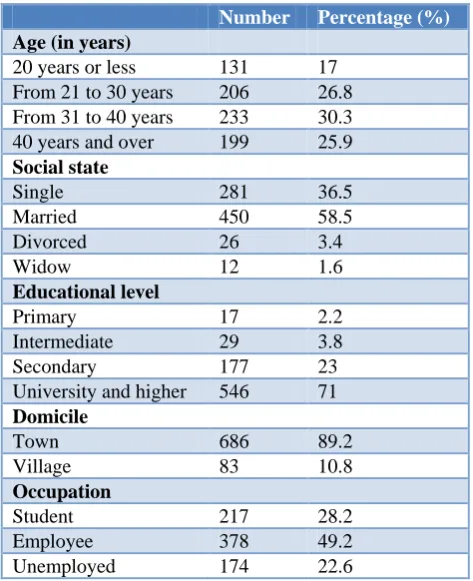
In a total of 769 women had responded to the questionnaire. 131 (17%) of women responded to the questionnaire were 20 years or less. From 21 to 30 years were 206 (26.8%), from 31 to 40 were 233 (30.3%) and 40 years and over 199 (25.9%) of the total sample as shown in Table 1.
Figure 1: Reason of uses of corticosteroids by the participants.
Values were expressed as frequency percentages (p٭٭<0.006) which is highly significant.
Figure 2: Sources of uses of corticosteroids by the participants.
Values were expressed as frequency percentages (P٭<0.029) which is significant. *(p٭>0.05); is significant †(p٭٭>0.001) is highly significant.
Table 1: General information about the responders.
Number Percentage (%)
Age (in years)
20 years or less 131 17 From 21 to 30 years 206 26.8 From 31 to 40 years 233 30.3 40 years and over 199 25.9
Social state
Single 281 36.5 Married 450 58.5 Divorced 26 3.4 Widow 12 1.6
Educational level
Primary 17 2.2 Intermediate 29 3.8 Secondary 177 23 University and higher 546 71
Domicile
Town 686 89.2 Village 83 10.8
Occupation
Student 217 28.2 Employee 378 49.2 Unemployed 174 22.6
Only 281 (36.5%) were single women, married women were 450 (58.5%), divorced women were 26 (3.4%) and widow were 12(1.6%) of the total sample as shown in Table 1.
The educational level of women who responded the questionnaire primary were 17 (2.2%) intermediate were 29 (3.8%), secondary were 177 (23%) and University and higher were 546 (71%) of the total sample as shown in Table 1.
46%
54%
40% 45% 50% 55%
cosmetic therapeutic
44% 42.90%
9%
4.10%
0% 5% 10% 15% 20% 25% 30% 35% 40% 45% 50%
By prescription
From a pharmacy without a prescription
Figure 3: The purpose of using cortisone in the field of cosmetics.
Values were expressed as frequency percentages (p<0.001**) which is highly significant.
Figure 4: Knowledge about cortisone mixed with other products.
Values were expressed as frequency percentages (p<0.025*) which is significant.
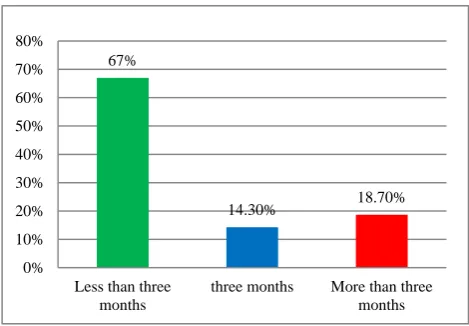
Figure 5: The period of using corticosteroid in form of cream.
Values were expressed as frequency percentages (p<0.037*) which is significant.
Figure 6: The experience of side effects after using cortisone.
Values were expressed as frequency percentages (p٭<0.05) which is significant.
Figure 7: The experience of side effects after using corticosteroids.
Values were expressed as frequency percentages (p٭<0.05) which is significant.
Figure 8: Considering of skin blemishes a strong motivation to use corticosteroids.
Values were expressed as frequency percentages (p<0.019**) highly significant difference.
68.90%
11%
6.90% 6.40%
1.10% 1.40% 1.30% 0.70% 1.20% 1.10%
0.00% 10.00% 20.00% 30.00% 40.00% 50.00% 60.00% 70.00% 80.00%
59%
41%
0% 10% 20% 30% 40% 50% 60% 70%
Yes No
67%
14.30% 18.70%
0% 10% 20% 30% 40% 50% 60% 70% 80%
Less than three months
three months More than three months
26.40%
73.60%
0.00% 10.00% 20.00% 30.00% 40.00% 50.00% 60.00% 70.00% 80.00%
yes no
9.80%
84.40%
5.90% 0.00%
10.00% 20.00% 30.00% 40.00% 50.00% 60.00% 70.00% 80.00% 90.00%
Yes No Probably
34.50%
42.80%
22.80%
0.00% 5.00% 10.00% 15.00% 20.00% 25.00% 30.00% 35.00% 40.00% 45.00%
89.2% are from town and 10.8% are from village as shown in Figure 4 and Table 1. The occupation of the participant in the study student were28.2%, employee was 49.2% and not employed and higher were 22.6% of the total sample as shown in Table 1.
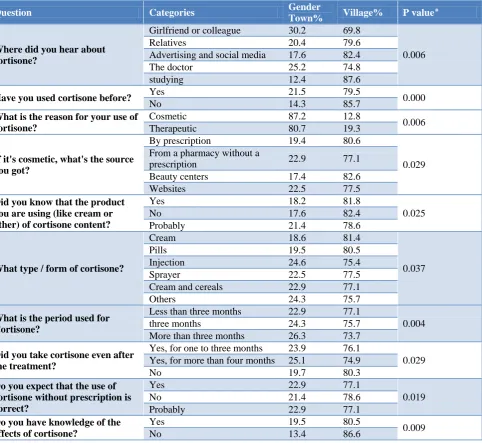
116 (15.08%) of women hear about corticosteroids from their friends or colleagues, from their relatives were 151 (19.64%), from advertising and social media were 197 (25.62%), most of them heard about the corticosteroids from the doctors represents 225 (29.26%) and studies were 10.40% of the total sample. 341 (44.3%) of them used corticosteroids and 428 (55.7%) didn't use corticosteroids. 157 (46%) of women used corticosteroids for cosmetic purpose and 184 (54%) for therapeutic purpose as shown in Figure 1 (p<0.006).
The source of corticosteroids was 69 (44%) by prescription, 67 (42.9%) was without a prescription, 14
(9%) was from beauty centres and 7 (4.1%) was from websites as shown in Figure 2 (p<0.029).
The majority of using corticosteroids was for bleaching 108 (68.9%) while the rest was for reduce wrinkles which represents 17 (11%) and for getting an extended face represents 11 (6.9%) and repair damaged hair represents 10 (6.4%), allergy 2(1.1%) , for acne(face pills) 2 (1.4%), therapy 2 (1.3 %), for the freshness of skin 1 (0.7 %), after laser 2 (1.2%) and to reduce infection 2 (1.1 %) (p<0.001) as shown in Figure 3.
The uses of mixed corticosteroids represent 93 (59%) and alone 64 (41%). Most of the women who were using CS were knowing that the products are containing CS, which represent 190 (55.8%). While 92 (27%) of women not know about their cream content, the rest said that probably contained CS (p<0.025) as shown in Figure 4.
Table 2: Misuse of corticosteroids and participant.
P value٭ Village% Gender Town% Categories Question 0.006 69.8 30.2 Girlfriend or colleague
Where did you hear about cortisone? 79.6 20.4 Relatives 82.4 17.6
Advertising and social media
74.8 25.2 The doctor 87.6 12.4 studying 0.000 79.5 21.5 Yes
Have you used cortisone before?
85.7 14.3 No 0.006 12.8 87.2 Cosmetic
What is the reason for your use of
cortisone? Therapeutic 80.7 19.3
0.029 80.6
19.4 By prescription
If it's cosmetic, what's the source you got?
77.1 22.9
From a pharmacy without a prescription 82.6 17.4 Beauty centers 77.5 22.5 Websites 0.025 81.8 18.2 Yes
Did you know that the product you are using (like cream or other) of cortisone content?
82.4 17.6 No 78.6 21.4 Probably 0.037 81.4 18.6 Cream
What type / form of cortisone?
80.5 19.5 Pills 75.4 24.6 Injection 77.5 22.5 Sprayer 77.1 22.9
Cream and cereals
75.7 24.3 Others 0.004 77.1 22.9 Less than three months
What is the period used for
Cortisone? three months 24.3 75.7
73.7 26.3
More than three months
0.029 76.1
23.9 Yes, for one to three months
Did you take cortisone even after
the treatment? Yes, for more than four months 25.1 74.9
80.3 19.7 No 0.019 77.1 22.9 Yes
Do you expect that the use of cortisone without prescription is correct? 78.6 21.4 No 77.1 22.9 Probably 0.009 80.5 19.5 Yes
Do you have knowledge of the
The sample of the study was divided into six categories according to the form of corticosteroids used, cream was 75.3%, pills was 13.9%, injection was 5.5%, sprayer was 4.2%, cream and pills was 0.2% and others was 0.9% of the total sample. The period of CS using was less than three months were used by 228 (67%) of women, more than three months with 64 (18.6) women and within three months were used by 49 (14.3) women (p<0.037) as shown in Figure 5.
What if the problem recurs, will you use corticosteroids again? No, 175 (51.3%) of total cosmetic users said, 105 (30.7%) women said yes and the rest 61(18%) said probably. 38 (11.2%) of women were continuing to use CS even after the finishing the treatment period for one to three months, 32 (9.4%) of women were continuing to use CS even after the finish the treatment period for more than four months, while the majority didn't.
The sample of the study was divided into two categories, yes was 26.4 % of the total sample and No was 73.6 % of the total sample according to experience of side effects as shown in Figure 6 (p<0.05).
The sample of the study was divided into three categories, yes was 9.8%, no was 84.4 % and probably was 5.9 % of the total sample according to the uses of corticosteroids without prescription as shown in Figure 7 (p<0.019).
The sample of the study was divided into three categories, yes was 34.5%, no was 42.8% and probably was 22.8 % of the total sample according to consider of skin blemishes a strong motivation to use corticosteroids as shown in Figure 8 (p<0.019).
DISCUSSION
Topical corticosteroids are one of the oldest and commonly prescribed treatments for cutaneous disorders. The first topical steroid introduced was hydrocortisone in 1951, probably, since then they have been misused by patients/clients and medical practitioners.7 Due to its varied mode of action, topical steroids has been a cornerstone in the treatment of a few facial dermatoses. Since topical steroids are widely and easily available over the counters, recommended by relatives, friends, colleagues and social media.
The reasons to use topical steroids were similar to reasons described in other communities. In our study, the main purpose to use steroids is for bleaching was (68.9%) and this is similar to the results (65.7%) found by and also by where it was used as fairness/general purpose or as after shave in (29%) of patients.8,9
In our study, (44%) women who had used the steroid had received the prescription from a doctor this matches the
result found by who found that (55.7%) of the patients had received the recommendation from a doctor and this different with the result (35.36%) by pharmacists found by and by the result that (55.5%) of cases by friends.9-11
In our study, the majority of women applied topical steroids for less than three months’ durations (67%) and this is in agreement with the finding that (48.91%) for 1 week to 1 month.2 In addition to that in other study the majority applied topical steroids was (46.3%) for 6 to 12 months.12
There are many side effects of topical cortisone which ranging from mild to severe effects. The side effects of topical cortisone were experienced by 90 (26.4%) in our study. A clinical study in India shows that acne and plethoric, puffy face with telangiectasia (steroid face) were the most common adverse effects noted.10 The loss of connective tissue support for dermal vasculature results in erythema, telangiectasia, and purpura.13 Systemic side effects like adrenal axis suppression, diabetes, hypertension etc. following topical application are reported only if applied to larger areas as in other diseases are rare with use on face.14 Allergic dermatitis to TCS are reported.15
(63.7%) of women in our study was ware of adverse effects of topical steroids and this in contrary with another study, the majority (98.37%) of patients were unaware of adverse effects of topical steroids.2
CONCLUSION
Misuse of topical corticosteroids is widely spread among women in Hail city, and this due to various reasons, the most important of which is to get bleaching and get rid of skin blemishes, also the awareness of the women in all ages are very low, most of them use it without medical prescriptions and that is why most of them suffered from the side effects.
ACKNOWLEDGEMENTS
The authors would like to thank Hail University ethical board for their cooperation and guidance through the whole process, and we like to thank all the students that were part of this study, for taking their time to complete the survey.
Funding: No funding sources Conflict of interest: None declared
Ethical approval: The study was approved by the Institutional Ethics Committee
REFERENCES
2. Meena S, Gupta LK, Khare AK, Balai M, Mittal A, Mehta S, Bhatri G. Topical corticosteroids abuse: A clinical study of cutaneous adverse effects. Indian J Dermatol. 2017;62:675.
3. Sharma R, Abrol S, Wani M. Misuse of topical corticosteroids on facial skin. A study of 200 patients. J Dermatol Case Rep. 2017;11:5-8. 4. Sendrasoa FA, Ranaivo IM, Andrianarison M,
Raharolahy O, Razanakoto NH, Ramarozatovo LS, et al. Misuse of topical corticosteroids for cosmetic purpose in Antananarivo, Madagascar. Biomed Res Int. 2017;2017:9637083.
5. Nnaruka E, Okoye O. Topical steroid abuse: Its use as a depigmenting agent. J Natl Med Assoc. 2006;98:934-9.
6. Alanzi ME, Alghamdi RA, Alsharif OM, Alghamdi KS, El Sayed SM. Health knowledge, cosmetic interests, attitude, and the need for health education regarding the use of topical bleaching agents among women in West Saudi Arabia: A cross-sectional study. J Cosmet Sci. 2018;69:101-20.
7. Chen AY, Zirwas MJ. Steroid-induced rosacealike dermatitis: case report and review of the literature. Cutis. 2009;83:198-204.
8. Al-Dhalimi MA, Aljawahiri N. Misuse of topical corticosteroids: A clinical study from an Iraqi hospital. East Mediterr Health J 2006;12:847-52. 9. Saraswat A, Lahiri K, Chatterjee M, Barua S,
Coondoo A, Mittal A, et al. Topical corticosteroid abuse on the face: A prospective, multicenter study of dermatology outpatients. Indian J Dermatol Venereol Leprol. 2011;77:160.
10. Dey VK. Misuse of topical corticosteroids: A clinical study of adverse effects. Indian Dermatol Online J. 2014;5:436–40.
11. Rathi SK, Kumrah L. Topical corticosteroid-induced rosacea-like dermatitis: A clinical study of 110 cases. Indian J Dermatol Venereol Leprol. 2011;77:42-6.
12. Kumar A, Neupane S, Shrestha PR, Pun J, Thapa P, Manandhar M, et al. Pattern and predictors of topical corticosteroid abuse on face: A study from Western Nepal. Res J Pharm Biol Chem Sci. 2015;6:1154-9.
13. Berth-Jones J. “Topical therapy,” in Rooks Textbook of Dermatology, Burns T, Breathnach S, Cox S, Griffiths C, Eds, vol 1, Blackwell Science
Ltd., UK, 8th edition, 2010: 1–73.
14. Furue M, Terao H, Rikihisa W, Urabe K, Kinukawa N, Nose Y, et al. Clinical dose and adverse effects of topical steroids in daily management of atopic dermatitis. J Dermatol. 2003;148:128-33.
15. Vatti RR, Ali F, Teuber S, Chan C, Gershwin ME. Hypersensitivity Reactions to corticosteroids. Clin Rev Allergy Immunol. 2014;47(1):26-37.